
courtesy of CalPhotos, https://calphotos.berkeley.edu/
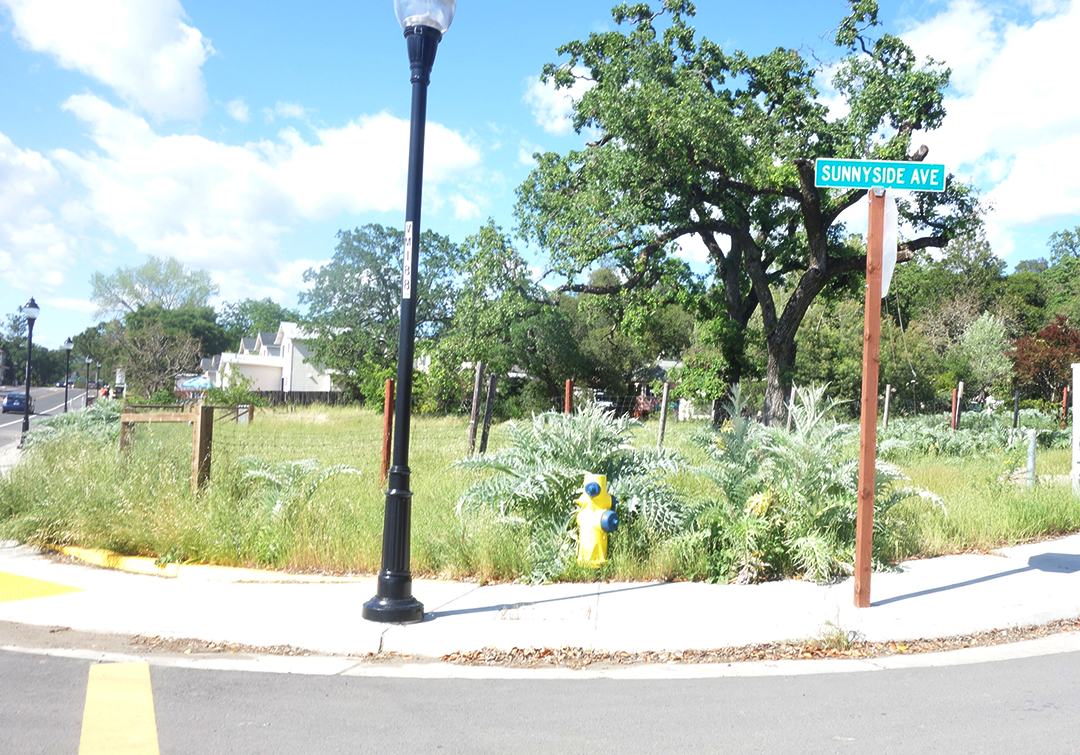
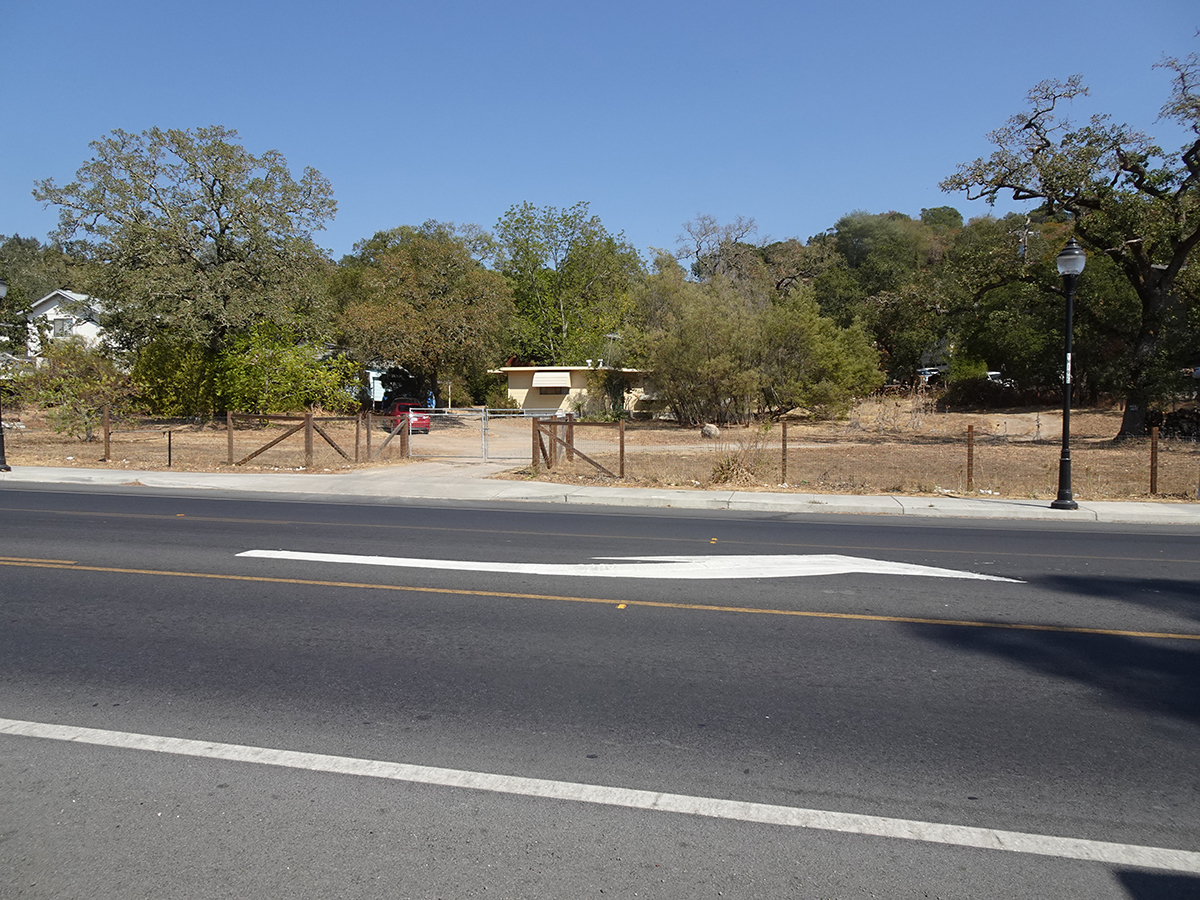
Corner of Sunnyside Ave. and Highway 12
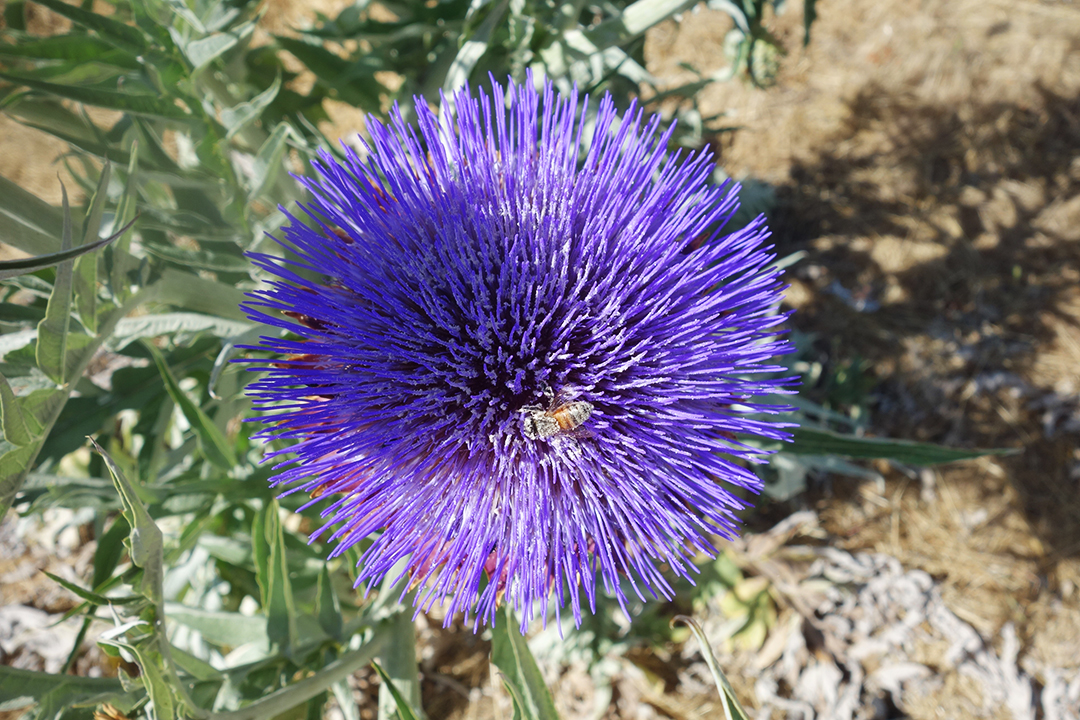
For lovers of the prickly vegetable, the presence of groves of wild artichokes, as we have in the Valley of the Moon, might seem like an indication of paradise. In addition to being delicious, artichoke flowers are beautiful, fragrant, and attract bees.
However, the wild cynara carduncula is a fearsome invasive plant.
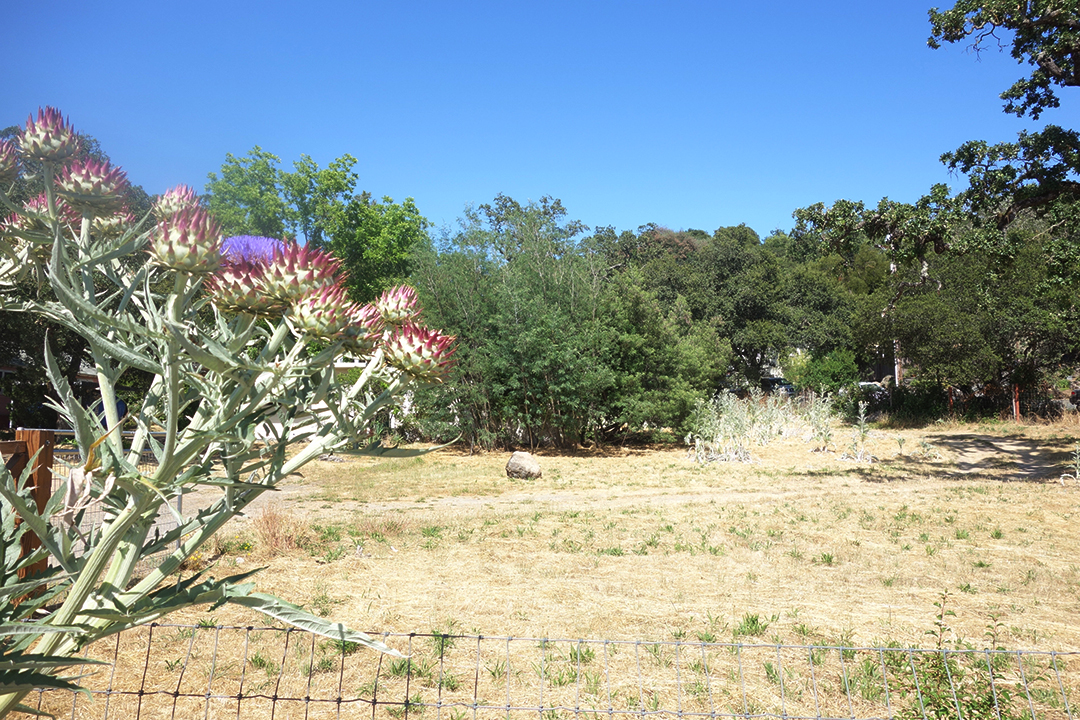
Vacant lot at Sunnyside Ave.
According to the California Invasive Plant Council, the thistle was probably imported from Europe in the early 19th century as a food plant. It becomes invasive when it escapes cultivation and begins to reproduce from seed. Darwin found it growing in the Argentine pampas in 1889 in an area of “hundreds of square miles.”
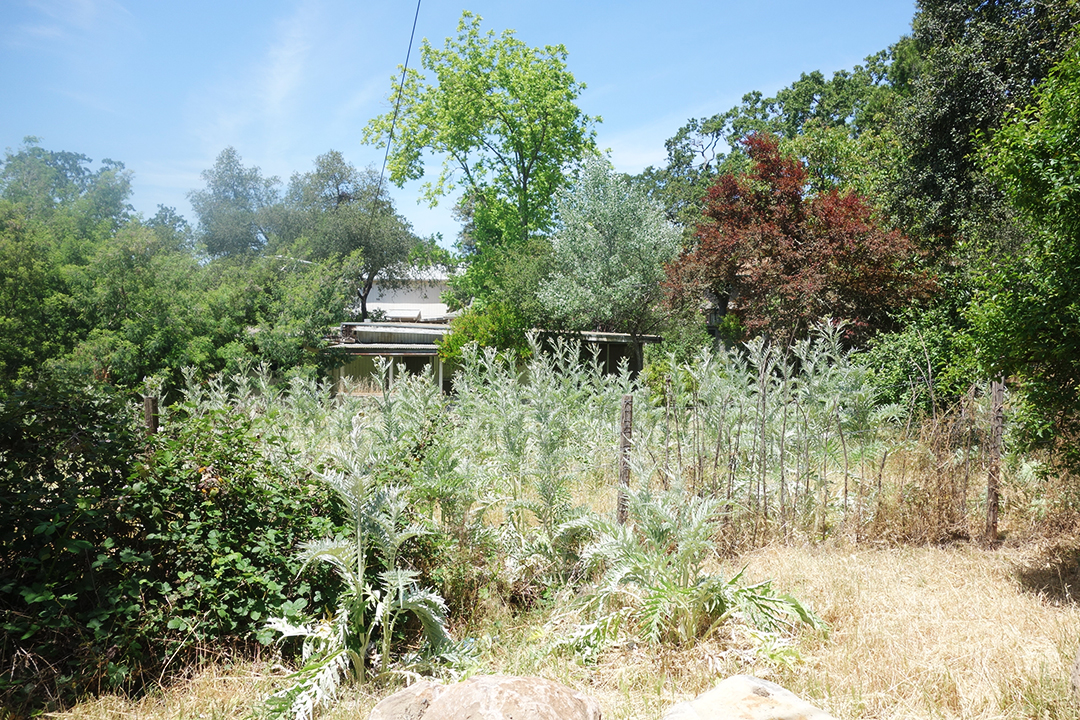
The growing artichoke “forest” in the lot at Sunnyside
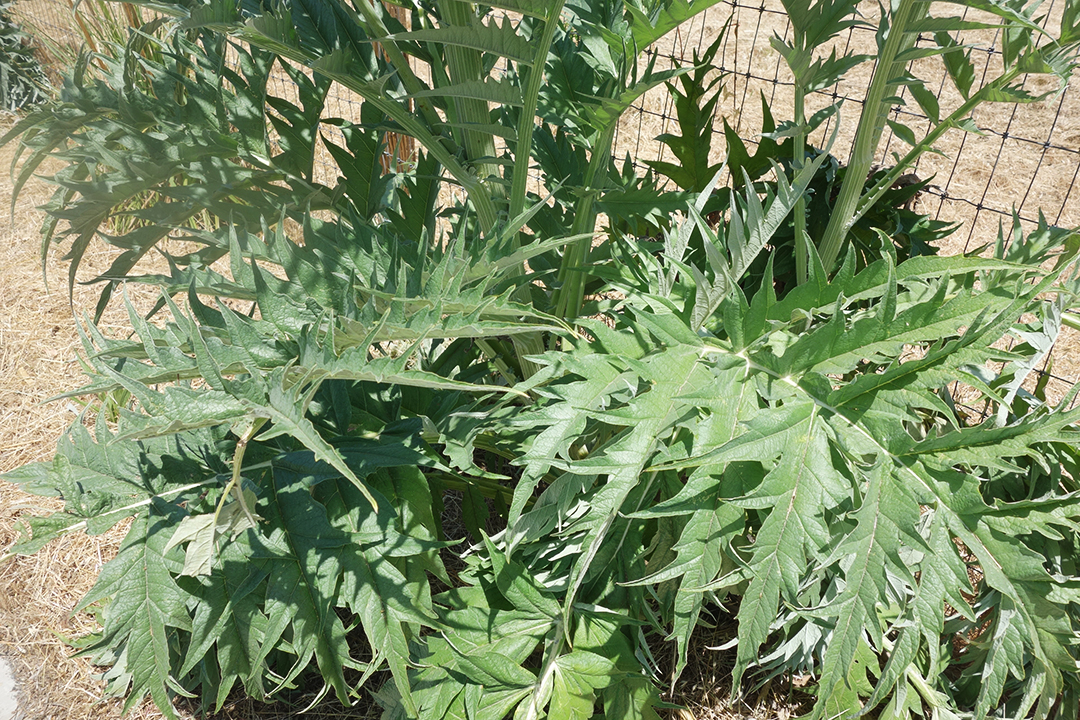
At its worst, the “edible thistle” forms thickets that are impenetrable by humans or animals and that shade out native plants. As they develop tap roots eight feet deep and produce seed banks that endure for five years, they are very difficult to control.
More info at this link:
https://www.cal-ipc.org/resources/library/publications/ipcw/report38/
UPDATE SEPTEMBER 2021-Someone, probably Caltrans, has eradicated all the cardoon along the sidewalk north of Sunnyside. They probably used Roundup. I have no doubt that the “forest” will be back this winter, because that lot is full of seeds, some of which could have been there for five years and still be viable.
Palm wins…


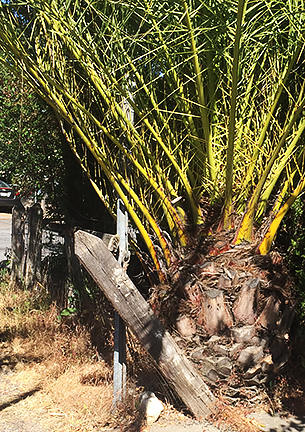
Courage in the plant kingdom. Highlands Blvd, May, 2018.
UPDATE!

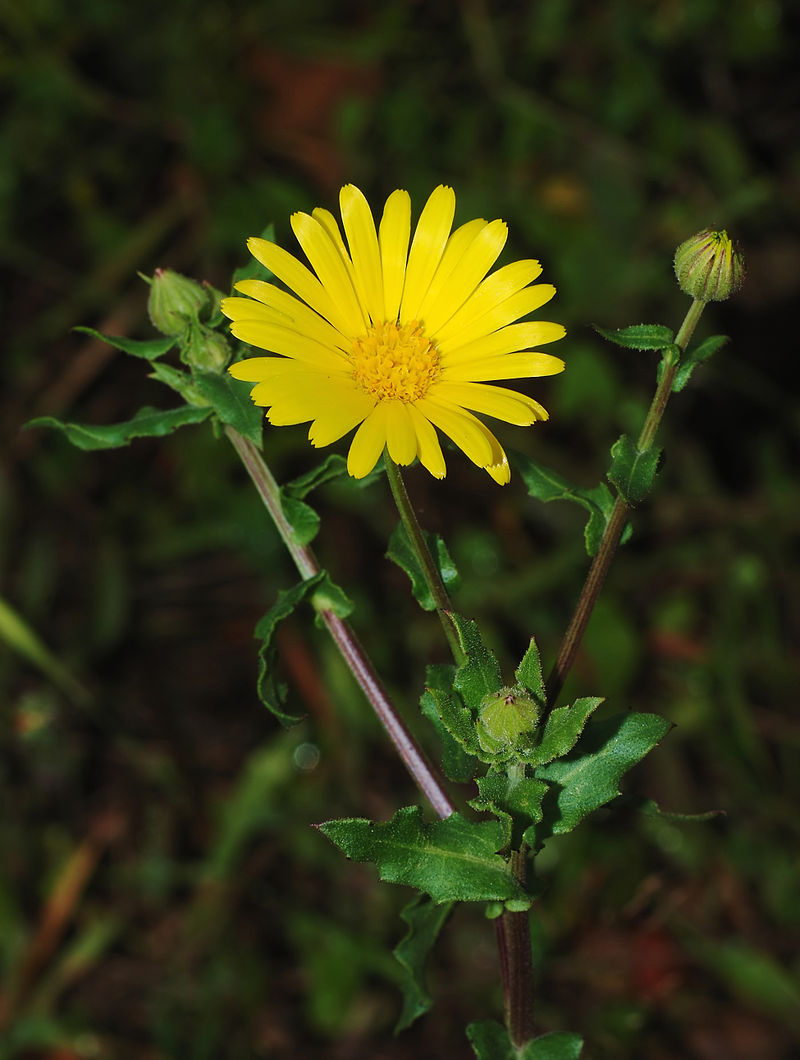
Medicinal Calendula has hit the mainstream (Rite Aid.)
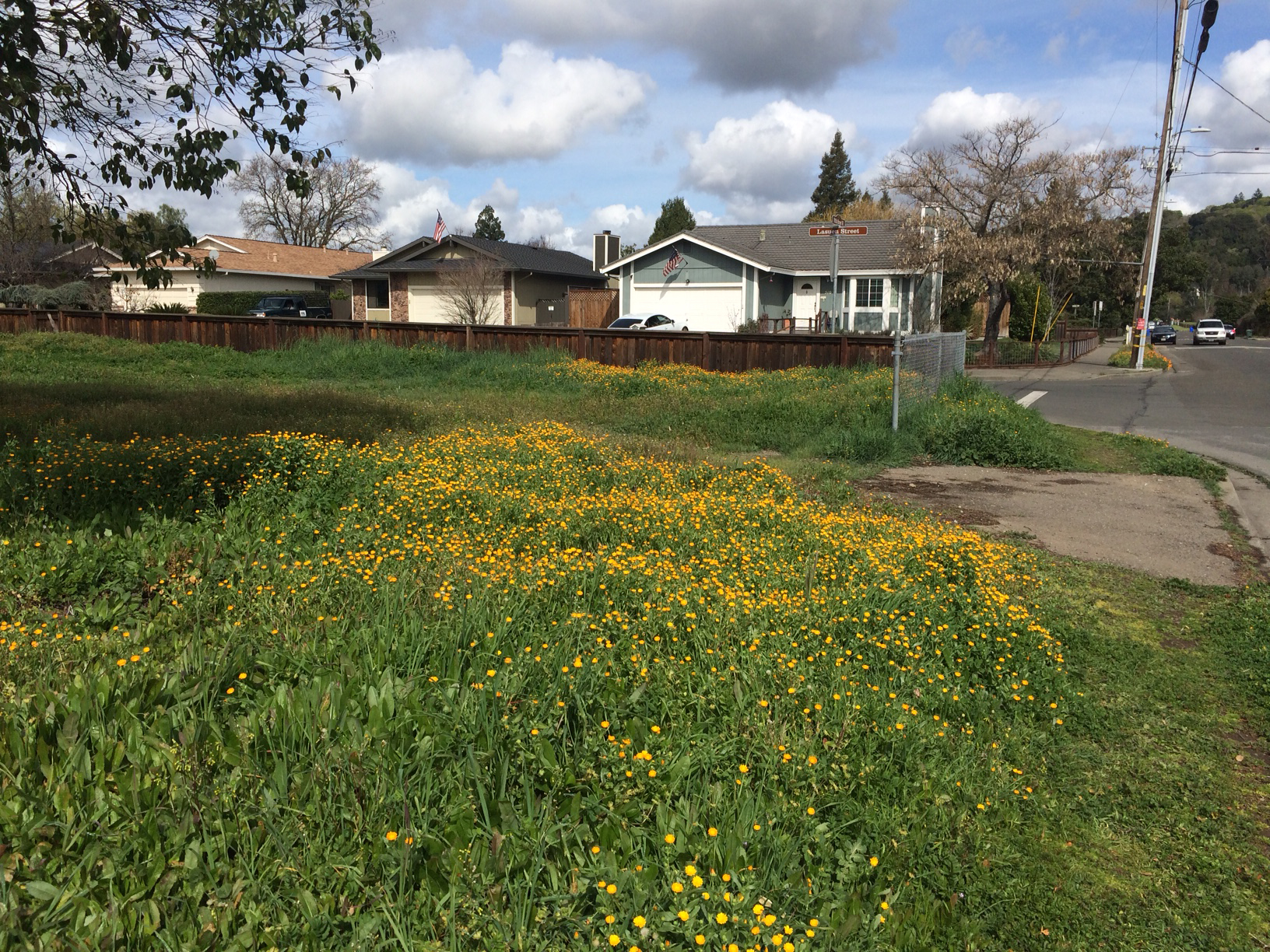
Fifth Street West, Sonoma
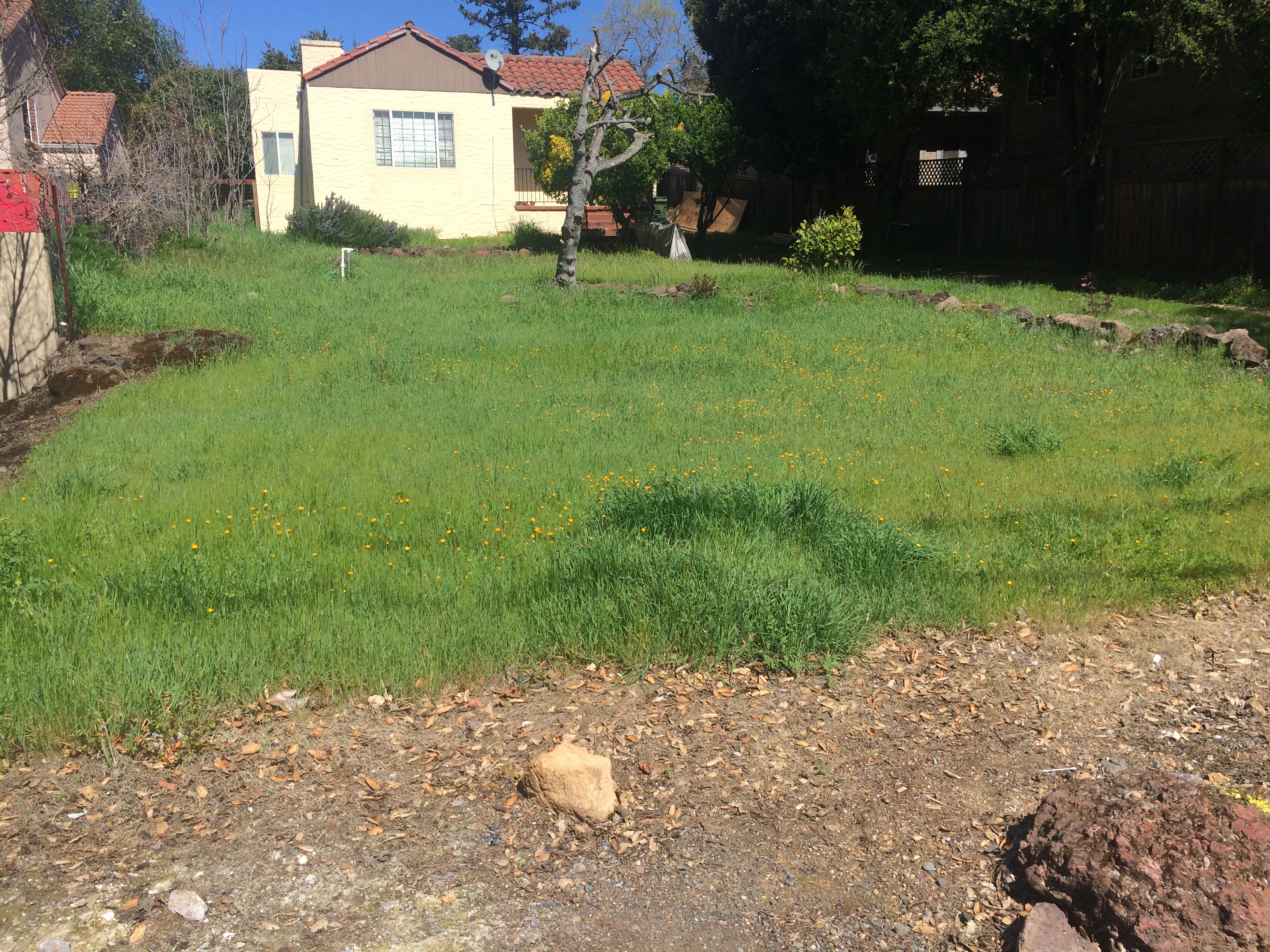
Central Ave. Boyes Hot Springs
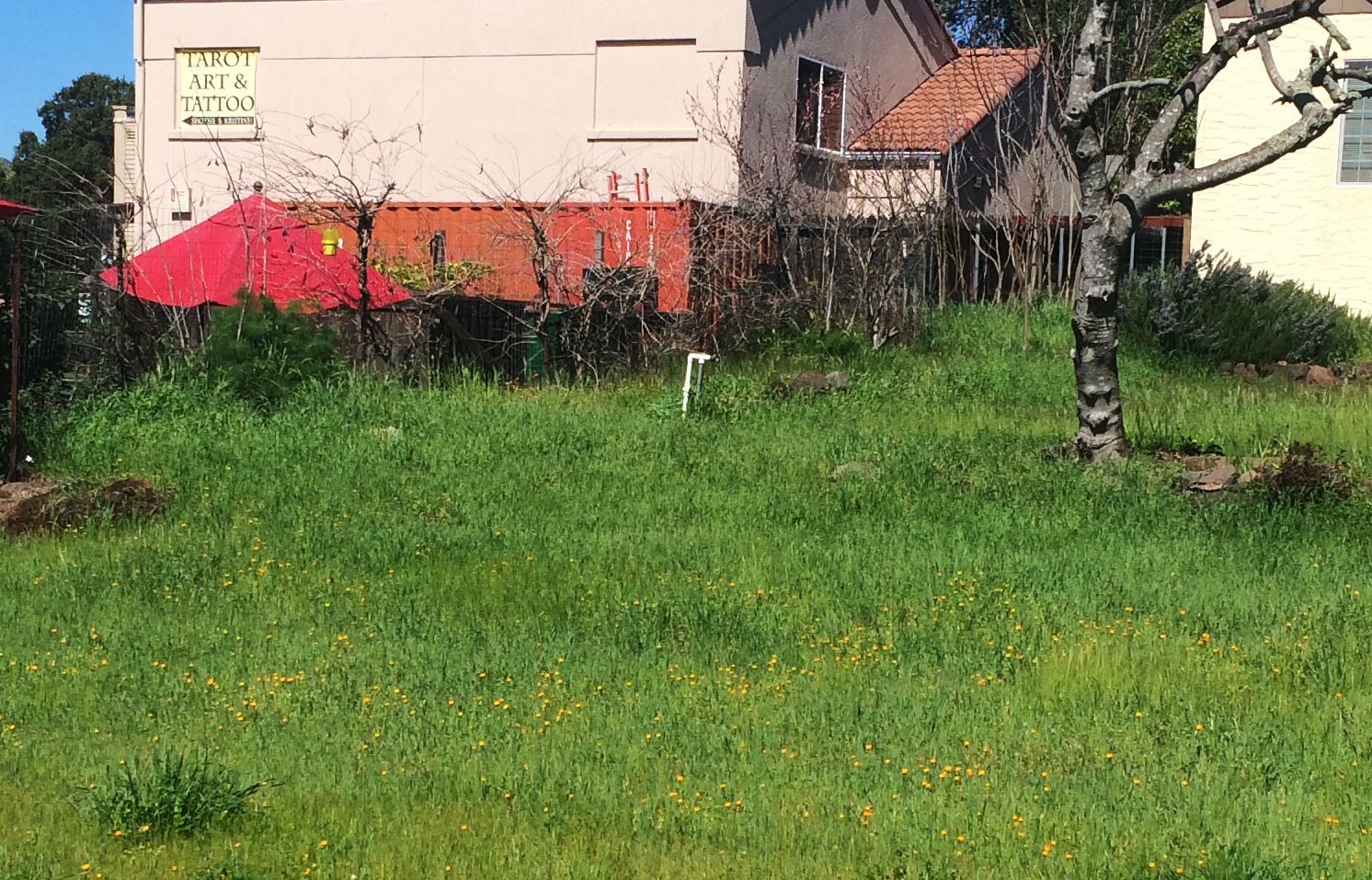
Central Ave. Boyes Hot Springs
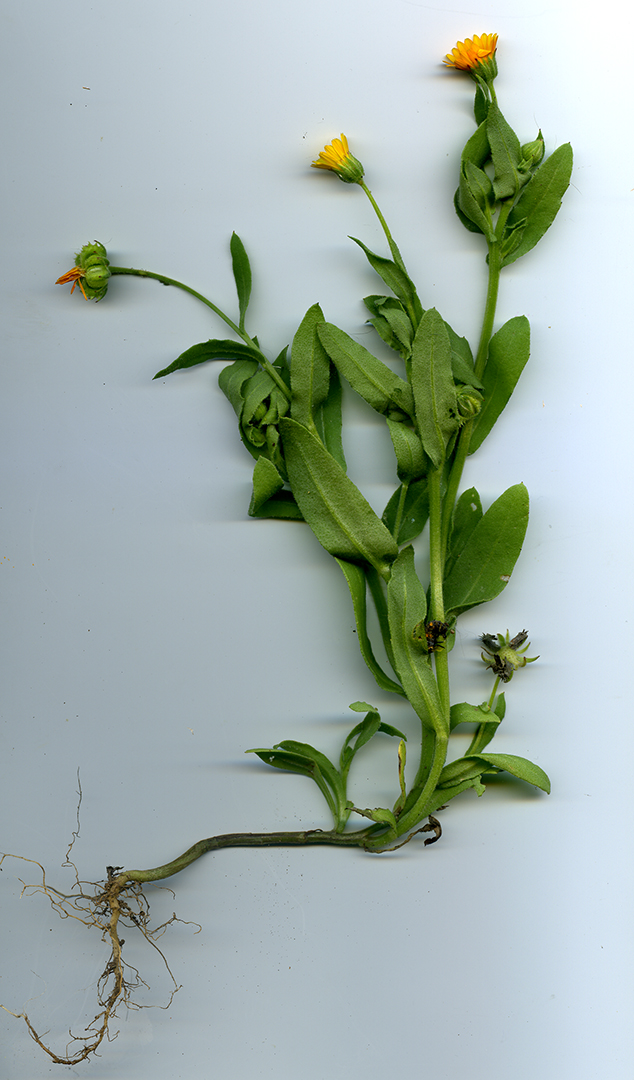
Photo by author
“Calendula (probably arvensis, but there is a larger flowered officianalis) is listed on Cal Flora as non-native to our area but not invasive. So it depends on your definition of a weed: any non-native, or the ones that most upset biodiversity? I don’t mind them; they’re pretty and have some medicinal uses. Since they tend to grow in disturbed and/or agricultural areas, no one knows for certain what grew there in the first place, so planting something else with the goal of restoration would involve some guesswork.” Hannah Aclufi via Facebook
A weed is a plant considered undesirable in a particular situation, “a plant in the wrong place”.
Examples commonly are plants unwanted in human-controlled settings, such as farm fields, gardens, lawns, and parks. Taxonomically, the term “weed” has no botanical significance, because a plant that is a weed in one context is not a weed when growing in a situation where it is in fact wanted, and where one species of plant is a valuable crop plant, another species in the same genus might be a serious weed, such as a wild bramble growing among cultivated loganberries. In the same way, volunteer crops (plants) are regarded as weeds in a subsequent crop.
Many plants that people widely regard as weeds also are intentionally grown in gardens and other cultivated settings, in which case they are sometimes called beneficial weeds.
The term weed also is applied to any plant that grows or reproduces aggressively, or is invasive outside its native habitat.[1] More broadly “weed” occasionally is applied pejoratively to species outside the plant kingdom, species that can survive in diverse environments and reproduce quickly; in this sense it has even been applied to humans.[2]

Fifth Street West, Sonoma


From the Integrated Taxonomic Information System on-line database, http://www.itis.gov
“There is a lot of magic in the naming of things. It is my contention that the more we know about nature’s secrets, the more we can enjoy it. Simply being able to call the elements of nature by their proper names helps us to experience them and allows their beauty to unfold…” Obi Kaufmann, The California Field Atlas.
“I find the Latin names for the plants as beautiful as the plants themselves … “ Wyethia Angustifolia (Hannah Aclufi) https://viridiplantae.com/about/
Just south of the Sonoma Mission Inn, on the west side of Highway 12, Sierra Drive intersects.
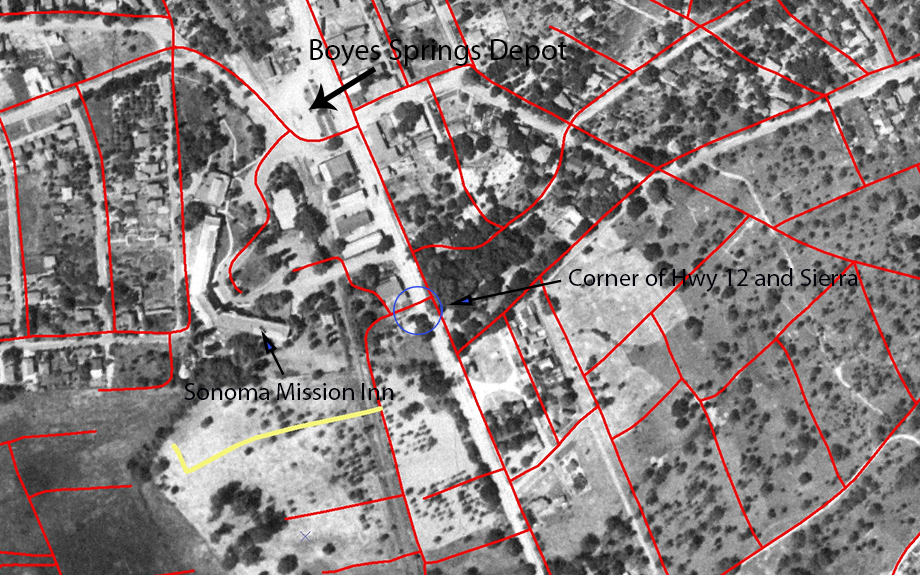
Aerial photo with streets courtesy of Arthur Dawson
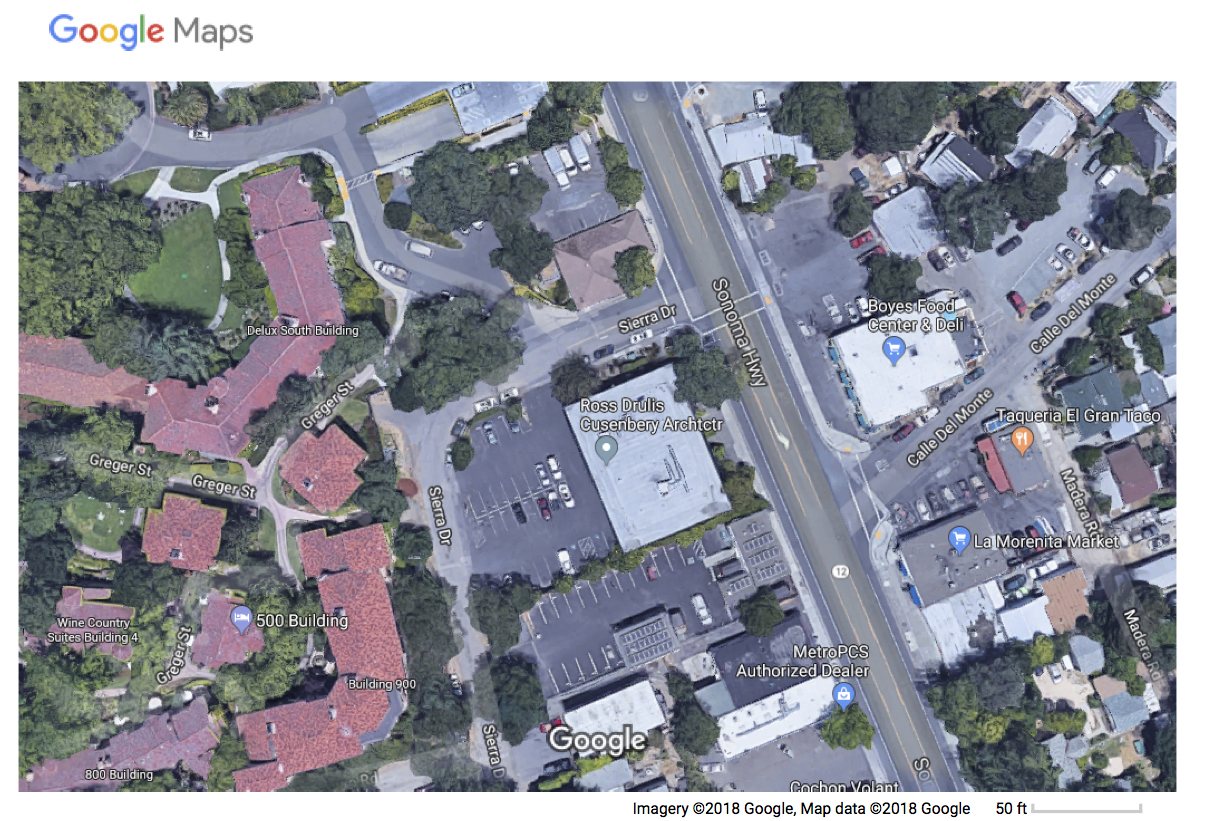
At that corner stands one of our landmark oak trees. The tree is in front of the building that now houses Ross Drulis Cusenberry Architects. The building was built in 1966 for Sierra National Bank. It seems that the street, originally known as Meincke Road (more on that later), was renamed for the bank. The street also has the distinction of being on the former NWPRR right-of-way (the tracks were removed in 1942).
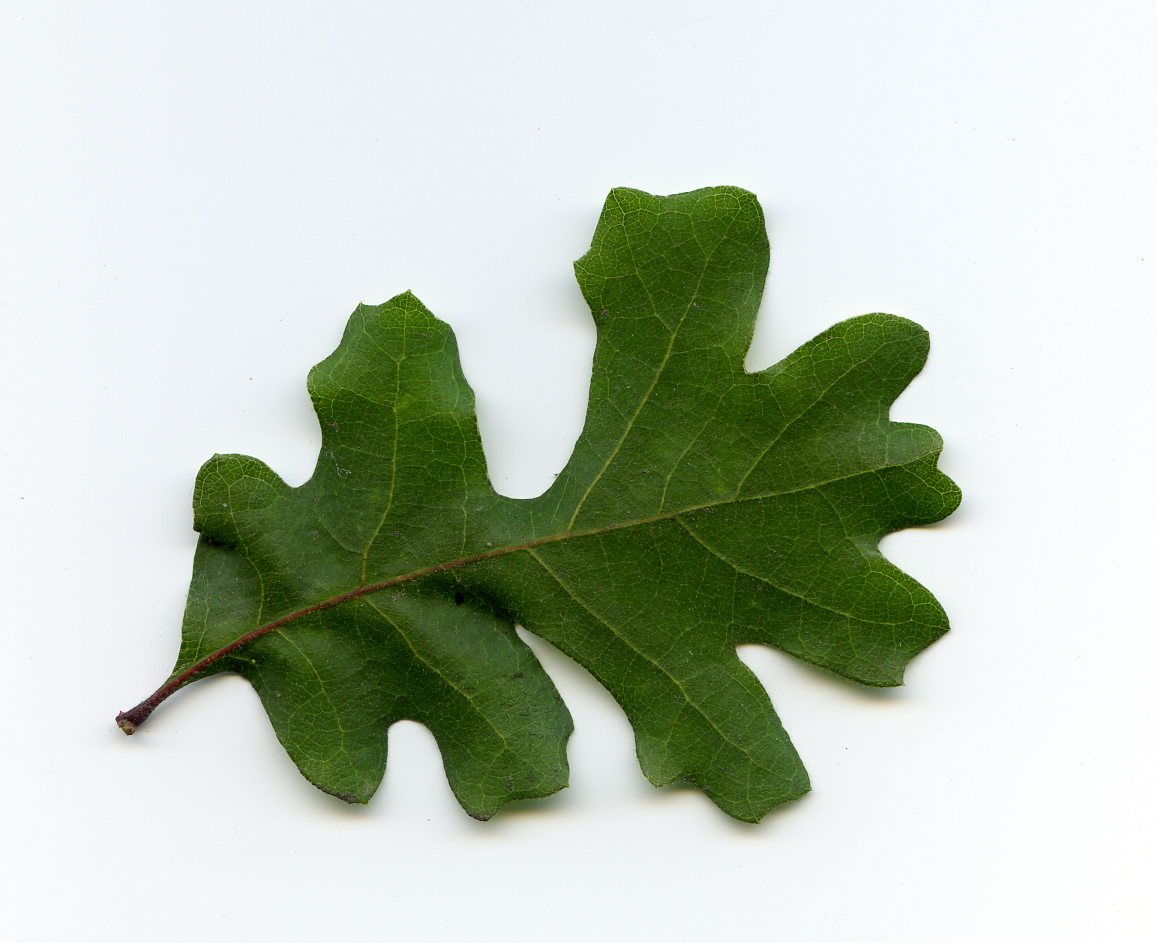
Our tree is a Valley Oak, Quercus lobata. According to the California Native Plant Society (http://calscape.org/), the Valley Oak ranges over the interior valleys of the State, and needs to be near a source of water (Lily Creek*, which flows down Arroyo Road, tunnels under the highway very near the tree.) It can grow to 100’ in height and live for as many as 500 years. The tree in question, which has three trunks, certainly could be 100 years old. We have a photograph of the tree (and building) from 1973, which shows it to be in pretty poor shape. In 2018 it appears to be much healthier.
*Thanks to Greg Larson for the creek name.
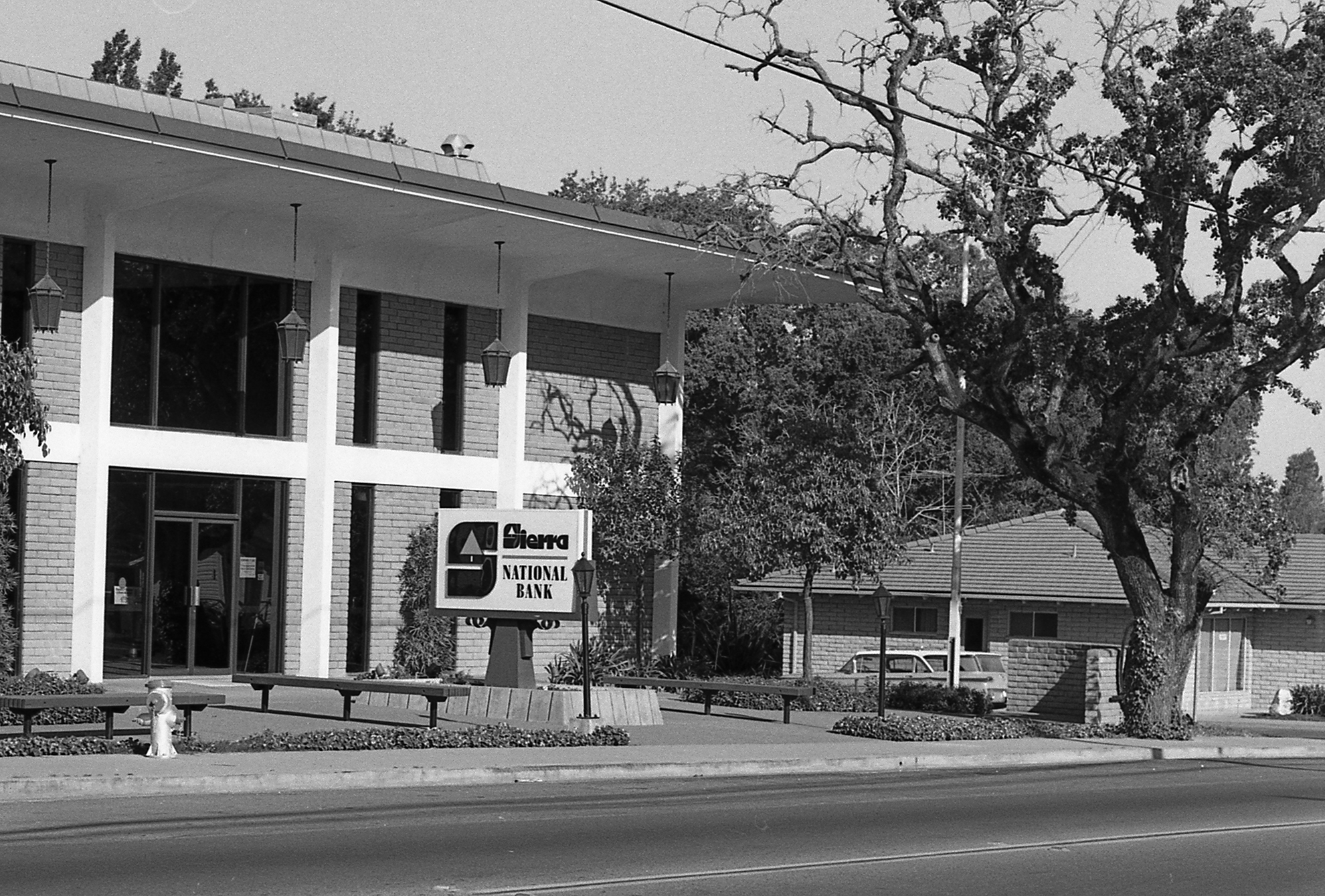
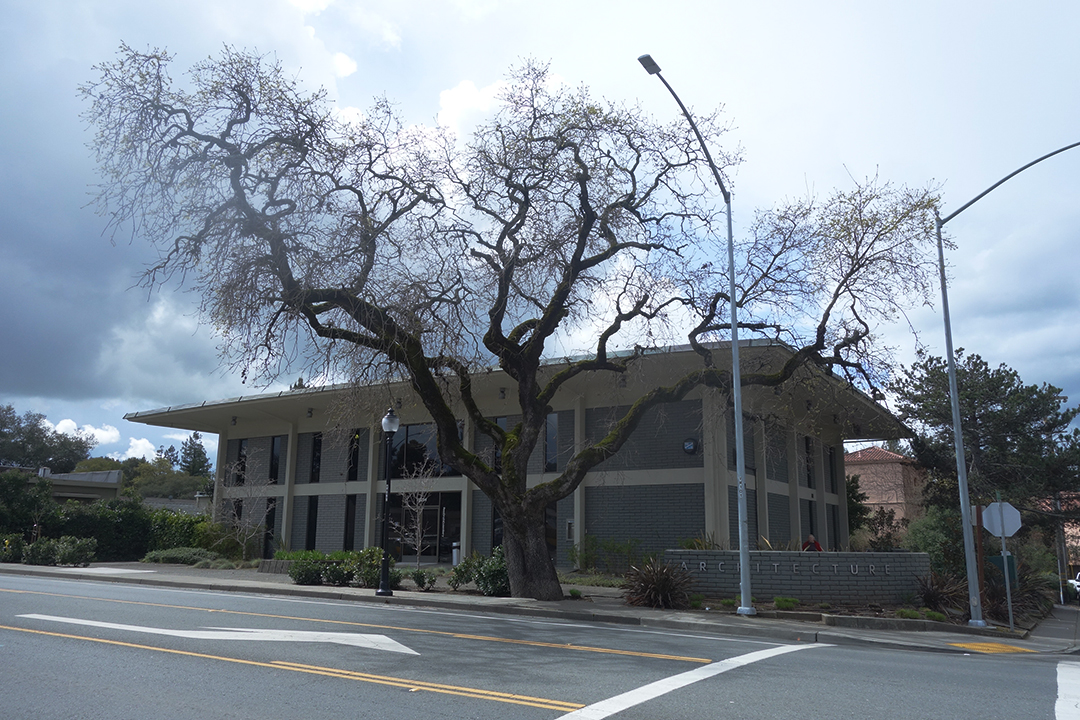
1973 top. 2018 bottom. Top photo courtesy of the Sonoma Valley Historical Society.
The tree may appear in some other historic photos.
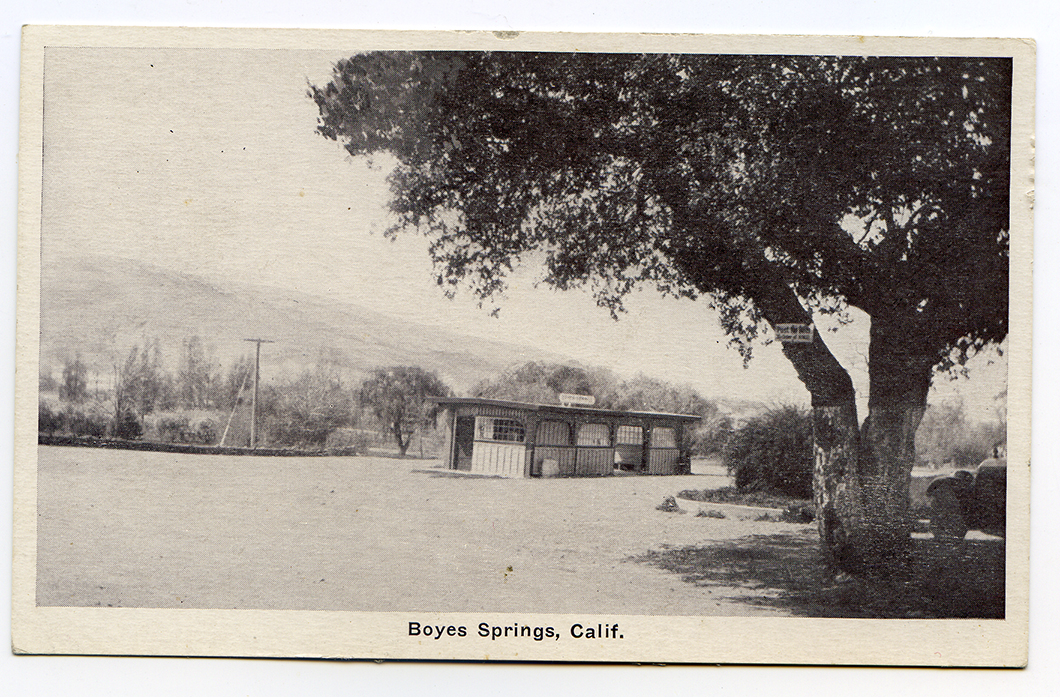
Boyes Depot, 1930s, (approximately located in the parking lot behind the Plaza Center Building), looking north to Sonoma Mountain. The oak in the foreground is possibly the Sierra Drive tree.
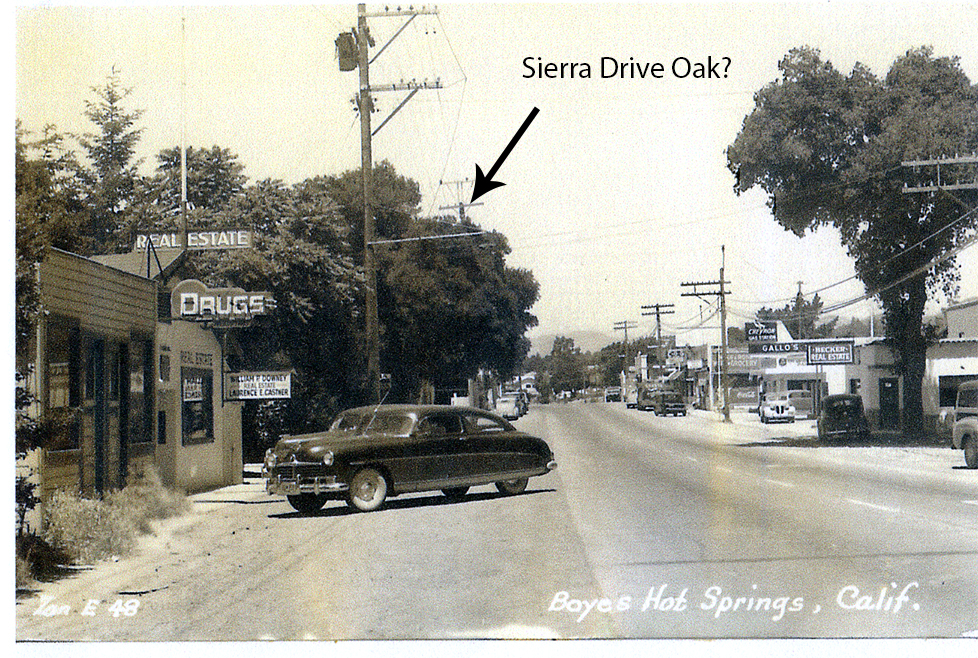
Photo by Zan Stark, 1950s. The location is opposite Arroyo Road on the Highway.
Oaks are never more beautiful than in winter.
Next post: About Sierra Drive/Meincke Road.


At the corner of Central and Highlands in Boyes Springs, these trees had been “influencing” the fence for many years, in a wonderful display of found sculpture. In April of 2017, big changes happened.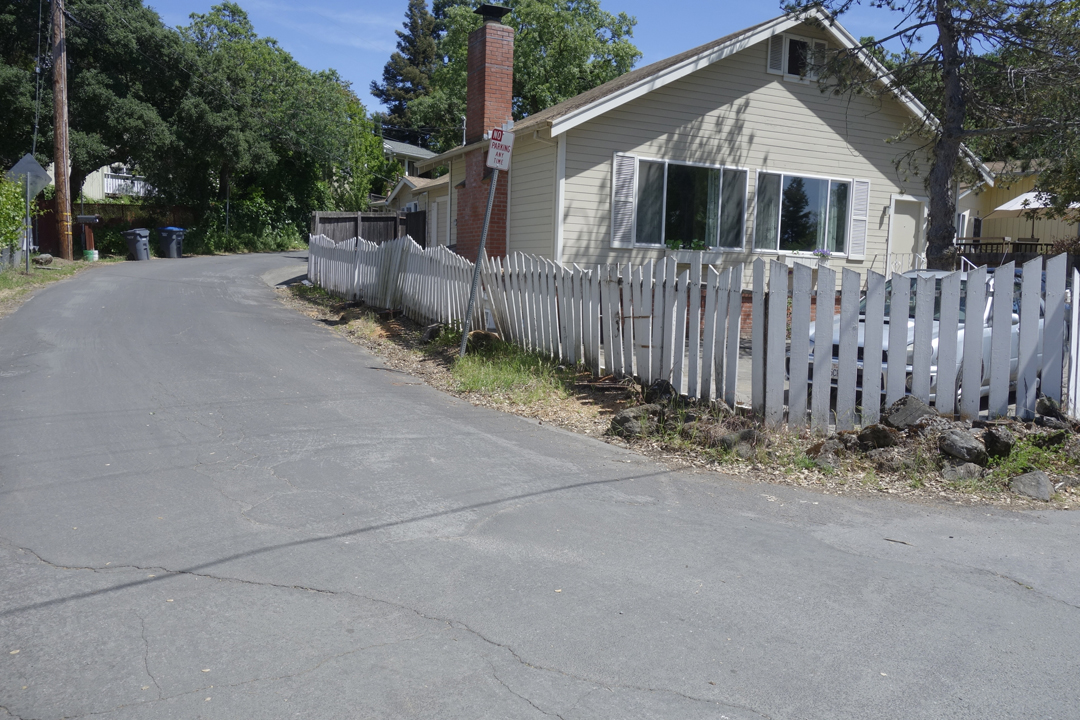
The trees, which had been menacing the house’s foundation, were removed and a new fence was built.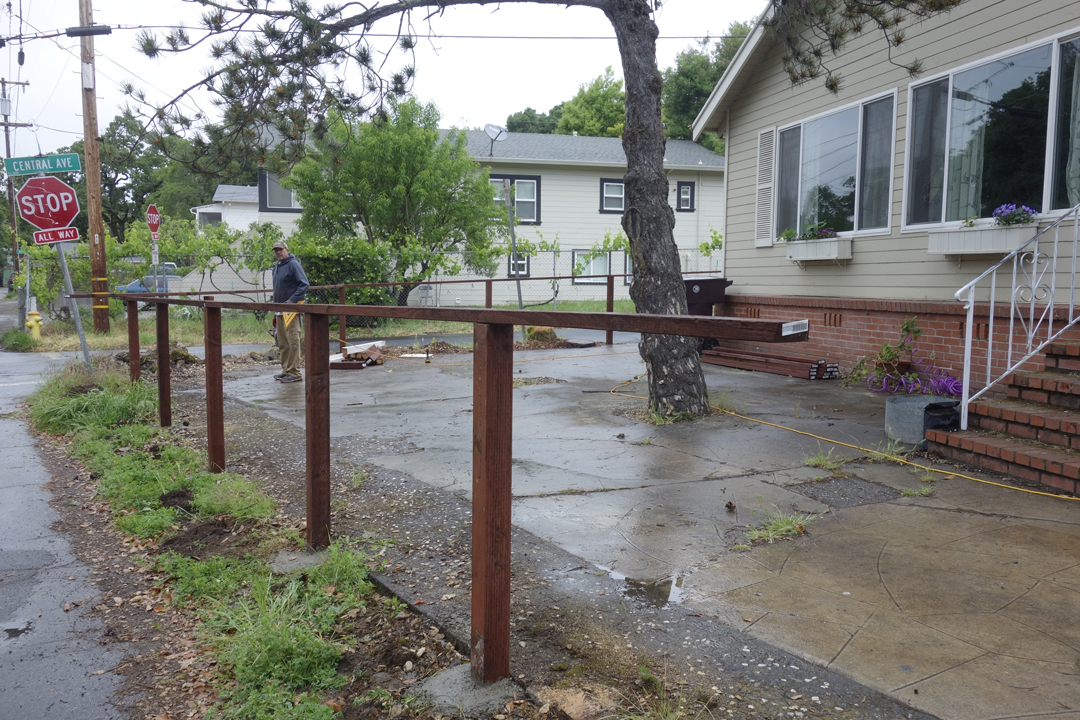
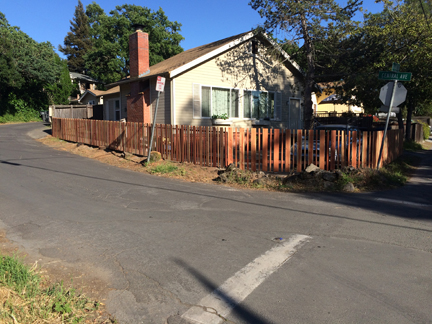 It’s sad to see trees go, but they don’t live forever, just like people.

The owner of El Molino Central, located at Central Avenue and Sonoma Highway, did a magnificent job designing and building her restaurant. Since it first opened, in 2010, she has continued to improve the site. This stone wall was a later addition.
In a similar way that wood fences, or even buildings, are often built around trees, 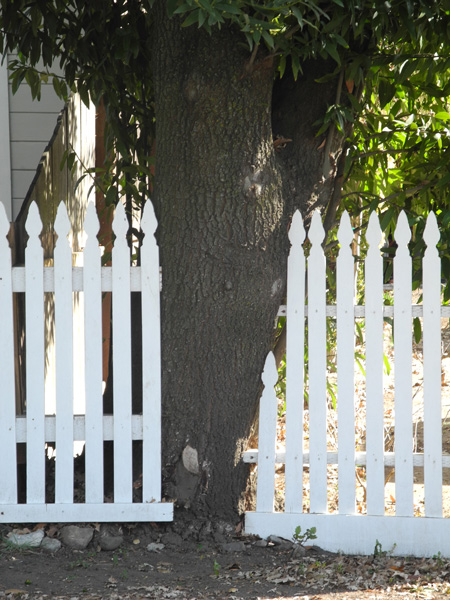
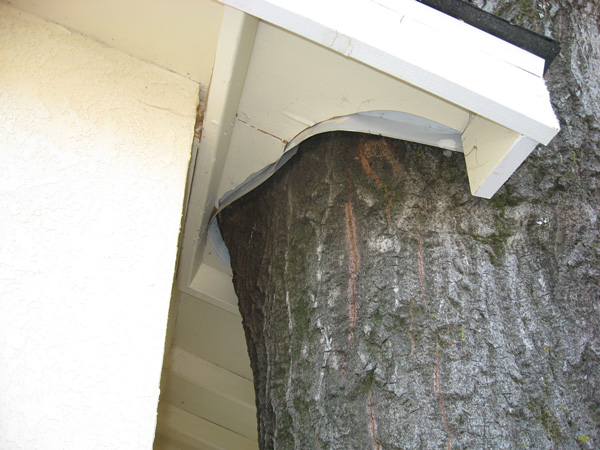
the masons who crafted this wall incorporated the small tree right into the work.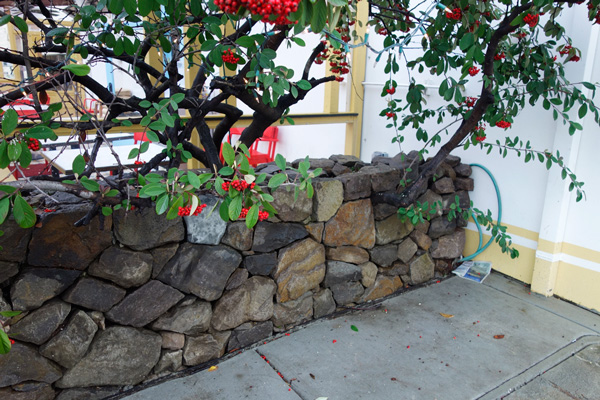
The plant is heteromeles arbutifolia, or Toyon: https://www.calflora.org/cgi-bin/species_query.cgi?where-calrecnum=4140 (please correct if wrong.) This is an interesting plant to have at a restaraunt, since its toxicity is listed as MAJOR.
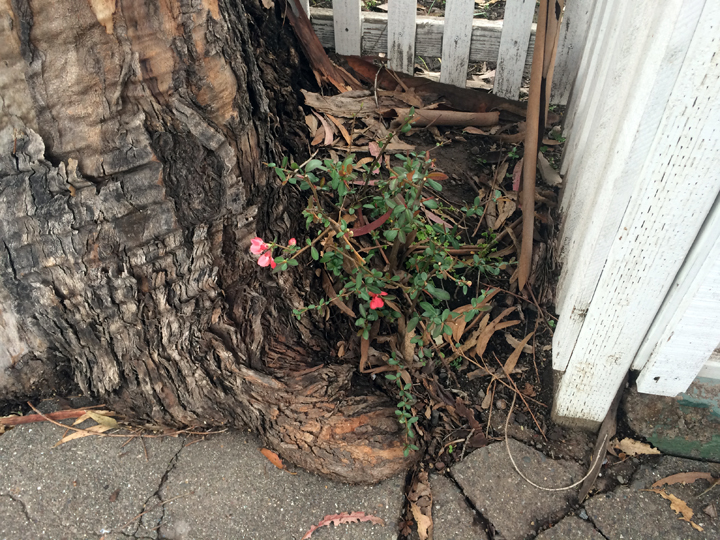
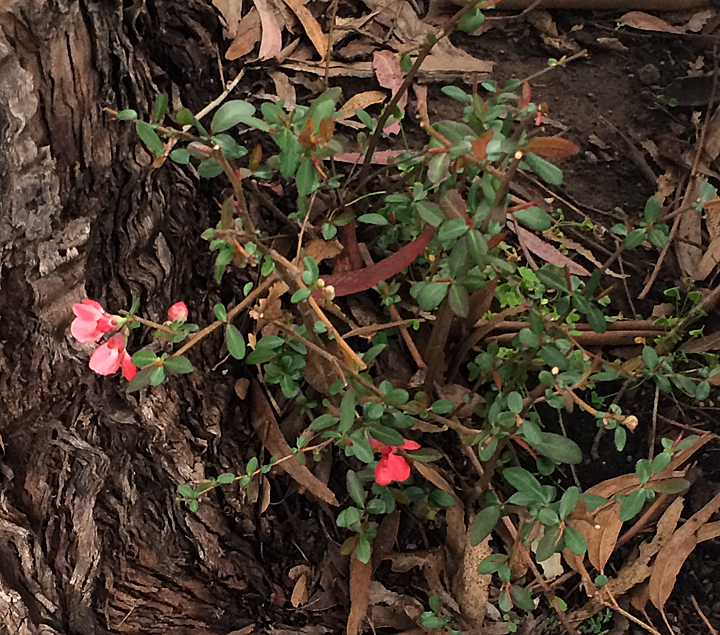
A volunteer quince, blooming for Lunar New Year, growing at the base of the big eucalyptus on Vallejo Street.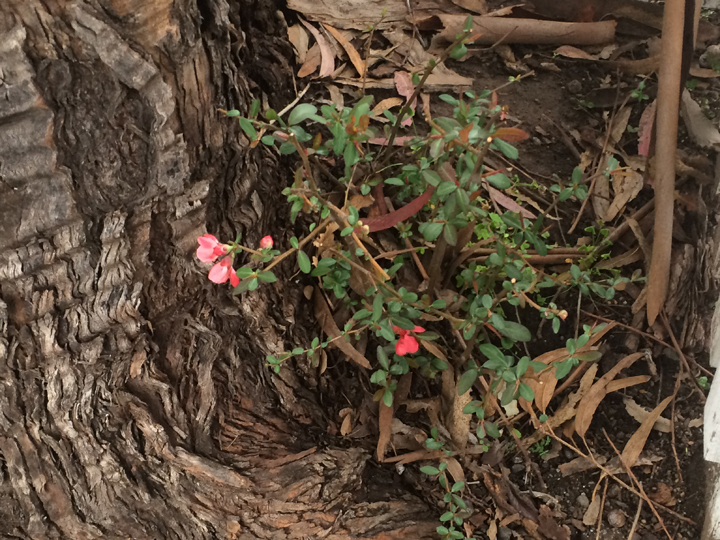
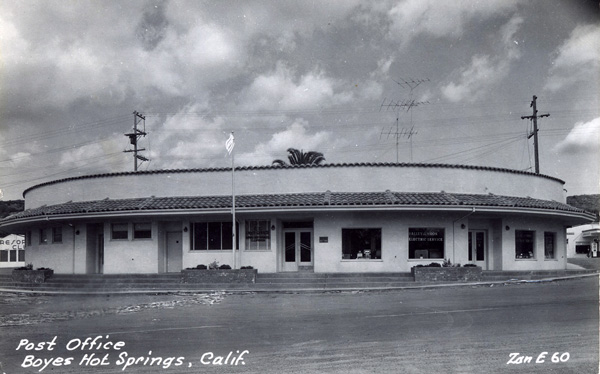
A pre-1956 photo with the palm tree peeking over the top of the building. Notice the “Resort Club” sign at left.
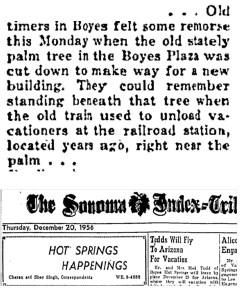
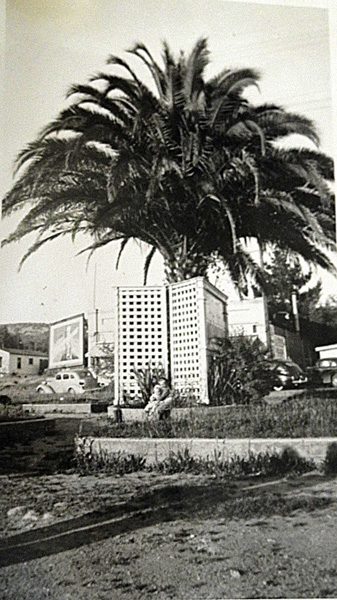
Photo courtesy of Bruce Griewe. Taken in 1942.
Yes, there was a Plaza in Boyes Springs. The first half of the Plaza Center Building was built in 1951. It spared the palm tree. The second half, the part that houses the post office, was built in 1956, and spelled the end for the beloved tree.
 springs museum