Boyes Hot Springs, People, Photographs, Resorts, Uncategorized, Wonders and Marvels

Harmonie Ausflug

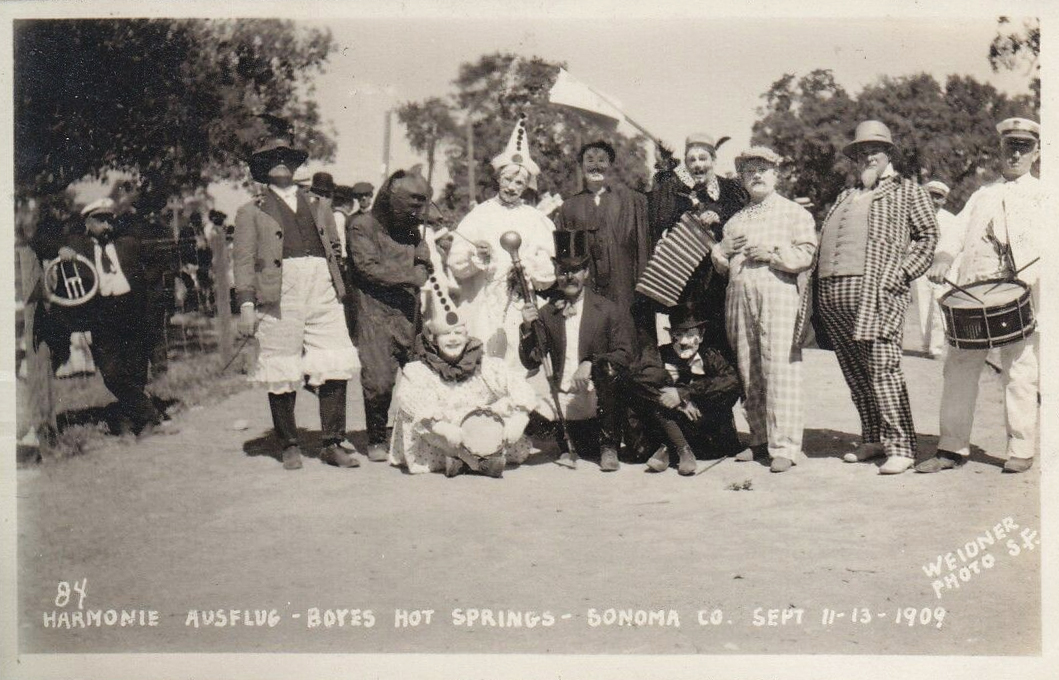
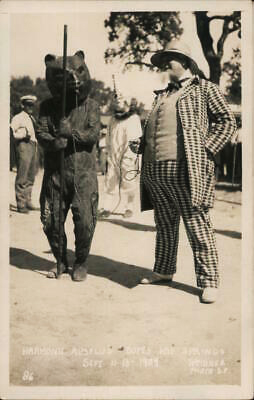
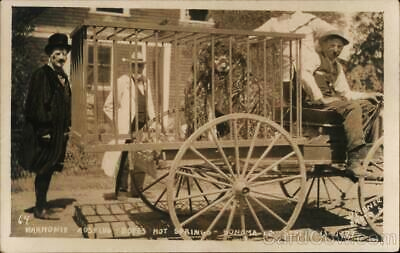
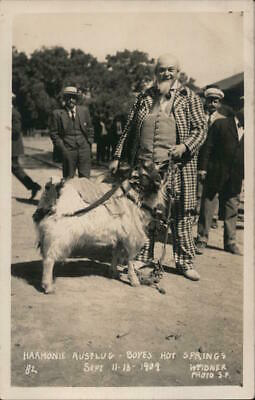
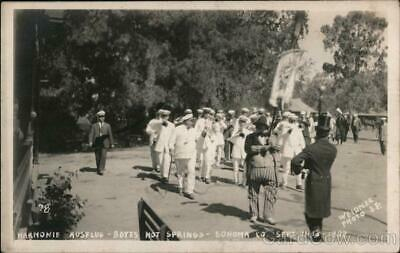
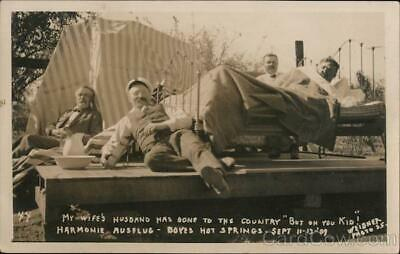
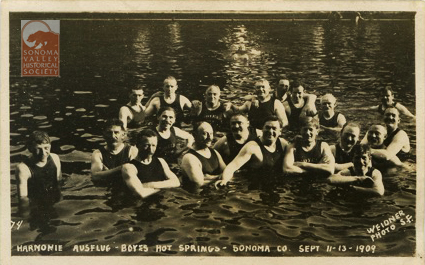
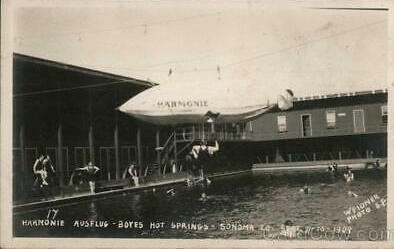
A curiosity of early 20th century postcards from the Boyes Hot Springs resort are labeled “Harmonie Ausflug.” “Harmonie Ausflug” is not the name of a specific society but of the activity: the Harmonie  (singing society, choral group,) takes an outing.

Livia Gershon in JSTOR Daily:

“In Europe’s German-speaking states…male choir organizations started popping up around 1810 and grew in number and prominence over the next half-century. Most were open to people of different social classes and focused on the idea of educating people and spreading middle-class values-though, by the 1860s, some were specifically “workers choirs,” affiliated with socialist and labor movements.

However, for many regular German Americans, this wasn’t really the point of the festivals. They showed up to enjoy romantic or humorous folk songs, eat childhood foods, drink beer, and reminisce about the old country.” and,

“German American singing festivals included both highbrow and lowbrow features.”

The Harmonie Ausflug post cards clearly represent the choristers indulging in the “lowbrow features.”

Animal costumes were favored. Dated 1909 on front.

An actual animal.

Not just singers, but a marching band!

“My wife’s husband has gone to the country “but oh you Kid!”

Taking the waters at Boyes.

A zeppelin (invented by Ferdinand von Zeppelin, don’t ya know)? Seems to be hanging from a cable over the pool.


All photos, dated 1909, are by the prolific Charles Weidner.

The JSTOR article https://daily.jstor.org/german-song-in-america/?utm_source=mcae&utm_medium=email&utm_campaign=jstordaily-07102025

Further reading about German American singing societies from a University of the Paicific thesis from 1955 https://scholarlycommons.pacific.edu/cgi/viewcontent.cgi?article=2276&context=uop_etds

Standard
Collection/Obsession, nature, Neighborhood Phenomena, Wonders and Marvels

Neighborhood Phenomena: Plants, Take Two

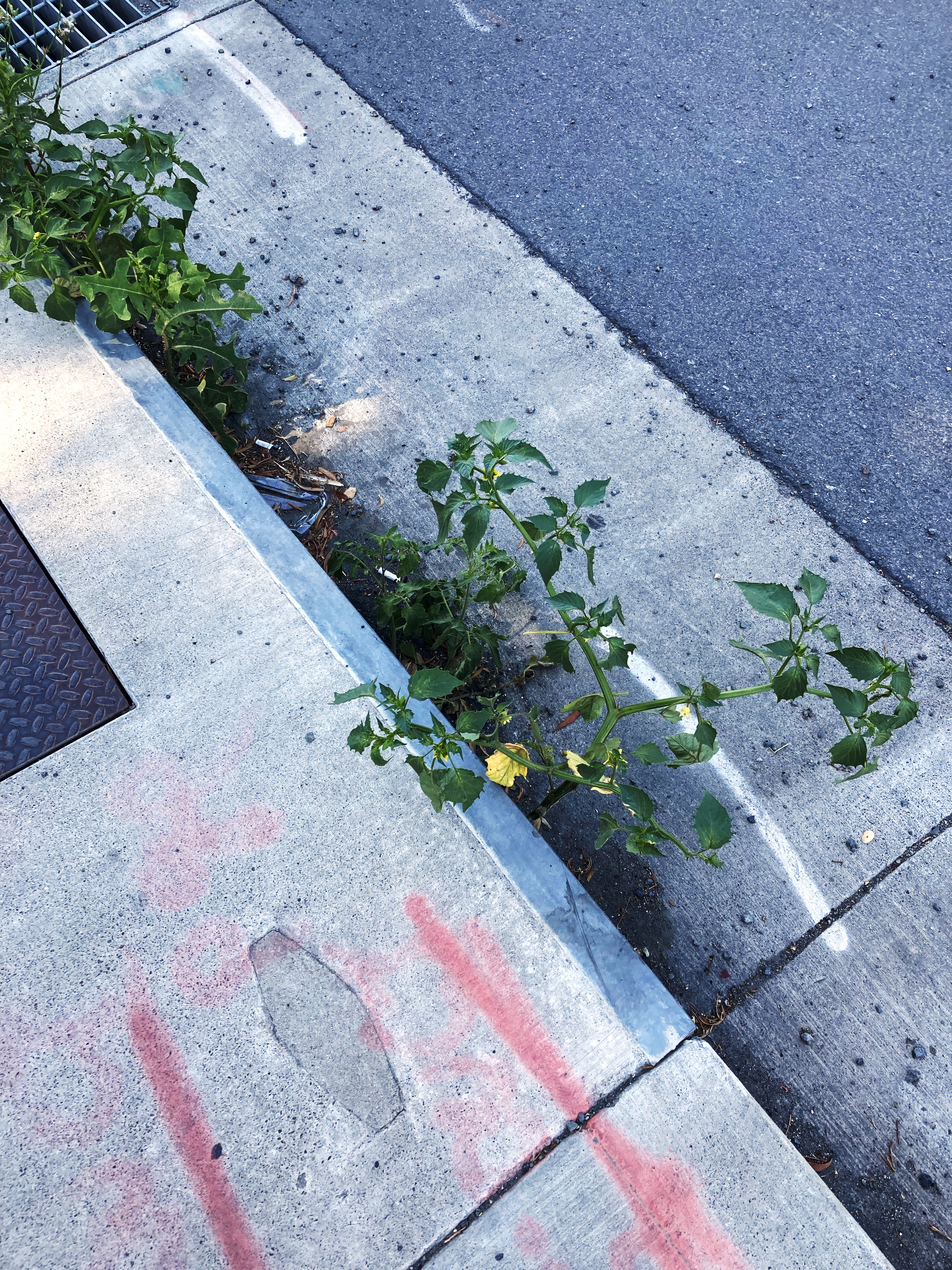
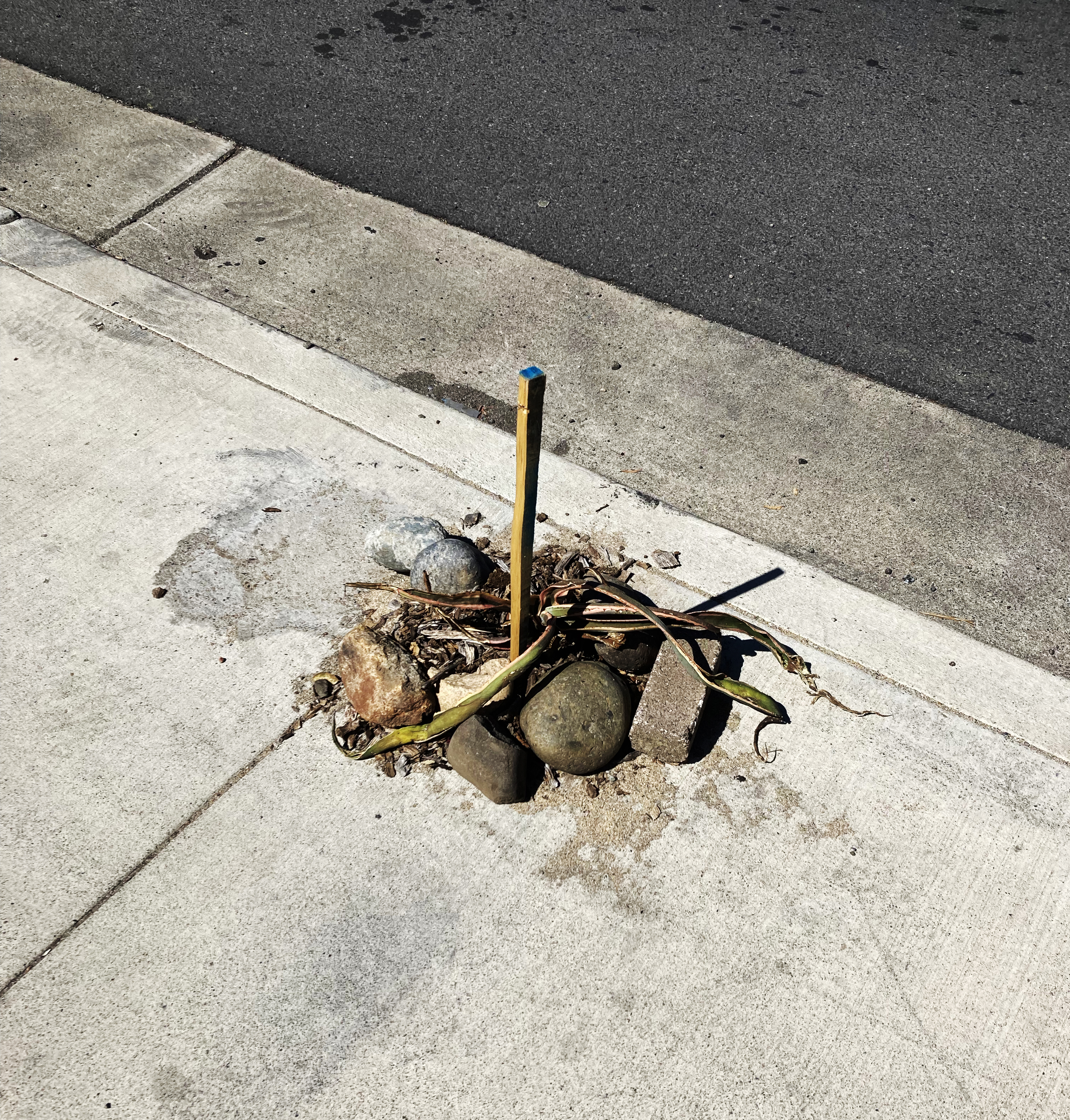
Only in Paradise: tomatoes growing from a sewer grate.
Guerrilla landscaping?
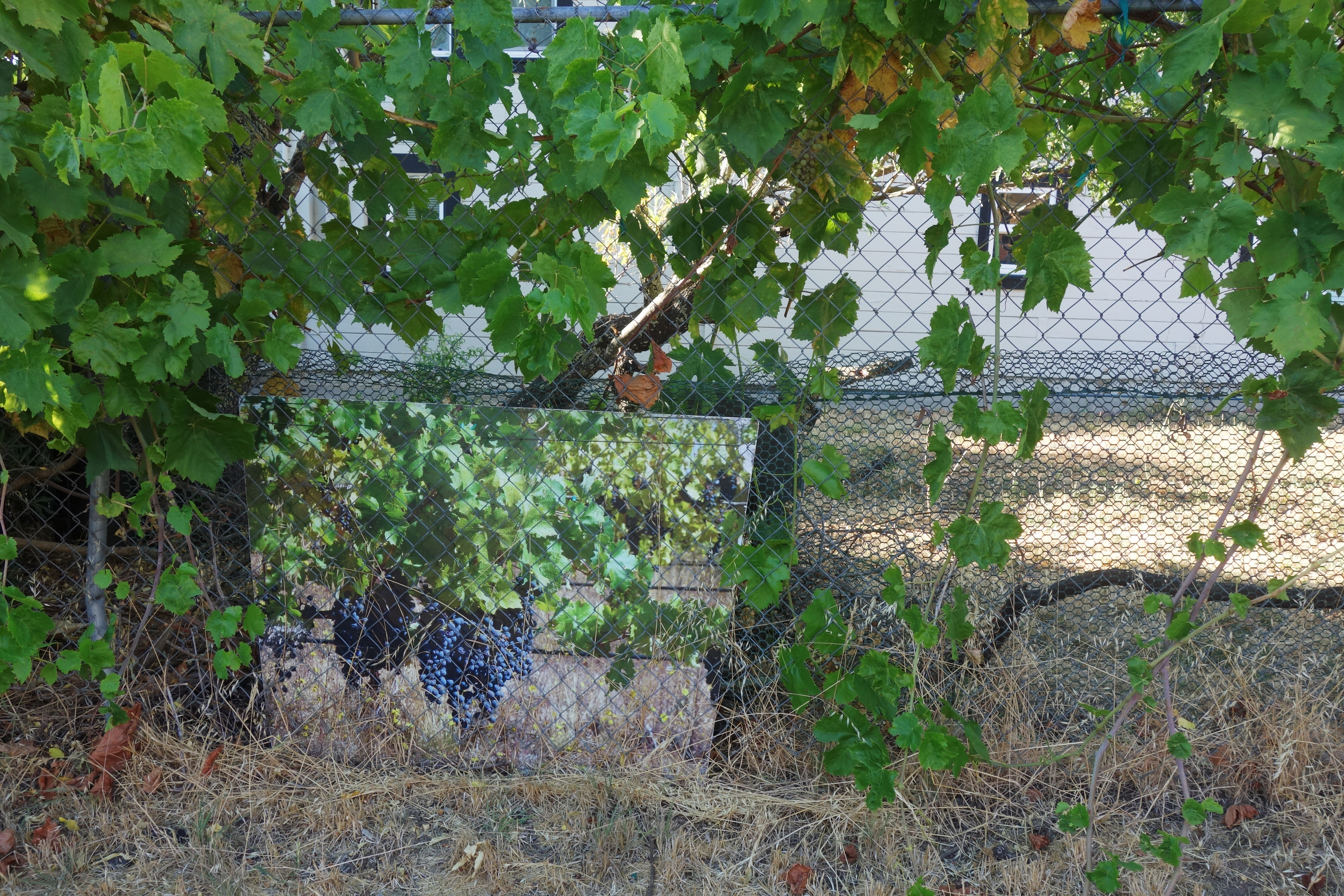
Grapes and “grapes.”
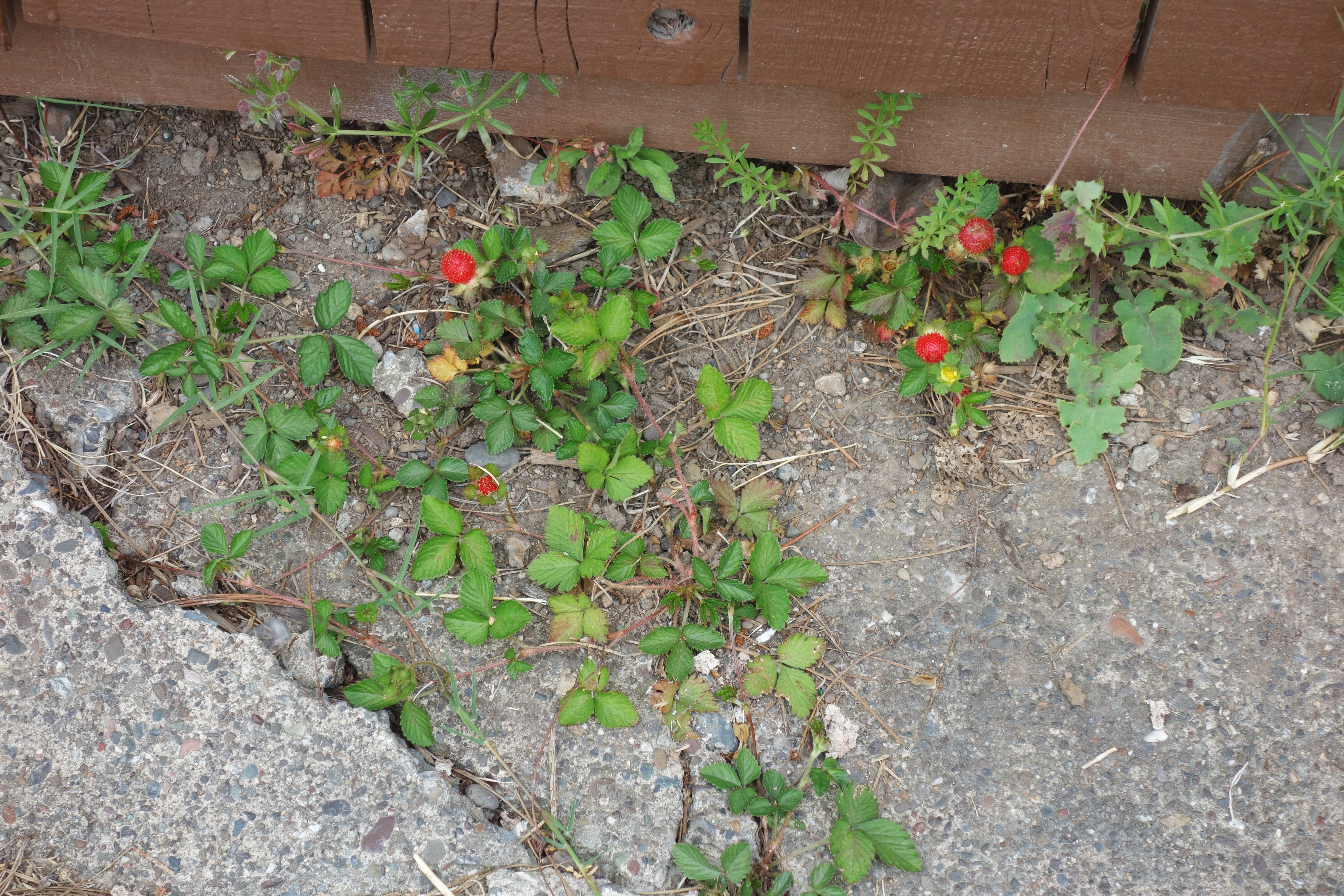
Strawberries stake out their territory.
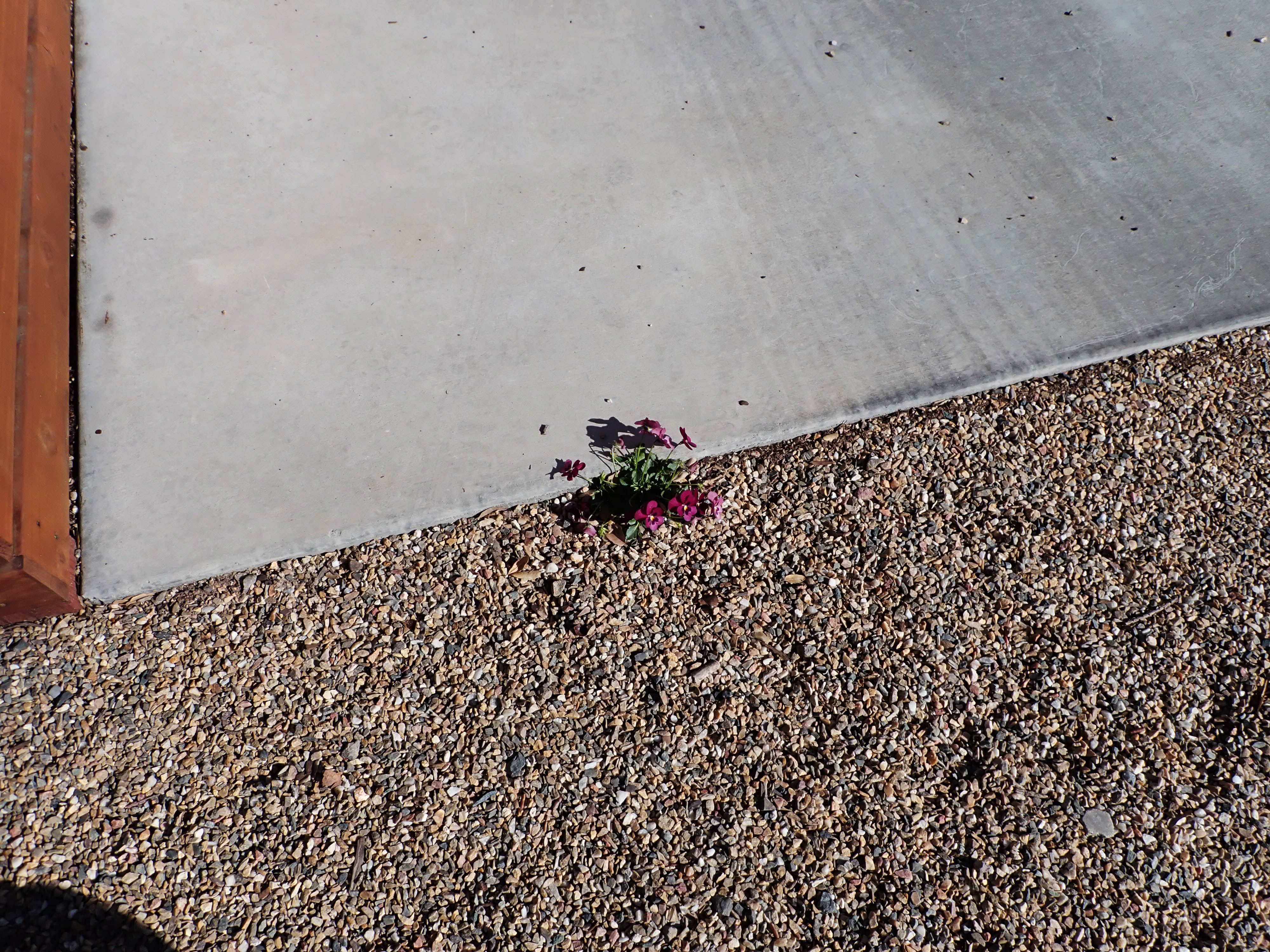
Color escapes
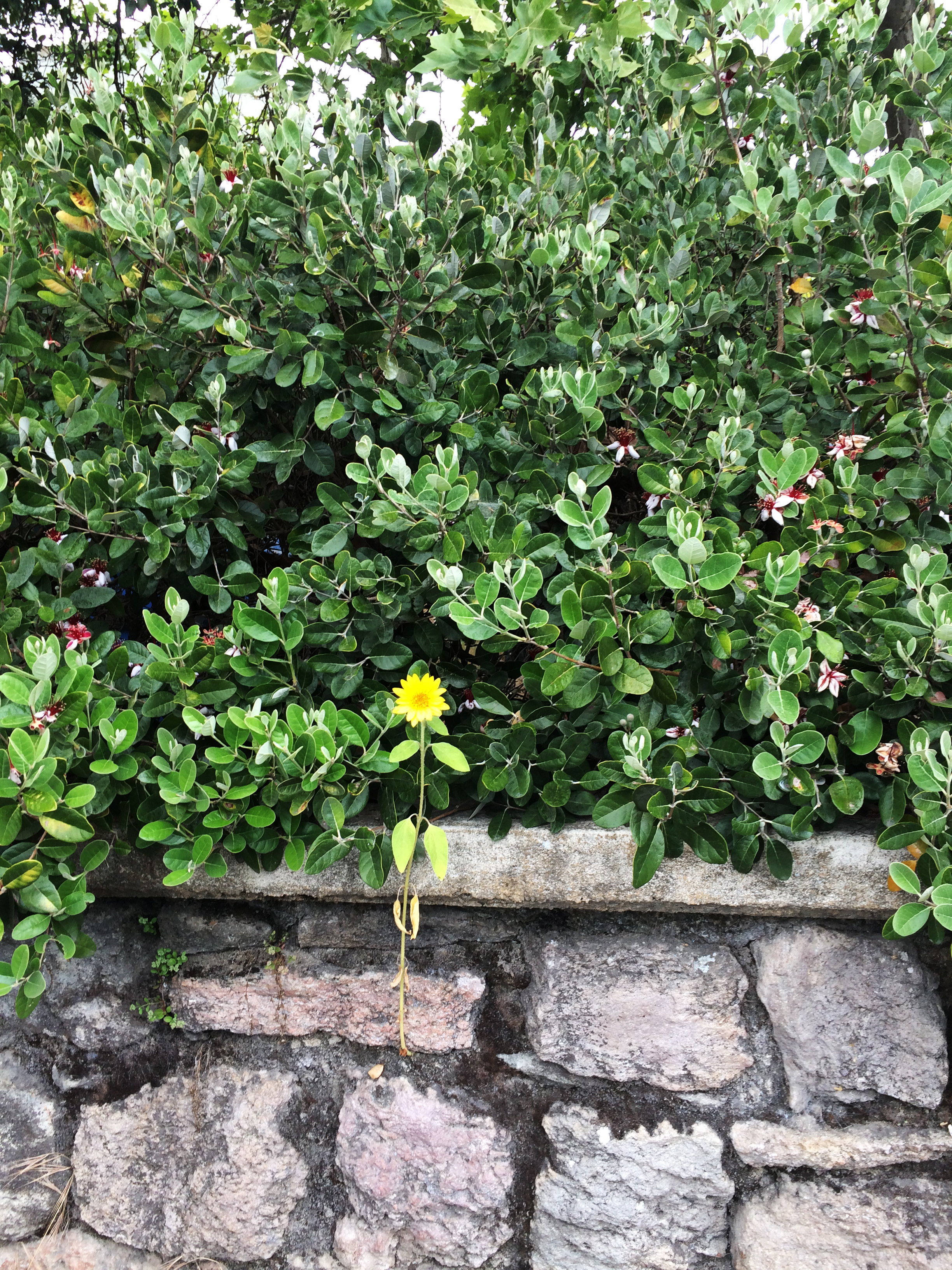
Against all odds. Standing out in a crowd.
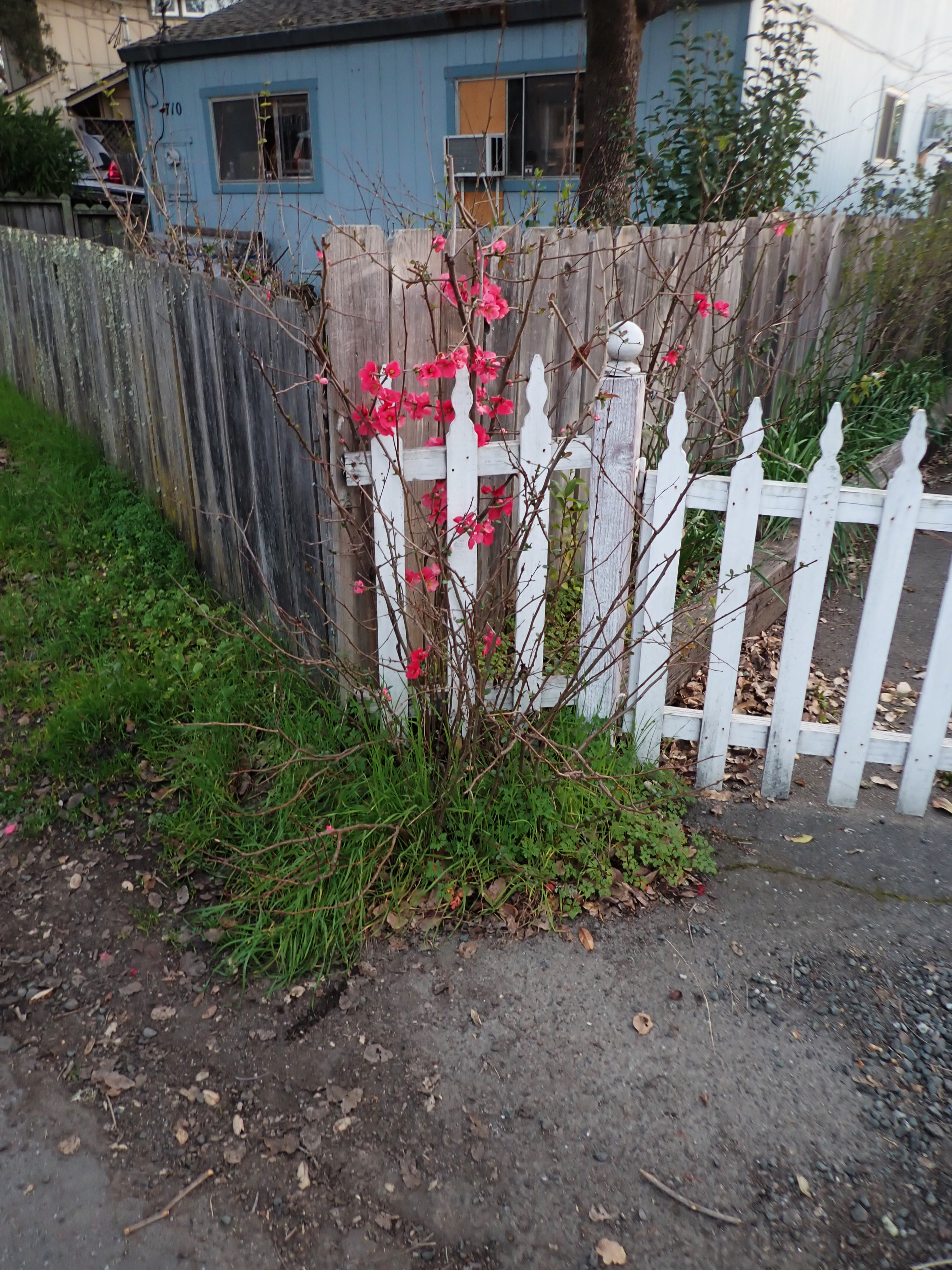
It’s Lunar New Year all over the neighborhood.
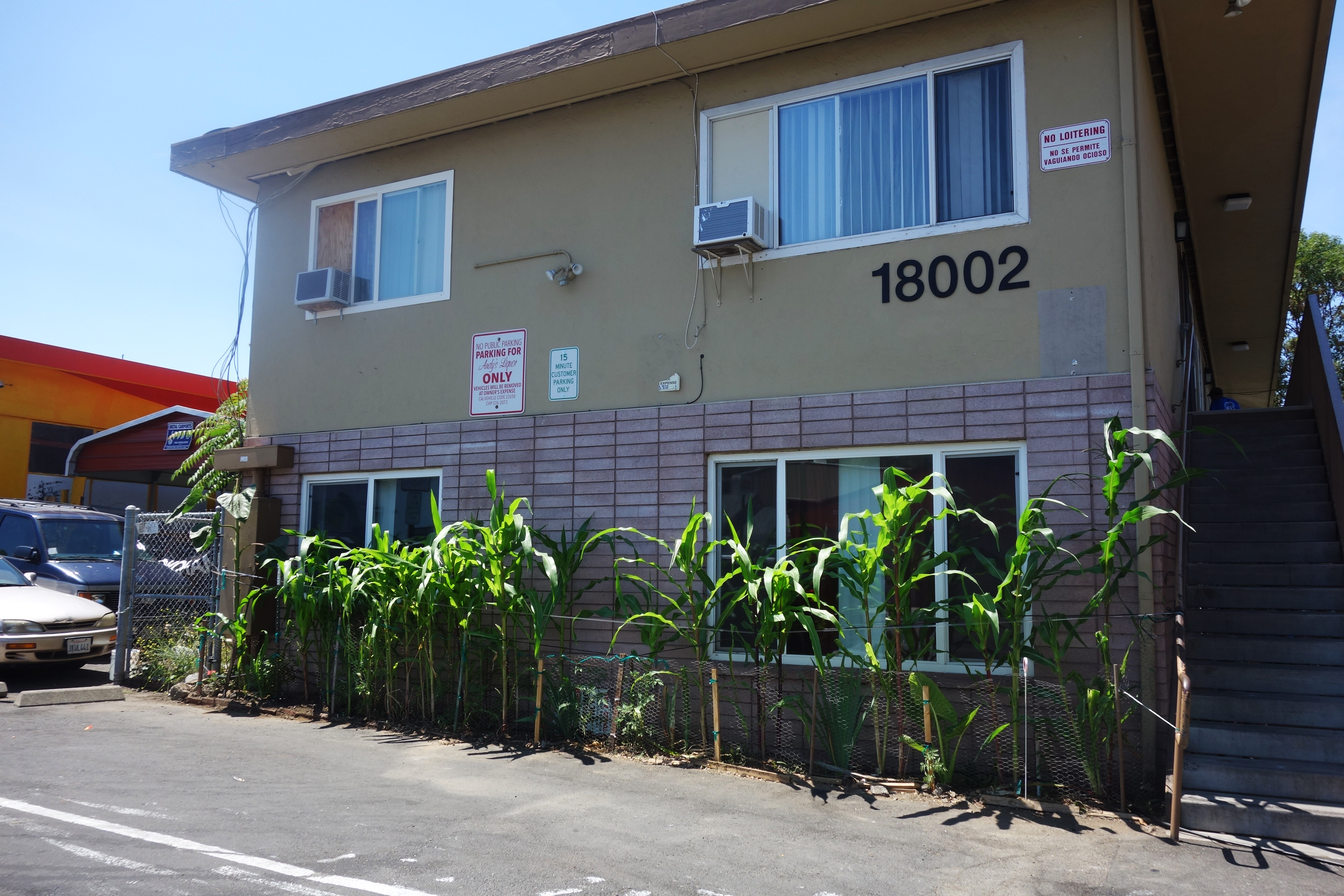
Apartment dwellers find a way to grow corn
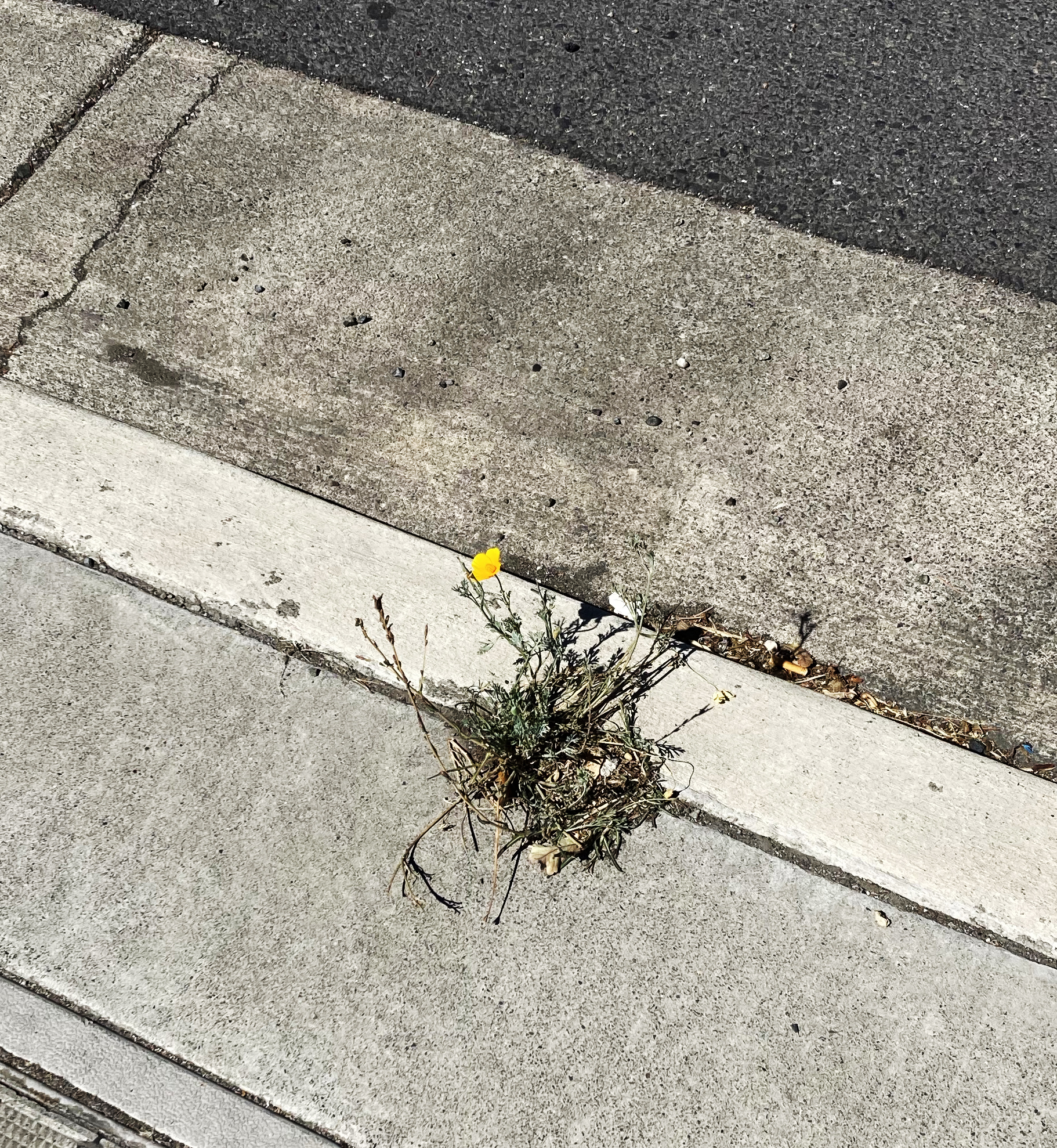
California’s state flower insists on growing where it will.
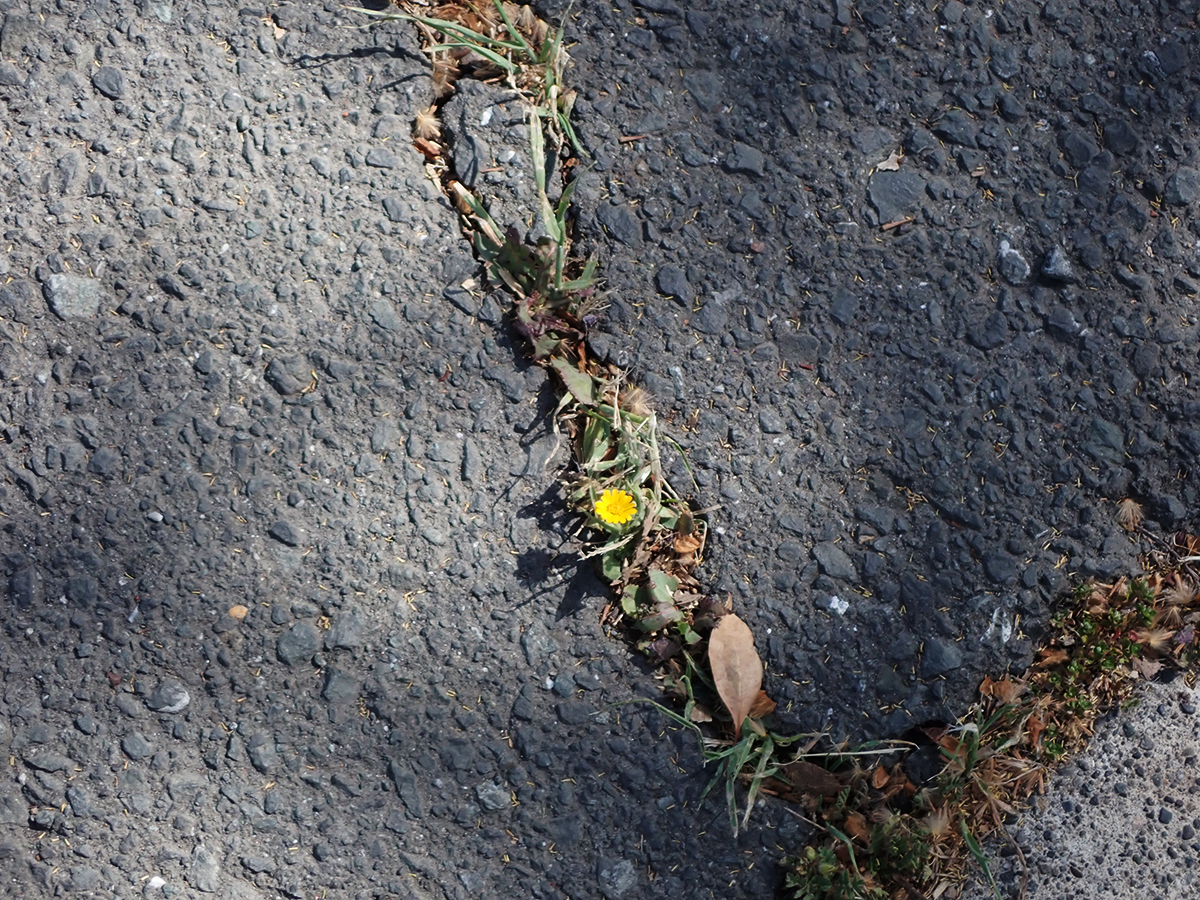
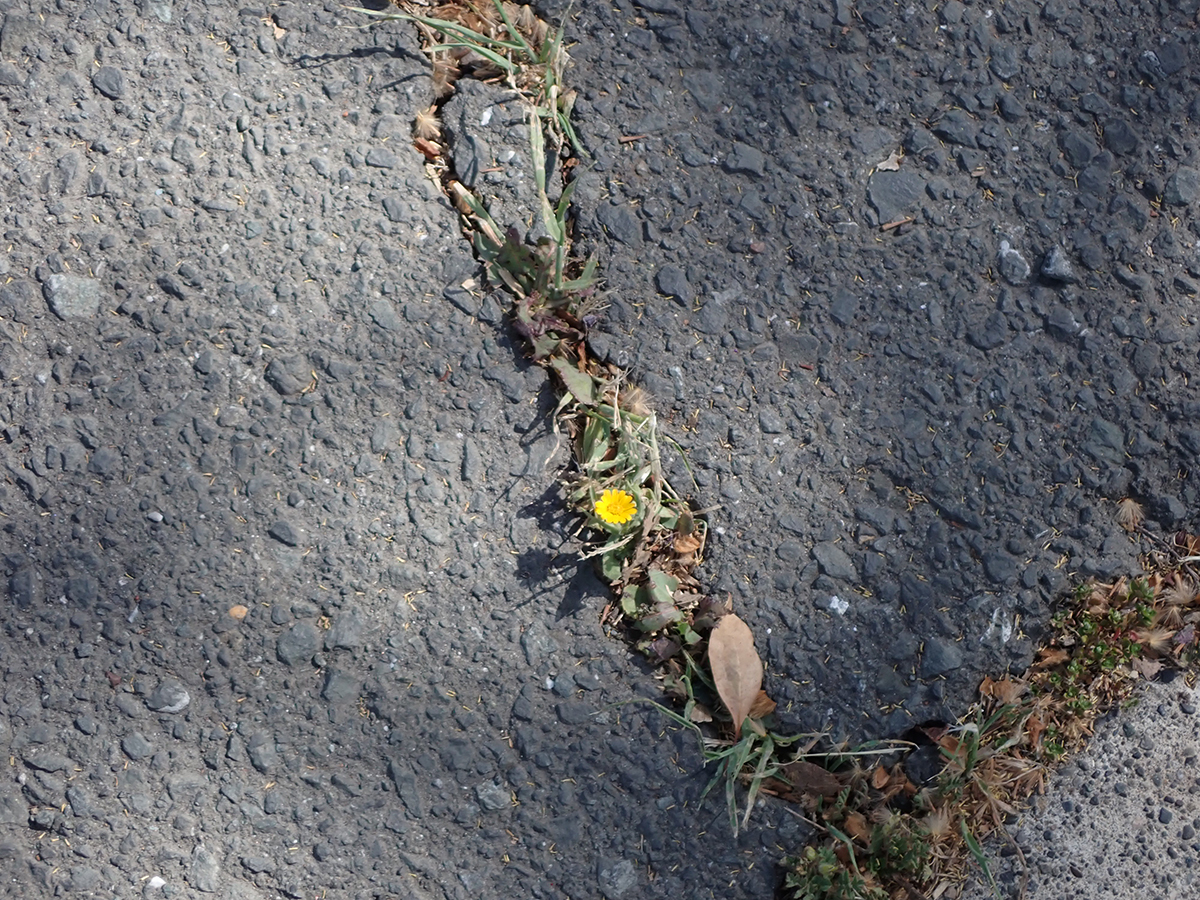
Tiny calendula growing from a crack in asphalt roadway.

Click image to enlarge

Standard
nature, Neighborhood Phenomena, Place Names/Street Names, Trees, Wonders and Marvels

In Remembrance of an Oak

Updated Below

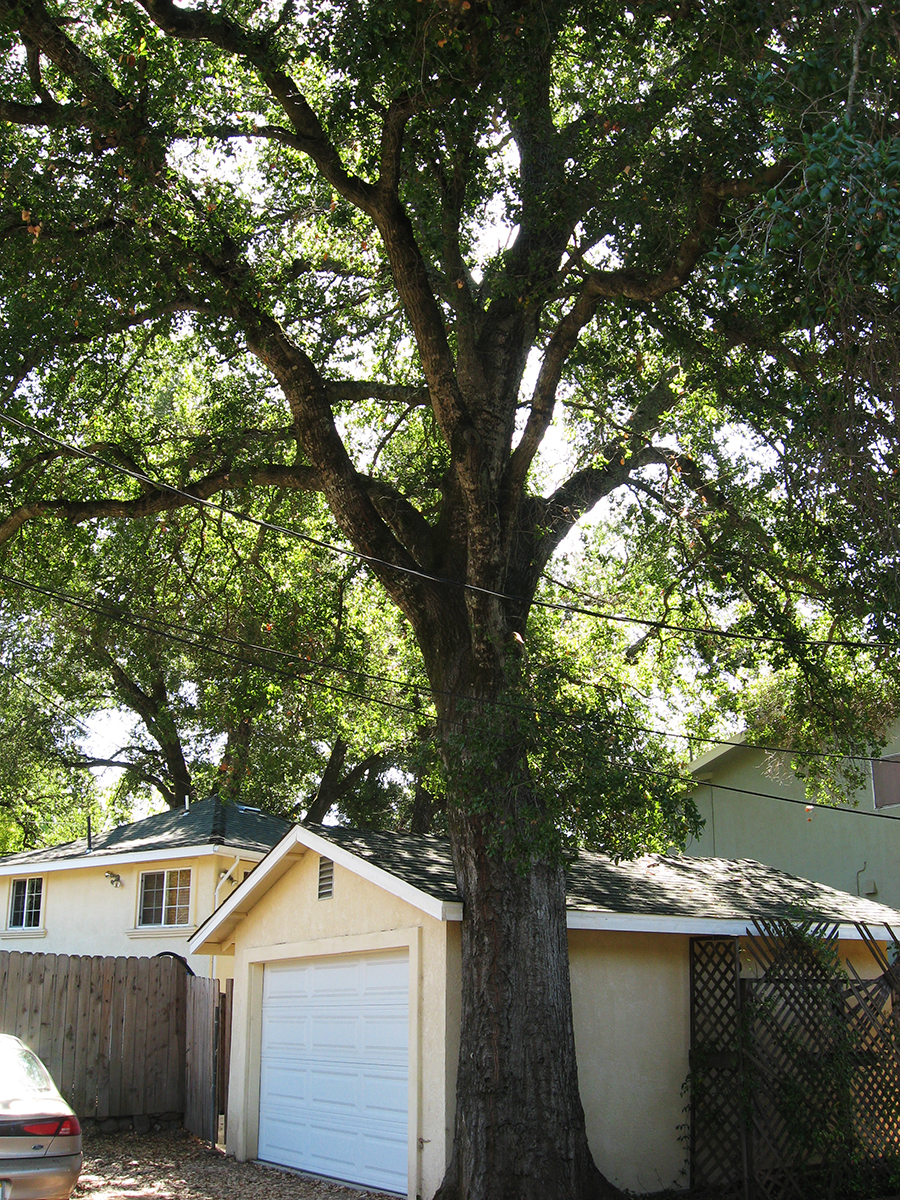
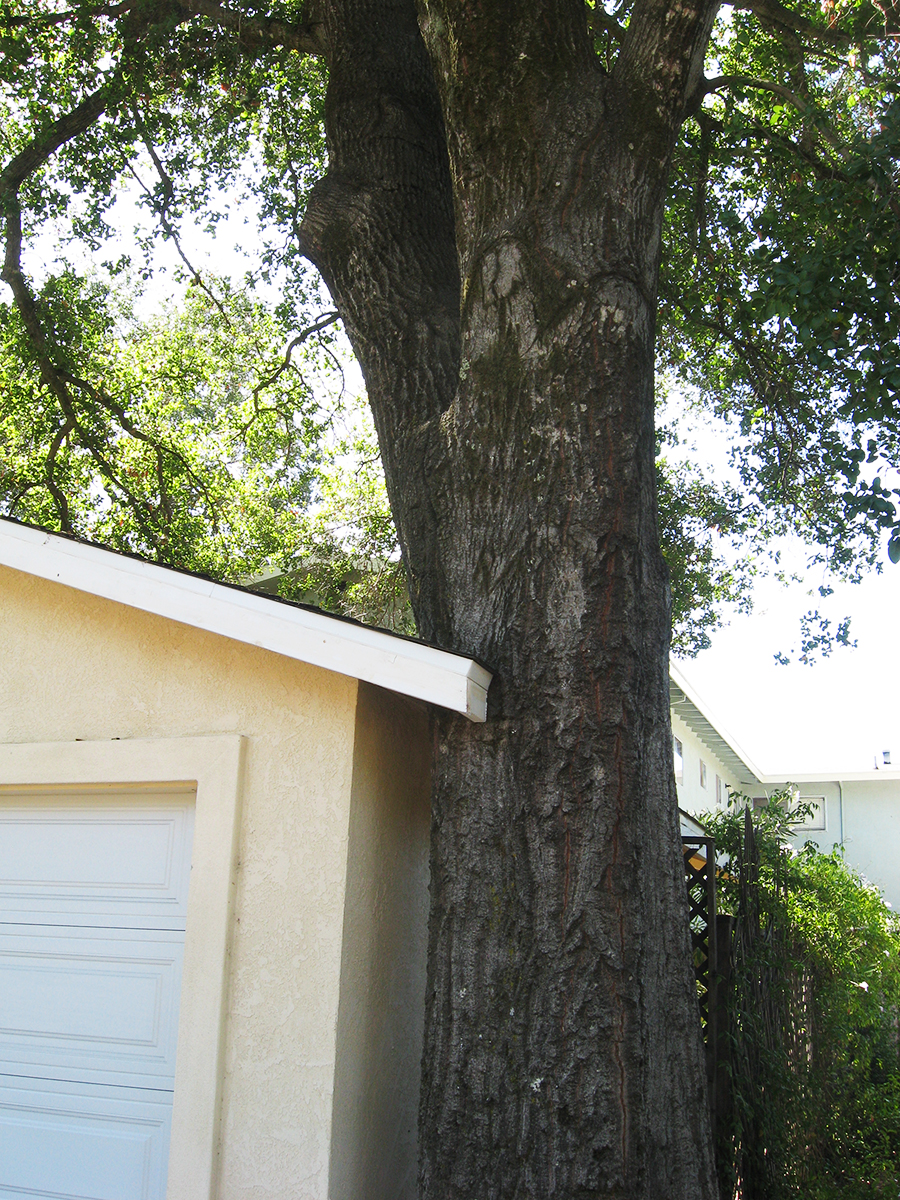
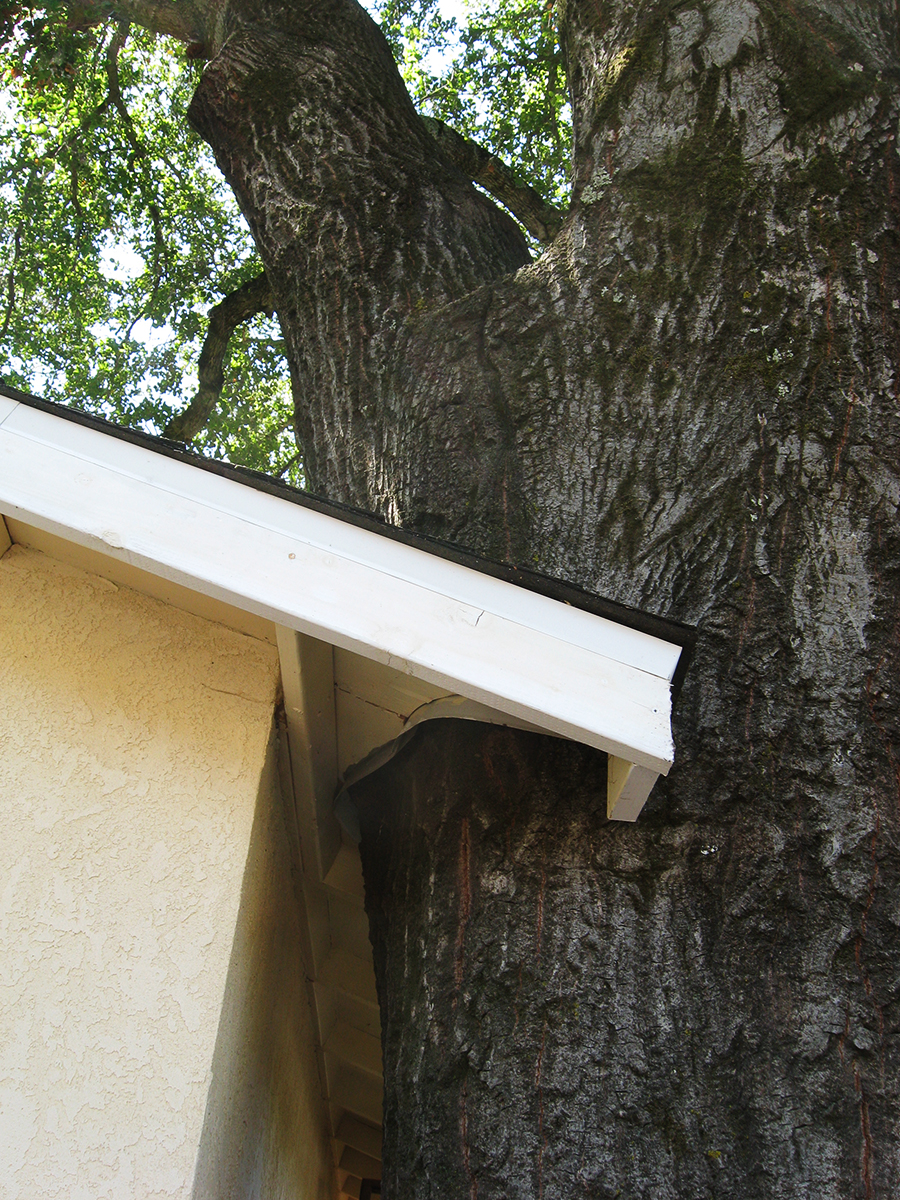
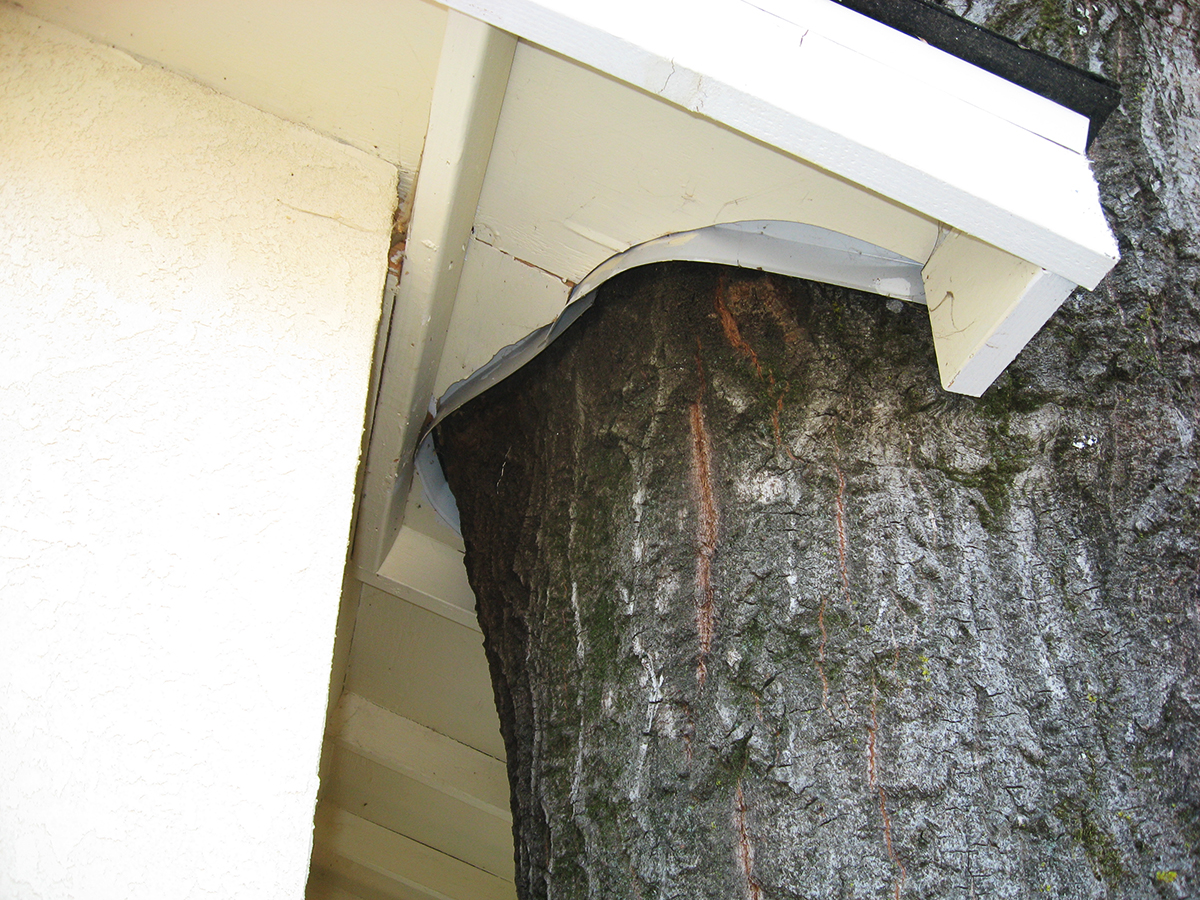
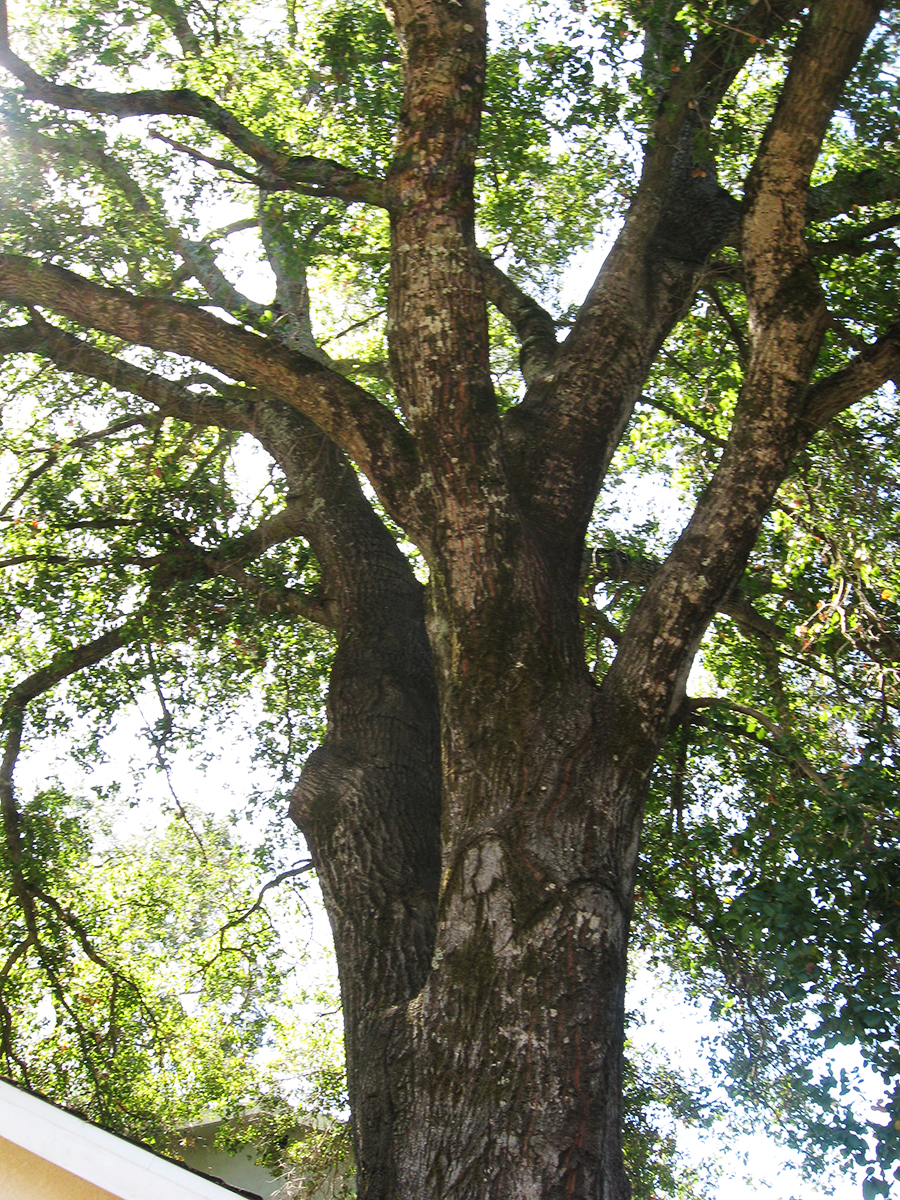
On Vallejo Ave. near the corner of Calle del Monte, in Boyes Hot Springs, there stood a prime example of the ongoing interaction between trees and the built environment: A garage was built next to an oak, the oak grew, humans adapted the structure to accommodate the native tree. This was a lovely thing to see.

Prior to 2009 when I first photographed it, the structure had been so dilapidated that I was sure they were going to tear it down. But they restored it and did a neat job of cutting the roof overhang around the mighty Quercus.

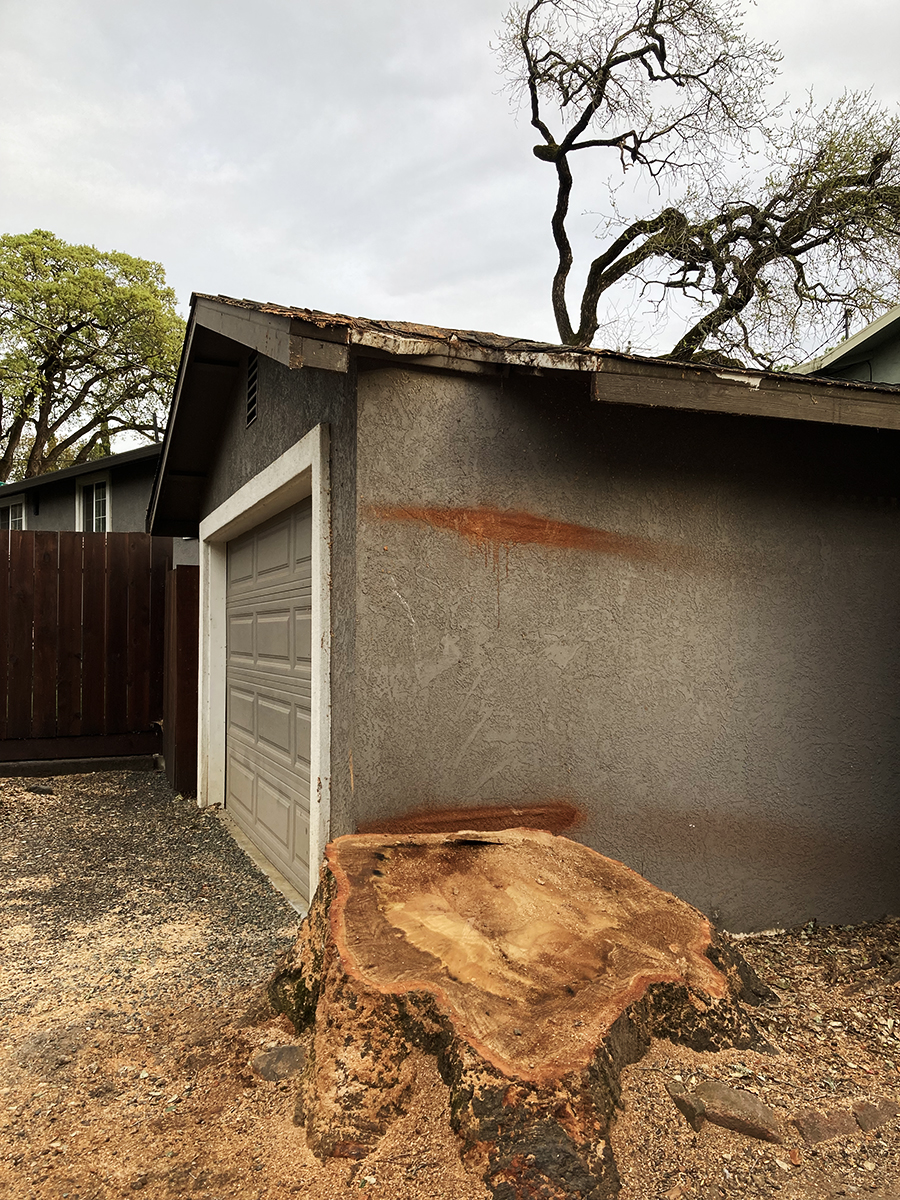
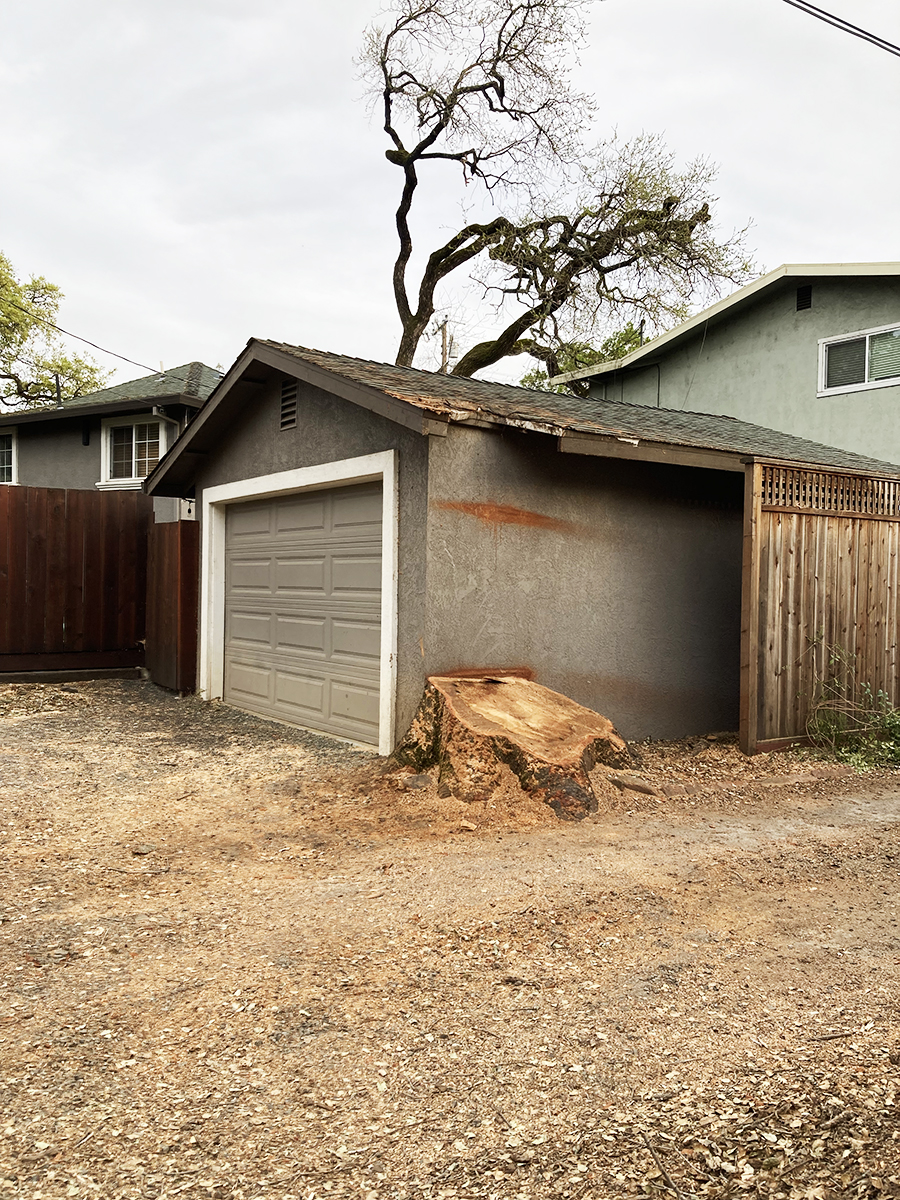
Flash forward to 2024. The tree is gone, its pleasant pool of shade just a memory. In the last two photos you can see that another tree, in the background, has also been removed (see the first photo), for fire safety, they say. Whether necessary or not, we always mourn the loss of a tree.

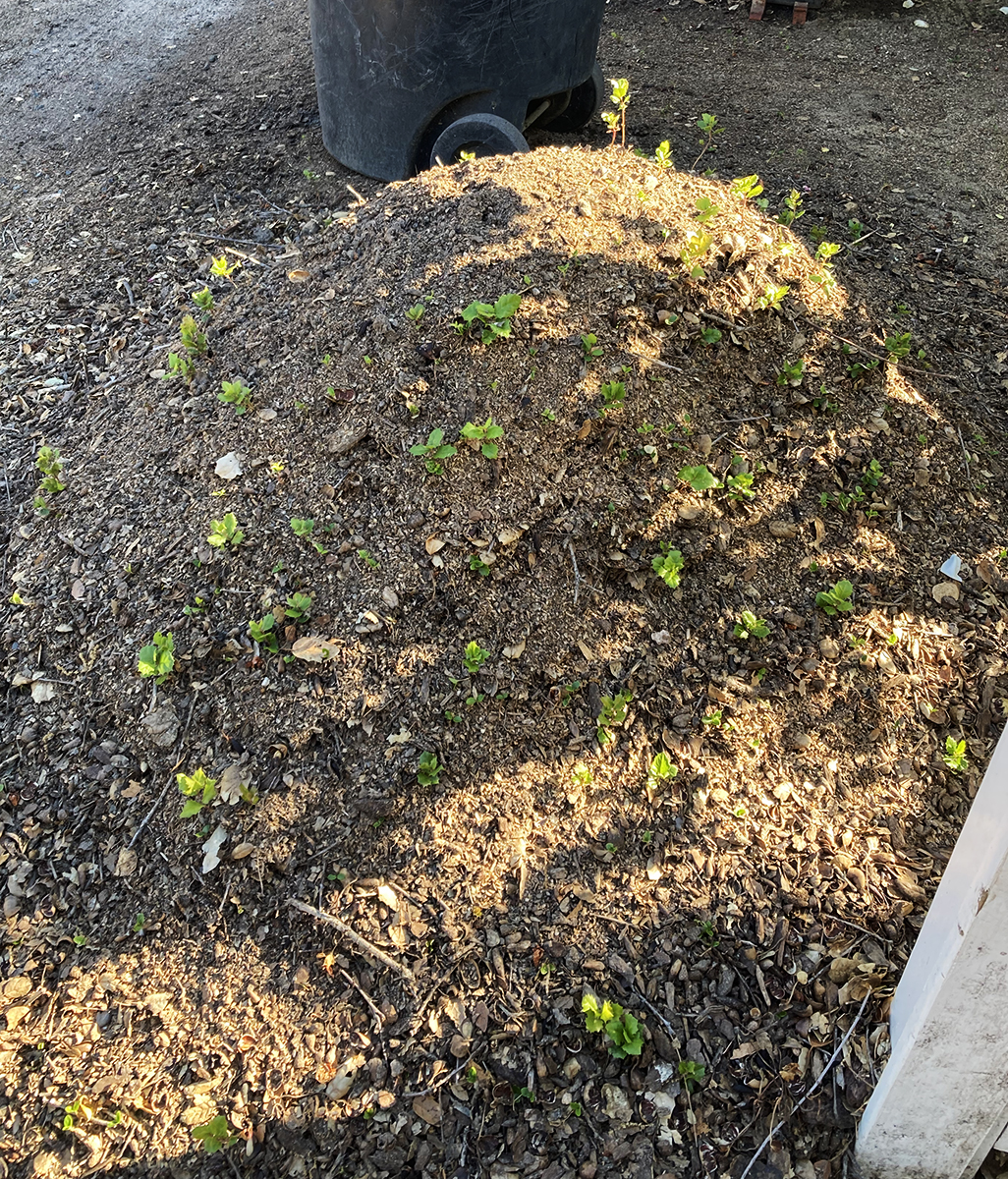
Below are photos of a mound of earth and wood chips next to the stump. It is absolutely covered in oak seedlings. Nature continues!

Standard
History, nature, People, Trees, Wonders and Marvels

David Douglas in Sonoma

David Douglas, the great English botanist, for whom the Douglas Fir, and many other plants is named, collected in the Pacific Northwest, the Eastern seaboard, and Hawaii, in the years 1823-1834. He also spent some time in California. (čəbidac is the Lushootseed name for D. Fir. Another Coast Salish name for the tree, used in the Halkomelem language, is lá:yelhp https://shoreline.libguides.com/treecampus/douglas_fir)

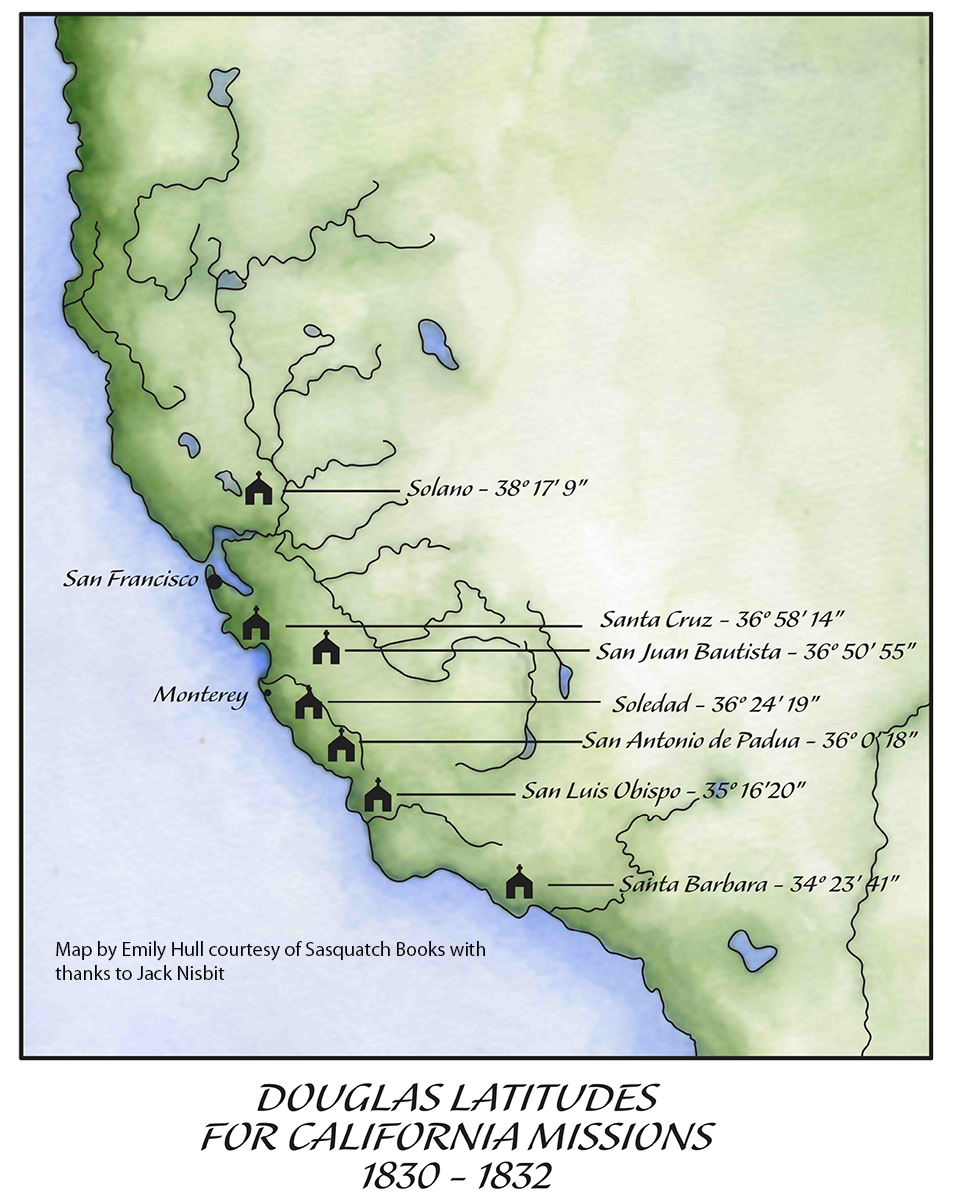
He traveled in there during the years 1830-32, collecting many species then unknown to botanists. He visited the colonial settlements from Santa Barbara to Sonoma, measuring the latitude and longitude at many of them. While in Sonoma he probably spent some time with the Mission fathers, as he had further south. He appreciated them as educated men who spoke fluent Latin.

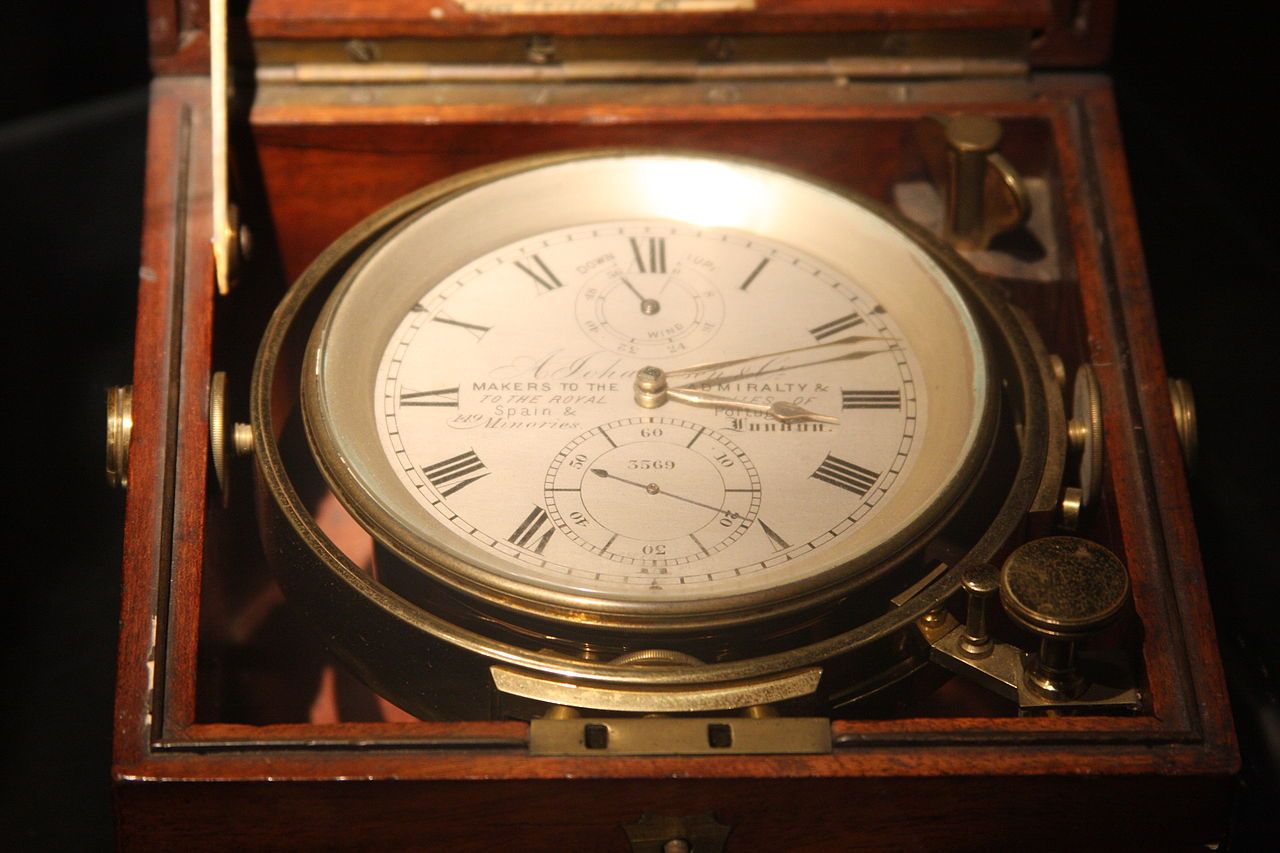
Back in London in 1827, Douglas had trained in surveying with geographer and astronomer Edward Sabine. On his 1829 return voyage around the Horn to North America, Douglas practiced with the instruments and studied the math. He became proficient at the difficult task of measuring longitude, given the unreliability of chronometers at that time.

A Harrison chronometer, late 18th century. By Bjoertvedt – Own work, CC BY-SA 3.0, https://commons.wikimedia.org/w/index.php?curid=8483950

The longitude as measured today: 38° 17′ 41.2368” N.


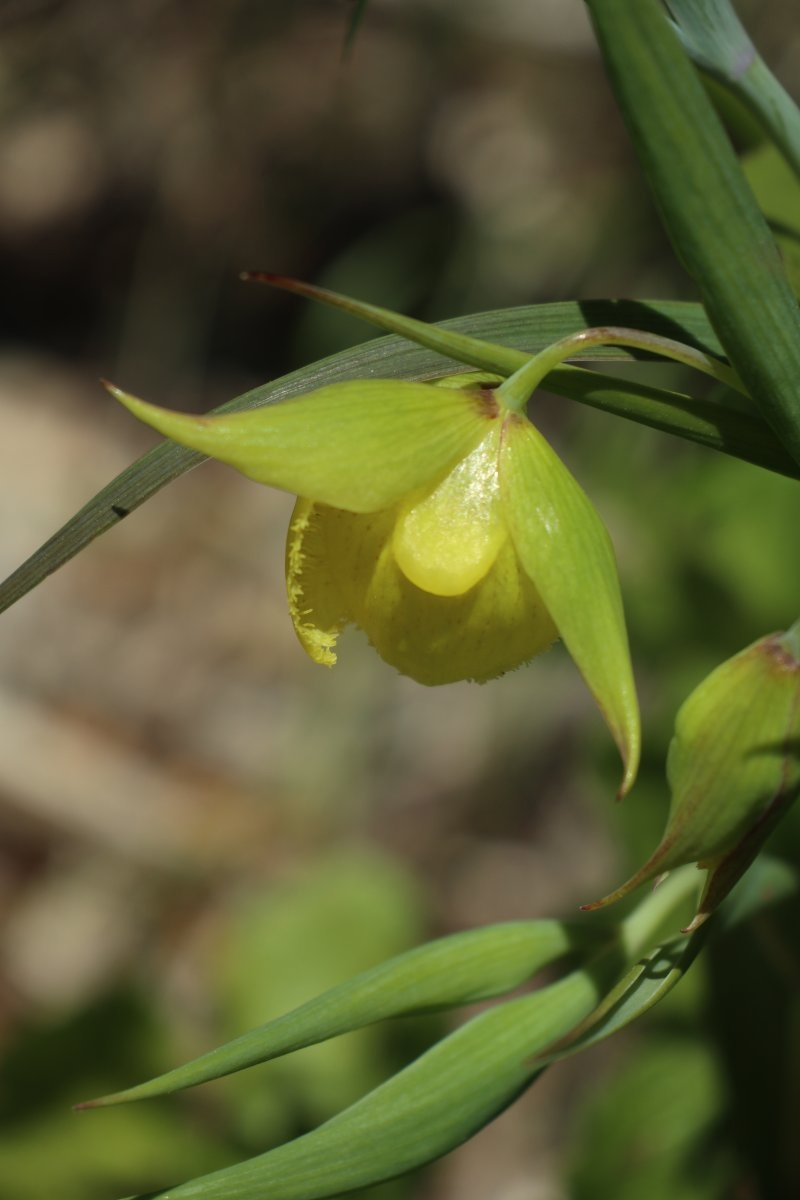
According to Willis Jepson, the dean of California botany, writing in 1933, “He was the first botanical collector in California in residence for any extended period and during this time he traveled through the Coast Ranges from Monterey north to the Mission San Francisco De Solano (Sonoma) and south to the Mission of Santa Barbara. He was not only the first traveler to collect the extensively rich and varied spring flora of the Coast Ranges, nearly all the species of which were new to botanical science, but also the first to leave some written description of it. Hundreds of new species, our most familiar plants, were based on the Douglas collection…” And “It has been suggested that Douglas visited Mt. Diablo, but the form of Calochortus pulchellus which he obtained might have been collected in the Sonoma region.”
Willis Linn Jepson was a co-founder of the Sierra Club and founder of the California Botanical Society. The oldest known California Bay Laurel (Umbellularia californica) is named after him. https://www.smcgov.org/parks/what-see-crystal-springs-trail
Calflora: Information on California plants for education, research and conservation. [web application]. Berkeley, California: The Calflora Database [a non-profit organization]. Available: https://www.calflora.org/ (Accessed: April 30, 2023).
Calochortus pulchellus is a rare species of flowering plant in the lily family known by the common name Mt. Diablo fairy-lantern or Mount Diablo globelily.

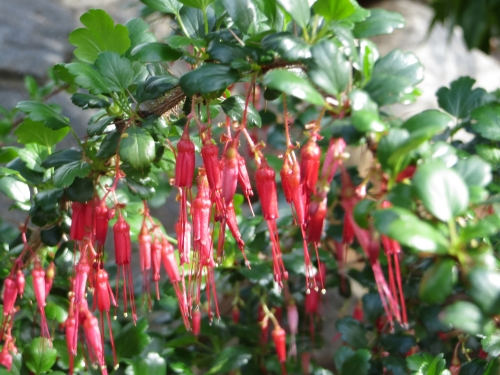
Of the first plant he encountered in California, Douglas stated (one-upping his mentor Menzies?), “Early as was my arrival on this Coast Spring had commenced. The first plant I took in my hand in full flower was Ribes Staminum, (Smith) remark able for the length and crimson splendour of its stamens, a plant not surpassed in beauty by the finest Fuchsia, for the discovery of which we are indebted to the good Sir Arch. Menzies in 1779.” The epithet Ribes staminum is way out of date. It has been suggested to me by the esteemed botanist Steve Acker, Phd. That the species described by Douglas would be Ribes divaricatum var. pubiflorum. However, given Douglas’ description it could be Fuchsiaflower Gooseberry, Ribes speciosum

https://calscape.org/view.php?pl=3241&img=28875

David Douglas died while trekking over Mauna Kea on Hawai’i Island in 1834. He was 35 years old. An interesting article about the circumstances of his death was published in The Plantsman in 2014: https://www.rhs.org.uk/about-the-rhs/publications/the-plant-review/the-plant-review-back-issues/2014-issues/december/the-suspicious-death-of-david-douglas.pdf


My thanks to Peter Meyerhoff and Jack Nisbit for assistance. Jack is the author of two books about David Douglas, “The Collector: David Douglas and the Natural History of the Northwest” and “David Douglas: A Naturalist at Work” available from Sasquatch Books: https://sasquatchbooks.com/

Standard
Agua Caliente, Boyes Hot Springs, Fetters Hot Springs, Neighborhood Phenomena, Wonders and Marvels

Street Markings

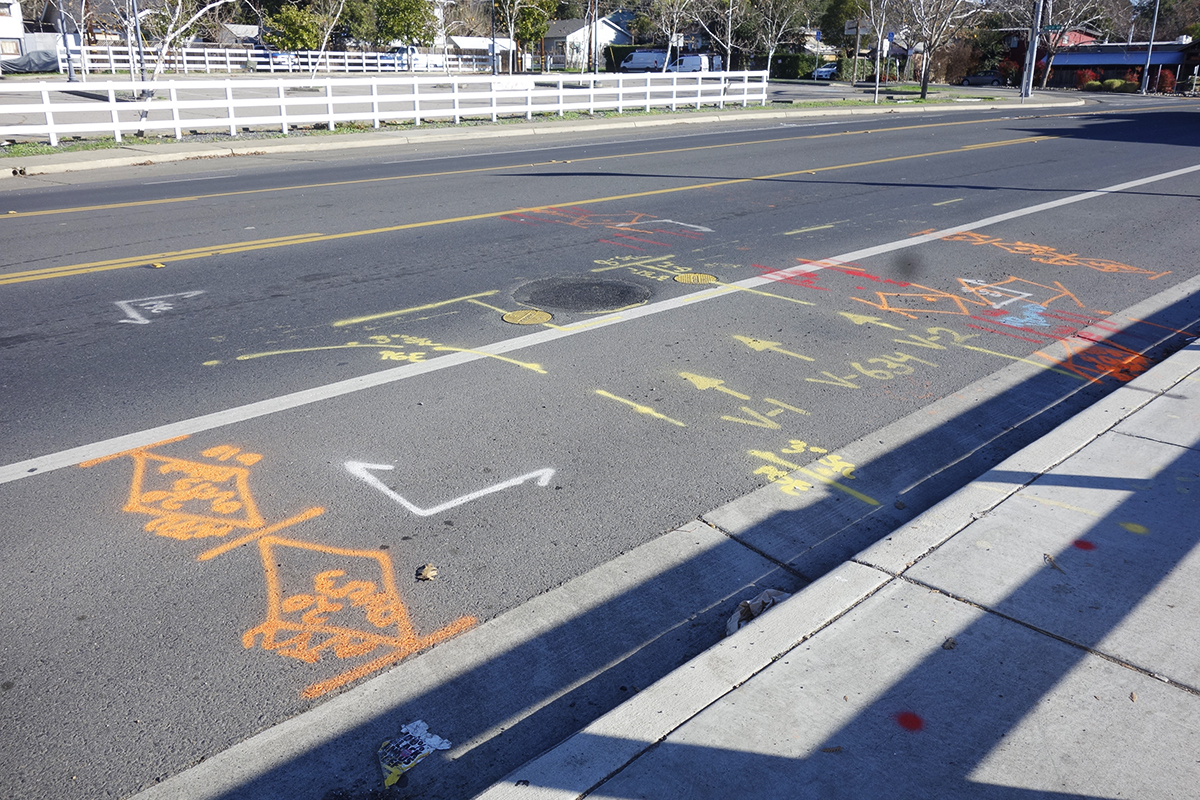
Temporary, informal, unsanctioned, cryptic. Personal expression, job related.  Faded, half-obscured.

Ephemeral and permanent.

Highway 12 through Boyes Hot Springs, Fetters Hot Springs, and Agua Caliente, California, though a heavily used commercial and residential street, had almost no sidewalks until 2009/2010. Dirt shoulders for walking was not a problem when traffic was light. Even at the height of the resort era (1950s), people would ride horses down the middle of the highway. That’s how quiet it could be.

Starting in the 1980s, locals started to agitate for a safer road. They wanted sidewalks and streetlights. Along came Redevelopment to provide the funds. Part of the project was completed by 2010 (a good twenty five years after agitation began). Redevelopment was abolished by dear old Jerry Brown. Thanks Jerry! The project languished. Finally, the Sonoma County Board of Supervisors came through with the money to finish. Thanks Susan Gorin!

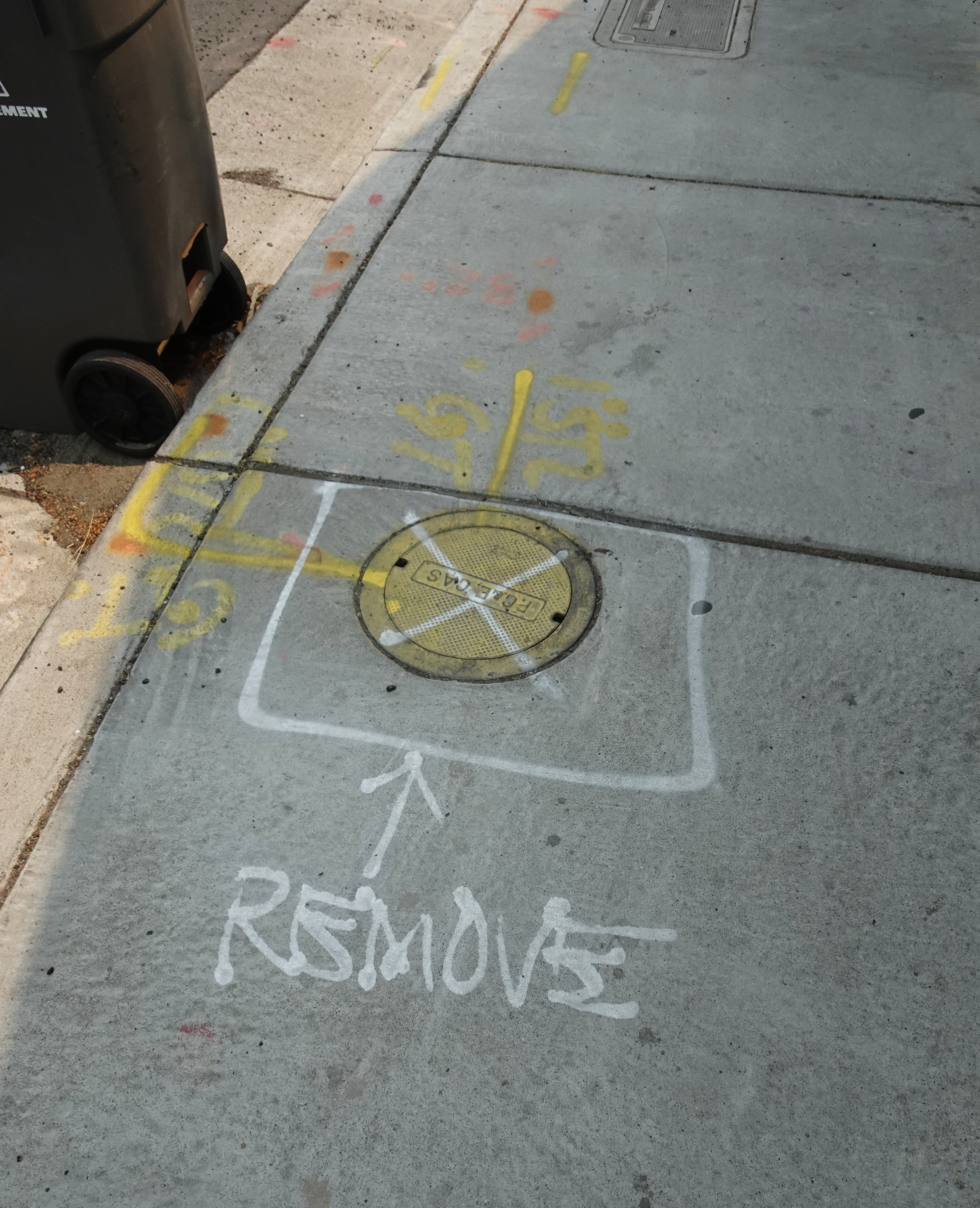
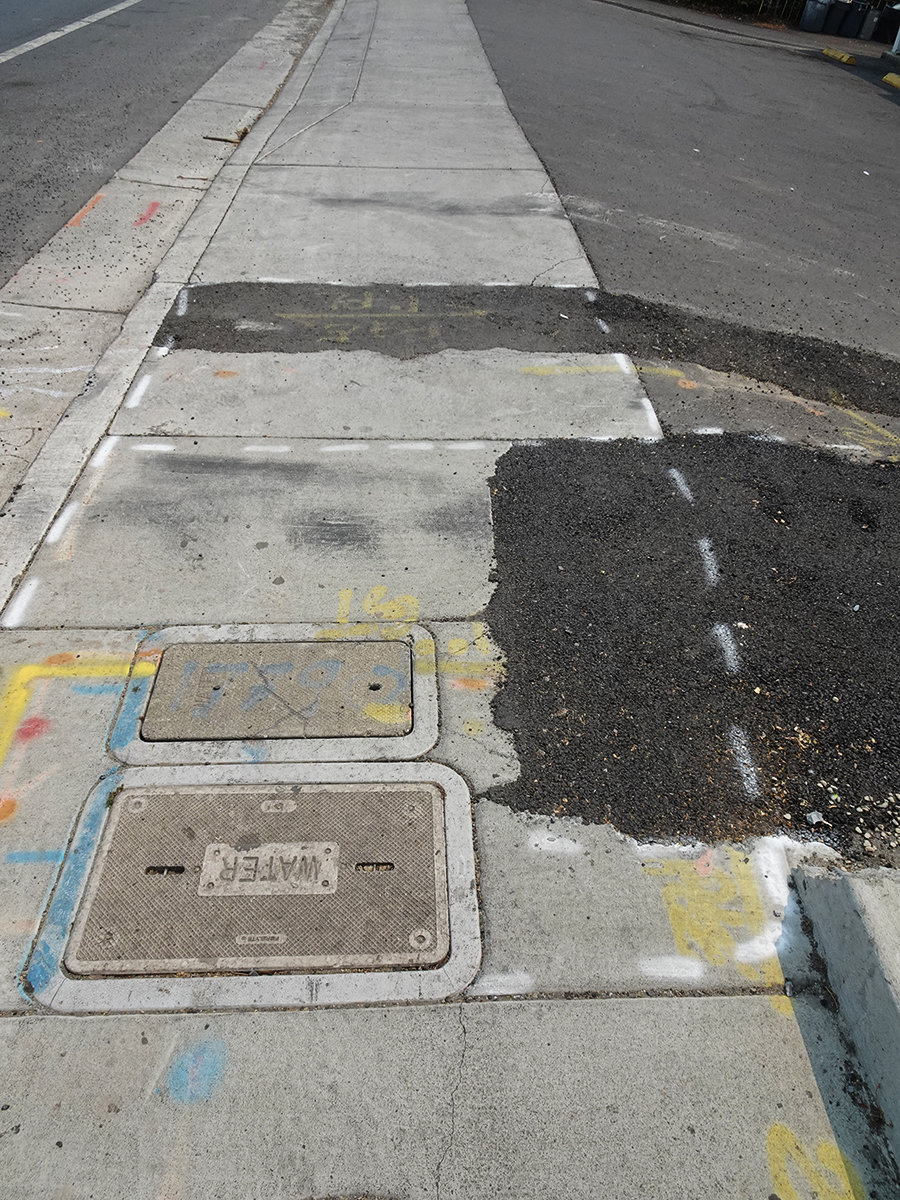
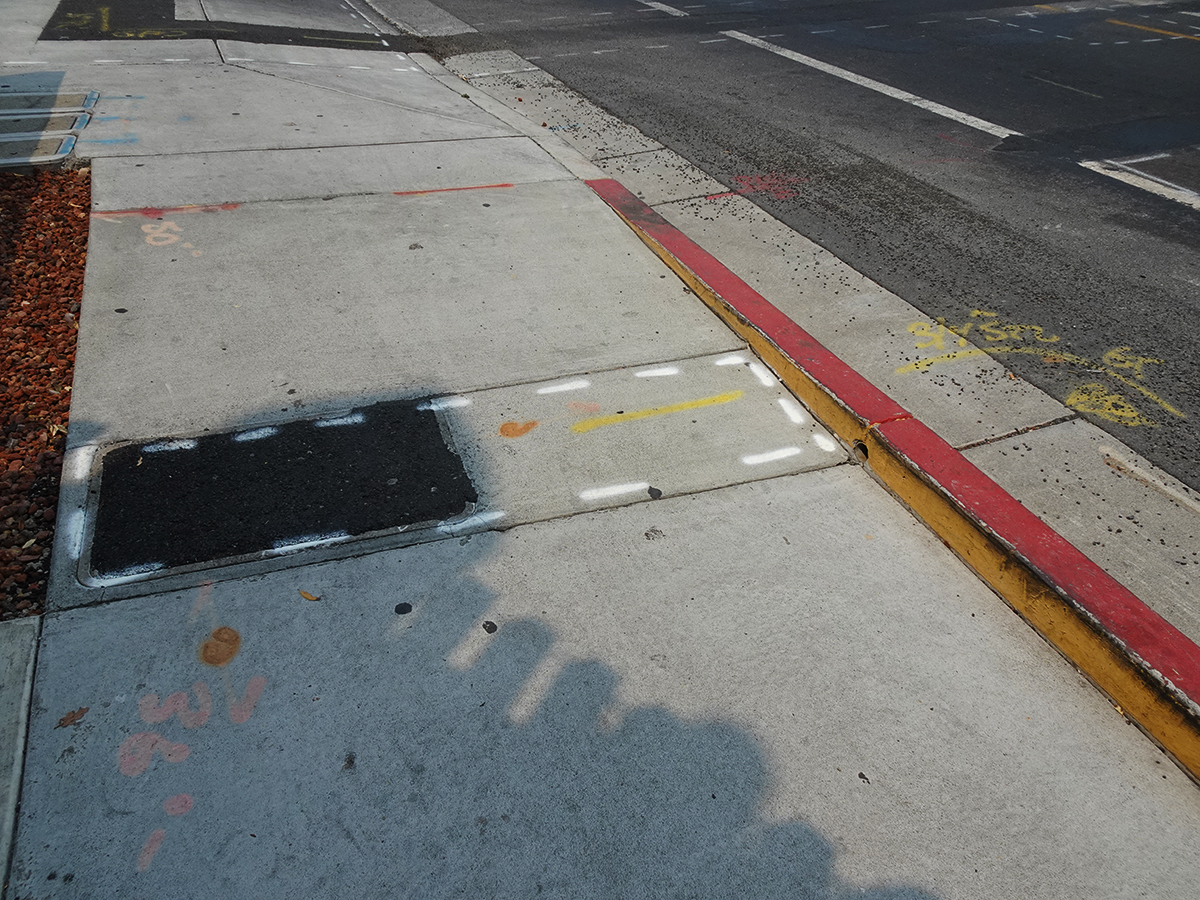
The following is a collection of street markings from before during and after sidewalks were installed. Some are the ephemeral spray paint graphics of the contractors, which can be interesting. The more enduring marks are by the people who happened to walk by when the concrete was wet. These are also interesting, even poetic at times. One example is pure nature.

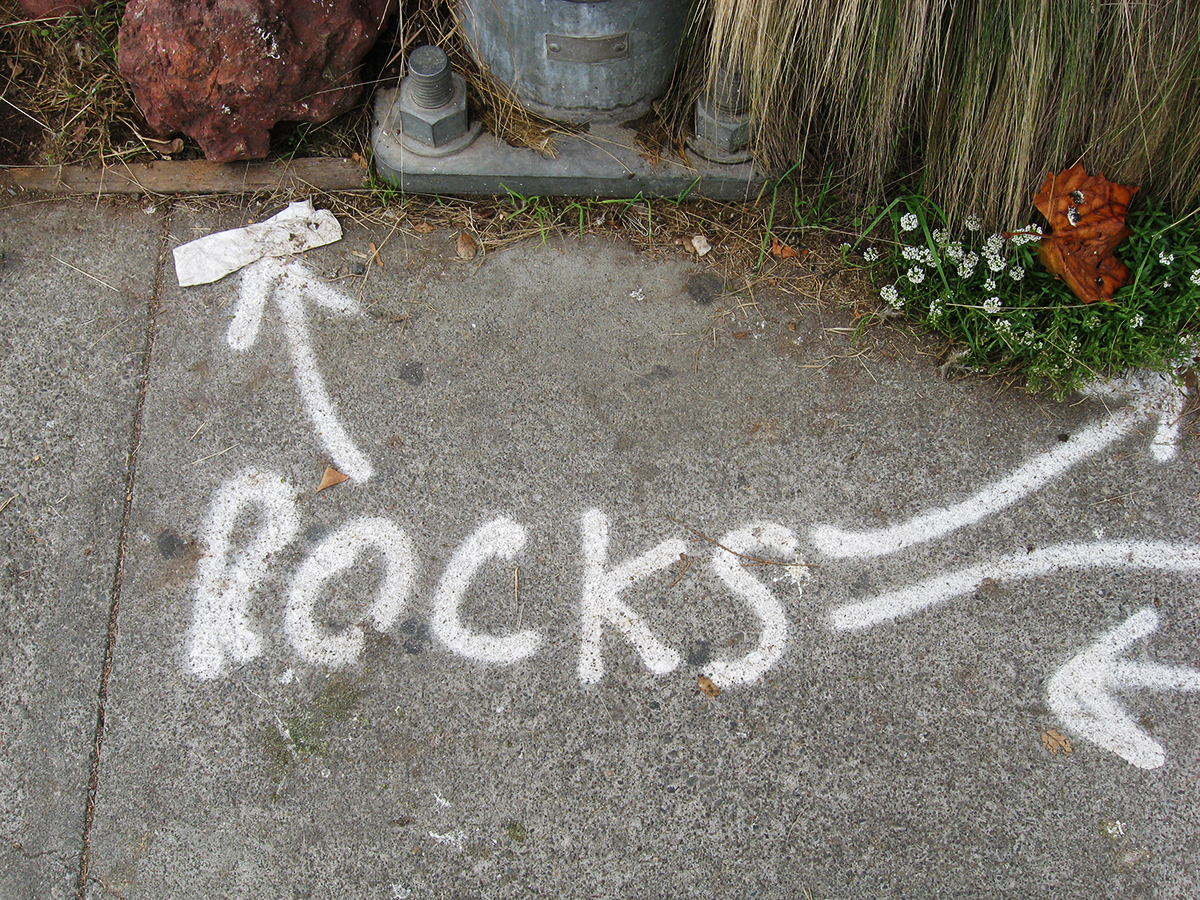
2008-Before demolition started a lot of marks went down. Why was it necessary to point out the rocks?

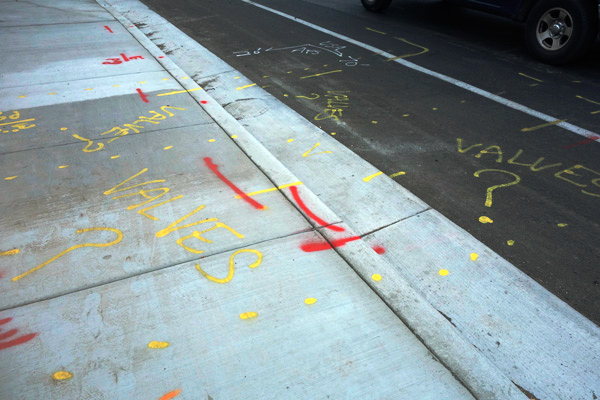
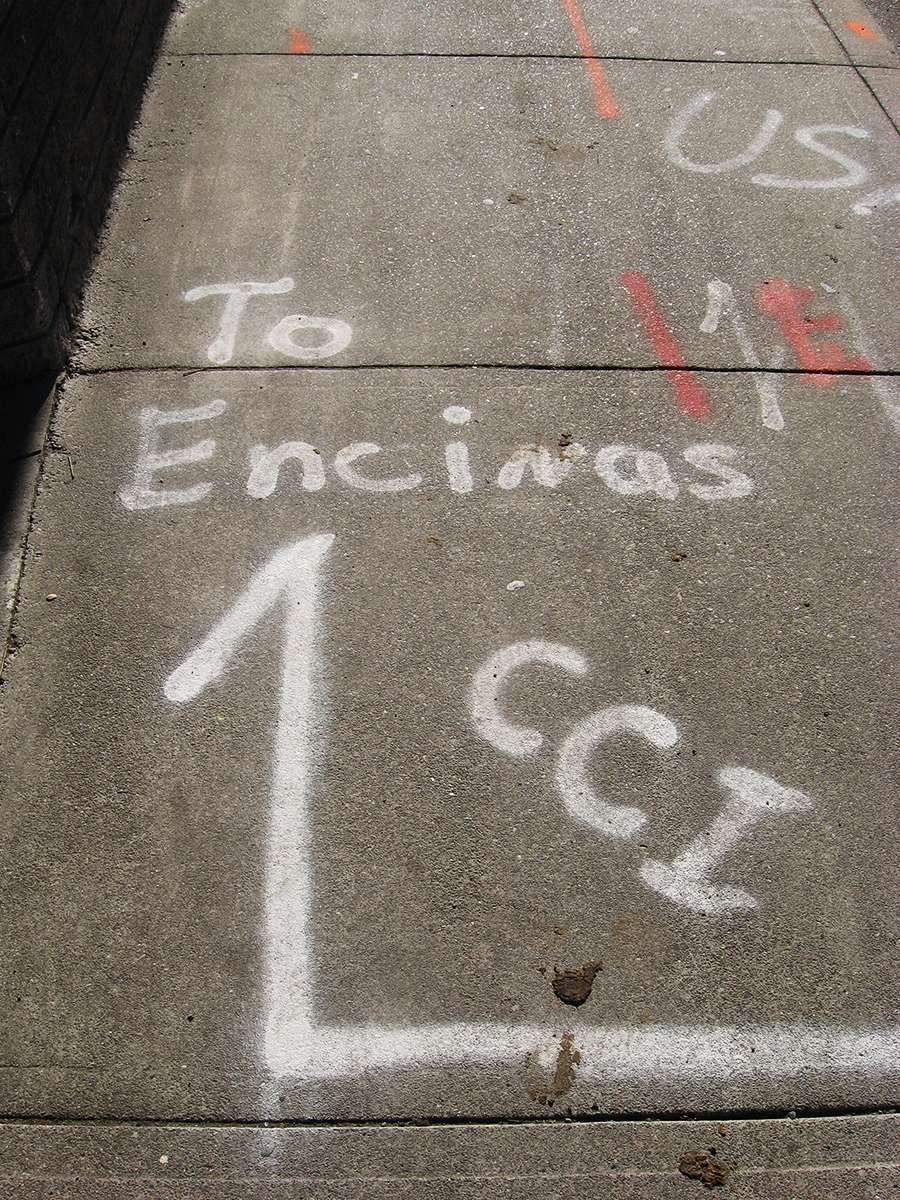
2009. Underground Service Alert (USA) finds all the pipes and wires and marks the surface. Not sure what “CCI” stands for.

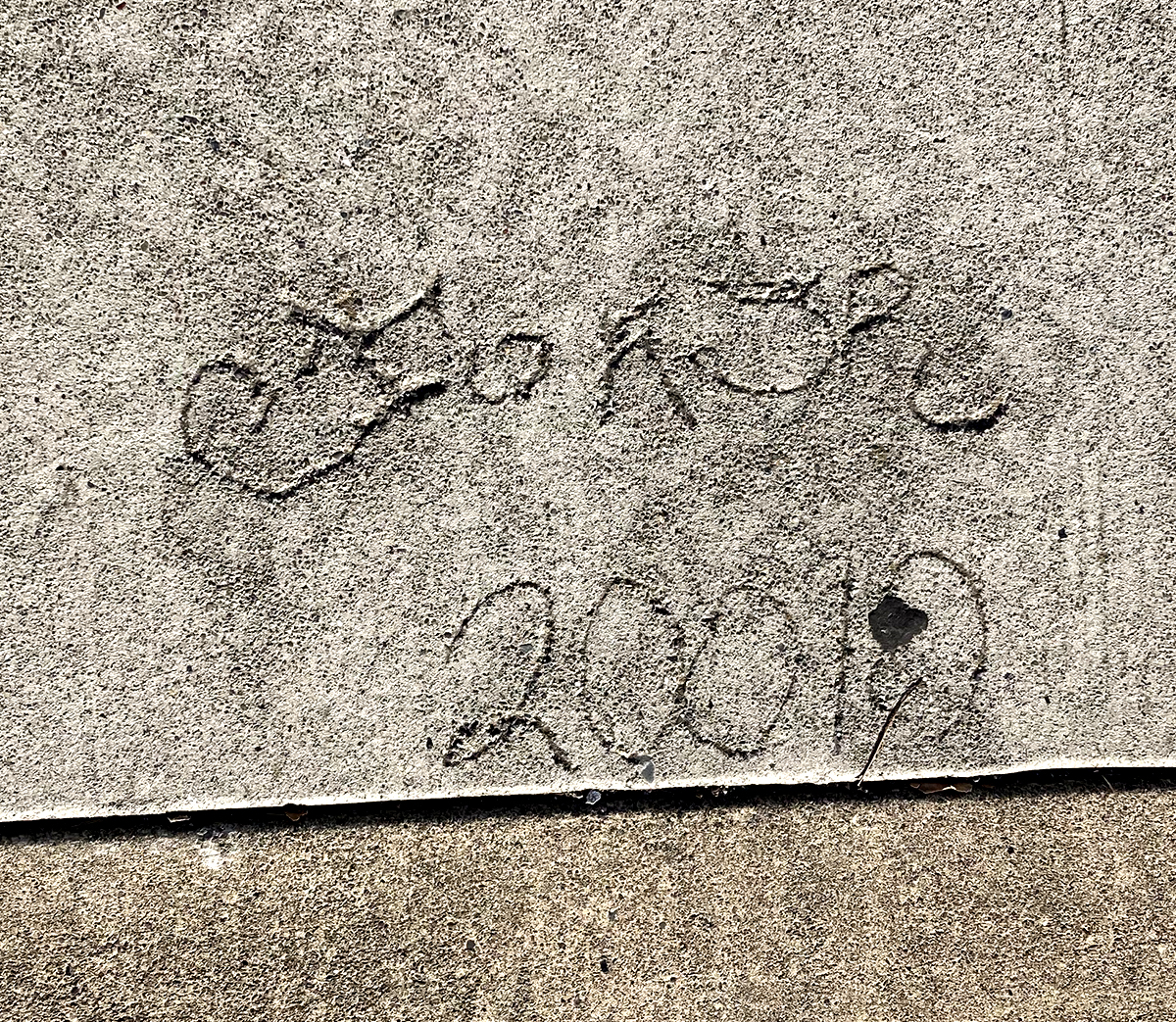
2010 or “20010”. Our first folk marks! It’s an ornate tag that is hard to read.

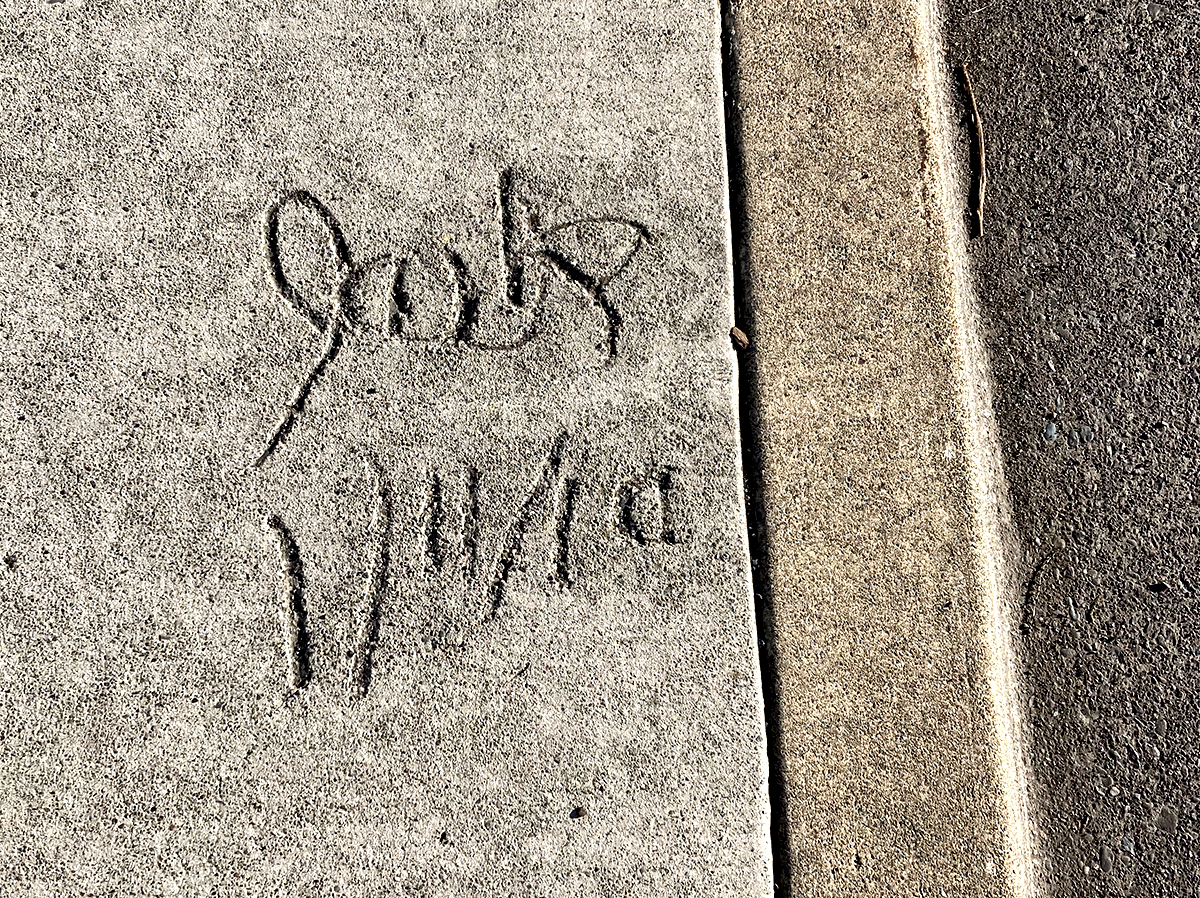
Jack has helpfully given us the day, month and year. I hope he went on to a career as an archivist.

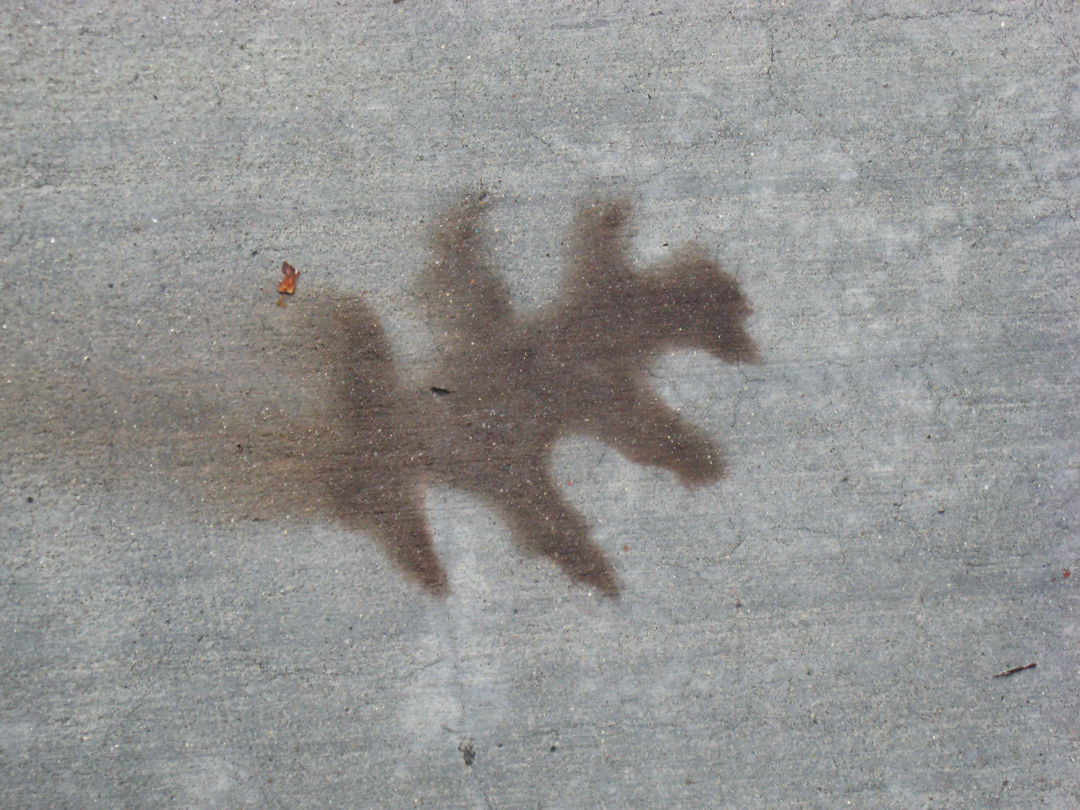
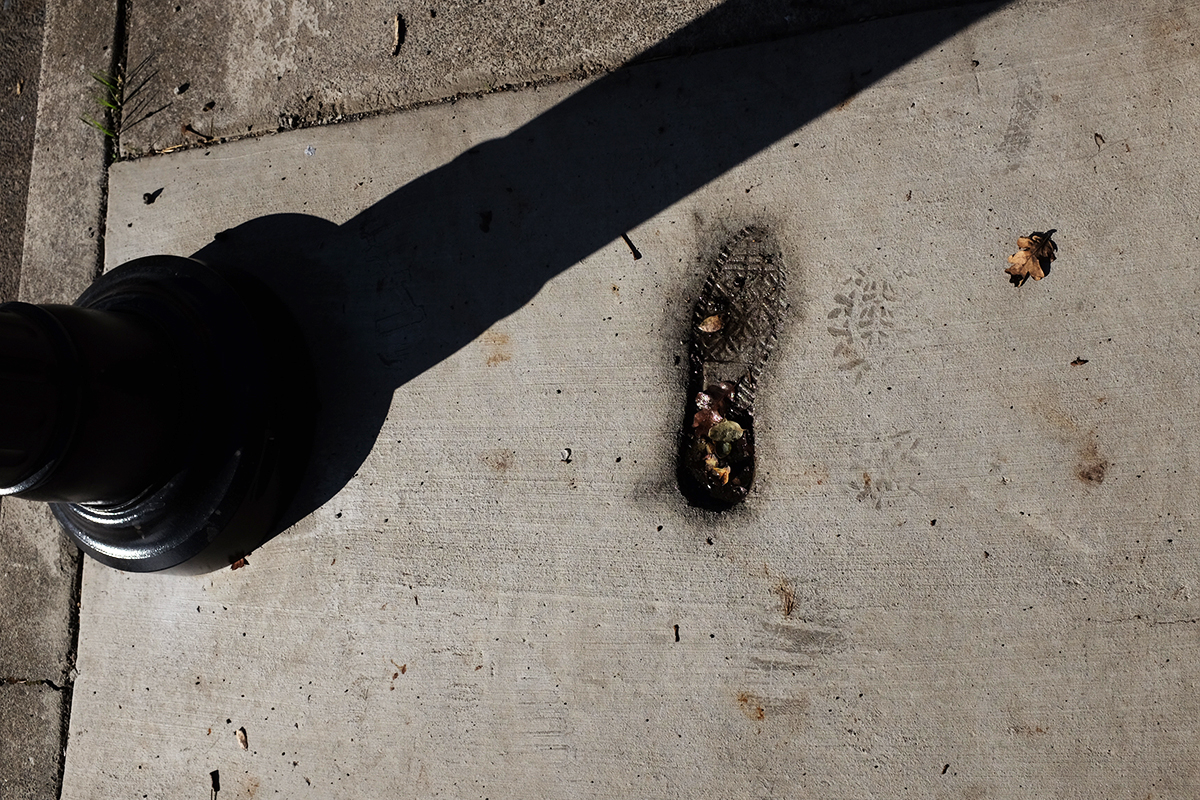
2016. Phase Two. The only actual footprint, gracefully holding leaves and water.

Year of mark unknown, but Phase Two. Someone is trying very hard with the use of a stencil. Is he offering free samples of tagging? Do people pay for tagging?

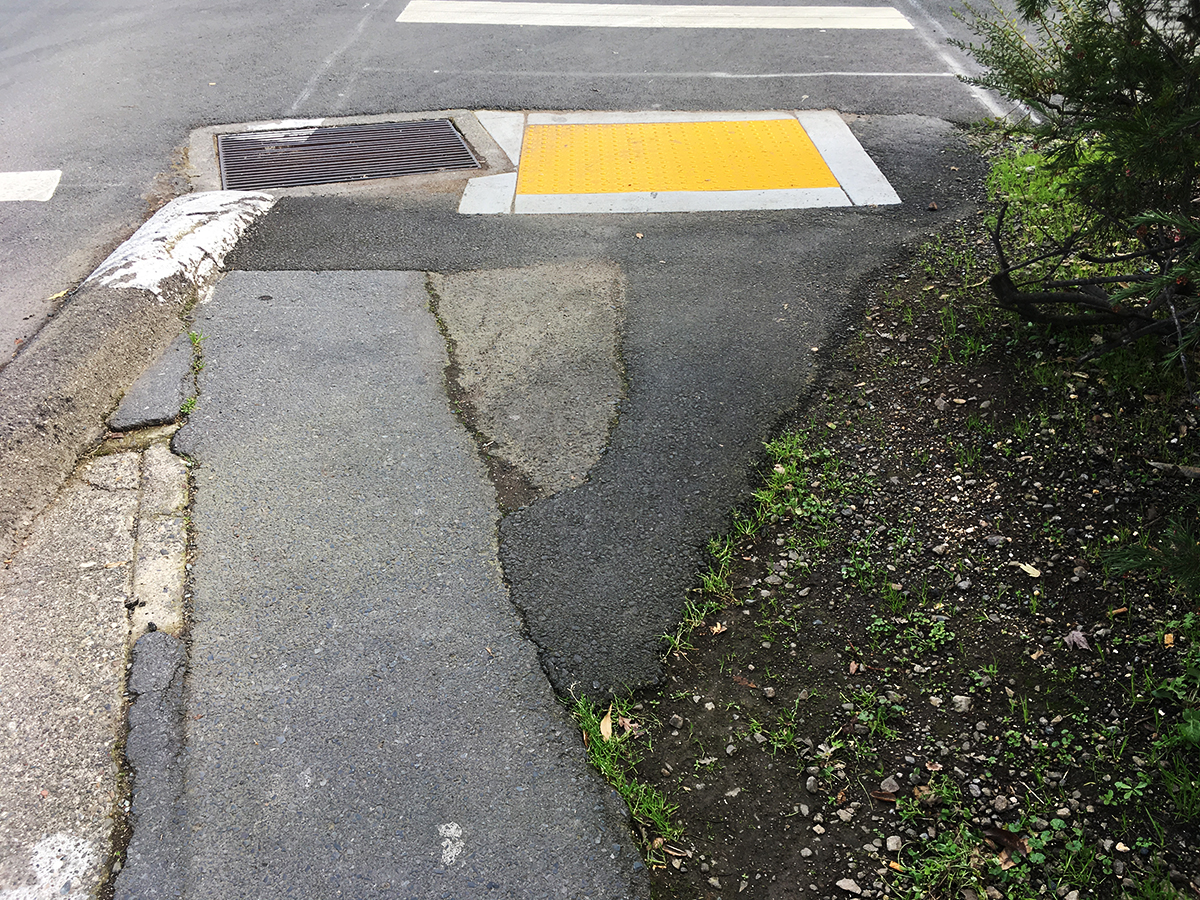
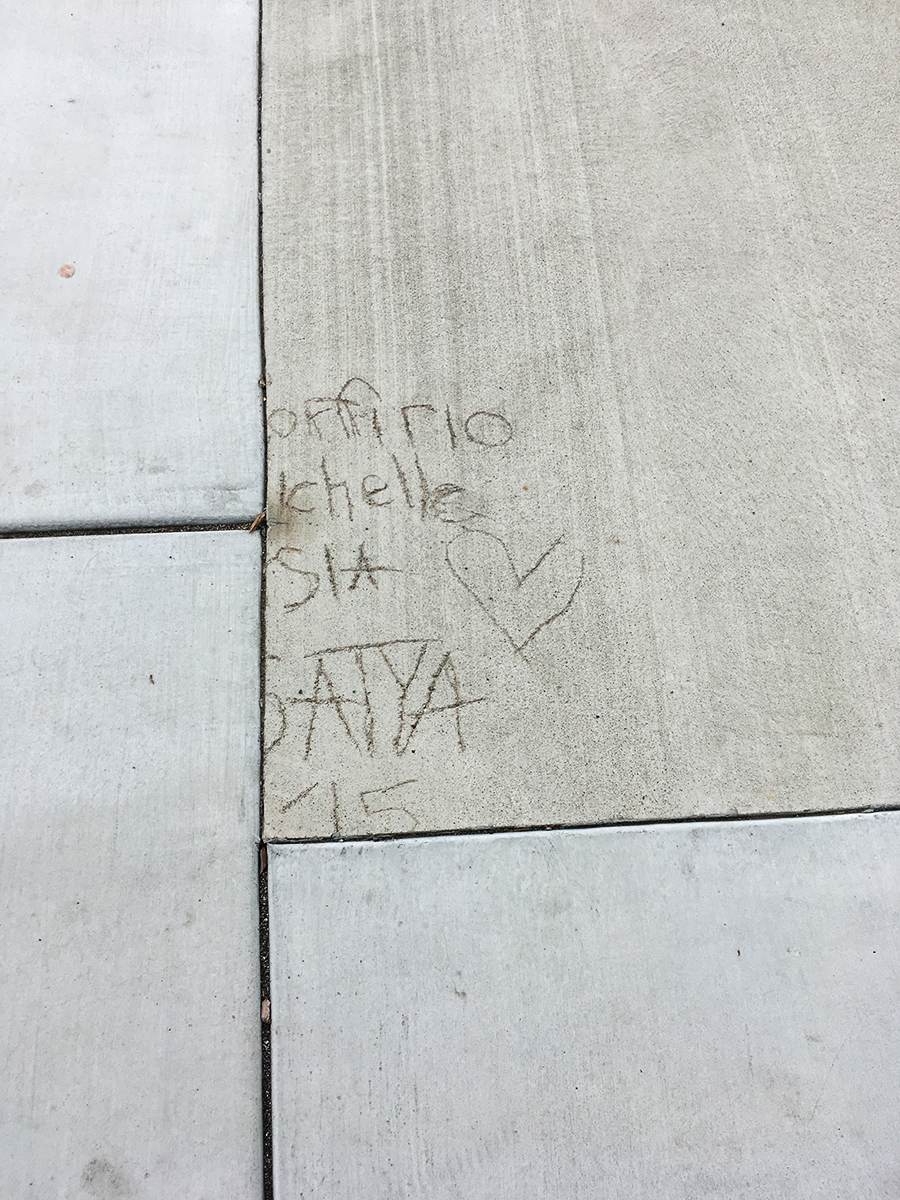
2019. Right after Phase Two was completed, some corrections that necessitated new concrete were needed. It looks like the left portion of this group of signifying friends was cut off.

In 2021 PGE had some business under the pavement. This tells you all about it, if you could only read it.

2021/ Nobody’s perfect!

2021. This one and the next two offer lush compositions of black and gray featuring inscribed and spray-painted lines and hard and soft textures.

2021. The lines, the colors, the textures, and, the shadows!

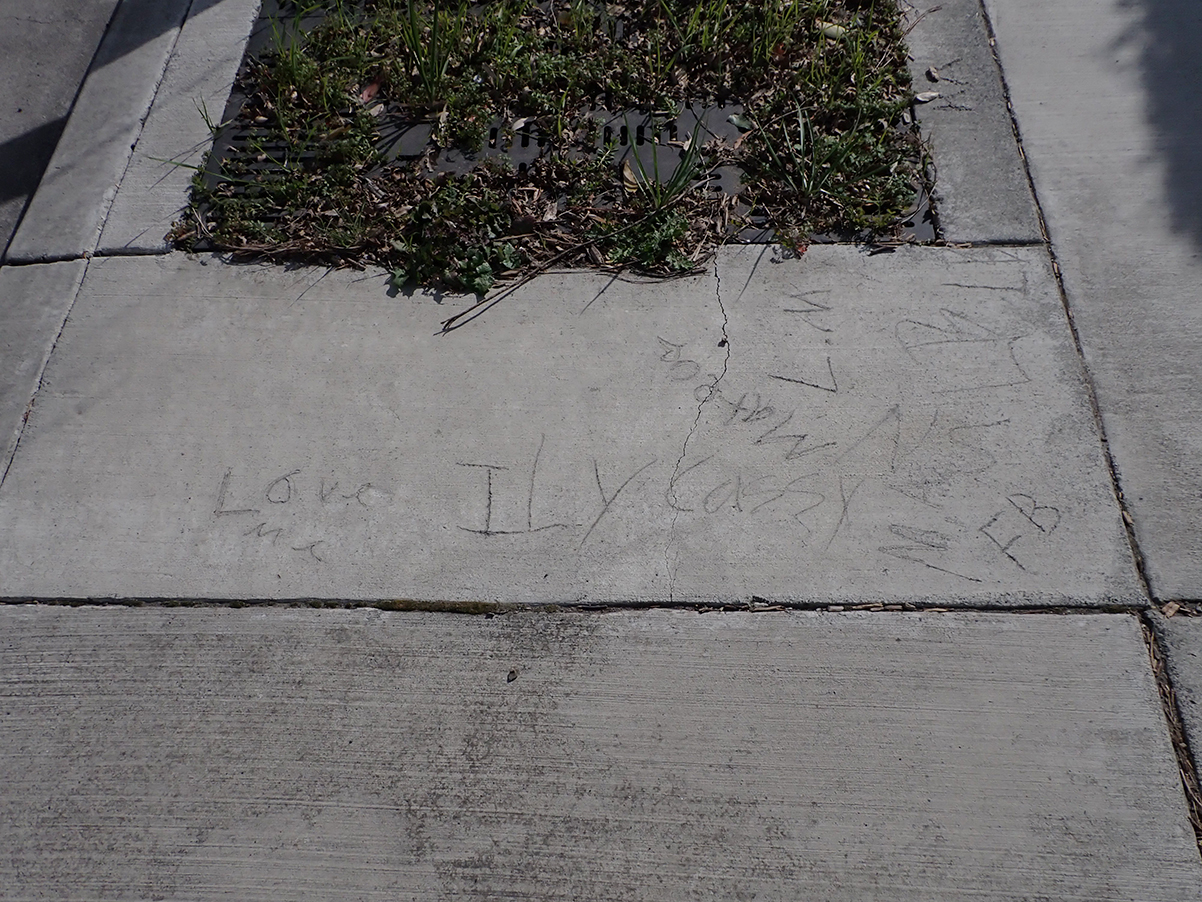
Photographed in 2023, actual date unknown, but Phase Two. “Love me.” “ILY Cazzy.” “Mateo.” “FB, LM”

2021. Dude! Where’s my valves!

A bit off the highway, but such a lovely composition!

Nature bats last.

Standard
Agua Caliente, Boyes Hot Springs, El Verano, Fetters Hot Springs, Now and Then, Photographs, Resorts, Wonders and Marvels

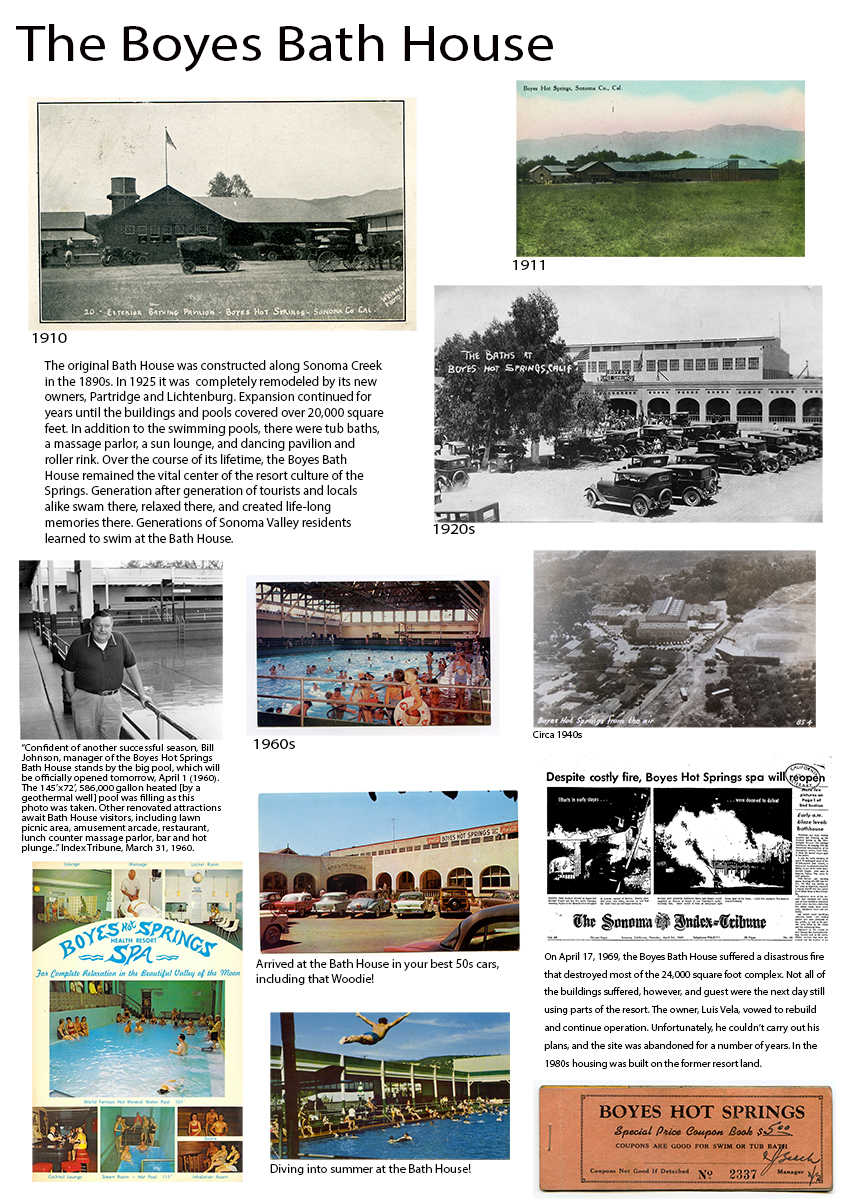
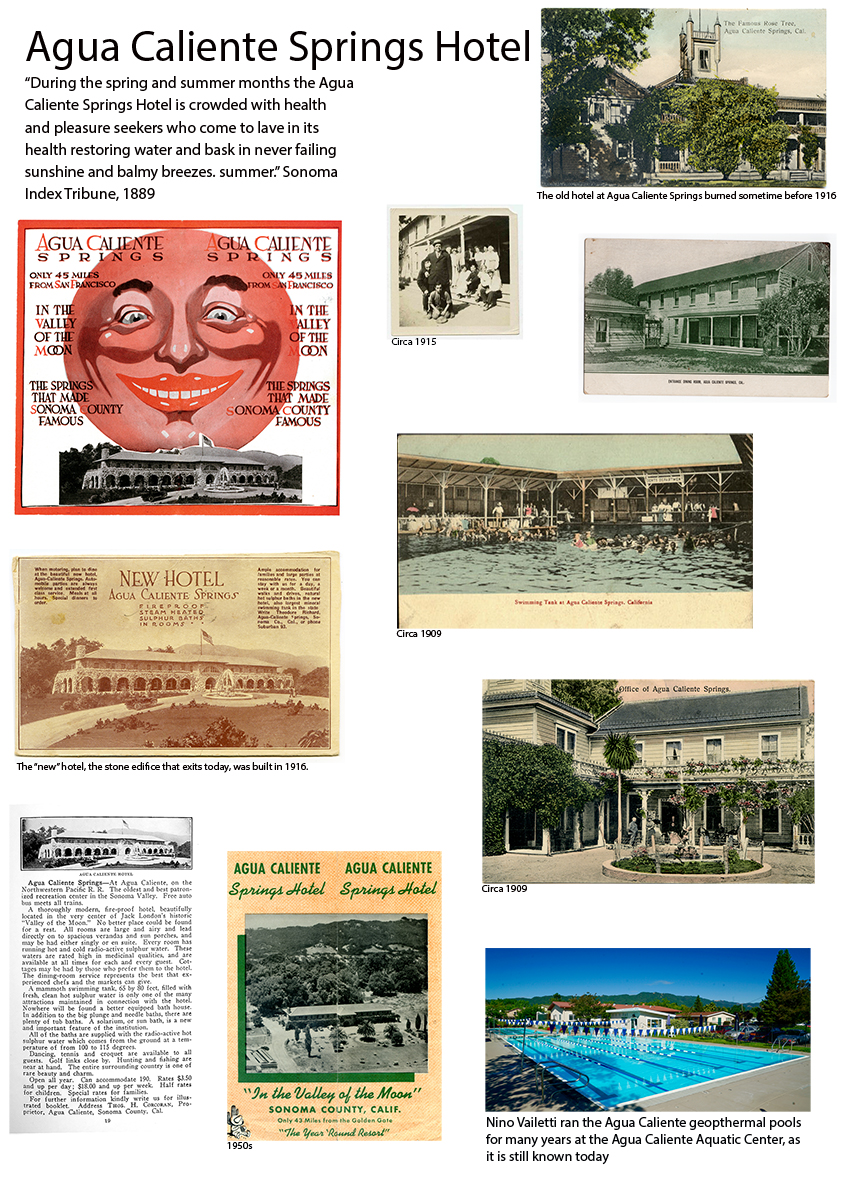
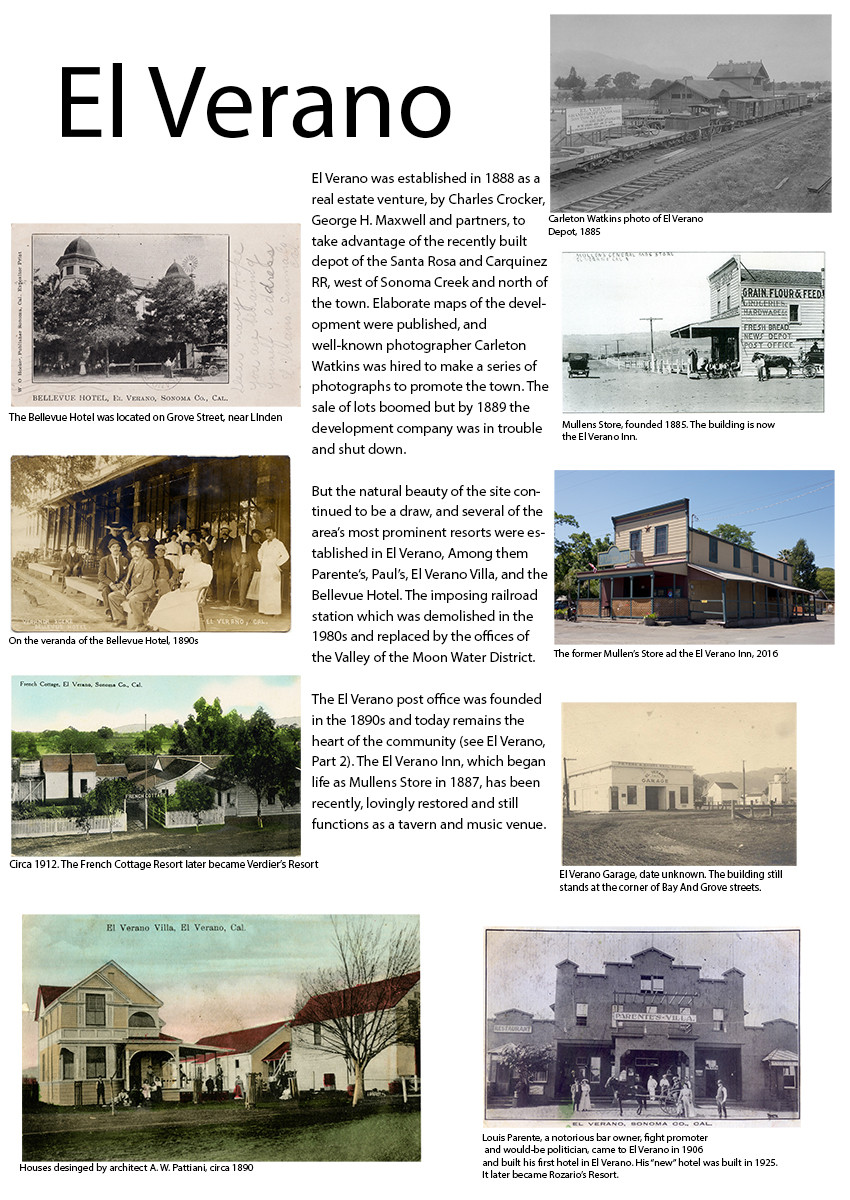
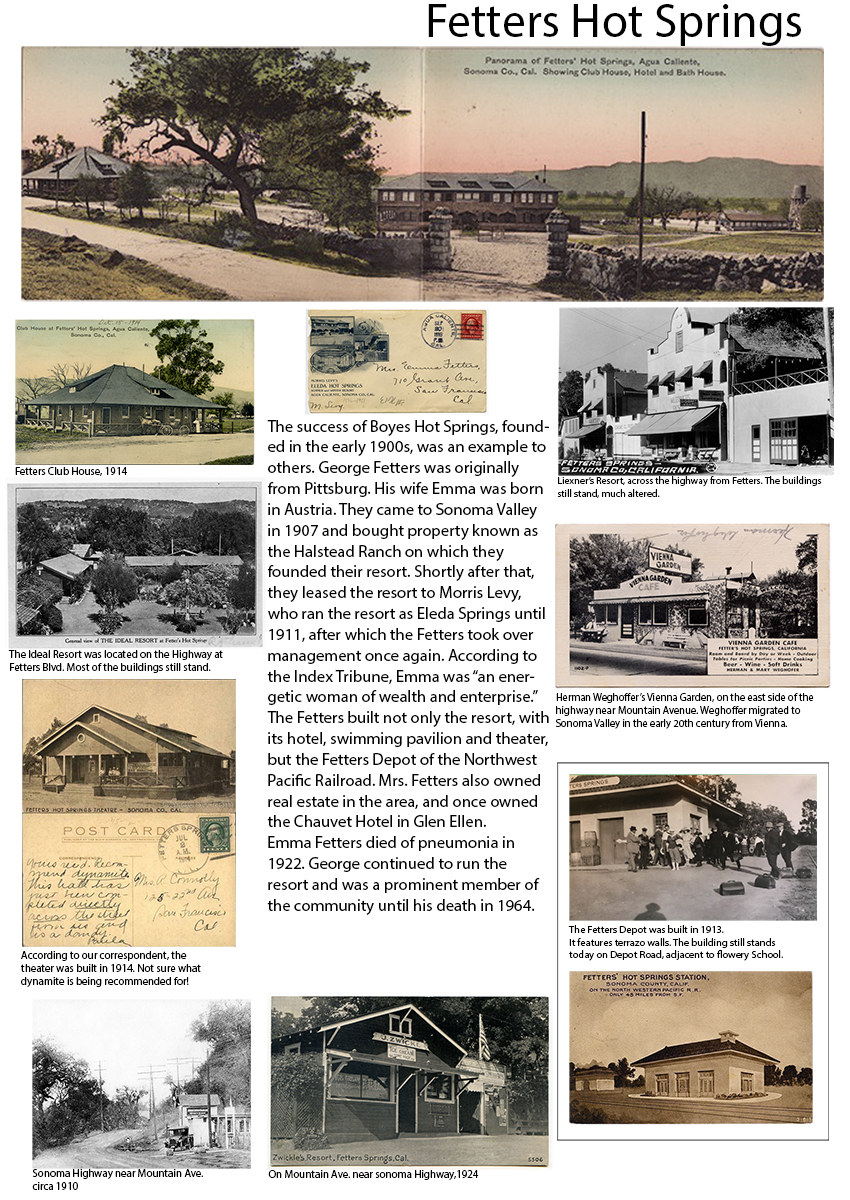
“Picturing the Springs”-an exhibit at the Depot Park Museum in Sonoma

Opening September 10, 2022

In a sense, this exhibit is a follow-up to Michael Acker’s book “The Springs, Resort Towns of Sonoma Valley,” (Arcadia Publishing, 2017) with many more photographs and ephemera, and in color. Here is a small preview.


Thanks to the Sonoma Valley Historical Society for assistance, especially Lorrie Baetge Fulton, Patricia Cullinan, Kate Shertz, Peter Meyerhoff, Roy Tennant, and Lynn Downey, and for images, and access to the Index Tribune archive.

Thanks also to the many community members who have shared their memories and photographs with the author.

Standard
Agua Caliente, nature, Neighborhood Phenomena, Wonders and Marvels

Neighborhood Phenomena: Plants

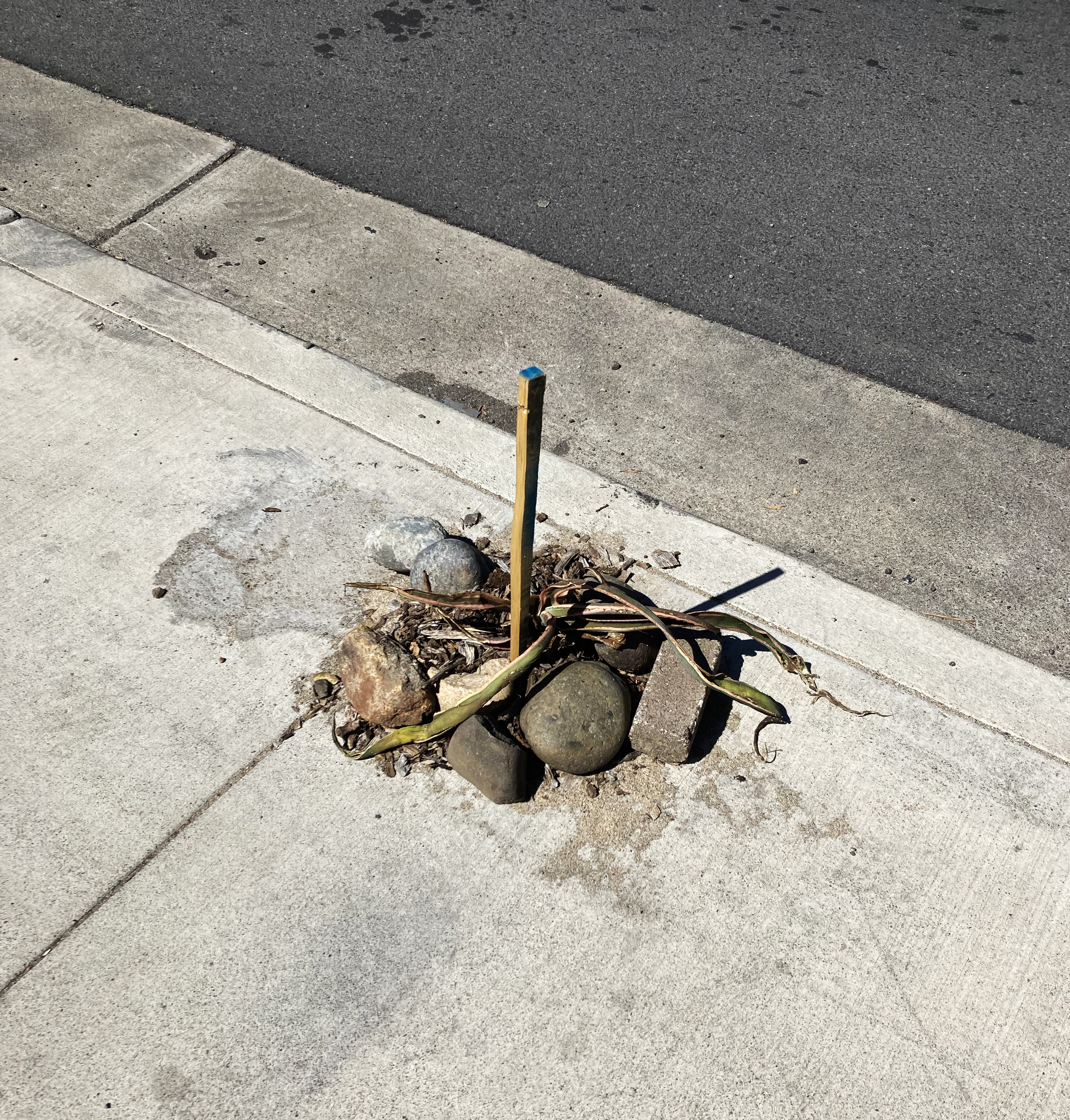
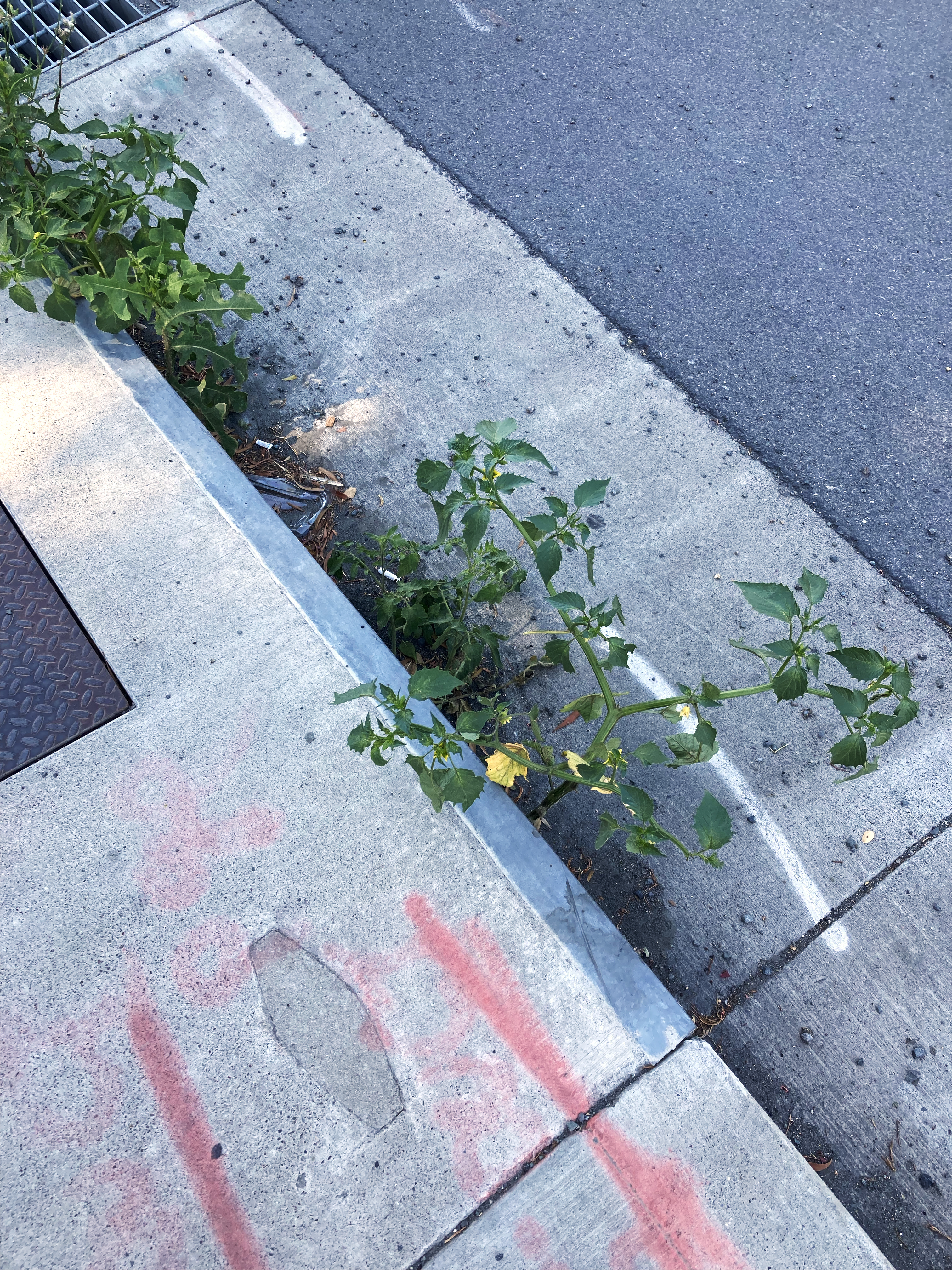
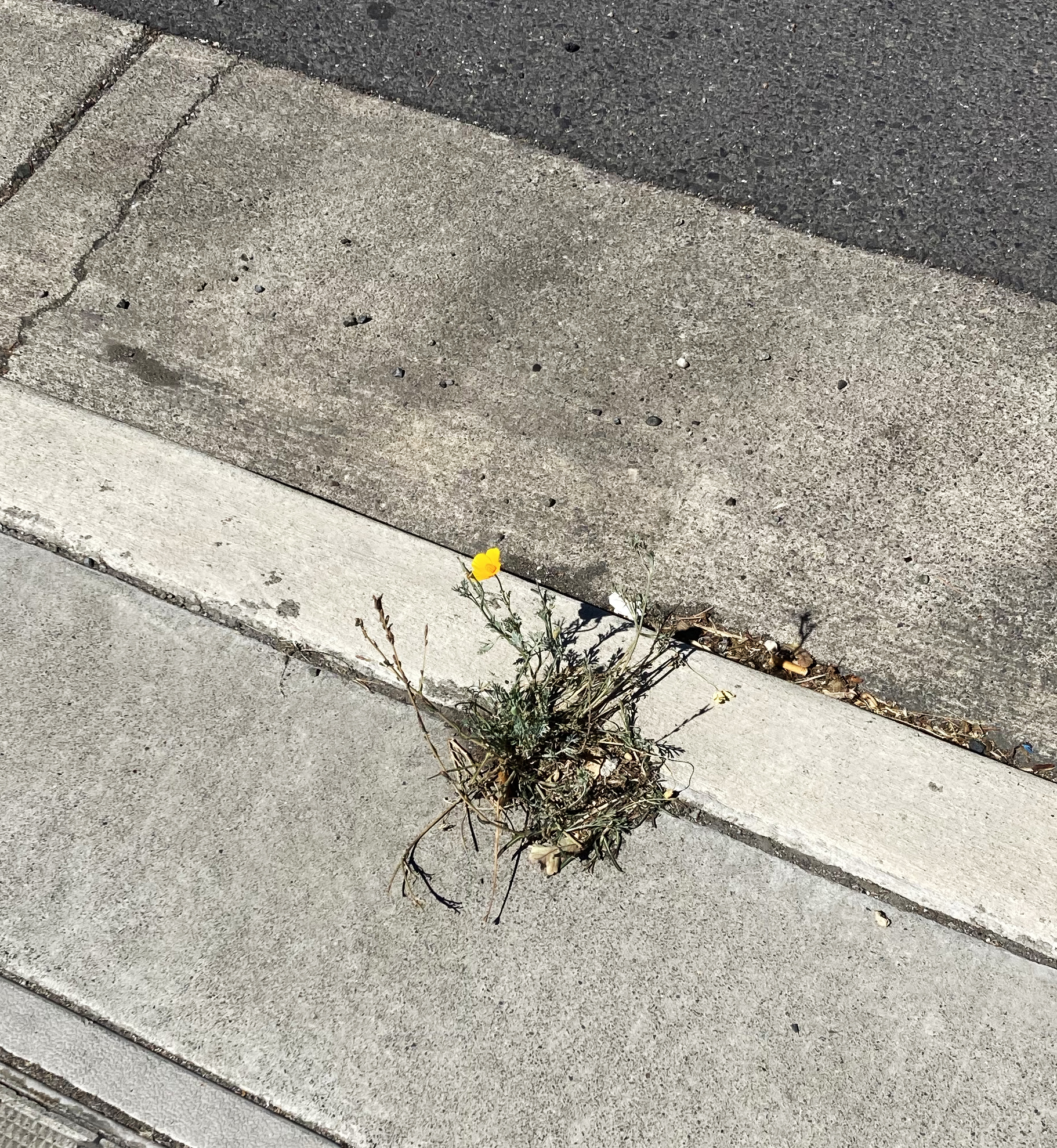
Observed within a few blocks of each other, two volunteers and a planting. The first one is a small agave planted in a hole in the sidewalk. A valiant effort indeed. Given Caltrans and/or Sonoma County’s neglect of these areas, it may survive a while. The second one looks like volunteer tomatoes springing up at a storm drain. I hope that’s what they are! Third is a humble little California poppy growing in a crack between the curb and sidewalk. Symbolic of California today?

Bonus photo: Tiny calendula in the asphalt, Arroyo Rd., BHS
Standard
Architecture, Art, Boyes Hot Springs, People, Wonders and Marvels

El Molino Central (updates below)

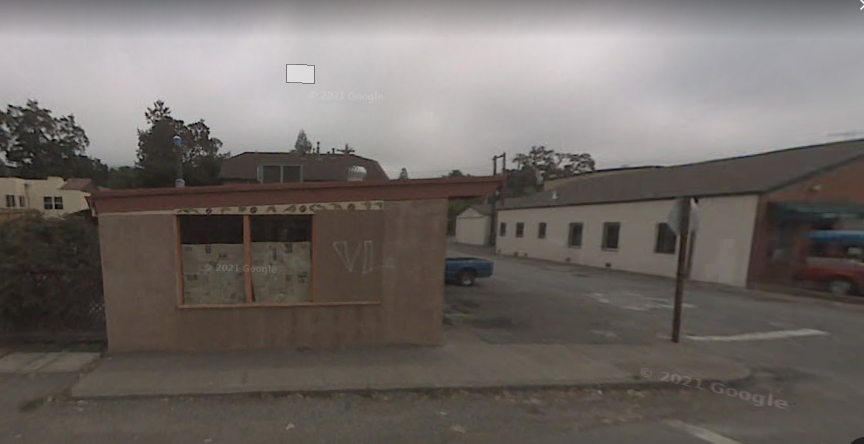
The fortunes of Boyes Hot Springs have waxed and waned. In the heyday of the resorts, it was a prosperous summer retreat. As the resorts declined, property values fell, and Boyes became “the other side of the tracks,” for a time gaining a reputation for being dangerous. The story goes that the State of California released parolees there because rents were so low, but in 1988 Sheriff Dick Michaelson told the Index Tribune “the practice ceased a couple of years ago.” When yours truly move there in 1997, the rumor was alive and well.
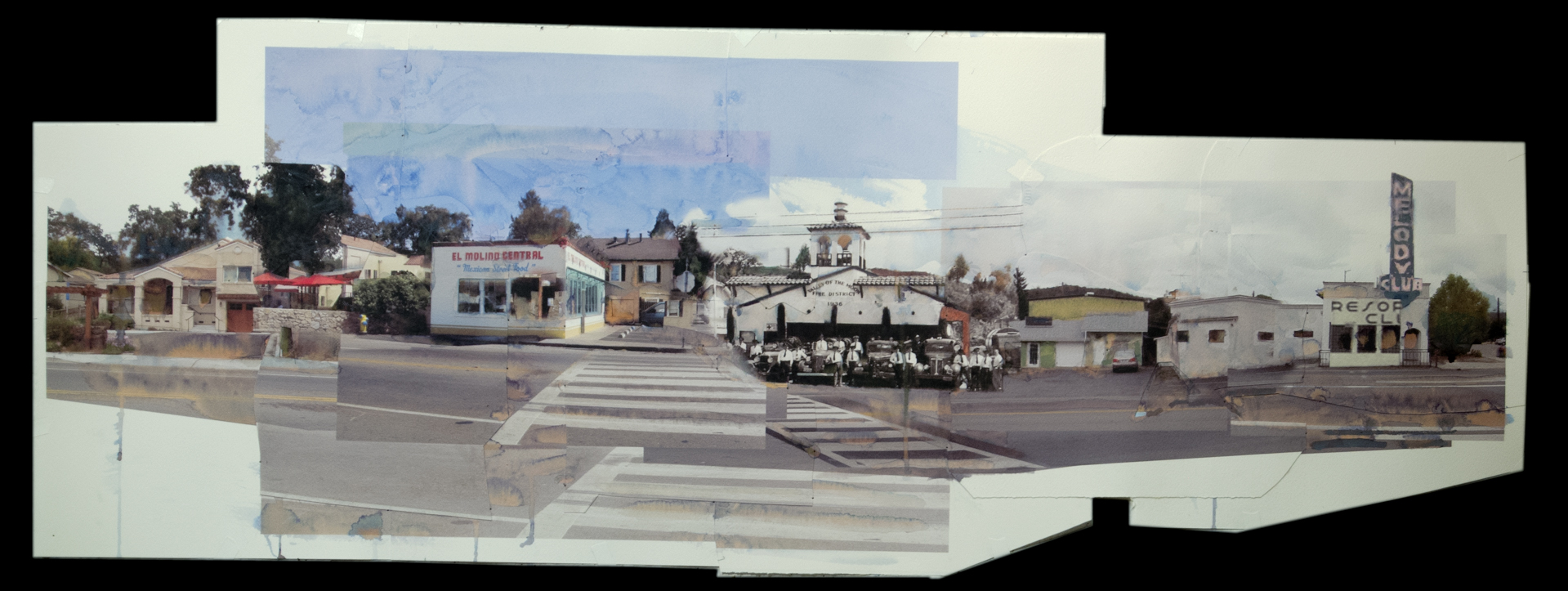
2007, Google Street View
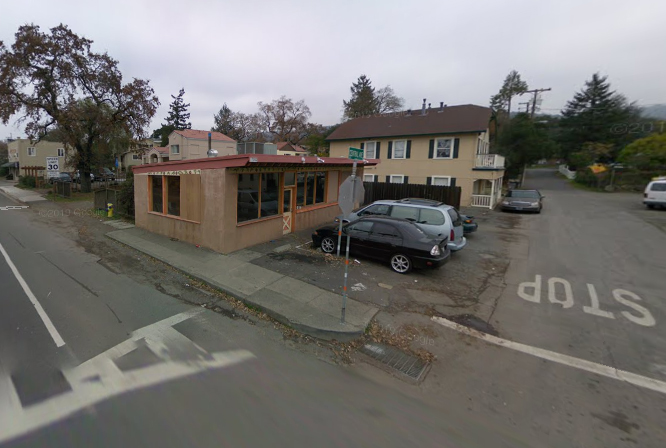
2009, Street View. The Barking Dog moved in 2004. here it sits empty.

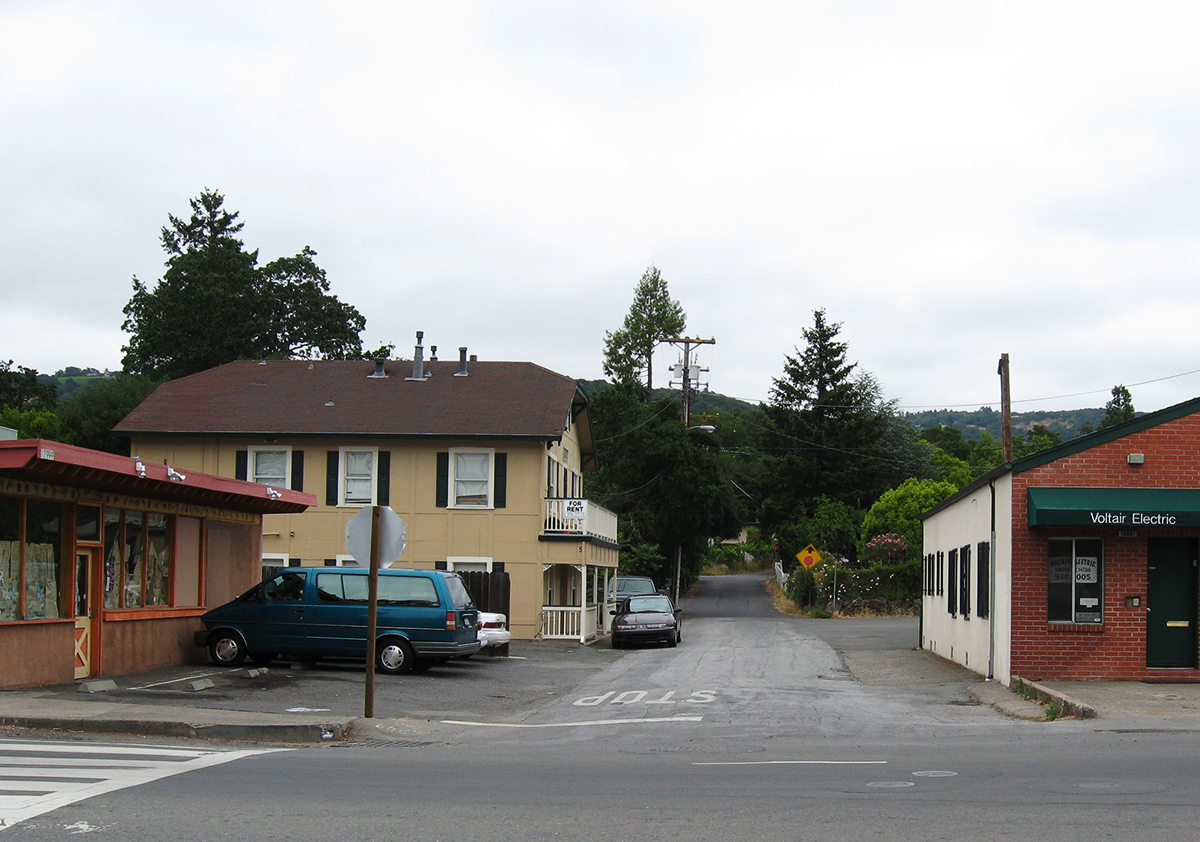
In that year (1988) things were looking up for Boyes. Young people form San Francisco were discovering that they could afford to buy houses there. New businesses were opening, such as the Central Laundromat at the corner of Highway 12 and Central Avenue. But wane followed wax once again and the laundromat went out of business and the building stayed empty until the Barking Dog Roasters opened there in 1995. According to the Index Tribune, “ A building once held up as a bad example has received new life-and a major renovation…Barking Dog Roasters at 17999 Sonoma Highway was formerly the Central Laundromat-once pictured in this newspaper as an example of the problems along Highway 12 through Boyes Hot Springs. The new restaurant opened in mid-June, after a six-month renovation that involved new wiring, plumbing, flooring, interior plaster, and outside stucco….’It has been a real labor of love,’ Peter Hodgson (one of the owners) said.”

2008

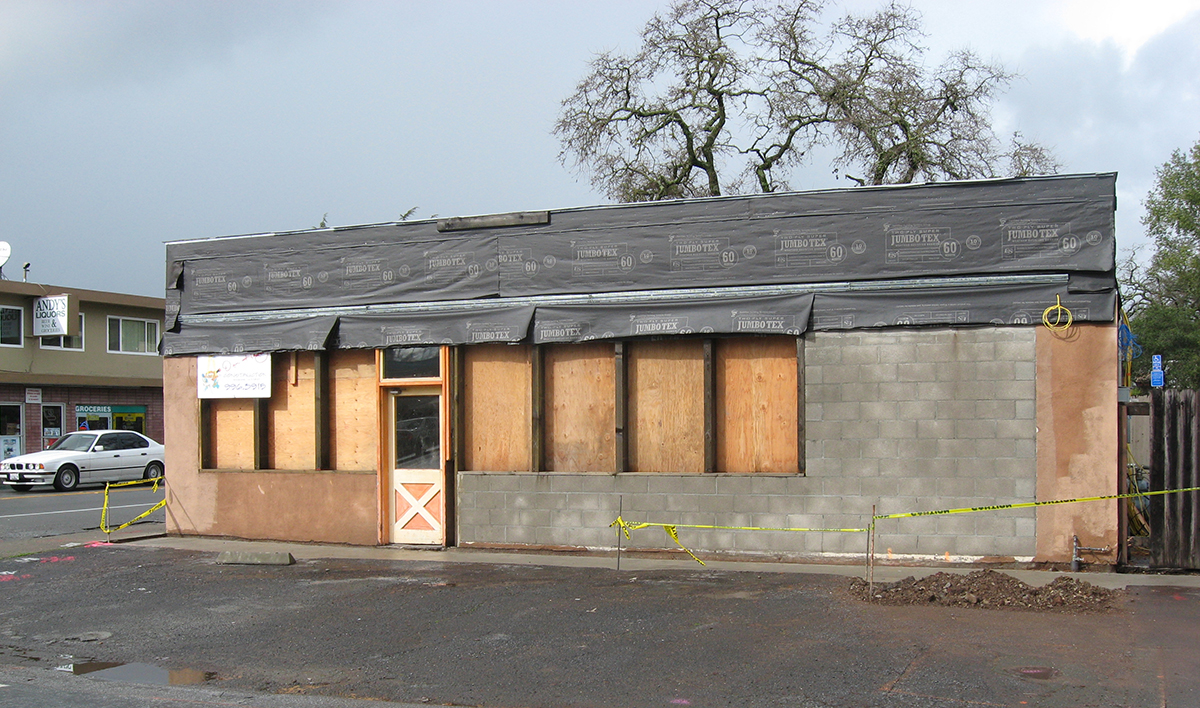
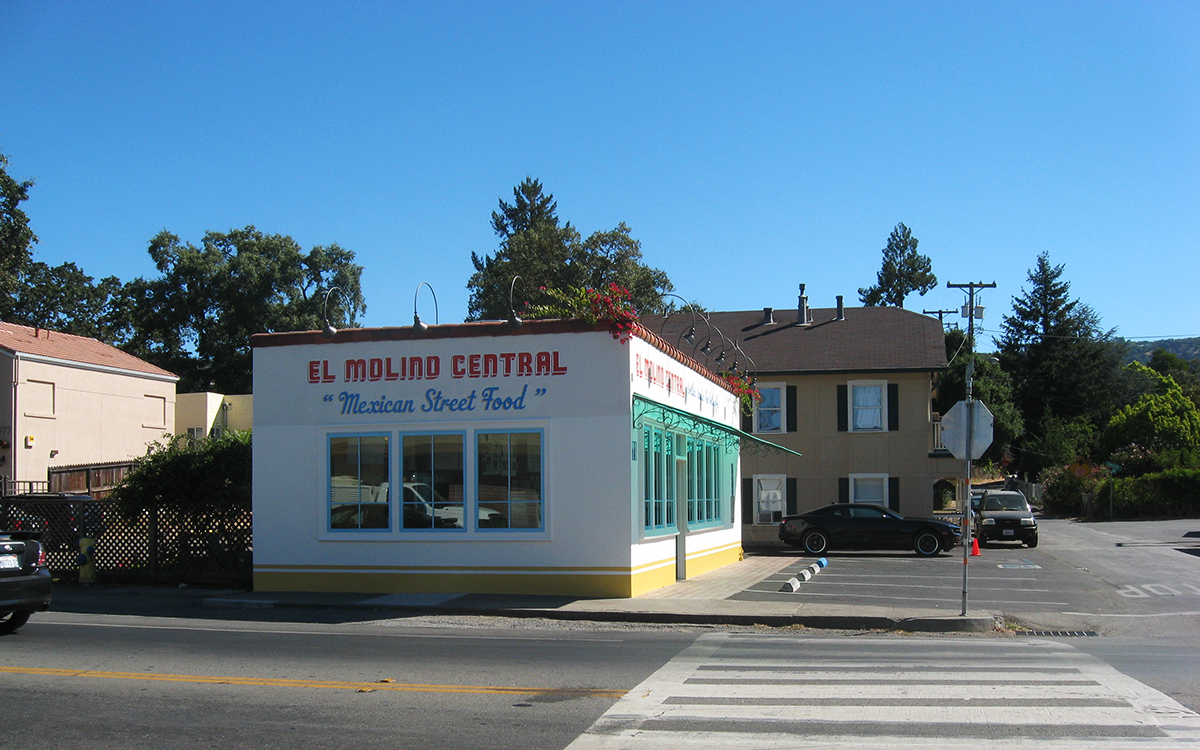
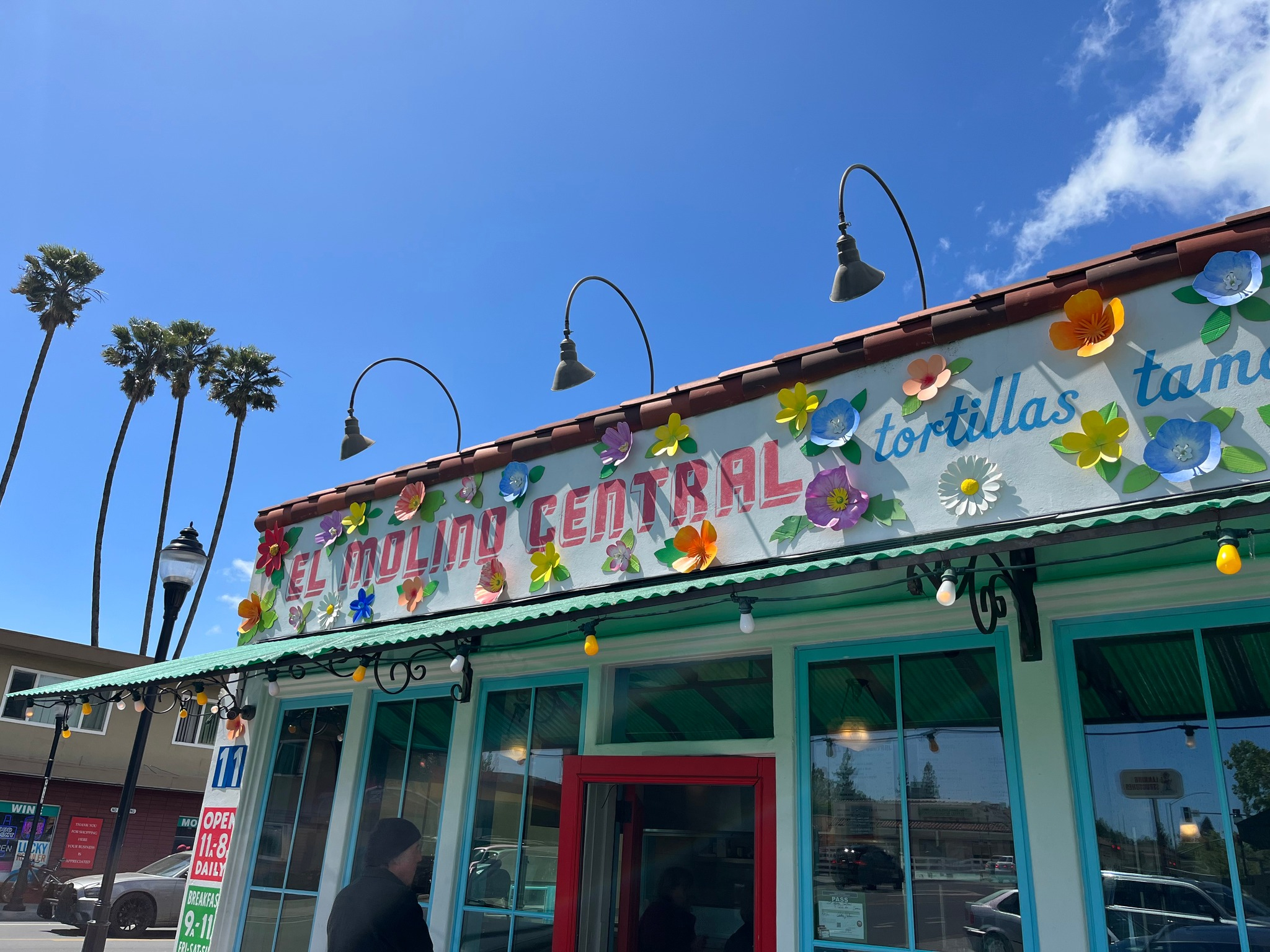
“The Dog,” as we know it, moved to its present location on the corner of Vallejo in 2004. The original building then went into another decline, sitting empty until Karen Waikiki commenced her grand transformation of the structure into El Molino Central, which opened in 2010.

Kathleen Hill wrote in that year, “When asked how she chose the name, Waikiki told us that every town in Mexico used to have a “Molino” where people took their dried corn to have it ground into masa, a very important and essential function.”

Update: El Molino under construction 2010
2010

El Molino has been a huge success, even being declared the best Mexican restaurant in the Bay Area at one point. It continues to be packed with hungry people from all over the Bay Area and probably the world, given the restaurant’s proximity to the Sonoma Mission Inn.

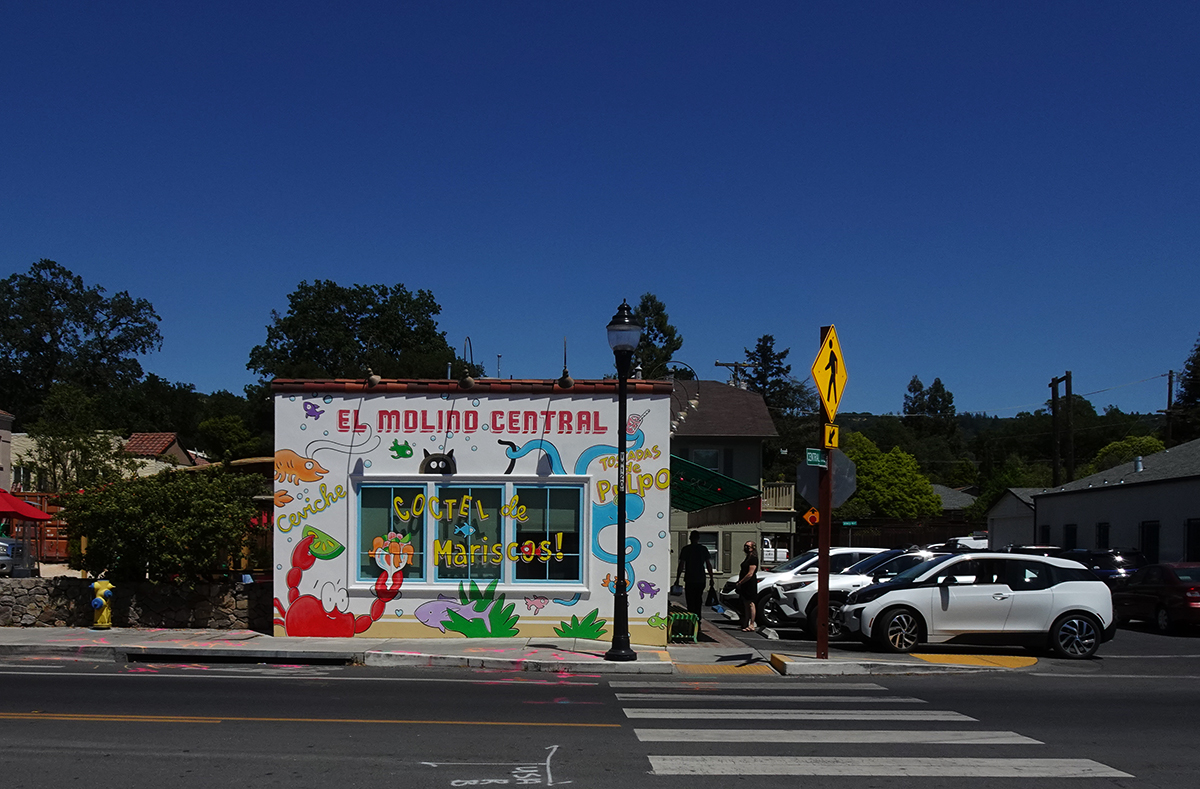
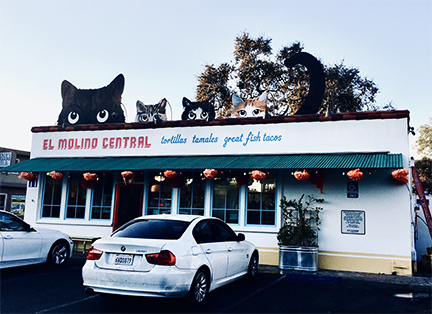
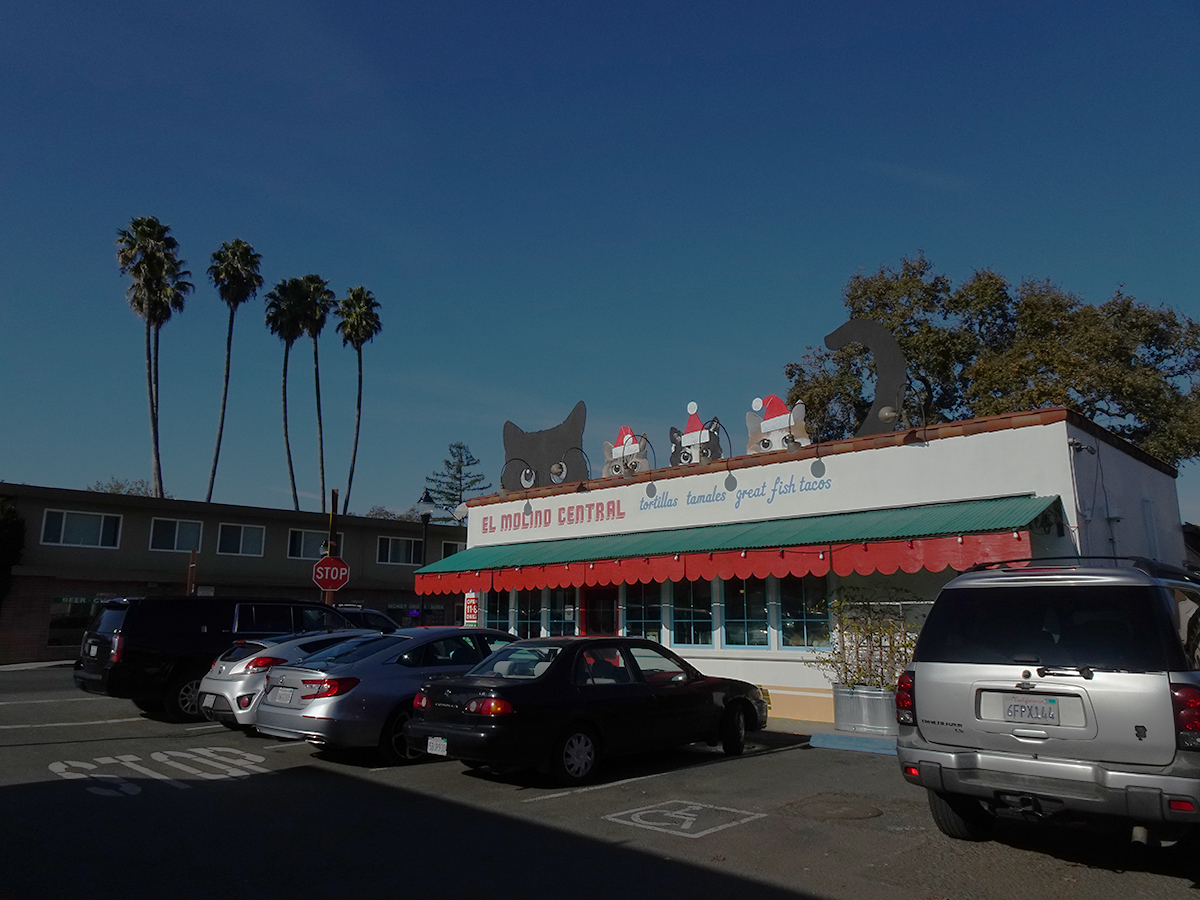
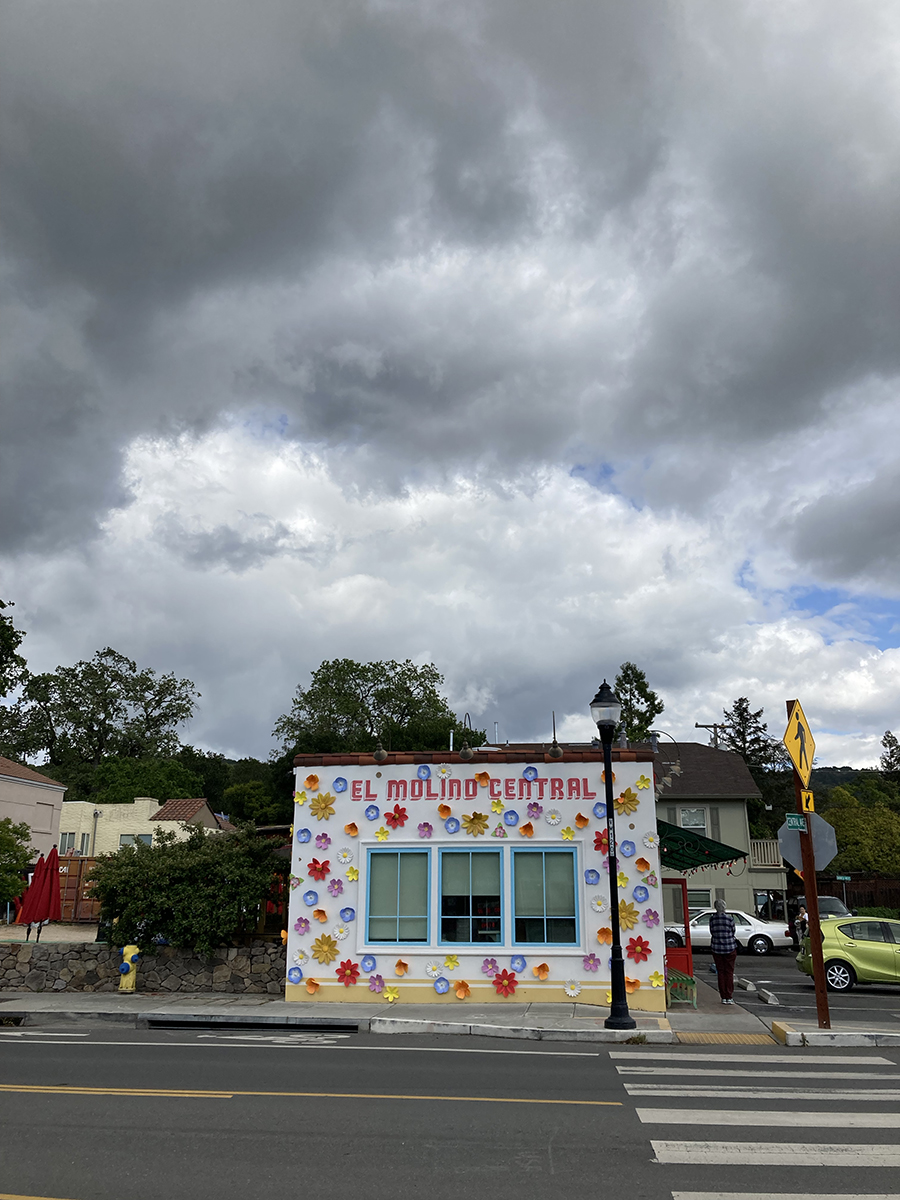
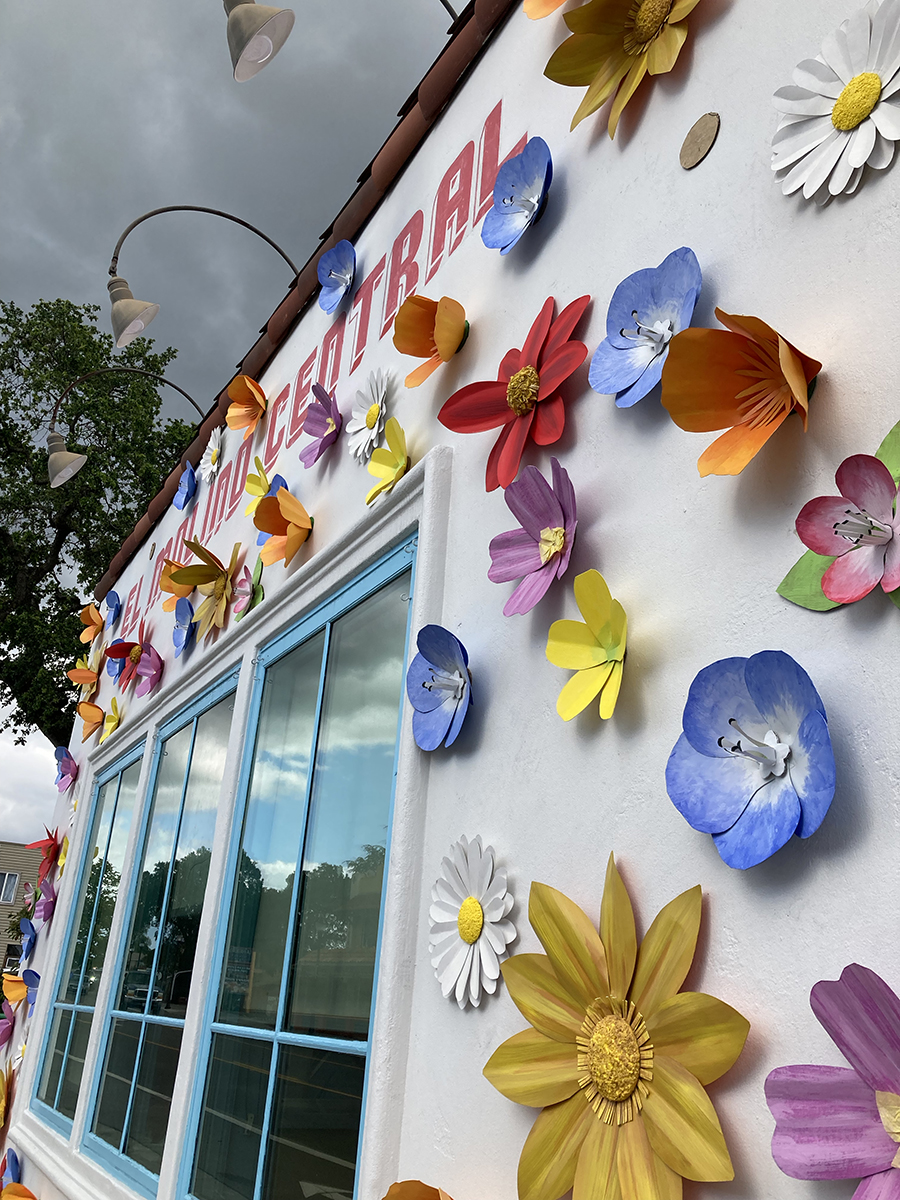
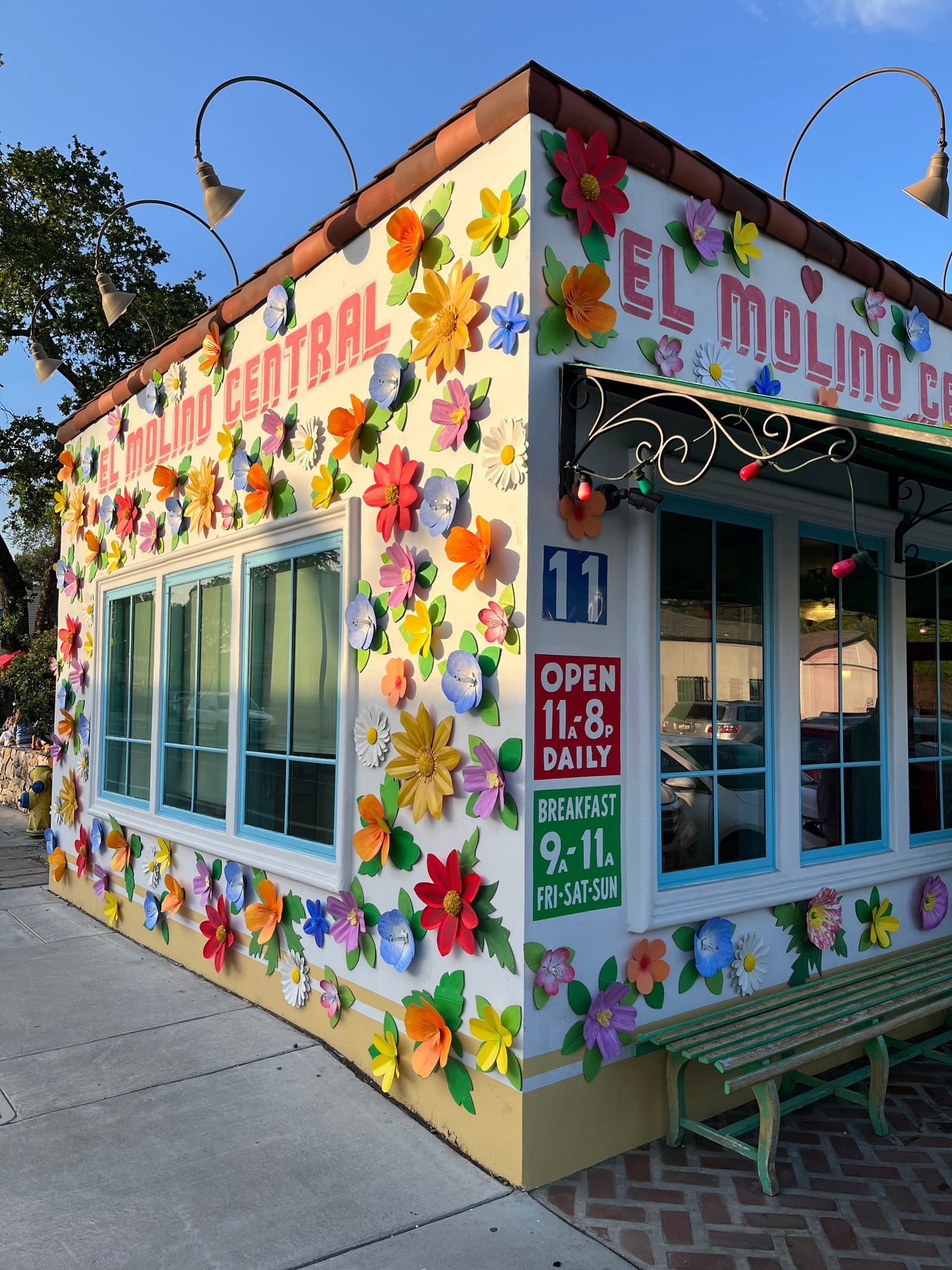
Karen not only transformed the building brilliantly, but continues to embellish it seasonally with the work of artist Mark Marthaler (https://www.facebook.com/mark.marthaler.3/about)

2021
2016
2021
2022
2022
UPDATE: More recent photos of the flowers, courtesy of Mark, showing the leaves.
Art by Michael Acker

Sonoma Index Tribune courtesy of the Sonoma Valley Historical Society

Photographs by the author and Mark Marthaler

copyright 2022

Standard
Boyes Hot Springs, Neighborhood Phenomena, People, Wonders and Marvels

Tony Perez and His Garden

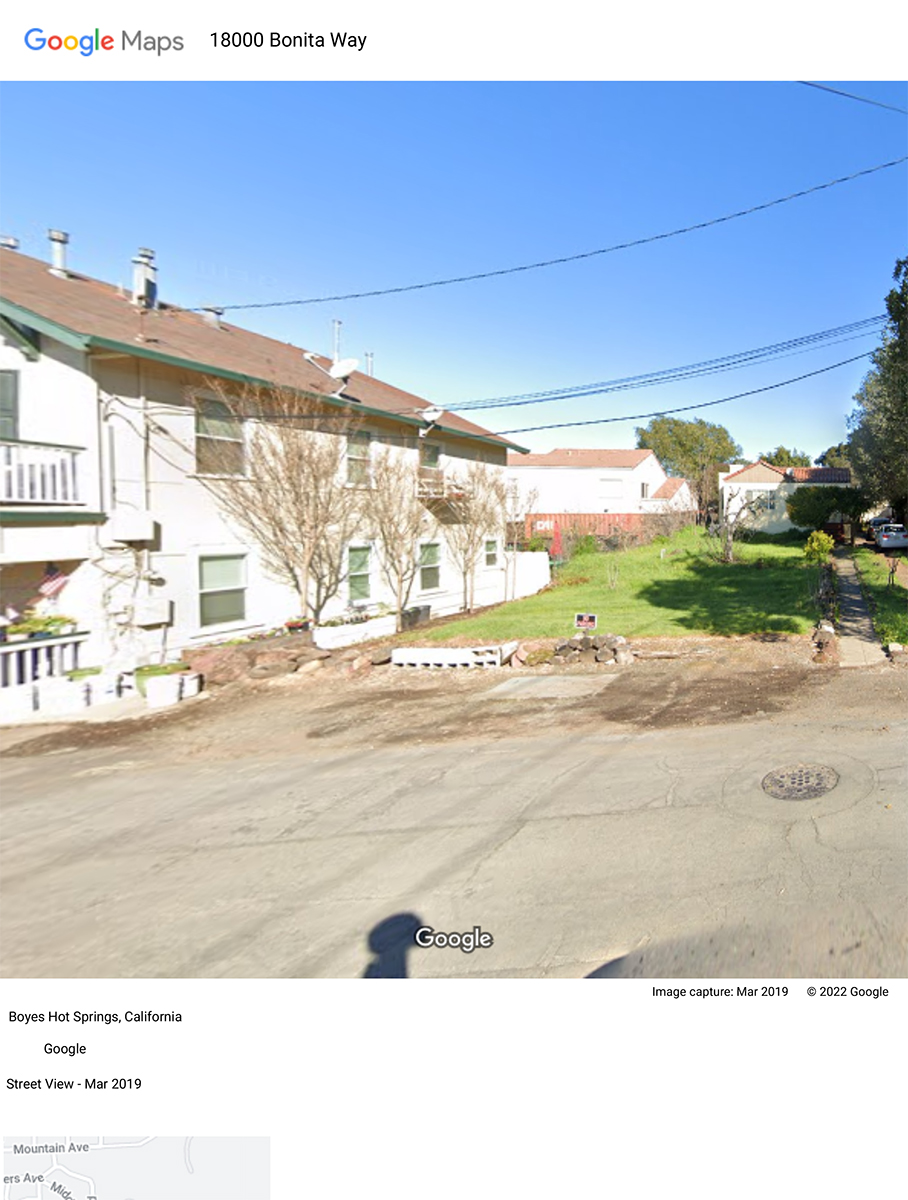
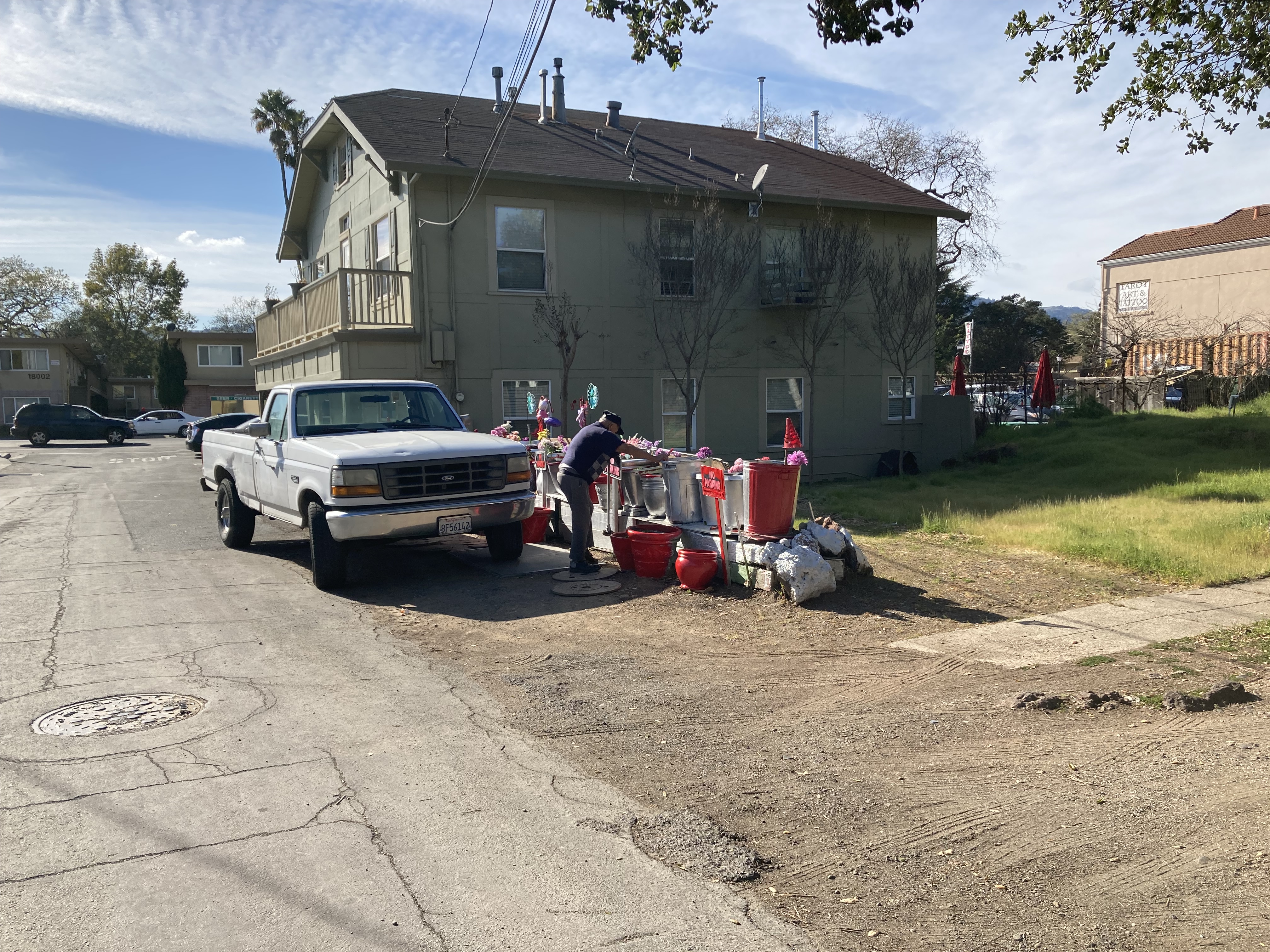
March 2019. Bonita Way comes into Central here, hence Street View’s address.

November 2019

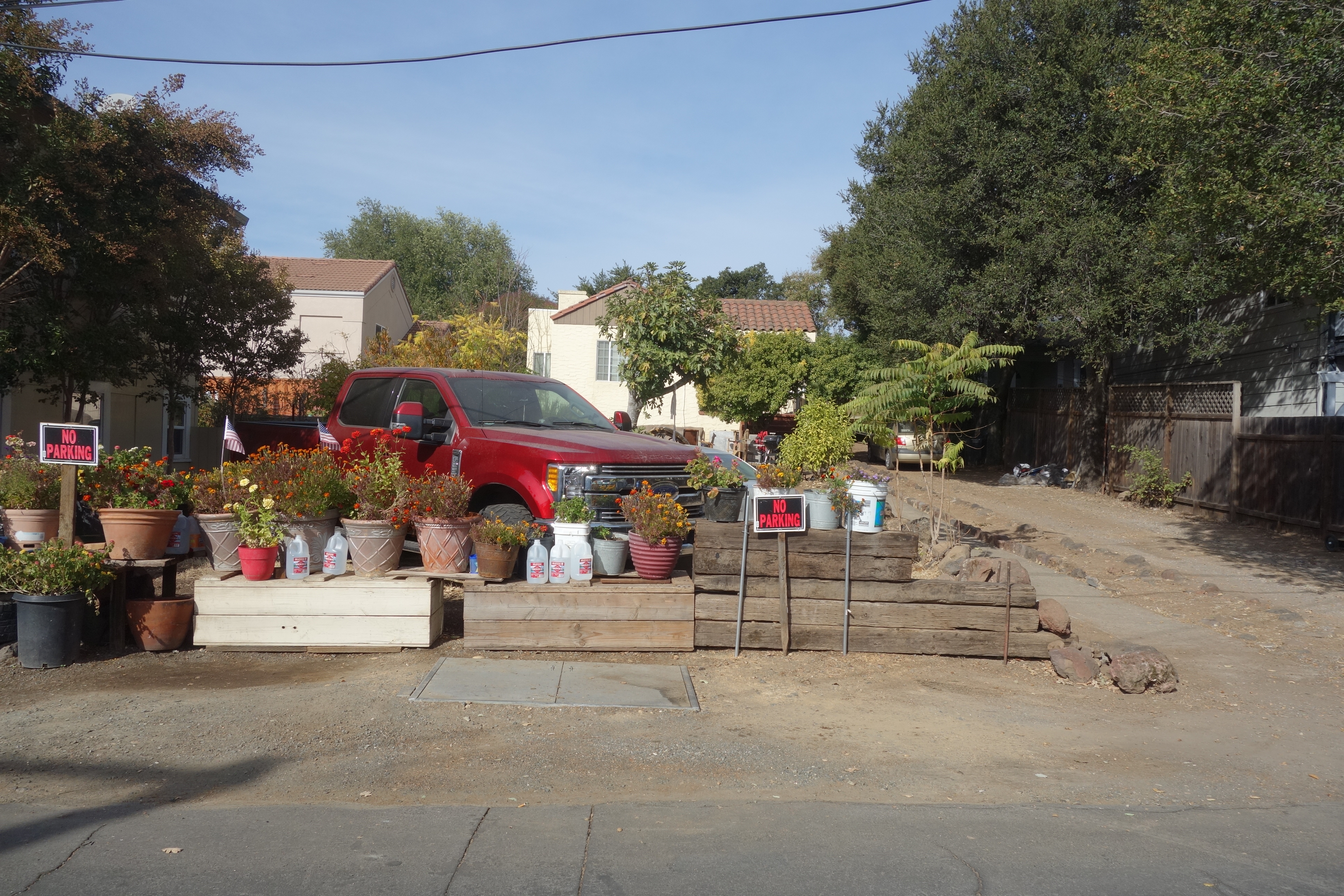
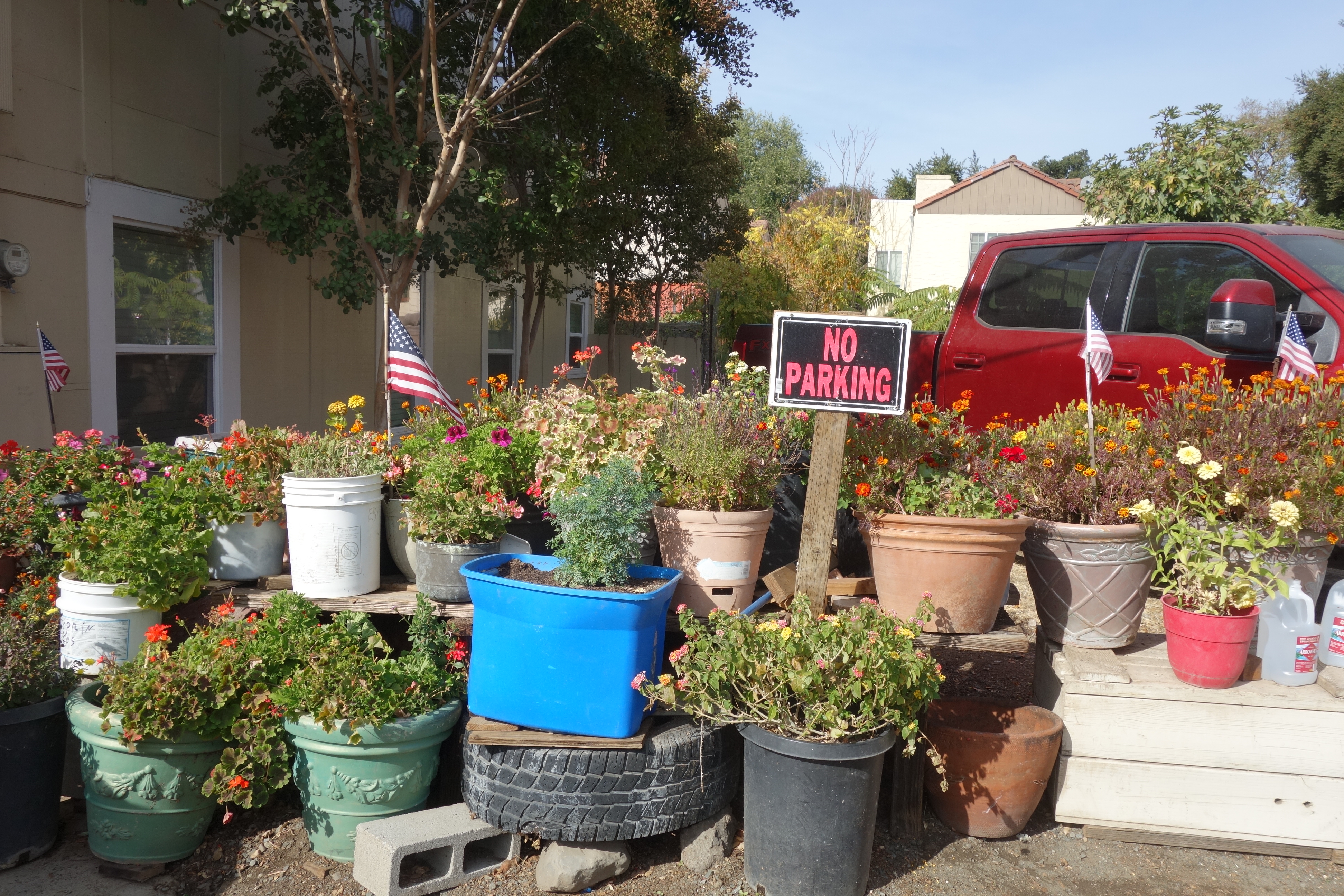
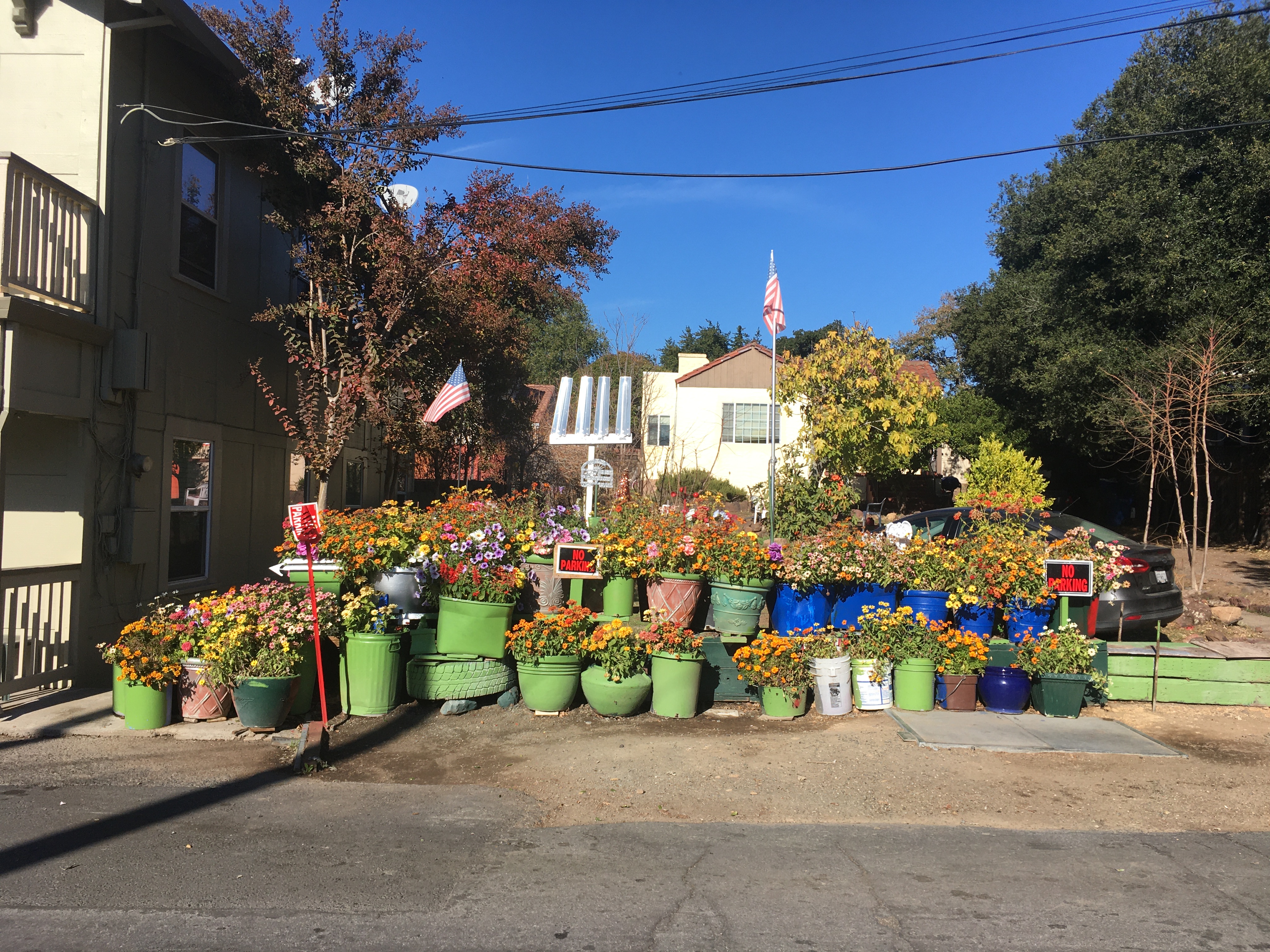
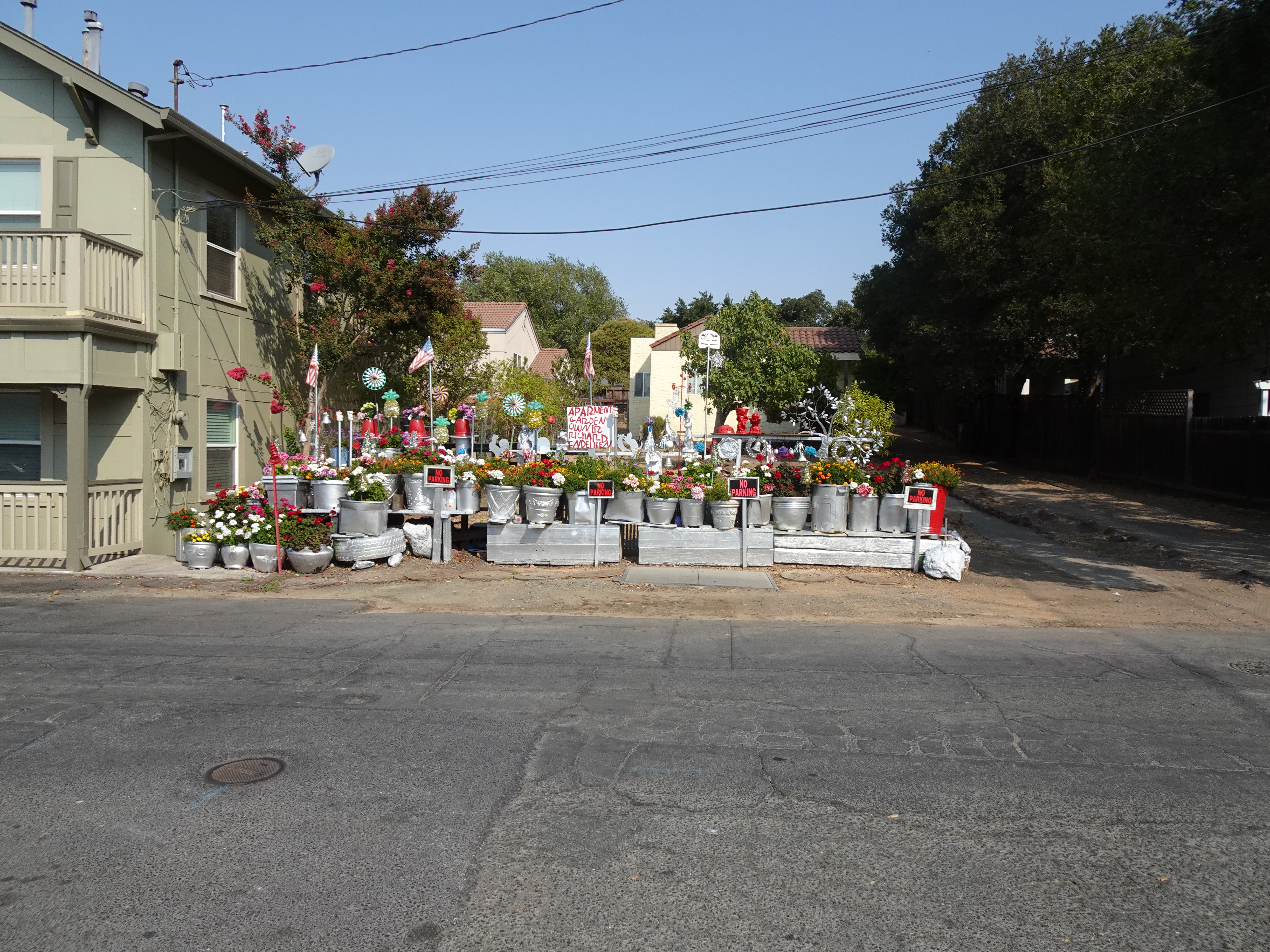
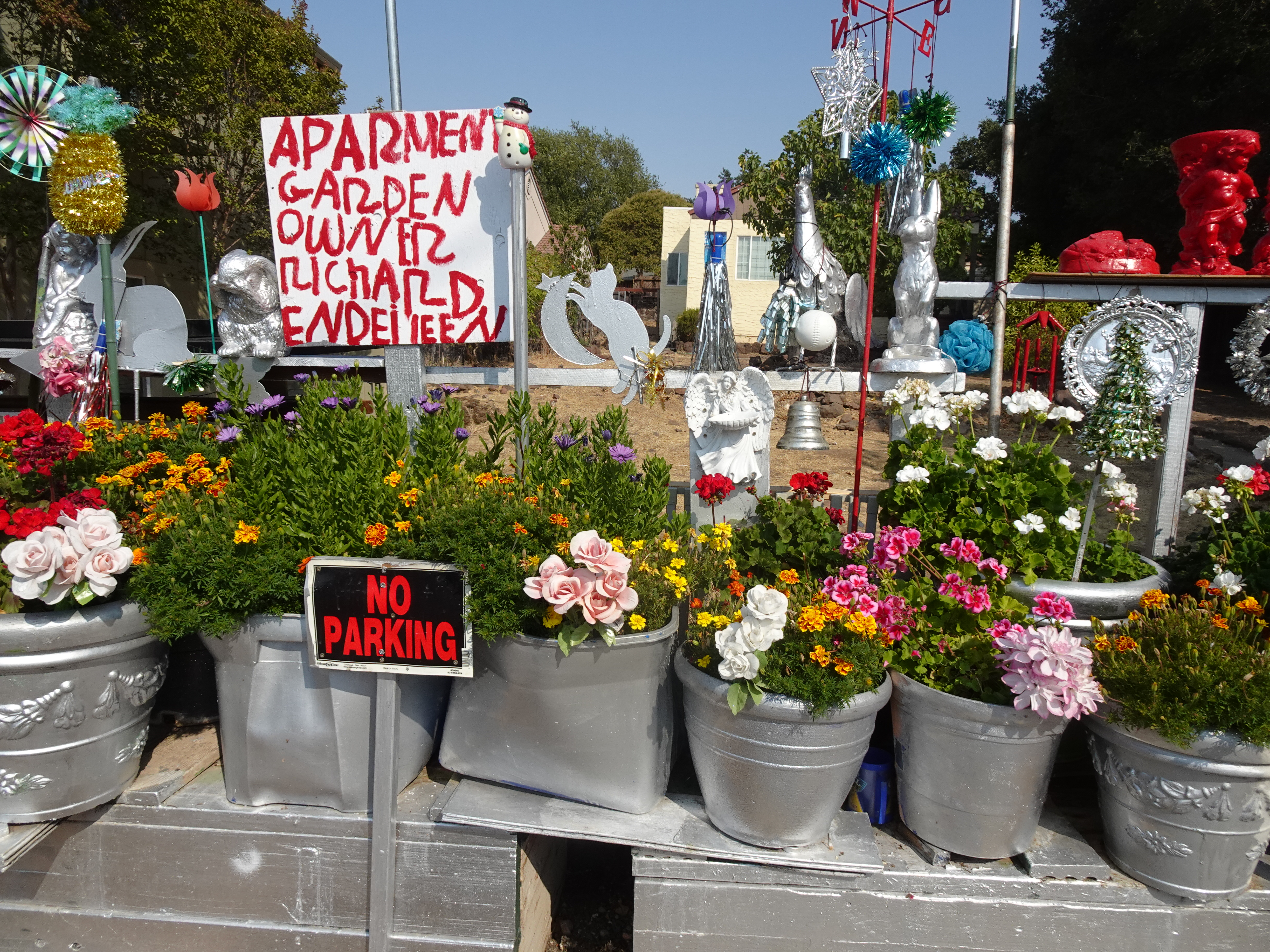
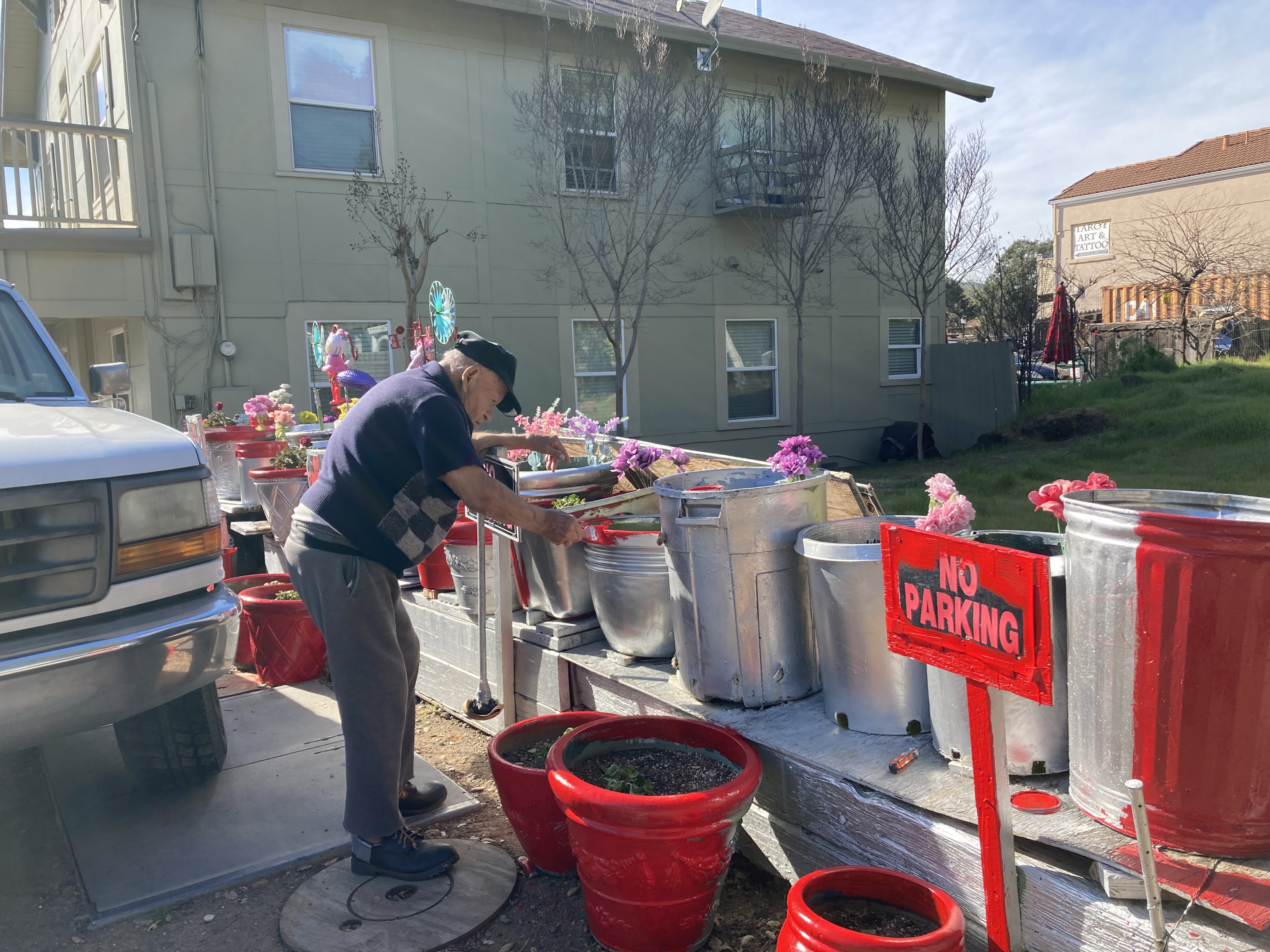
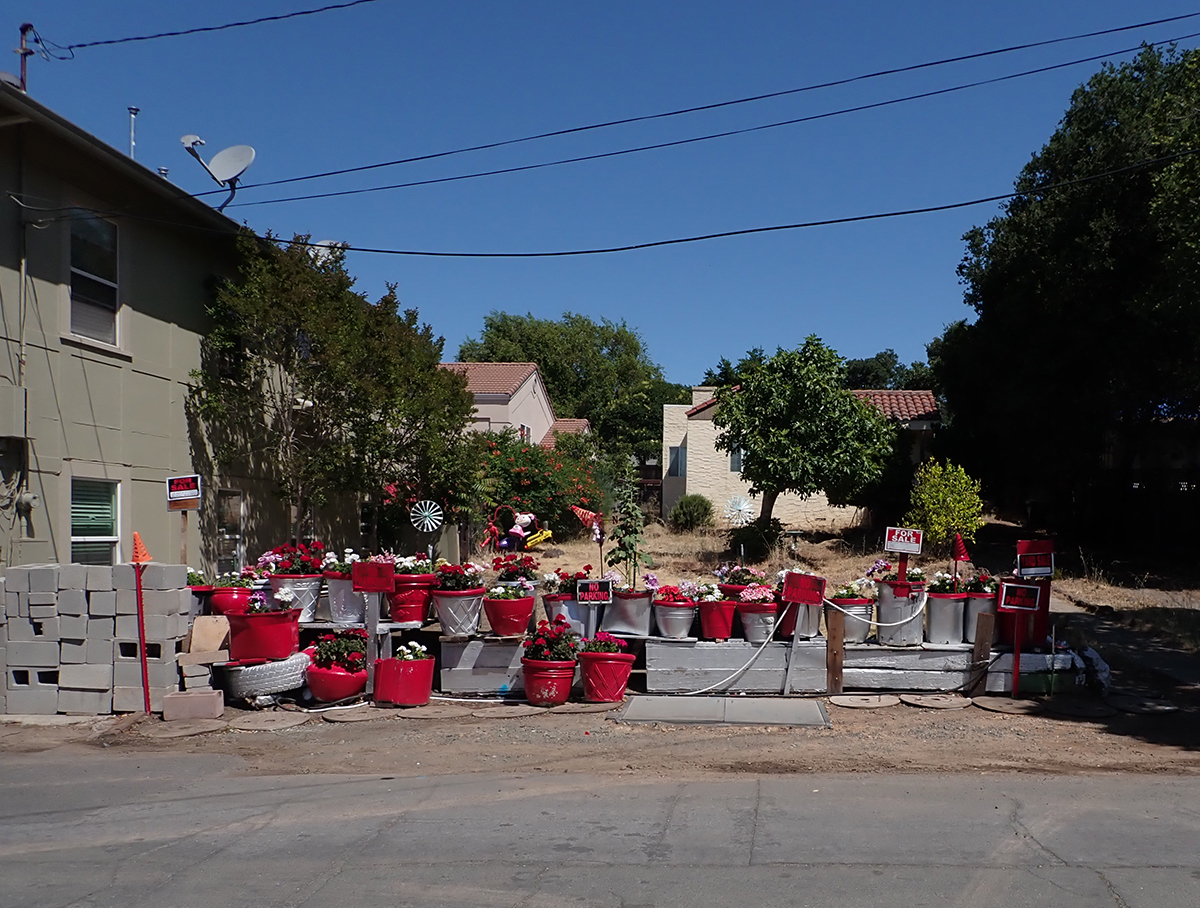
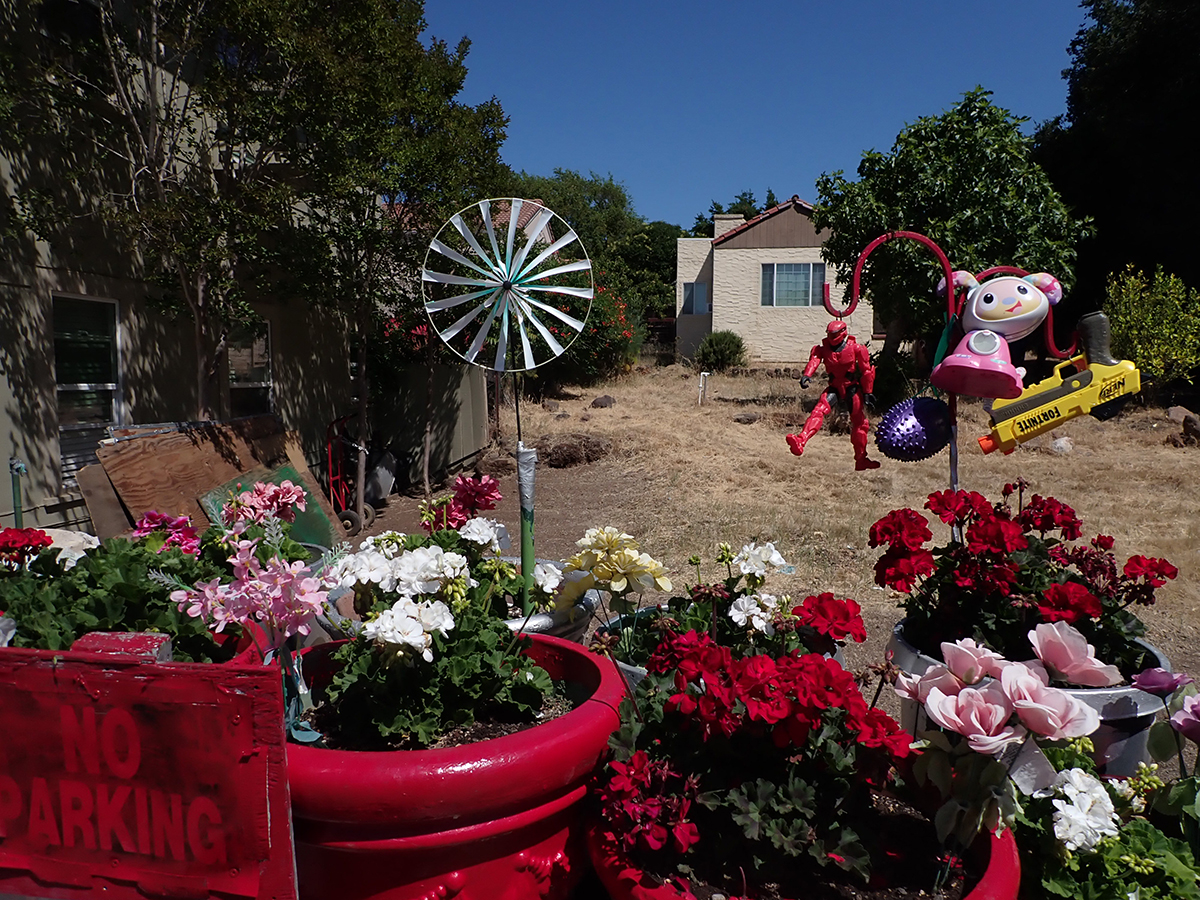
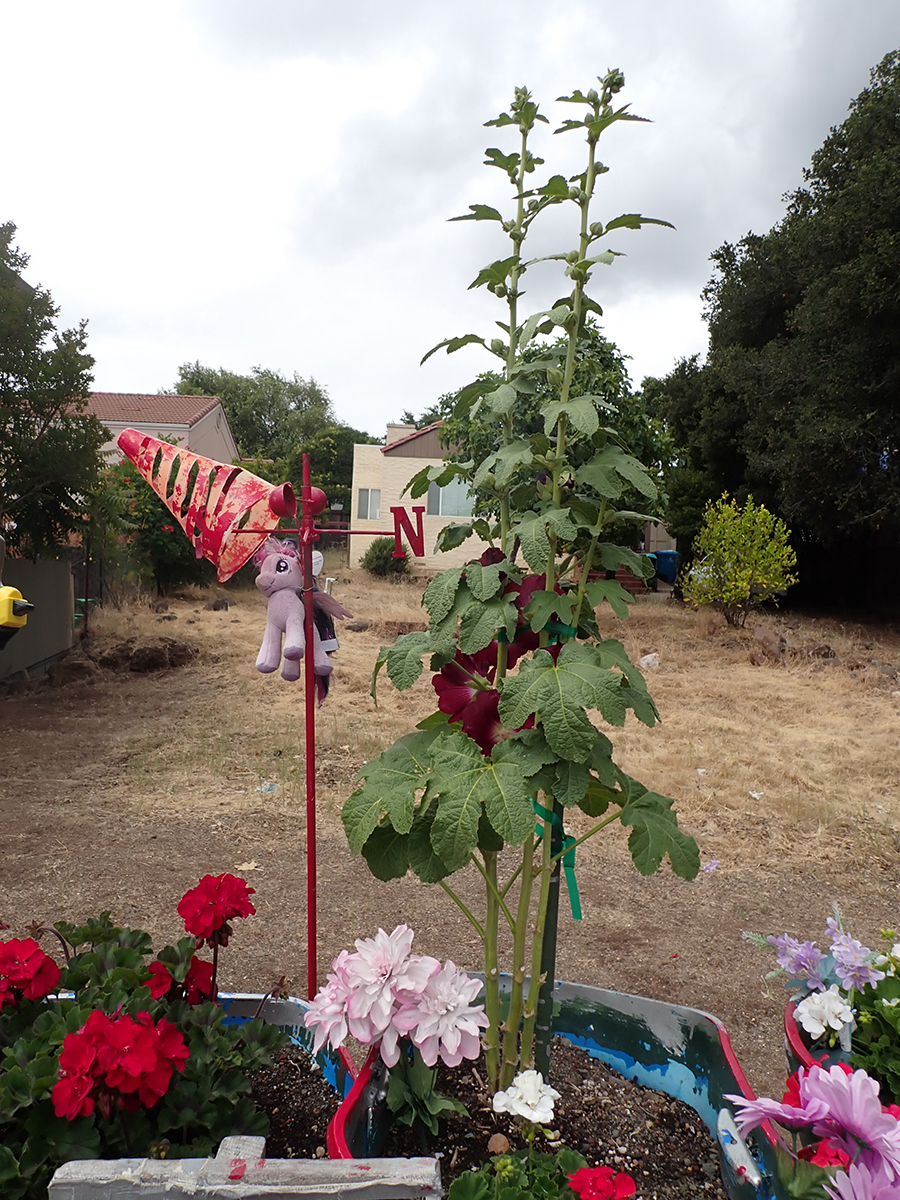
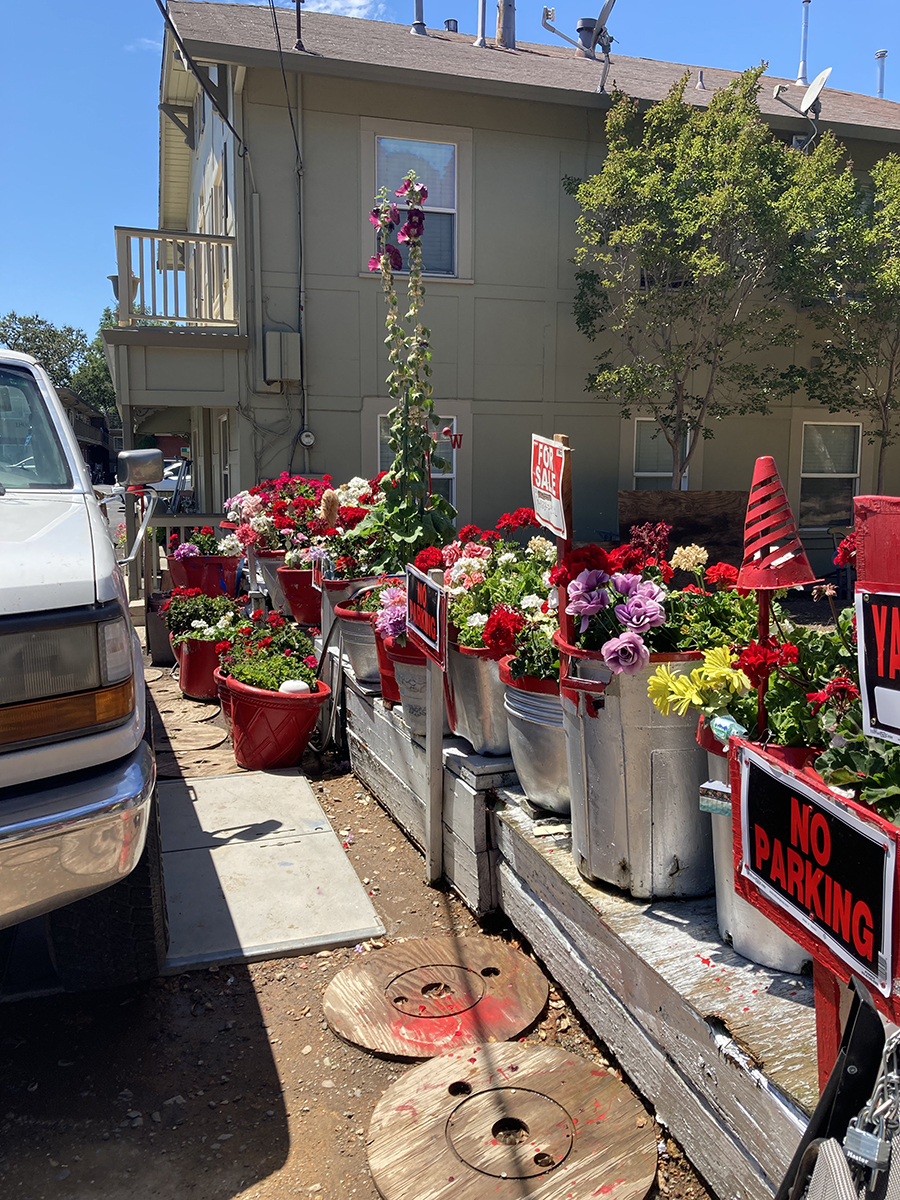
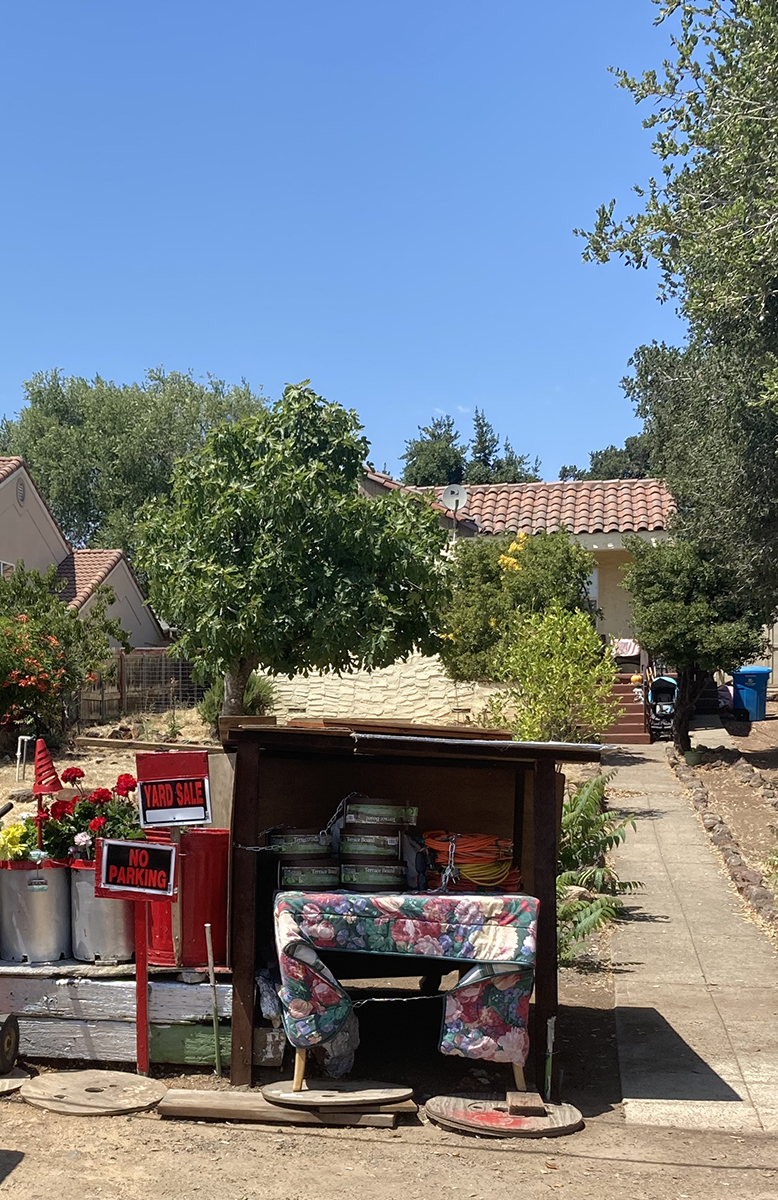
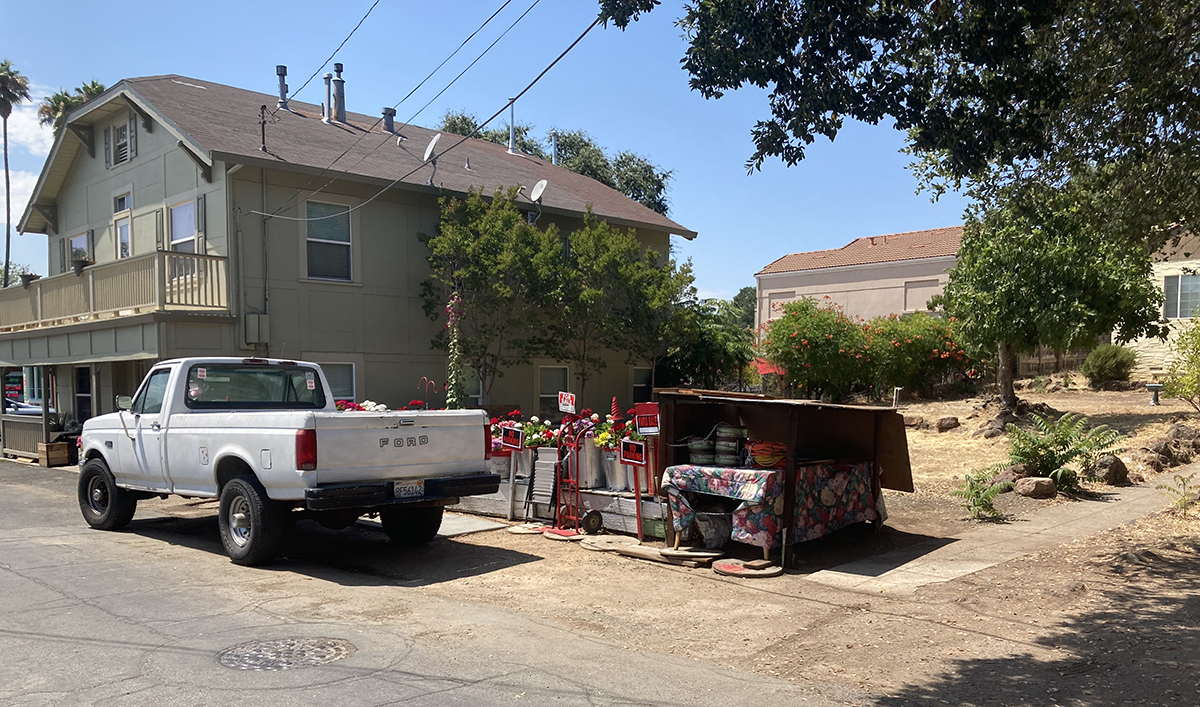
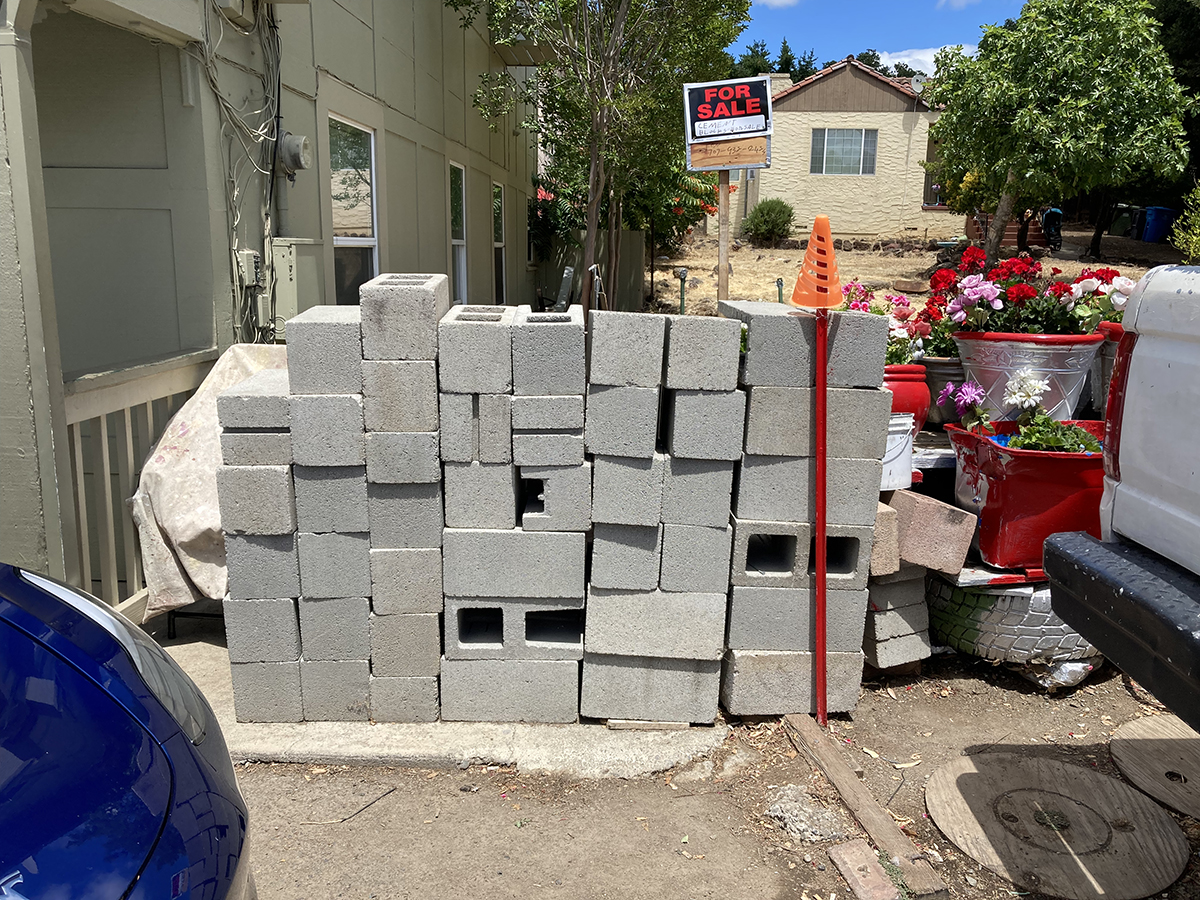
Sometime between March and November of 2019, Tony started constructing his installation of flowerpots, plants, garden ornaments, lumber, and concrete blocks on the side of the street in front of 67 Central Avenue in Boyes Hot Springs. I originally assumed his name was Richard because of the sign he posted in 2021. The sign, which is not up currently, is a bit puzzling, but I’m glad he gave himself credit, no matter what name he used.

November 2019

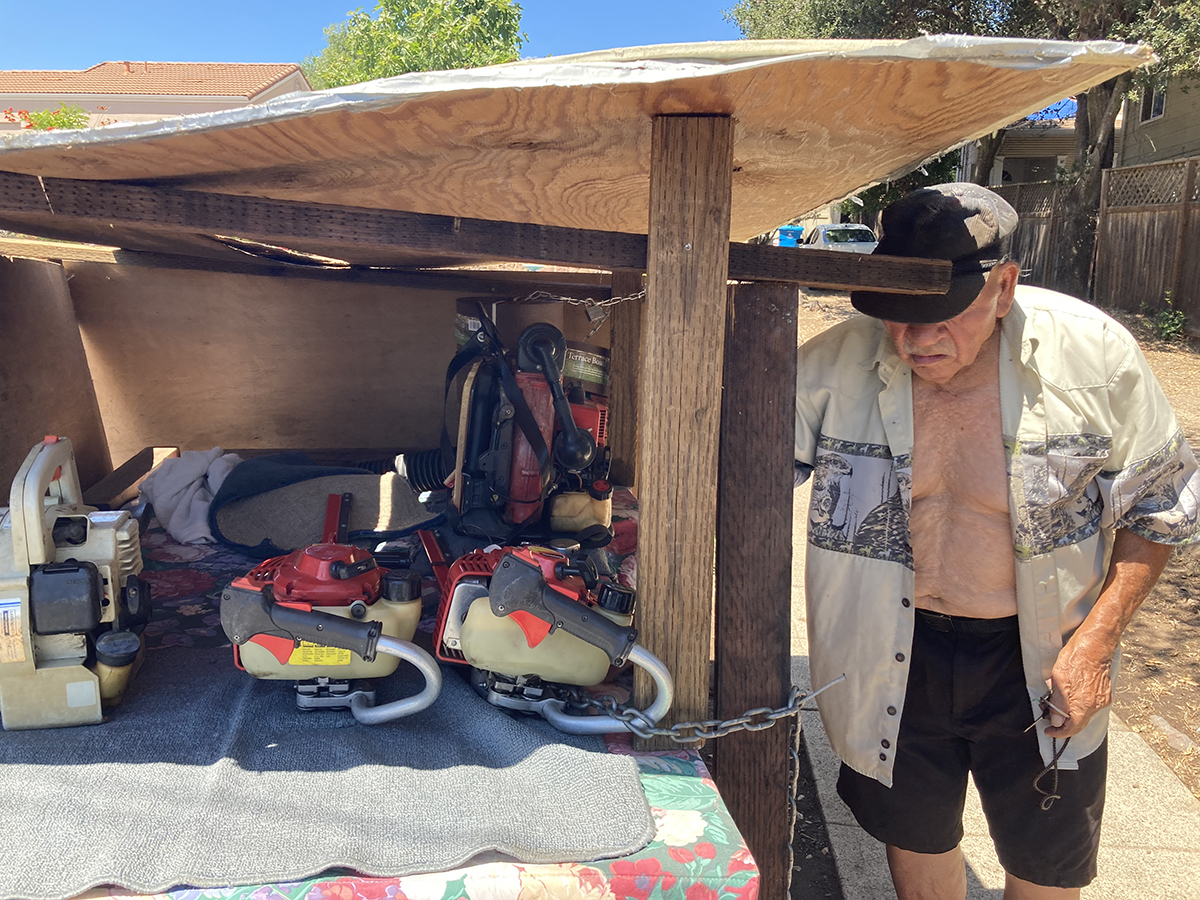
Tony was born in Nayarit state, Mexico and came to the U.S. 50 or 60 years ago (he’s a bit vague on this). He has worked as a landscaper his whole life. “I know how to take care of plants,” he told me.

Joanie Bourg via Facebook:

“He used to come into Sonoma Mission Gardens where I worked for many years.. order plants or buy soil. The thing that struck me about Tony was his super boisterous laugh and spirit, and he obviously worked hard as a gardener.. I would see his truck everywhere. He’s a larger than life dude. I’m also a gardener by profession, so I know just how hard the work is. I love his fighting spirit.”

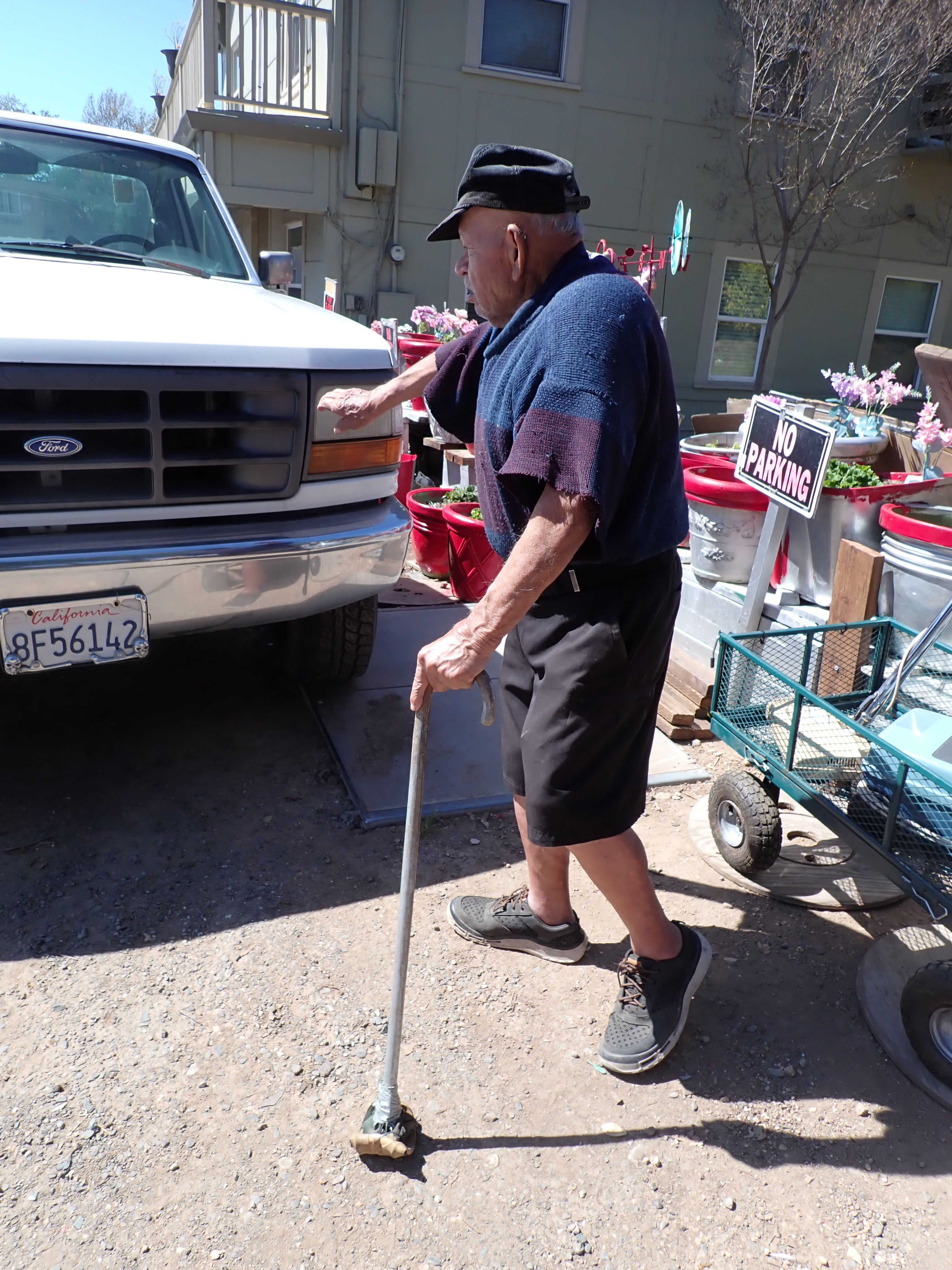
He has worked at that trade until he got sick. “The doctors took my money, and I’m still sick,” he said.  He will go back to Mexico when it’s “time for the ‘cementary’,” he joked. He usually walks with two canes, which he made himself, because he doesn’t like the store-bought ones.

November 2020
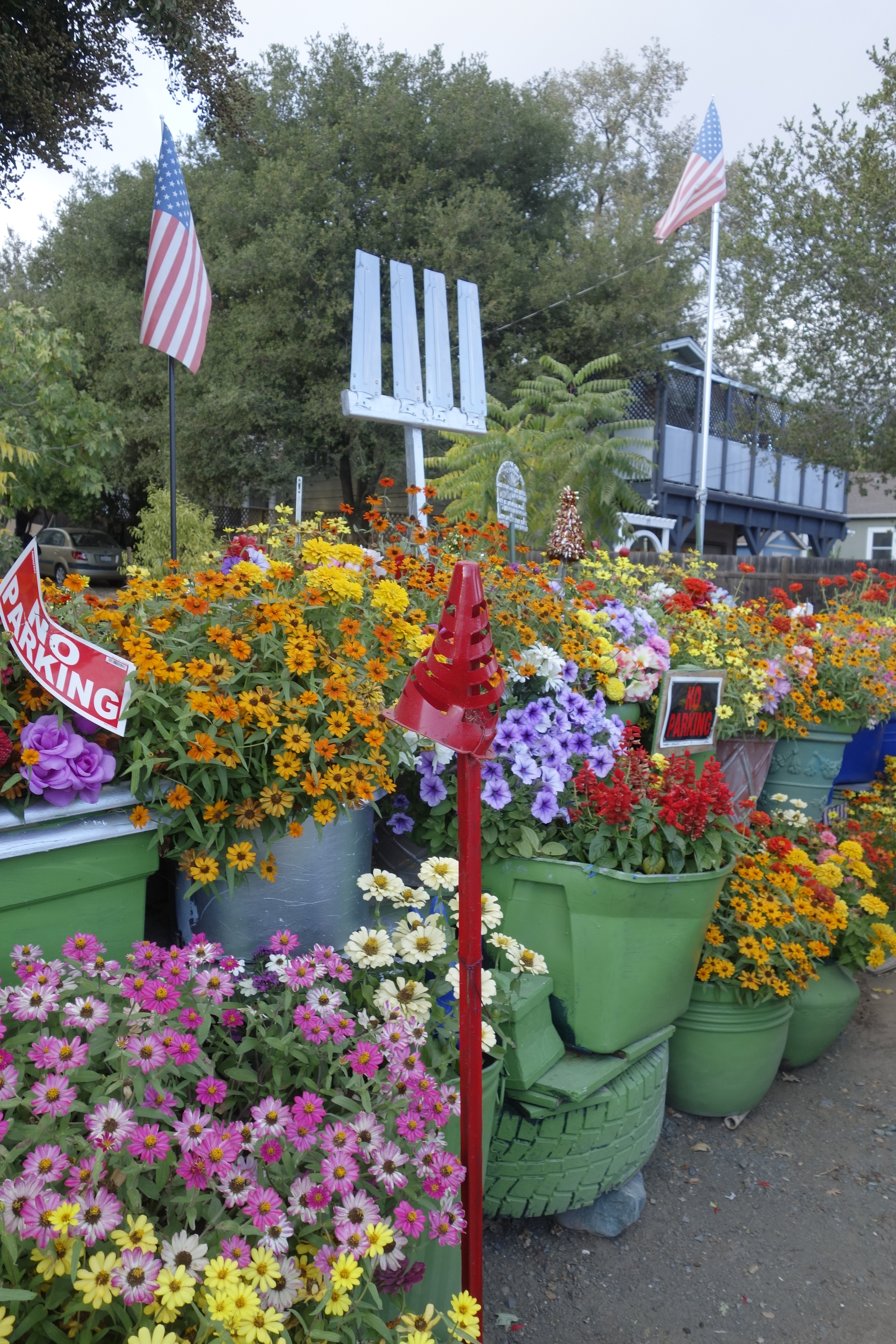
November 2020. The object with the four “tines” is made from ceiling fan blades.

Tony has lived in the apartments next door to his garden for five or six years.

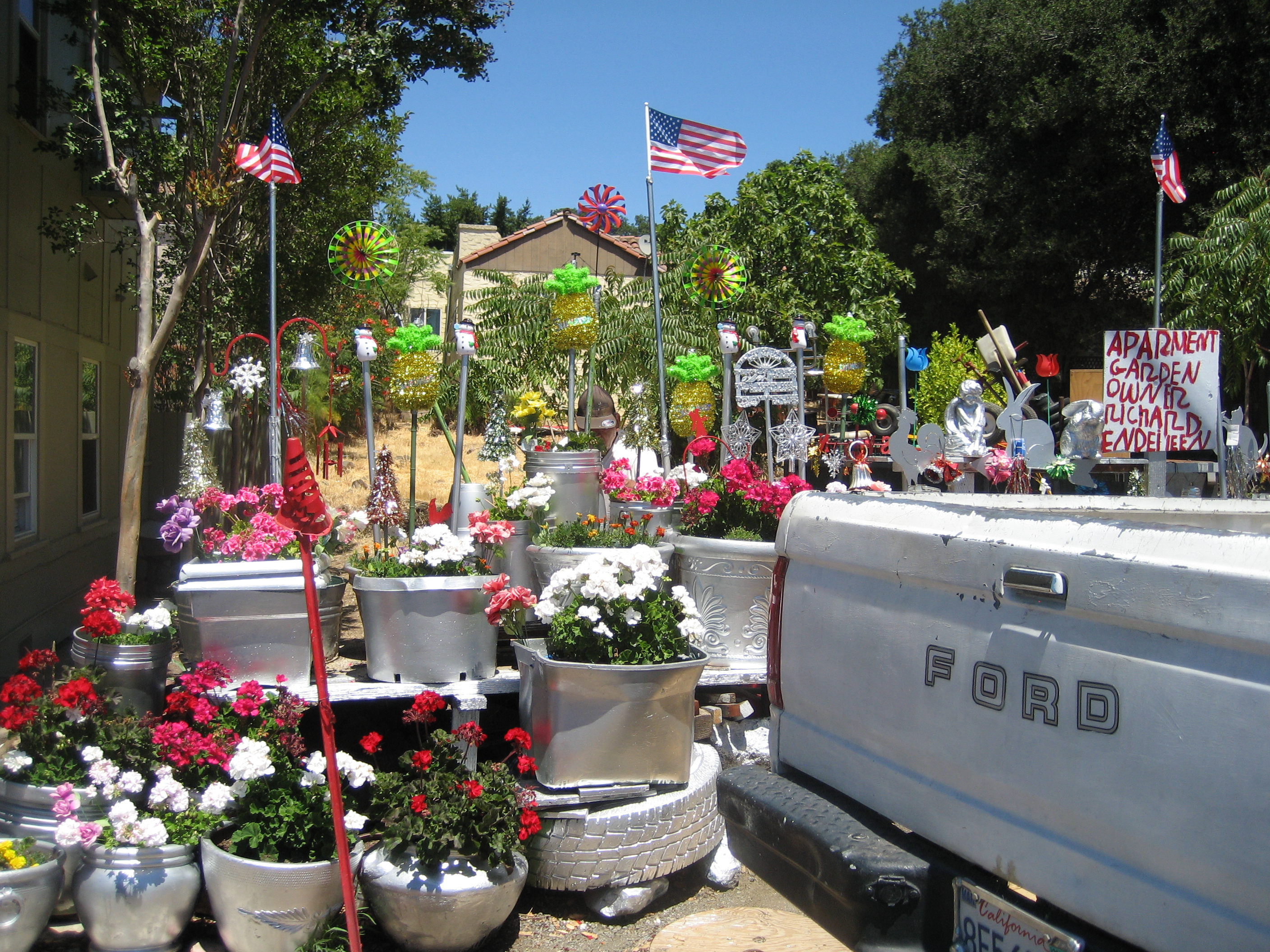
His garden evolves with the seasons. He grows geraniums and plants annual flowers in season. He also uses artificial flowers. Periodically he paints the pots a new color.

November 2021
November 2021

Tony drives a Ford work truck. I find it charming that he has replaced the Ford logotype on the tailgate with stick-on lettering, which is slightly askew. It’s a very competent looking truck.

Tony’s Ford, 2021

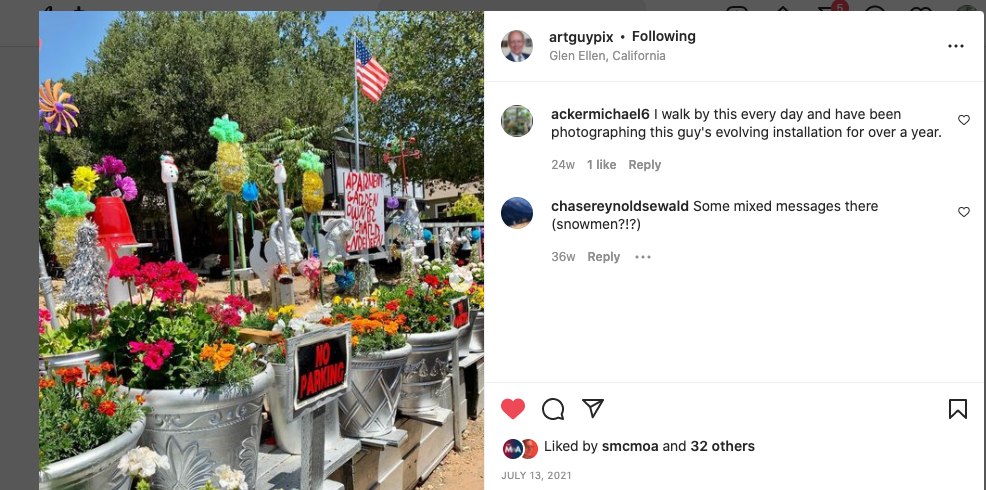
Tony’s garden is getting noticed on social media, probably because it’s close to a popular restaurant, and it’s so great!

From the Instagram of Charles DesMarais, former art critic for the S.F. Chronicle
March 2022. Building back up (“better?”) Tony had winterized for 2021-2022.
March 2022
Tony with his custom-made cane.

Thank you Tony Perez for your gift to our neighborhood!

This post will be updated as Tony’s Garden evolves.

June, July, and August 2022. Tony is bringing a lot of tools and material out of storage to sell.

Standard
Art, Boyes Hot Springs, History, People, Personal History, Wonders and Marvels

Patrick McMurtry

Art is in the name of this Museum, and after all these years of existence, here is the first post about a specific artist. Sadly, it is occasioned by his passing.

Patrick McMurtry. 1947-2021

Gael del Mar (a perfectly beautiful name), was Patrick’s life-mate.I knew Gael first. We met at the Red Barn Store at Oak Hill Farm. Somehow we started talking about Frank Zappa (she must have had his music on the sound system.) “You like Zappa? she asked. “I have someone you should meet.” And so she introduced me to Patrick. Nearly every time we would see each other, we would talk Zappa and Beefheart. He was also interested in Sonny Barger, the Hell’s Angels front man. He loaned me a book Barger wrote, which led me to watch a lot of  motorcycle exploitation movies, which are really great fun.  Patrick had many great stories about the days of the Hells Angels and other rowdies in Sonoma Valley, which is where the Sonny Barger thing came from.

I walk around the neighborhood a lot and would often walk down Orchard Street hoping to see the garage door of Patrick’s studio open. It wasn’t a big garage, and it was packed with art, but he had a space carved out to work in. Then he and Gael moved over to 4th Avenue, which was even closer to our house. Again, I’d walk by and frequently encounter Patrick in front of their place. Long conversations would ensue. His last studio was out at the Art Farm on Grove Street. I visited him there in 2019, hung out talking, and bought a small painting (below).

In 2009 Jonah Raskin published “Field Days,” subtitled “A Year of Farming, Eating, and Drinking Wine in California.”  The author spent that year hanging out at Oak Hill Farm, just up the road from Boyes Hot Springs. Patrick figures prominently in the book.

Jonah writes:

“Patrick McMurtry was not the first person I met at Oak Hill. Nor was he the oldest person living on the property. But he had lived there longer than anyone else-longer even than Anne Teller-and so I will let Patrick be the first Oak Hill resident to speak in this book. Anne dubbed him “the historian of Oak Hill,” and rightly so. Equipped with a good memory Patrick also appreciated facts and the sweep of events. Like most good historian, he had a knack for telling stories vividly. To go by his enthusiasm, body language, and facial expressions, he might have been talking about events as momentous and the American revolution of the civil War..” {I can certainly vouch for Patrick’s ability to tell stories vividly!}

“Of course, Patrick’s ancestors had come from Europe, and they belonged to that generation of early pioneers who put their stamp on California. They farmed, raised chickens, and cattle, grew grapes, and cut down trees, milled them, and sold the lumber”

“’My father worked for Shell Oil, and my mother worked at the high school,’ Patrick said. ‘They became party animals and alcoholics, but a great-aunt who had a farm in Paradise, California, continued the family tradition, and learned about agriculture from her.’”

“Born in 1947, Patrick watched the rural world vanish. In the 1950s, he witnessed the strange transformations of the American society of the post-World War II period, which forever changed the ways people worked and played, ate, drank, entertained, and existed.”

“Patrick graduated from high school and college and went the way of many a young man of his generation. He lived in a commune, grew marijuana, and protested against the war in Viet nam. ‘Those were trippy times’ he said. ‘There was Elvis, the Beatles, the hippies, and Abbie Hoffman’s Steal This Book, which I actually went out and bought.’ Patrick laughed as though it was yesterday and he could still smell the pot and feel the passion of that time. The 1960s had arrived with a roar and changed the cultural landscape of the Valley of the Moon. ‘It was wild,’ Patrick said. ‘The Hells Angels congregated here; and up on Sonoma Mountain, Alex Horn a follow of the Armenian-born mystic G.I. Gurdjieff, had a farm. Hippies moved up there; Horn took their money and put them to work, which is pretty funny.’”

Patrick in the IT, 1984

From the June 20, 1984 Index Tribune article by Rhonda Parks:

In his studio hidden deep in the woods, Patrick McMurtry creates paintings inspired by a vivid imagination, like what a person alone is apt to see hiding in shadowed cubbys deep in the brush.

Peeking from his paintings are nocturnal trolls modeled after the folks he sees walking out of bars at night in Boyes Hot Springs. Patrick does a lot of walking and sometimes sees things like that.

He’s a bit mischievous, with a playful nature expressed as much in the “real world” as in his fantasy-inspired artworks.

The artist says…that his paintings reflect what it is like “going in a strange land for a while.”

While he’s painting, you might say that’s where his is-immersed in a strange land. But while some of his paintings are haunted with elusive characters, other depict life in a whimsical cartoon world. (These works ought to be accompanied by some of avant-garde singer Frank Zappa’s tunes, the artist says.)

In April 1981, Patrick showed at Composite Gallery.

When he retired from the Sonoma Developmental Center he got a pick up truck. The bumper sticker he put on the back seemed to perfectly express Patrick’s outlook.


In the photos below you see some of Patrick’s phantasmagorical works, which are truly unique.


These two videos about Patrick are available on Youtube:

Patrick McMurtry was a highly original artist, a great friend, and a valued member of the Springs community. We miss him a lot.

Index Tribune courtesy of the Sonoma Valley Historical Society

Passages from Field Days used by permission of author

Standard