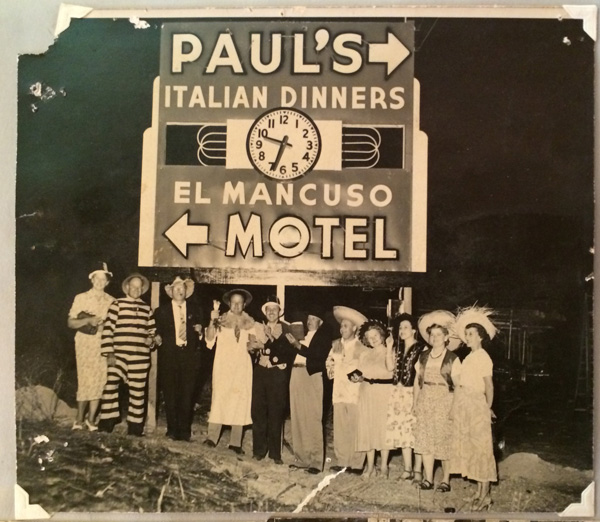
Sadly, Paul’s Resort burned in 2014.
Eve, Marcucci was kind enough to share some of her scrap book photos with the Museum.
Sadly, Paul’s Resort burned in 2014.
Eve, Marcucci was kind enough to share some of her scrap book photos with the Museum.

You won’t find this sign on the highway. Fetters has one. Agua Caliente has one. Boyes Hot Springs does not. A small thing, in the grand scheme of things, but still…
Visit The Living New Deal site to experience a mind-blowing history project and to understand the greatness this country achieved, once upon a time, not long ago, collectively.
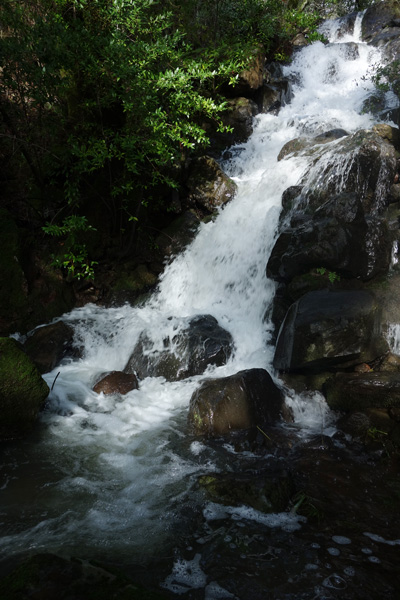
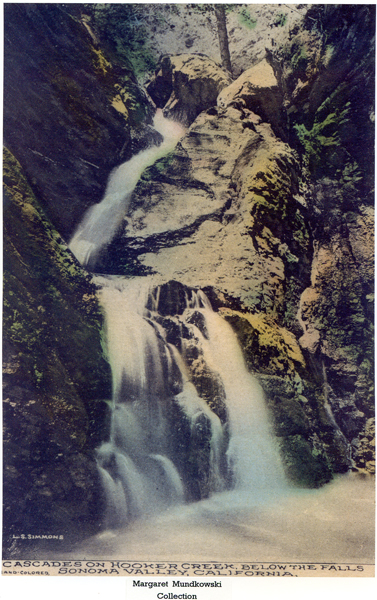
Hooker Falls December 2014 and circa 1888.
Thanks to the Depot Park Museum.
CORRECTED LINK
Link to Flickr gallery of all the photographs of Highway 12 between Verano Blvd. and Agua Caliente Rd., on the east side, taken in 2008. These are the base photos the Main Stem Project. Only six years ago, but a lot has changed. Sidewalks! New businesses. Old businesses gone. A literal walk down memory lane.
West side to follow.
https://www.flickr.com/photos/83786542@N00/sets/72157648810262200/
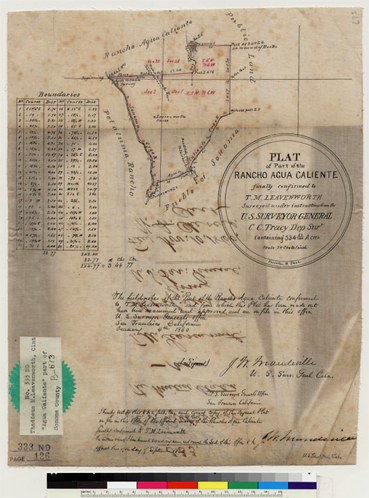
A History of Boyes Hot Springs should begin in April, 1847, with the arrival at San Francisco of Thaddeus M. Leavenworth, a native of Connecticut, purporting to be an Episcopal chaplain. He had enlisted in Stevenson’s Regiment of New York Mexican War Volunteers. After serving as a controversial alcalde in San Francisco from October 1847 to June 5, 1849, where he also took part in school and church affairs, he became interested in farming, or, more specifically, farm land, and speculation in farmlands. The fertile fields available north of San Francisco brought him to Sonoma Valley, where he acquired a 320.23 acre piece of land which would figure prominently in history as the site of Boyes Hot Springs.
Actually, these 320.33 acres covered all the land now known as Agua Caliente, Fetters Hot Springs, and some of Maxwell Farm
In 1853, both Thaddeus Leavenworth and State Senator M.G. Vallejo made application to the Land Claims Commission for title to the 320.33 acres, both referring to the land as a portion of the Agua Caliente Rancho, and both contending before the commission that they were the successors in interest to Lazaro Piña, who purportedly had received title to the property on July 13, 1840, by grant from the Mexican Territorial Governor Juan B. Alvarado. Eventually, in1855, Leavenworth’s claim was approved, Vallejo’s claim having been rejected by the Commission. Apparently Leavenworth had better appearing forged documents than his adversary. From A History of Boyes Hot Springs by Robert Parmalee, 1992, used by permission of the author.
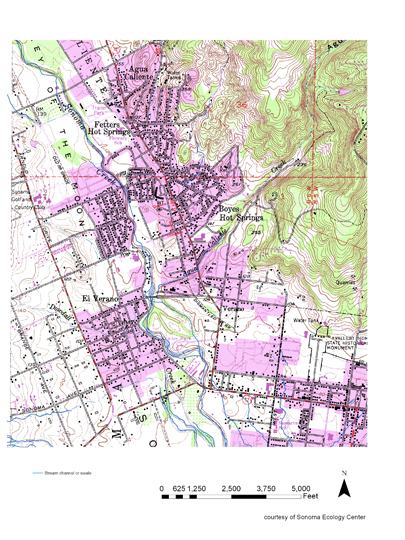
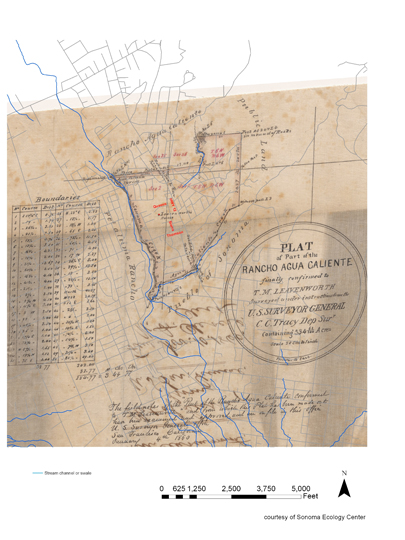
The plat of Leavenworth’s claim was drawn in 1860 by the US Surveyor General in SF. Near the center is a small square with the inscription “Leavenworth’s house.” Also on the plat are the township and range lines of the Public Land Survey System, with their alpha-numeric designations(“T5N R6W”). This system is still in use, allowing the US Geological Survey quadrangle map to be superimposed on Leavenworth’s plat. Ecological historian Arthur Dawson has done just that, writing in the names of the streets as we know them today(Queens, or Queeno street is the un-signed alley that runs along the south side of the Sonoma Mission Inn property.)
Thus we have a pretty good idea of where Leavenworth’s house was: within about 200′ of a point very near the base of the Sonoma Mission Inn water tower.
What did Leavenworth’s house look like? In 1884 TLM sold some of his land to Henry Boyes (and that is another long, interesting story) who incorporated Agua Rica Mineral Springs. They issued a post card showing a house. It might reasonably be assumed that the house, along with the land, was bought by Boyes from TLM, so the post card could be showing us Leavenworth’s house.
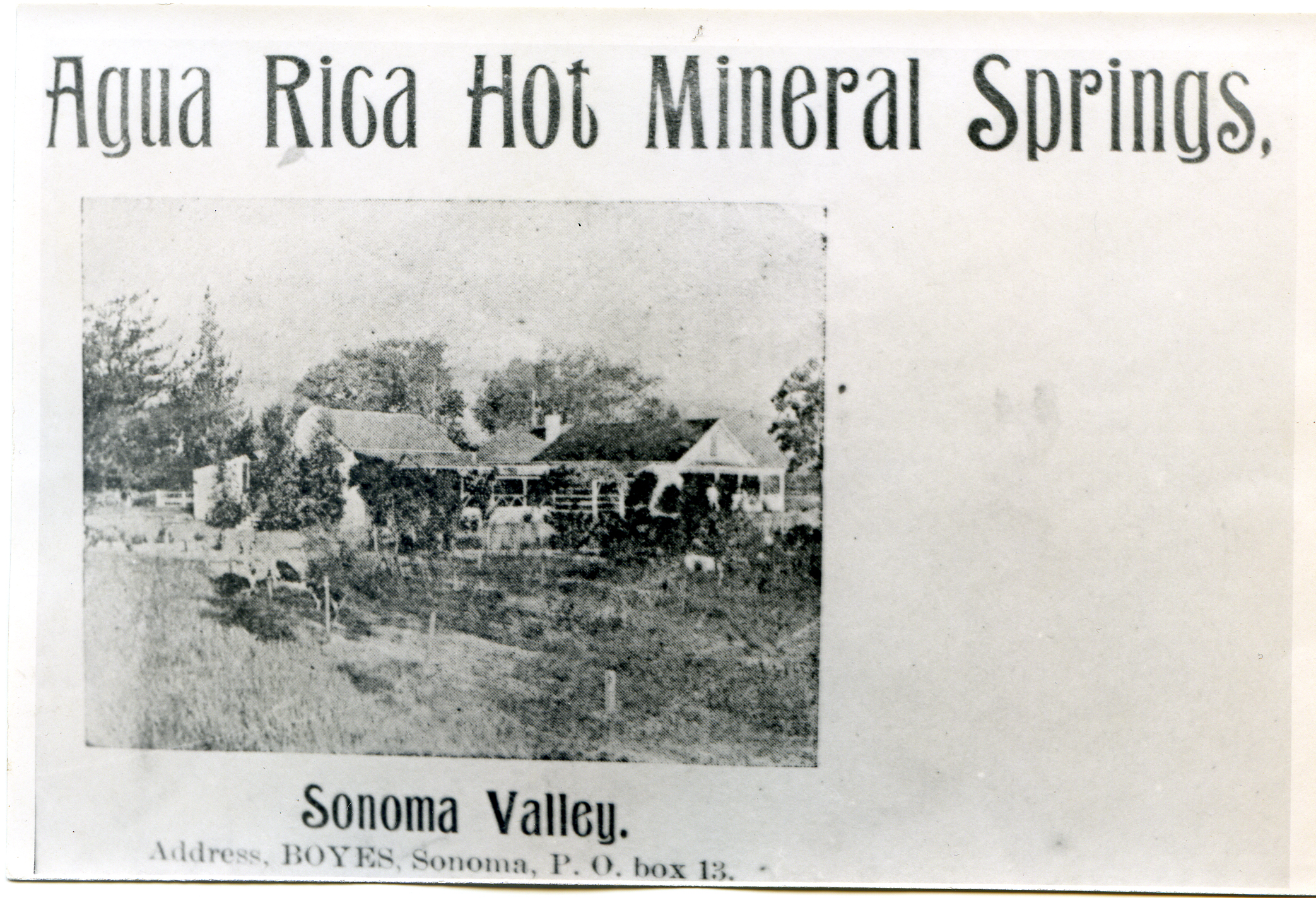
Thanks to Arthur Dawson and Robert Parmelee for permission to use their work.
The Springs Museum aspires to be, at least in part, a marvelous work of art in the mold of Grandma Prisbrey’s Bottle Village. We feel that obsessively collecting and then assembling artifacts and information from our community is inherently valuable and will result in beauty and a greater knowledge. And it’s really, really fun.
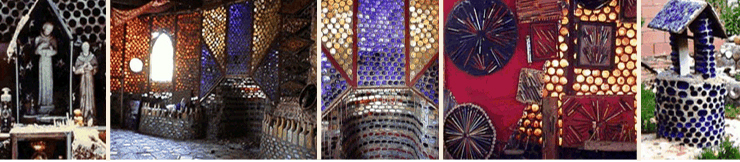
(Not) just another roadside attraction.
This is interesting, to say the least!
http://edb.sonoma-county.org/documents/Creative-Sonoma-Arts-Action-Plan.pdf
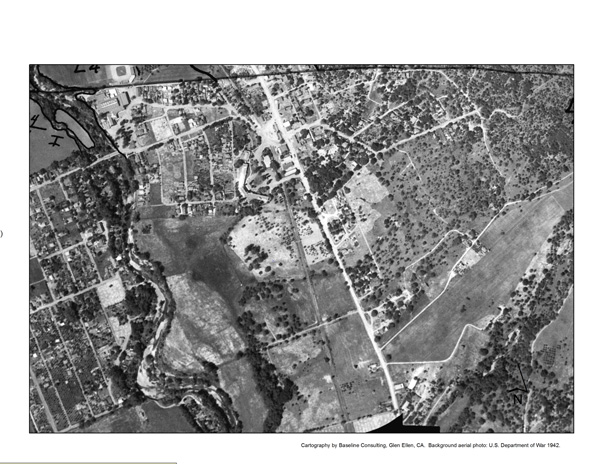
1942 War Department aerial photograph of Boyes Hot Springs. The Sonoma Mission Inn is clearly visible. (In the upper left hand corner you can see the Boyes Bath House complex and the baseball field.) There is not much building on Highway 12 south of The Inn. Is this because of the fire of 1923, or was this area just not developed by 1942?
Thanks to Arthur Dawson for this fascinating photo/map.
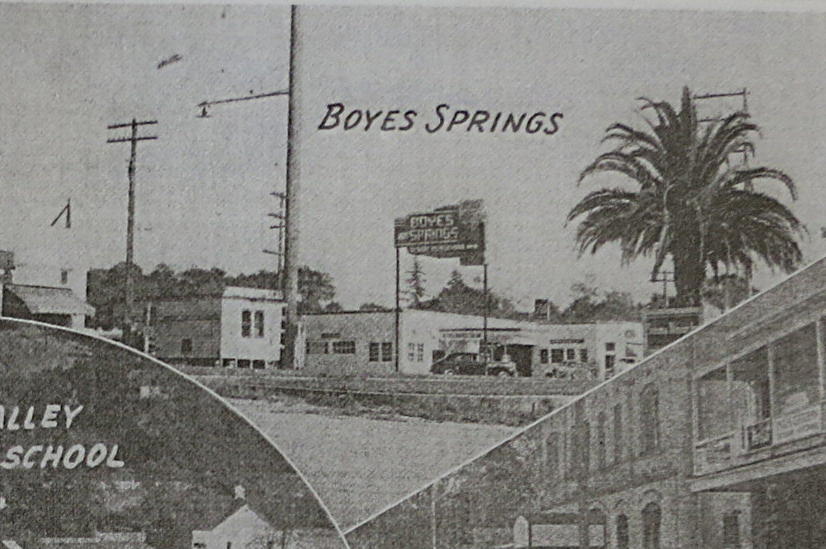
This is a very rare view of the center of Boyes Springs in the 1930s or 40s, standing near the RR depot, looking east across the Plaza (that is what they called it. Note the palm tree.) In the center is a large sign that says “Boyes Hot Springs”. The tall pole marks where Vallejo St. meets the highway.
 springs museum