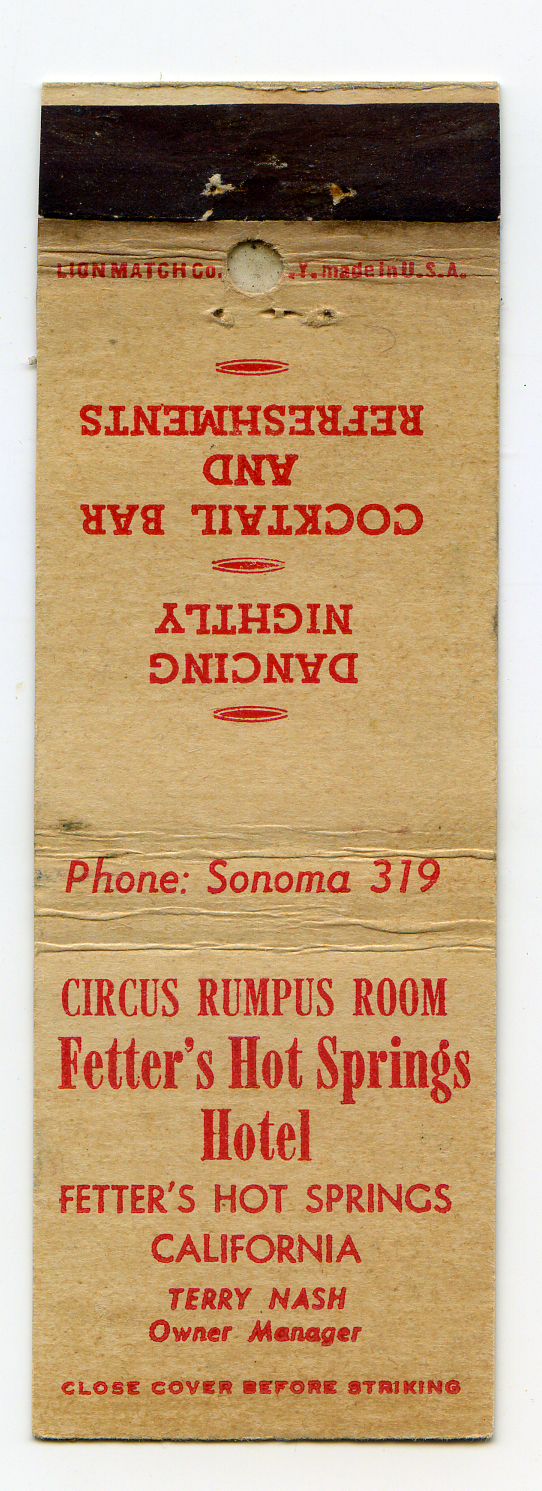
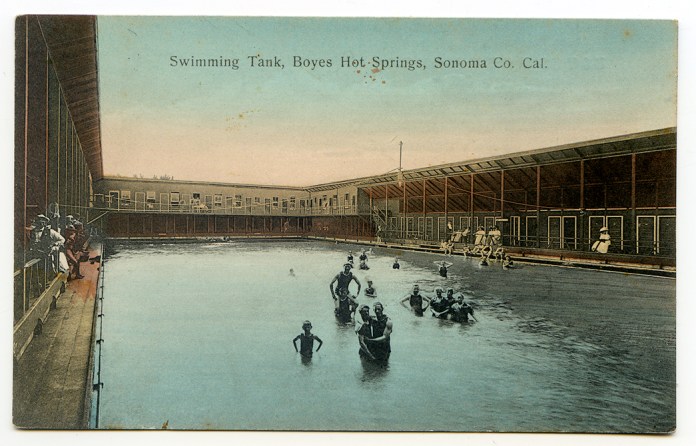
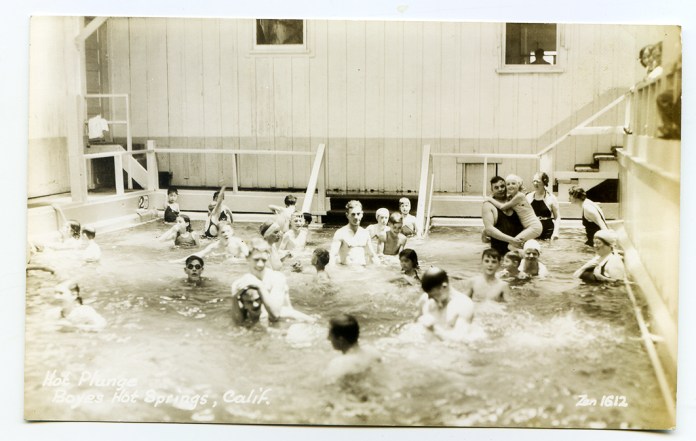
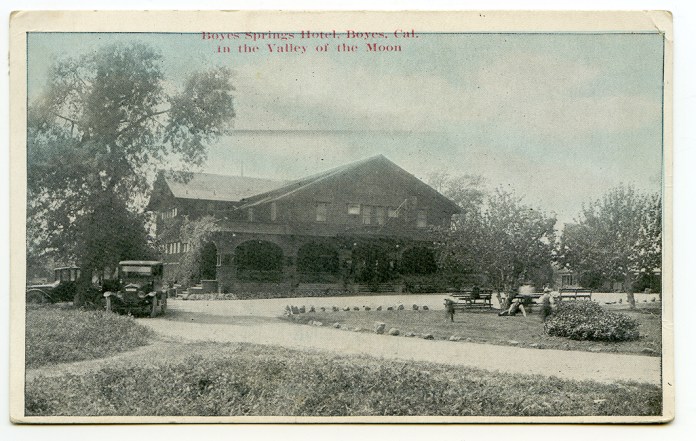
Postmarked 1919
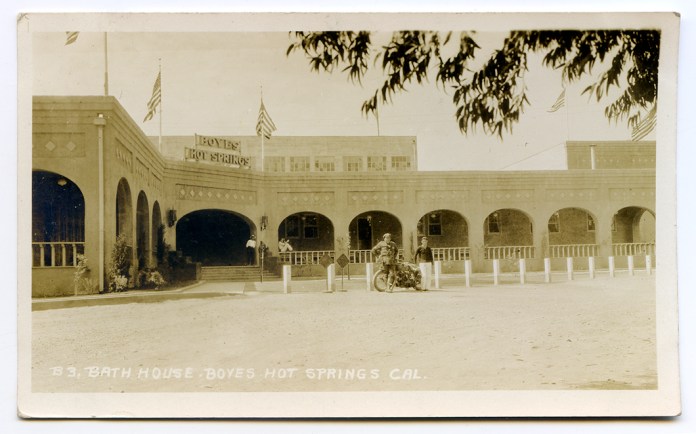
Postmarked 1927
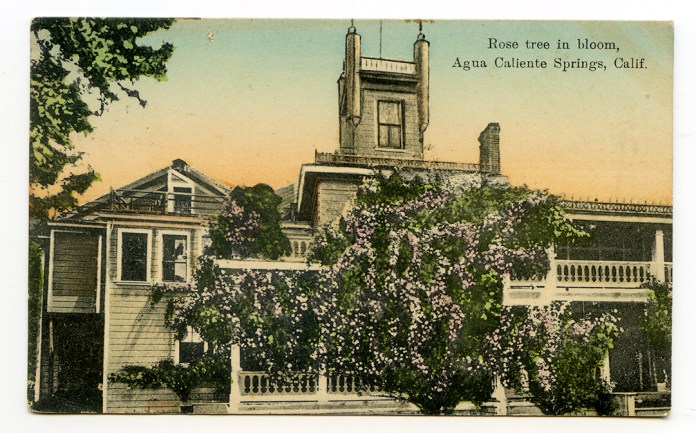
Postmarked 1914
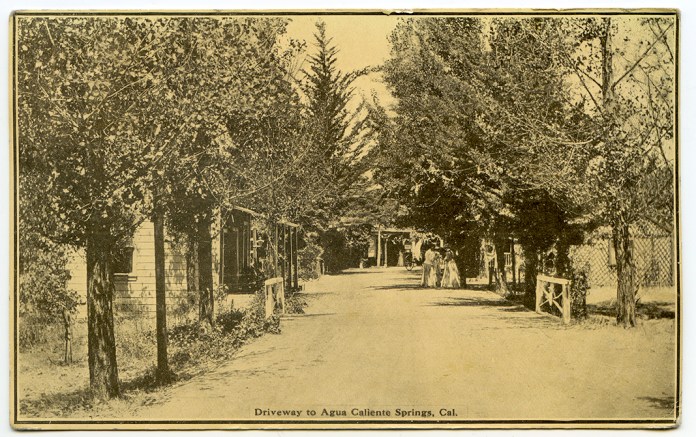
Postmarked 1912
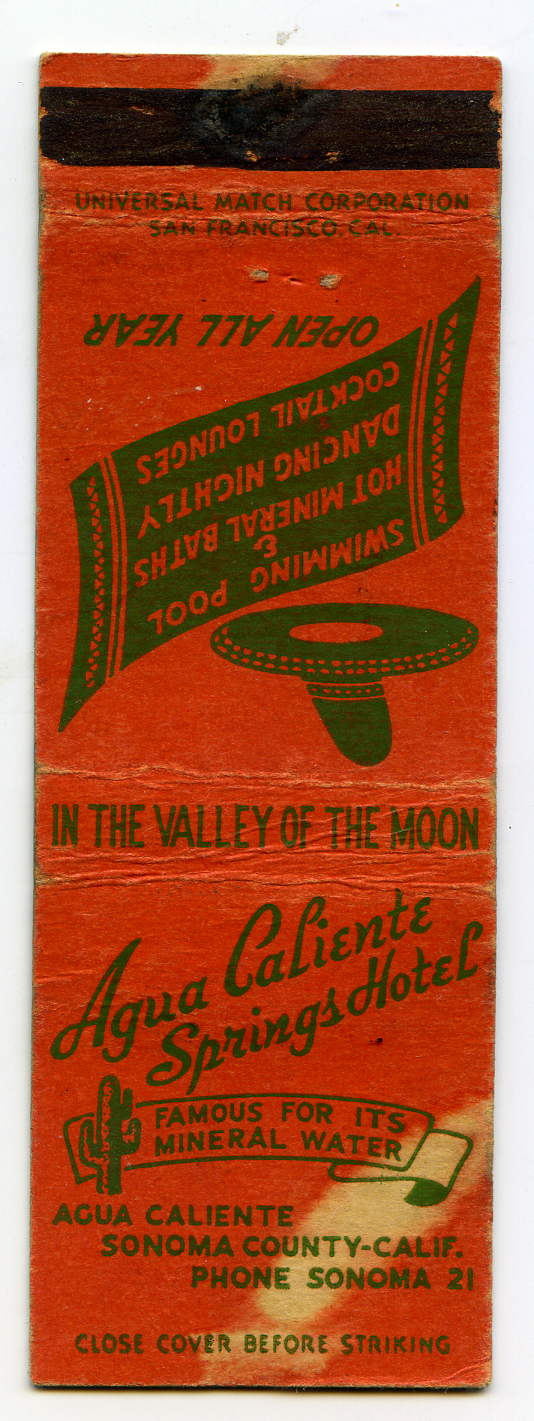
Postmarked 1919
Postmarked 1927
Postmarked 1914
Postmarked 1912
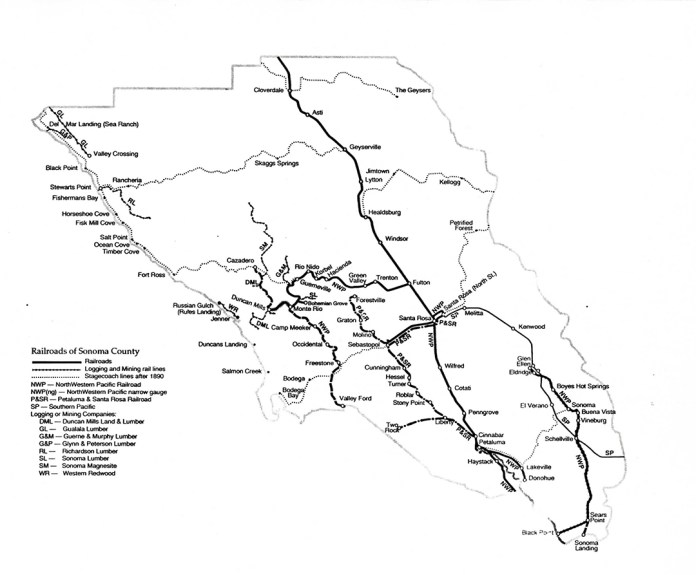
The history of railroads in Sonoma Valley is complicated and confusing. It started in the 1860s and included at least 15 different companies, but by 1889 there we just two: the Santa Rosa and North Pacific, and the Northern Railway. The SR and NP became the Northwestern Pacific in 1907, and Southern Pacific subsumed the Northern in 1898. The NWP tracks were on the east side of Sonoma Creek, with a depot in Boyes Hot Springs, and SP on the west, stopping at El Verano. The old rights-of-way can be glimpsed in some places. Sierra Drive in Boyes is one location. See https://springsmuseum.org/2018/03/29/sierra-drive-meincke-road/
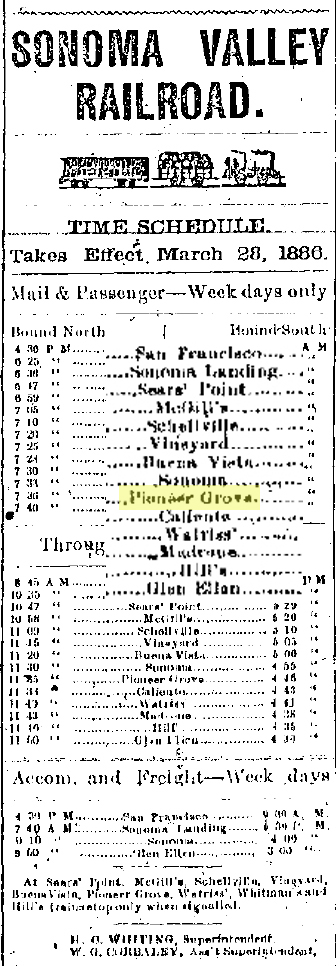
A precursor to the NWP, the Sonoma Valley Railroad, existed until 1889. In this schedule we see that it visited a stop called Pioneer Grove. This was the name used before Boyes Springs was used.
The railroads served the populace of San Francisco, primarily, who wished to spend warm summer days at the resorts. They came in their thousands by rail. But as early as 1920, the railroads were challenged by bus lines and automobiles. (The “auto-camp,” precursor to the motel, originated in the 1920s.) The Index Tribune reported in 1921 that executives of the NWP were considering new, modern electric cars on the Santa Rosa-San Rafael line to counter the competition from buses. To no avail. In 1930, the Glen Ellen depot was eliminated.
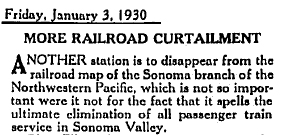
The editorial comment in the IT was prophetic. Rail service was gone by 1942.
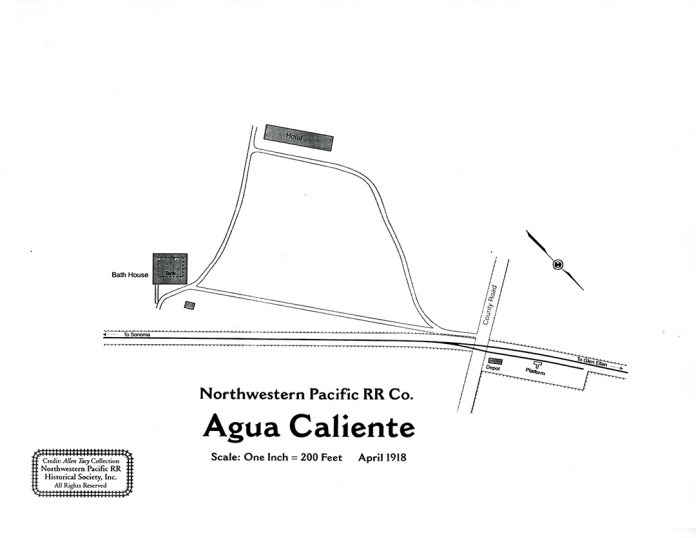
Following is a collection of images of depots in Sonoma Valley, with some maps, which are courtesy of the Northwestern Pacific Railroad Historical Society.
NWP depots:
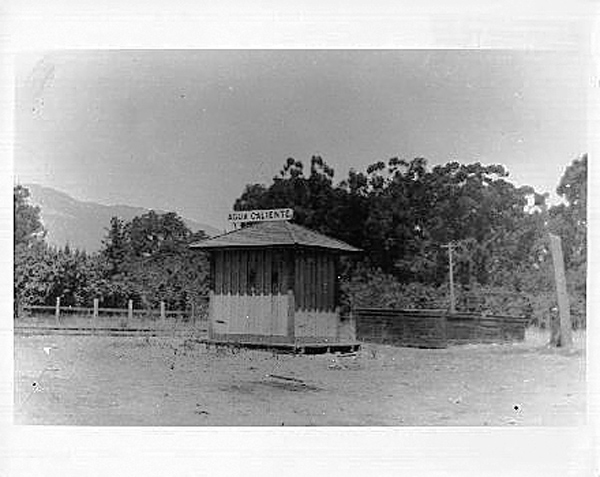
Agua Caliente, year unknown
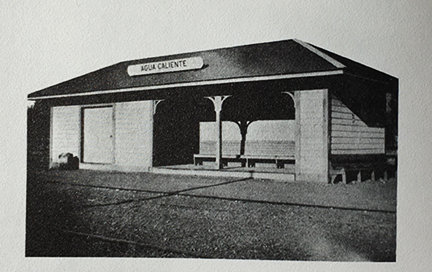
A later Agua Caliente depot? Similar to Boyes Depot of 1923
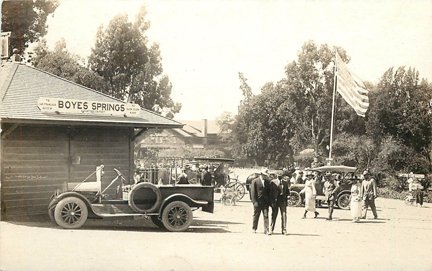
The name was changed to Boyes Hot Spring at least by 1908, but Model T production started in 1909, so perhaps all of the signs were not changed at one time.
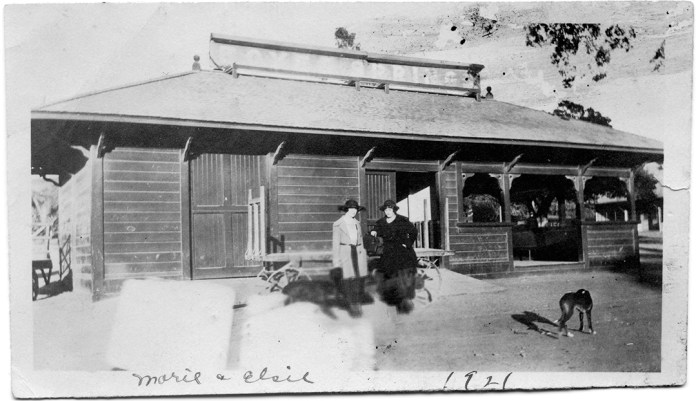
Marie and Elsie stand in front of a depot called “Boyes Springs,” in 1921. apparently the word “Hot” in the name came and went. This station was destroyed in the fire of 1923.
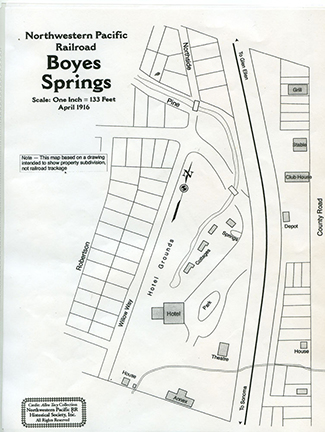
1916 map showing the old hotel and the canal that ran down Pine Street.
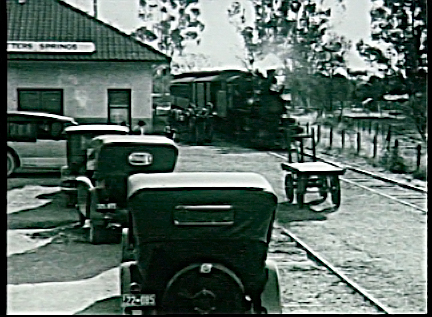
Still from the 1923 Harold Binney movie “Account of the no-account Count.” The film shows the train arriving at Fetters Springs.
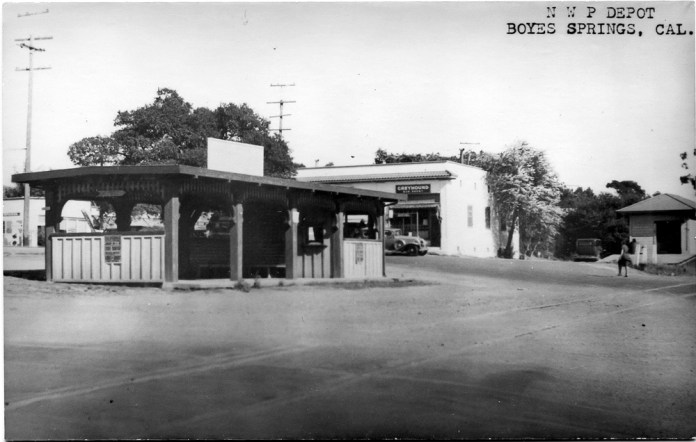
Boyes Hot Springs depot in 1942, the year service ended. The Woodleaf Store can be seen behind the depot.
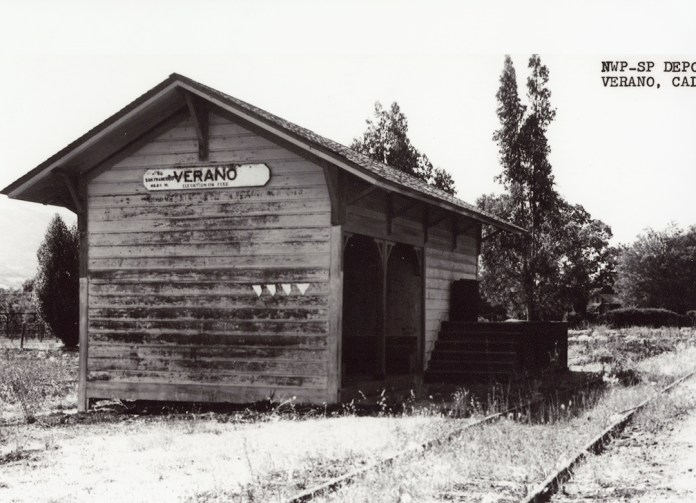
The Verano depot, across the creek from El Verano.
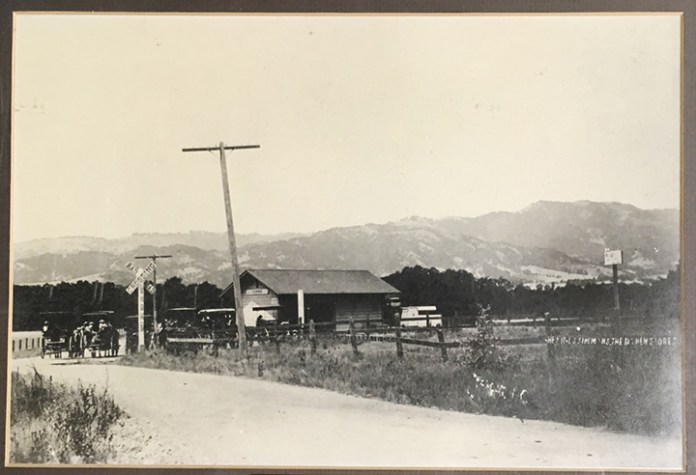
Verano depot circa 1905
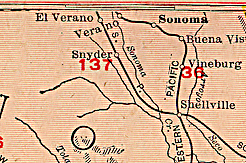
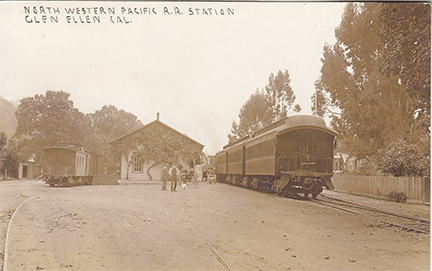
Glen Ellen, year unknown.
Southern Pacific depots:
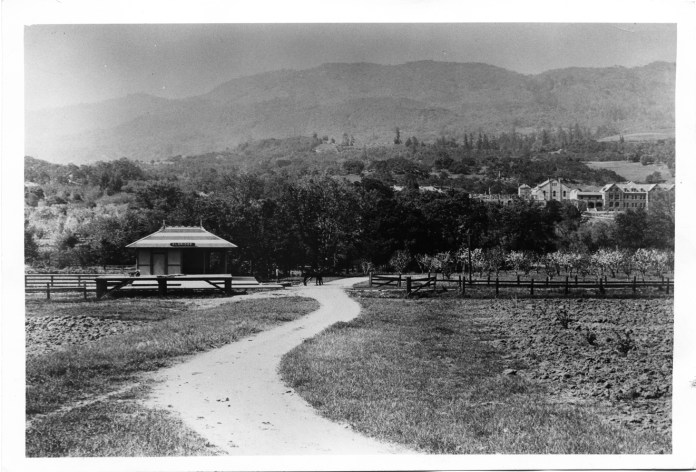
Eldridge depot 1898
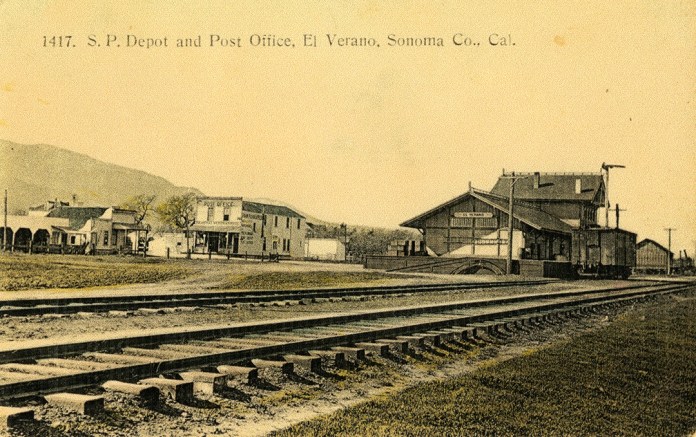
El Verano, circa 1890s
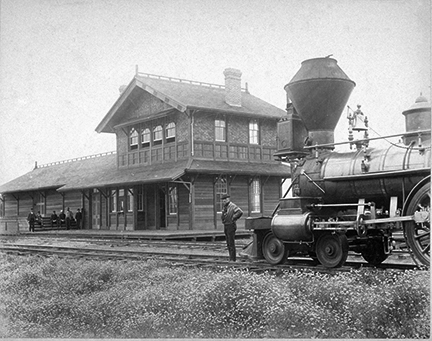
El Verano depot shortly after construction, 1880s
Images courtesy of the Sonoma Valley Historical Society and the Northwestern Pacific Railroad Historical Society.
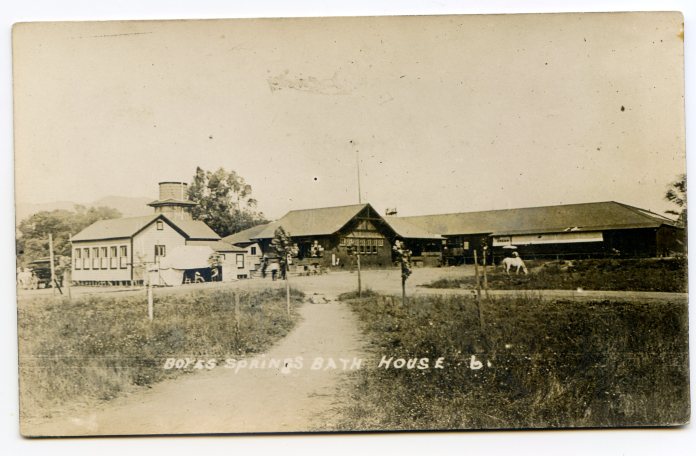
Probably around 1910
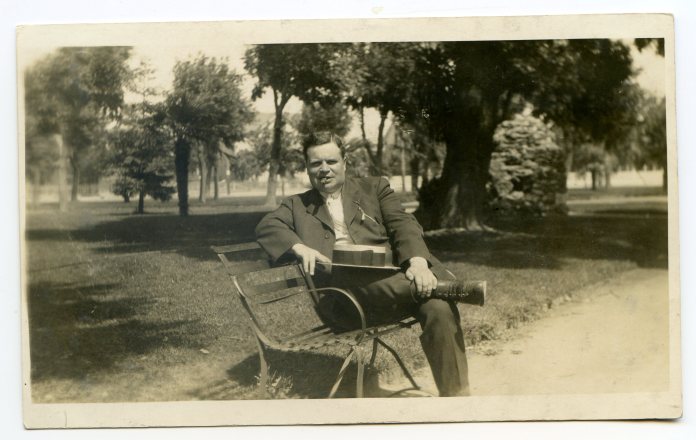
His name is Gus. Post marked Boyes Hot Springs, but is this the Plaza? 1912
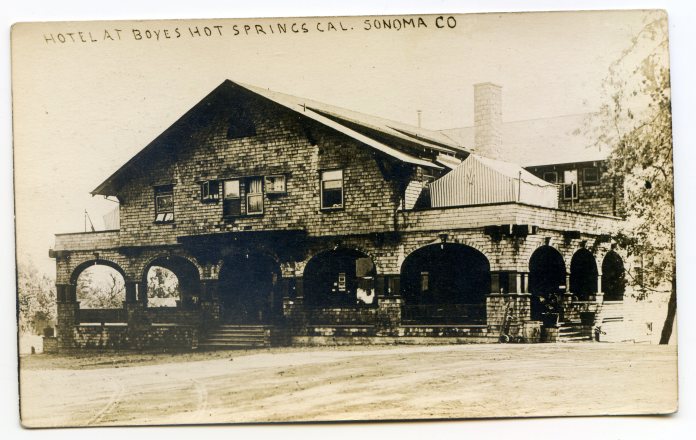
The “Old Hotel.” Before 1923
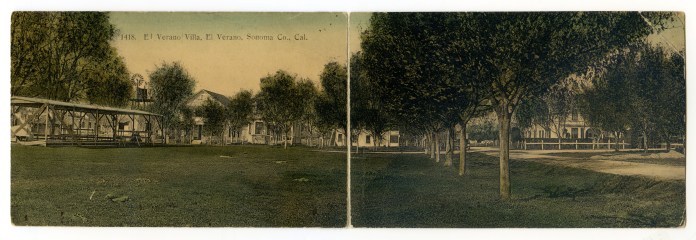
El Verano Villa. Near Verano Ave. and the creek.
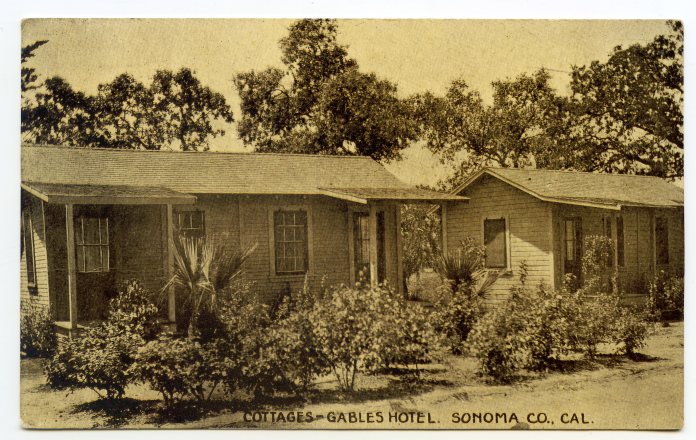
Gables Hotel. Exact location unknown.
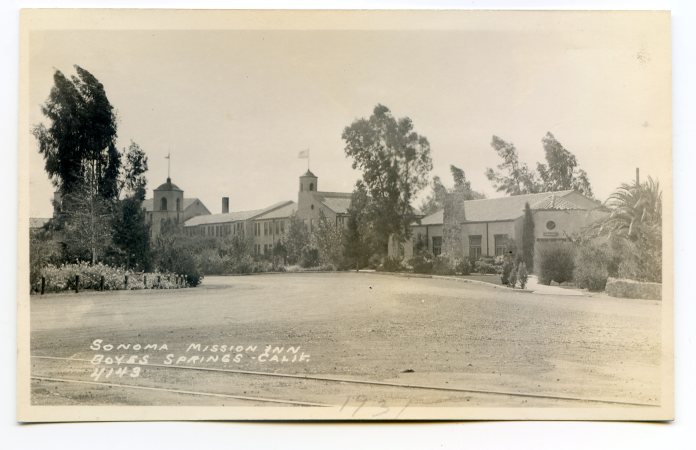
Sonoma Mission Inn, 1937, ten years after it was completed.
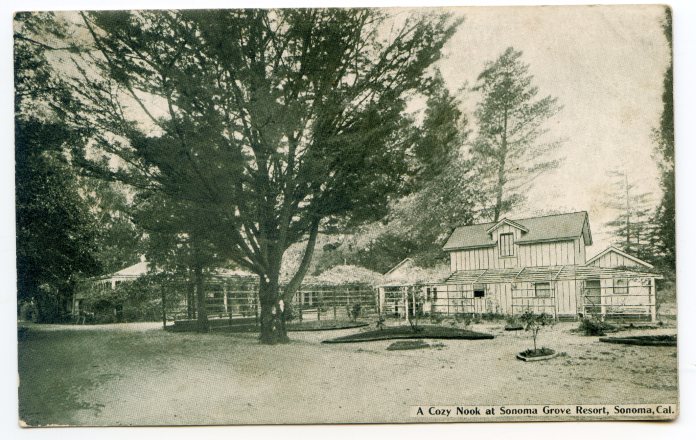
Sonoma Grove, on the Highway between Sonoma and Boyes.
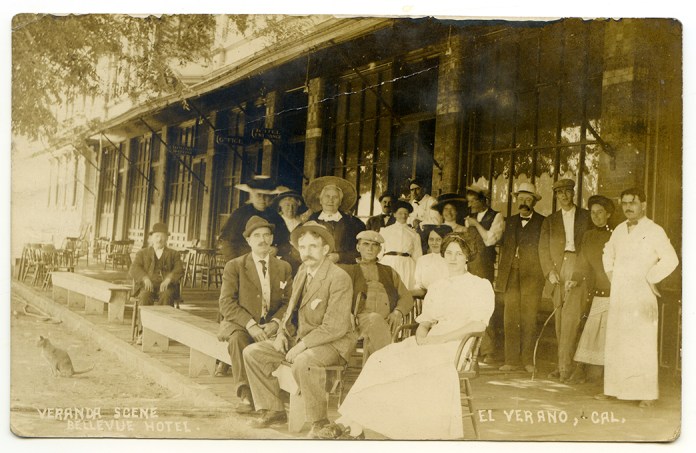
The porch at the Bellvue Hotel, El Verano, before 1911.
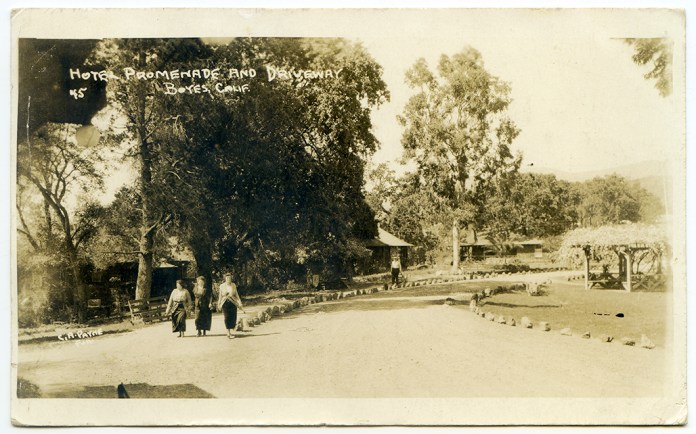
Promenade at the Boyes springs Hotel, 1920.
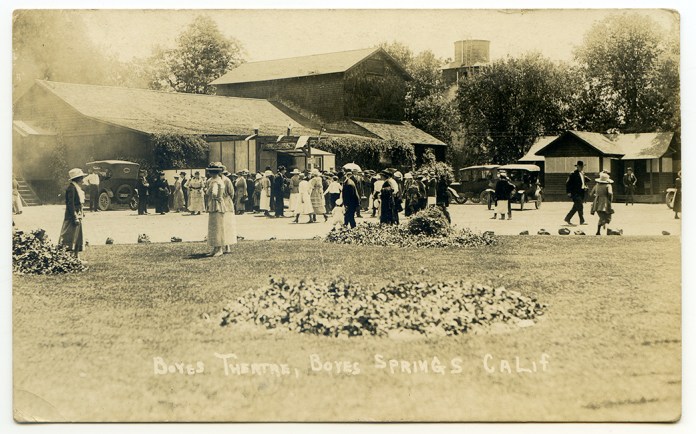
Boyes Resort Theater, 1921.
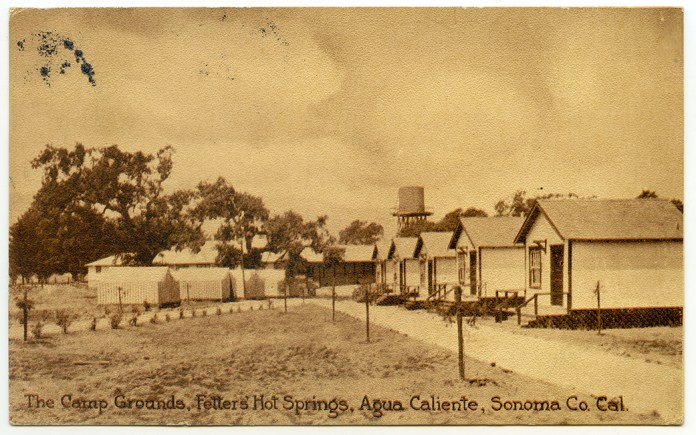
Camp Grounds at Fetters Resort
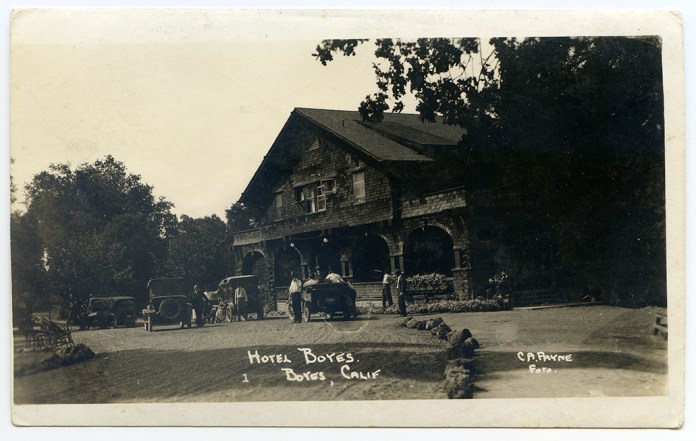
Hotel at Boyes Springs, 1920s
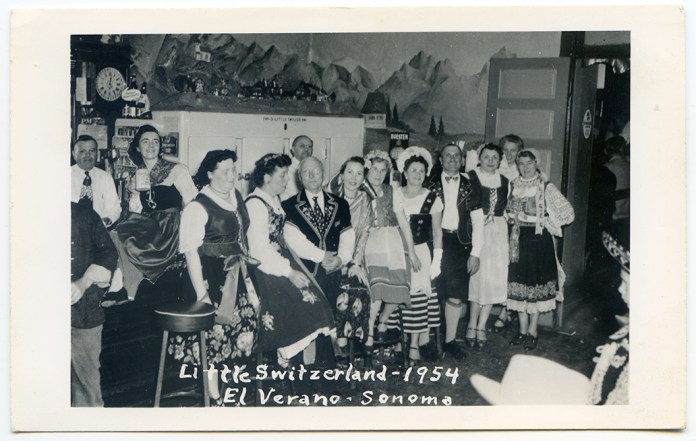
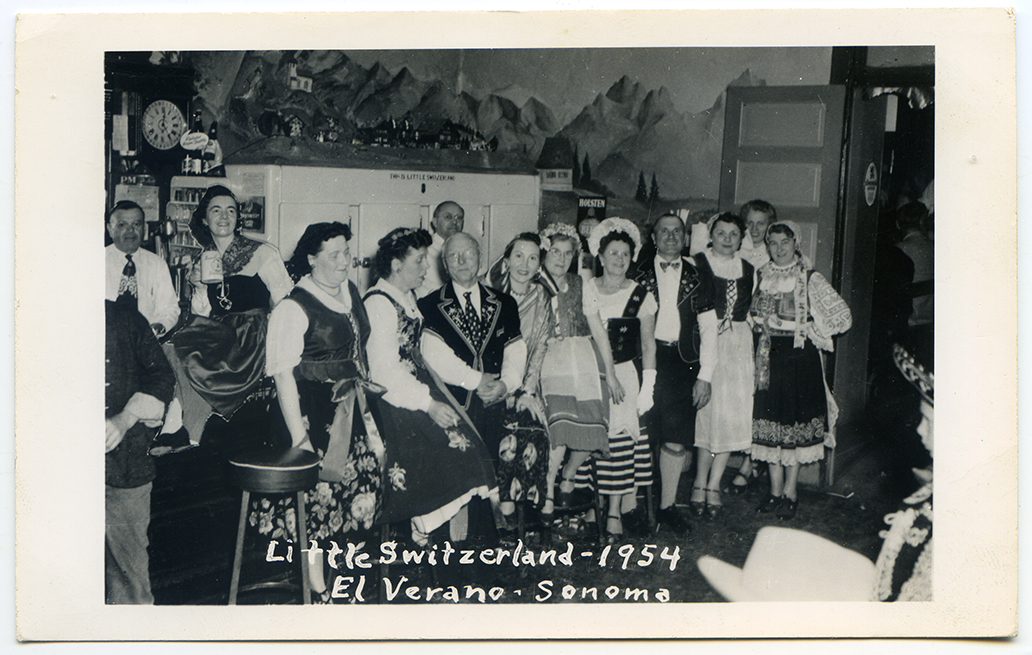
Little Switzerland, El Verano, 1954
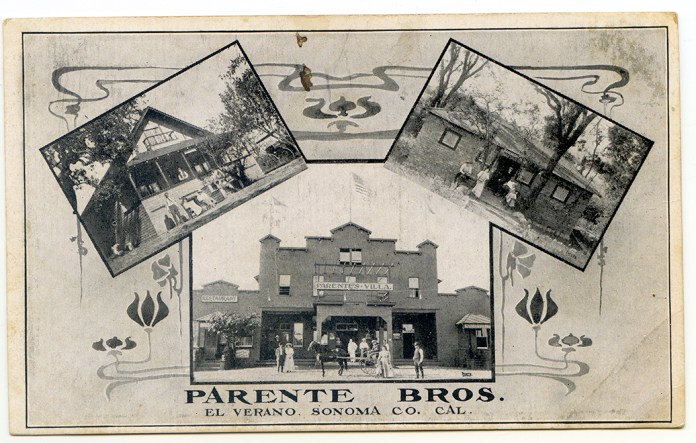
Parente Resort, El Verano, before 1920
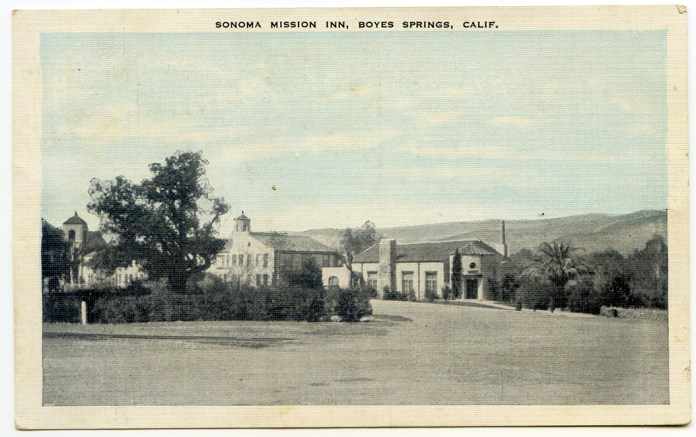
Sonoma Mission Inn, Boyes Hot Springs, 1938
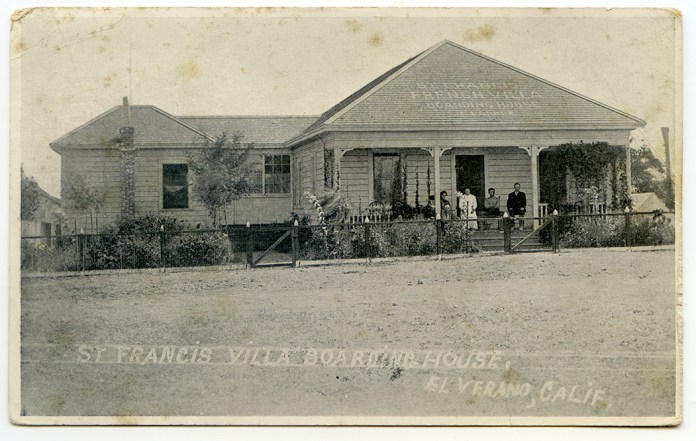
St. Francis Villa boarding House, El Verano, 1915
Woodleaf Park is the name of one of the many subdivisions platted in the Springs around 1910. 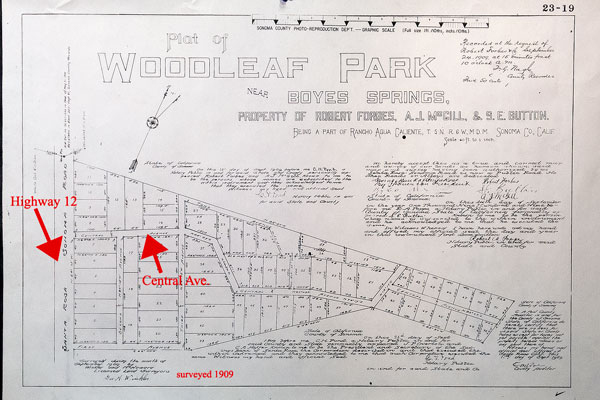
In August of 1921, the Index Tribune helpfully stated “The attention of our readers is called to the ad of the Woodleaf Grocery Store at Boyes Springs. This store in the Cabanot block is conducted by Mrs. Lovett and is giving excellent service to residents in and about the Springs.” (Notice a 1921 use of the term “the Springs.”) The Cabanot Block was at the corner of the State Highway and Boyes Blvd.
In September of 1923, most of Boyes Springs was destroyed by fire.
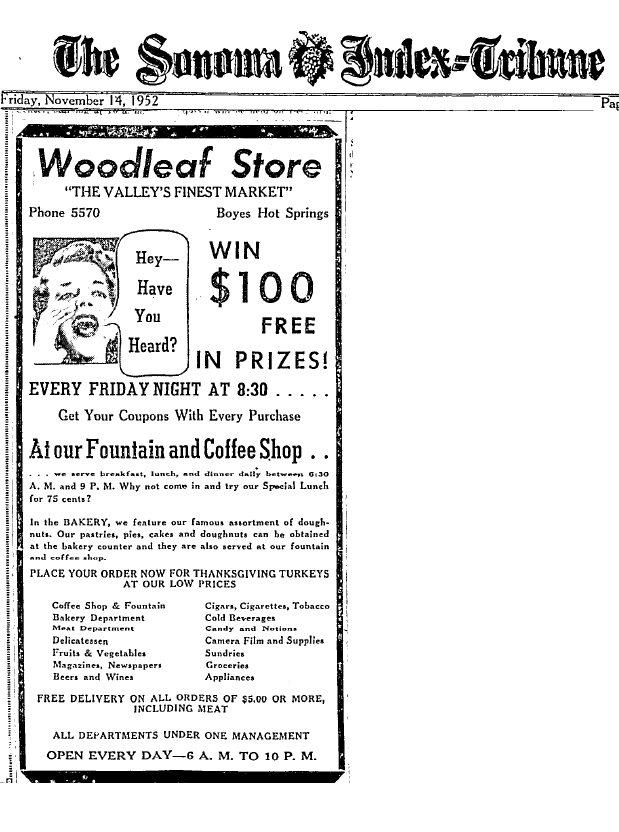
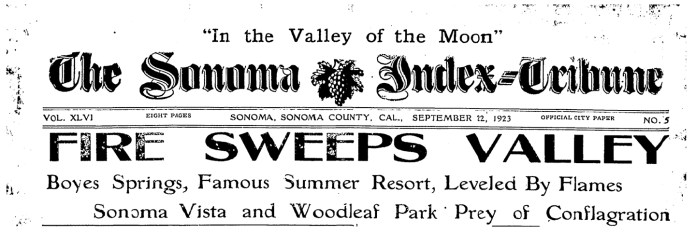 But, by early 1924, rebuilding had begun. Mr. Cabanot hired builder M. Y. Hansen to construct the new Woodleaf Store, on the site of the old structure.
In March of 1924, “It is reported (by the IT) that B. Cabanot, pioneer property owner and resort keeper of Boyes Springs, has sold out to E. Peters of San Francisco. Mr. Cabanot was one the first to show his faith in Boyes Springs real estate. He recently bought and improved a business block near the N. W. P. station which is now tenanted by store keepers.” It is assumed that this refers to Cabanot selling his resort, which was also near the railroad station.
Marion Greene was a community leader. In 1939 she was president of the Sonoma County Retail Grocer’s Association. She operated the Woodleaf Store from 1921 to 1949.
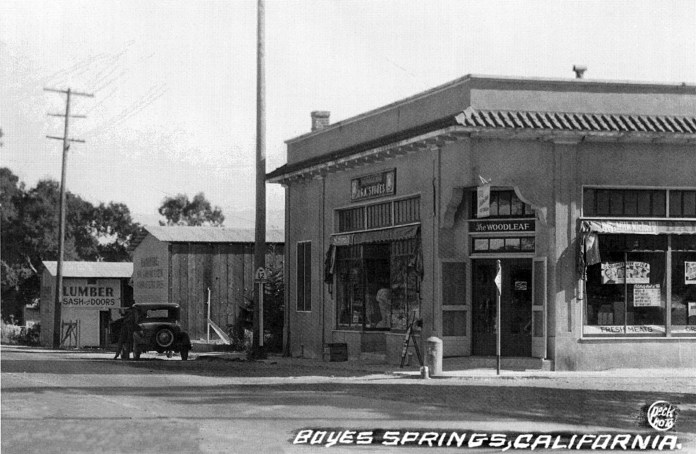
1930s. Lumber yard to the left. See Facebook comments below.
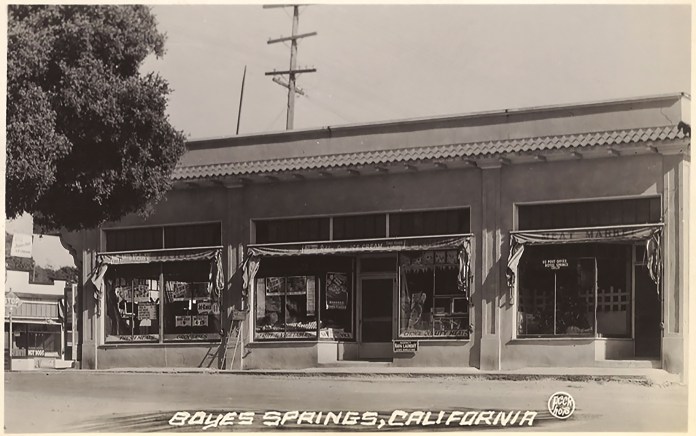
Year unknown, probably 1930s
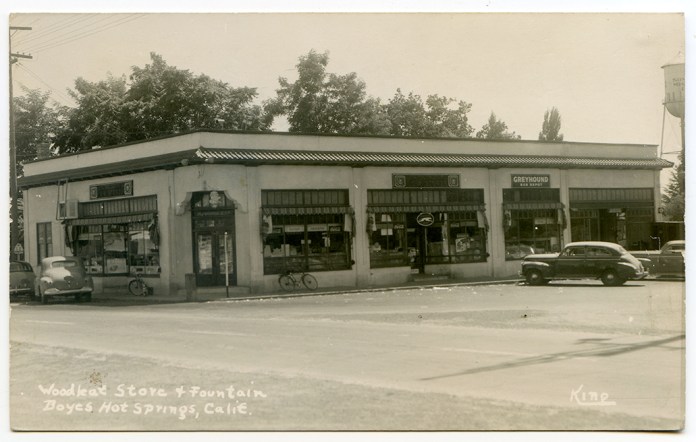
1940s. Greyhound sign above windows at right. See Facebook comments.
Greene sold the store (not the building, which she did not own) to George Riccomi, a member of the Cabanot family, in 1951, and he installed a modern soda fountain and a horse-shoe counter in a “brilliant formica yellow design,” and chartreuse (!) leather upholstery, according the Index Tribune.

Chartreuse
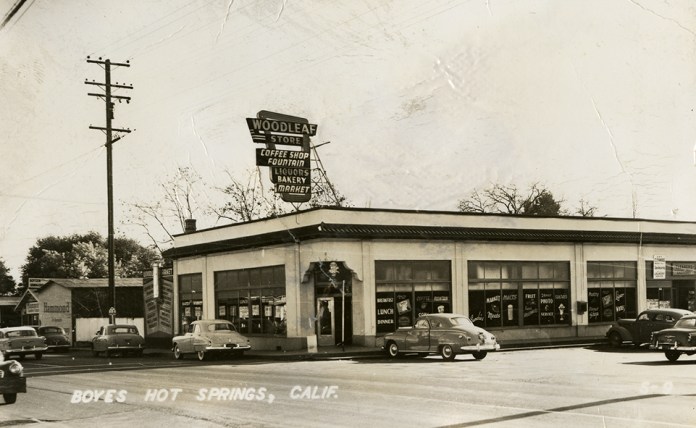
Early 1950s. Alexamder Stark photo.
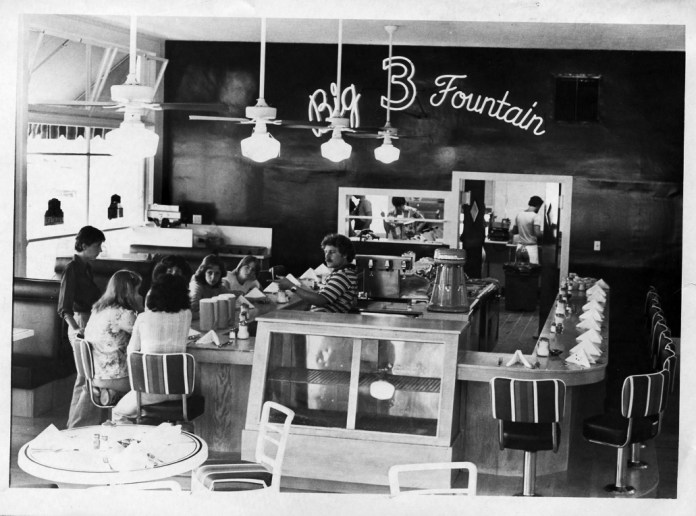
The Big Three Fountain, with its horse-shoe counter, in the 1980s
The interior was remodeled by architect Hugh Duffy and became the Big Three Market in 1959. The sign was modified to read “Big Three” at the top. Later, perhaps in the 1970s, the bottom portion was removed entirely. (Duffy was also the architect of the Plaza Center building and the Boyes Food Center.)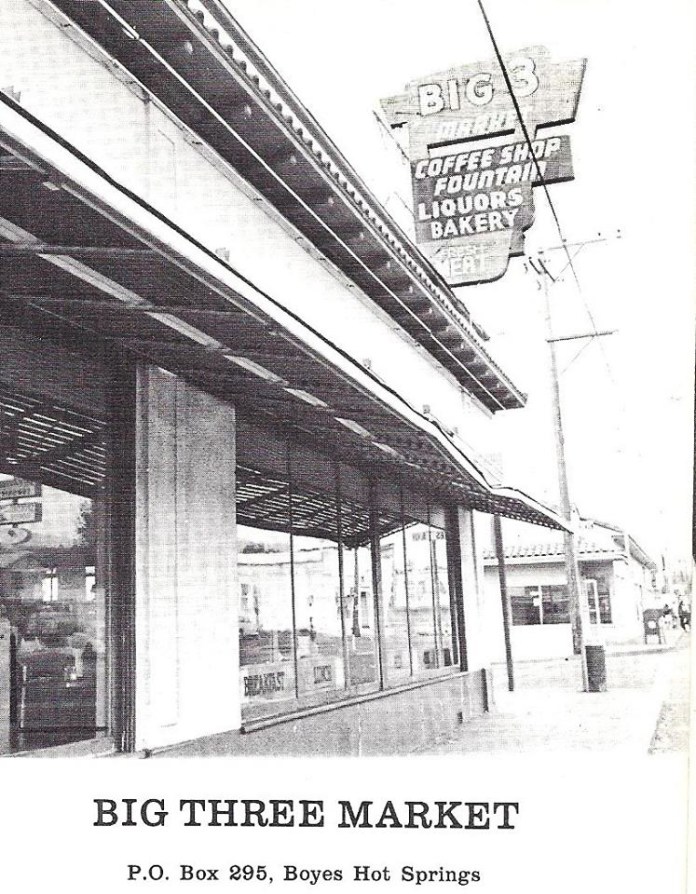
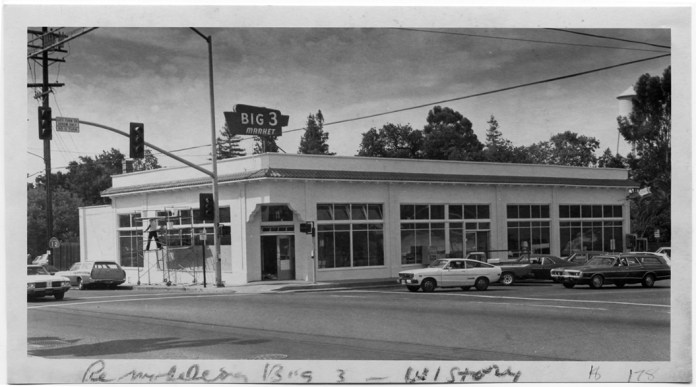
In 1980, the Sonoma Mission Inn Corporation, under Edward Safdie, bought the building and continued operation of the store and soda fountain. A later iteration of the Inn converted the store into a café. In 2016, the Fairmount Corporation closed the café permanently. Future plans for the site are unknown.
A recent posting on Facebook of a photograph of the Big Three elicited over 60 comments. Below are some samples.
I used to catch the Greyhound bus there in the mid 60s.
The Greyhound bus stopped there. You bought your ticket inside. Rose and I rode the Greyhound to San Francisco for a day. Met Burt and Walker. Our Mom’s didn’t know. Fun!
It was the Woodleaf and then the Big 3, my mother waitressed there when I was a kid. I would hang out readiing comics and wait for her to get off work, occasionally…great shakes, too!
Not many remember the lumber yard in the background. Diamond Lumber.
I remember those big swinging doors . … I think they got to be to dangerous. They blocked them off later and put the magazine rack in front of them.
I remember buying my first comic book there for $0.10. Around 1967.
And riding a pony ride they had out front.
I lived on Highland & Monterey area.
We had a ritual when I lived on 4th and Thompson, Frank’s trading post, swim at the Bath House, a quick Matinee at the Boyes Theatre, Big 3 for a new Comic and finally BHS Food Center during the warm months. Great time to live there.
I can still smell it and see the broken tiles in the sloped entrance
There were 3 owners- hence the name.
The fountain was where the men around met for coffee and to lie to each other in the morning.
I remember Polidori’s 5 & Dime across the street on the corner, maybe before the post office was there? I think he was the postmaster for awhile. Ate at Big 3 many times, mom shopped there often, we would buy $.05 donuts there, caught the bus there many times, and played in the abandoned lumber yard next door (across from Gallo’s) often
Toad stool was still there so had to be in the late 60’s or early 70’s
Toad stool.
We locals were known as “toads”
Creaky wood floors
Lyle Tuttle’s tattoo shop was next to the bus station. Sketchy area.
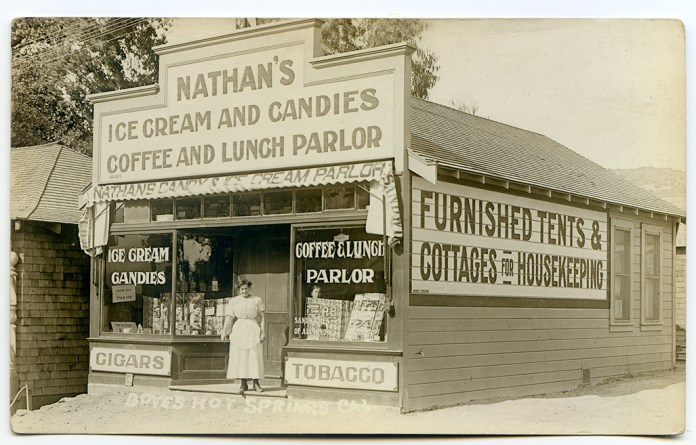
Circa 1910. Located in Boyes Hot Springs, adjacent to the railroad depot. This building may still exist.
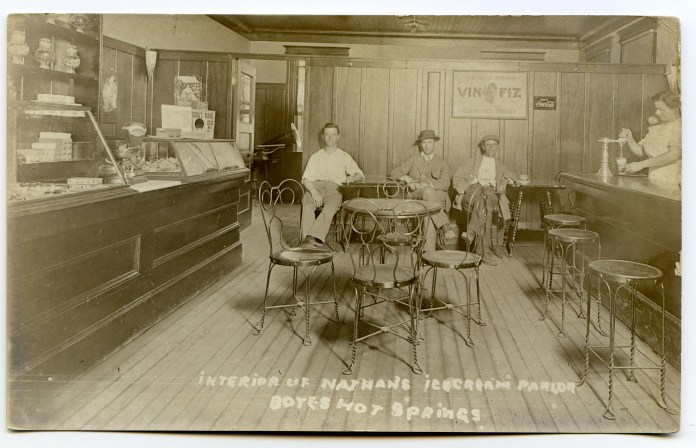
Circa 1910.
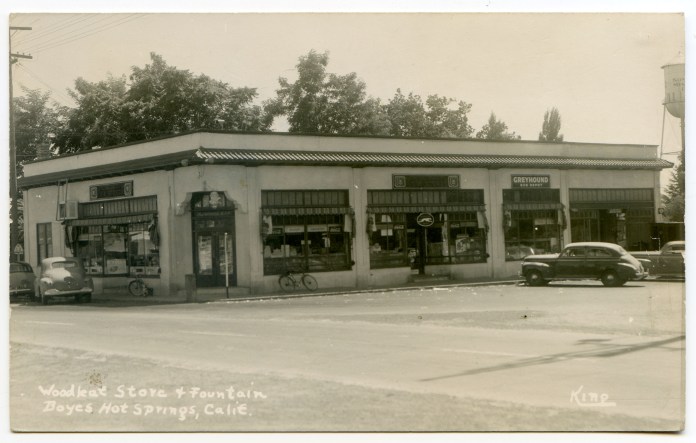
Post marked 1949. Built in 1924 or 1925. It’s future is in doubt. Currently unoccupied (2018).
On December 20, 1956, the Sonoma Index Tribune reported “Old timers in Boyes felt some remorse this Monday when the old stately palm tree in the Boyes Plaza was cut down to make way for a new building.” The new building was the second half of the Plaza Center building, which houses the post office today. The IT went on, “They (the old timers) could remember standing beneath that tree when the old train used to unload vacationers at the railroad station, located years ago, right near the tree.”
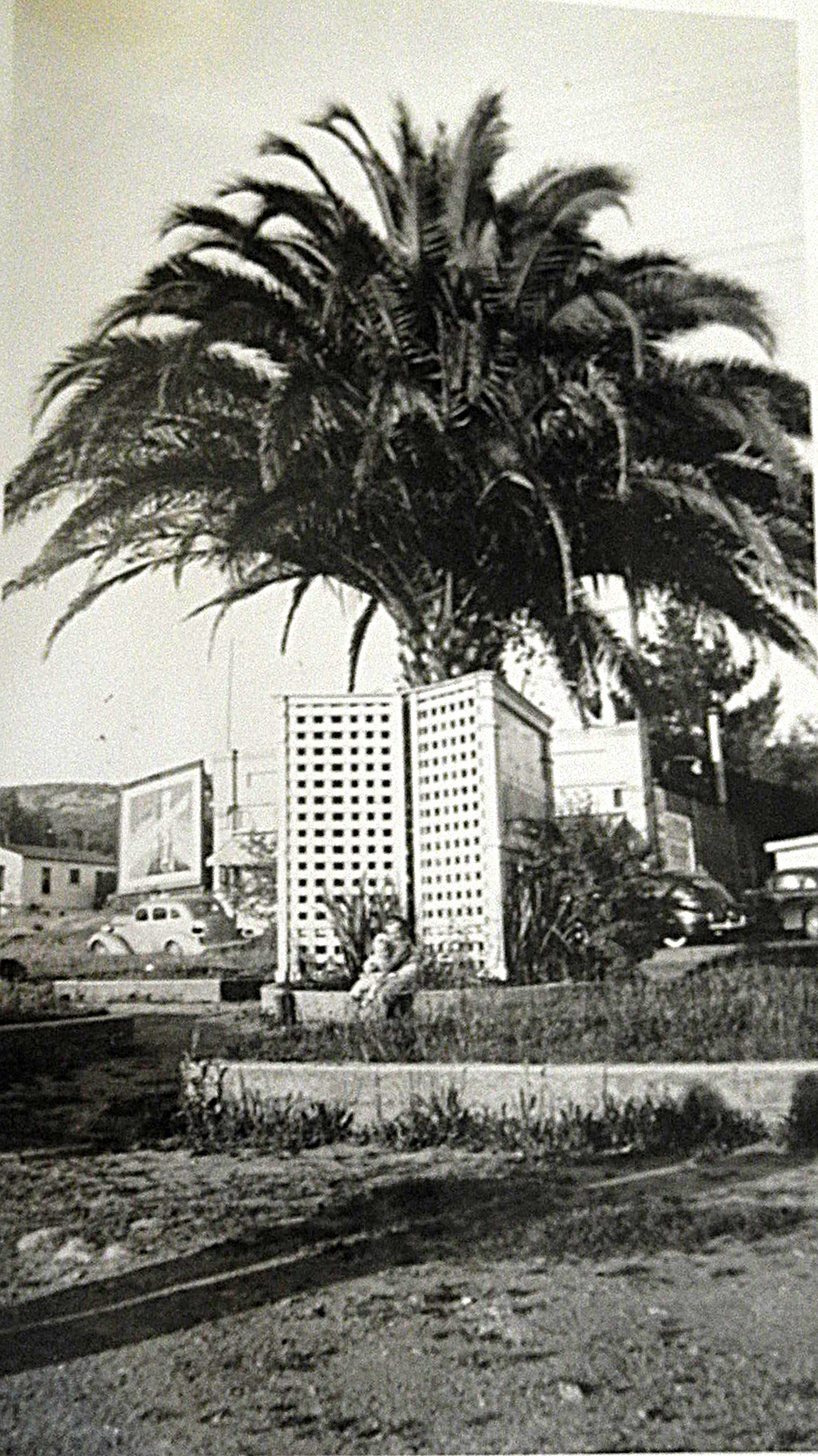
The Boyes Hot Springs Plaza palm tree, 1943. courtesy Bruce Greiwe
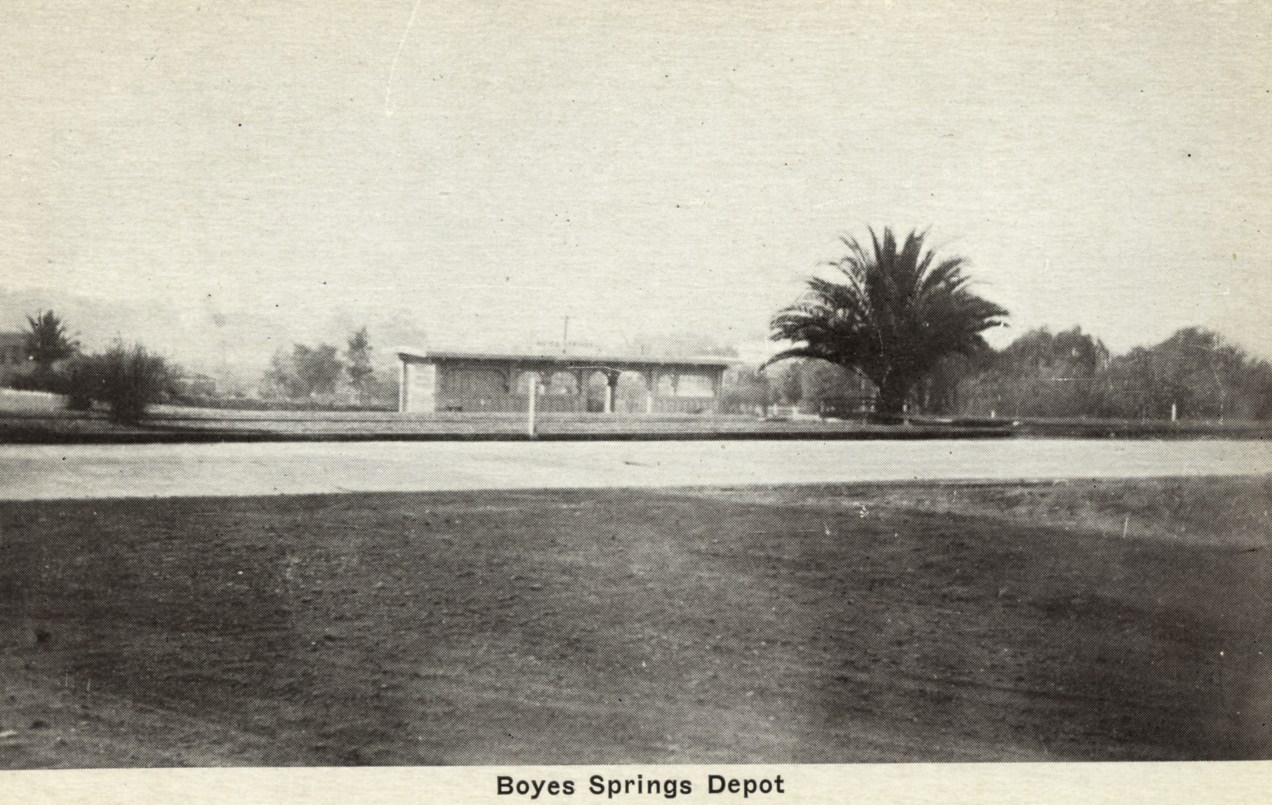
Aurthor’s collection
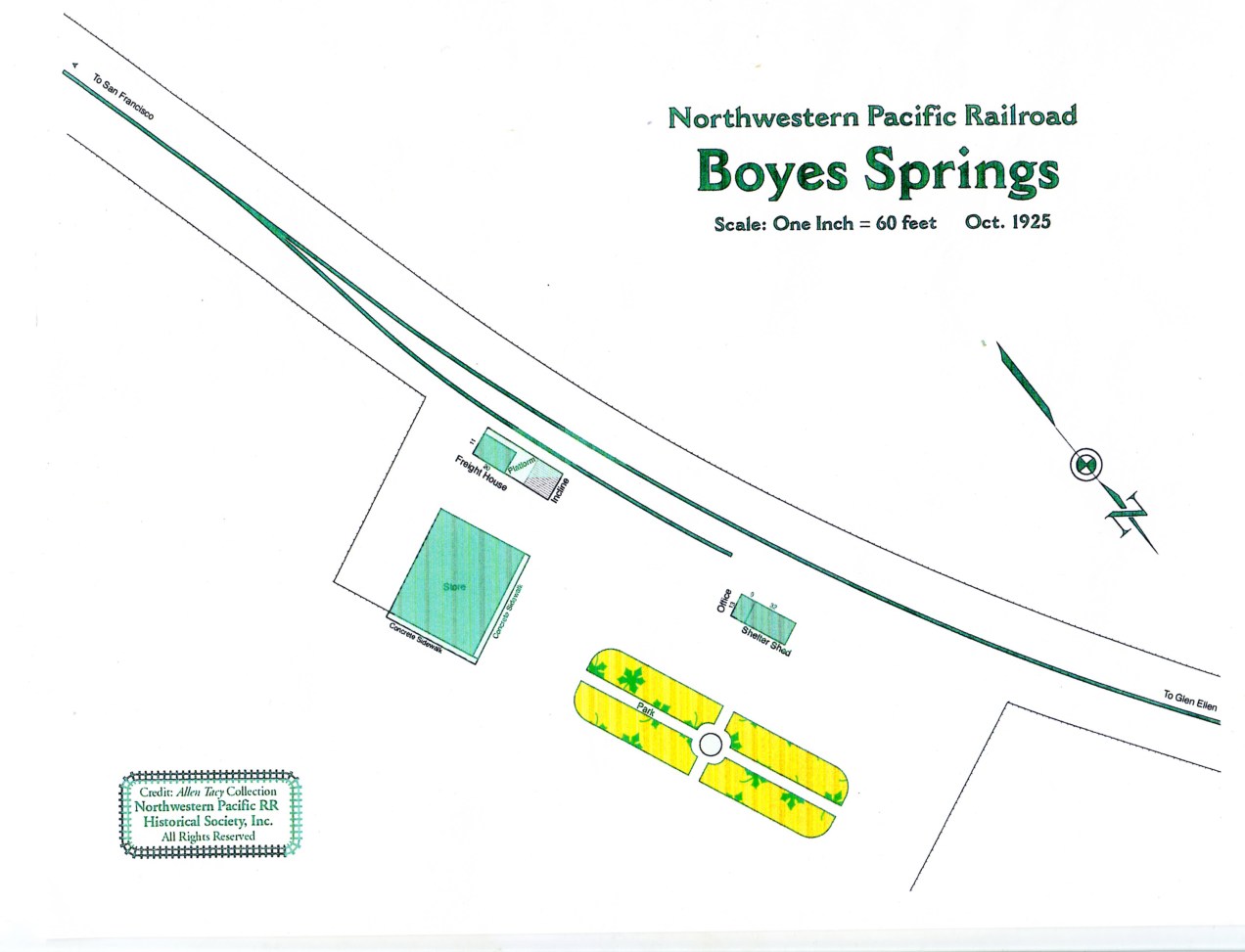
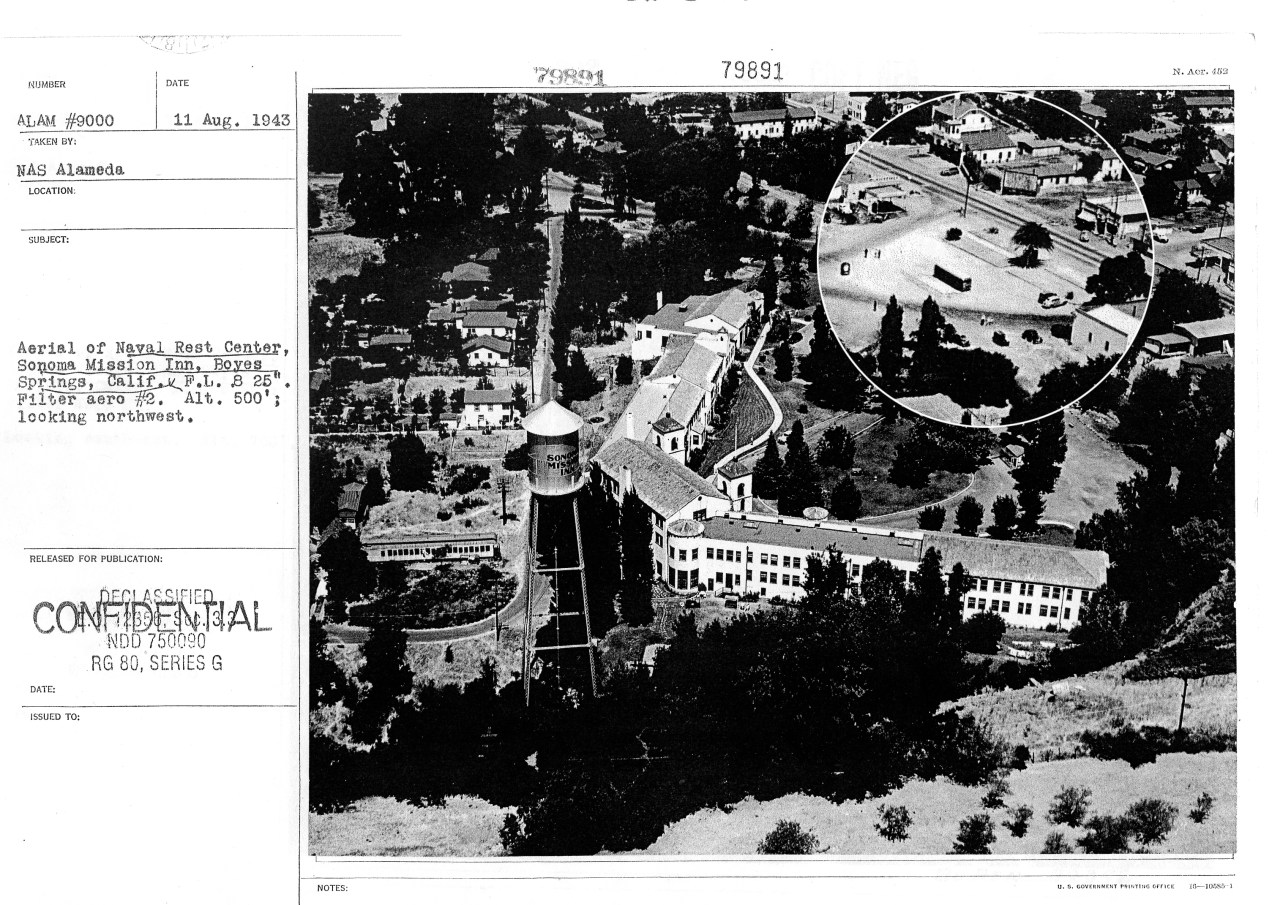
Yes, there was a Plaza in Boyes Springs. It existed as part of the land owned by the Northwestern Pacific Railroad. A railroad map from 1925 shows an elongated lozenge shaped feature, parallel to the tracks, bisected by pathways at right angles, and with a circular form at the center. The palm tree was there, according to an aerial photo from 1943.
Plaza showing palm tree. The depot had been removed the previous year. Photo courtesy Bob Palmelee.
In 1949 the IT reported that the Boyes Springs Boosters Club voted to “ put a new lawn at the Boyes Hot Springs Plaza and pay for the electricity used in keeping the “Boyes Hot Springs Welcome” sign lighted each evening.
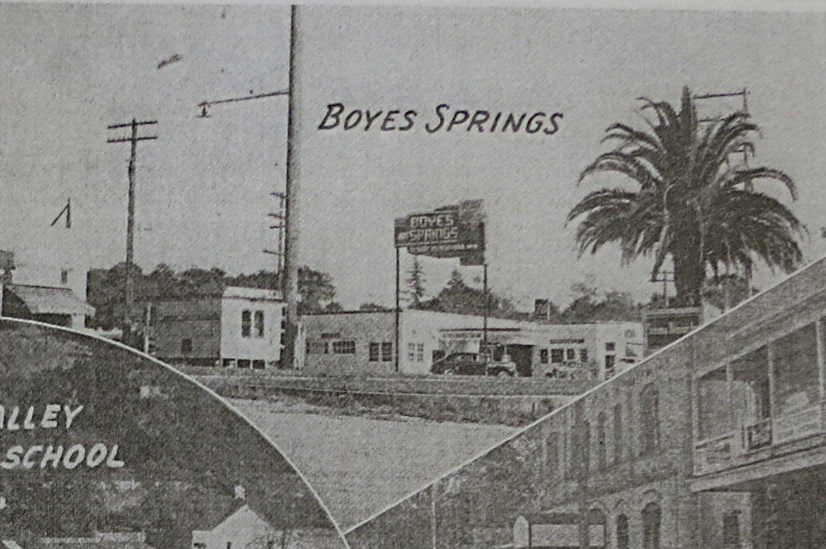
Courtesy Jerry Biers
In 1941 plans for the celebration of the centennial of the Bear Flag revolt included an event at the BHS Plaza.
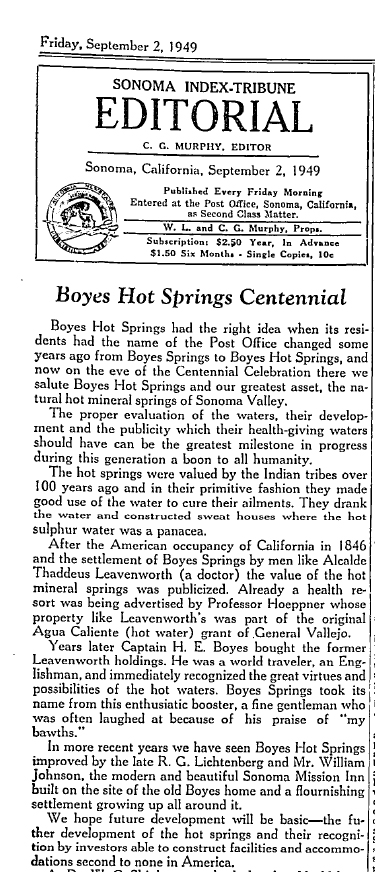
In 1949, the community celebrated its own “centennial.” How 1849 was chosed as a founding year is unclear. The hot springs had been commercialized by 1847 by Andrew Heoppner. Thaddeus Leavenworth arrived in 1849, but Boyes didn’t show up until 1882.
At any rate, the editorial page of the Index Tribune approved.
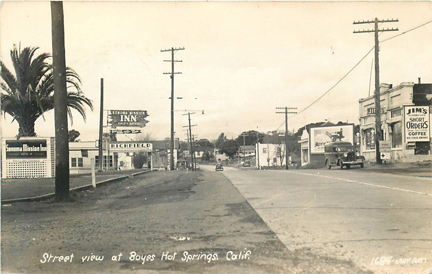
The Plaza and palm looking north, 1930s.
The idea of a new Boyes Hot Springs Plaza has resurfaced in recent years. Several architects have produced conceptual plans. Below is the Ross, Drulis Cusenberry version.


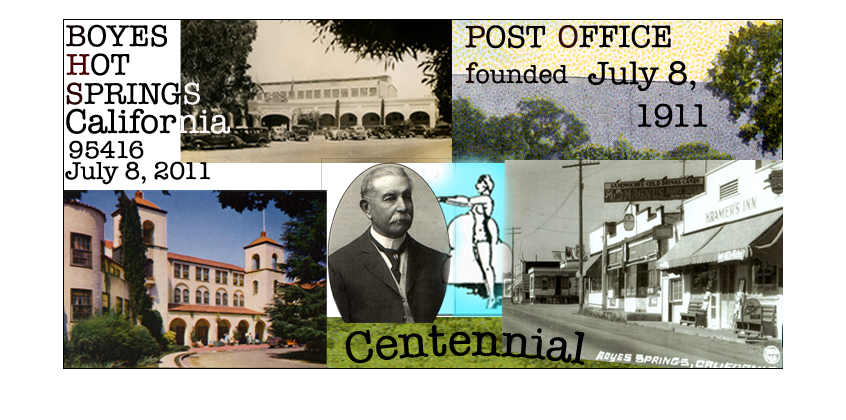
In July of 1911, the Sonoma Index Tribune reported that “A.D. Graham of Graham’s Cash Store received the appointment as post master of Boyes Springs. Located at his store.” The exact date was July 8, 1911. The location of the store, now not know exactly, was near the train depot at Boyes Blvd. and the Sonoma Highway.
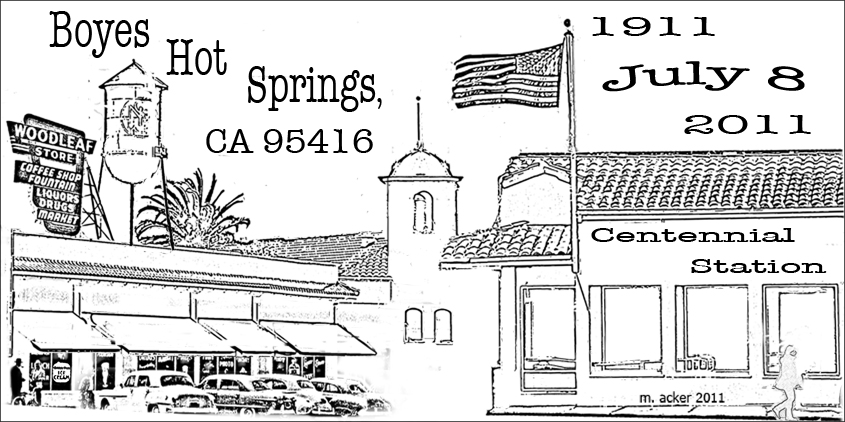
That building was lost, along with most of the town in the fire of 1923. After rapid rebuilding, the post office was located in the Woodleaf Store. It stayed there until 1951. The Woodleaf became the Big Three Diner, part of the Sonoma Mission Inn. The post office relocated to the Plaza Center building at Sonoma Hwy. and Boyes Blvd. when it was built in 1951, where it is today. Prior to 1951 this site was know as the Boyes Springs Plaza and was the scene of street parties and fiestas.
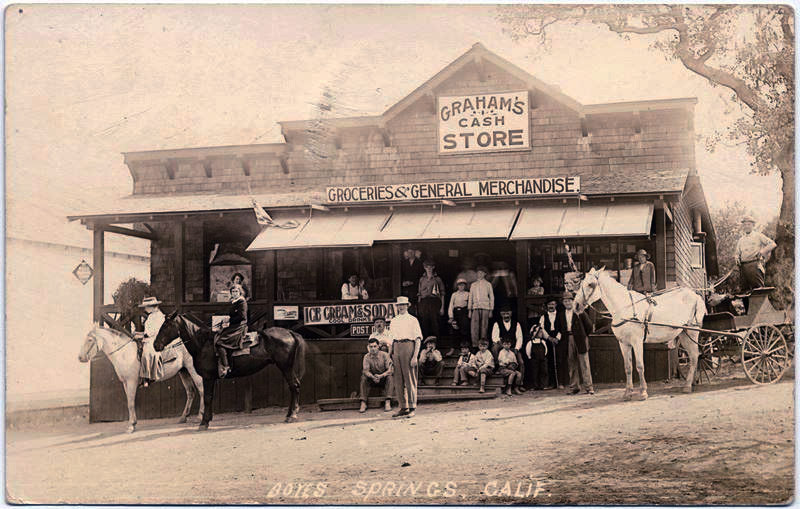
A.D. Graham was the first postmaster. The name was changed to Boyes Hot Springs at some point. Courtesy California State Library
In 2011 we celebrated the centennial. To produce the joyous event, we had the help of the USPS and its employees, Sonoma County, the owner of the Plaza Center building, Kickstarter donors, the Springs Community Alliance, and many volunteers.
 springs museum