Boyes Hot Springs, History, Wonders and Marvels

Nine Pounds of Iron


KnobTopDown1Knobfrint1Ovoid object of cast iron, heavily rusted, weight about 9 lbs, found, sometime in 2010, in the soil at the southeast corner of lot # 6 block 12 of the Boyes Springs Sudvivison A, which was platted in October of 1913. It appears to have been attached to a shaft, of which there is a broken stub. It’s too big and heavy to be doorknob: Possibly a surveyor’s corner marker.

Standard
Boyes Hot Springs, History, Now and Then, Resorts

The Center of Town

The corners Sonoma Highway makes with Boyes Blvd. and Vallejo Ave. are the heart of Boyes Hot Springs. From the 1890s to now, it has been our commercial hub. Many buildings are gone, but significant ones remain, if altered. The Post Office has been there, in three different buildings, for over one hundred years. Many new businesses thrive and more are planned. During the season, we now have a weekly farmers market.

The path the highway follows was probably originated by mastadons migrating to the coast. Boyes Blvd. and Vallejo Ave. came along much later, during the early 20th century, when speculators started to subdivide the land.

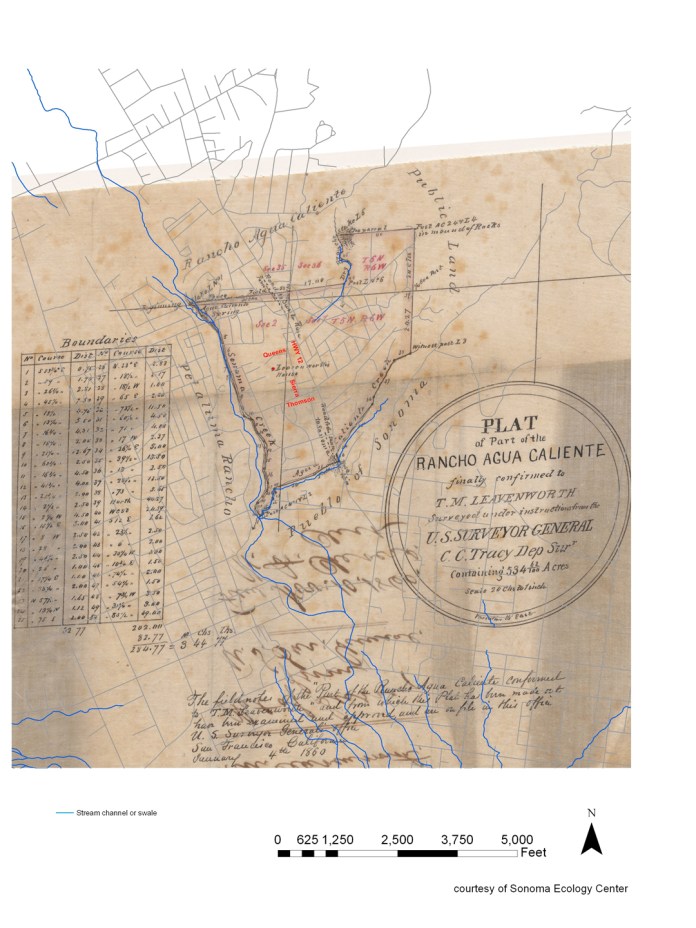
A.Dawson-Leavenworth1860sm2

Only the highway ( called “Road to Santa Rosa”) was there in 1860 when the United States Court confirmed Thaddeus Leavenworth’s claim to 534 and 62/100 acres of land in the Rancho Agua Caliente, land that was to become Boyes Hot Springs, Agua Caliente, and Fetters hot Springs.

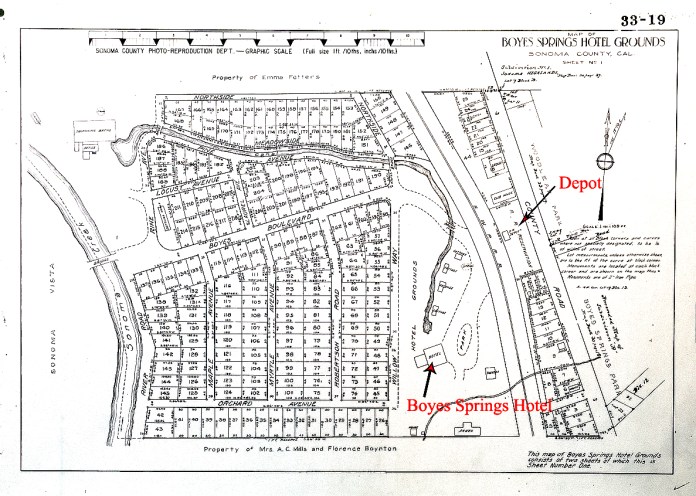
HotelGrounds1916Annotated

The highway is just called “County Road” in the 1916 Hotel Grounds subdivision map, which also show Boyes Blvd. but does not extend to the east, so no Vallejo.

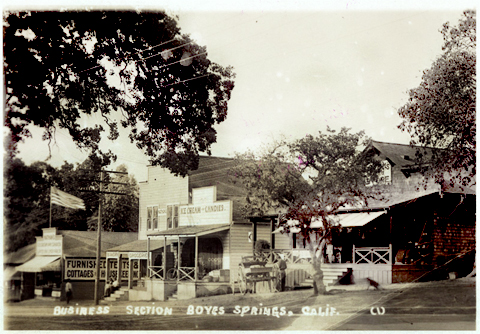
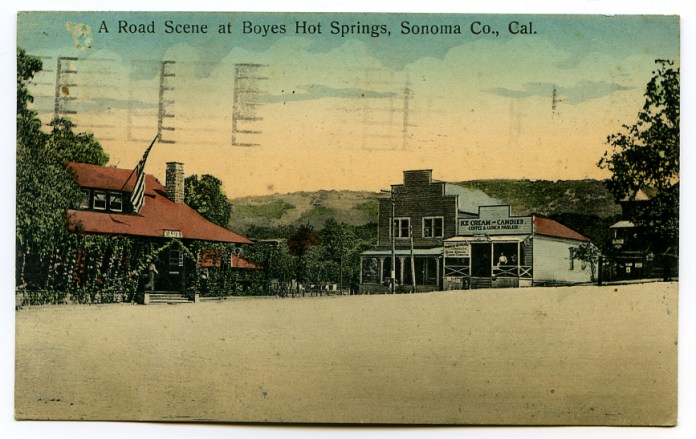
businessdistrict1roadscene

Possibly the oldest photographs of the location are scenes of The Club House (Red roof in lower photo, shown on the Hotel Grounds map), Grahams Store, and other businesses, from around 1910.

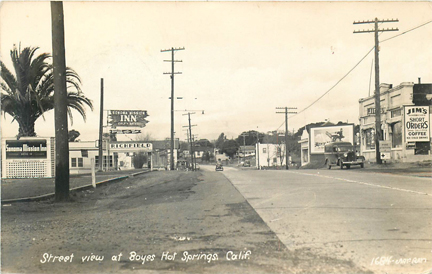
BHS1939SMISignBHSRRmap

A beautiful 1939 shot shows the entrance to the Sonoma Mission Inn, the Richfield Station, Jim’s café, other businesses and the palm tree in the center of “Boyes Plaza.”

Boyesand12ArtRay.jpg

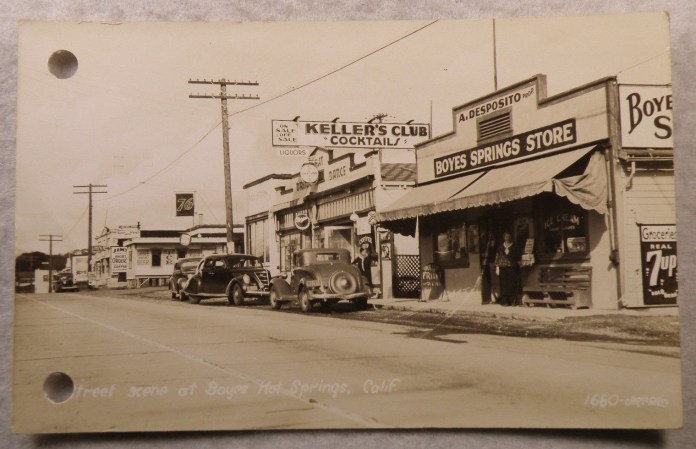
Shot from slightly farther south, this 1930s photo also show Jim’s, in the distance, and two buildings in the foreground that are still there in 2019.

VallejoHighwayAgnew.jpg

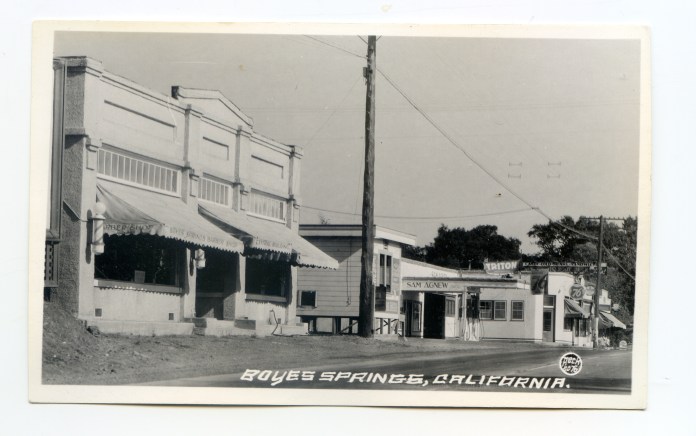
Now looking south at the Center Building, that housed Jim’s, past the corner of Vallejo Ave.

Woodleaf1930shires.jpg

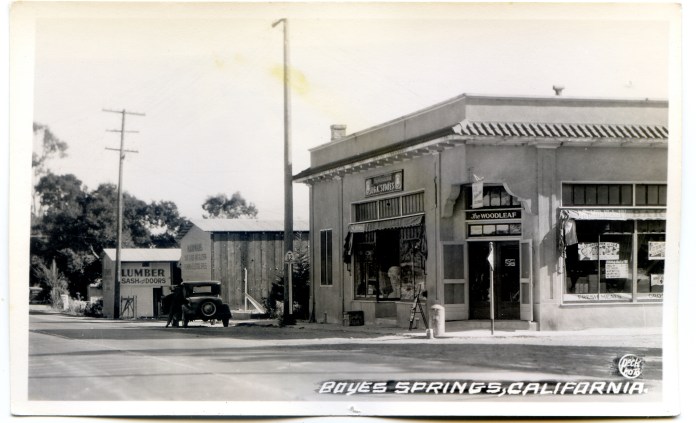
The southwest corner with the Woodleaf Store, around the same time (1930s).

SMINavyAir1

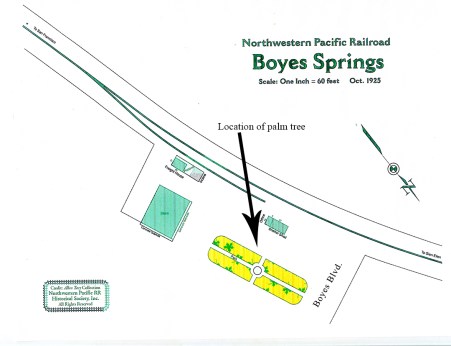
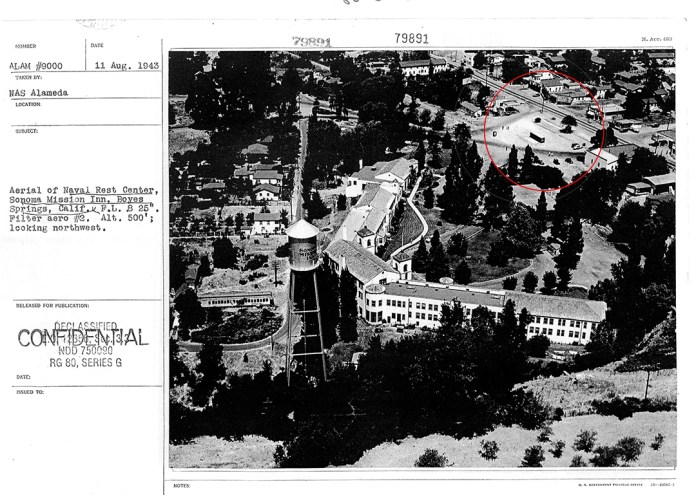
This 1943 Naval aerial photo shows the train depot and palm tree in the upper right corner.

ZanE75LookingSouth.jpg

ValleyDrug2.jpg

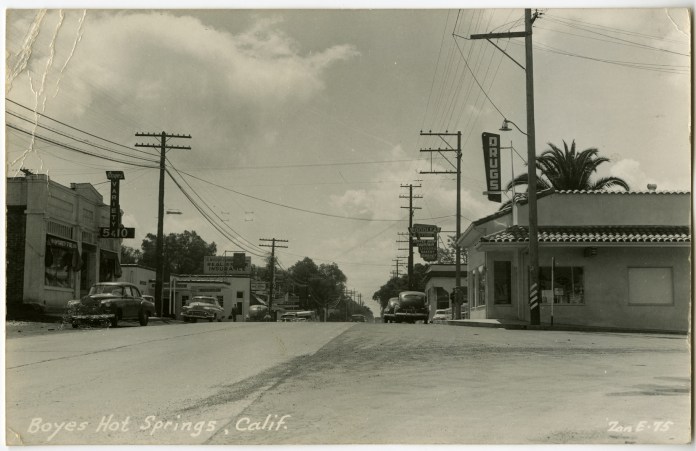
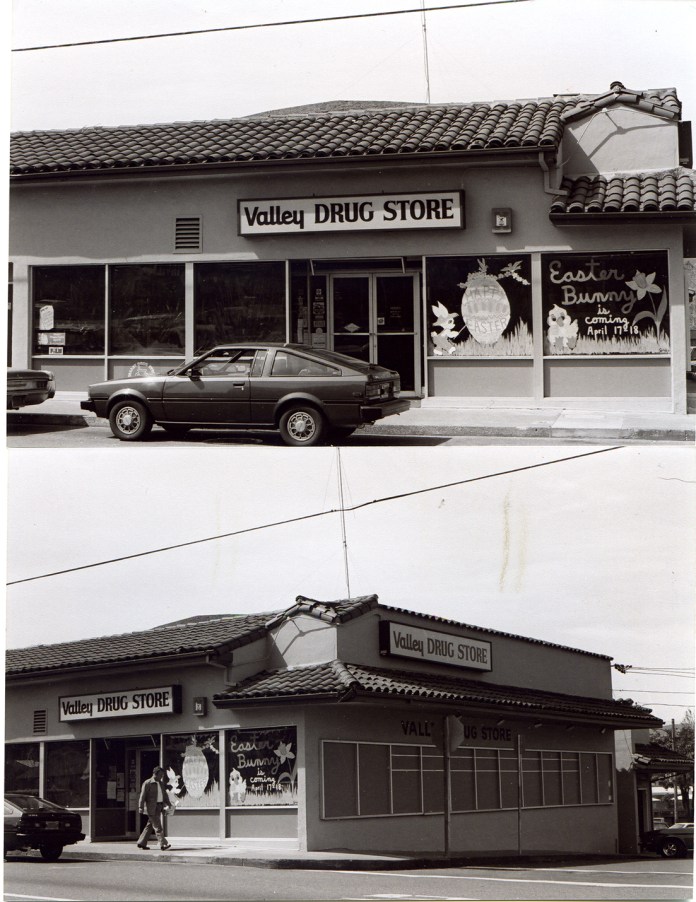
In the early 1950s, the Plaza Center building replaced the Boyes Plaza. The Center  Building (opposite side of the highway) has become Polidori’s 5 + 10 cent store.

ZanE47SMIEntrance.jpg

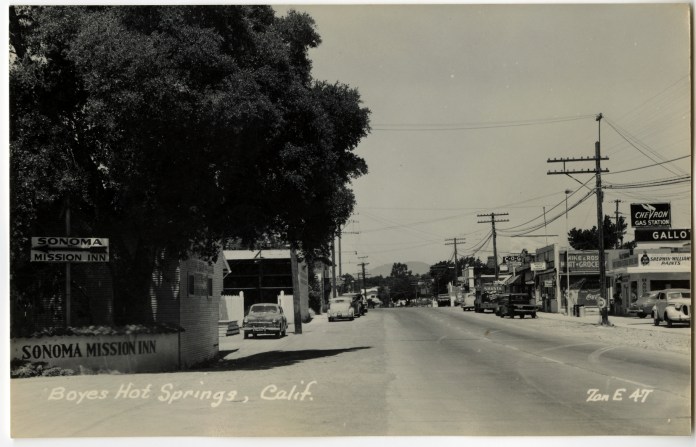
The Mission Inn entrance in the 1950s. On the right, signs for Gallo Brothers Service, Mike And Rose’s market and the C.O.G. club.

ZanS12ALookingSouth1.jpg

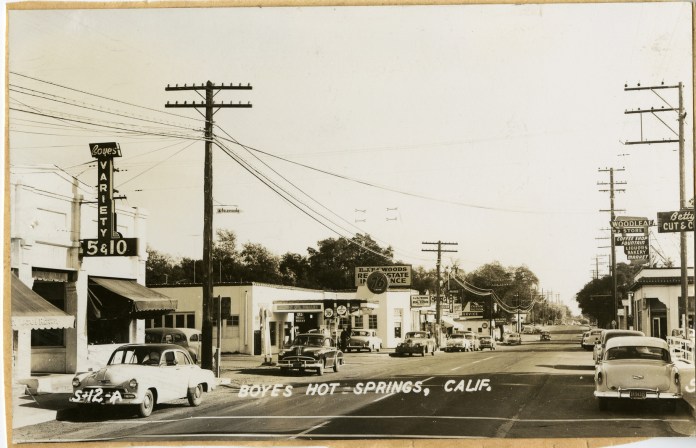
A little later in the 50s, Polidori’s has become the Boyes Variety store. The Woodleaf Market sign is promienent on the right, as well as Betty’s Cut and Curl.

CofCMapClip

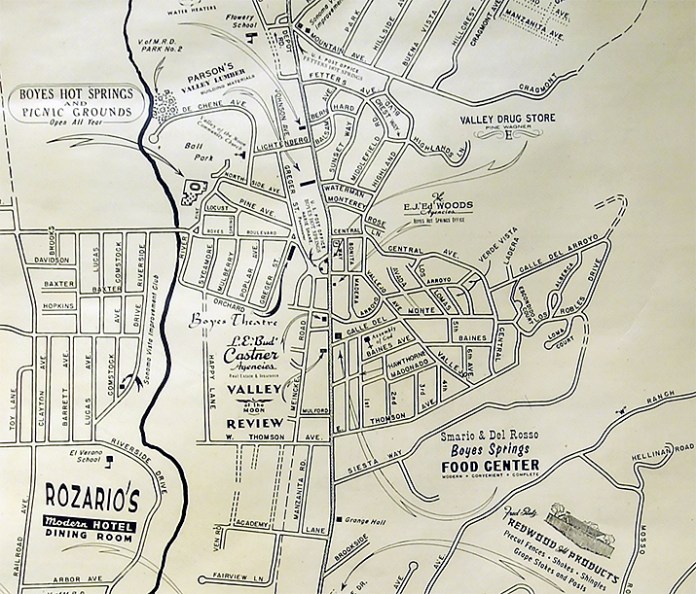
In 1955 the Chamber of Commerce issued a map showing many local businesses, including ones at our corner.

The Big three closed in 2016, never to reopen? Buildings come and go. It’s inevitable. But preservation should be important to all of us. Let’s hope we can do what is needed to preserve the Big Three/Woodleaf from demolition.

B0005P 0021B0005P 0038

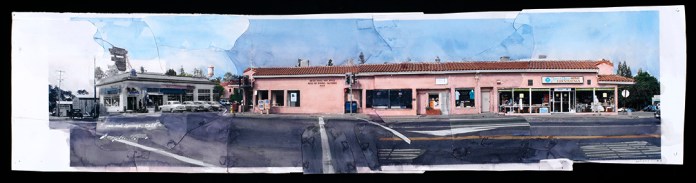
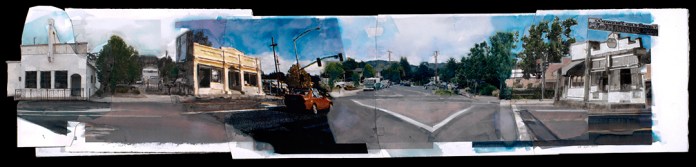
Two artistic interpretations of the intersection from the Valley of the Moon Main Stem Project, by Michael Acker.

Thanks to Arthur Dawson for the Leavenworth Plat interpretation and general info. Other images courtesy of the Sonoma Valley Historical Society, the Northwestern Pacific Railroad Historical Society, the Sonoma County Recorder’s Office, and Stanford Library Special Collections.

Standard
Boyes Hot Springs, History, People, Personal History, Wonders and Marvels

Dick Dawley

We found our friend Dick Dawley out in front of his house on Vallejo St., building a fence. Dick is 85 years old and he’s lived in Boyes Hot Springs for forty nine years. Many people know Dick from the twentyeight years he worked at Parson’s Hardware.


Dick’s fence, which he built from redwood 1x12s milled from logs salvaged from the 2017 fires.

Standard
Fetters Hot Springs, History, Resorts

Leixner/Nimpfer/Weghofer

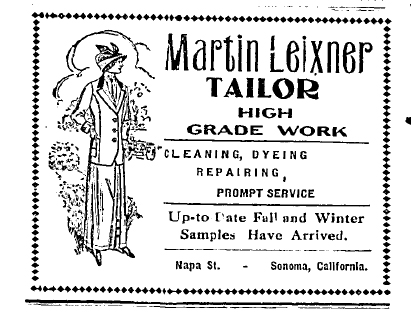
LeixnerTailorAd1920s

The Viennese

Martin Leixner started a tailoring business in Sonoma in 1919. He was among a group of Viennese immigrants to settle the area. In 1923 he joined with another Viennese tailor, Herman Weghofer, to enlarge the business, which was located “in Fetters Springs, on the Highway, opposite the Hotel.”
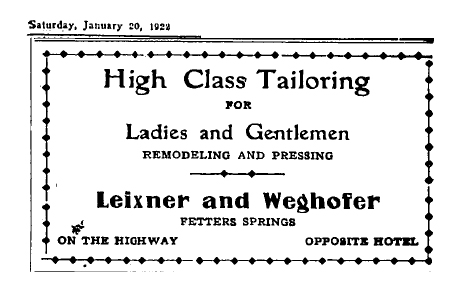
LeixnerAd1922

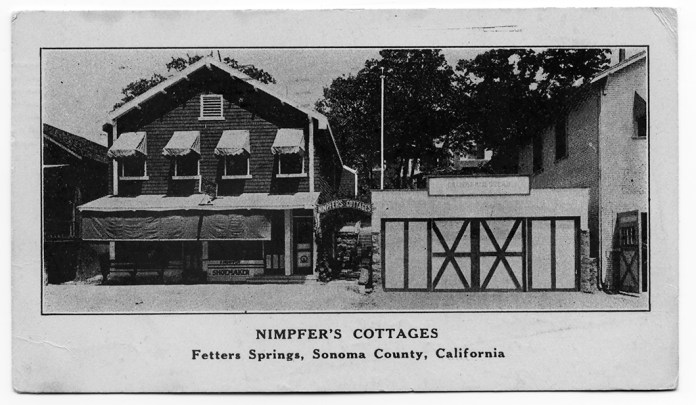
In 1924, Leixner took on another partner, a Mr. Nimpfer, and another business, that of chauffer. The next year we read in the Index Tribune that “Mrs. Putnam, two children, maid and chauffer of Commonwealth Avenue, San Francisco, spent the last week end at Leixner’s Resort, one of the attractive places of the Springs. Mr. Leixner has utilized the rocky formation of the hillside where his resort is situated for rustic stone stairways, and made it otherwise very artistic.” This is undoubtedly the same site at which his tailoring business was located. At some point, Mr. Nimpher’s name appears on the resort in place of Leixner’s.
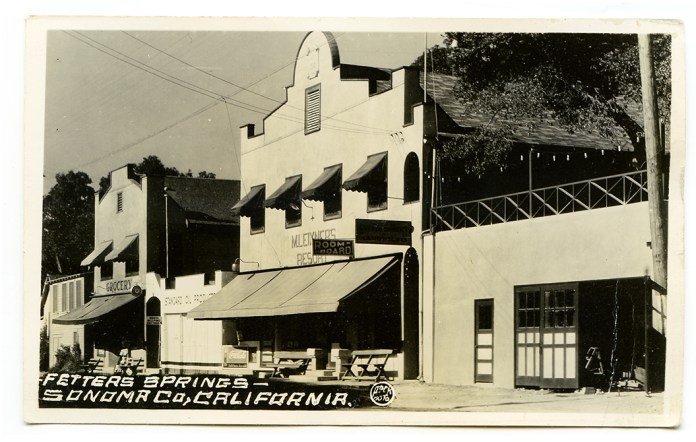
Leixnershires2

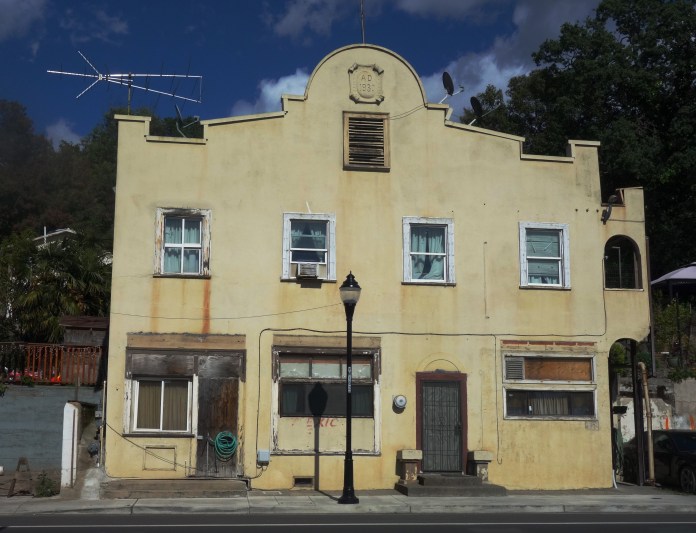
The new facade is dated 1933

Nimpfers1927

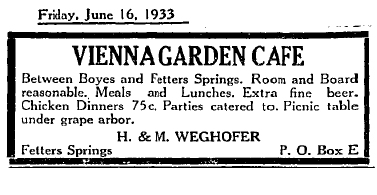
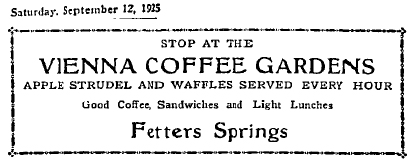
Herman Weghofer went on to open his Vienna Coffee Garden just a few hundred feet south of there, a few years later.
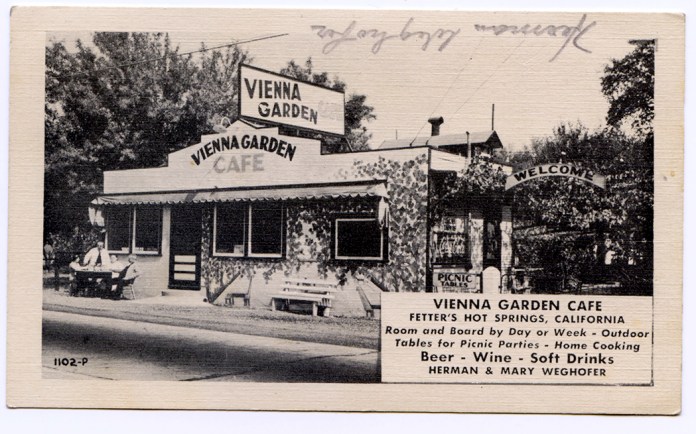
ViennaGardenHiRes

ViennaCoffeeAd1925

ViennaCoffeeAd1933On Friday, September 10, 1937, the Index Tribune tells us, a large group of tailors “visited their friend, Herman Weghofer, at Vienna Gardens, in Fetters Springs… This was a veritable tailor’s convention and Mr. Weghofer, who formerly tailored for the City of Paris, was very happy.”

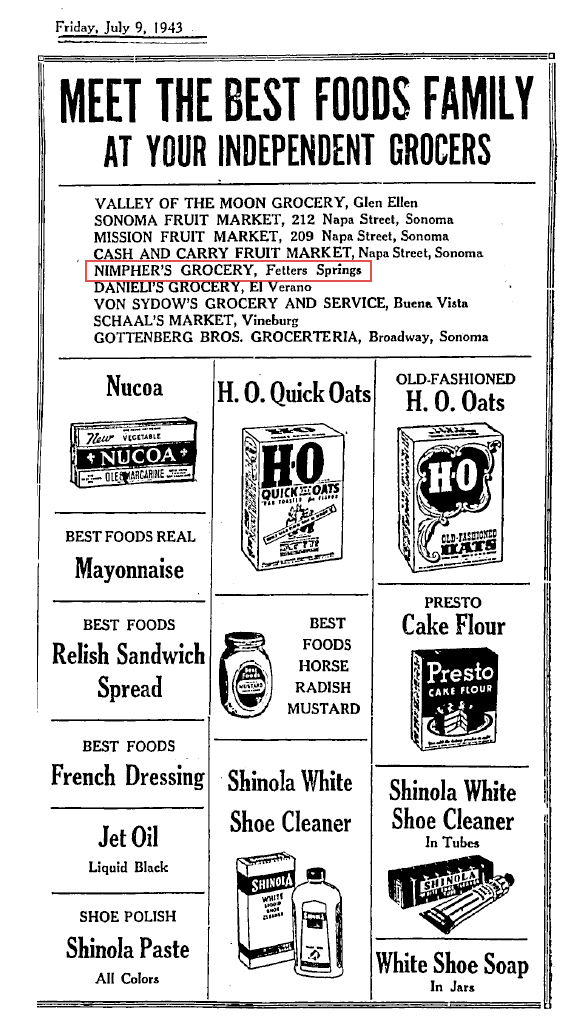
Index Tribune, January 1, 1954-“Death Claims Mrs. R. Nimpfer, Long Time Resident of Fetters”…..She and her husband, Gottfried, who survives her, were proprietors of a Sonoma bakery form 1924 to 1929. The later became proprietors of a grocery store and resort directly opposite the Fetters Hot Springs Hotel, which they operated for nearly 20 years, until selling to Mr. and Mrs. Raymond Roy (Rohr, actually).”
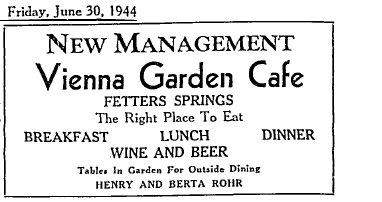
ViennaCoffeAd1944

In 1945Leixner and Nimpfer “branch” out.
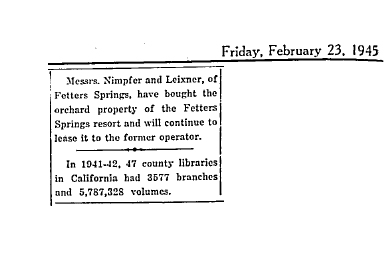
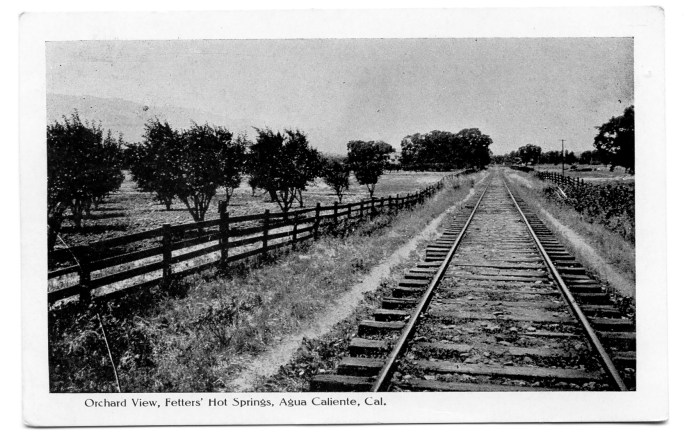
Leixner-NimferOrchard1945

FettersOrchardpic

NimphersGrocery1943 copy

At some point the grocery was renamed Roy’s.

Fire at Roy’s Grocery, 1970 (Index Tribune photos courtesy of the Sonoma Valley Historical Society)

In later years the buildings housed various restaurants. In 2019 a photo posted on the Facebook group “You know you’re from Sonoma when..” elicited some memories:

The building on the left that has the “Grocery” sign on the front eventually became my mother-in-law’s Mexican restaurant, Mi Tienda. (see photos above.)

Oak Tree Cantina! Mmmmm!

We use to dine on the roof and watch Juanita throw people out of her establishment! 

The big one with the garage, my dad and mom leased for 5 years, it was a bar called Ev’s Stop. Lots of good times there, early 60s I think. 

I spend a lot of time in Roy’s grocery watching my mom and dad play cards in the back of the the store and sometimes I would go upstairs and watch TV. And if I got bored I would walk home I lived on Hillside Ave. 

Yeah we got on that roof also. So cool to have a birds eye view. Great just to hang out there. 

Was that in the area of Roy’s Sharon and Shorty rented there when Brian was born. 

Roy’s was the building with the two shutters sticking out. 

Loved the Oak Tree! 

I worked at the Oak Tree in the 80s…I miss that place! 

Before Oaktree it was the Hashery. 

After. It was the Oaktree first then the Hashery. 

What a great memory, the Greyhound. Doesn’t look like it changed much from the 30s to the 70s.
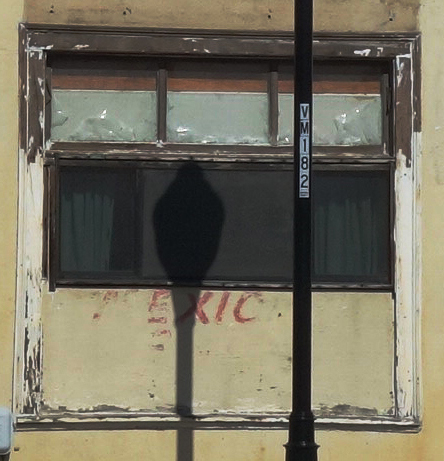
LeixnerMexRestarauntSign

Close-up showing fragment of Mexican restaurant sign, 2018.
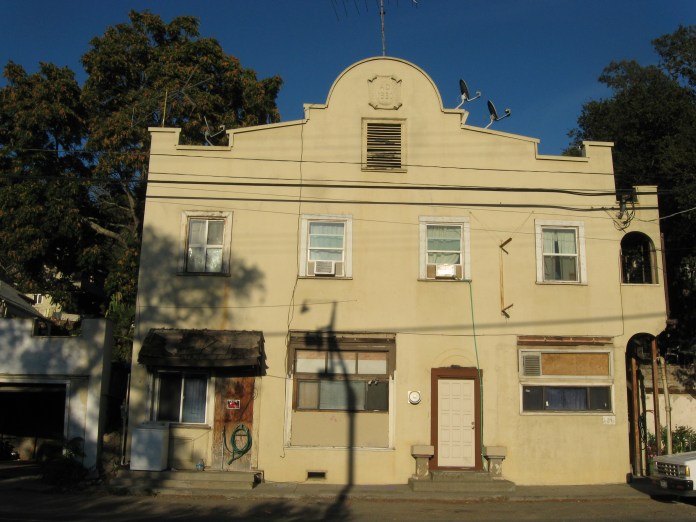
IMG_5267

2009

IMG_2491.jpg

2008

_DSC3650

2015

AC1933crop

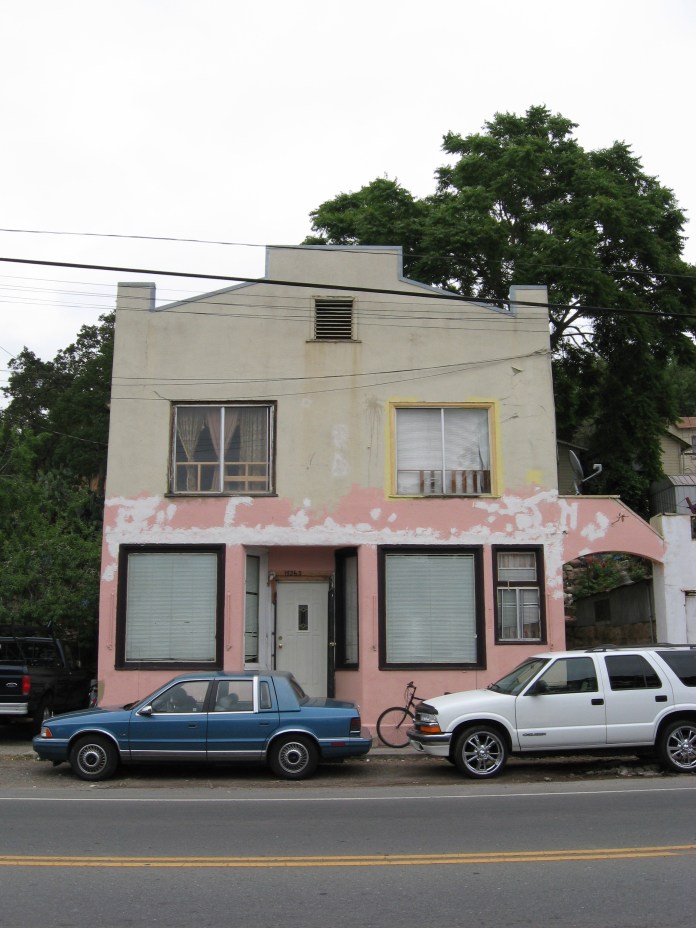
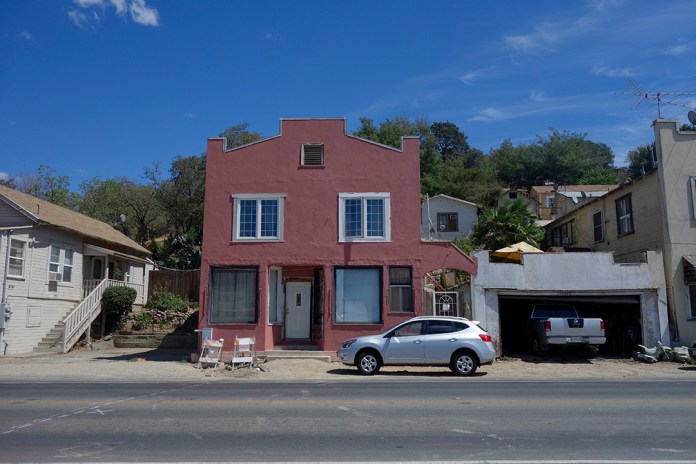
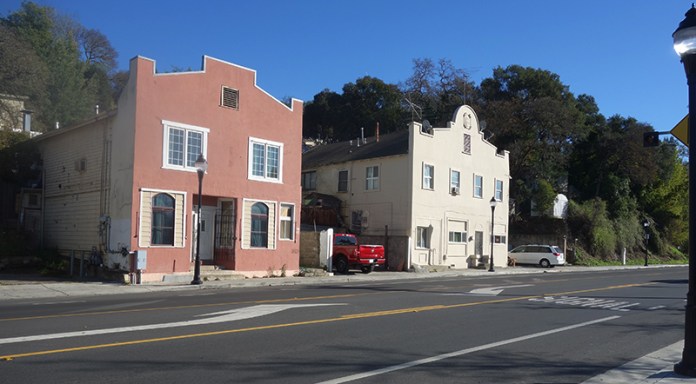
April 2018. Dilapidation increases. How long can these buildings stand?
Leixner2018

December 2018. New windows and new paint give hope!

About my first sight of these buildings: Long before I moved there (from San Francisco) I happened to take a drive down Highway 12 from Calistoga Rd. to the town of Sonoma. The setting, these buildings, and the place names, Agua Caliente, Fetters Hot Springs, Boyes Hot Springs, El Verano, immediately and permanently enthralled me. I remain enthralled.
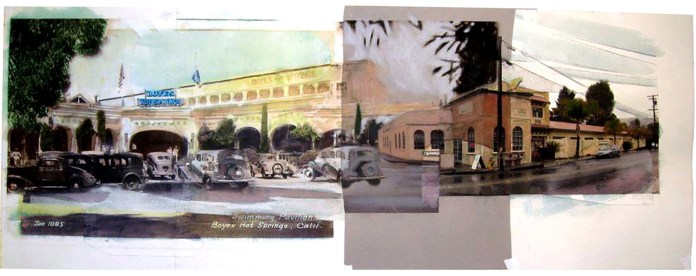
ACPanocoll2photo

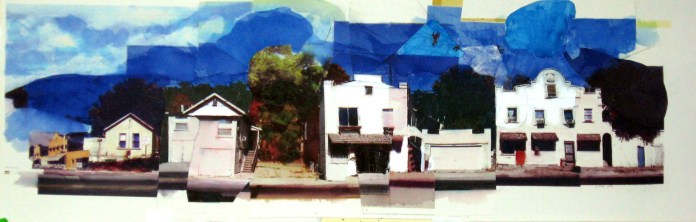
photo collage/painting by Michael Acker

All photos by author or from his collection, except where noted. Newspaper clippings courtesy Sonoma Valley Historical Society.
ViennaGardenPeople.jpg

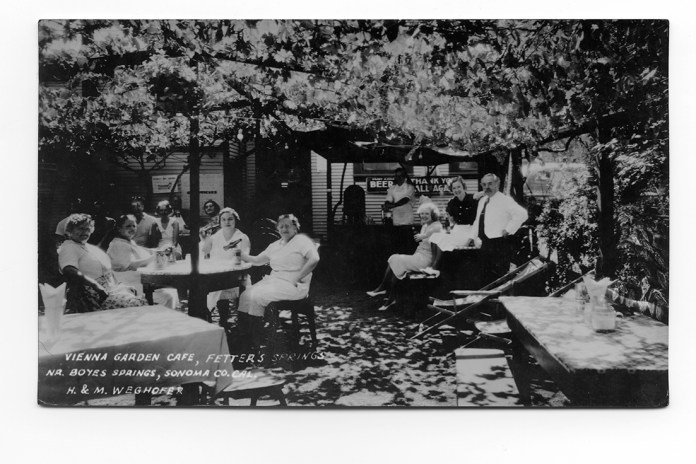
Newly discovered photo of patrons relaxing at Vienna Garden Cafe.


Standard
Art, Boyes Hot Springs, History, nature

Neighborhood Phenomena

StrawberryiesConcrete2019 copy

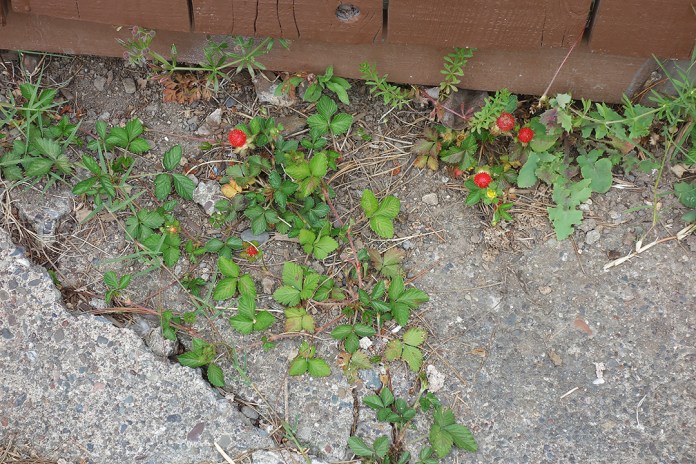
Strawberries among the weeds, in concrete, Boyes Hot Springs, 2019

NEIGHBORHOOD PHENOMENA

With thanks to artist Jack Baker

One of the main objects of the Springs Museum is the study of Neighborhood Phenomena.

Perhaps not to define it to precisely is best. However, we can say that NP may be exceptional things or mundane things seen in an exceptional way. Collecting (and it is an exercise in collecting) NP is an act of noticing, something that it is all to easy not to do in an environment that is so familiar as we pass through it daily.

Photography is a good mode for collecting NP, as is sketching, sound recording, rubbings, or actually picking up objects (but try not to disturb the environment. Observers should limit their impact on the world being observed.) Study over time is of interest, so repeated visits to sites are encouraged.

Here is a list of some of the possible categories to look at.

How trees and built environment interact

Signs. What they say, how they change.

Pavement and how is deteriorates.

Plants in all their many different forms

Animals among us, including pets

Infrastructure such as wires, drains, etc.

Design-everything built is designed, if only by default

Holes in the ground

Mounds of things

Stories

Further Inspiration: Artists as collectors. Collections as art:

“The mission of the Natural History Museum of Los Angeles County is to inspire wonder, discovery and responsibility for our natural and cultural worlds.”

“Including those items is part of the museum’s effort at redefinition, although the curators were drawing on an eccentric set of collections that were never really part of the natural history tradition. The facade of the building still bears its original title: Los Angeles County Historical and Art Museum. In fact, the art collection became the heart of the Los Angeles County Museum of Art in the early 1960s, when the “natural history” title was adopted.”

“It all adds up to a reminder that, even as the art historians have been slowly trying to squeeze the history out of their discipline, artists have been assiduously turning themselves into historians, archivists, even collectors of a sort.” Barry Schwabsky, the Nation April 2014


“As Ellen Dissanayake has observed, the function of art is to “make special”; as such, it can raise the “special” qualities of place embedded in everyday life, restoring them to those who created them…”

“A starting point, for artists or for anyone else, might be simply learning to look around where you live now…”

“Psychologist Tony Hiss asks us to measure our closeness to neighbors and community and suggests ways to develop an “experiential watchfulness” over our regional “sweet spots,” or favorite places. Seeing how they change at different times of day, week and year can stimulate local activism…”

Quotes from The Lure of the Local, Lucy R. Lippard


The collection, and, by extension, the museum is a work of art:

“Bottle Village began as a practical need to build a structure to store Grandma Prisbrey’s pencil collection (which eventually numbered 17,000) and a bottle wall to keep away the smell and dust from the adjacent turkey farm. However, it was her ability to have fun and infuse wit and whimsy into what she made, which over time became the essence of Bottle Village. Practicality alone would not explain The Leaning Tower of Bottle Village, the Dolls Head Shrine, car-headlight-bird-baths, and the intravenous-feeding-tube-firescreen, a few examples of her delightfully idiosyncratic creations.” From the Bottle Village website. http://www.bottlevillage.com/

17,000 Pencils!

Standard
Boyes Hot Springs, History, Now and Then

Boyes Springs Mineral Water


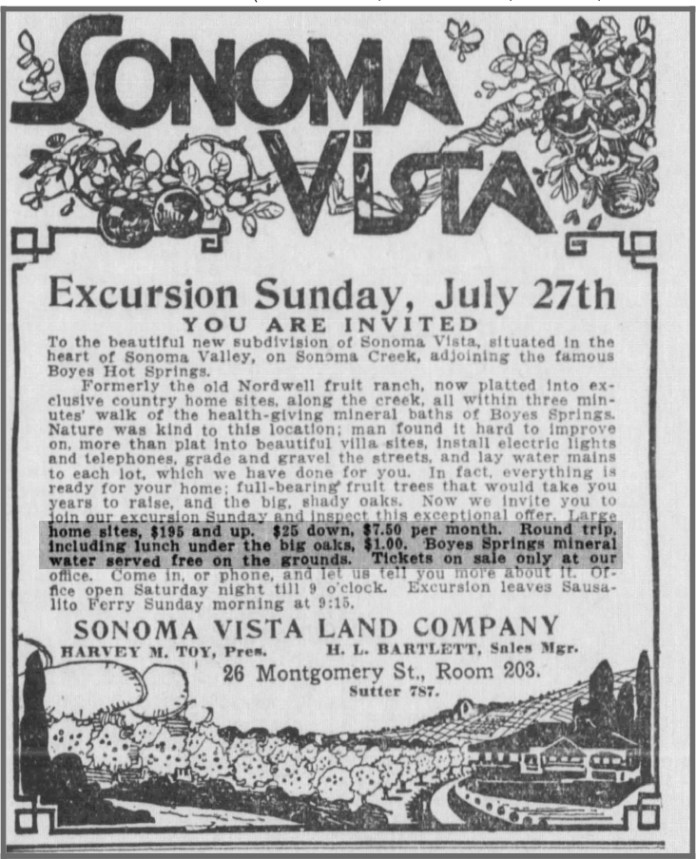
In 1914, the Sonoma Vista Land Company, Harvey Toy, President, advertised in the San Francisco Examiner for a  train excursion to Boyes Hot Springs:

Examiner1913SonomaVistaAd

“home sites $195 and up” and…”Boyes Springs mineral water served free on the grounds.”

Sonoma Vista was subdivision on the west side of Sonoma Creek, south of Boyes Blvd.

SonomaVistamapClip

In January of 1918 the Index Tribune stated that “The bottling works of the now famed Boyes Springs Mineral Water has been put in the charge of Fred J. Hansen, popular musician and poultry man.” (A talented guy, apparently!) And “The management of the mineral water concern is no small matter as $25,000 worth of water was bottled and marketed last season.”

WaterLabel2

By 1925, the concern was managed by one H. Peterson, according to the IT. “Physician recommend the use of this water as a corrective for stomach and related troubles…Try a case and enthuse more and more over Boyes Springs,” the reporter stated, severely blurring the line between news and advertising.

Baseball players also enjoyed it, according to the Oakland Tribune in 1947:

BoyesWaterBaseballOakTrib19472

boyeswaterad

The bottling plant, as shown on the County Recorder’s map of the Hotel Grounds subdivision, was adjacent to the Bath House near Boyes Blvd.

(See https://springsmuseum.org/history/documents/maps/)

BottlingPlantclip

The building survived and has gone through a number of incarnations.

1980s:

J+DBottlingWorks

2009:

IMG_3996 copy

And inspired some art:

bathhouse

Artist: Michael Acker

Images courtesy of Sonoma Valley Historical Society, Robert Parmelee, and the author’s collection.

waterlabelSCH

BottlingPlantInterior-14

UPDATE: Interior of the bottling plant, courtesy the Internet Archive.

Standard
Boyes Hot Springs, El Verano, Fetters Hot Springs, History, Photographs, Resorts

Railroads in Sonoma Valley

rrmap

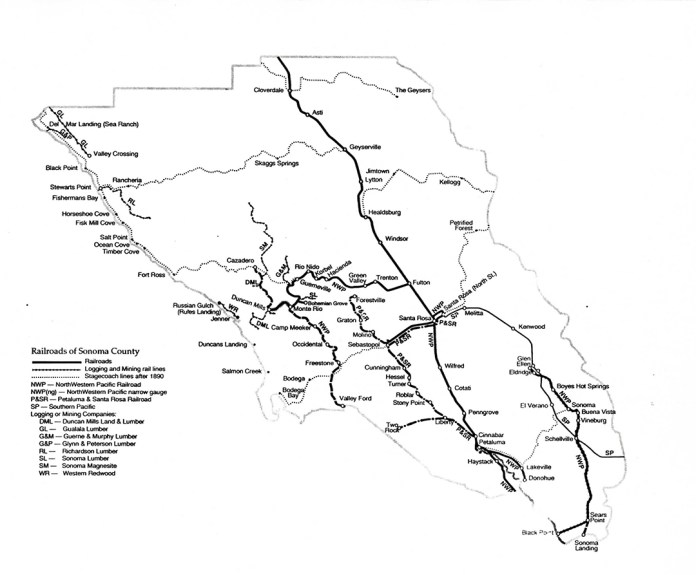
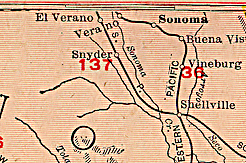
The history of railroads in Sonoma Valley is complicated and confusing. It started in the 1860s and included at least 15 different companies, but by 1889 there we just two: the Santa Rosa and North Pacific, and the Northern Railway. The SR and NP became the Northwestern Pacific in 1907, and Southern Pacific subsumed the Northern in 1898. The NWP tracks were on the east side of Sonoma Creek, with a depot in Boyes Hot Springs, and SP on the west, stopping at El Verano. The old rights-of-way can be glimpsed in some places. Sierra Drive in Boyes is one location. See https://springsmuseum.org/2018/03/29/sierra-drive-meincke-road/

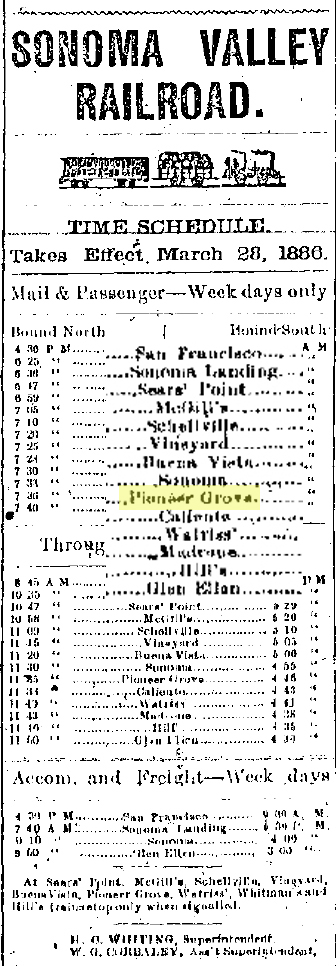
A precursor to the NWP, the Sonoma Valley Railroad, existed until 1889. In this schedule we see that it visited a stop called Pioneer Grove. This was the name used before Boyes Springs was used.

svrailroadschedule1886 copy

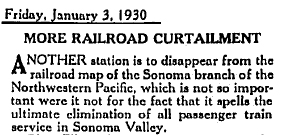
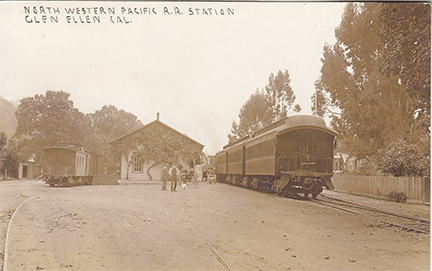
The railroads served the populace of San Francisco, primarily, who wished to spend warm summer days at the resorts. They came in their thousands by rail. But as early as 1920, the railroads were challenged by bus lines and automobiles. (The “auto-camp,” precursor to the motel, originated in the 1920s.) The Index Tribune reported in 1921 that executives of the NWP were considering new, modern electric cars on the Santa Rosa-San Rafael line to counter the competition from buses. To no avail. In 1930, the Glen Ellen depot was eliminated.

glenellendeleted1930

The editorial comment in the IT was prophetic. Rail service was gone by 1942.

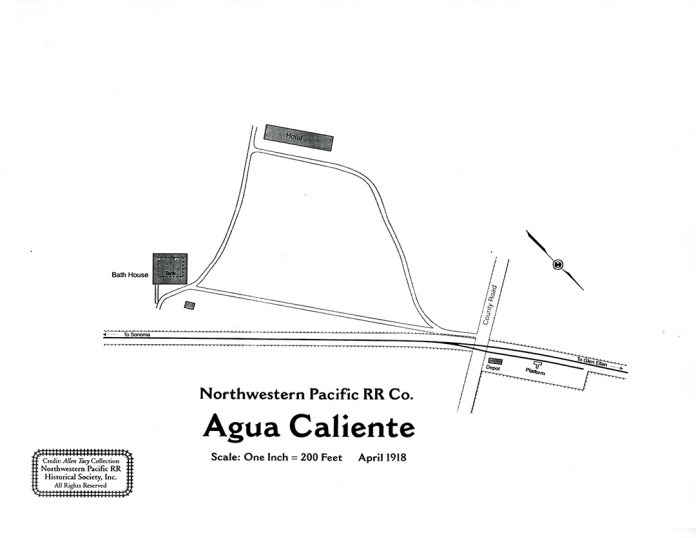
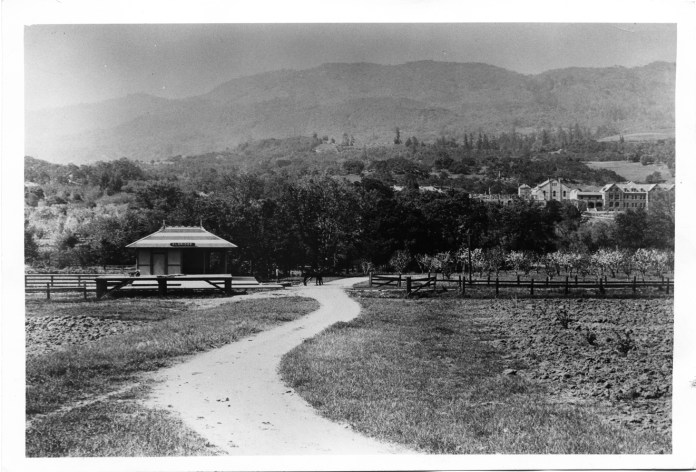
Following is a collection of images of depots in Sonoma Valley, with some maps, which are courtesy of the Northwestern Pacific Railroad Historical Society.


NWP depots:

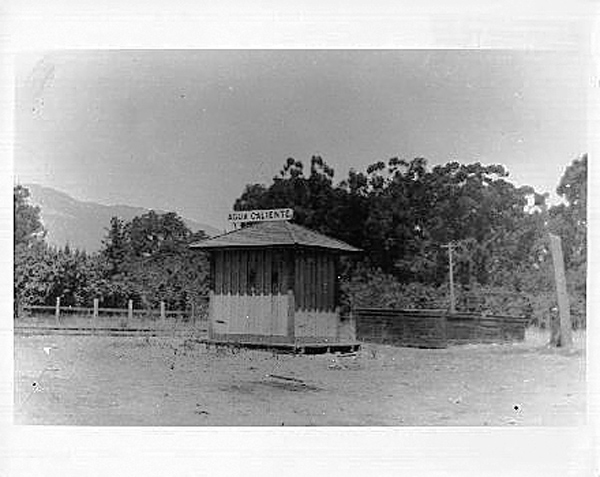
acdepotweb

Agua Caliente, year unknown

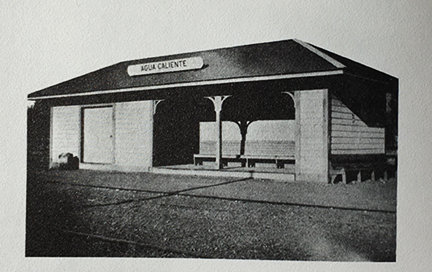
AguaCalienteDepotold

A later Agua Caliente depot? Similar to Boyes Depot of 1923

img091.jpg

bhsdepotwithtruck

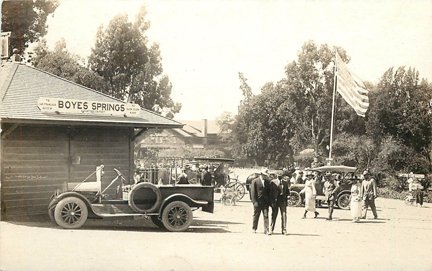
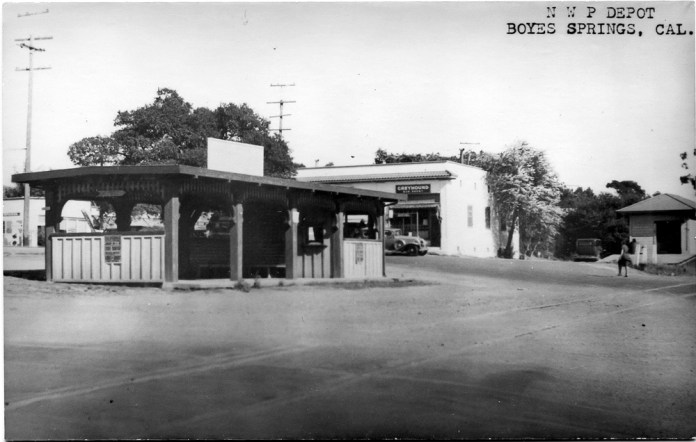
The name was changed to Boyes Hot Spring at least by 1908, but Model T production started in 1909, so perhaps all of the signs were not changed at one time.

boyesdepotmarieelsie

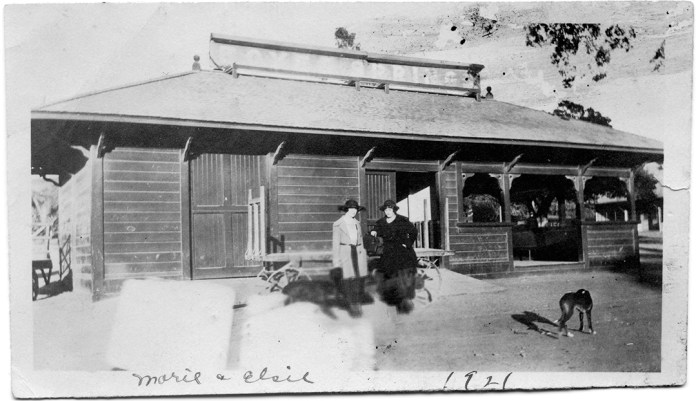
Marie and Elsie stand in front of a depot called “Boyes Springs,” in 1921. apparently the word “Hot” in the name came and went. This station was destroyed in the fire of 1923.

railroadmap.jpg

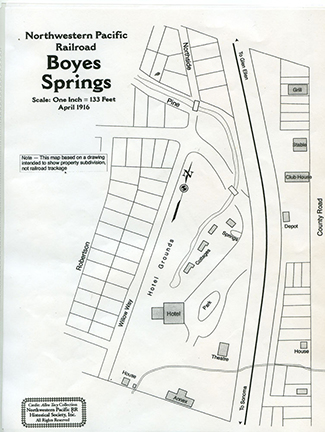
1916 map showing the old hotel and the canal that ran down Pine Street.

fettersdepotmovieweb

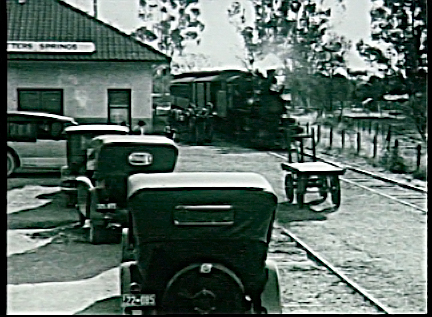
Still from the 1923 Harold Binney movie “Account of the no-account Count.” The film shows the train arriving at Fetters Springs.

boyesdepotangle-web

Boyes Hot Springs depot in 1942, the year service ended. The Woodleaf Store can be seen behind the depot.


veranoDepotKern Letter027.jpg

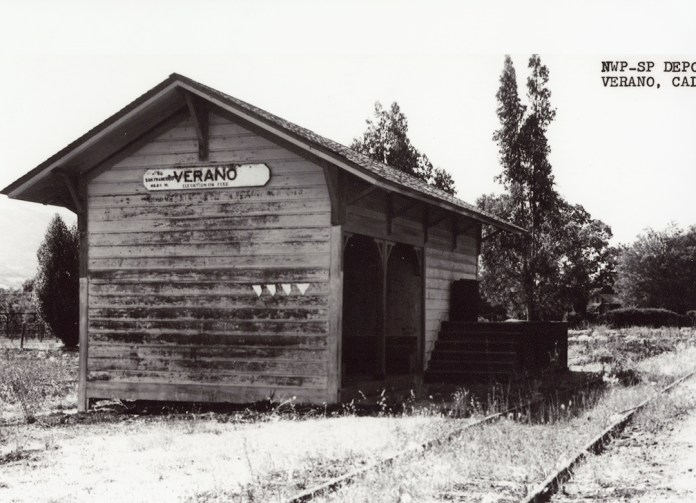
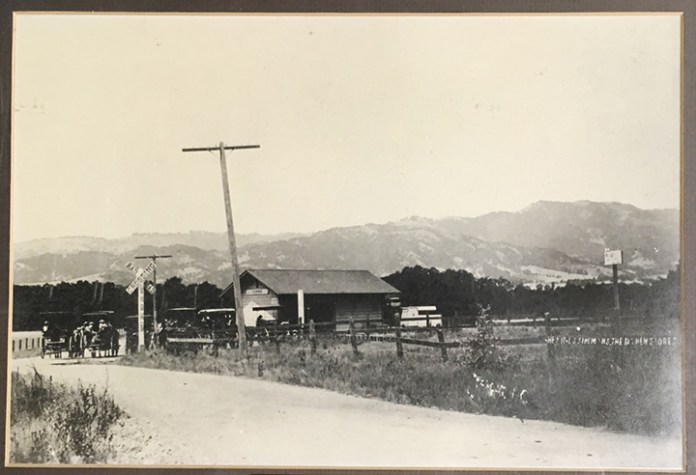
The Verano depot, across the creek from El Verano.

VeranoDepot2.1

Verano depot circa 1905

VeranoRRMapcrop.jpg

trainatglemellen

Glen Ellen, year unknown.

Southern Pacific depots:

eldrigestation1898

Eldridge depot 1898

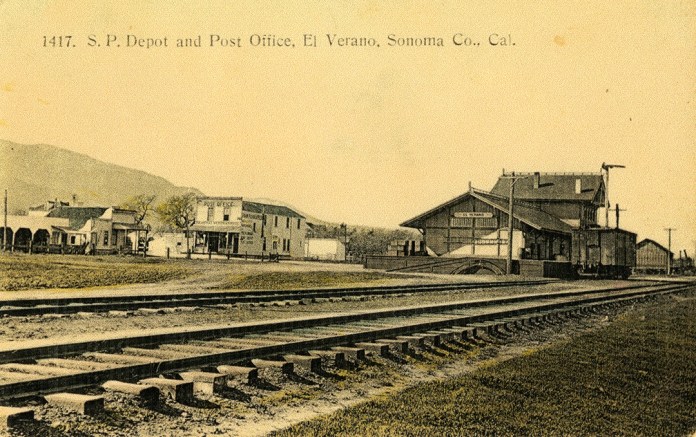
EVDepotandPO.jpg

El Verano, circa 1890s

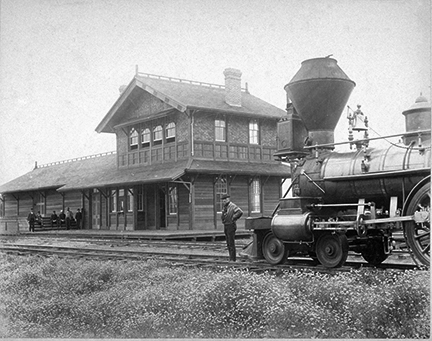
i0024492a

El Verano depot shortly after construction, 1880s

Images courtesy of the Sonoma Valley Historical Society and the Northwestern Pacific Railroad Historical Society.


Standard
Boyes Hot Springs, El Verano, History, Photographs, Resorts, Springs Historic Photo Database

New to the Springs Historic Photo Database

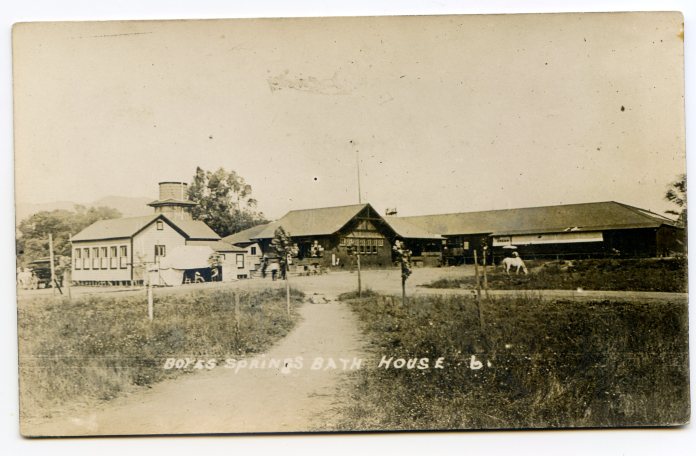
bhsbathhousehorseandtank

Probably around 1910

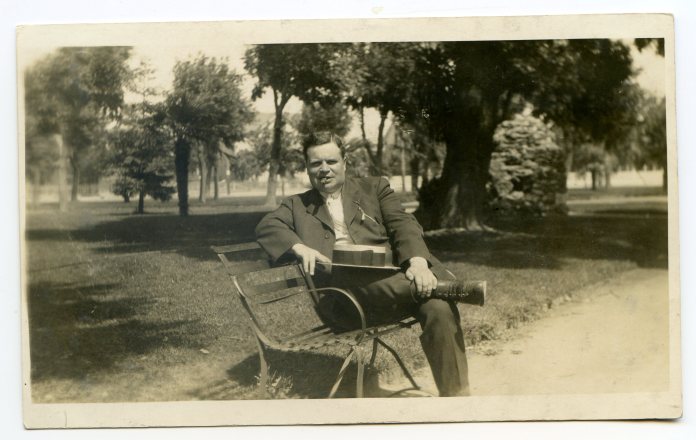
bhsmancigar1912

His name is Gus. Post marked Boyes Hot Springs, but is this the Plaza? 1912

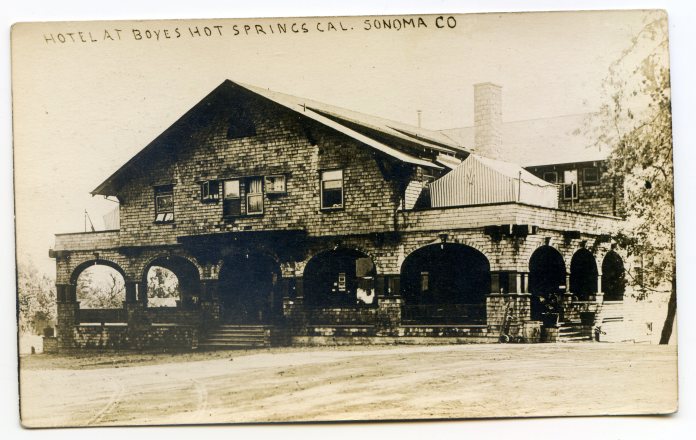
boyeshoteltent

The “Old Hotel.” Before 1923

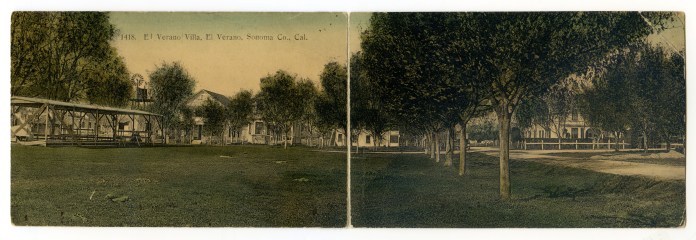
evvillapano

El Verano Villa. Near Verano Ave. and the creek.

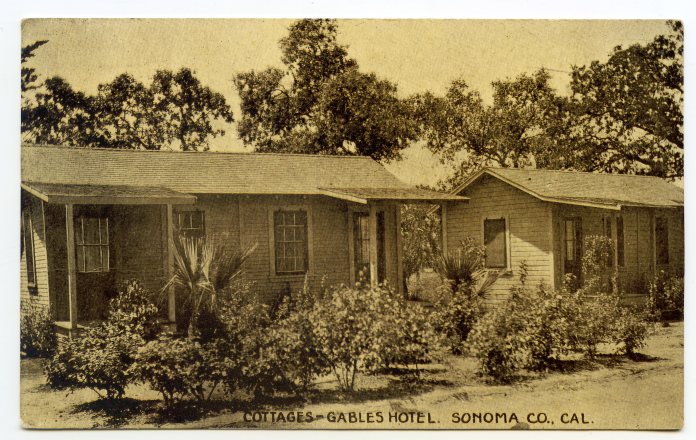
gableshotelcottages

Gables Hotel. Exact location unknown.

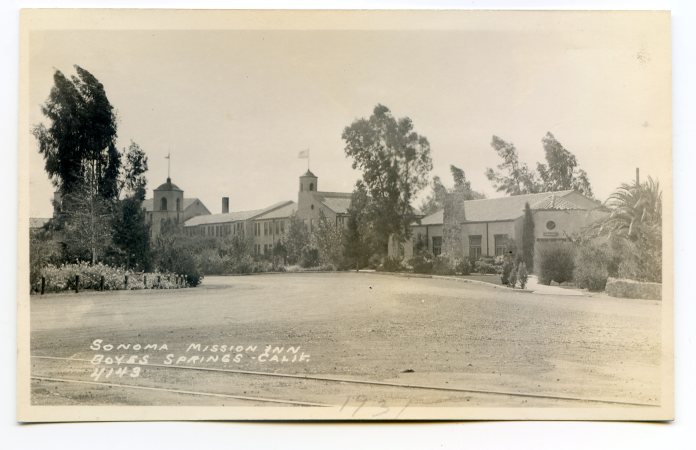
smi1937

Sonoma Mission Inn, 1937, ten years after it was completed.

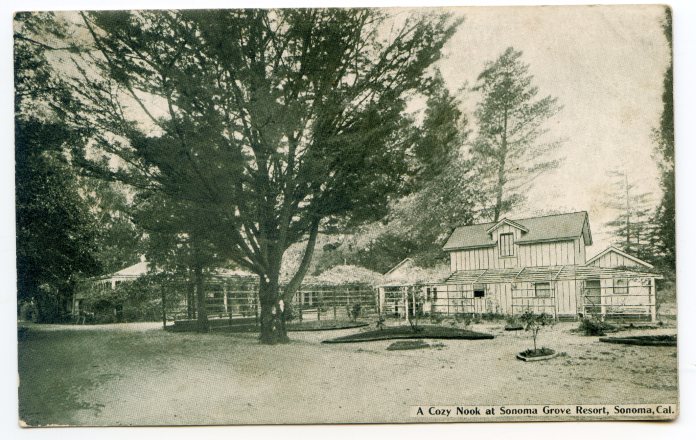
sonomagrovenook1912

Sonoma Grove, on the Highway between Sonoma and Boyes.

Standard