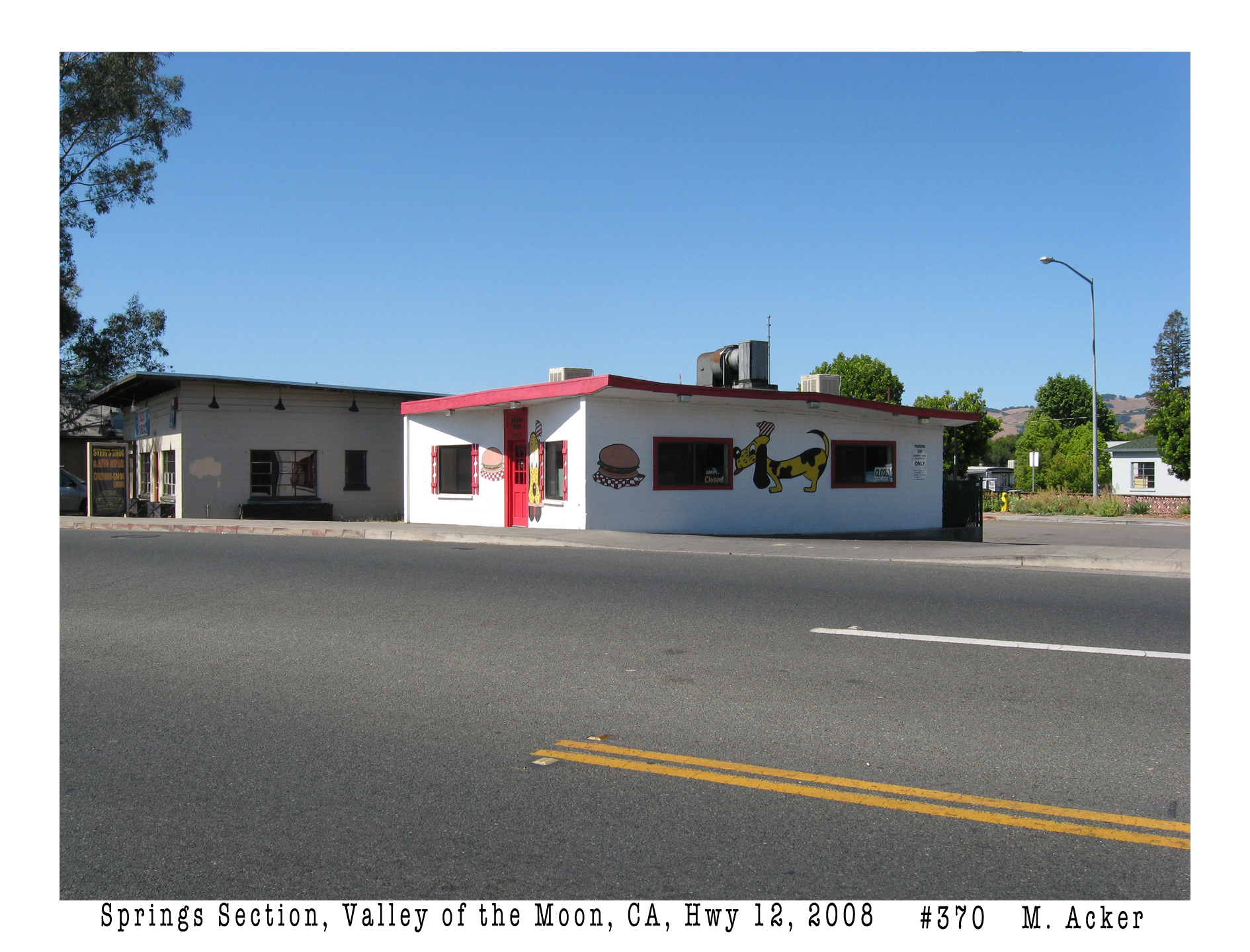
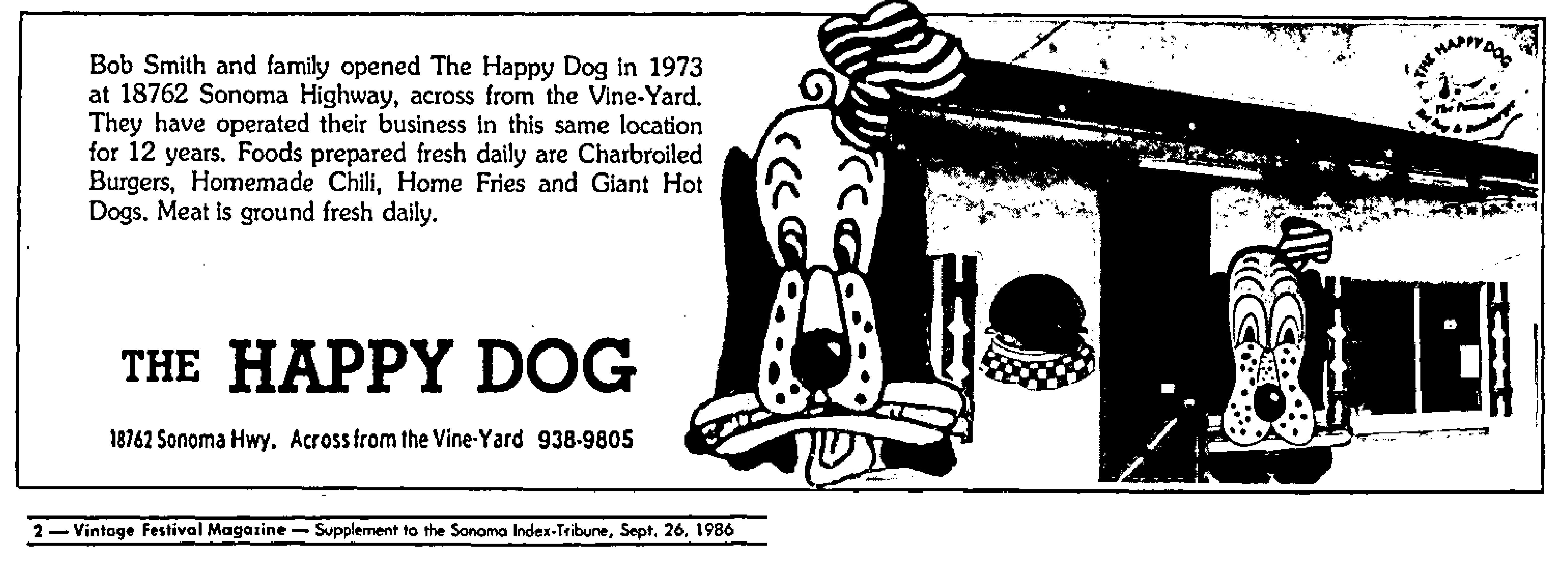
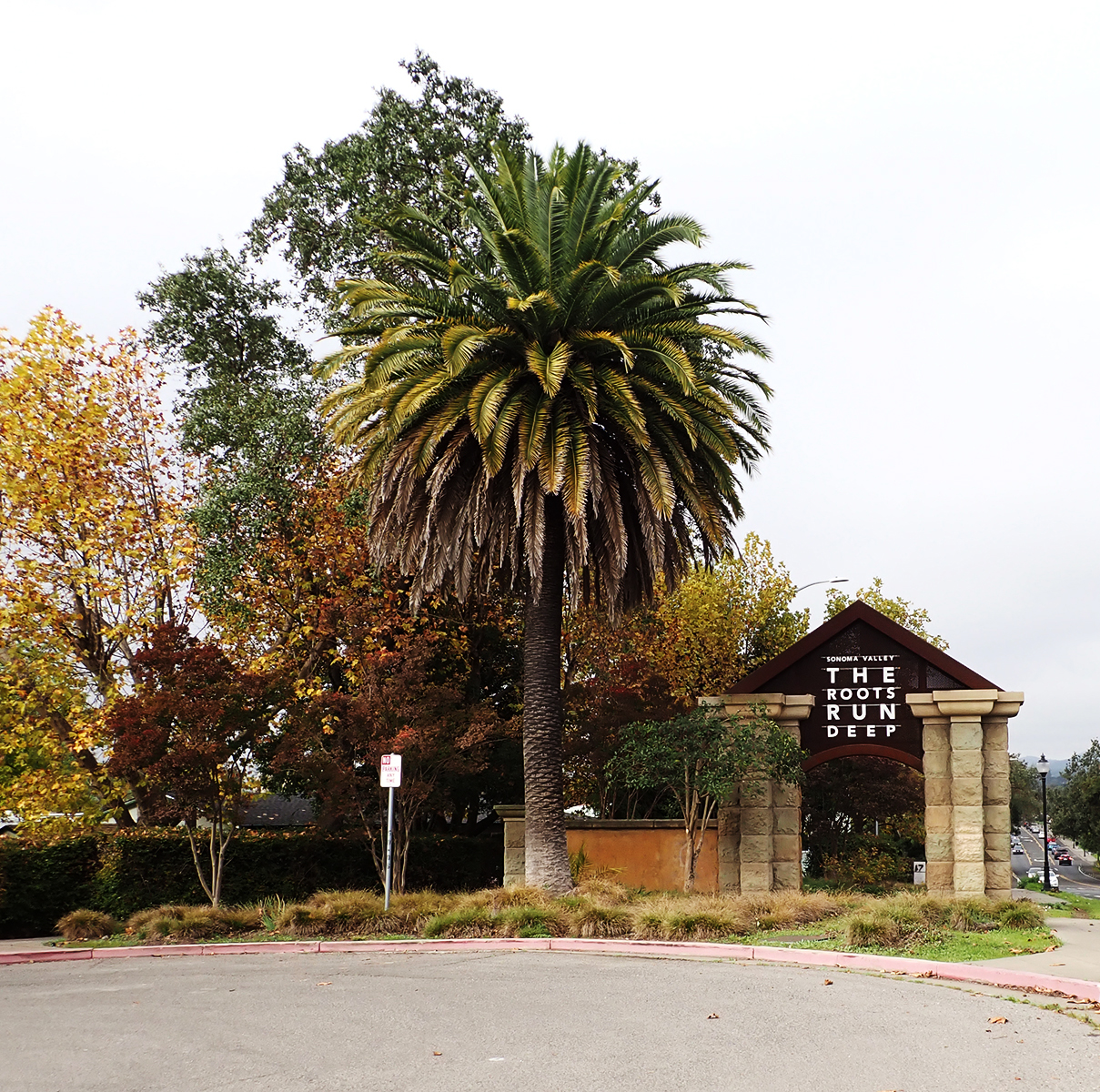
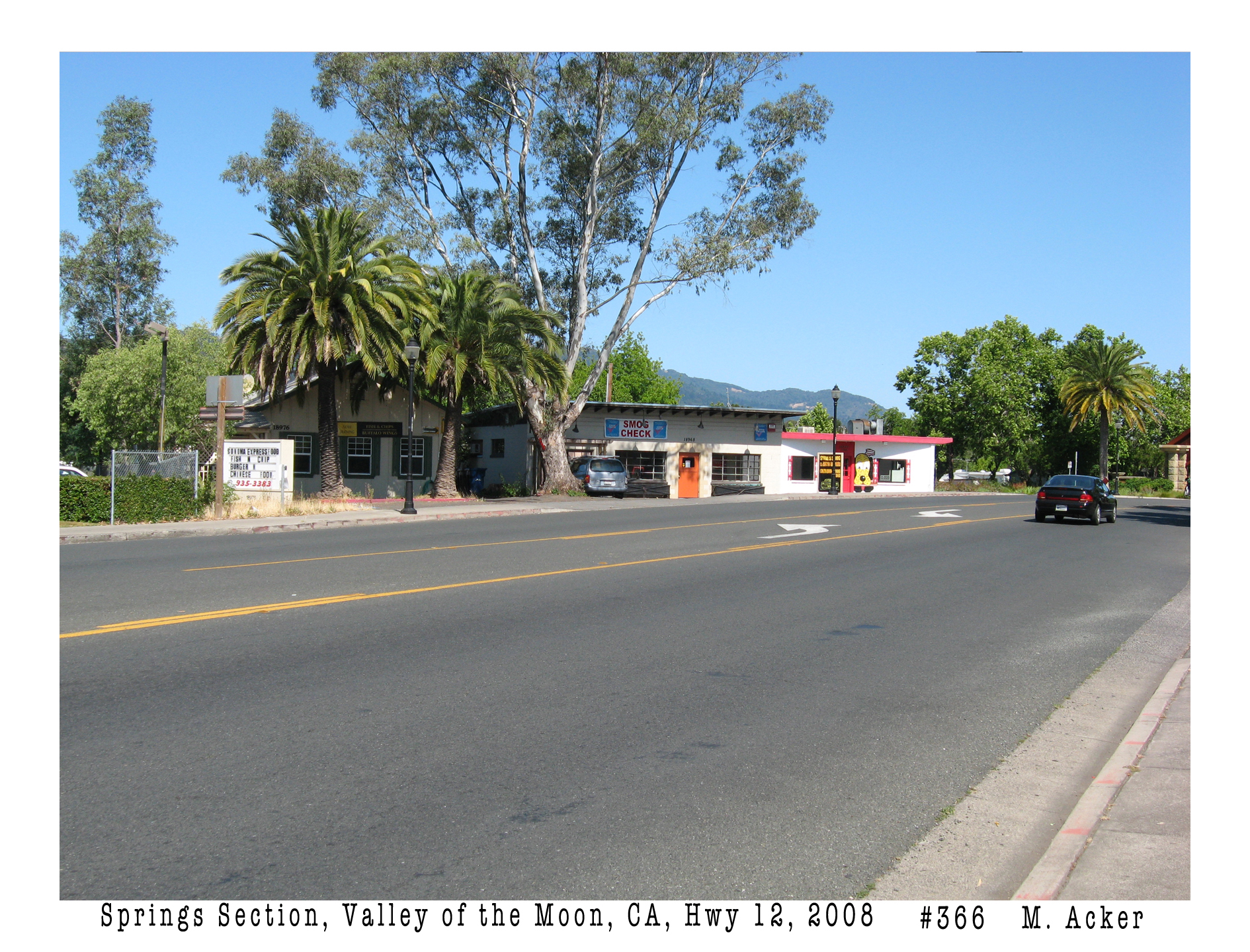
I’ve been working for some time on a couple of posts about the Happy Dog and the Gateway Arch, both on Highway 12 near Verano Ave. Obviously, you can’t talk about one without talking about the other. (Well, not so obvious to me until I started thinking bout the nature of human made landmarks). As usual, there is a lot more to know than I originally expected. I found it necessary to include Moosetta’s Deli and other buildings in the post. Progress was slow, and then, as they say, life happened. Everyone is fine, but some hospital time was experienced. So, I did not finish either post.
Next month!
Here is a teaser.
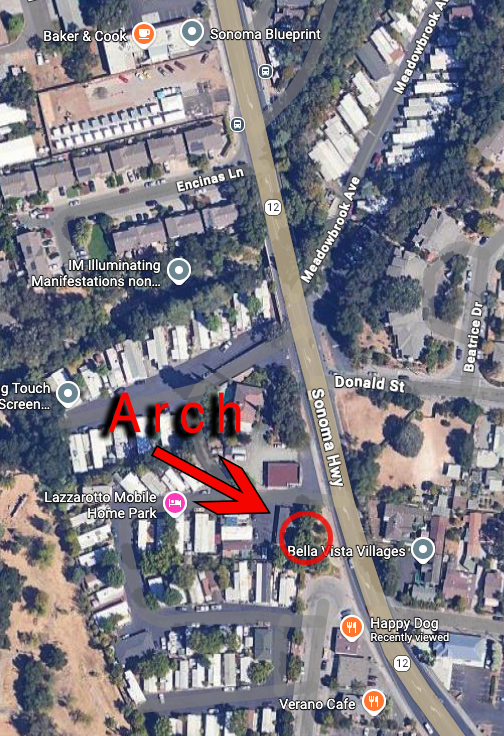
Above is from the archive of photos I created in 2008. I printed two copies of all 477 images and gave one to the Sonoma County Library and the other to the Sonoma Valley Historical Society.The Arch in 2025, with the new advertising.Left to right, what is today the Verano Cafe, the Steve’s Auto building, and the Happy Dog. Moosetta’s was located in the first building, the Art Store in the second. Moosetta’s had at least three locations.
Hey! Why don’t you click over here and shoot some rasbuckniks to the Springs Museum? Er..donate, that is, please!
Index Tribune courtesy of the Sonoma Valley Historical Society.
Martin Kellog Cady was born in New London Connecticut in 1847. From the History of New London County, Connecticut (1882), a biographical sketch of the elder Martin K. Cady, who was a prominent businessman in New London in the mid 19th century, listing his children, says “Martin Kellog, eldest son, is assistant coiner at the United States Mint at San Francisco, and has been for some years. He married Jeannie B. daughter of Hon. Charles Gorham, of Marysville, CA.” The book was published in 1882 but must have been written earlier because our M K Cady had left the Mint and settled in Sonoma Valley by 1881.
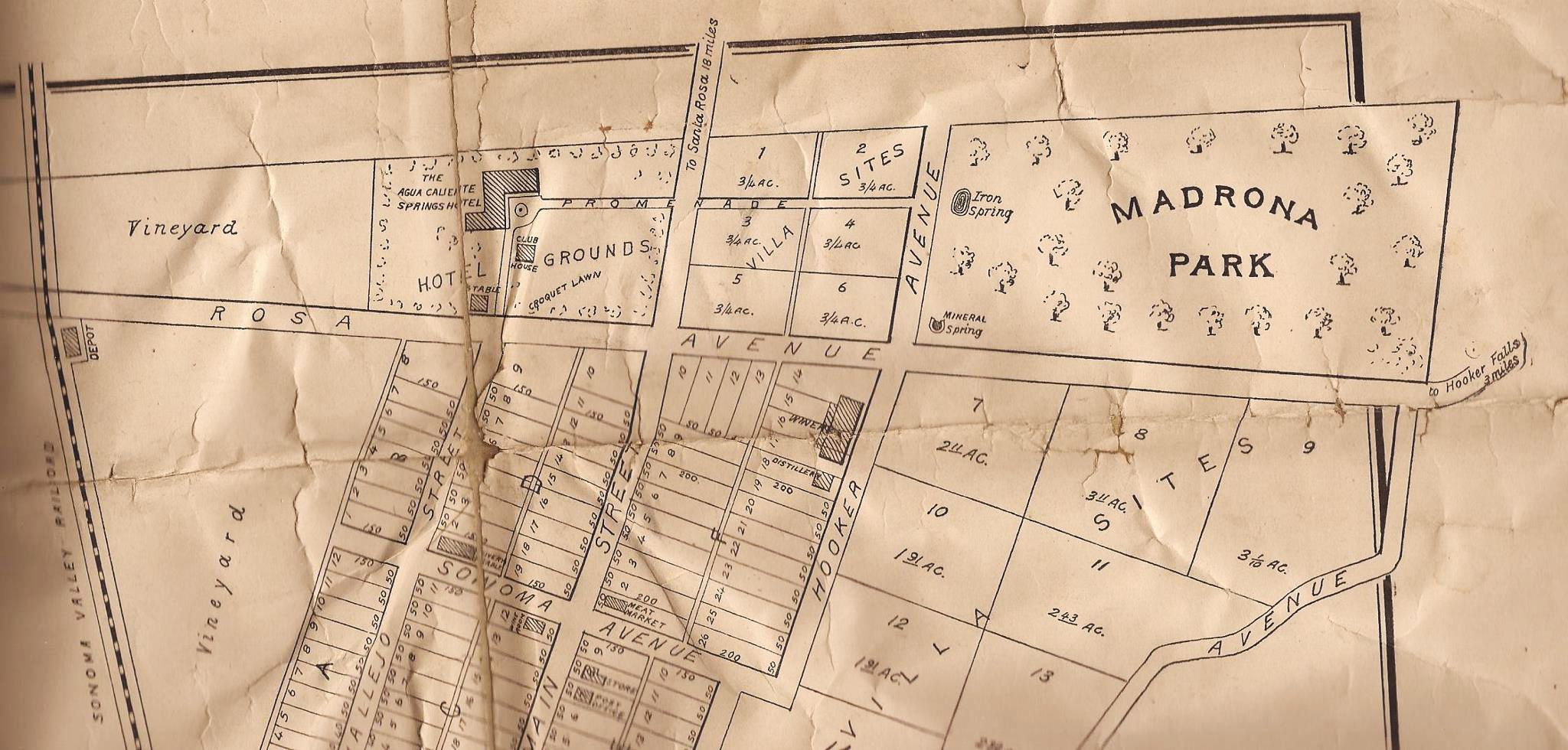
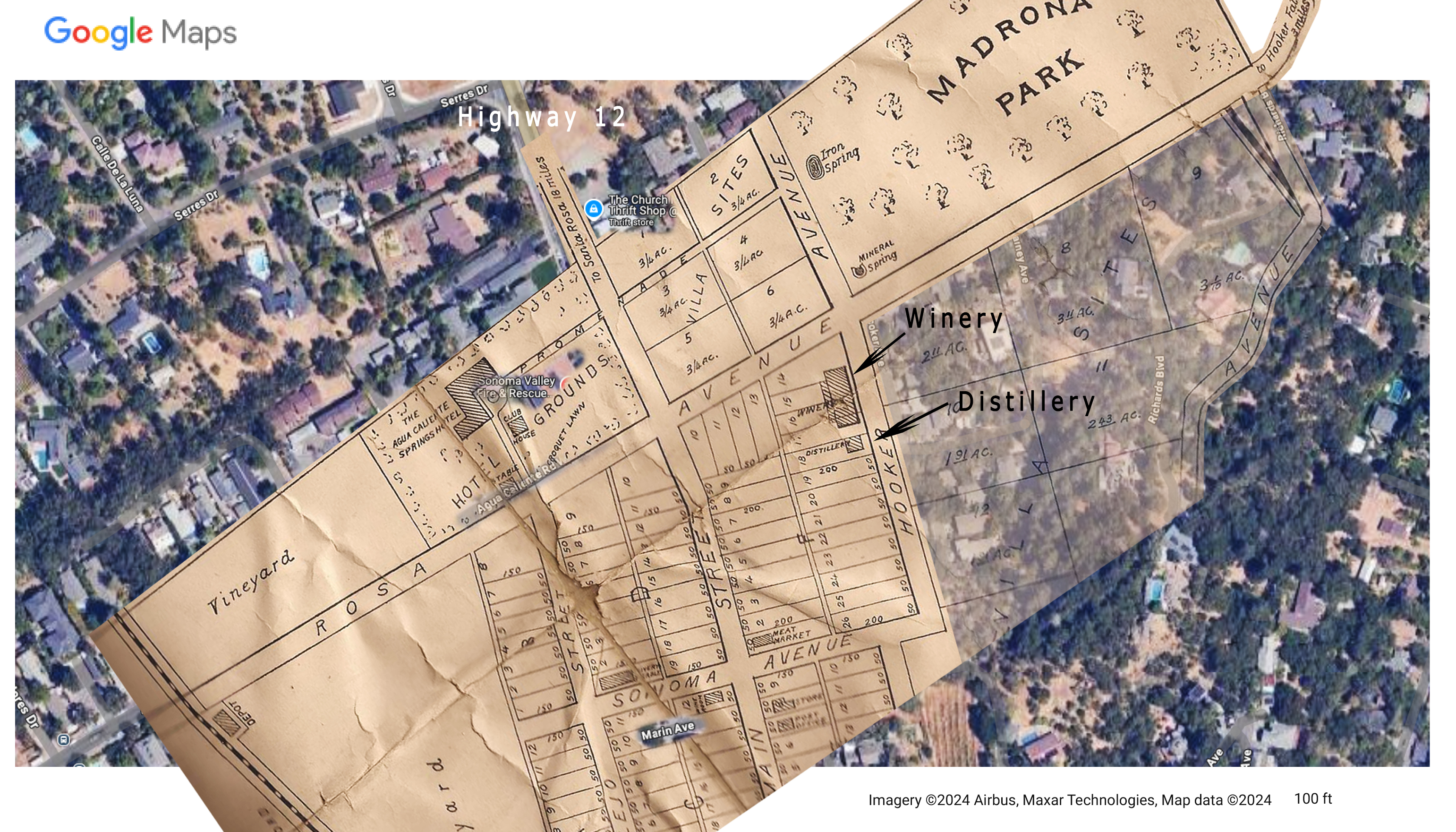
In that year the Index Tribune tells us, “M.K. Cady, formerly of the San Francisco mint, buys Alexander farm,” and that it is “Located on the Santa Rosa and Sonoma road, about three miles from the pioneer city.(Sonoma)” Also in 1882, Cady established a distillery and wine cellar (see map), built of stone from a “quarry on his own farm in the “Flowery” district.”
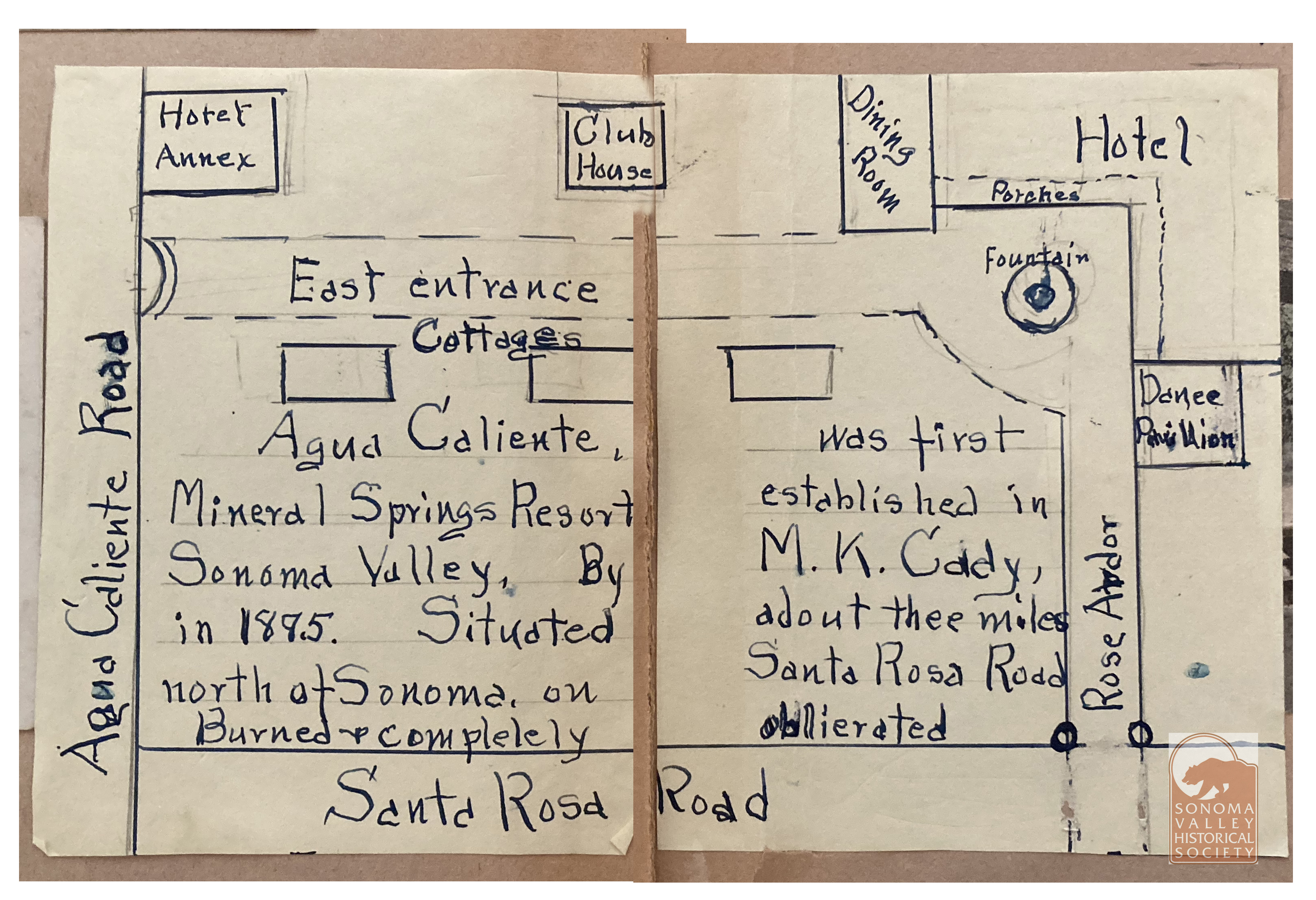
Map from Jeff Gilbert’s collection.Jeff’s map superimposed on the Google map. The resort was located at the intersection of the current Highway 12 and Agua Caliente Road, then called Santa Rosa Avenue. The winery and distillery were on Hooker Avenue, named for General Joseph Hooker, of Civil War fame, who was an early land owner in the area. The Agua Caliente Resort site was later known as Hooker Oaks. Today, the Sonoma Valley Fire Department station is there. The road at upper right is labeled “To Hooker Falls, 3 miles.” Click to enlarge.From a scrapbook at the Marcy House archives, date and author unknown.
An advertisement in the Index Tribune in June of 1885 informs that the Agua Caliente Hotel, under the proprietorship of M. K. Cady will be opening in June of that year, so the resort was founded between 1881 and 1885.
An puff piece in an 1889 issue of the Index Tribune read, in part, “the famous health-giving springs, delightful location and basalt block interests of this progressive little village is destined at no distant day to make it a place of considerable importance. The town was laid out a little over a year ago (incorrect!) by M.K. Cady, one of Sonoma Valley’s most energetic and public-spirited men. The railroad runs through the place which boasts of an express office, post office, schoolhouse, hotel general merchandising store, butcher shop, and a blacksmiths shop. During the spring and summer months the Agua Caliente Springs Hotel is crowded with health and pleasure seekers who come to lave in its health restoring water and bask in never failing sunshine and balmy breezes. An Episcopal Church will be erected a Agua Caliente this summer.”
In 1888 Cady sells to the Verano Land Company: “M.K. Cady of Agua Caliente has sold his hotel property and villa sites in that town to the Verano Land Company. Mr. Cady retains his winery and some forty acres of choice vineyard and will build a residence on the heights overlooking the wine cellar.” (This could be the site that became Keaton’s Shack.) After six months, Cady takes the property back. It seems, it has been closed the entire time “owing to a disagreement among the directors, who have been fighting like cats and dogs…” The Verano Land Company developed the “towns” of Verano and El Verano. Their brochure touting the developments is priceless early 20th century hype.
In 1888 Cady runs for county supervisor and is elected. The Index Triubne says “Mr. Cady is the right man in the right place and the people of Sonoma and Vallejo Townships ought to congratulate themselves on having so able a man to look after their affairs at the county seat”
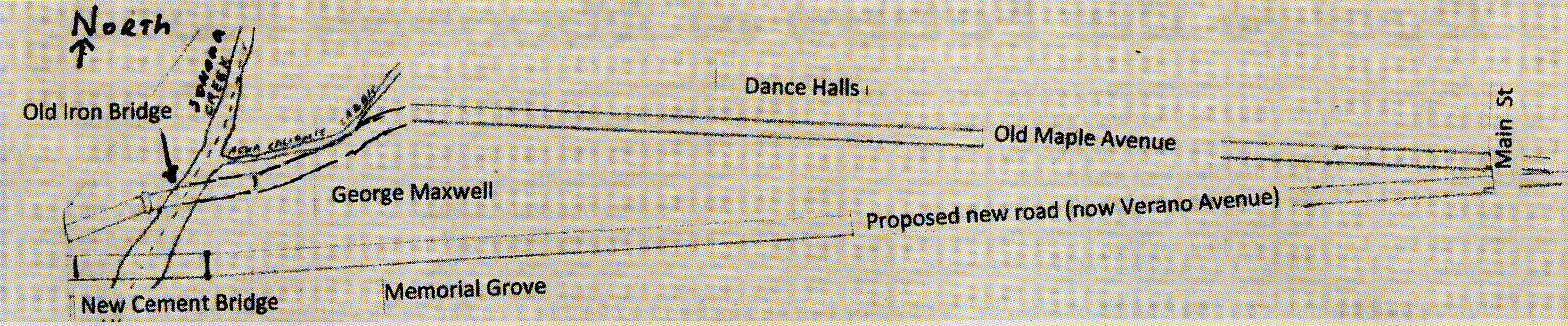
New road leading to the new bridge over Sonoma Creek at Verano.
Also in 1888 “A petition was received from citizens of Sonoma road district praying for a new road from the iron bridge across Sonoma creek at Sonoma to the town of El Verano, and for the abandonment of the old road from the old bridge to where the same connects with Petaluma Avenue. On motion of Mr. Coulter, the same was received and placed on file, the accompanying bond approved and W. K. Nichols, M.K. Cady and G. C. P. Sears were appointed to view and lay out said proposed new road and report at the next meeting.” Please see The Arroyo of Arroyo Road
Interestingly, in 1891 the IT opined “(Cady’s) hotel is located in one of the most picturesque spots in California, and is destined at no distant day to be to this State what Saratoga is to New York.” However, they weren’t reckoning with Calistoga, which was so named because it was deemed the Saratoga of California.
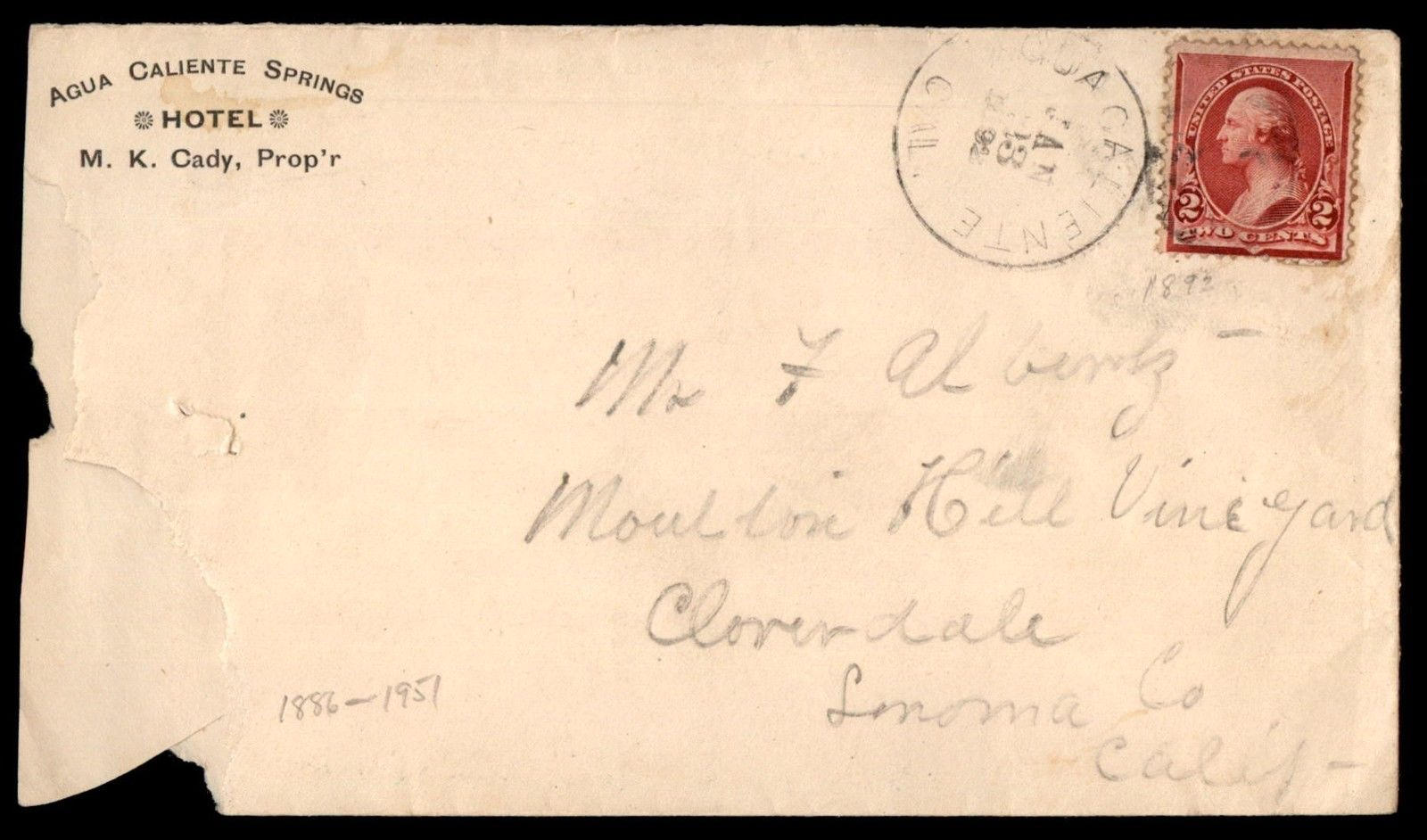
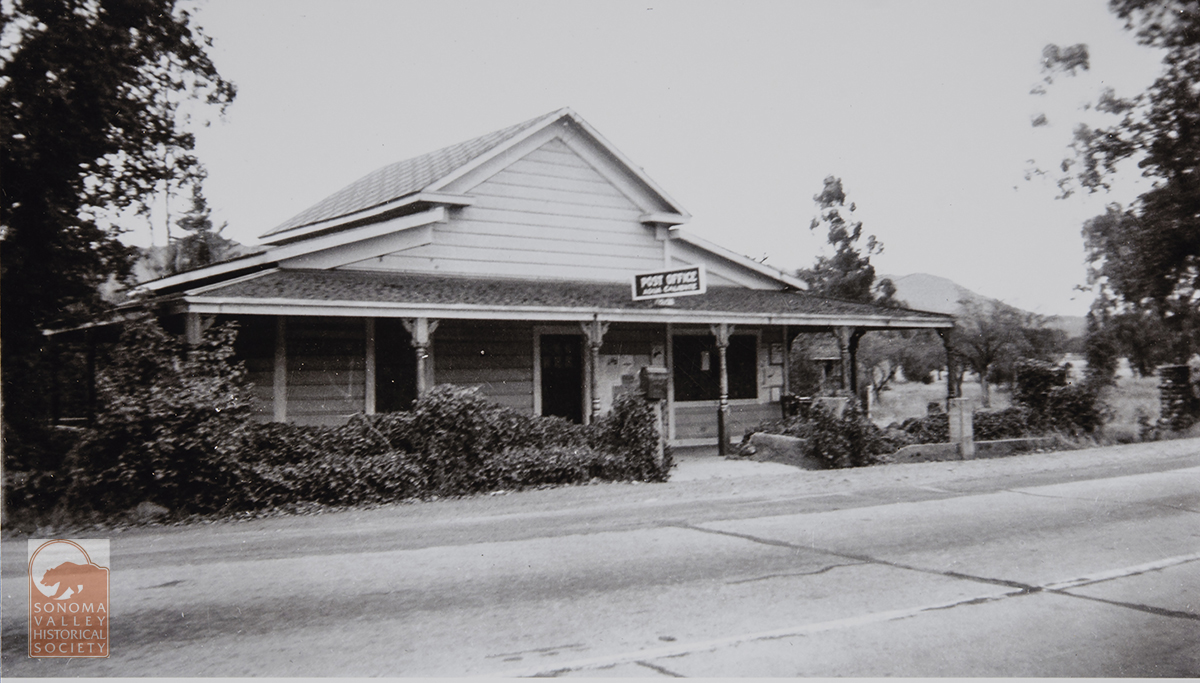
All was not smooth sailing for Mr. Cady. In a September 1893 article in the IT headlined ”Agua Caliente Post Office Squabble. Cady and Morris on Top-Postmaster John Austin Down and in Jail,” we learn that Austin was the owner of a general store in Agua Caliente, which housed the post office. He also ran a bar that competed with Cady’s. Morris was the “mail Messenger” responsible for carrying the mail from the railroad depot to the Post Office. Morris and Austin had bad blood between them stemming from a fist fight the previous July. Morris and Cady wanted to get the Post Office moved to Cady’s’ resort. They accused Austin of opening their mail, and Austin was arrested and taken to jail in San Francisco. Austin claimed he was framed in order get the post office away from him.
That November, Cady was indeed appointed by President Cleveland to be post master of Agua Caliente, “a little old one-horse affair, the salary amounting to from $3 to $5 per month.” In October the story took a strange turn as Austin, having written to his wife in Agua Caliente that he would be home the next day, disappeared. Then, on April 7, 1894: “The Santa Rosa Republican is authority for the statement that John Austin, ex Postmaster of Agua Caliente, near this place, recently fell from a scaffold in a town in South America and sustained injuries that resulted in his death.”
Circa 1930
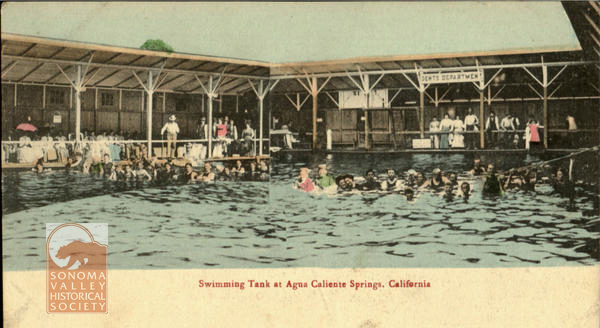
Apparently Cady defaulted on his mortgage in 1895. “A Mr. Dean of San Francisco took possession this week of the Agua Caliente Springs ranch to satisfy a mortgage of $25,000 executed by the former owner, M,K. Cady, who has been in possession of the property for over fifteen years {making Cady’s arrival in the valley no later than 1879}. The Hotel, swimming baths, wine cellar and hotel grounds have been disposed of by Mr. Dean to Dr. Nordin of Alameda, who will improve the hotel and grounds and conduct the same as a first class summer resort and sanitarium. Mr. Cady has leased for the present the handsome cottage which was erected near the wine cellar a few years ago by Mr. McGrew of San Francisco.”
However, Doctor and Mrs. Nordin did not see eye-to-eye. Shortly after he purchased the resort and investing $30,000 of her money in refurbishing it, Mrs. Nordin sued her husband, whom she says took her money under false pretenses and she wanted it back.
The Index Tribune, after saying that Mr. Cady “ran the resort into the ground,” informs us that Cady was appointed receiver of the property during the law suit!
“The bondsmen for M. K. Cady, who was appointed receiver of the Agua Caliente Springs by Judge Crawford, are J. B. Moris and Horace Appleton. Each swears he was worth $3000 over and above his just debts and qualified for $6,000 double the amount of the bond.”
The story continues. September 1895, “The Nordin case, which is the all absorbing topic of conversation in this valley, was resumed in the Superior Court last Monday. It will be recollected that last week Judge Crawford put and injunction on the Agua Caliente springs Resort, appointed M. K. Cady receiver of the property, and accepted as his bondsmen H.B. Morris and Horace Appleton.
Later court action: “The proceedings Monday was devoted to filing a motion to dissolve the injunction….” Nordin alleges that Cady is insolvent, and “that…during the greater portion of the time since his appointment as receiver (has been) under the influence of intoxicants.”
Nordin continues to allege that Cady has fired all the staff and put his wife, daughter, niece on the payroll, and “that the Cady tribe has taken up their abode on the promises.”
Additionally “The affidavit says the order appointing Cady as receiver covers all the personal property on the premised and that some of the guests at the hotel wish to leave, and that Mr. Cady has refused to let them have their trunks and wearing apparel”!
November 9, 1895-The Nordin suit was continued. “The property is still in the hands of Trustee Cady. Dr. Nordin is residing in San Francisco and Mrs. Nordin is the guest of Alameda friends.”
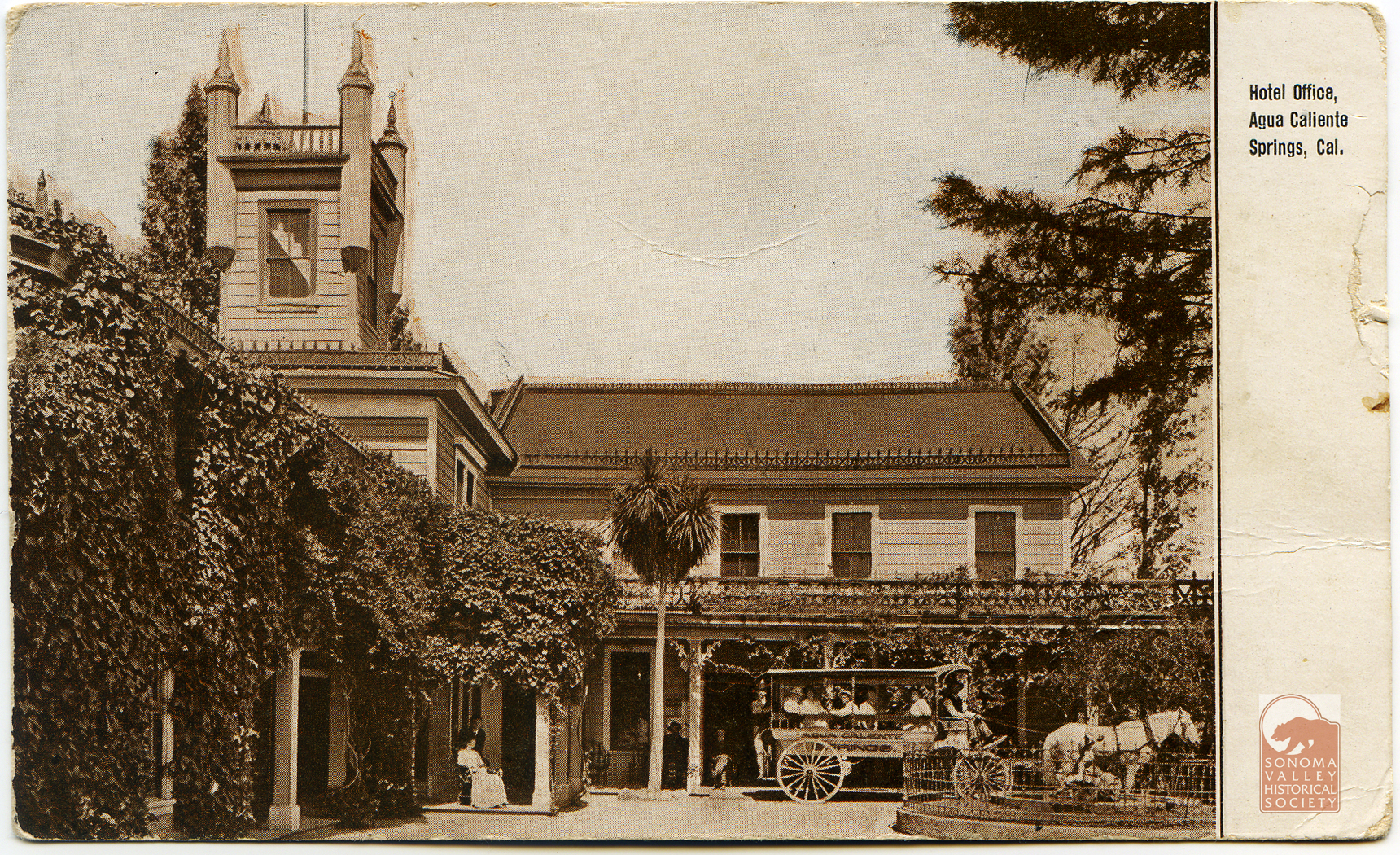
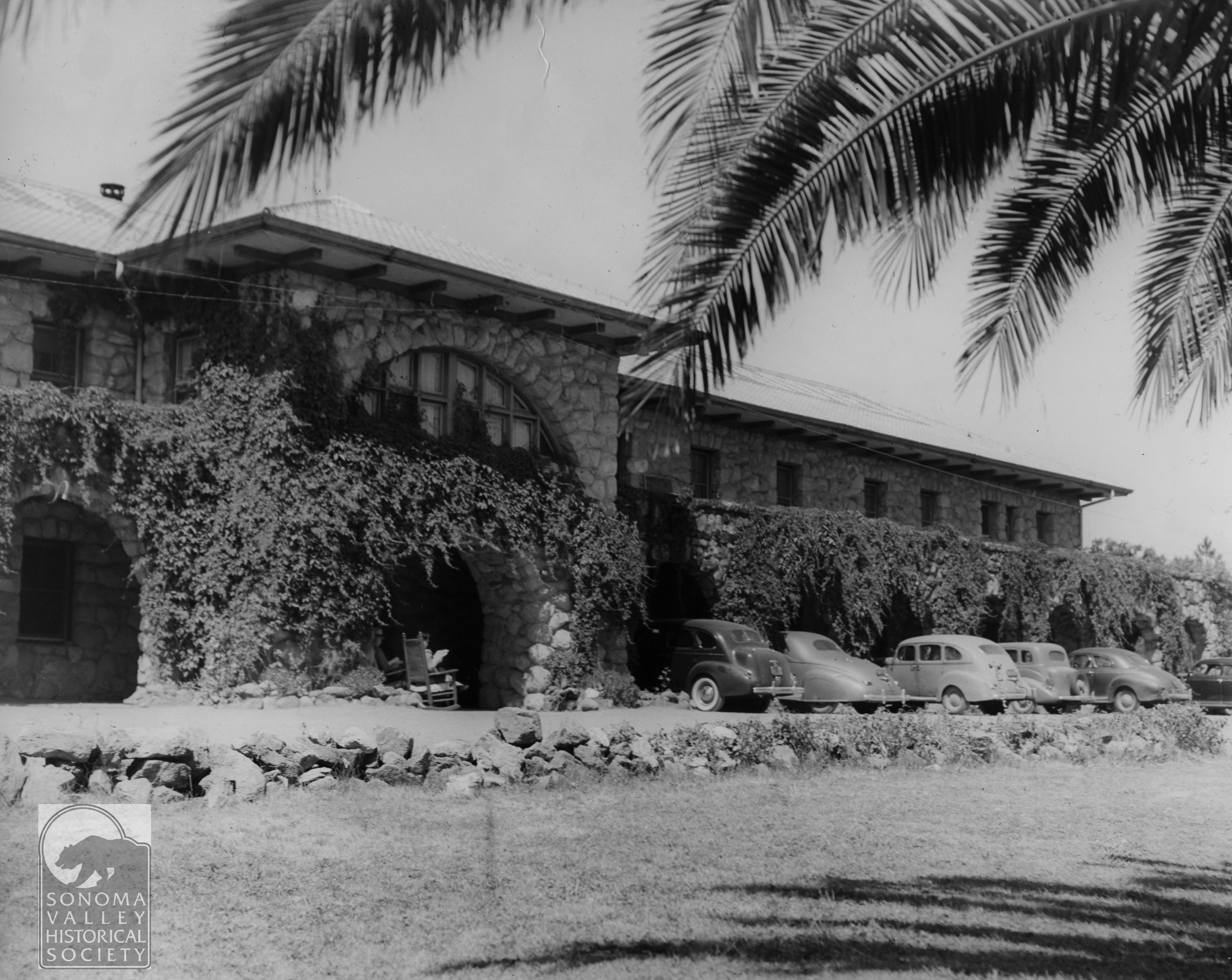
April 11, 1896, the suit is settled with Dr. Nordin getting $1000 and Mrs. Nordin getting the property, but no word of what happened to the “Cady Tribe.” Mrs. Nordin continued running the resort. Details are in short supply. The magnificent hotel burned some time before 1916, when the new, stone building was built.
The “new” Agua Caiente Hotel, built in 1916, still stands in 2024
Martin Kellog Cady died November 18, 1903, in San Francisco.
All quotes are from the Sonoma Index Tribune unless otherwise noted.
Sonoma Index Tribune and many images courtesy of the Sonoma Valley Historical Society
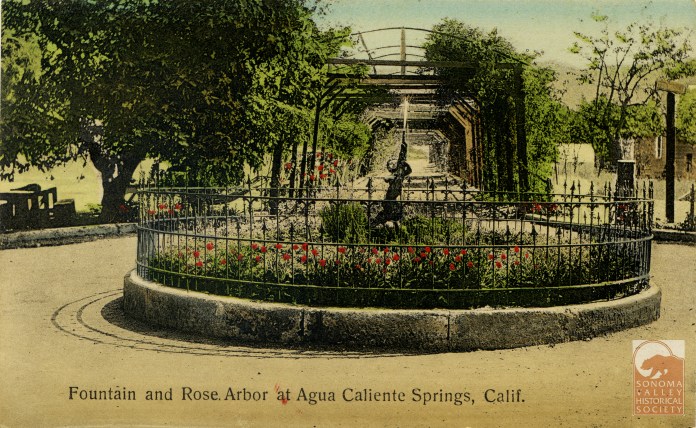
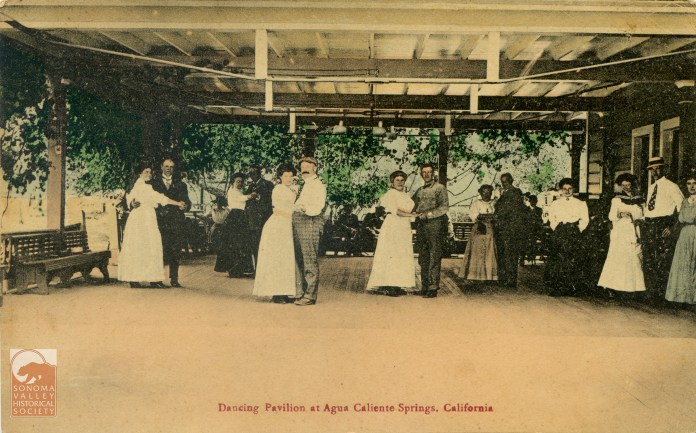
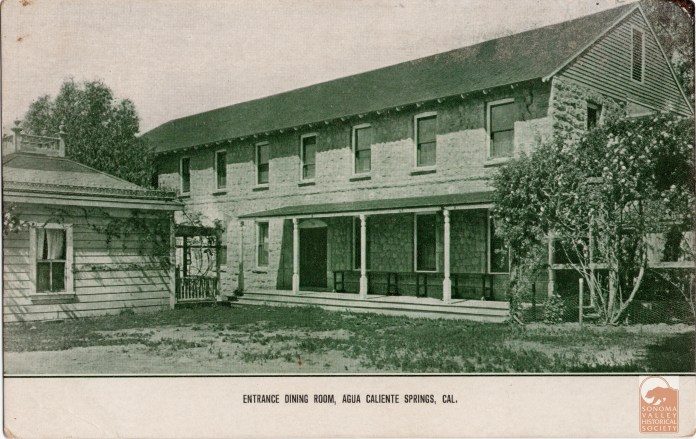
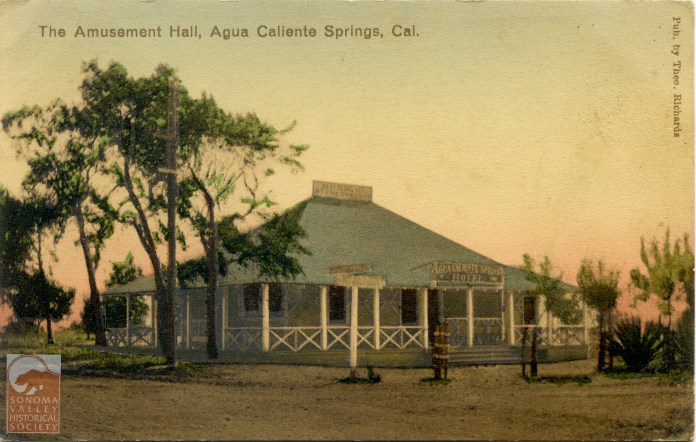
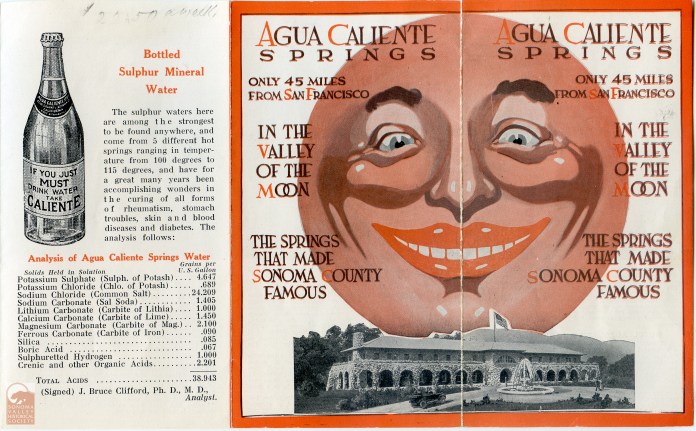
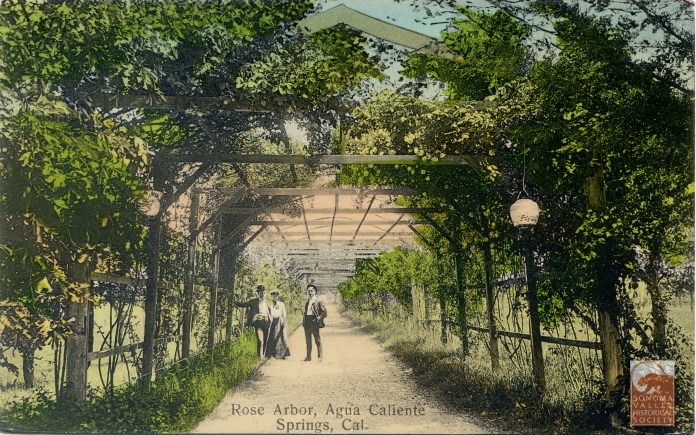
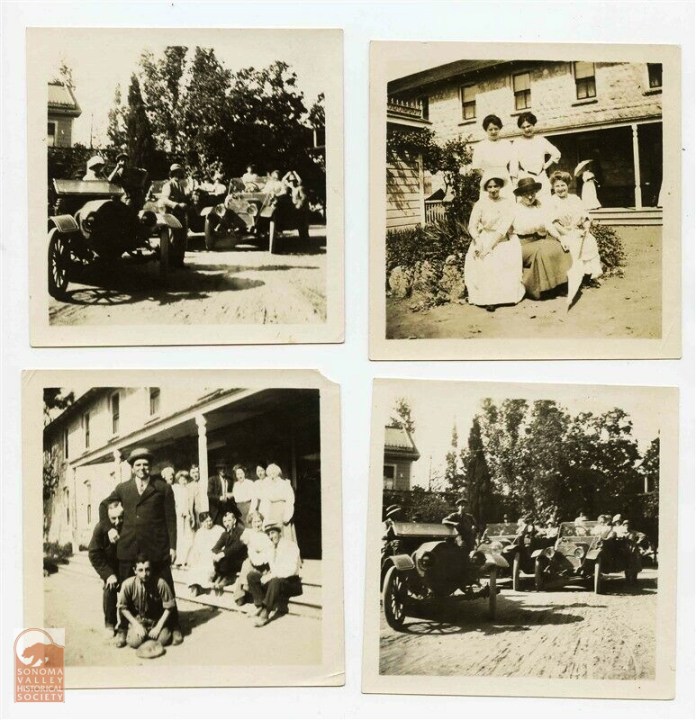
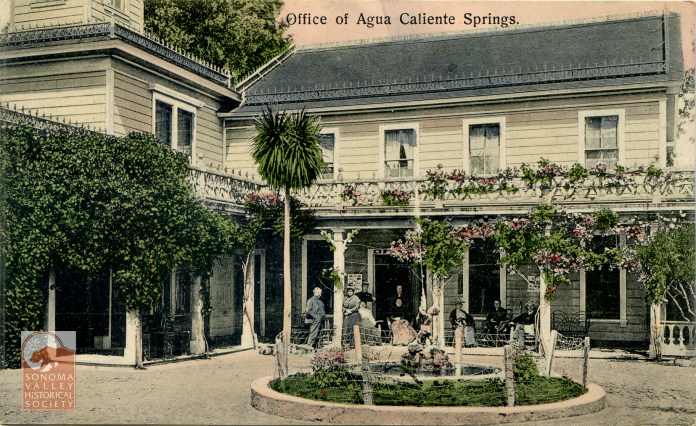
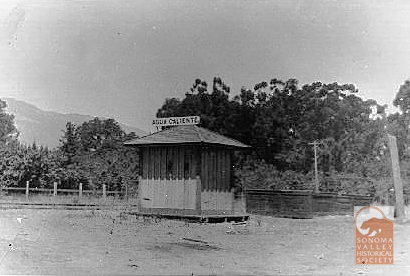
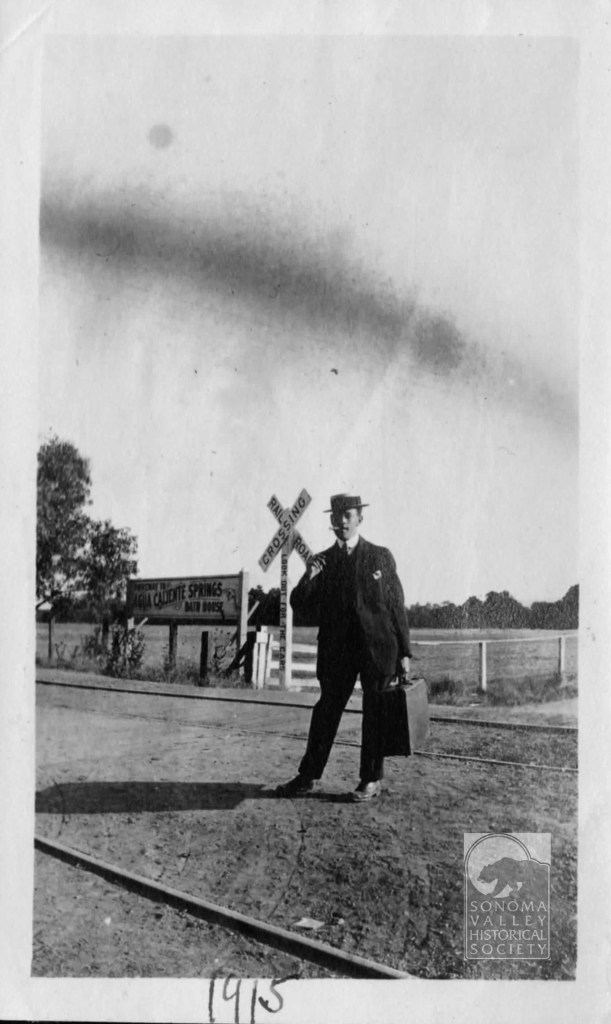
The Agua Caliente Resort, and vicinity, was well documented by photographers. The following is a slide show of some of those photos and post cards.
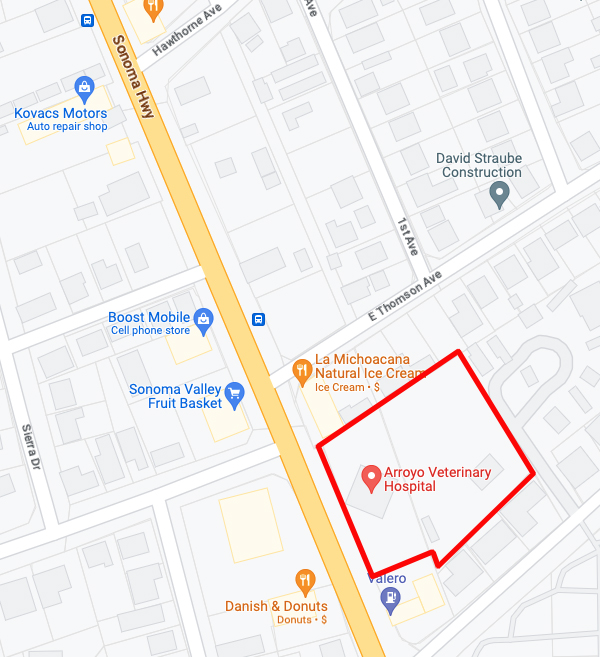
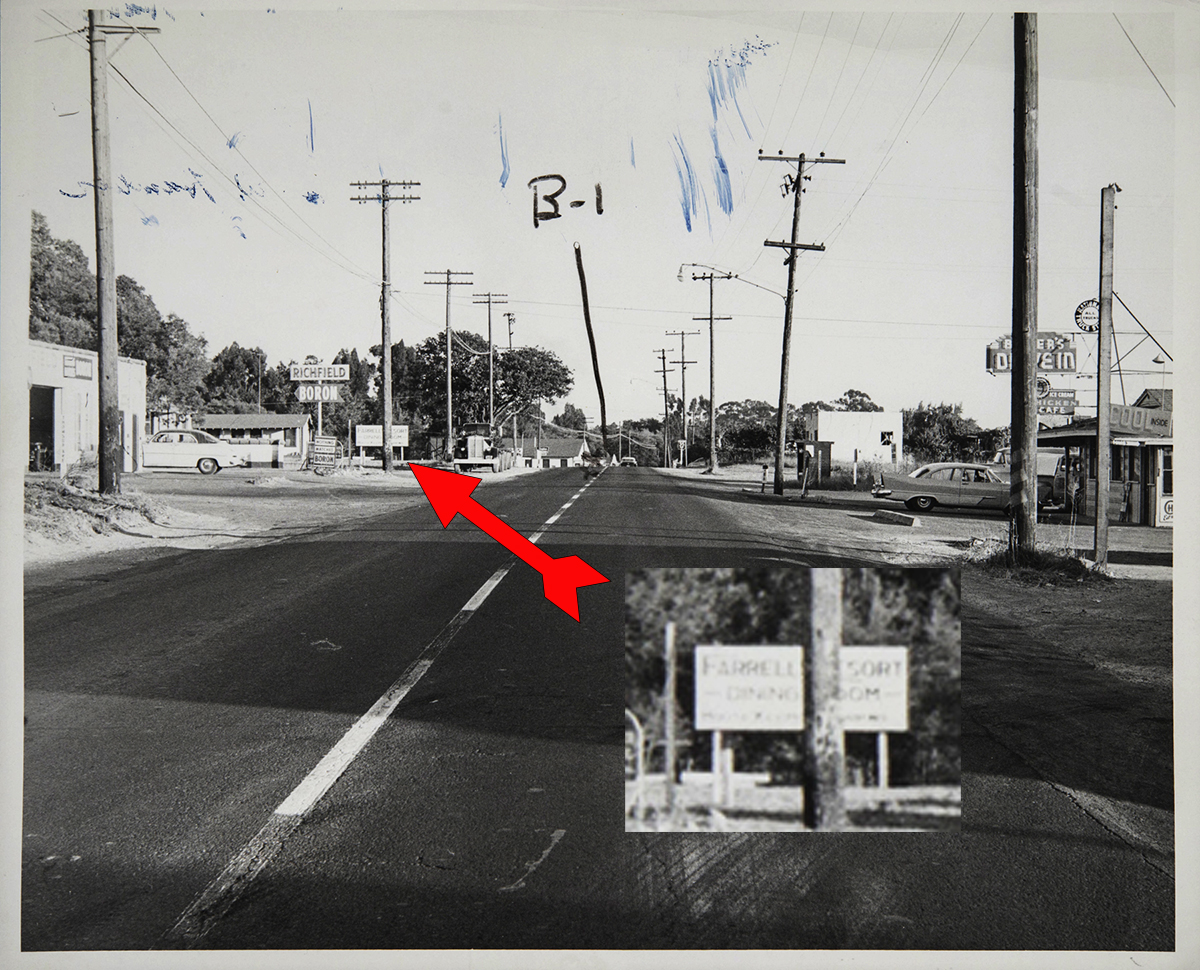
Farrell’s Resort existed on land near the corner of Siesta Way and Sonoma Highway, between the years 1945 and 1958. A county court photograph from that year shows the resorts sign on the highway. An Index Tribune story in 1959 about a barn fire on the property mentioned “the pioneer Ferrell’s Resort property,” which implies, to me, it didn’t exist in 1959, as the barn was being burned by the fire department for training.
This photo is an exhibit from a lawsuit involving a traffic accident in 1958, courtesy of the Sonoma County Library. Difficult to see, at left, below the Richfield sign, half obscured by a power pole (!) is a sign advertising Farrell’s Resort. Thomson Ave (not East Thomson!) is at left. Across the highway is Baker’s Drive-In, current site of the Fruit Basket.
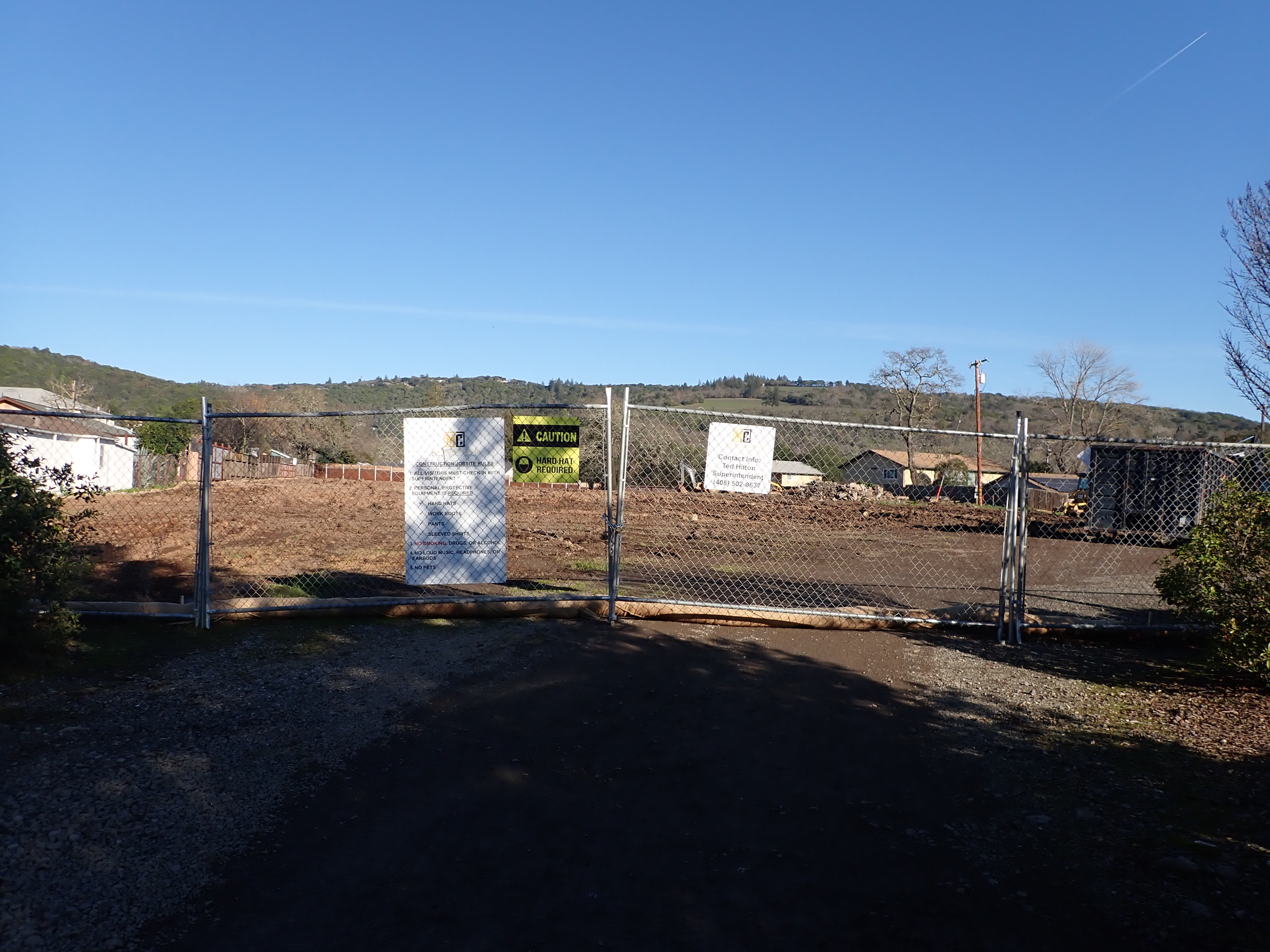
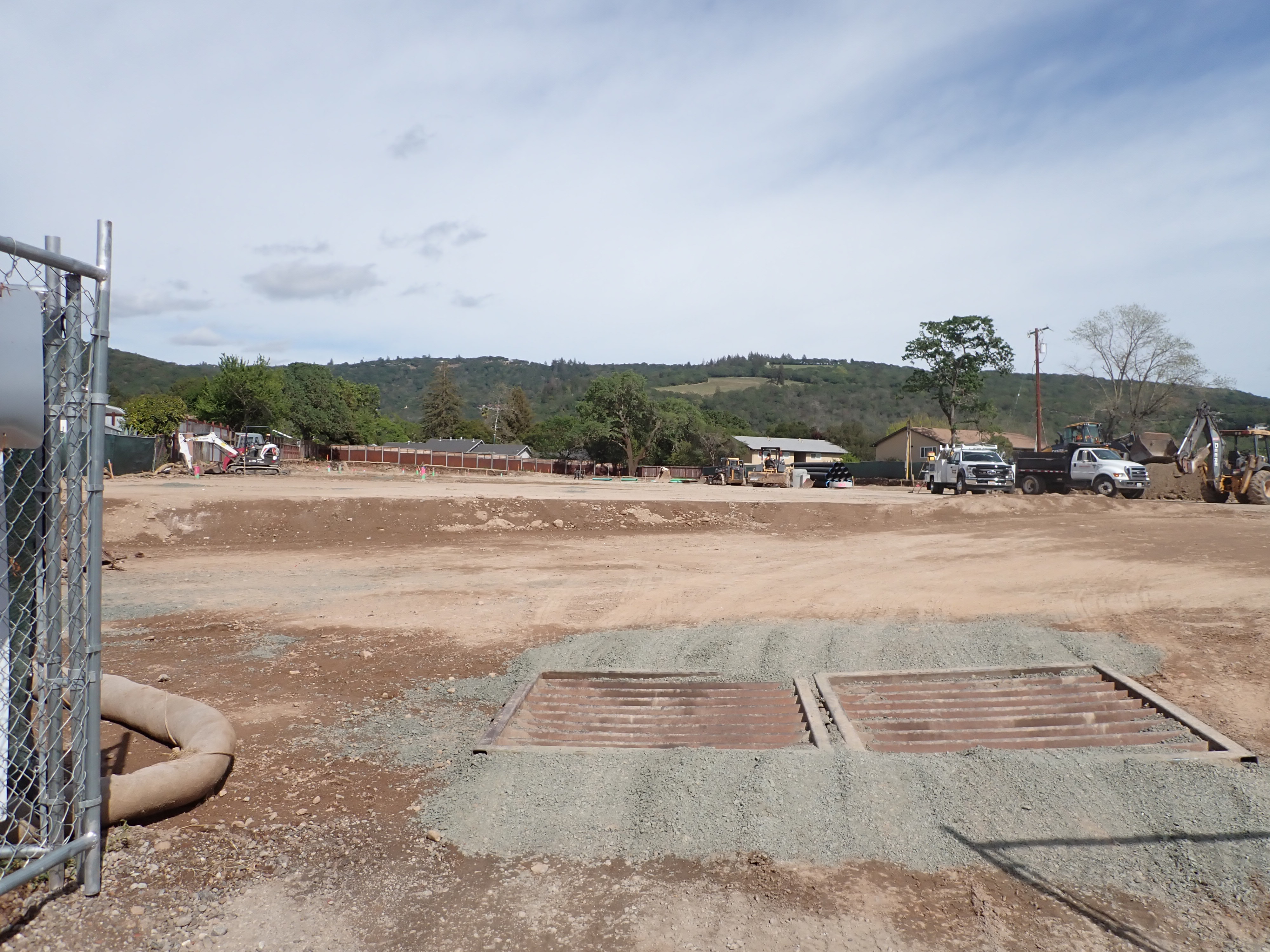
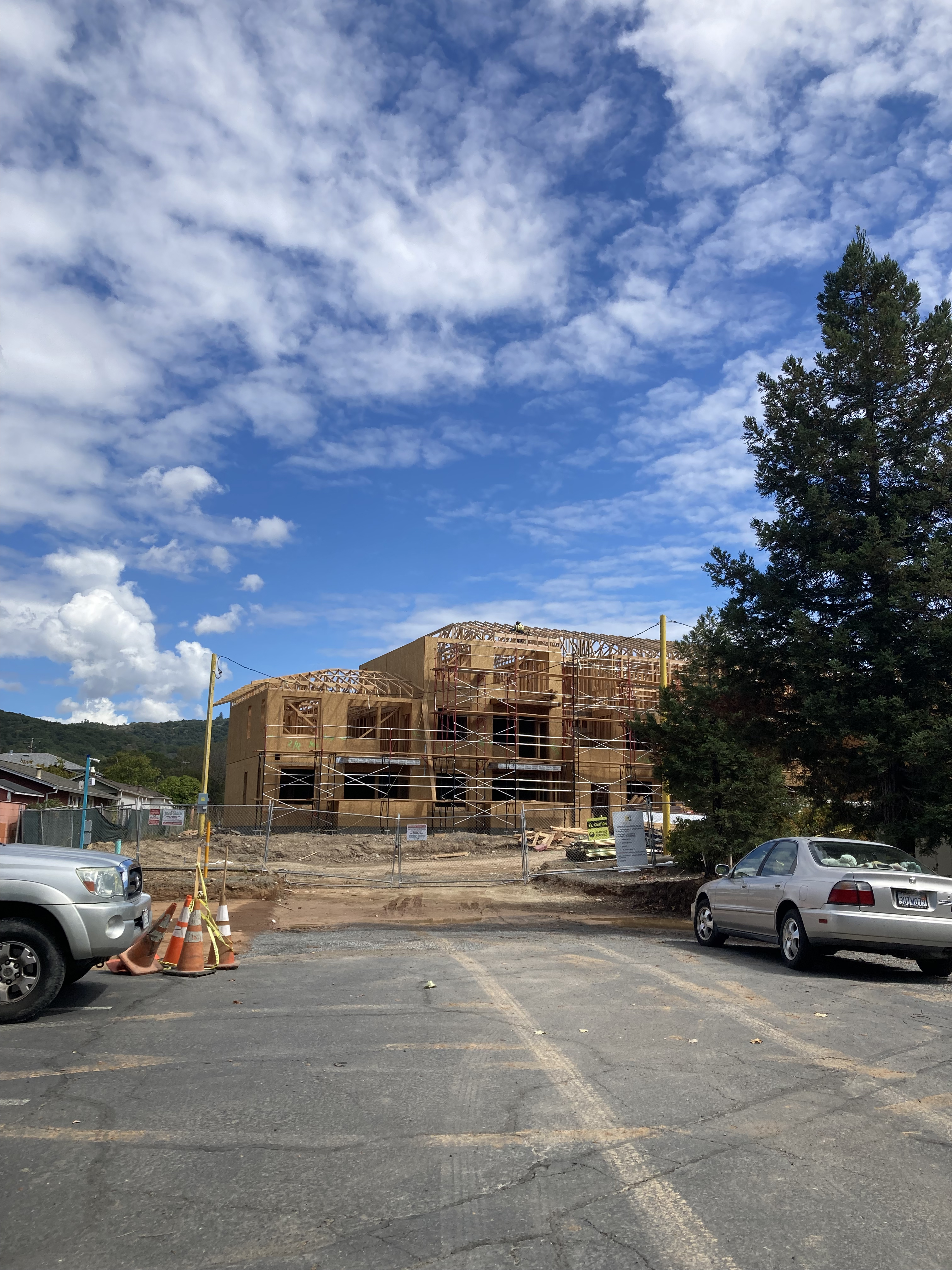
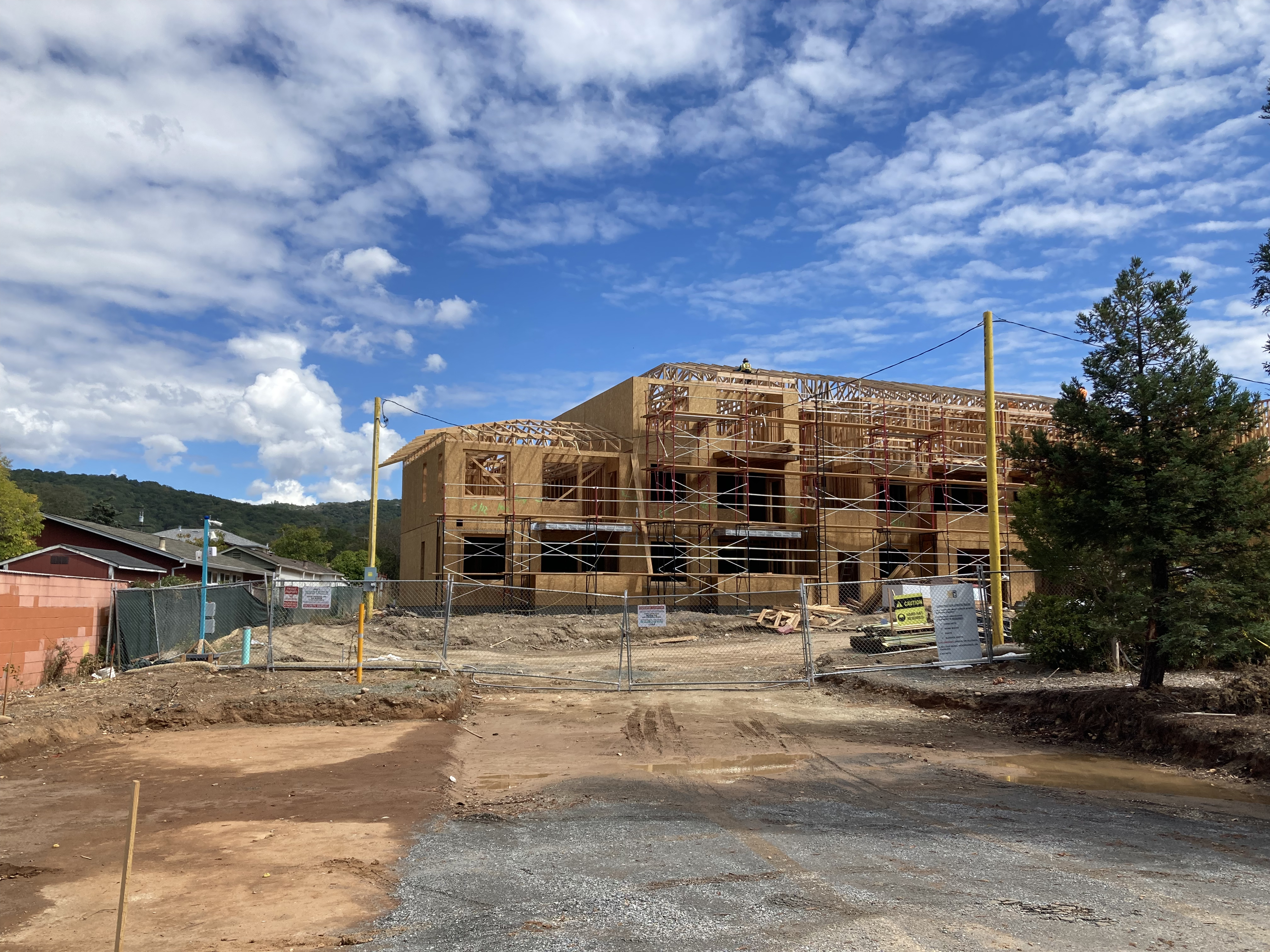
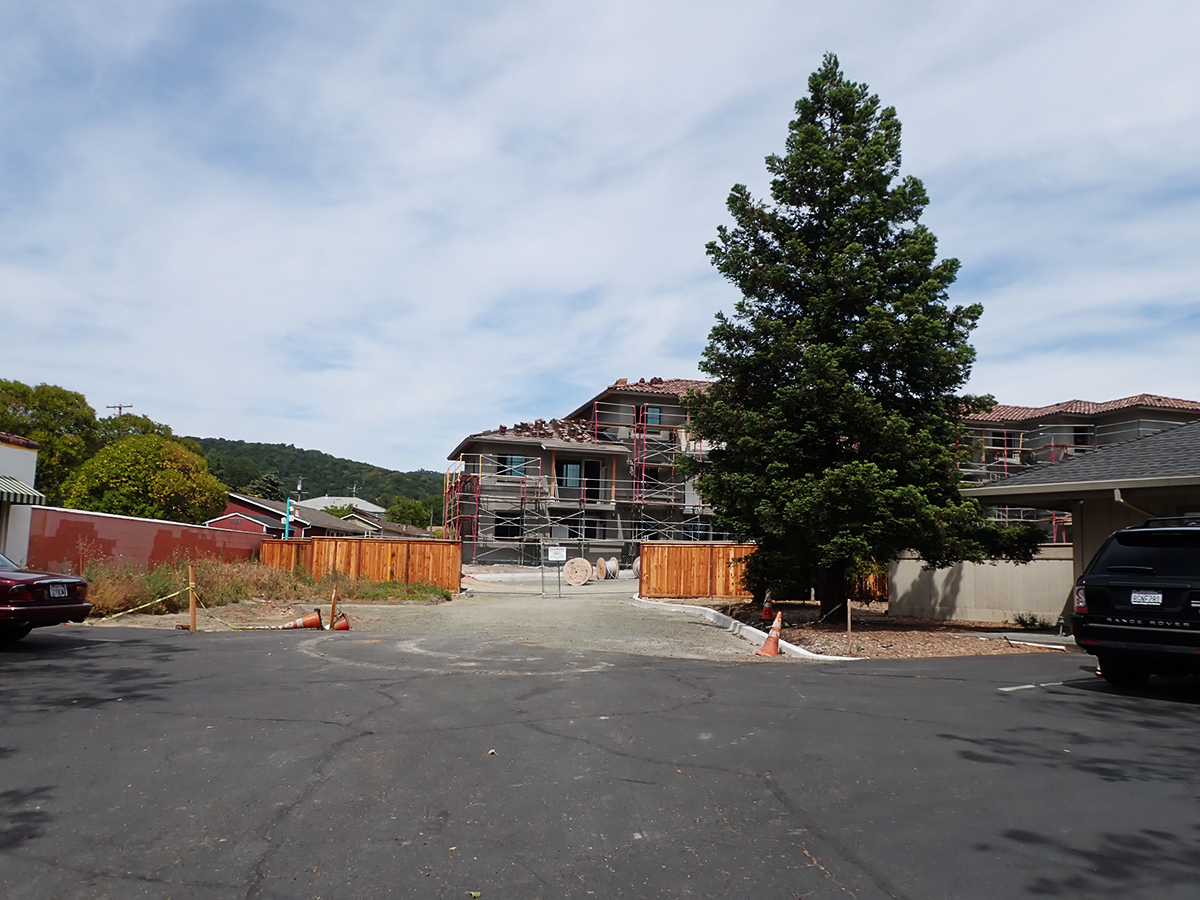
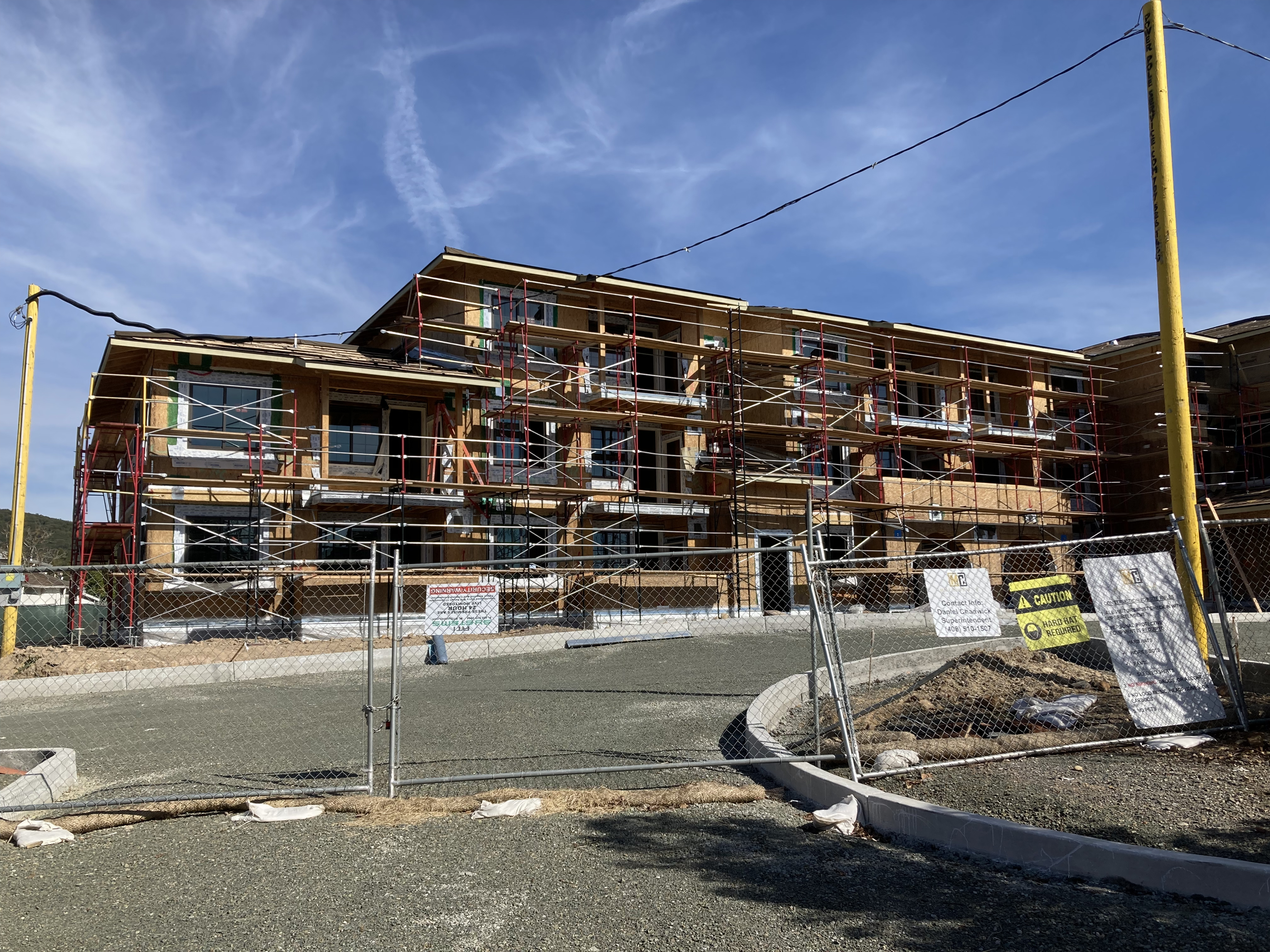
The property behind the Arroyo Vet building continued as a trailer park until 2020 when affordable developer Milestone Housing (https://milestonehousing.com/projects/) bought the land. In 2022 they started construction on a 92 unit apartment complex intended for senior households that have incomes in the 30 to 60 per cent of area median income. In May of 2023 construction is ongoing. See photos below.
Apartment construction, February 2022 through May 2023
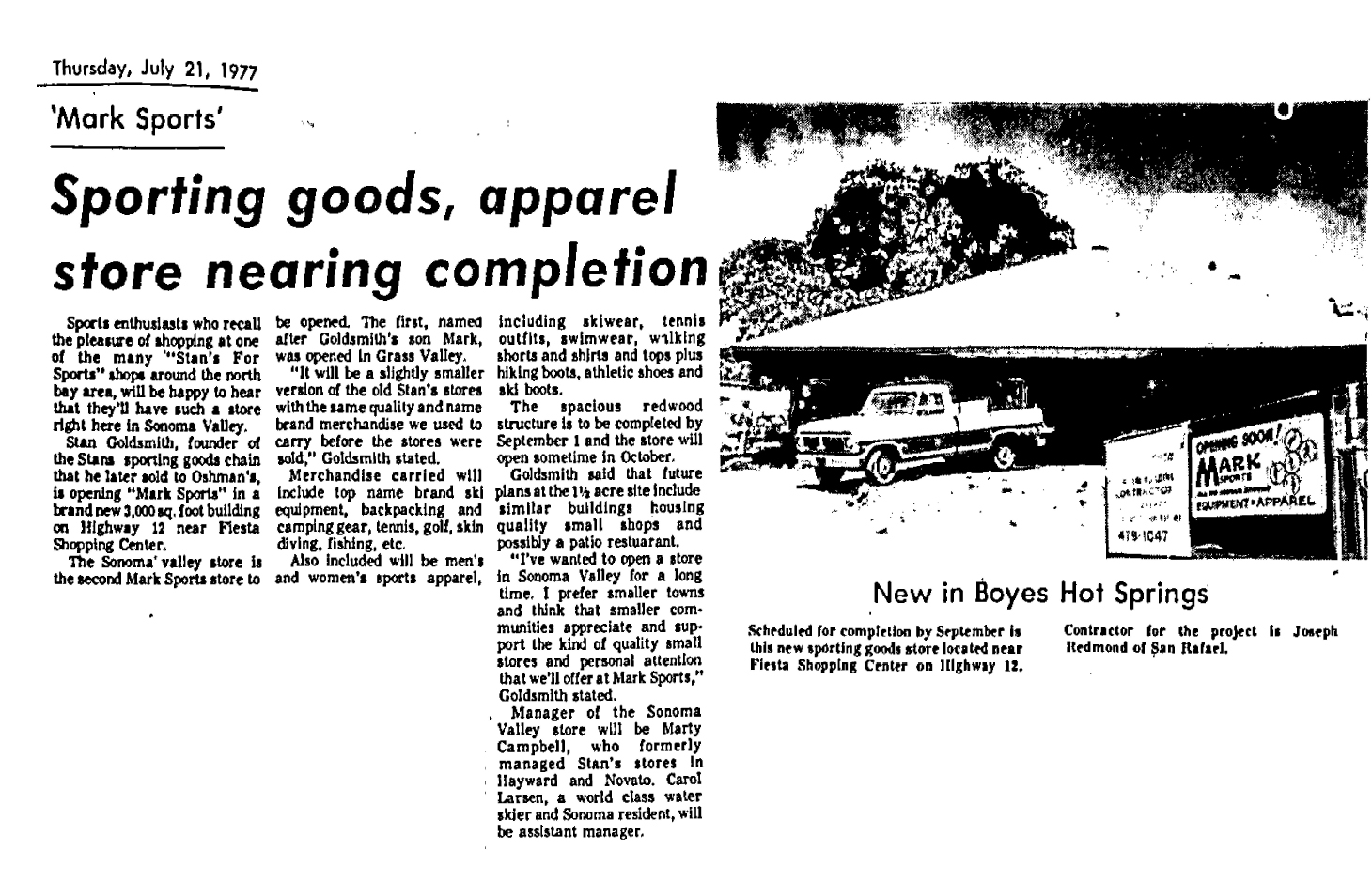
In 1977, on part of the Farrell’s site facing the highway, Stan Goldsmith built a commercial building to house his Mark’s Sporting Goods. Goldsmith owned the whole property and told the Index Tribune that “…future plans at the 1.5 acre site include similar buildings housing quality small shops and possibly a patio restaurant.”
Goldsmith had founded a successful chain of sporting goods stores, located throughout California, which he sold before moving to Boyes Hot Springs. According to some of his ad copy, “In 1954 Stan Goldsmith revolutionized the retail sporting goods business by building the largest sport store in northern California (10,000 sq ft.) and becoming the first to combine active sportswear with sports equipment…Stan Goldsmith founded the Marin Skin Divers Club, the Northwoods Bowmen’s Club and designed the first nylon covered sleeping bag. Stan’s and the first air compressor to fill dive tanks in Northern California.” Index Tribune advertisement, 1979.
Mark’s Sporting Goods in Boyes Hot Springs, named after Stan’s son, opened in 1977. It was the second Mark’s. the first one was in Grass Valley, in an identical building.
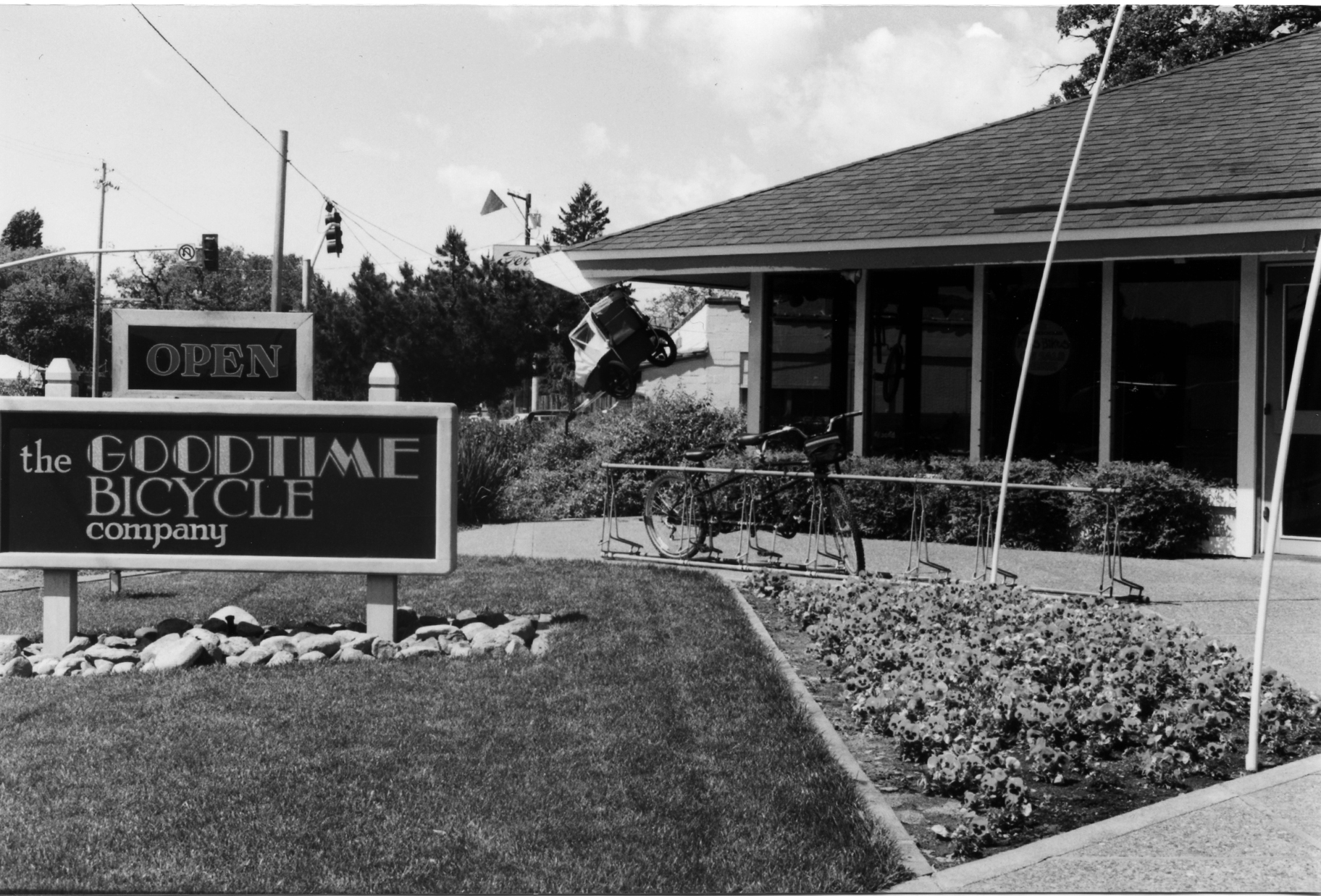
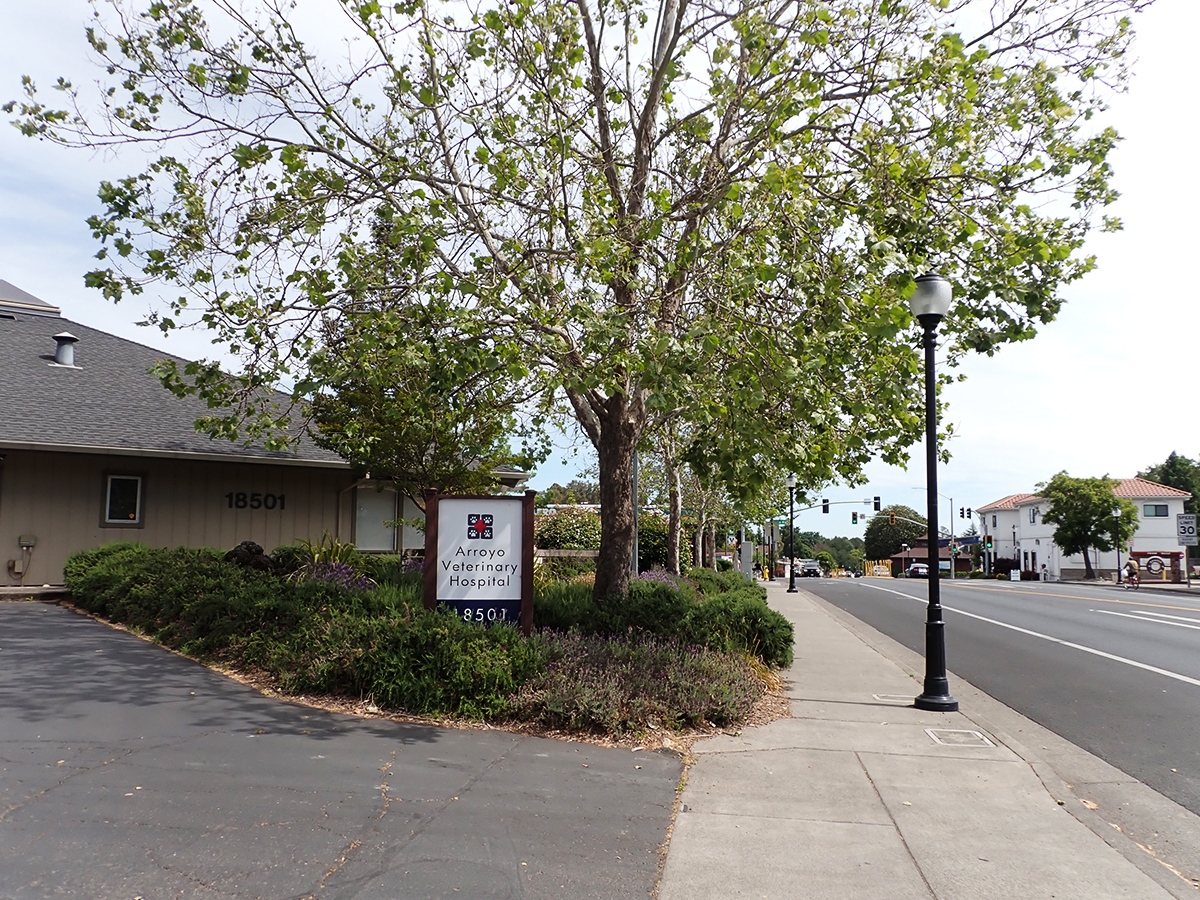
Tragically, Stan was killed in the crash of his private plane in 1982. His widow sold and the store continued operating until 1990, when Doug McKesson bought the building, but not the entire parcel, to house his Goodtime Bicycle Company. McKesson sold to Dr. Rhonda Stallings and Rich Lee in 2000. A major remodel was necessary to convert the space. The new Arroyo veterinary Hospital opened in 2001.
1990s
2023
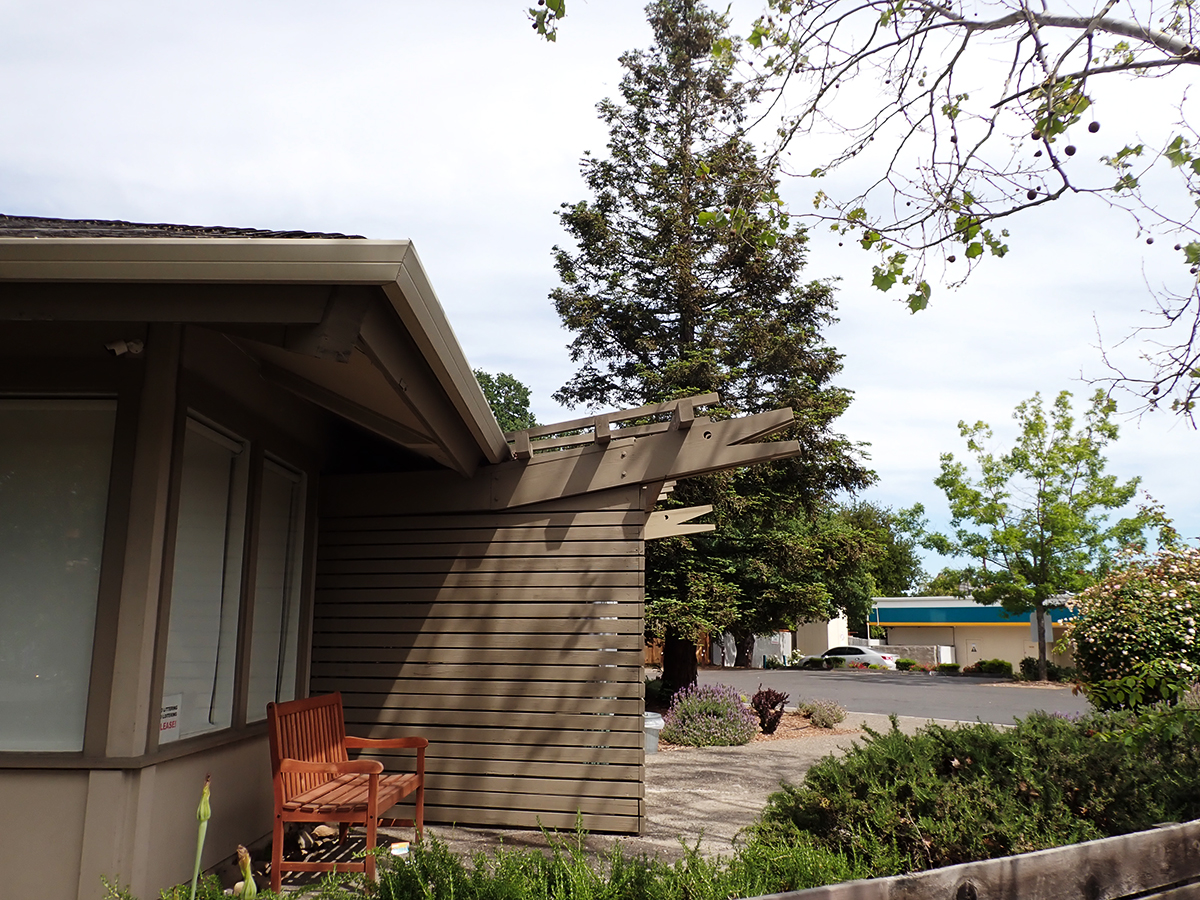
Appropriate, whimsical rafter-tails were added during the conversion to an animal hospital.
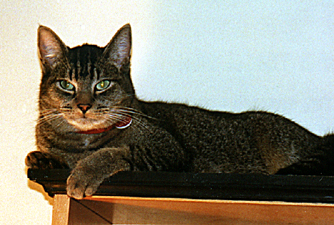
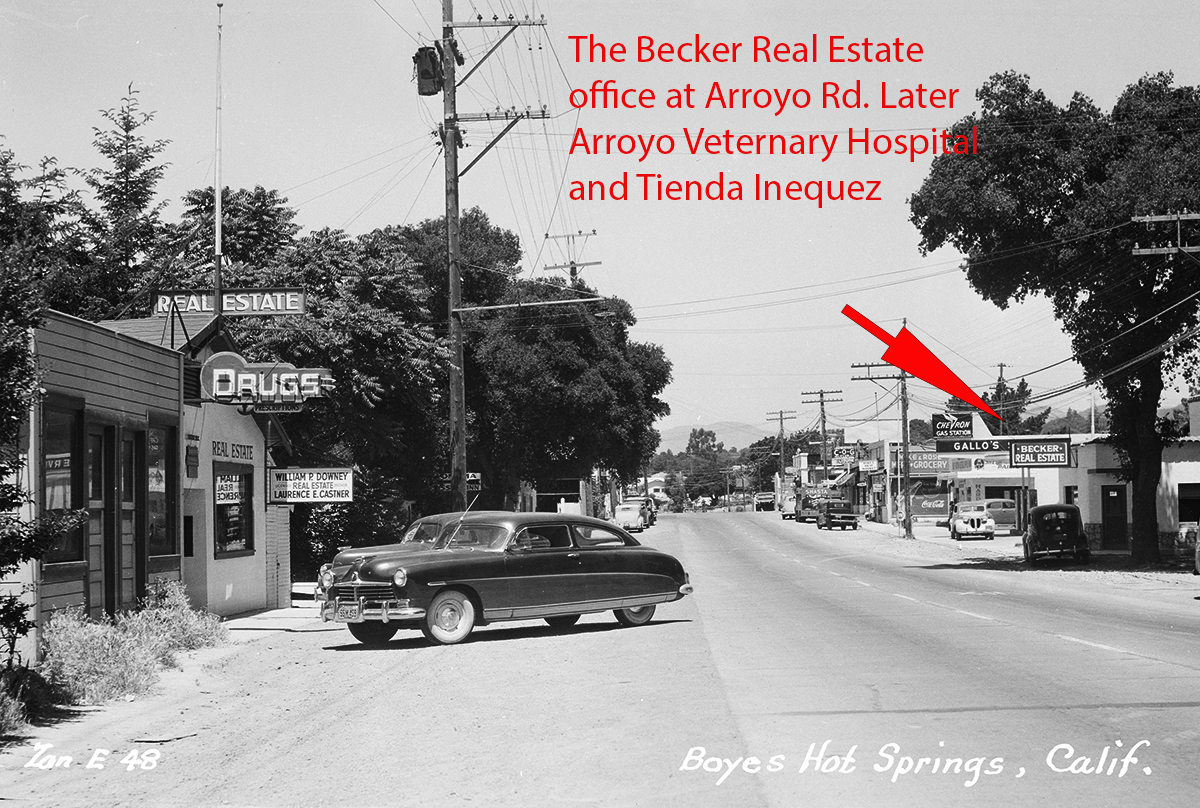
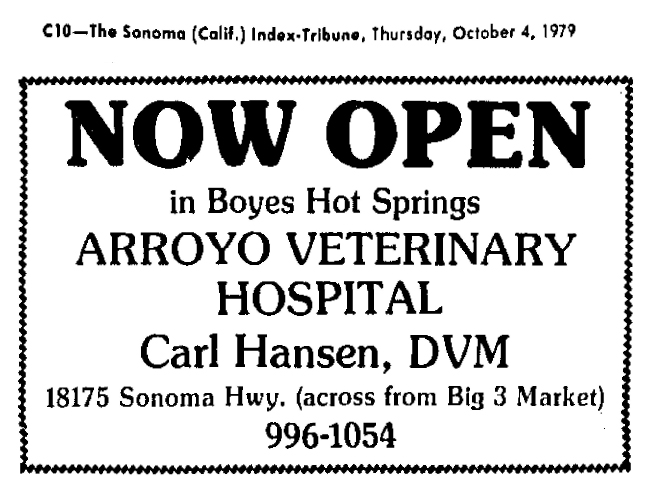
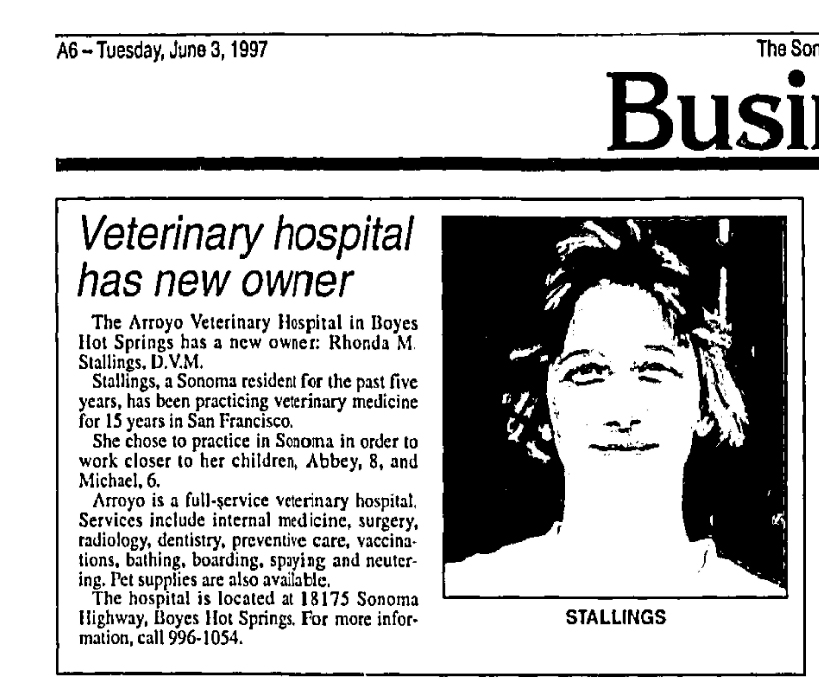
Digression the First: The original Arroyo Vet Hospital was started by Dr. Hansen 1979, in a building on Sonoma Highway at Arroyo Rd, which was probably built in the 1920s, and had housed various businesses including Becker’s Real Estate Agency. Dr. Rhonda Stallings took over from Dr. Hansen in 1997, the same year your correspondent moved into a house just a block up Arroyo Road. Imagine our sense of security knowing we could WALK our sick cat to the vet’s office. And thank you to Rhonda for saving Ralph’s life.
Ralph
1950s
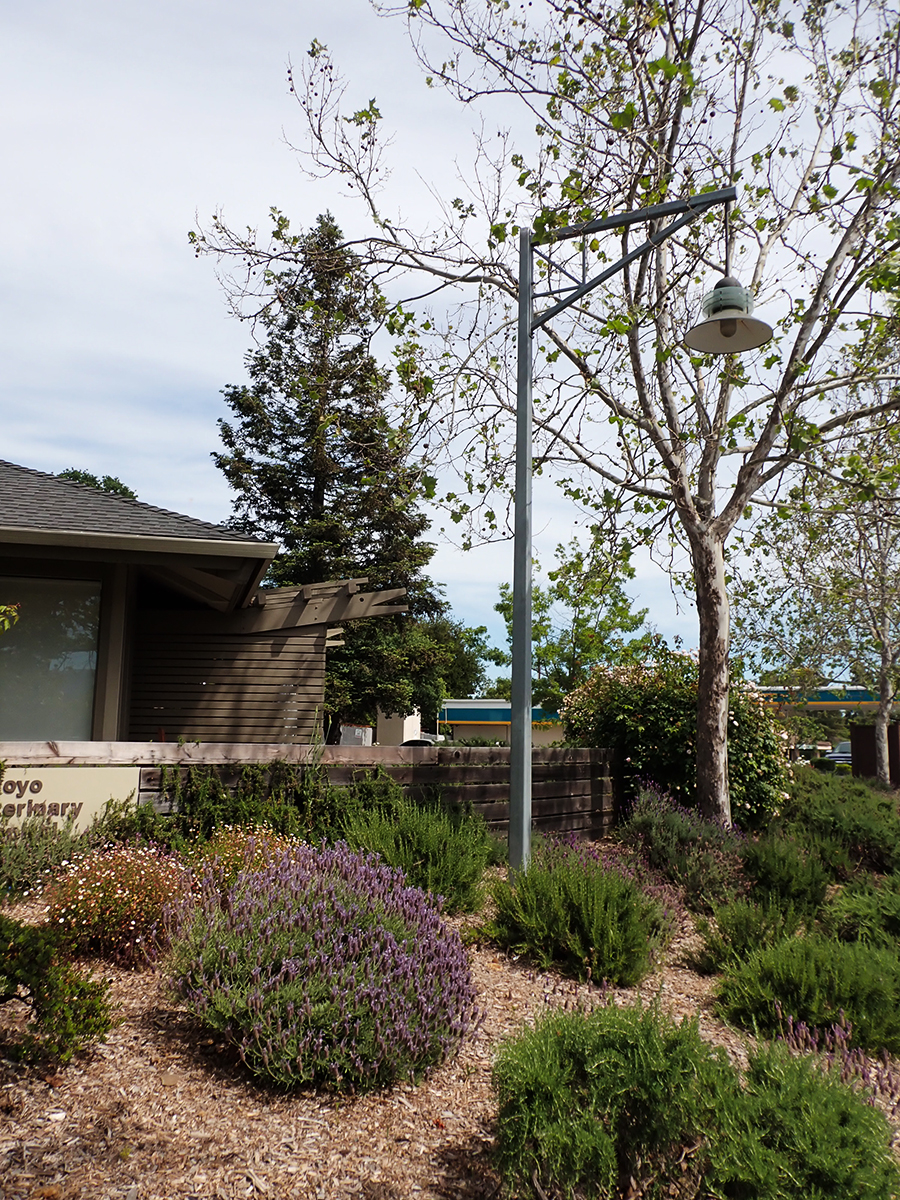
Digression the Second: The photo below shows a streetlight proposed for the Redevelopment sidewalk project. This was offered by landscape architect Ron Wellander and installed in 1997. The design was not used. It stands today, in 2023, lonely, unlit.
The first hearings for the sidewalk project were held in 1984. The initial pilot project was completed in 2002. The entire project, two miles of sidewalks and streetlights, was finished (except for one very irritating and dangerous gap) in 2016. Thirty. two. years.
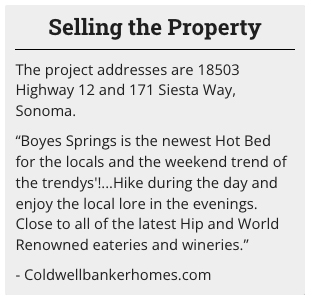
I can’t resist sharing this text from a Coldwell Banker website. The addresses represent the apartment site.
Please stay tuned to the Springs Museum. We aim to bring you all the best in local lore!
Thanks to Rich Lee and Doug McKesson for their memories
Index Tribune courtesy of the Sonoma Valley Historical Society
Zan postcard courtesy of Stanford University Library, Special Collections
UPDATE, September 17, 2023
According to Mrs. Mary Farrell’s obituary in the Index Tribune in January of 1956, her resort was “part of the former Appleton ranch.” Before Appleton, a certain ”Mrs. Loud came to California in 1864…Her husband was Alfred C. Loud, who settled on what was afterward the Appleton ranch.” Index Tribune of Jan 14,1922 obit of Mrs. Loud.
In the 1975 obituary for Appleton’s daughter, the renowned Carrie Burlingame, Horatio Appleton established his ranch “in the Springs area in 1865.” He was “a pioneer vineyardist and a descendant of the Greenleaf and Adams families of New England.” He was instrumental in identifying the Phylloxera louse that decimated American vineyards in the 19th century.
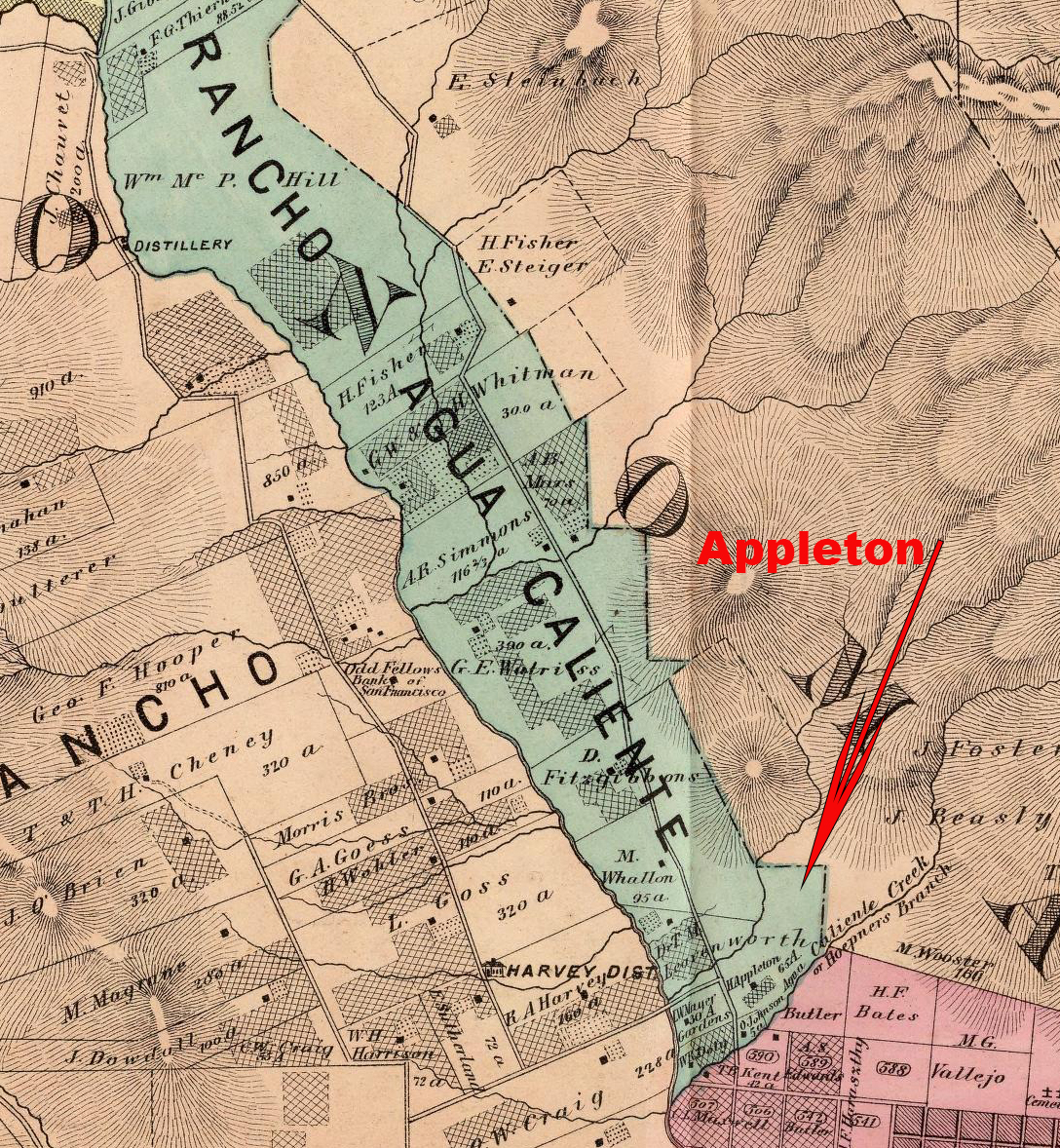
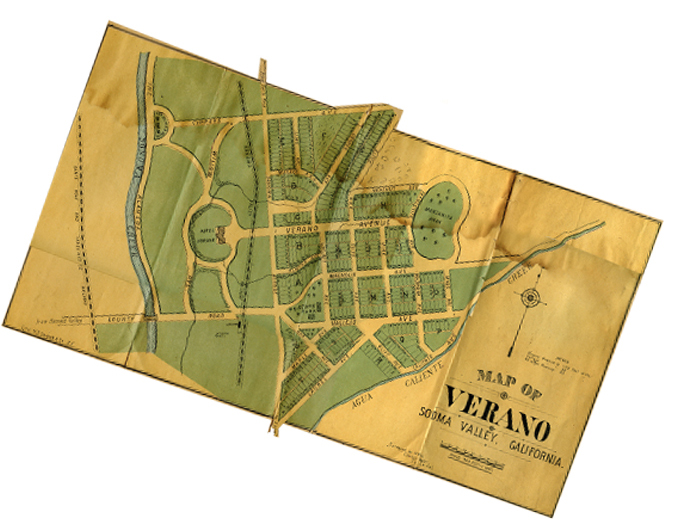
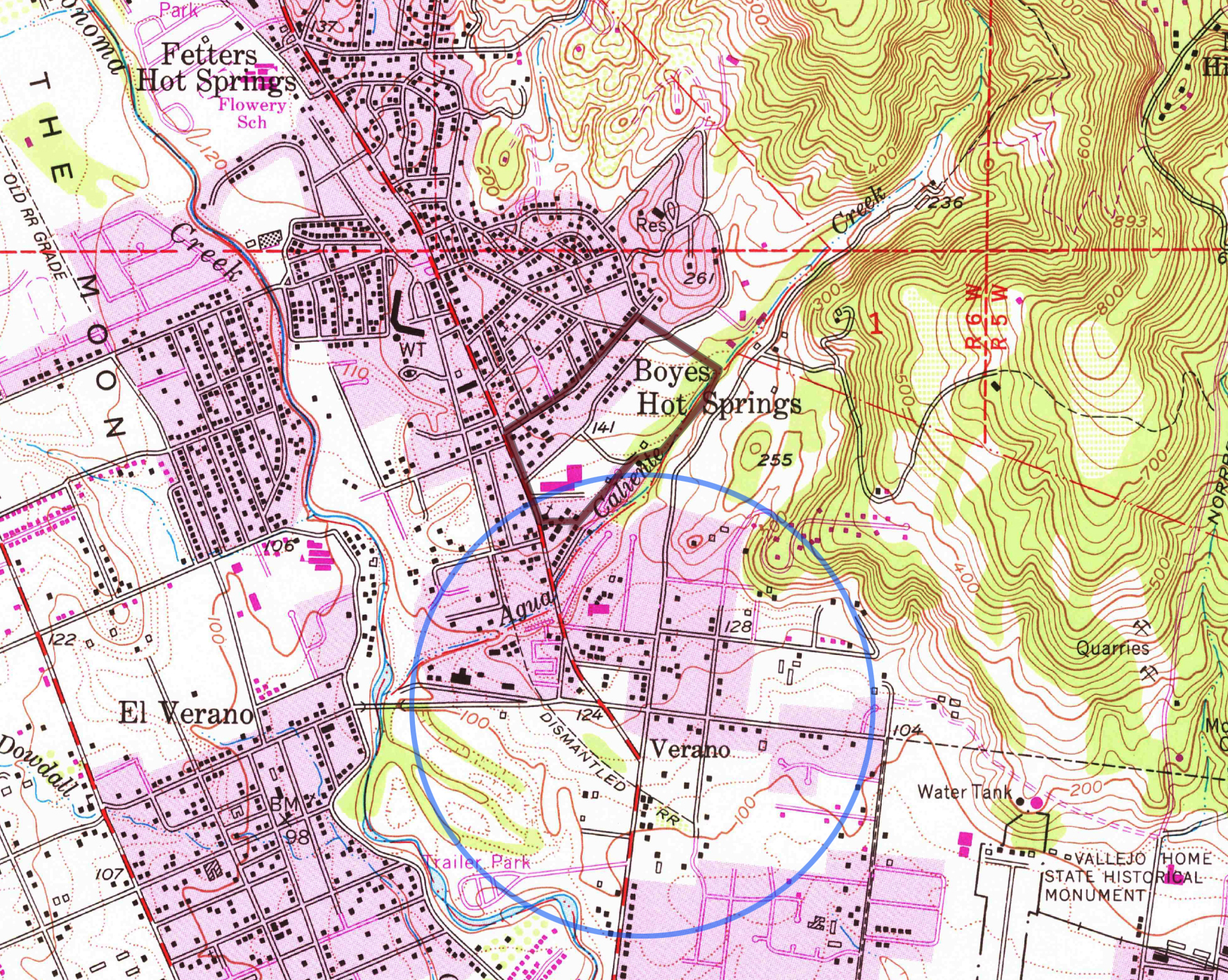
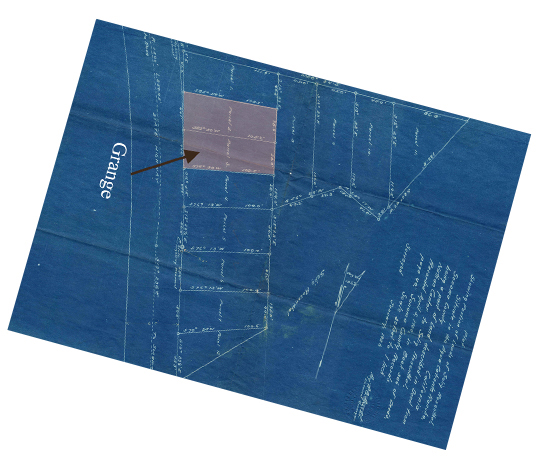
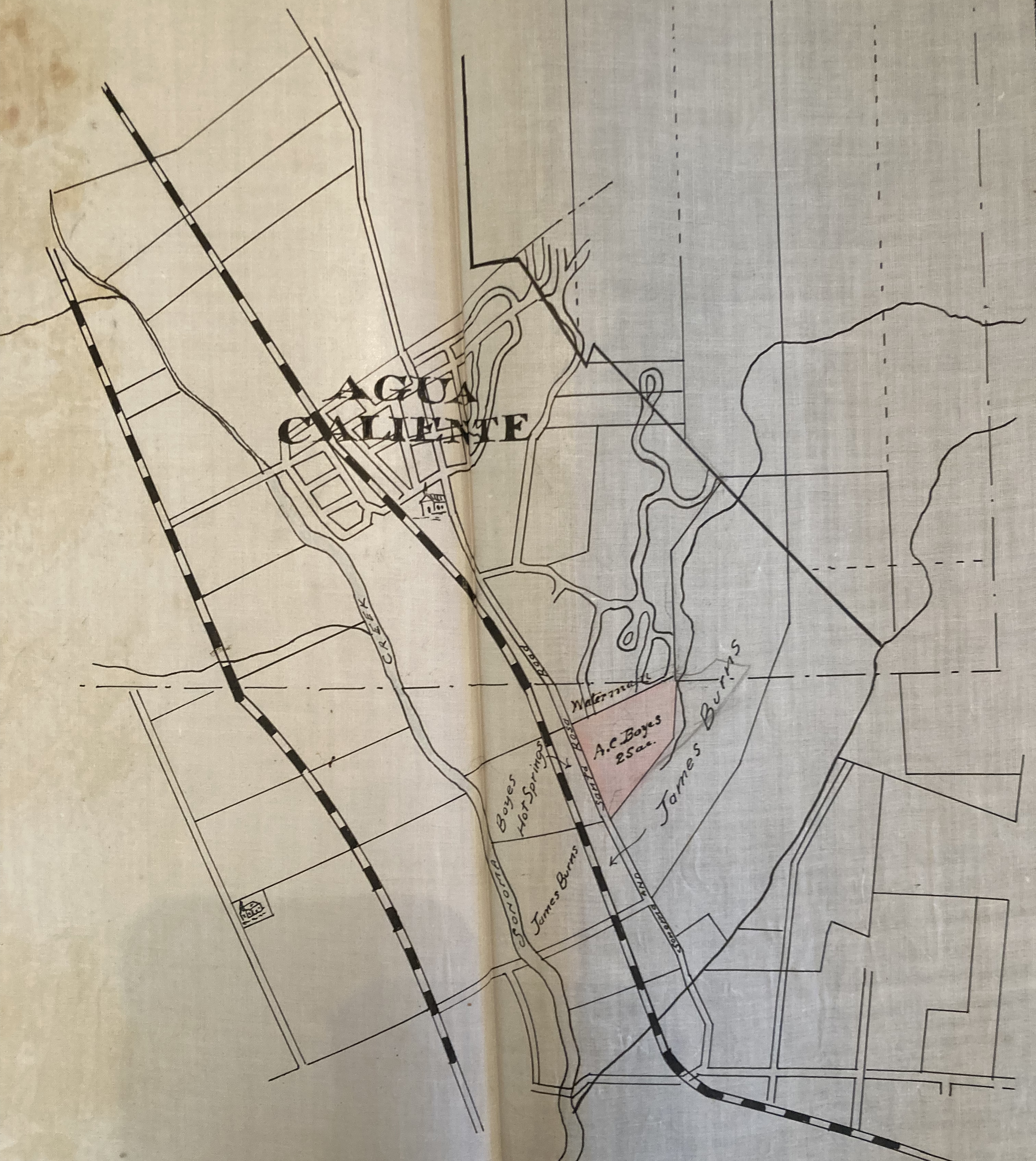
Appleton appears as a property owner on the Reynolds and Proctor maps of 1877 (65 acres) and 1889 (160 acres). (See below). According to the Index Tribune, in 1888: “Several new town sites have been laid out and surveyed in this valley the past few months…Verano is …another new town site which has lately been laid off on the Appleton and Burns places…” (see Boyes abstract map). Parts of the town of Verano (not El Verano), were later owned by Nathan Cantor and Selig Rosenthal. Some of this became the Acacia Grove mobile home park with a carve-out for the Grange in 1934. Read more about Rosenthal, et al, here.
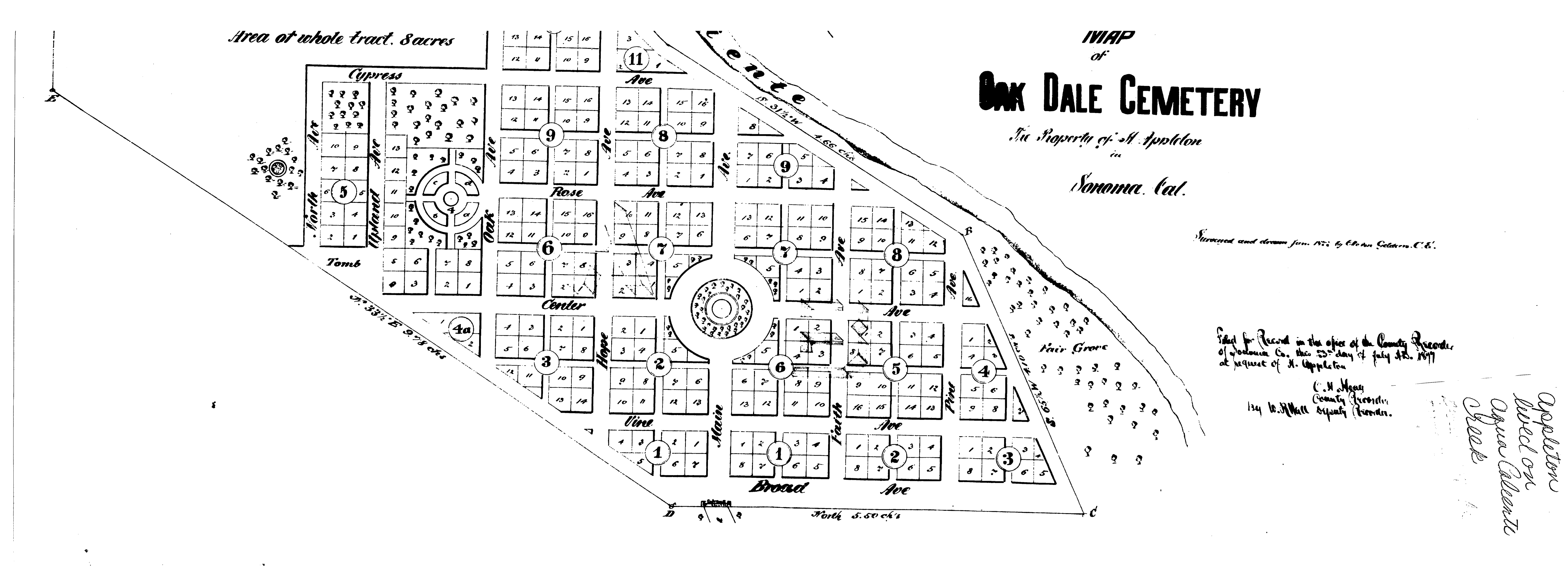
in 1877 Horatio Appleton published a plat of a cemetery on part of his land. (see below)
1877 Reynolds and Proctor map. Sonoma Highway runs through the green area. Its left boundary is Sonoma Creek. Agua Caliente Creek, the south boundary of Appleton’s ranch, joins Sonoma Creek at the bottom of the green area.1880s map of Verano, oriented to match the first map. This was a fanciful depiction of a town that never existed as such, though it did have a railroad depot. Eventually, the “Town of Verano” moved or expanded to the south side of Agua Caliente Creek, as can be seen in the quad map below. The dark line is the approximate outline of the Appleton ranch.Rosenthal’s resort, 1934, showing the lots he sold to the Grange. Sonoma Highway is at left.Map from the abstract of title to Henry Boyes’ land. James Burns land is labeled. Appleton, next to it, is not. An abstract of title was a document used to prove ownership in the days before title insurance. More here.Appleton’s Oak Dale Cemetery, 1877. Another fanciful map.
Thanks to the Sonoma Valley Historical Society, for everything, really, and to the Rumsey Map Collection.
 springs museum