We have been here posting monthly for over ten years. Please support our continued existence. There is a button on the Home page
And while I have your attention: A show of Springs history themed art by Michael Acker is opening at Art Escape this Friday, February 28, at 5pm. SEE YOU THERE?!
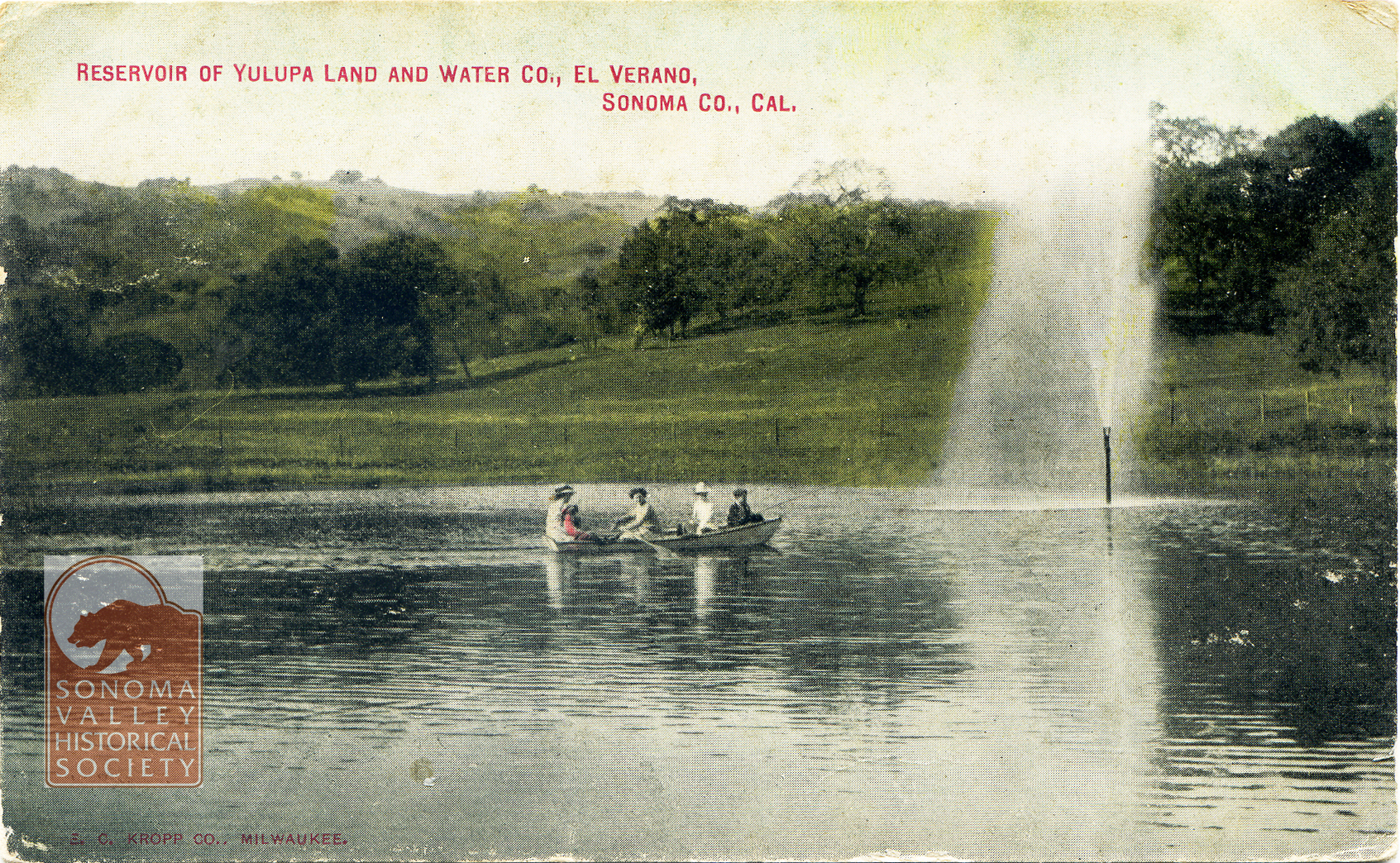
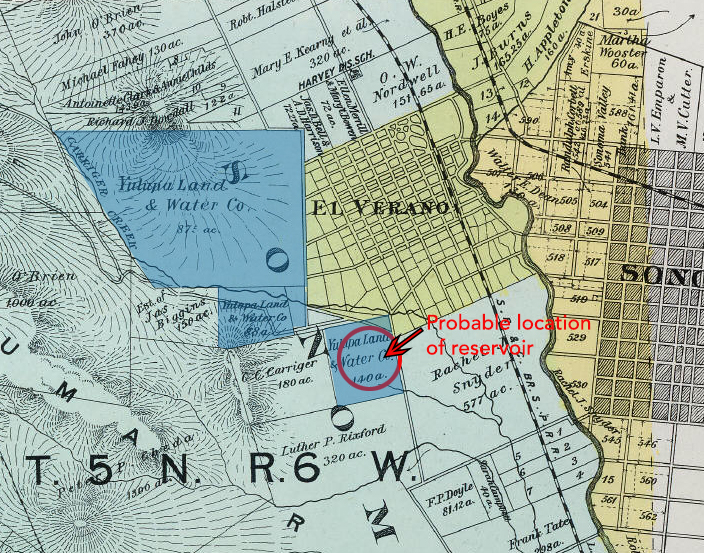
Post marked 1910. The Yulupa Land and Water Company holdings appear on an 1898 Reynolds and Proctor map (Rumsey Collection).
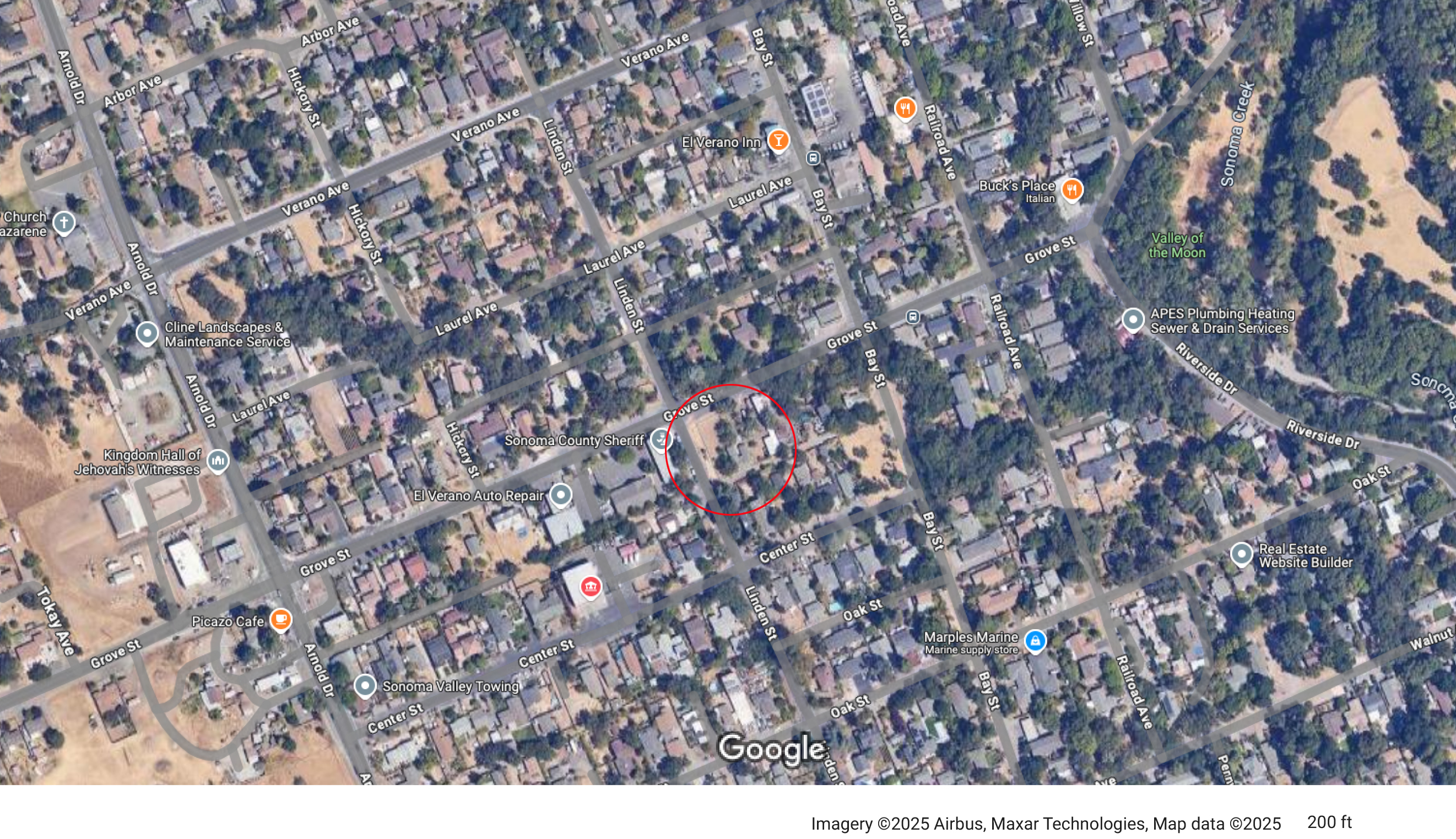
Judging by the hills in the background in the post card, the reservoir was probably located near the corner of Grove and Linden Streets.
In 1910, the Sonoma Valley Water, Light and Power Company acquired the Yulupa Land and Water Company.
1913- “J.A. Dinsella, the enterprising plumber of this city, has secured a contract from Sonoma Vista Land Co. near this city, to build its pipeline of 4-inch mains and 2-inch laterals.”
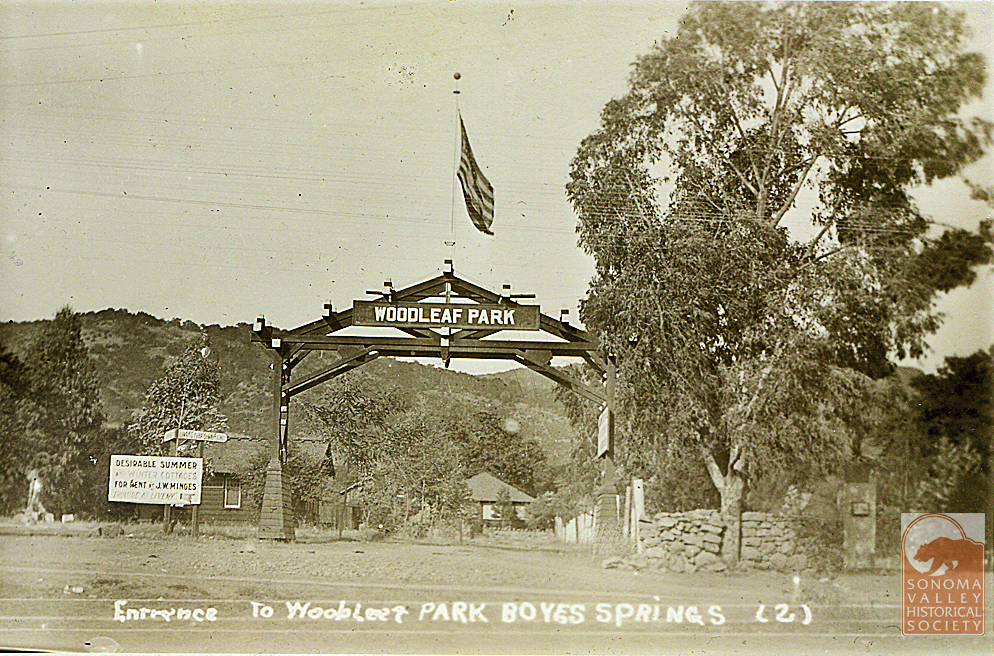
In 1923 J.W. Minges sold his Boyes Springs Water System, which mainly served Woodleaf Park, to N.M. Peterson, proprietor of the Mountain Water Avenue system. The merger “will enable the operating company to give better service…” even then that was the rationale!
J.W. Minges was known as the “mayor” of Boyes Hot Springs.
“Another company at Boyes Springs which has supplied many customers in the vicinity of the hotel and Boyes Springs Park is owned and operated by James Baines.” of Baines St.
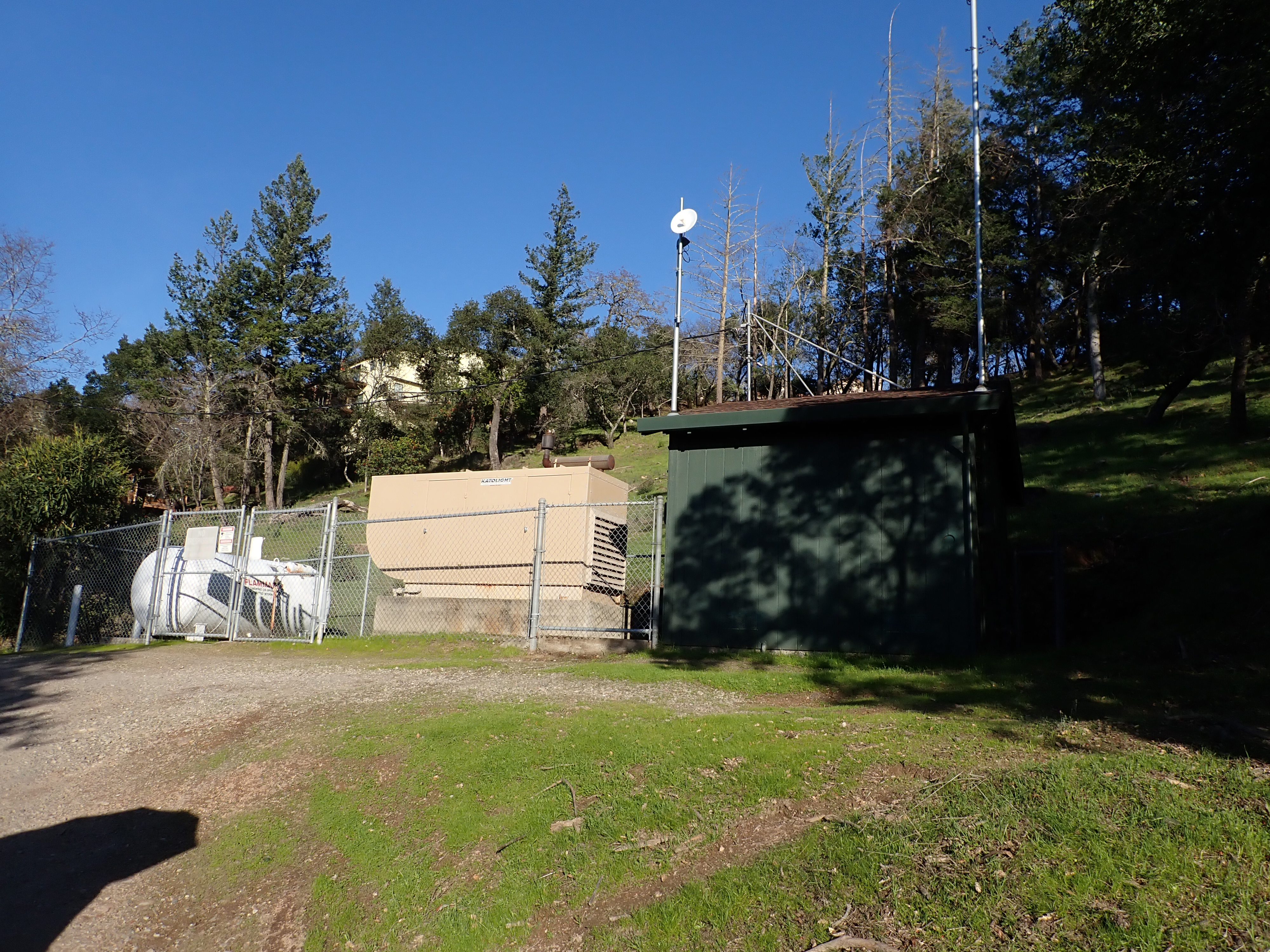
1958-Mountain Ave. Water Co. was sold to Mr. and Mrs Peterson Jr. whose parents had bought from Minges. The Petersons’ company served Boyes Hot Springs for 35 years. Improvements included an office building at 18640 Highland (An address that cannot exist, apparently, as the street ends at 18075), and a new tank at the top of Mountain Ave. An existing tank is located above Highland, circa 2025.
From the Valley of the Moon Water District website: “In 1957, the Valley of the Moon Fire District was evaluated by the Pacific Fire Board which at that time noticed the lack of a dependable water supply source. Subsequent inquiries of Fire District Board members, J. Udvic. T. Polidori and F. Serres, revealed that many wells in the area were failing due to drops in the groundwater levels in the Valley. Early attempts to have Sonoma County build an aqueduct from Santa Rosa to the Sonoma Water and Irrigation Company failed due to the inability of the latter to deposit a $25,000 cash bond with the County.”
In 1960 voters authorized the establishment of a water district. Candidates for directors at that time were Arnold Griewe, Mel Larson, Bill Orr ,Tom Polidori,Col R. C. Buell, Marin Carlson, A. L. Ford and Nino Vailetti.
“Acquisition of the Sonoma Water and Irrigation Company and the Mountain Avenue Water System was completed in early 1962 and the Valley of the Moon County Water District started management and operation of the systems on June 1, 1962.” VOMD website.
1963-Sonoma Aqueduct dedicated, bringing Coyote Dam water to the valley.
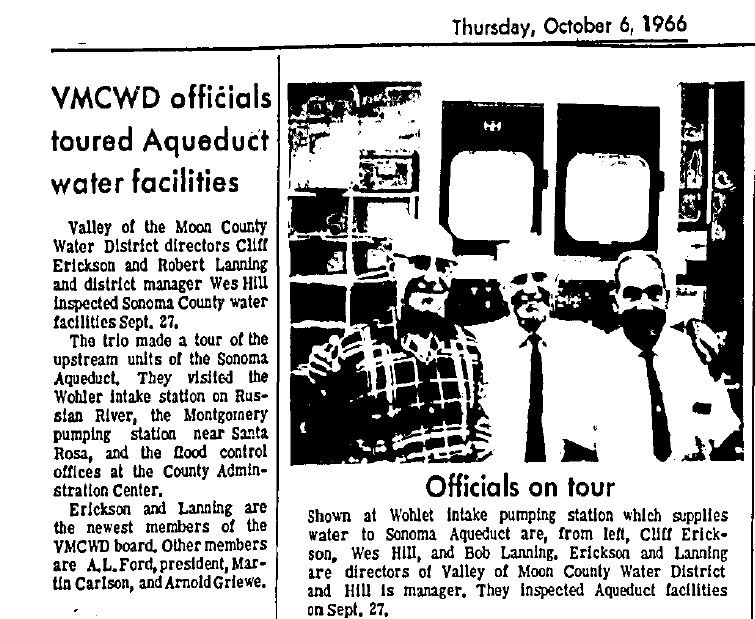
The Water District had new directors Robert Lanning and Cliff Erickson in 1966.
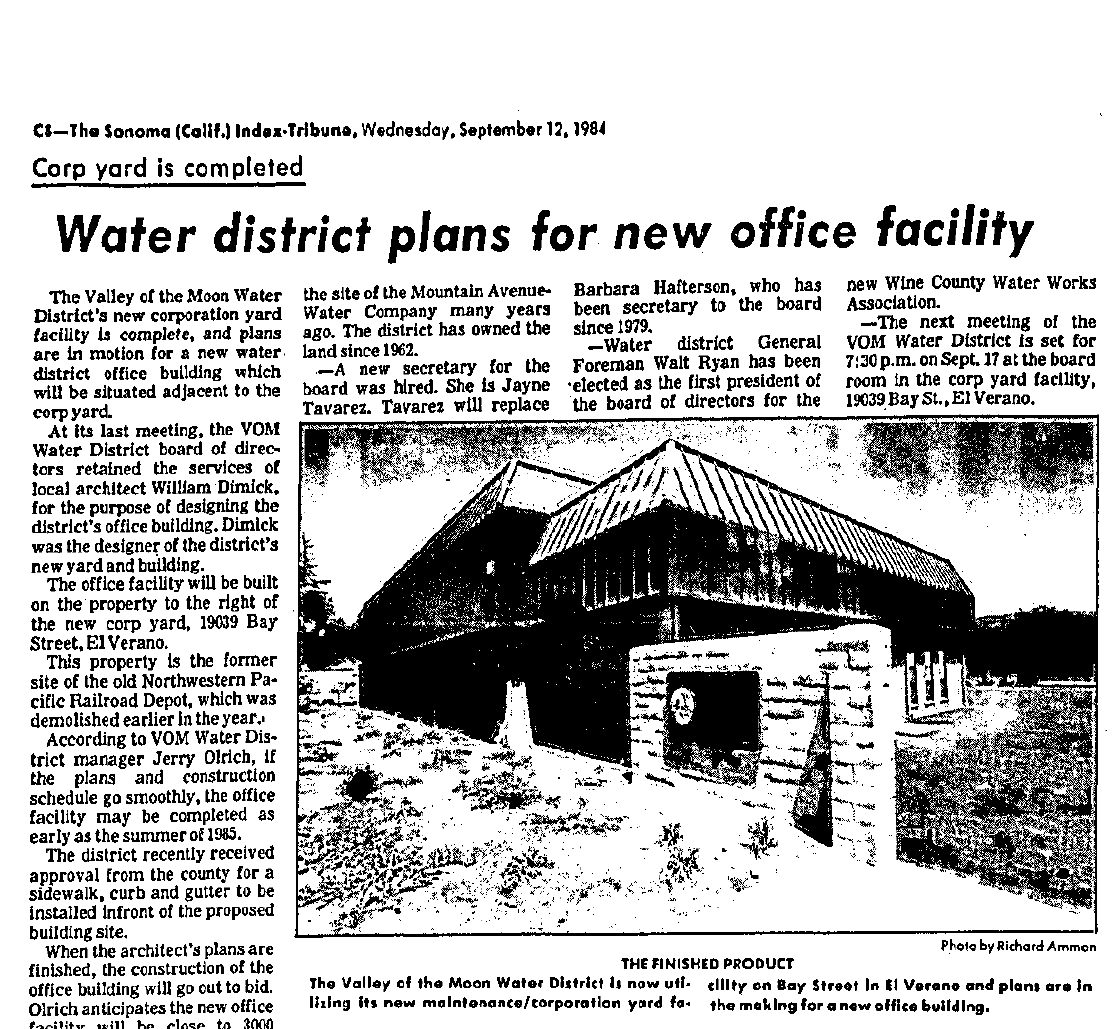
In 1984 a new office building was planned, to be built on the site of the El Verano railroad depot.
Alas!
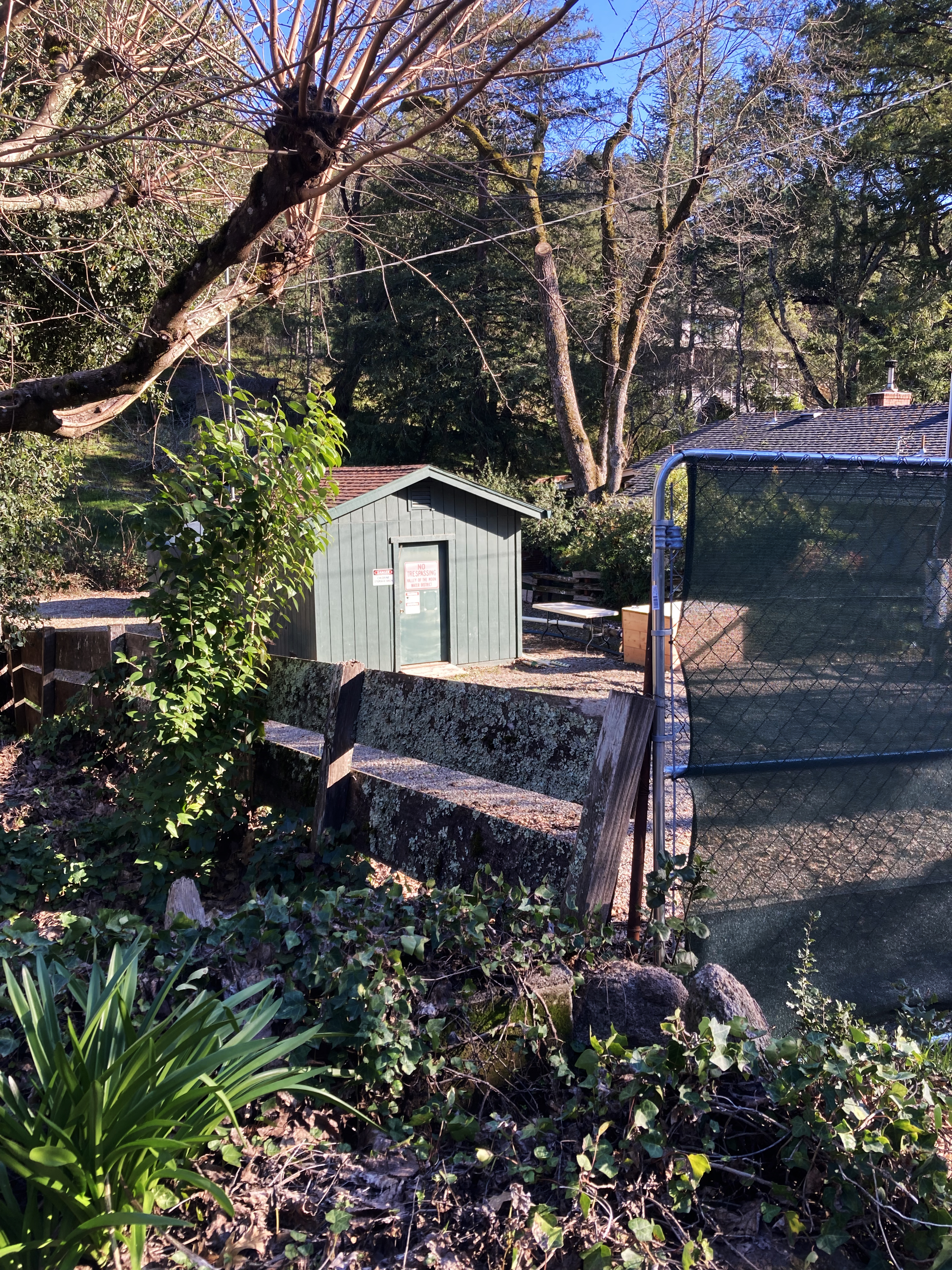
The District still has wells in the Valley.
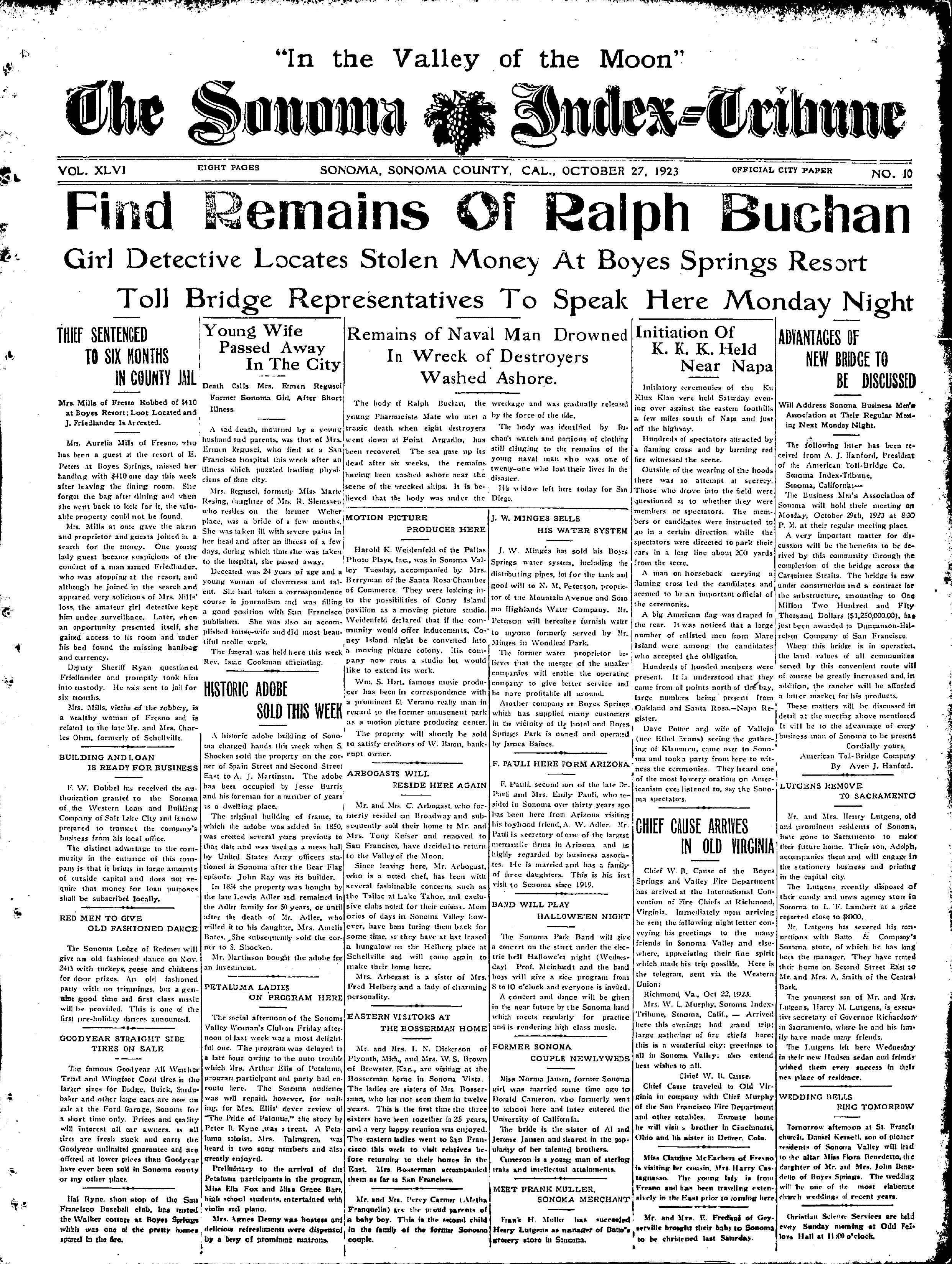
Park Avenue well.Kearney Street well.One comes across many interesting things when looking at old newspapers. Things not relevant to the subject at hand, nonetheless important. This front-page description of a Klan meeting in the Napa Valley is vivid and disturbing, and rings bells that are still reverberating today.
Index Tribune courtesy of the sonoma Valley Historical Society.
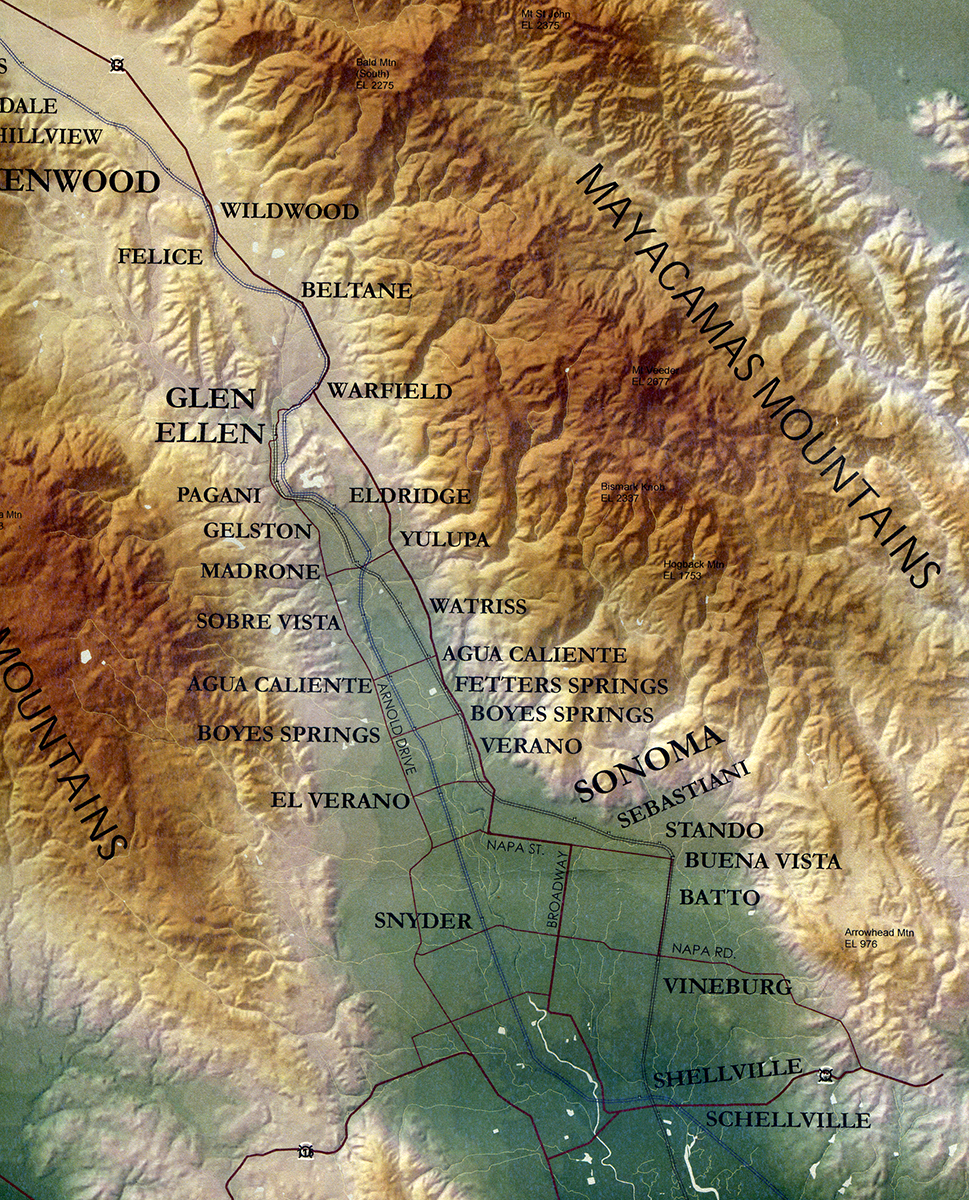
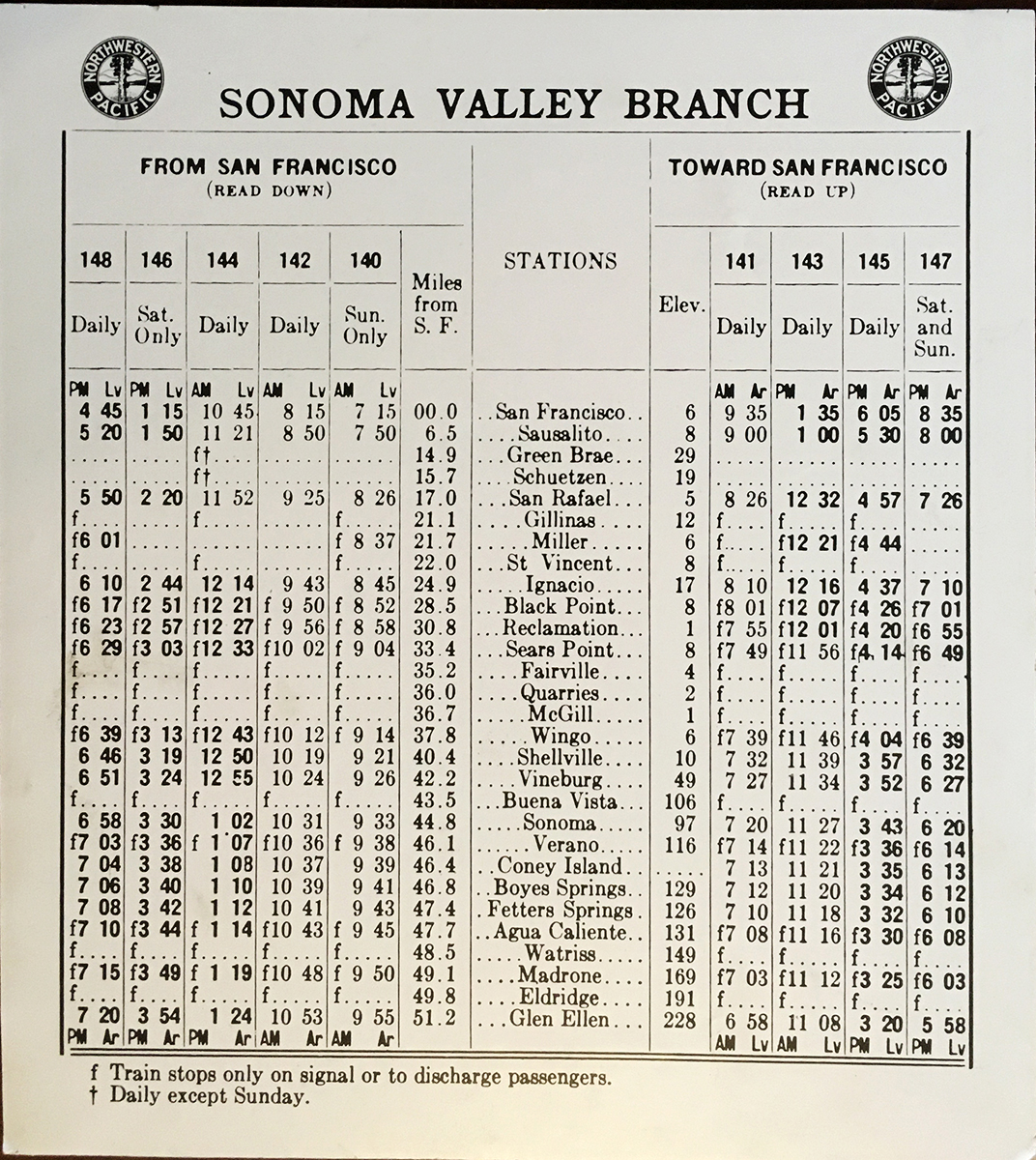
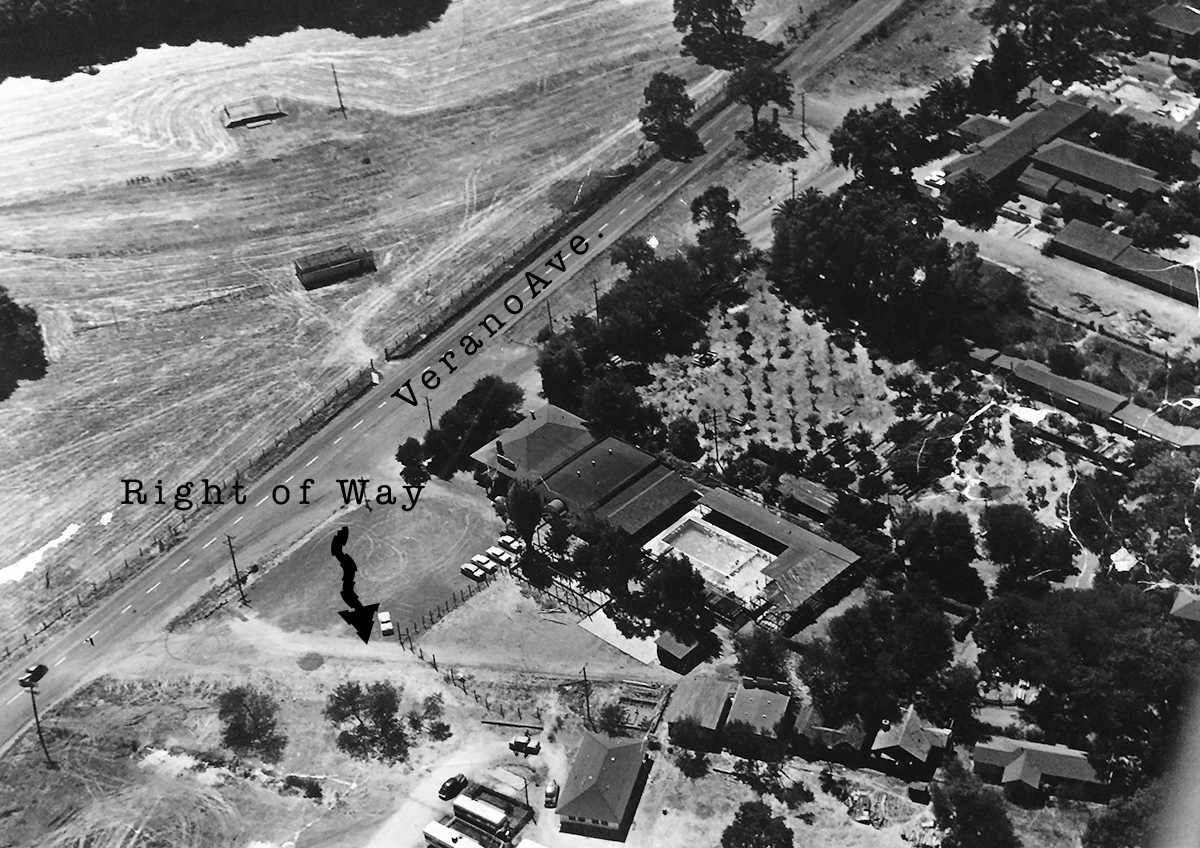
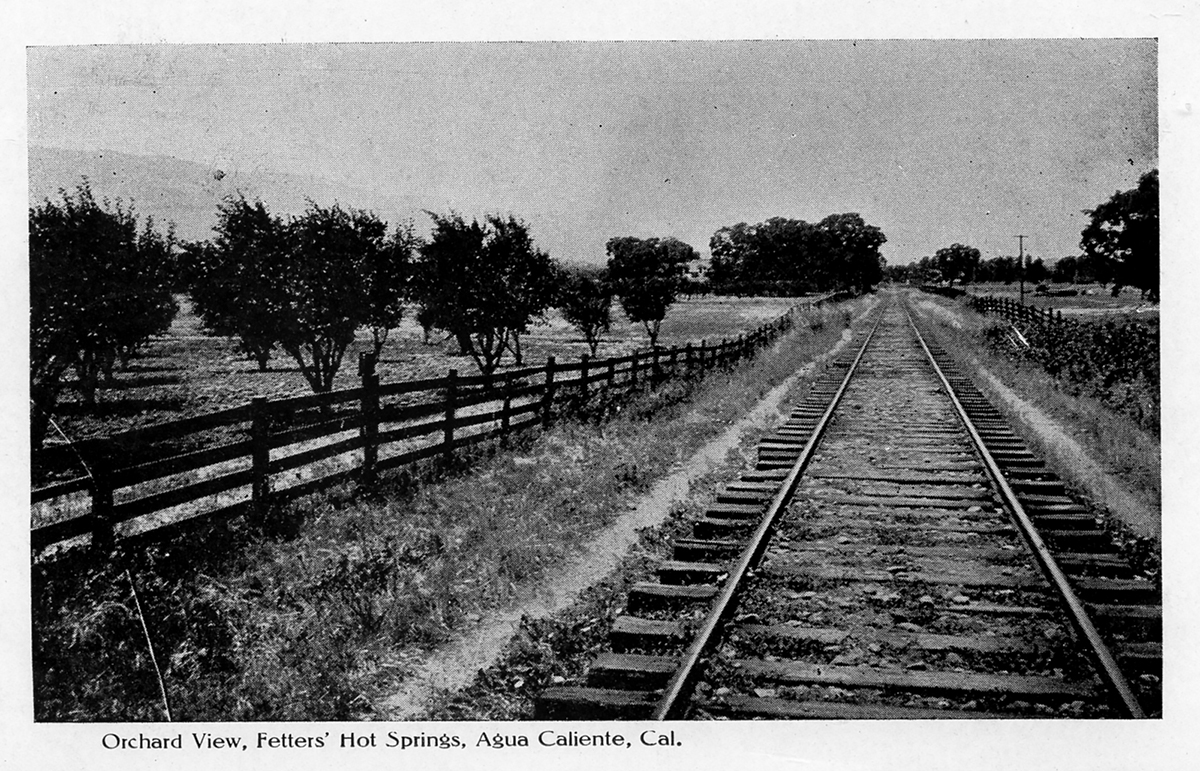
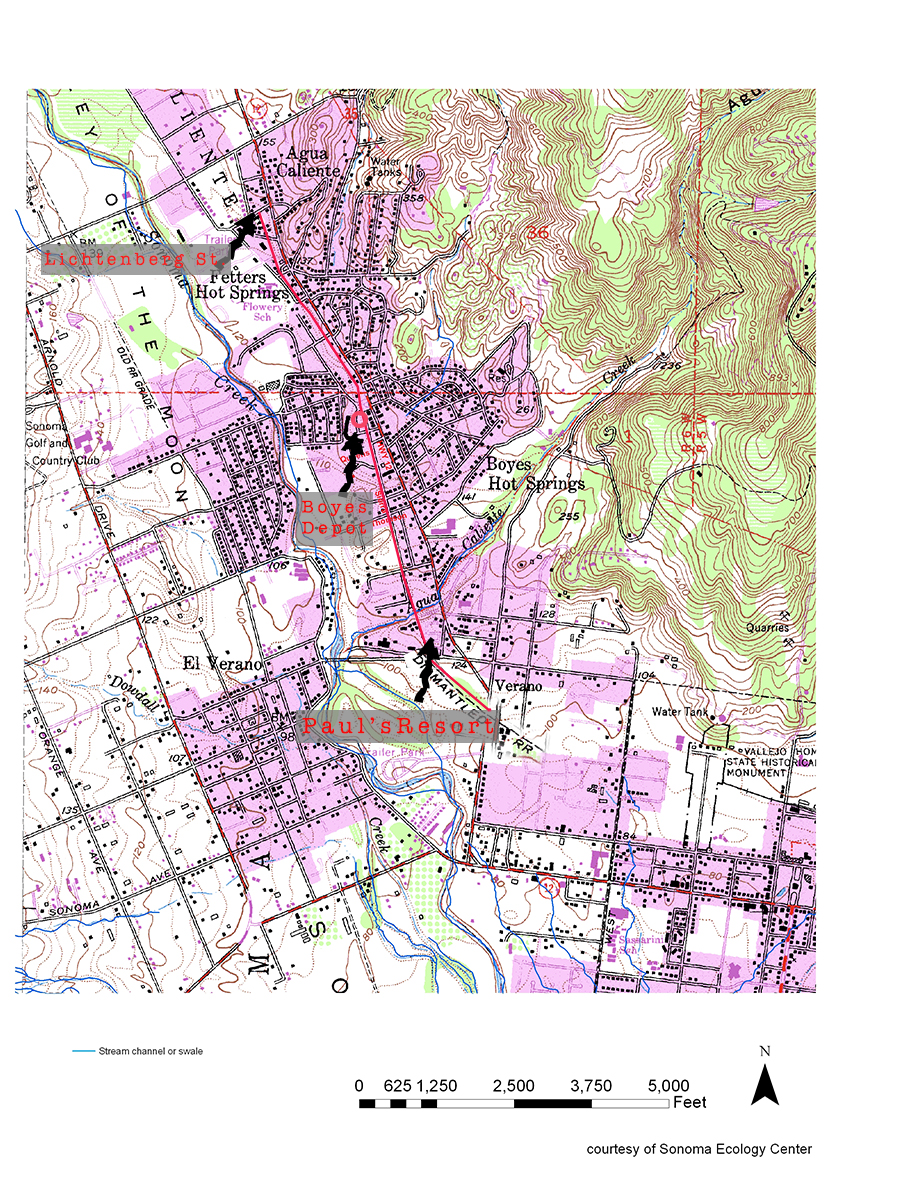
The last year of operation for the Northwest Pacific Railroad in Sonoma Valley, which ran on the east side of Sonoma Creek, was 1942. That year freight service ended, and the tracks were torn up for steel for the war effort. Traces of the right-of-way can be seen in several places in El Verano, Boyes Hot Springs, Fetters Hot Springs, and Agua Caliente.
From El Verano going north:
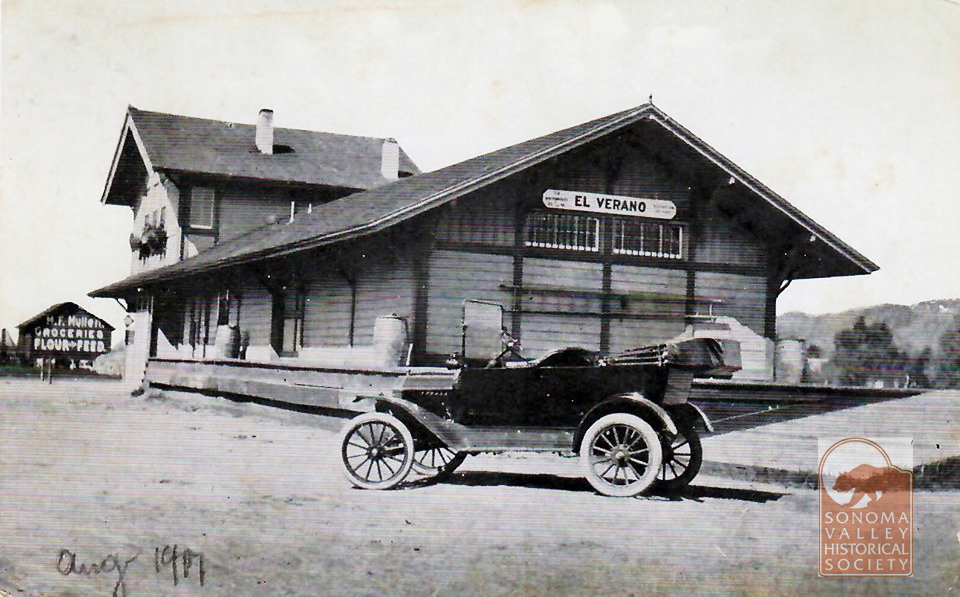
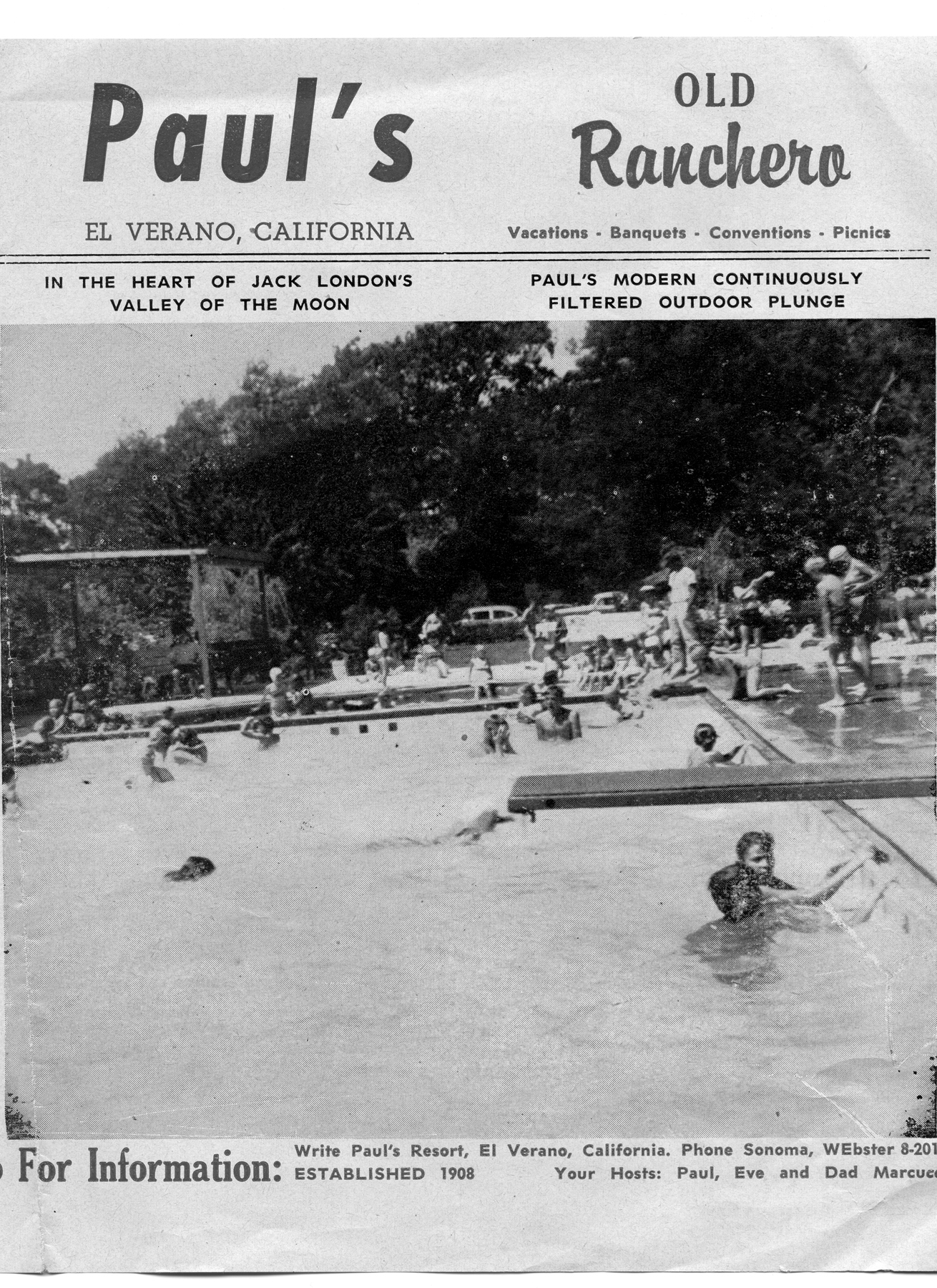
In El Verano the tracks run through the Paul’s Resort property, where the Verano (not El Verano) depot was located.
Paul’s Resort, 1960s
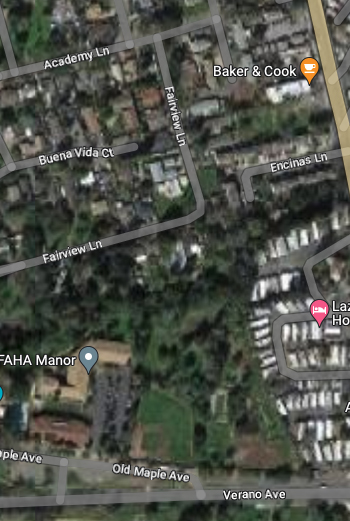
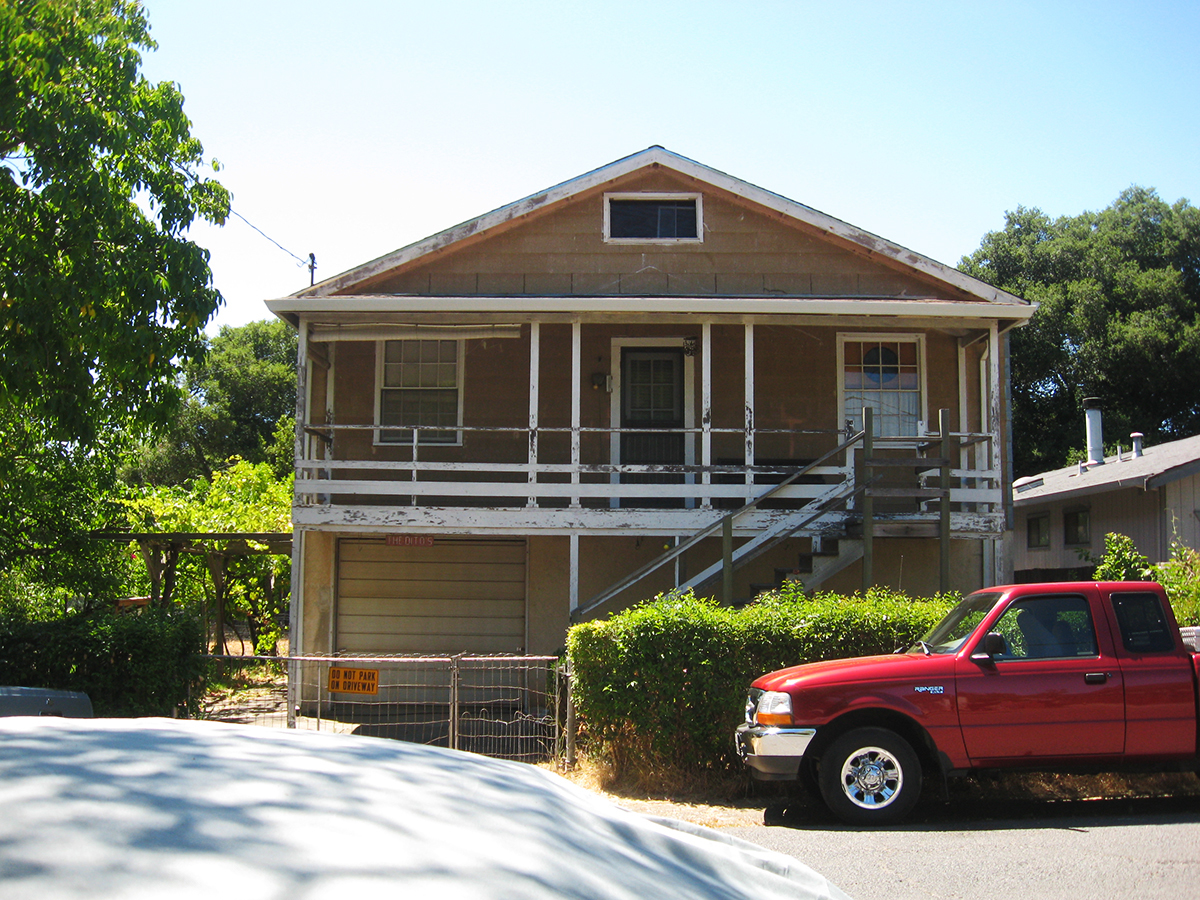
From there it parallels Fairview Ln. (which may have been right-of-way) until it gets to Thompson, where Sierra Dr., formerly Meinke Ave., takes over the roadbed. (More about Sierra and Mienke.) Manzanita St. might have been a spur. It features several buildings that look as if they could have been built by the railroad.
House on Manzanita near Academy Lane
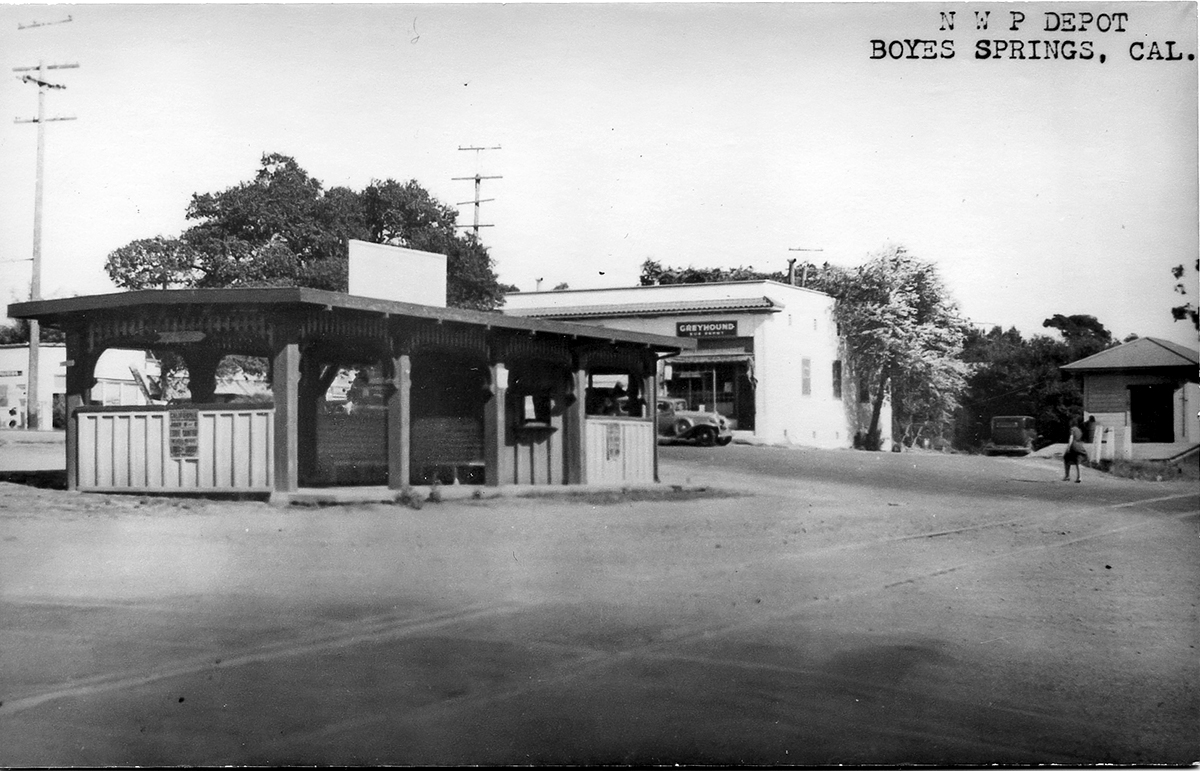
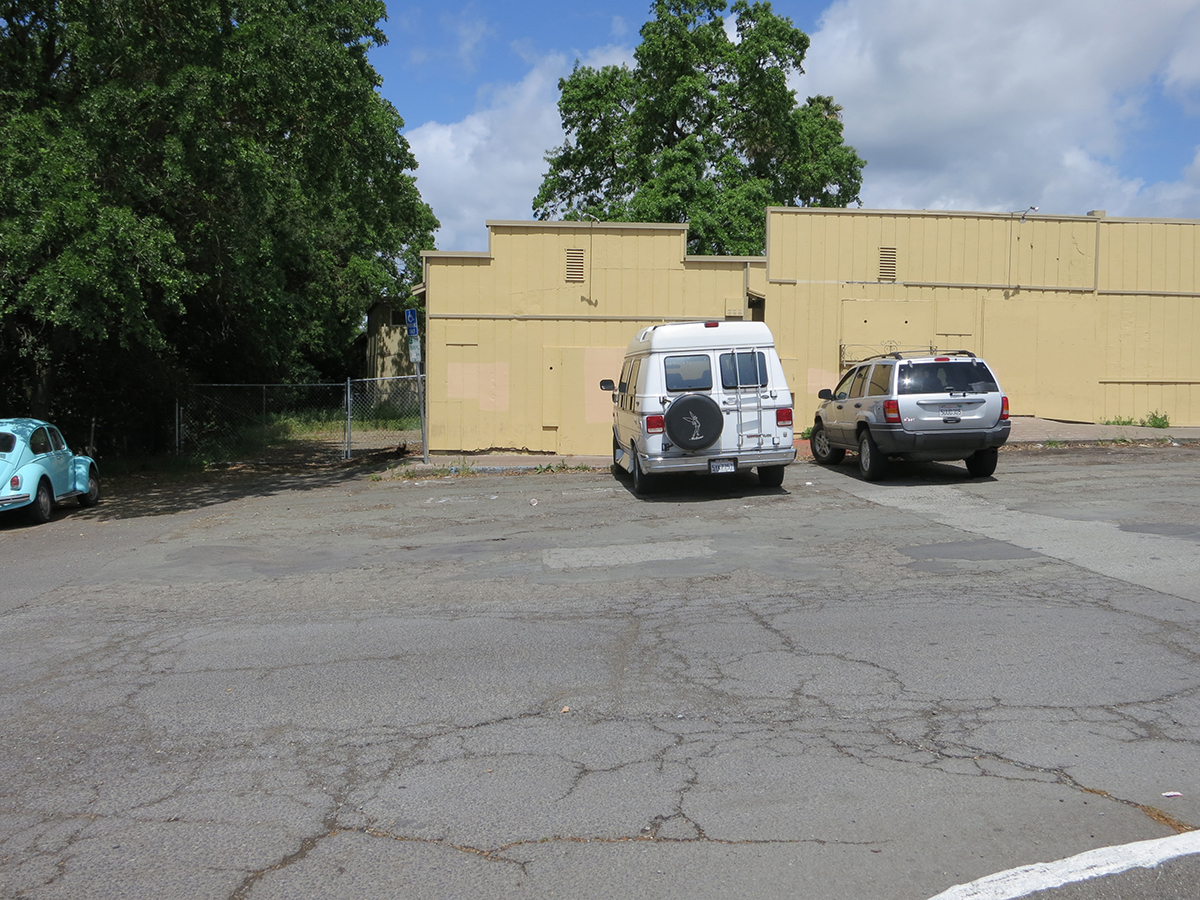
Where Sierra turns east to the Highway the right of way continues north through the Sonoma Mission Inn (originally the Boyes Hot Springs Resort) grounds and past the BHS depot, which land is now the parking lot for the Plaza Center building (More here).
Boyes Depot 1942
Right-of-way next to old commercial buildings at Boyes Plaza, which were demolished in 2018. Photo taken from the apporxiamte location of the Boyes Depot.
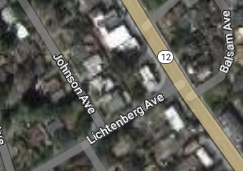
Continuing north it parallels the Highway and can be seen crossing Lichtenberg Ave, parallel to Johnson Ave.
At Lichtenberg.
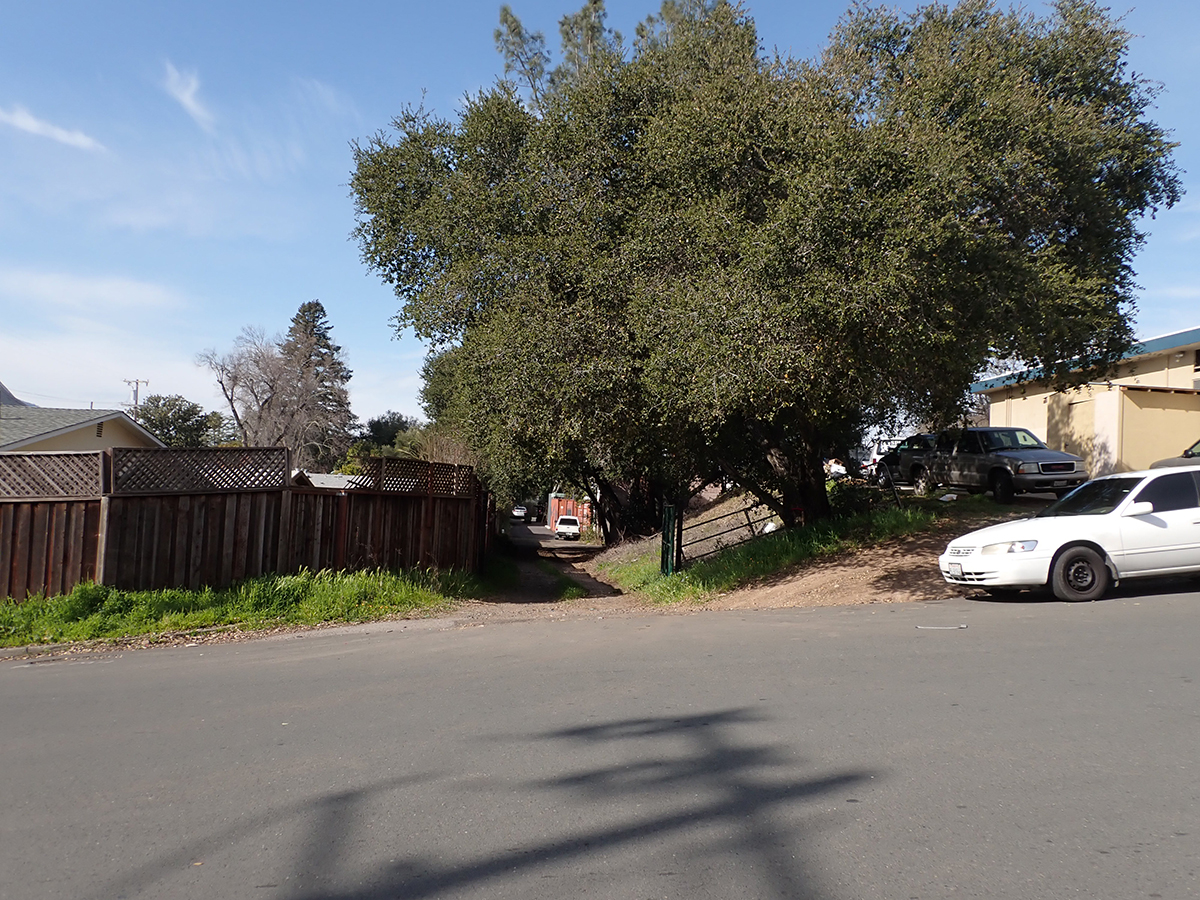
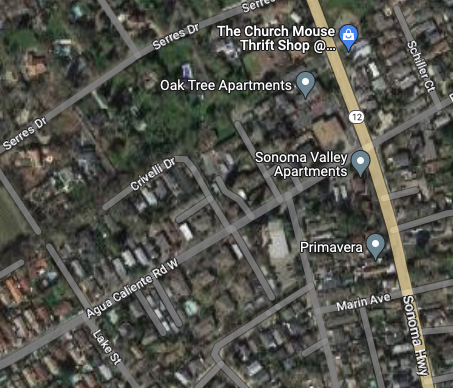
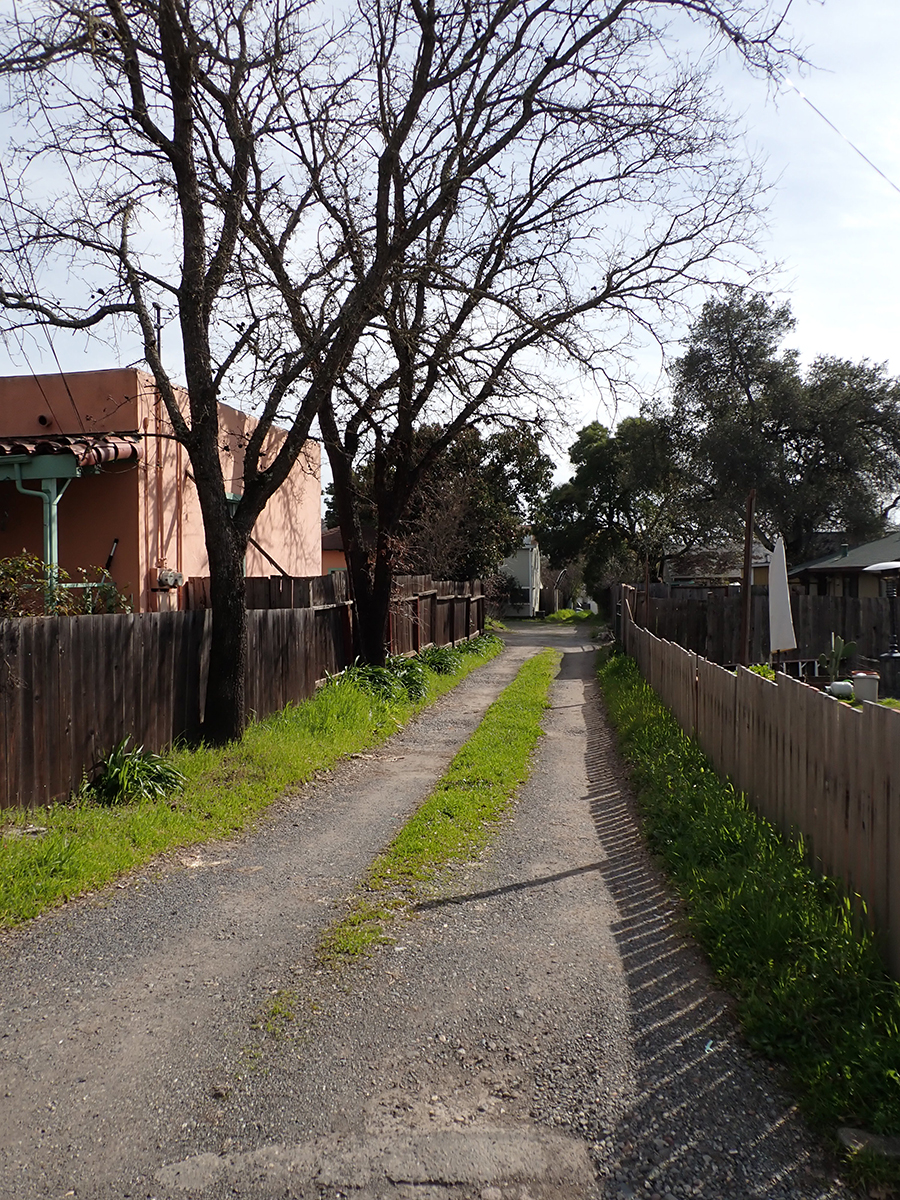
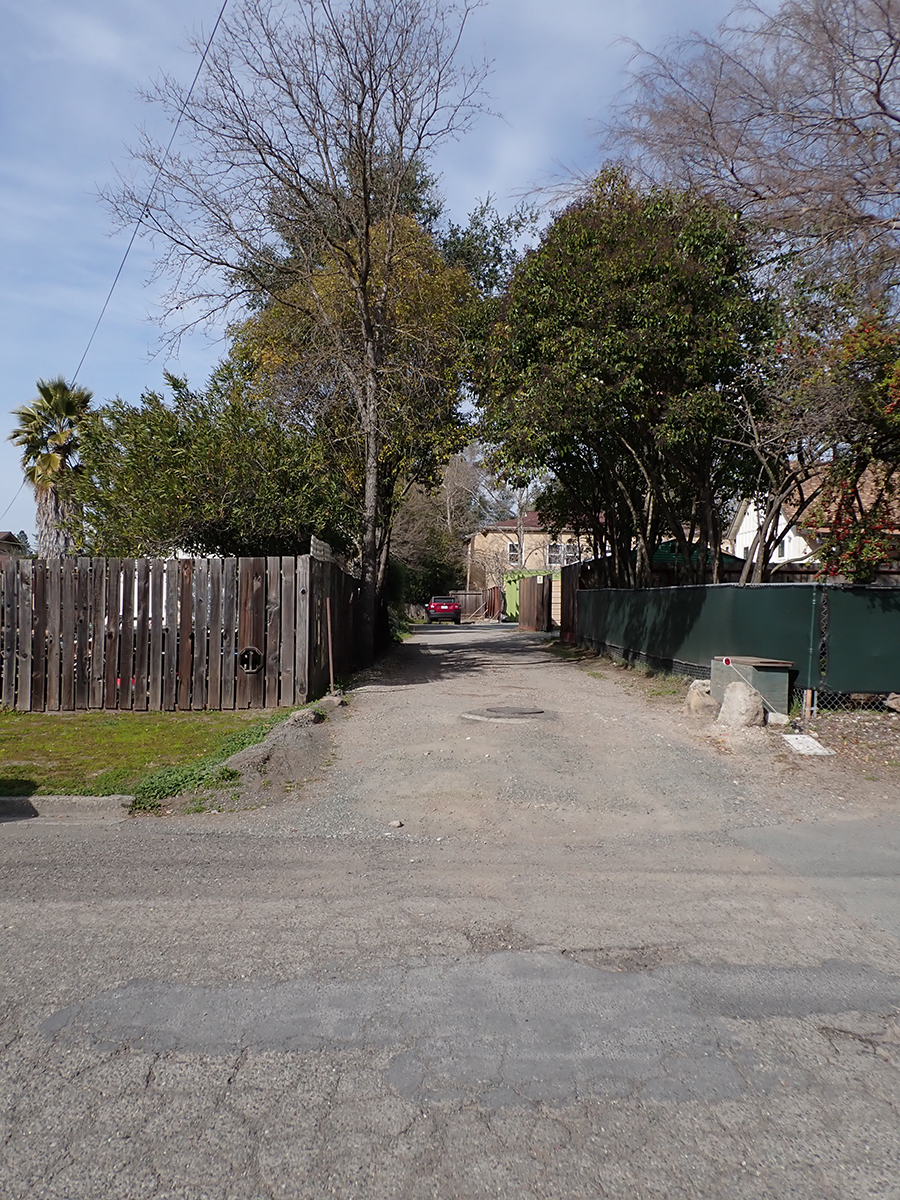
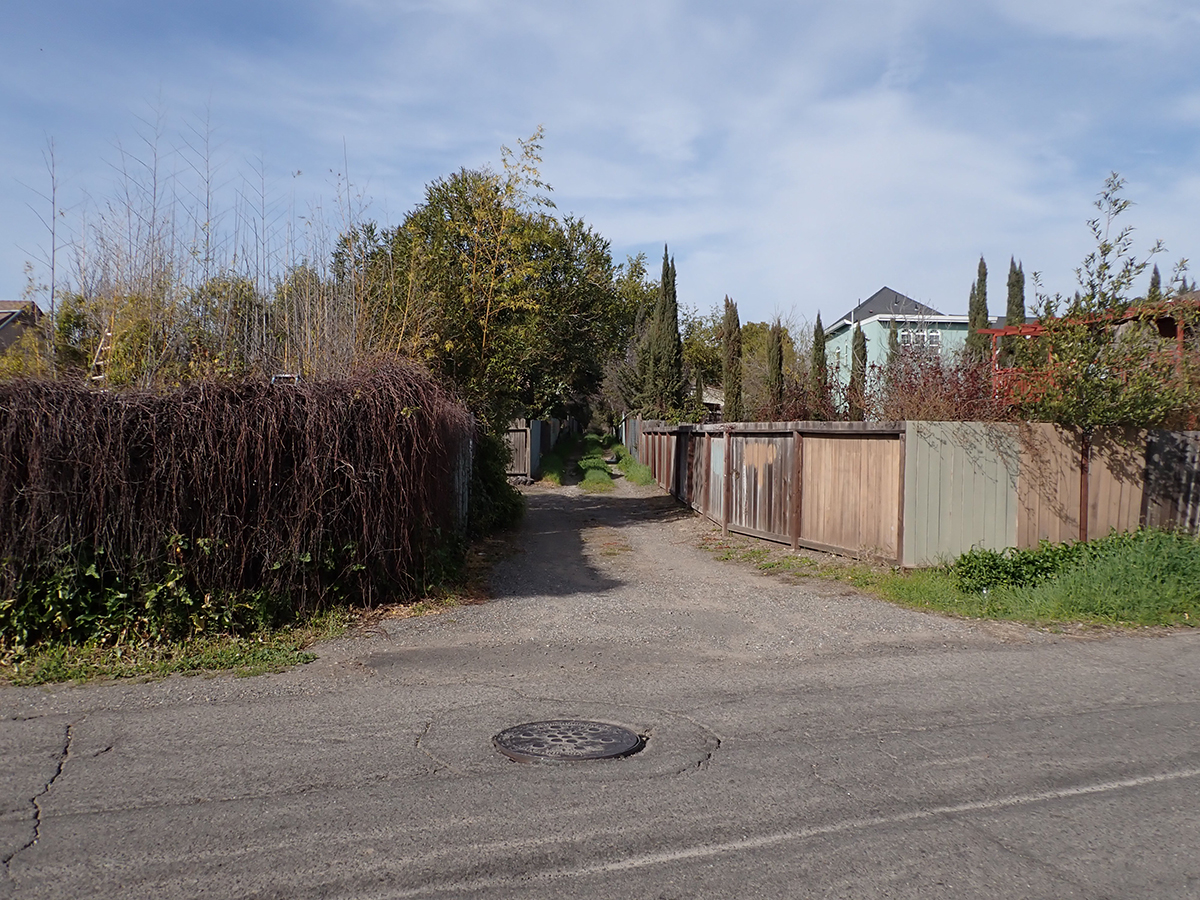
The next trace is the old Fetters Depot building on Depot Rd in front of Flowery School. It crosses the Fetters Apartments and Charter School properties and is seen again at Vialetti Dr. The old roadbed has become the alley the runs from Vailetti to Marin Ave. That is the last appearance of the right-of-way in the area.
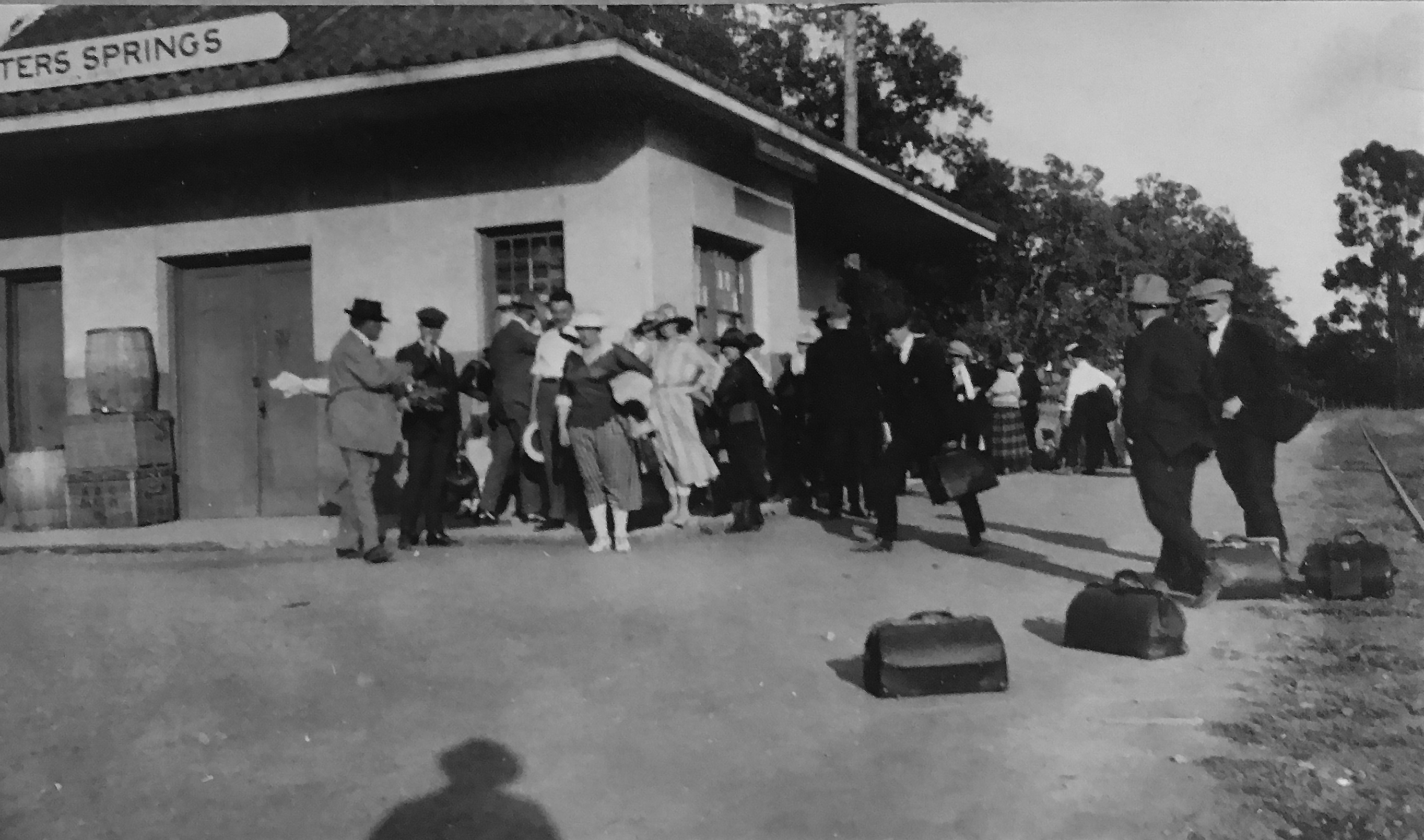
Fetters Depot 1910s
1910s
At Marin Ave. looking south.
At Marin Ave. looking north.
At Vailetti Rd. looking north
Maps and photographs courtesy of the sonoma Valley Historical Society unless noted otherwise.
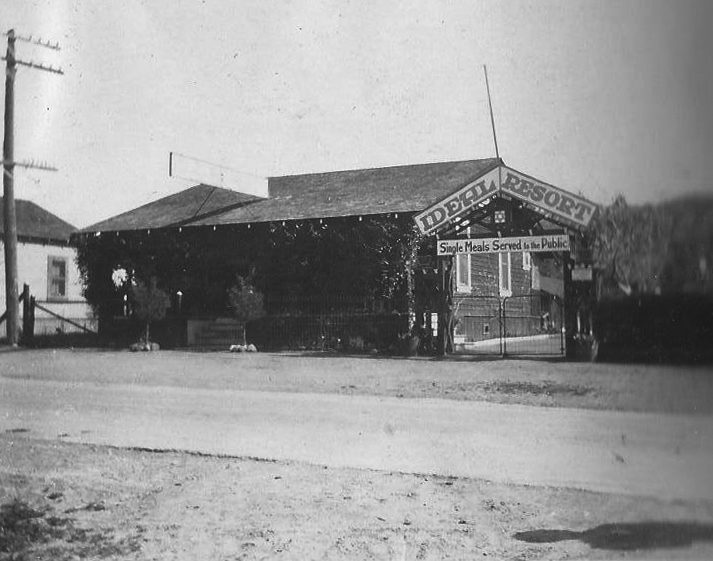
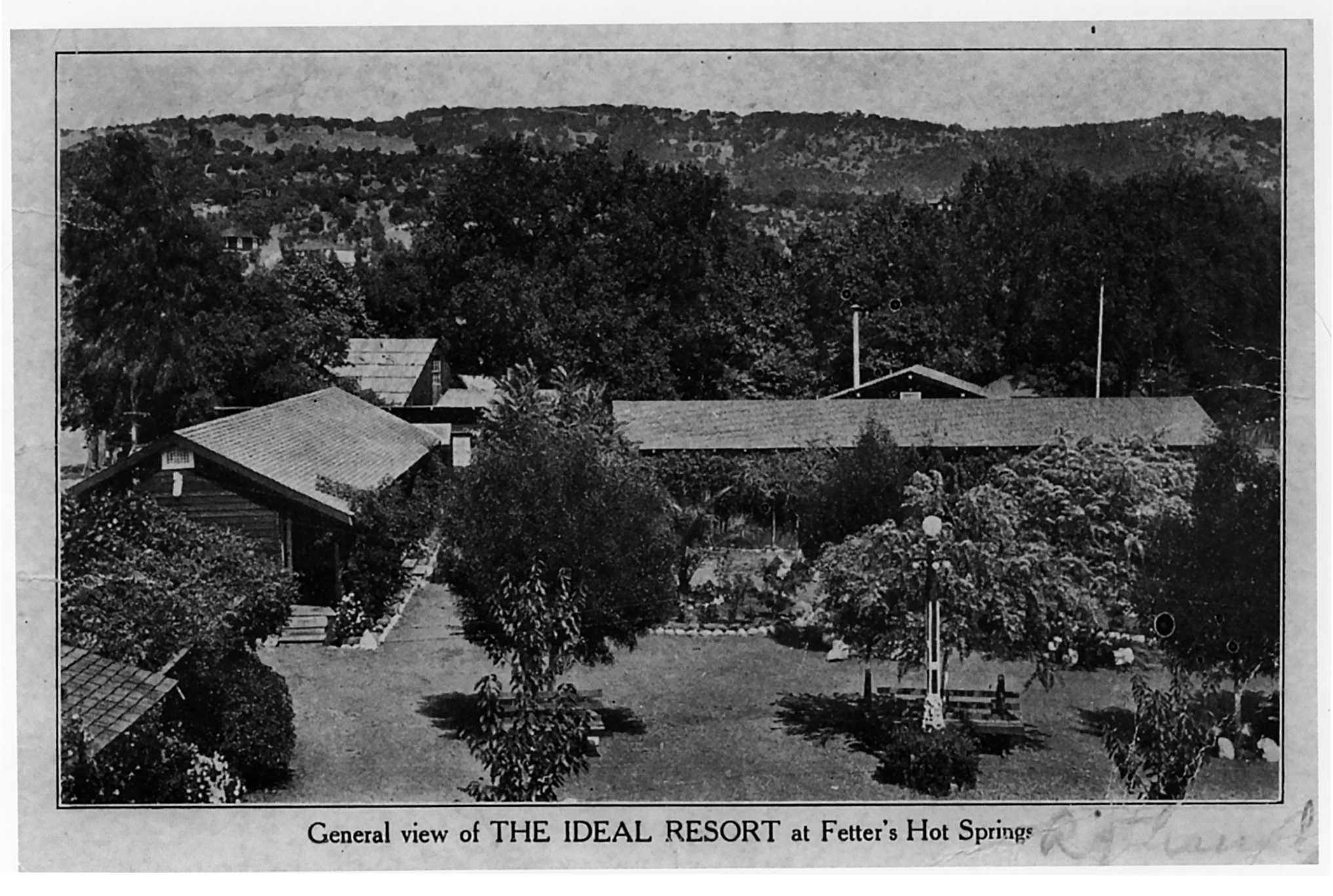
According to the 2005 Historical Resources Compliance Report for the Highway 12 Phase Two Corridor Project of County Redevelopment (whew!) The Ideal Resort was built some time around 1910 by Anton and Helen Schaffer who, in 1919, sold to Joseph and Margaret Weiss.
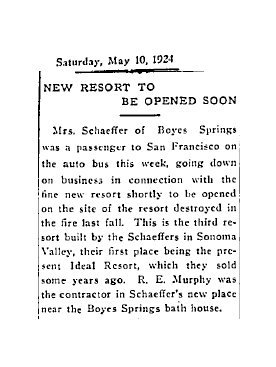
The Schaeffer’s were active resort developers in the early days.
The Schafer’s and the Weiss’ were Austrian immigrants, like the Weghoffer family and Leixner, who also had businesses in Fetters Hot Springs. {See Liexner }.
A Northwest Pacific Railroad brochure from the 1910s described the resort this way: “At Fetter’s Springs, three minutes’ walk from the Northwestern Pacific Depot, and ten minutes walk to Boyes, Fetters, and Caliente Hot Springs, where there are large swimming tanks….No expense has been spared to make this place a pleasure ground. Large, sanitary and well ventilated rooms, sleeping porches or tents,…Mrs. Weiss has established a reputation for her excellent Hungarian cooking.”
From the NWPRR brochure, circa 1917
The Weiss’ ran the resort until 1934. Between 1935 and 1941, the property changed hands several times. Joseph Weiss died in 1935. The IT gave him a front page obit, calling him a “pioneer resort man.” The obit noted that he was born in Austria-Hungary in 1868.
In 1946, Ray and Florence Loper took over, renaming the place the Floray Auto Court. The Lopers sold in 1958 but the name persisted in to the 70s.
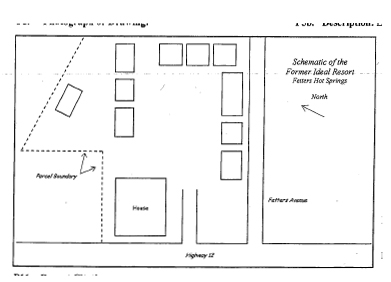
Plan of the resort from the 2005 Report
The 2005 Report noted that the Ideal Resort was “one of many small, family owned resorts in the Springs district. Small resorts such as this allowed families and people of lesser means to participate in the resort life previously enjoyed by the affluent. They plays an integral part in the historical development of this area. This property is a good representative of the Springs resort era. There are few small, road-side resorts from the early part of the century left in the Springs area, and non retain the degrees of integrity that this resort does. Therefore, National Register Criterion A and California Register Criterion 1 are met.” In 2005. As with so many historic structures in the Springs, alteration or demolition proceeded before consideration of historic value could be contemplated.
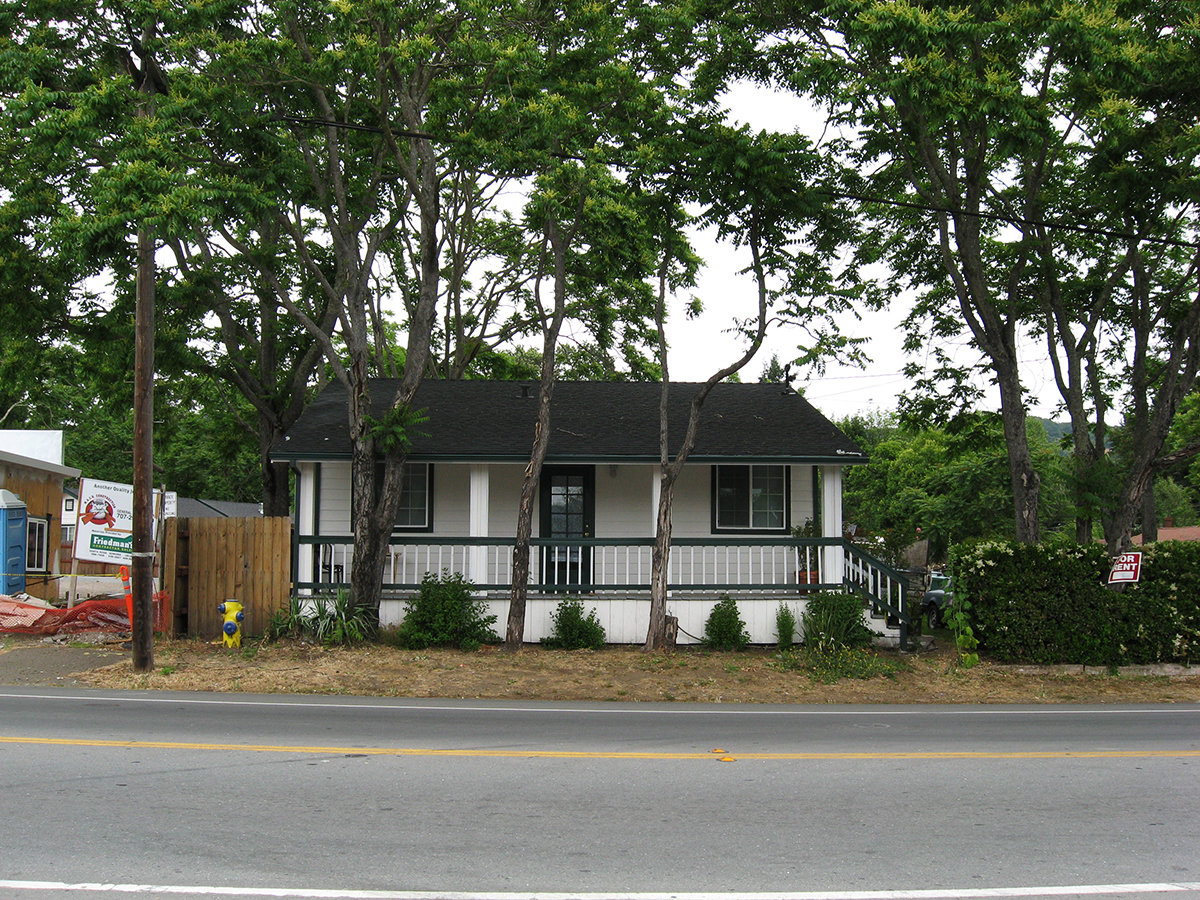
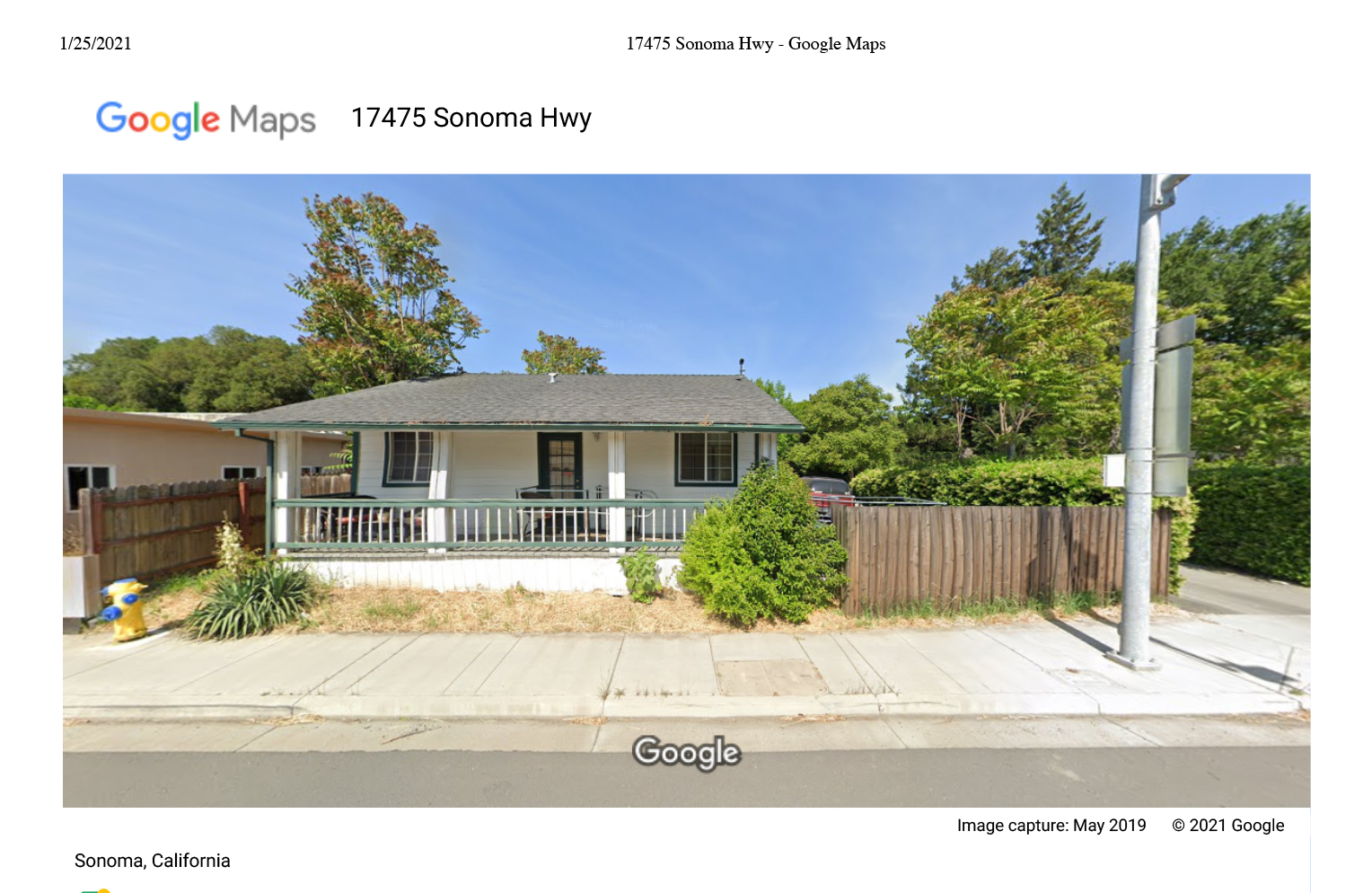
The buildings were rehabbed in the 2010s. They remain, but very highly altered.
Main House, 2008Main House, 2020
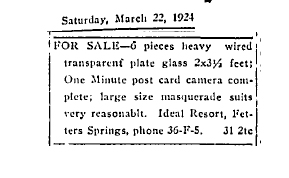
In 1924, this ad appeared in the Index Tribune. The assortment of goods for sale gives pause.
Index Tribune courtesy of the Sonoma Valley Historical Society. Photos by or from the collection of the author.


 springs museum