Boyes Hot Springs, Photographs, Sports

Baseball in Boyes Hot Springs

NOTE: Baseball, Part 1, the Exhibition at the Depot Park Museum opens Saturday, October 26, at 1PM (power or no power!) The following post is a preview of Part 2, which will open in spring of 2020.

boyesathleticgrounds copy.jpg

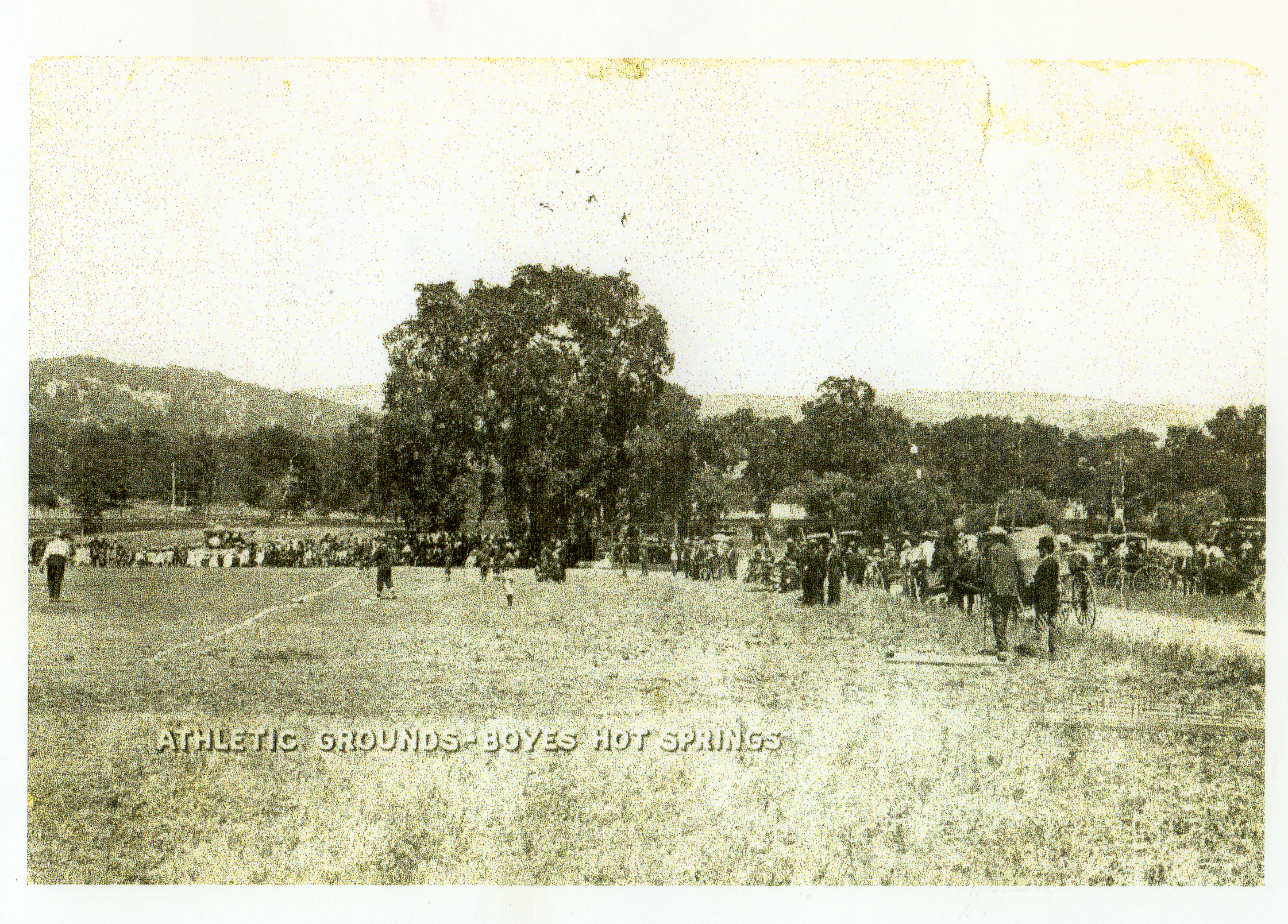
Baseball Park circa 1910 (Sonoma Valley Historical Society)

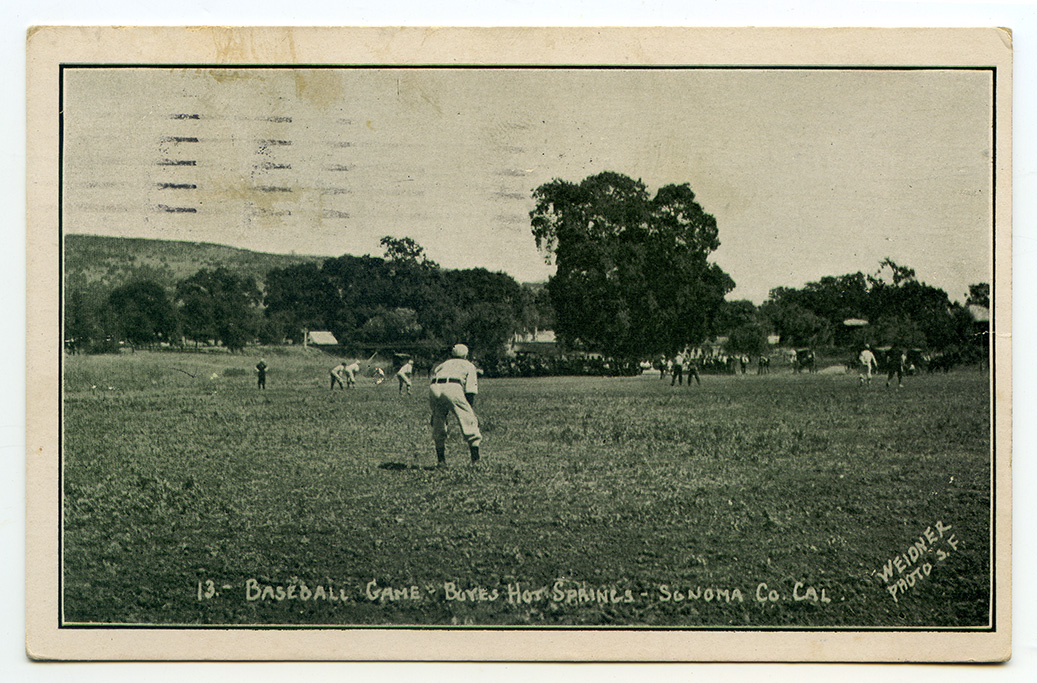
Early in the twentieth century, the climate and healing waters of Sonoma Valley, Boyes Hot Springs in particular, were attractive to Pacific Coast League baseball teams looking for places to train.

Seals Training

“Boyes’ Hot Springs is rapidly becoming recognized as one of California’s chief health resorts. A few years ago this famous resort was known only to a favored few in Sonoma and Marin Counties, who were aware of the marvelous healing powers of its medicinal waters. Through the combined efforts of Dr. Parramore of Mill Valley, and former Under Sheriff Litchenberg of San Rafael, both Marin County boys, the facilities and accommodations of the springs have been developed until now it is able to house the immense number that flock to this delightful and health giving spot. Against a State wide competition the Seals have chosen Boyes’ Hot Springs for their Spring training quarters. Exhibition games will be given there in recreation park that stands on the hotel property. The owners of the teams pronounce the facilities for (training) the best in the State. There is a large swimming tank, hot and cold water baths, plunges, a gymnasium, and the best climate in California.” Sausalito News, Volume 28, Number 48, 30 November 1912 — Page 1

1914Ballparklargex2sm

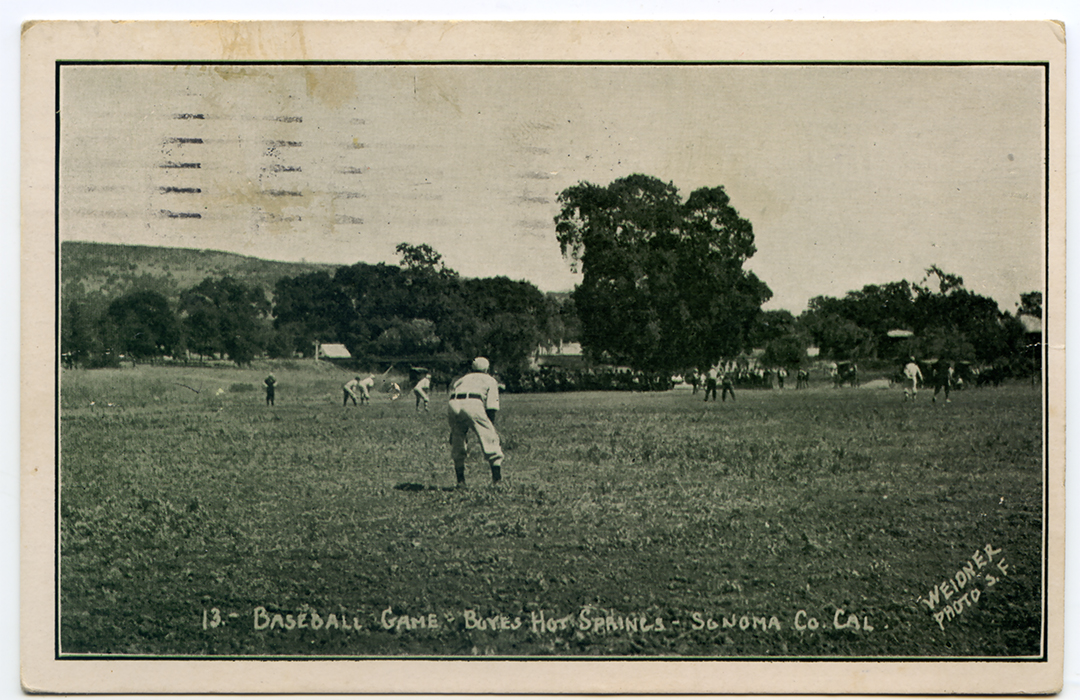
Post marked 1914


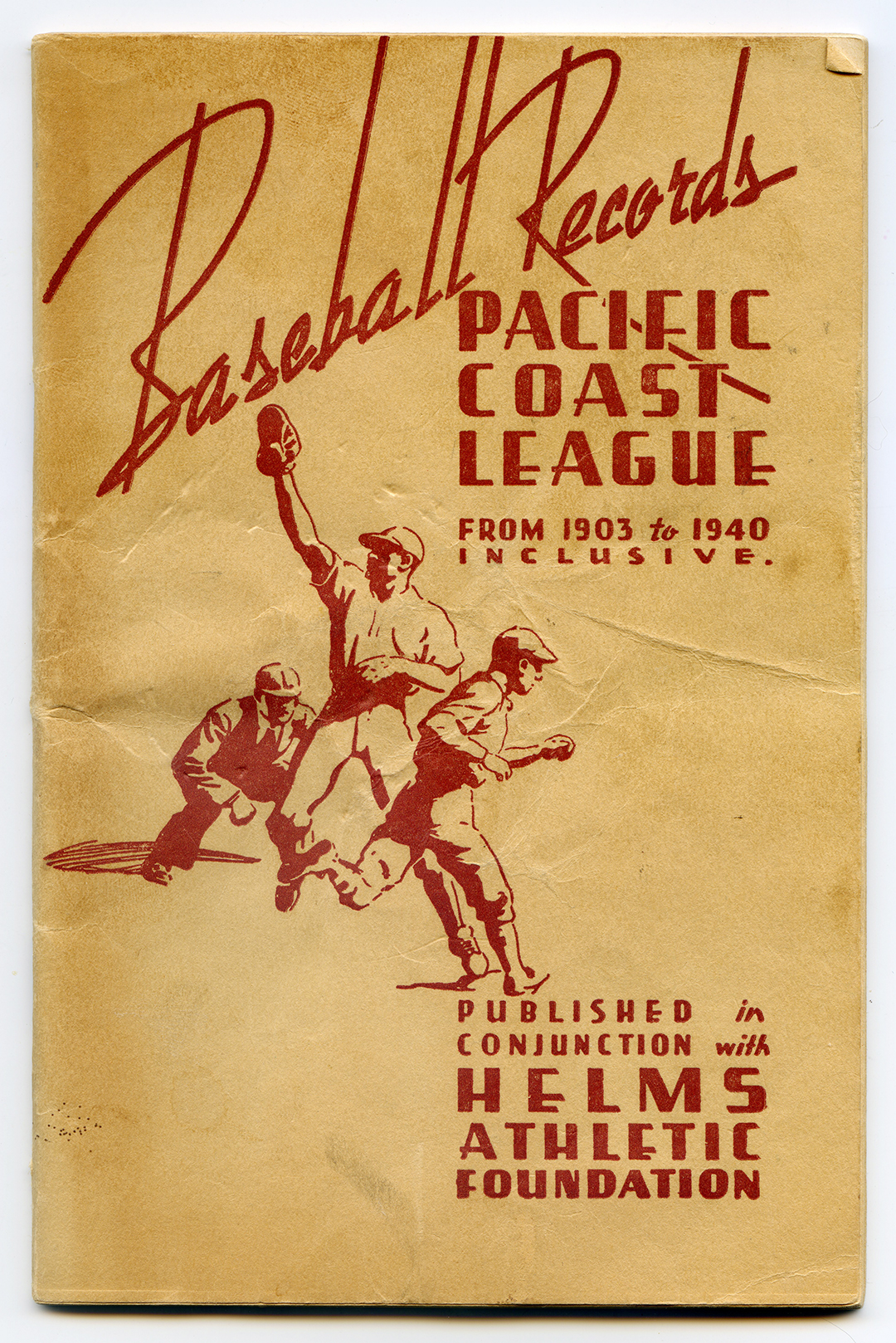
The League was founded in 1903. Teams initially were not associated with the major leagues and PCL baseball was considered an “outlaw” league until 1904 when an agreement was settled with Organized Baseball which made the PCL a Class A league. Still the PCL was “the only game in town” west of St. Louis until the Giants and Dodgers moved to California in 1958. Star players of the League included the DiMaggio brothers and Ted Williams which tells you something about the level of play.

PCLBookCover copy

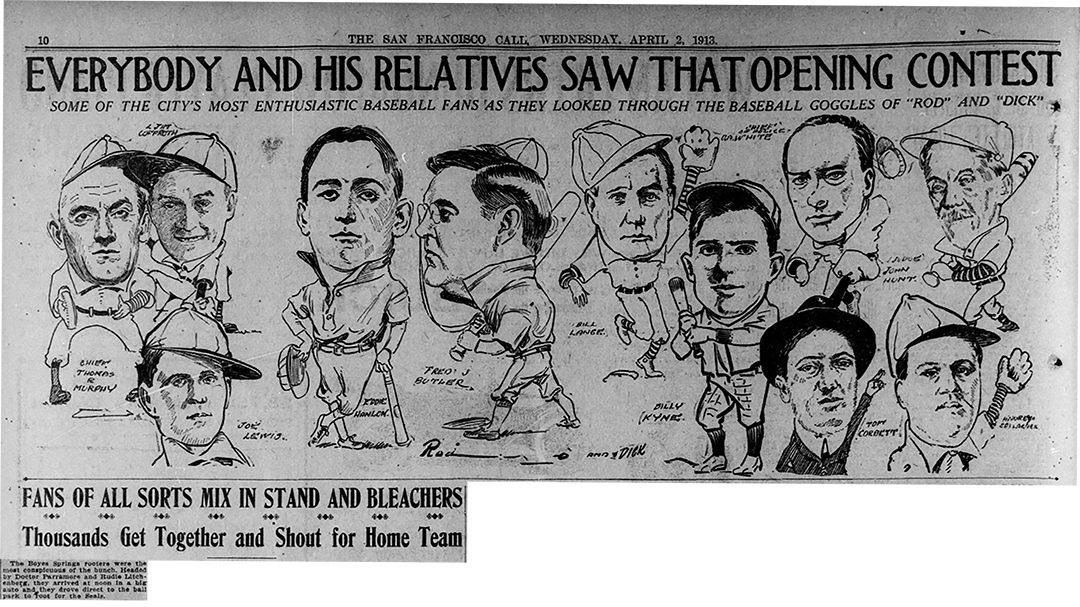
We know that the San Francisco Seals, a perennial powerhouse, were holding spring training at Boyes Springs as early as 1912. In that year, as an SF Chronicle headline read, an “ Eight Acre Ball Park (is) Being Built at Boyes Hot Springs.” The Chron goes on,…” it seems certain that the Seals will have the largest ball grounds in the world (!)-and very likely the finest-in which to prepare for their pennant struggle.” Manager Cal Ewing “…is highly enthusiastic about the new quarters.” In 1913 the SF Call, in an article about opening day, declared “The Boyes Springs rooters were the most conspicuous of the bunch. Headed by Doctor Parramore and Rudie Litchenberg (sic), they arrived at noon in a big auto and they drove direct to the ball park to root for the Seals.”

OpeningDay1913Characetures

SF Call, 1913

Building new parks for the Seals happened every few years, it seems. In 1913, under the heading “Interesting Items From El Verano and Vicinity,” the Index tribune reported that “Dr. E.L. Parramore and R.G. Lichtenberg (owners of the Boyes Bath House) of Boyes Springs were in the city on Friday of last week. Their visit was for the purpose of purchasing the lumber to build the fence around the new ball park, which has been laid out for the use of the Seals, who will do their spring training there.”

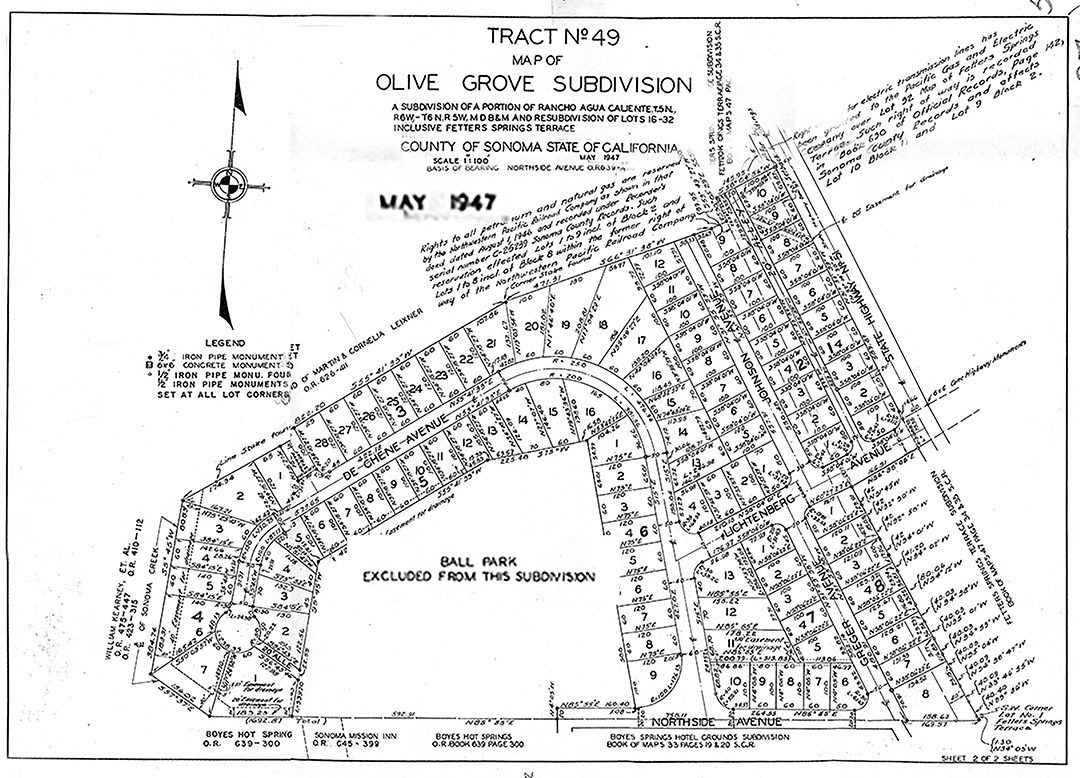
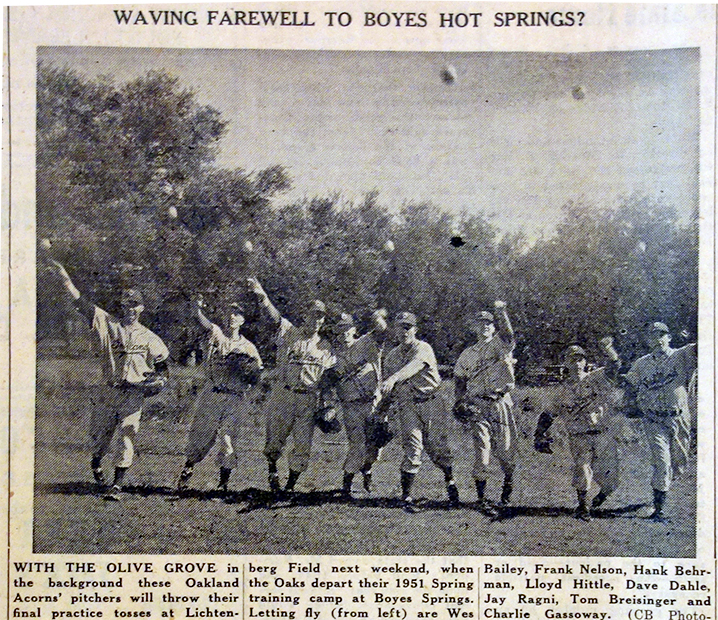
This is probably the field that endured until the 1950s. It was also very close to the Boyes Bath House. The land was surrounded by the Olive Grove subdivision in 1947 (see map),and completely subsumed by housing in the following decade. Originally named Fetters Field, it later became Lichtenberg Field. Today, De Chene Ave. roughly follows the old outfield fence.

OiveGrovePlat1sm

Sonoma County Recorder’s Office

PitcherandOlives1951

Index Tribune, 1951

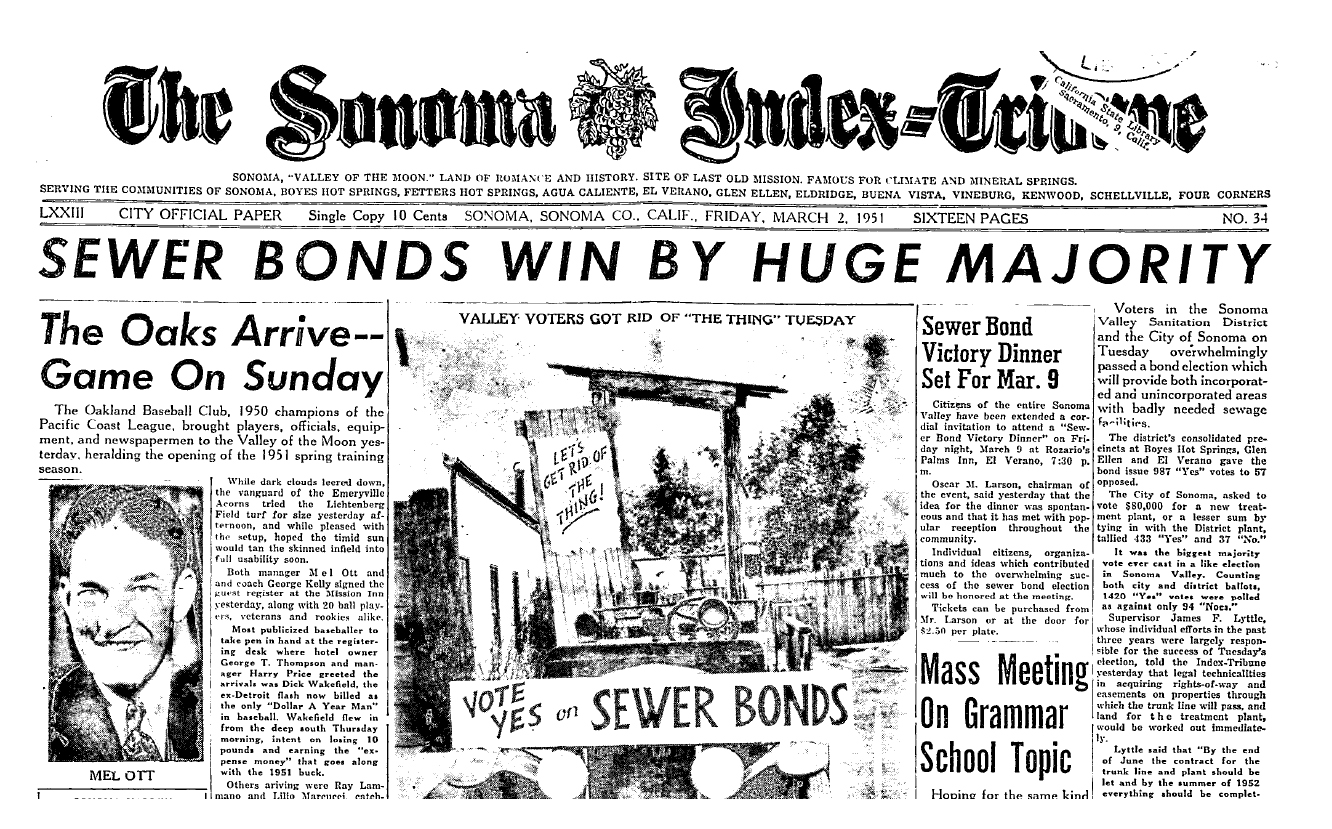
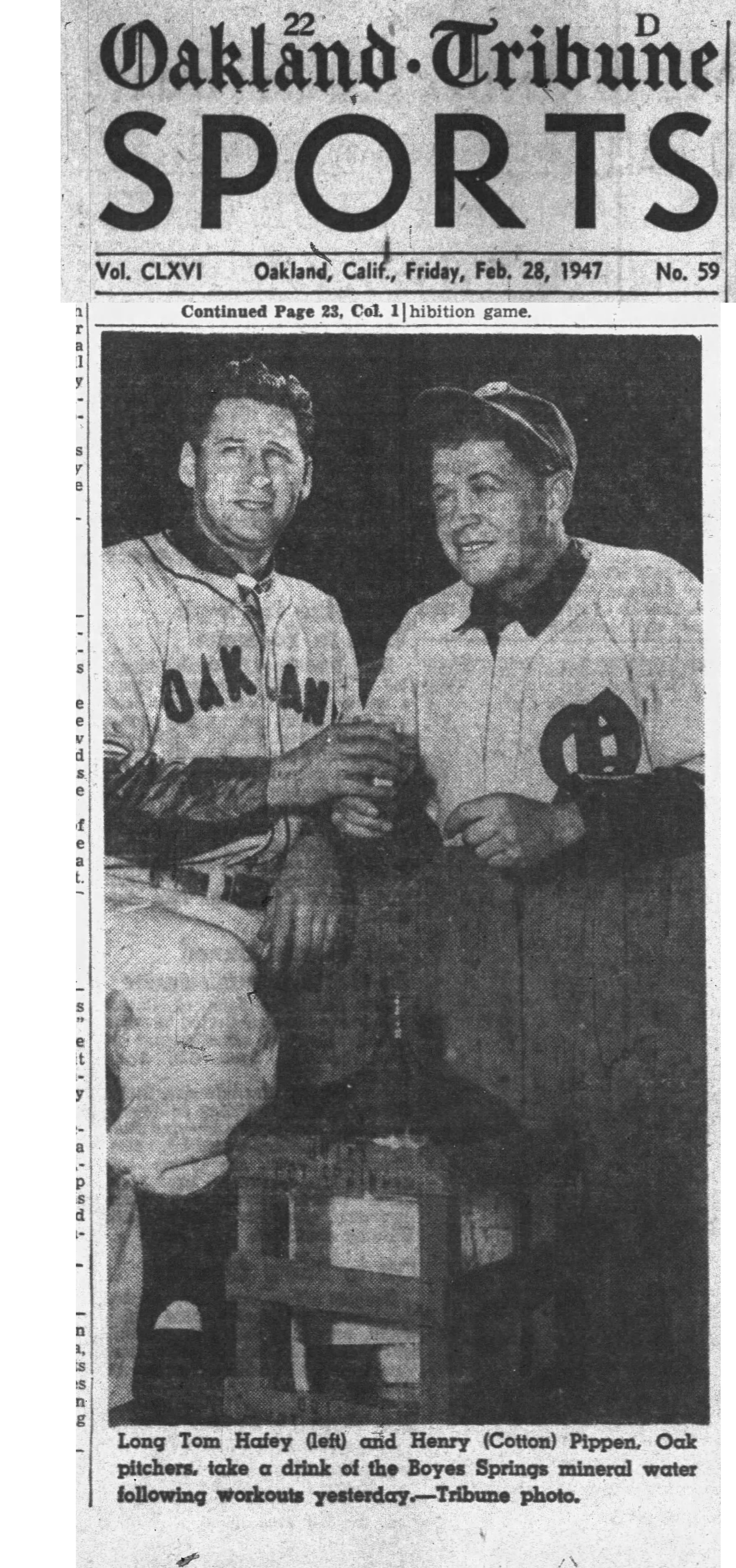
The Seals weren’t the only team to train at Boyes Hot Springs. In 1950 the Twin Falls farm team of the Yankees were there; in 1951, the Oakland Oaks. The Index Tribune put the story of their arrival on the front page, with a photo of manager Mel Ott. Since one of the original attractions for teams was the healthful waters, it was natural that some players would endorse the product. The Oakland Tribune showed two Oaks pitchers enjoying Boyes Springs mineral water after a workout in 1947.

MelOttArrives1951

BoyesWaterBaseballOakTrib19472.jpg

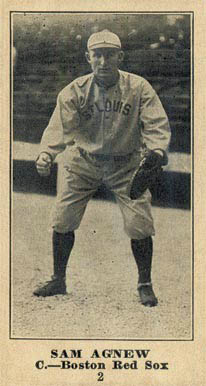
Some of the major leaguers who came to the valley for training ended up settling there. One such was Sam Agnew. SamAgnewbbCard

According to the Society for American Baseball Research, “Sam Agnew is best remembered for being the catcher for both of Babe Ruth’s pitching victories in the 1918 World Series.” Agnew started in baseball with the Vernon team of PCL in 1912. His Major League debut came with the St. Louis Browns in 1913. He started as catcher for the Browns through 1915, when he was traded to the Red Sox. While a St. Louis player he had the distinction of being called out while sitting in the dugout: the team was found to be batting out of order and he was supposed to at the plate at the time.

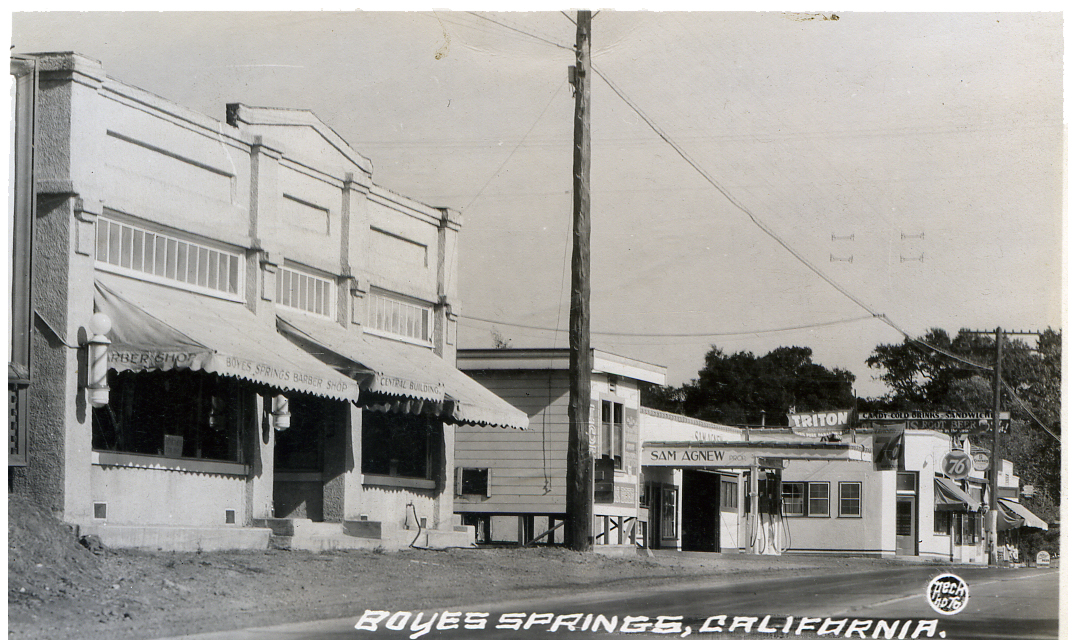
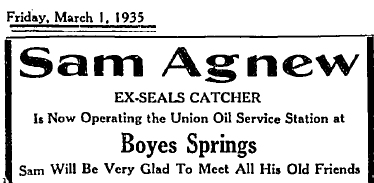
Agnew opened a service station in Boyes Springs in 1935. It was at the corner of Vallejo St. and the Highway (where the Barking Dog parking lot is today.) Agnew died in 1951 in Sonoma.

Lookingsouth@VallejoSamAgnewAd1935

AND THAT’S JUST A SAMPLE! STAY TUNED…

Index Tribune courtesy of the Sonoma Valley Historical Society. All others as noted or Author’s collection.


Standard
Boyes Hot Springs, History, Wonders and Marvels

Nine Pounds of Iron


KnobTopDown1Knobfrint1Ovoid object of cast iron, heavily rusted, weight about 9 lbs, found, sometime in 2010, in the soil at the southeast corner of lot # 6 block 12 of the Boyes Springs Sudvivison A, which was platted in October of 1913. It appears to have been attached to a shaft, of which there is a broken stub. It’s too big and heavy to be doorknob: Possibly a surveyor’s corner marker.
Standard

GrapesMetaGrapes

Boyes Hot Springs, nature, Neighborhood Phenomena, Photographs, Wonders and Marvels

Grape vines and “grape vines”

Image
Art, Boyes Hot Springs, People, Photographs

Wing Young Huie

“My intent is to reveal not only what is hidden, but also what is plainly visible and seldom noticed.”

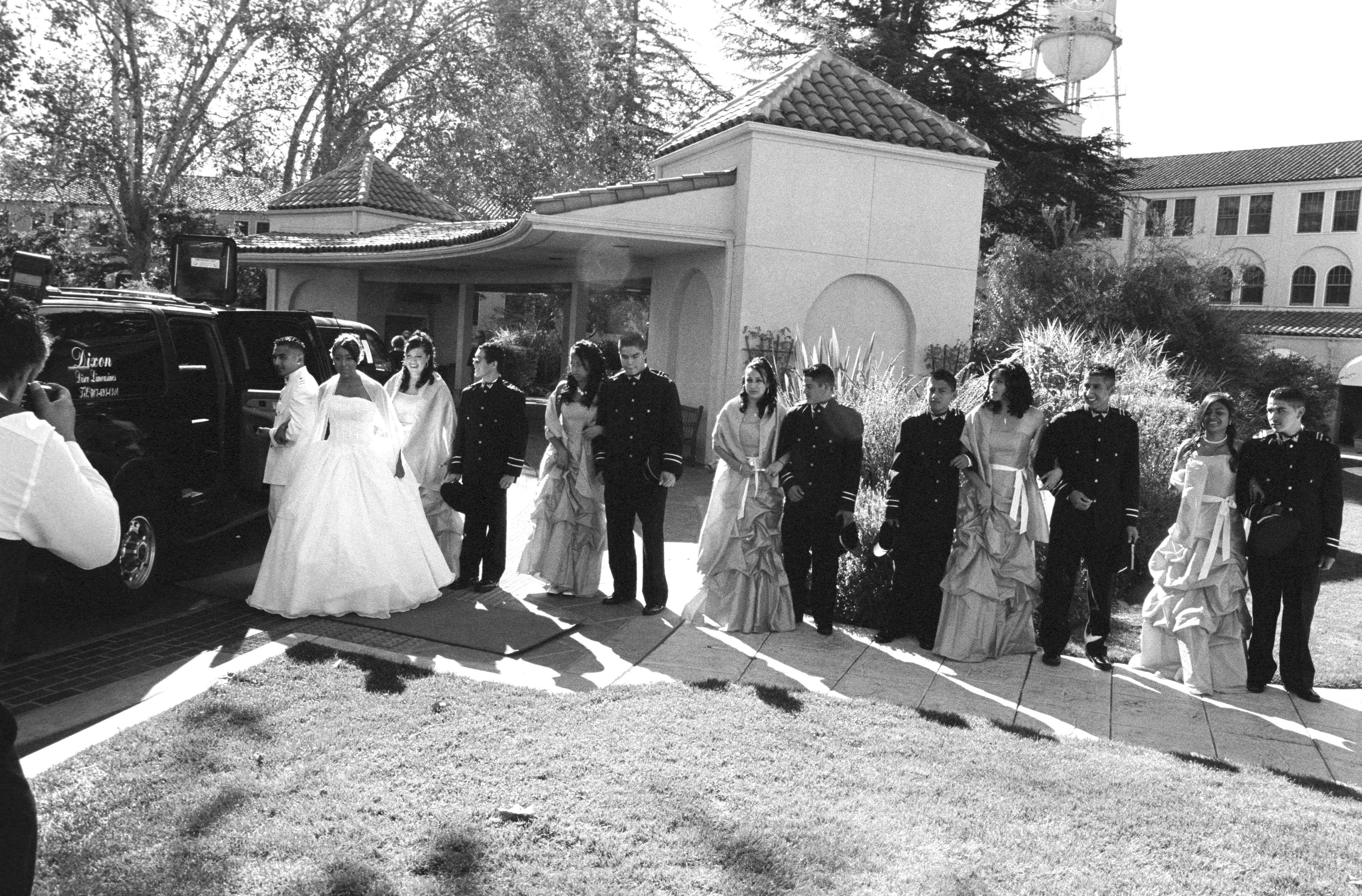
The Springs Museum concerns itself with “History, Art and Community.” Art has been somewhat neglected until now. Wing Young Huie is not a resident of the Springs, but the art he created here constitutes an important document of the place. It is an artistic achievement and a historical archive of Boyes Hot Springs in 2007.

SP54-32.Jpg

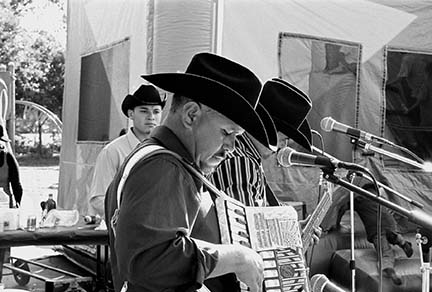
“I am the youngest of six and the only one in my family not born in China. For most of my life I’ve looked at my own Chinese-ness through a white, middle-class prism. Growing up in Duluth, Minnesota made it easy. After all, I was weaned on Snoopy, Mary Tyler Moore, and the Vikings. Mom made me pray to Buddha every New Year, but it was Jesus Christ Superstar who became my cultural touchstone. The result was that sometimes my own parents seemed exotic and even foreign to me.

They also were my first photographic subjects. I was twenty and living at home, experimenting with my new Minolta camera, when I made the first exposures of my dad in the kitchen. It was strange and exhilarating to look at someone so familiar so intently, and see something new. Now, some thirty years and hundreds of thousands of exposures later, I’m still trying to look at the world anew.

SP54-1.scanned.jpg

Inside the Springs follows my many projects that attempt to reflect the dizzying mixture of socioeconomic and ethnic realities that encompass our changing cultural landscape. My first major exhibition in 1996 focused on Frogtown, a St. Paul neighborhood plagued with a dubious reputation driven in part by media stories. I spent two years photographing the complexities and mystery behind those headlines.

I continue to focus on submerged communities that exist on the periphery of the prevailing cultural radar. My intent is to reveal not only what is hidden, but also what is plainly visible and seldom noticed.

SP53-14.wyh.jpg

I had never been to The Springs or Sonoma prior to my residency through the Sonoma Community Center. At the invitation of Shelly Willis, the former Artistic Director of the SCC, I spent one month photographing Boyes Hot Springs in October 2007. The process of photographing and interacting with people has remained, for the most part, the same since I photographed my own neighborhood in Duluth. I simply walk around, encountering people on the street, who then suggest or introduce others to photograph.

In this manner I meandered through the crooks and alleys of The Springs, photographing hundreds of citizens going about their daily lives. To describe a few: barbequing chickens, harvesting grapes at dawn, waiting for the school bus, a job, a blessing, a taco, dancing in the driveway, singing, jogging, mourning, celebrating, taking communion and pictures, aerobically swimming, tasting coffee and sweating communally.

SP43-16

It’s difficult to sum up what I saw or learned. I photographed a fraction of what is there, but I feel I saw a lot. Sometimes I get asked what is the purpose of what I do and I’m never sure how to answer. In a way, making those first photographs of my dad may have been one of the most intimate things I ever did with a man who was not easy to know. Maybe that’s the reason.

There were many who helped me along the way, including Mario Castillo and the Vineyard Workers Services, Libby Hodgson, manager of the Barking Dog, Eric Holman, Abdul and Celeste Winders, formerly of the Valley of the Moon Teen Center, Juanita Brinkley, Tarja Beck and the Finnish American Heritage Association, Ellen LaBruce and the La Luz Center, Martha Parra, Ross Drulis Cusenbery Architects, and all the folks at the Sonoma Community Center.”

www.wingyounghuie.com

This slideshow requires JavaScript.


Standard
Boyes Hot Springs, History, Now and Then, Resorts

The Center of Town

The corners Sonoma Highway makes with Boyes Blvd. and Vallejo Ave. are the heart of Boyes Hot Springs. From the 1890s to now, it has been our commercial hub. Many buildings are gone, but significant ones remain, if altered. The Post Office has been there, in three different buildings, for over one hundred years. Many new businesses thrive and more are planned. During the season, we now have a weekly farmers market.

The path the highway follows was probably originated by mastadons migrating to the coast. Boyes Blvd. and Vallejo Ave. came along much later, during the early 20th century, when speculators started to subdivide the land.

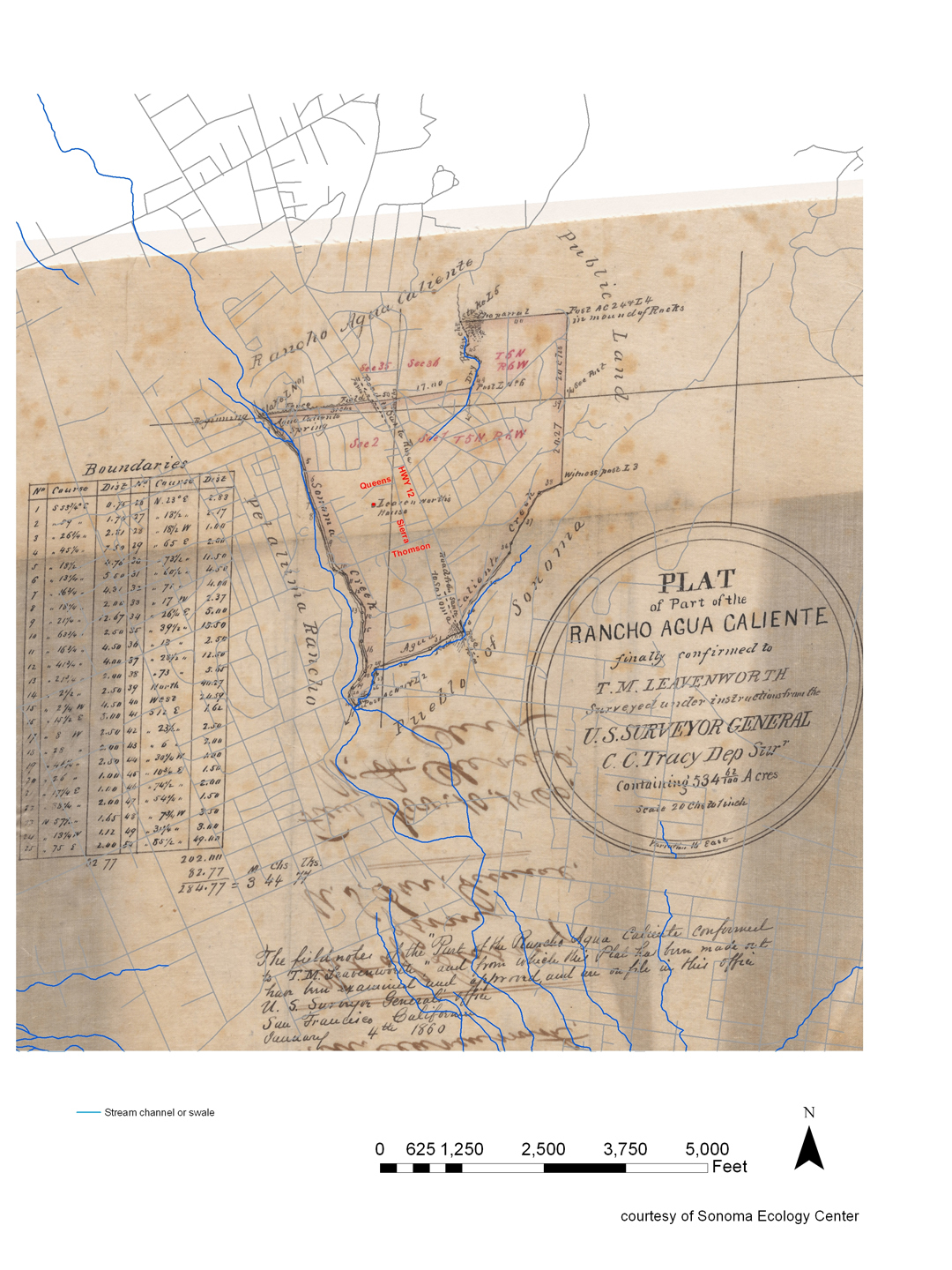
A.Dawson-Leavenworth1860sm2

Only the highway ( called “Road to Santa Rosa”) was there in 1860 when the United States Court confirmed Thaddeus Leavenworth’s claim to 534 and 62/100 acres of land in the Rancho Agua Caliente, land that was to become Boyes Hot Springs, Agua Caliente, and Fetters hot Springs.

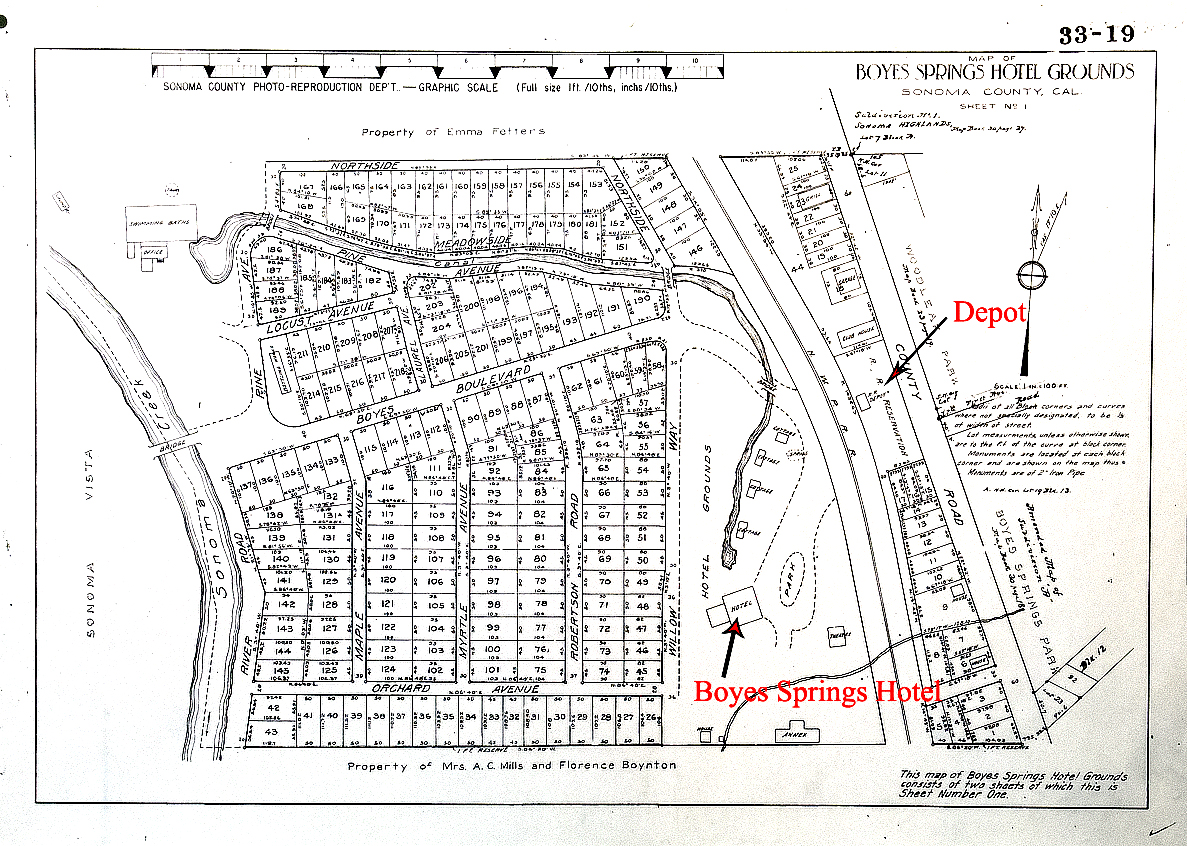
HotelGrounds1916Annotated

The highway is just called “County Road” in the 1916 Hotel Grounds subdivision map, which also show Boyes Blvd. but does not extend to the east, so no Vallejo.

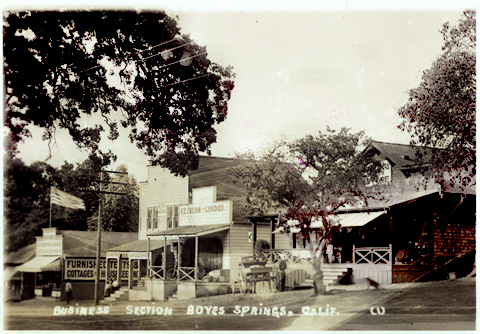
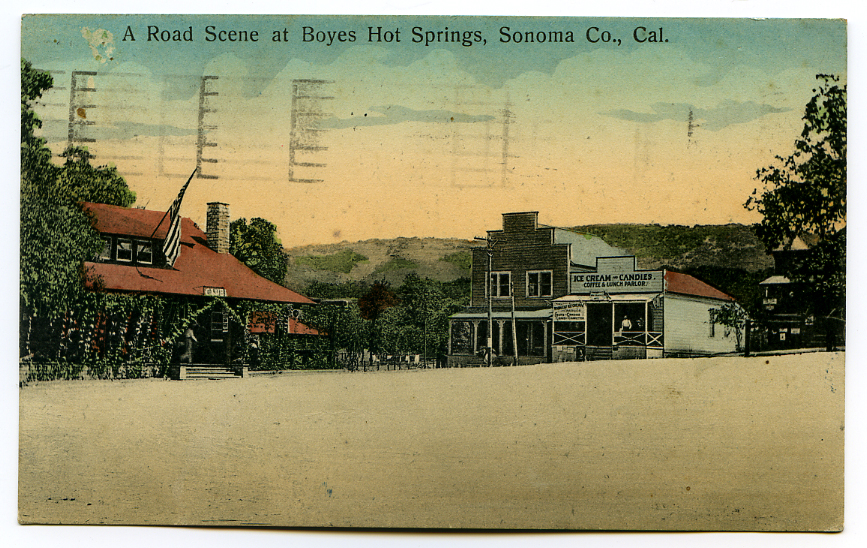
businessdistrict1roadscene

Possibly the oldest photographs of the location are scenes of The Club House (Red roof in lower photo, shown on the Hotel Grounds map), Grahams Store, and other businesses, from around 1910.

BHS1939SMISignBHSRRmap

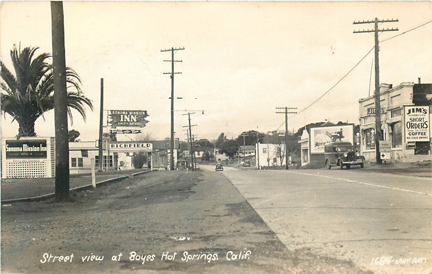
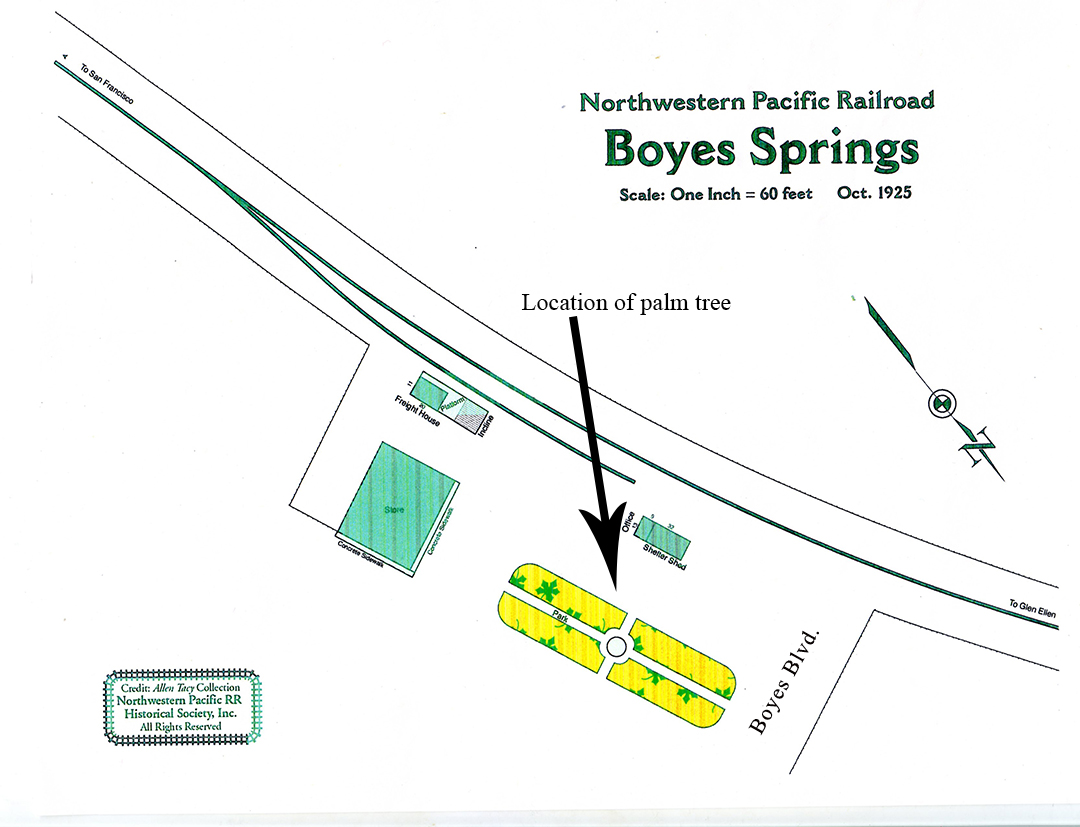
A beautiful 1939 shot shows the entrance to the Sonoma Mission Inn, the Richfield Station, Jim’s café, other businesses and the palm tree in the center of “Boyes Plaza.”

Boyesand12ArtRay.jpg

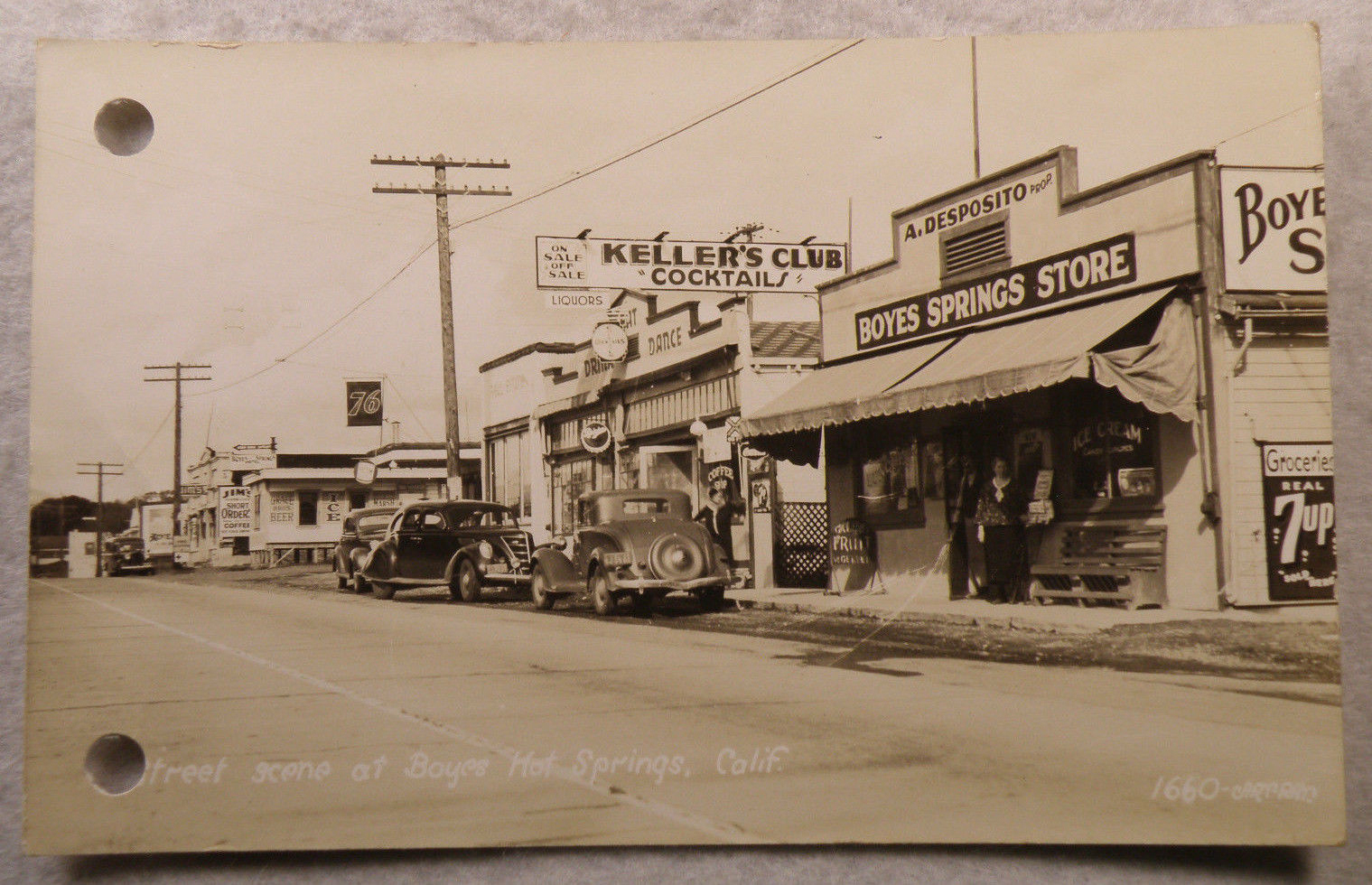
Shot from slightly farther south, this 1930s photo also show Jim’s, in the distance, and two buildings in the foreground that are still there in 2019.

VallejoHighwayAgnew.jpg

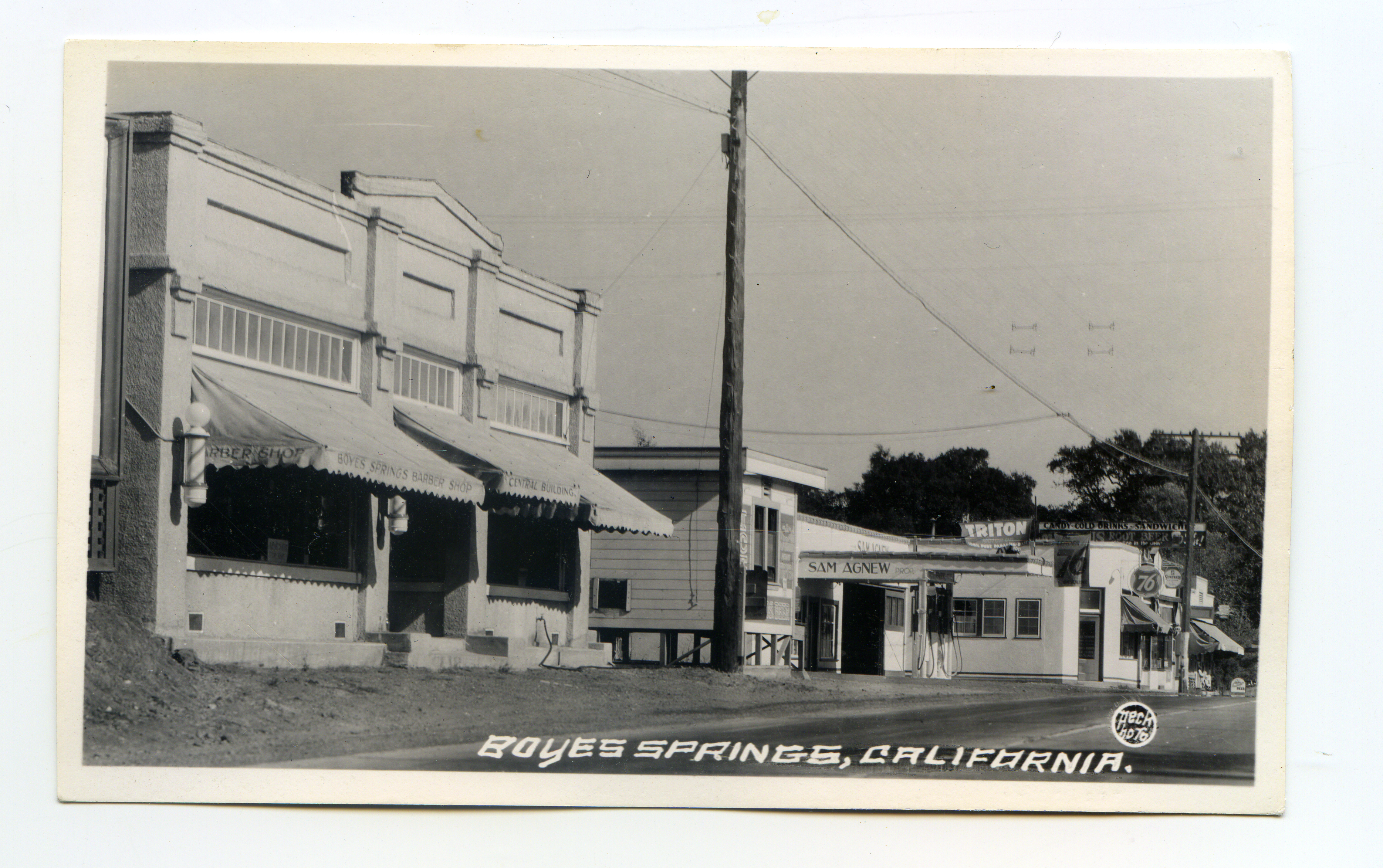
Now looking south at the Center Building, that housed Jim’s, past the corner of Vallejo Ave.

Woodleaf1930shires.jpg

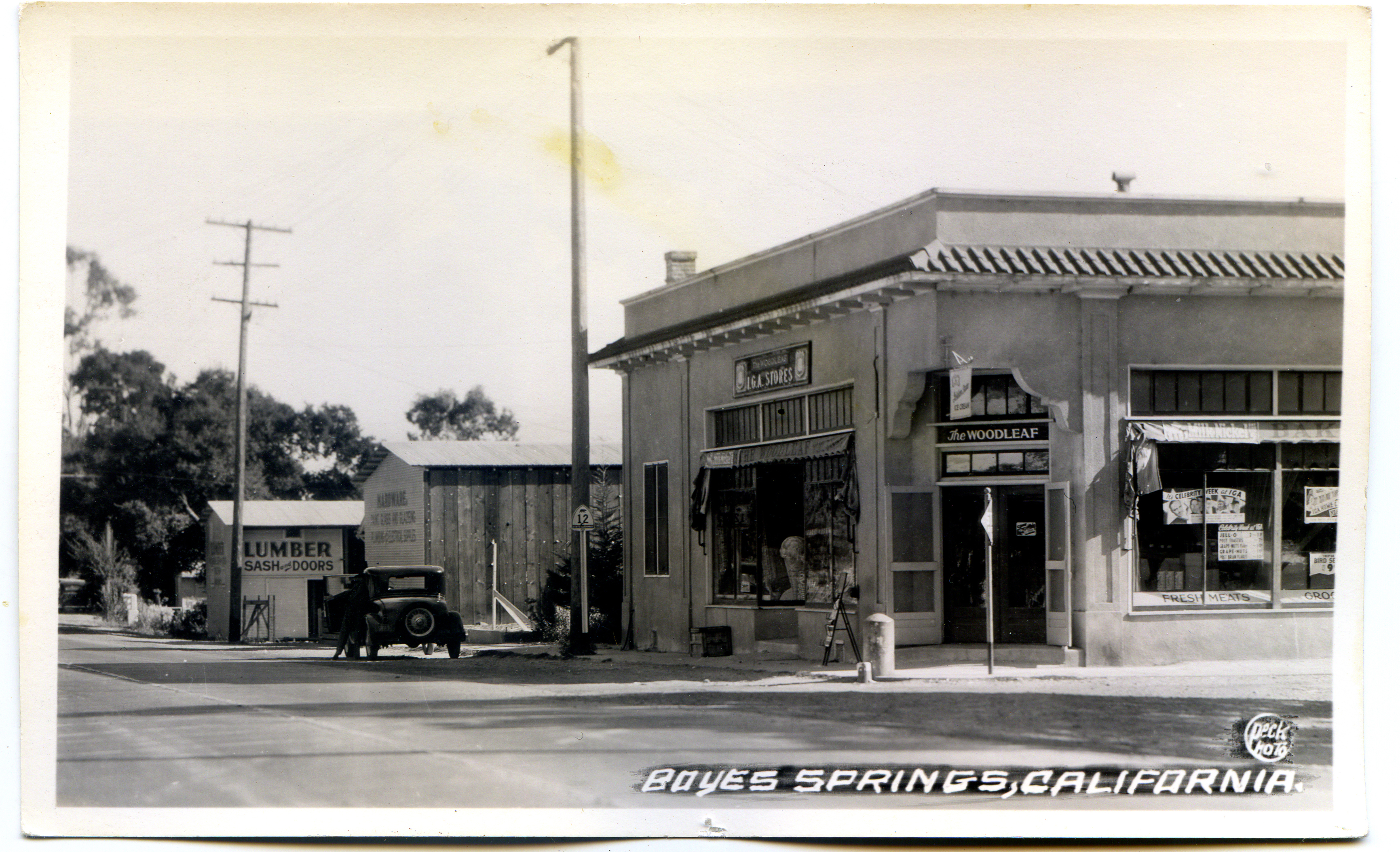
The southwest corner with the Woodleaf Store, around the same time (1930s).

SMINavyAir1

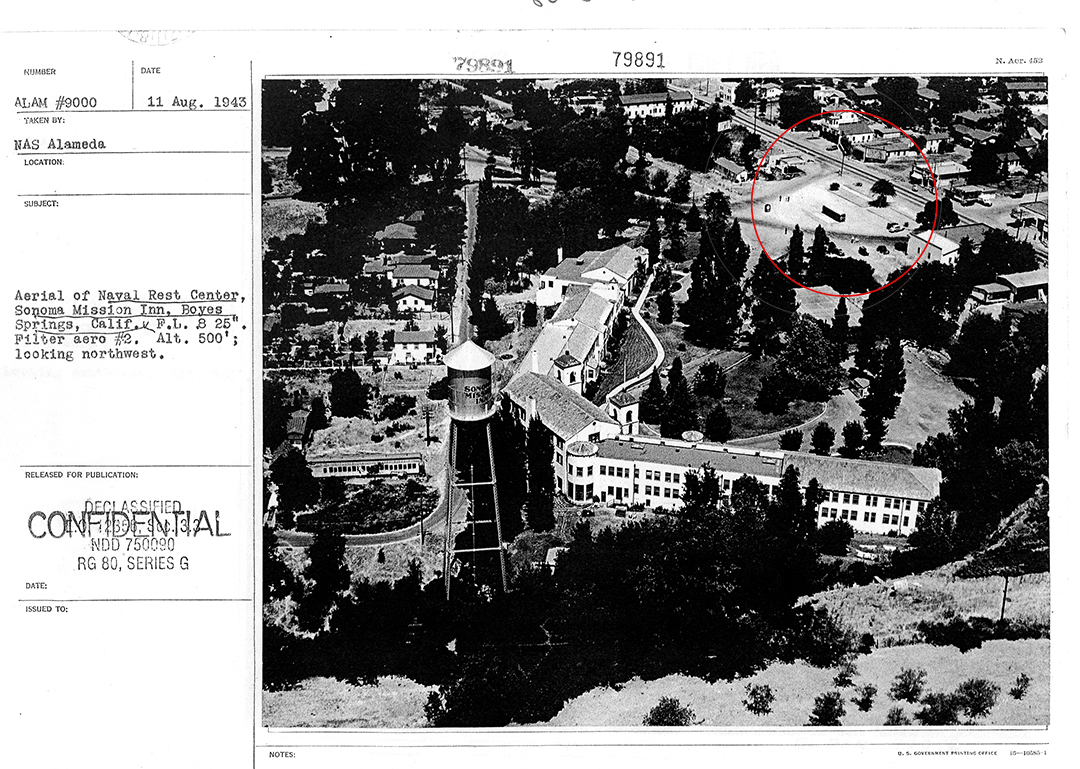
This 1943 Naval aerial photo shows the train depot and palm tree in the upper right corner.

ZanE75LookingSouth.jpg

ValleyDrug2.jpg

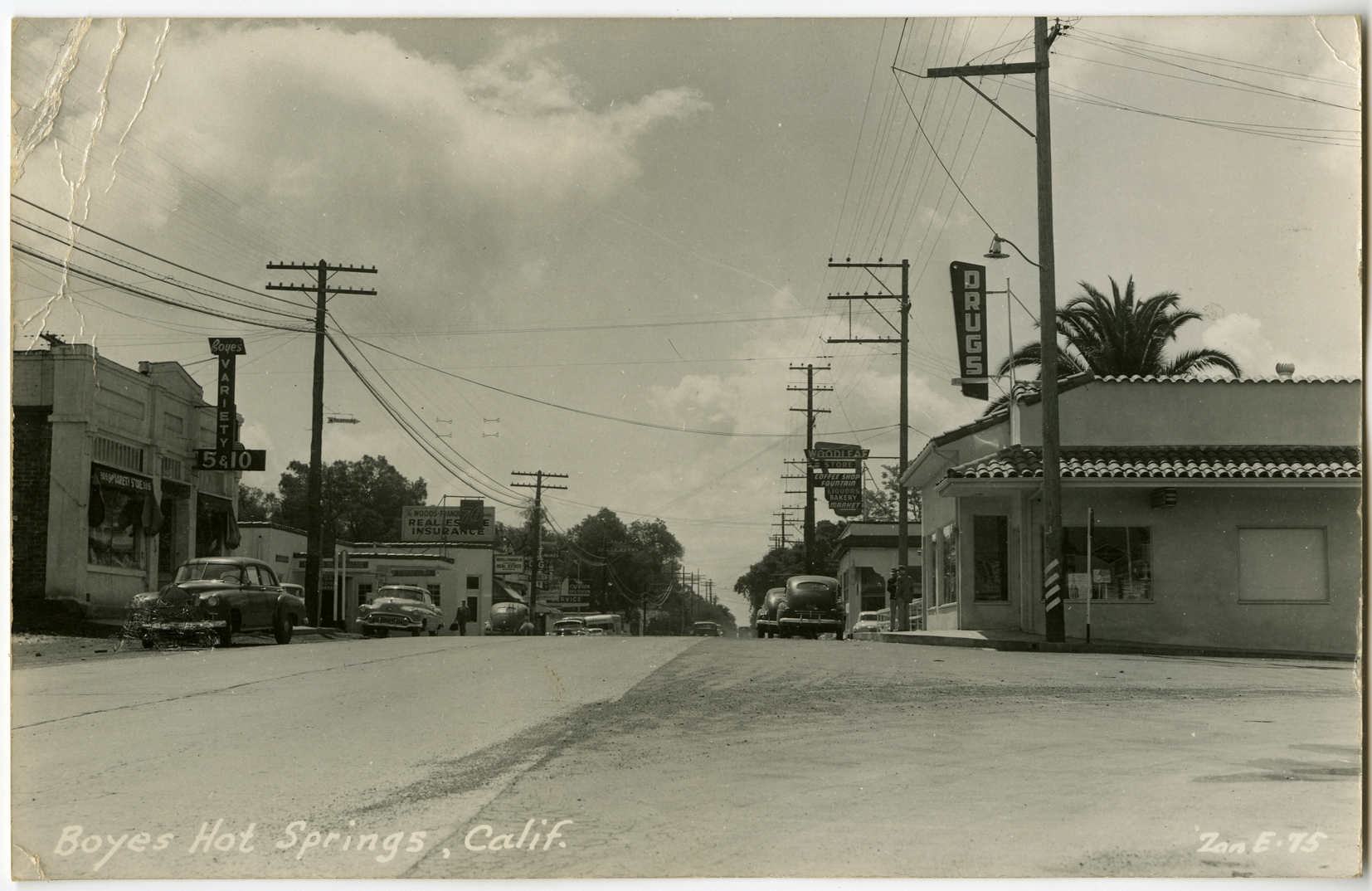
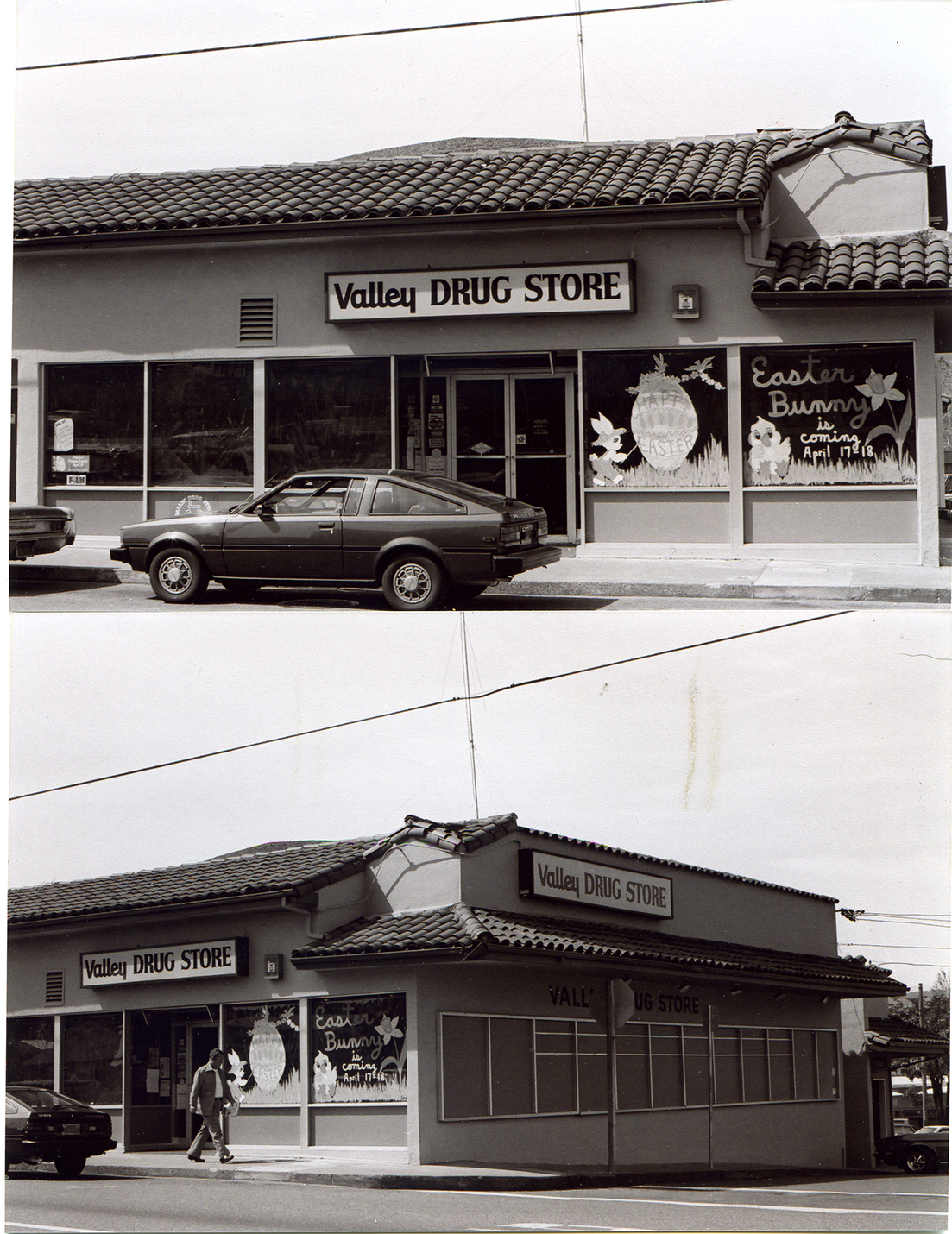
In the early 1950s, the Plaza Center building replaced the Boyes Plaza. The Center  Building (opposite side of the highway) has become Polidori’s 5 + 10 cent store.

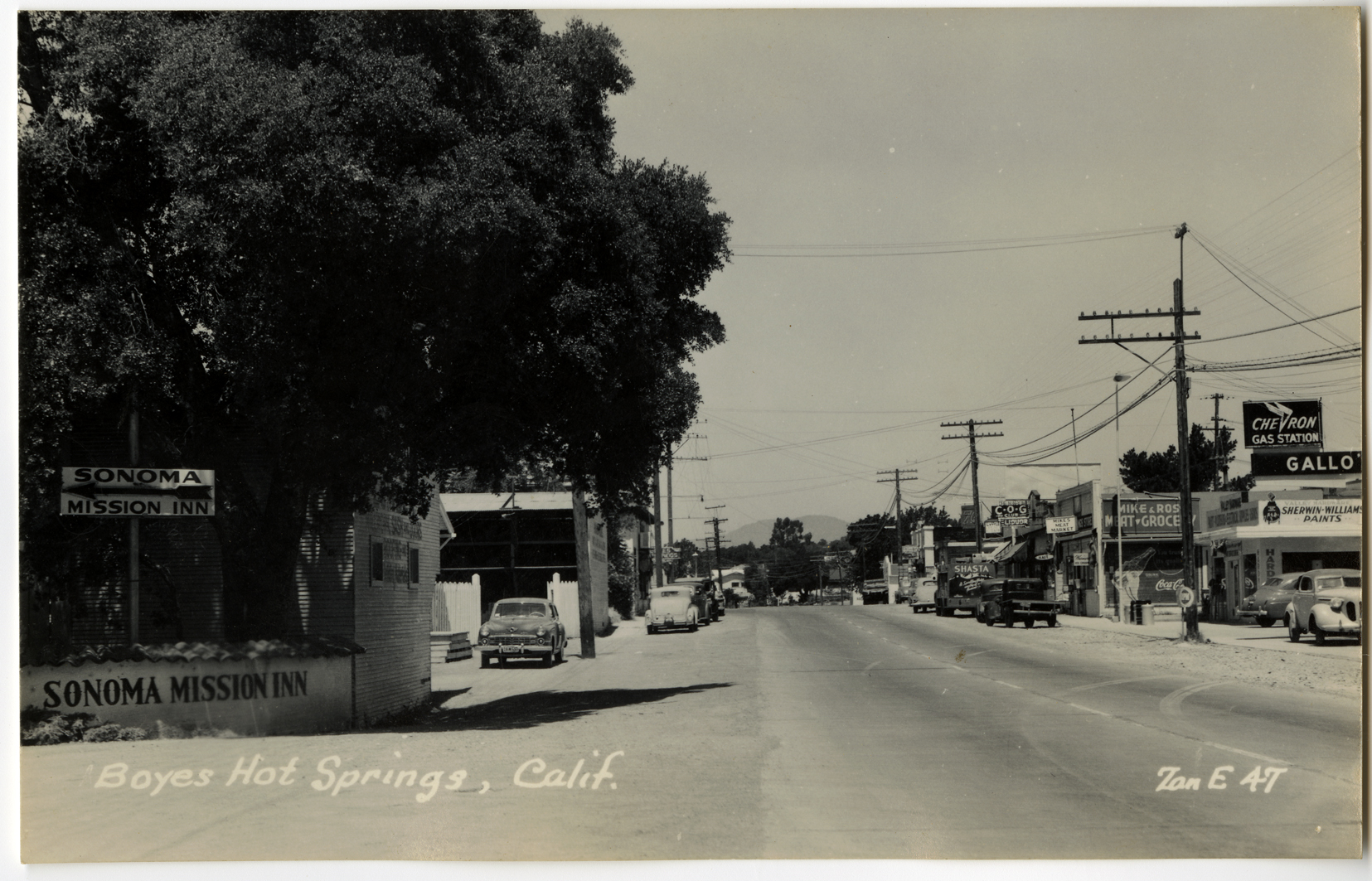
ZanE47SMIEntrance.jpg

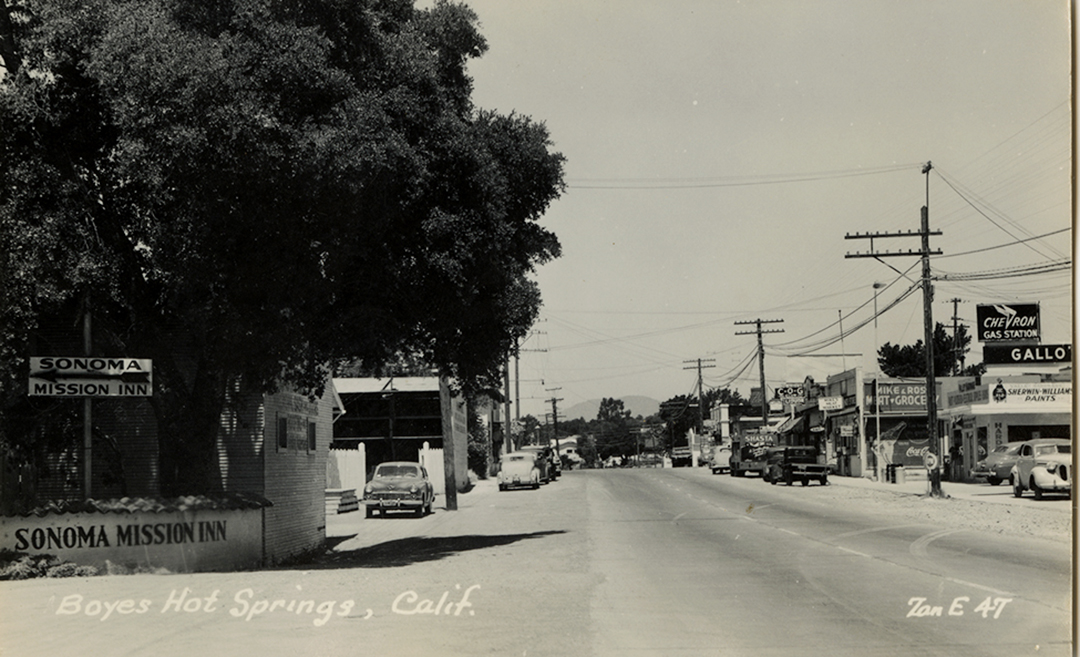
The Mission Inn entrance in the 1950s. On the right, signs for Gallo Brothers Service, Mike And Rose’s market and the C.O.G. club.

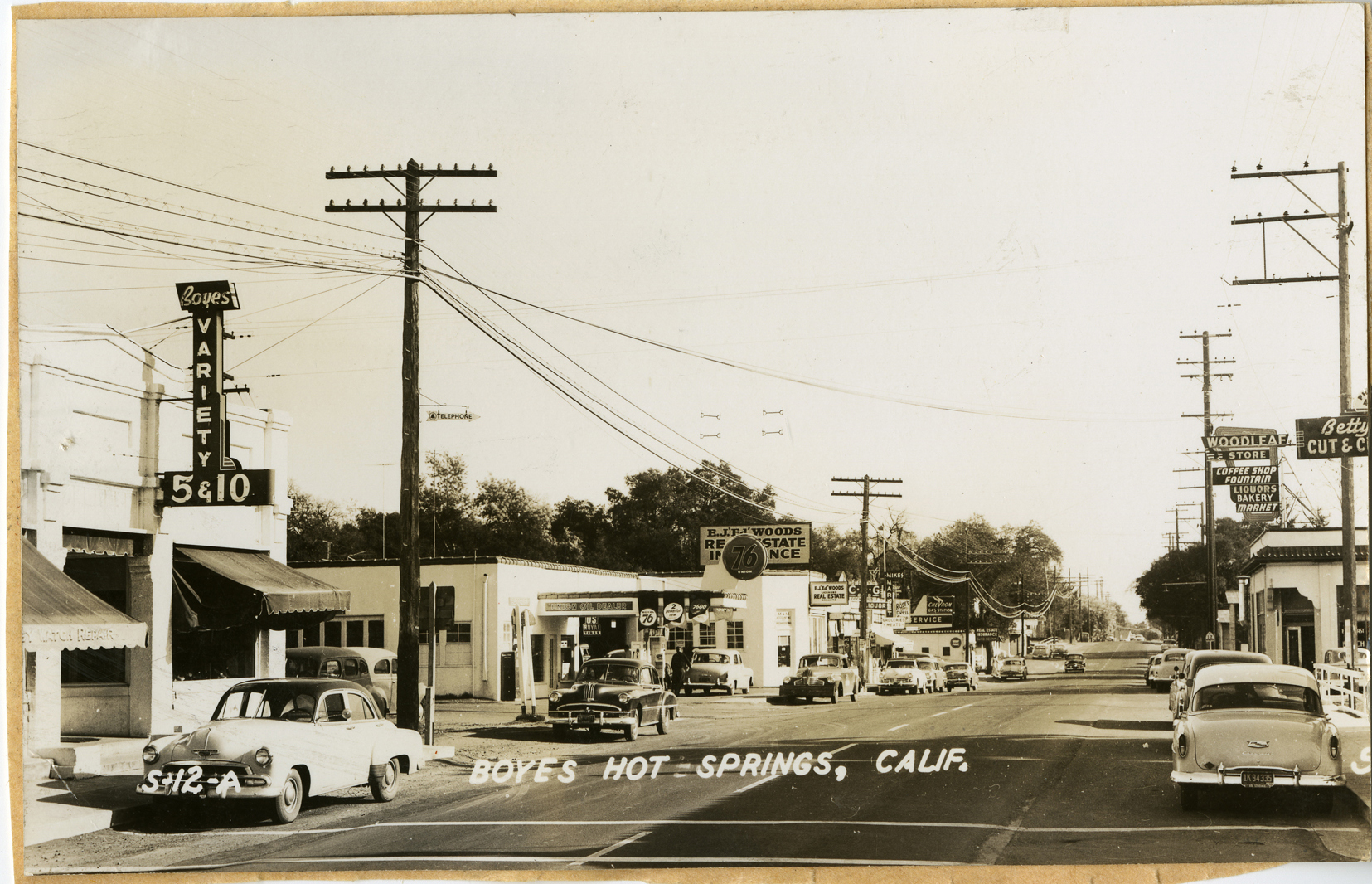
ZanS12ALookingSouth1.jpg

A little later in the 50s, Polidori’s has become the Boyes Variety store. The Woodleaf Market sign is promienent on the right, as well as Betty’s Cut and Curl.

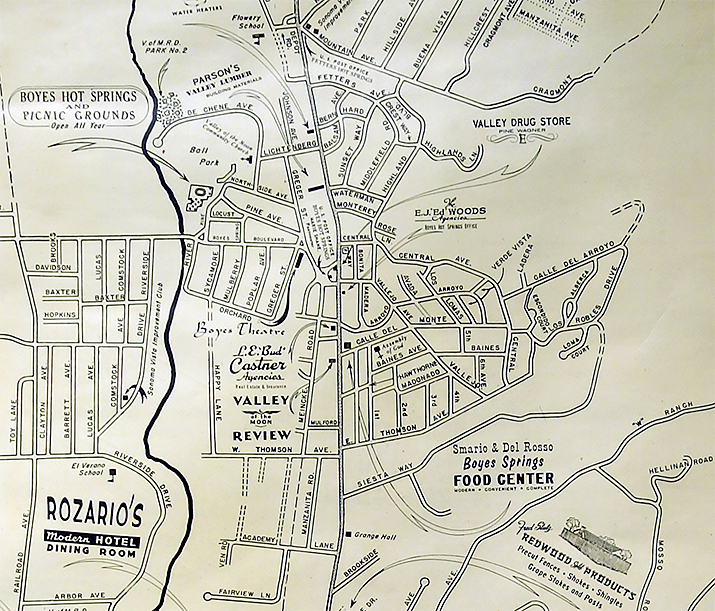
CofCMapClip

In 1955 the Chamber of Commerce issued a map showing many local businesses, including ones at our corner.

The Big three closed in 2016, never to reopen? Buildings come and go. It’s inevitable. But preservation should be important to all of us. Let’s hope we can do what is needed to preserve the Big Three/Woodleaf from demolition.

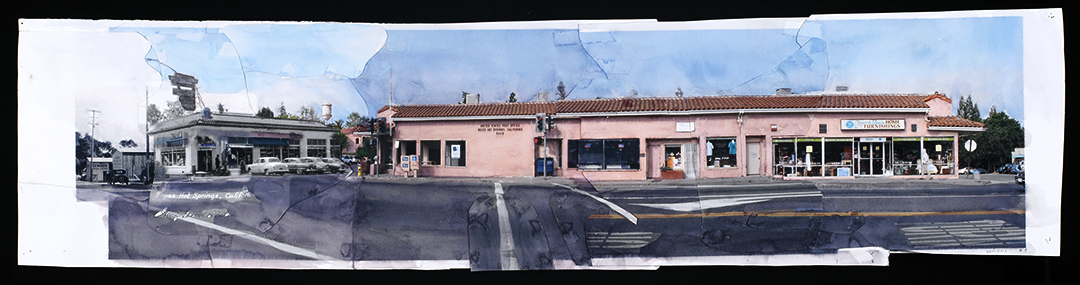
B0005P 0021B0005P 0038

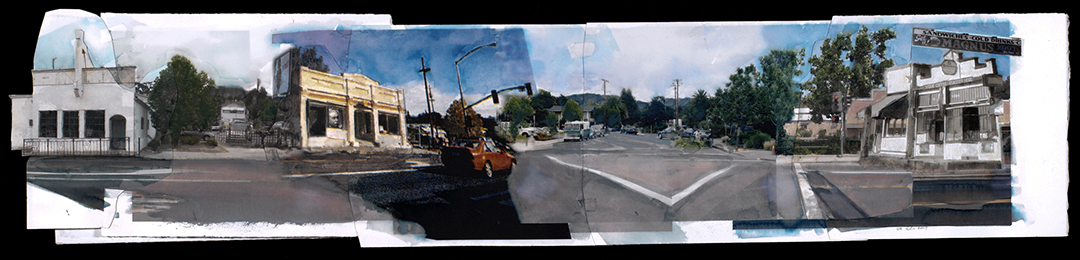
Two artistic interpretations of the intersection from the Valley of the Moon Main Stem Project, by Michael Acker.
Thanks to Arthur Dawson for the Leavenworth Plat interpretation and general info. Other images courtesy of the Sonoma Valley Historical Society, the Northwestern Pacific Railroad Historical Society, the Sonoma County Recorder’s Office, and Stanford Library Special Collections.

Standard
Boyes Hot Springs, History, People, Personal History, Wonders and Marvels

Dick Dawley

We found our friend Dick Dawley out in front of his house on Vallejo St., building a fence. Dick is 85 years old and he’s lived in Boyes Hot Springs for forty nine years. Many people know Dick from the twentyeight years he worked at Parson’s Hardware.


Dick’s fence, which he built from redwood 1x12s milled from logs salvaged from the 2017 fires.

Standard
Fetters Hot Springs, History, Resorts

Leixner/Nimpfer/Weghofer

LeixnerTailorAd1920s

The Viennese

Martin Leixner started a tailoring business in Sonoma in 1919. He was among a group of Viennese immigrants to settle the area. In 1923 he joined with another Viennese tailor, Herman Weghofer, to enlarge the business, which was located “in Fetters Springs, on the Highway, opposite the Hotel.”

LeixnerAd1922

In 1924, Leixner took on another partner, a Mr. Nimpfer, and another business, that of chauffer. The next year we read in the Index Tribune that “Mrs. Putnam, two children, maid and chauffer of Commonwealth Avenue, San Francisco, spent the last week end at Leixner’s Resort, one of the attractive places of the Springs. Mr. Leixner has utilized the rocky formation of the hillside where his resort is situated for rustic stone stairways, and made it otherwise very artistic.” This is undoubtedly the same site at which his tailoring business was located. At some point, Mr. Nimpher’s name appears on the resort in place of Leixner’s.
Leixnershires2

The new facade is dated 1933

Nimpfers1927

Herman Weghofer went on to open his Vienna Coffee Garden just a few hundred feet south of there, a few years later.

ViennaGardenHiRes

ViennaCoffeeAd1925

ViennaCoffeeAd1933On Friday, September 10, 1937, the Index Tribune tells us, a large group of tailors “visited their friend, Herman Weghofer, at Vienna Gardens, in Fetters Springs… This was a veritable tailor’s convention and Mr. Weghofer, who formerly tailored for the City of Paris, was very happy.”

Index Tribune, January 1, 1954-“Death Claims Mrs. R. Nimpfer, Long Time Resident of Fetters”…..She and her husband, Gottfried, who survives her, were proprietors of a Sonoma bakery form 1924 to 1929. The later became proprietors of a grocery store and resort directly opposite the Fetters Hot Springs Hotel, which they operated for nearly 20 years, until selling to Mr. and Mrs. Raymond Roy (Rohr, actually).”

ViennaCoffeAd1944

In 1945Leixner and Nimpfer “branch” out.

Leixner-NimferOrchard1945

FettersOrchardpic

NimphersGrocery1943 copy

At some point the grocery was renamed Roy’s.

Fire at Roy’s Grocery, 1970 (Index Tribune photos courtesy of the Sonoma Valley Historical Society)

In later years the buildings housed various restaurants. In 2019 a photo posted on the Facebook group “You know you’re from Sonoma when..” elicited some memories:

The building on the left that has the “Grocery” sign on the front eventually became my mother-in-law’s Mexican restaurant, Mi Tienda. (see photos above.)

Oak Tree Cantina! Mmmmm!

We use to dine on the roof and watch Juanita throw people out of her establishment! 

The big one with the garage, my dad and mom leased for 5 years, it was a bar called Ev’s Stop. Lots of good times there, early 60s I think. 

I spend a lot of time in Roy’s grocery watching my mom and dad play cards in the back of the the store and sometimes I would go upstairs and watch TV. And if I got bored I would walk home I lived on Hillside Ave. 

Yeah we got on that roof also. So cool to have a birds eye view. Great just to hang out there. 

Was that in the area of Roy’s Sharon and Shorty rented there when Brian was born. 

Roy’s was the building with the two shutters sticking out. 

Loved the Oak Tree! 

I worked at the Oak Tree in the 80s…I miss that place! 

Before Oaktree it was the Hashery. 

After. It was the Oaktree first then the Hashery. 

What a great memory, the Greyhound. Doesn’t look like it changed much from the 30s to the 70s.

LeixnerMexRestarauntSign

Close-up showing fragment of Mexican restaurant sign, 2018.

IMG_5267

2009

IMG_2491.jpg

2008

_DSC3650

2015

AC1933crop

April 2018. Dilapidation increases. How long can these buildings stand?

Leixner2018

December 2018. New windows and new paint give hope!

About my first sight of these buildings: Long before I moved there (from San Francisco) I happened to take a drive down Highway 12 from Calistoga Rd. to the town of Sonoma. The setting, these buildings, and the place names, Agua Caliente, Fetters Hot Springs, Boyes Hot Springs, El Verano, immediately and permanently enthralled me. I remain enthralled.

ACPanocoll2photo

photo collage/painting by Michael Acker

All photos by author or from his collection, except where noted. Newspaper clippings courtesy Sonoma Valley Historical Society.

ViennaGardenPeople.jpg

Newly discovered photo of patrons relaxing at Vienna Garden Cafe.


Standard