Boyes Hot Springs, Entertainment

Lanning/Resort Club/Melody Club

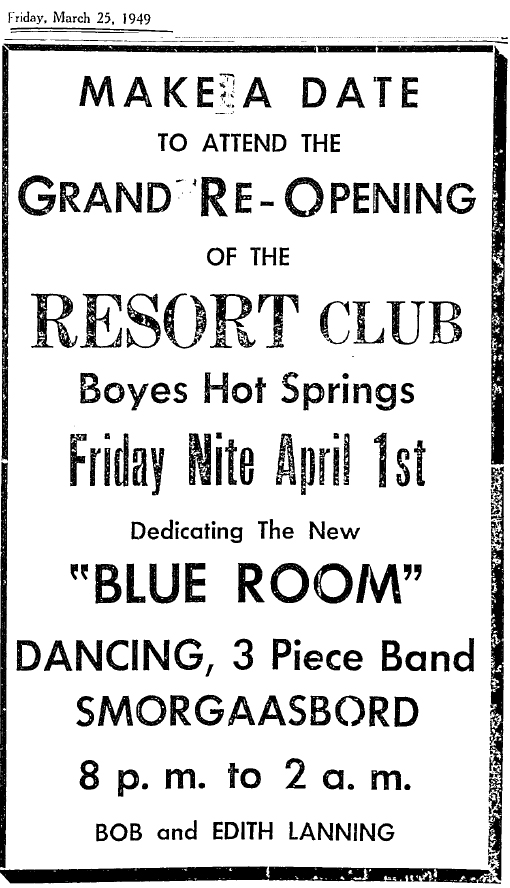
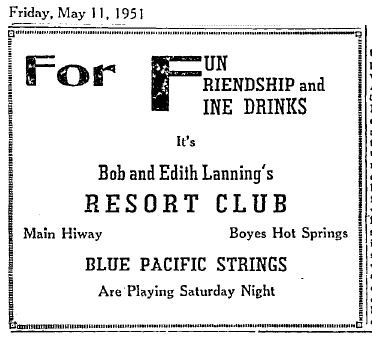
In June of 1945, Bob and Edith Lanning were granted a license to sell alcoholic beverages at their B&E Café in Boyes Hot Springs. By 1949 they had changed the name to The Resort Club.

IT1949ResortClubAd

ResortClubAd1951

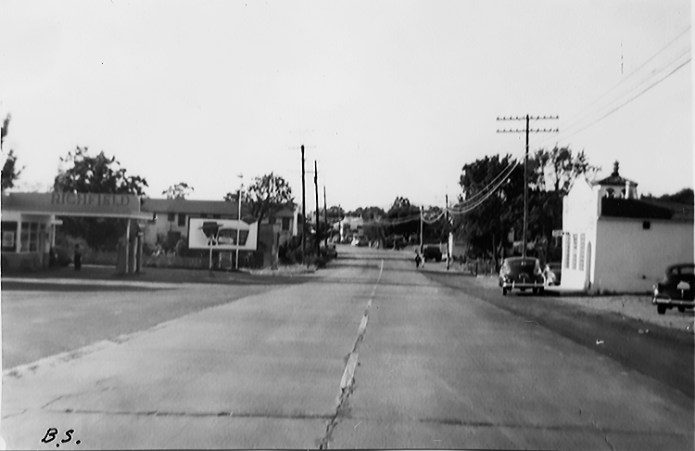
BHS1950sSnapshots3

Highway 12 near Boyes Blvd., looking north, early 1950s. The Resort club building is at right. Beyond it the tower of the Fire Station can be seen.

Bob Lanning was also a photographer. Many of his photos appeared in the pages of the Index Tribune.
BobLanningPhotographerad1950

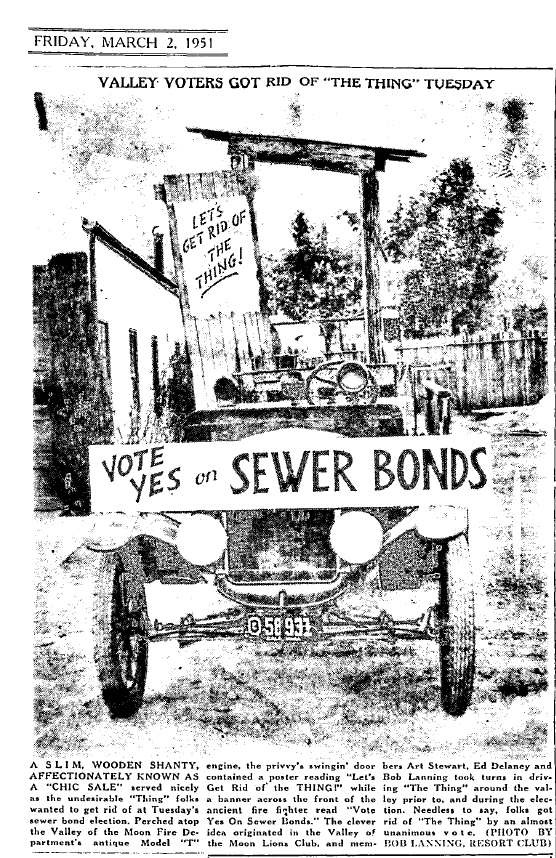
Bob was elected to the board of the Valley of the Moon Water district in the 1960s, but his activity on  water issues started earlier.
LanningSewerbondphoto1951

“…Art Stewart, Ed Delaney, and Bob Lanning took turns driving “The Thing” around the valley prior to, and during the election.” Photo by Bob Lanning.

Edith was active in the Sonoma Valley Grange for decades.

GrangeLadies1951

Women of Sonoma Valley Grange #407, 1951

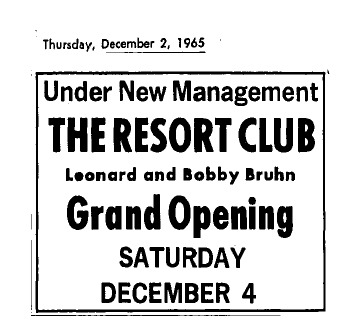
In 1965 the Lannings sold the business to Mr. and Mrs. Leonard F. Bruhn. After selling the club, Bob opened Bob’s Fixit Shop in building on the same property.

ResortClubNewOwner1965

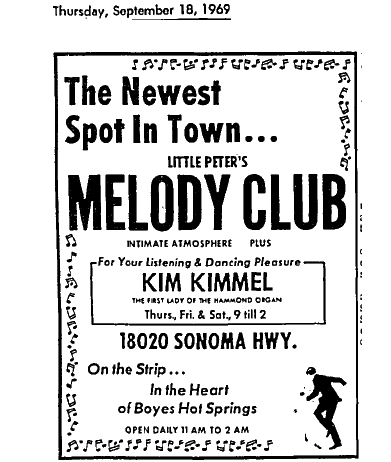
In 1969, Pete Mancuso took over and opened his Melody Club.

ManxusoPhoto1969

Pete Mancuso standing at left, standing. On the right is Kim Kimmel, “First Lady of the Hammond Organ.” 1969

MelodyClubAd1969

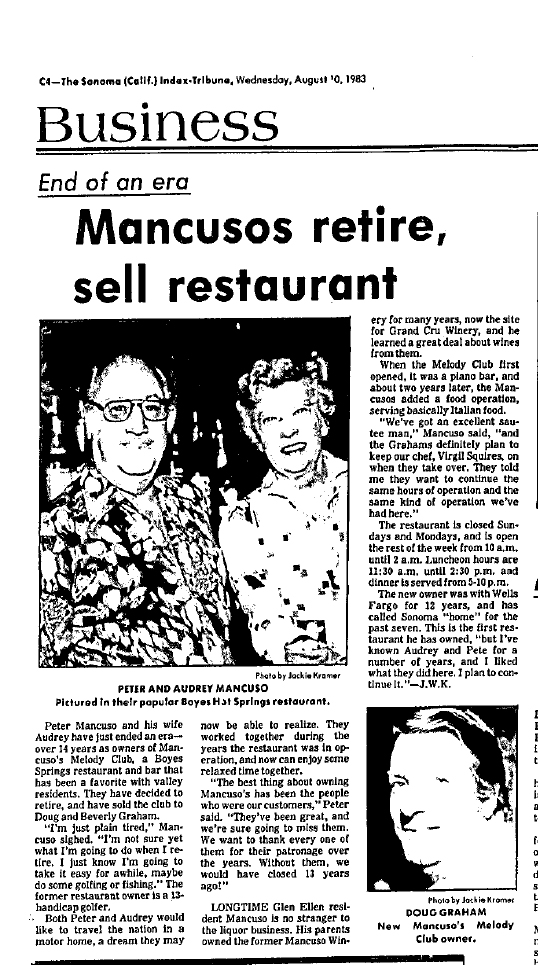
Pete retired in 1983. He sold the club to Doug Graham, but it didn’t last long after that. Lanning Construction moved in in 1984.

MancusosRetire1983

“In 1984 Lanning Structures (Dean Lanning) converted the Melody Club into offices a while after Pete closed.  Lanning Structures closed in 1996 and Steve Lanning Construction took over the offices.  Both metal buildiing contractors, Father and Son.” Winnie Lanning (married to Dean Lanning), 2019, via email.

Dean Lanning died in 2006.

Bob Lanning died in 1995, Edith in 2013.

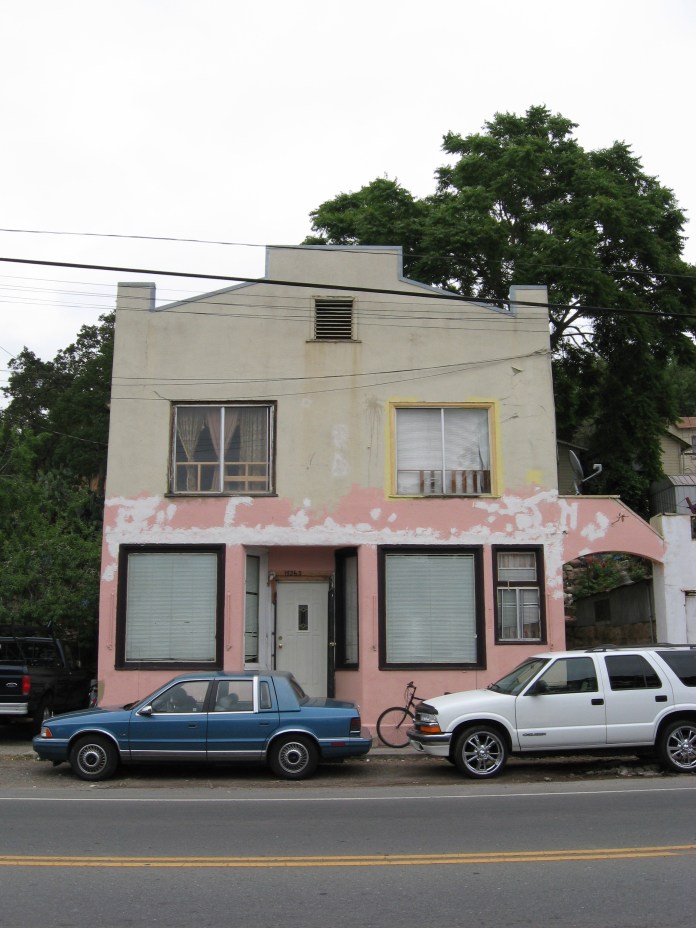
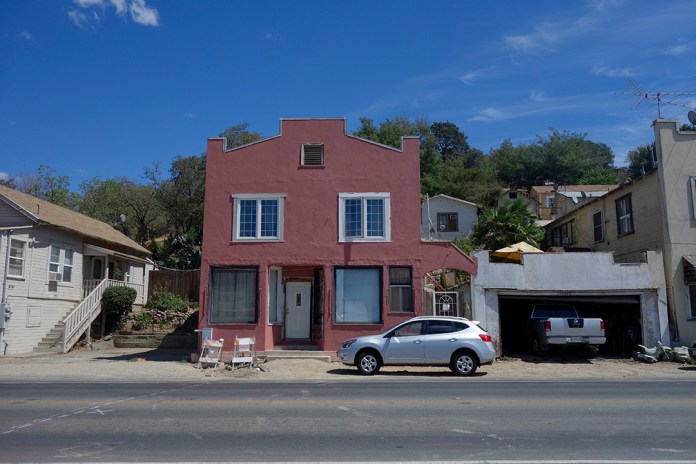
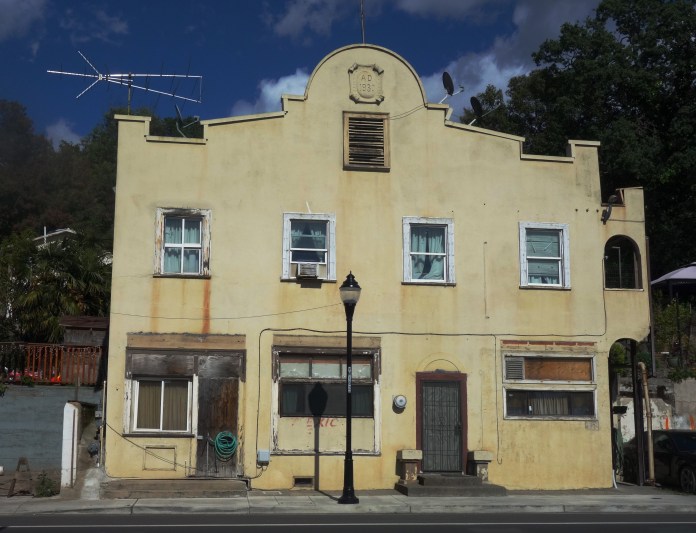
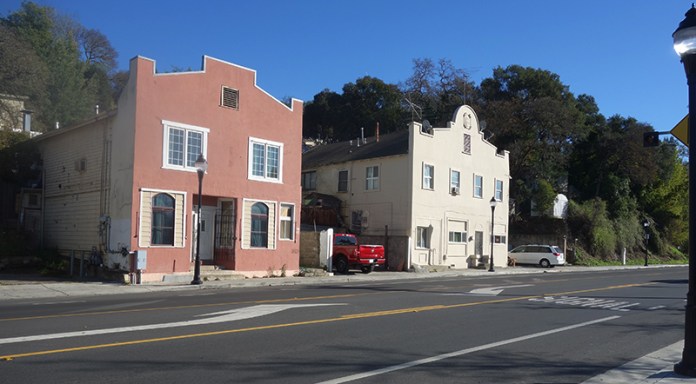
Lanning Structures, 2001, 2008, and 2009.

After the demolition, 2019.

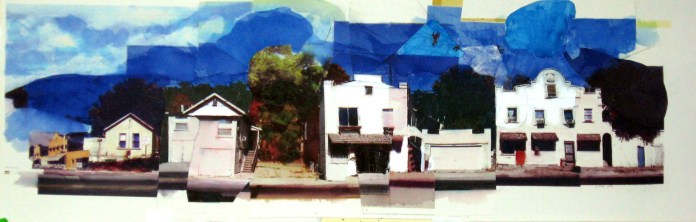
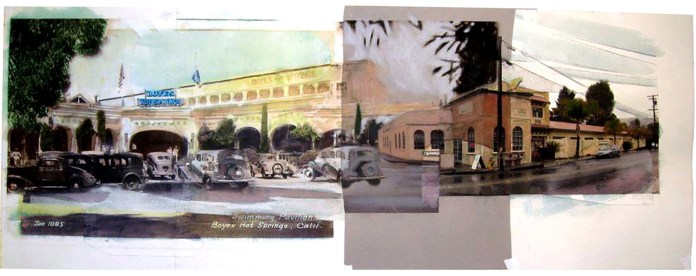
Mrs. Lanning's Tree 41"x27" 5/2012

Entitled “Mrs. Lanning’s Tree.” artist Michael Acker.

Index Tribune and Grange photo courtesy of the Sonoma Valley Historical Society. Other photos by author and from author’s collection.

Standard
Art, Boyes Hot Springs, History, nature

Neighborhood Phenomena

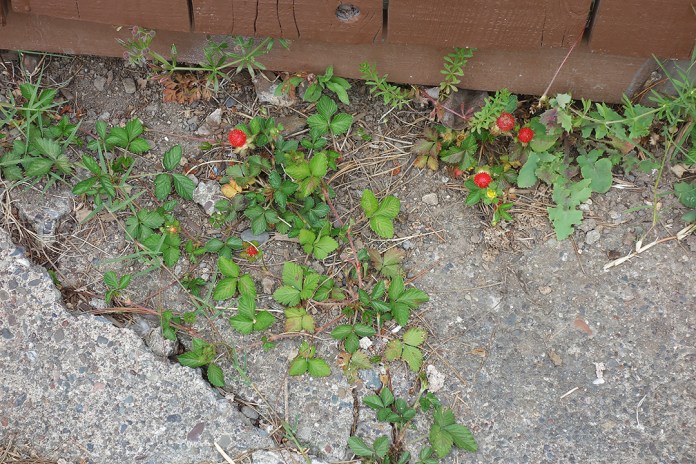
StrawberryiesConcrete2019 copy

Strawberries among the weeds, in concrete, Boyes Hot Springs, 2019

NEIGHBORHOOD PHENOMENA

With thanks to artist Jack Baker

One of the main objects of the Springs Museum is the study of Neighborhood Phenomena.

Perhaps not to define it to precisely is best. However, we can say that NP may be exceptional things or mundane things seen in an exceptional way. Collecting (and it is an exercise in collecting) NP is an act of noticing, something that it is all to easy not to do in an environment that is so familiar as we pass through it daily.

Photography is a good mode for collecting NP, as is sketching, sound recording, rubbings, or actually picking up objects (but try not to disturb the environment. Observers should limit their impact on the world being observed.) Study over time is of interest, so repeated visits to sites are encouraged.

Here is a list of some of the possible categories to look at.

How trees and built environment interact

Signs. What they say, how they change.

Pavement and how is deteriorates.

Plants in all their many different forms

Animals among us, including pets

Infrastructure such as wires, drains, etc.

Design-everything built is designed, if only by default

Holes in the ground

Mounds of things

Stories

Further Inspiration: Artists as collectors. Collections as art:

“The mission of the Natural History Museum of Los Angeles County is to inspire wonder, discovery and responsibility for our natural and cultural worlds.”

“Including those items is part of the museum’s effort at redefinition, although the curators were drawing on an eccentric set of collections that were never really part of the natural history tradition. The facade of the building still bears its original title: Los Angeles County Historical and Art Museum. In fact, the art collection became the heart of the Los Angeles County Museum of Art in the early 1960s, when the “natural history” title was adopted.”

“It all adds up to a reminder that, even as the art historians have been slowly trying to squeeze the history out of their discipline, artists have been assiduously turning themselves into historians, archivists, even collectors of a sort.” Barry Schwabsky, the Nation April 2014


“As Ellen Dissanayake has observed, the function of art is to “make special”; as such, it can raise the “special” qualities of place embedded in everyday life, restoring them to those who created them…”

“A starting point, for artists or for anyone else, might be simply learning to look around where you live now…”

“Psychologist Tony Hiss asks us to measure our closeness to neighbors and community and suggests ways to develop an “experiential watchfulness” over our regional “sweet spots,” or favorite places. Seeing how they change at different times of day, week and year can stimulate local activism…”

Quotes from The Lure of the Local, Lucy R. Lippard


The collection, and, by extension, the museum is a work of art:

“Bottle Village began as a practical need to build a structure to store Grandma Prisbrey’s pencil collection (which eventually numbered 17,000) and a bottle wall to keep away the smell and dust from the adjacent turkey farm. However, it was her ability to have fun and infuse wit and whimsy into what she made, which over time became the essence of Bottle Village. Practicality alone would not explain The Leaning Tower of Bottle Village, the Dolls Head Shrine, car-headlight-bird-baths, and the intravenous-feeding-tube-firescreen, a few examples of her delightfully idiosyncratic creations.” From the Bottle Village website. http://www.bottlevillage.com/

17,000 Pencils!

Standard
Boyes Hot Springs, History, Now and Then

Boyes Springs Mineral Water


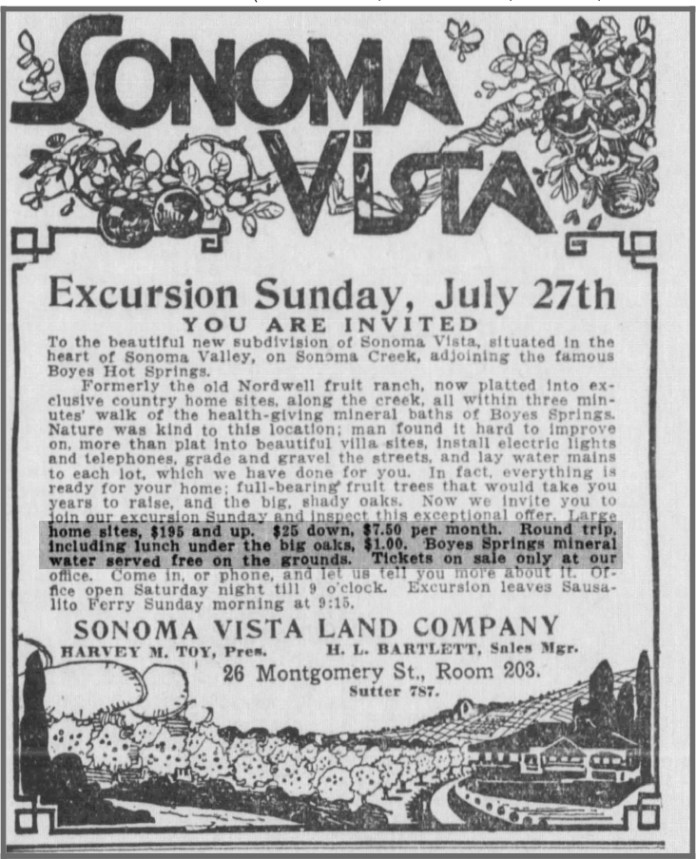
In 1914, the Sonoma Vista Land Company, Harvey Toy, President, advertised in the San Francisco Examiner for a  train excursion to Boyes Hot Springs:

Examiner1913SonomaVistaAd

“home sites $195 and up” and…”Boyes Springs mineral water served free on the grounds.”

Sonoma Vista was subdivision on the west side of Sonoma Creek, south of Boyes Blvd.

SonomaVistamapClip

In January of 1918 the Index Tribune stated that “The bottling works of the now famed Boyes Springs Mineral Water has been put in the charge of Fred J. Hansen, popular musician and poultry man.” (A talented guy, apparently!) And “The management of the mineral water concern is no small matter as $25,000 worth of water was bottled and marketed last season.”

WaterLabel2

By 1925, the concern was managed by one H. Peterson, according to the IT. “Physician recommend the use of this water as a corrective for stomach and related troubles…Try a case and enthuse more and more over Boyes Springs,” the reporter stated, severely blurring the line between news and advertising.

Baseball players also enjoyed it, according to the Oakland Tribune in 1947:

BoyesWaterBaseballOakTrib19472

boyeswaterad

The bottling plant, as shown on the County Recorder’s map of the Hotel Grounds subdivision, was adjacent to the Bath House near Boyes Blvd.

(See https://springsmuseum.org/history/documents/maps/)

BottlingPlantclip

The building survived and has gone through a number of incarnations.

1980s:

J+DBottlingWorks

2009:

IMG_3996 copy

And inspired some art:

bathhouse

Artist: Michael Acker

Images courtesy of Sonoma Valley Historical Society, Robert Parmelee, and the author’s collection.

waterlabelSCH

BottlingPlantInterior-14

UPDATE: Interior of the bottling plant, courtesy the Internet Archive.

Standard
Personal History

Rudy Cipolla

I used to have this recurring dream. I would find myself in a little corner store, in some unidentified city, maybe San Francisco. The place would have been lost in time. Inside was a glass case and inside the case was a marvelous collection of old fireworks with fantastic labels, for sale.

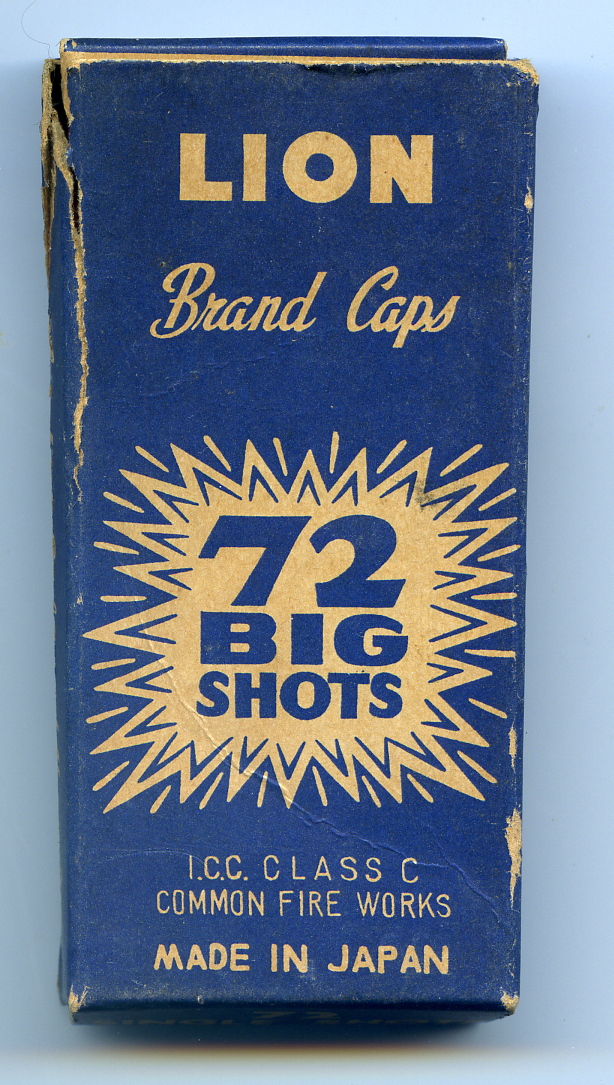
The dream came true, in a way, when, in the late 1980s, we stumbled across a strange little shop on Judah Street. We walked in, for what reason I don’t remember, and there we found Rudy Cipolla. The shop did have a glass case with musty, interesting old things in it. Among those was a box of caps for a toy gun, a firework of a sort, which I bought. The label said “72 Big Shots.”

caps72bgishots1

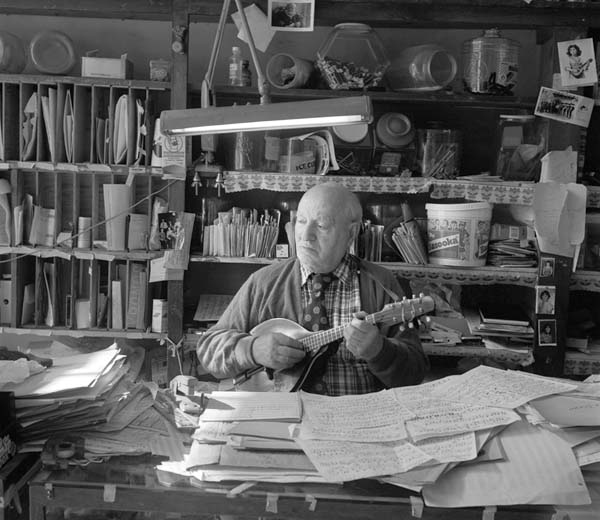
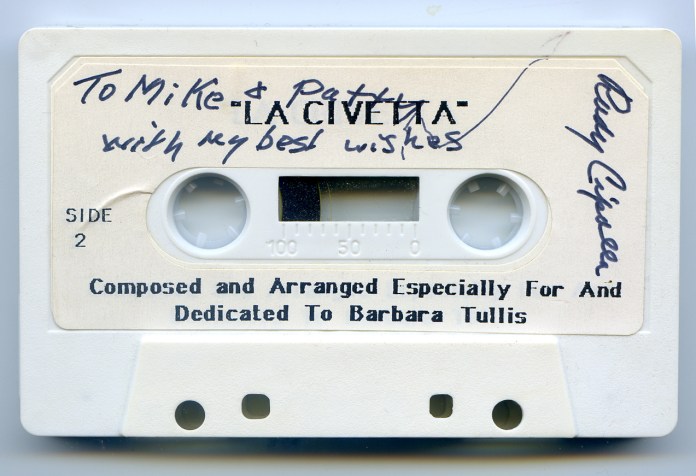
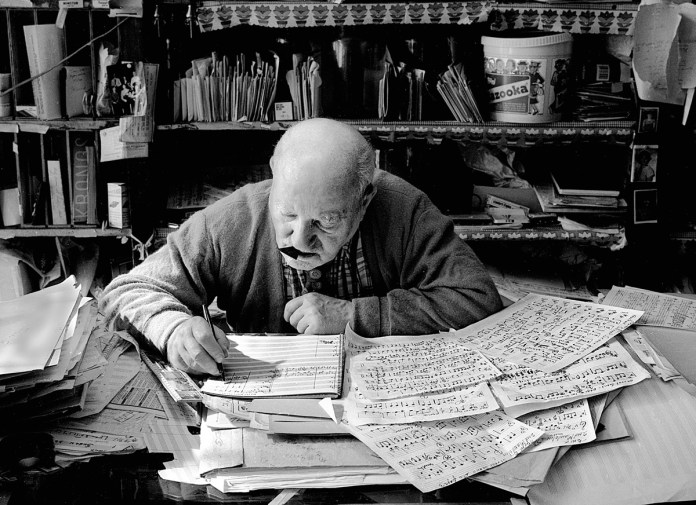
The proprietor of the shop introduced himself as Rudy Cipolla, and in a few minutes our acquaintance had progressed to the point that he started to tell us that his name meant “Onion” in Italian, and that he was related to John Cipollina, the lead guitarist for the Quick Silver Messenger Service, a famous 60s band. He also told us he played the mandolin and that he was a composer. Then he gave us an autographed cassette tape of a piece he’d written entitled “La Civetta” (The Flirt, in Italian.)

rduycipolla

Cipollacassette1.jpg

We wandered out and into a gray fall day in the Inner Sunset district, never to see Rudy again, but I never forgot the literally dream-like encounter.

Later, I learned that the shop was called the Book Nook, and that Rudy Cipolla was revered by local musicians, mandolin players especially. David Grisman counted him as an influence and friend, and indeed, he was a very prolific composer.image1Rudy died in 2000 at the age of 99.
Photographs courtesy of Owen Hartford


Standard
Boyes Hot Springs, El Verano, Fetters Hot Springs, History, Photographs, Resorts

Railroads in Sonoma Valley

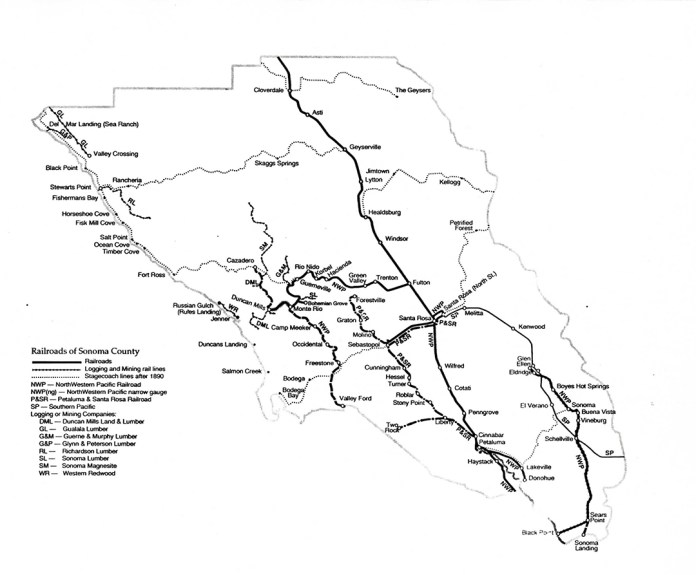
rrmap

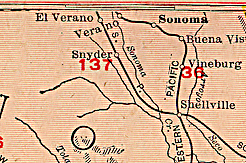
The history of railroads in Sonoma Valley is complicated and confusing. It started in the 1860s and included at least 15 different companies, but by 1889 there we just two: the Santa Rosa and North Pacific, and the Northern Railway. The SR and NP became the Northwestern Pacific in 1907, and Southern Pacific subsumed the Northern in 1898. The NWP tracks were on the east side of Sonoma Creek, with a depot in Boyes Hot Springs, and SP on the west, stopping at El Verano. The old rights-of-way can be glimpsed in some places. Sierra Drive in Boyes is one location. See https://springsmuseum.org/2018/03/29/sierra-drive-meincke-road/

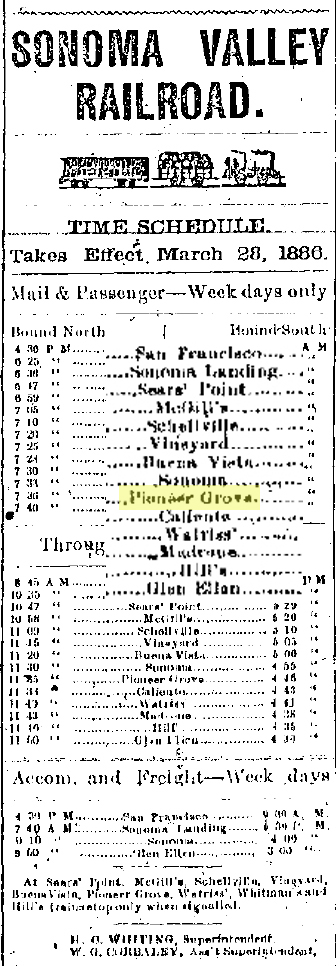
A precursor to the NWP, the Sonoma Valley Railroad, existed until 1889. In this schedule we see that it visited a stop called Pioneer Grove. This was the name used before Boyes Springs was used.

svrailroadschedule1886 copy

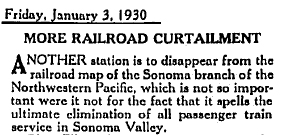
The railroads served the populace of San Francisco, primarily, who wished to spend warm summer days at the resorts. They came in their thousands by rail. But as early as 1920, the railroads were challenged by bus lines and automobiles. (The “auto-camp,” precursor to the motel, originated in the 1920s.) The Index Tribune reported in 1921 that executives of the NWP were considering new, modern electric cars on the Santa Rosa-San Rafael line to counter the competition from buses. To no avail. In 1930, the Glen Ellen depot was eliminated.

glenellendeleted1930

The editorial comment in the IT was prophetic. Rail service was gone by 1942.

Following is a collection of images of depots in Sonoma Valley, with some maps, which are courtesy of the Northwestern Pacific Railroad Historical Society.


NWP depots:

acdepotweb

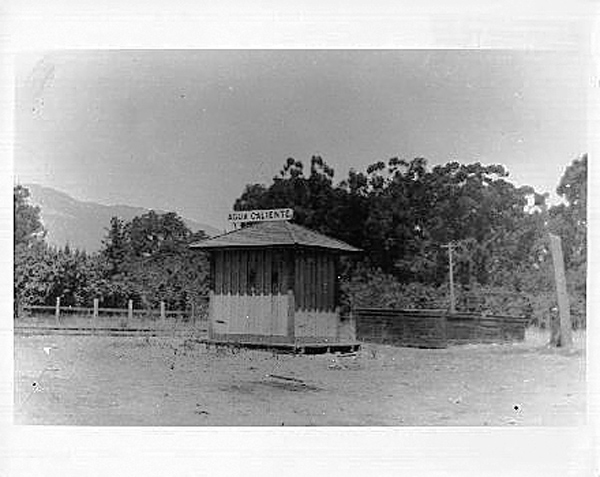
Agua Caliente, year unknown

AguaCalienteDepotold

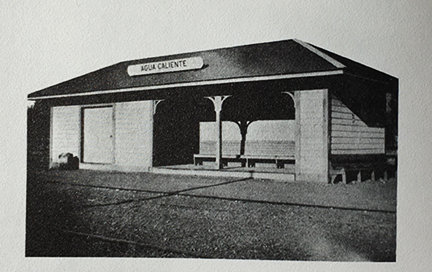
A later Agua Caliente depot? Similar to Boyes Depot of 1923

img091.jpg

bhsdepotwithtruck

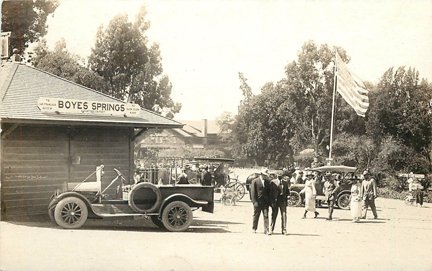
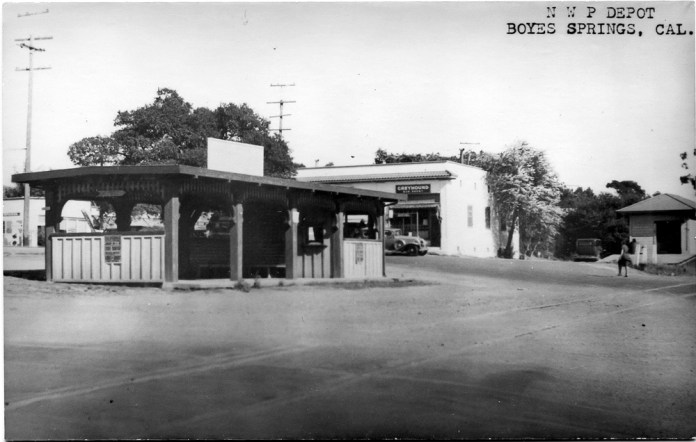
The name was changed to Boyes Hot Spring at least by 1908, but Model T production started in 1909, so perhaps all of the signs were not changed at one time.

boyesdepotmarieelsie

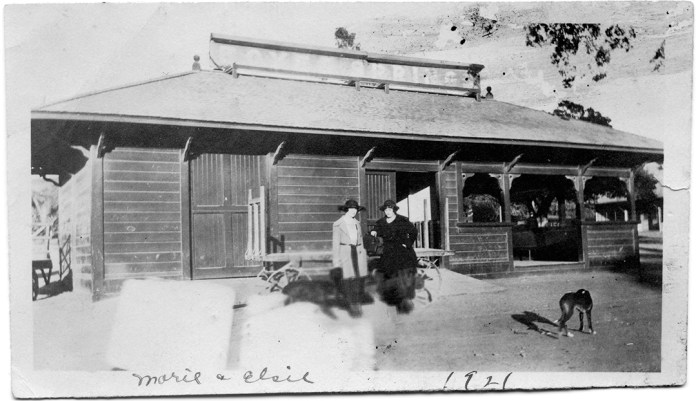
Marie and Elsie stand in front of a depot called “Boyes Springs,” in 1921. apparently the word “Hot” in the name came and went. This station was destroyed in the fire of 1923.

railroadmap.jpg

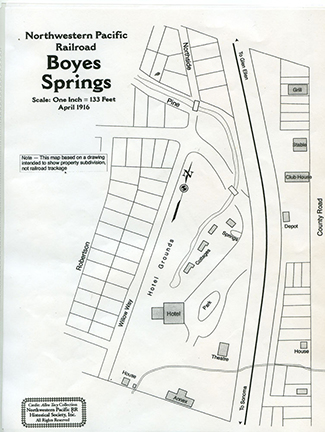
1916 map showing the old hotel and the canal that ran down Pine Street.

fettersdepotmovieweb

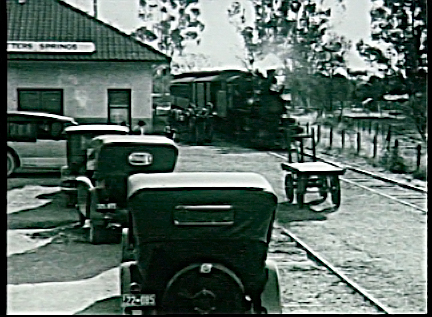
Still from the 1923 Harold Binney movie “Account of the no-account Count.” The film shows the train arriving at Fetters Springs.

boyesdepotangle-web

Boyes Hot Springs depot in 1942, the year service ended. The Woodleaf Store can be seen behind the depot.


veranoDepotKern Letter027.jpg

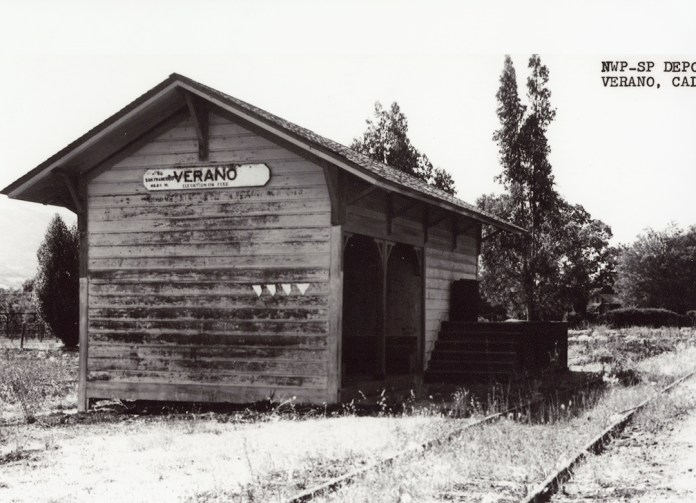
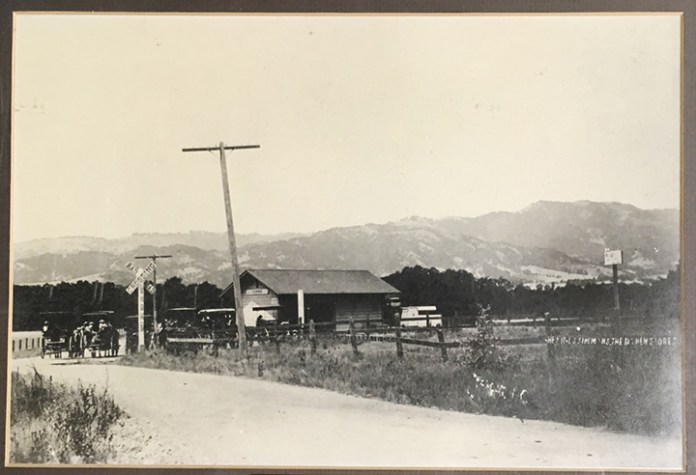
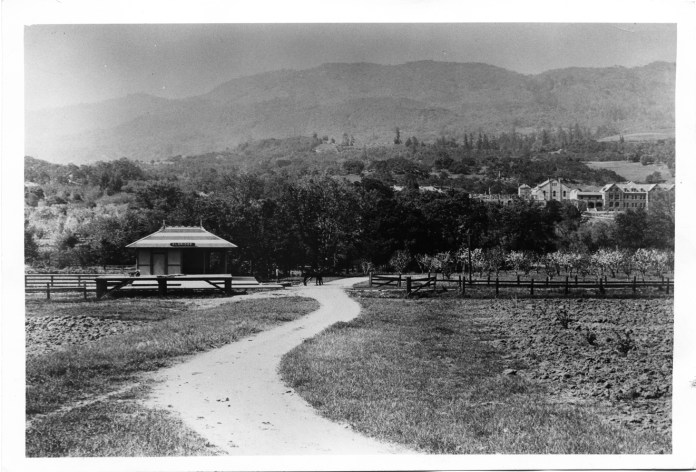
The Verano depot, across the creek from El Verano.

VeranoDepot2.1

Verano depot circa 1905

VeranoRRMapcrop.jpg

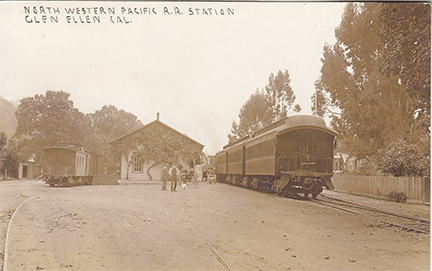
trainatglemellen

Glen Ellen, year unknown.

Southern Pacific depots:

eldrigestation1898

Eldridge depot 1898

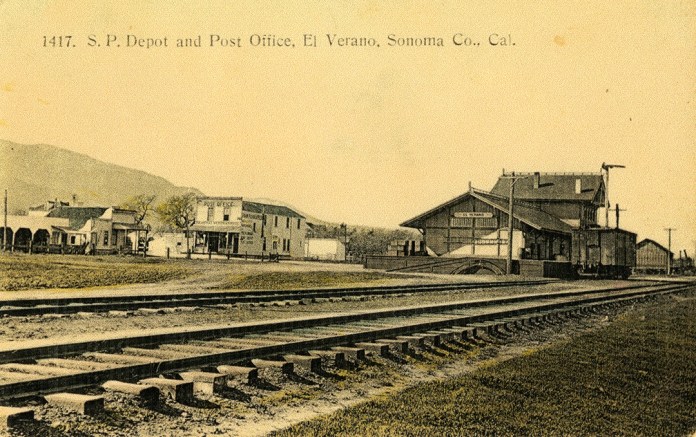
EVDepotandPO.jpg

El Verano, circa 1890s

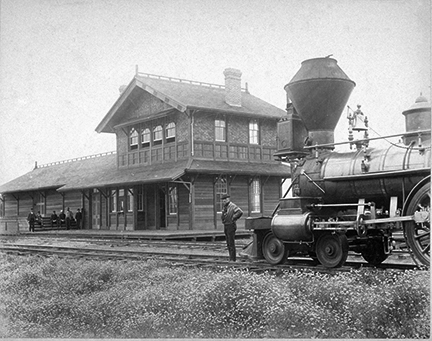
i0024492a

El Verano depot shortly after construction, 1880s

Images courtesy of the Sonoma Valley Historical Society and the Northwestern Pacific Railroad Historical Society.


Standard
Boyes Hot Springs, El Verano, History, Photographs, Resorts, Springs Historic Photo Database

New to the Springs Historic Photo Database

bhsbathhousehorseandtank

Probably around 1910

bhsmancigar1912

His name is Gus. Post marked Boyes Hot Springs, but is this the Plaza? 1912

boyeshoteltent

The “Old Hotel.” Before 1923

evvillapano

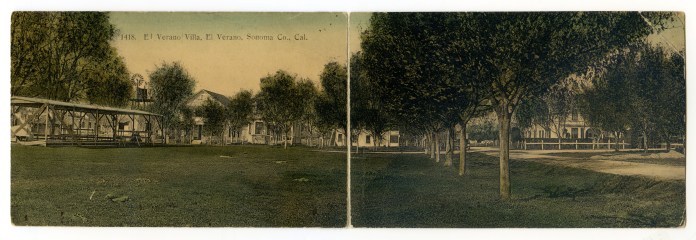
El Verano Villa. Near Verano Ave. and the creek.

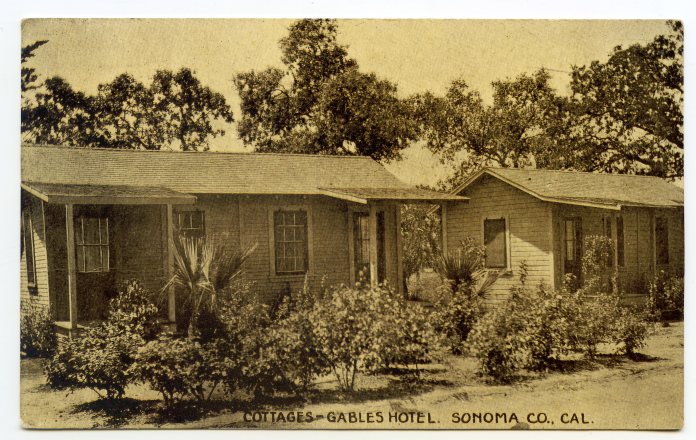
gableshotelcottages

Gables Hotel. Exact location unknown.

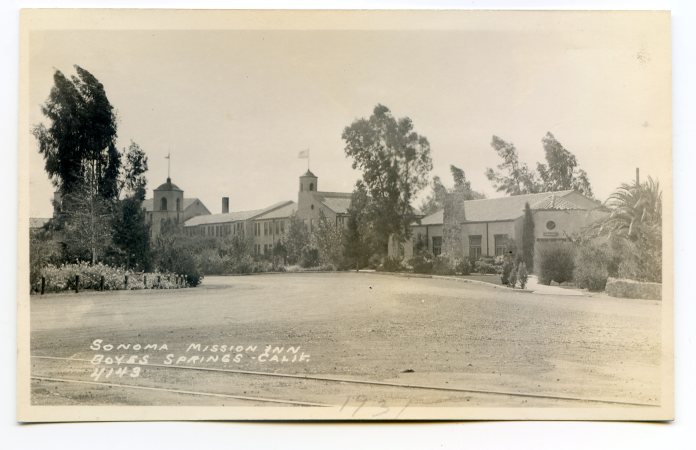
smi1937

Sonoma Mission Inn, 1937, ten years after it was completed.

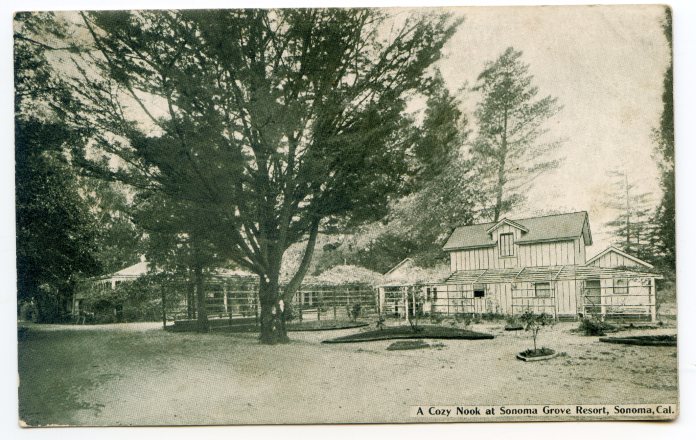
sonomagrovenook1912

Sonoma Grove, on the Highway between Sonoma and Boyes.

Standard
El Verano, Entertainment, mid-century, People, Resorts

Paul’s Resort

Paul'sBrochurecover

PaulsPostcard

After the main building burned in 2013, the Press Democrat reported, “The resort was built in 1908 at the El Verano rail station 20 years after the Santa Rosa-Carquinez Railroad opened the way for visitors from San Francisco and elsewhere,”. Actually, the location was the Verano rail station. The El Verano depot was across Sonoma Creek. Two competing railroads served the valley at that time. (See map), the Northwest Pacific and the Southern Pacific.

PaulsLocationQuadMap

As there were two depots with the word Verano in their names, so there were two Pauls.; Paul Vannuchi founded the resort in 1908. Paul Marcuchi bought it in 1944.

As was common, Paul Vannuchi ran afoul of Prohibition laws. In 1920 he was accussed of conspiracy. At the time, he was also the propietor, with one J. Foppiano, of a roadhouse near San Bruno.

PDVannuchiaArrest1920

You have to love the headline.

In 2016 we sat down with Eve Marcucci and her daughter Yvonne Marcucci Thibault to record some of their memories. As we talked, we paged through one of the many scrapbooks Eve kept of the resort and Paul’s career.

EveMarcucci1962

Eve Marccuci in 1962

Paul'sAdCuzzin

Your host, “Dad” Marcucci.

Paul’s father, Paul Sr. (“your host” according to the flyer) was also a musician; he played the mandolin. The Marcuccis emigrated from Lucca, Italy around 1900. One branch of the family went to Argentina. We see some photos of them in the scrap book. Paul left home in Ohio at the age of sixteen with a band he formed. They toured the country backing a female impersonator who was popular at the time. Drag shows were a staple of the vaudeville circuit in the 1920s and 1930s.

PaulMarcucci.jpg

Paul in his vaudeville days.

PaulandDancers

Paul and female impersonators, 1920s

According to Eve and Yvonne, Paul’s Resort was place of laughter and good times, and the leader and instigator of the fun was Paul.

Paul and his pals, including Pete Mancuso, sang, played and performed skits in the dining room of the resort, where there was a stage.

PaulsSignMerger

Paul and Pete Mancuso, center, merged their businesses some time in the 1950s. The photo shows their “shotgun wedding.”

PaulKVONradio.jpg

Paul played electric organ and the trumpet at the same time. Some times the revelries were broadcast on radio from that stage on station KVON. Yvonne recalls that, as a child, her parents would put her on a bar stool, so they always knew where she was.

Paul'sCartoon1.jpg

Paul certainly was a man of many talents. According to Eve, “Dad built the pool. He became a licensed contractor to get work done on the resort faster.” He was also a well known music teacher who worked for the public schools and taught privately. During WW2 he served in the Navy as a musician, and wrote the patriotic songs “Remember Pearl Harbor” and “Win the War in 44.” His coauthor on the former was Aub Brandon of Santa Rosa. According to the Healdsburg Tribune, the song was written in one hour. It was released on December 18, 1941, just twelve days after the cataclysmic Japanese bombing raid.

On top of all that, he became the manager of a young singer from Marin County by the name of Clairette Clemintino. Paul’s daughter Yvonne remembers trips to Los Angeles with her dad and Clairette, for recording sessions and publicity events. The scrap books contain photos of Yvonne with the likes of Danny Thomas, Chubby Checker and Shelly Fabre. Clairette’s career is documented at the website www.girlgroups.com.

ClairetteAd.jpg

Clairette Clementino appearing with Gypsy Boots! “Hollywood talent scouts will be present.”

Paul died in 1981

PaulJr.Obit1981

In the 1980s the main building of the resort became a Moose Lodge.

In the 1984 Historic Property Survey Report, prepared by architect Dan Peterson for the Redevelopment Agency, the resort is listed as eligible for listing on the National Register of Historic Places.

HistoricSurveyPauls

As mentioned above, the main building burned in 2013, much to the dismay of the Marcucci family and a community that continues to have warm memories of the resort.

More images from Paul’s Resort:

HilbillyBandMarcucci

Sonoma County Fair “Hillbilly Band” 1933

PalmsHotelAdPaulM1942

Paul used the stage name Paul Marc

IMG_0409.JPG

Paul Marc and his Jail Birds. City unknown.

Paul'sCartoon2.jpg

All photos courtesy of the Marcucci family.

Sonoma Index Tribune courtesy of the Sonoma Valley Historical Society.


Standard