Author Archives: michaelcacker
The Boyes Hot Springs Plaza
On December 20, 1956, the Sonoma Index Tribune reported “Old timers in Boyes felt some remorse this Monday when the old stately palm tree in the Boyes Plaza was cut down to make way for a new building.” The new building was the second half of the Plaza Center building, which houses the post office today. The IT went on, “They (the old timers) could remember standing beneath that tree when the old train used to unload vacationers at the railroad station, located years ago, right near the tree.”
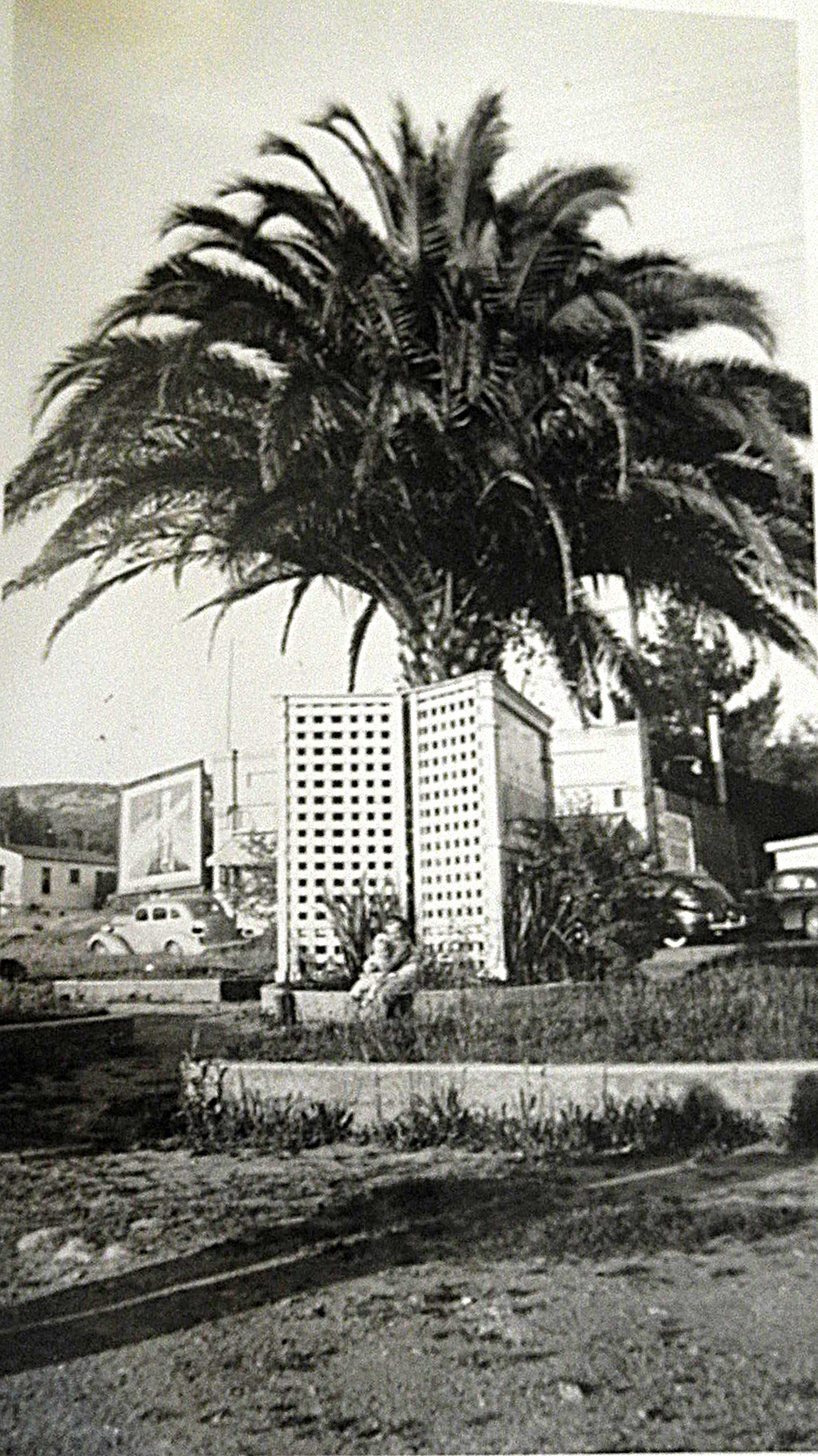
The Boyes Hot Springs Plaza palm tree, 1943. courtesy Bruce Greiwe
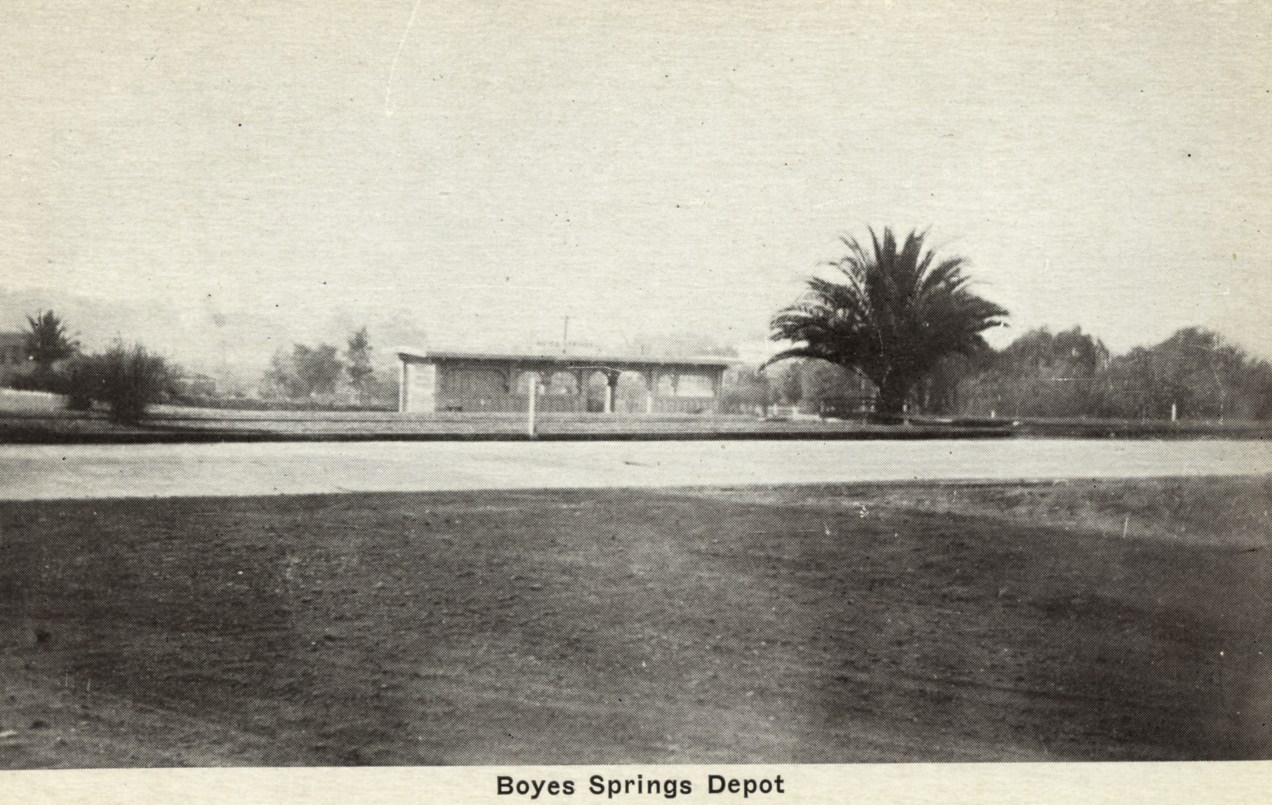
Aurthor’s collection
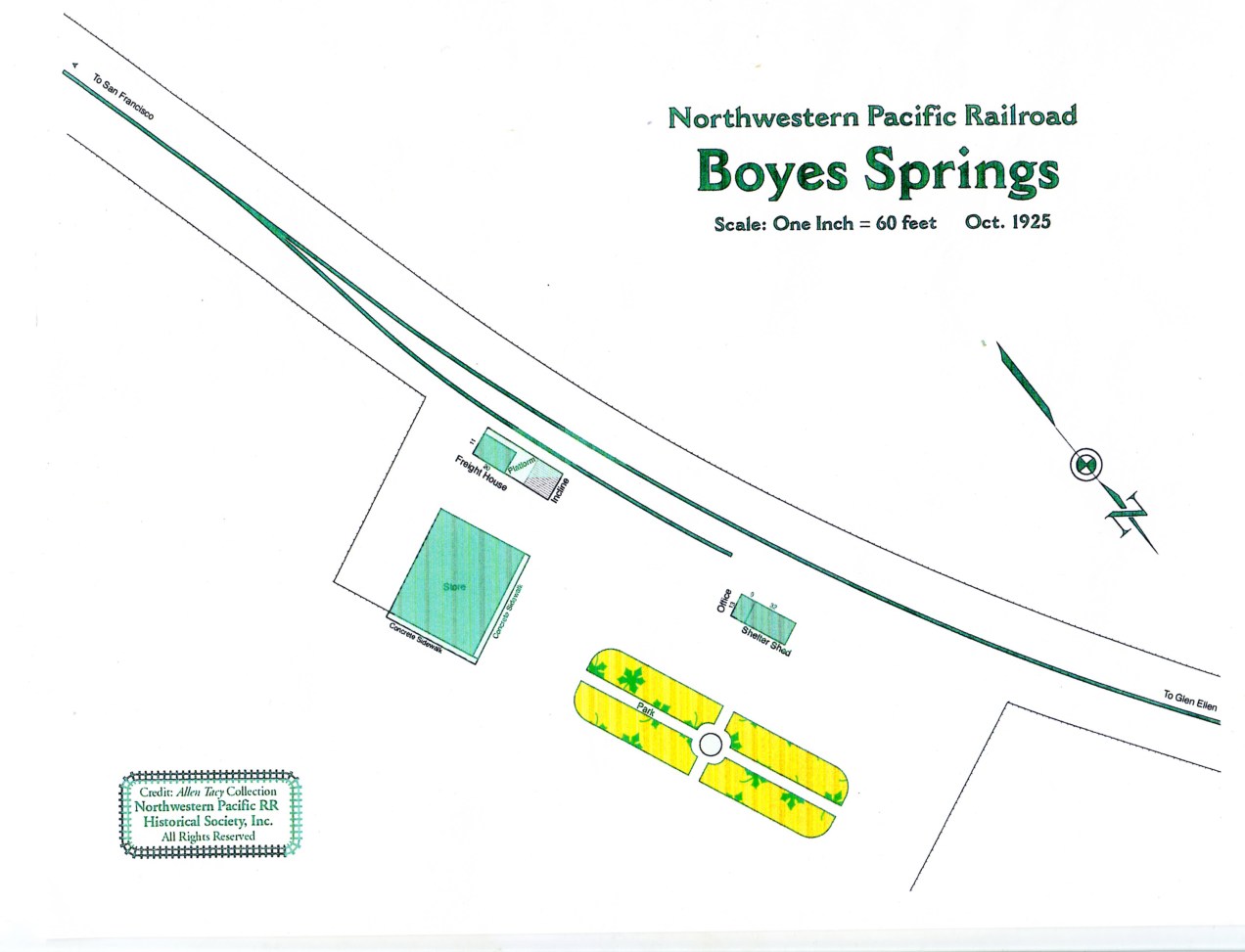
Yes, there was a Plaza in Boyes Springs. It existed as part of the land owned by the Northwestern Pacific Railroad. A railroad map from 1925 shows an elongated lozenge shaped feature, parallel to the tracks, bisected by pathways at right angles, and with a circular form at the center. The palm tree was there, according to an aerial photo from 1943.
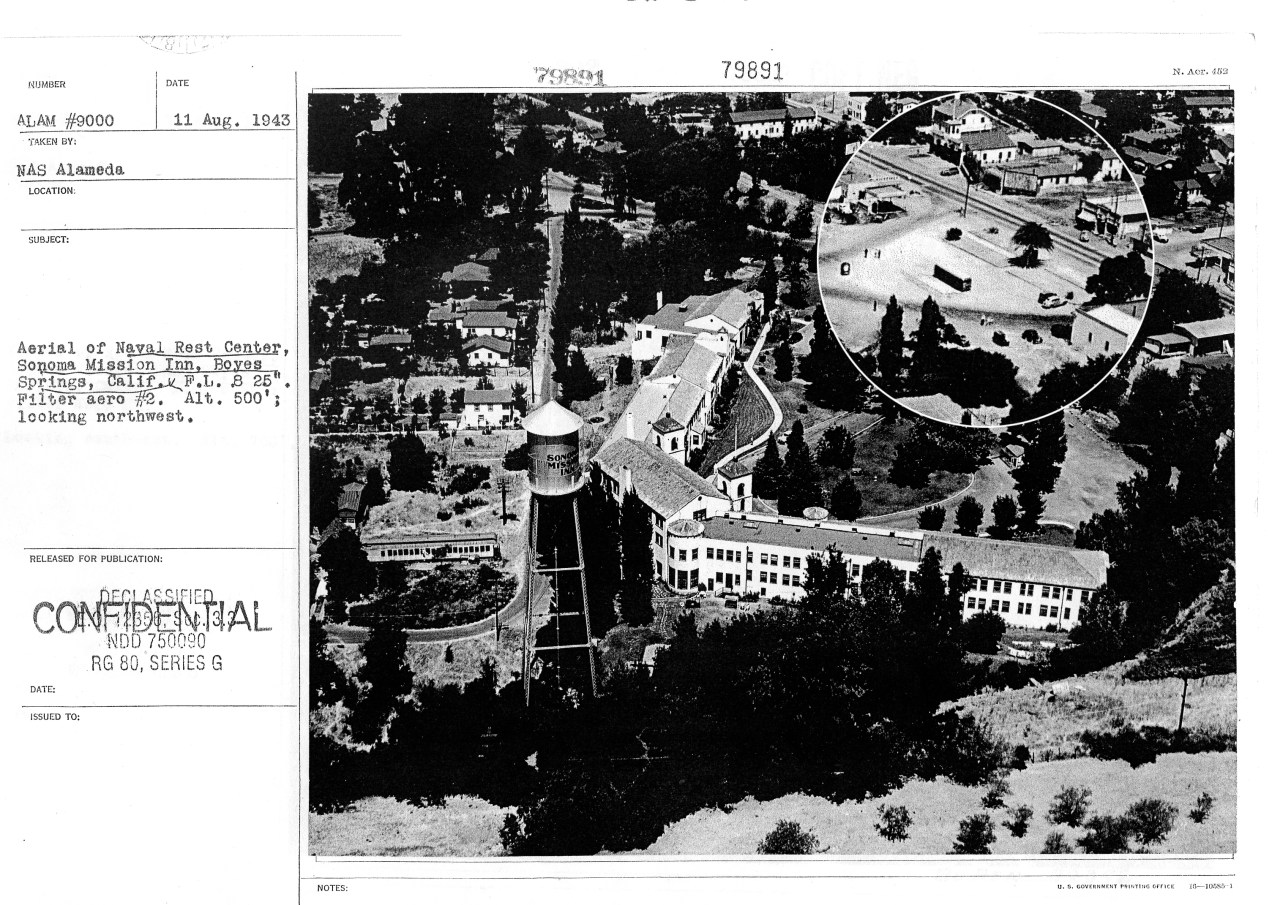
Plaza showing palm tree. The depot had been removed the previous year. Photo courtesy Bob Palmelee.
In 1949 the IT reported that the Boyes Springs Boosters Club voted to “ put a new lawn at the Boyes Hot Springs Plaza and pay for the electricity used in keeping the “Boyes Hot Springs Welcome” sign lighted each evening.
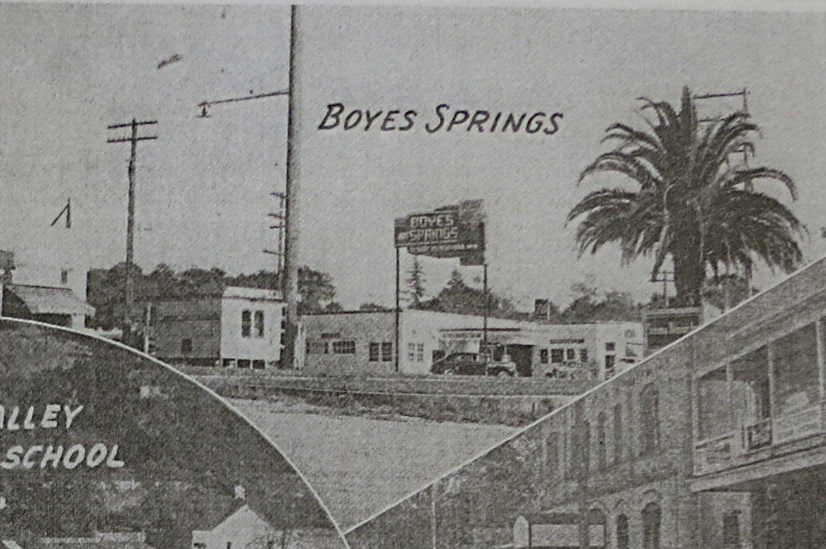
Courtesy Jerry Biers
In 1941 plans for the celebration of the centennial of the Bear Flag revolt included an event at the BHS Plaza.
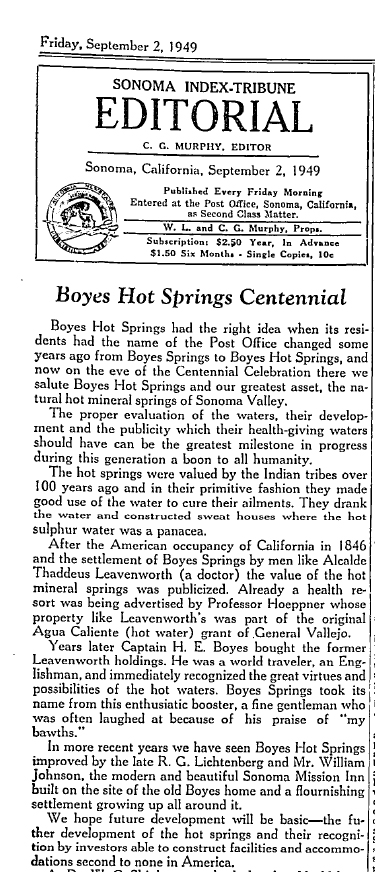
In 1949, the community celebrated its own “centennial.” How 1849 was chosed as a founding year is unclear. The hot springs had been commercialized by 1847 by Andrew Heoppner. Thaddeus Leavenworth arrived in 1849, but Boyes didn’t show up until 1882.
At any rate, the editorial page of the Index Tribune approved.
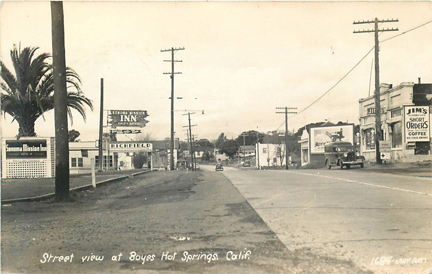
The Plaza and palm looking north, 1930s.
The idea of a new Boyes Hot Springs Plaza has resurfaced in recent years. Several architects have produced conceptual plans. Below is the Ross, Drulis Cusenberry version.

Ross Drulis Cusenbery Plaza Concept

Ross Drulis Cusenbery Plaza Concept

Ross Drulis Cusenbery Plaza Concept

Ross Drulis Cusenbery Plaza Concept

Ross Drulis Cusenbery Plaza Concept

Ross Drulis Cusenbery Plaza Concept

Ross Drulis Cusenbery Plaza Concept
Reclamation?
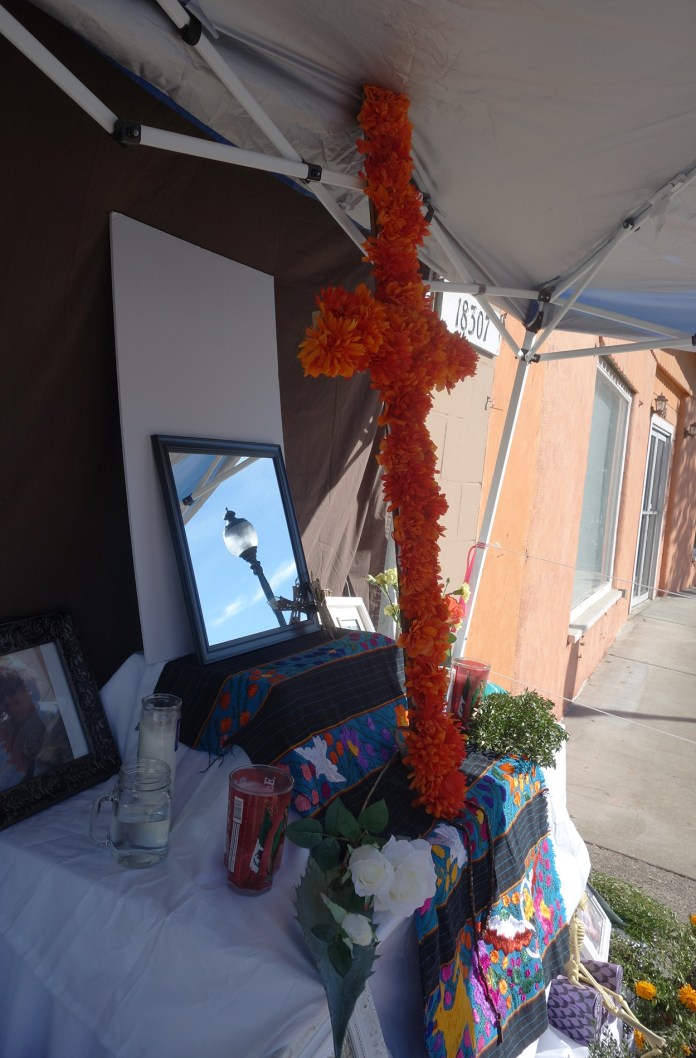
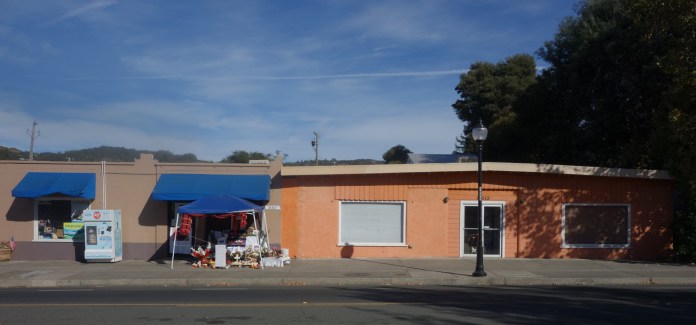
This is the key historic building still standing in Agua Caliente. Apparently undergoing demolition-by-neglect, it has, in August 2018, gotten a set of new windows and a paint job. We can only hope that the structure behind the stucco still has integrity.
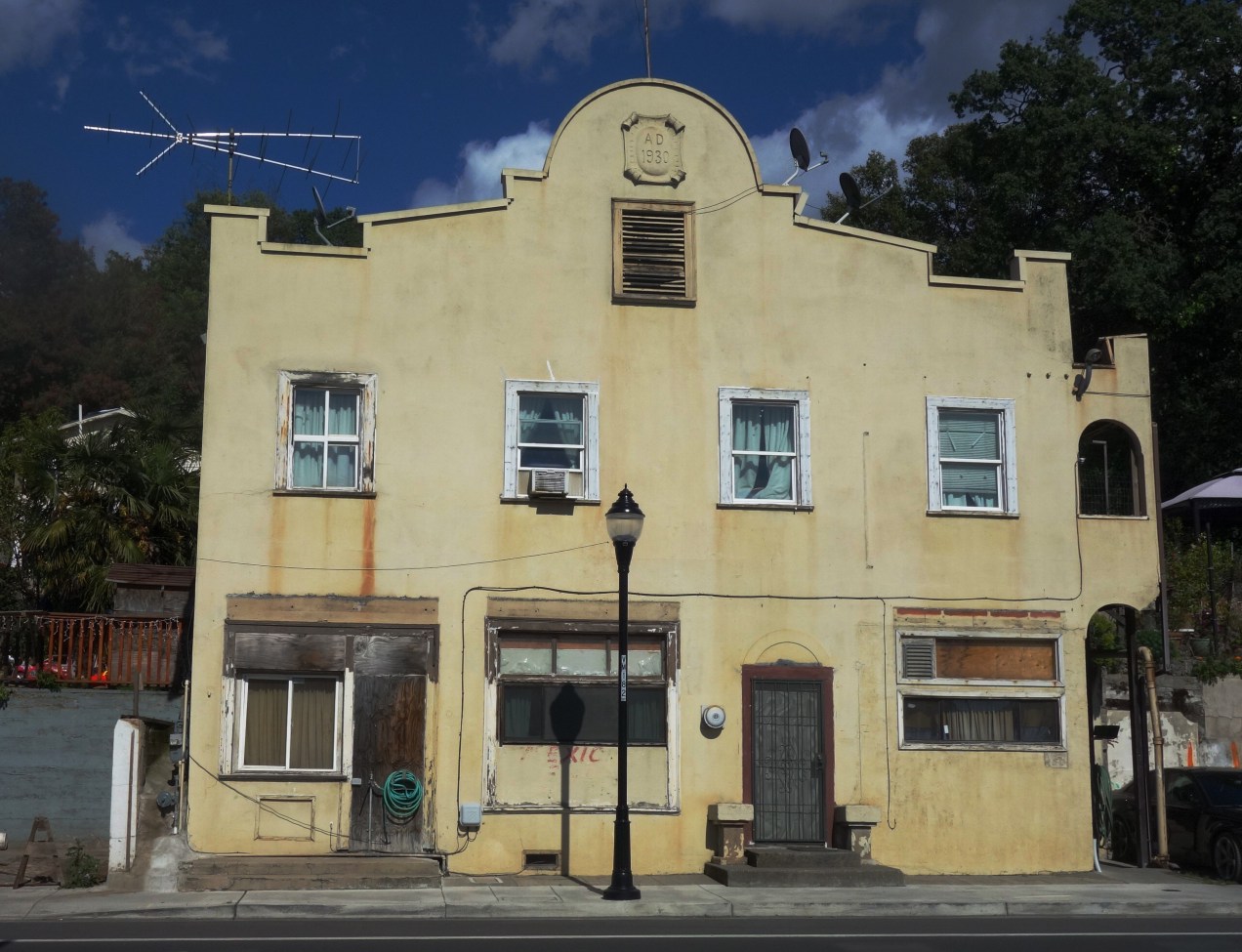
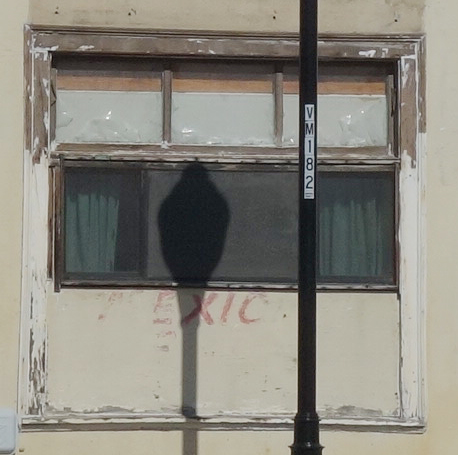
Before the new paint, the ghost of the word “Mexcian” could be seen near the sidewalk. Various restarants and markets have been housed in the building.
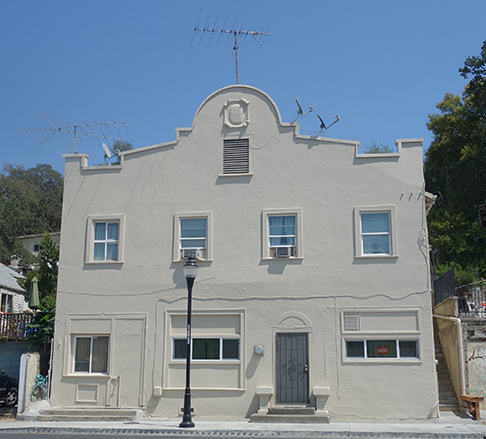
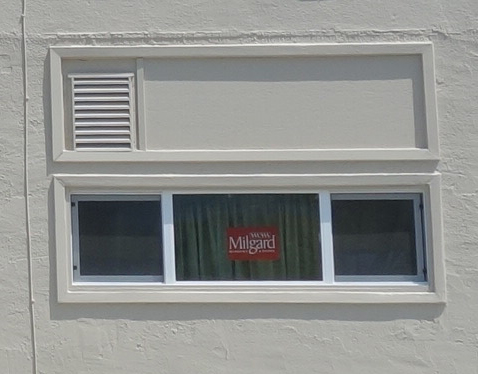
After paint. The windows still have the factory sticker.
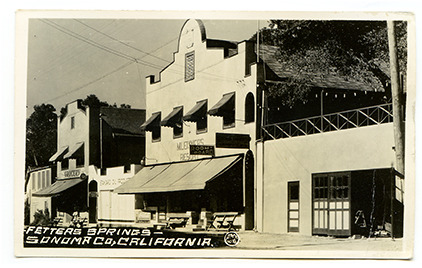
In the days of Liexner’s Resort.
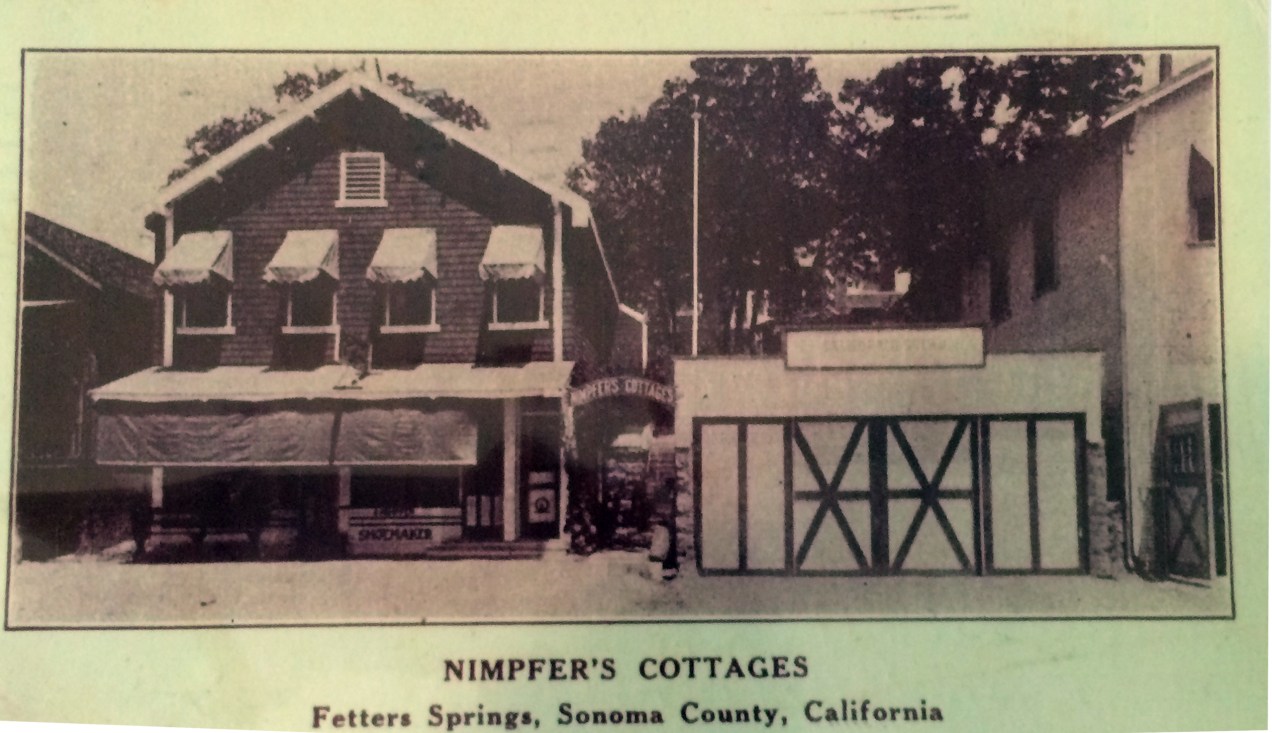
And Nimpfer’s.
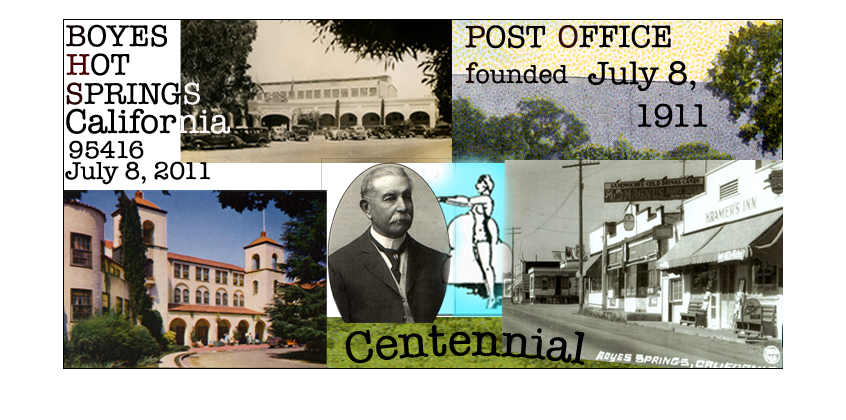
The 119th Anniversary of the Founding of the Boyes Hot Springs Post Office
In July of 1911, the Sonoma Index Tribune reported that “A.D. Graham of Graham’s Cash Store received the appointment as post master of Boyes Springs. Located at his store.” The exact date was July 8, 1911. The location of the store, now not know exactly, was near the train depot at Boyes Blvd. and the Sonoma Highway.
That building was lost, along with most of the town in the fire of 1923. After rapid rebuilding, the post office was located in the Woodleaf Store. It stayed there until 1951. The Woodleaf became the Big Three Diner, part of the Sonoma Mission Inn. The post office relocated to the Plaza Center building at Sonoma Hwy. and Boyes Blvd. when it was built in 1951, where it is today. Prior to 1951 this site was know as the Boyes Springs Plaza and was the scene of street parties and fiestas.
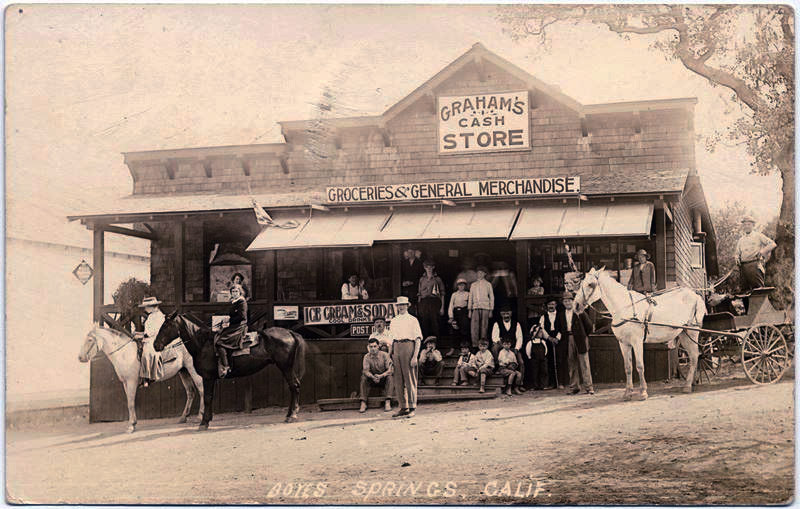
A.D. Graham was the first postmaster. The name was changed to Boyes Hot Springs at some point. Courtesy California State Library
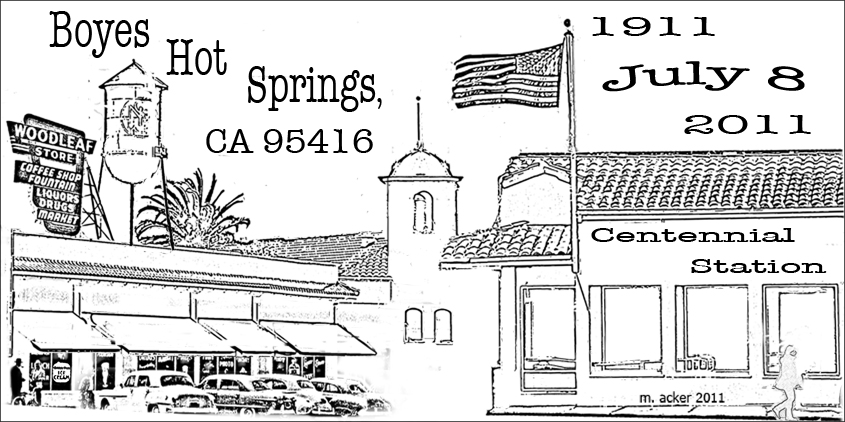
In 2011 we celebrated the centennial. To produce the joyous event, we had the help of the USPS and its employees, Sonoma County, the owner of the Plaza Center building, Kickstarter donors, the Springs Community Alliance, and many volunteers.
Wild Artichokes
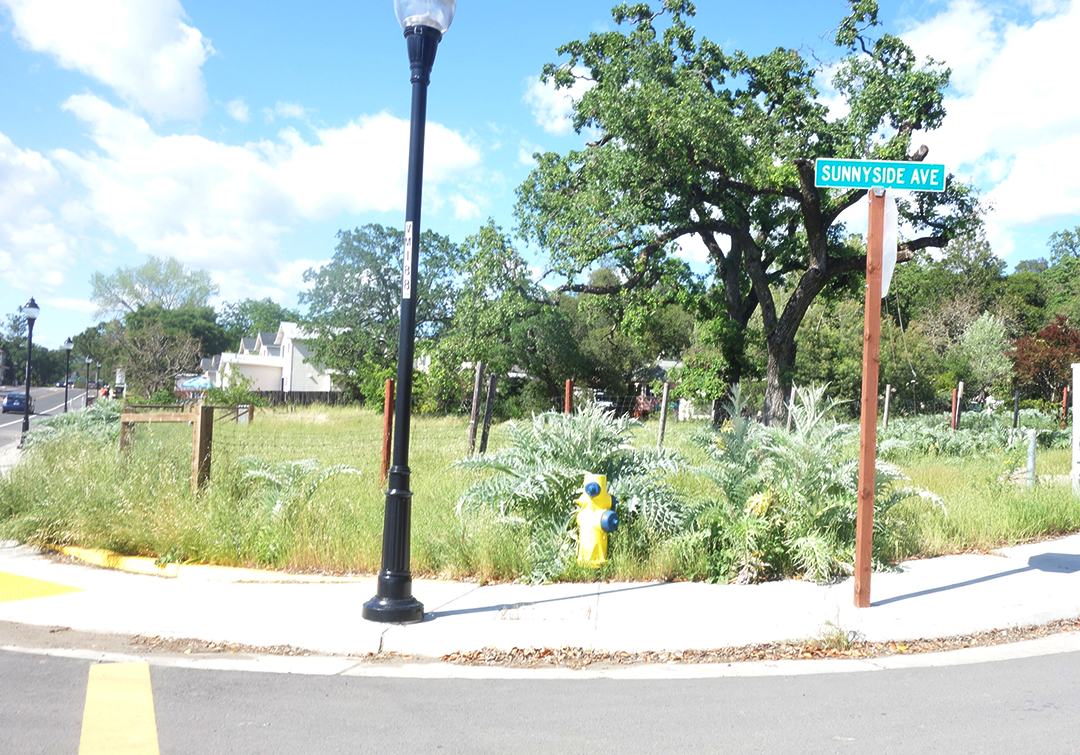
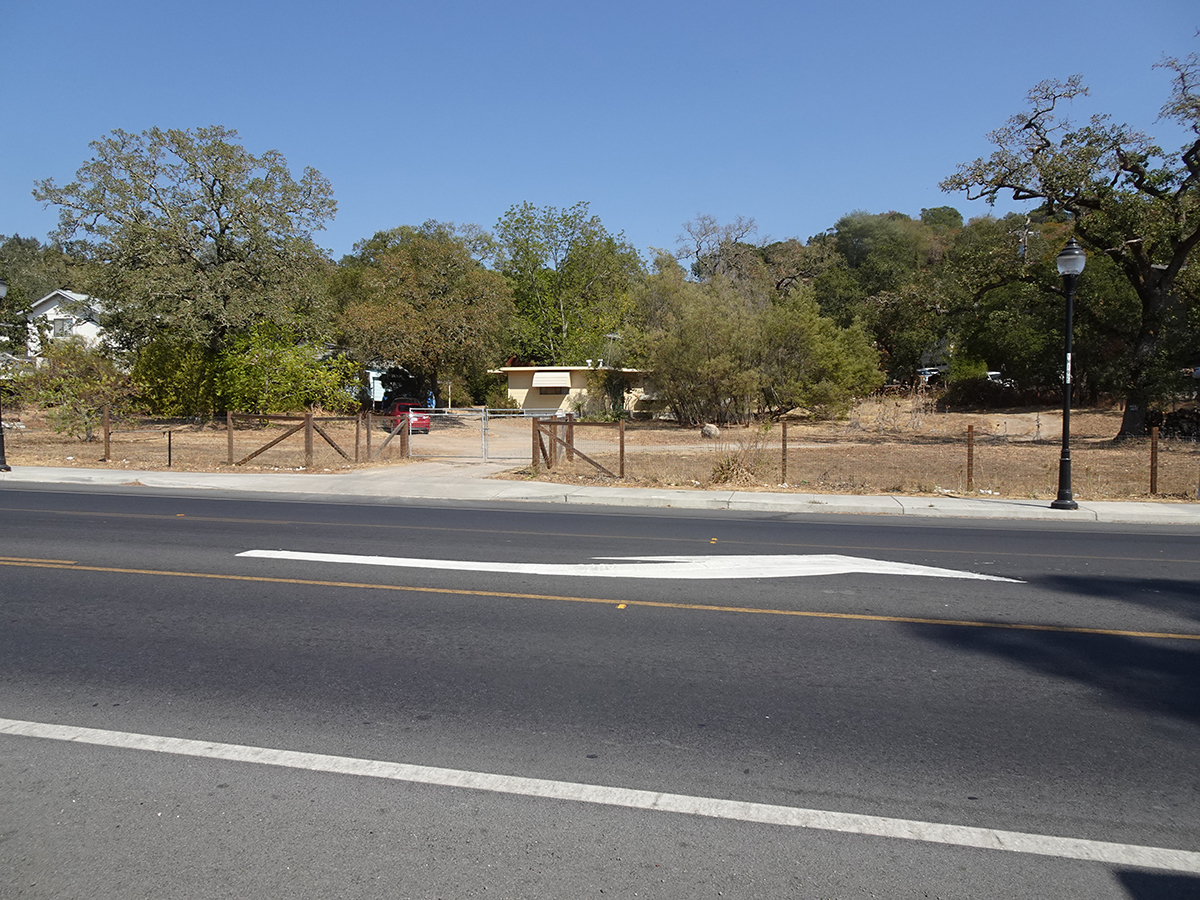
Corner of Sunnyside Ave. and Highway 12
For lovers of the prickly vegetable, the presence of groves of wild artichokes, as we have in the Valley of the Moon, might seem like an indication of paradise. In addition to being delicious, artichoke flowers are beautiful, fragrant, and attract bees.
However, the wild cynara carduncula is a fearsome invasive plant.
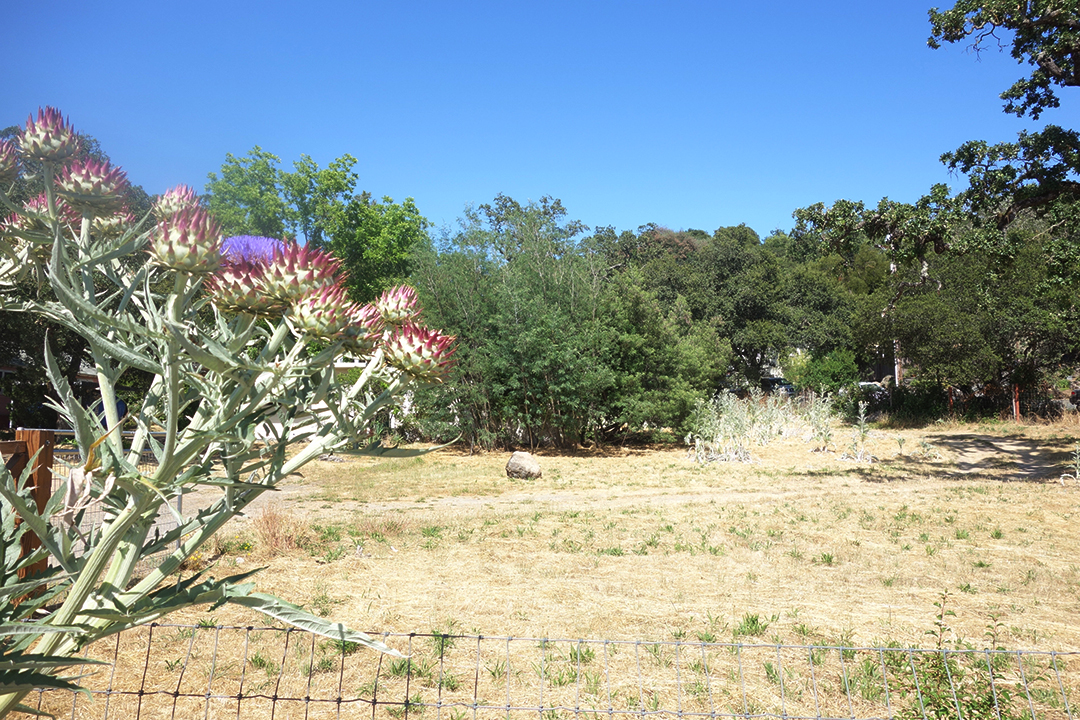
Vacant lot at Sunnyside Ave.
According to the California Invasive Plant Council, the thistle was probably imported from Europe in the early 19th century as a food plant. It becomes invasive when it escapes cultivation and begins to reproduce from seed. Darwin found it growing in the Argentine pampas in 1889 in an area of “hundreds of square miles.”
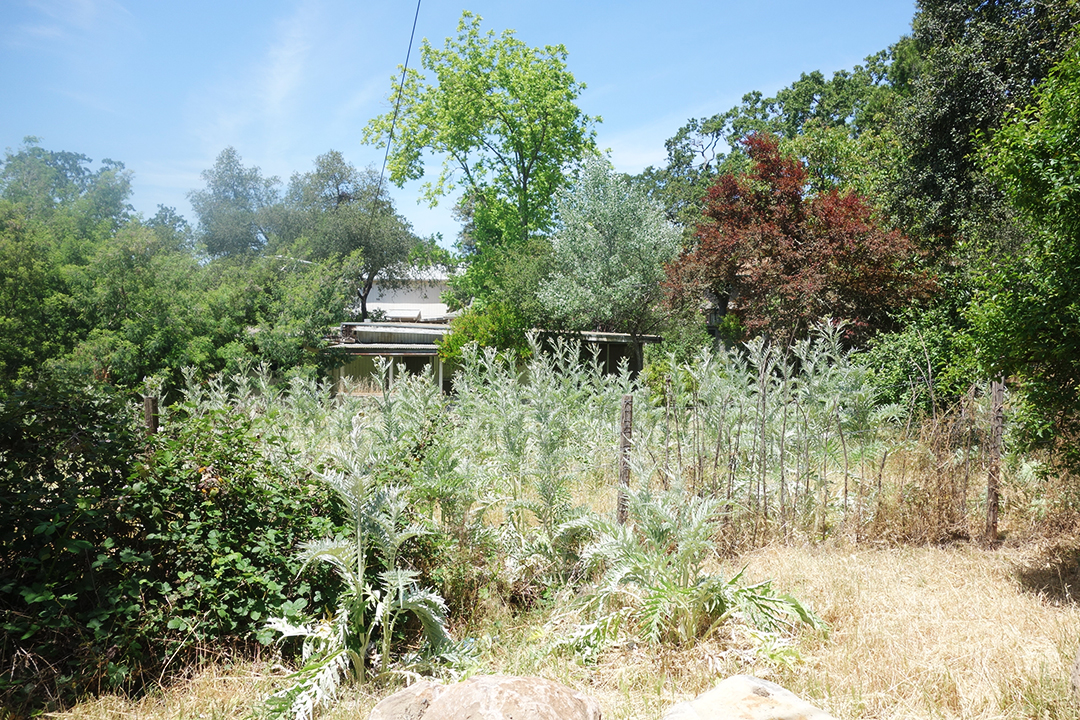
The growing artichoke “forest” in the lot at Sunnyside
At its worst, the “edible thistle” forms thickets that are impenetrable by humans or animals and that shade out native plants. As they develop tap roots eight feet deep and produce seed banks that endure for five years, they are very difficult to control.
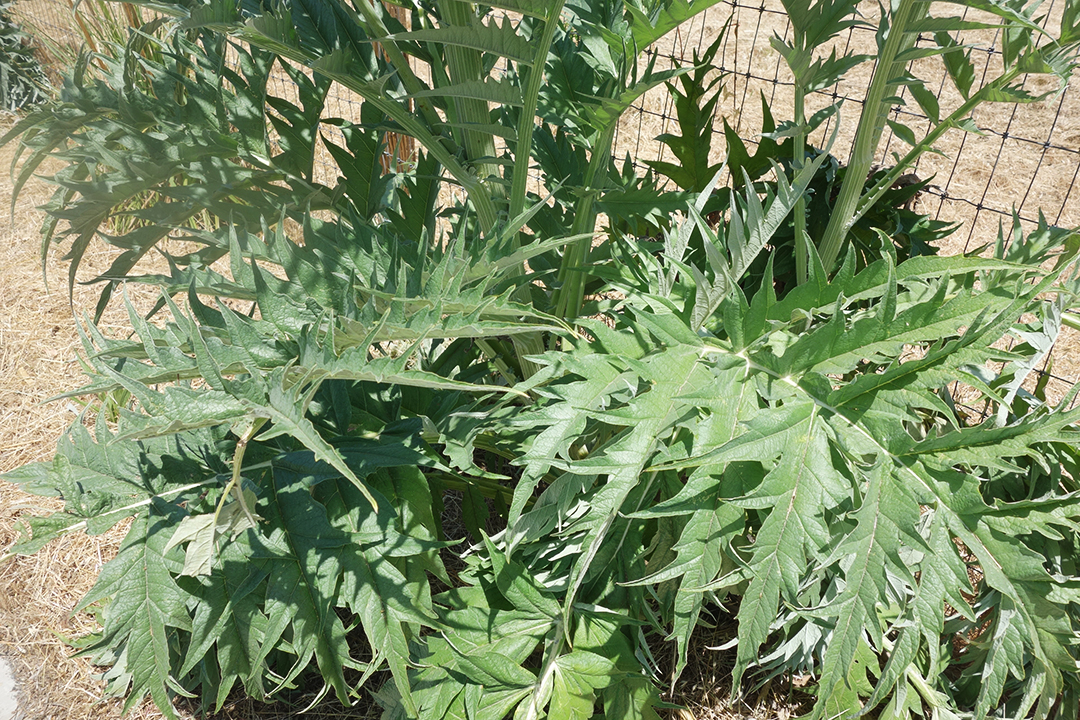
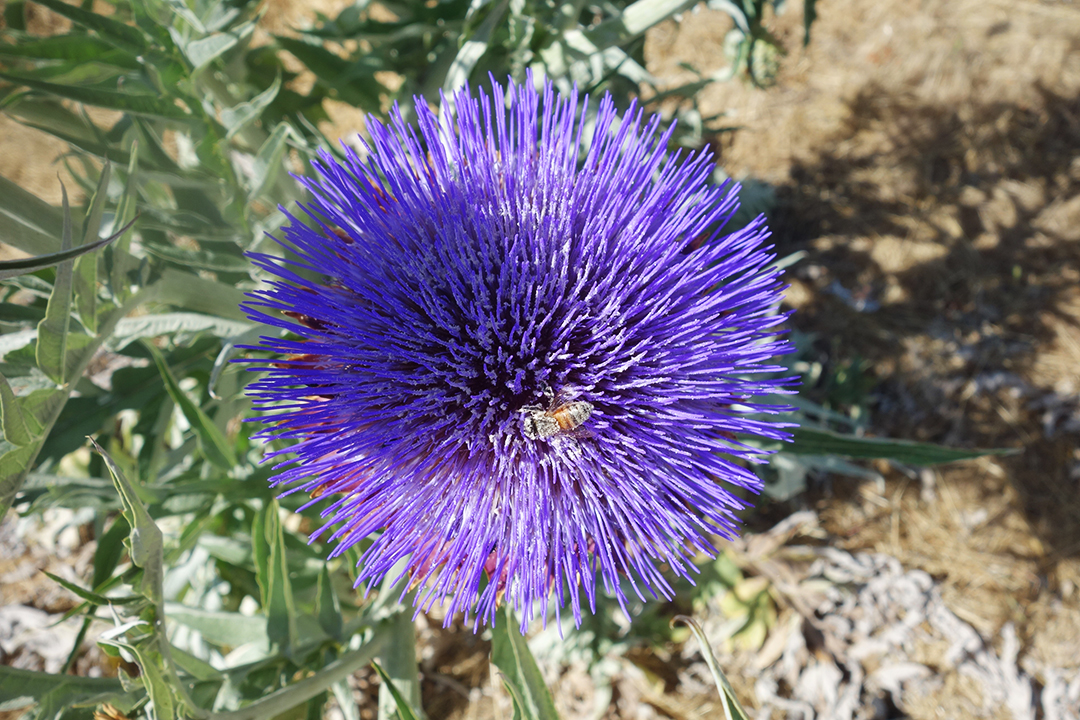
More info at this link:
https://www.cal-ipc.org/resources/library/publications/ipcw/report38/
UPDATE SEPTEMBER 2021-Someone, probably Caltrans, has eradicated all the cardoon along the sidewalk north of Sunnyside. They probably used Roundup. I have no doubt that the “forest” will be back this winter, because that lot is full of seeds, some of which could have been there for five years and still be viable.
Valley of the Moon Main Stem Project: New Website
Michael Acker’s series of panoramic photo-collages of Highway 12 in the Springs are now available at https://www.valleyofthemoonmainstemproject.org/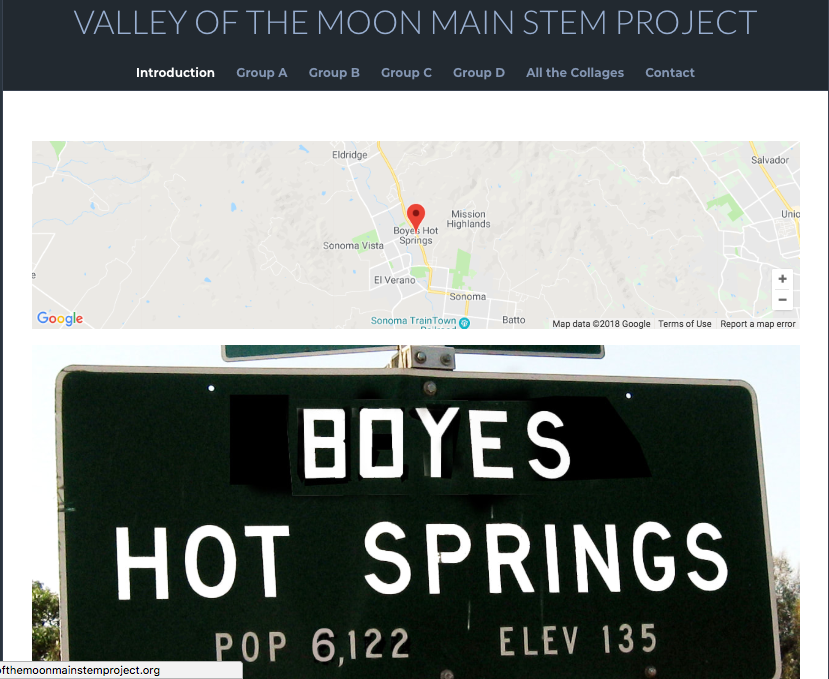
Palm versus post
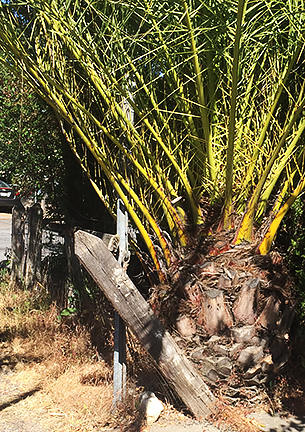
Palm wins…
Wallflower


Courage in the plant kingdom. Highlands Blvd, May, 2018.
Caliente Villa
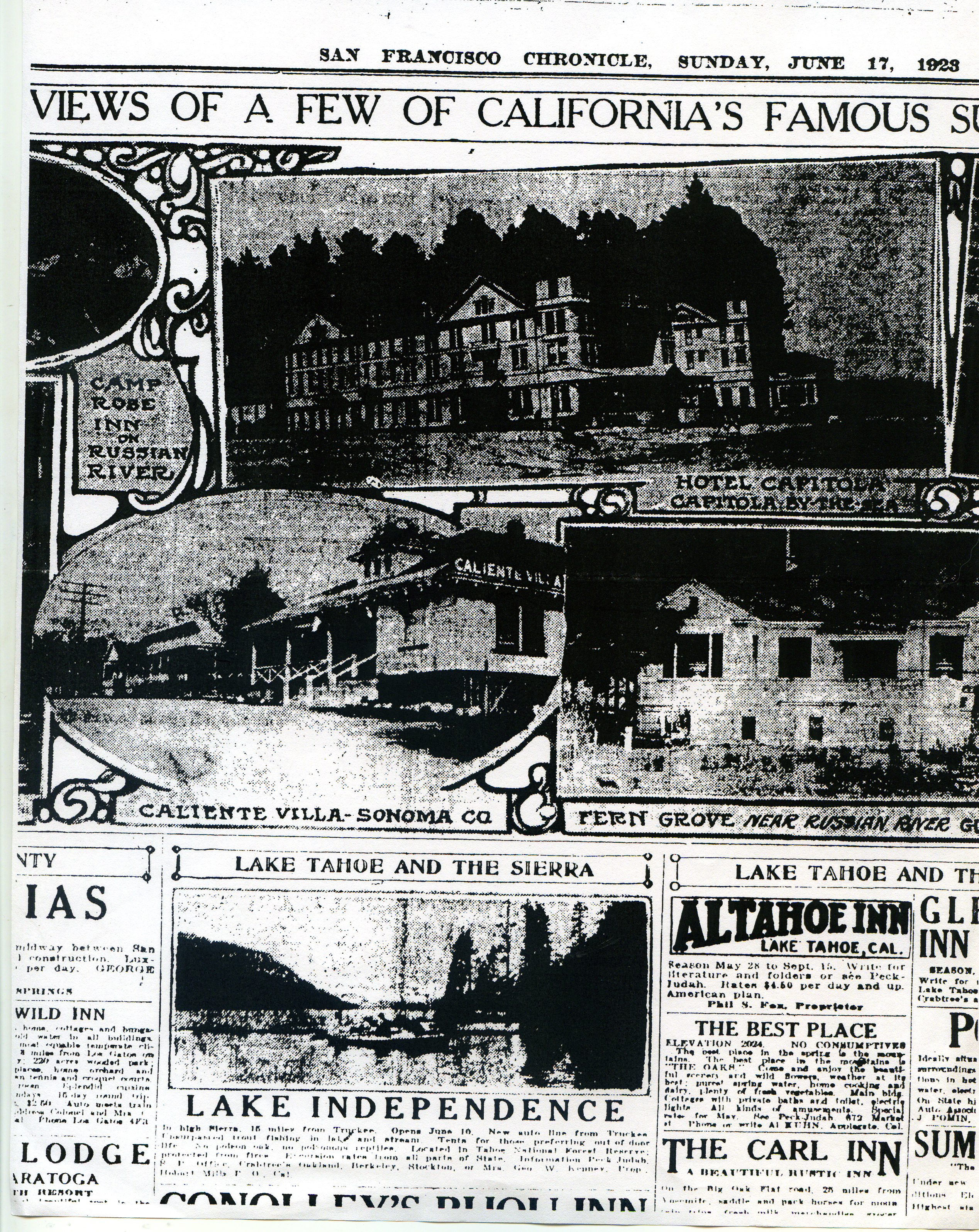
Courtesy Robert Palmelee
The resort was located on the east side of Sonoma Highway, near the corner of what was then known as Sonoma Avenue, now Marin Avenue. The Agua Caliente post office was reportedly located in one of the resort buildings.
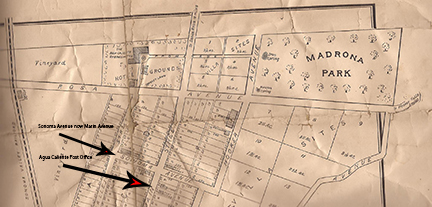
Map courtesy of Jeff Gilbert
In a 1941 article, the Index Tribune located the resort across the road from (the old) Flowery School, which was at the corner of Vailetti Drive.
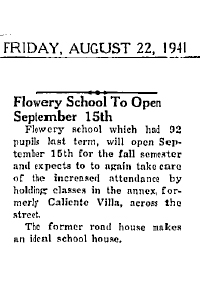
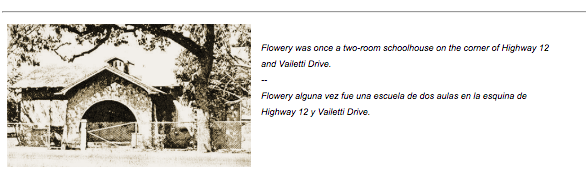
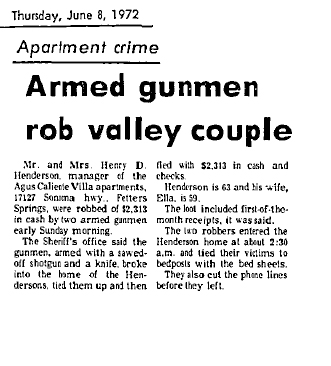
In this alarming article from 1972, the address is listed as 17127 Sonoma Highway.
The founders of Caliente Villa in Agua Caliente are not known, but we do know the resort was owned by A. Nevraumont by 1917. Nevraumont was an early resort owner in El Verano, having established El Verano Villa before the turn of the 20th century.

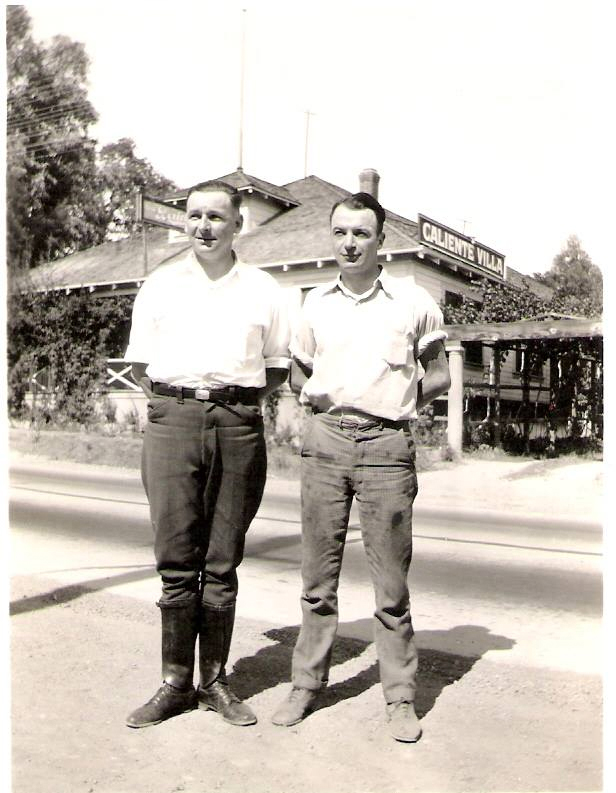
”My Great Uncle Joe Costa and My Great Uncle SFPD Officer Joe O’Rourke – Early 1930’s…Great Shot of Caliente Villa – Behind Them.” Jeff Gilbert via Facebook.
In 1923 the buildings changed hands.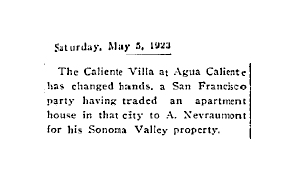
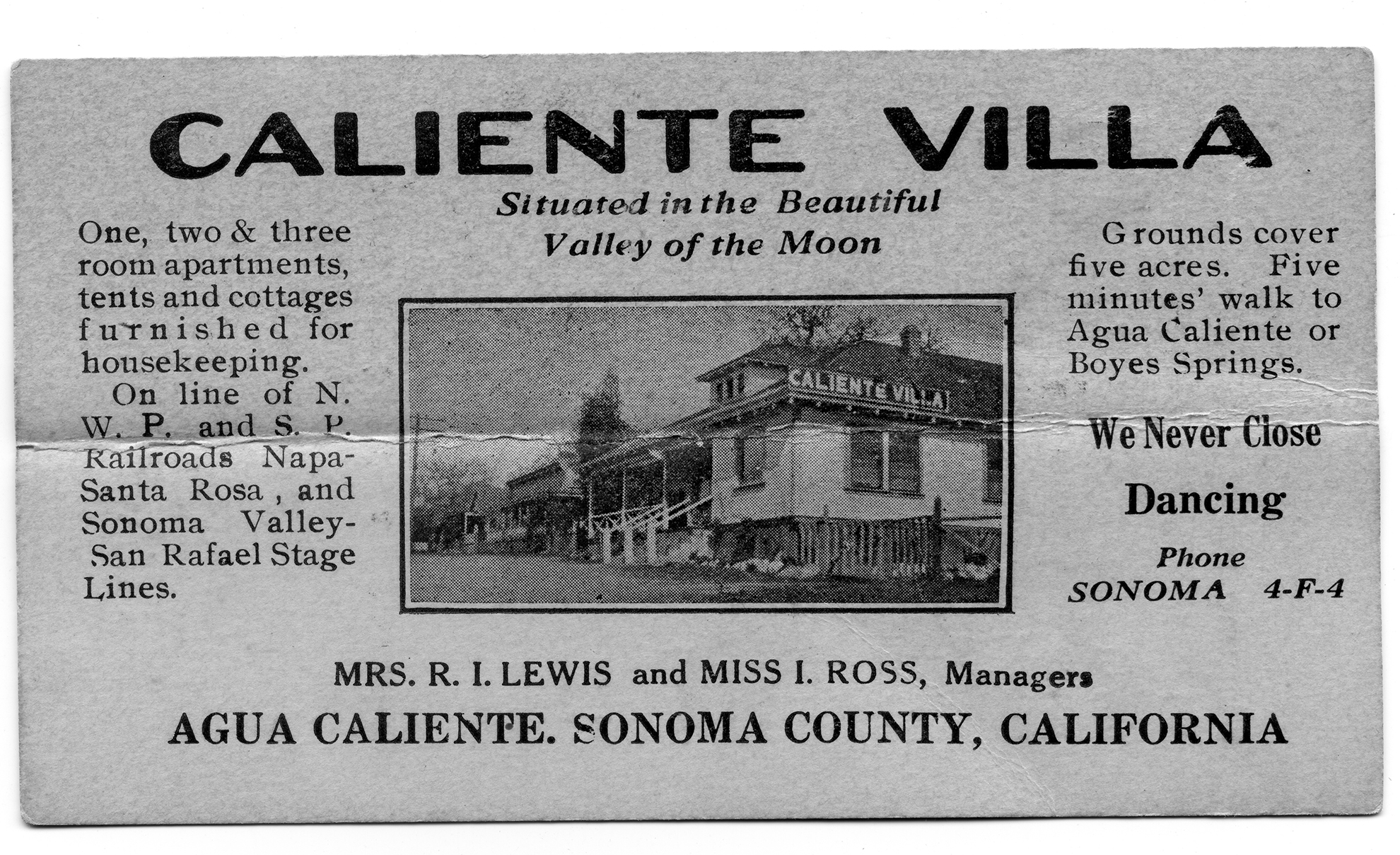 Courtesy Lynn Downey
In fact, the Villa went through many owners and managers. In 1920 Mrs. Lewis and Miss Ross were in charge. They…”have leased the (resort) and will conduct the popular springs resort on the apartment plan…” Along with “modern conveniences and comforts,” the new proprietors would provide “a long distance phone” and a “classy jazz orchestra!”
That same year, Lewis and Ross entertained “twenty four members of the Salt Lake City baseball team…Mrs. Lewis and Miss Ross were assisted by a number of young ladies…There was dancing, music and card playing…” and “everything was complimentary, including the smokes, and the boys report a swell time.”
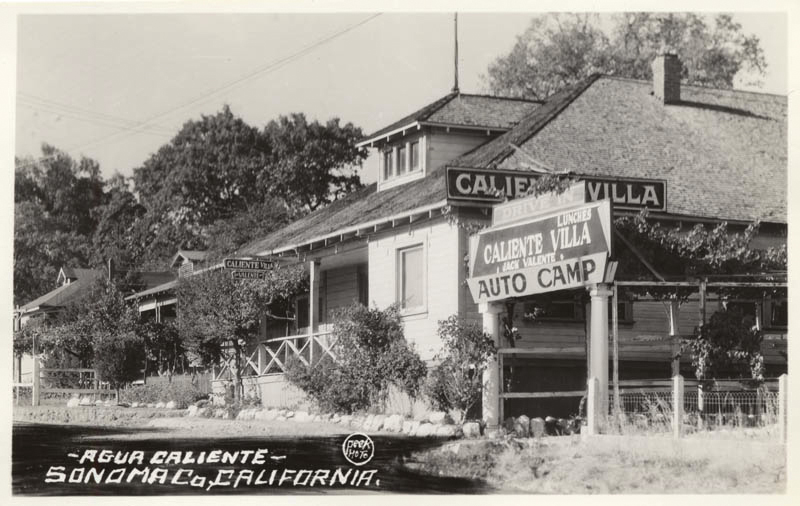
Courtesy California State Library
Jack Valente (his name is seen under Caliente Villa in the sign) ran the resort as of 1940. The term “auto camp,” however, was in use at least from the early 1920s. Automobile tourism in Sonoma Valley started before the opening of the Golden Gate Bridge.
Note the dormers on the three buildings shown in the photo.
Several of the buildings were in existence in 1984 when Dan Peterson made his Historic Resource report for Redevelopment.
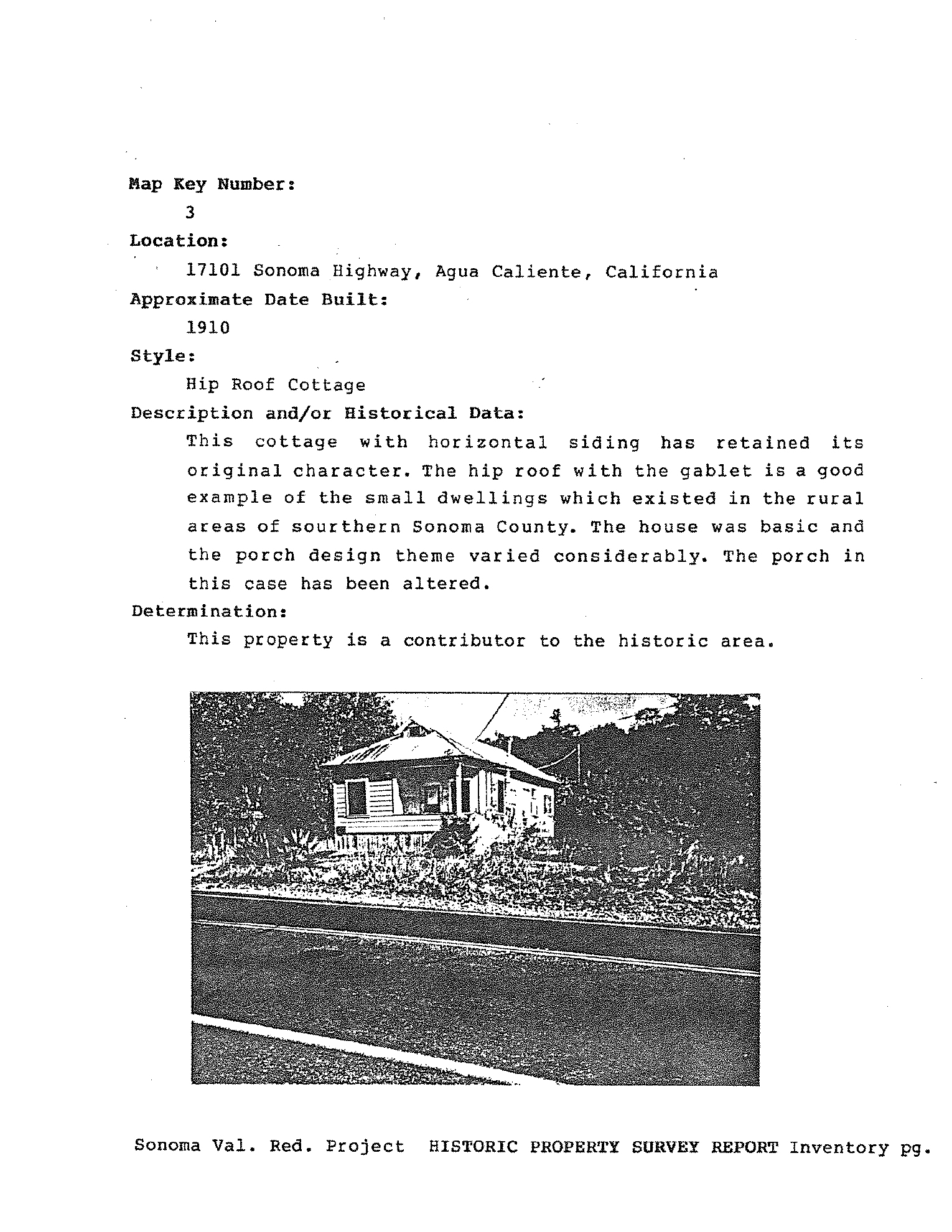
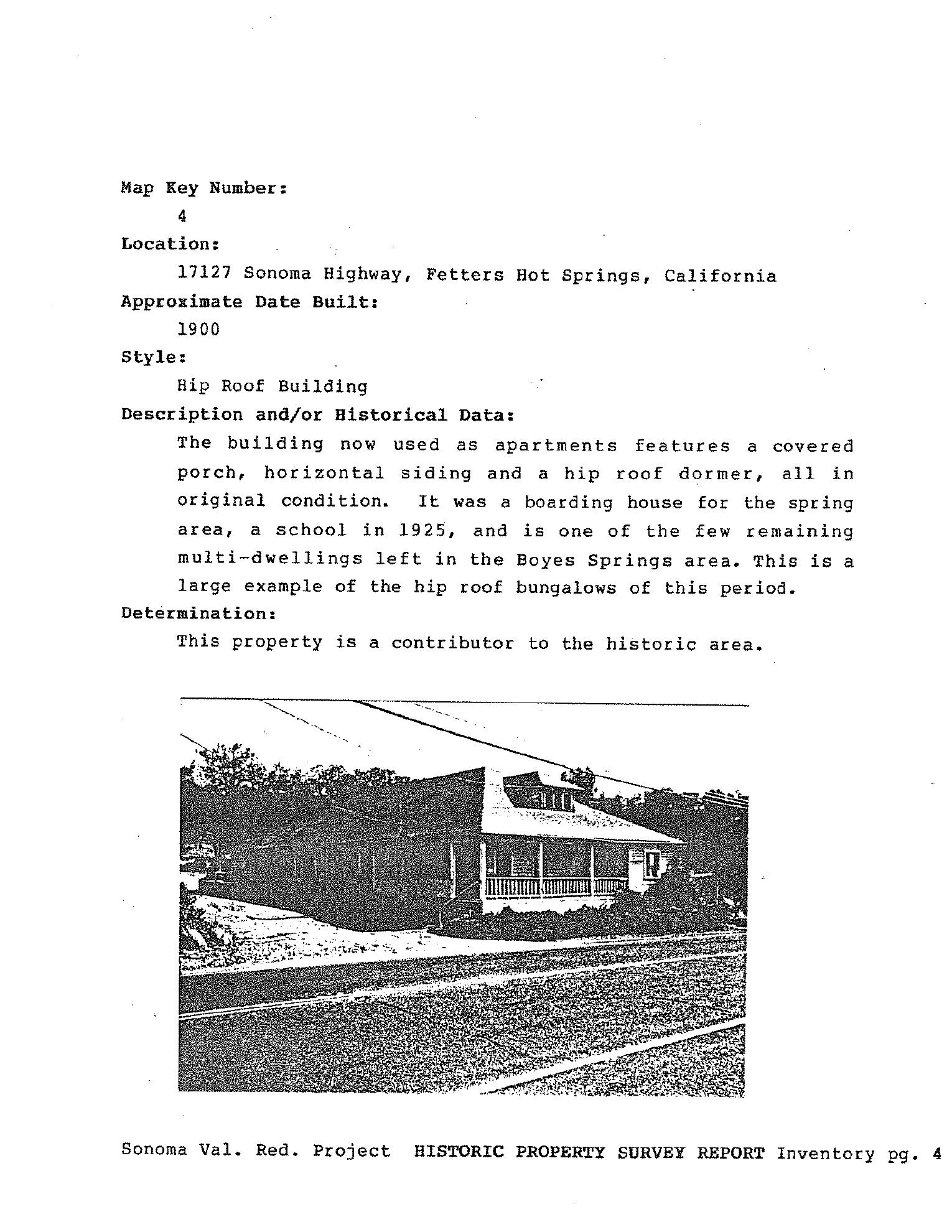
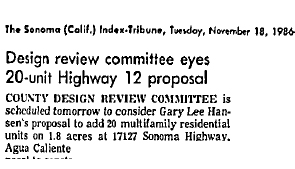
The development proposal in 1986 probably resulted in the demolition of 17127, and it looks like the 20 multifamily units were indeed built.
17101 was still there in 2008.
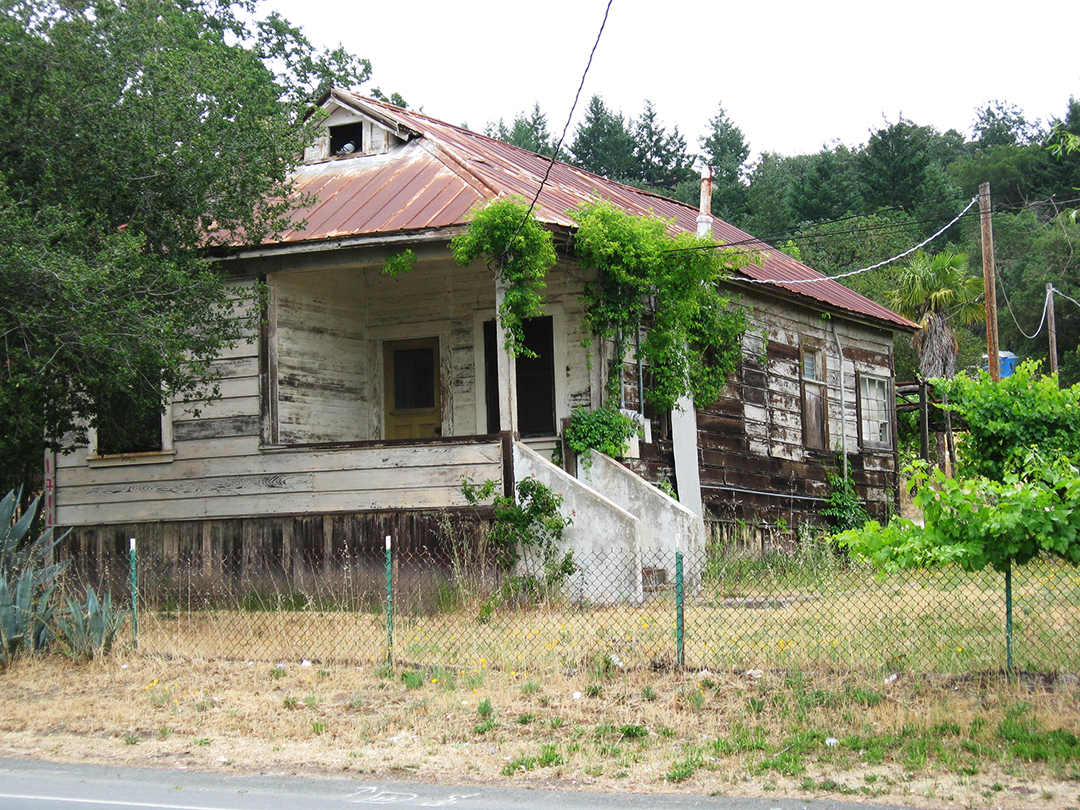
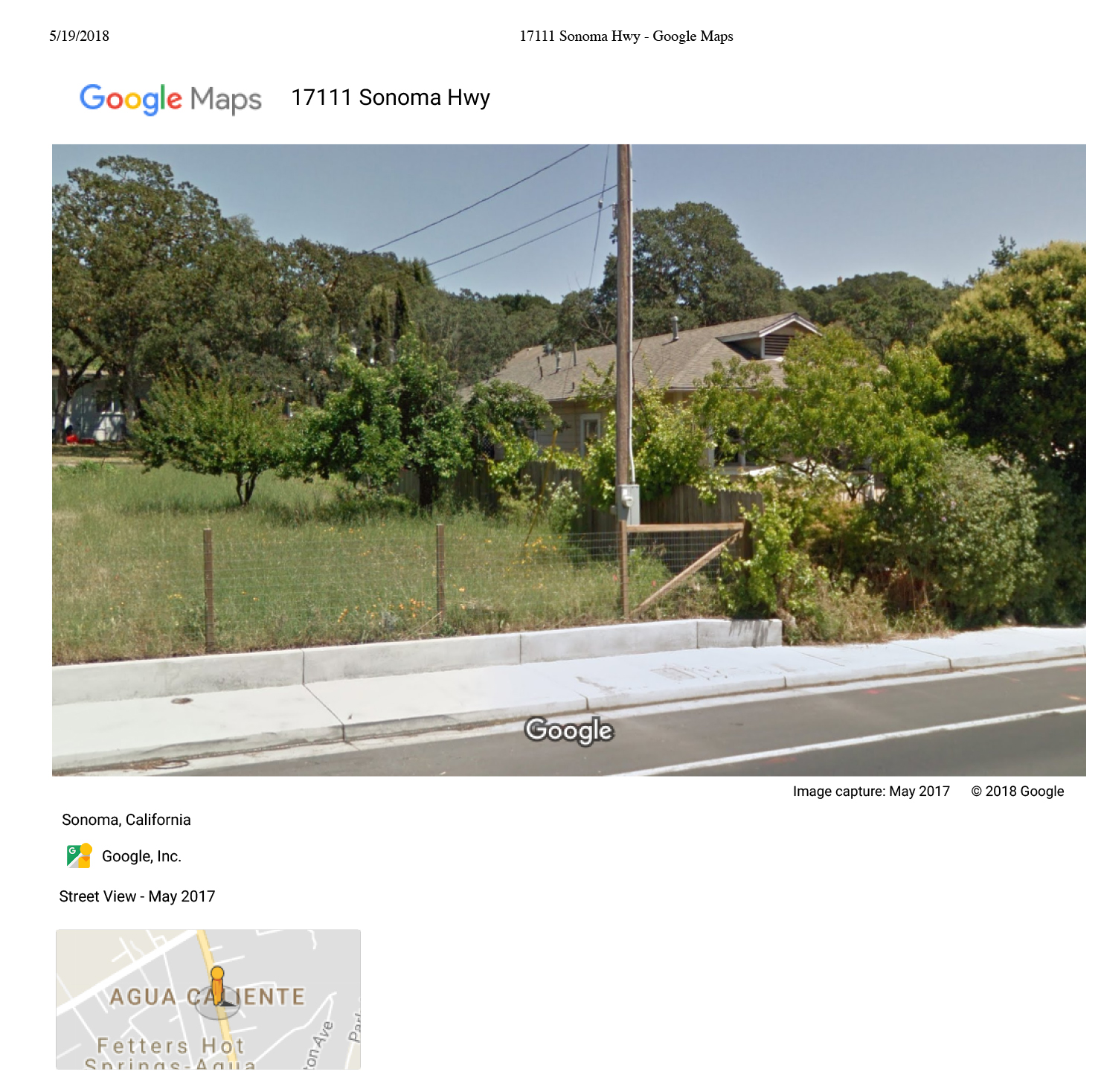
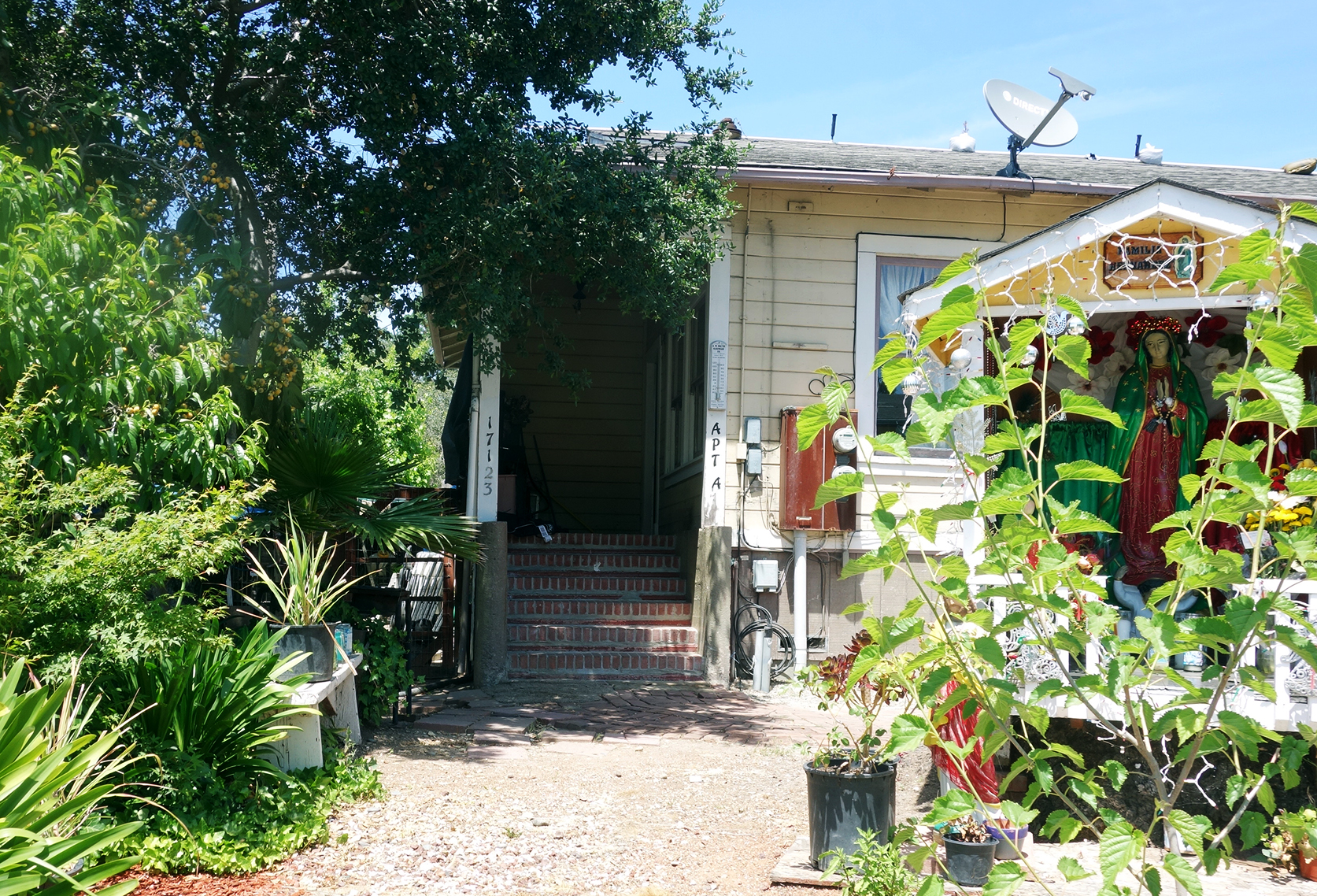
In 2018 only one survives (17123).
 springs museum