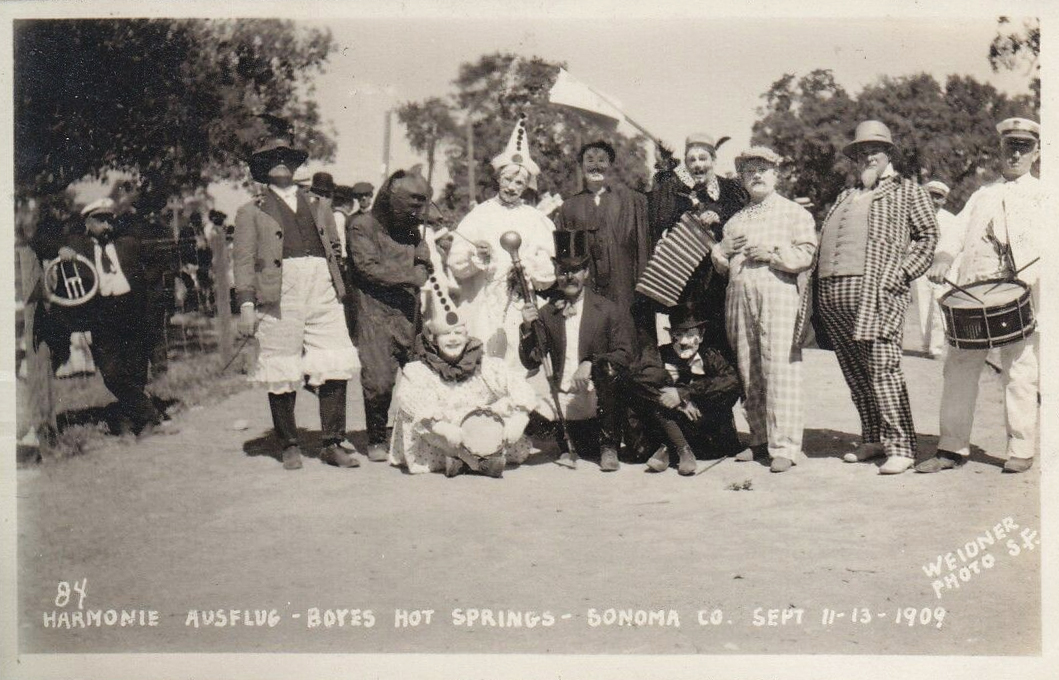
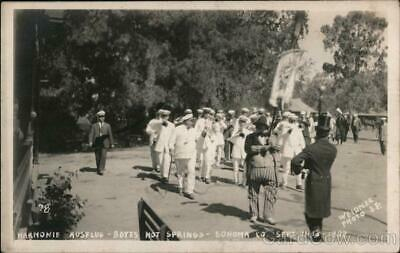
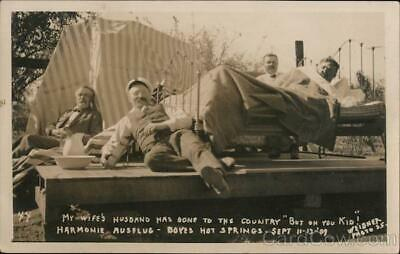
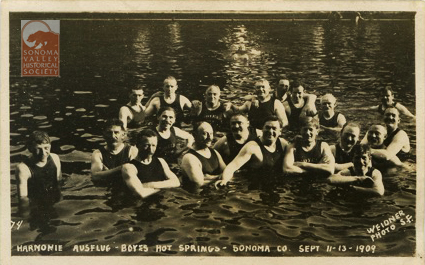
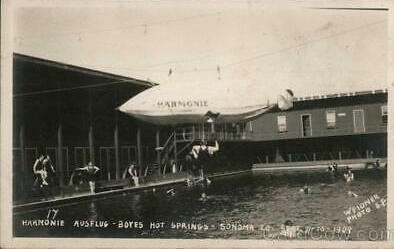
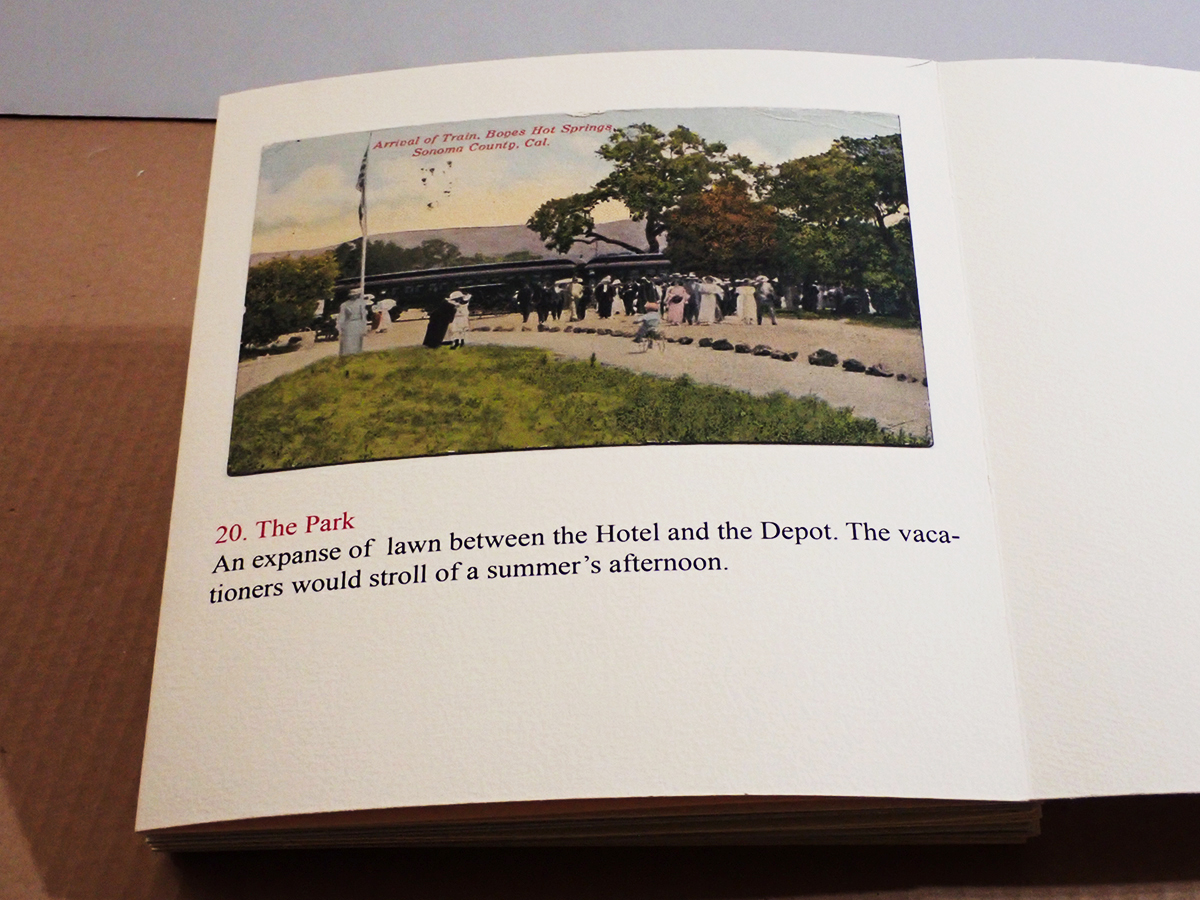
A curiosity of early 20th century postcards from the Boyes Hot Springs resort are labeled “Harmonie Ausflug.” “Harmonie Ausflug” is not the name of a specific society but of the activity: the Harmonie (singing society, choral group,) takes an outing.
“In Europe’s German-speaking states…male choir organizations started popping up around 1810 and grew in number and prominence over the next half-century. Most were open to people of different social classes and focused on the idea of educating people and spreading middle-class values-though, by the 1860s, some were specifically “workers choirs,” affiliated with socialist and labor movements.
However, for many regular German Americans, this wasn’t really the point of the festivals. They showed up to enjoy romantic or humorous folk songs, eat childhood foods, drink beer, and reminisce about the old country.” and,
“German American singing festivals included both highbrow and lowbrow features.”
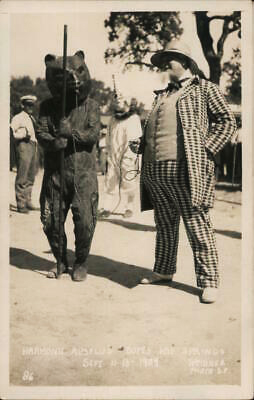
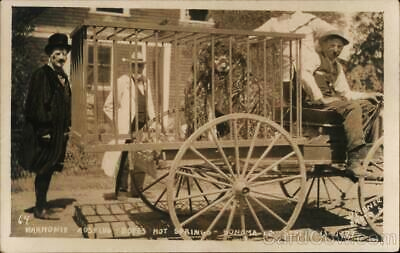
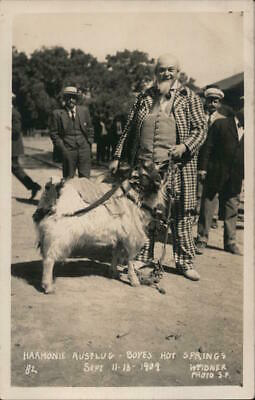
The Harmonie Ausflug post cards clearly represent the choristers indulging in the “lowbrow features.”
Animal costumes were favored. Dated 1909 on front.
An actual animal.
Not just singers, but a marching band!
“My wife’s husband has gone to the country “but oh you Kid!”
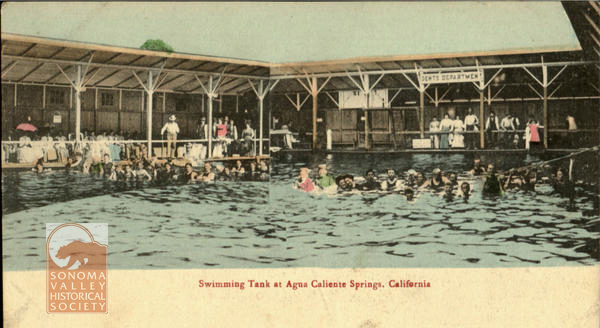
Taking the waters at Boyes.
A zeppelin (invented by Ferdinand von Zeppelin, don’t ya know)? Seems to be hanging from a cable over the pool.
All photos, dated 1909, are by the prolific Charles Weidner.
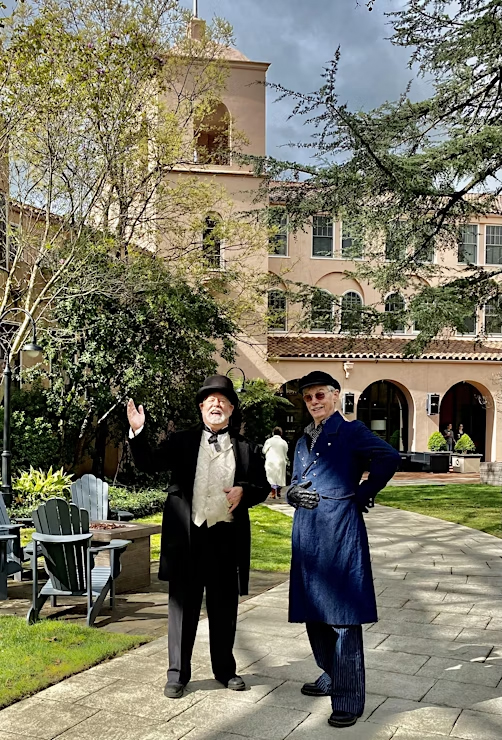
“You may have heard that I am starting a new historic walking tour in your neighborhood. It is called the Agua Rica Tour. I was asked to create such a tour…that will take place solely on the grounds of the Sonoma Mission Inn….by the new general Manager Karim Ikrimah last year.
Since then, CW Bayer and I have delved deeply into the historical record….and am now good friends with Reverend Leavenworth, Capt. Boyes, and Rudy Lichtenberg. Well…except for Thaddeus Minor Leavenworth….no one could be actual friends with him….”
George and CW are well-known actors, historians and radio personalities (yes, we still have radio!) in Sonoma Valley. The tour is an absolute blast! Our history is full of great characters, and these guys really bring them to life.
The tour runs Friday through Monday, starts at 10AM, and adult admission is $25, kids free.
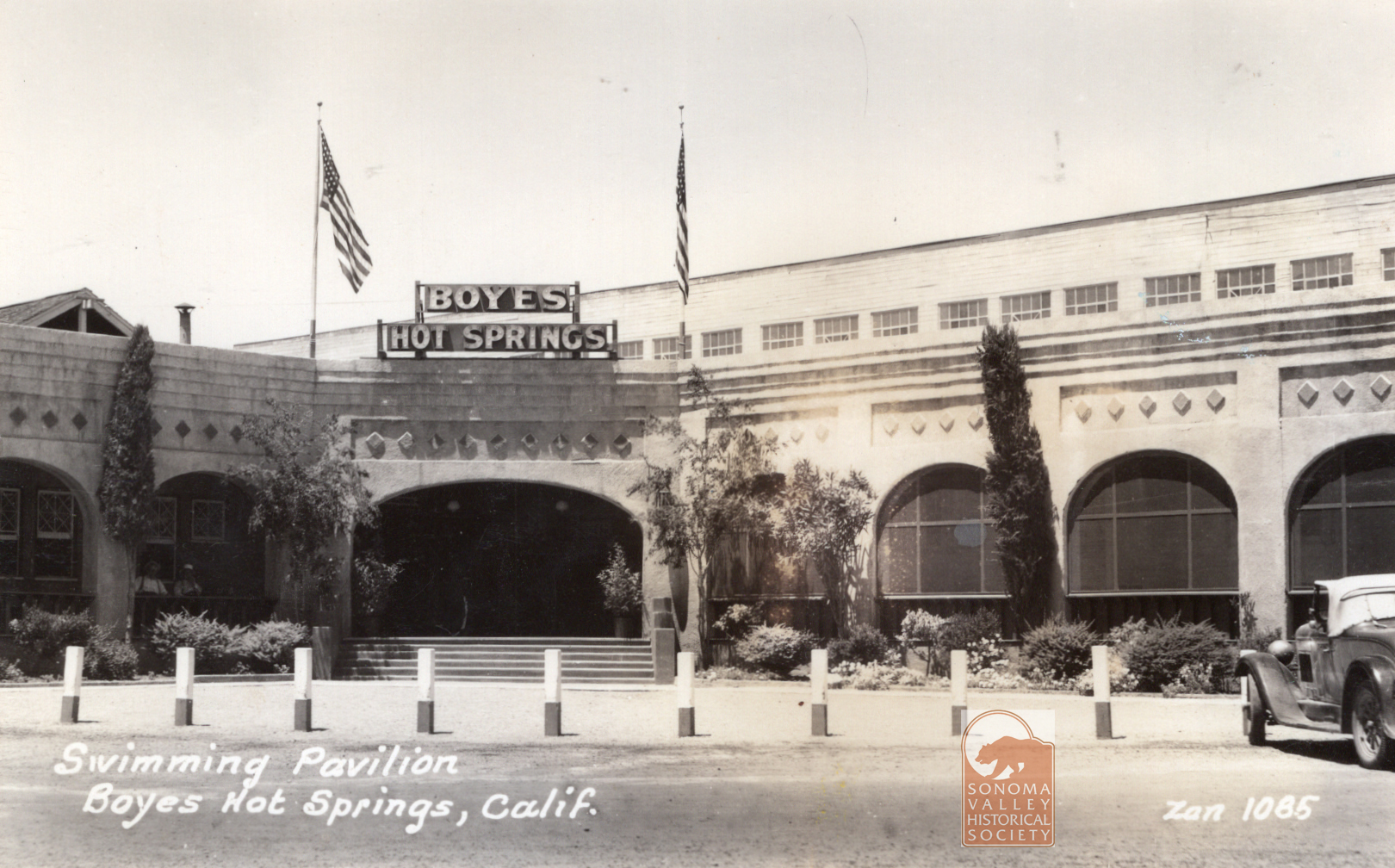
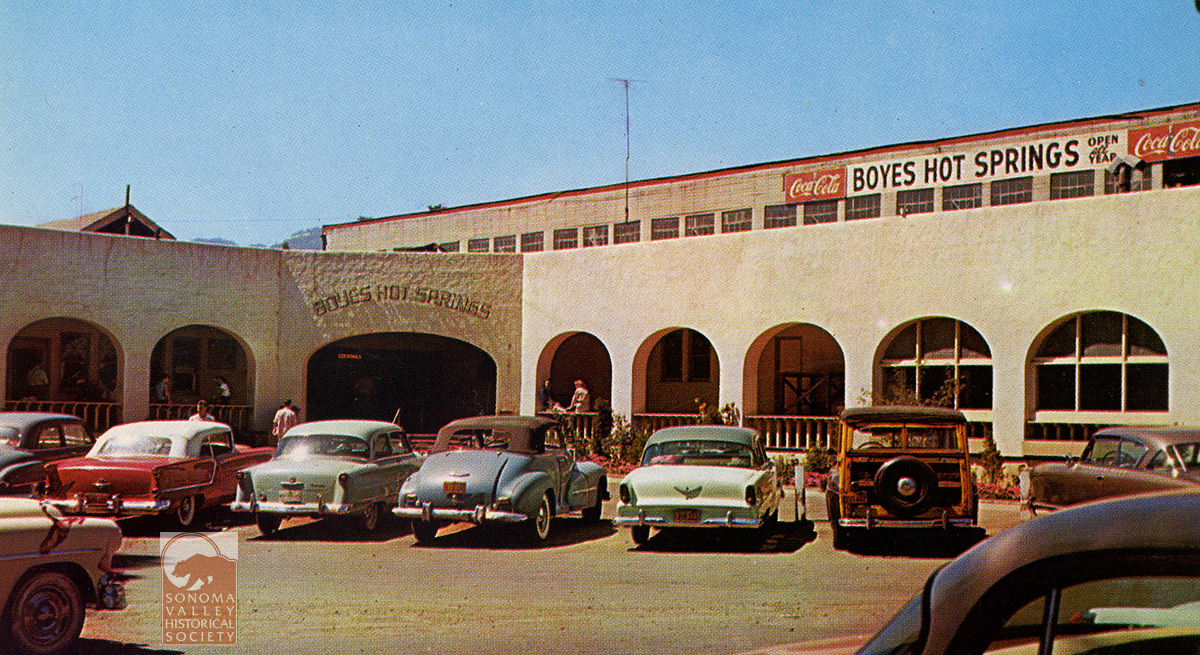
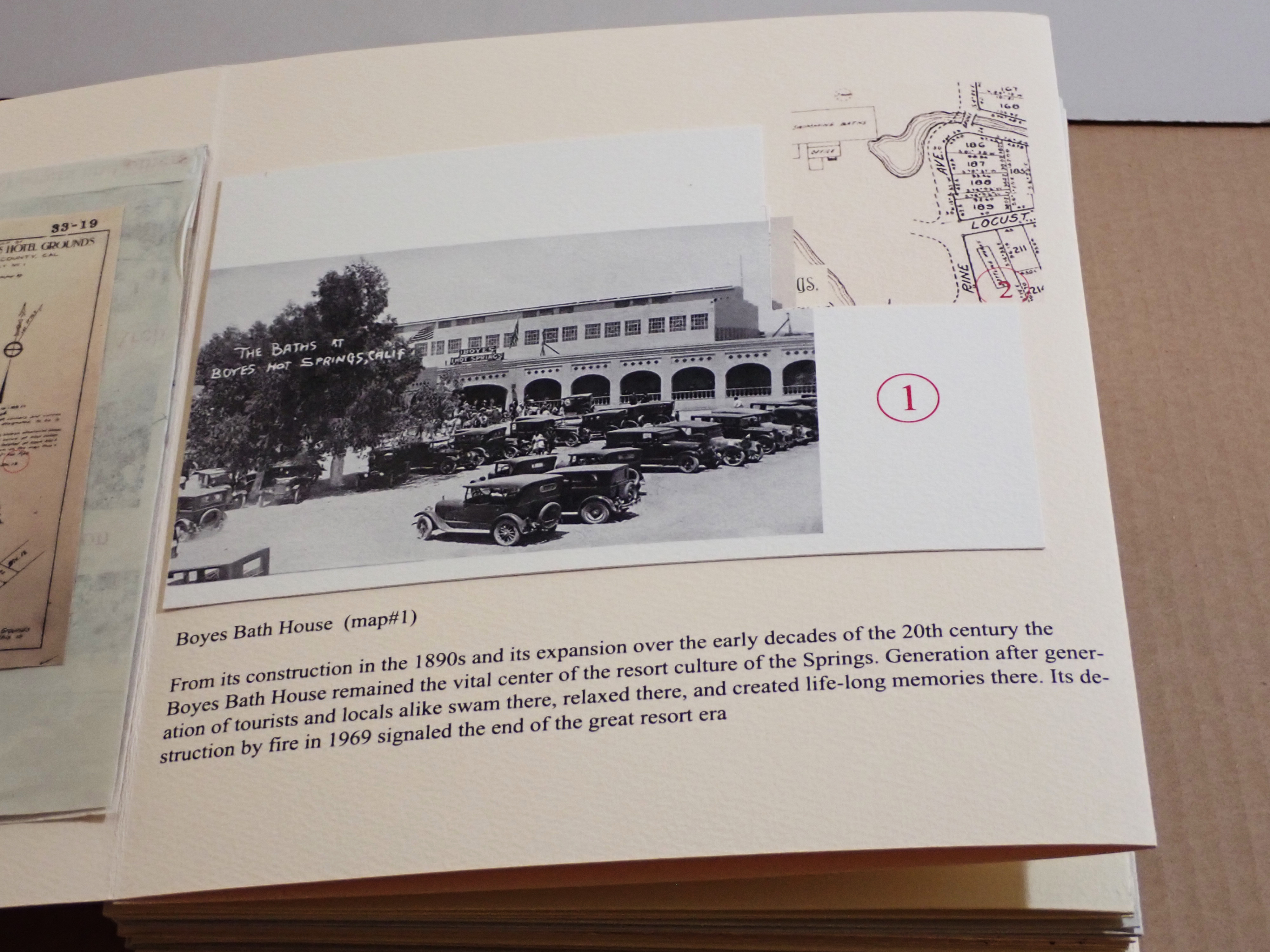
The Boyes Bath House entertained thousands of happy customers from the 1890s through April 17, 1969, when it burned to the ground. Many locals have fond memories of summers spent swimming in its gigantic pool. The entrance in the 1930s, above, and the 1950s, below.
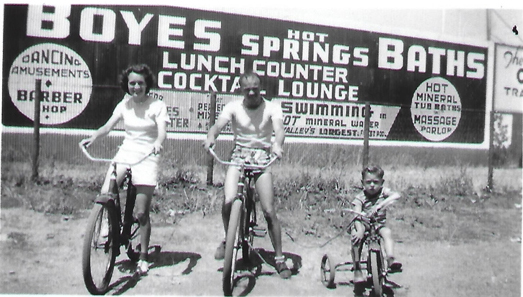
This large billboard style sign pretty much lays out all the amenities offered at the Bath House in 1944. Photo courtesy of Dave Chioti.
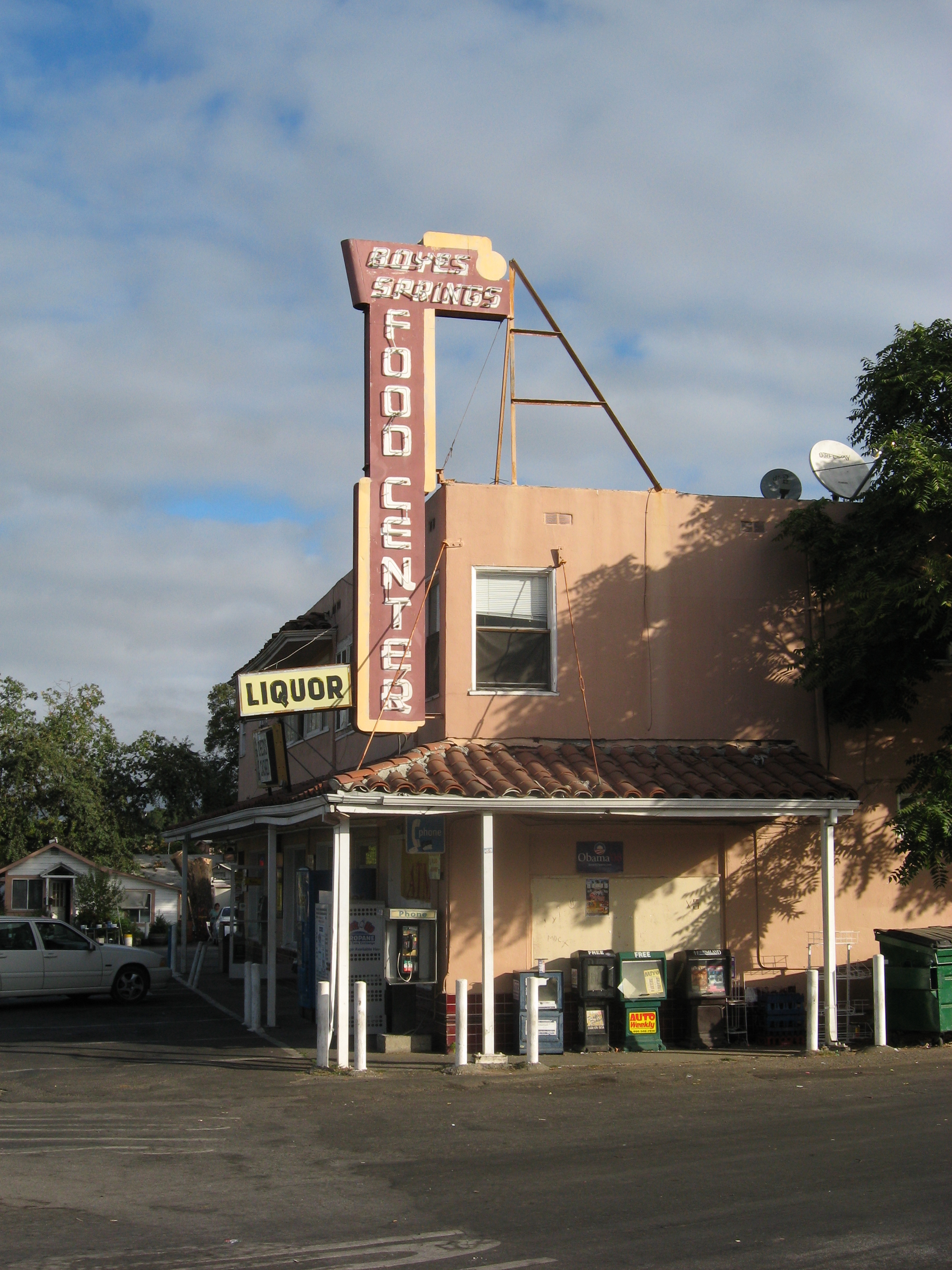
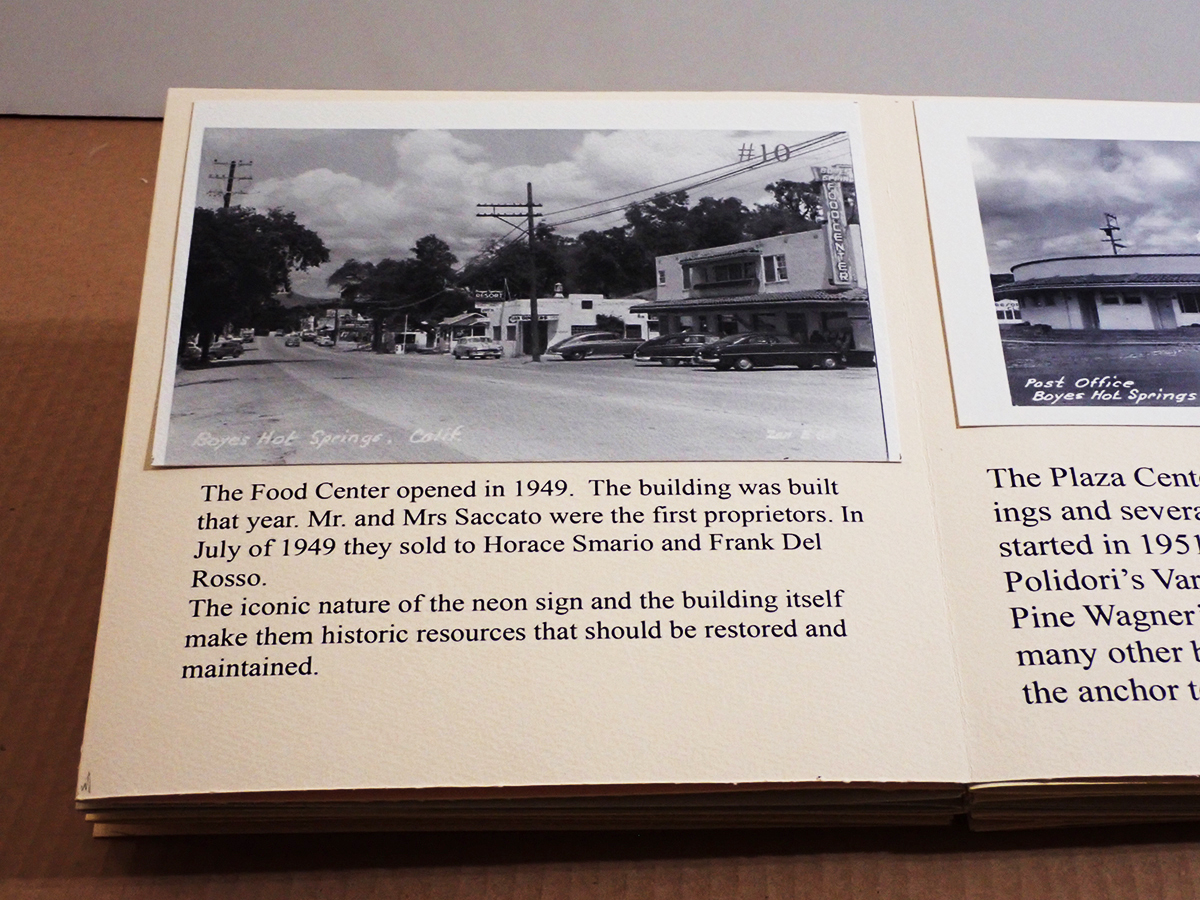
Boyes Food Center in 2009. It was constructed in 1949. The tiled awning was torn off sometime in the 2000s.
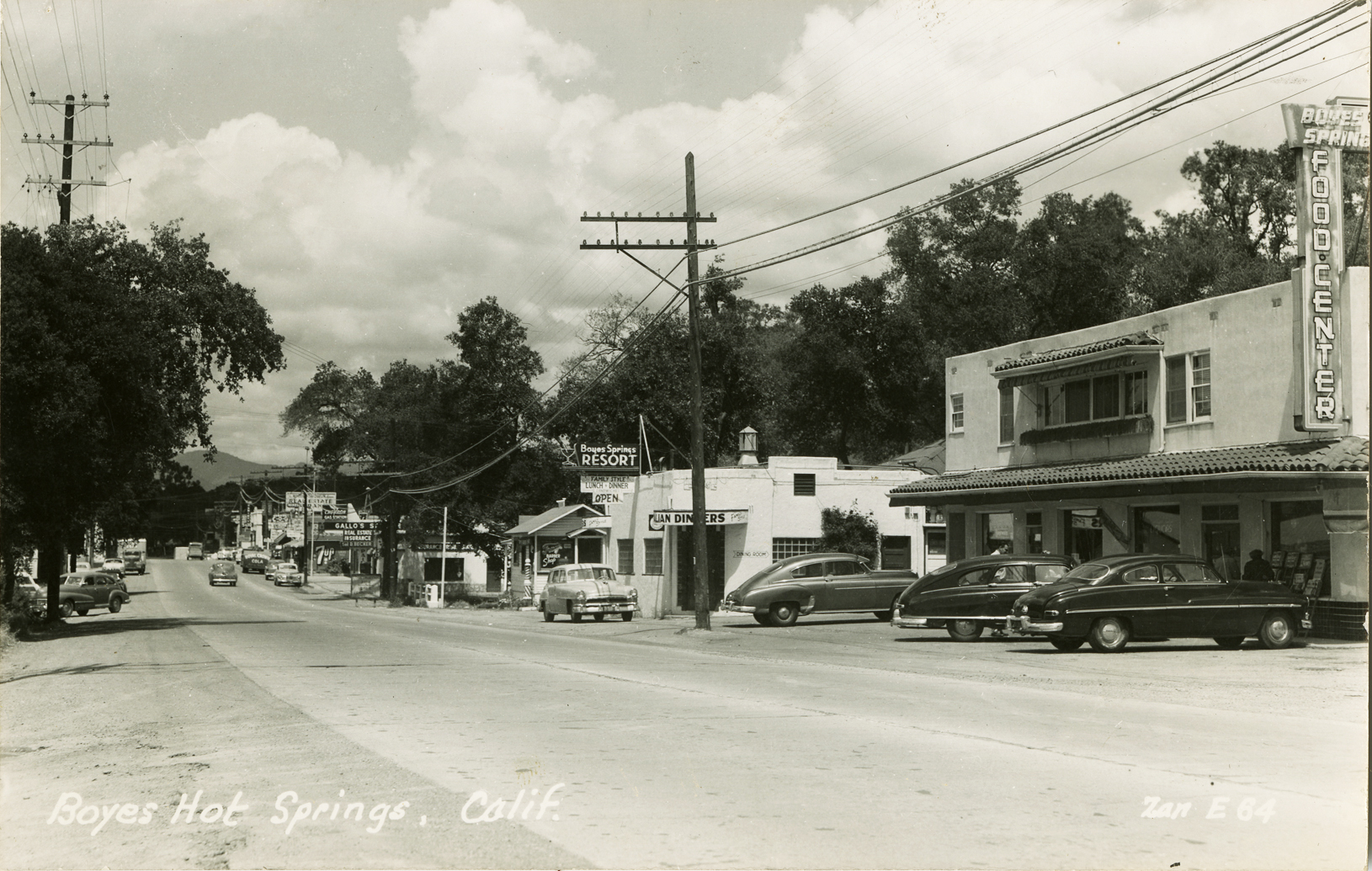
1949, looking north on the highway. Beyond the Food Center is the Boyes Springs Resort, now a parking lot. Beyond that, the original Mary’s Pizza.
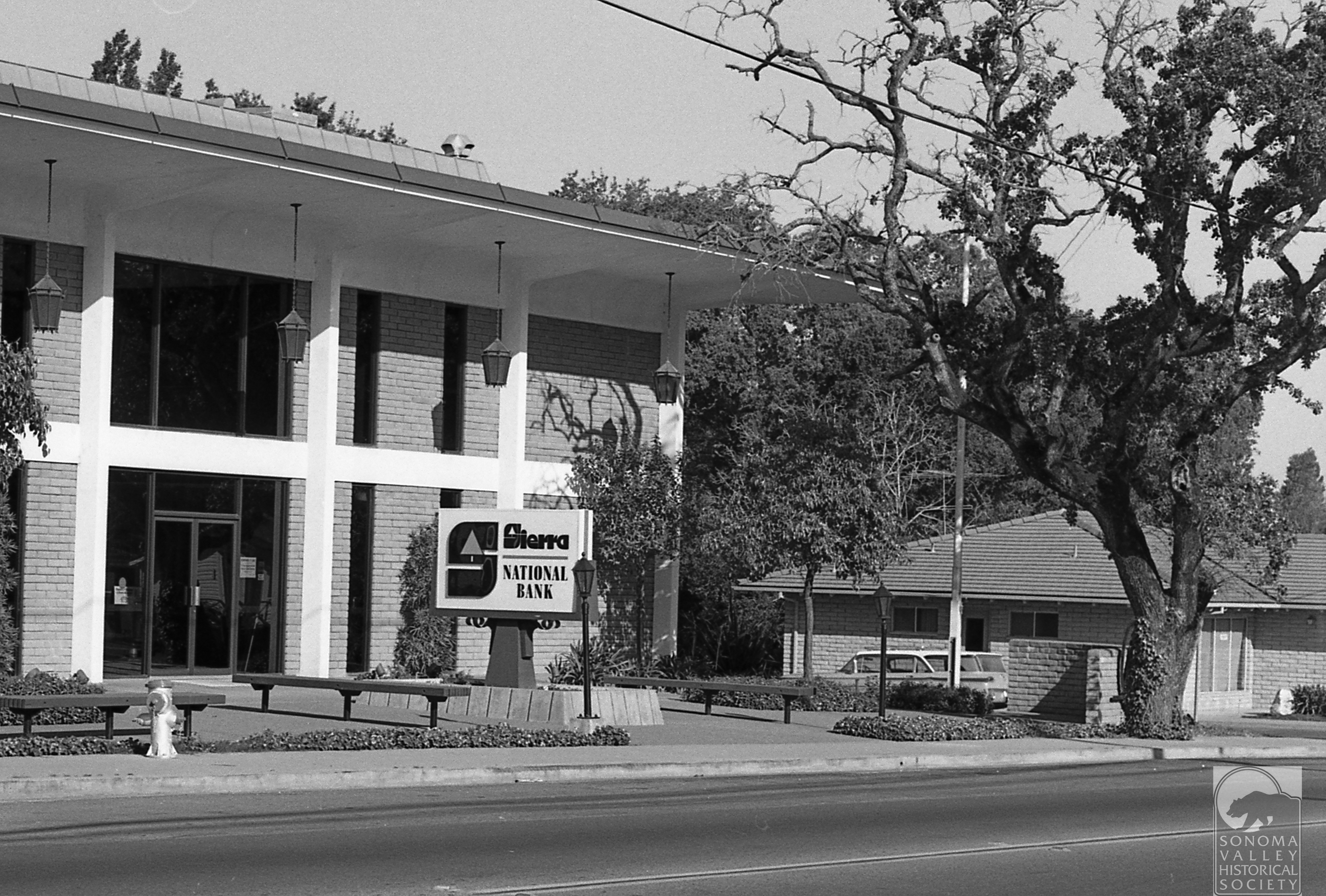
Across the highway from the Food Center, the Sierra Bank building was constructed in 1966. It now houses the offices onf Ross, Drulis, Cusenberry architects. The cross street at the corner was once called Meinke Road, but was renamed Sierra when the building was built.
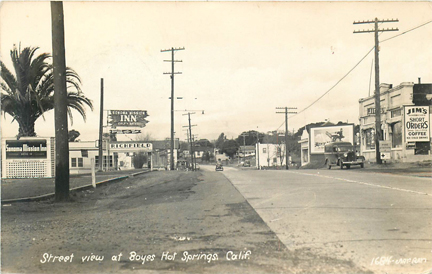
The corner of Boyes Blvd. and Highway 12, known then as the Santa Rosa road, 1930s. Sonoma Mission Inn sign at left mounted on a lattice-work in the Boyes Plaza. the palm tree was in the center of the plaza. Richfield gas station sign beyond that. On the right, Jim’s Cafe “Short Orders!” The building was built after the 1923 fire of ceramic brick, by Bob Liaros, a local barber. It stood until the early 1990s.
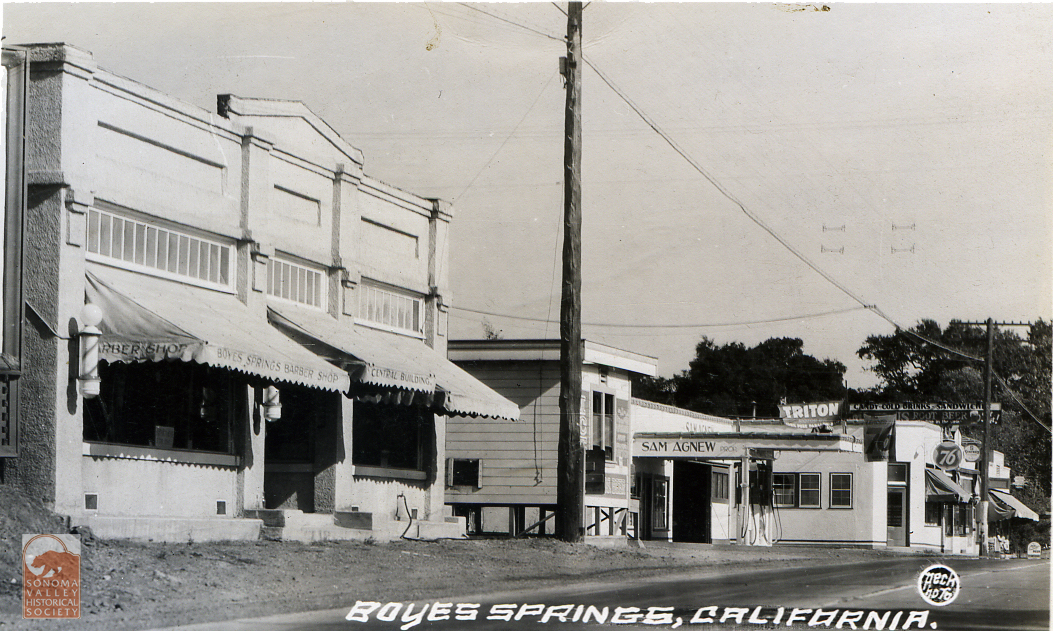
The Liaros building, looking the opposite direction on the highway. Past the Ice House on the corner of Vallejo Ave., is Sam Agnew’s service station, now the Sonoma Eats parking lot. Agnew was a famous major league baseball player who retired to Boyes Hot Springs in the 1940s.
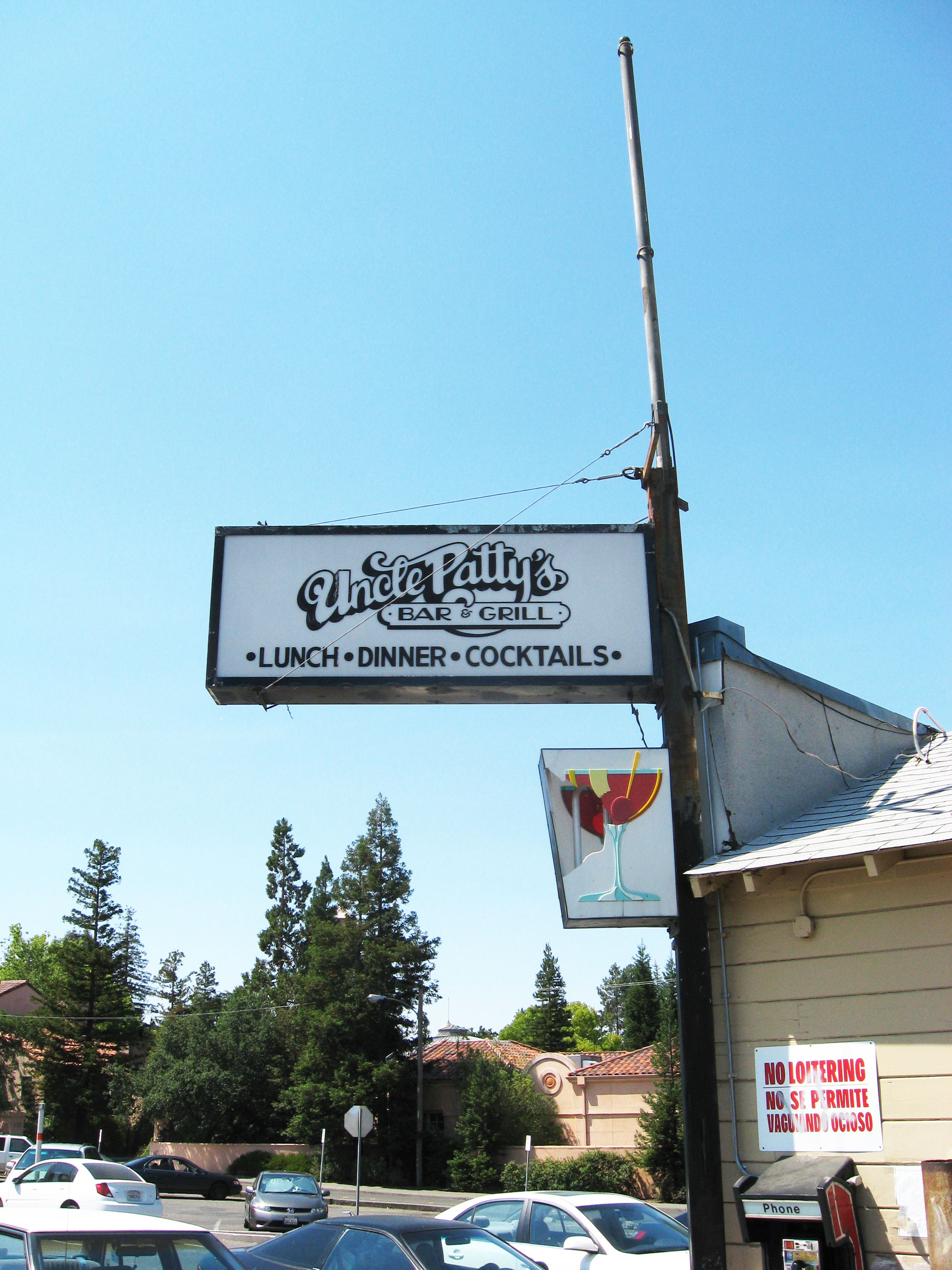
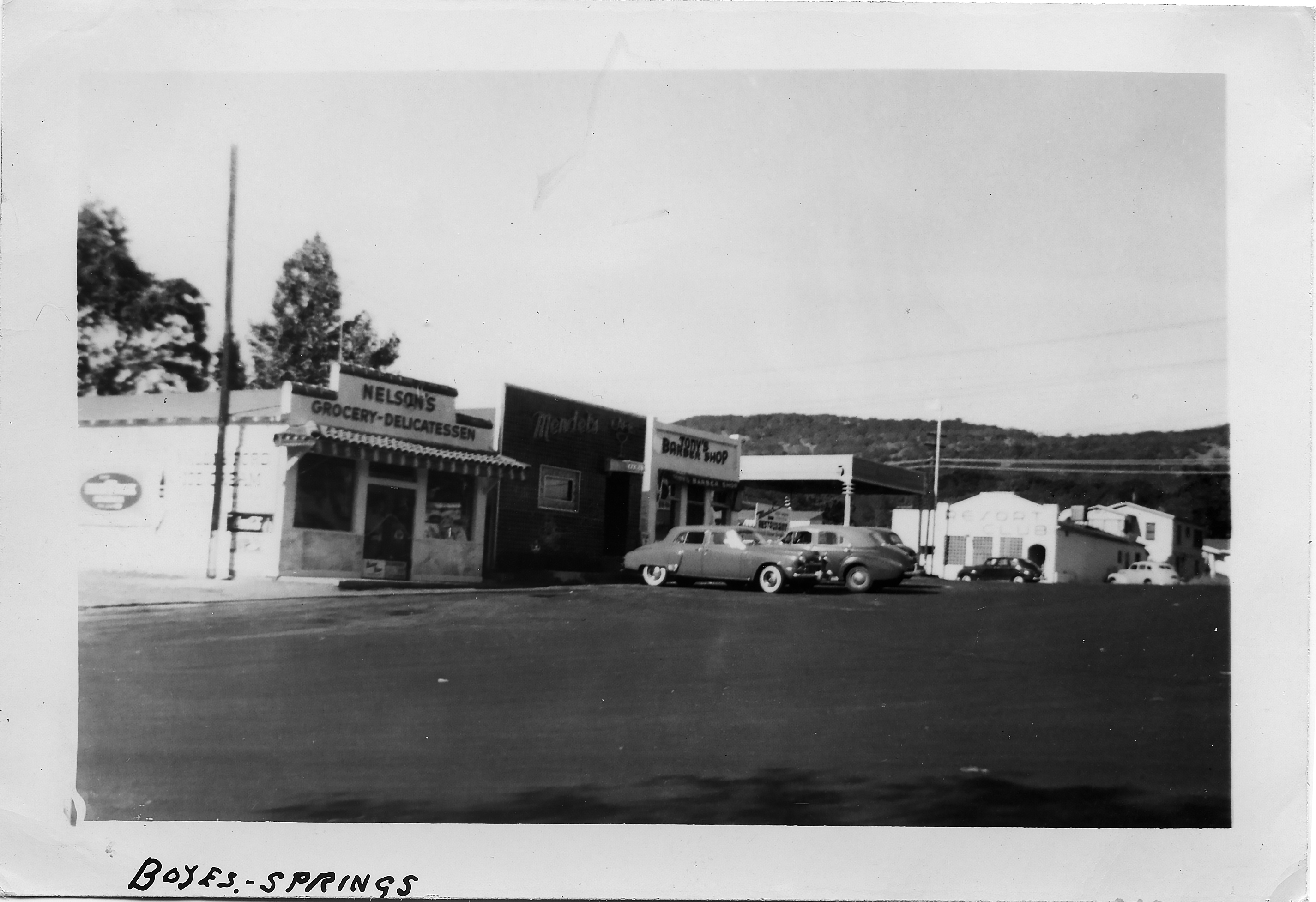
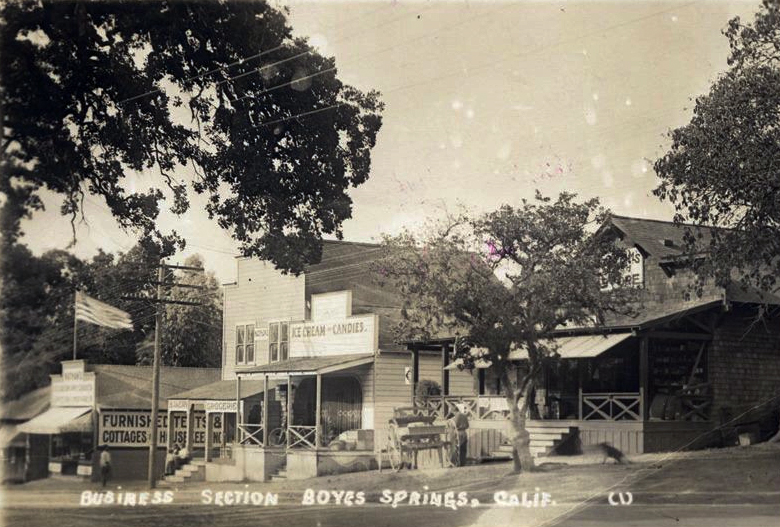
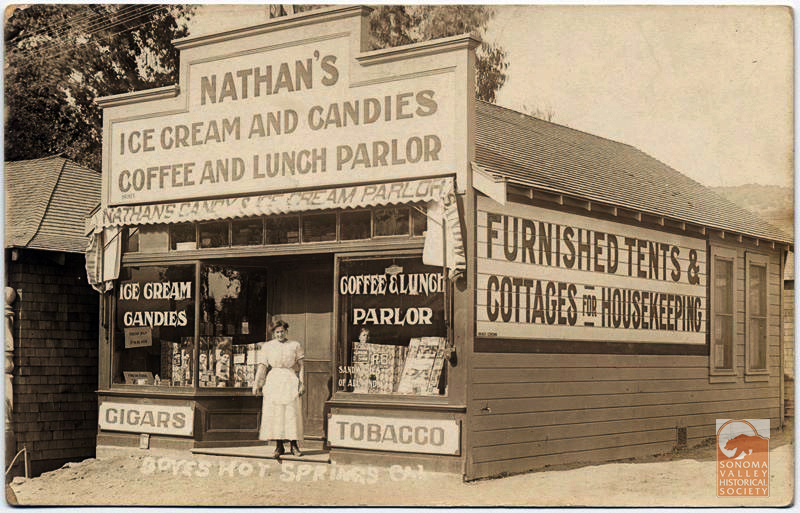
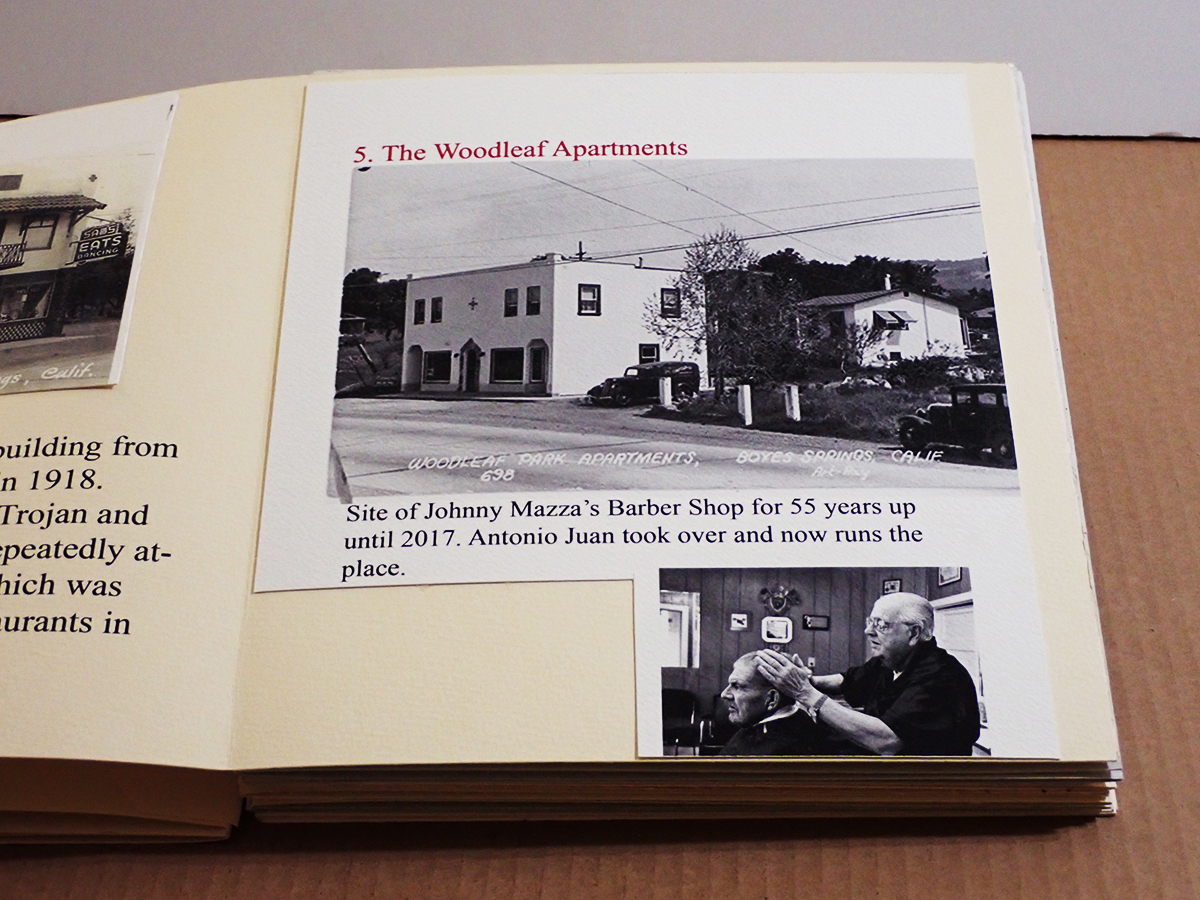
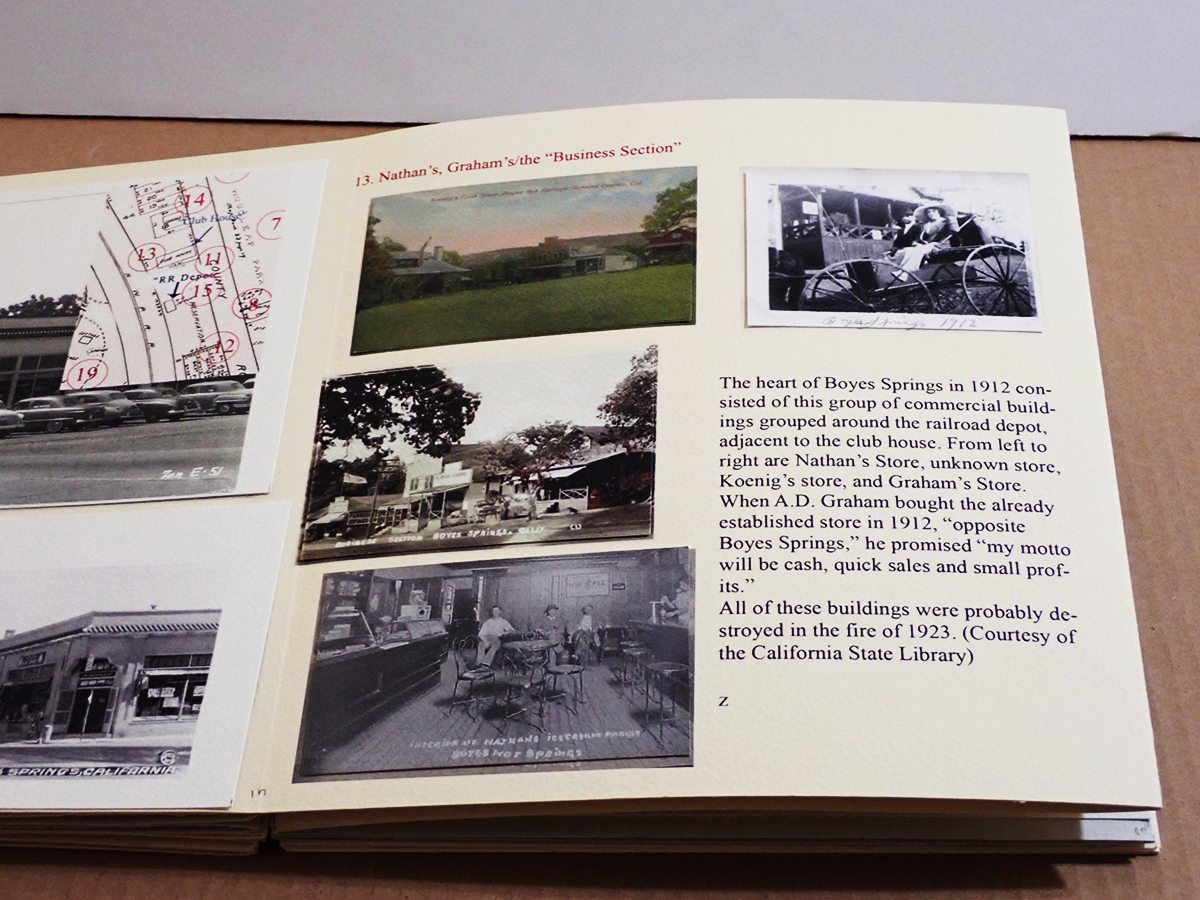
Along side what was once a spur street between Boyes Blvd. and the highway, stood a row of buildings dating from the 1910s or before. Uncle Patty’s was the last resident business before they were torn down in the 2000s. Below are those buildings, or some of them, in the 1950s, featuring Mendel’s Cafe and Nelson’s Deli, and a barber shop. Nathan’s Ice Cream was one of the original businesses on that row, which was called “the business section,” in the very early days.
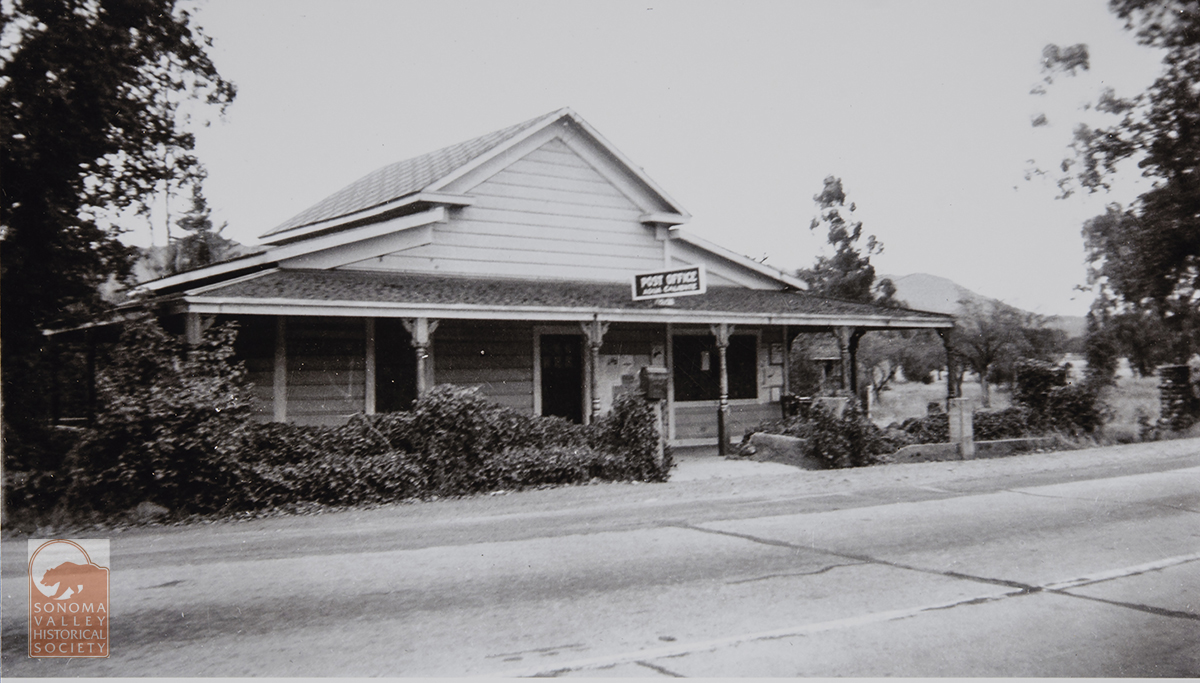
Circa 1912. At right, behind the oak, is Graham’s Store, the original site of the Boyes Hot Springs post office.
Nathan’s is the building at far left in the photo above.
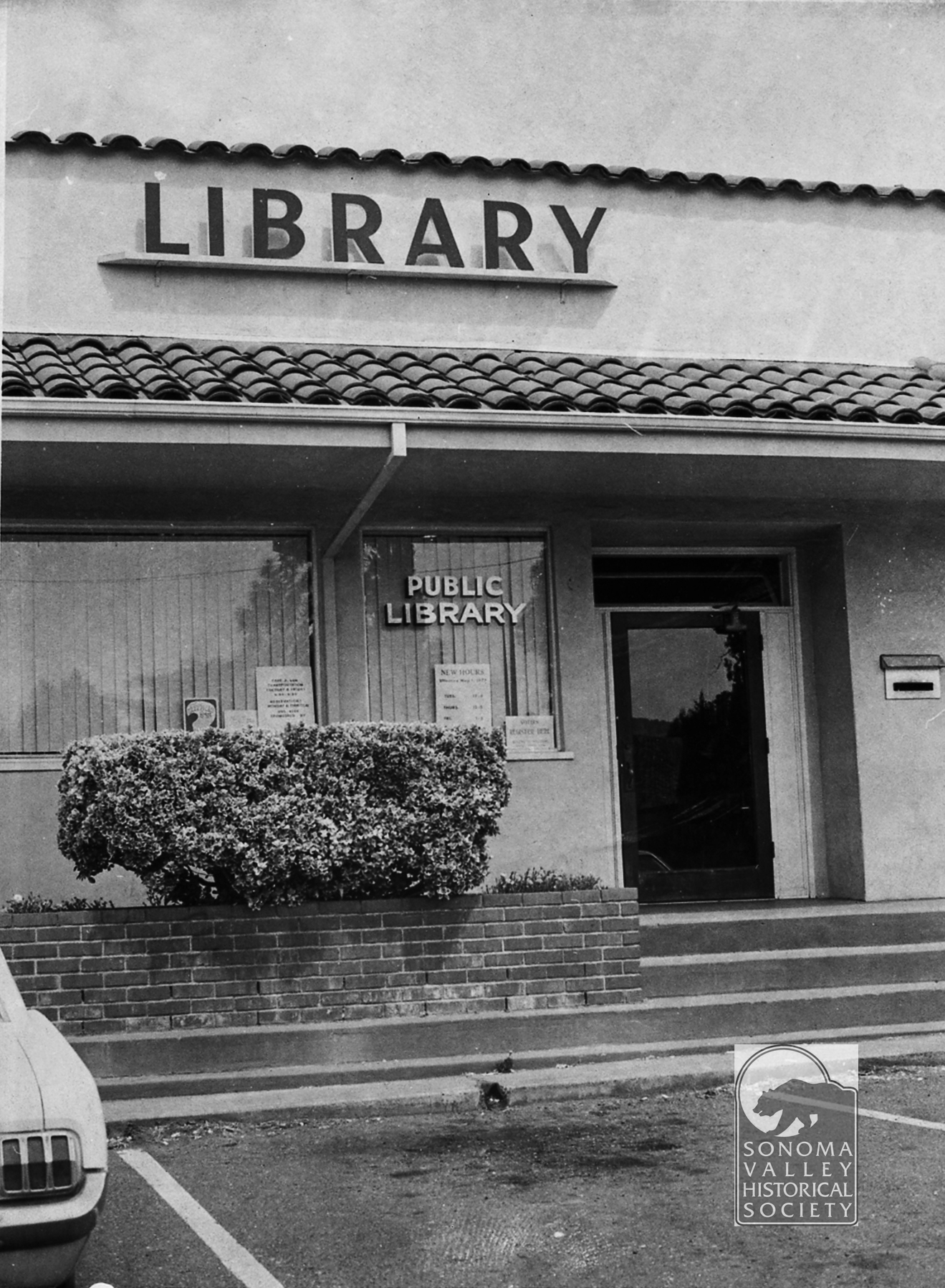
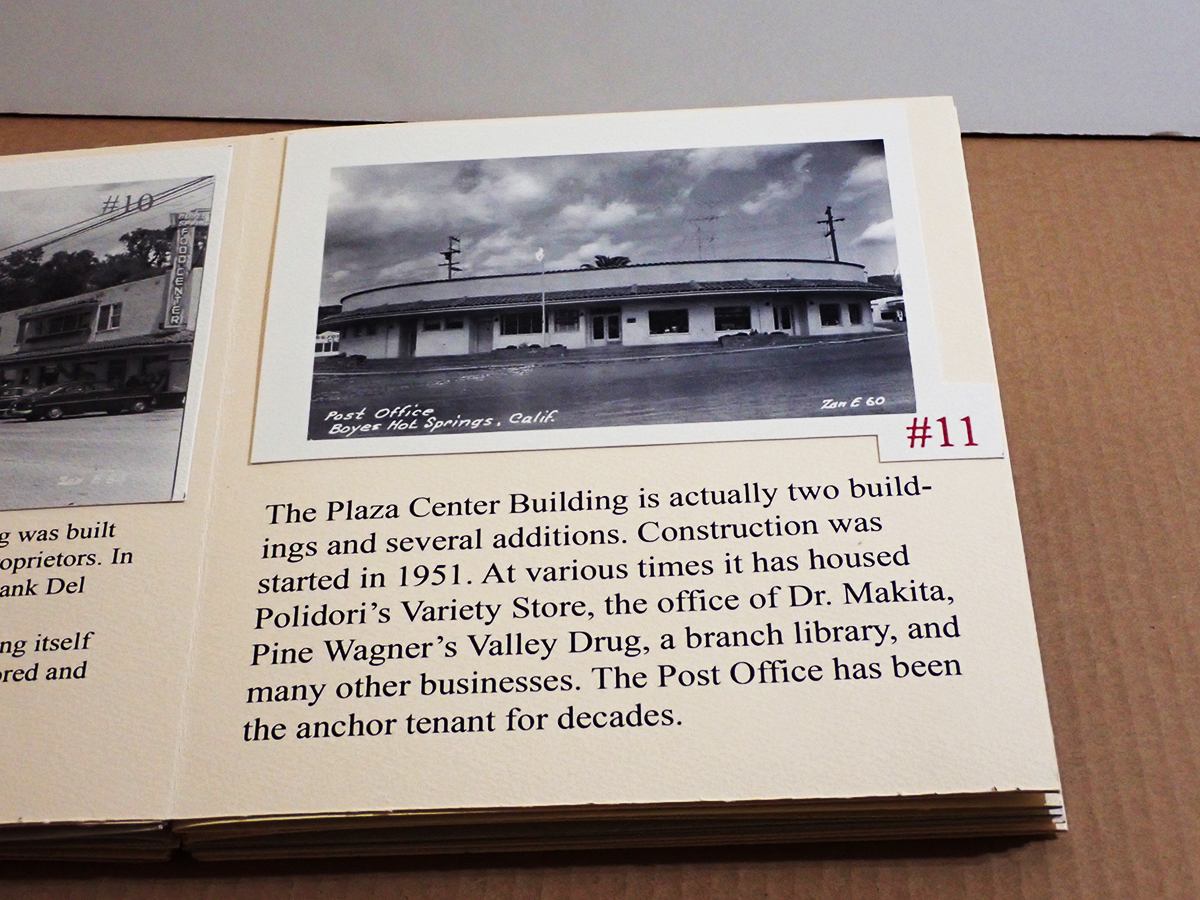
Yes, there was a branch library in the Plaza Center building in the 1970s.
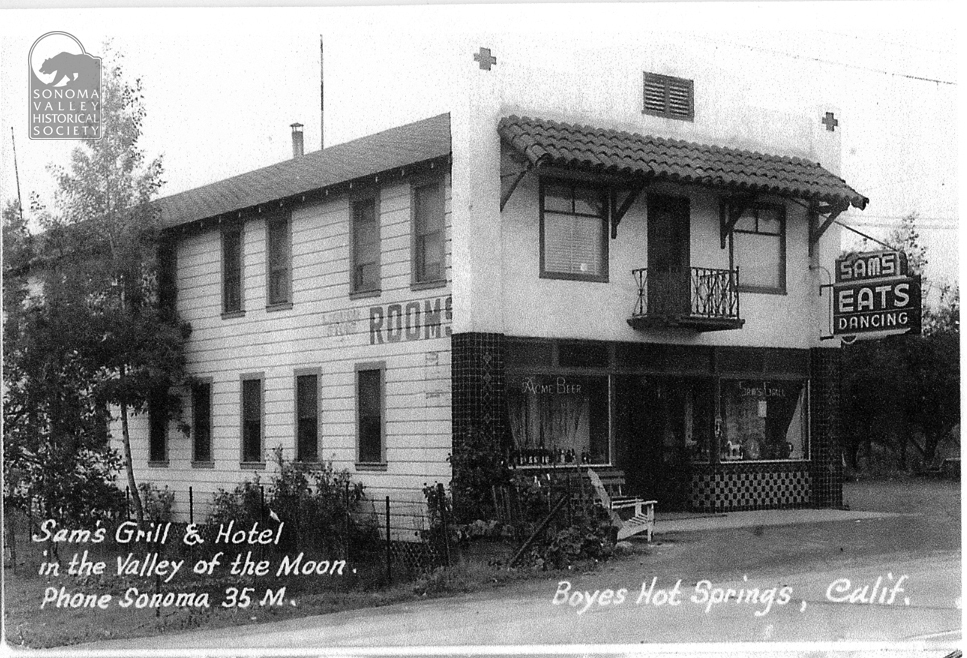
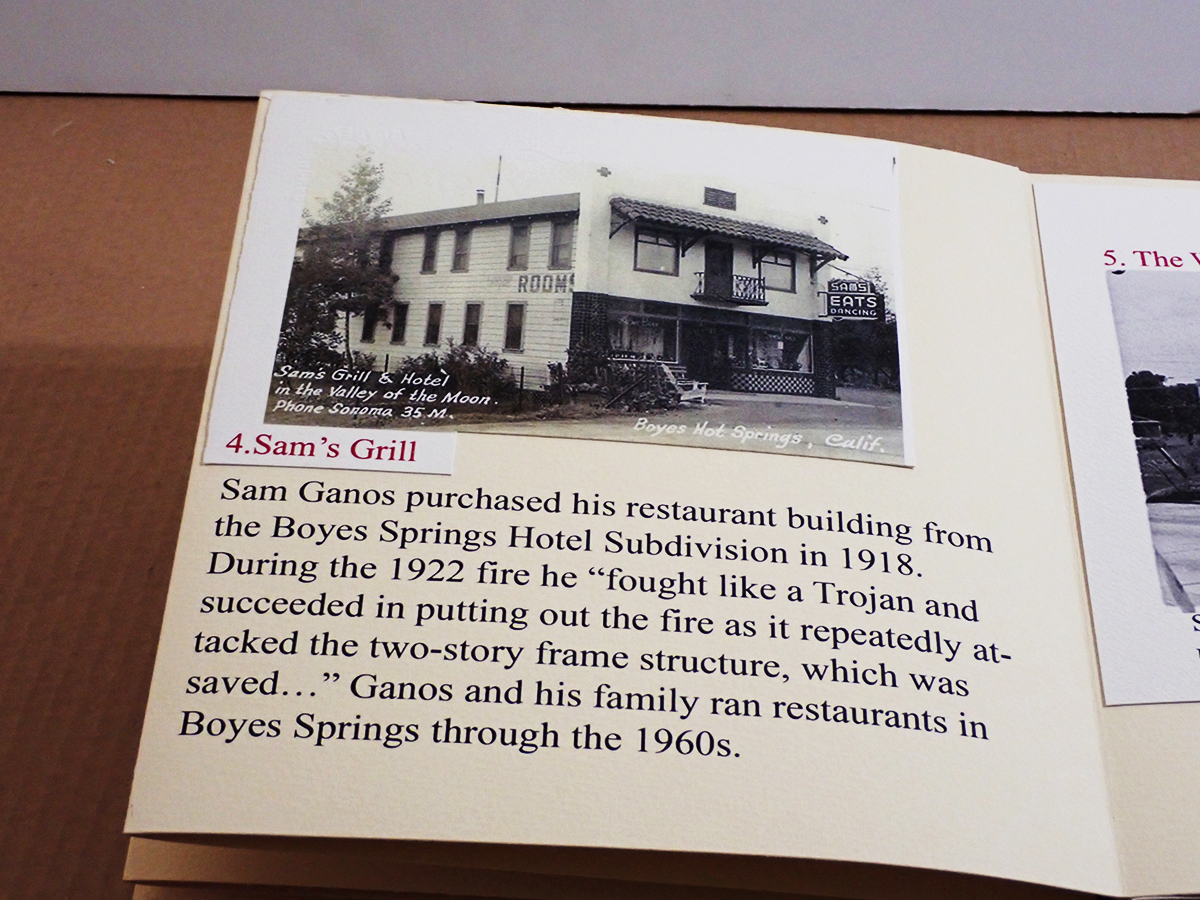
Sam Ganos was prominent business man in the 1940s and 50s. The building, much modified, now hosues La Hacienda Mexican Restaurant.
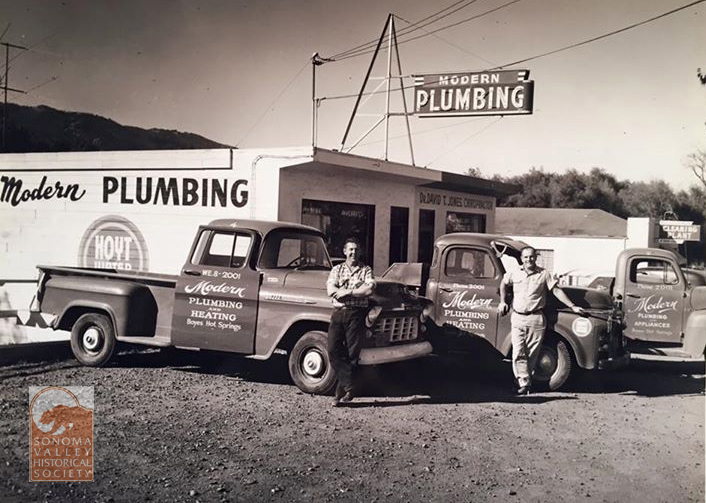
Modern Plumbing was founded in Boyes Hot Springs by Ted Riboni and Ed Feranndo in the 1950s. The building still stands, on the west side of the highway, opposite Bernhard Ave.
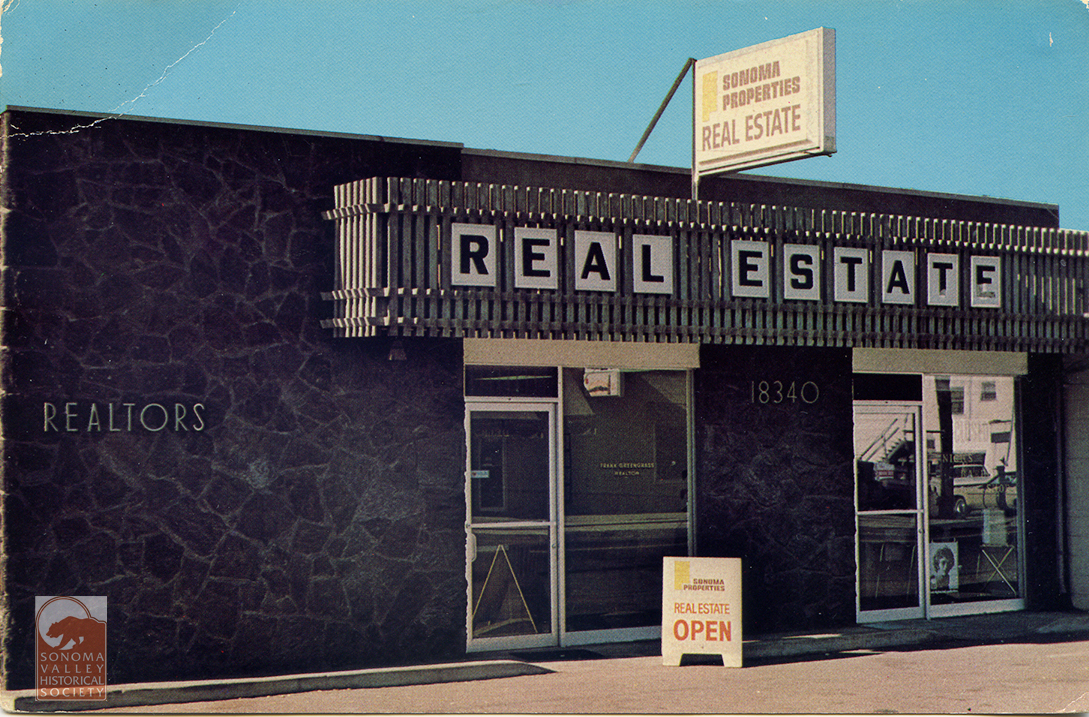
The Greengrass Building. A pretty ordinary building with an interesting history. Clidk the link to find out!
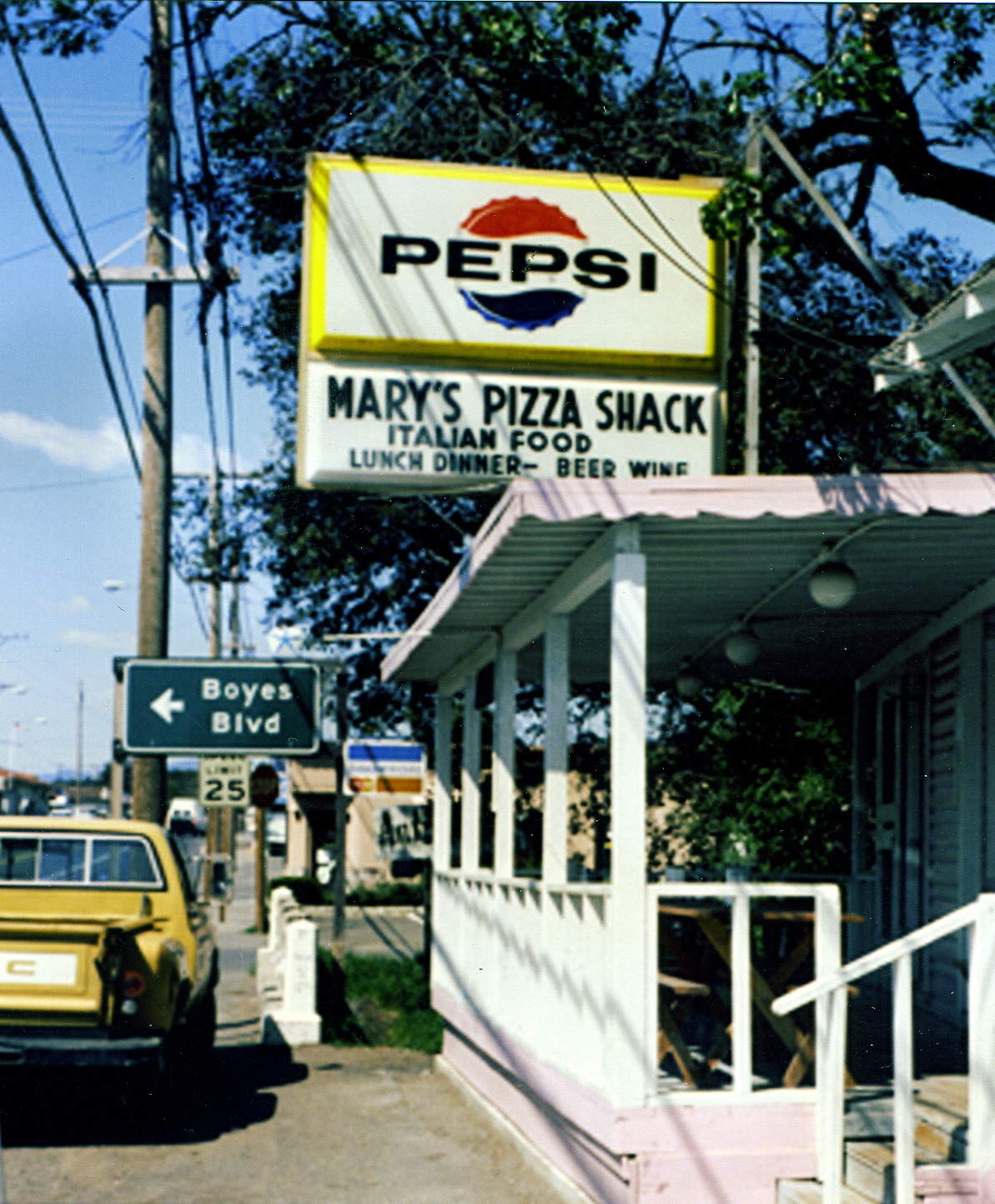
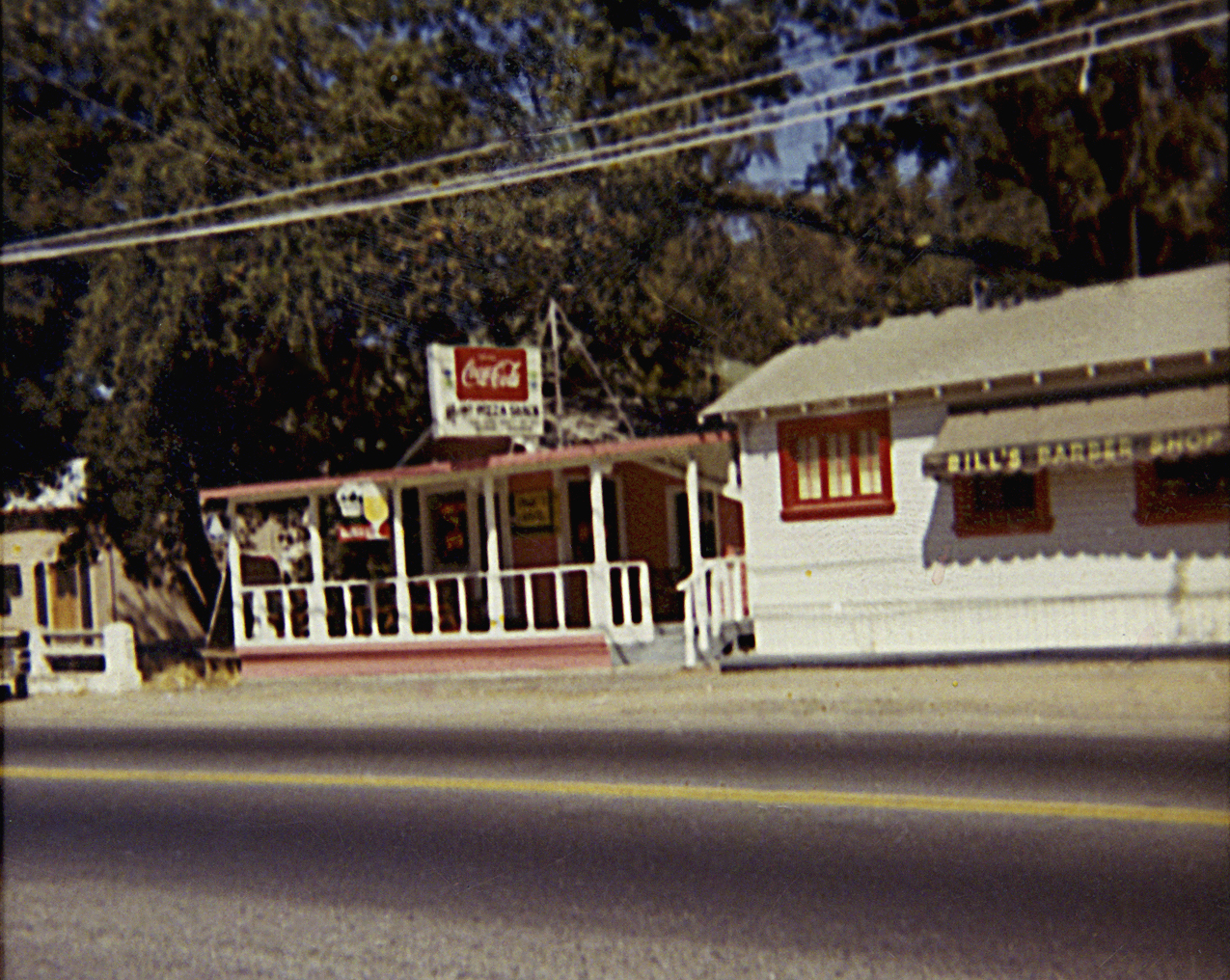
The original location of Mary’s Pizza Shack, now a large local chain, was in this small building at the end of Arroyo Road, at the highway. Mary Fazio opened her restaurant in 1959. The rest is history, as they say. Thanks to the Albano family for the photos.
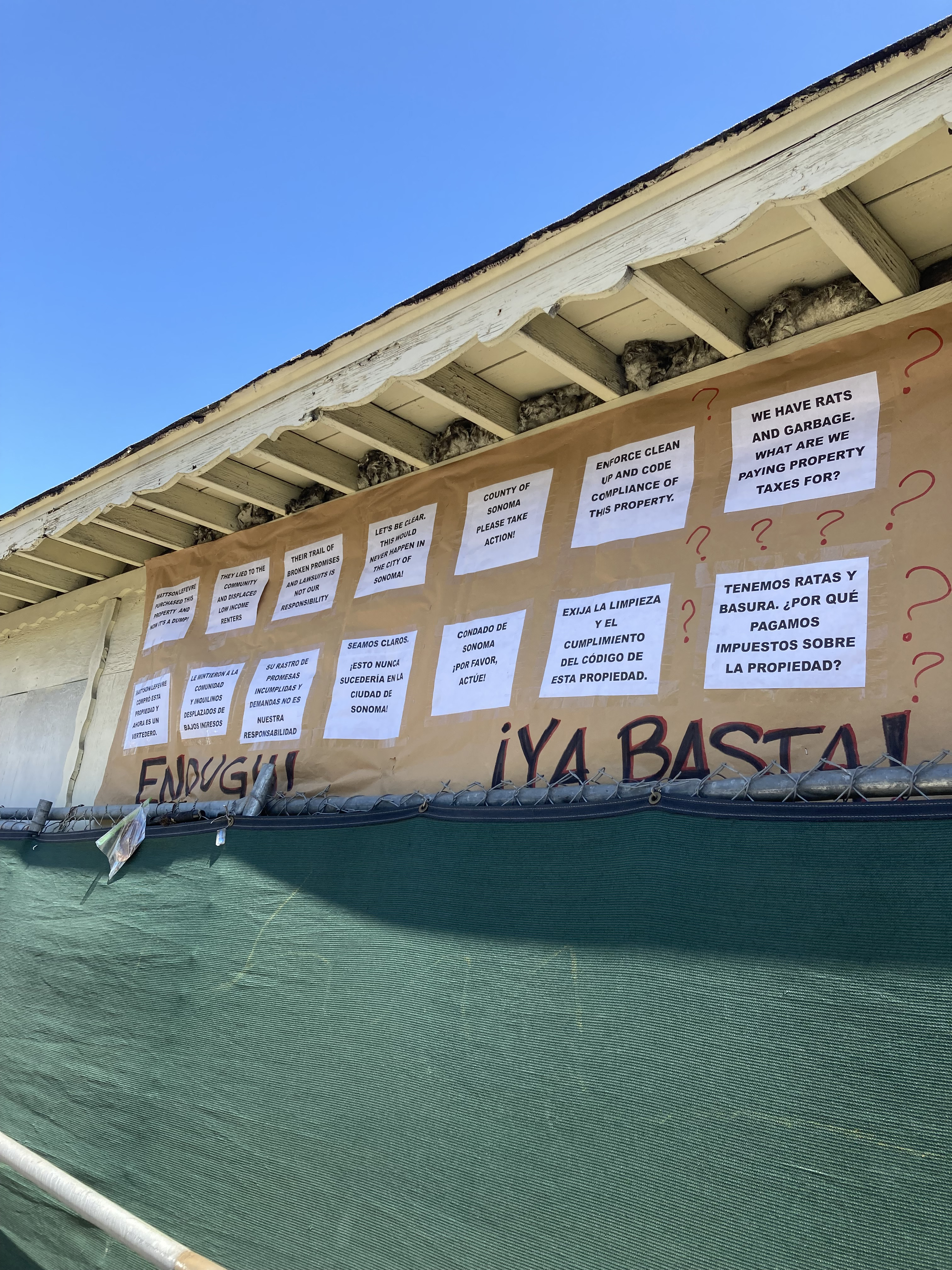
Flash forward to 2025. The unfortunate deterioration of the property continues. Neighbors are concerned enough to put up this sign on the front of the original shack. The current owner is under suspicion of fraud. We await remediation, but the wheels of County agencies turn slowly.
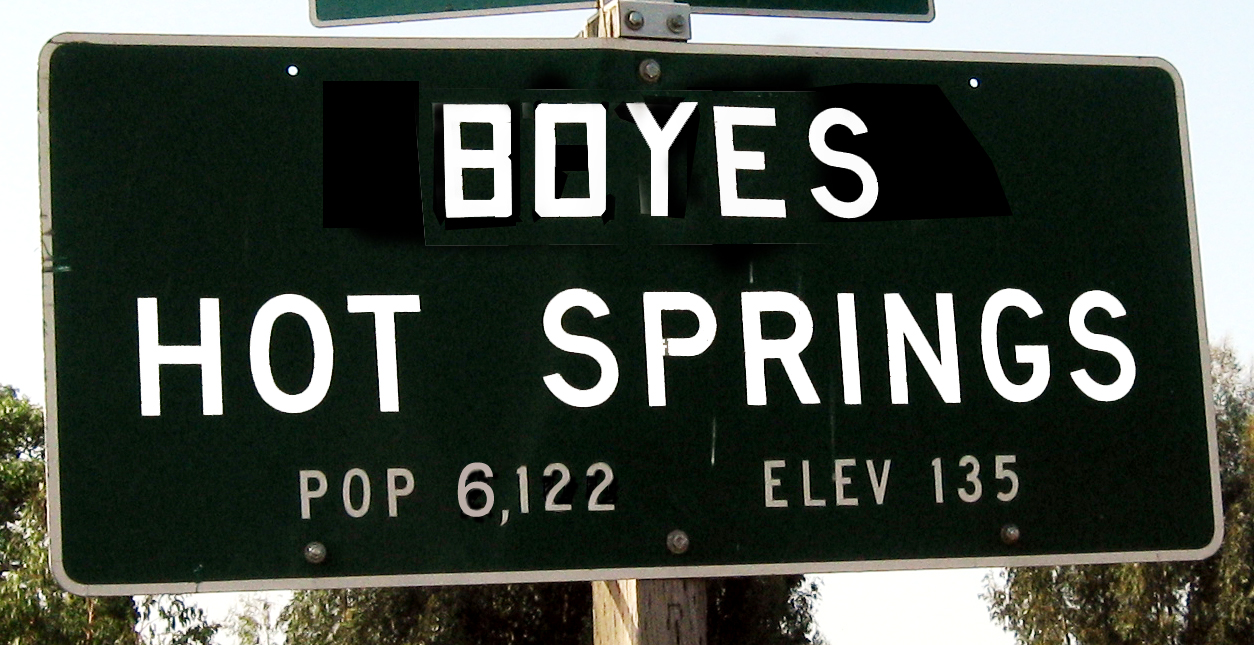
Both Agua Caliente and Fetters Hot Springs, just up the road, have official Caltrans place-name signs, but Boyes Hot Springs does not. Why? Who knows. The one above is my creation.
Photos by the author. Index Tribune and other photos courtesy of the Sonoma Valley Historical Society
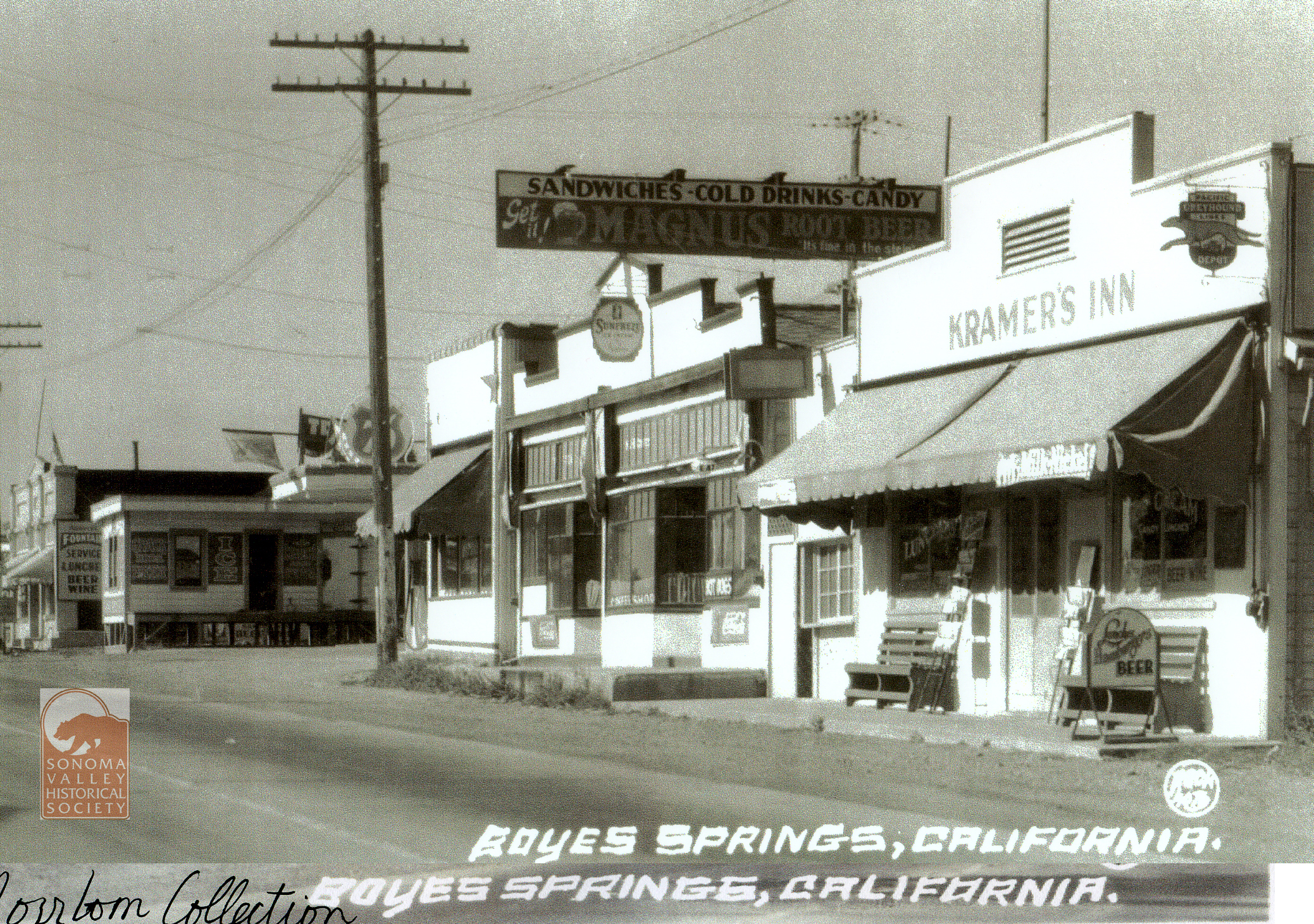
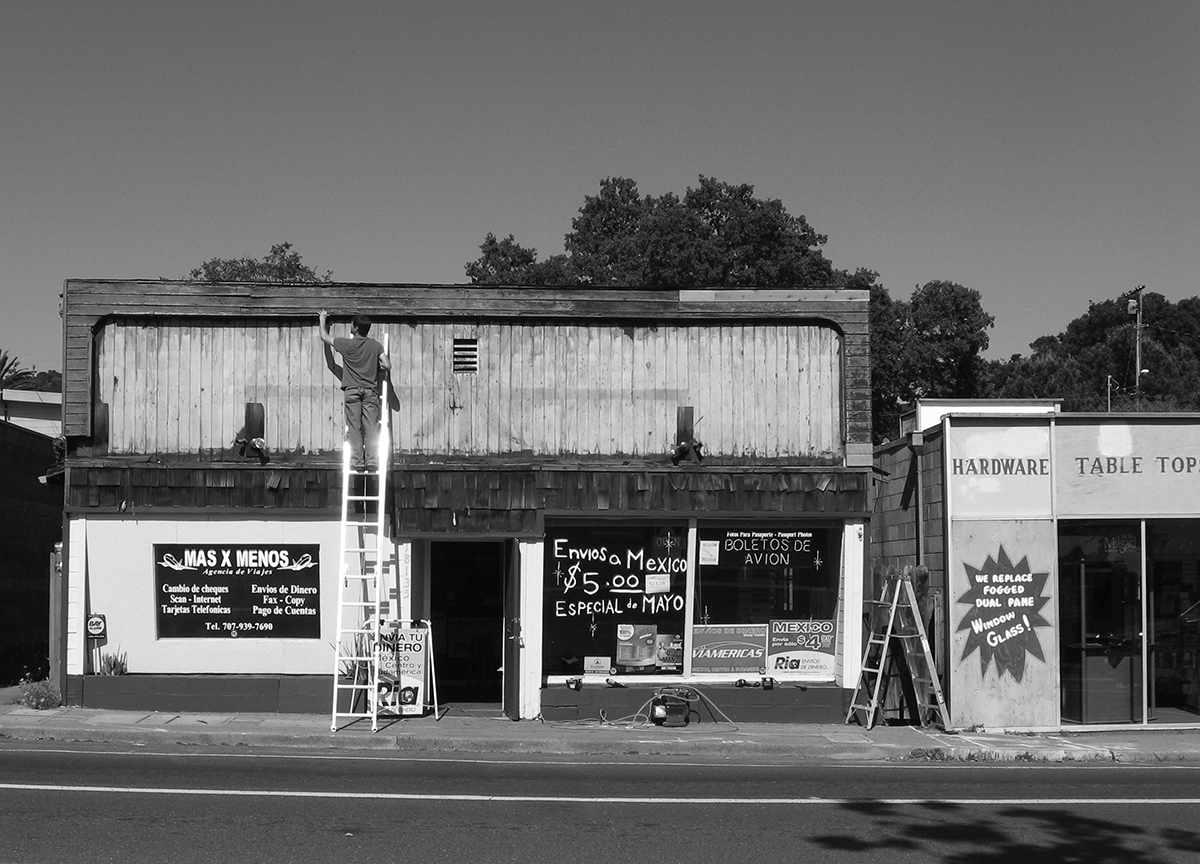
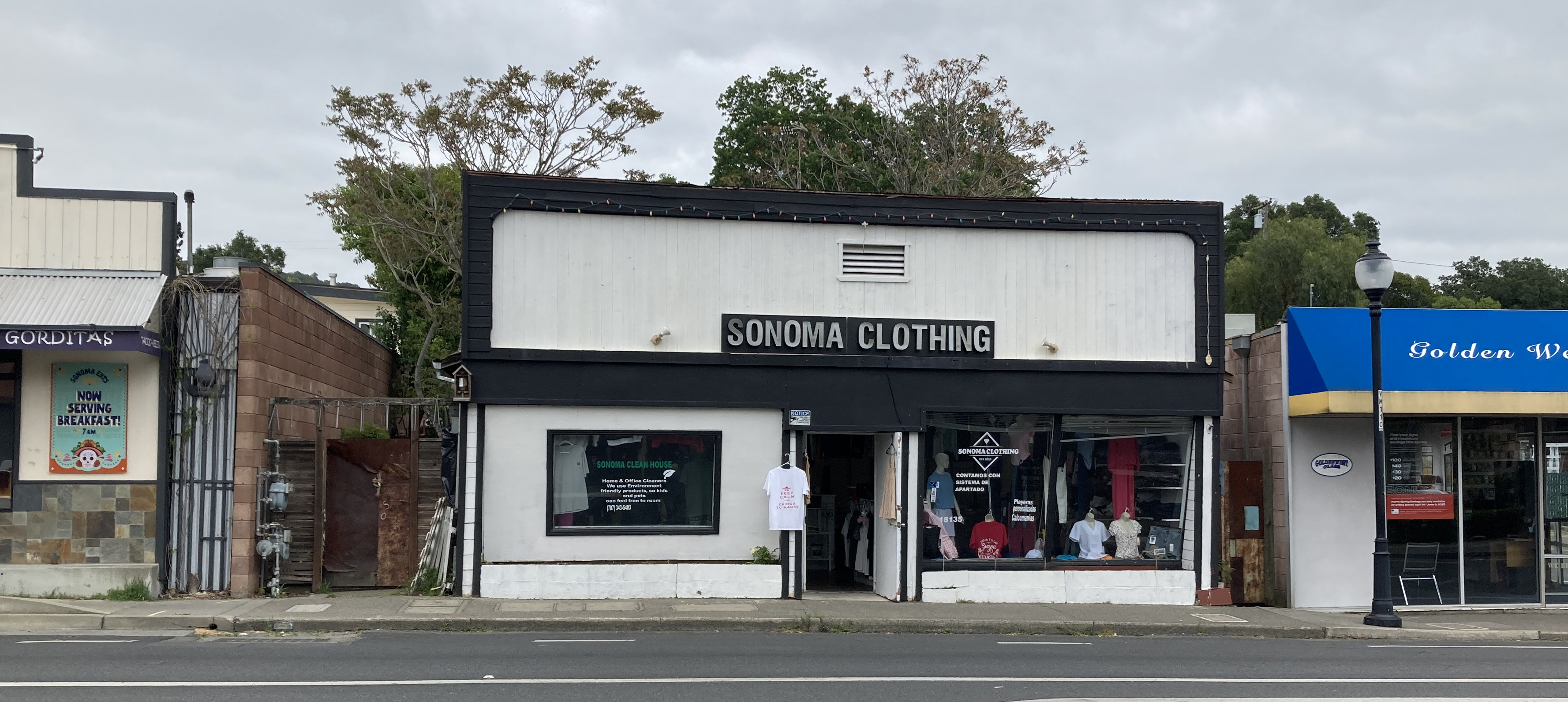
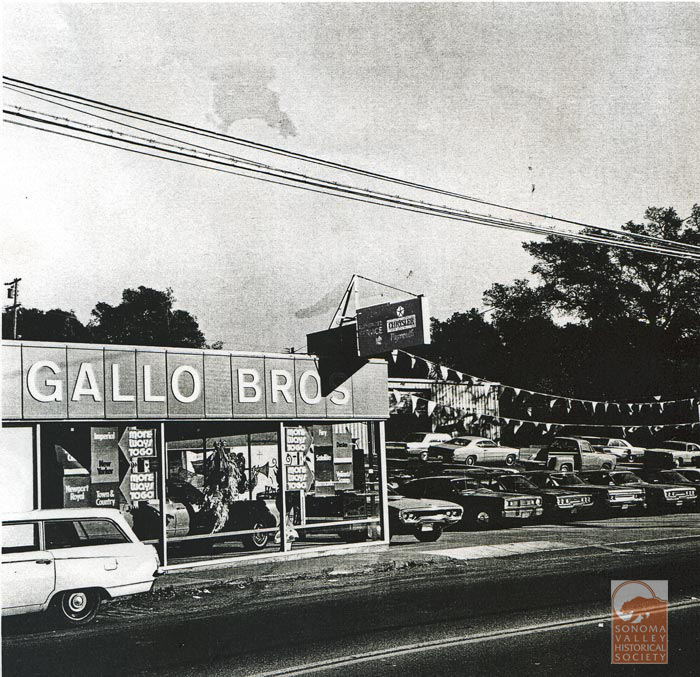
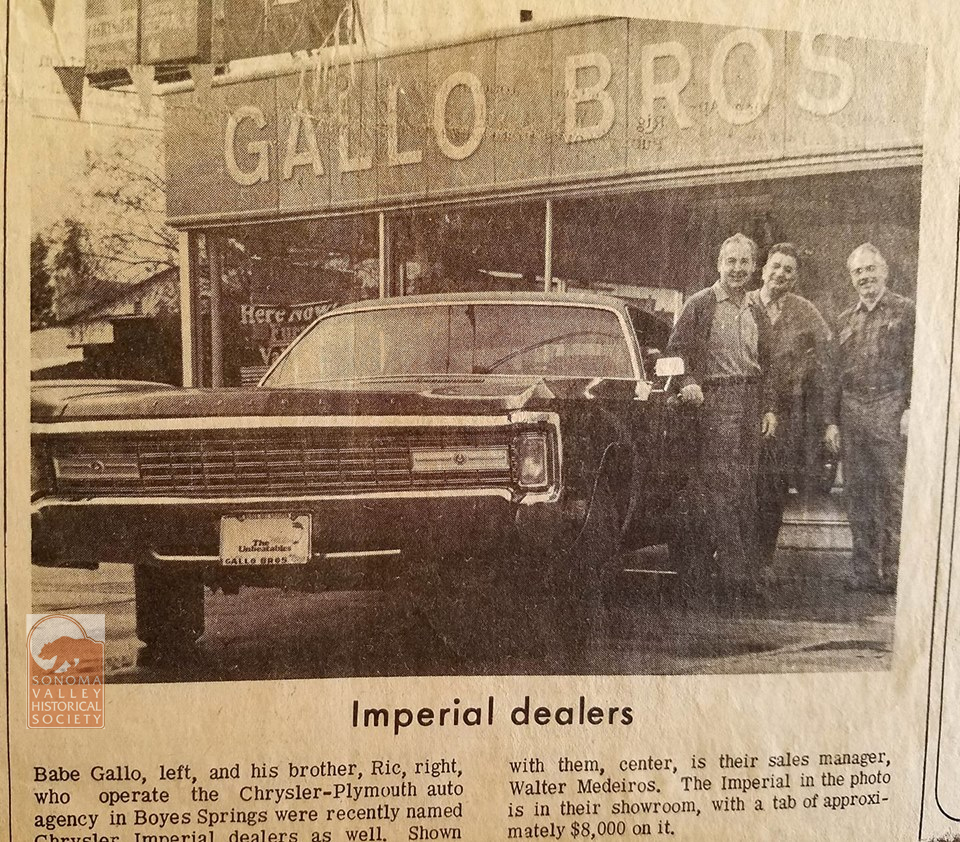
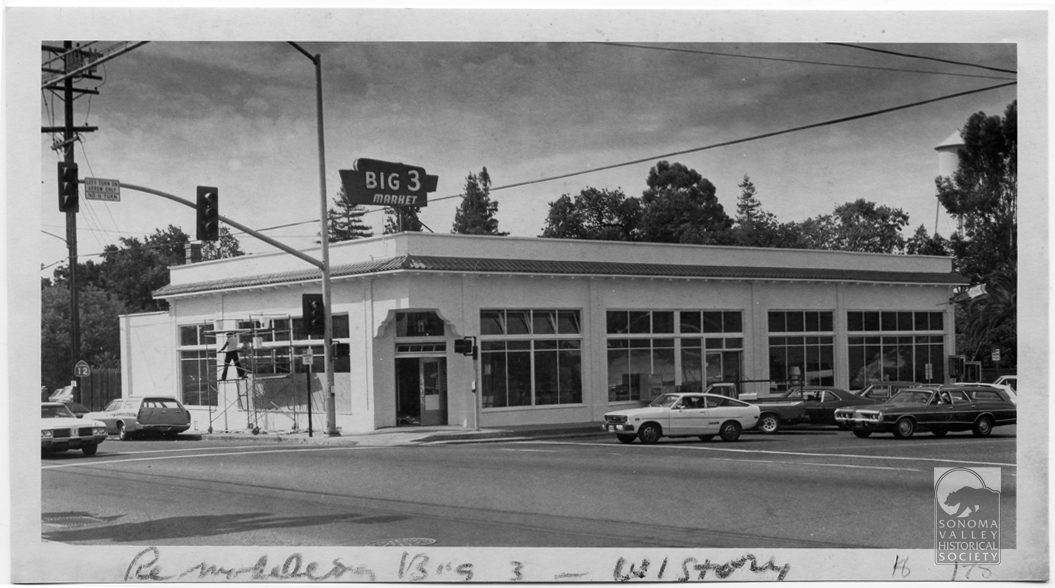
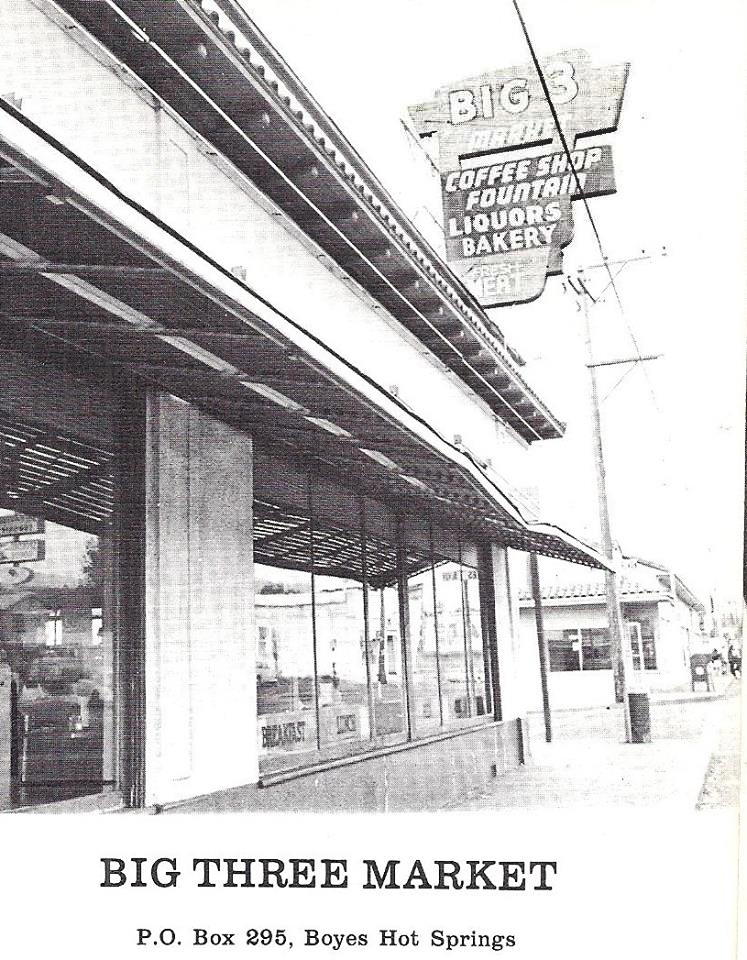
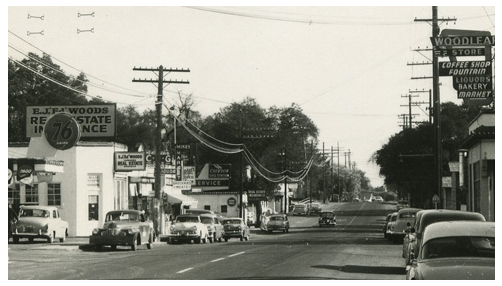
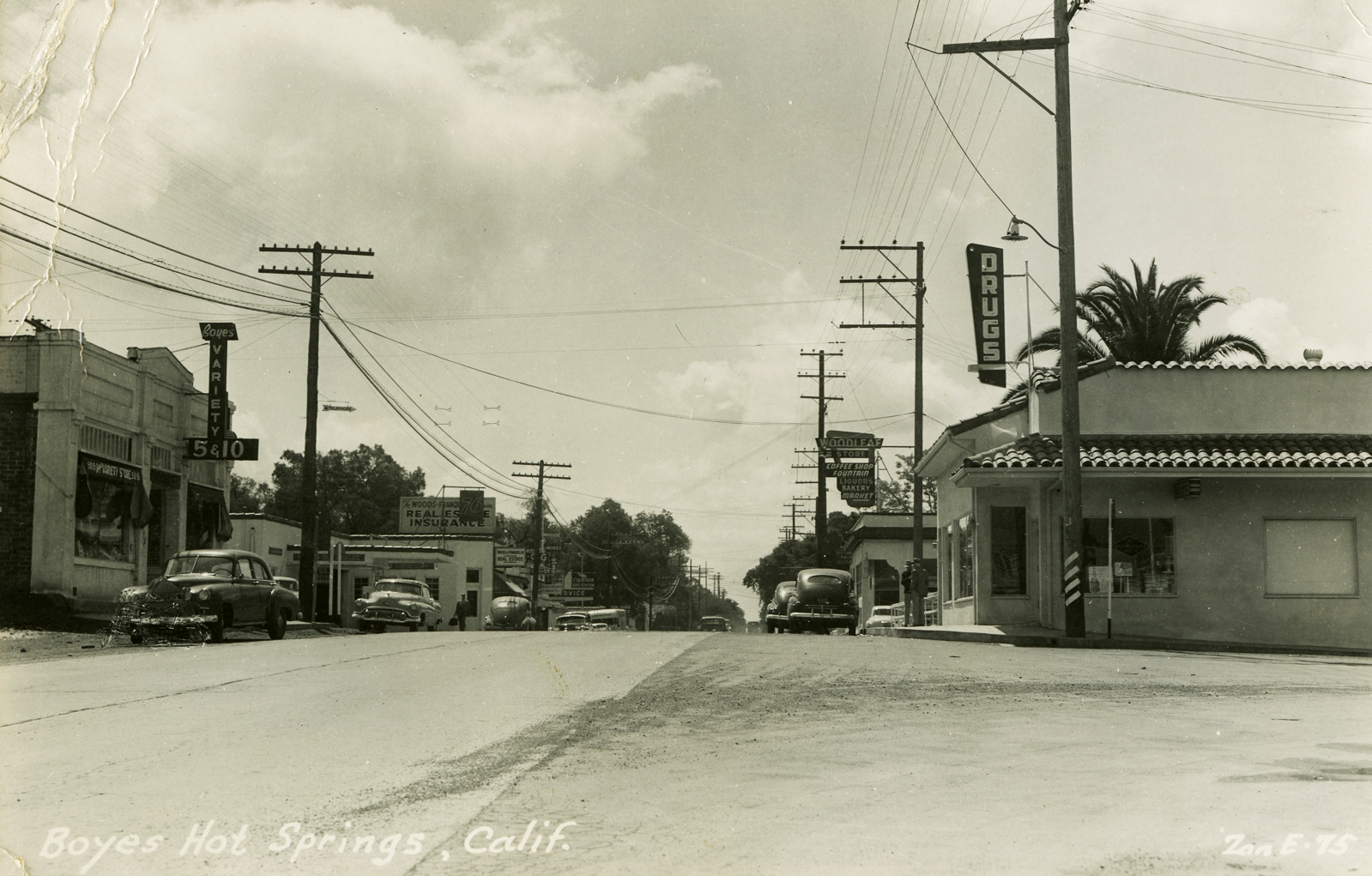
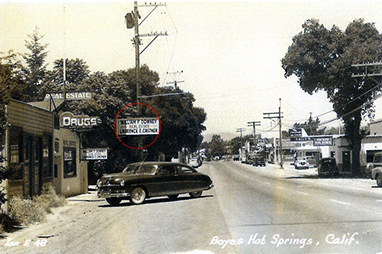
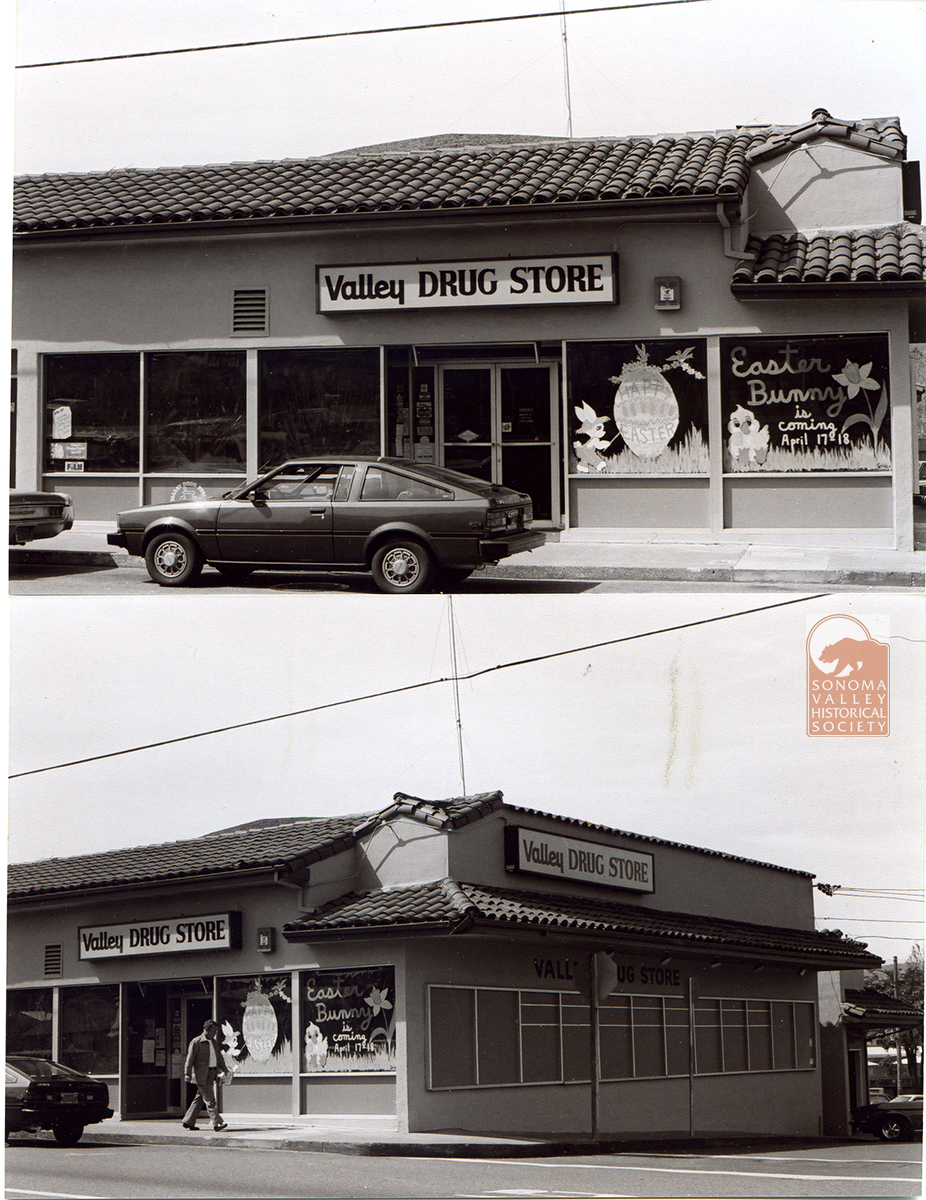
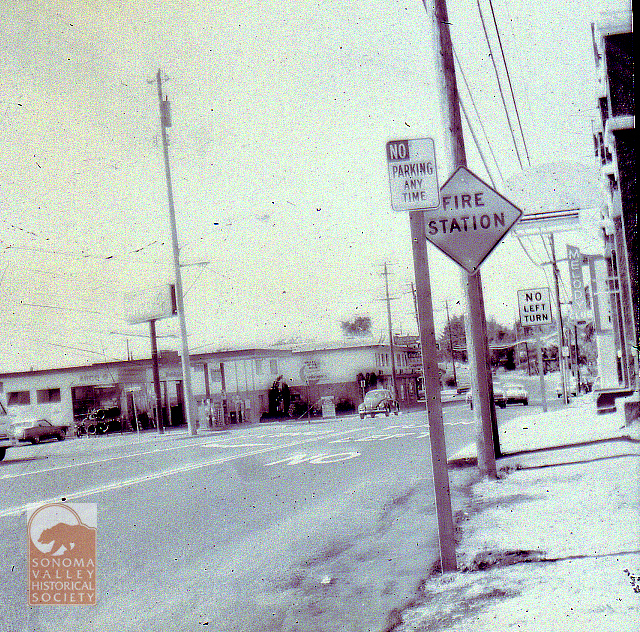
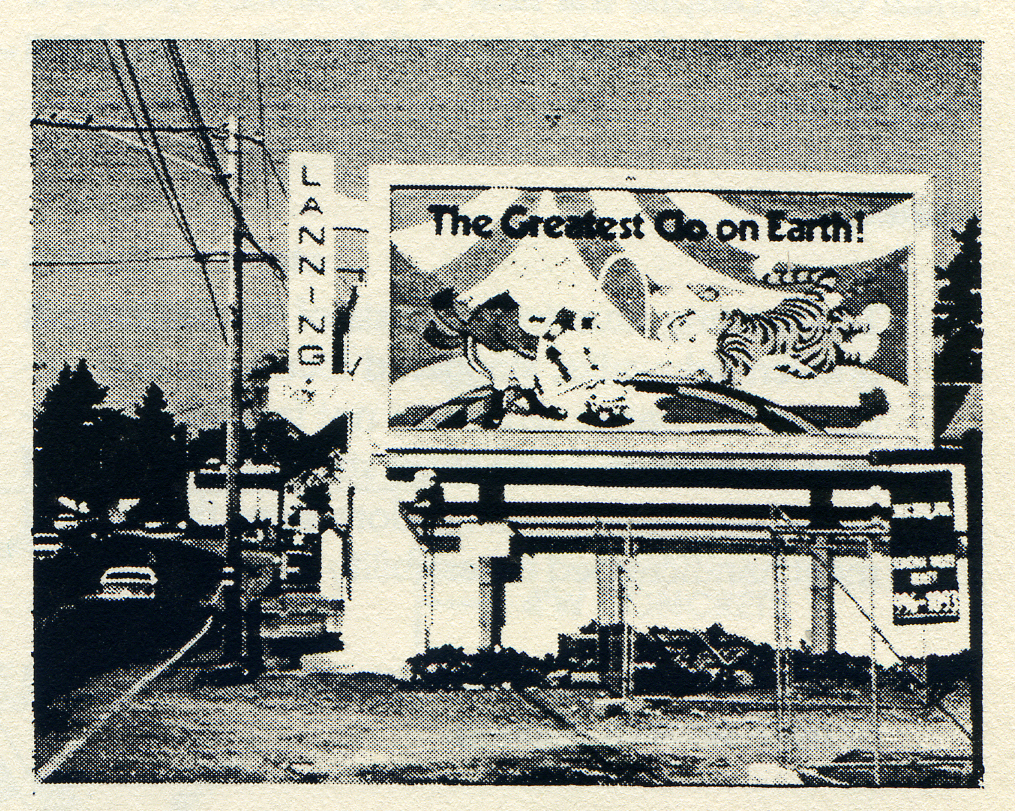
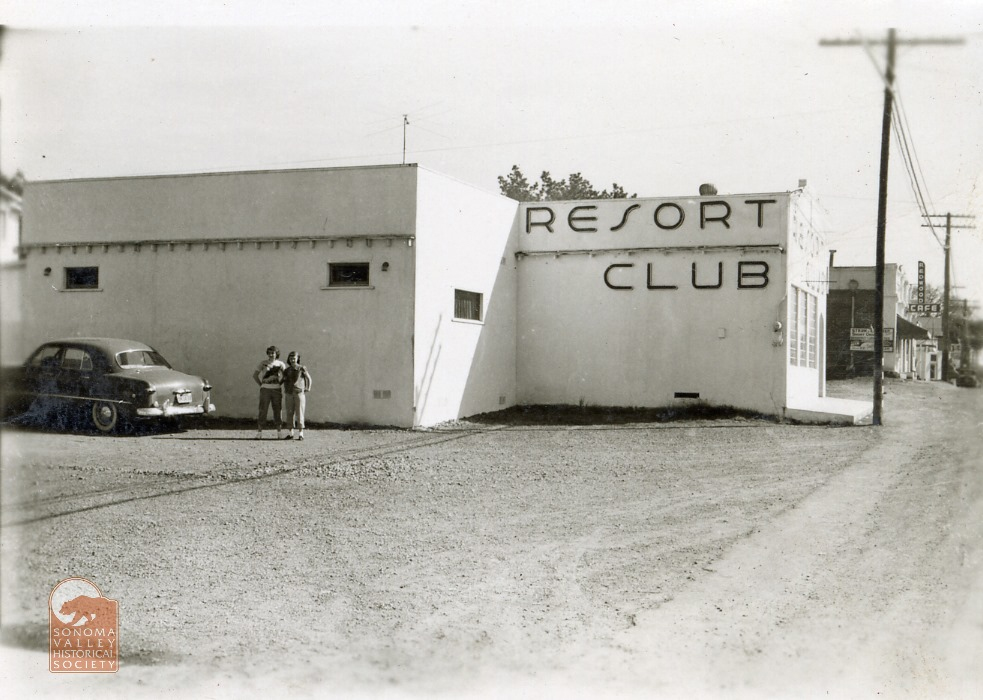
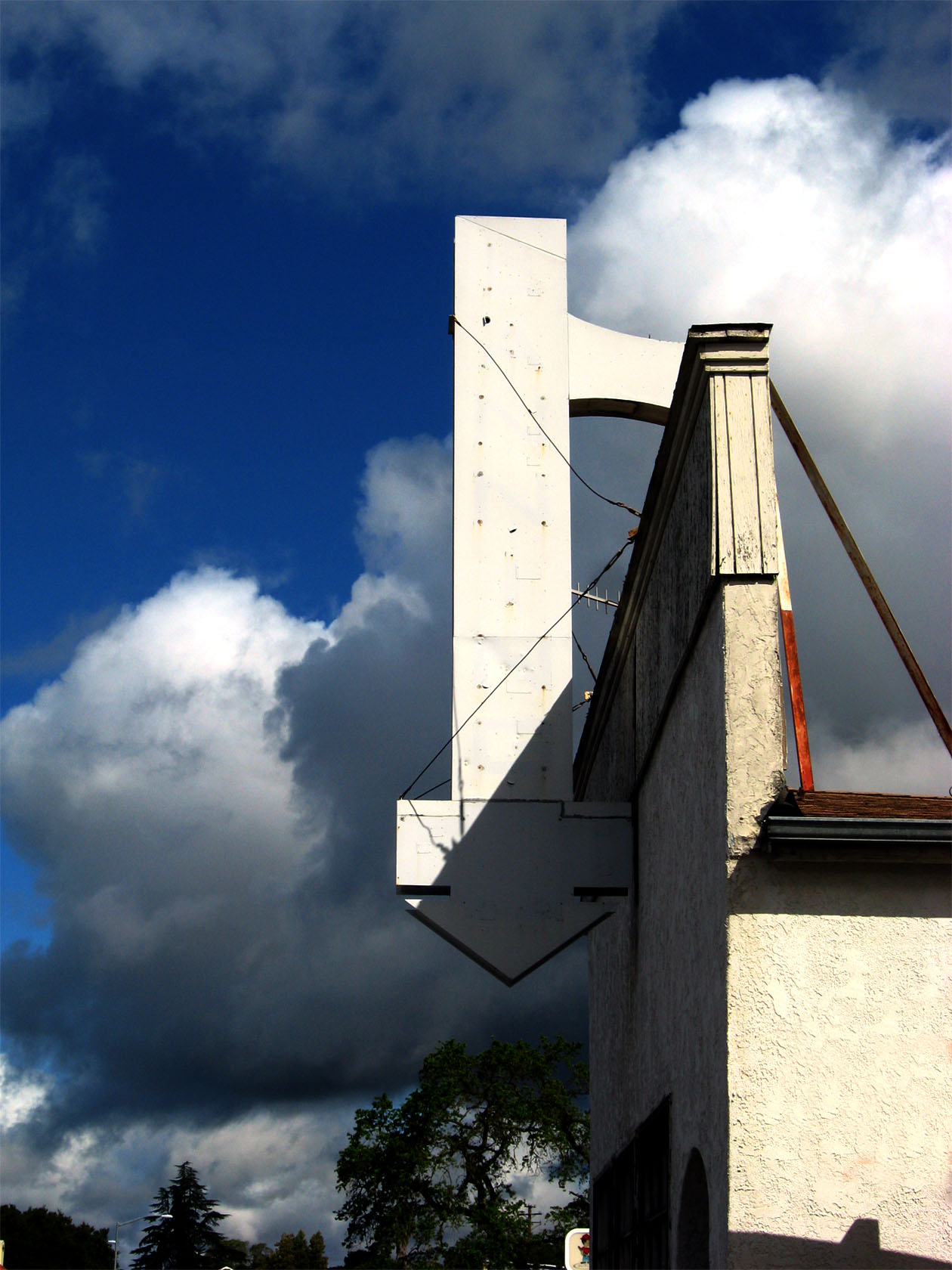
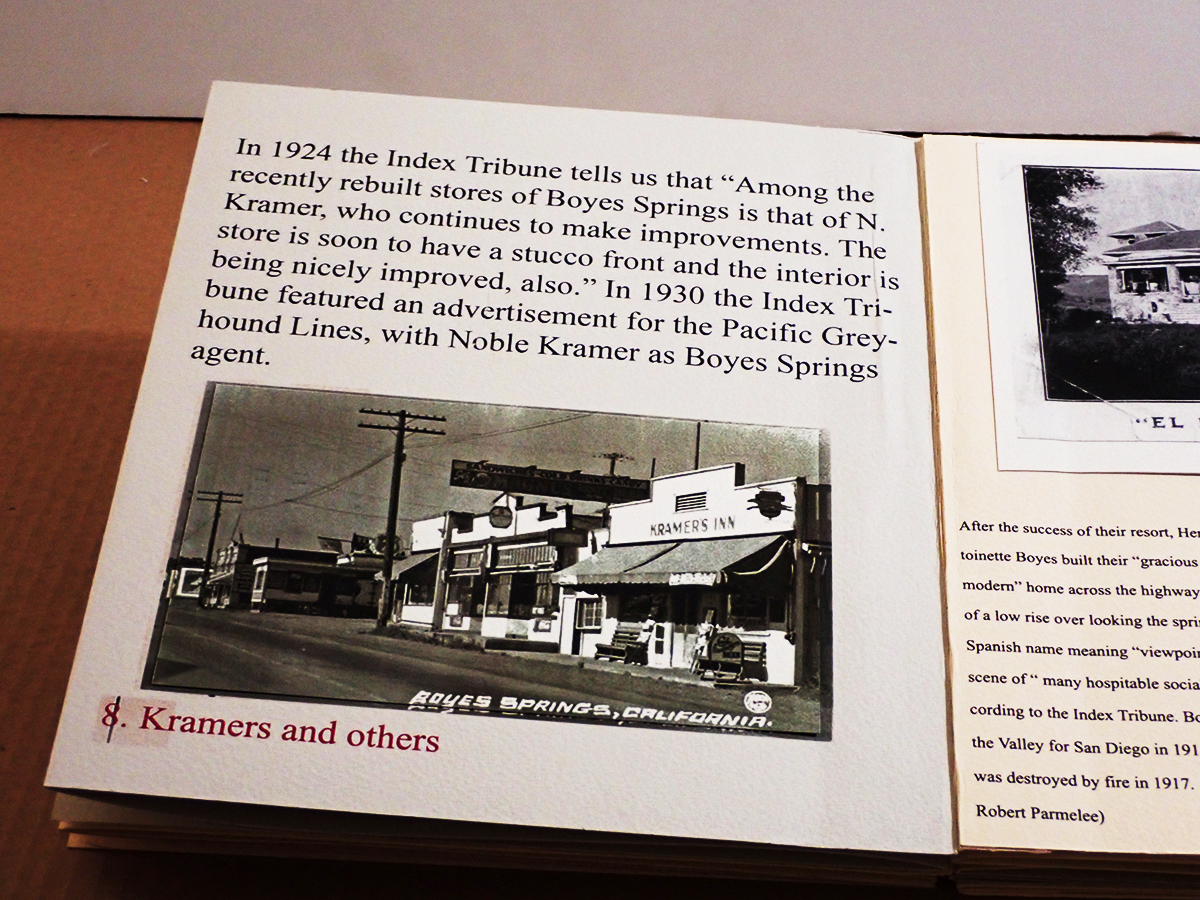
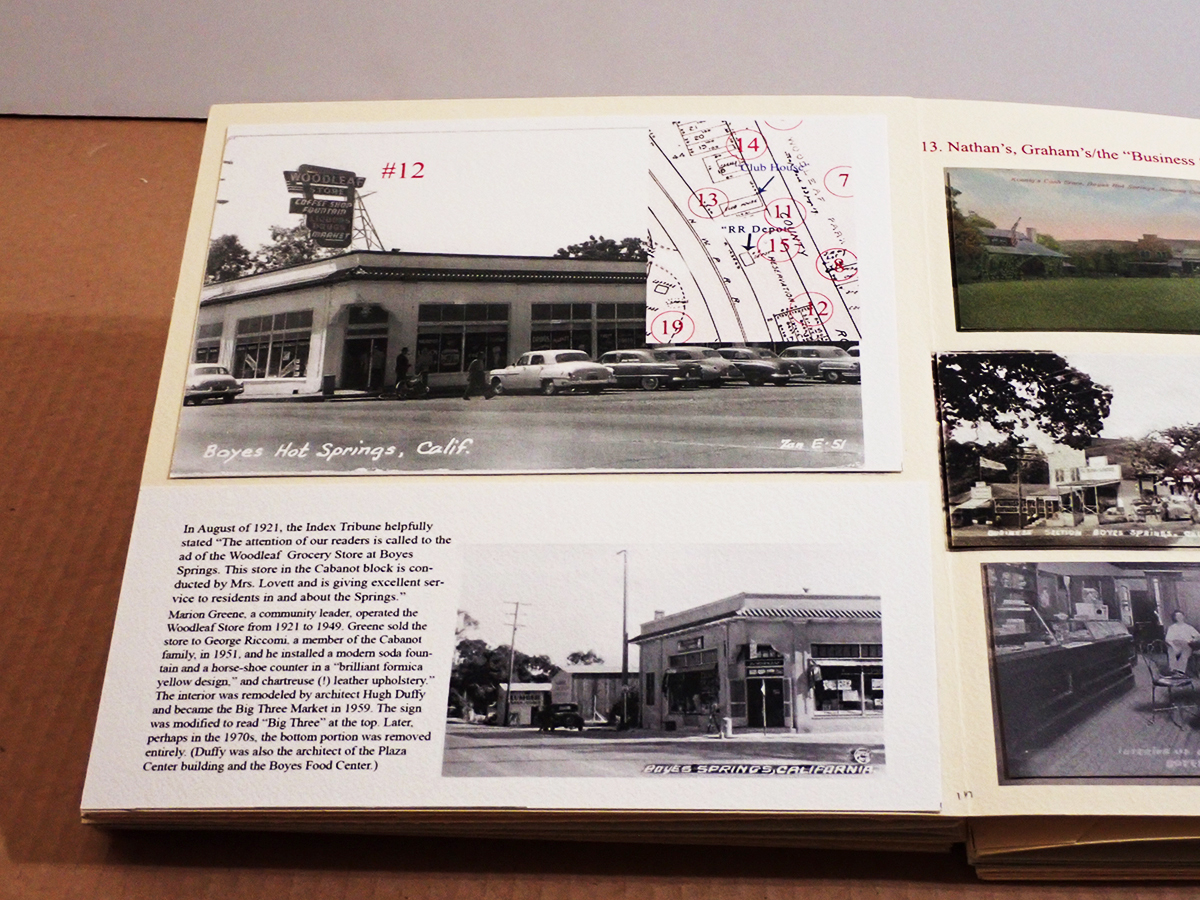
Commercial buildings on either side of the eastern part of Boyes Blvd. 1930s. The Kramer’S Inn building is seen in the next two photos, from 2008 and 2025.Circa 20082025The Gallo brothers ran a service station and car dealership from 1949 into the 1970s. The building, immediately south of Kramer’s, is now Golden West Glass.Southwest corner of Boyes Blvd. and Highway 12, 1980s. The Big Three, as it was then known. Now part of the Sonoma Mission Inn, but no longer a public building.Earlier, taller version of the sign.The wonderful Woodleaf sign, upper right. Zan Stark photo.1950s. Before it was the Big Three, the building was the Woodleaf Store. At left is the building that had previously held Jim’s Cafe. More in Part 2. The palm tree peeking over the rooftop at right is situated in Boyes Springs Plaza, as once was. Pine Wagner’s Valley Drug was in the building at right center. Pine Wagner was perhaps the first woman to be a licensed pharmacist in California. She operated her store from 1946 until 1962. Zan Stark photo.Pine Wagner’s first location, on the highway, in Bud Castner’s building, opposite Arroyo Road. Zan Stark photo.Easter! 1970s? This commercial space was later the Church Mouse Thrift Store. Currently empty, alas.1960s. Looking north at the Boyes/Highway 12 intersection can be seen, far upper right, the Melody Club sign.Later, the old Lanning’s Resort Club/Melody Club became the offices of Lanning Construction.The Resort Club, 1951. pictured are Carla Robinson (L), and Helen Lanning (R). Photo courtesy of Lorrie Baetge Fuller, who is Carla Robinson’s daughter.The Melody Club sign circa 2009.
Photographs courtesy of the Sonoma Valley Historical Society, Stanford University Library Special Collections, and the author.
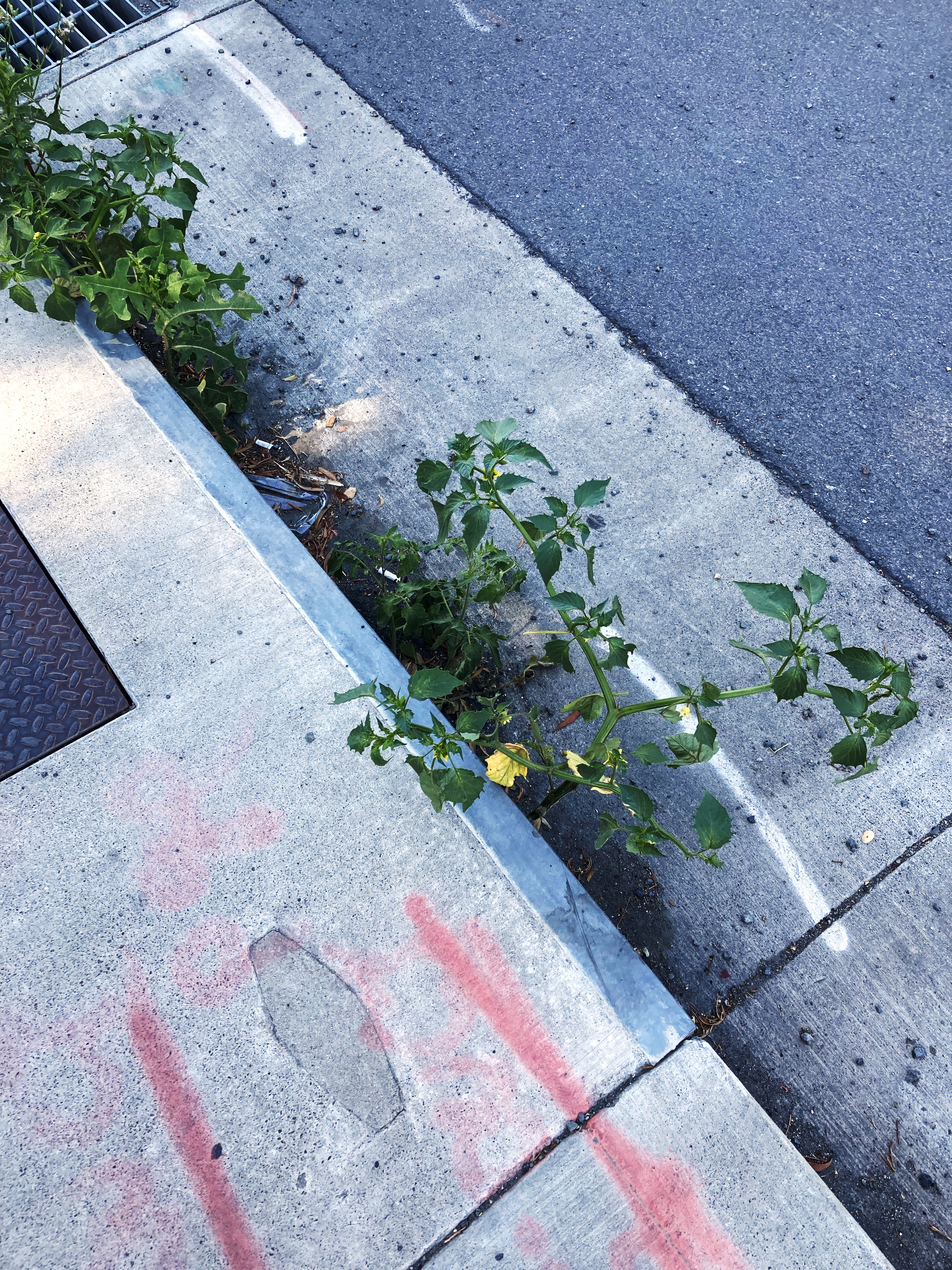
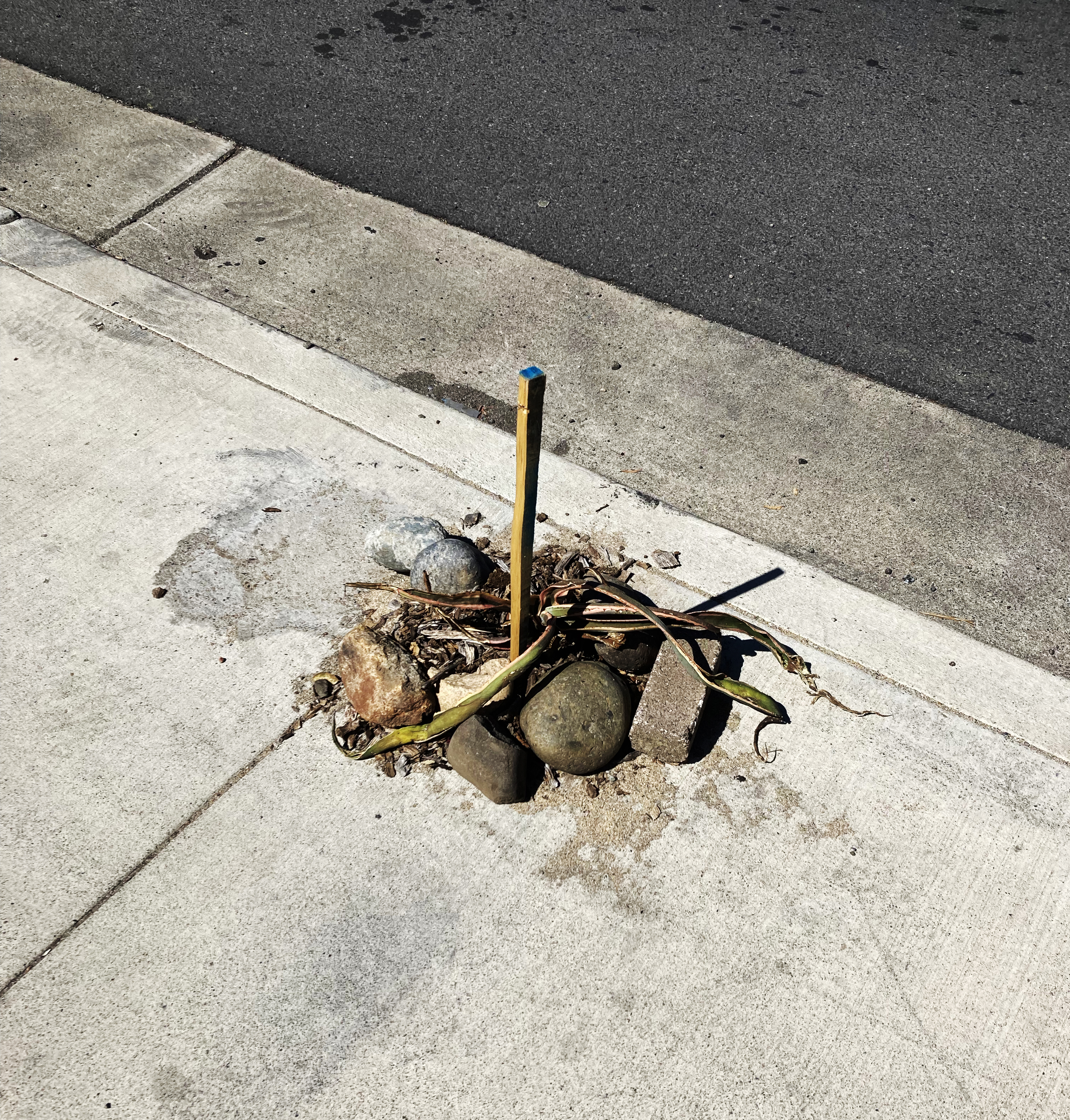
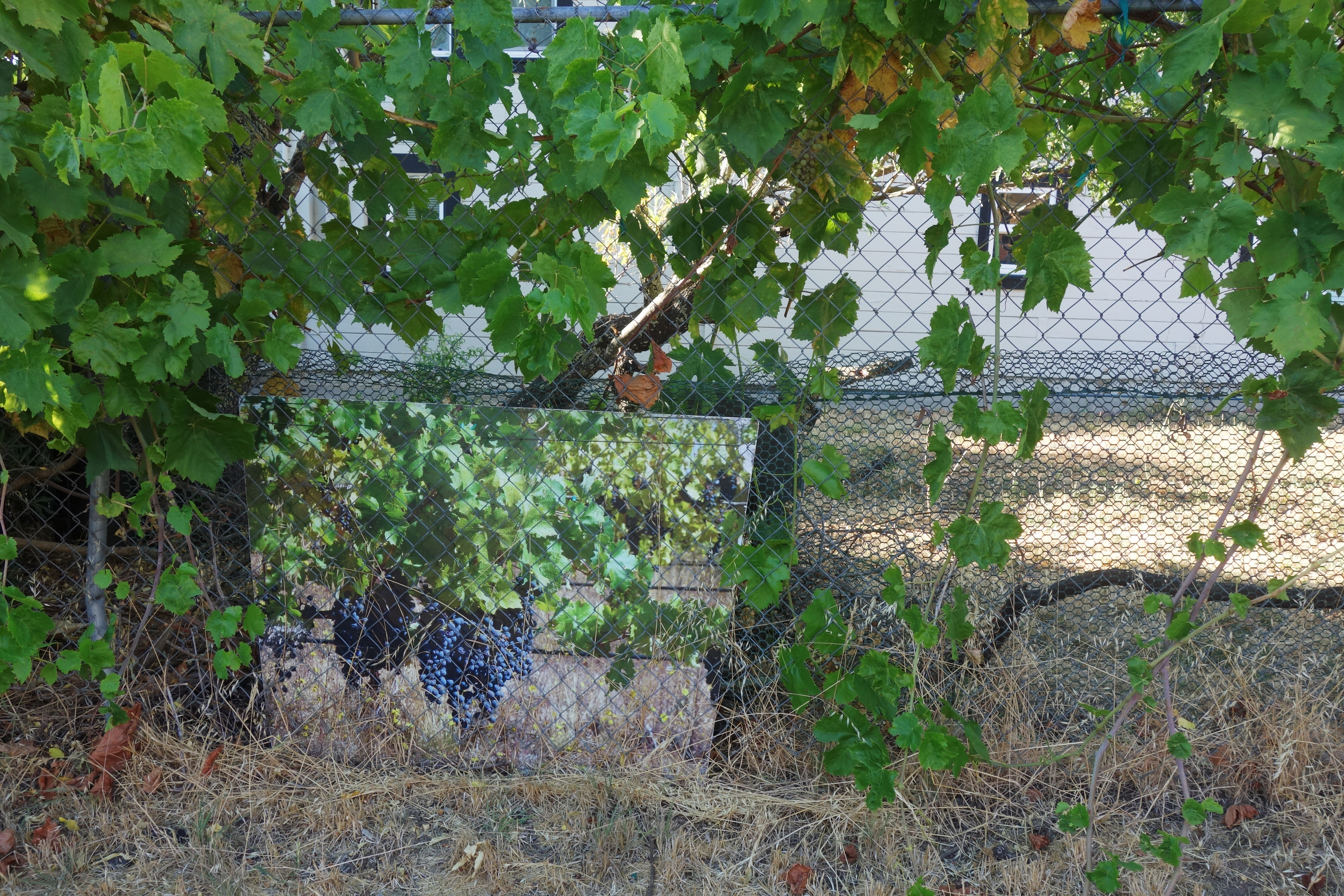
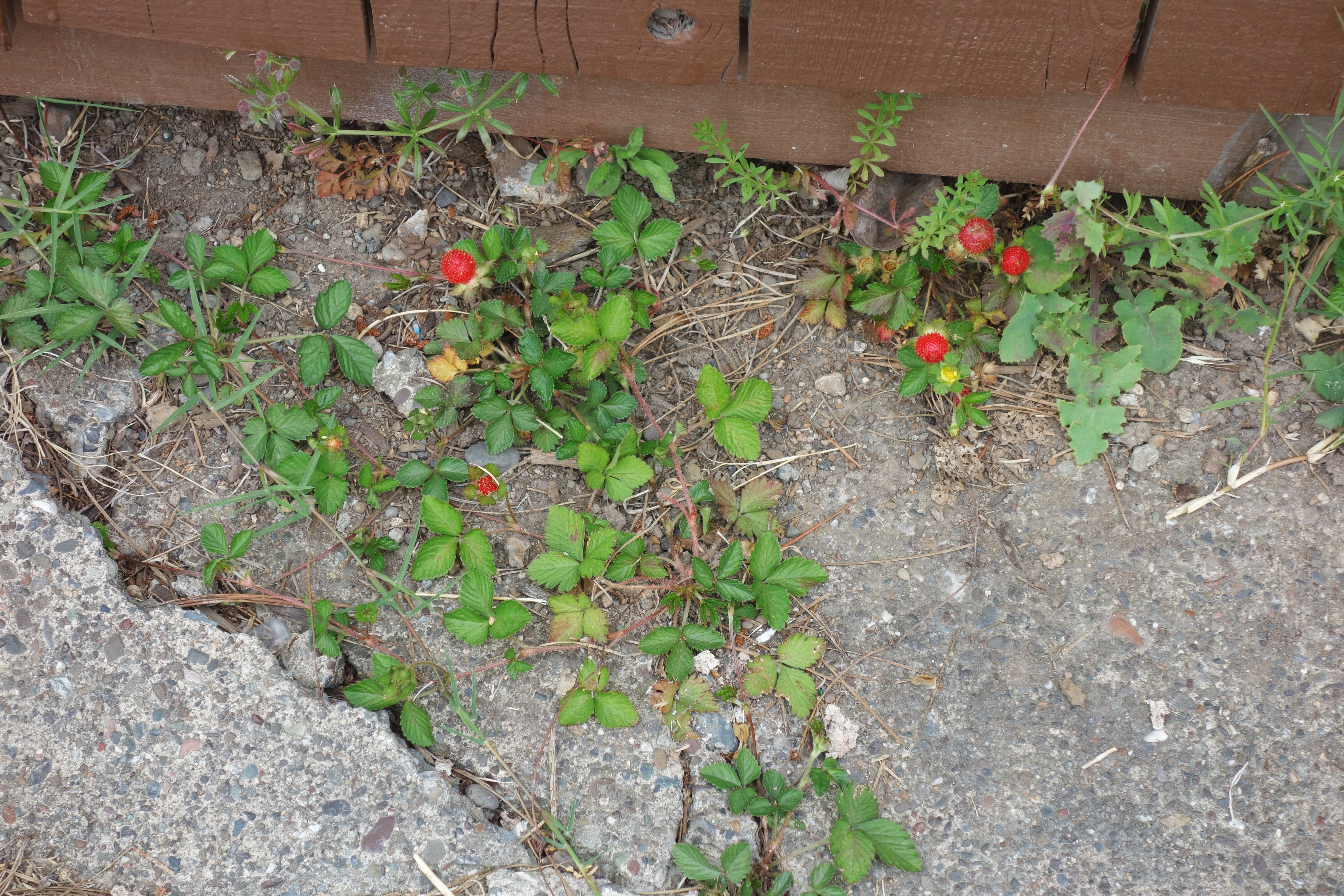
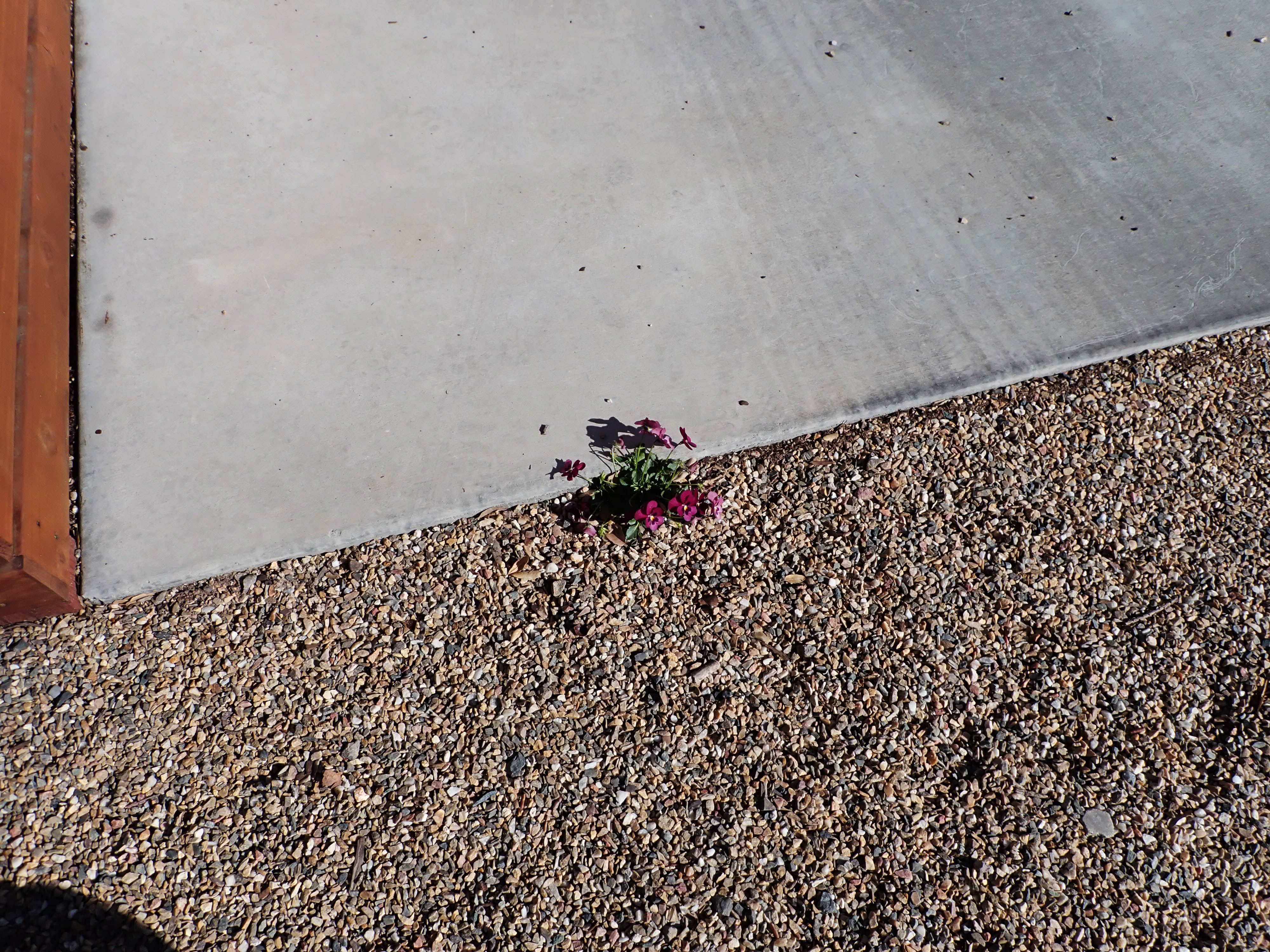
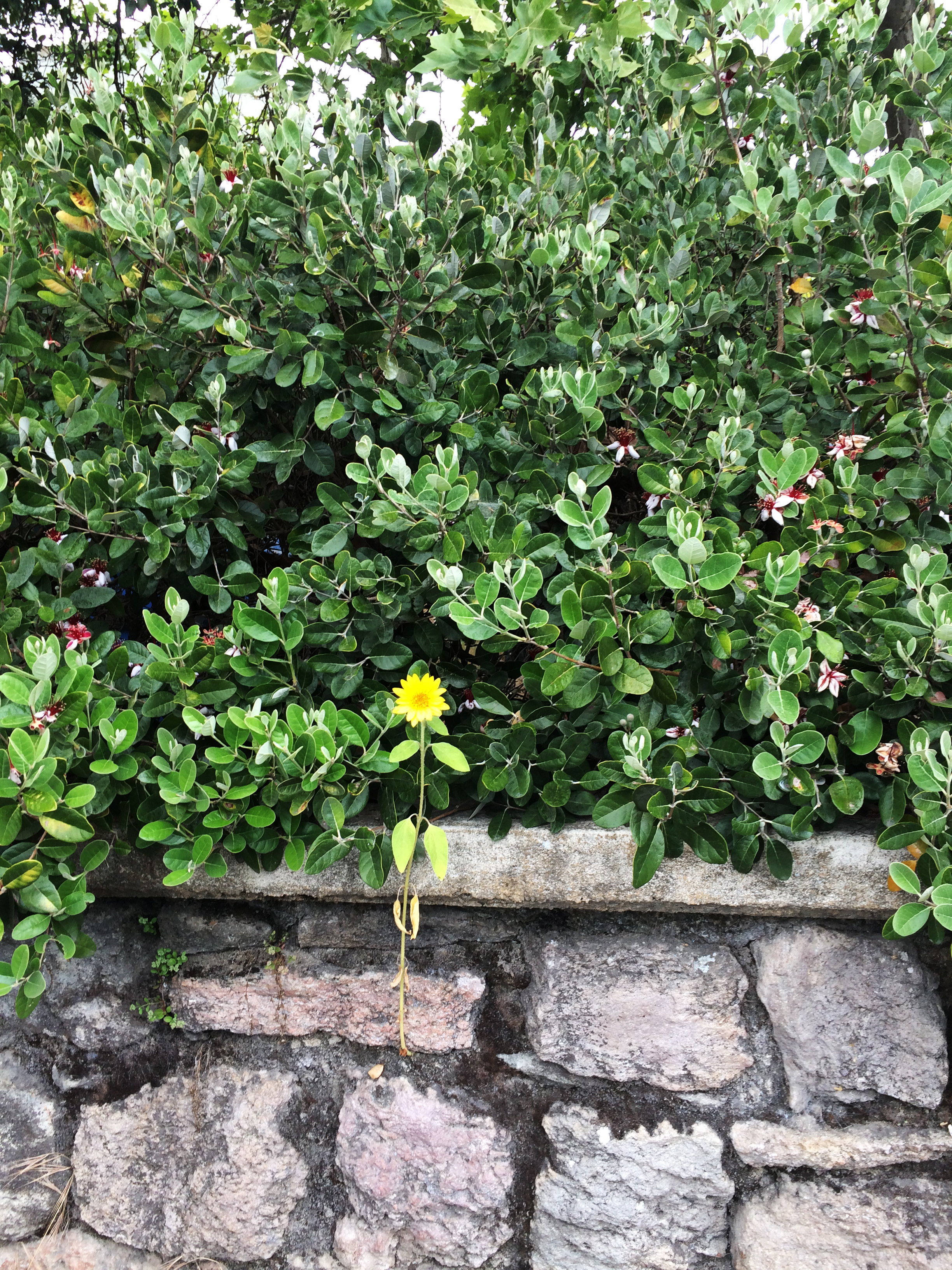
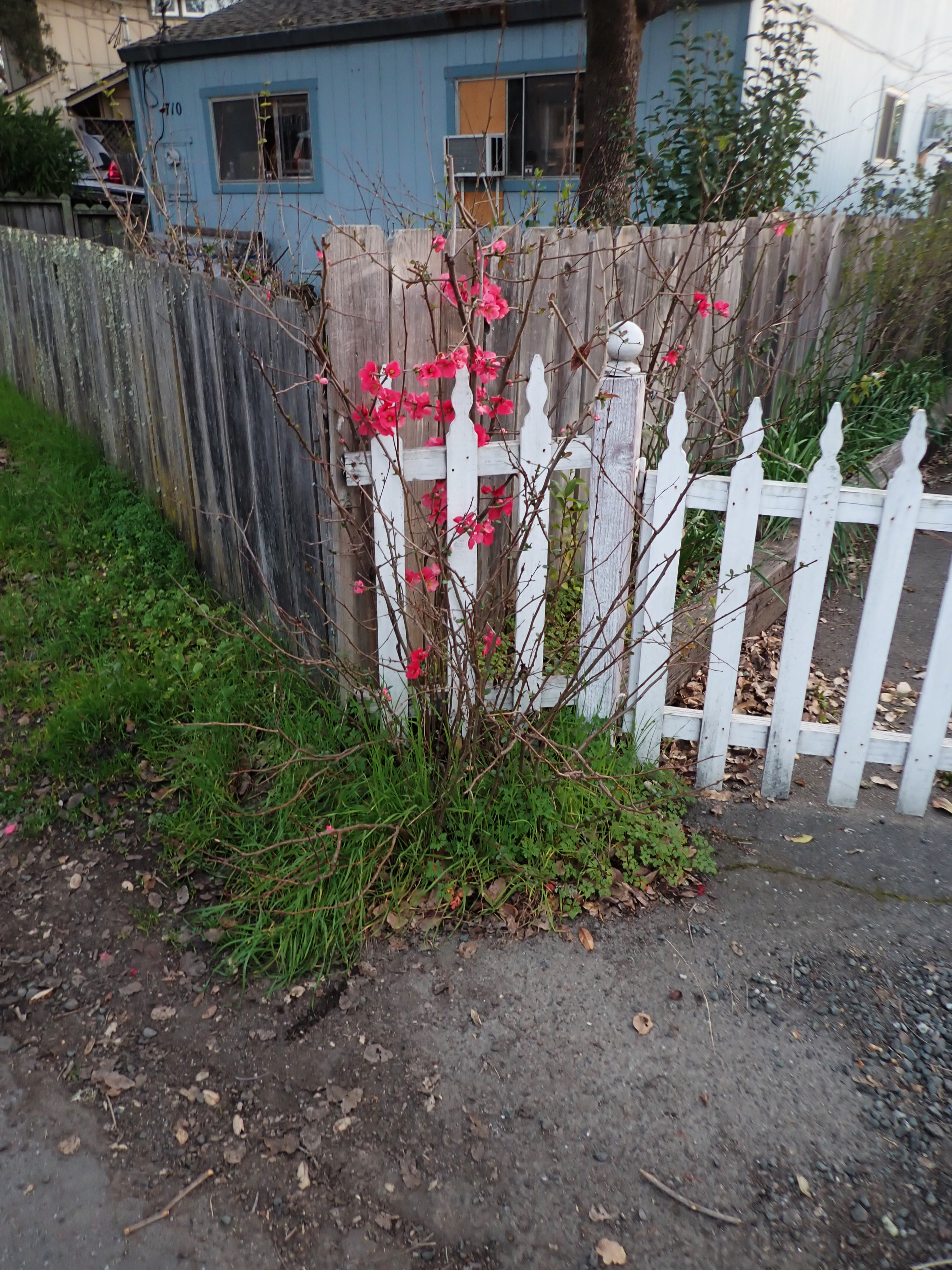
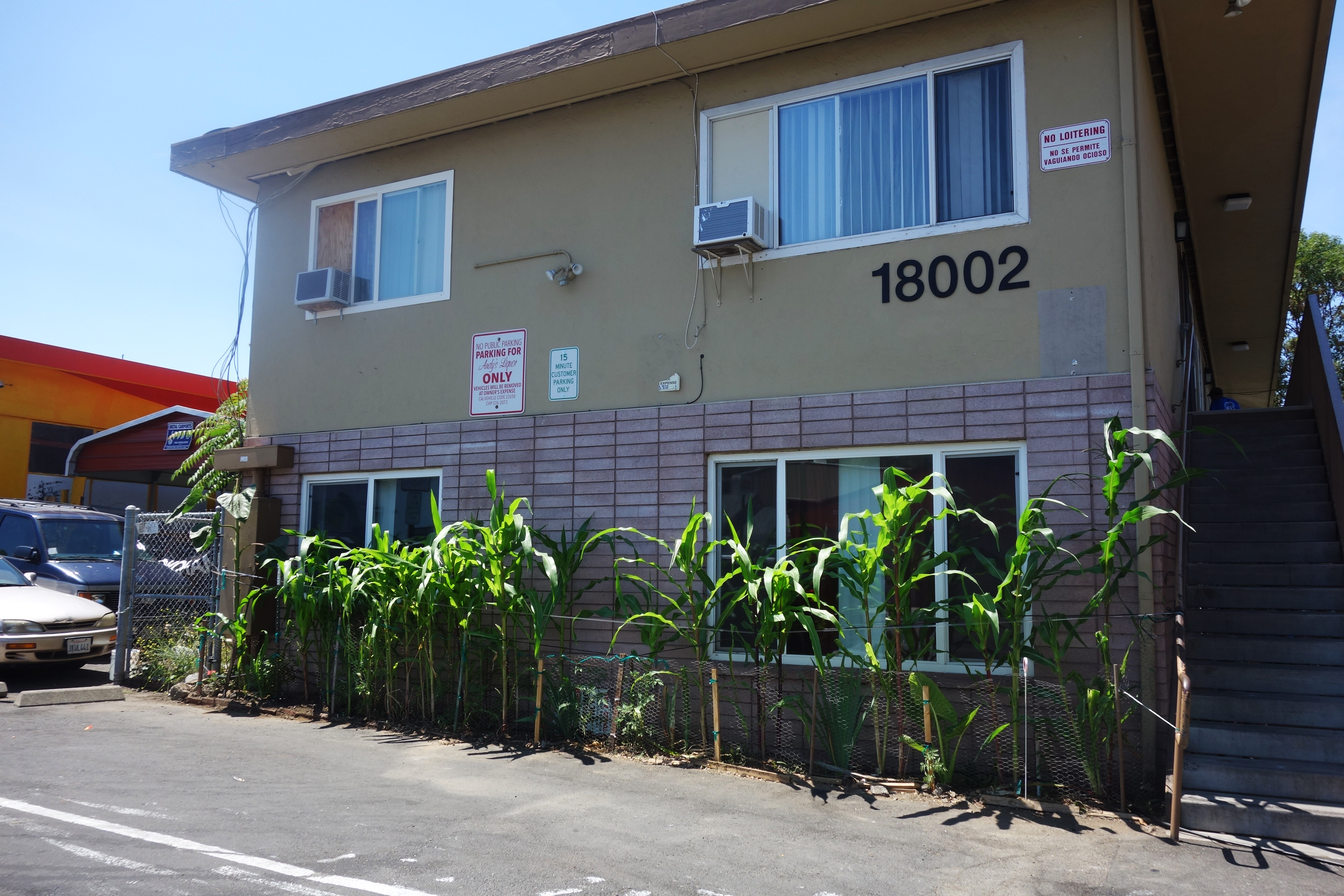
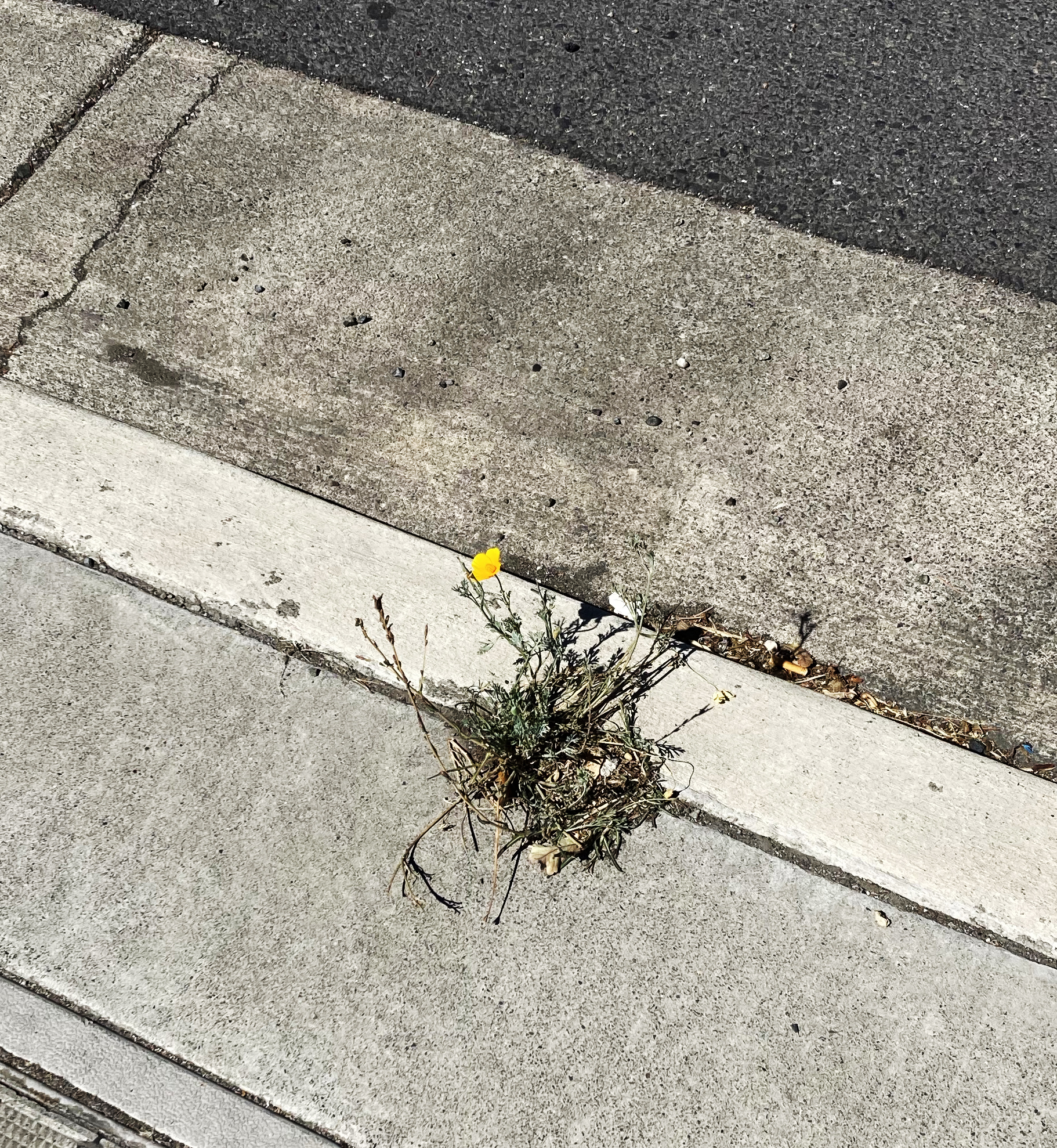
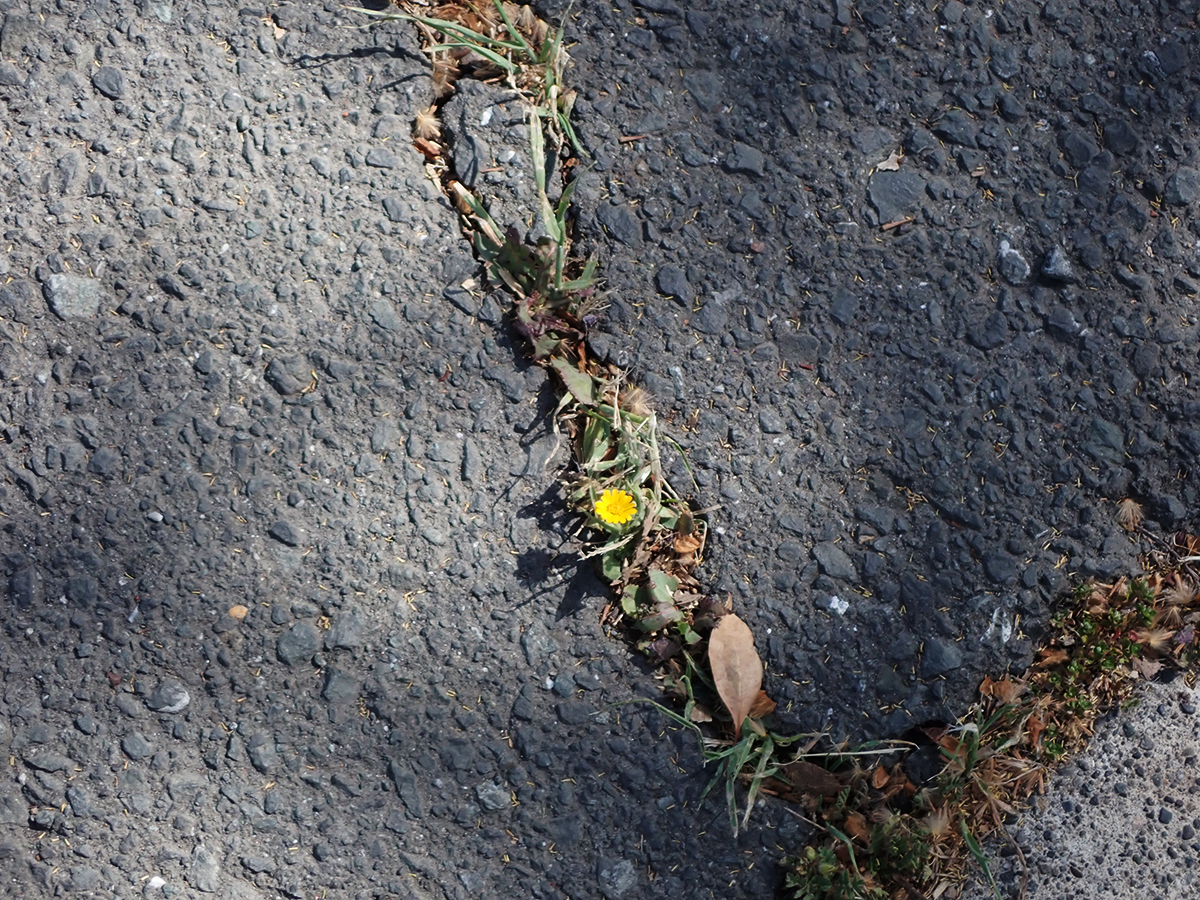
Only in Paradise: tomatoes growing from a sewer grate.Guerrilla landscaping?Grapes and “grapes.”Strawberries stake out their territory.Color escapesAgainst all odds. Standing out in a crowd.It’s Lunar New Year all over the neighborhood.Apartment dwellers find a way to grow cornCalifornia’s state flower insists on growing where it will.Tiny calendula growing from a crack in asphalt roadway.
We have been here posting monthly for over ten years. Please support our continued existence. There is a button on the Home page
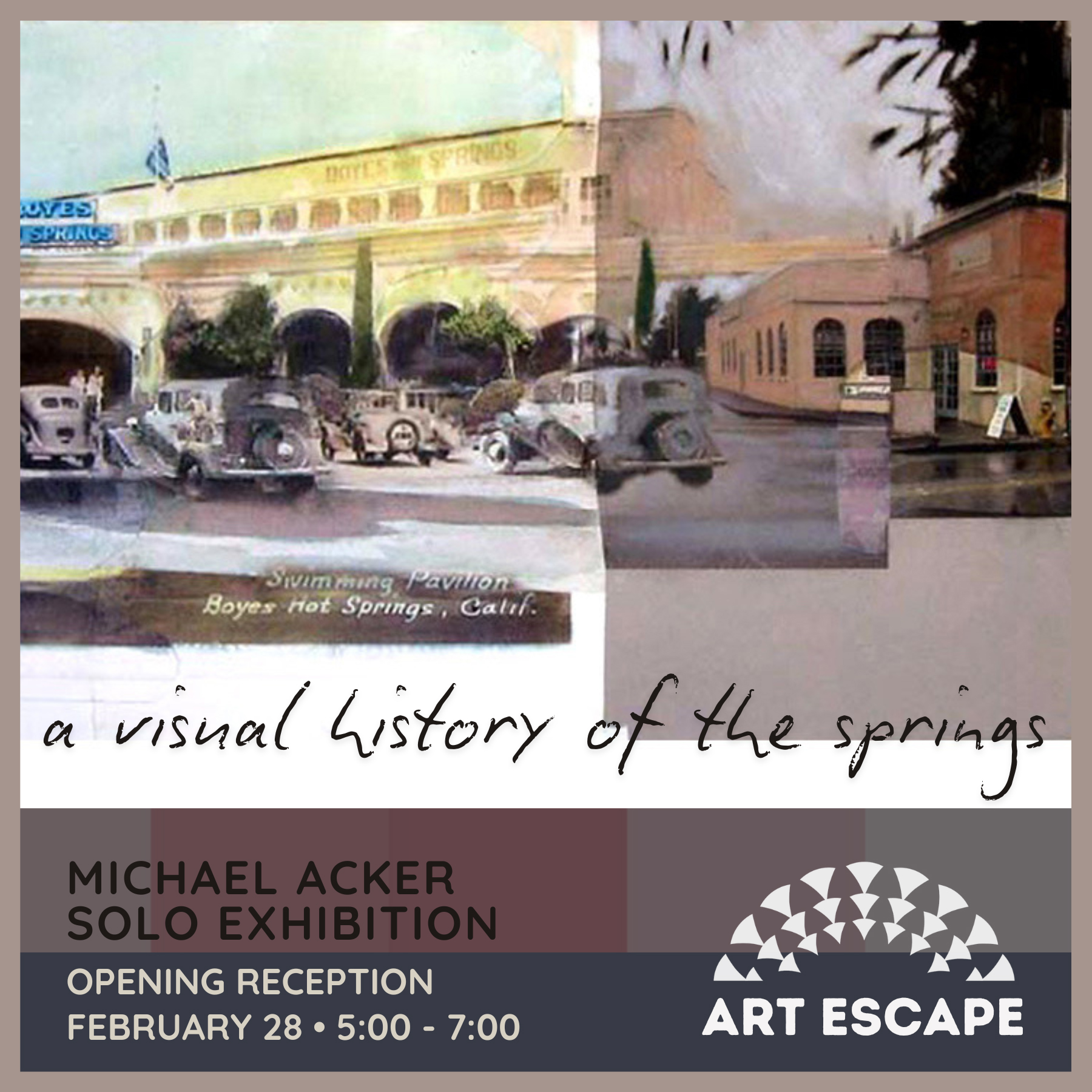
And while I have your attention: A show of Springs history themed art by Michael Acker is opening at Art Escape this Friday, February 28, at 5pm. SEE YOU THERE?!
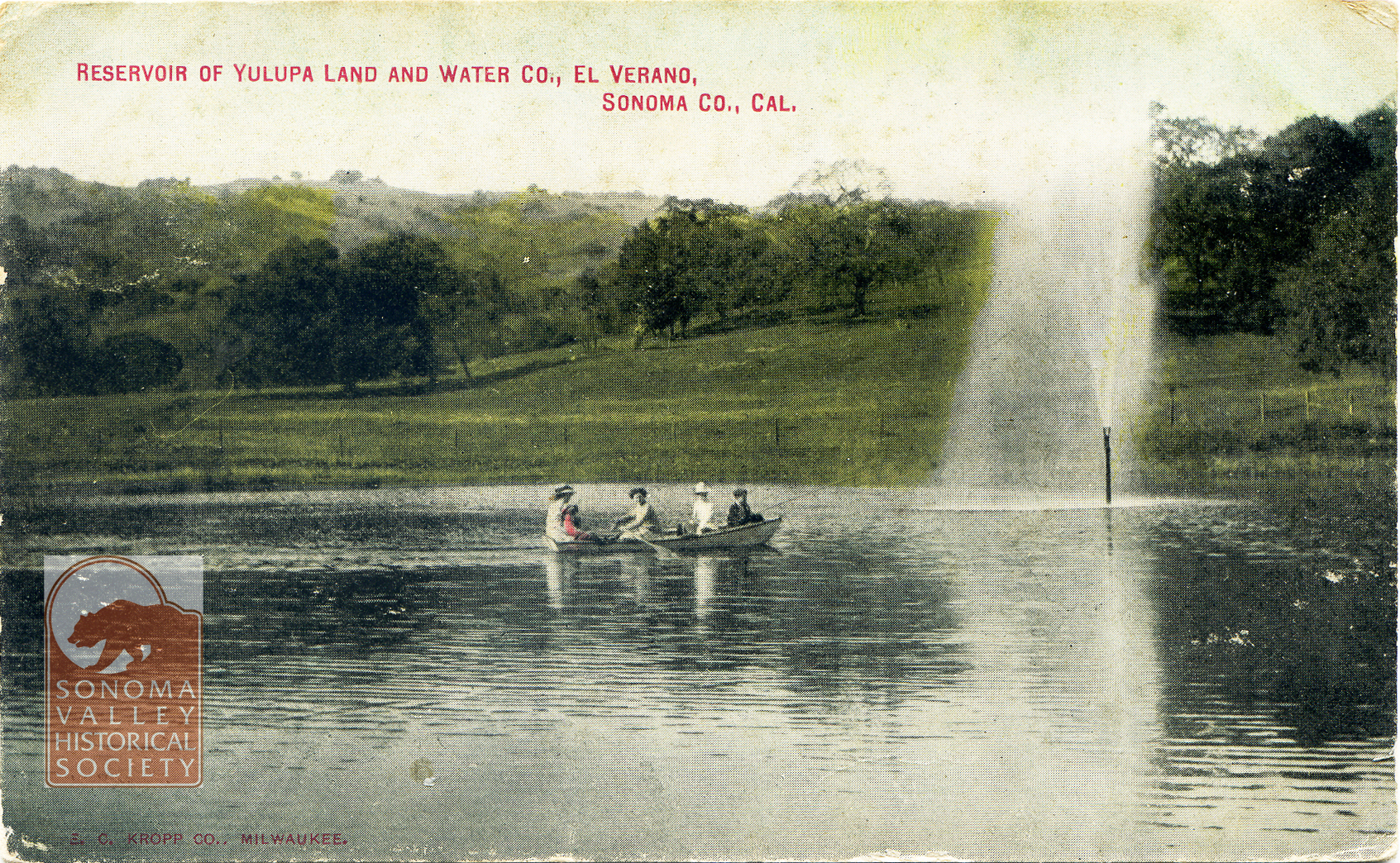
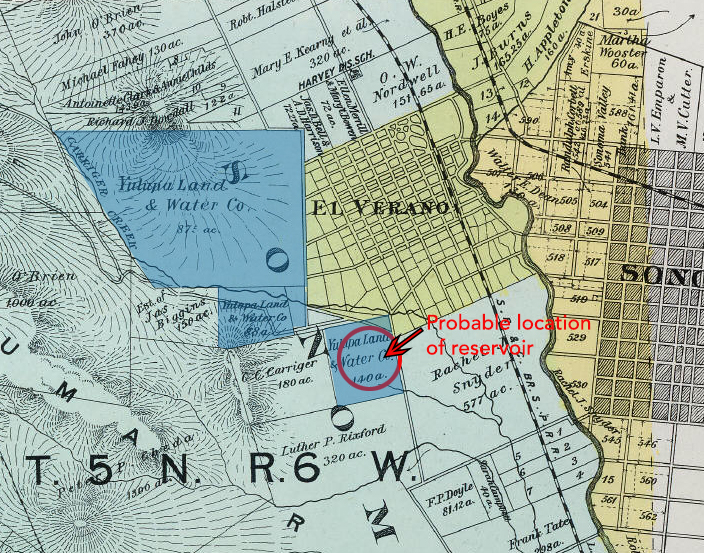
Post marked 1910. The Yulupa Land and Water Company holdings appear on an 1898 Reynolds and Proctor map (Rumsey Collection).
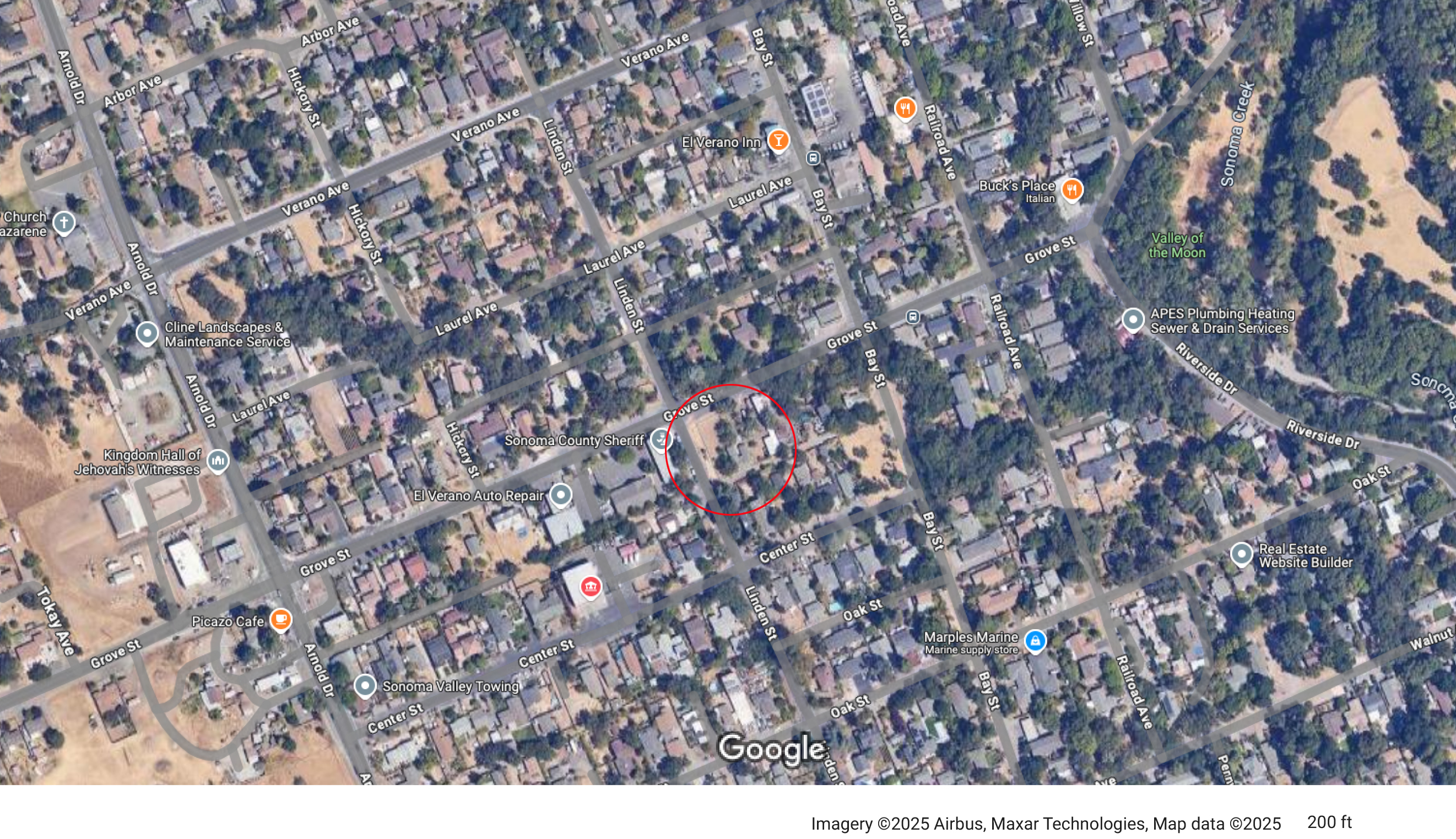
Judging by the hills in the background in the post card, the reservoir was probably located near the corner of Grove and Linden Streets.
In 1910, the Sonoma Valley Water, Light and Power Company acquired the Yulupa Land and Water Company.
1913- “J.A. Dinsella, the enterprising plumber of this city, has secured a contract from Sonoma Vista Land Co. near this city, to build its pipeline of 4-inch mains and 2-inch laterals.”
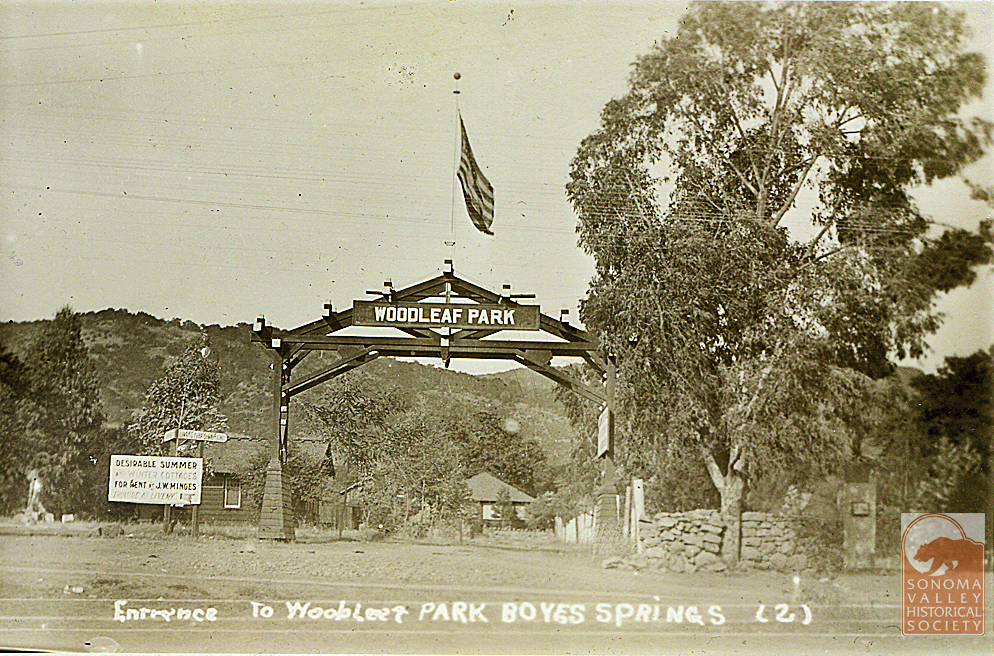
In 1923 J.W. Minges sold his Boyes Springs Water System, which mainly served Woodleaf Park, to N.M. Peterson, proprietor of the Mountain Water Avenue system. The merger “will enable the operating company to give better service…” even then that was the rationale!
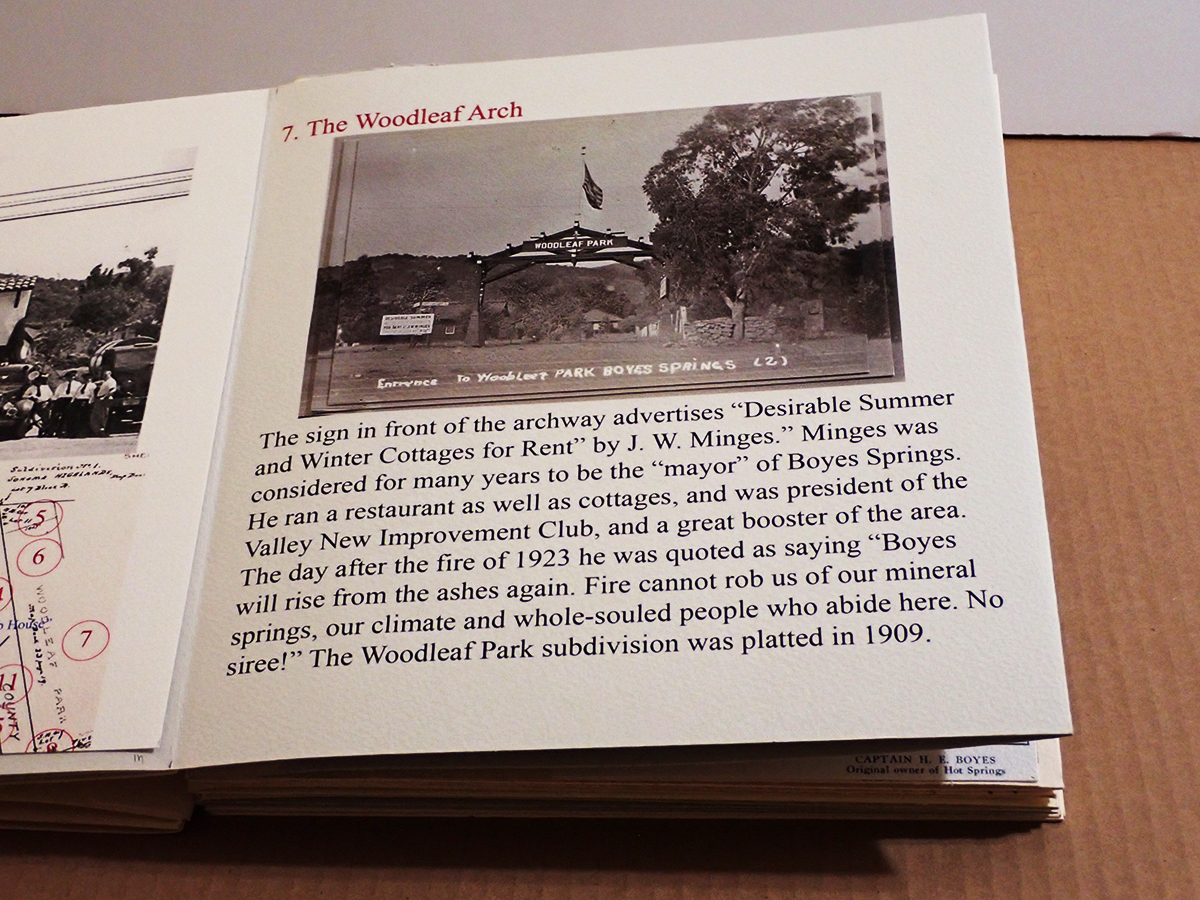
J.W. Minges was known as the “mayor” of Boyes Hot Springs.
“Another company at Boyes Springs which has supplied many customers in the vicinity of the hotel and Boyes Springs Park is owned and operated by James Baines.” of Baines St.
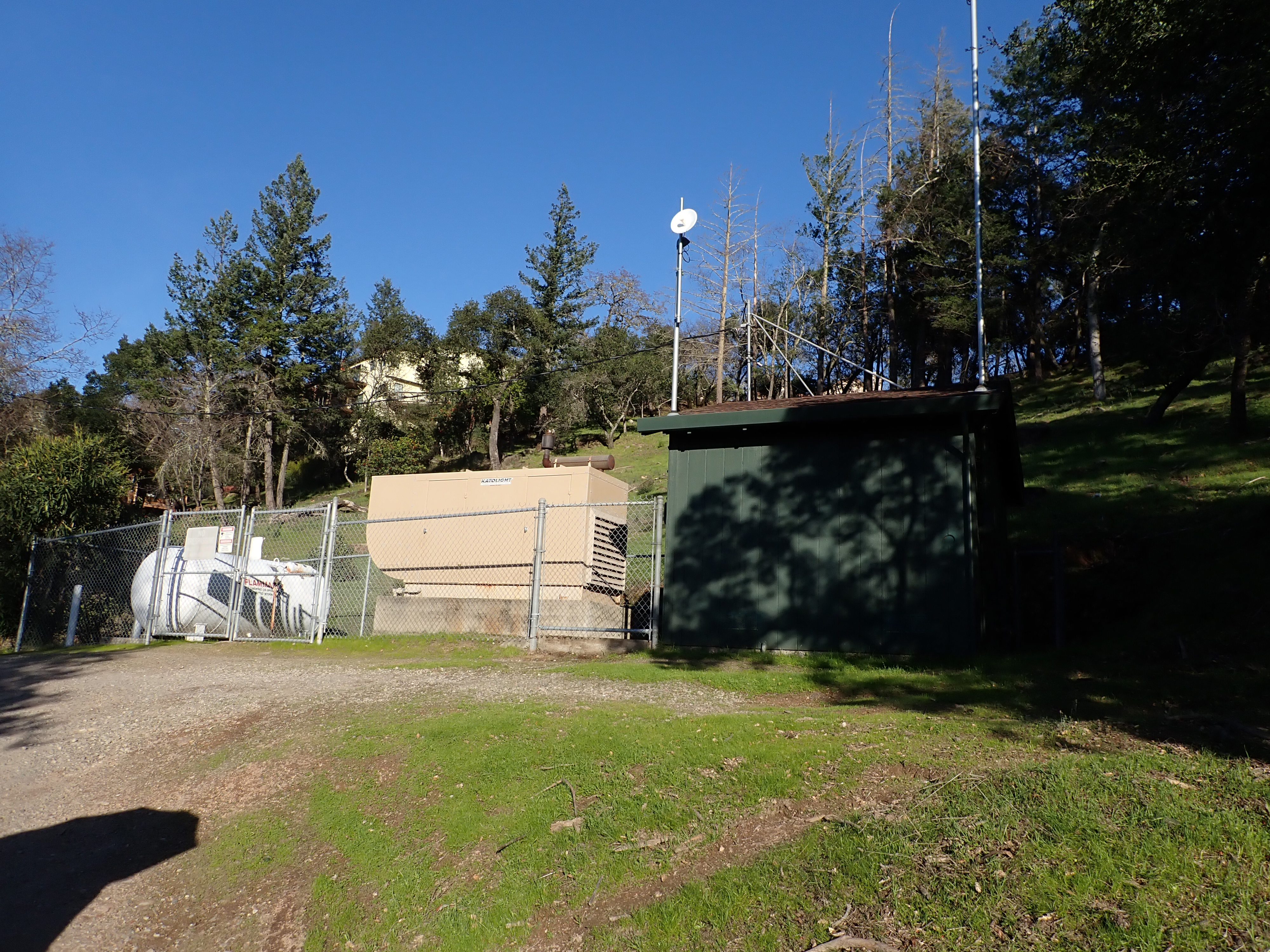
1958-Mountain Ave. Water Co. was sold to Mr. and Mrs Peterson Jr. whose parents had bought from Minges. The Petersons’ company served Boyes Hot Springs for 35 years. Improvements included an office building at 18640 Highland (An address that cannot exist, apparently, as the street ends at 18075), and a new tank at the top of Mountain Ave. An existing tank is located above Highland, circa 2025.
From the Valley of the Moon Water District website: “In 1957, the Valley of the Moon Fire District was evaluated by the Pacific Fire Board which at that time noticed the lack of a dependable water supply source. Subsequent inquiries of Fire District Board members, J. Udvic. T. Polidori and F. Serres, revealed that many wells in the area were failing due to drops in the groundwater levels in the Valley. Early attempts to have Sonoma County build an aqueduct from Santa Rosa to the Sonoma Water and Irrigation Company failed due to the inability of the latter to deposit a $25,000 cash bond with the County.”
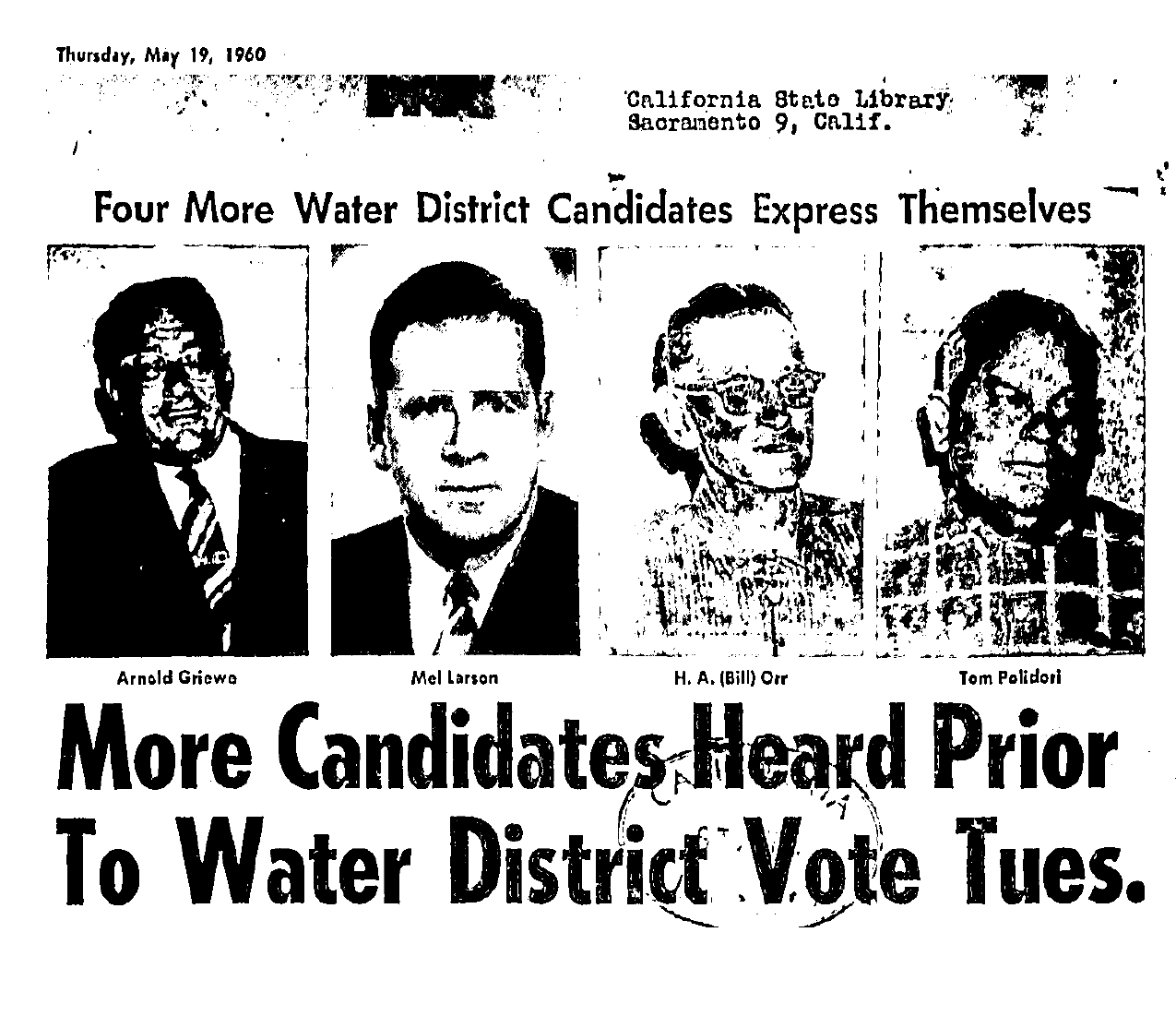
In 1960 voters authorized the establishment of a water district. Candidates for directors at that time were Arnold Griewe, Mel Larson, Bill Orr ,Tom Polidori,Col R. C. Buell, Marin Carlson, A. L. Ford and Nino Vailetti.
“Acquisition of the Sonoma Water and Irrigation Company and the Mountain Avenue Water System was completed in early 1962 and the Valley of the Moon County Water District started management and operation of the systems on June 1, 1962.” VOMD website.
1963-Sonoma Aqueduct dedicated, bringing Coyote Dam water to the valley.
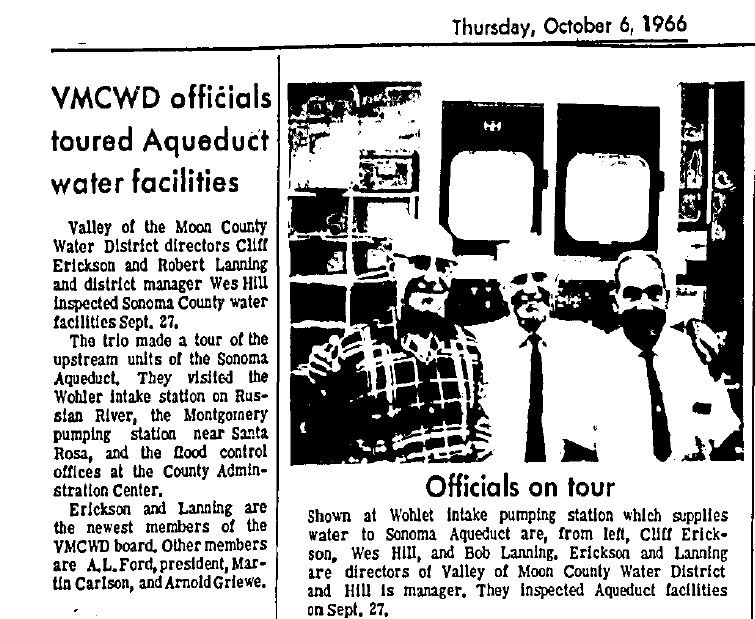
The Water District had new directors Robert Lanning and Cliff Erickson in 1966.
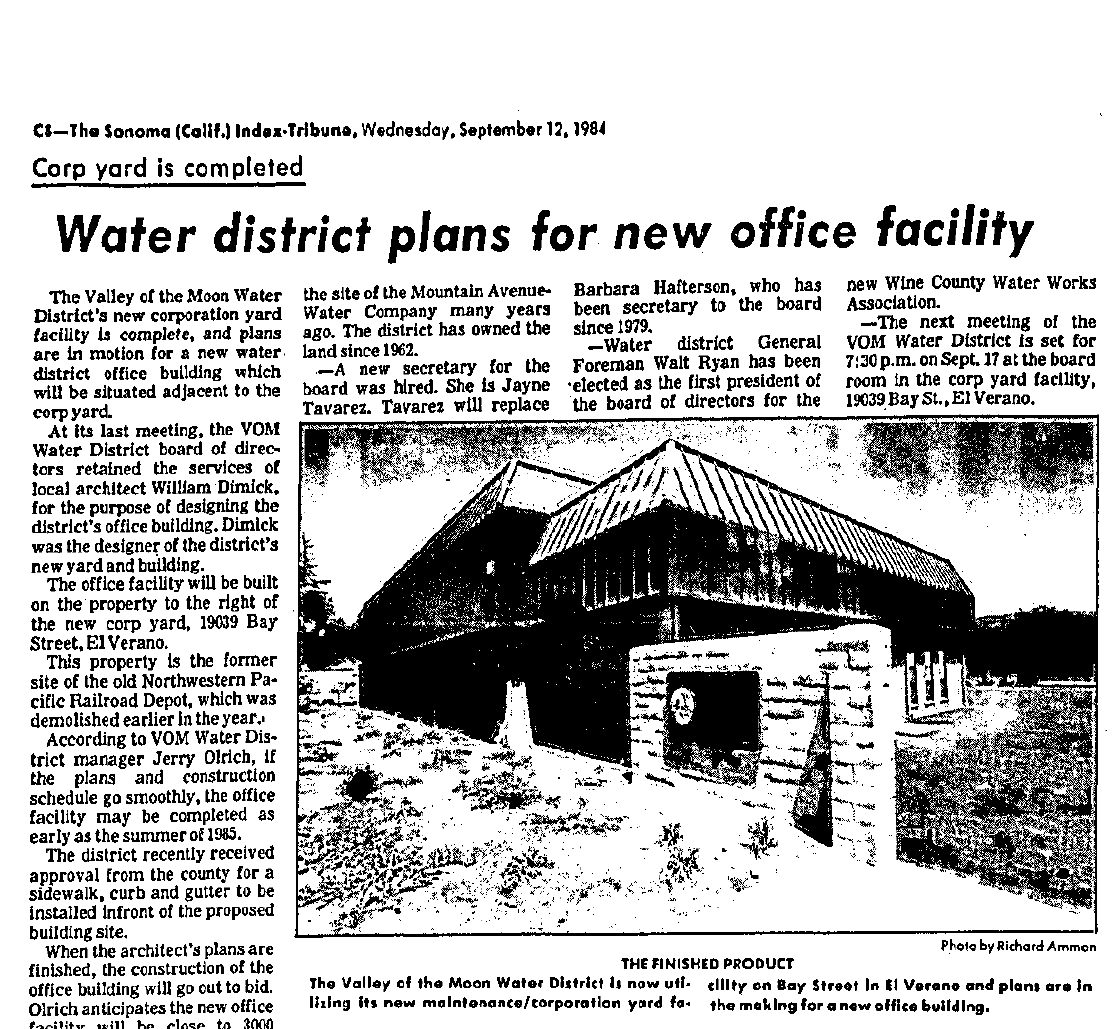
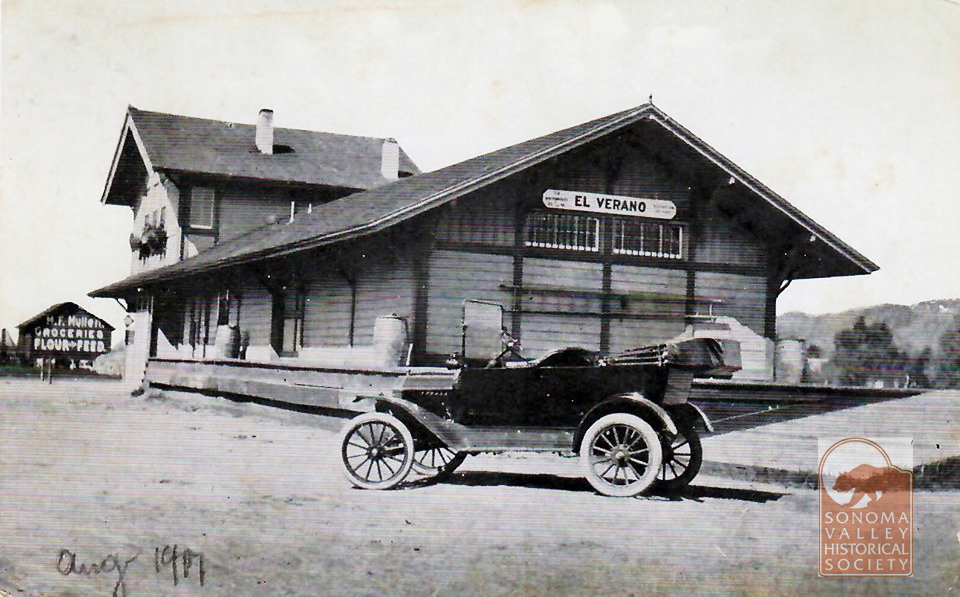
In 1984 a new office building was planned, to be built on the site of the El Verano railroad depot.
Alas!
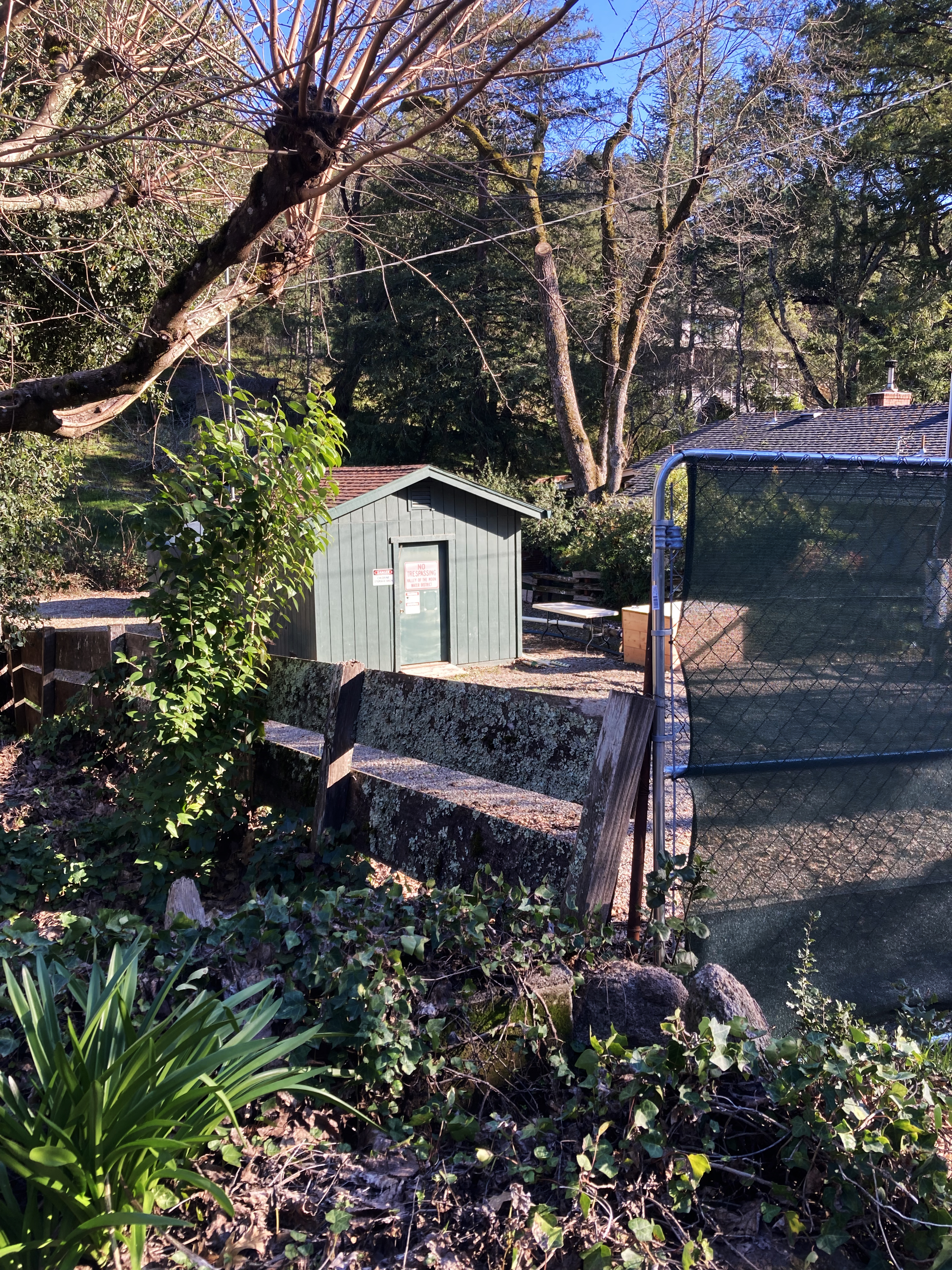
The District still has wells in the Valley.
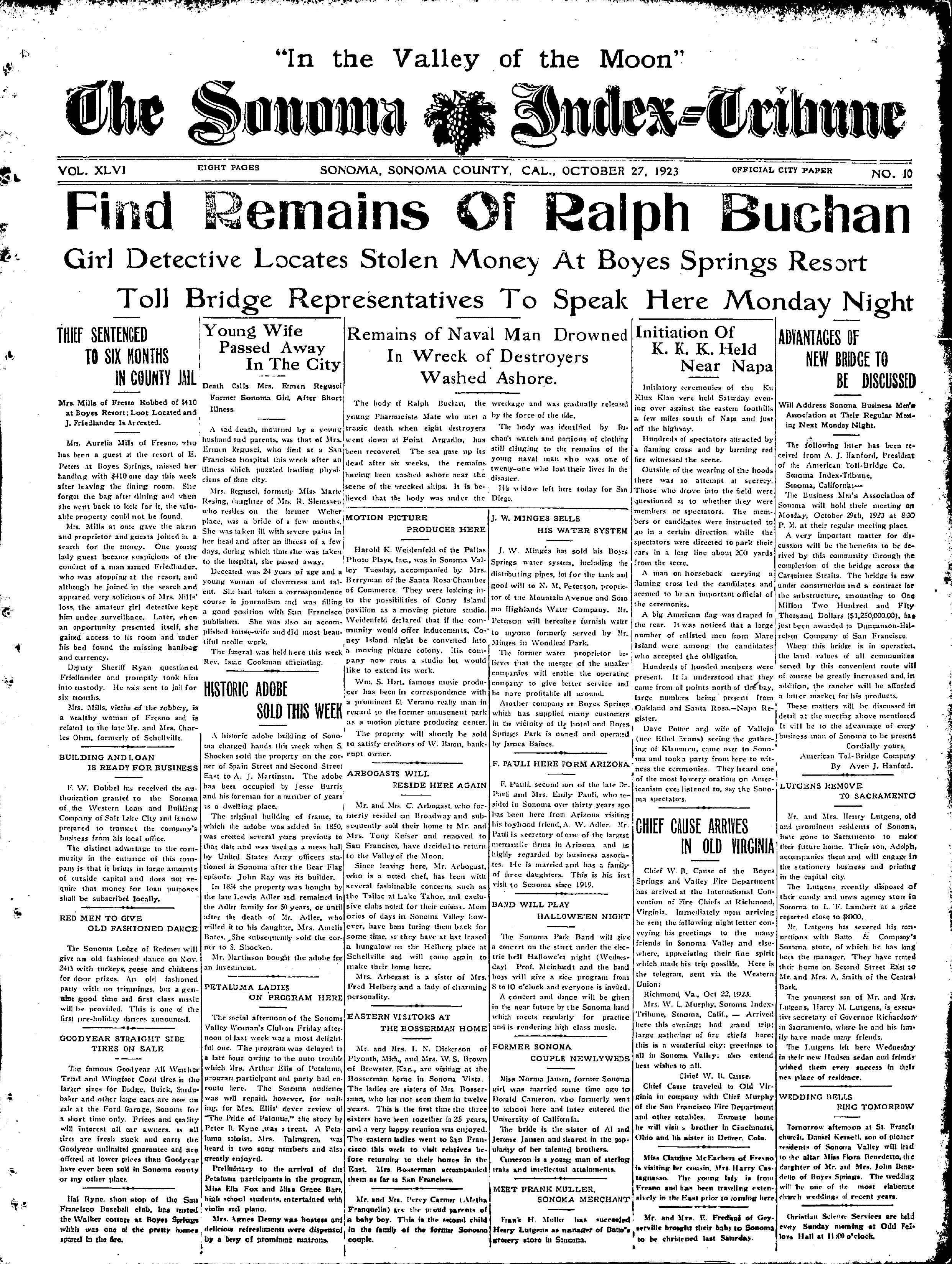
Park Avenue well.Kearney Street well.One comes across many interesting things when looking at old newspapers. Things not relevant to the subject at hand, nonetheless important. This front-page description of a Klan meeting in the Napa Valley is vivid and disturbing, and rings bells that are still reverberating today.
Index Tribune courtesy of the sonoma Valley Historical Society.
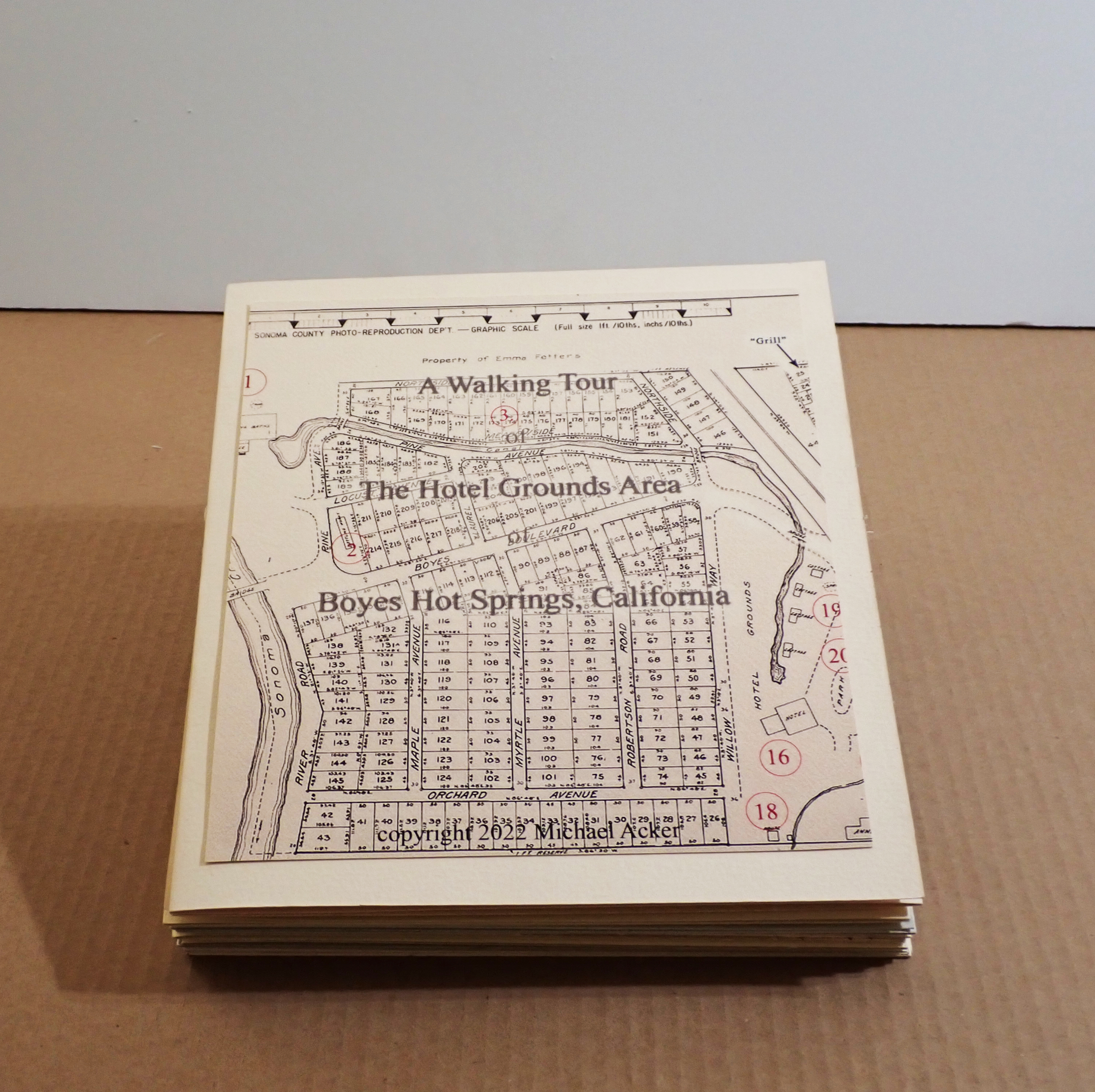
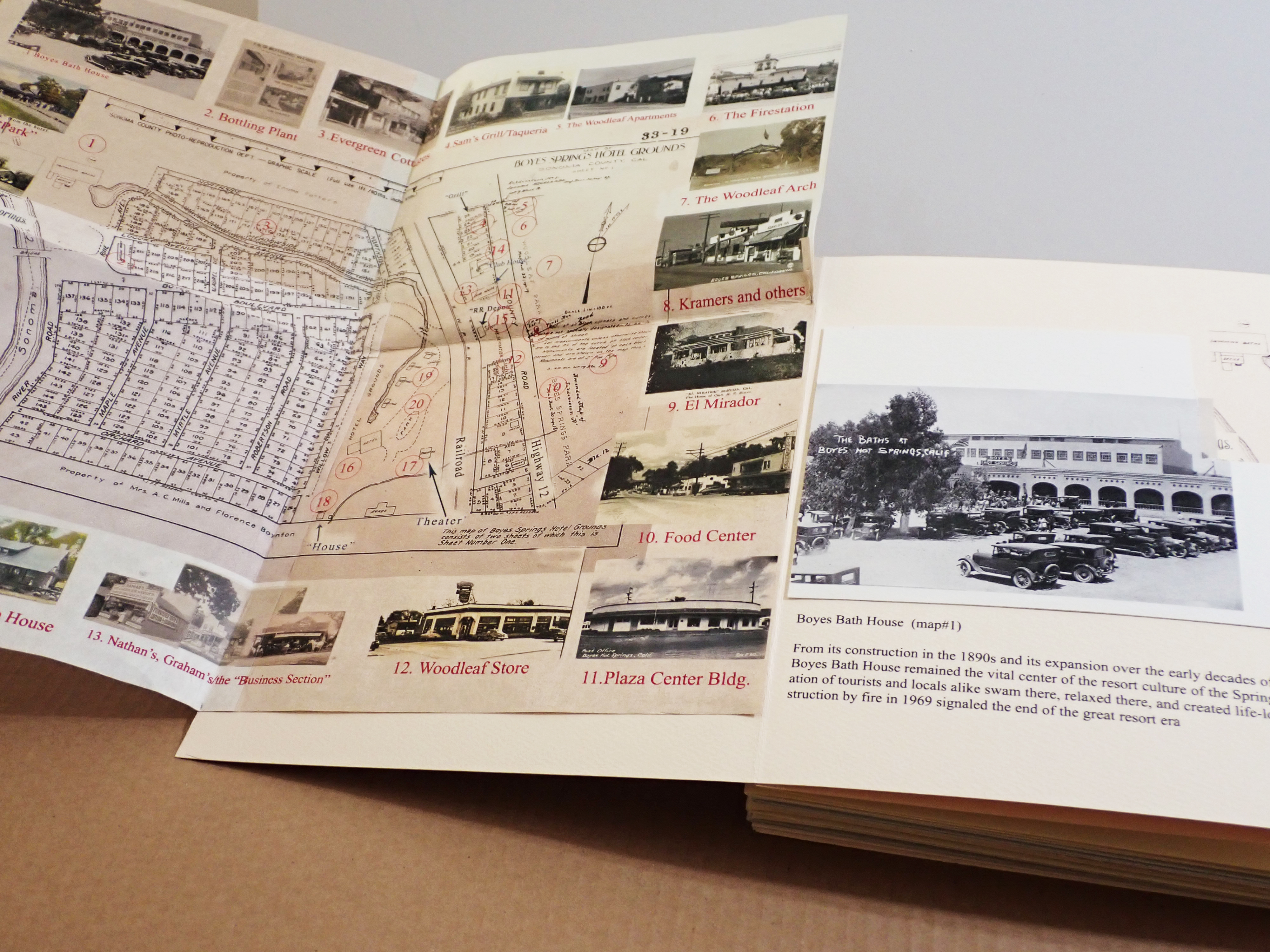
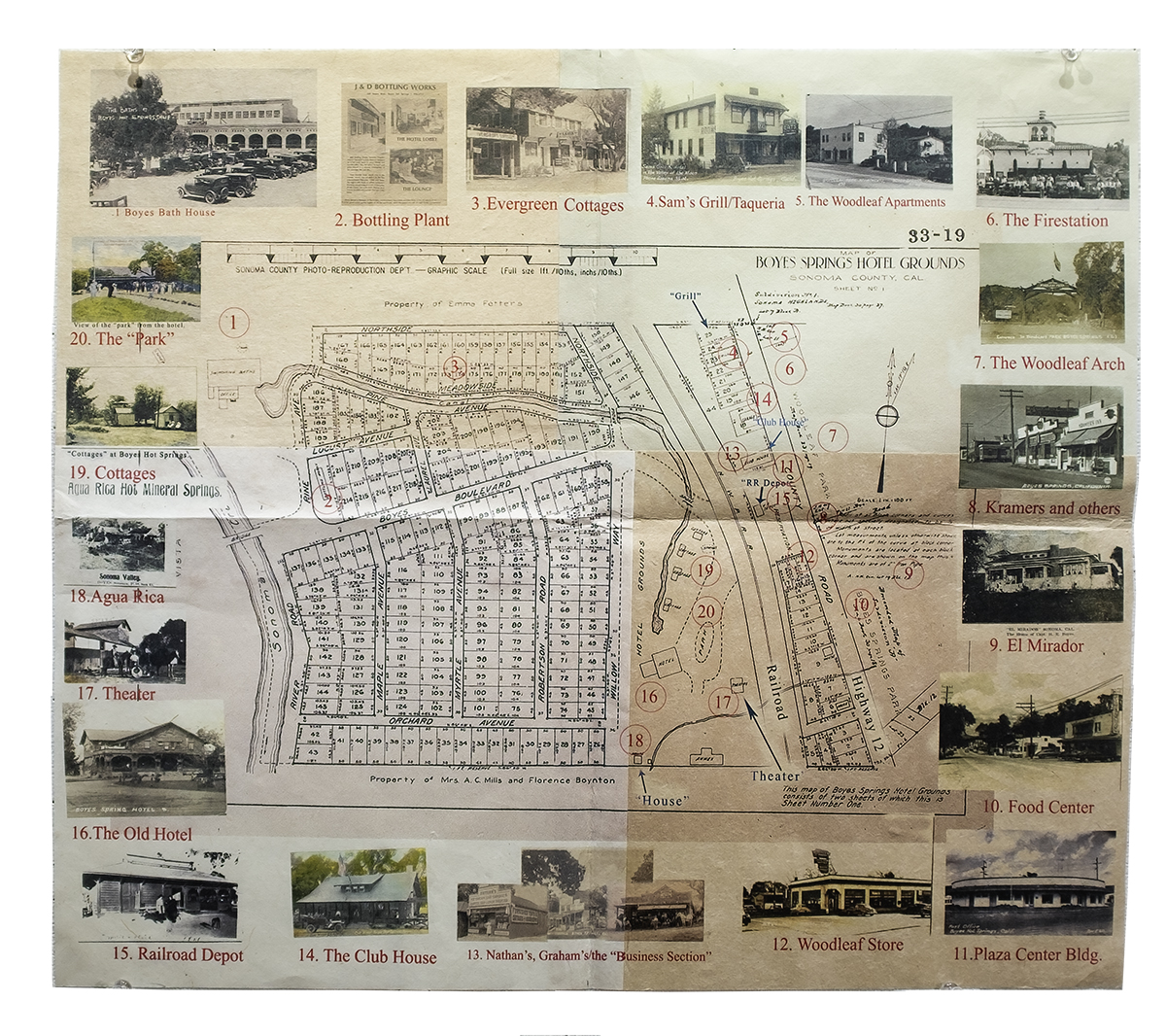
A historic walking tour of Boyes Hot Springs requires a bit of imagination: Many buildings are gone, but they have left traces in the form of photographs and other artifacts, as well as memories. Some day you will be invited to participate, in The Real World, as they say. (Click to enlarge images.)
Martin Kellog Cady was born in New London Connecticut in 1847. From the History of New London County, Connecticut (1882), a biographical sketch of the elder Martin K. Cady, who was a prominent businessman in New London in the mid 19th century, listing his children, says “Martin Kellog, eldest son, is assistant coiner at the United States Mint at San Francisco, and has been for some years. He married Jeannie B. daughter of Hon. Charles Gorham, of Marysville, CA.” The book was published in 1882 but must have been written earlier because our M K Cady had left the Mint and settled in Sonoma Valley by 1881.
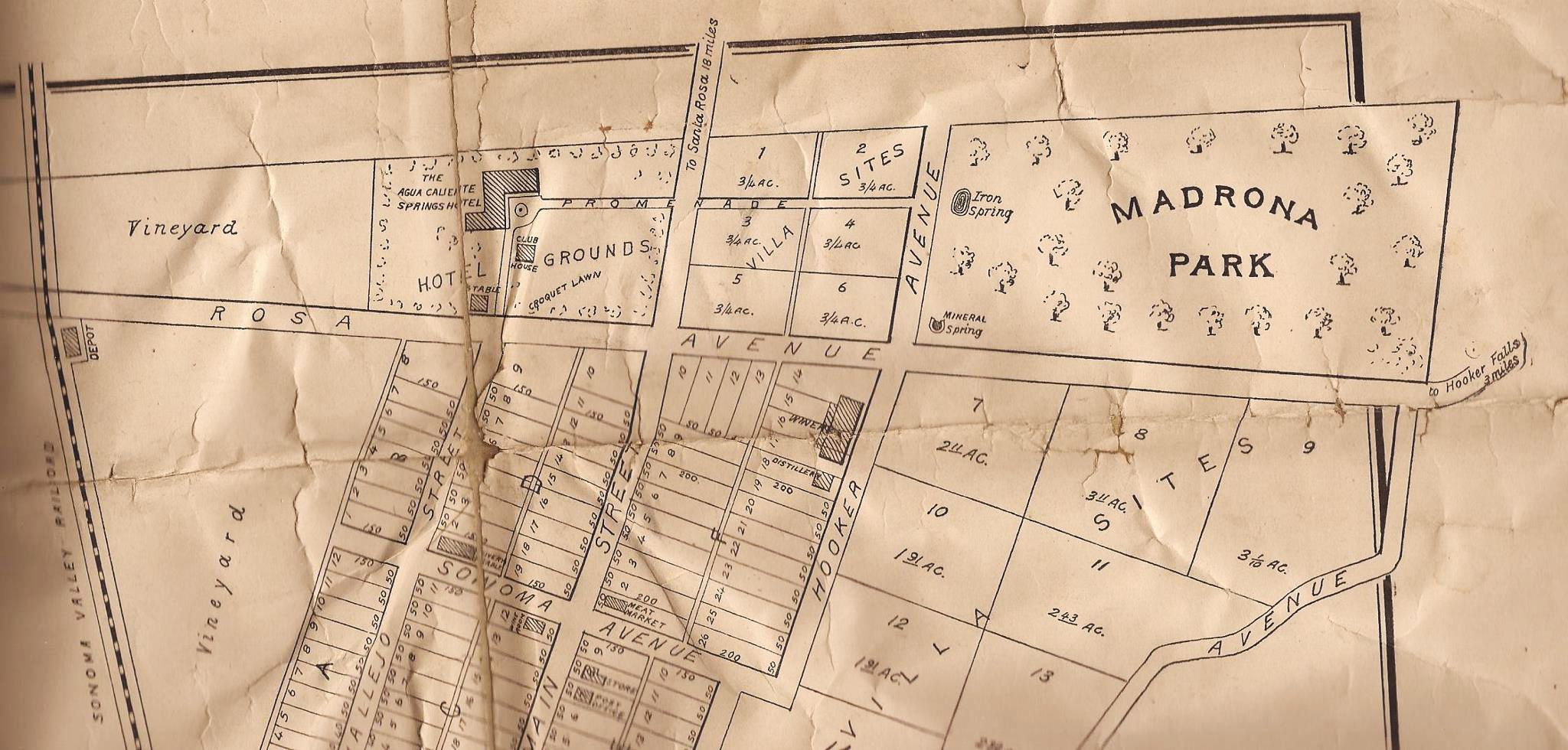
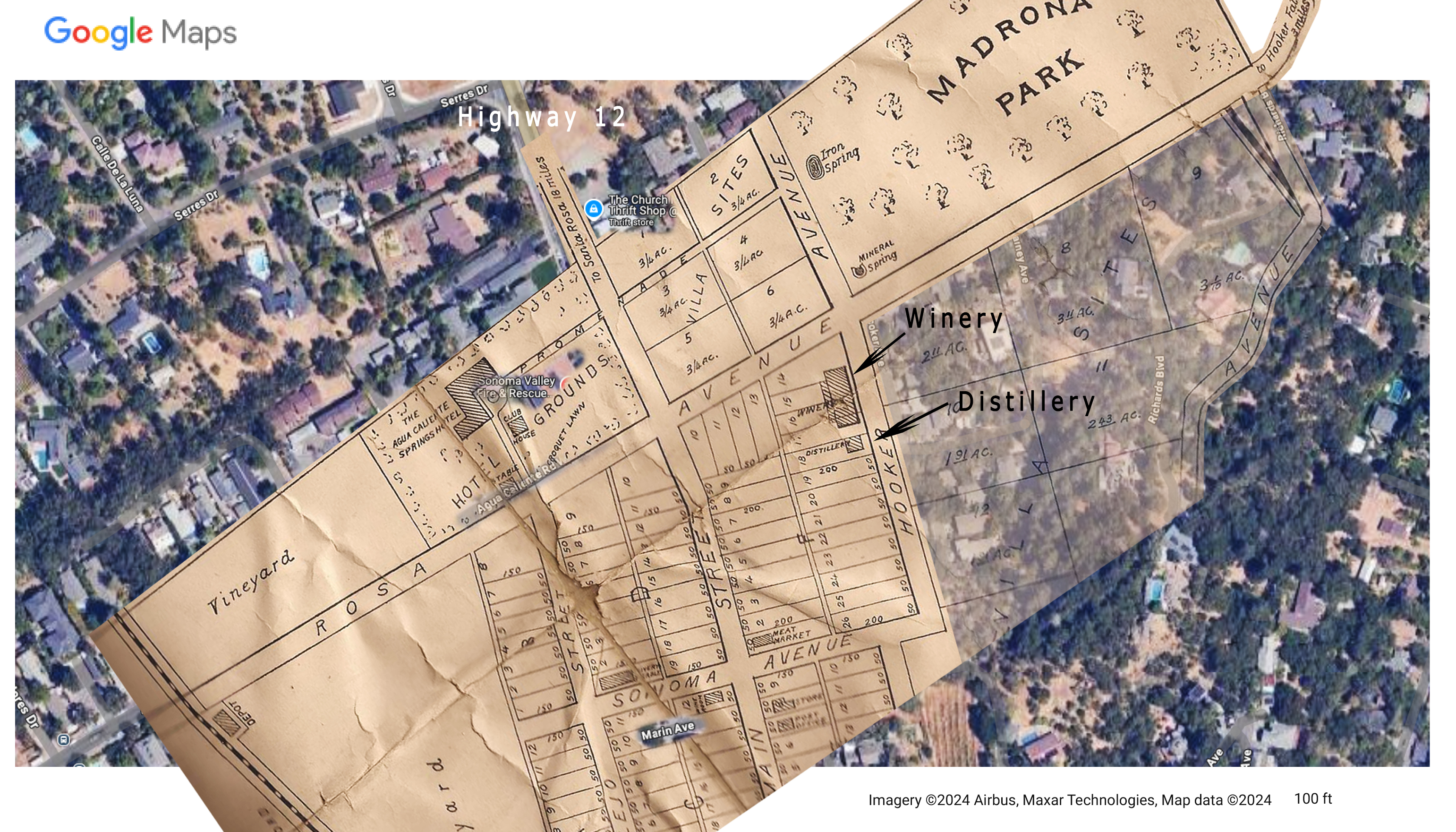
In that year the Index Tribune tells us, “M.K. Cady, formerly of the San Francisco mint, buys Alexander farm,” and that it is “Located on the Santa Rosa and Sonoma road, about three miles from the pioneer city.(Sonoma)” Also in 1882, Cady established a distillery and wine cellar (see map), built of stone from a “quarry on his own farm in the “Flowery” district.”
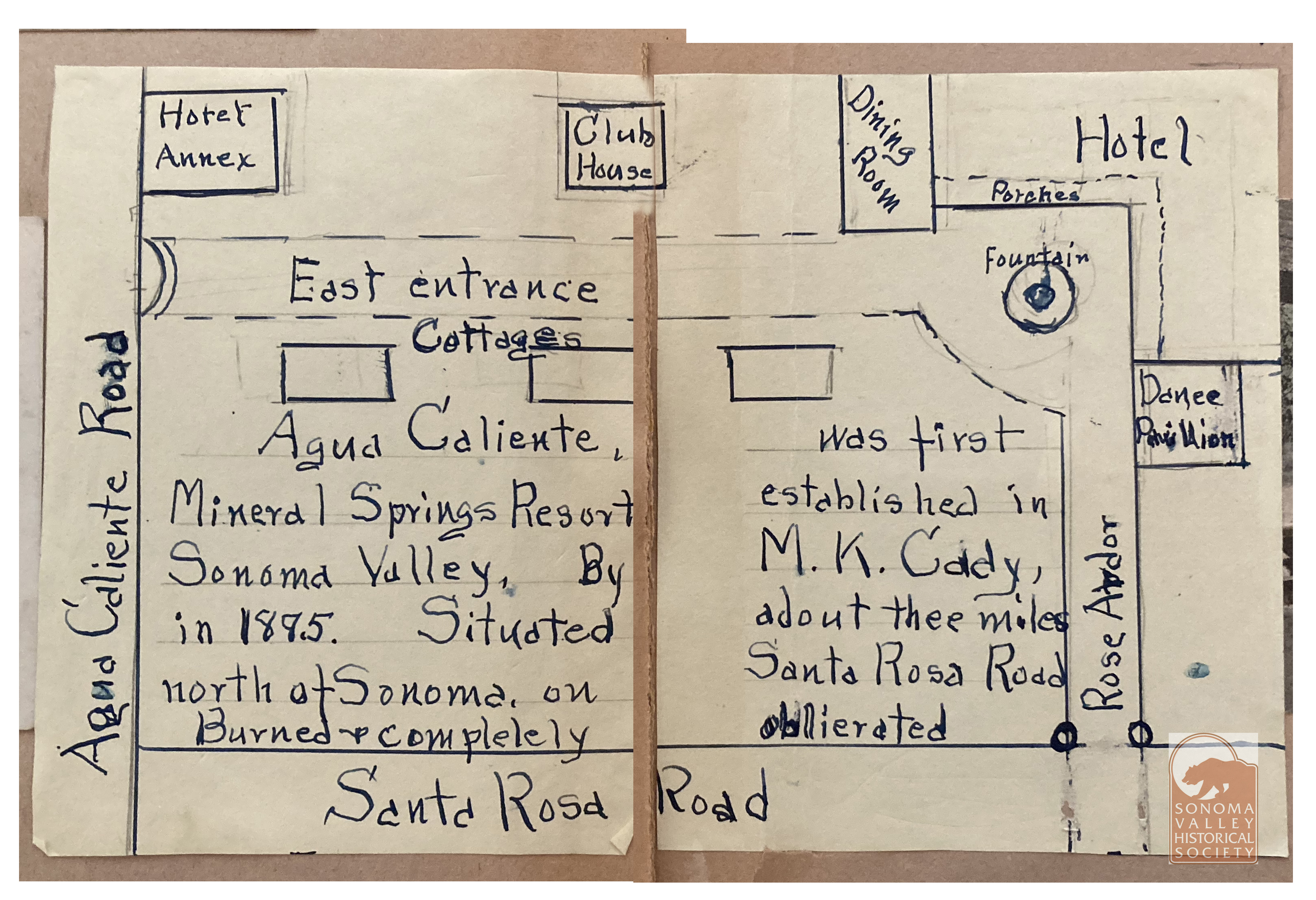
Map from Jeff Gilbert’s collection.Jeff’s map superimposed on the Google map. The resort was located at the intersection of the current Highway 12 and Agua Caliente Road, then called Santa Rosa Avenue. The winery and distillery were on Hooker Avenue, named for General Joseph Hooker, of Civil War fame, who was an early land owner in the area. The Agua Caliente Resort site was later known as Hooker Oaks. Today, the Sonoma Valley Fire Department station is there. The road at upper right is labeled “To Hooker Falls, 3 miles.” Click to enlarge.From a scrapbook at the Marcy House archives, date and author unknown.
An advertisement in the Index Tribune in June of 1885 informs that the Agua Caliente Hotel, under the proprietorship of M. K. Cady will be opening in June of that year, so the resort was founded between 1881 and 1885.
An puff piece in an 1889 issue of the Index Tribune read, in part, “the famous health-giving springs, delightful location and basalt block interests of this progressive little village is destined at no distant day to make it a place of considerable importance. The town was laid out a little over a year ago (incorrect!) by M.K. Cady, one of Sonoma Valley’s most energetic and public-spirited men. The railroad runs through the place which boasts of an express office, post office, schoolhouse, hotel general merchandising store, butcher shop, and a blacksmiths shop. During the spring and summer months the Agua Caliente Springs Hotel is crowded with health and pleasure seekers who come to lave in its health restoring water and bask in never failing sunshine and balmy breezes. An Episcopal Church will be erected a Agua Caliente this summer.”
In 1888 Cady sells to the Verano Land Company: “M.K. Cady of Agua Caliente has sold his hotel property and villa sites in that town to the Verano Land Company. Mr. Cady retains his winery and some forty acres of choice vineyard and will build a residence on the heights overlooking the wine cellar.” (This could be the site that became Keaton’s Shack.) After six months, Cady takes the property back. It seems, it has been closed the entire time “owing to a disagreement among the directors, who have been fighting like cats and dogs…” The Verano Land Company developed the “towns” of Verano and El Verano. Their brochure touting the developments is priceless early 20th century hype.
In 1888 Cady runs for county supervisor and is elected. The Index Triubne says “Mr. Cady is the right man in the right place and the people of Sonoma and Vallejo Townships ought to congratulate themselves on having so able a man to look after their affairs at the county seat”
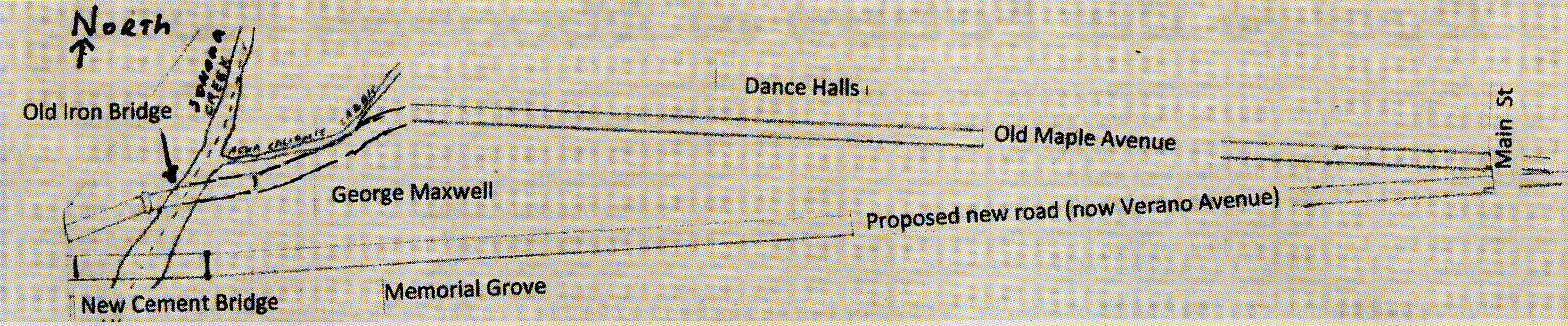
New road leading to the new bridge over Sonoma Creek at Verano.
Also in 1888 “A petition was received from citizens of Sonoma road district praying for a new road from the iron bridge across Sonoma creek at Sonoma to the town of El Verano, and for the abandonment of the old road from the old bridge to where the same connects with Petaluma Avenue. On motion of Mr. Coulter, the same was received and placed on file, the accompanying bond approved and W. K. Nichols, M.K. Cady and G. C. P. Sears were appointed to view and lay out said proposed new road and report at the next meeting.” Please see The Arroyo of Arroyo Road
Interestingly, in 1891 the IT opined “(Cady’s) hotel is located in one of the most picturesque spots in California, and is destined at no distant day to be to this State what Saratoga is to New York.” However, they weren’t reckoning with Calistoga, which was so named because it was deemed the Saratoga of California.
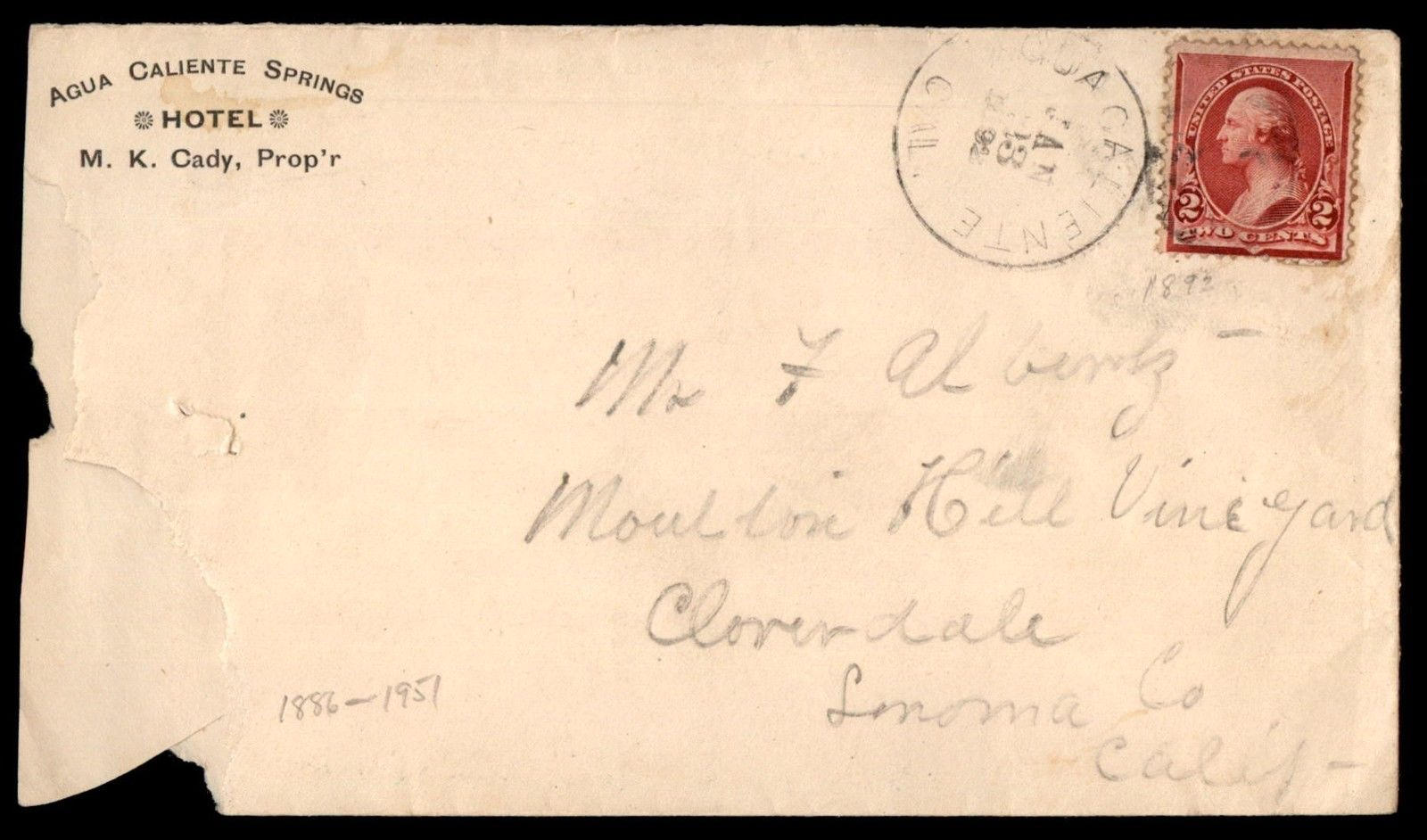
All was not smooth sailing for Mr. Cady. In a September 1893 article in the IT headlined ”Agua Caliente Post Office Squabble. Cady and Morris on Top-Postmaster John Austin Down and in Jail,” we learn that Austin was the owner of a general store in Agua Caliente, which housed the post office. He also ran a bar that competed with Cady’s. Morris was the “mail Messenger” responsible for carrying the mail from the railroad depot to the Post Office. Morris and Austin had bad blood between them stemming from a fist fight the previous July. Morris and Cady wanted to get the Post Office moved to Cady’s’ resort. They accused Austin of opening their mail, and Austin was arrested and taken to jail in San Francisco. Austin claimed he was framed in order get the post office away from him.
That November, Cady was indeed appointed by President Cleveland to be post master of Agua Caliente, “a little old one-horse affair, the salary amounting to from $3 to $5 per month.” In October the story took a strange turn as Austin, having written to his wife in Agua Caliente that he would be home the next day, disappeared. Then, on April 7, 1894: “The Santa Rosa Republican is authority for the statement that John Austin, ex Postmaster of Agua Caliente, near this place, recently fell from a scaffold in a town in South America and sustained injuries that resulted in his death.”
Circa 1930
Apparently Cady defaulted on his mortgage in 1895. “A Mr. Dean of San Francisco took possession this week of the Agua Caliente Springs ranch to satisfy a mortgage of $25,000 executed by the former owner, M,K. Cady, who has been in possession of the property for over fifteen years {making Cady’s arrival in the valley no later than 1879}. The Hotel, swimming baths, wine cellar and hotel grounds have been disposed of by Mr. Dean to Dr. Nordin of Alameda, who will improve the hotel and grounds and conduct the same as a first class summer resort and sanitarium. Mr. Cady has leased for the present the handsome cottage which was erected near the wine cellar a few years ago by Mr. McGrew of San Francisco.”
However, Doctor and Mrs. Nordin did not see eye-to-eye. Shortly after he purchased the resort and investing $30,000 of her money in refurbishing it, Mrs. Nordin sued her husband, whom she says took her money under false pretenses and she wanted it back.
The Index Tribune, after saying that Mr. Cady “ran the resort into the ground,” informs us that Cady was appointed receiver of the property during the law suit!
“The bondsmen for M. K. Cady, who was appointed receiver of the Agua Caliente Springs by Judge Crawford, are J. B. Moris and Horace Appleton. Each swears he was worth $3000 over and above his just debts and qualified for $6,000 double the amount of the bond.”
The story continues. September 1895, “The Nordin case, which is the all absorbing topic of conversation in this valley, was resumed in the Superior Court last Monday. It will be recollected that last week Judge Crawford put and injunction on the Agua Caliente springs Resort, appointed M. K. Cady receiver of the property, and accepted as his bondsmen H.B. Morris and Horace Appleton.
Later court action: “The proceedings Monday was devoted to filing a motion to dissolve the injunction….” Nordin alleges that Cady is insolvent, and “that…during the greater portion of the time since his appointment as receiver (has been) under the influence of intoxicants.”
Nordin continues to allege that Cady has fired all the staff and put his wife, daughter, niece on the payroll, and “that the Cady tribe has taken up their abode on the promises.”
Additionally “The affidavit says the order appointing Cady as receiver covers all the personal property on the premised and that some of the guests at the hotel wish to leave, and that Mr. Cady has refused to let them have their trunks and wearing apparel”!
November 9, 1895-The Nordin suit was continued. “The property is still in the hands of Trustee Cady. Dr. Nordin is residing in San Francisco and Mrs. Nordin is the guest of Alameda friends.”
April 11, 1896, the suit is settled with Dr. Nordin getting $1000 and Mrs. Nordin getting the property, but no word of what happened to the “Cady Tribe.” Mrs. Nordin continued running the resort. Details are in short supply. The magnificent hotel burned some time before 1916, when the new, stone building was built.
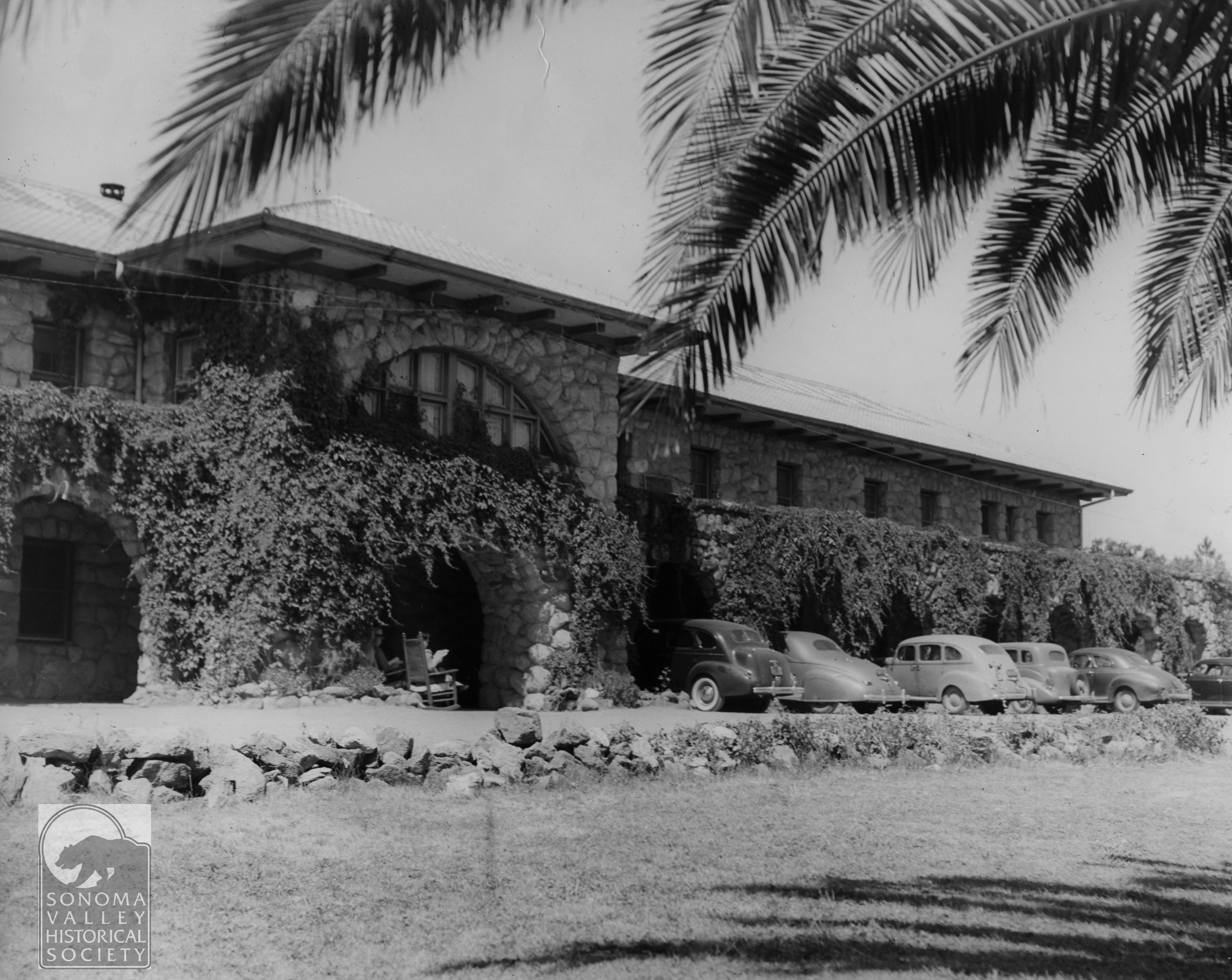
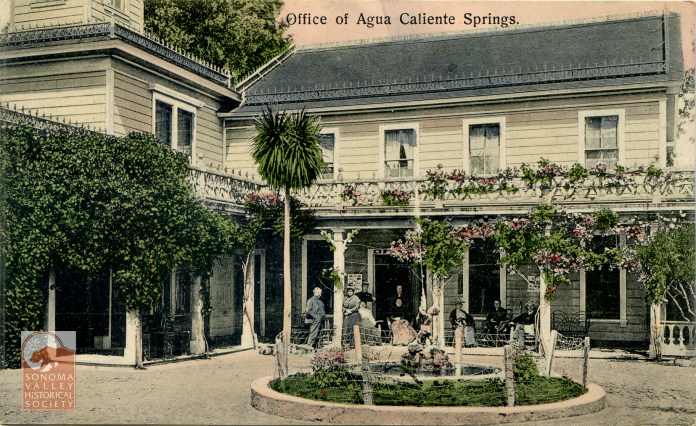
The “new” Agua Caiente Hotel, built in 1916, still stands in 2024
Martin Kellog Cady died November 18, 1903, in San Francisco.
All quotes are from the Sonoma Index Tribune unless otherwise noted.
Sonoma Index Tribune and many images courtesy of the Sonoma Valley Historical Society
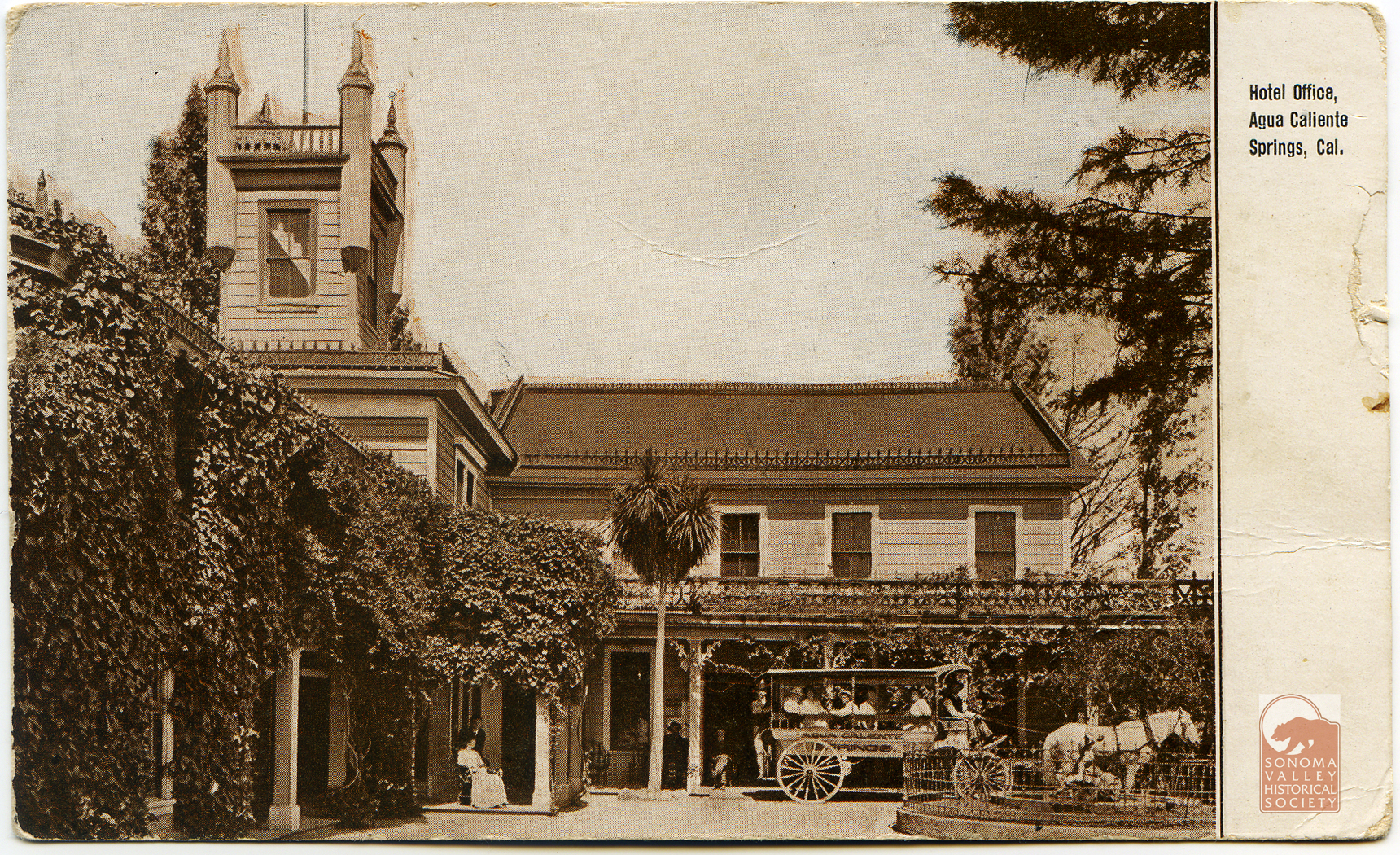
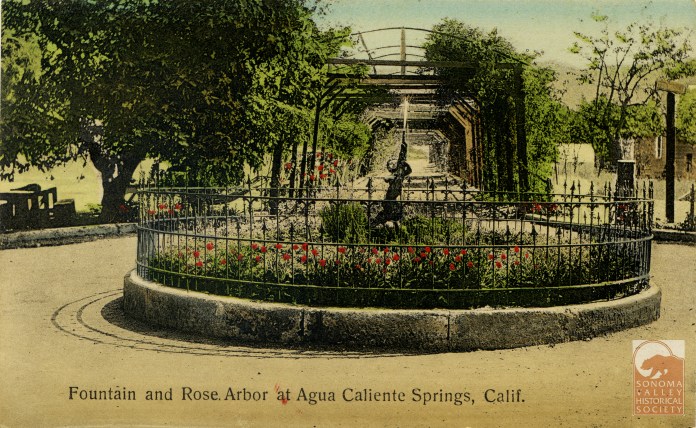
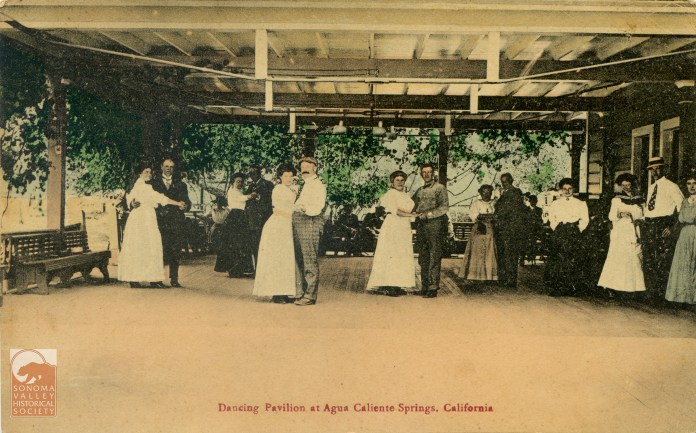
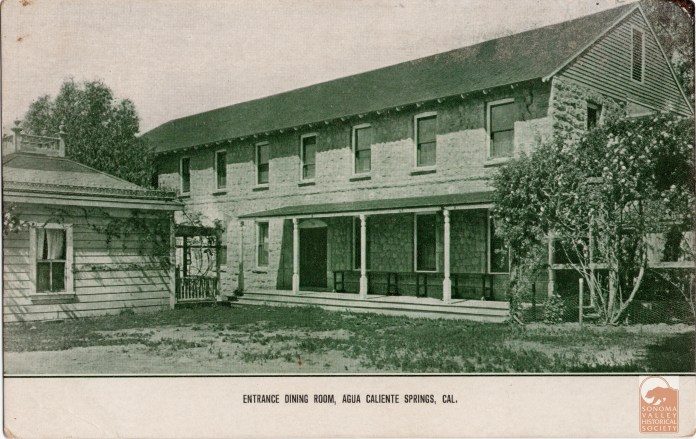
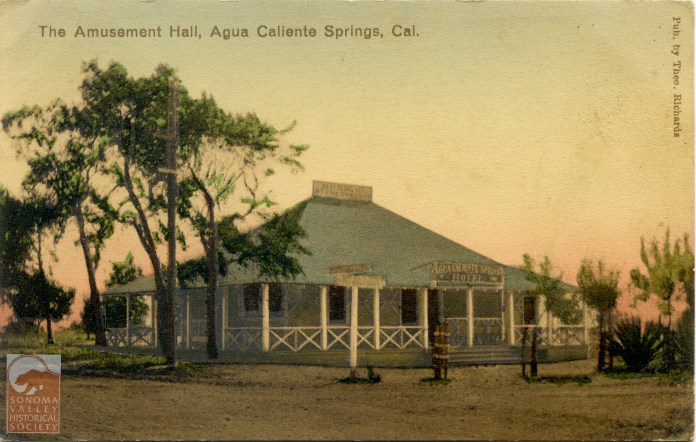
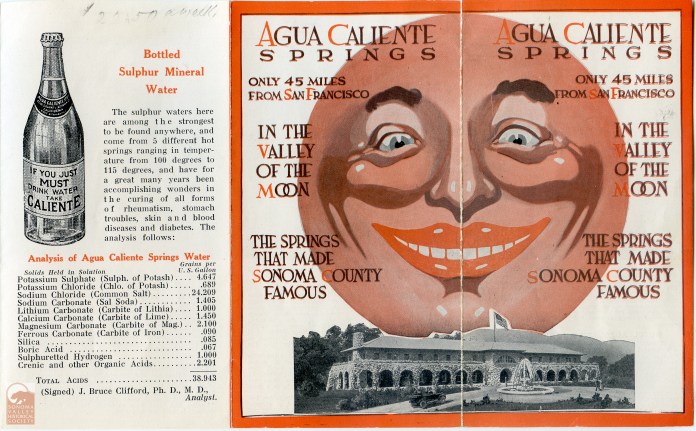
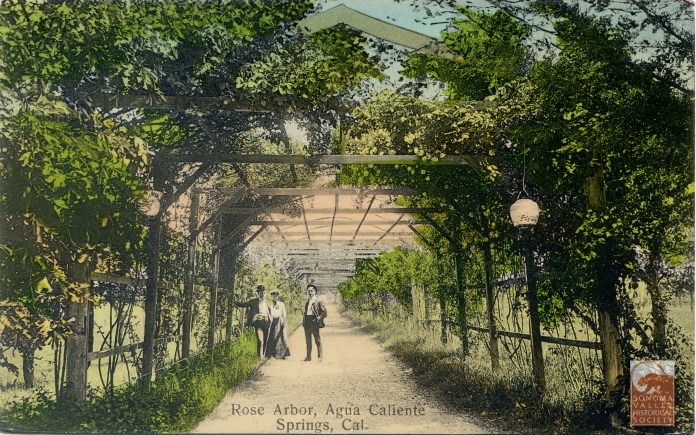
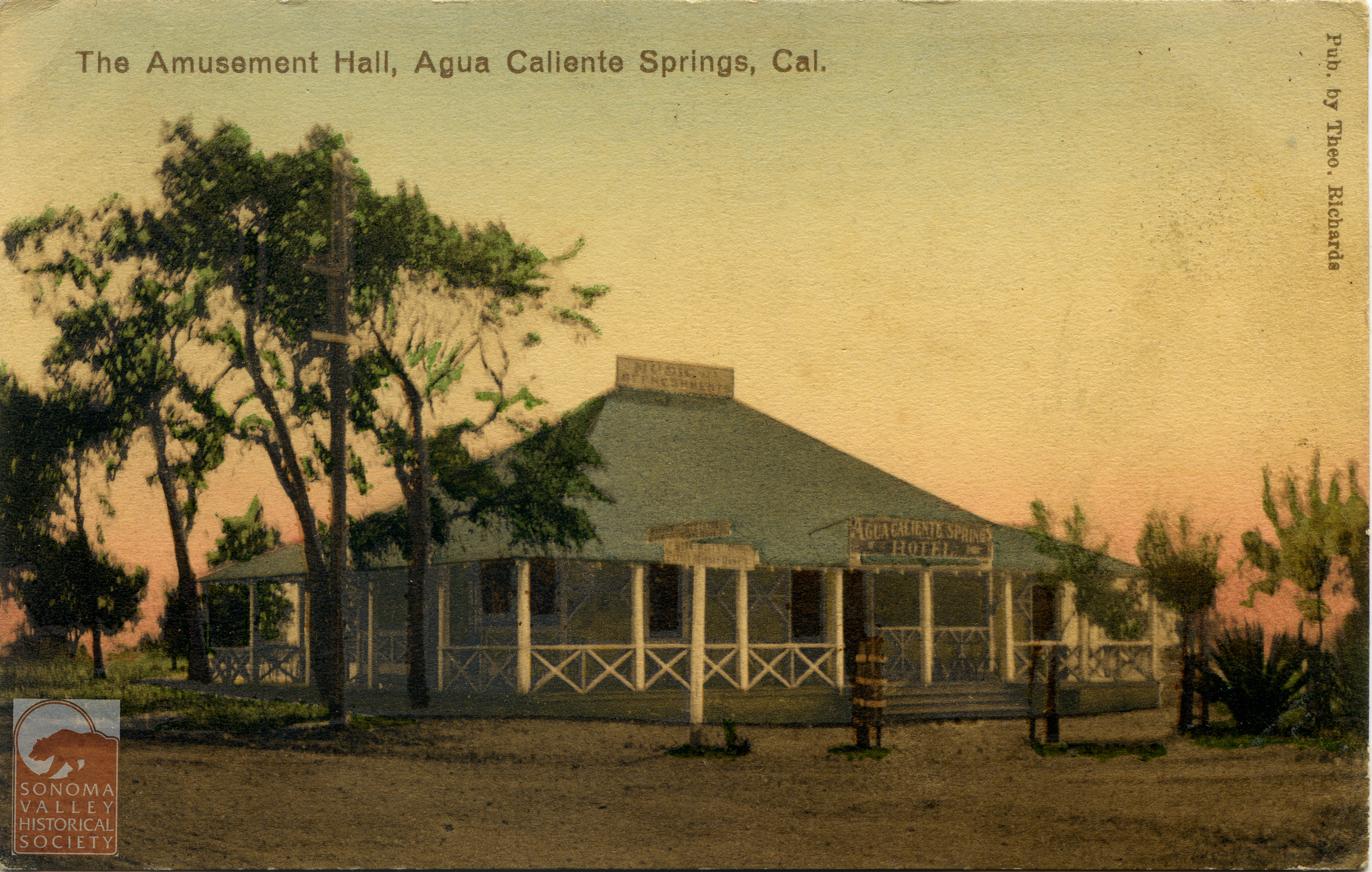
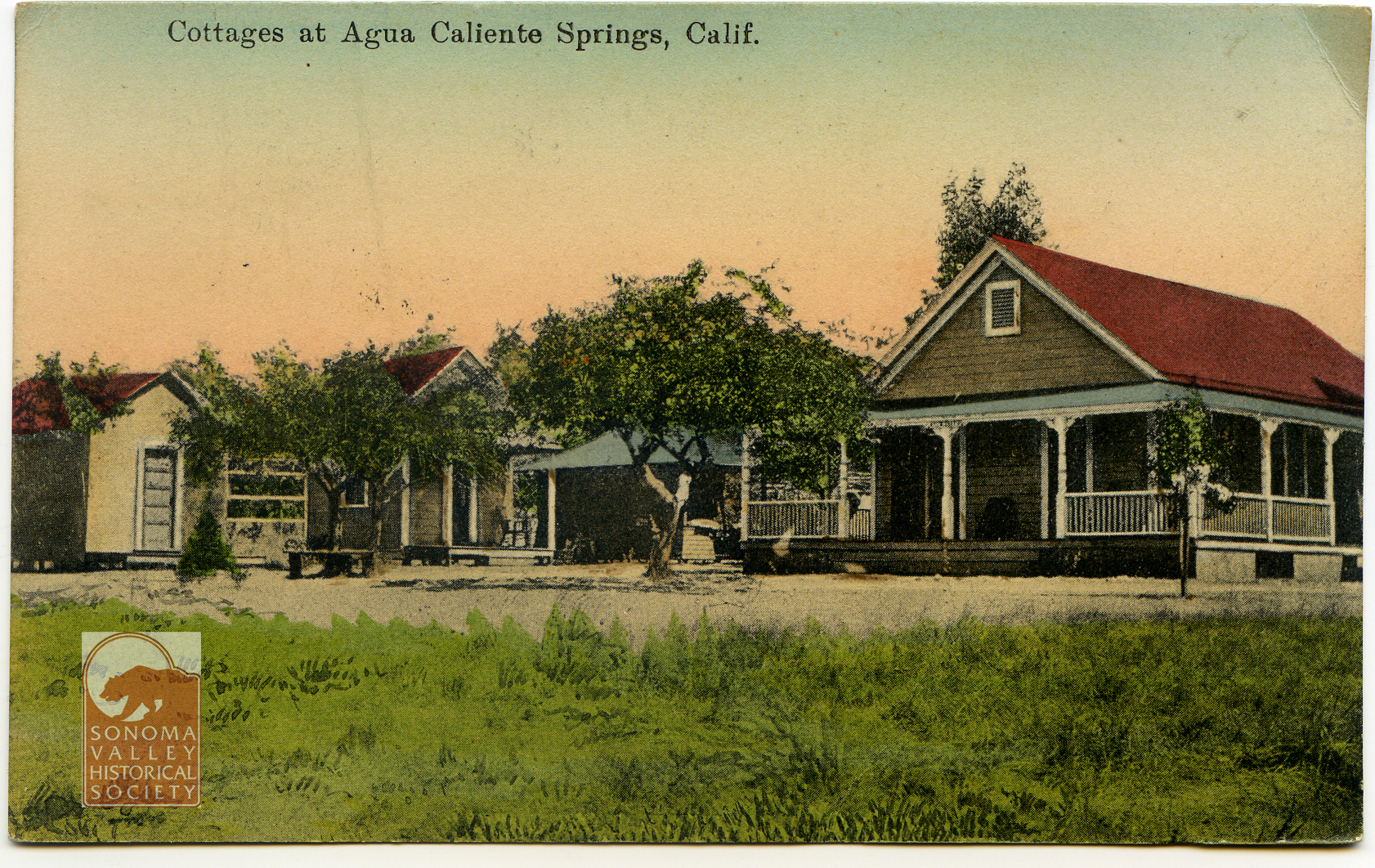
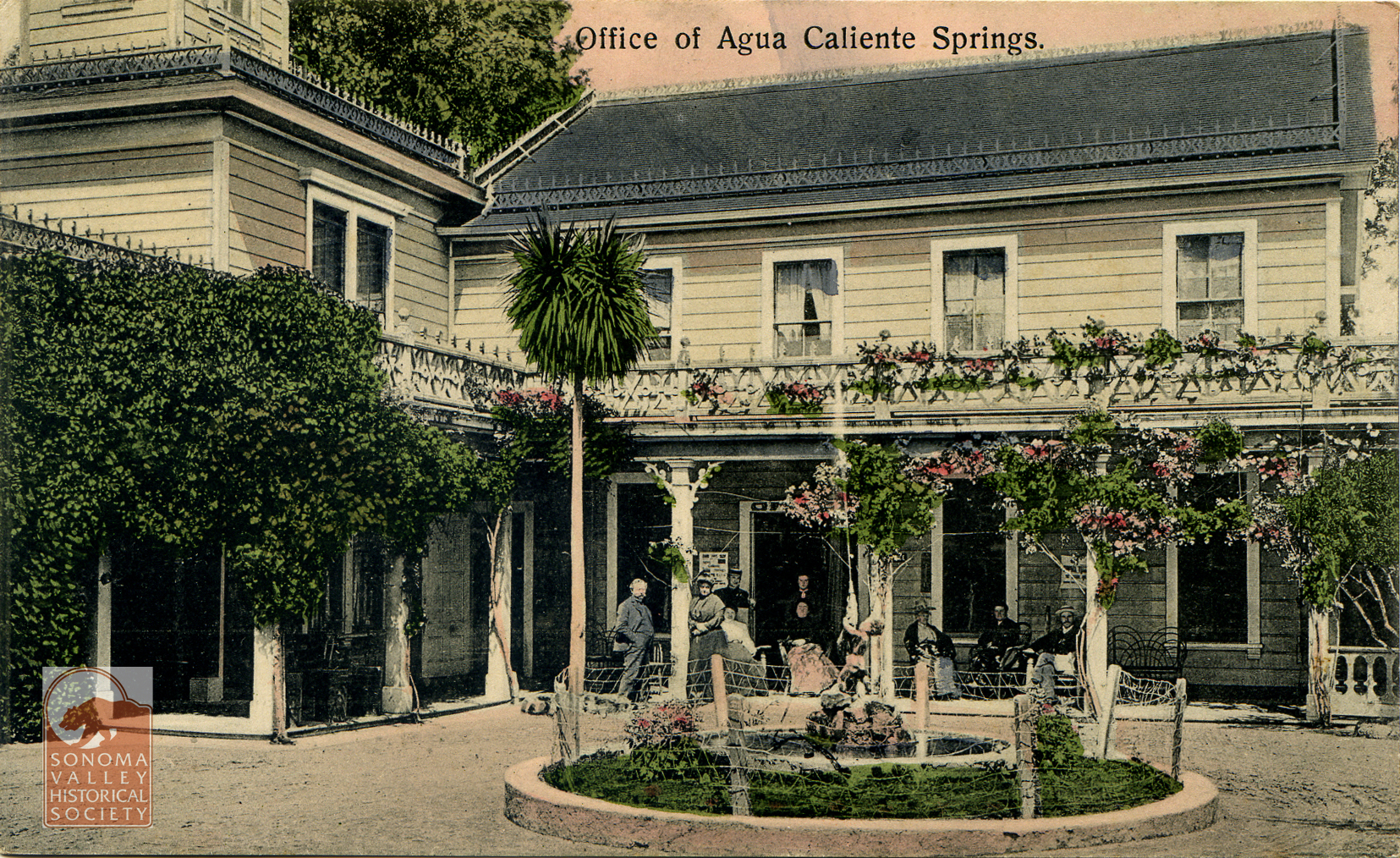
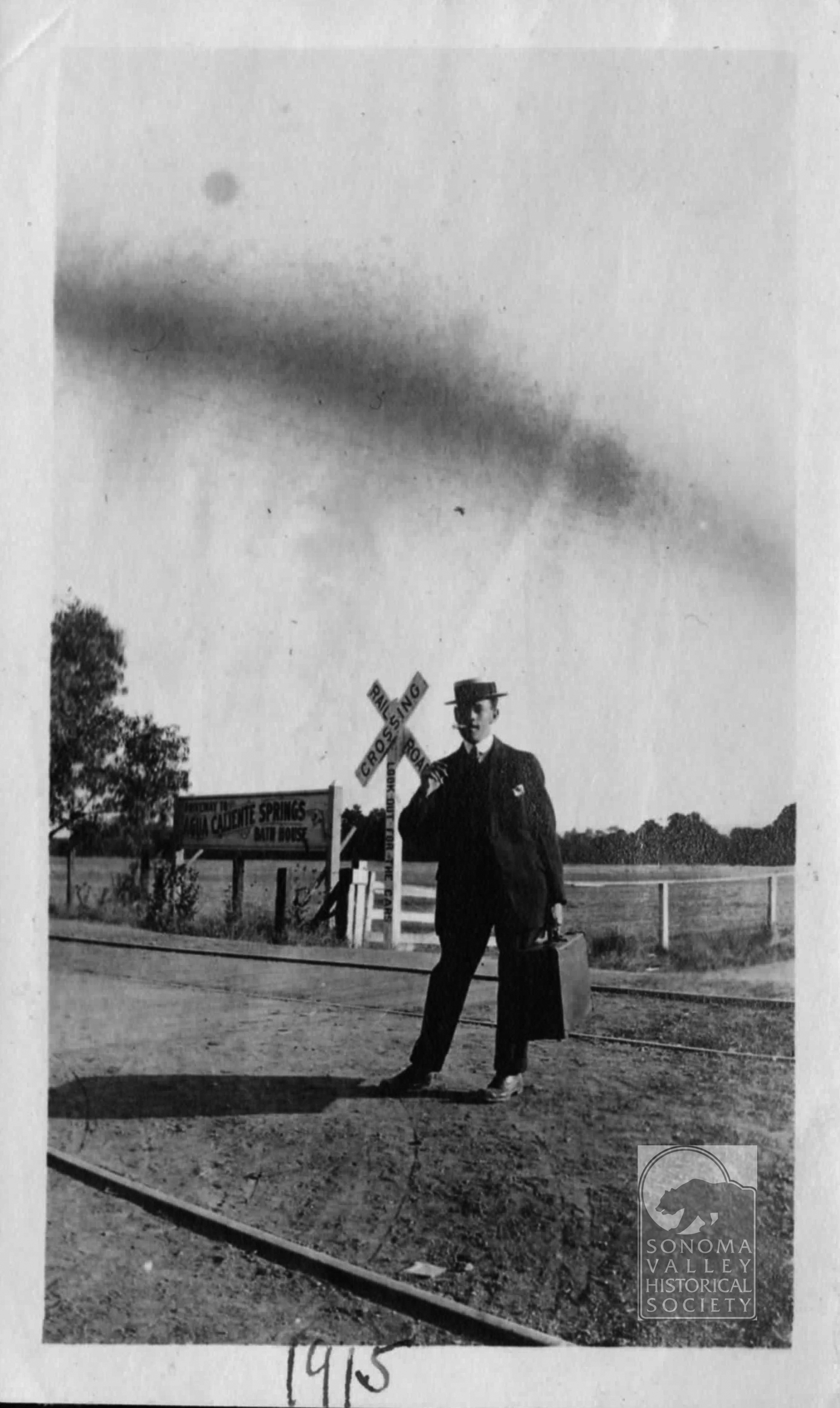
The Agua Caliente Resort, and vicinity, was well documented by photographers. The following is a slide show of some of those photos and post cards.
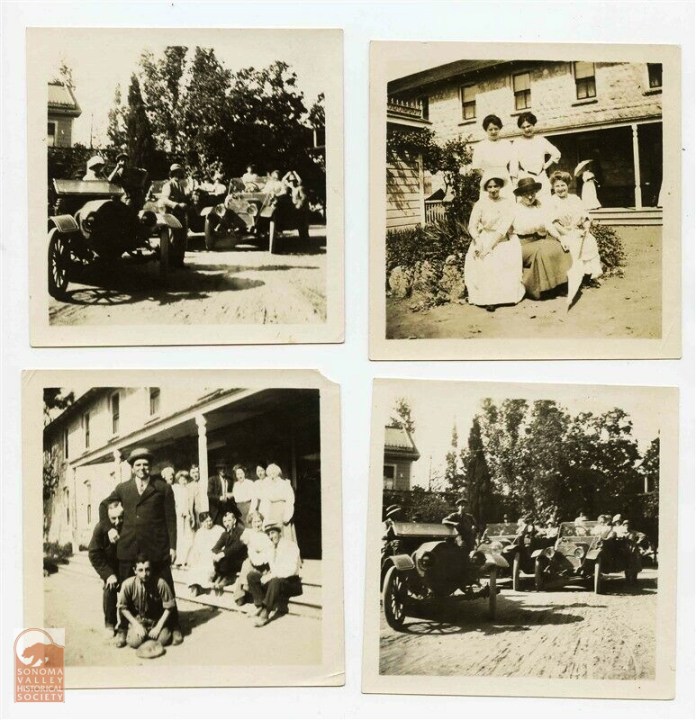
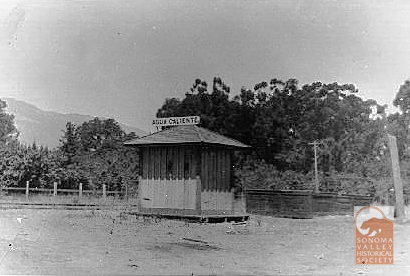
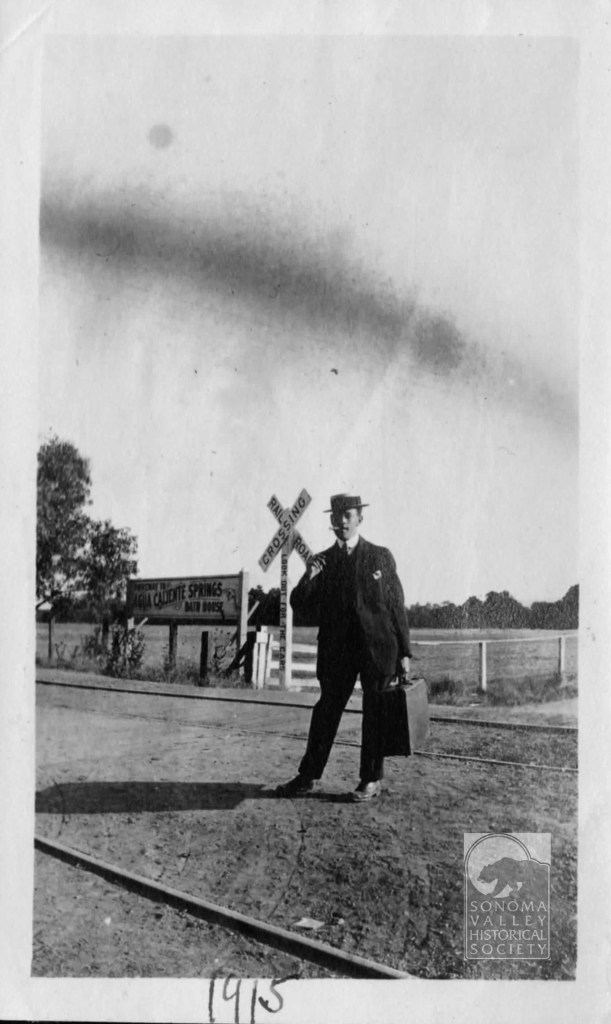
I started posting on this website in July 2014. I have striven to post every month, and I’m close to that goal. Ten years and nearly six months in, I’m still enthusiastic and have many more topics to investigate. I’m currently working on an article about M.K. Cady, the founder of Agua Caliente, and his resort, but it won’t be done this month. In the meantime, enjoy some of the images I have collected. All are from 1912-1915.
 springs museum