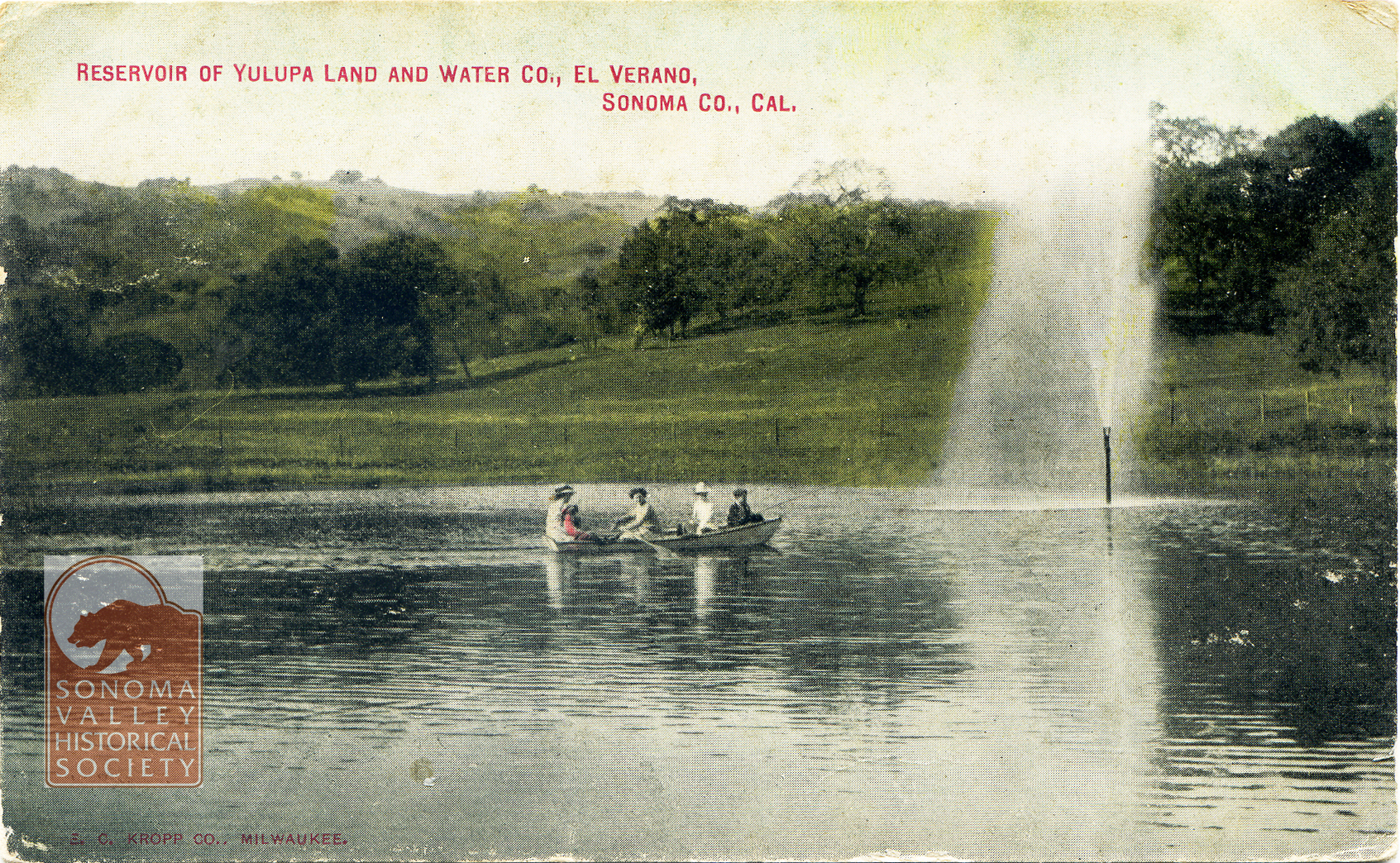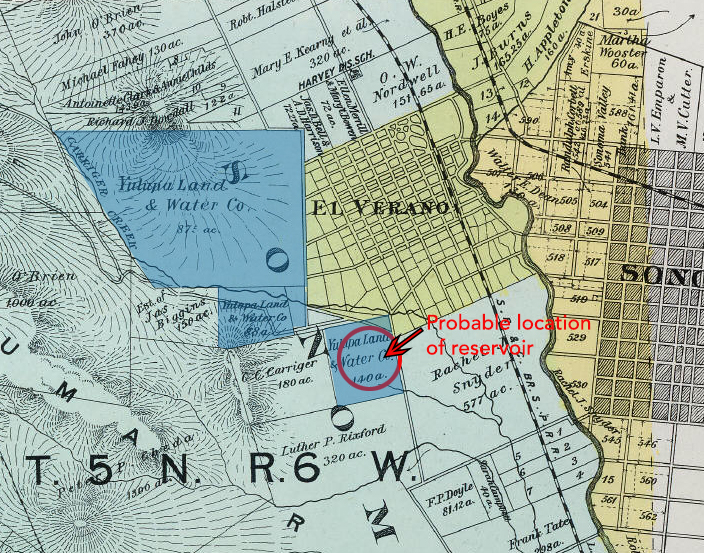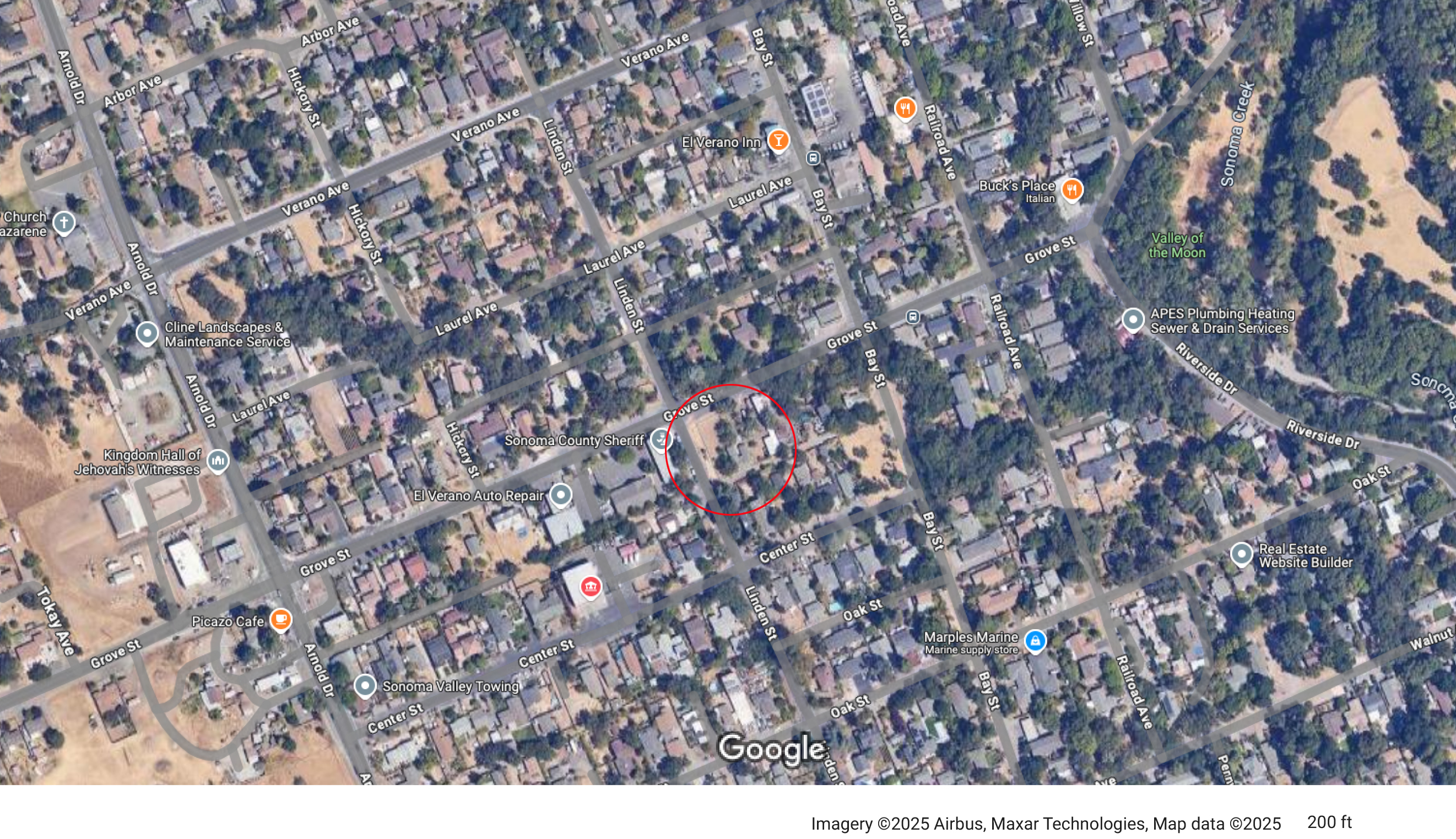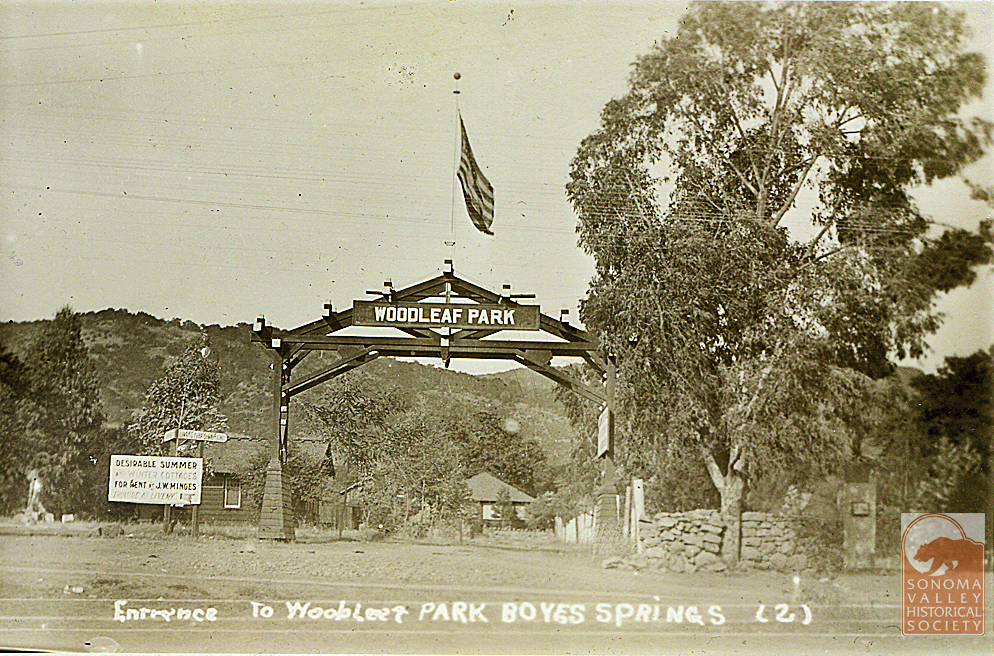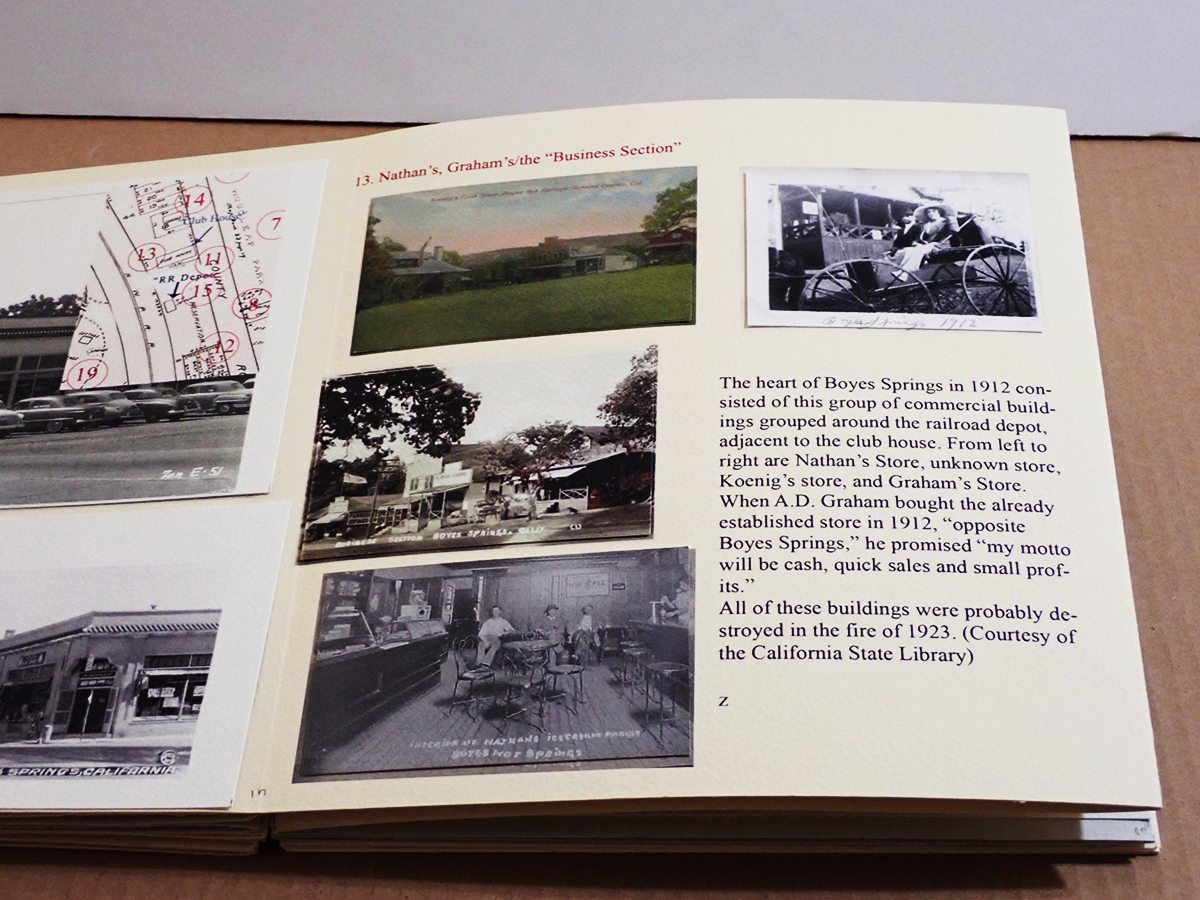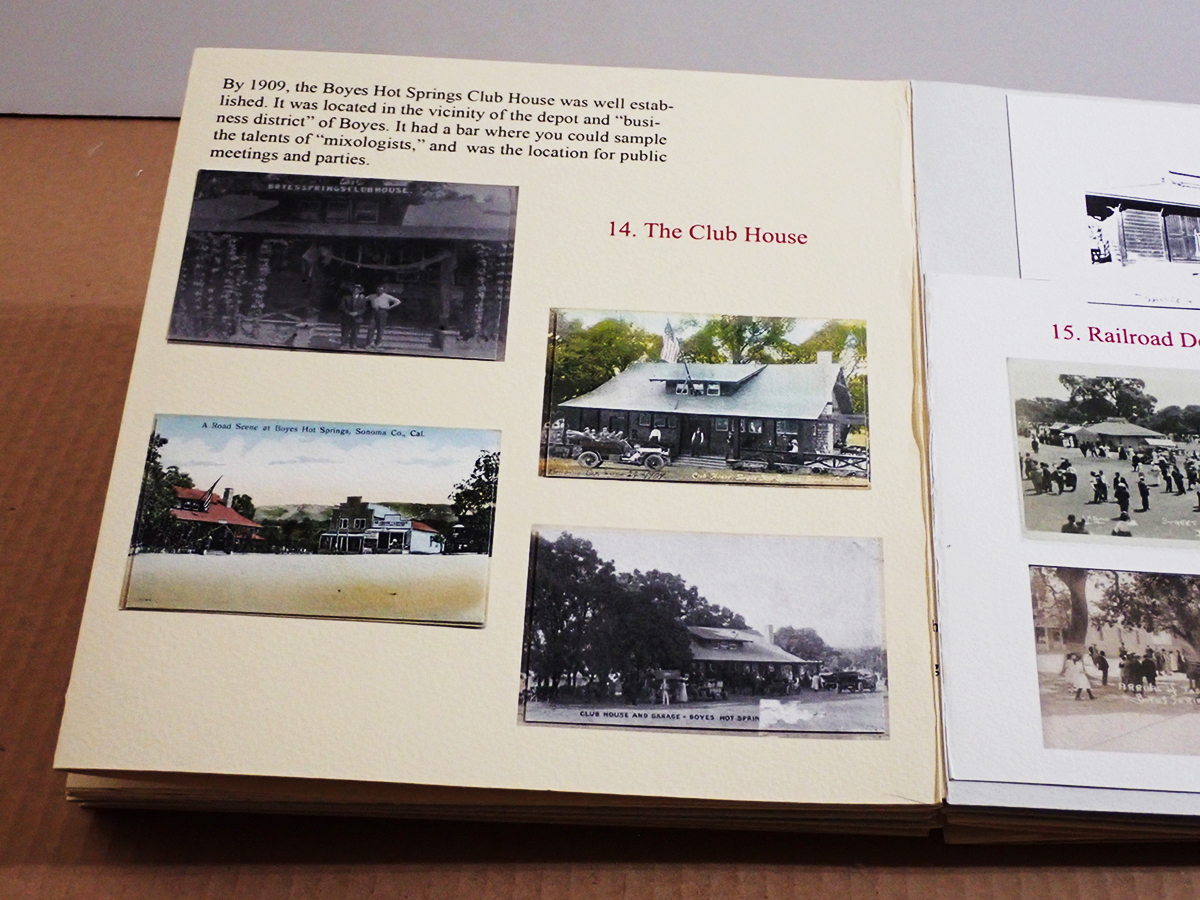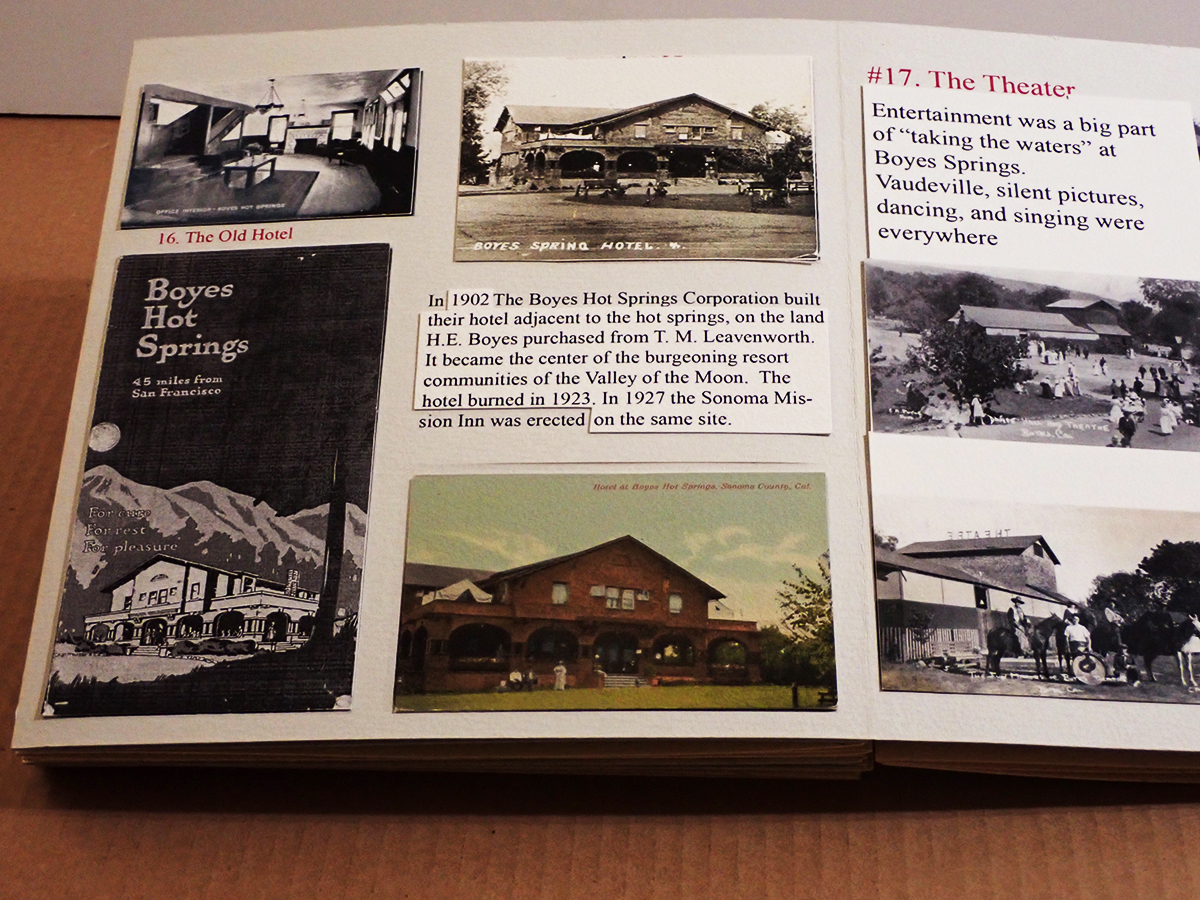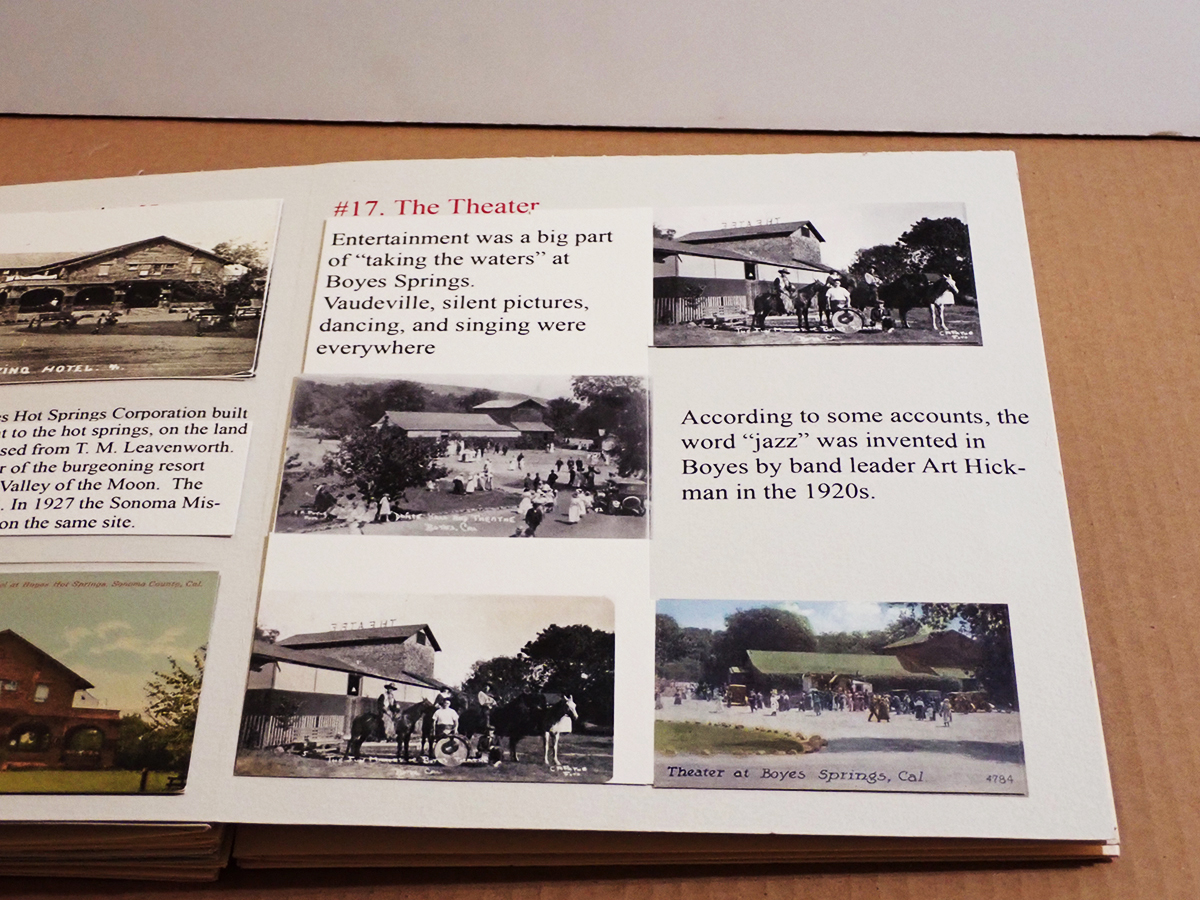
Post marked 1910. The Yulupa Land and Water Company holdings appear on an 1898 Reynolds and Proctor map (Rumsey Collection).
Judging by the hills in the background in the post card, the reservoir was probably located near the corner of Grove and Linden Streets.
In 1910, the Sonoma Valley Water, Light and Power Company acquired the Yulupa Land and Water Company.
1913- “J.A. Dinsella, the enterprising plumber of this city, has secured a contract from Sonoma Vista Land Co. near this city, to build its pipeline of 4-inch mains and 2-inch laterals.”
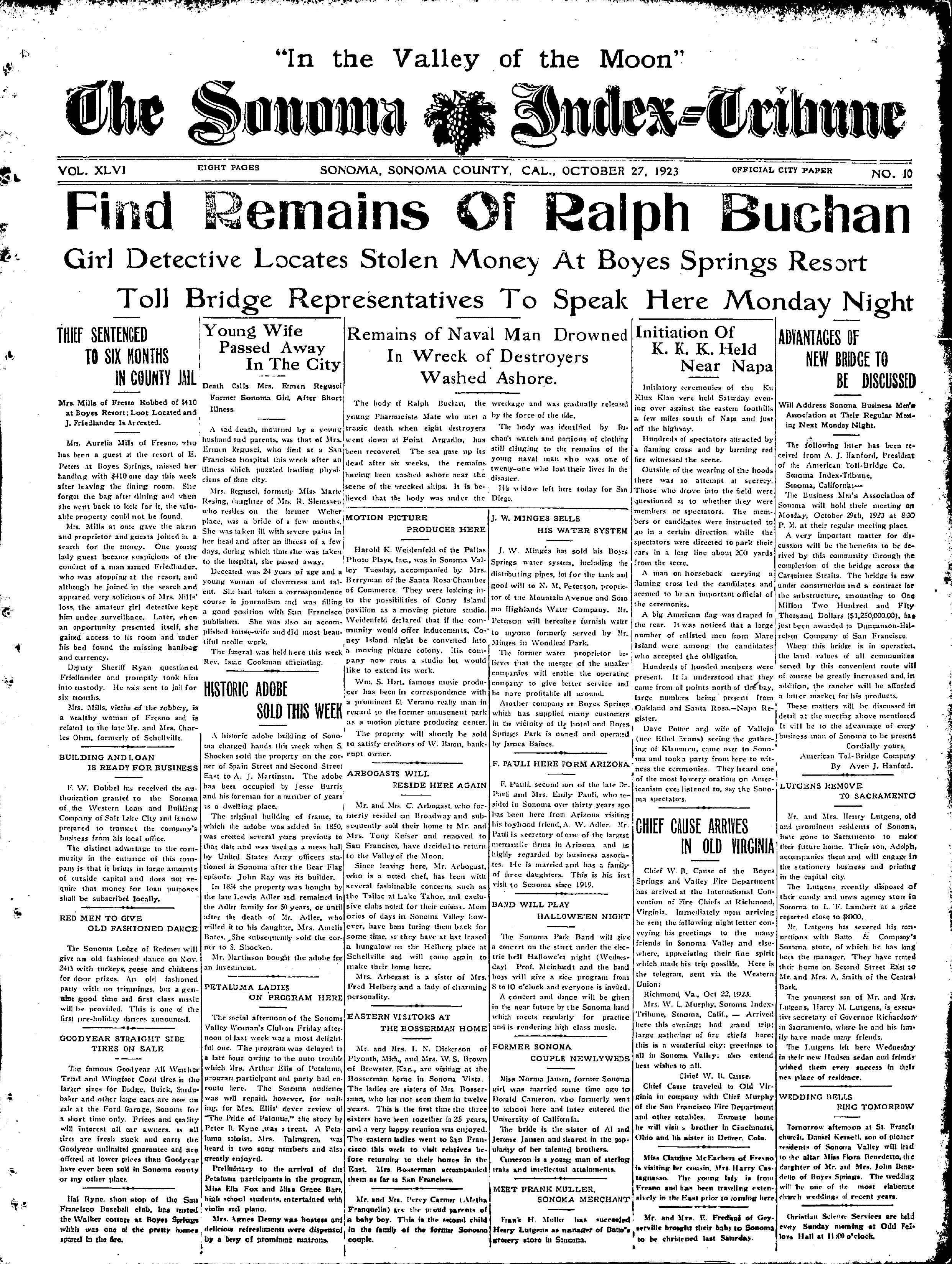
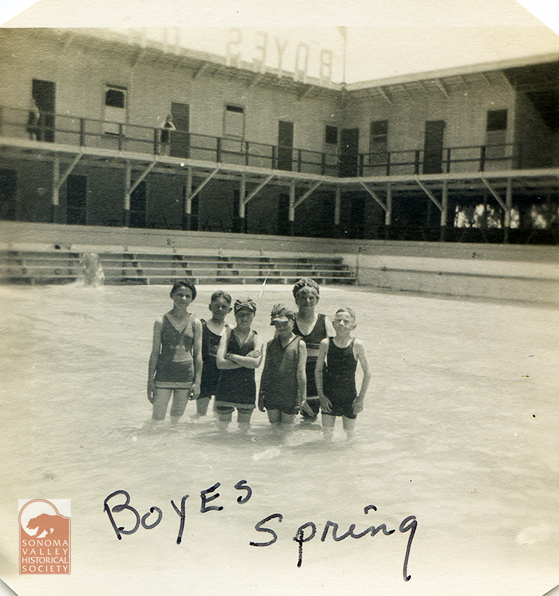
In 1923 J.W. Minges sold his Boyes Springs Water System, which mainly served Woodleaf Park, to N.M. Peterson, proprietor of the Mountain Water Avenue system. The merger “will enable the operating company to give better service…” even then that was the rationale!
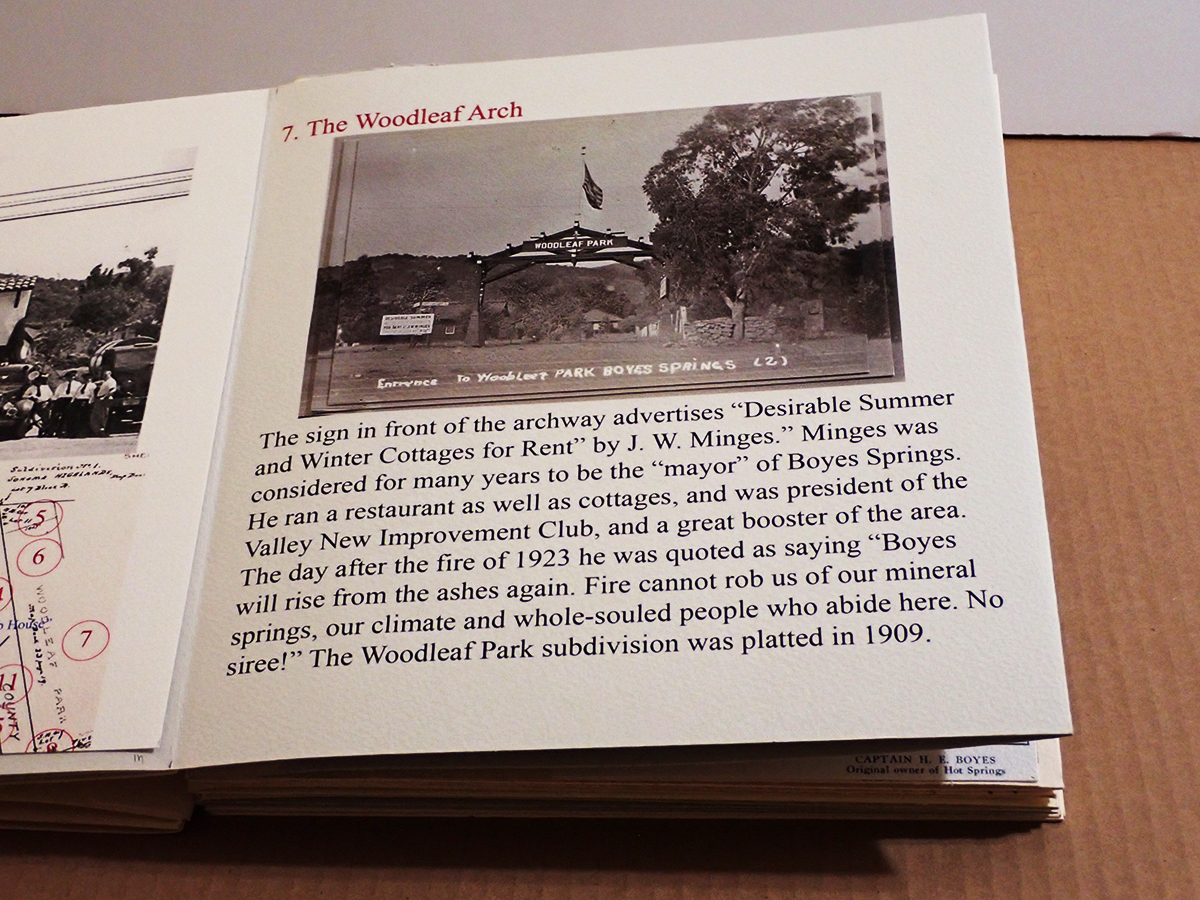
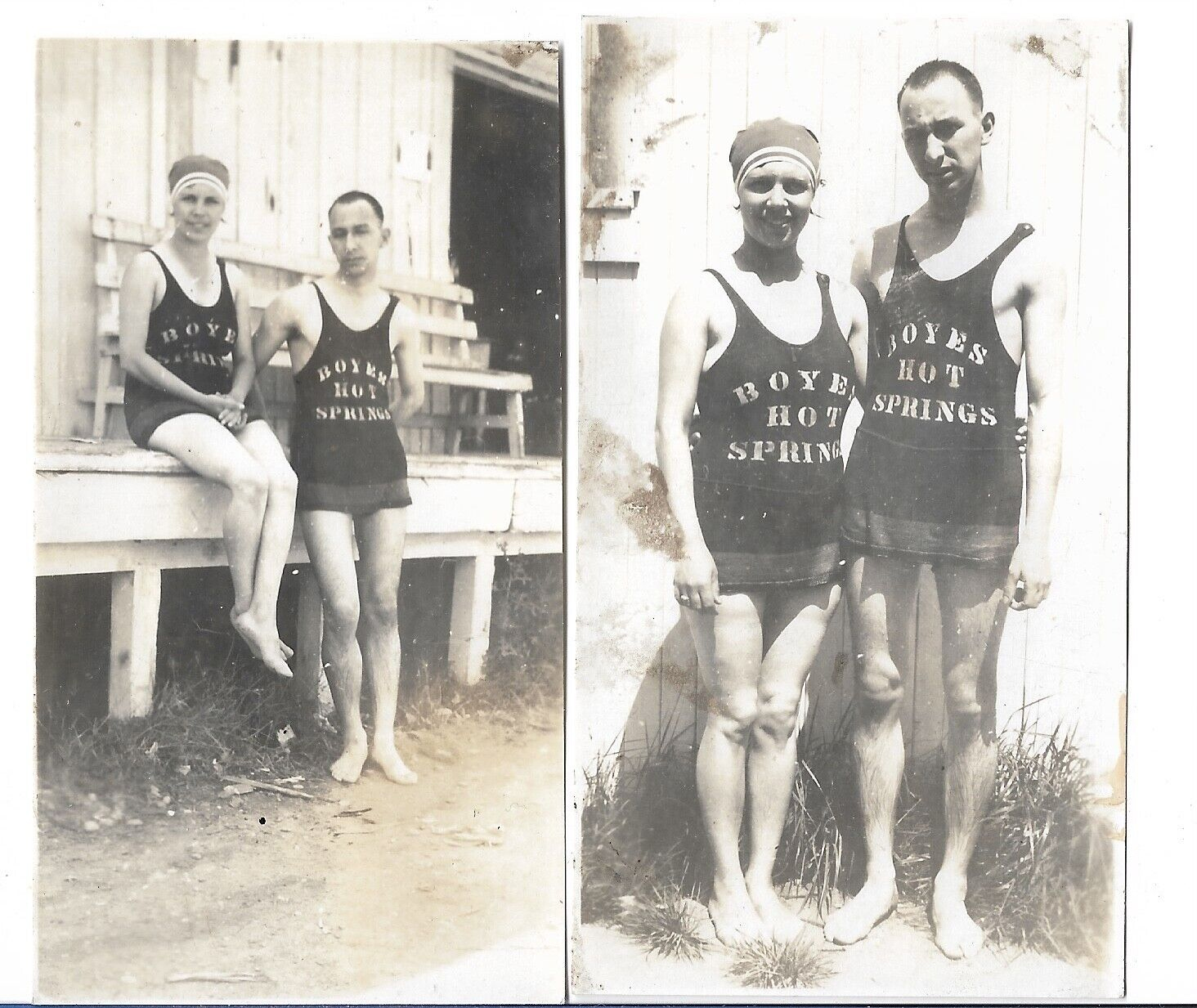
J.W. Minges was known as the “mayor” of Boyes Hot Springs.
“Another company at Boyes Springs which has supplied many customers in the vicinity of the hotel and Boyes Springs Park is owned and operated by James Baines.” of Baines St.
1958-Mountain Ave. Water Co. was sold to Mr. and Mrs Peterson Jr. whose parents had bought from Minges. The Petersons’ company served Boyes Hot Springs for 35 years. Improvements included an office building at 18640 Highland (An address that cannot exist, apparently, as the street ends at 18075), and a new tank at the top of Mountain Ave. An existing tank is located above Highland, circa 2025.
From the Valley of the Moon Water District website: “In 1957, the Valley of the Moon Fire District was evaluated by the Pacific Fire Board which at that time noticed the lack of a dependable water supply source. Subsequent inquiries of Fire District Board members, J. Udvic. T. Polidori and F. Serres, revealed that many wells in the area were failing due to drops in the groundwater levels in the Valley. Early attempts to have Sonoma County build an aqueduct from Santa Rosa to the Sonoma Water and Irrigation Company failed due to the inability of the latter to deposit a $25,000 cash bond with the County.”
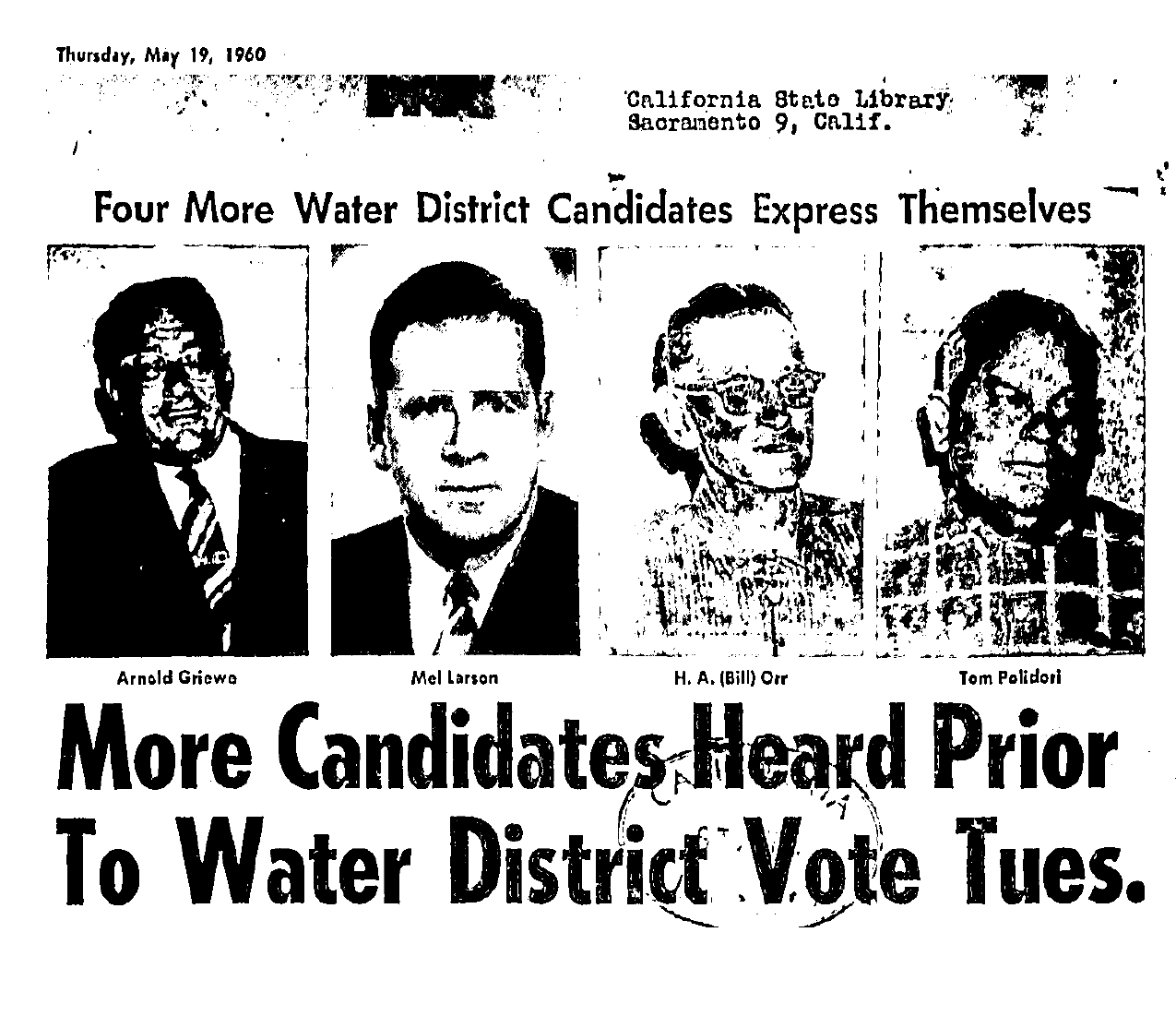
In 1960 voters authorized the establishment of a water district. Candidates for directors at that time were Arnold Griewe, Mel Larson, Bill Orr ,Tom Polidori,Col R. C. Buell, Marin Carlson, A. L. Ford and Nino Vailetti.
“Acquisition of the Sonoma Water and Irrigation Company and the Mountain Avenue Water System was completed in early 1962 and the Valley of the Moon County Water District started management and operation of the systems on June 1, 1962.” VOMD website.
1963-Sonoma Aqueduct dedicated, bringing Coyote Dam water to the valley.
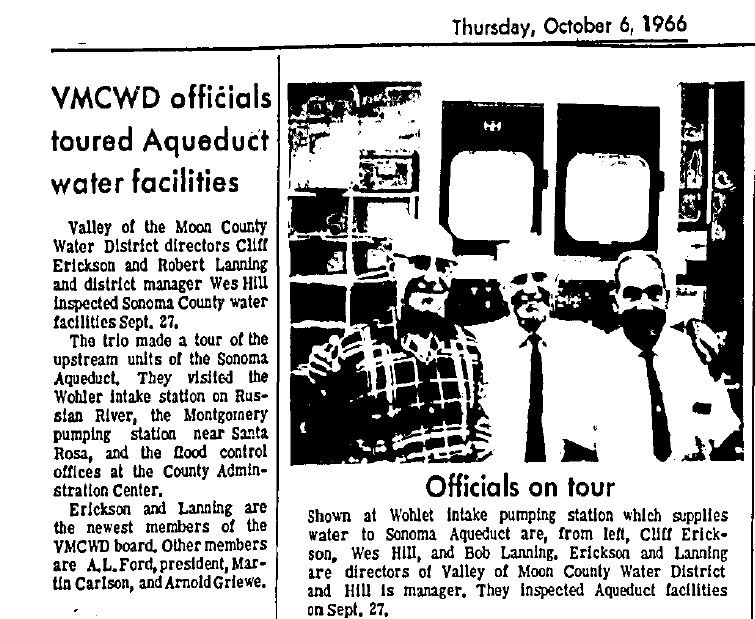
The Water District had new directors Robert Lanning and Cliff Erickson in 1966.
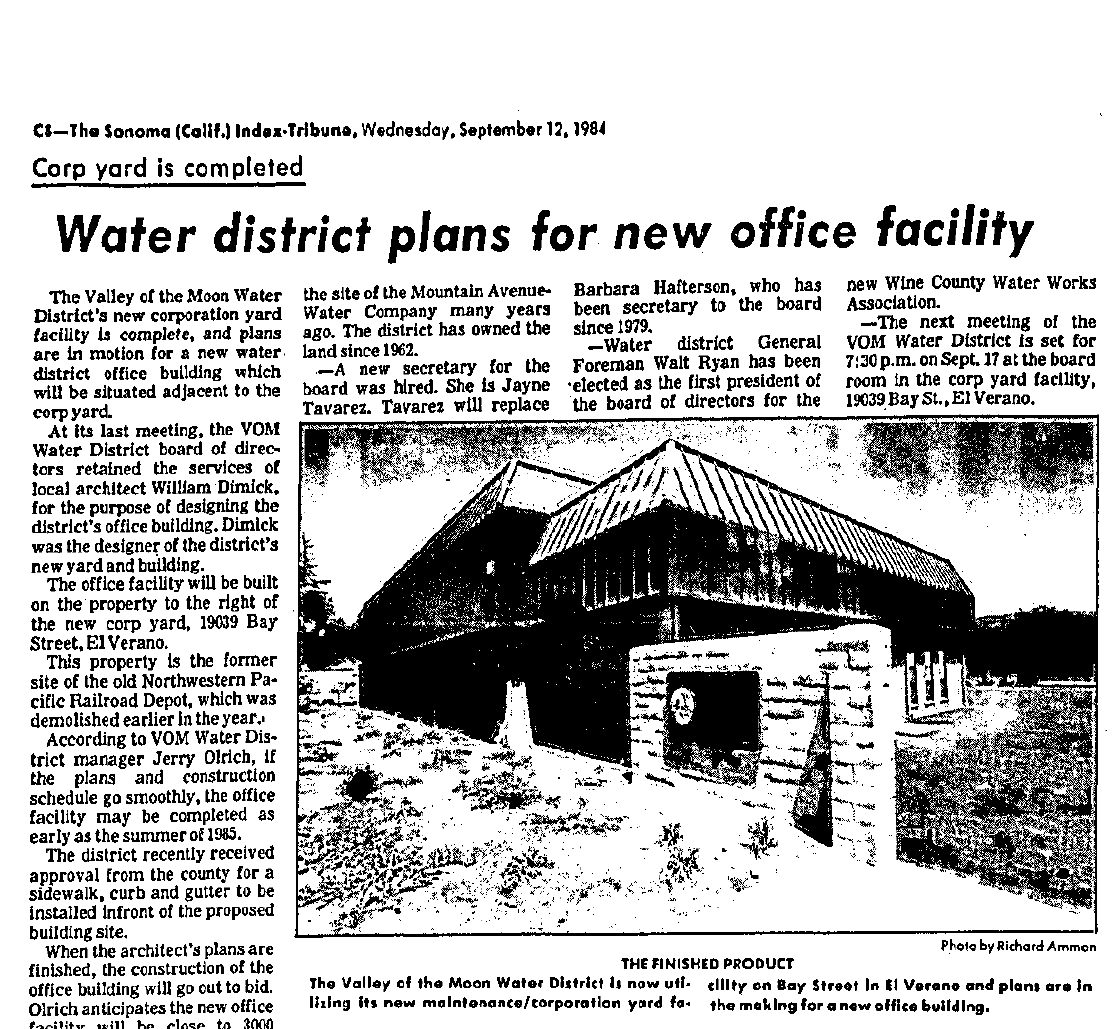
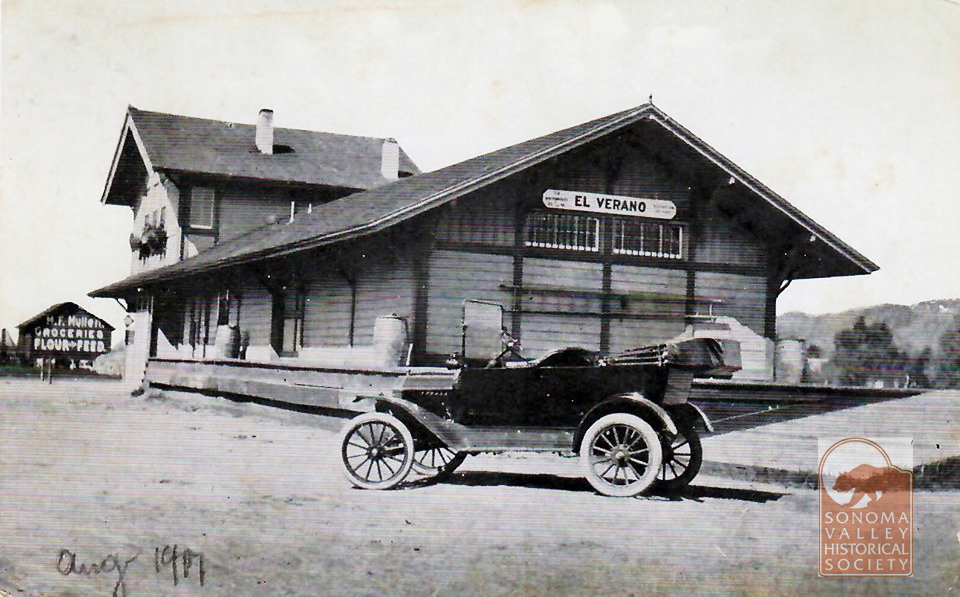
In 1984 a new office building was planned, to be built on the site of the El Verano railroad depot.
Alas!
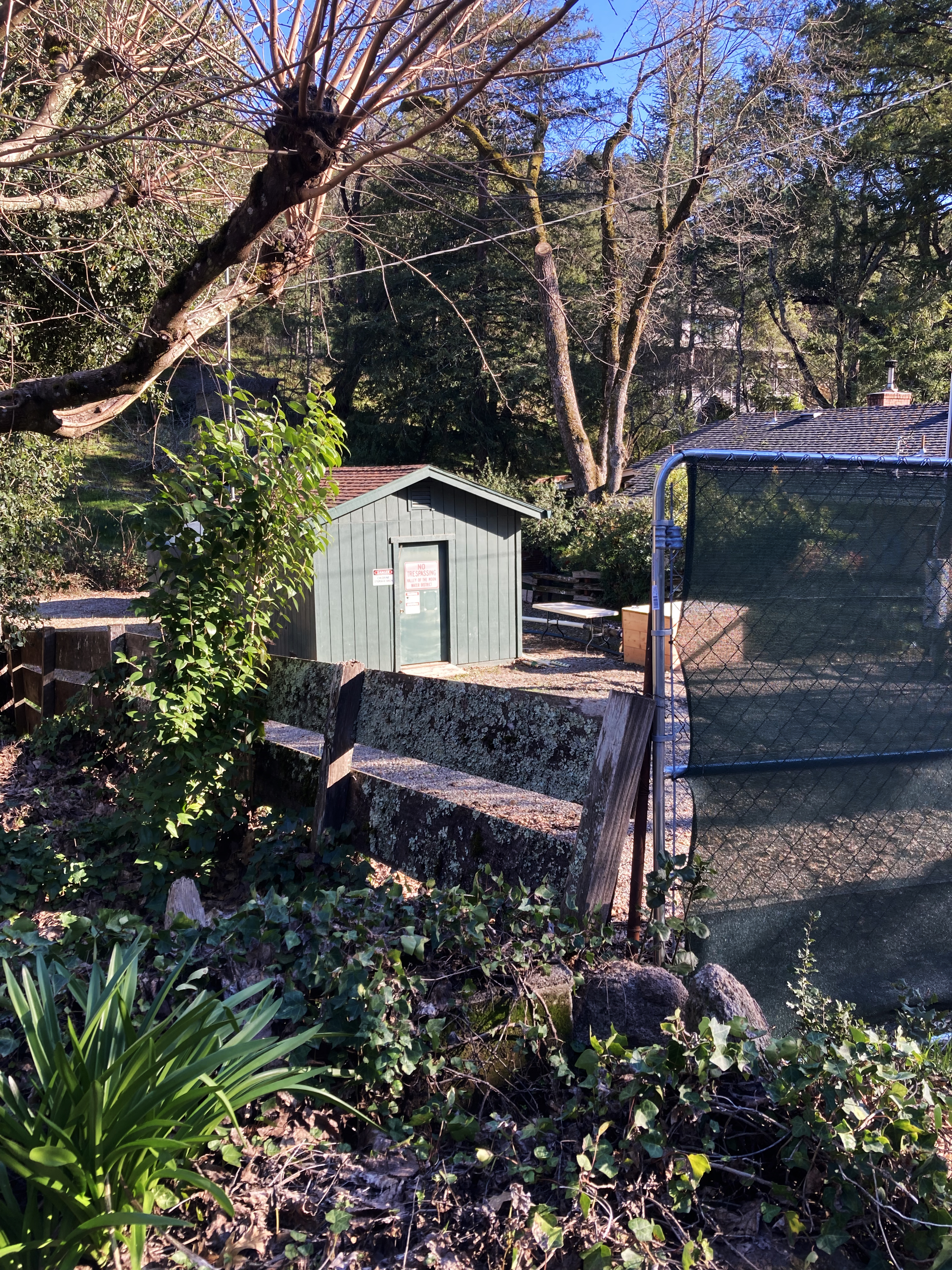
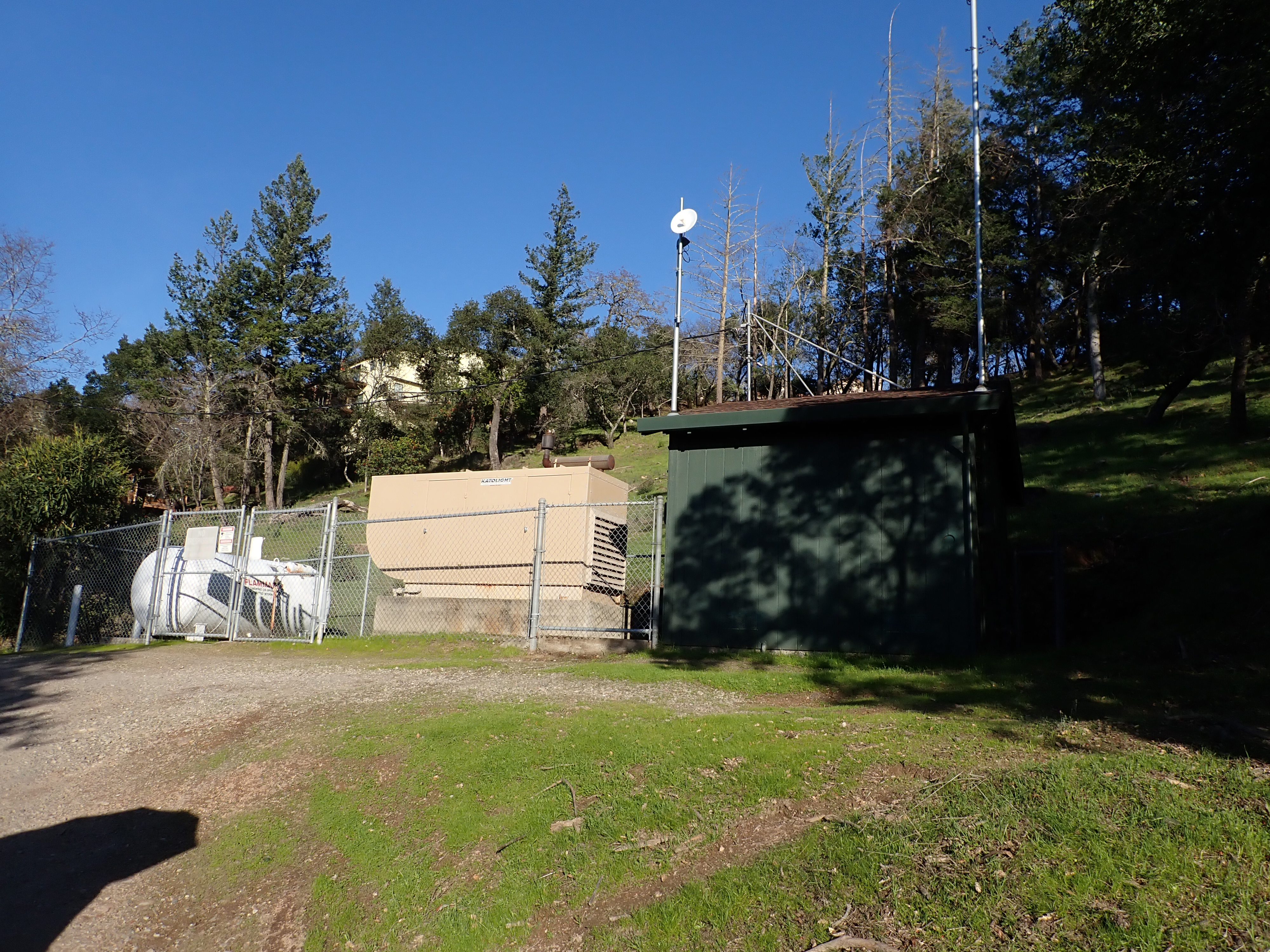
The District still has wells in the Valley.
Park Avenue well.Kearney Street well.One comes across many interesting things when looking at old newspapers. Things not relevant to the subject at hand, nonetheless important. This front-page description of a Klan meeting in the Napa Valley is vivid and disturbing, and rings bells that are still reverberating today.
Index Tribune courtesy of the sonoma Valley Historical Society.
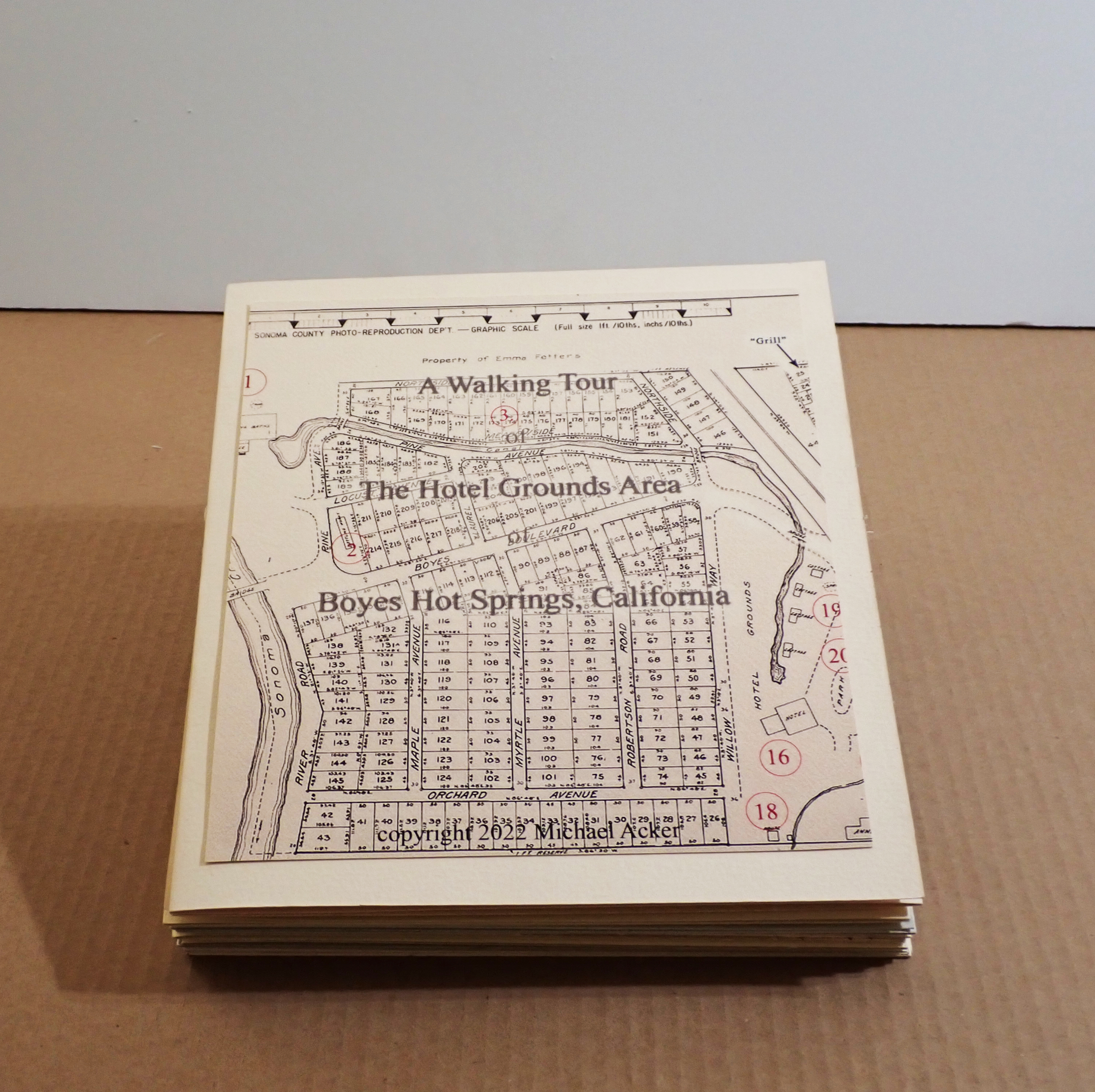
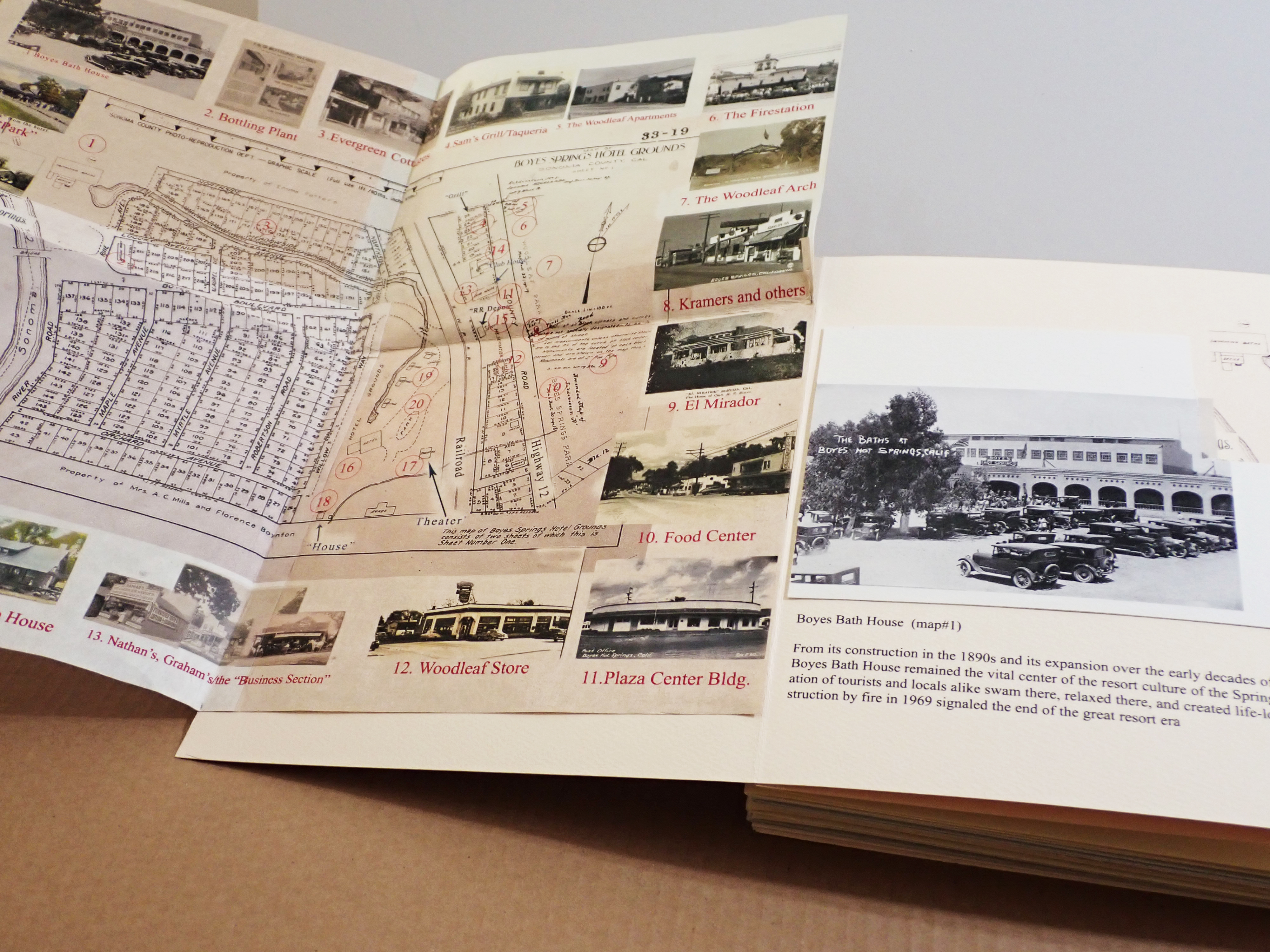
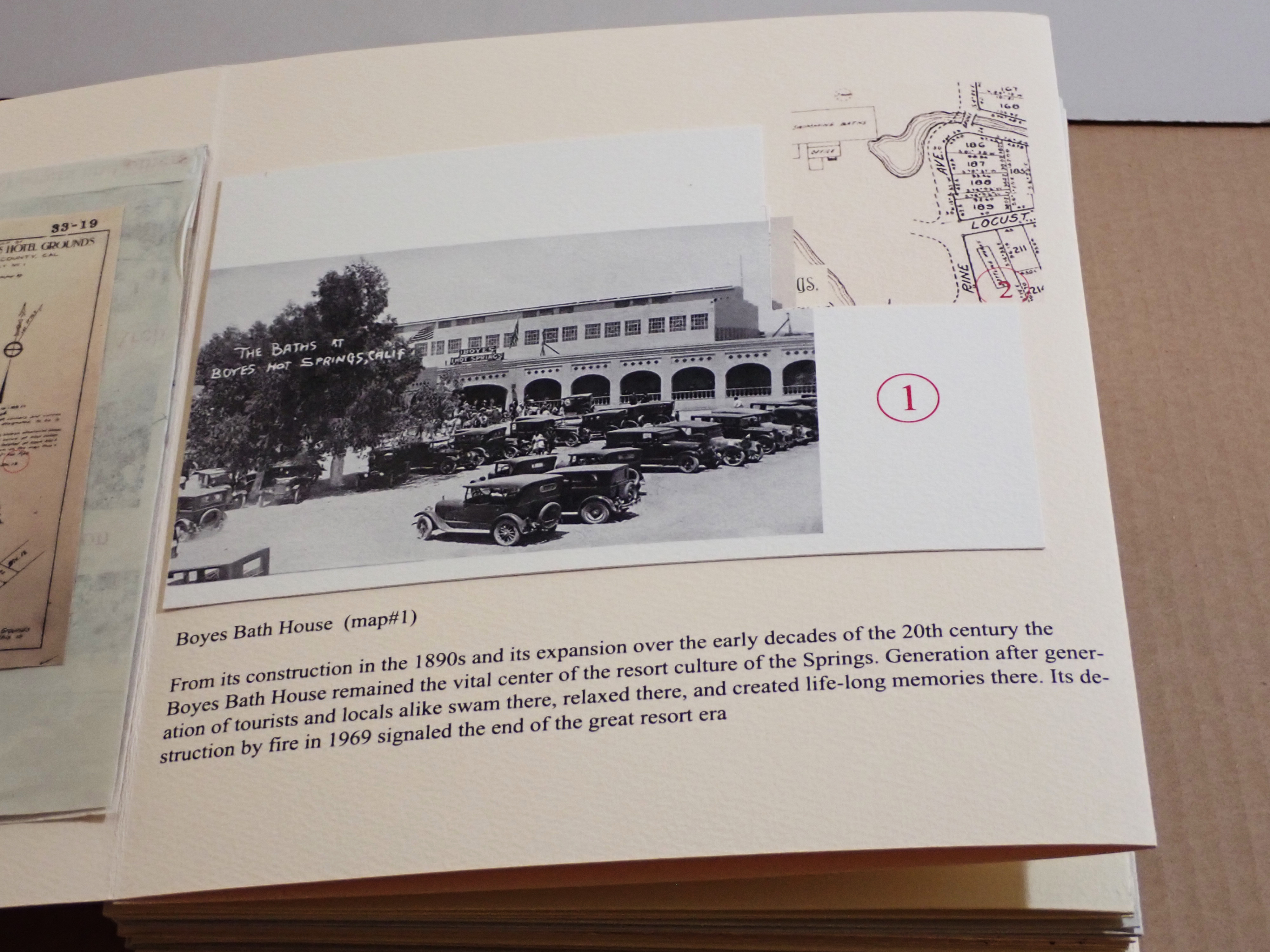
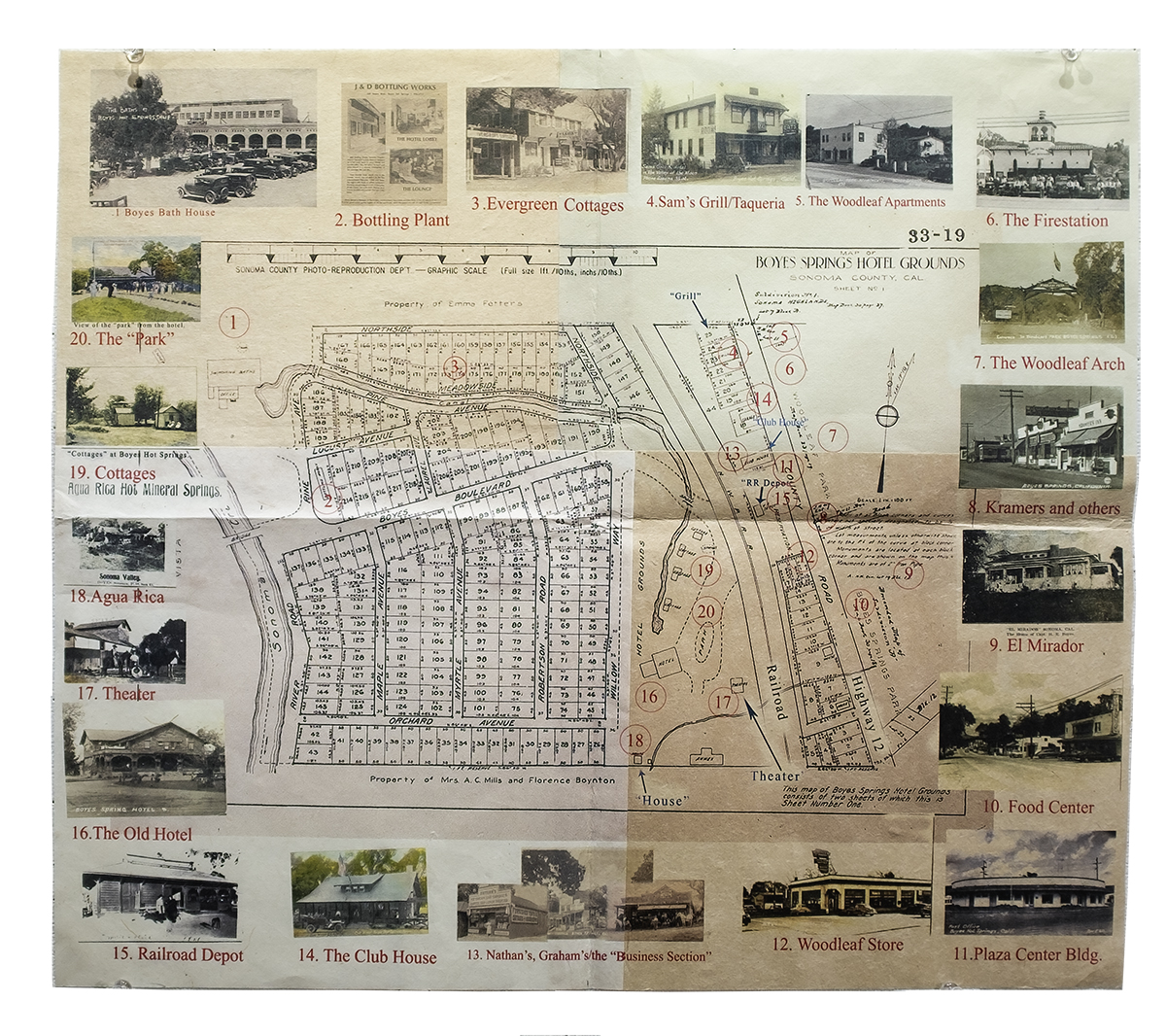
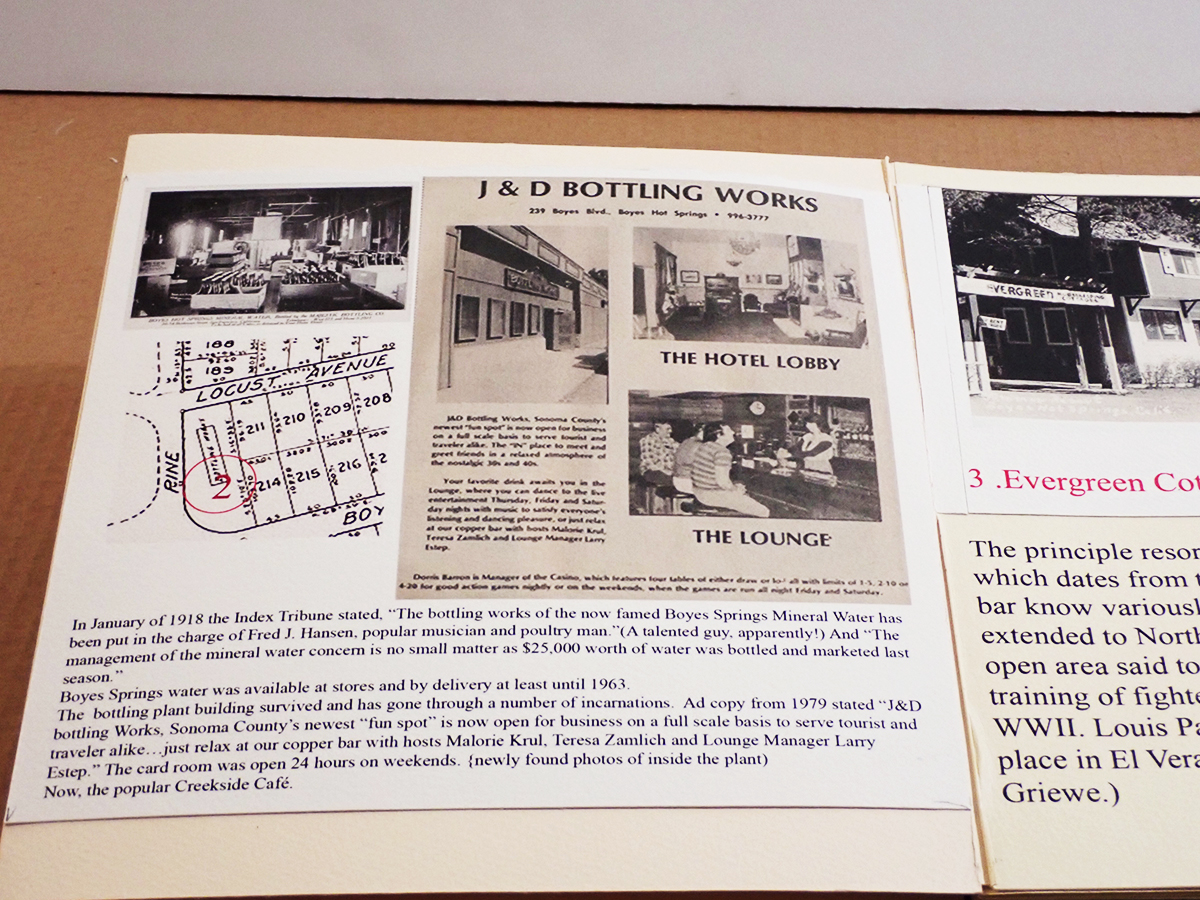
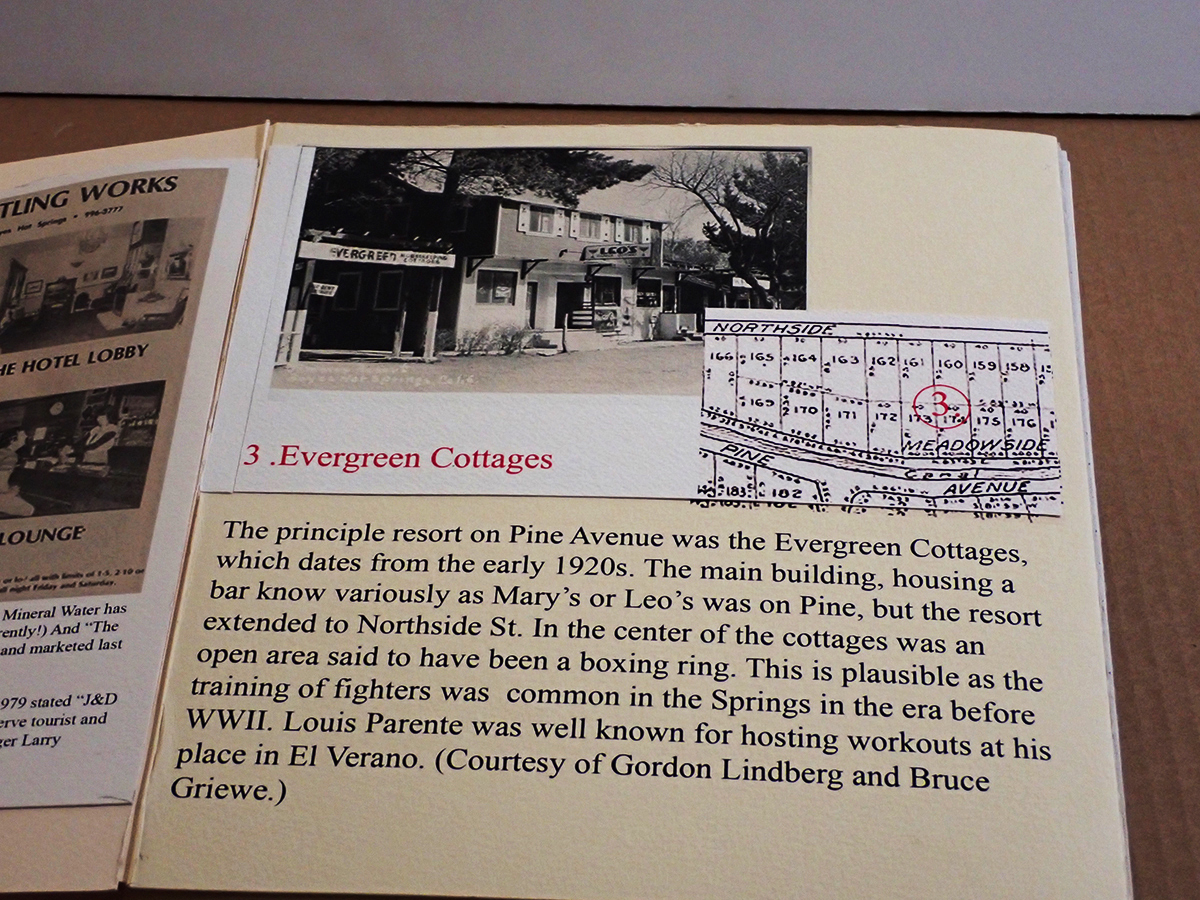
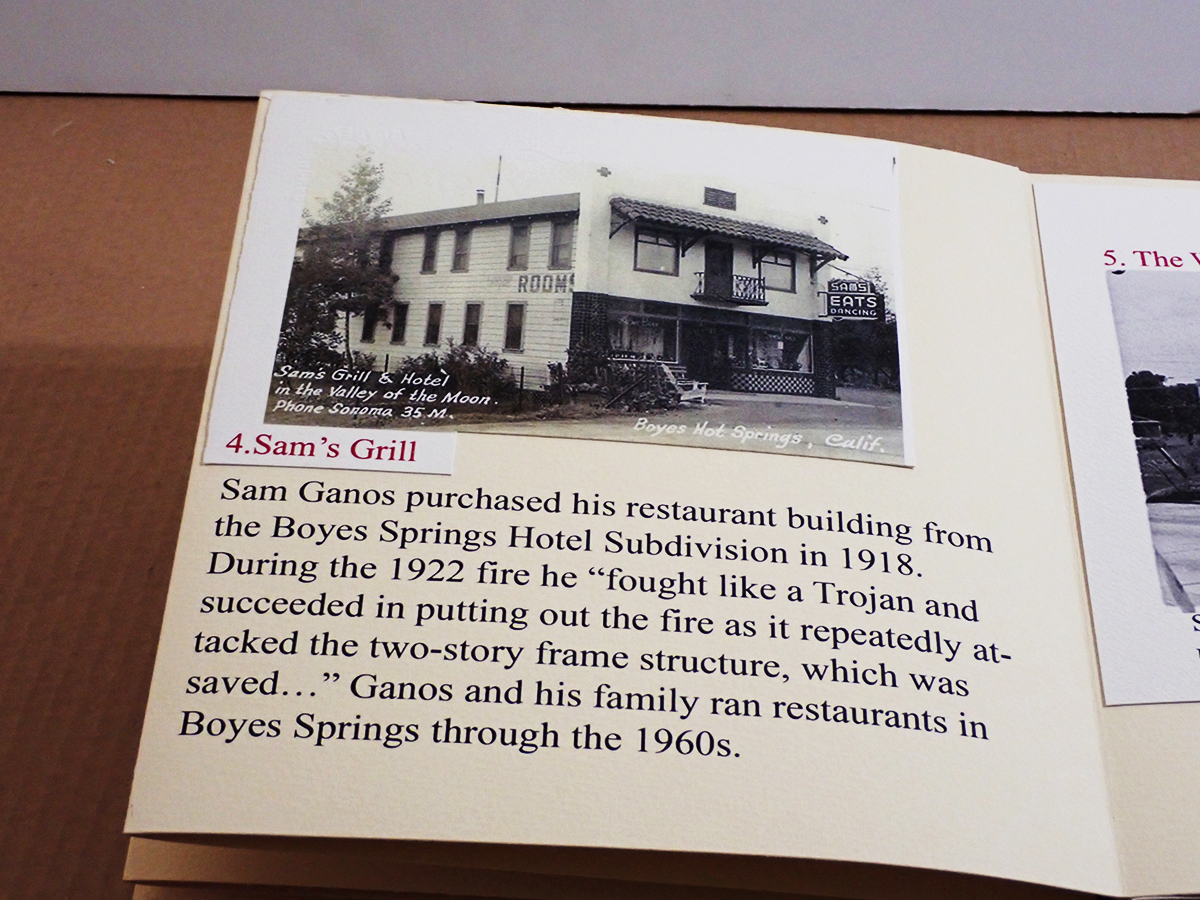
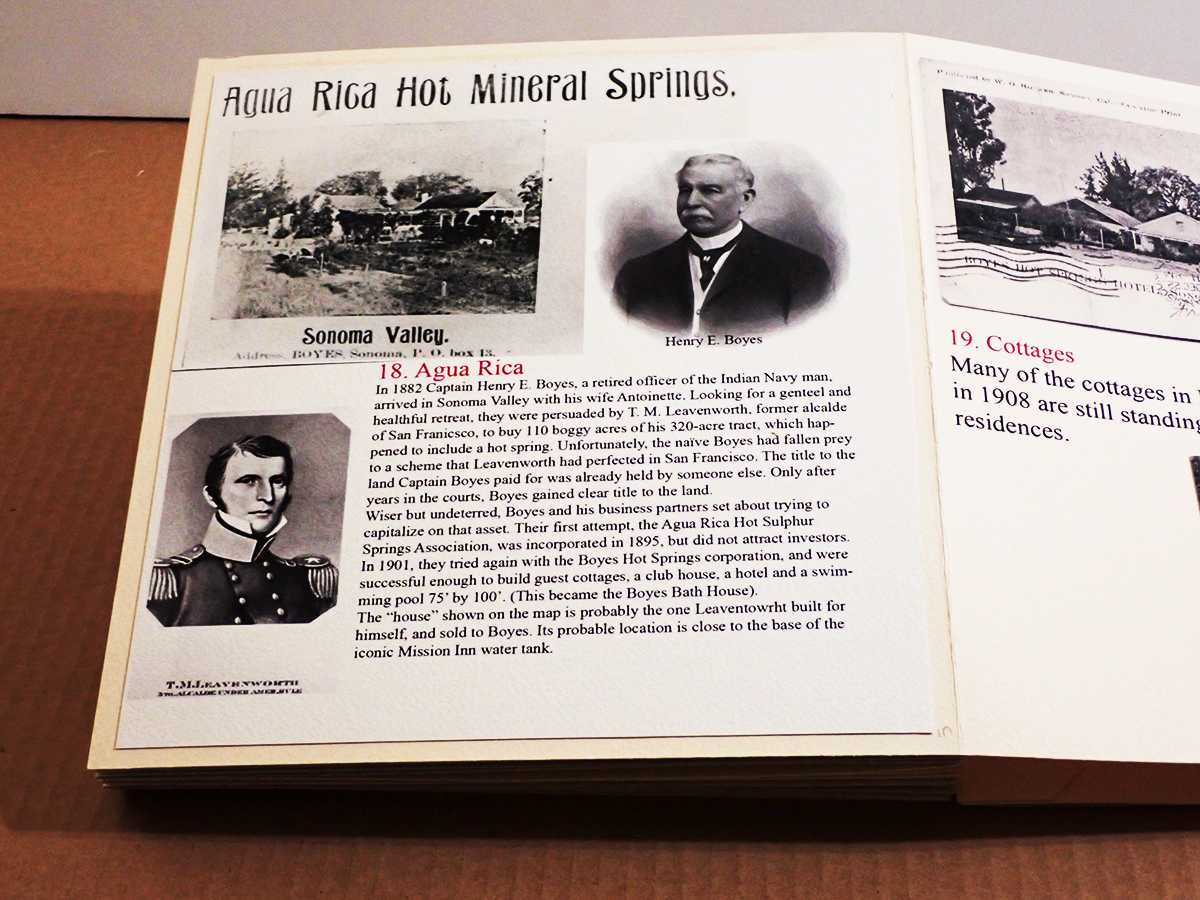
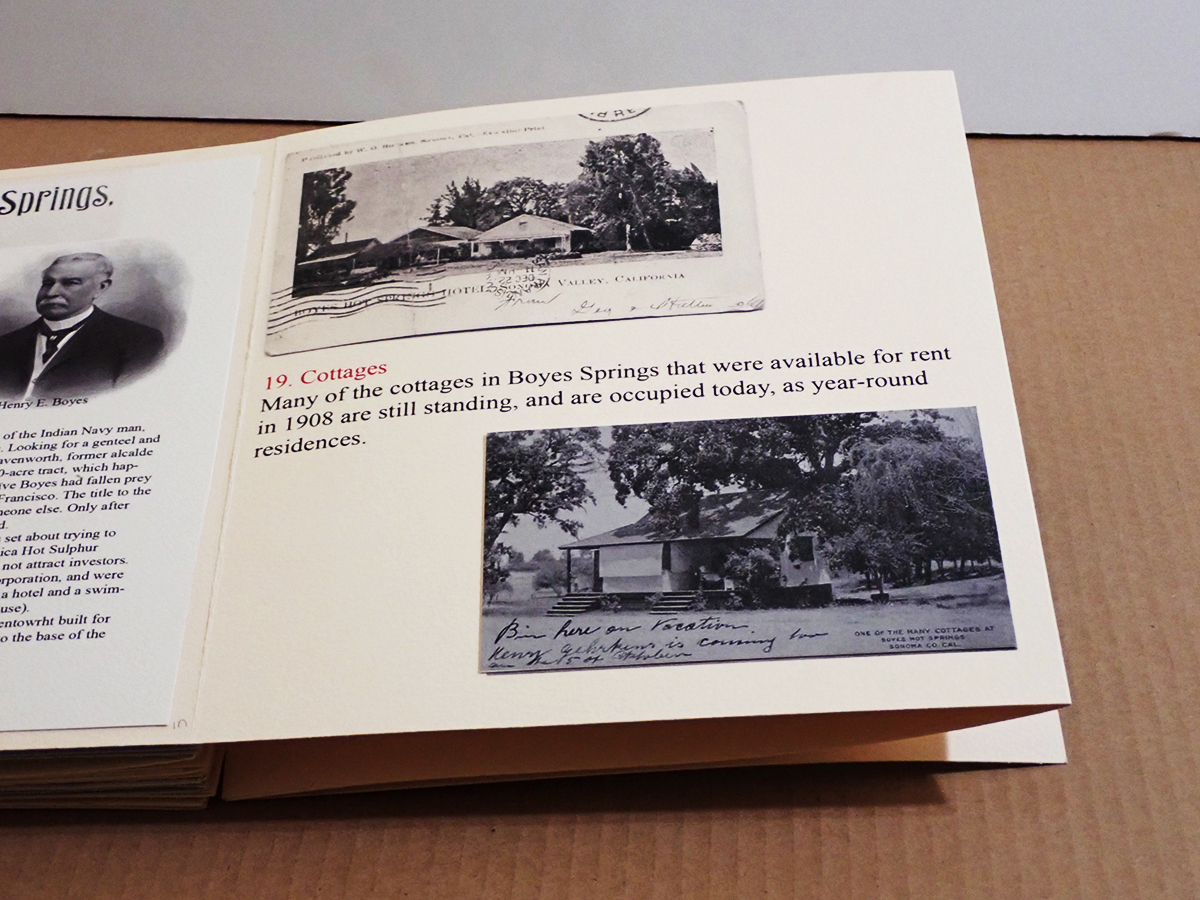
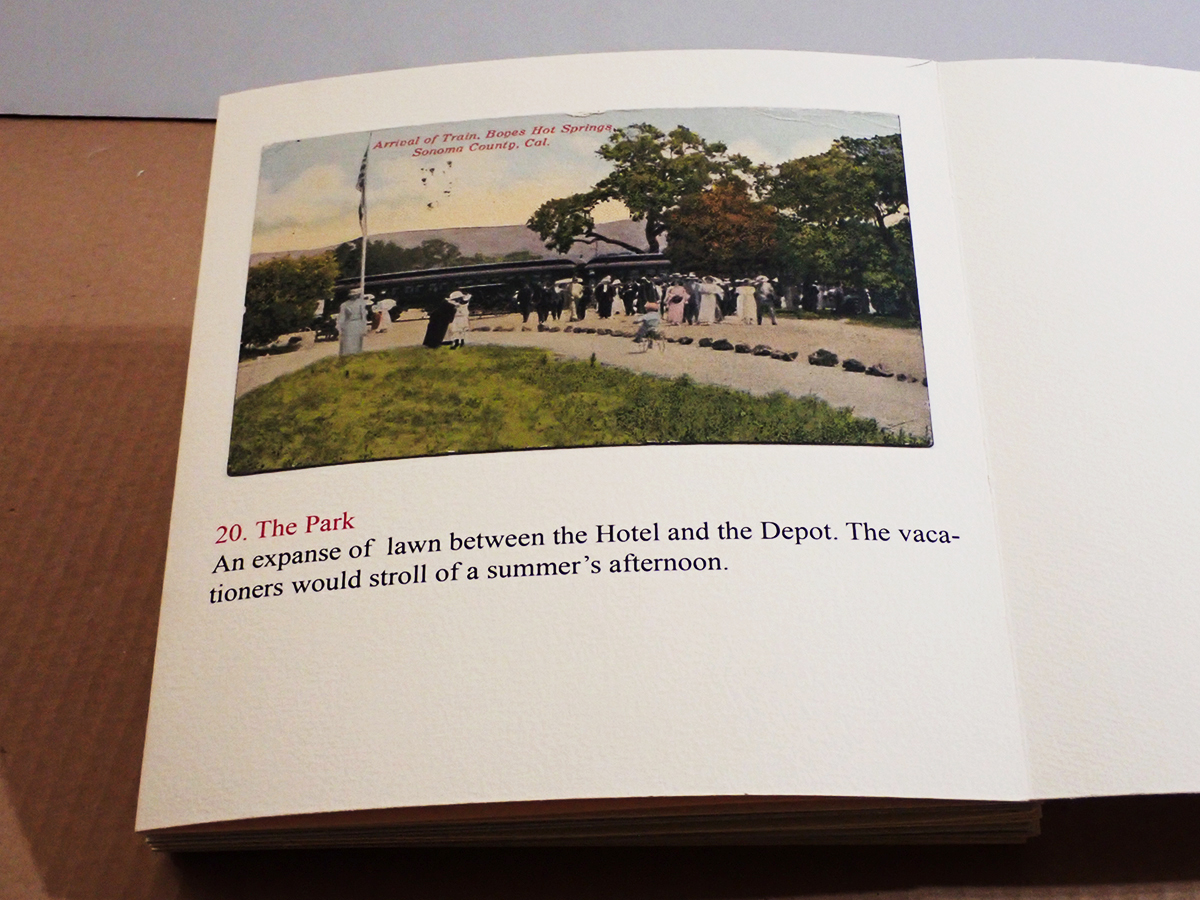
A historic walking tour of Boyes Hot Springs requires a bit of imagination: Many buildings are gone, but they have left traces in the form of photographs and other artifacts, as well as memories. Some day you will be invited to participate, in The Real World, as they say. (Click to enlarge images.)
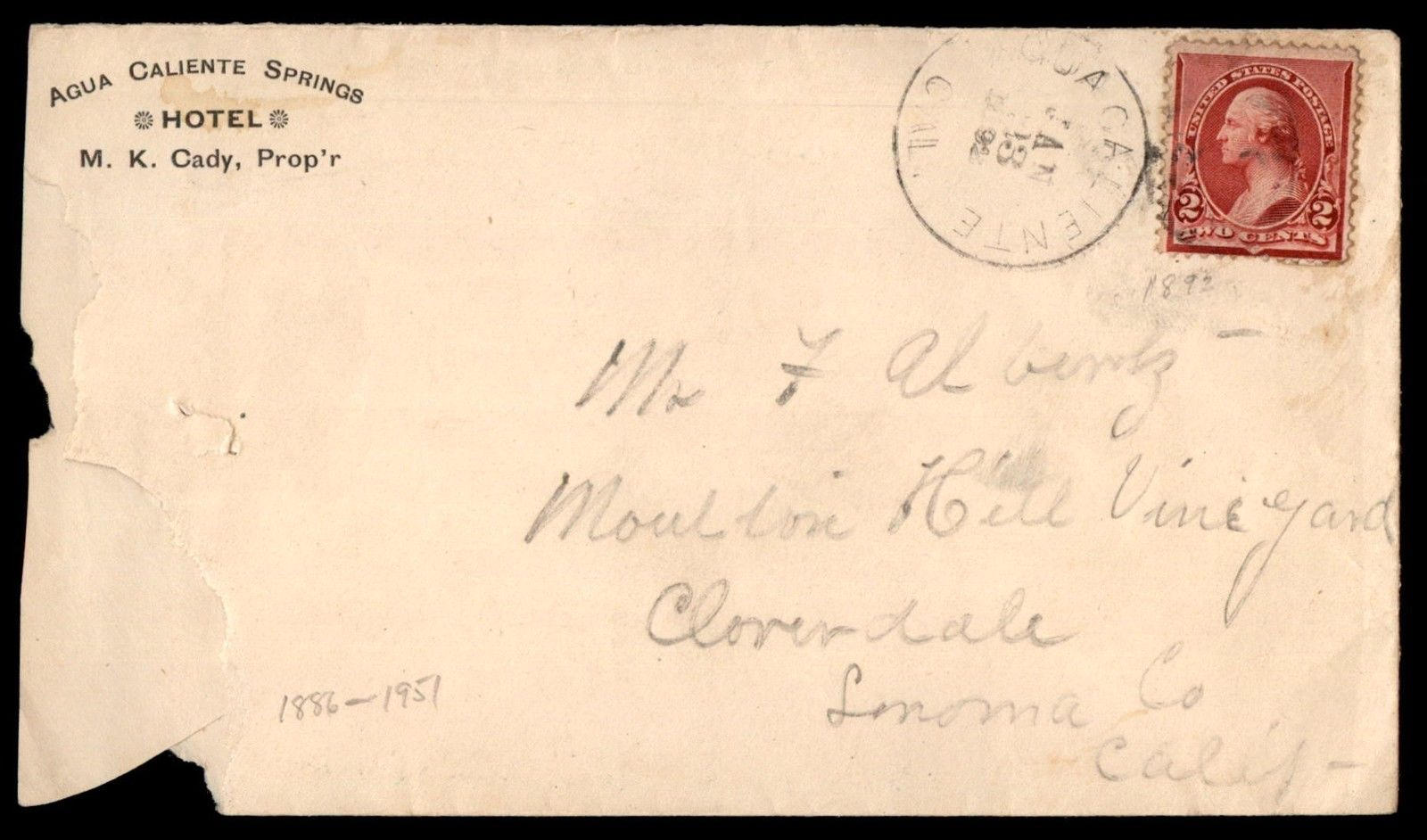
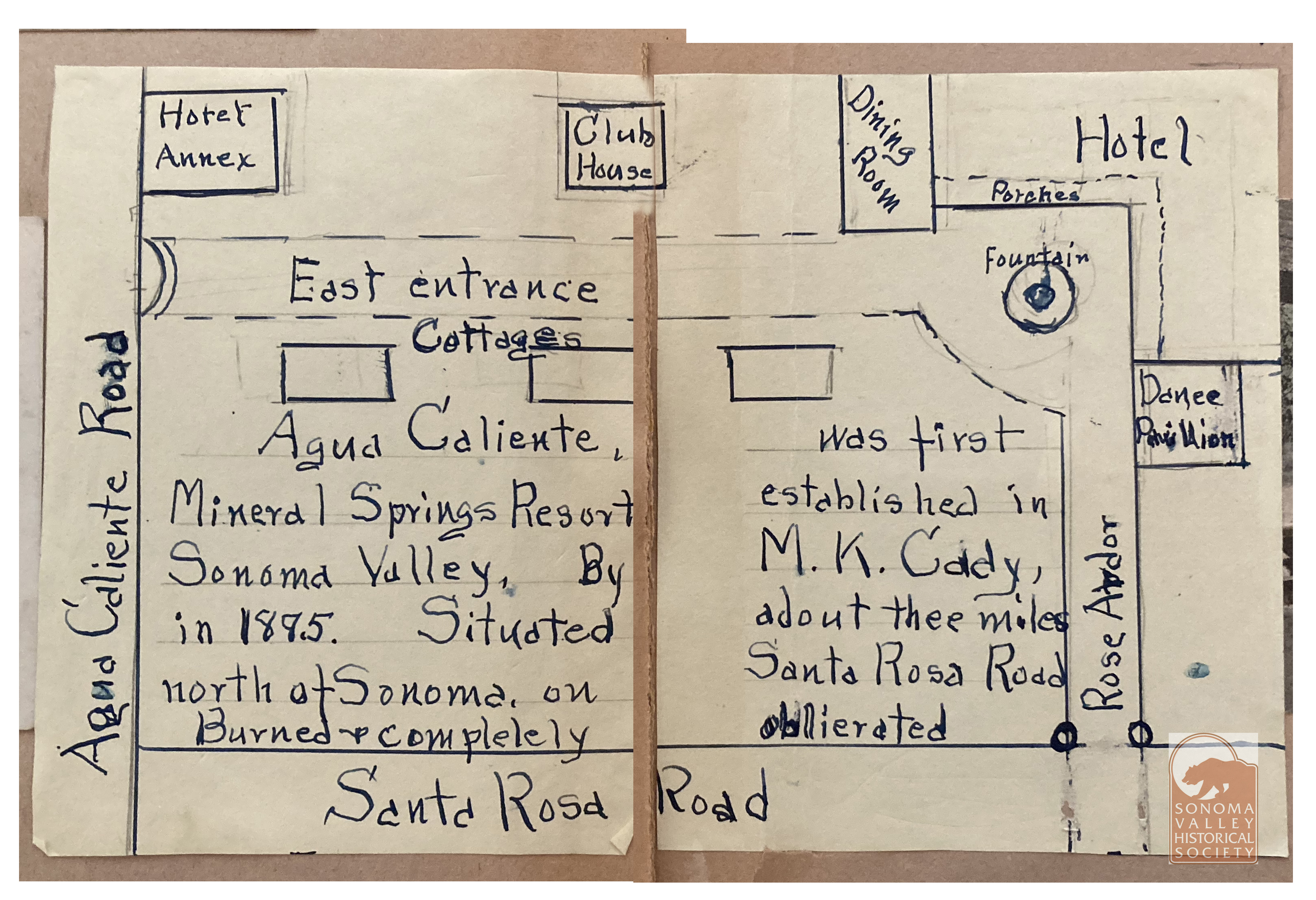
Martin Kellog Cady was born in New London Connecticut in 1847. From the History of New London County, Connecticut (1882), a biographical sketch of the elder Martin K. Cady, who was a prominent businessman in New London in the mid 19th century, listing his children, says “Martin Kellog, eldest son, is assistant coiner at the United States Mint at San Francisco, and has been for some years. He married Jeannie B. daughter of Hon. Charles Gorham, of Marysville, CA.” The book was published in 1882 but must have been written earlier because our M K Cady had left the Mint and settled in Sonoma Valley by 1881.
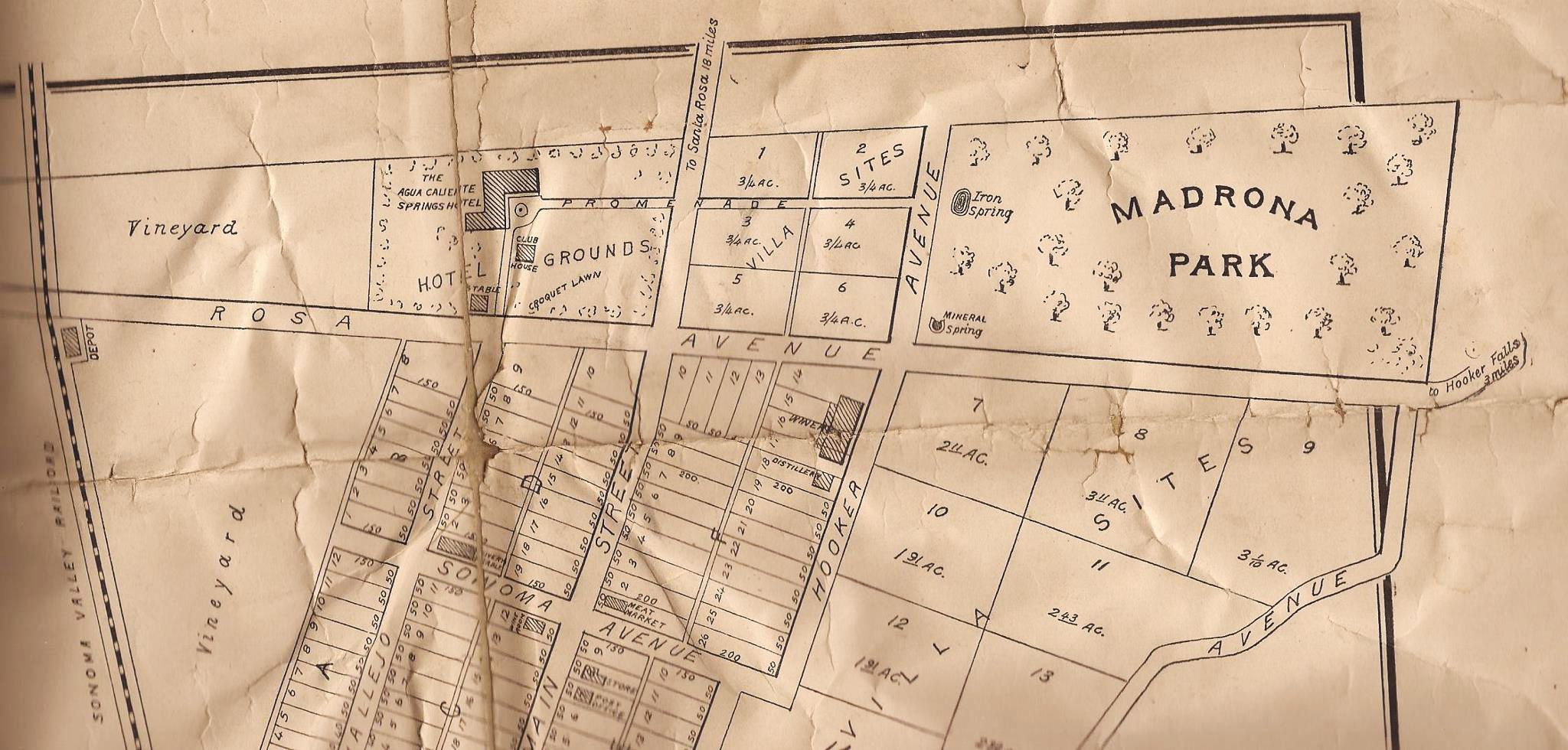
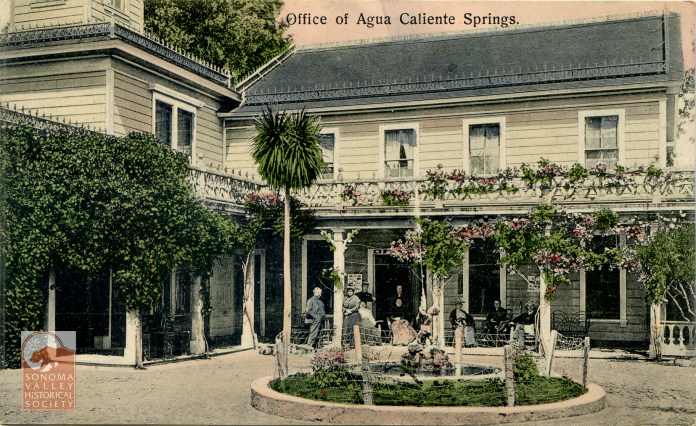
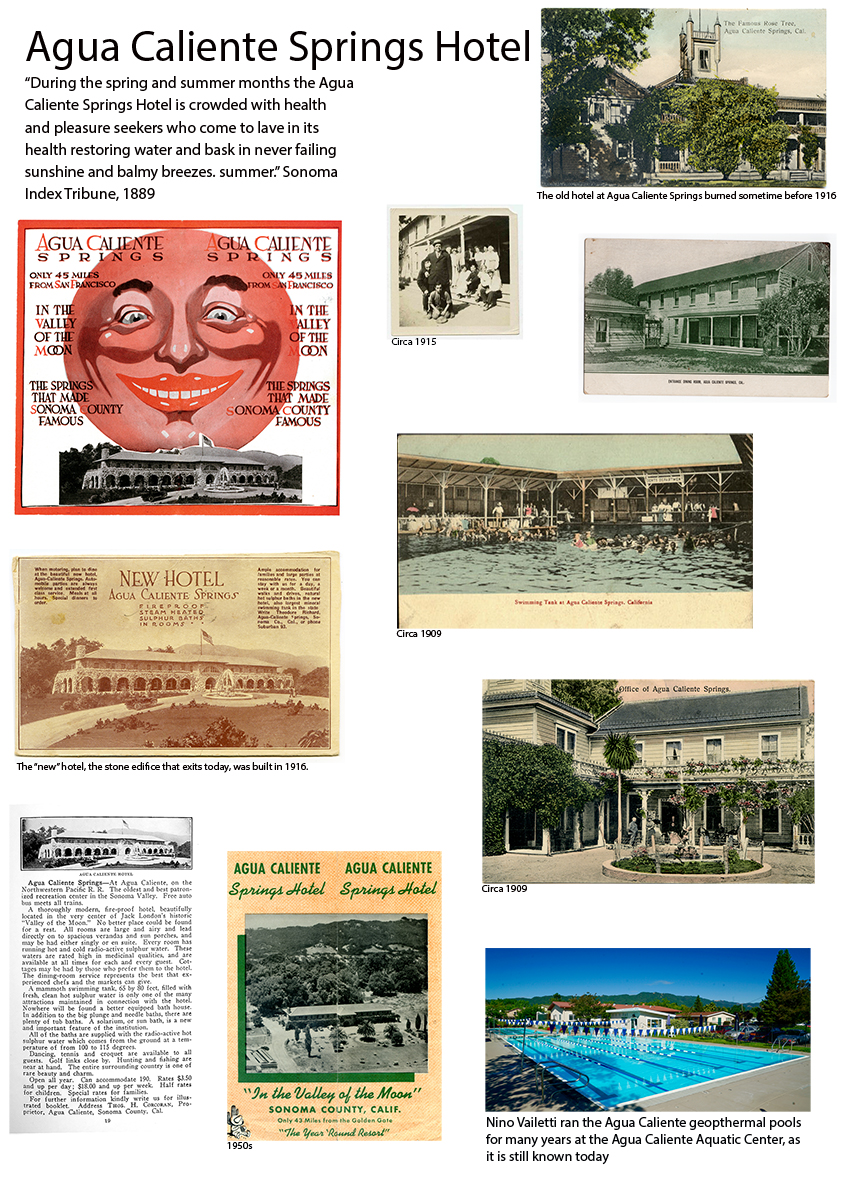
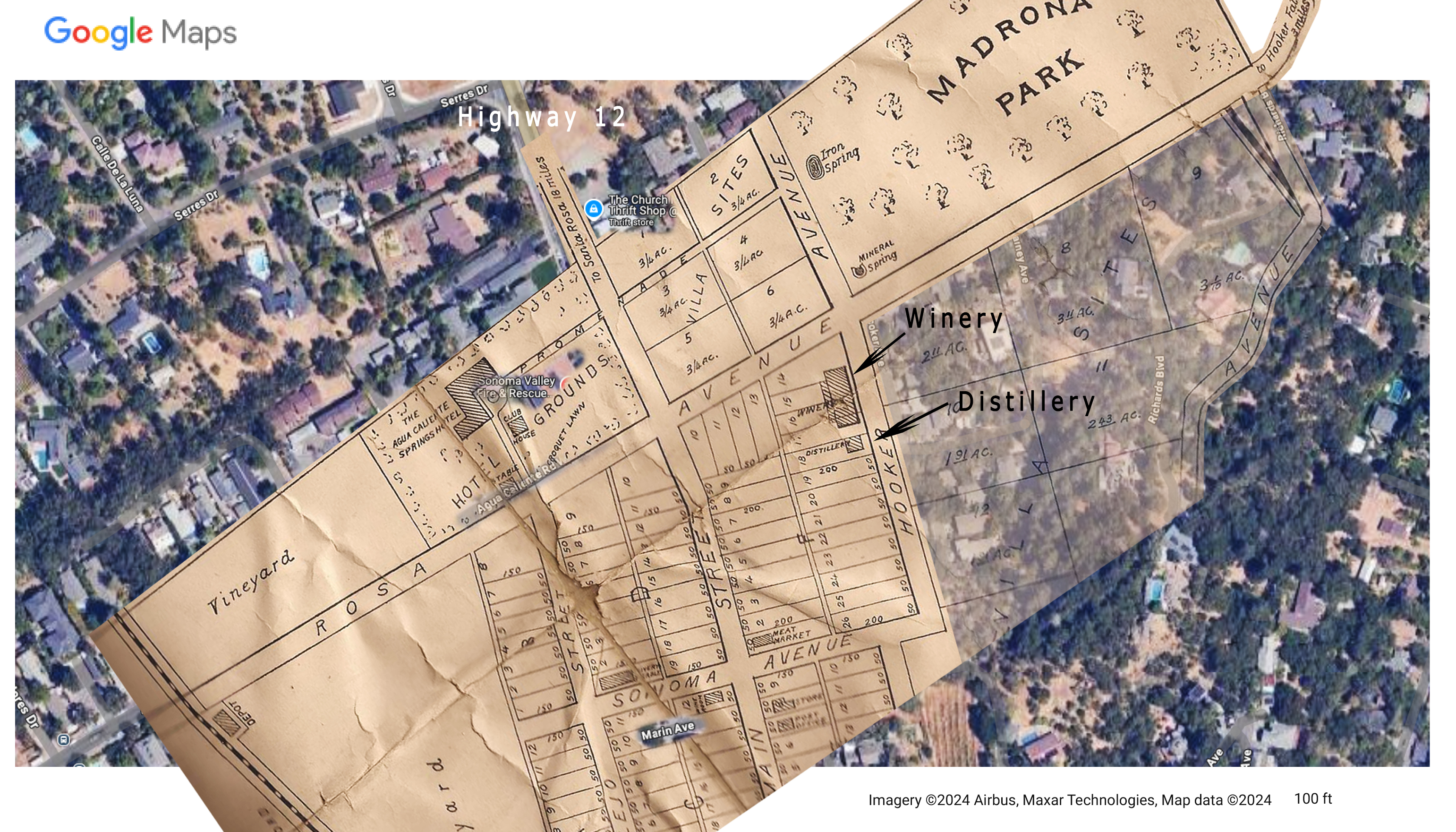
In that year the Index Tribune tells us, “M.K. Cady, formerly of the San Francisco mint, buys Alexander farm,” and that it is “Located on the Santa Rosa and Sonoma road, about three miles from the pioneer city.(Sonoma)” Also in 1882, Cady established a distillery and wine cellar (see map), built of stone from a “quarry on his own farm in the “Flowery” district.”
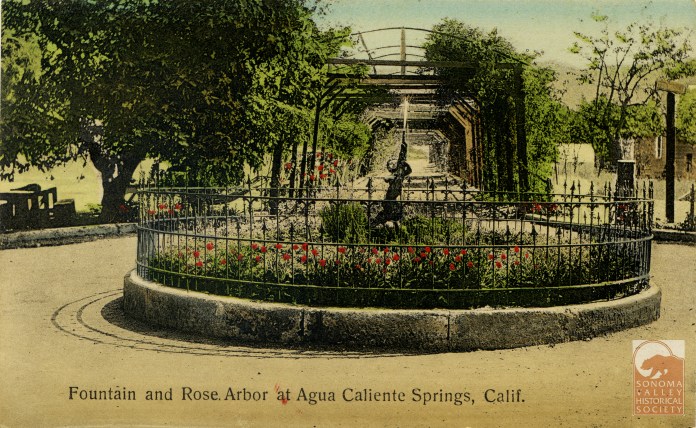
Map from Jeff Gilbert’s collection.Jeff’s map superimposed on the Google map. The resort was located at the intersection of the current Highway 12 and Agua Caliente Road, then called Santa Rosa Avenue. The winery and distillery were on Hooker Avenue, named for General Joseph Hooker, of Civil War fame, who was an early land owner in the area. The Agua Caliente Resort site was later known as Hooker Oaks. Today, the Sonoma Valley Fire Department station is there. The road at upper right is labeled “To Hooker Falls, 3 miles.” Click to enlarge.From a scrapbook at the Marcy House archives, date and author unknown.
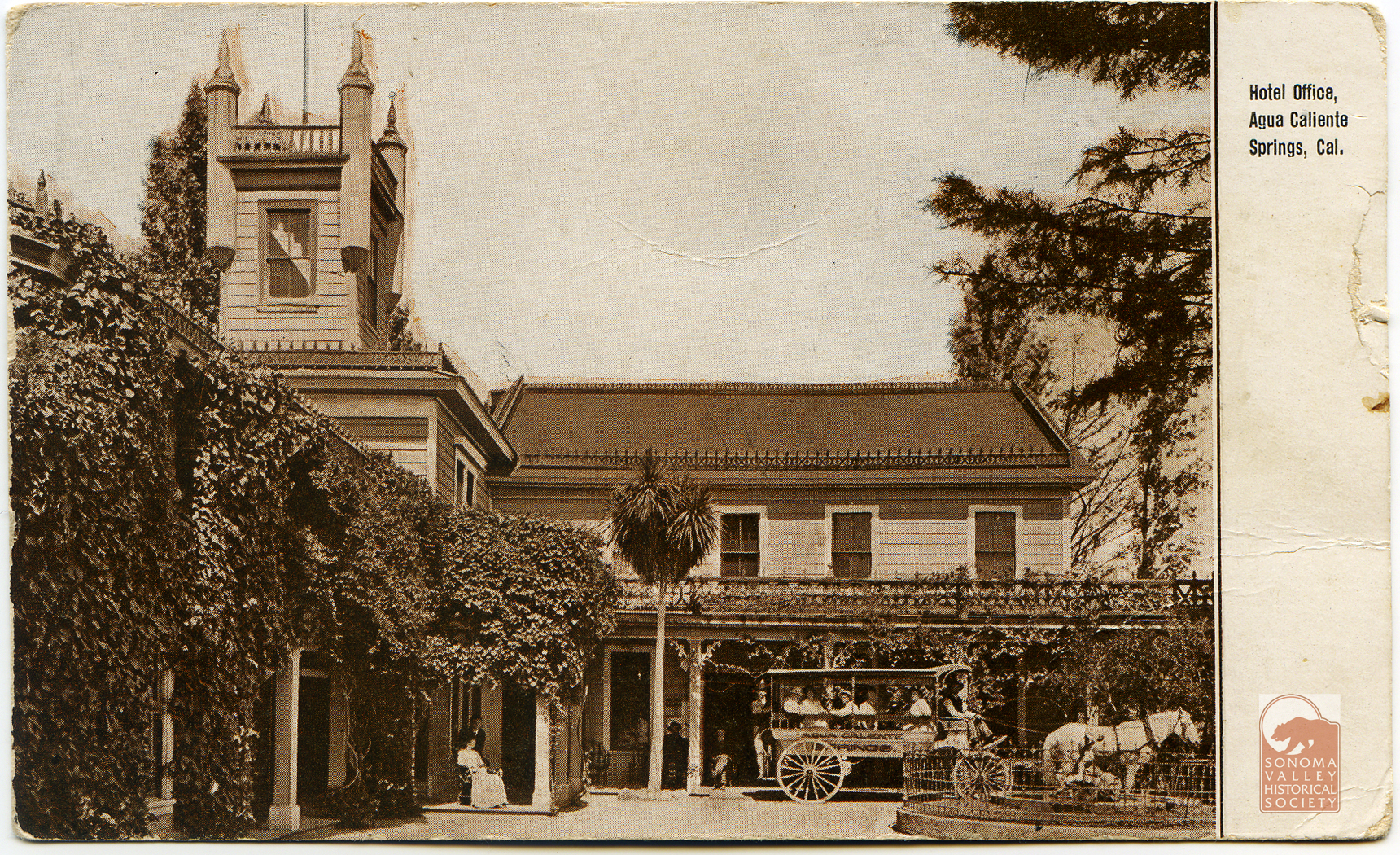
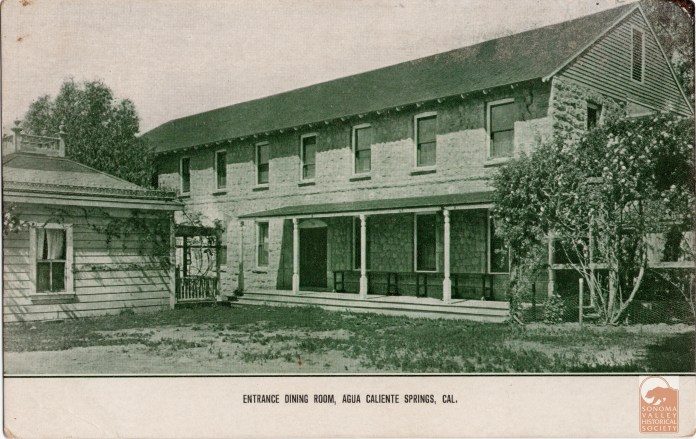
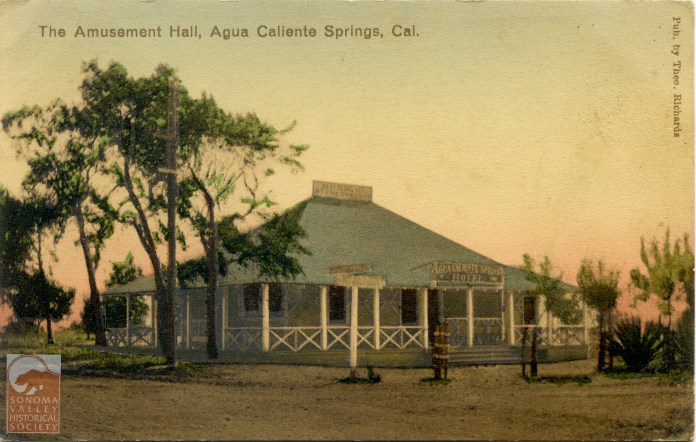
An advertisement in the Index Tribune in June of 1885 informs that the Agua Caliente Hotel, under the proprietorship of M. K. Cady will be opening in June of that year, so the resort was founded between 1881 and 1885.
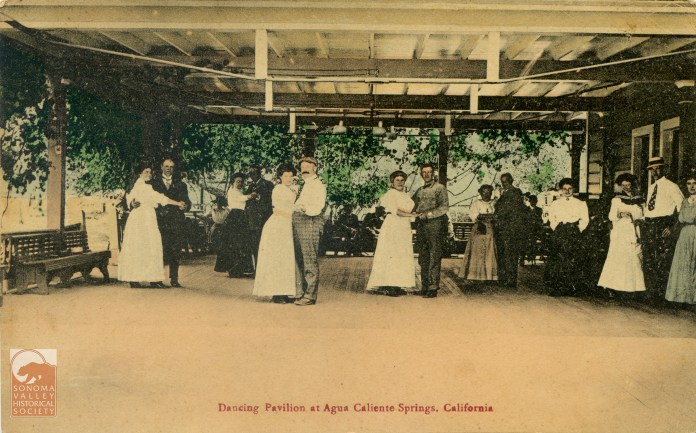
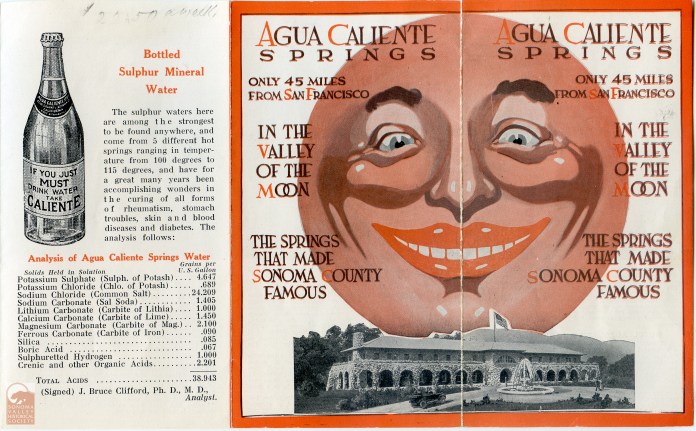
An puff piece in an 1889 issue of the Index Tribune read, in part, “the famous health-giving springs, delightful location and basalt block interests of this progressive little village is destined at no distant day to make it a place of considerable importance. The town was laid out a little over a year ago (incorrect!) by M.K. Cady, one of Sonoma Valley’s most energetic and public-spirited men. The railroad runs through the place which boasts of an express office, post office, schoolhouse, hotel general merchandising store, butcher shop, and a blacksmiths shop. During the spring and summer months the Agua Caliente Springs Hotel is crowded with health and pleasure seekers who come to lave in its health restoring water and bask in never failing sunshine and balmy breezes. An Episcopal Church will be erected a Agua Caliente this summer.”
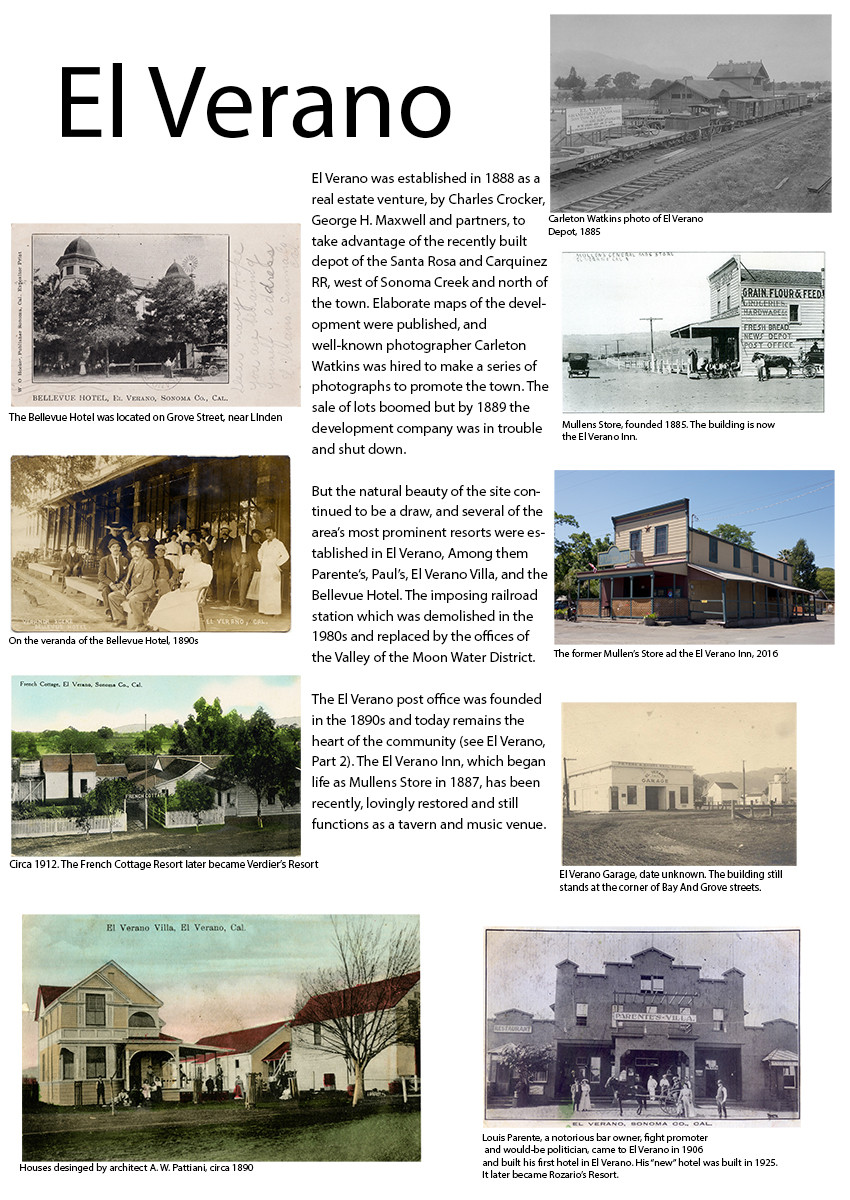
In 1888 Cady sells to the Verano Land Company: “M.K. Cady of Agua Caliente has sold his hotel property and villa sites in that town to the Verano Land Company. Mr. Cady retains his winery and some forty acres of choice vineyard and will build a residence on the heights overlooking the wine cellar.” (This could be the site that became Keaton’s Shack.) After six months, Cady takes the property back. It seems, it has been closed the entire time “owing to a disagreement among the directors, who have been fighting like cats and dogs…” The Verano Land Company developed the “towns” of Verano and El Verano. Their brochure touting the developments is priceless early 20th century hype.
In 1888 Cady runs for county supervisor and is elected. The Index Triubne says “Mr. Cady is the right man in the right place and the people of Sonoma and Vallejo Townships ought to congratulate themselves on having so able a man to look after their affairs at the county seat”
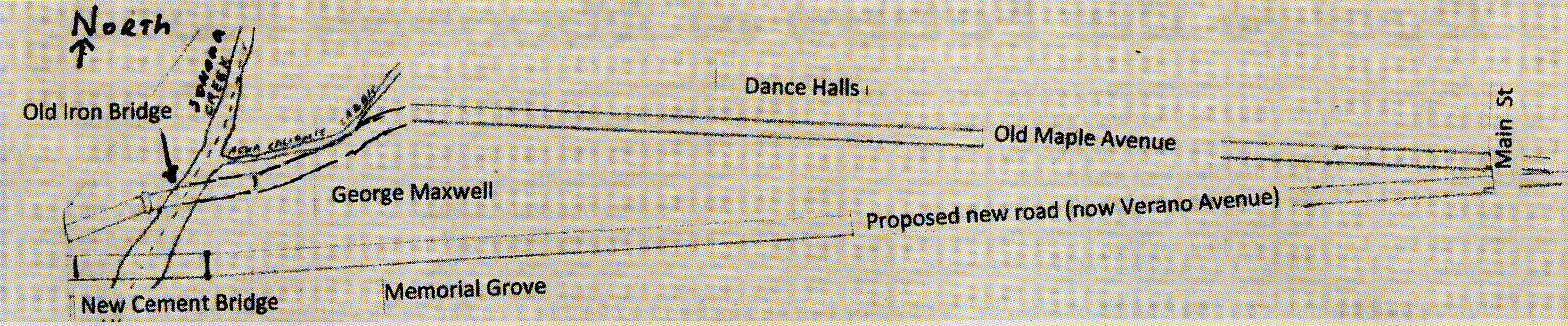
New road leading to the new bridge over Sonoma Creek at Verano.
Also in 1888 “A petition was received from citizens of Sonoma road district praying for a new road from the iron bridge across Sonoma creek at Sonoma to the town of El Verano, and for the abandonment of the old road from the old bridge to where the same connects with Petaluma Avenue. On motion of Mr. Coulter, the same was received and placed on file, the accompanying bond approved and W. K. Nichols, M.K. Cady and G. C. P. Sears were appointed to view and lay out said proposed new road and report at the next meeting.” Please see The Arroyo of Arroyo Road
Interestingly, in 1891 the IT opined “(Cady’s) hotel is located in one of the most picturesque spots in California, and is destined at no distant day to be to this State what Saratoga is to New York.” However, they weren’t reckoning with Calistoga, which was so named because it was deemed the Saratoga of California.
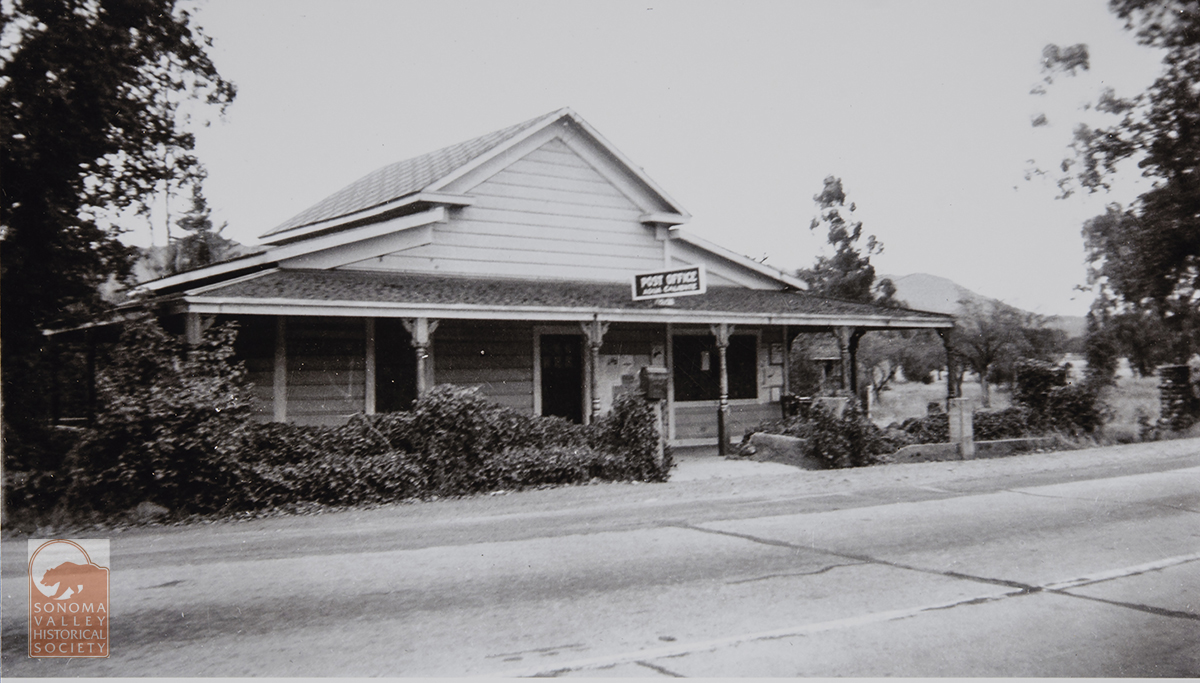
All was not smooth sailing for Mr. Cady. In a September 1893 article in the IT headlined ”Agua Caliente Post Office Squabble. Cady and Morris on Top-Postmaster John Austin Down and in Jail,” we learn that Austin was the owner of a general store in Agua Caliente, which housed the post office. He also ran a bar that competed with Cady’s. Morris was the “mail Messenger” responsible for carrying the mail from the railroad depot to the Post Office. Morris and Austin had bad blood between them stemming from a fist fight the previous July. Morris and Cady wanted to get the Post Office moved to Cady’s’ resort. They accused Austin of opening their mail, and Austin was arrested and taken to jail in San Francisco. Austin claimed he was framed in order get the post office away from him.
That November, Cady was indeed appointed by President Cleveland to be post master of Agua Caliente, “a little old one-horse affair, the salary amounting to from $3 to $5 per month.” In October the story took a strange turn as Austin, having written to his wife in Agua Caliente that he would be home the next day, disappeared. Then, on April 7, 1894: “The Santa Rosa Republican is authority for the statement that John Austin, ex Postmaster of Agua Caliente, near this place, recently fell from a scaffold in a town in South America and sustained injuries that resulted in his death.”
Circa 1930
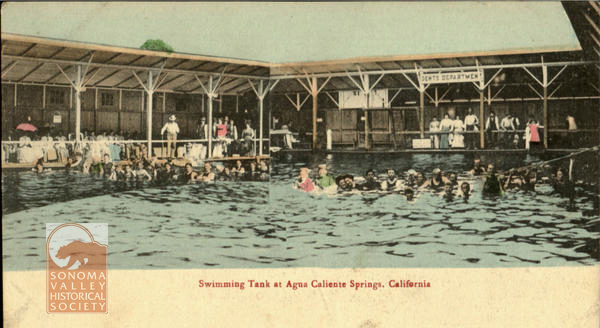
Apparently Cady defaulted on his mortgage in 1895. “A Mr. Dean of San Francisco took possession this week of the Agua Caliente Springs ranch to satisfy a mortgage of $25,000 executed by the former owner, M,K. Cady, who has been in possession of the property for over fifteen years {making Cady’s arrival in the valley no later than 1879}. The Hotel, swimming baths, wine cellar and hotel grounds have been disposed of by Mr. Dean to Dr. Nordin of Alameda, who will improve the hotel and grounds and conduct the same as a first class summer resort and sanitarium. Mr. Cady has leased for the present the handsome cottage which was erected near the wine cellar a few years ago by Mr. McGrew of San Francisco.”
However, Doctor and Mrs. Nordin did not see eye-to-eye. Shortly after he purchased the resort and investing $30,000 of her money in refurbishing it, Mrs. Nordin sued her husband, whom she says took her money under false pretenses and she wanted it back.
The Index Tribune, after saying that Mr. Cady “ran the resort into the ground,” informs us that Cady was appointed receiver of the property during the law suit!
“The bondsmen for M. K. Cady, who was appointed receiver of the Agua Caliente Springs by Judge Crawford, are J. B. Moris and Horace Appleton. Each swears he was worth $3000 over and above his just debts and qualified for $6,000 double the amount of the bond.”
The story continues. September 1895, “The Nordin case, which is the all absorbing topic of conversation in this valley, was resumed in the Superior Court last Monday. It will be recollected that last week Judge Crawford put and injunction on the Agua Caliente springs Resort, appointed M. K. Cady receiver of the property, and accepted as his bondsmen H.B. Morris and Horace Appleton.
Later court action: “The proceedings Monday was devoted to filing a motion to dissolve the injunction….” Nordin alleges that Cady is insolvent, and “that…during the greater portion of the time since his appointment as receiver (has been) under the influence of intoxicants.”
Nordin continues to allege that Cady has fired all the staff and put his wife, daughter, niece on the payroll, and “that the Cady tribe has taken up their abode on the promises.”
Additionally “The affidavit says the order appointing Cady as receiver covers all the personal property on the premised and that some of the guests at the hotel wish to leave, and that Mr. Cady has refused to let them have their trunks and wearing apparel”!
November 9, 1895-The Nordin suit was continued. “The property is still in the hands of Trustee Cady. Dr. Nordin is residing in San Francisco and Mrs. Nordin is the guest of Alameda friends.”
April 11, 1896, the suit is settled with Dr. Nordin getting $1000 and Mrs. Nordin getting the property, but no word of what happened to the “Cady Tribe.” Mrs. Nordin continued running the resort. Details are in short supply. The magnificent hotel burned some time before 1916, when the new, stone building was built.
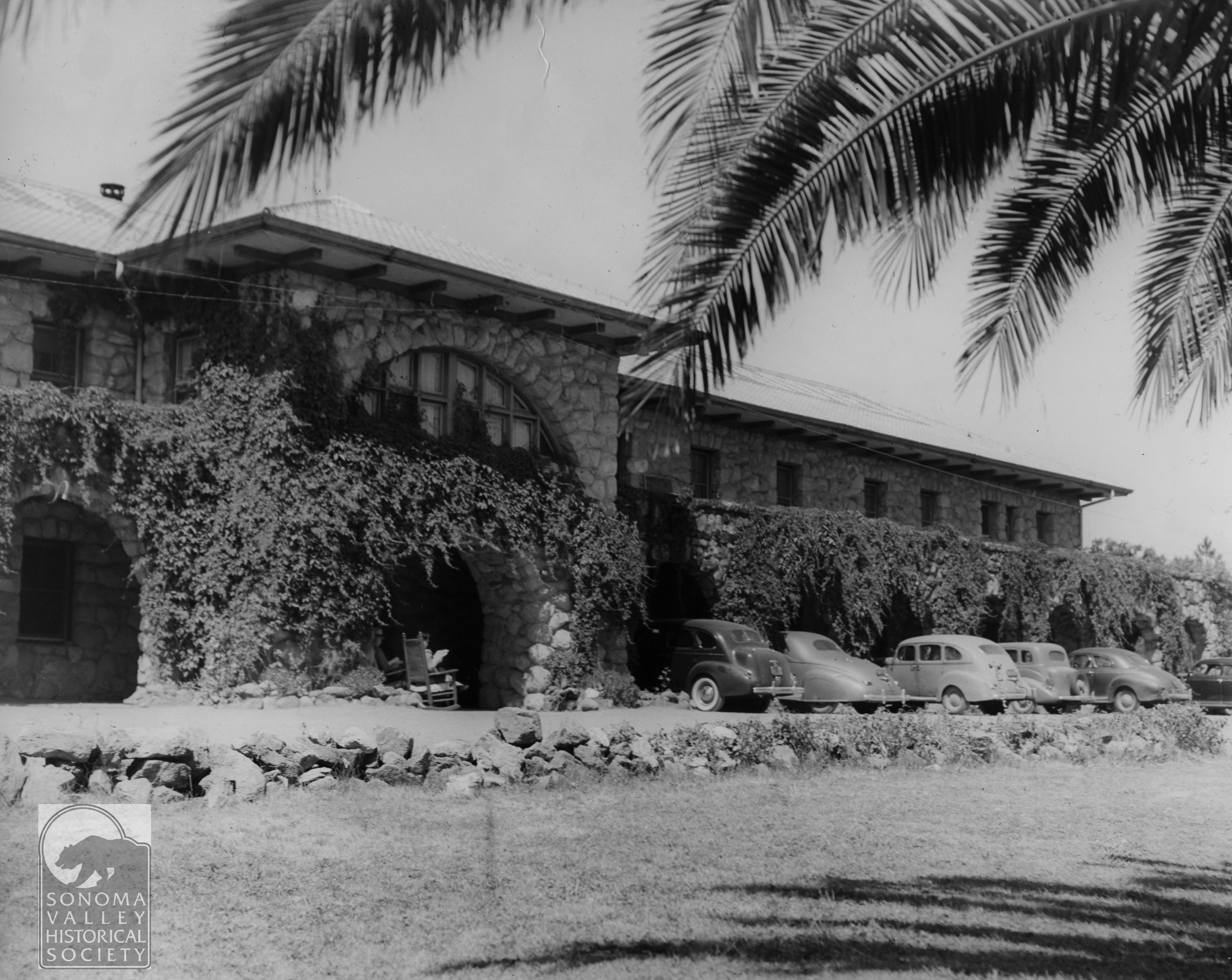
The “new” Agua Caiente Hotel, built in 1916, still stands in 2024
Martin Kellog Cady died November 18, 1903, in San Francisco.
All quotes are from the Sonoma Index Tribune unless otherwise noted.
Sonoma Index Tribune and many images courtesy of the Sonoma Valley Historical Society
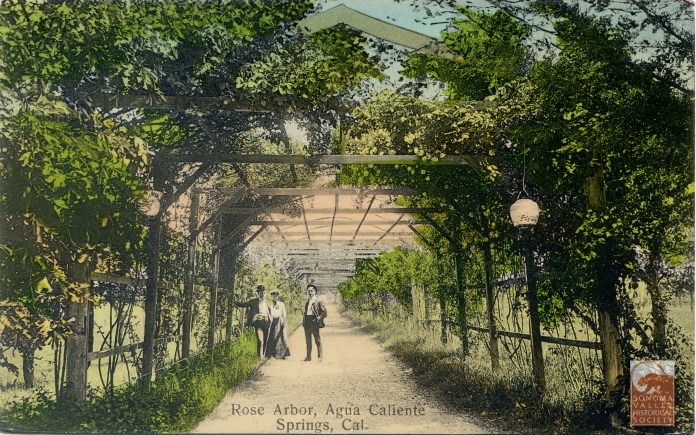
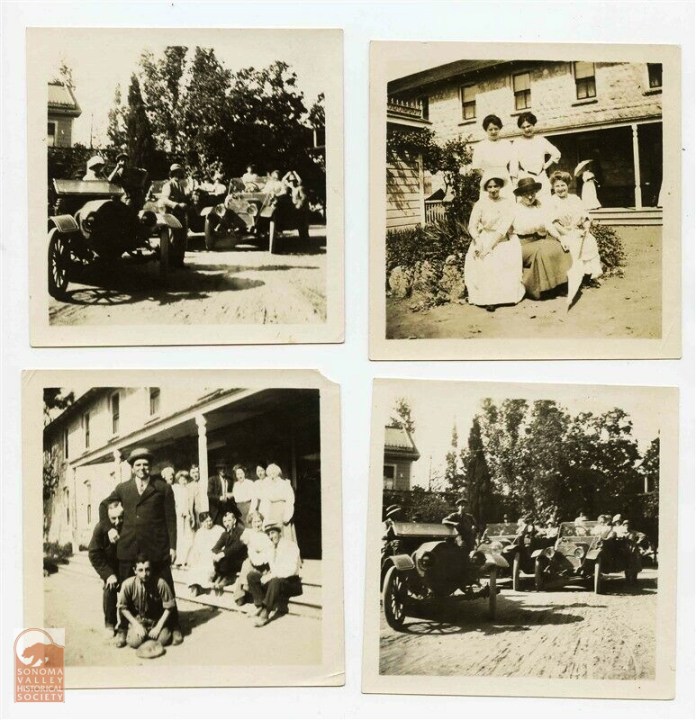
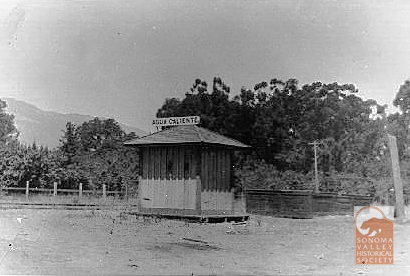
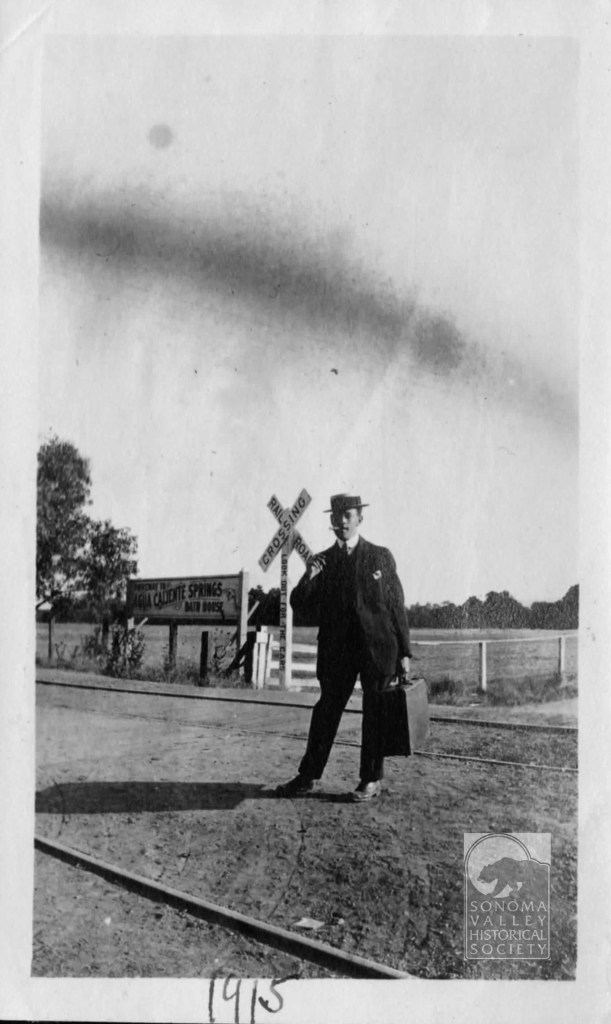
The Agua Caliente Resort, and vicinity, was well documented by photographers. The following is a slide show of some of those photos and post cards.
This is not meant to be an exhaustive survey of everybody who ever photographed in Sonoma Valley. (Here I’m focusing on the resort towns of Boyes Hot Springs, Fetters Hot Springs, Agua Caliente, and El Verano.) That will have to come when we mount an exhibition on the topic at the Sonoma Valley History Museum in Depot Park.
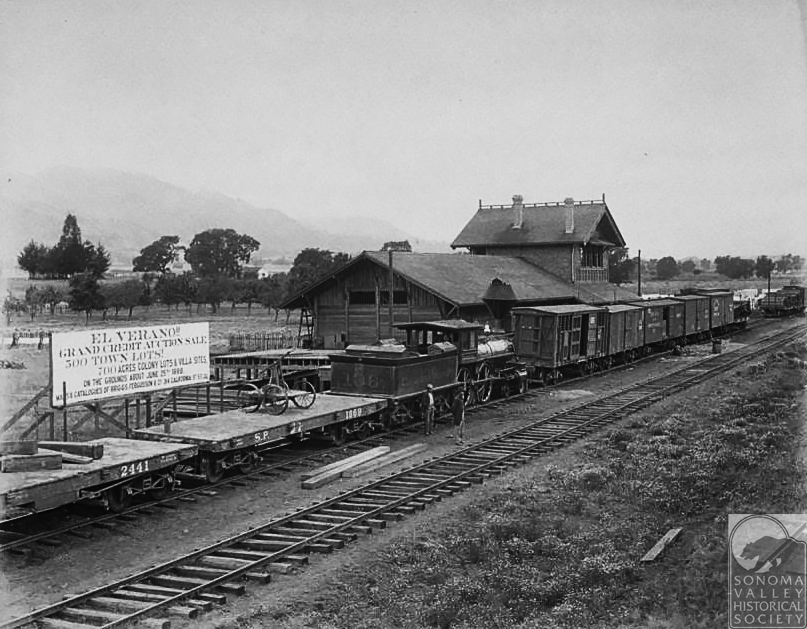
“Grand Credit Auction Sale, 500 Town Lots!, 700 Acres Colony Lots and Villa Sites” says the sign.
Carleton Watkins
Probably the most noted photographer to document a part of the Valley was Carleton Watkins (1829-1916), who was engaged in 1887 by George Maxwell to make a portfolio of images as a tool to help sell land in El Verano. A great deal of hubbub was created touting this tract. Free trains excursions from San Francisco were offered to potential buyers. Streets were platted and an elaborate map was issued. The land boom collapsed, however; money was lost, and only a few streets remained, until El Verano pulled itself up by its bootstraps again. There was almost nothing there but fields, oak trees and a few farms when Watkins visited El Verano. The railroad was the most important thing happening. See the El Verano Historical Society for more images.
Postcard Photographers
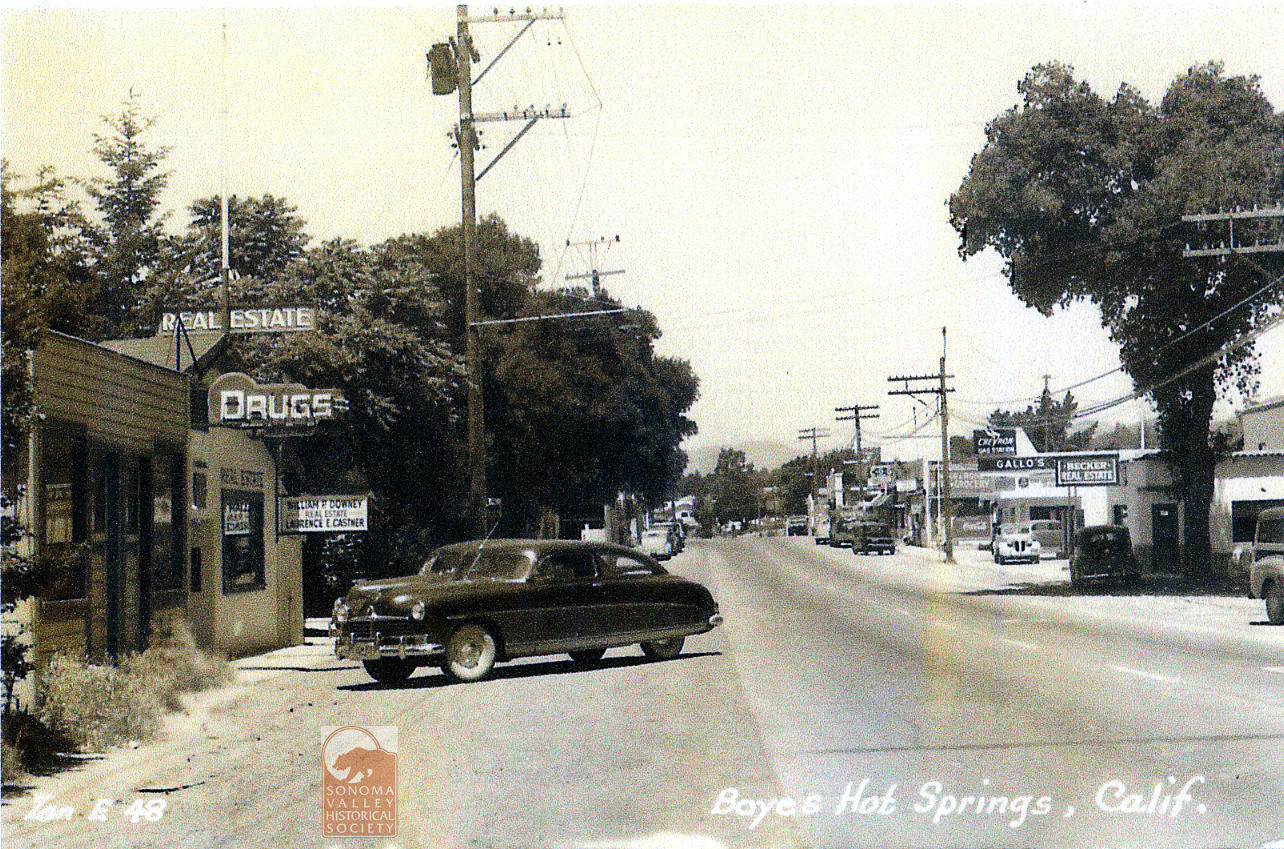
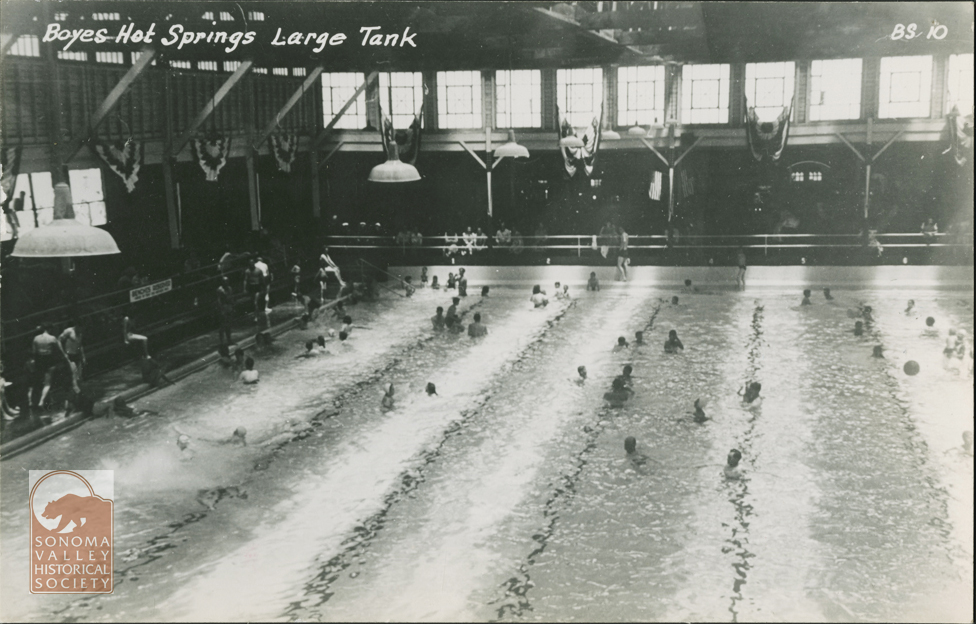
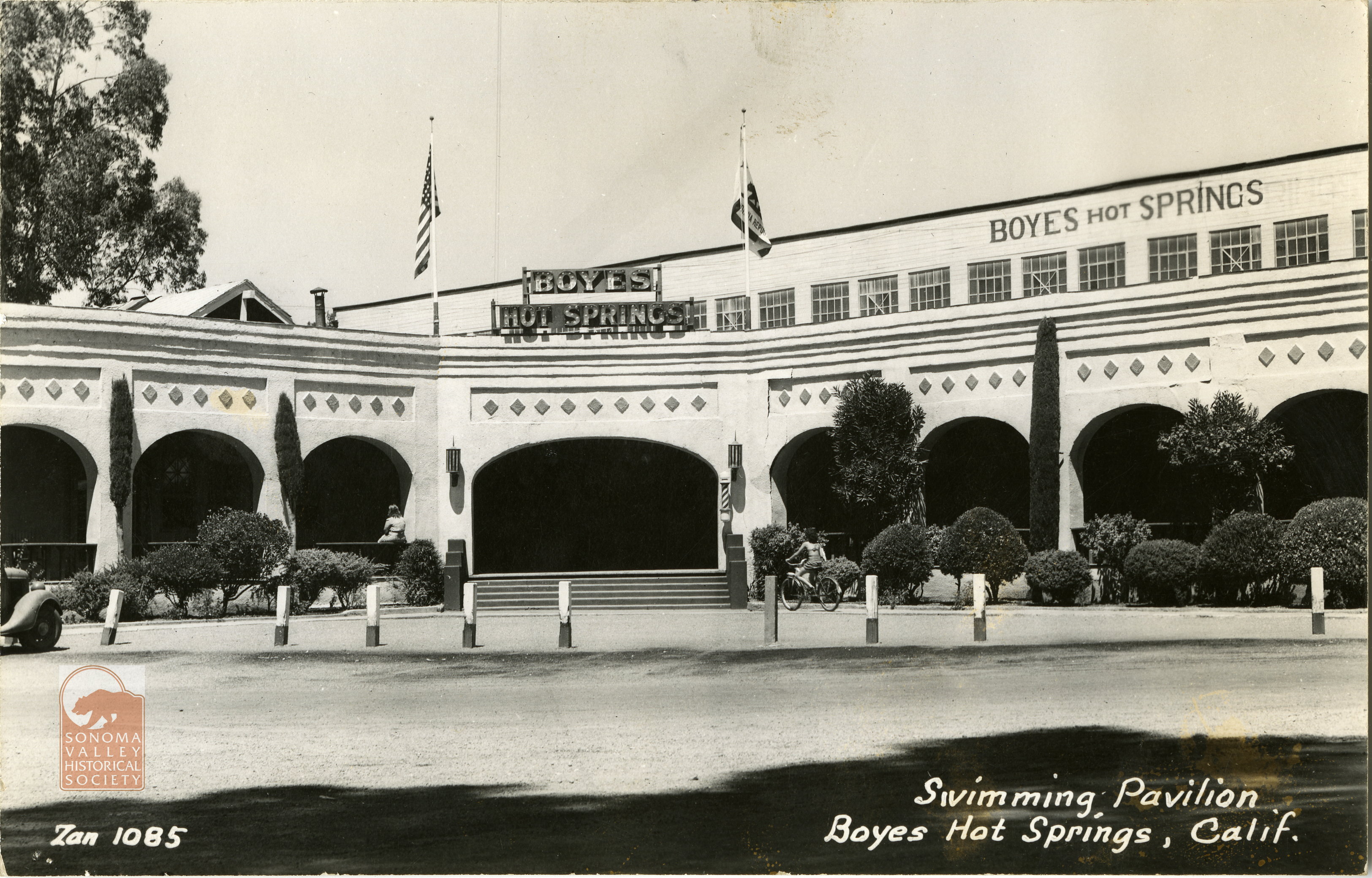
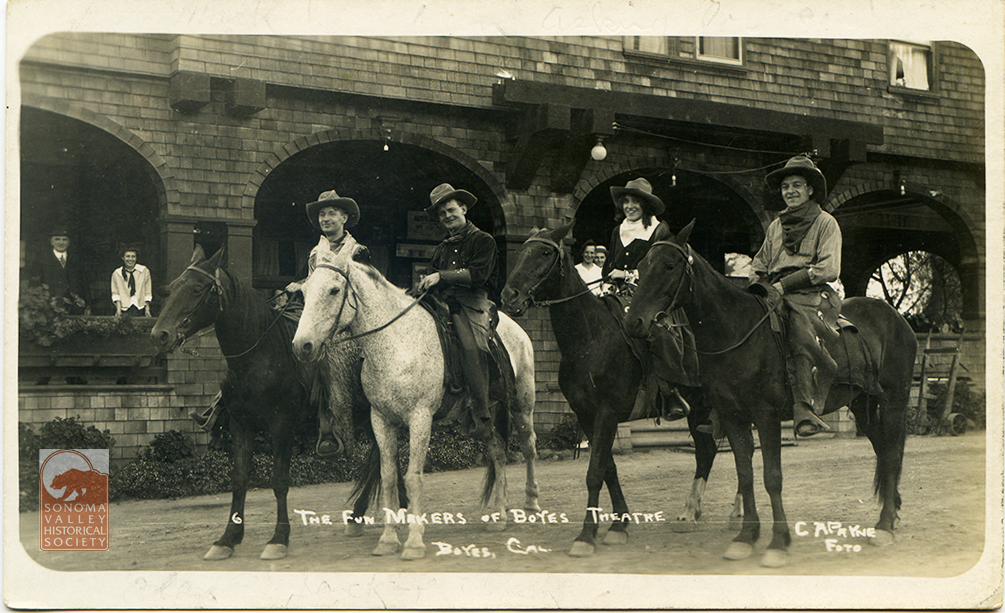
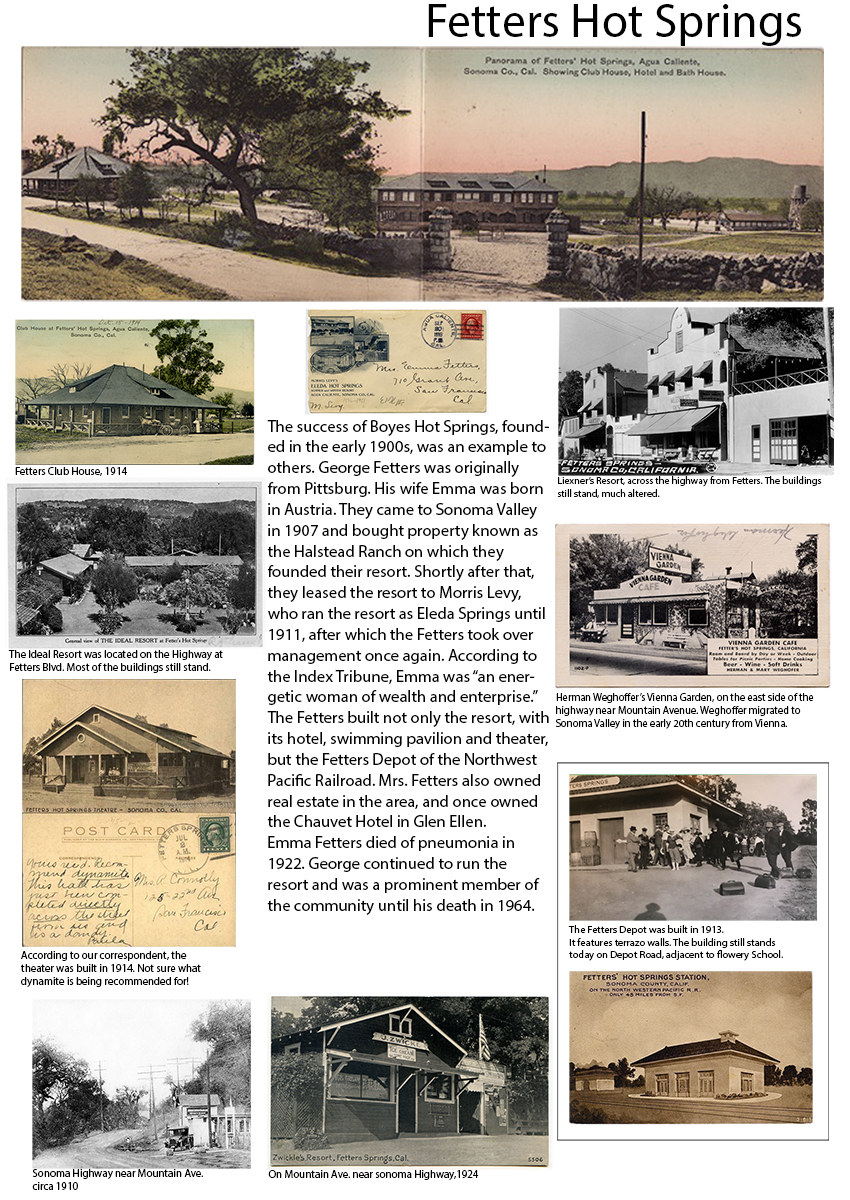
Agua Caliente, Boyes Hot Springs, and El Verano, sometimes known as The Springs, in the unincorporated part of the Valley of the Moon, California ( adjacent to Sonoma), has been a resort destination since the 1880s. People went there (and still do) on vacation, to take the waters and bath in the sun. Tourists like to have photographic memories of their joyous time, so many photographers published postcards of the resorts and people enjoying them.
The names of the photographers are mostly known. The stories behind the names are known for some and some are obscure (as of this writing.)
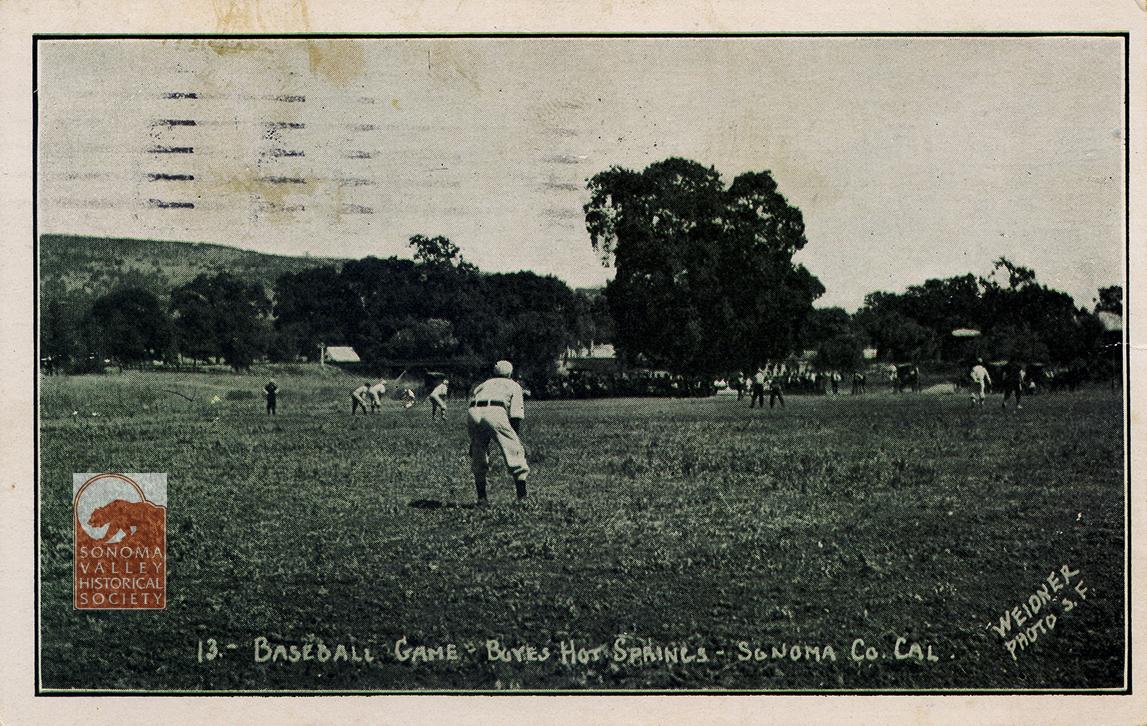
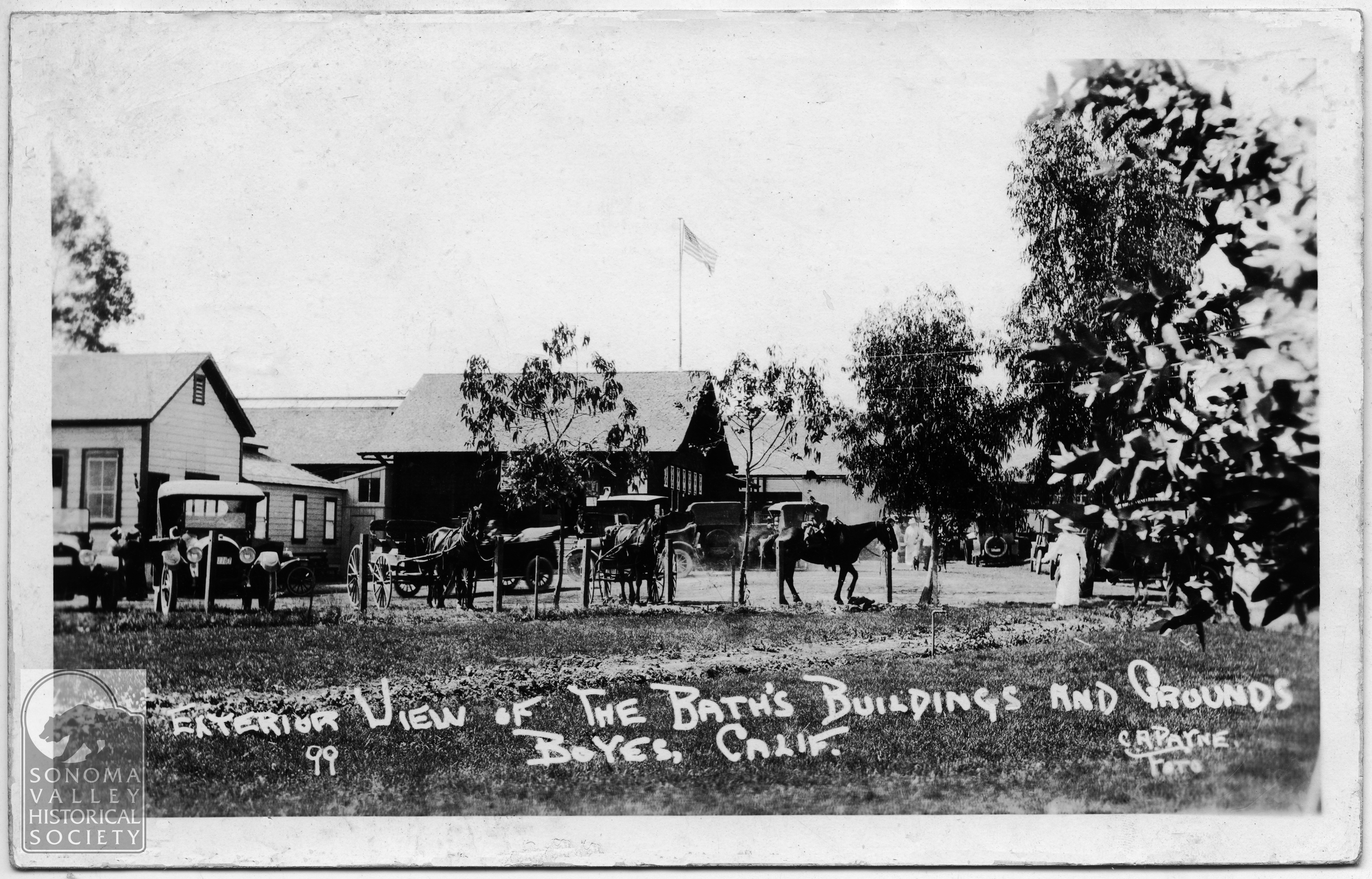
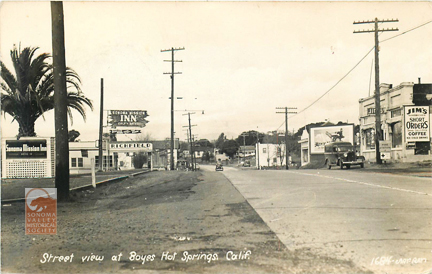
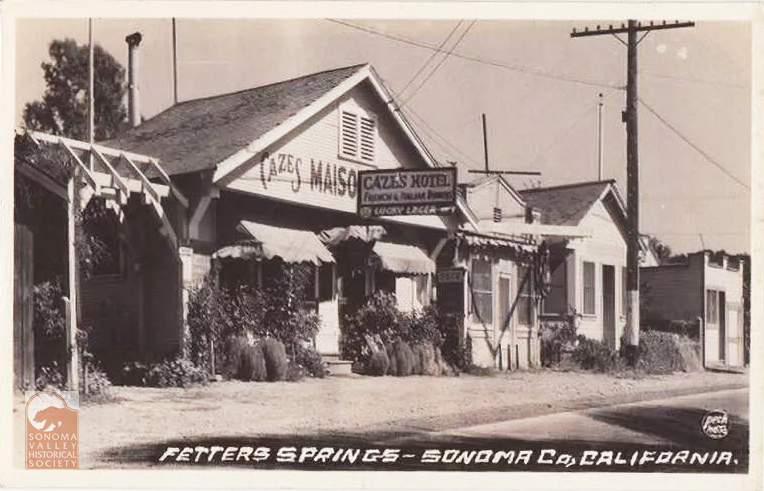
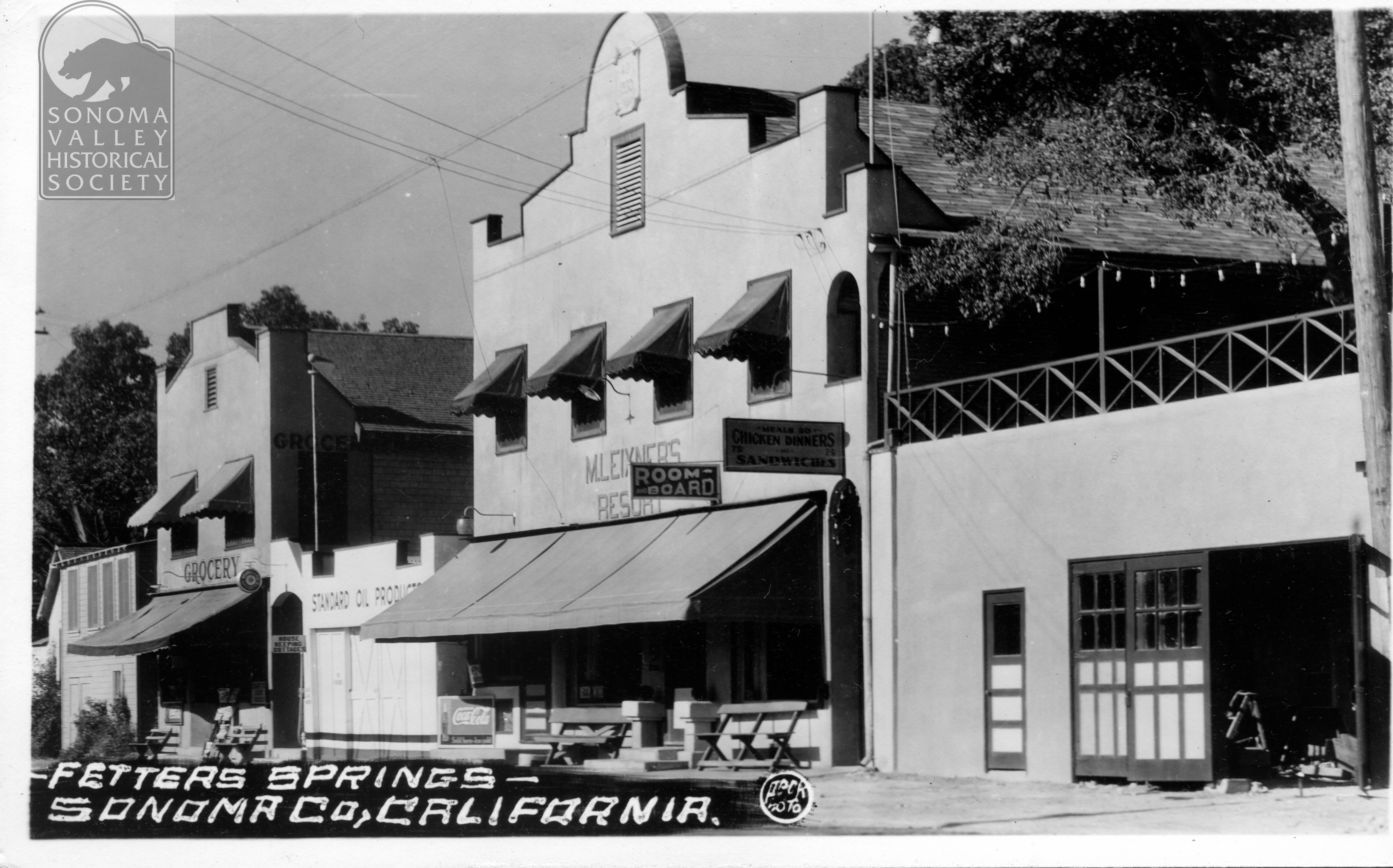
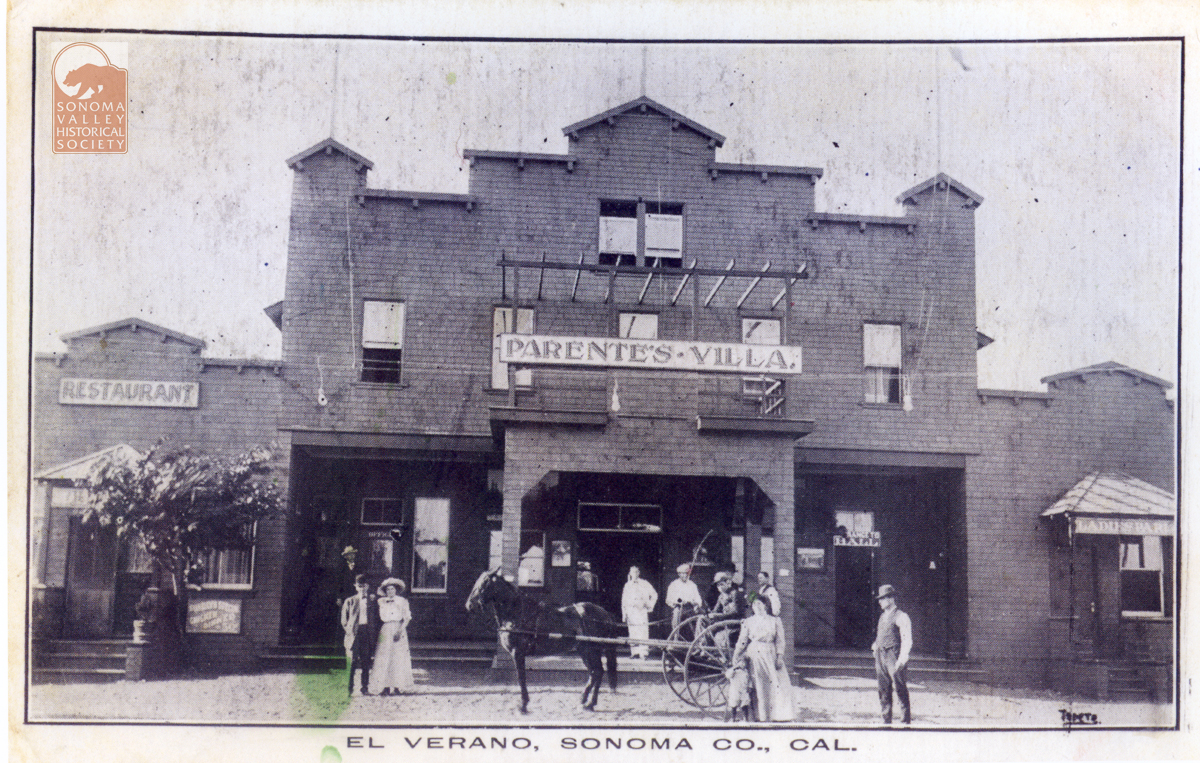
The production of resort postcards got going in earnest in the early 20th century. The prominent photographers were Charles Weidner, C. A. Payne (also publishing as Art-Ray), Peck, Topete, and Alexander (Zan) Stark. We have a lot of biographical information on Weidner and Stark, thanks to Frank Sternad of the San Francisco Bay Area Post Card Club. The others are more mysterious.
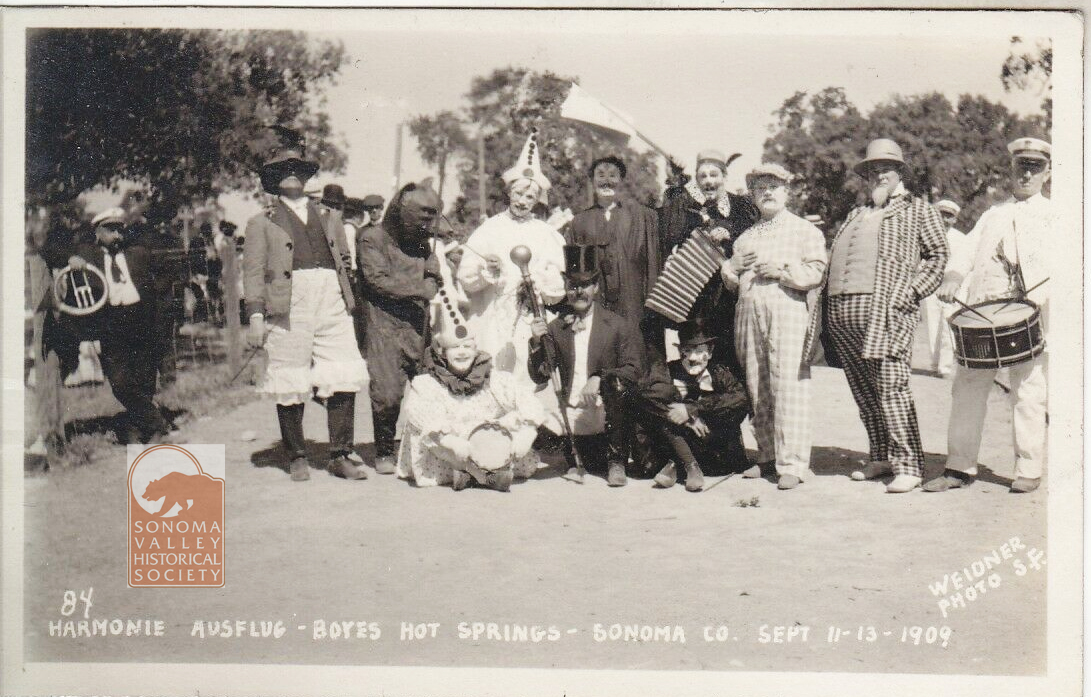
Charles Weidner was born in Germany in 1867, came to the United States in 1888. By 1891 he had made his way to California. Around then he took up photography in earnest, establishing his postcard company in San Francisco in 1902. He was well known for his photos of San Francisco after the earthquake and fire of 1906, and those of Yosemite Valley. He traveled widely in Northern California, spending time in The Springs in the years before WW1. One of his main subject was the Harmonie Ausflug, a group of Germans in the Bay Area who made tourist excursions together, and had a jolly time from the looks of it!
Weidner retired in the mid 1930s, having produced hundreds of postcards covering many locations and subjects in the Bay Area and beyond.
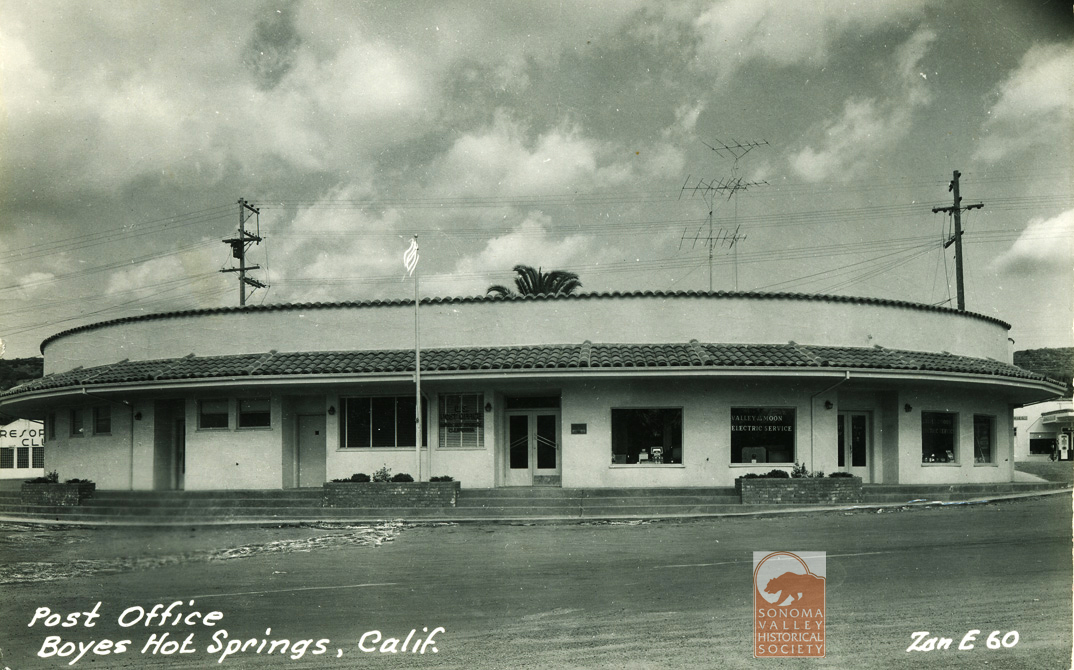
Alexander (Zan) Stark came to San Francisco from Ohio in 1914, investing in a small photo studio on Market Street. After serving in WW1, he came back to the City to resume operation of the Alta Slide and Photo Company. Alta was notable for producing photo booklets of nudes of young women, for “artistic” purposes. Several of his models were well-known silent film stars. Despite the Depression, Stark was doing well enough that in 1929 he could buy a house in Mill Valley. Inspired by his daily ferry commute to SF, he began photographing the wonders of the Bay Area, and being business man, realized he could print these as post cards and make some money. He soon began traveling farther afield, eventually making cards in most of Northern California, southern Oregon, and parts of Nevada.
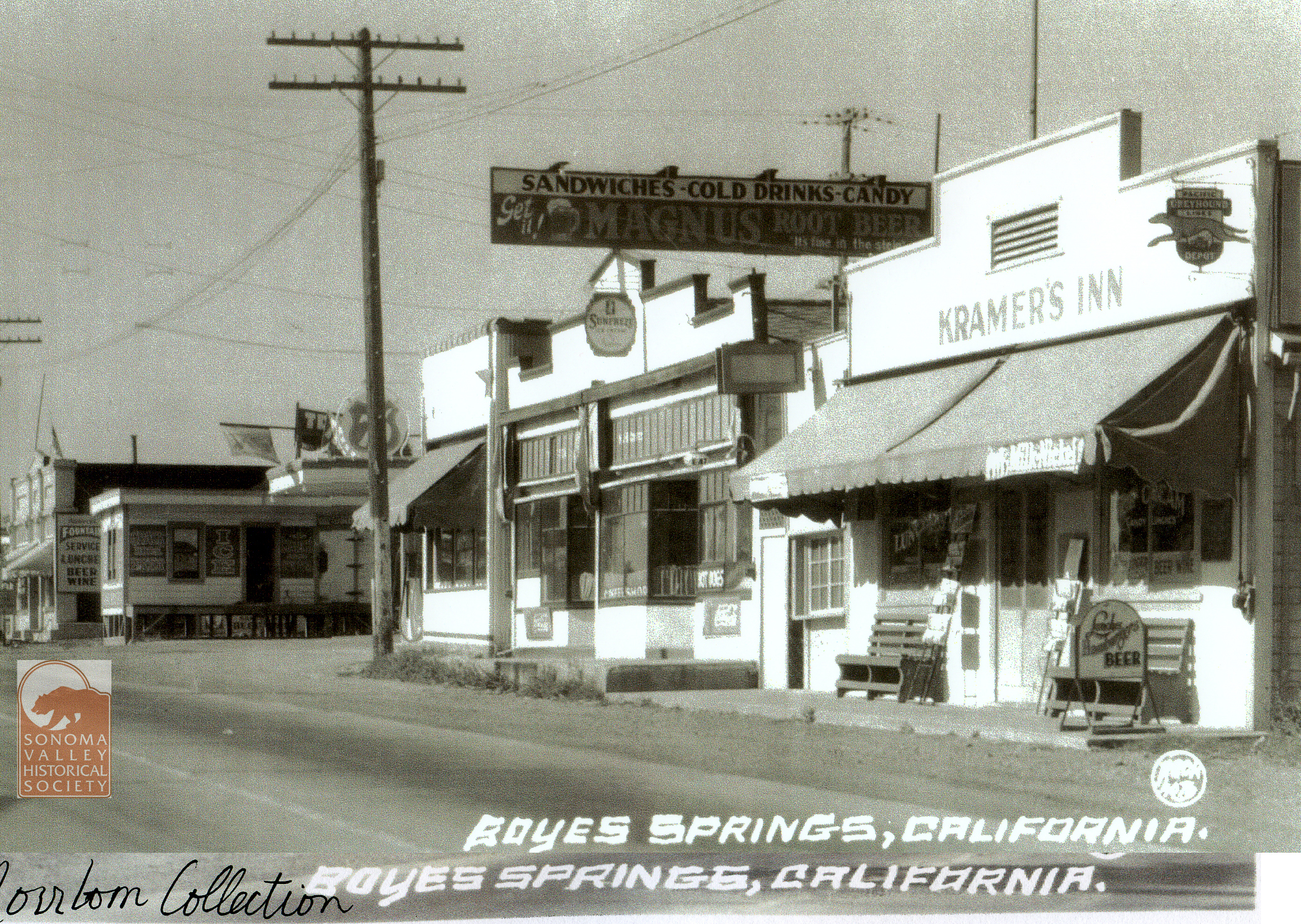
He moved to Boyes Hot Springs in 1952, to which we owe the outstanding documentation of the resorts, businesses, and landscape of The Springs, numbering at least 65 postcards.
Stark’s archive is housed at Stanford University Library Special Collections.
Charles and Frank Payne published under the names Art-Ray and C.A. Payne. Their home base was Crescent City, California and they covered mainly that part of the state, venturing as far south as Boyes Hot Springs, producing cards from circa 1915 to 1921.
Peck: circa 1940’s-no information
Topete-circa 1906-1912
Anonymous Snapshots
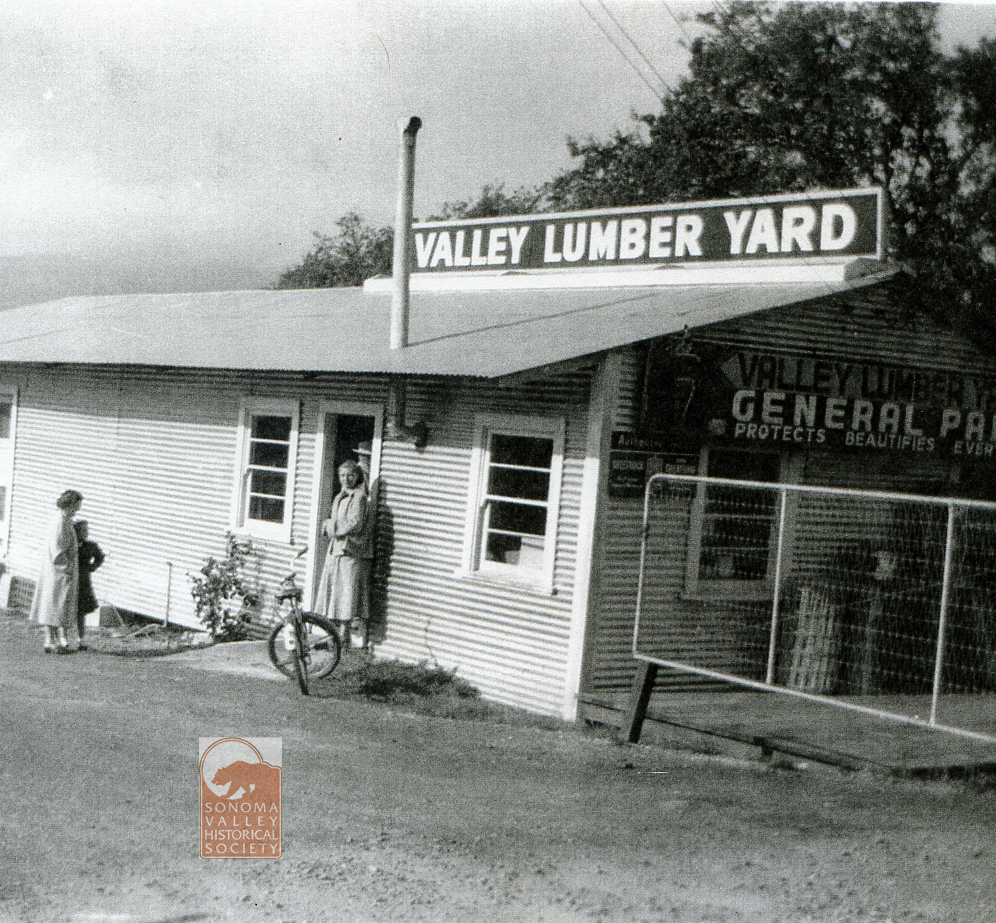
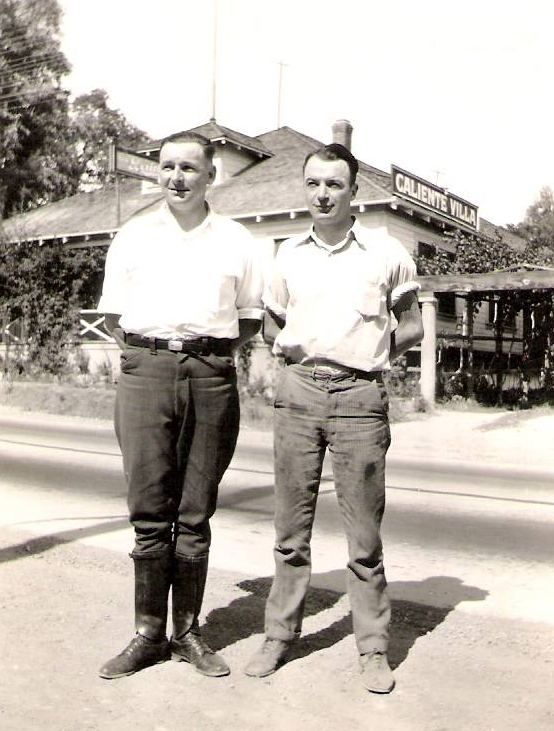
There is something precious about the random snapshots of “just folks”. The professional photographer composes, frames, and considerer the information he wants to convey. Your average person just picks up the camera and shoots, or poses family in front of interesting backgrounds. Even out of focus and out of level, these photographs are charming and are important documents.
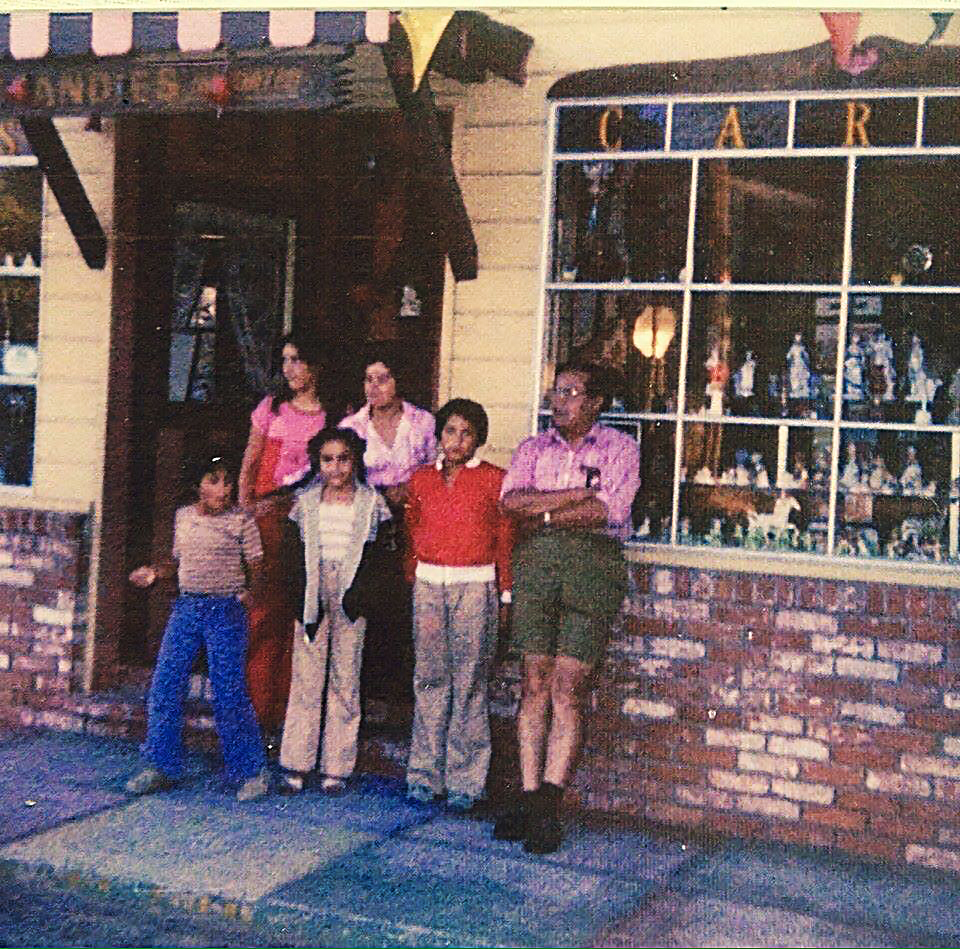
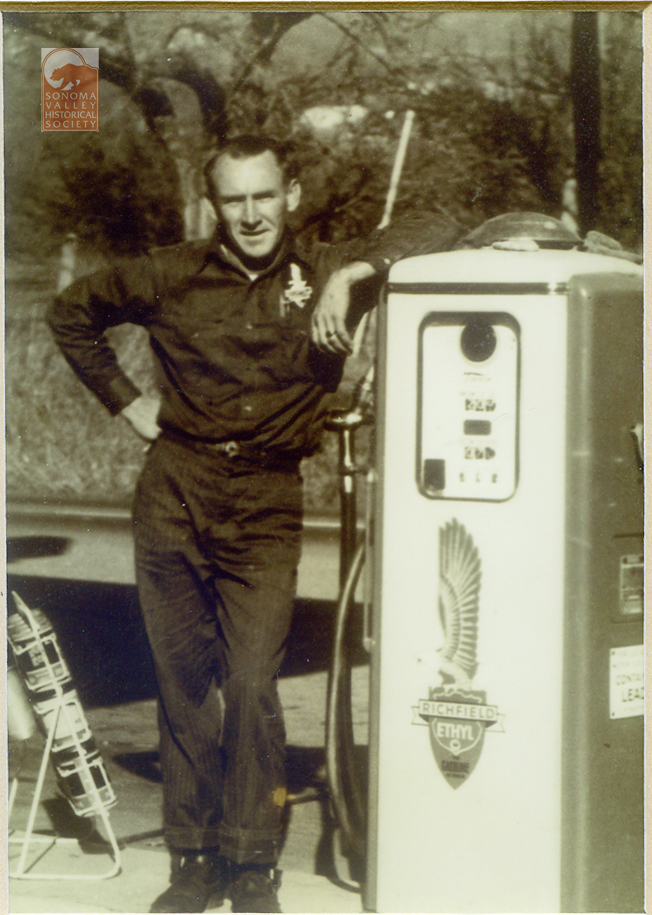
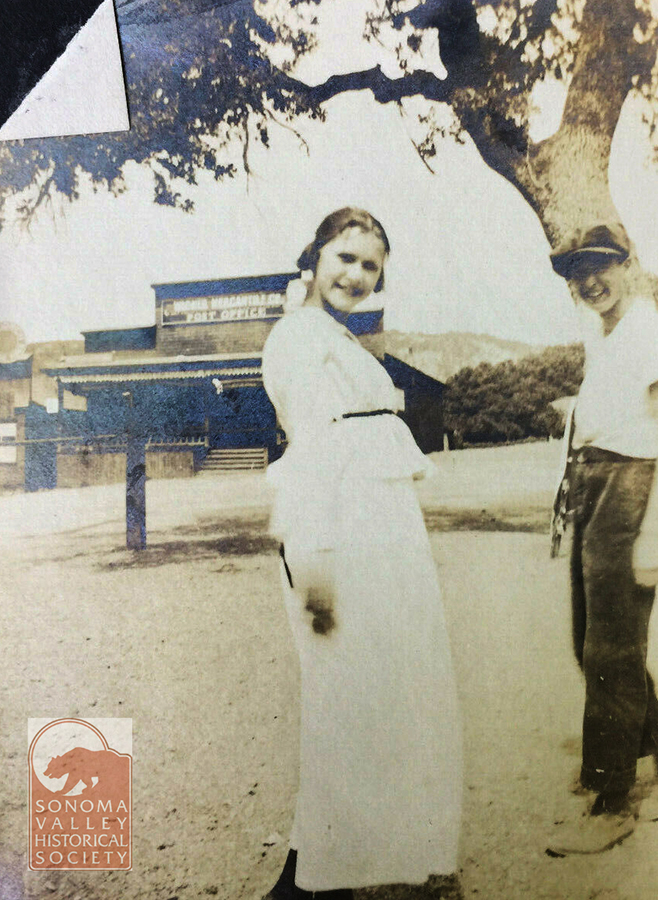
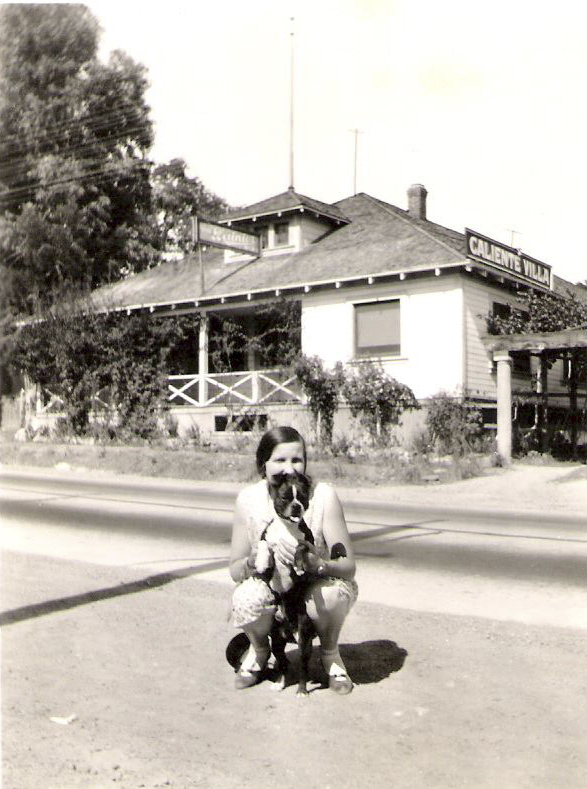
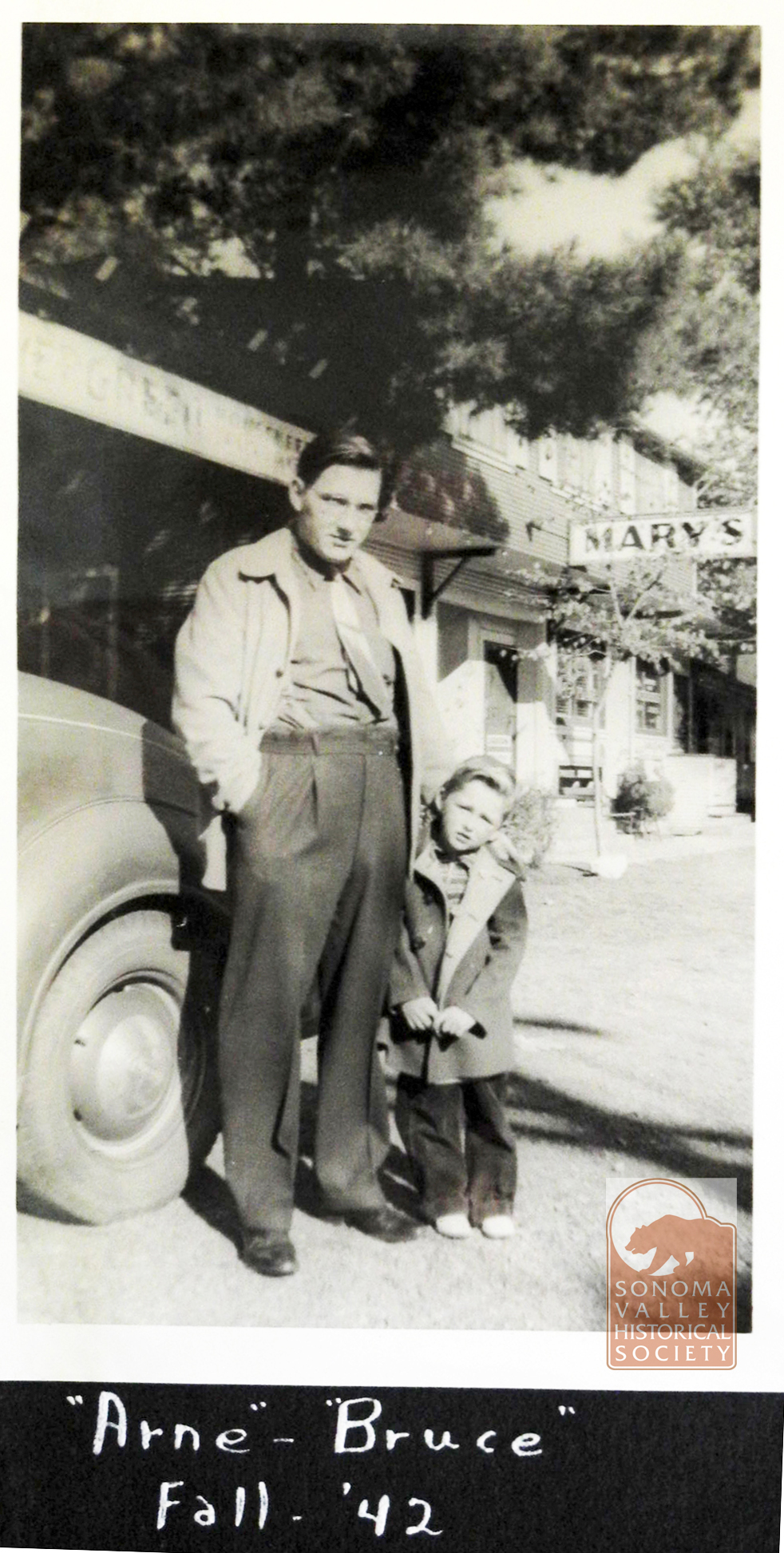
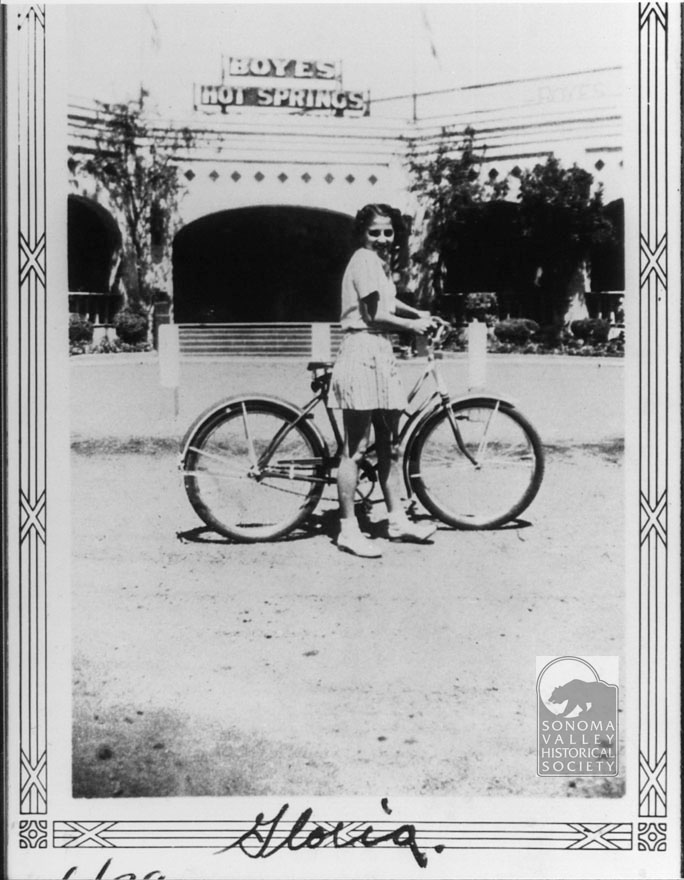
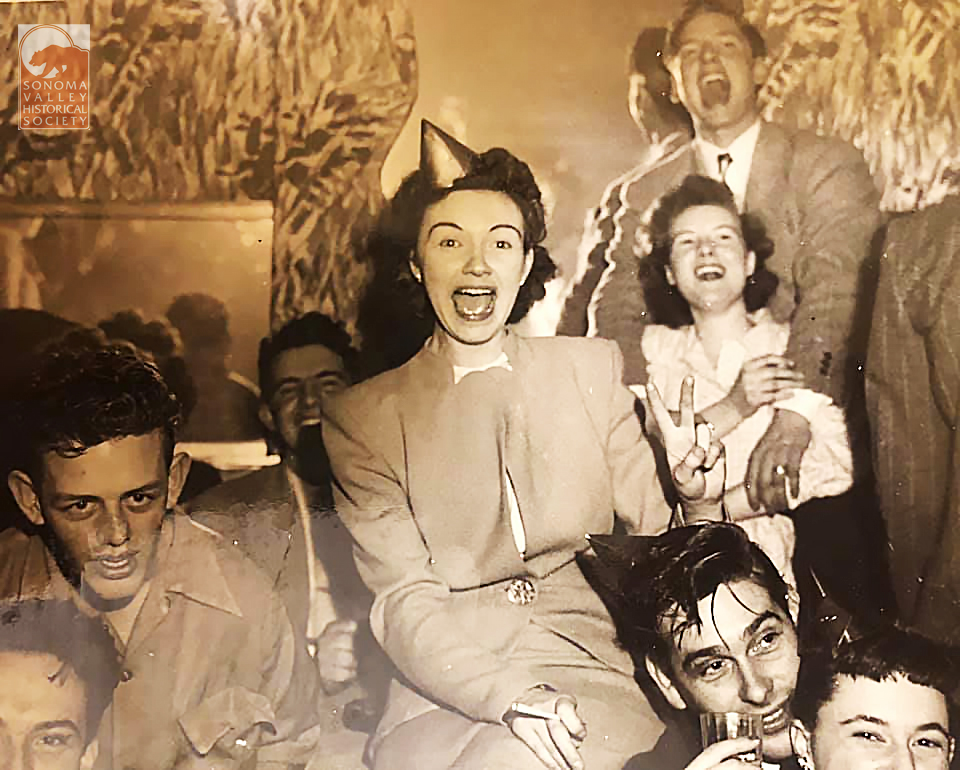
Parson’s Lumber and Hardware, 1952Jeff Gilbert’s Great Uncle Joe Costa and Great Uncle SFPD Officer Joe O’Rourke – Early 1930’s. Caliente Villa behind them-Jeff Gilbert via FacebookThe Nasso Family at their gift shop near Flowery School, circa 1960s. Via Facebook.Inscribed on the back: El Verano, 1894Carl Luhr, Nancy West’s father, at his Richfield station in Boyes, 1960’s? From Nancy, Grange membercirca 1912. Graham’s Store in background. First location of Boyes post officeJeff Gilbert via FacebookOn Pine Ave. in front of Mary’s Cottages. From Bruce Griewe.Interior of the Resort Club, 1950. Probably by Oscar Larson.1944- Dave Chiotti
Don Meachum was a commercial photographer in Santa Rosa between 1943 and 1984. His archive is at the Sonoma County Library
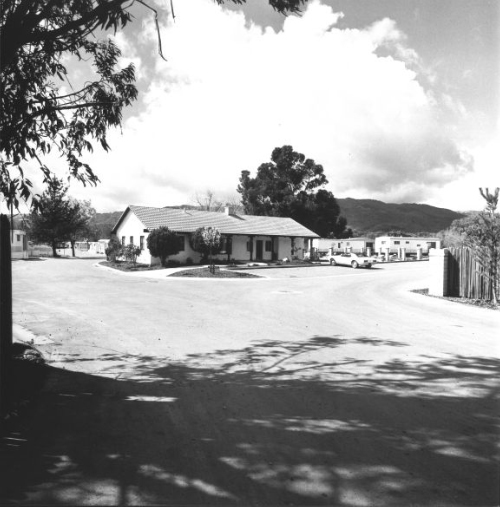
Rancho Vista Mobile Home Park, Fetters Springs, 1971
Newspaper Photographers
The area has, of course, been photographed thousands of times for stories in the Index Tribune.
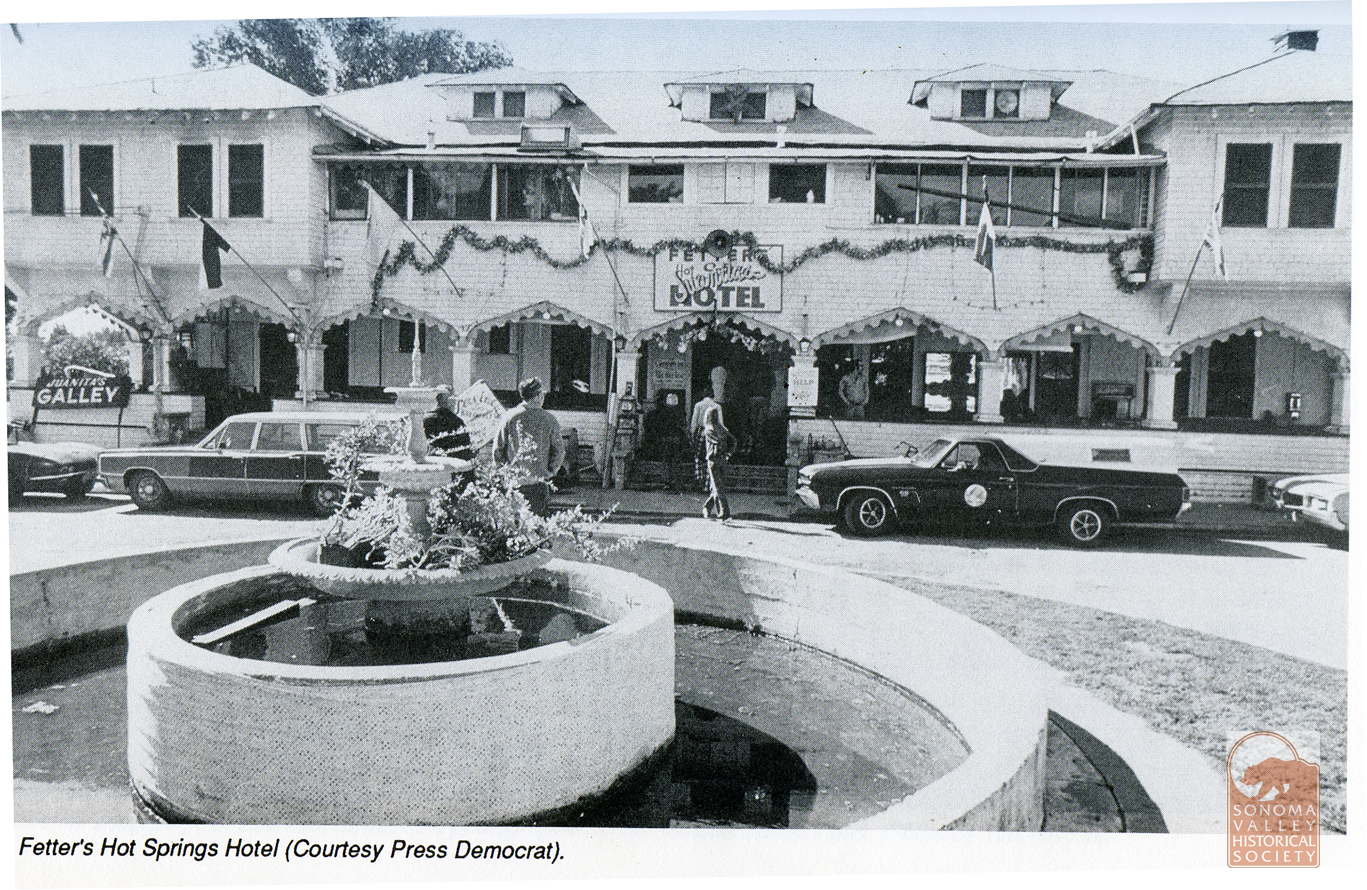
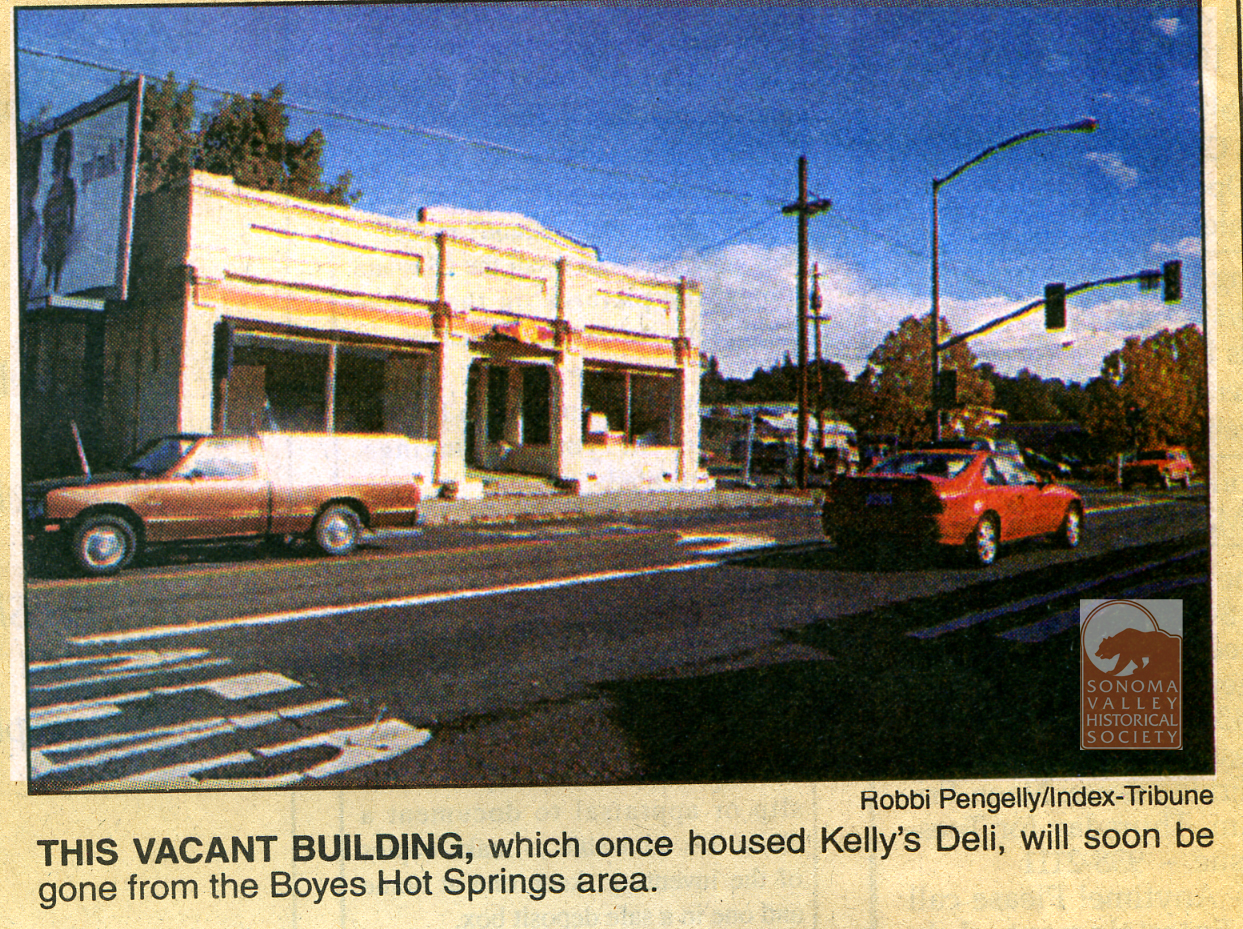
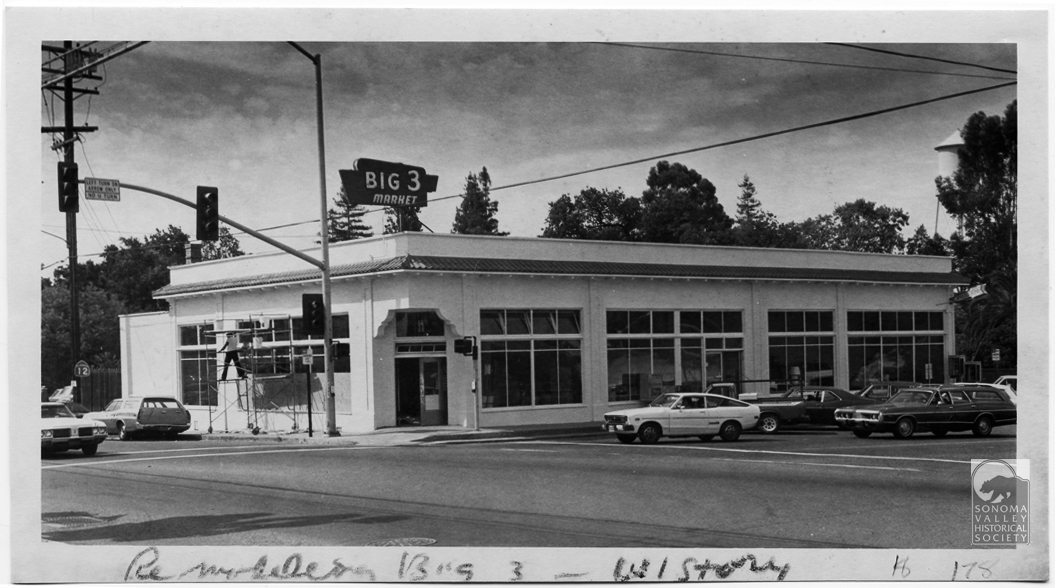
Fetters Hotel during the tenure of Juanita Musson.At the corner of Hwy 12 and Vallejo Ave, 1992. The lot became employee parking for the Sonoma Mission Inn. Everybody knows Robbi!Big Three Market, 1980. Corner of Boyes Blvd. and Hwy 12.
Miscellaneous Sources
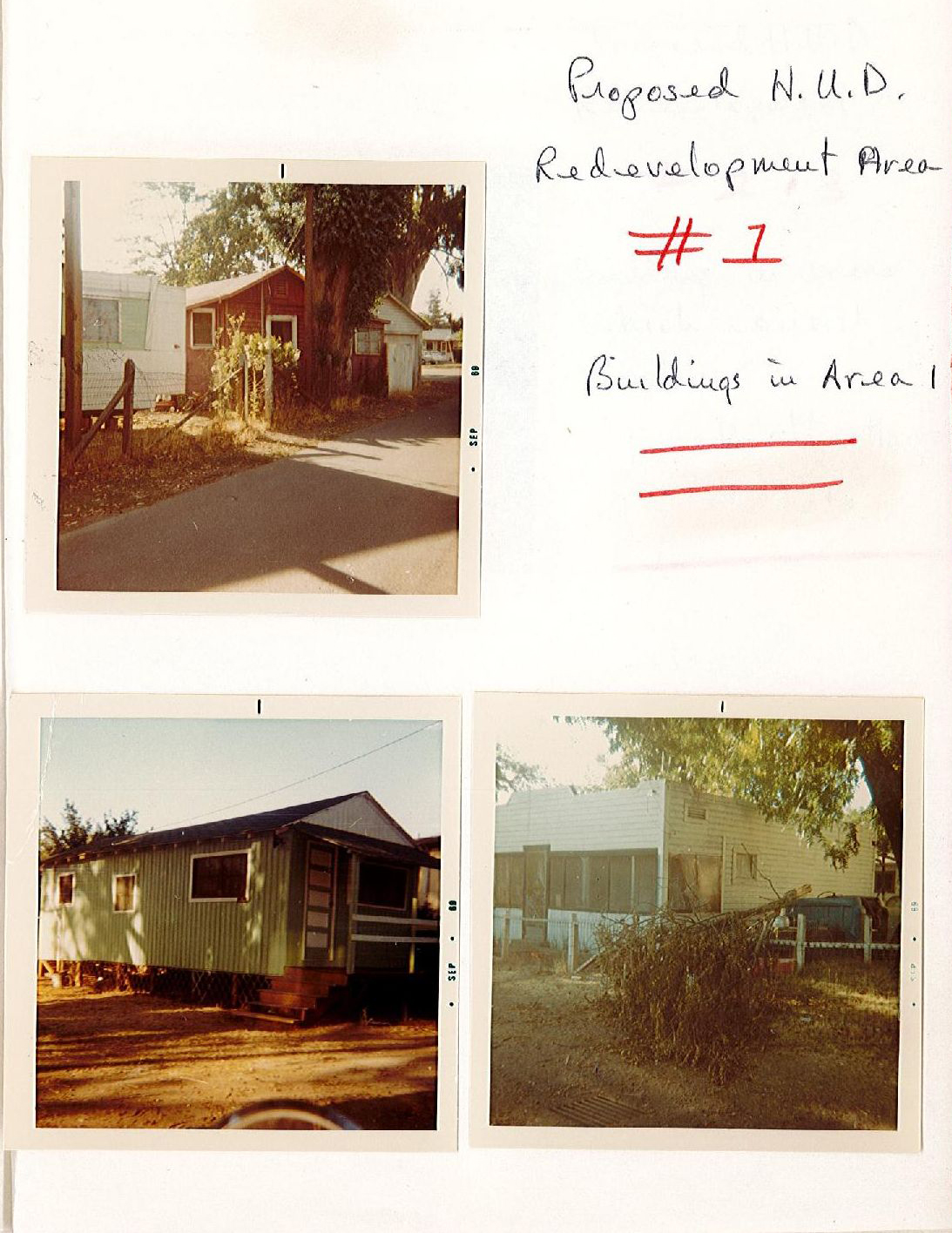
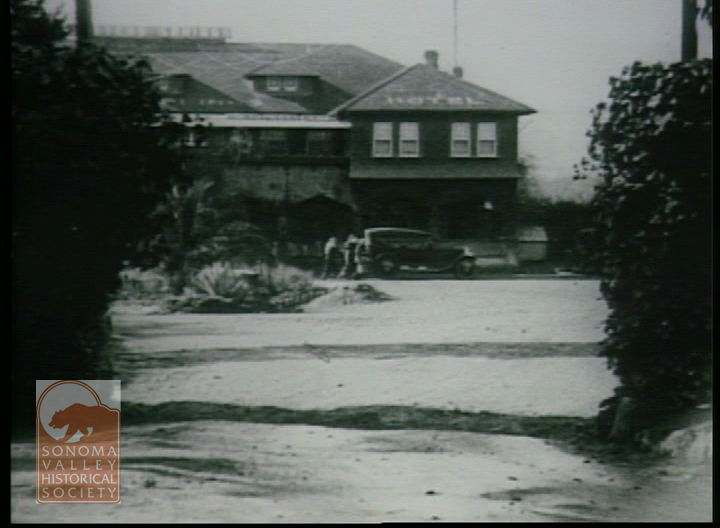
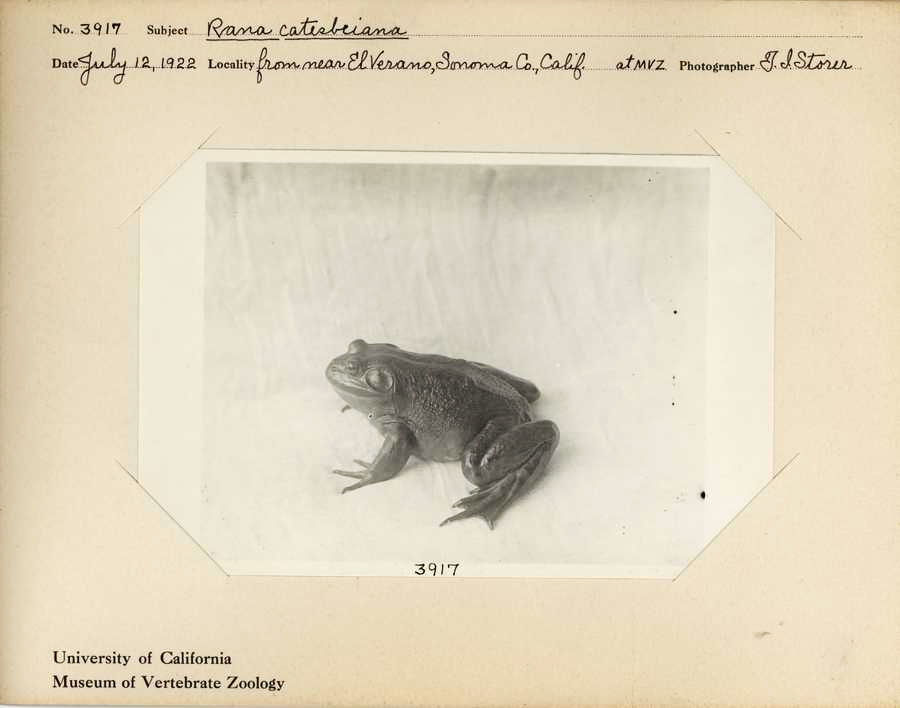
Pine Ave. County Redevelopment, circa 1986.Still from the film “Account of the No Account Count,” directed by Josh Binney, 1923, showing the Fetters Springs Hotel.You just have to imagine Storer poking around down by the creek in El Verano. In his notes he tells of coming upon two young boys selling frogs along the roadside. Biologist T. I. Storer, 1922
MIchael Acker
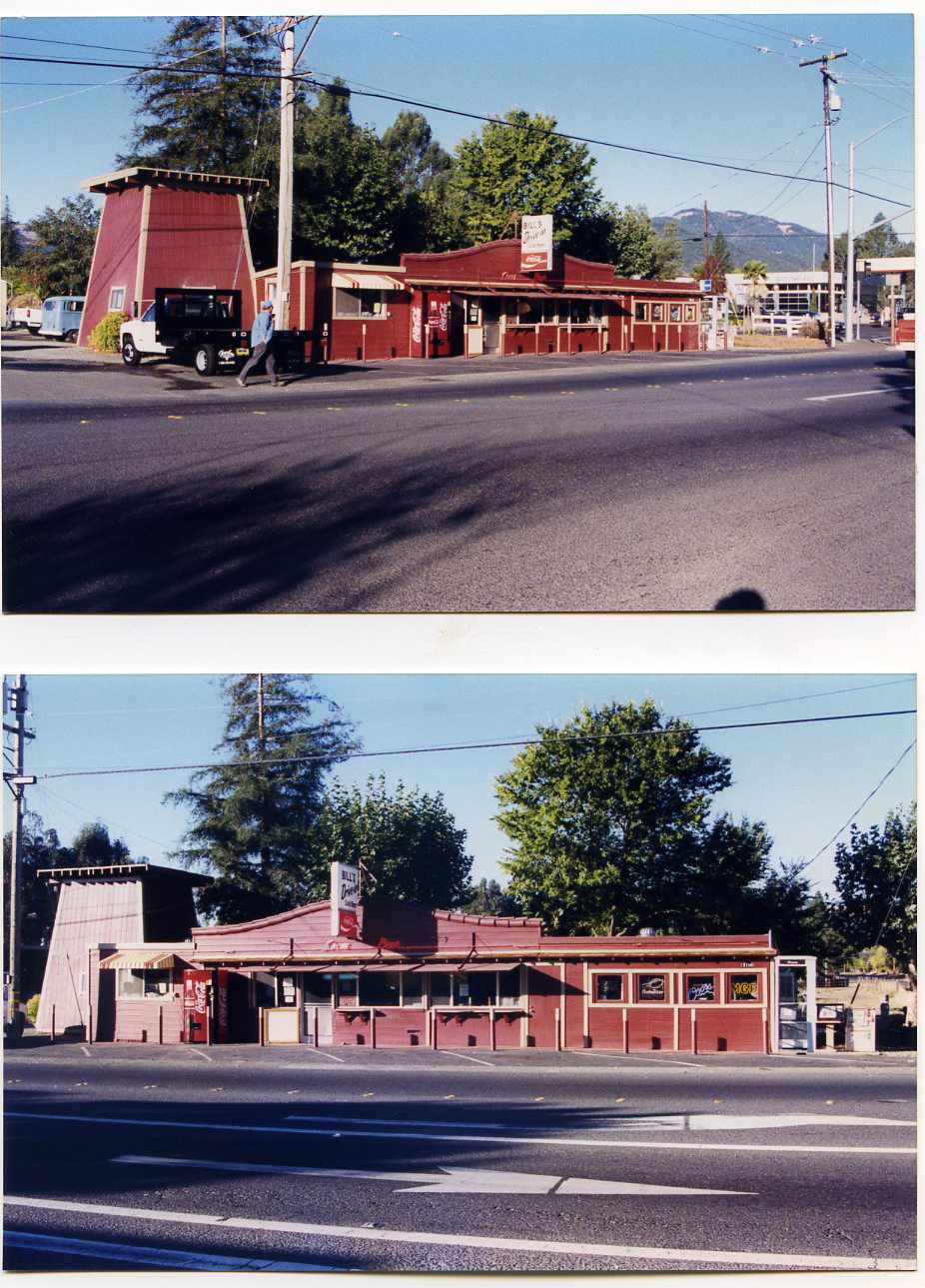
When I started looking for historic photos I also started photographing the same locations. What with the pace of change, it soon became apparent to me that my photos were also historic documents. And so are yours!
Relatively speaking, the photo archive of the Springs is small. My database currently has 957 photographs, brochures, maps, and other ephemeral. I realize that this is not anywhere near all that exists, but I envy historians like Amy O’Hair who produces the wonderful Sunnyside History Project because she has access to the archives of San Francisco, which are profound. (Also see and the Western Neighborhoods Project).
Occasionally someone will contact me with photos such as Mr. Chiotti’s. I’m deeply grateful to him and other donors.
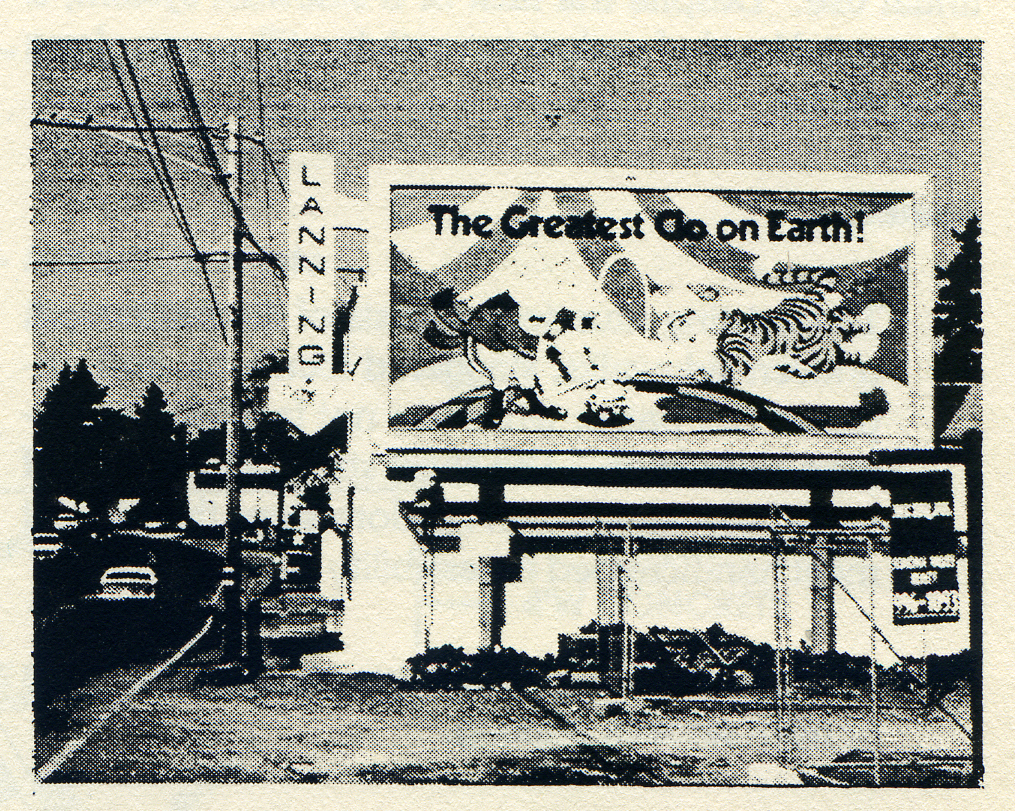
The old Lanning Resort Club/Melody club sign, 1980s. Lanning Structures used the building for offices at that time. It was located on the east side of the Highway, across from the Boyes Springs Plaza, at Boyes Blvd. It’s now a perpetual construction site. The photo is from the Redevelopment Design Guidelines handbook from 1989.
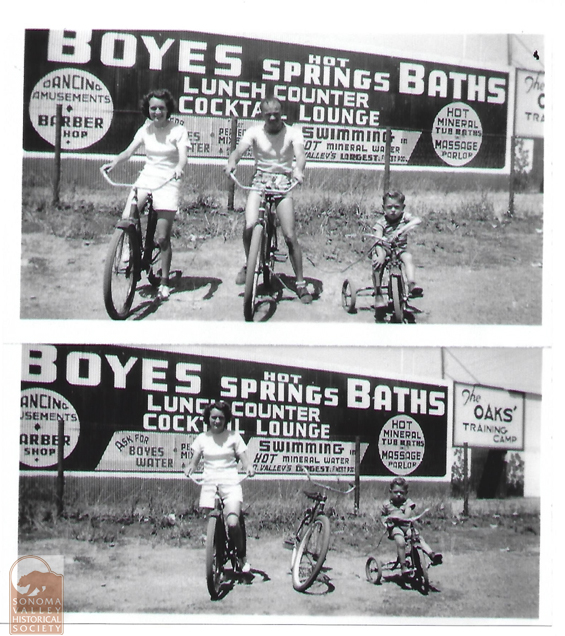
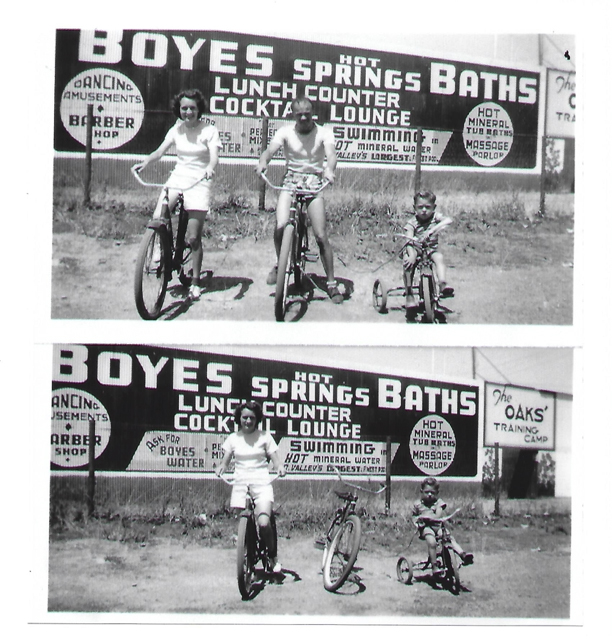
Louise, Ernie, and David Chiotti, 1944. I’m not sure where the sign was, possibly at the Boyes Springs ball field, adjacent to the Bath House. Note the sign indicating the Oakland Oaks Springs training camp.
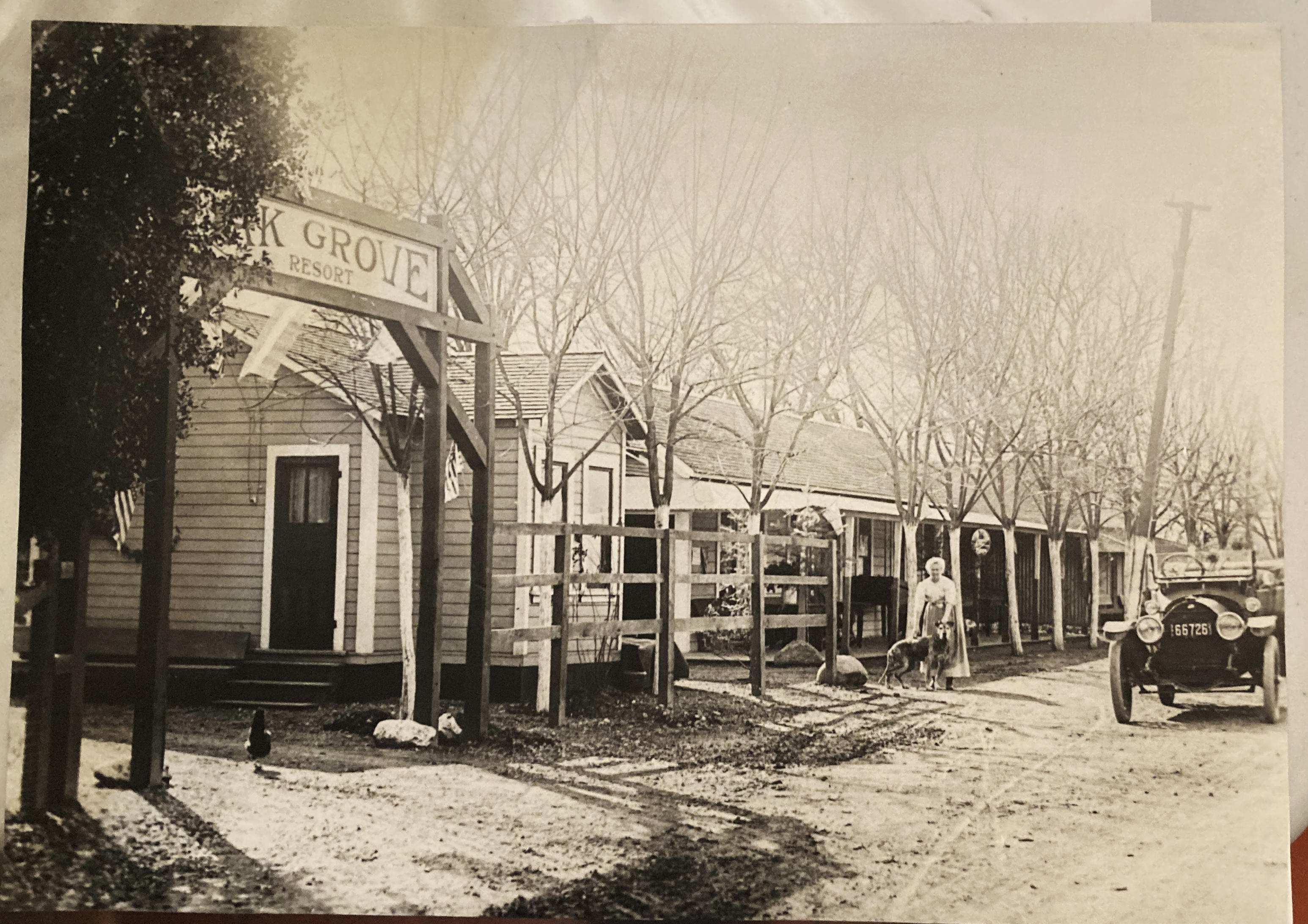
The Oak Grove Resort was “at Verano,” according to the brochure published by the Northwest Pacific Railroad in the 1920s. This could be the site of the later Paul’s Resort near the corner of Verano Blvd. and Highway 12.
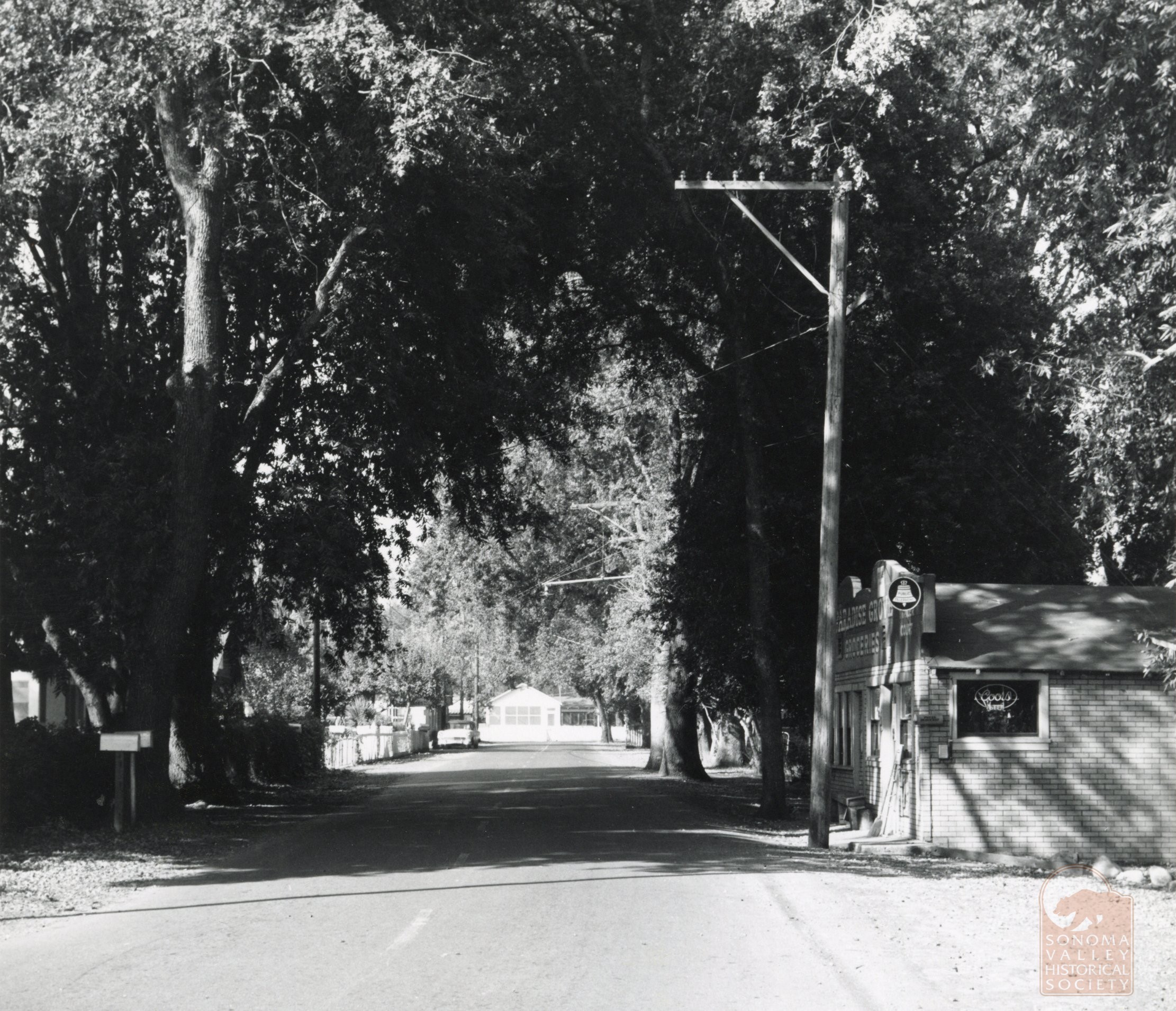
Paradise Grove, near the corner of Riverside and Boyes Blvd, 1950s. Obviously, they sold beer. I know I have readers who have memories of this place, which I would love to hear.
Photos courtesy of the Sonoma Valley Historical Society, Dave Chiotti, and author’s collection
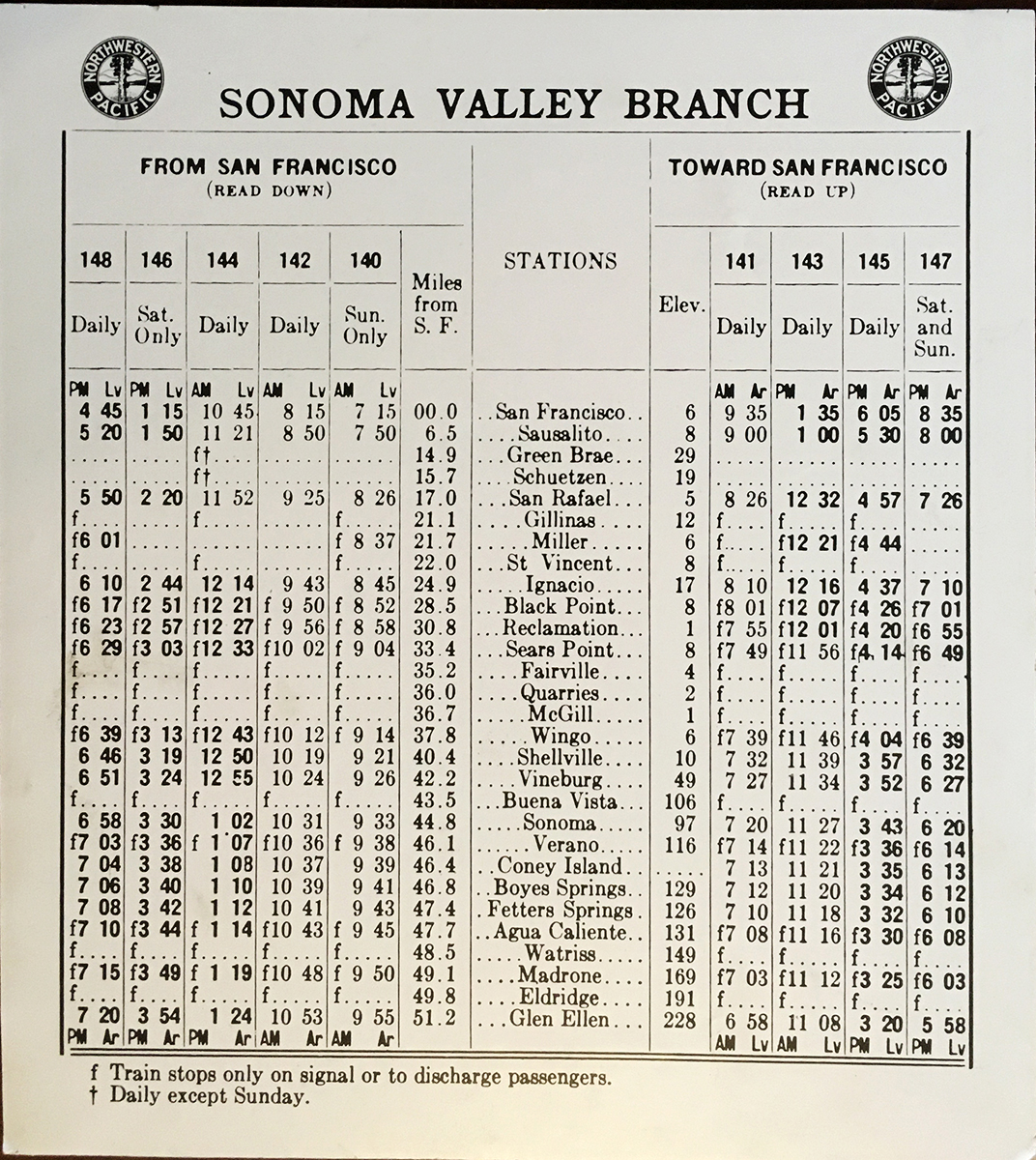
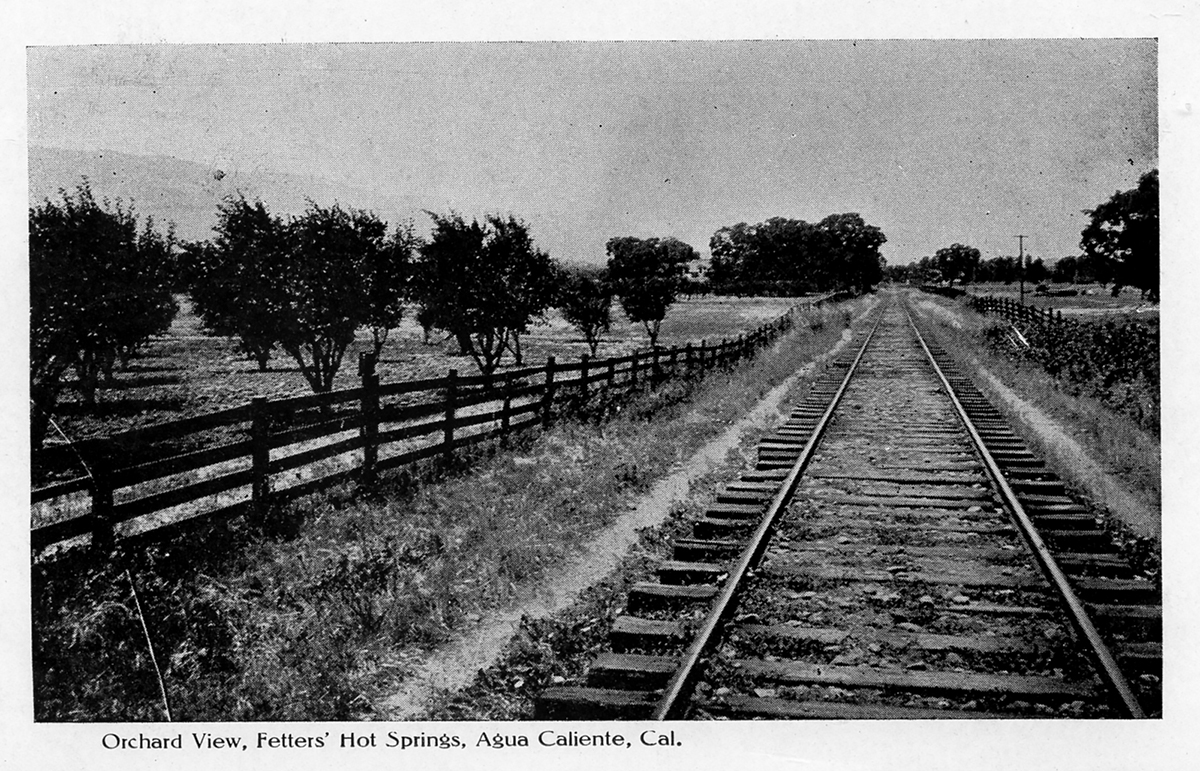
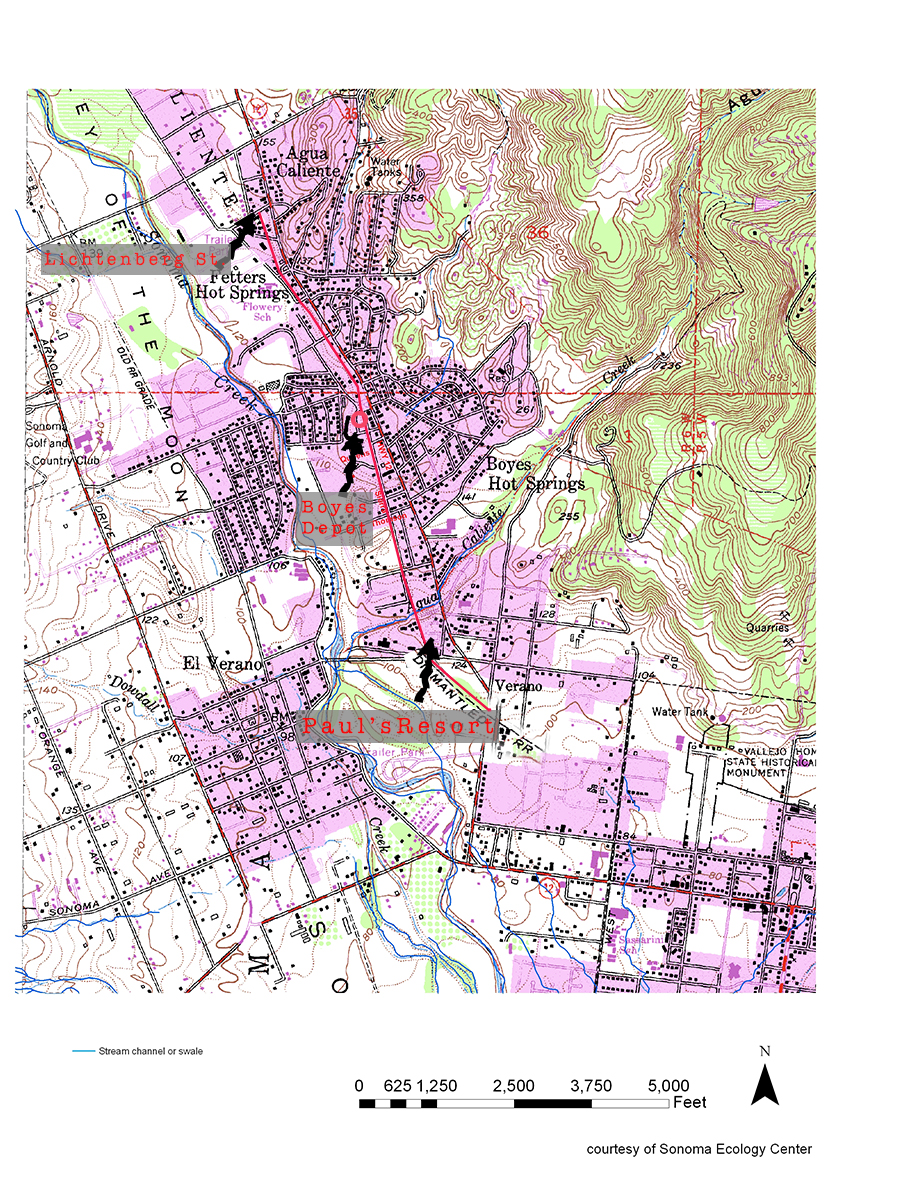
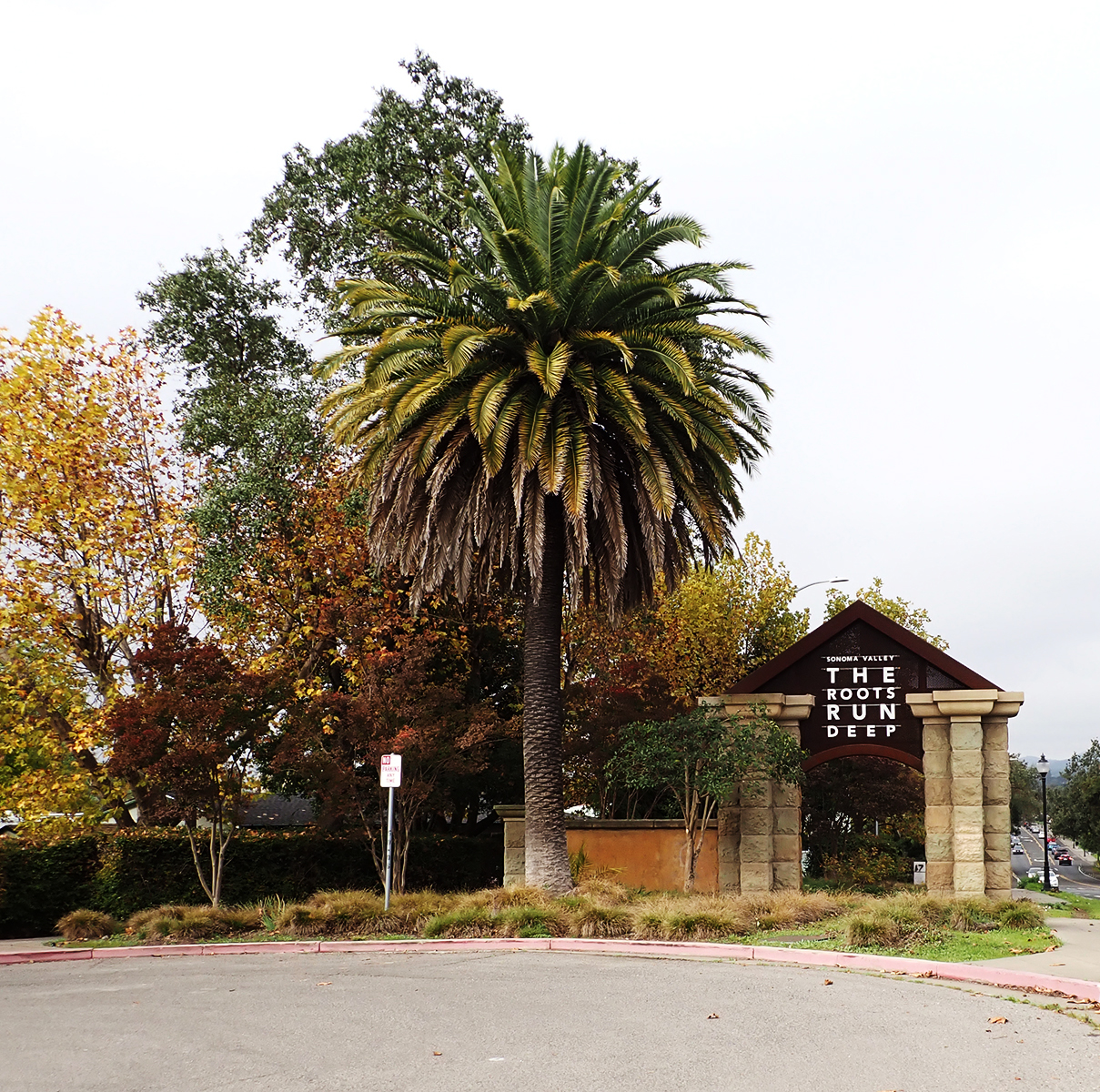
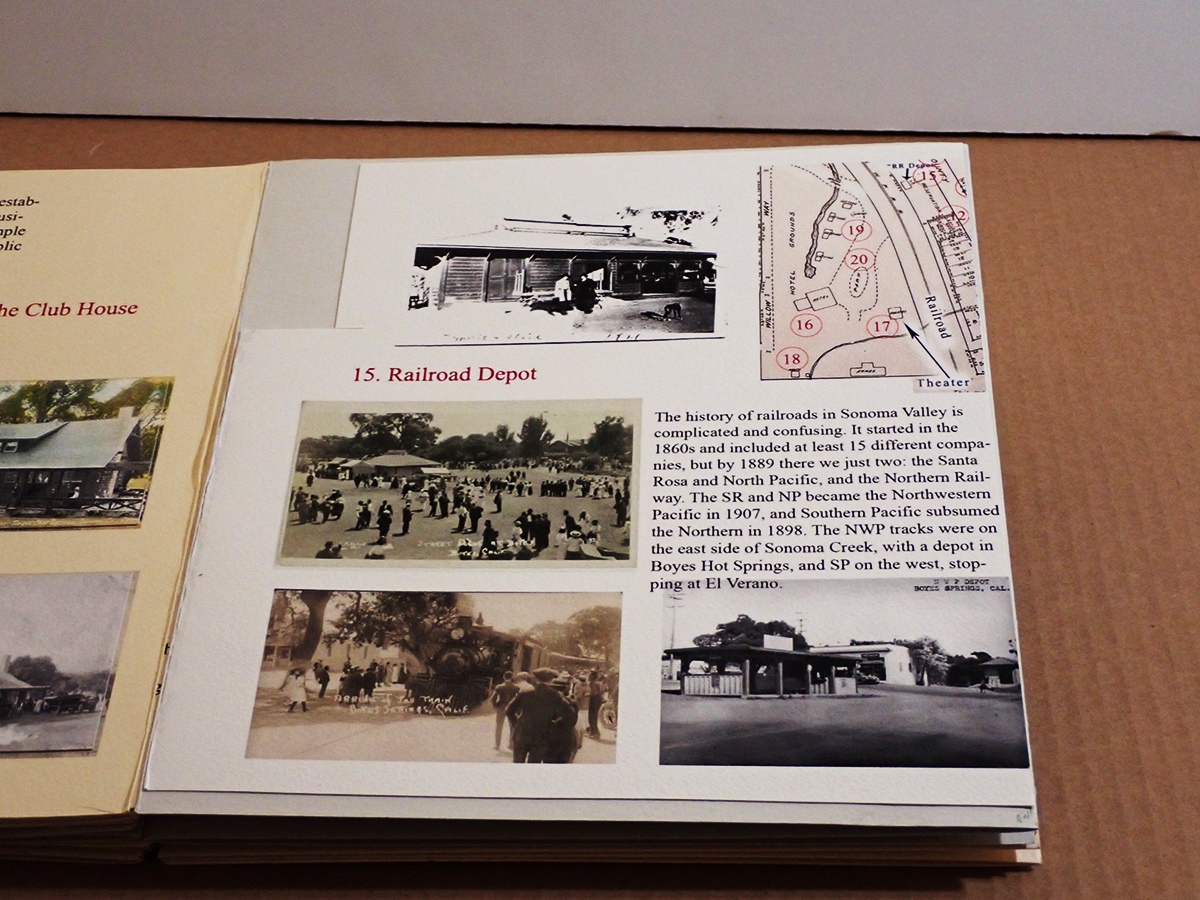
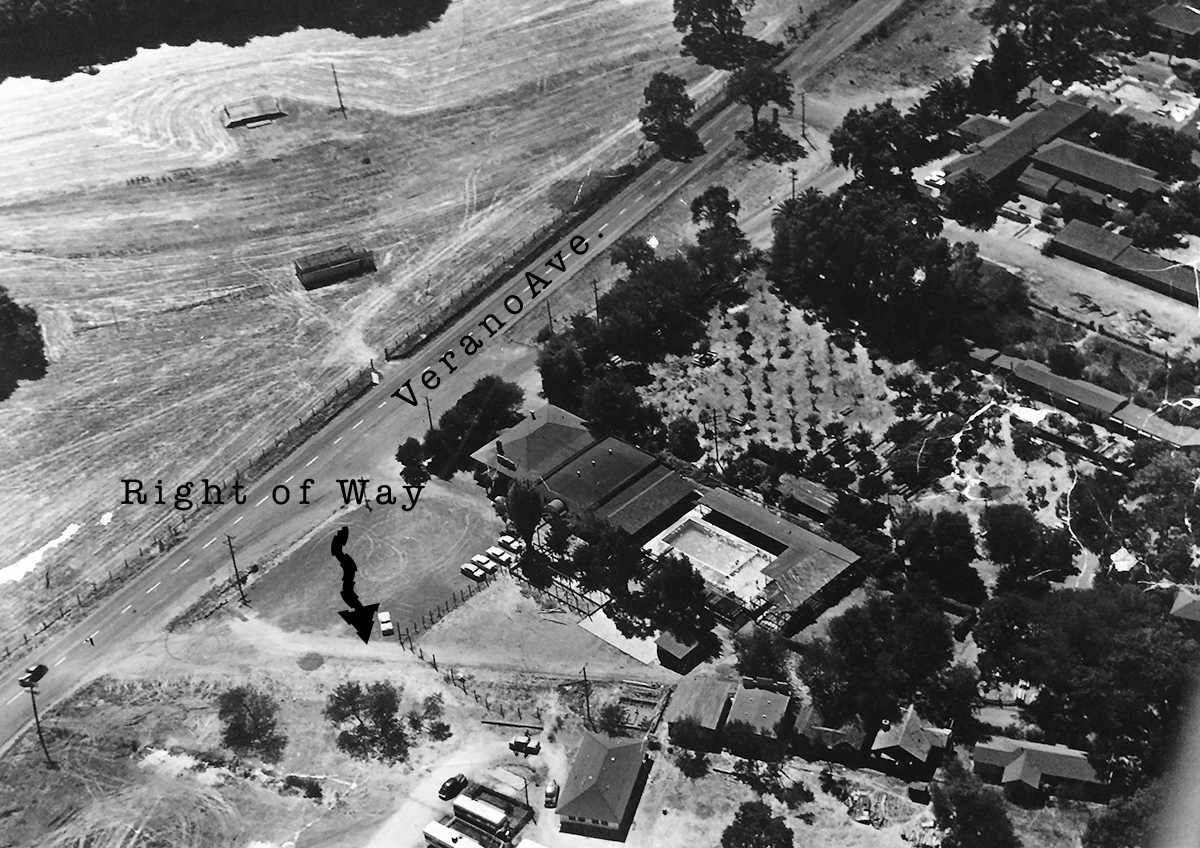
The last year of operation for the Northwest Pacific Railroad in Sonoma Valley, which ran on the east side of Sonoma Creek, was 1942. That year freight service ended, and the tracks were torn up for steel for the war effort. Traces of the right-of-way can be seen in several places in El Verano, Boyes Hot Springs, Fetters Hot Springs, and Agua Caliente.
From El Verano going north:
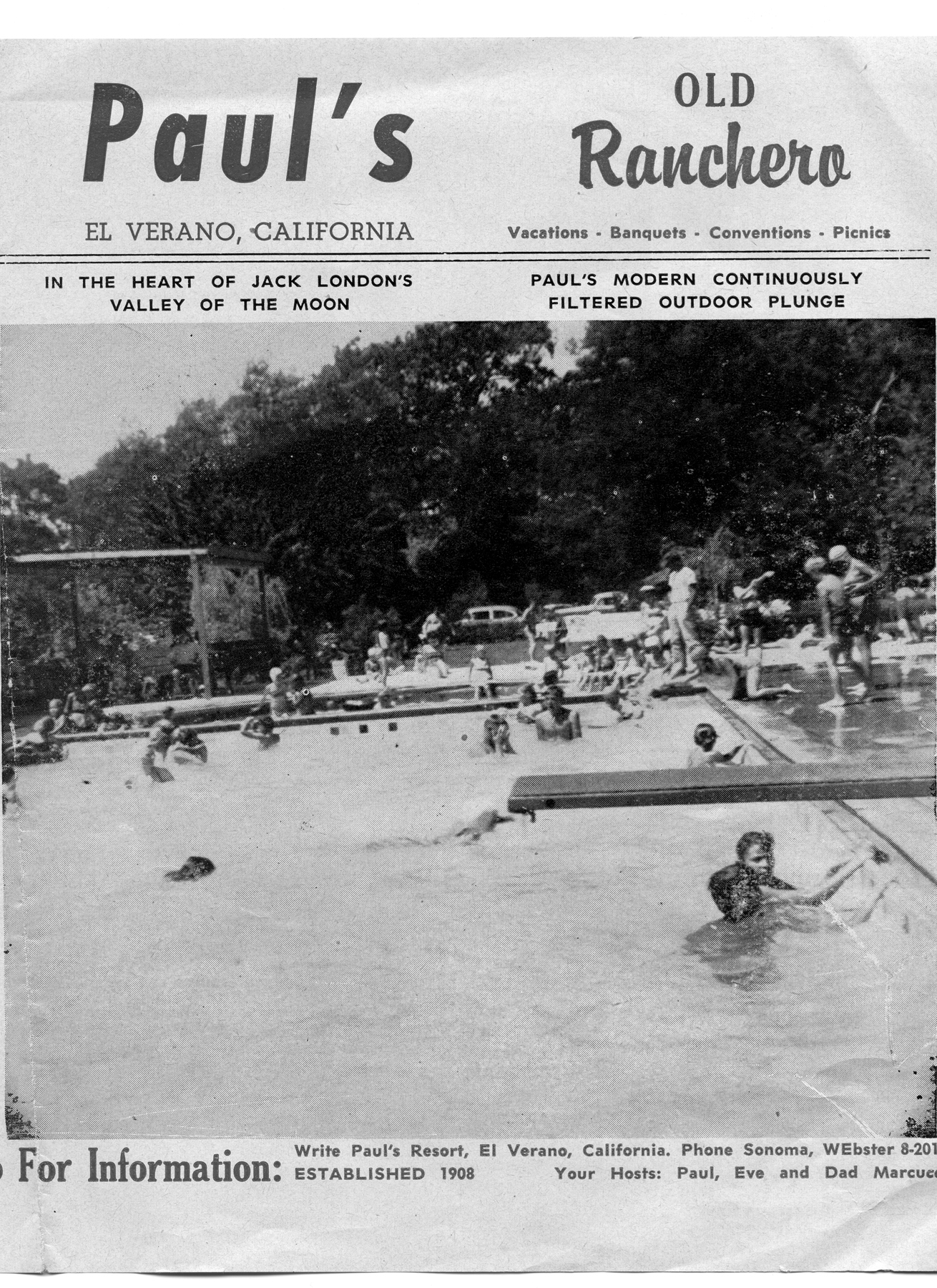
In El Verano the tracks run through the Paul’s Resort property, where the Verano (not El Verano) depot was located.
Paul’s Resort, 1960s
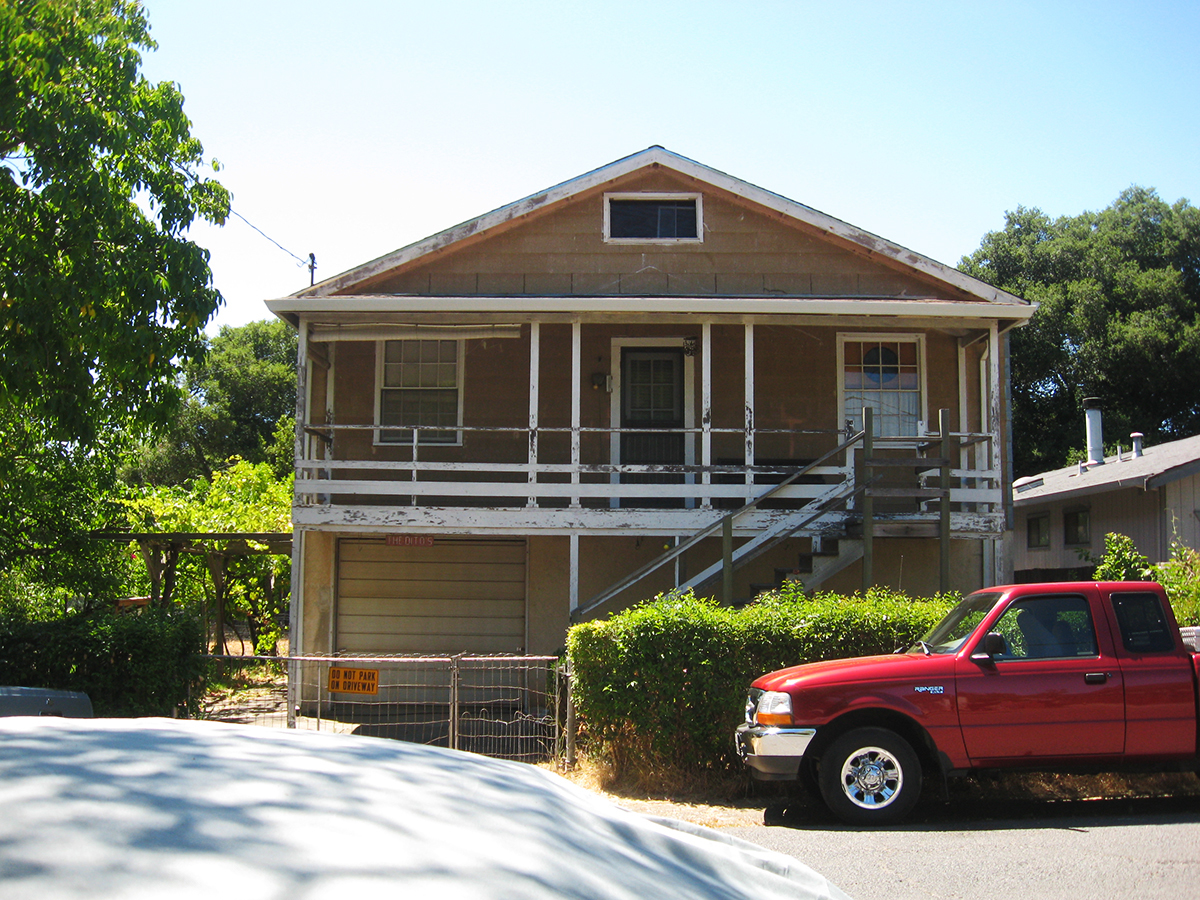
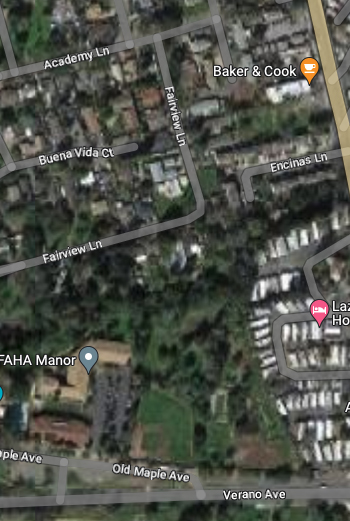
From there it parallels Fairview Ln. (which may have been right-of-way) until it gets to Thompson, where Sierra Dr., formerly Meinke Ave., takes over the roadbed. (More about Sierra and Mienke.) Manzanita St. might have been a spur. It features several buildings that look as if they could have been built by the railroad.
House on Manzanita near Academy Lane
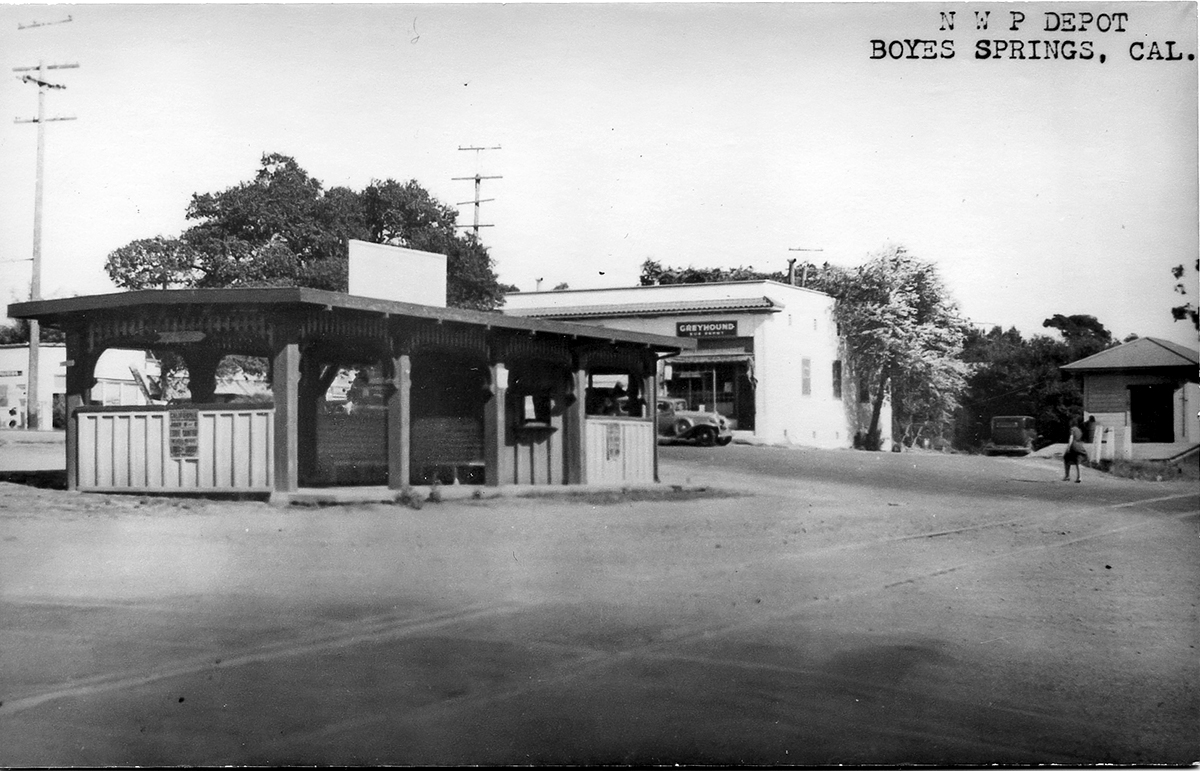
Where Sierra turns east to the Highway the right of way continues north through the Sonoma Mission Inn (originally the Boyes Hot Springs Resort) grounds and past the BHS depot, which land is now the parking lot for the Plaza Center building (More here).
Boyes Depot 1942
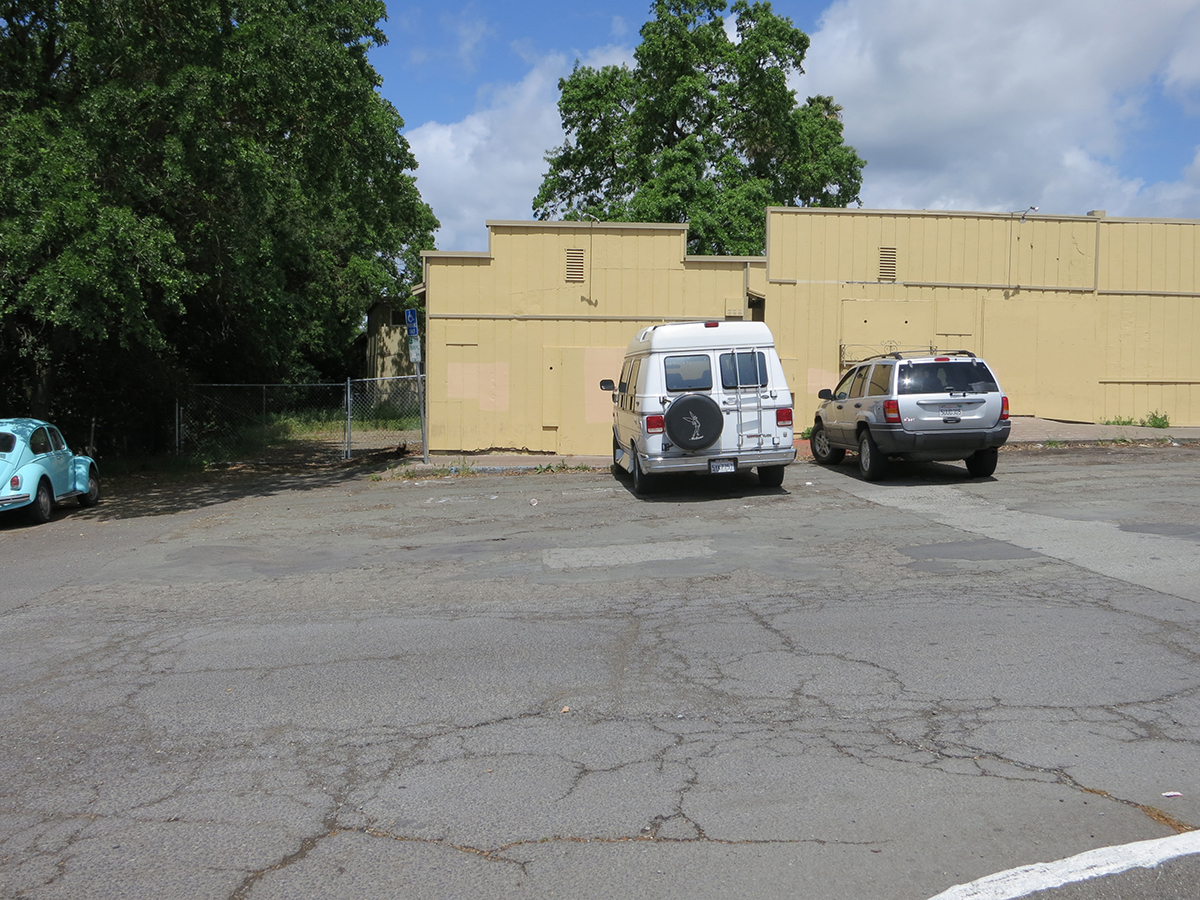
Right-of-way next to old commercial buildings at Boyes Plaza, which were demolished in 2018. Photo taken from the apporxiamte location of the Boyes Depot.
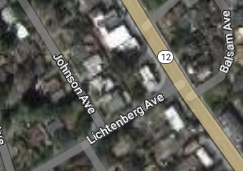
Continuing north it parallels the Highway and can be seen crossing Lichtenberg Ave, parallel to Johnson Ave.
At Lichtenberg.
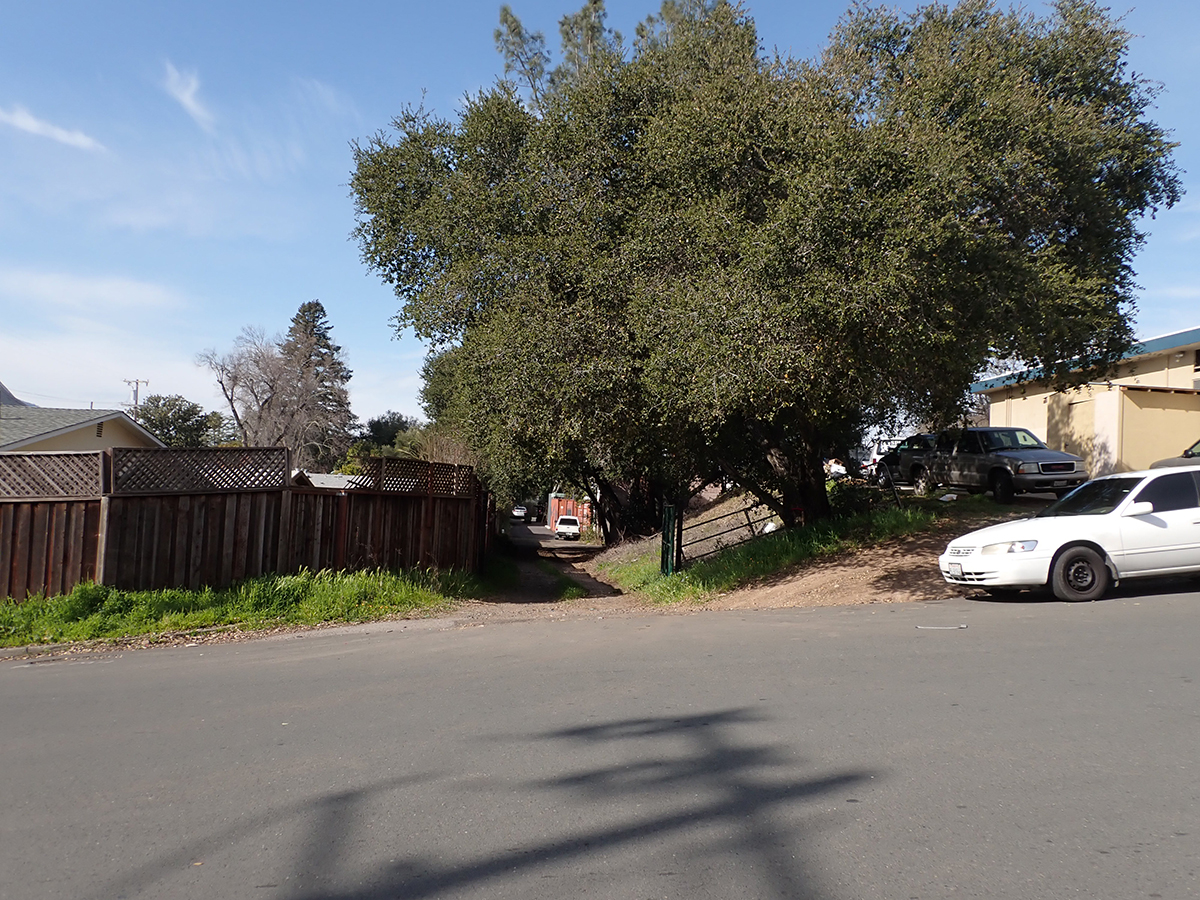
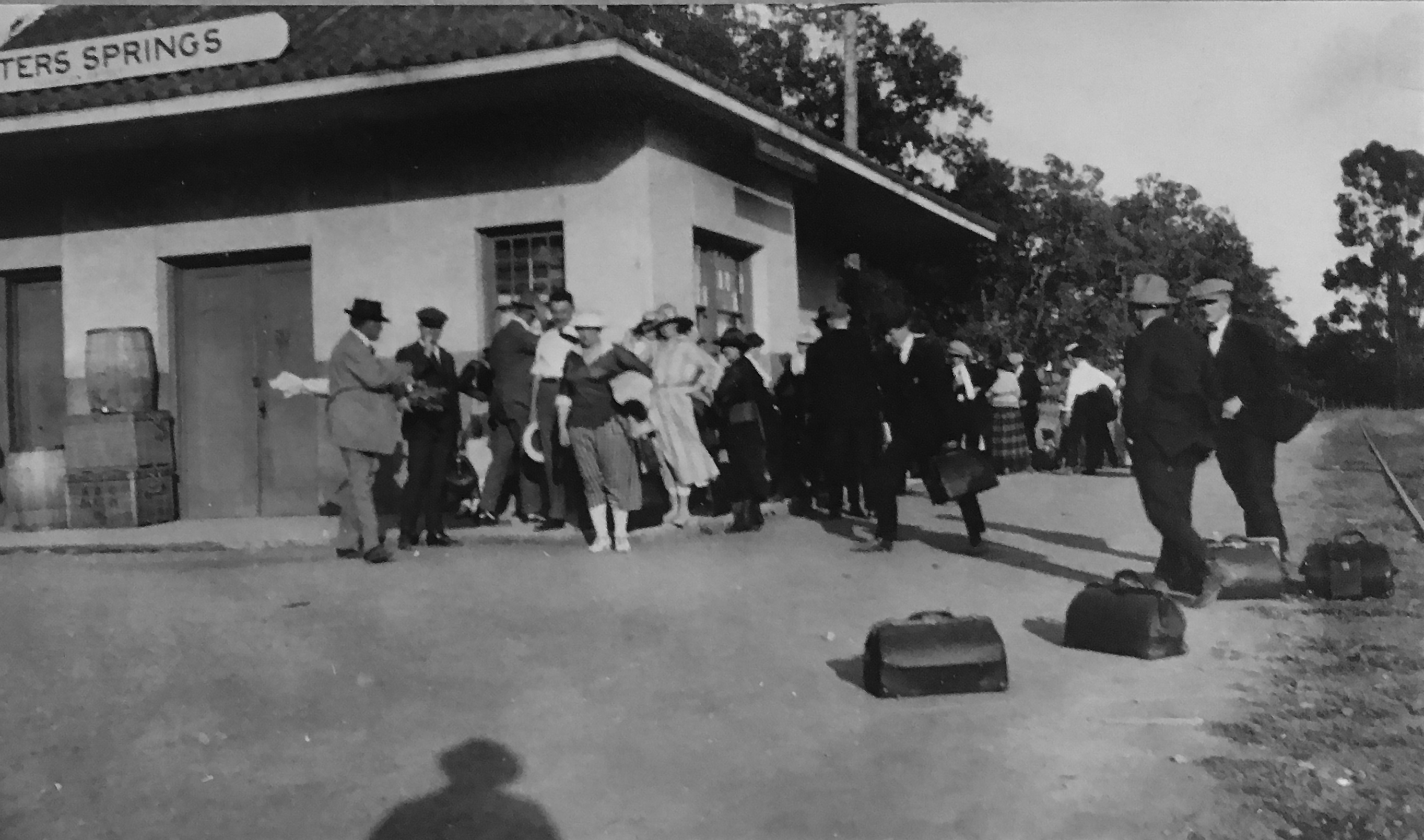
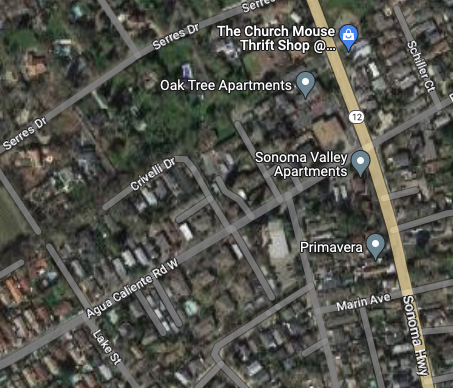
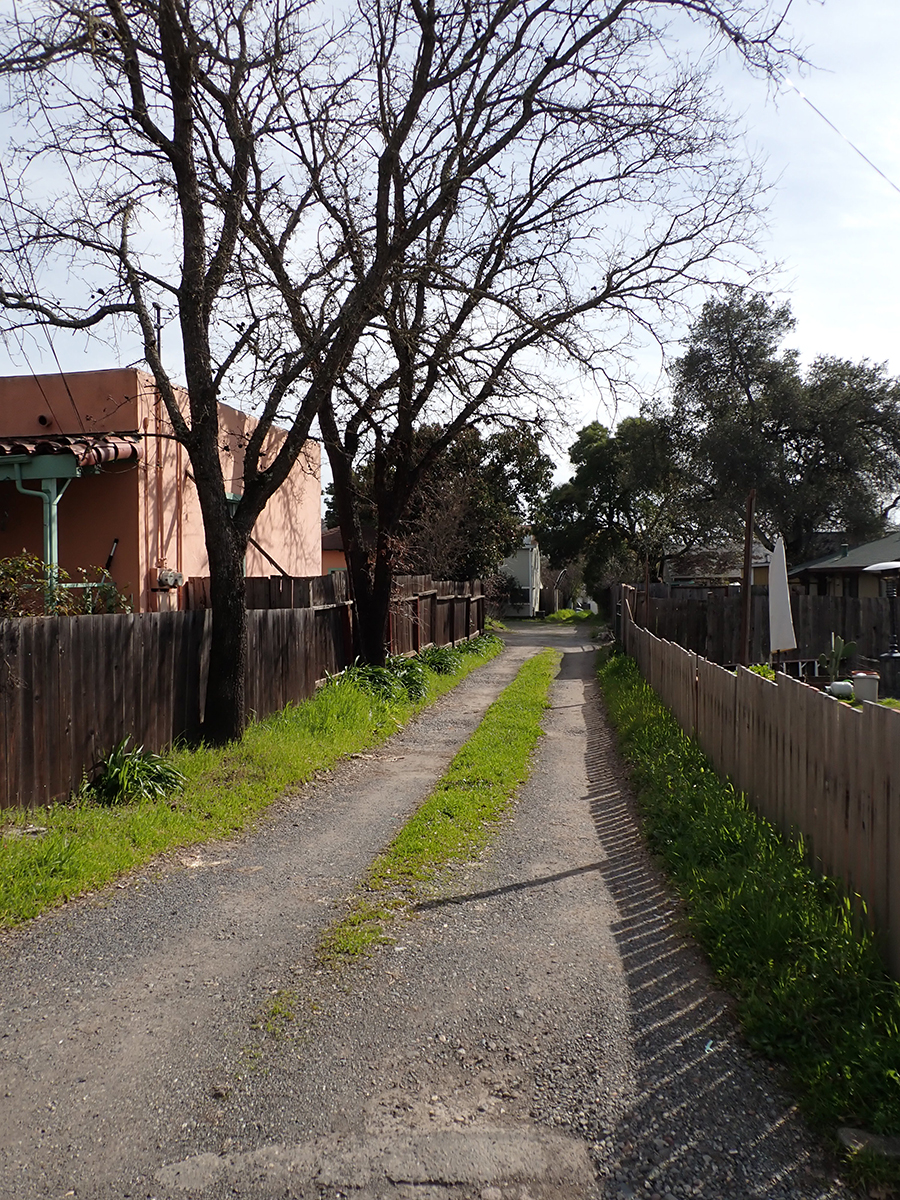
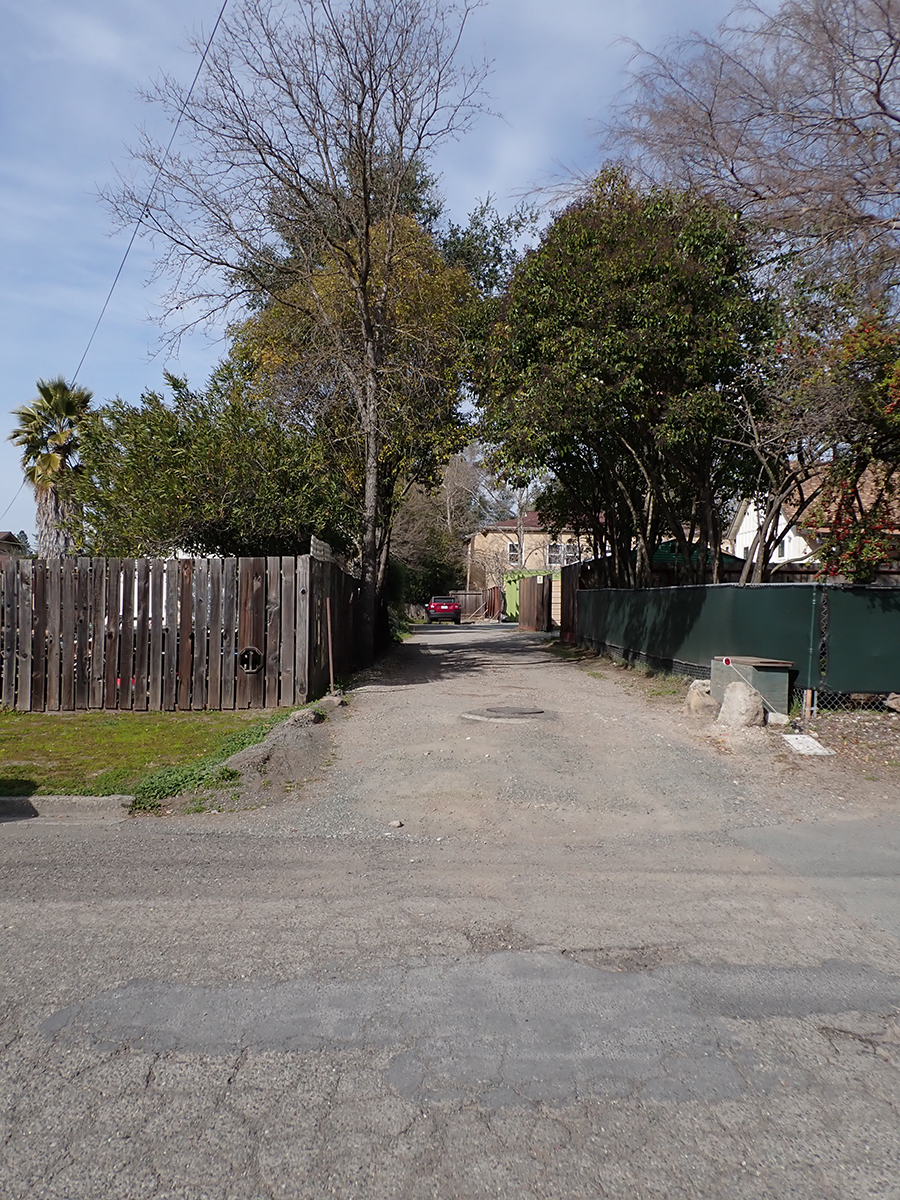
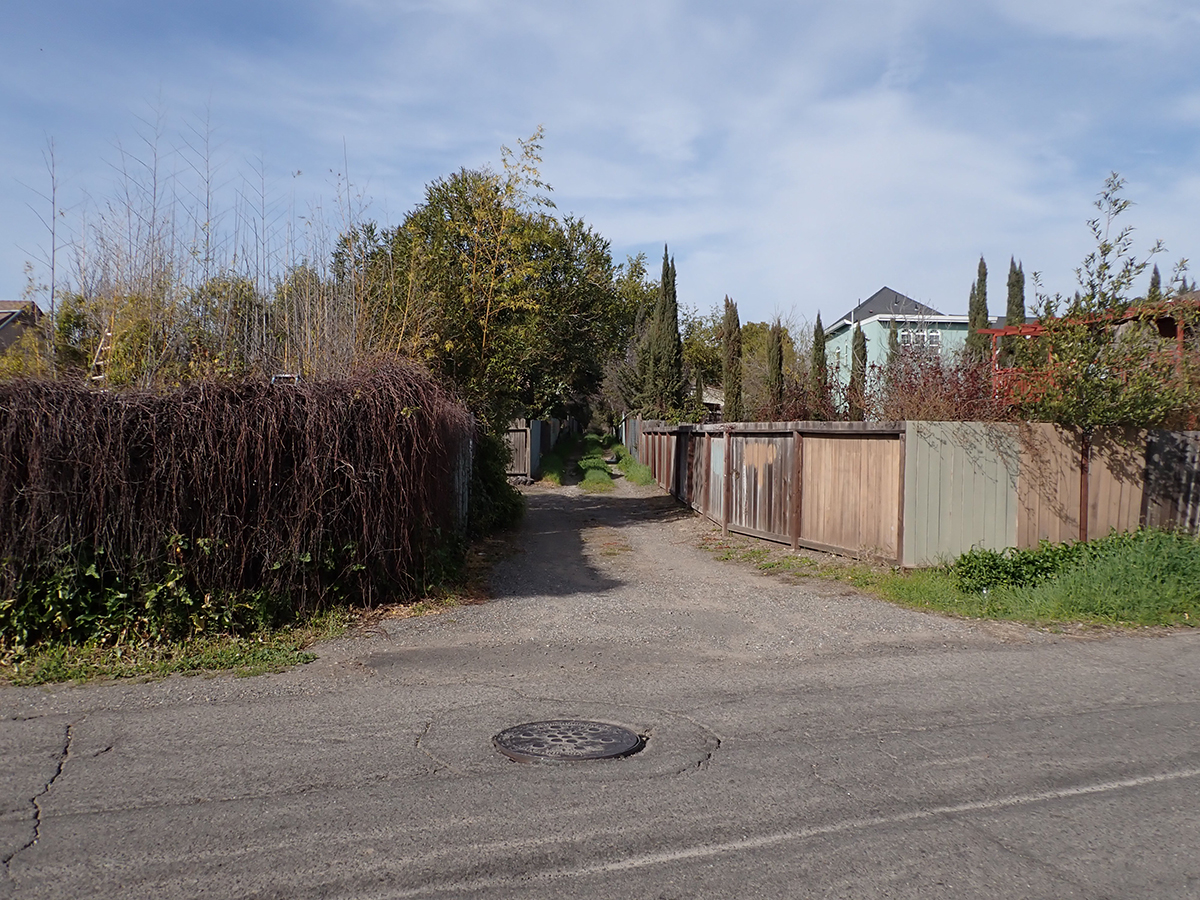
The next trace is the old Fetters Depot building on Depot Rd in front of Flowery School. It crosses the Fetters Apartments and Charter School properties and is seen again at Vialetti Dr. The old roadbed has become the alley the runs from Vailetti to Marin Ave. That is the last appearance of the right-of-way in the area.
Fetters Depot 1910s
1910s
At Marin Ave. looking south.
At Marin Ave. looking north.
At Vailetti Rd. looking north
Maps and photographs courtesy of the sonoma Valley Historical Society unless noted otherwise.
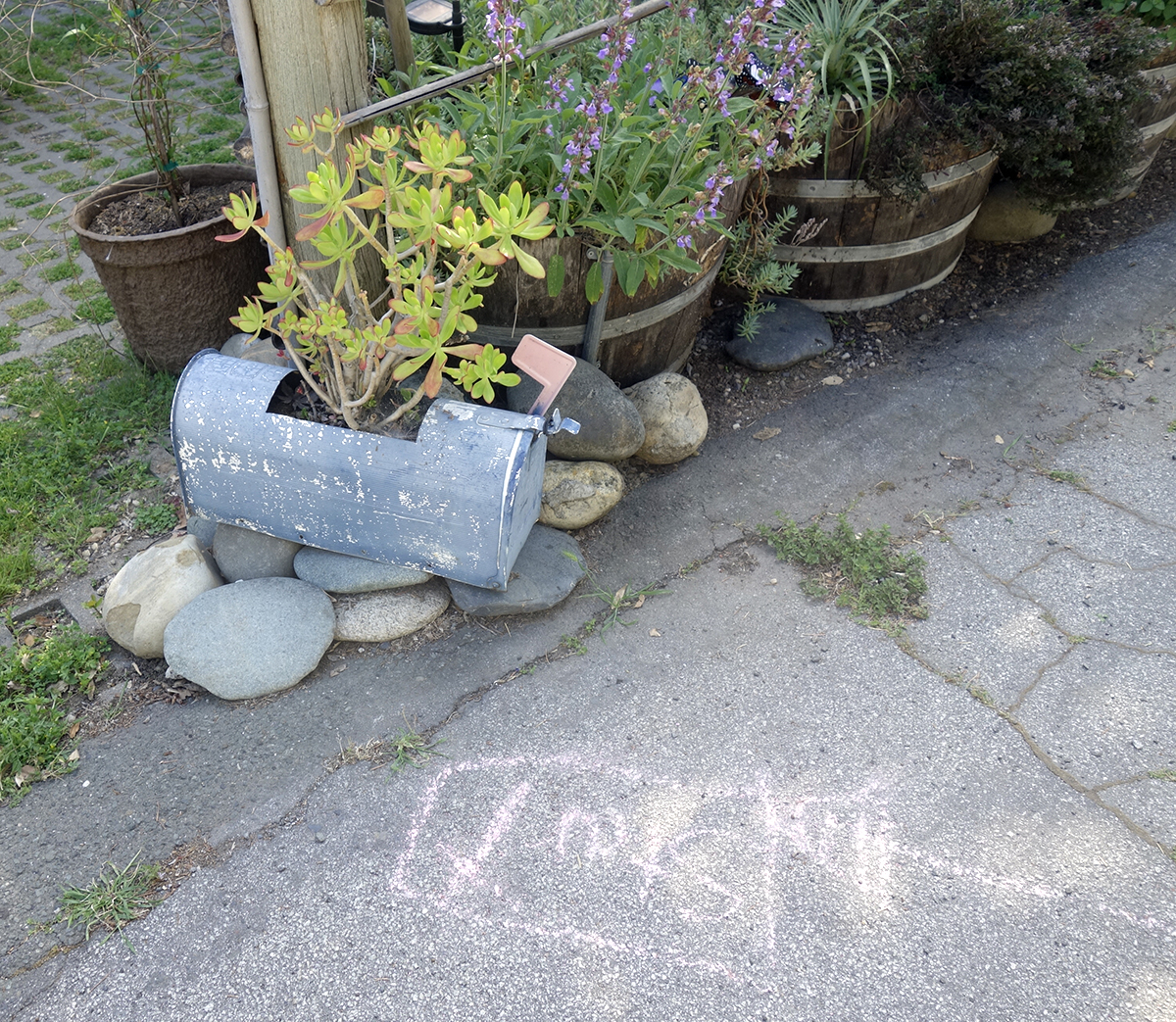
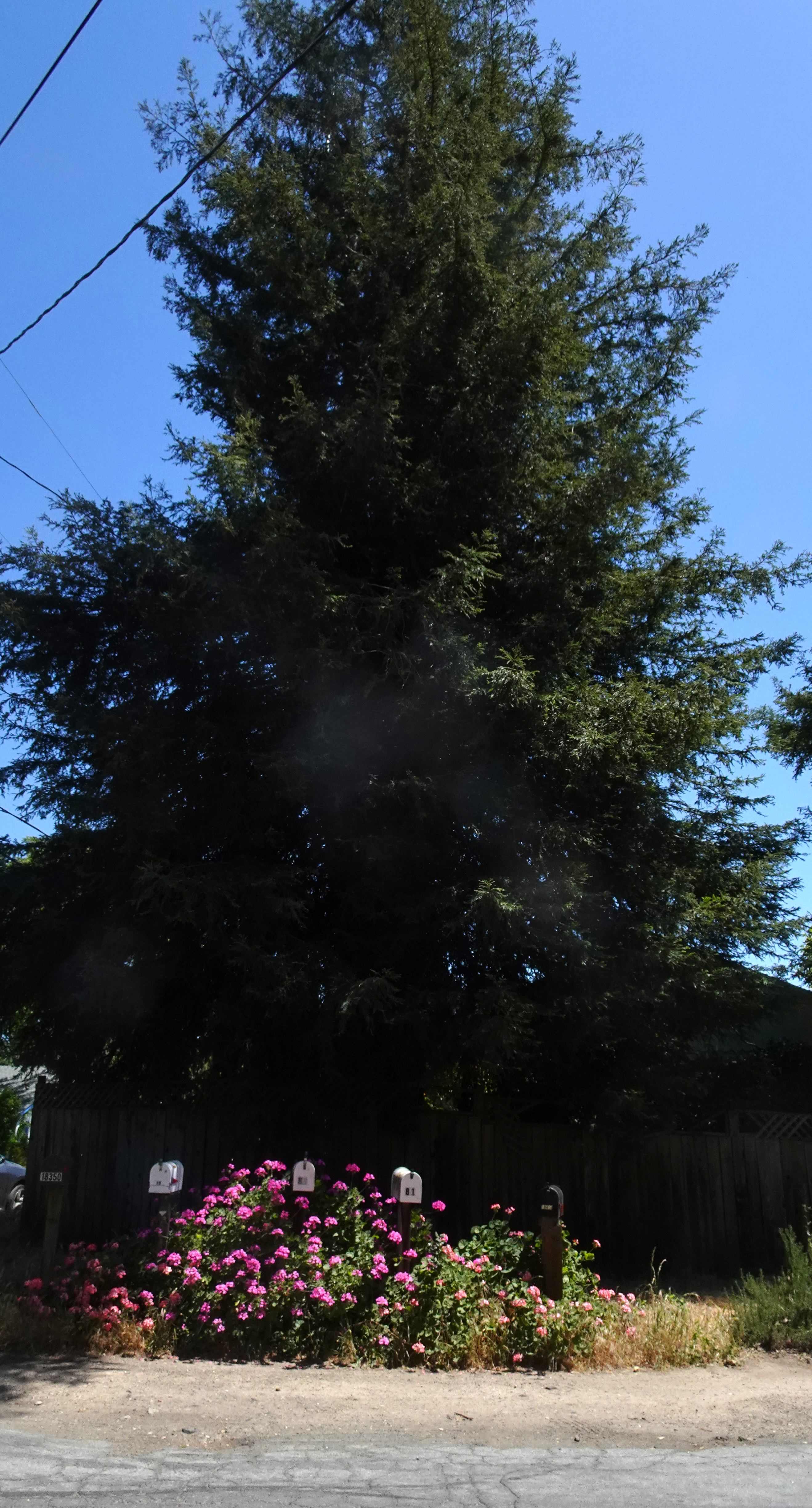
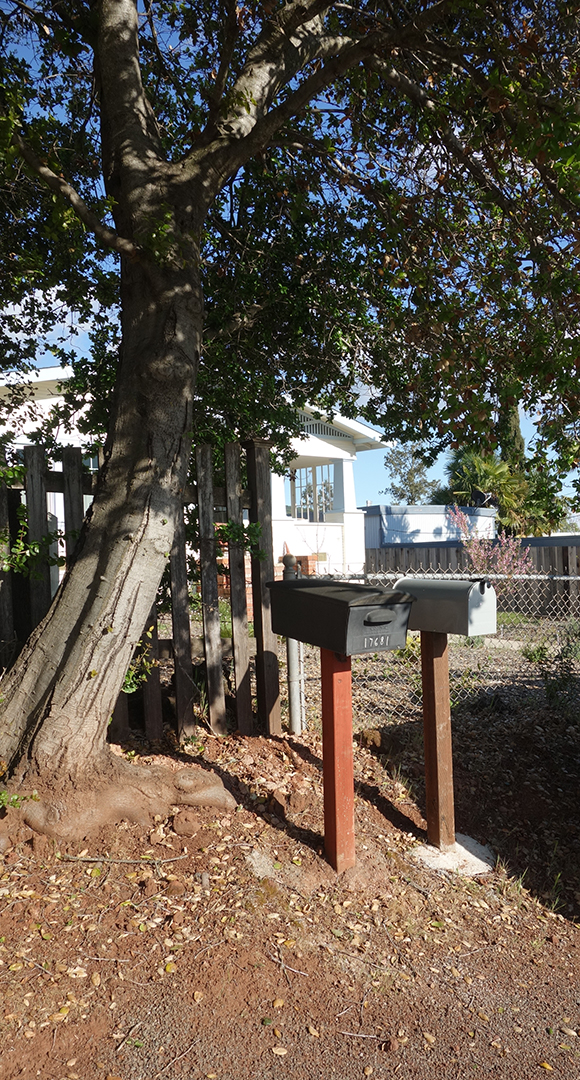
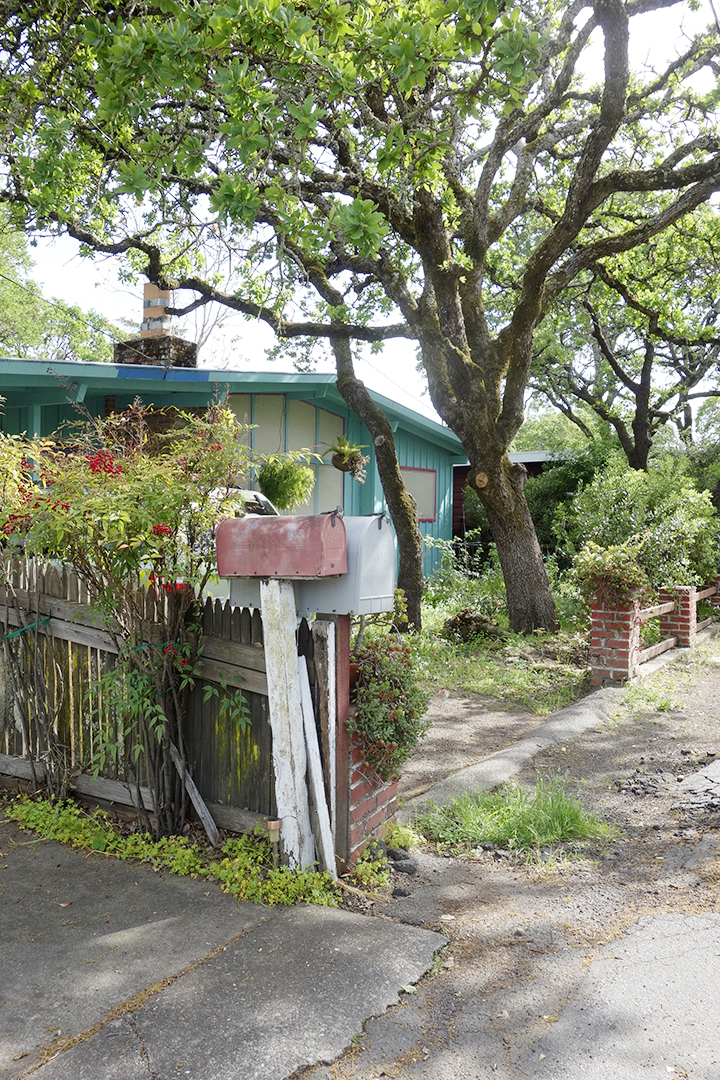
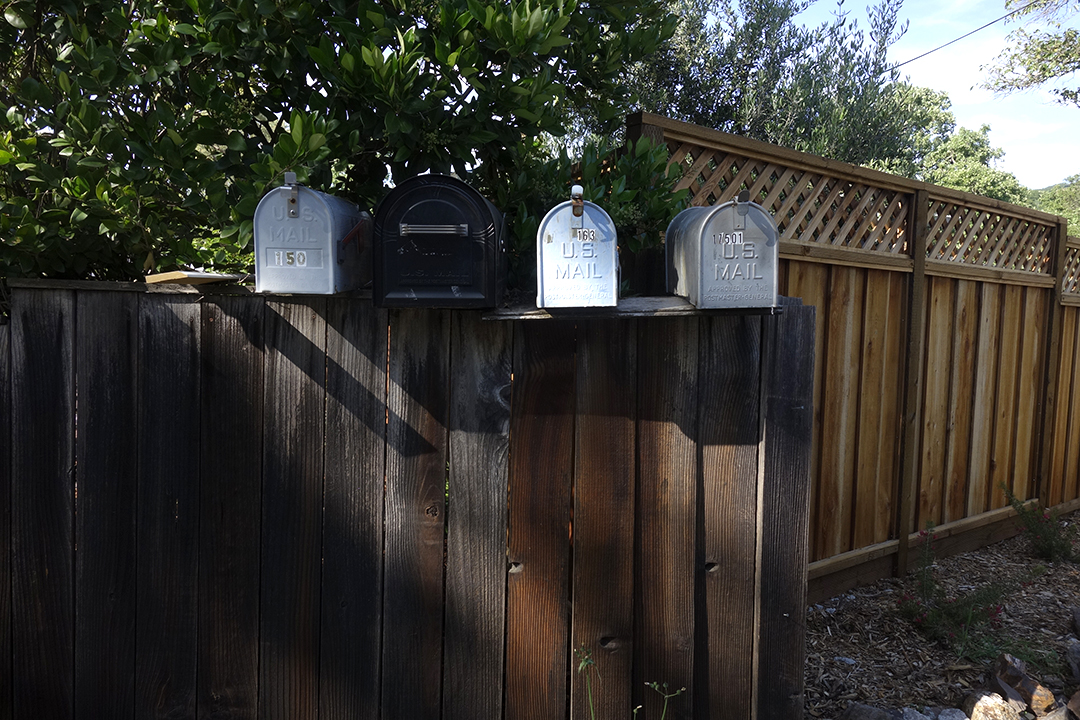
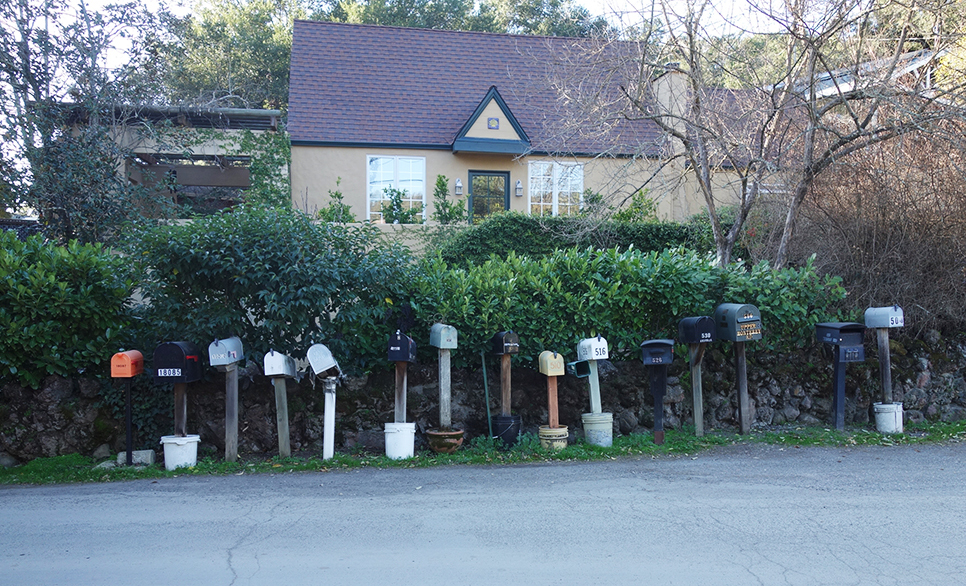
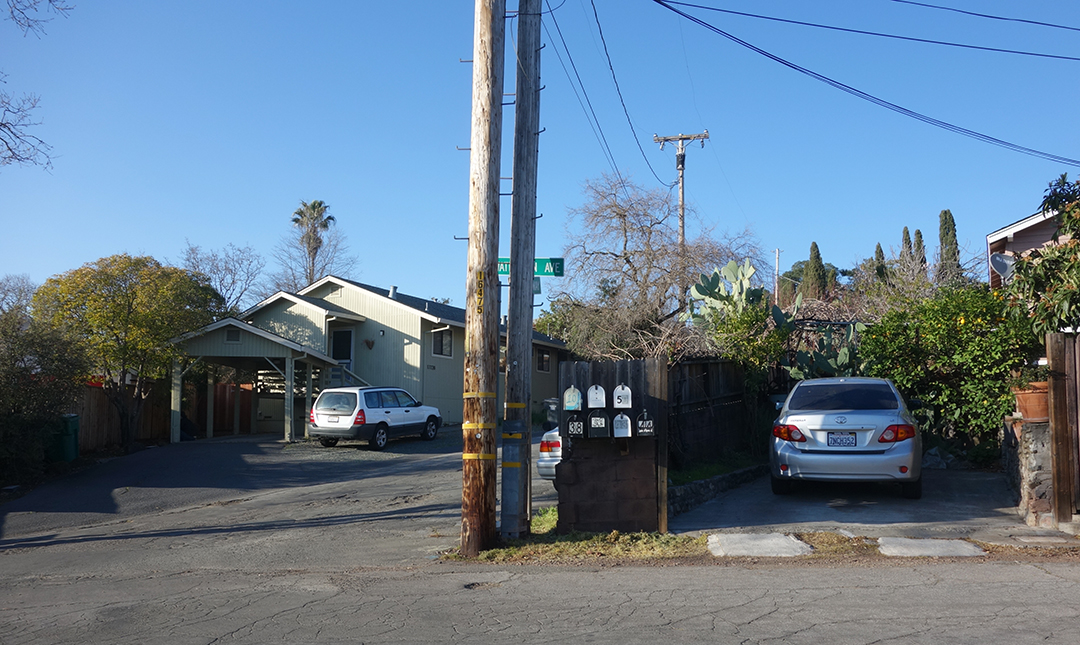
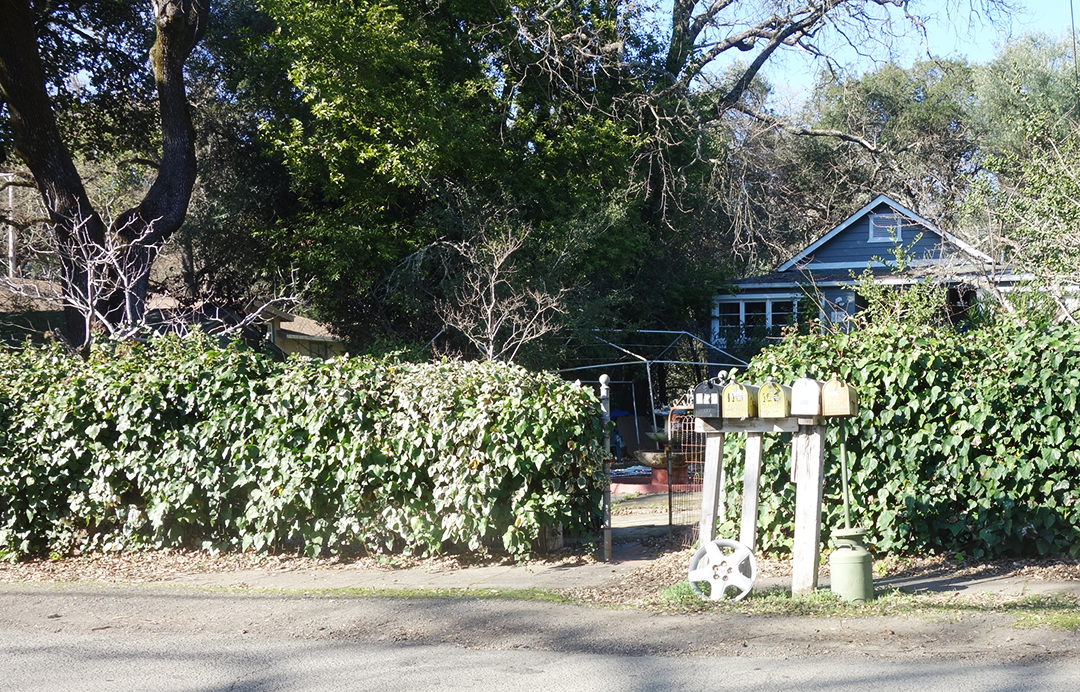
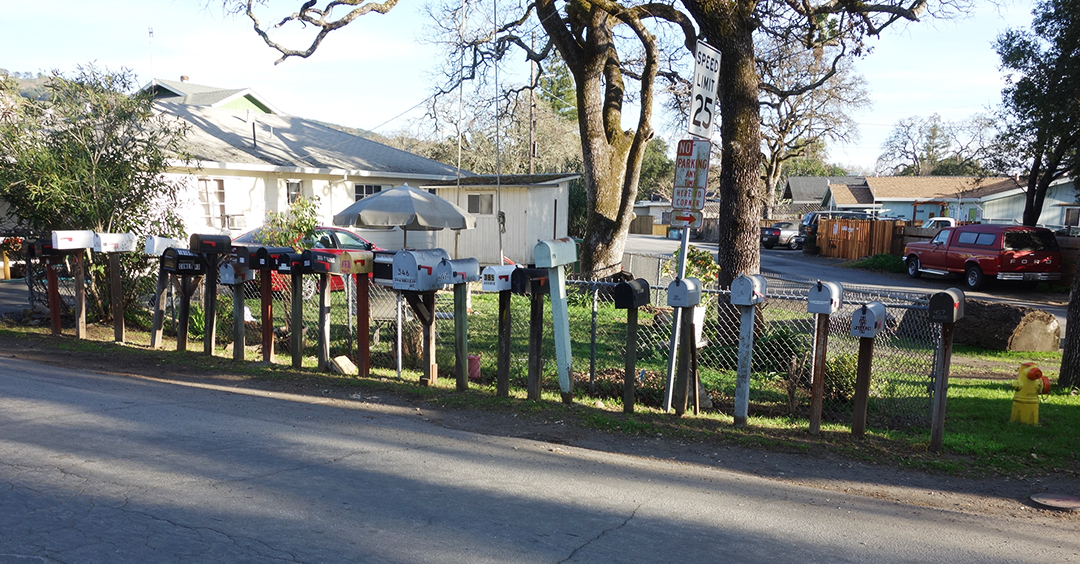
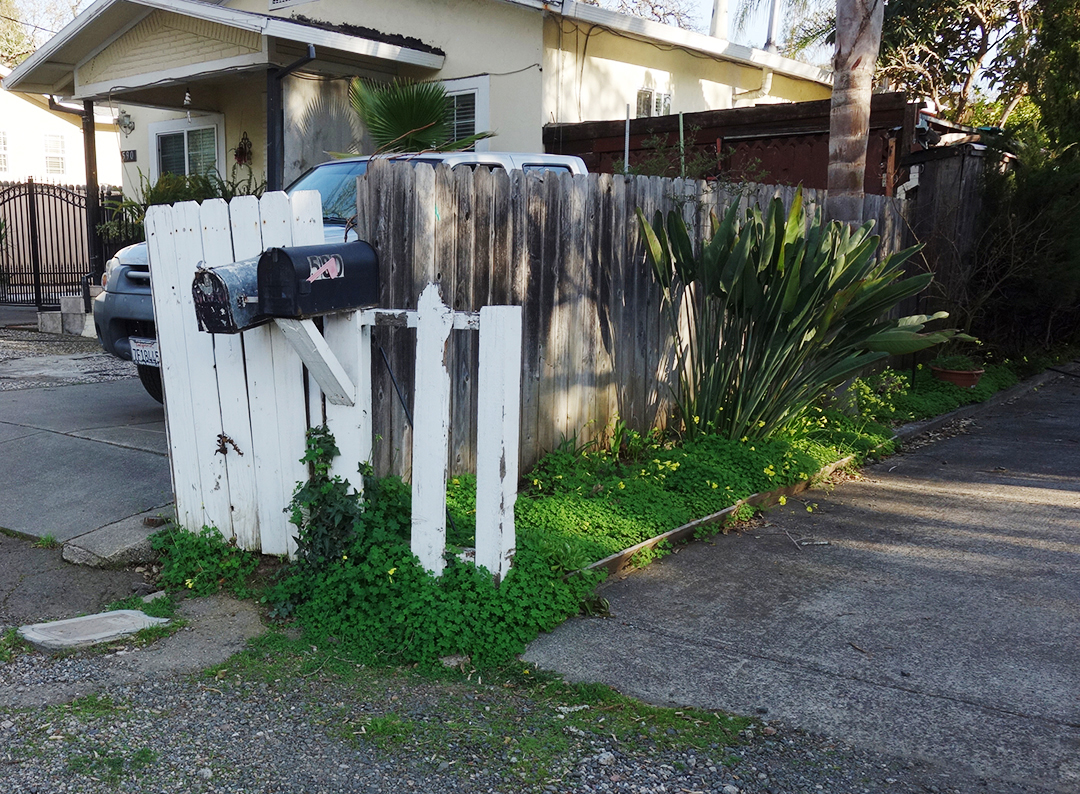
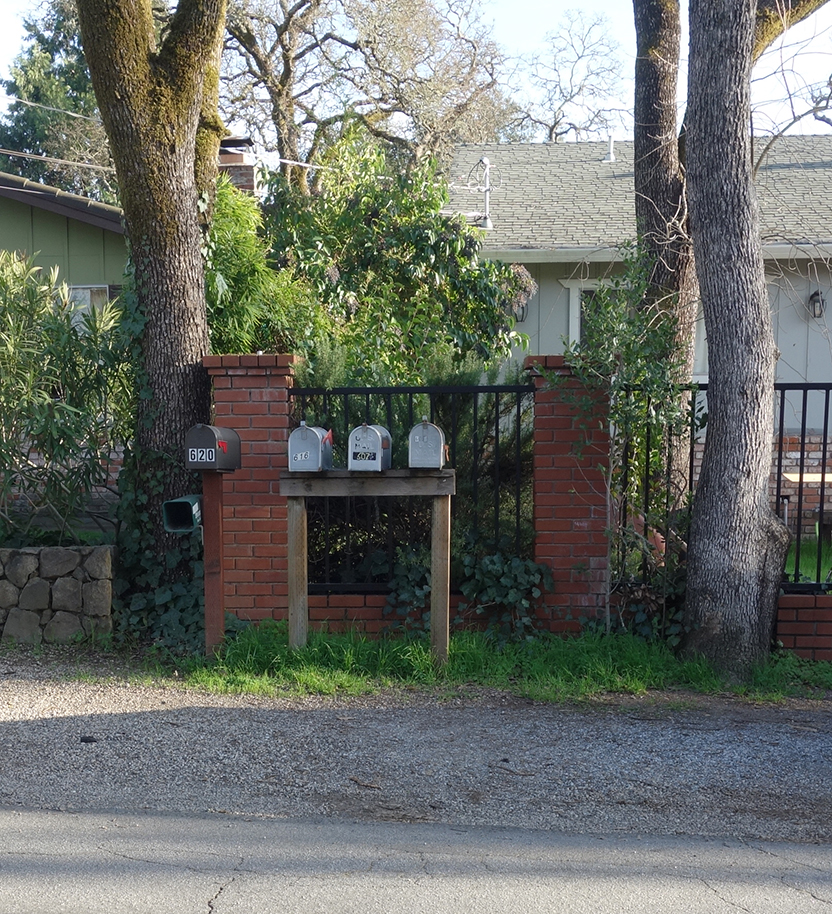
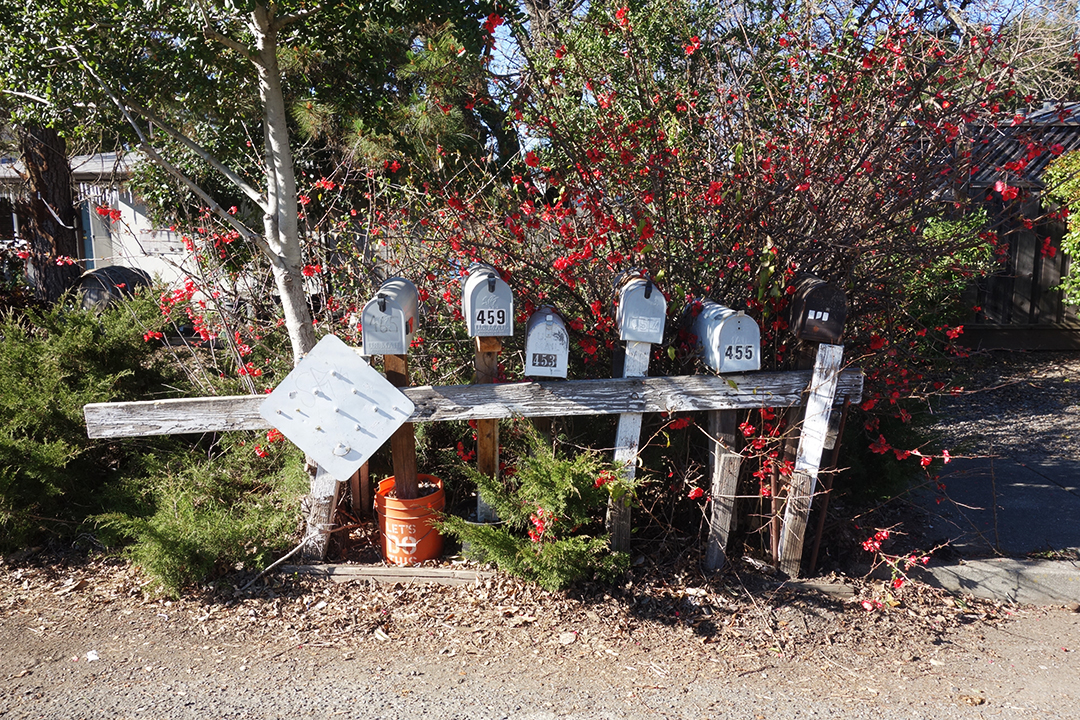
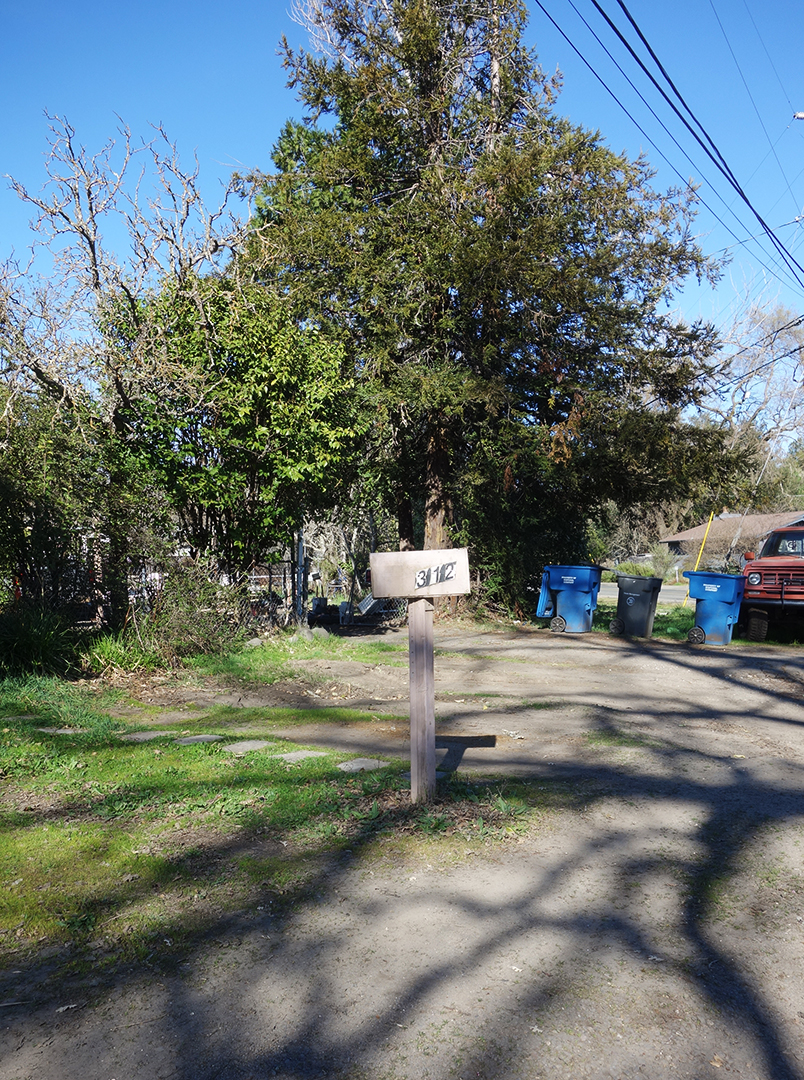
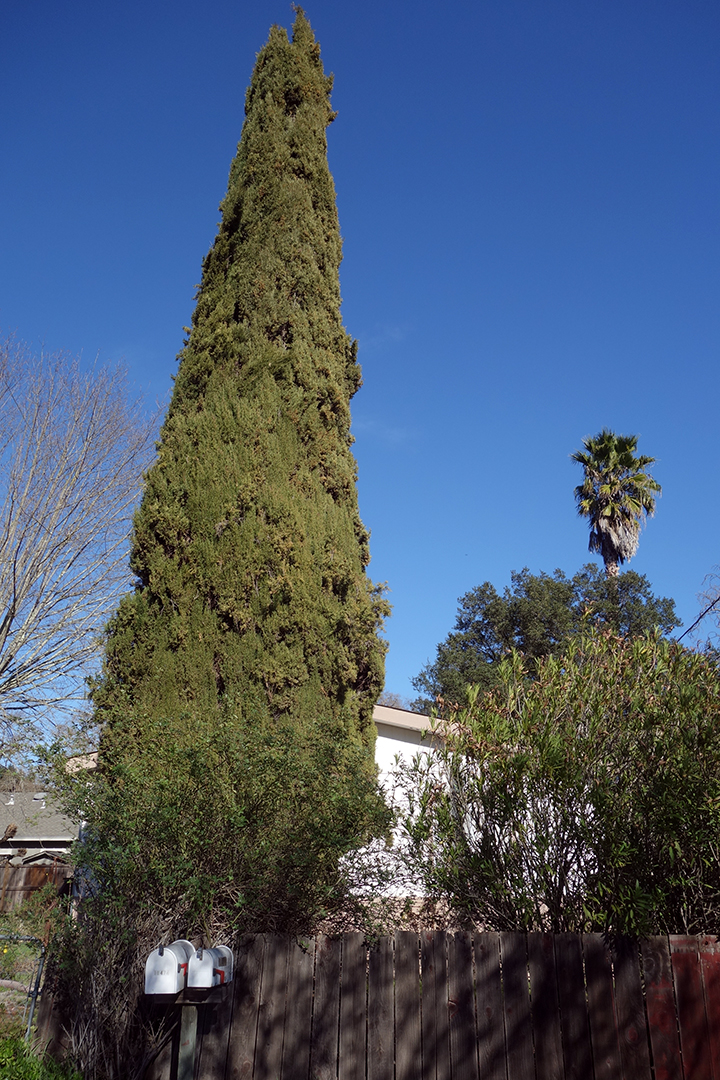
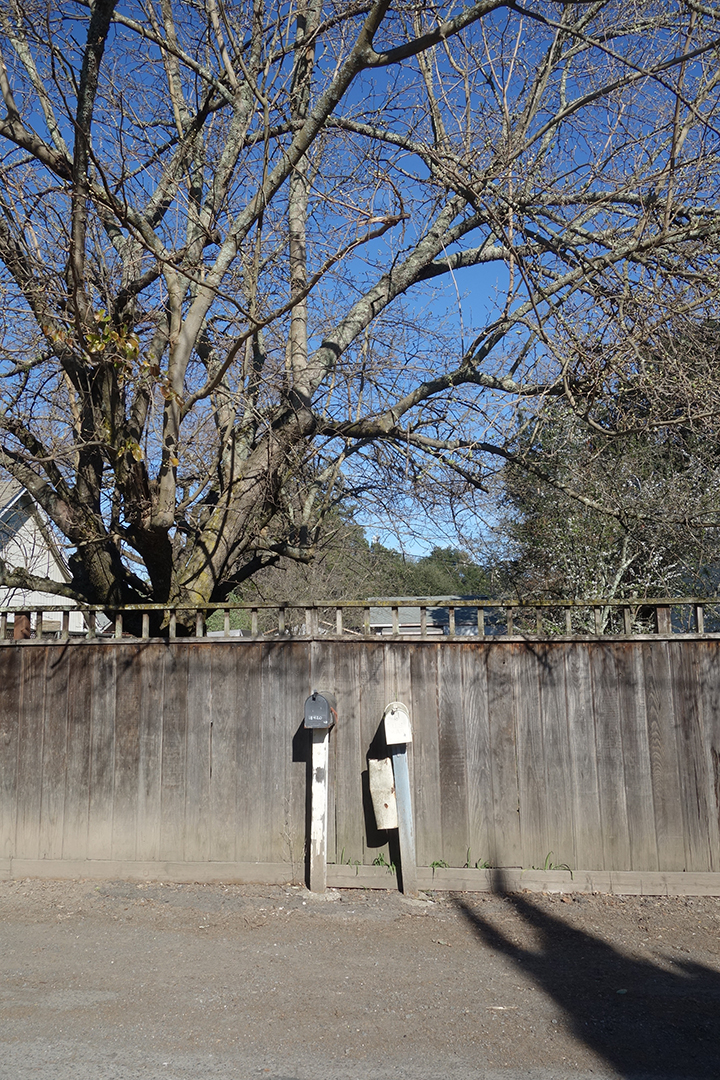
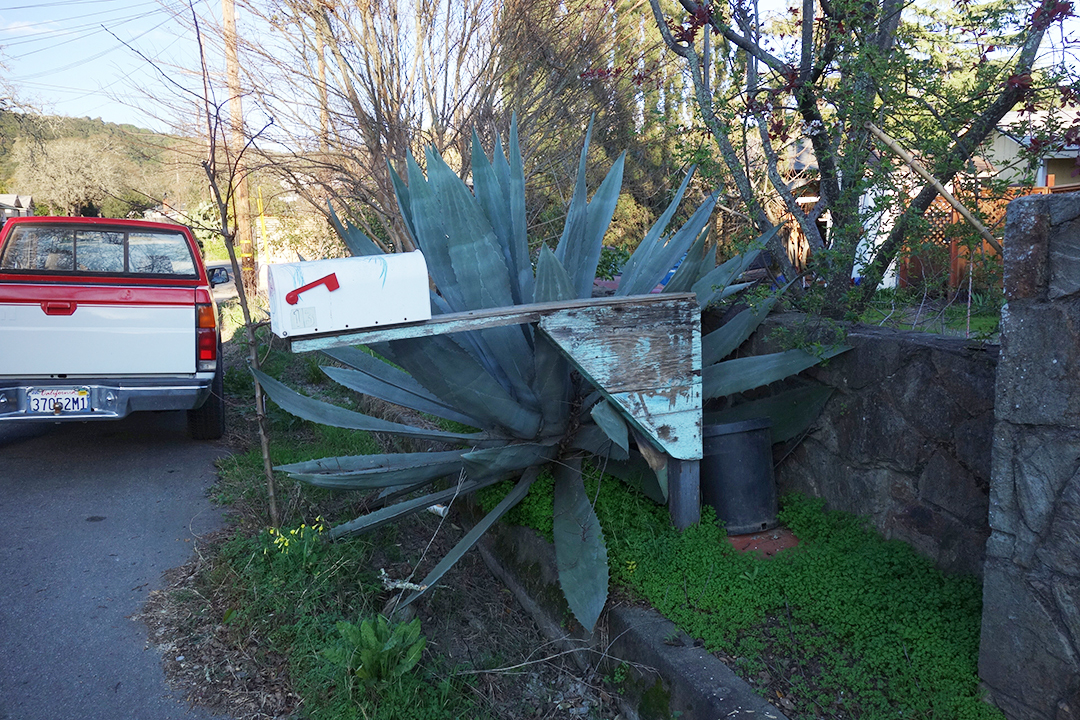
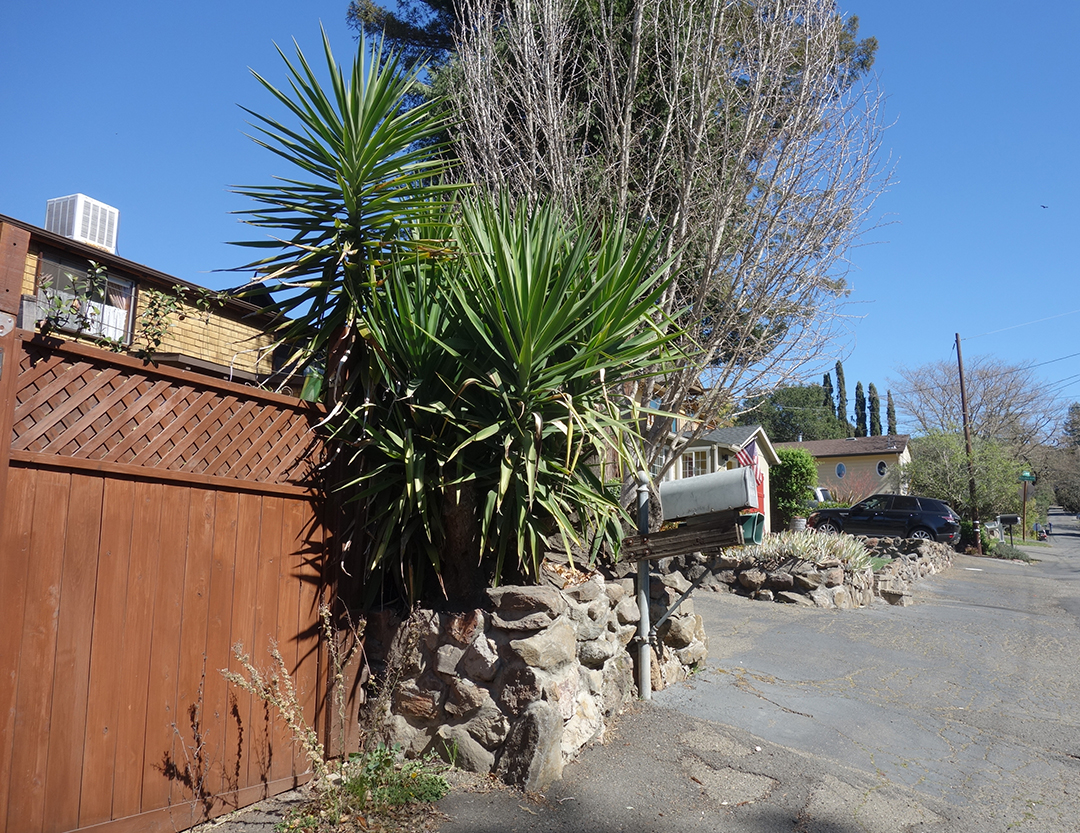
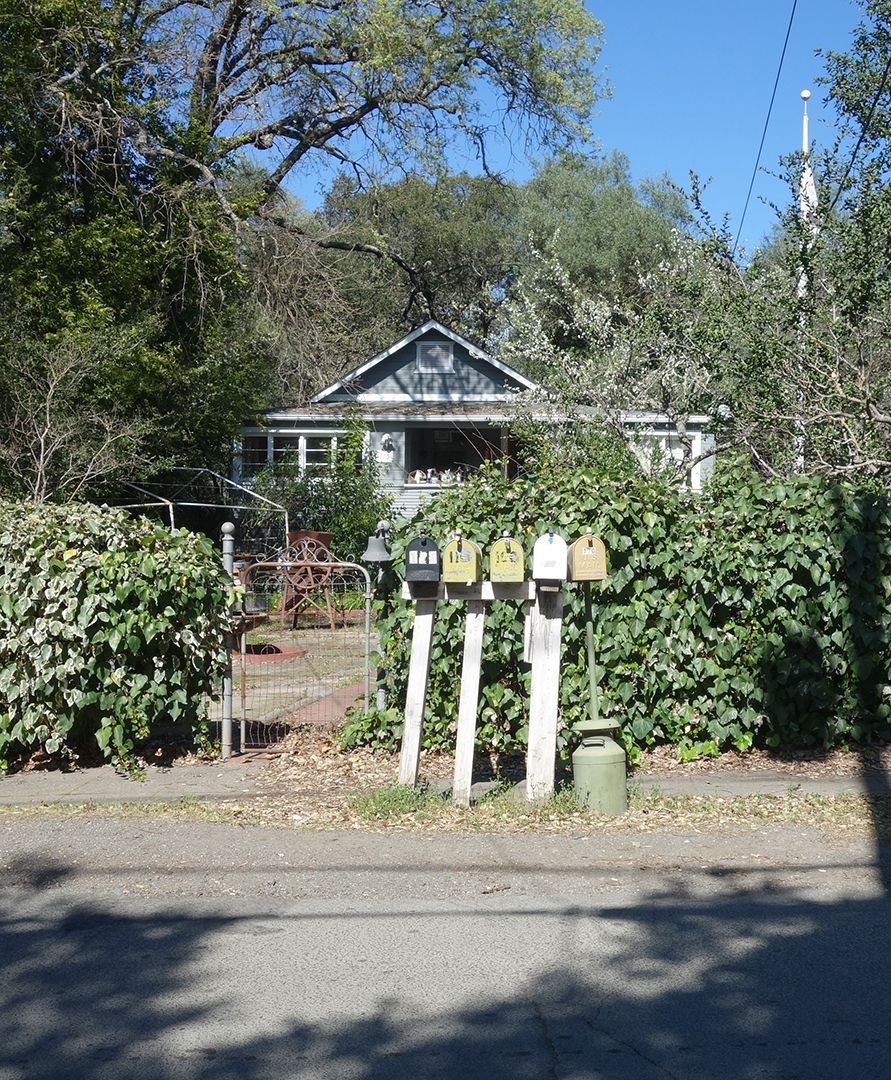
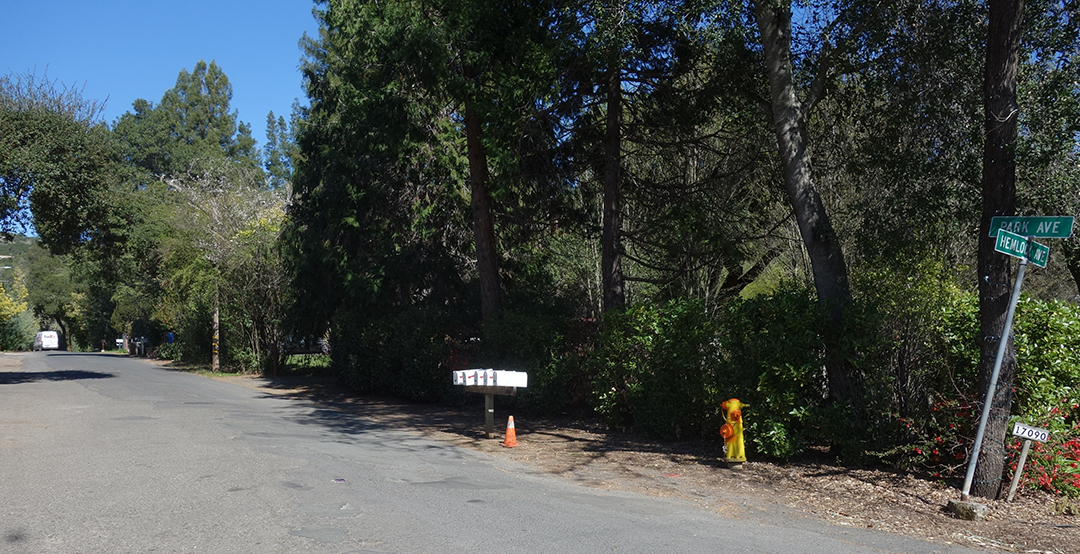
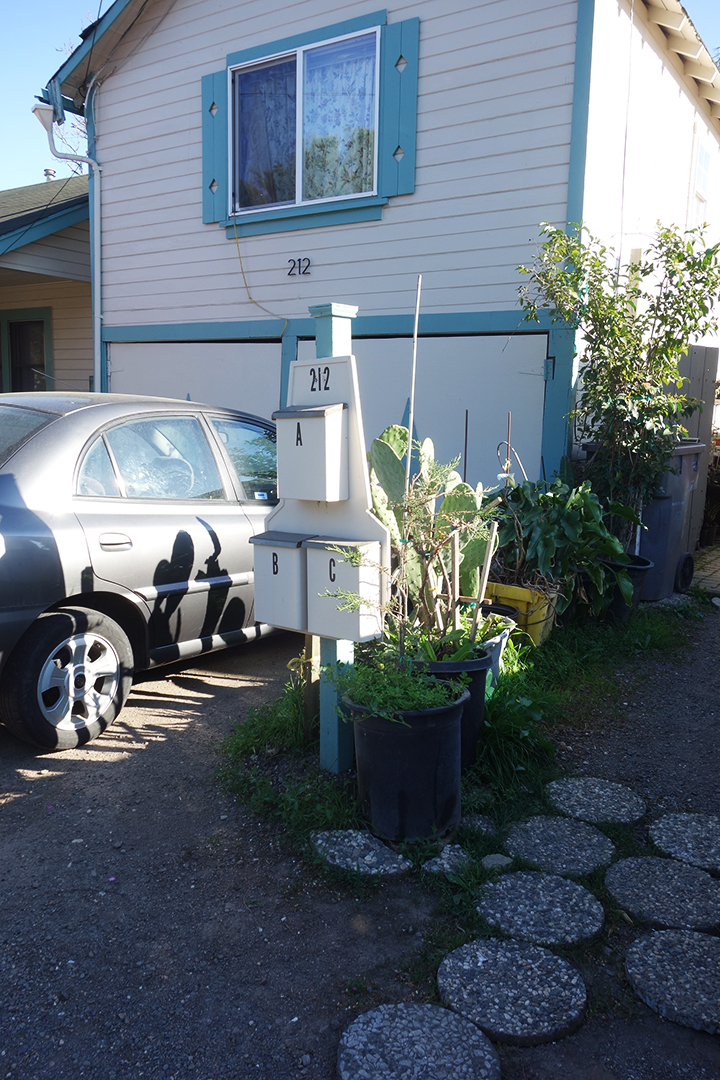
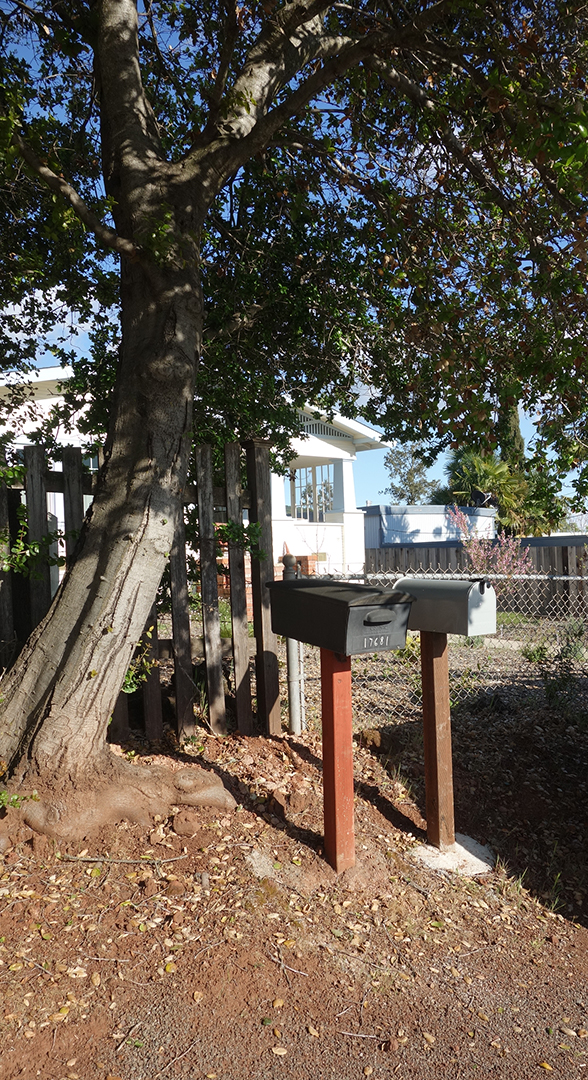
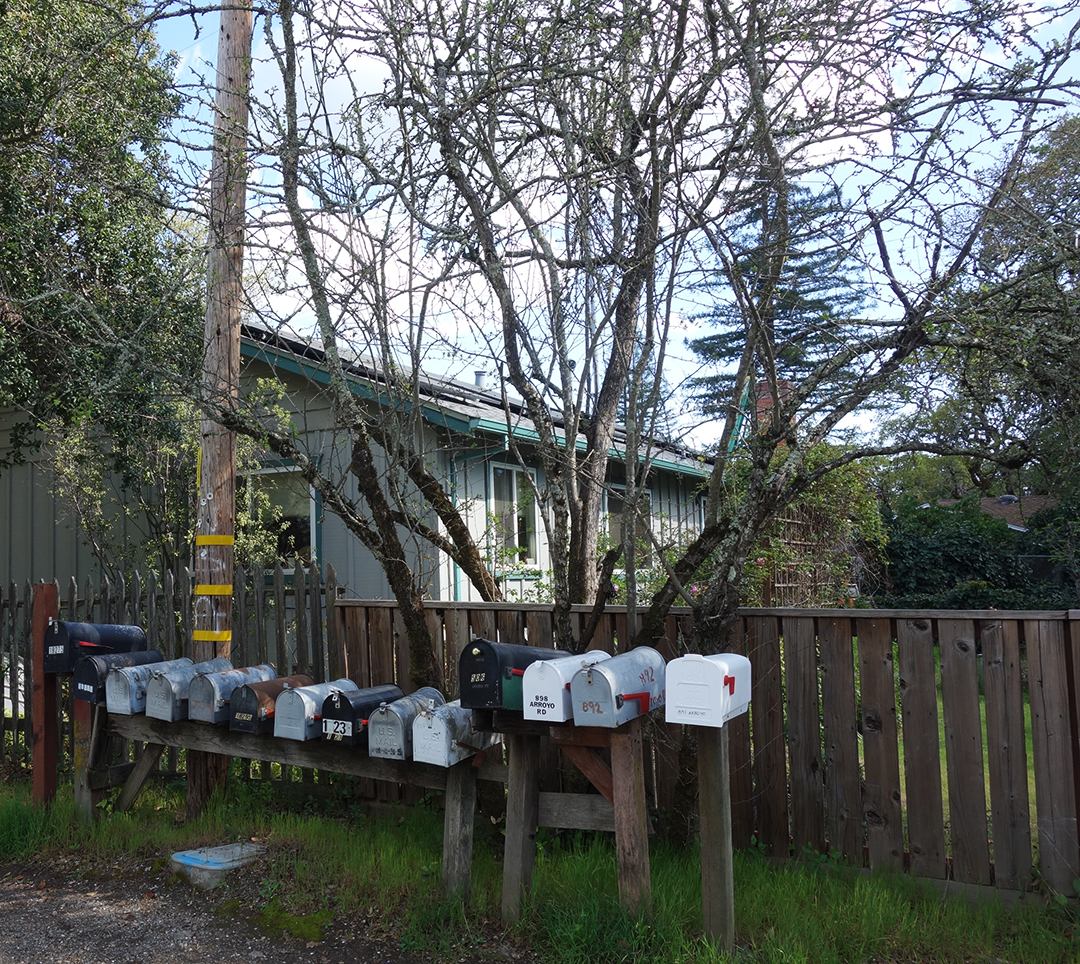
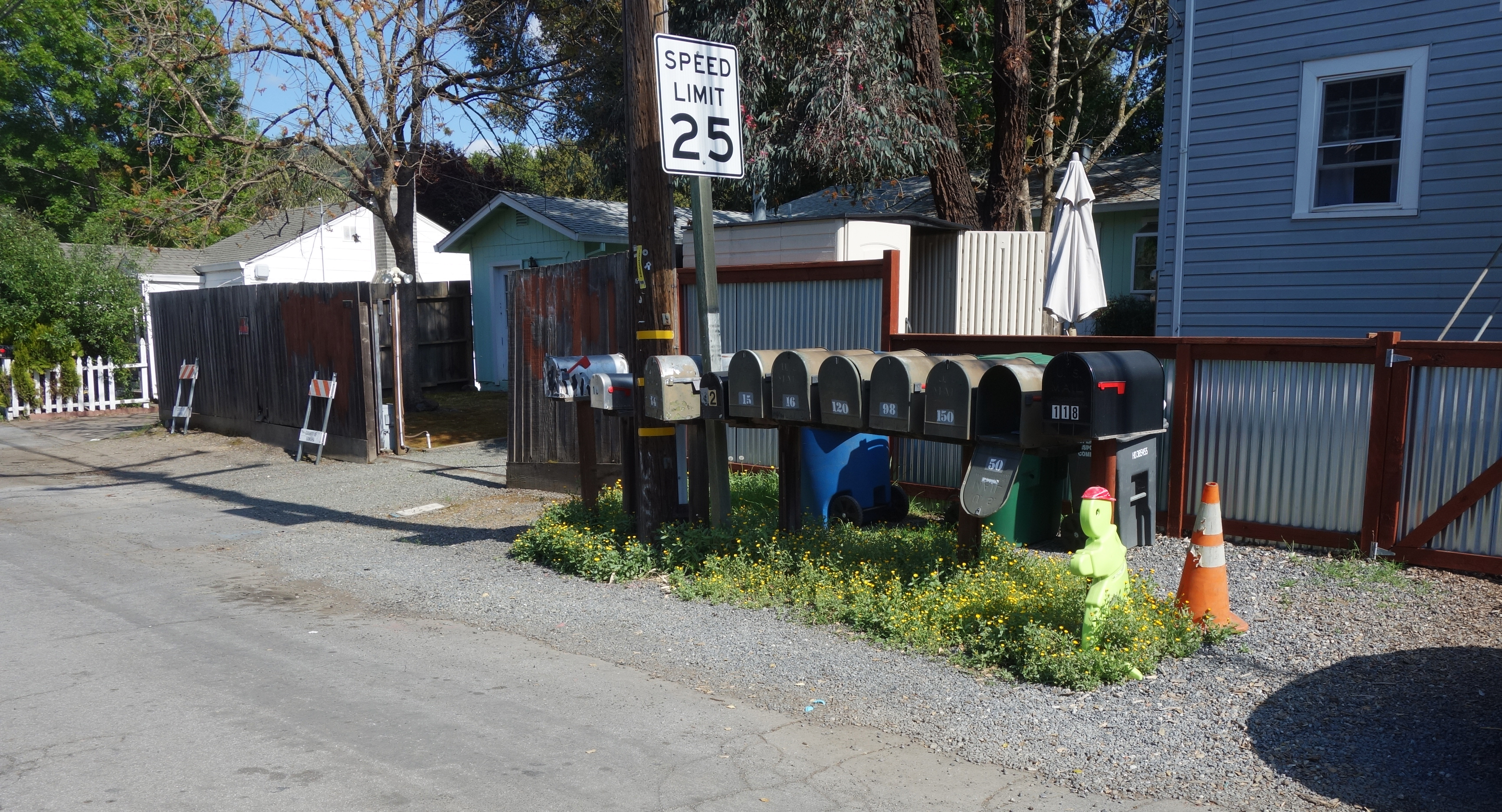
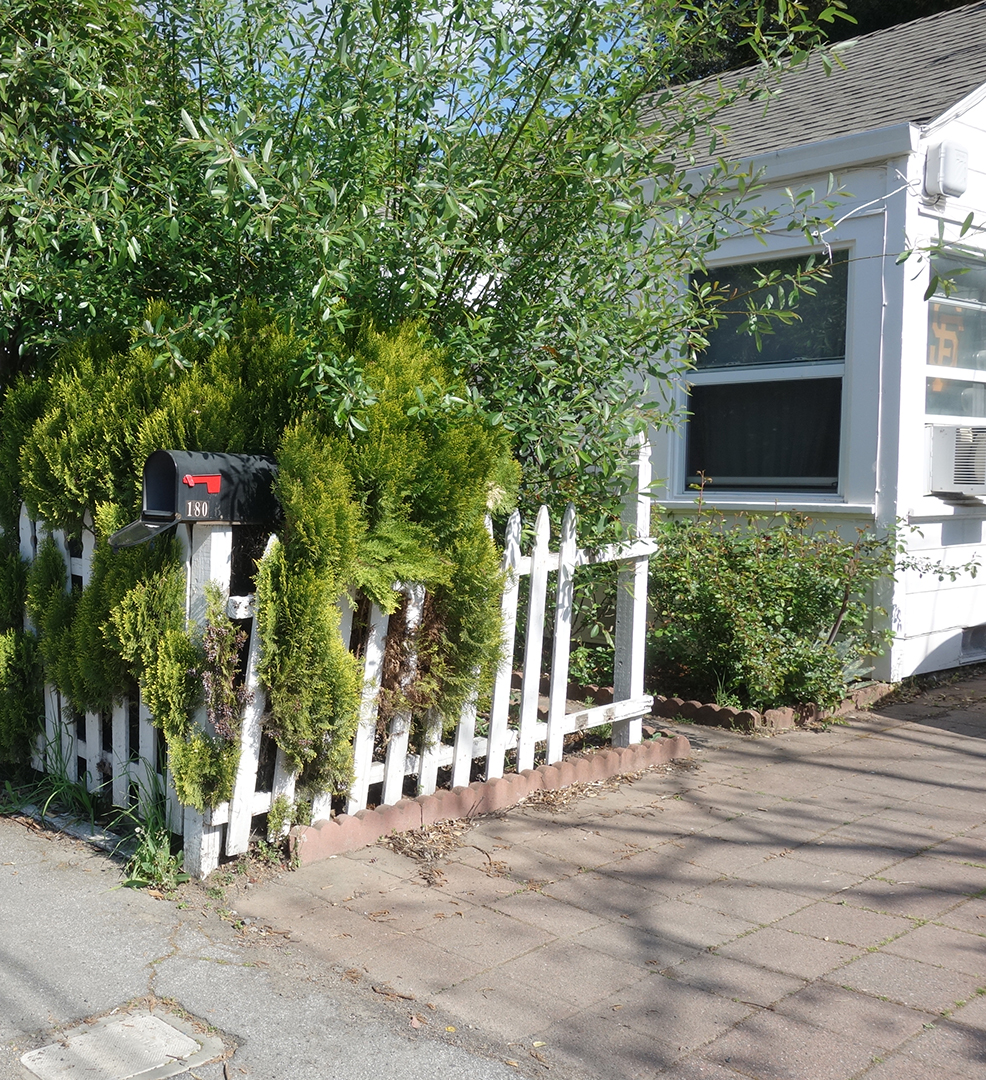
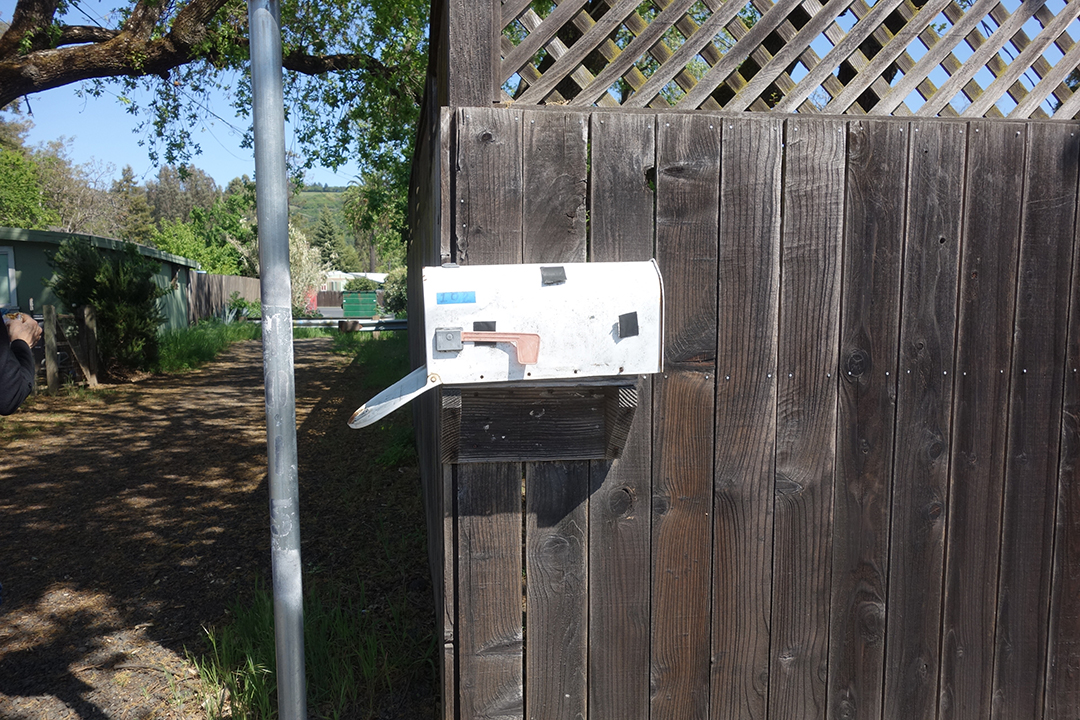
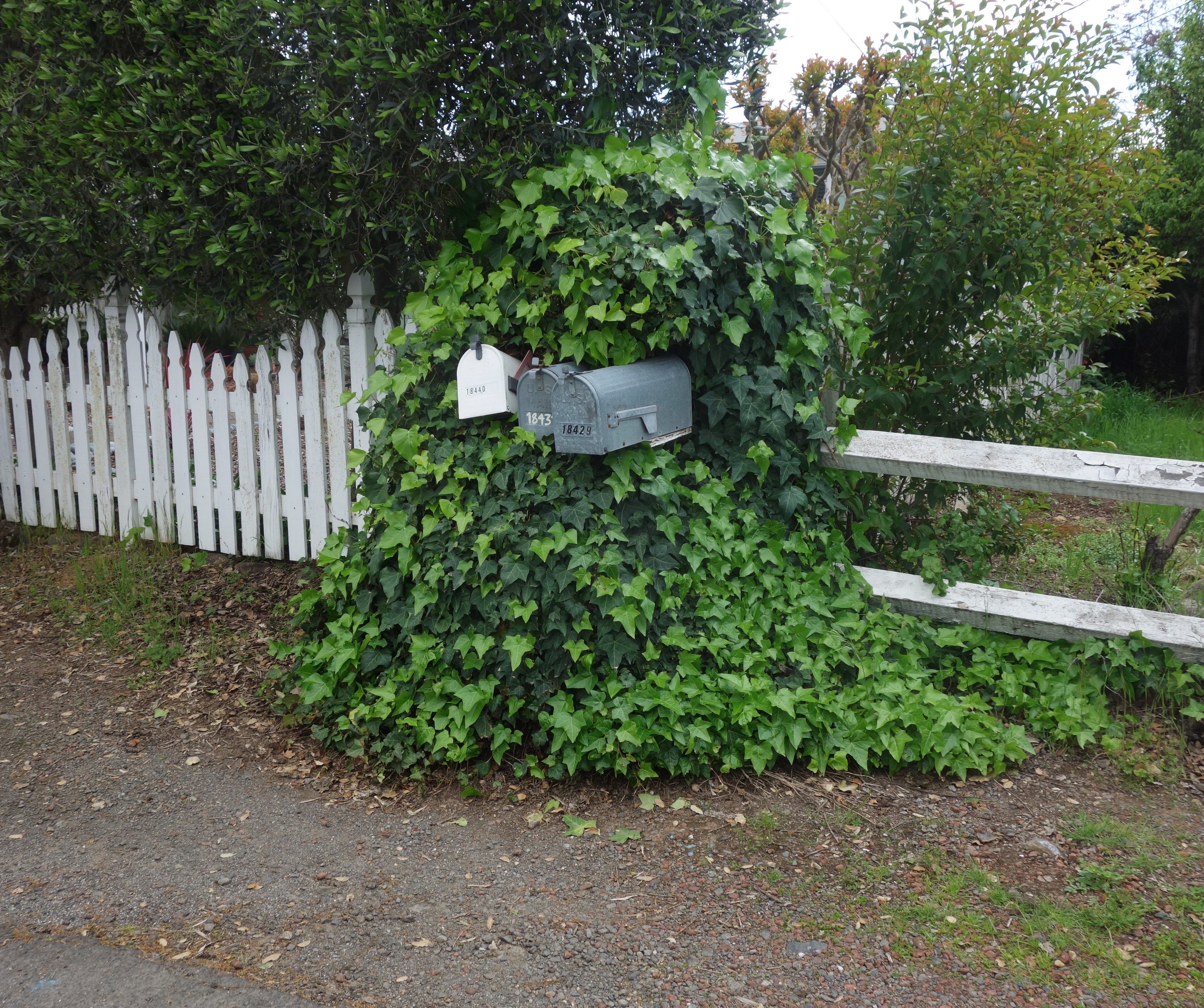
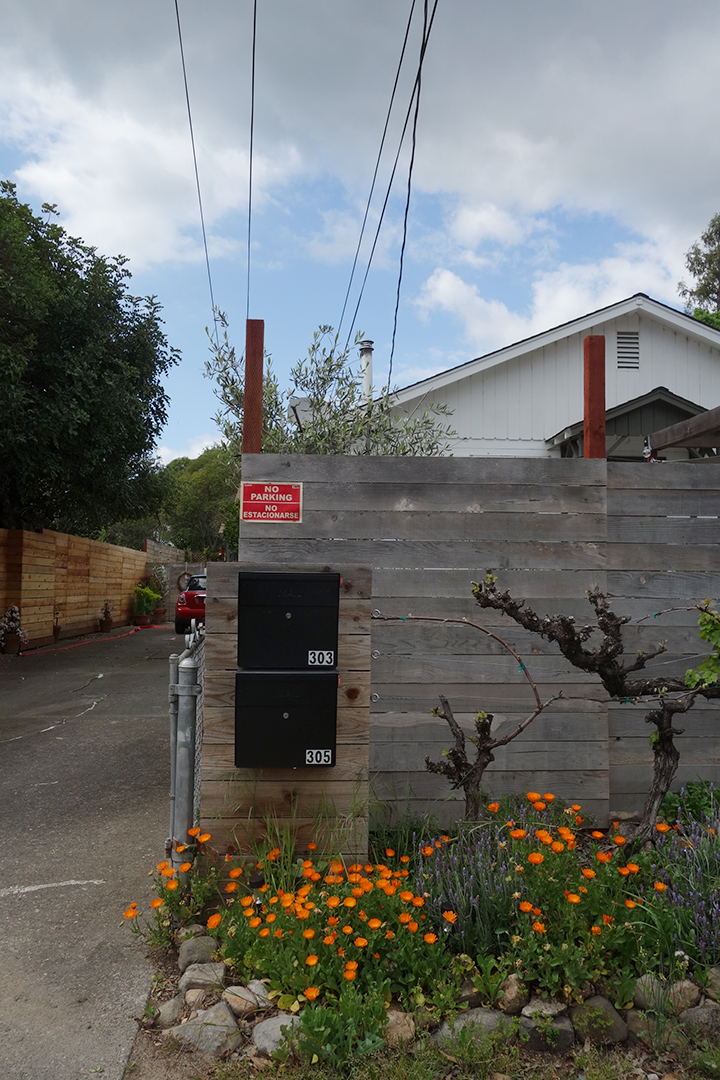
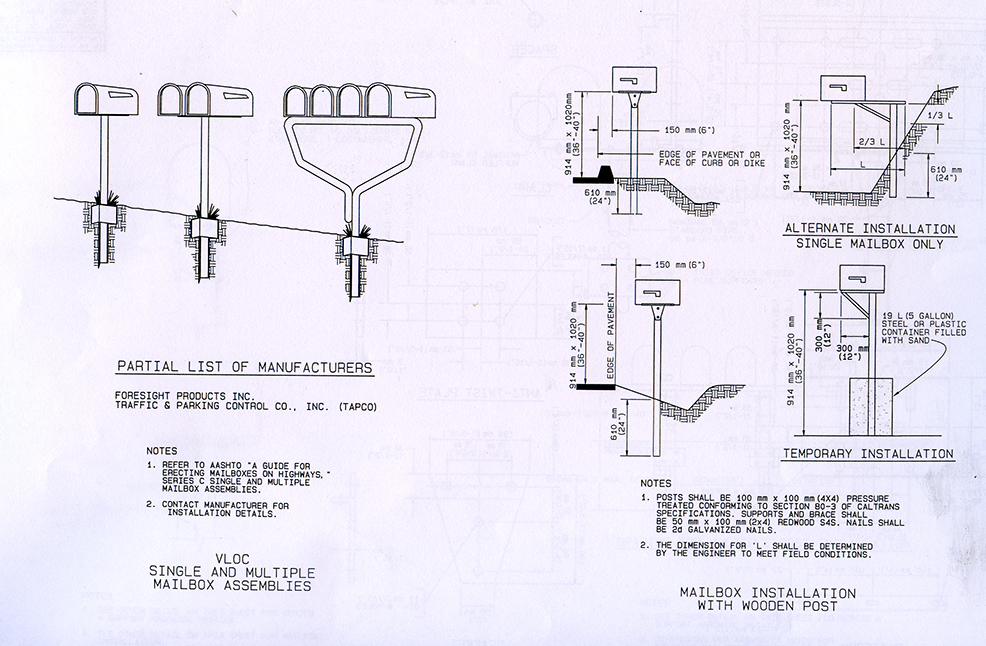
The United States Postal Service does not deliver mail to many houses in Boyes Hot Springs, Fetters Hot Springs, Agua Caliente, and El Verano, so people put mailboxes out on the street. Over time, these boxes, singly and in groups, take on personalities.
In a sense, this exhibit is a follow-up to Michael Acker’s book “The Springs, Resort Towns of Sonoma Valley,” (Arcadia Publishing, 2017) with many more photographs and ephemera, and in color. Here is a small preview.
Thanks to the Sonoma Valley Historical Societyfor assistance, especially Lorrie Baetge Fulton, Patricia Cullinan, Kate Shertz, Peter Meyerhoff, Roy Tennant, and Lynn Downey, and for images, and access to the Index Tribune archive.
Thanks also to the many community members who have shared their memories and photographs with the author.