Architecture, Boyes Hot Springs, History, mid-century, Photographs

The Corner of Thomson Avenue and Highway 12

Dr. Allen Thompson, courtesy of the Sonoma Valley Historical Society

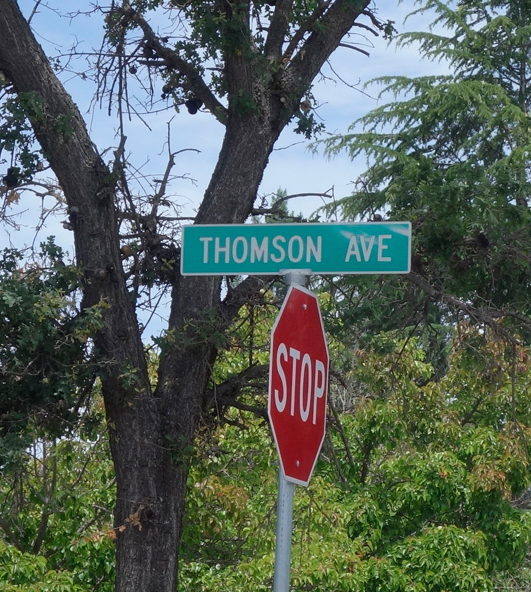
ThomsonSignweb

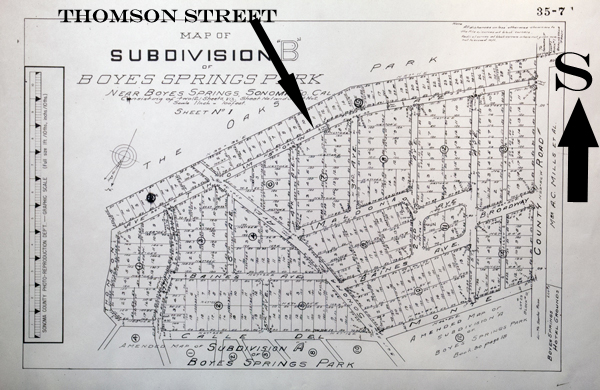
Thomson Avenue, not Thompson Avenue, was named for Dr. Allen Thomson, who had been physician to General Vallejo, and who married one of his granddaughters. Thomson was president of the company that developed the subdivision known as Boyes Springs Park . Thomson Street is its southern border.BHSSubDivBweb

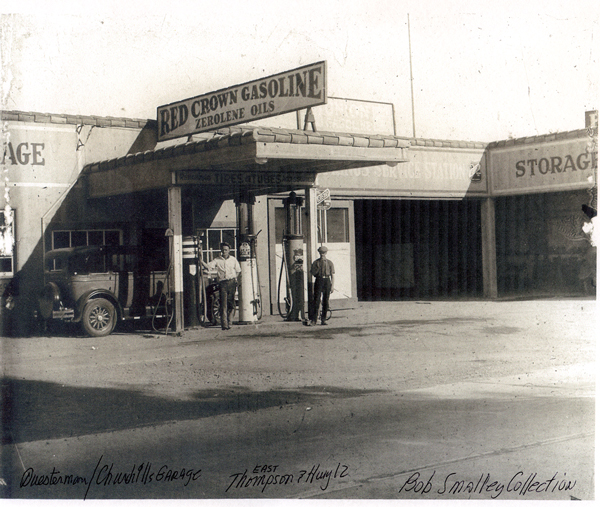
The building at the southeast corner was a Red Crown gas station circa 1930. It later became the Ferrando’s Plumbing building and now houses La Michoacana Ice Cream and Plain Janes. It was famously made over by Rico Martin in 2015.

Ferrandosweb

The caption says “Questerman/Churchill Garage.” Note the misspelling of the street name and the designation “east.”

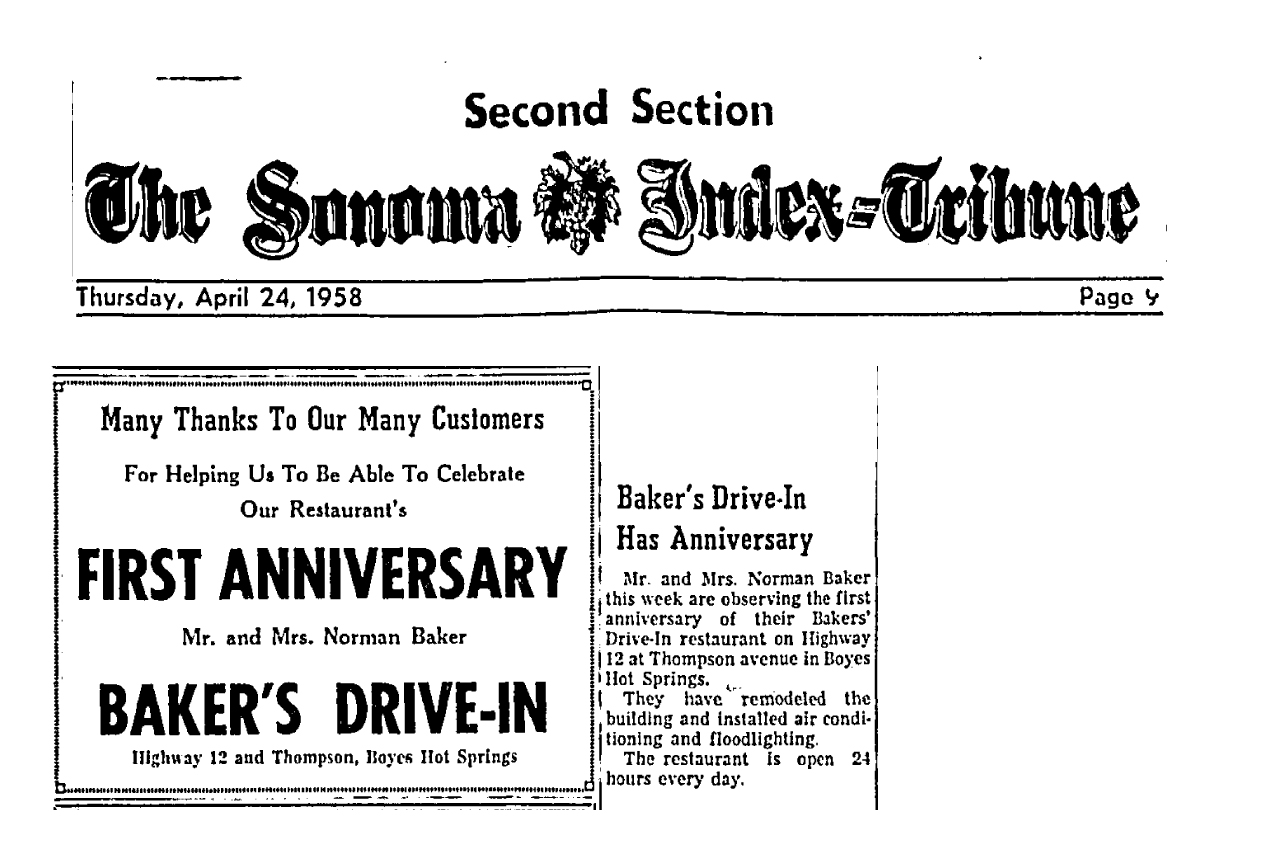
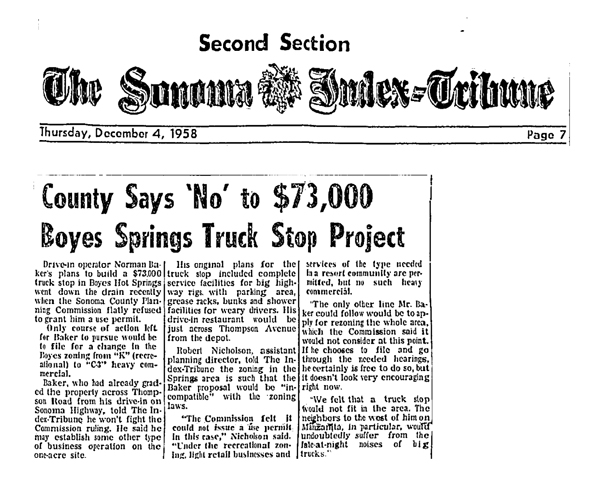
Directly across Highway 12 from the end of Thomson (not East Thomson!) was Baker’s Drive In, established in 1957 (and open 24 hours per day!)Baker'sArticleAd In 1958 Norman Baker had big plans to build a truck stop on this property, but the county would not approve the project.BakerTruckStopweb

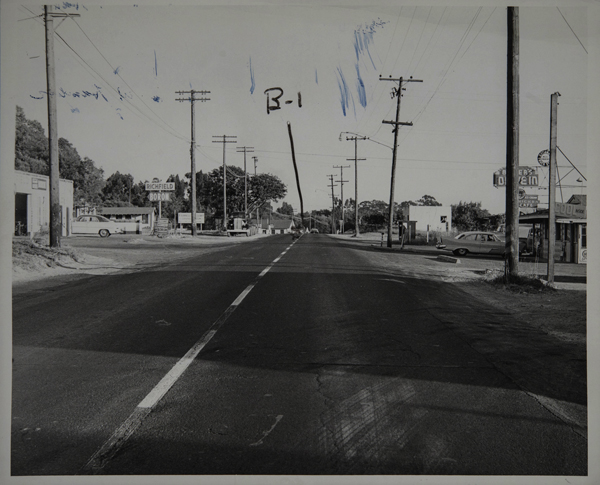
IntersectionofThomsenStreetandCaliforniaHighway12.1web

Looking South, Farrell’s sign at left, Baker’s Drive In at right.


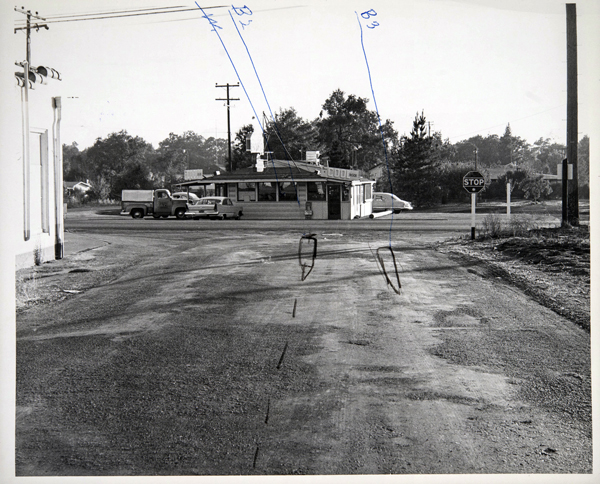
Intersection_of_ThomsenStreetandCaliforniaHighway12.3web

Looking at Bakers’ Drive In on Hwy 12, from Thomson. Red Crown building seen at left.


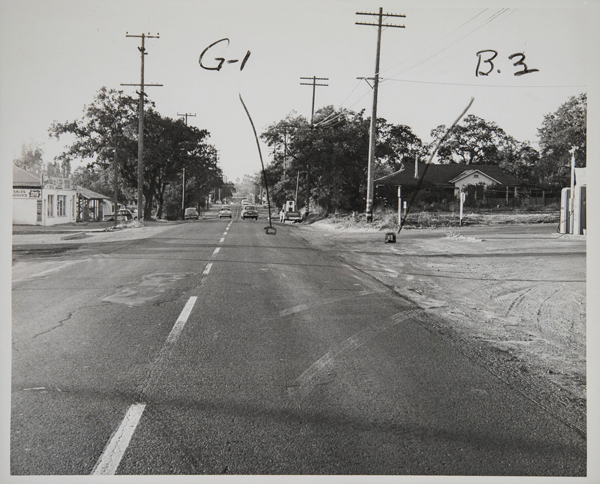
Intersection_of_Thomsen_Street_and_California_Highway_12web

Looking North

These photos from 1958, courtesy of the Sonoma County Library, were used in a court case, the nature of which is unknown, but could have been a suit over a traffic accident. In the photo of the highway looking south, a sign can be seen (below the Richfield sign) which proclaims Farrell’s Resort, which would have been on the property now partially occupied by Arroyo Vet Hospital.

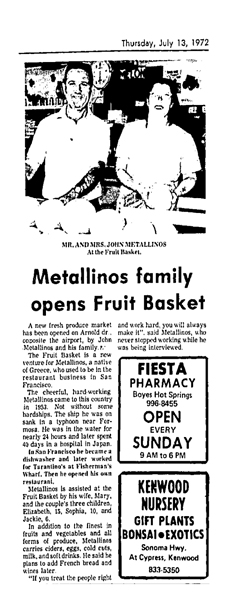
In 1972, John Metallinos and family opened the Fruit Basket on Arnold Drive.

FruitBasketOpensweb

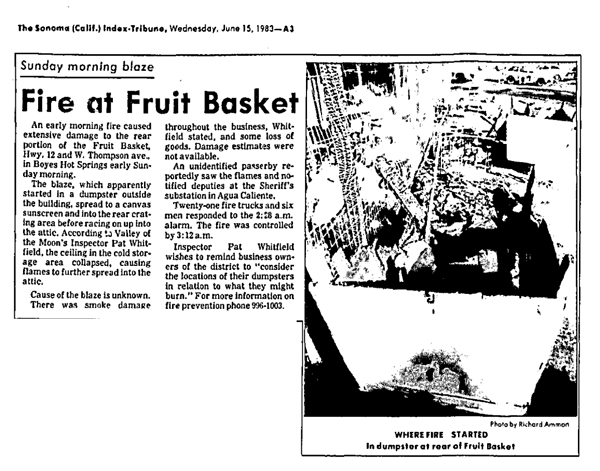
They opened their Boyes Springs branch sometime later, probably in the early 1980s, at the old Baker’s Drive In. On June 15, 1983, a fire destroyed that building.FruitBasketFireweb

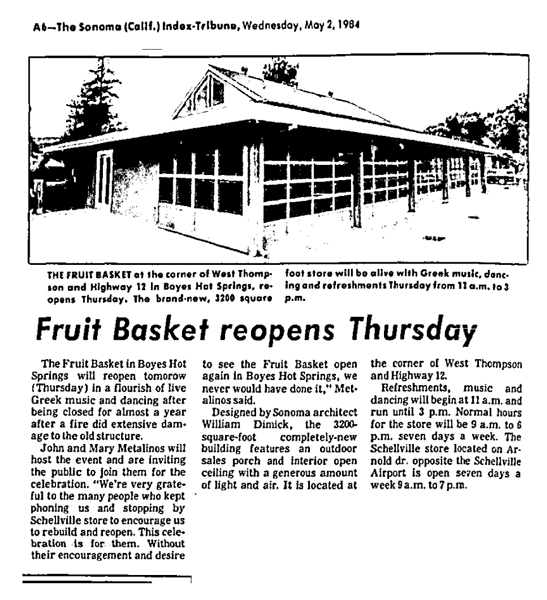
Nearly a year later, the Boyes Springs Fruit Basket reopened, “in a flourish of live Greek music and dancing,” in its new building, which was designed by architect William Dimick.

FruitBasketReopensweb

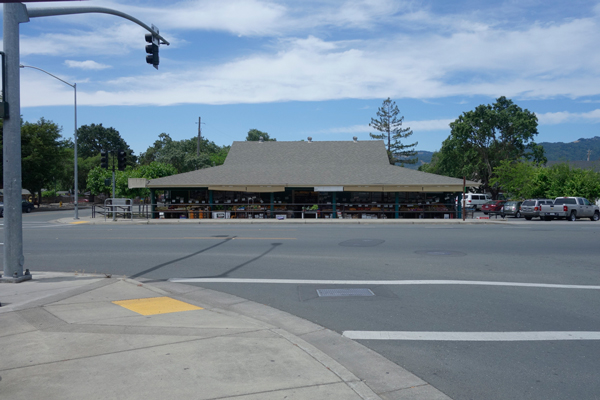
FruitBasket2017web

The Fruit Basket in 2017. It really is a graceful building.

My thanks to Mark Maberly for information about Dr. Thomson, and his general enthusiasm for our history. As always, contributions of knowledge are welcomed. Please leave a comment.

Standard
History

Real Estate

deseno2web

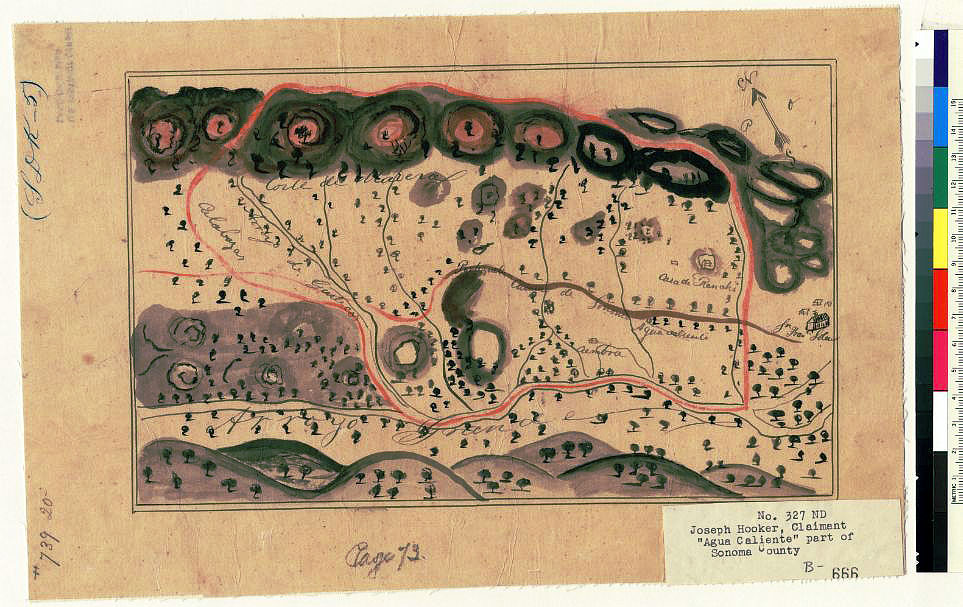
A “deseño” presented to the Land Claims Commission in support of a claim by Joseph Hooker. (Courtesy, Bancroft Library)

The story of the Springs as we know it, is a story of real estate. And it’s a sometimes confused and confusing story, because it starts after a war and involves many people and many conflicting land claims. But in California before European contact, the native peoples lived for over 10,000 years. You would think that that would give them some ownership rights, but the Spanish saw only empty wilderness, there for the taking. The original people were dispossessed. That deserves our deeper study.

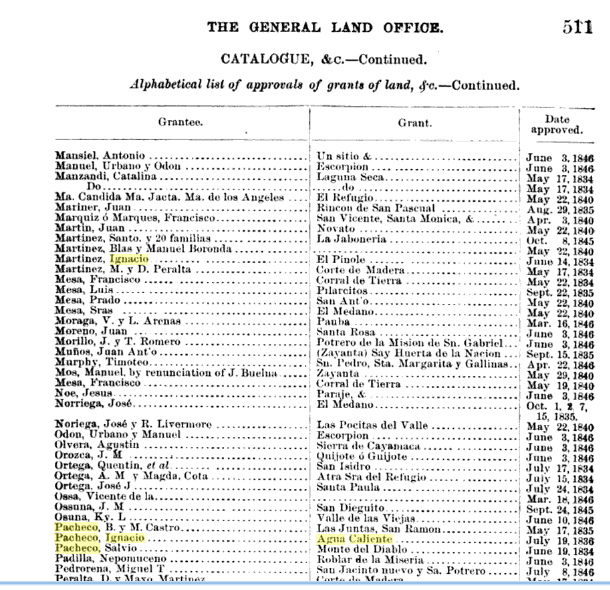
What we call the Springs is a part of the Rancho Agua Caliente, which was the Mexican land grant from 1836 that stretched from Agua Caliente Creek all the way to Glen Ellen. It was originally granted to Ignacio Pachecho, who deemed it unsuitable for farming. Pachecho gave the land back and parts of it passed to Lazaro Piña, M. G. Vallejo, and many others.
LandOfficeRecordsPacheco

Land Office document showing Ignacio Pachecho’s grant of Rancho Agua Caliente in 1836

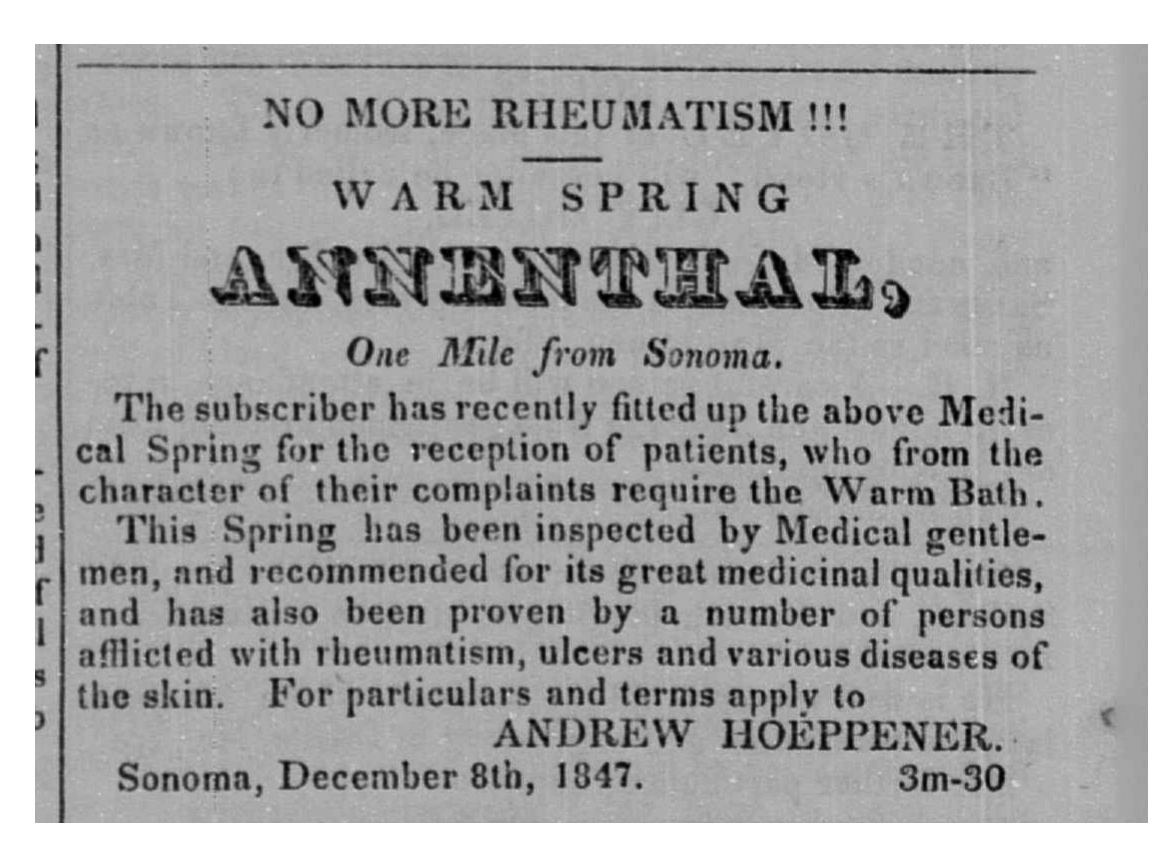
One of the earliest chapters involves one Andrew Heoppner, the music teacher to MG Vallejo’s children. In 1846, Vallejo granted Hoeppner 1000 acres of the Rancho to Hoeppner in exchange for music lessons. Hoeppner was the first person to commercialize the hot springs, in 1847. Later, it came into dispute whether Vallejo held title to that land at the time.
HoeppnerAd

Andrew Hoeppner’s ad in the Daily Alta California for his Annenthal resort, December 8, 1847.

But cloudy titles never slowed down the market in those days.

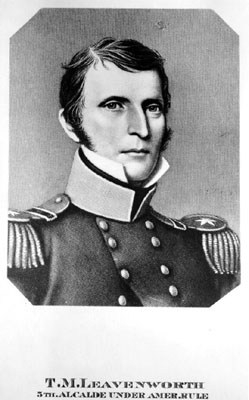
In 1849, Thaddeus Leavenworth, Mexican war veteran and prominent land swindler in San Francisco, moved to the Rancho, possibly escaping his angry victims in the City.

There he laid claim to 300 acres of land, which encompassed the present day Springs, plus Maxwell Farms. MG Vallejo also claimed this land, so they went to the Land Claims Commission, set up after the war to adjudicate such matters. Leavenworth won, according to historian Robert Parmelee, because he “ had better appearing forged documents…” This was in 1855.

(To make the story even more confusing, Hoeppner was reported to have sold his land to Leavenworth, in 1873!)
Leavenworthportrait

(Courtesy, San Francisco Public Library)

In 1882, along came a pair of innocents by the name of Henry and Antoinette Boyes, English gentry. Wishing to establish themselves in Sonoma Valley, they bought 110 acres of Leavenworth’s claim, without making the most basic check of the title. The land already had several owners, and years of law suits followed. The ending was happy for the Boyes, of course. They went on to establish the resort and town that bear their name, but they didn’t get clear title until the mid 1890s.
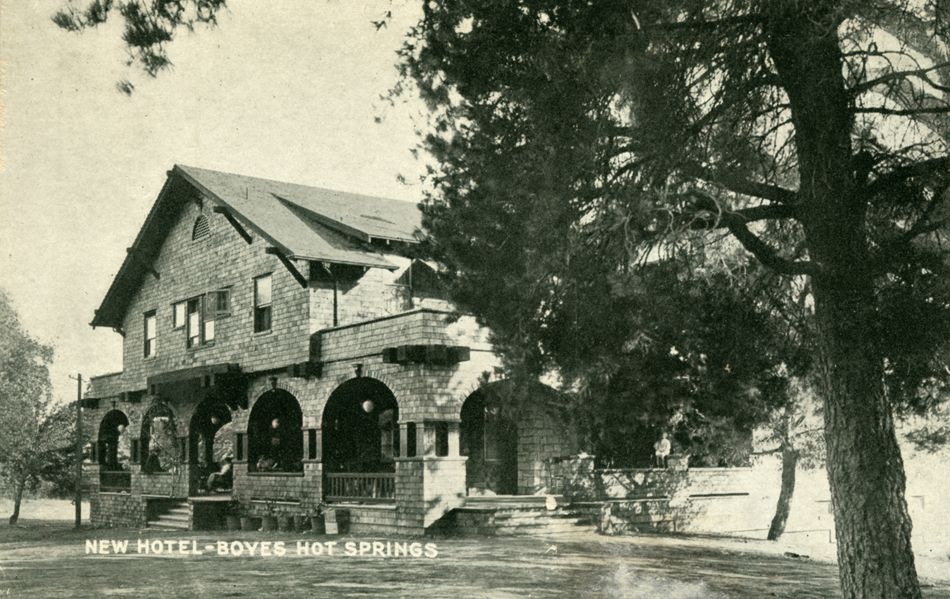
 

newhotel_bhssm

Boyes Springs Hotel circa 1909. (Author’s collection)

SUBDIVISIONS

You can’t sell lots without subdivisions. By 1927 there were twenty subdivisions in the Springs, including the town sites of El Verano, Verano, and Agua Caliente.

Boyes Springs A was subdivided and amended 3 times in 1913

Boyes Springs B Sonoma Highlands-1914

Boyes Springs Hotel Grounds-1916

Woodleaf Park-1909

Sonoma Highlands

Fetters Springs Terrace

The Oaks Park

Agua Caliente Park

Town of Agua Caliente

Richards Subdivision

Baron’s Villa Tract

Verano Court

Carriger Subdivision

El Verano

Verano Townsite

El Verano Villa Assoc. Tract

Riverside Addition

Craig Addition

Sonoma Vista Tract

Eaton Park

Creek Front Addition
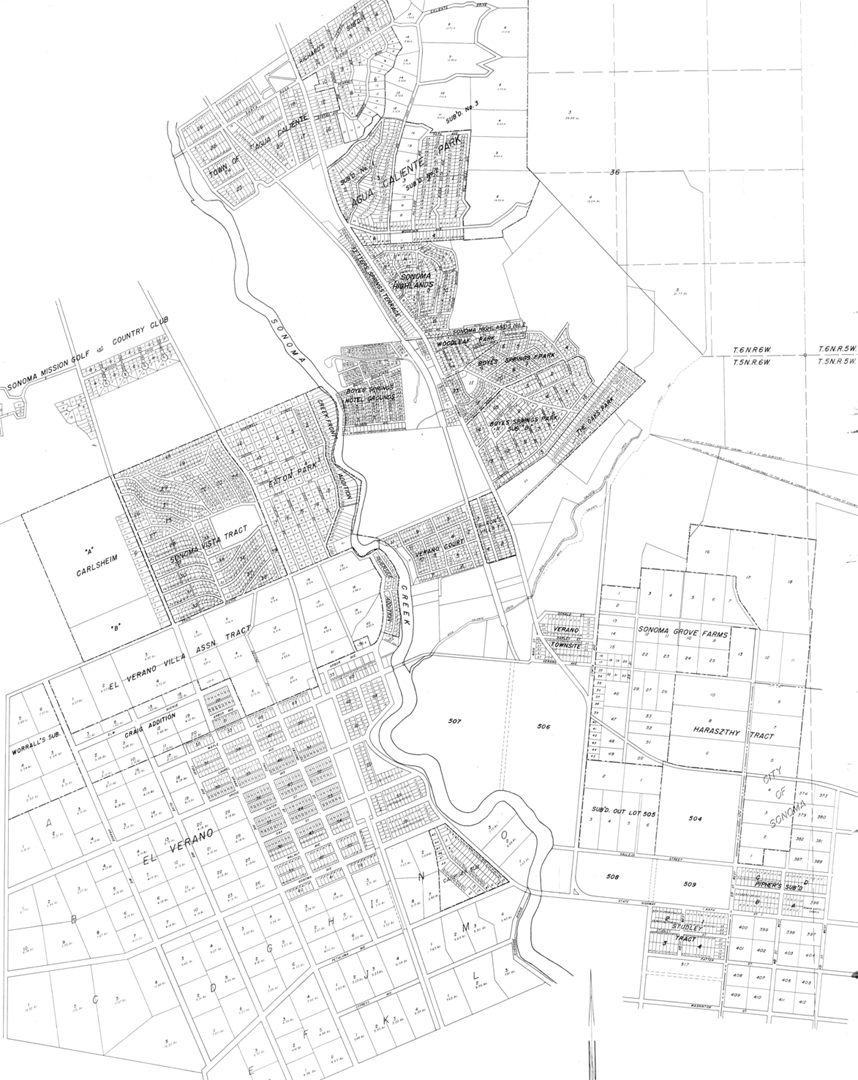
Full page photo

This map was titled “Sonoma Valley Resort Map,” showing that the subdivision lots were not seen as being for permanent residences. (Courtesy Robert Parmelee.)

In 1996 a house sold in Boyes Springs A (bounded by Central and Calle del Monte).
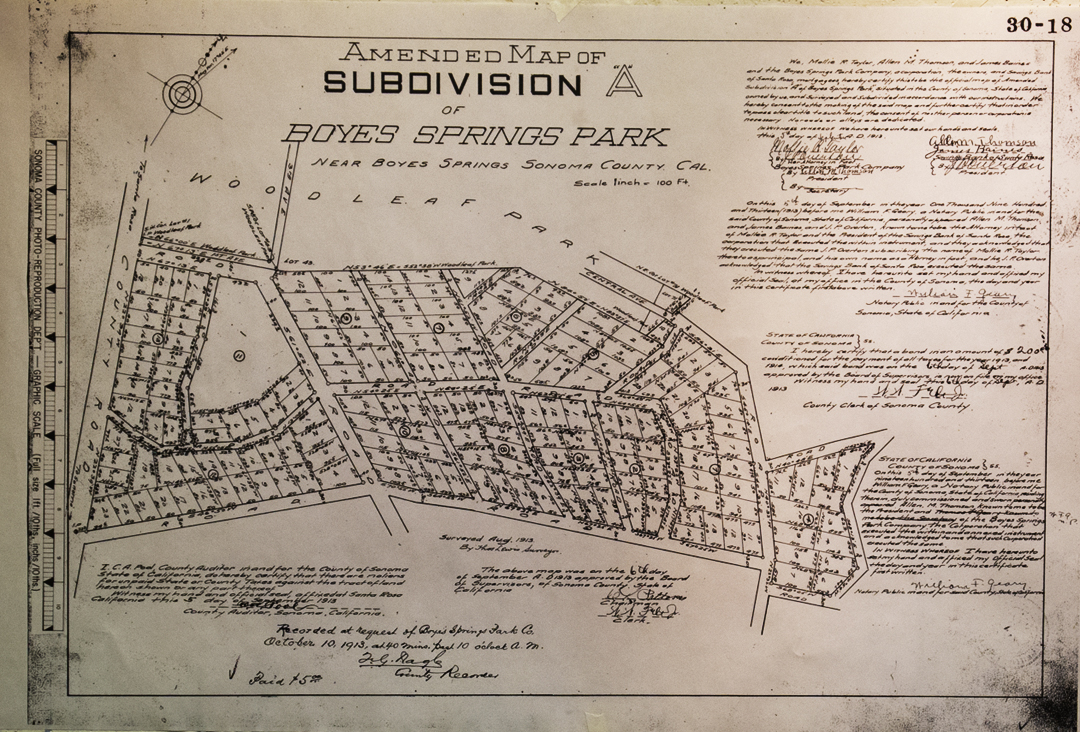
BHGSSubDivALarge1

(Courtesy Sonoma County Recorder’s Office.)

It came with a tattered copy of the bill of sale for the land, which reads in part: “This Indenture, made the 17th day of the year of our Lord one thousand nine hundred and eighteen, between Boyes Springs Park Co. Inc. and L B. Richards, that the said party of the first part for and in consideration of the sum of ten dollars gold coin of the United States of America, to it in hand paid by the party of the second part, the receipt whereof is hereby acknowledged, has granted bargained, and sold, conveyed and confirmed, and by these presents does grant, bargain and sell, convey and confirm, unto the said party of the second part, and to his heirs and assigns forever all the certain lot, piece or parcel of land, situate, lying and being in the County of Sonoma, State of California, and bounded and particularly described as follows, to-wit: Lot number six in block number twelve, subdivision A in Boyes Springs Park…”  That’s interesting, but imagine the buyer’s disappointment when reading on…

“…the said party of the second part, his heirs, executors and administrators, tenants or persons claiming or occupying under them, or either of them, said land or premisses or any part thereof, shall not use or employ nor directly or indirectly suffer, allow or permit any other person or persons whatever, to use or employ said land or premises or any part thereof, for the purpose of carrying on or conducting any species of card or dice playing, gaming or gambling or an notorious or immoral house, or for any other purpose whatever, except solely and exclusively for the purpose of a private dwelling; or use or employ directly or indirectly suffer, allow or permit any other person or persons whatever to use or employ said lands and premises or an part thereof for the purpose of selling, exchanging, bartering or dealing in spiritous or malt intoxicating liquors, wine or cider, nor for any mercantile or manufacturing business.”

Not even cider! 

This buyer’s happy ending, of course, was, 1996 was just about the bottom of the market.

Another interesting story from the early days has to do with the subdivision known as the Boyes Springs Hotel Grounds. This subdivision entailed all the land around the present day Sonoma Mission Inn from Northside St. on the north to opposite Calle Del Monte on the south, and from the creek to the highway.HotelGroundsAnnotated
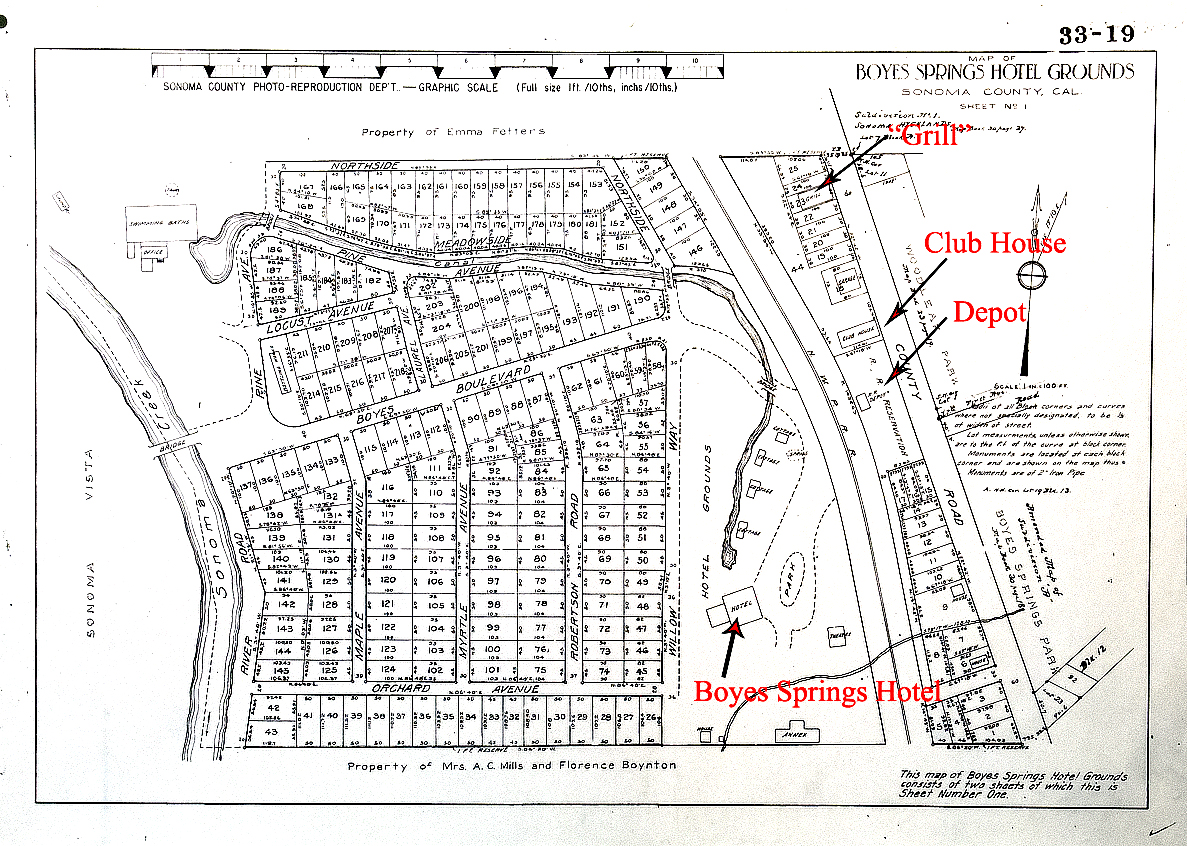
In 1922, Sam Ganos, a Greek immigrant, bought a lot on the highway, possibly with a building, from the Hotel Corporation. On the recorder’s map, this lot is labeled as “grill.” His restaurant, Sam’s Grill, operated until the 1950’s. In 1923, when the terrible fire swept the valley, Sam saved his building by pouring the waters of the hot springs on it, according to the Index Tribune. The building still stands and now house the Taqueria La Hacienda. This blog published an article about Sam and his building previously. A few years ago, his grandson found it and contacted the author, giving him a deeper knowledge of the family history. Todd Ganos:

“My earliest memory is that of being in the restaurant and looking up at my grandfather.  They also owned the Big 3 grocery store.

“(My dad was born in 1915.) Our old family friend, Gus Kapranas, … told us that my dad’s birth mother was a young waitress that worked for Sam and her name was Clara.  She was born in the US and was supposedly of German and Irish descent.  Gus Kapranas said that Sam refused to marry her and she committed suicide when my dad was a year old or perhaps younger.  Clara’s parents did not want the child and gave my dad to Sam.  According to Gus Kapranas, Sam could not initially care for my dad so he put my dad in an orphanage in San Francisco.  My dad spoke of Father Lawry as the Catholic priest who ran the orphanage…At some point, Sam removed my dad from the orphanage and began to raise my dad himself (with Uncle Gus).  Gus Kapranas said that people objected to a child being raised in a restaurant without a mother.  As a result, Sam, Gus, and my dad moved to Boyes Hot Springs.  I believe the timing would coincide with my dad being about 5 to 7 years old, which would be 1920 to 1922.”

He said that Sam Ganos brought Mendel — his stepson — on board at the restaurant and eventually turned it over to him. He said this occurred in the early  1950s perhaps. He seemed to think that Sam’s Grill was renamed to Mendel’s Cafe at that time.

L. E. “BUD” CASTNER

Real estate man and insurance agent L. E. “Bud” Caster held forth from his office in Boyes Hot Springs for over 50 years. Not incidentally he was a director of the Golden Gate Bridge and Transit District for 40 years, which is the longest tenure of any director.
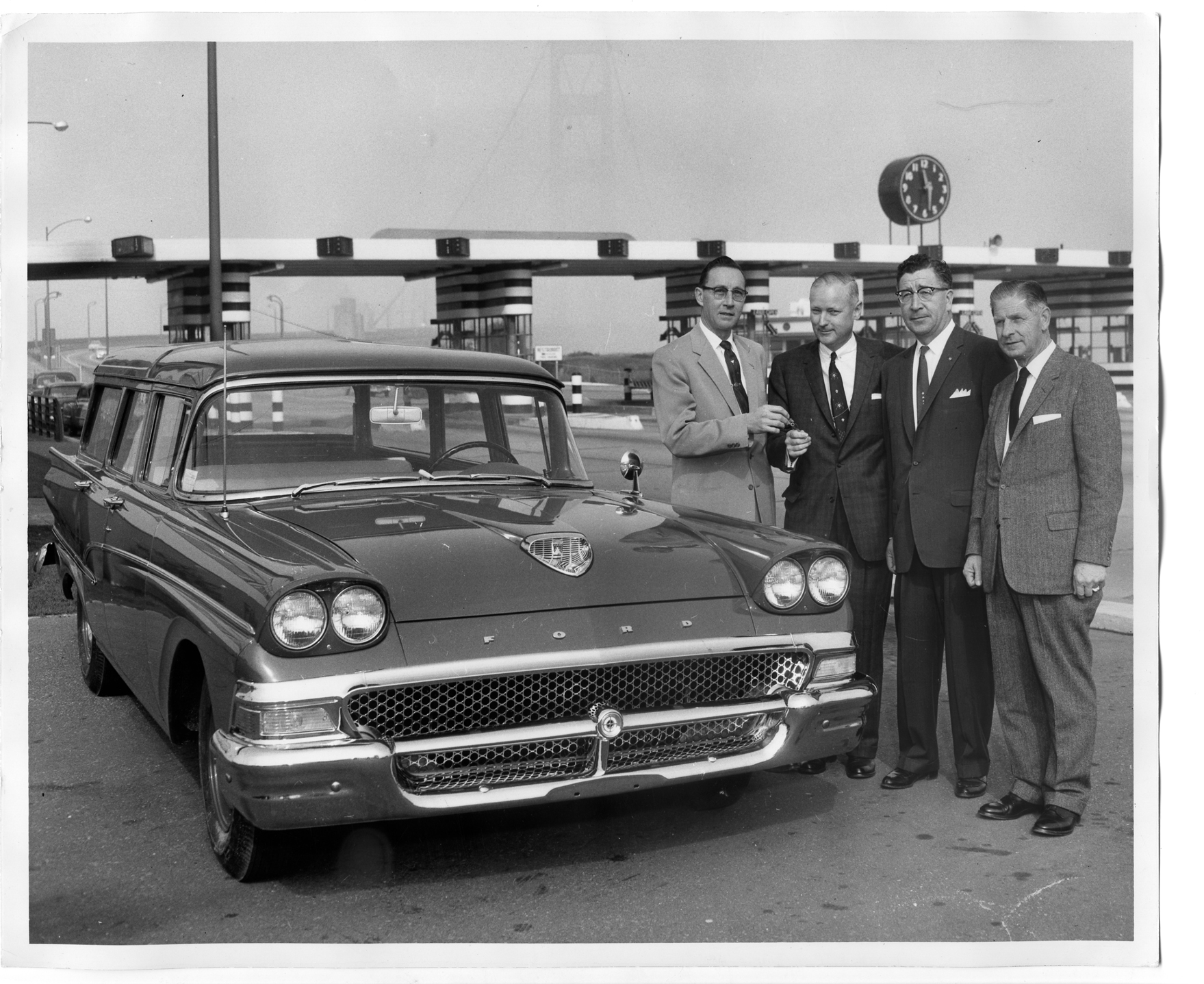
155CastnerGGBridge1960s

L.E. Castner, second from left. (Courtesy Sonoma Valley Historical Society.)

Castner started working life as a logger in Mendocino County, became a doorman in San Francisco, and a collections agent, finally founding his own collection agency. After WWII he moved to Agua Caliente to take up chicken farming, but couldn’t stand the smell. The natural progression was to insurance. (Pause for laugh). He went into business with an established firm in Boyes Hot Springs. Taking over the business when the owner died, he also acquired a partner, Bill Downey, who soon became a judge. Court was held in the back of their building on the highway. Castner leased some of the space in his building to the first doctor, the first dentist, and the first pharmacy in Boyes Hot Springs. (Dr. Michael Makita, Dr. Holly Christenson, and Pine Wagner, pharmacist.) Castner was a Regent of St. Mary’s college in Moraga, which would have been his alma mater if he had graduated. According to Bill Lynch, “The veteran Golden Gate Bridge director was best known for his short fuse, his long friendships, and his devoted service to the bridge district…” L.E. “Bud” Castner died in 1992.
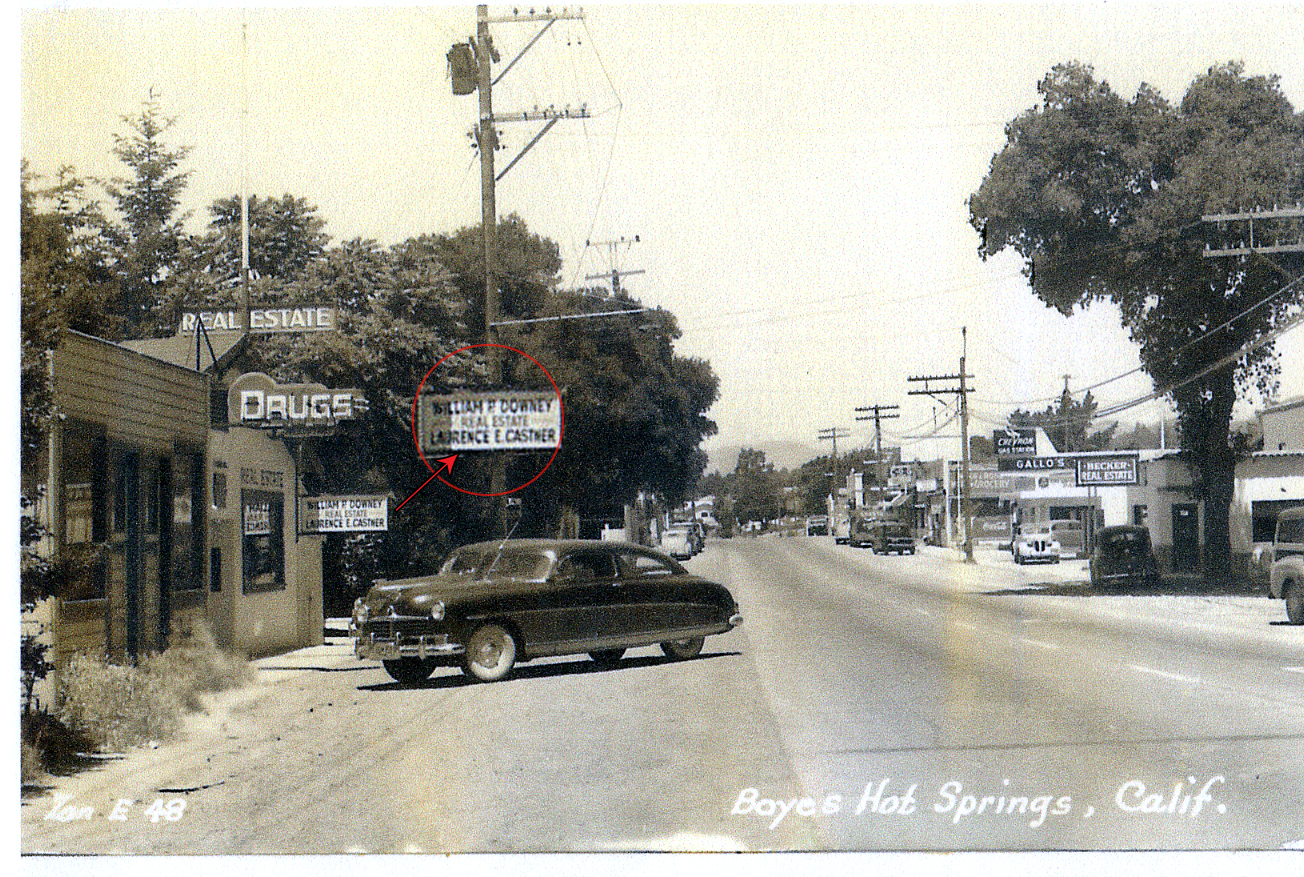
iValleydrugSign

L.E. Castner’s original office on Highway 12 across from Calle Del Monte, early 1950s. He shared the office with William Downey and the building with Pine Wagner, pharmacist. Sign is shown enlarged in the circle.
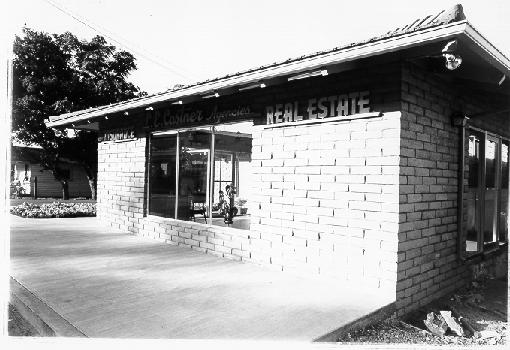
Castneroffice

Bud Casnter’s “new” office, at the corner of Sierra and the Highway, circa 1970s. Now owned by the Sonoma Mission Inn. (Courtesy, Sonoma County Library)
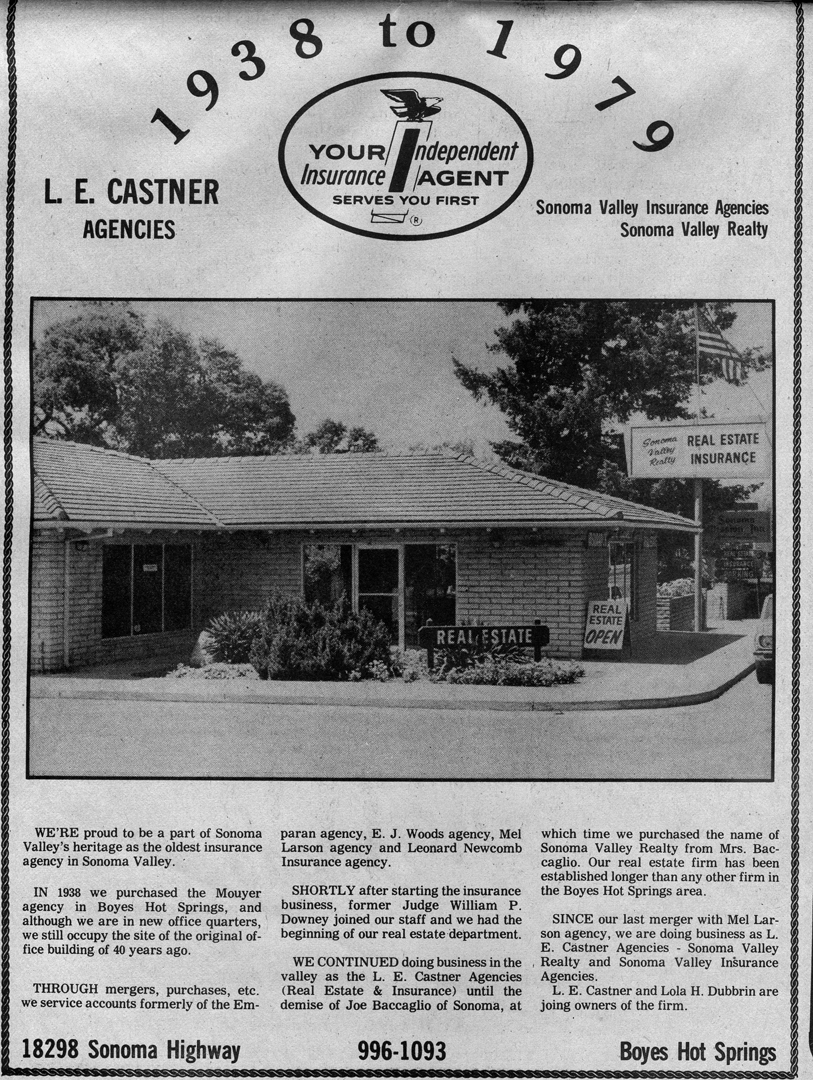
CastnerAd


Photographs and the Index Tribune courtesy of the Sonoma Valley Historical Society
Standard
Bibliography, Collection/Obsession, History, Photographs, Resorts

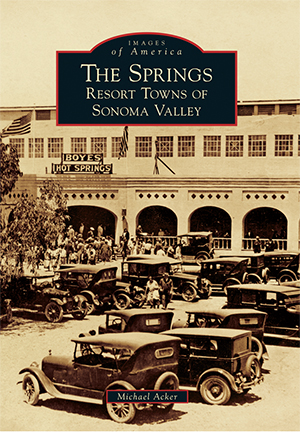
Images of America, The Springs:Resort Towns of Sonoma Valley

coverfinal

Michael Acker’s book will be out on March 27. There will be a book signing at Reader’s Books in Sonoma on March 30, 7PM. Other events to follow including one at the Depot Park Museum, date TBD.

The book features 210 photographs of the Springs from 1885 to 2016. Part history, part nostalgia, part pride of place in the here and now, it is sure to interest and delight residents, visitors, and the curious alike.

Buy it here: https://www.arcadiapublishing.com/Products/9781467124300


Standard
El Verano, History, Resorts

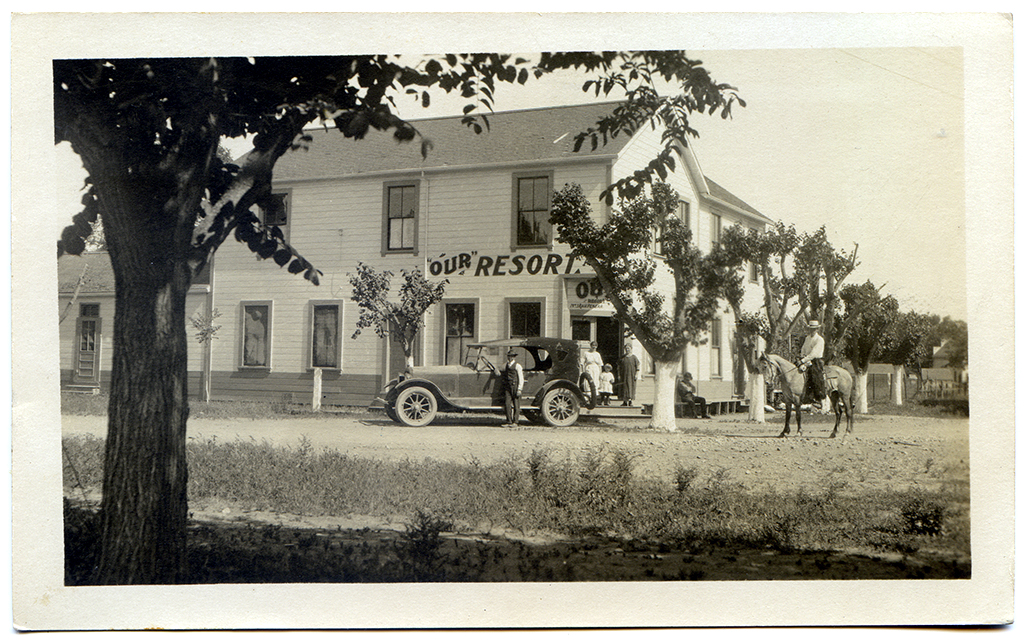
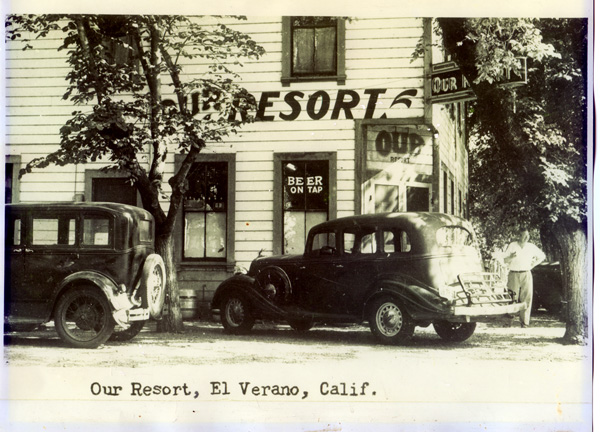
Crane’s Hotel/Our Resort/McNeilly’s

OurResortwCarandHorseHiRes

UPDATE! New to our Historic Photo Database, this image of Our Resort during the early years of Rose Pensar’s ownership. The horse and rider are on the present Willow Street, Second Avenue then (circa 1924). The auto and driver, Verano Avenue, which was called Arbor Avenue at the time. (Author’s collection)

First, the confusion.

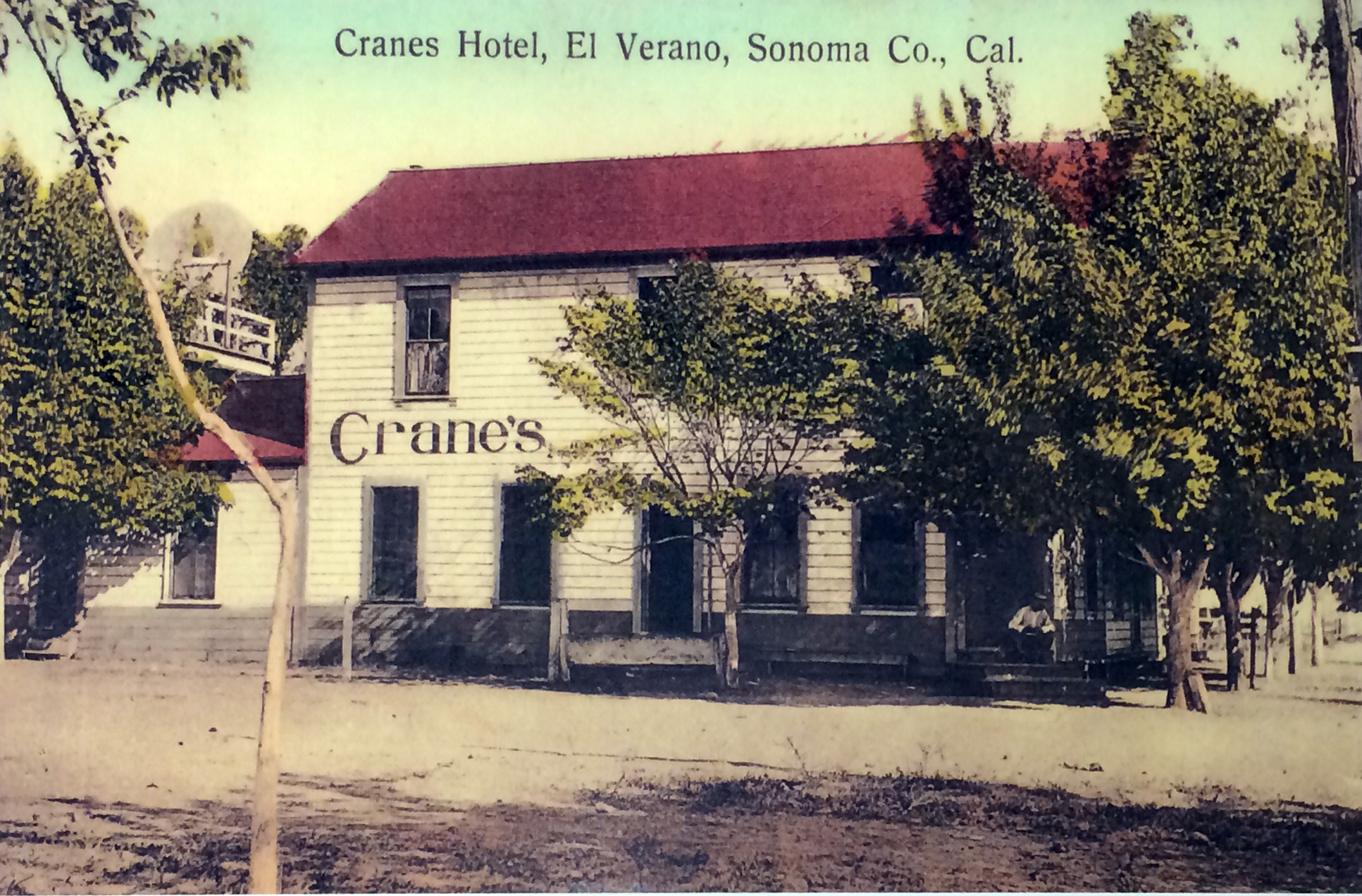
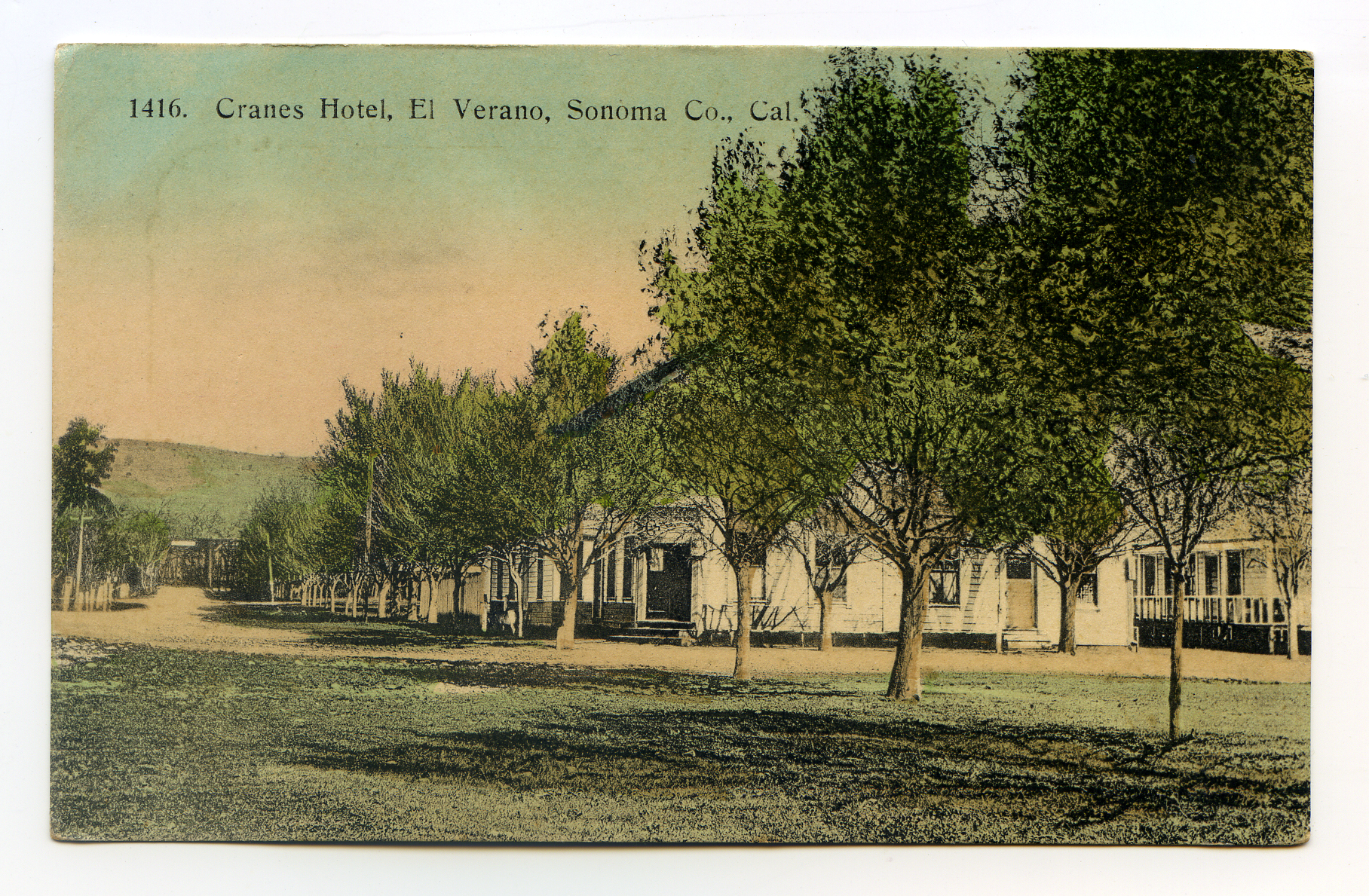
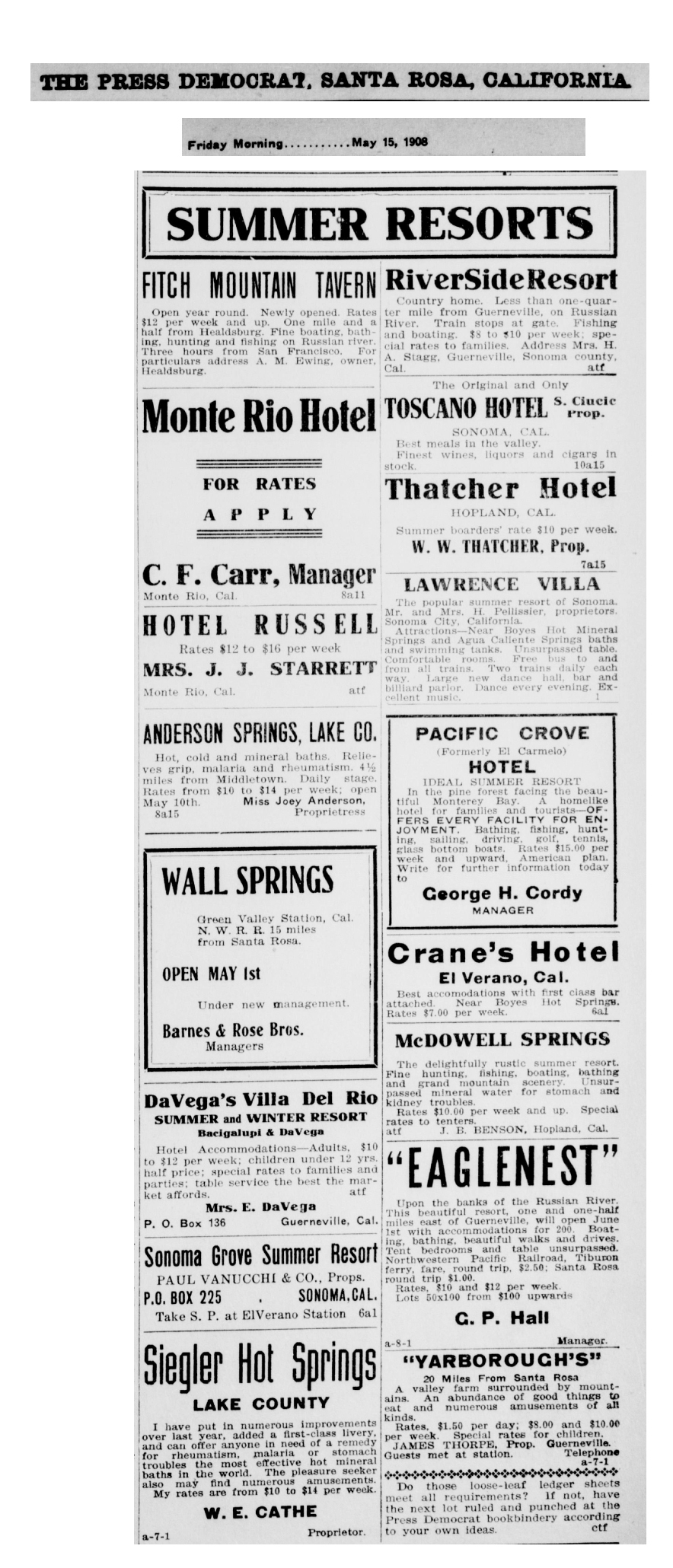
There was a Crane’s Hotel, and a Crane’s Sanitarium. Cranes Hotel was at the corner of Willow and Verano Avenue, and existed as early as 1908, according to an advertisement in the Press Democrat. Crane’s Sanitarium was “between Boyes Hot Springs and El Verano,” according to an ad they placed in the Index Tribune in 1921, and “Near Verano Station, between Boyes Hot Springs and Sonoma City. Just off the highway,” according to a tourist guidebook from around 1920.

Crane’s Sanitarium was the precursor to Sonoma Valley Hospital (Please see http://www.svh.com/the-evolution-of-sonoma-valley-hospital/.) Crane’s Hotel became Our Resort, then McNeilly’s Tavern. The two establishments, the sanitarium and the resort, were not one and the same.cranesshotelcraneshoteltrees1912Post marked 1912.

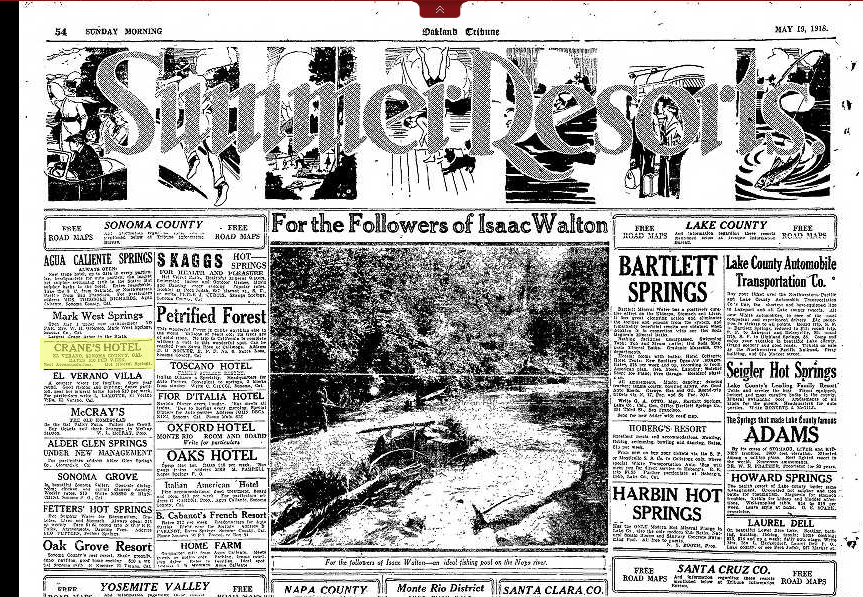
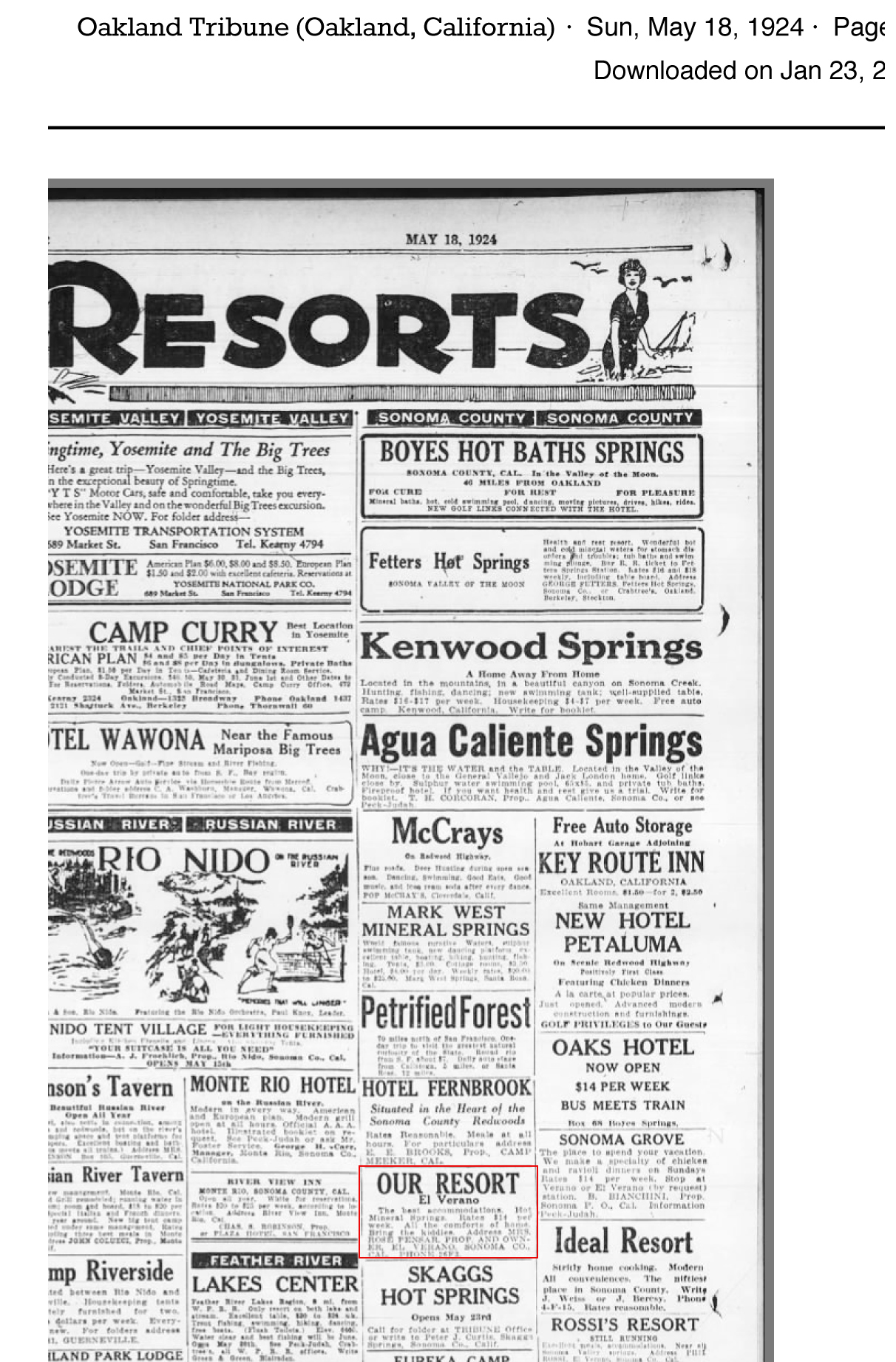
An Index Tribune archive search does not turn up much for Crane’s Hotel. The span of years between the first and last mention of Crane’s Hotel is 1908-1916. It became Our Resort sometime after 1916. Rose Pensar is listed as owner in 1924 and mentioned in 1938 as being “of Our Resort.” There is a 1924 Oakland Tribune ad for Our Resort.pressdemo1908craneshotel oaklandtrib1916craneshotelourresortoaklandtrib1924ourresort2webourresort1web

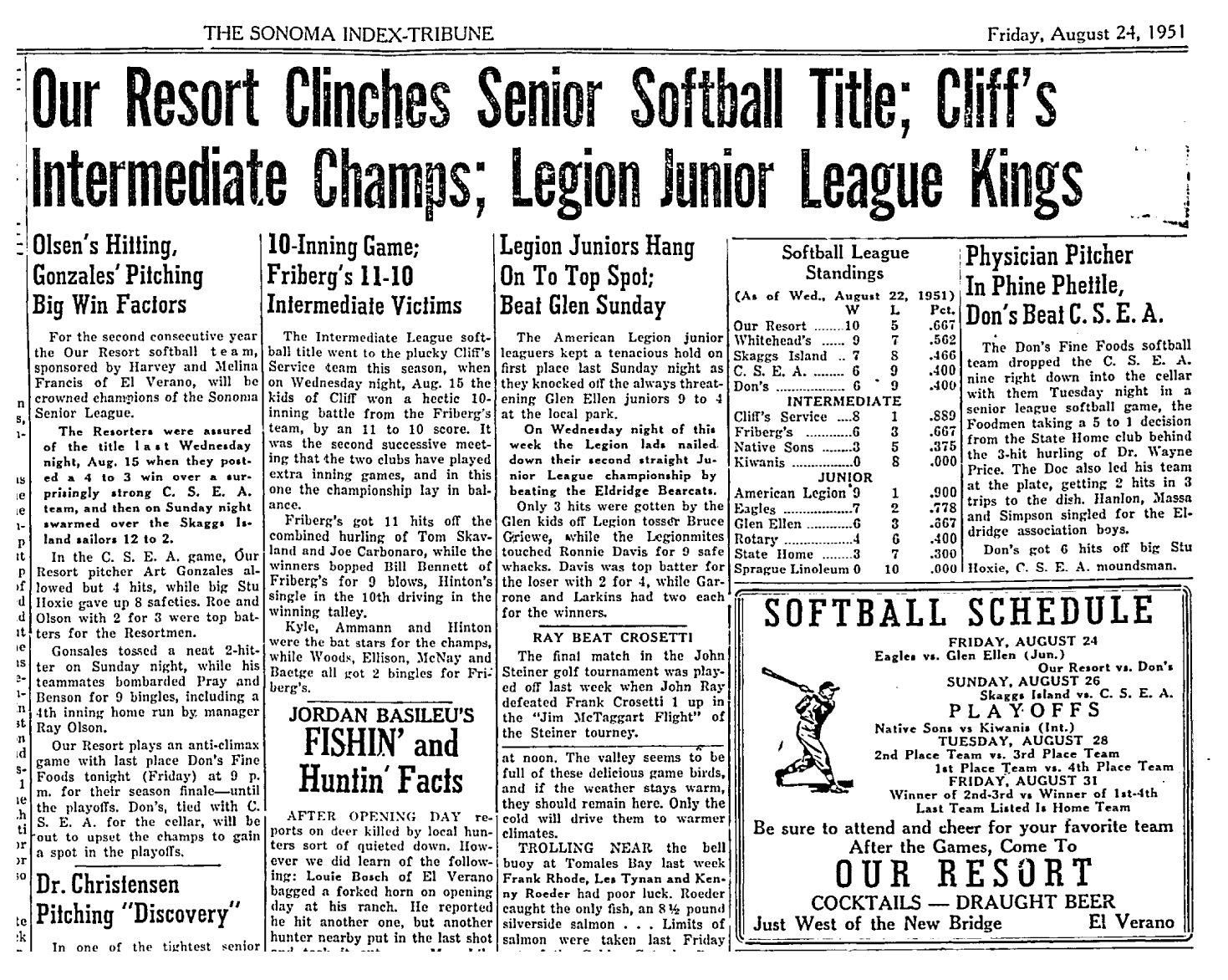
Baseball was very important in Sonoma Valley for many years. In May of 1935, Our Resort hosted The Greyhounds team from San Francisco. In later years, the resort sponsored a softball team that won many local championships.ourresortchampions

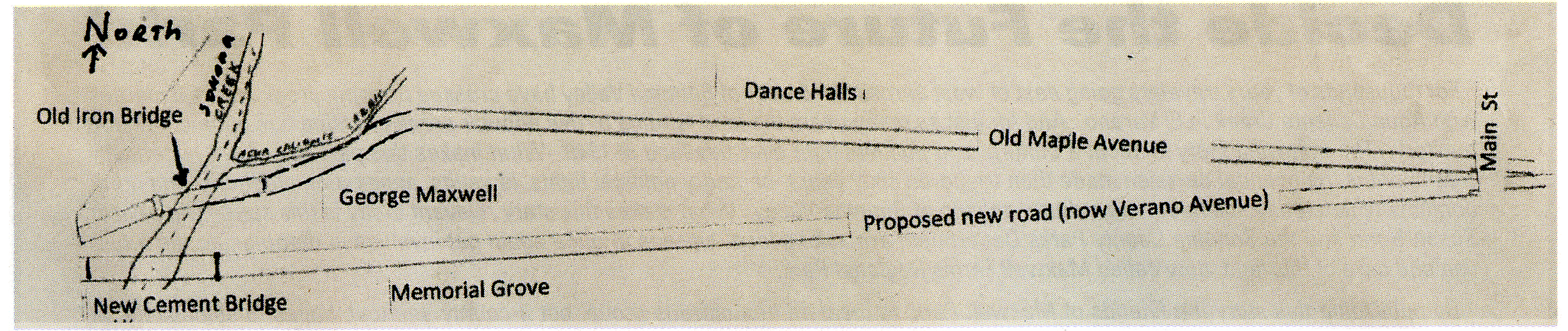
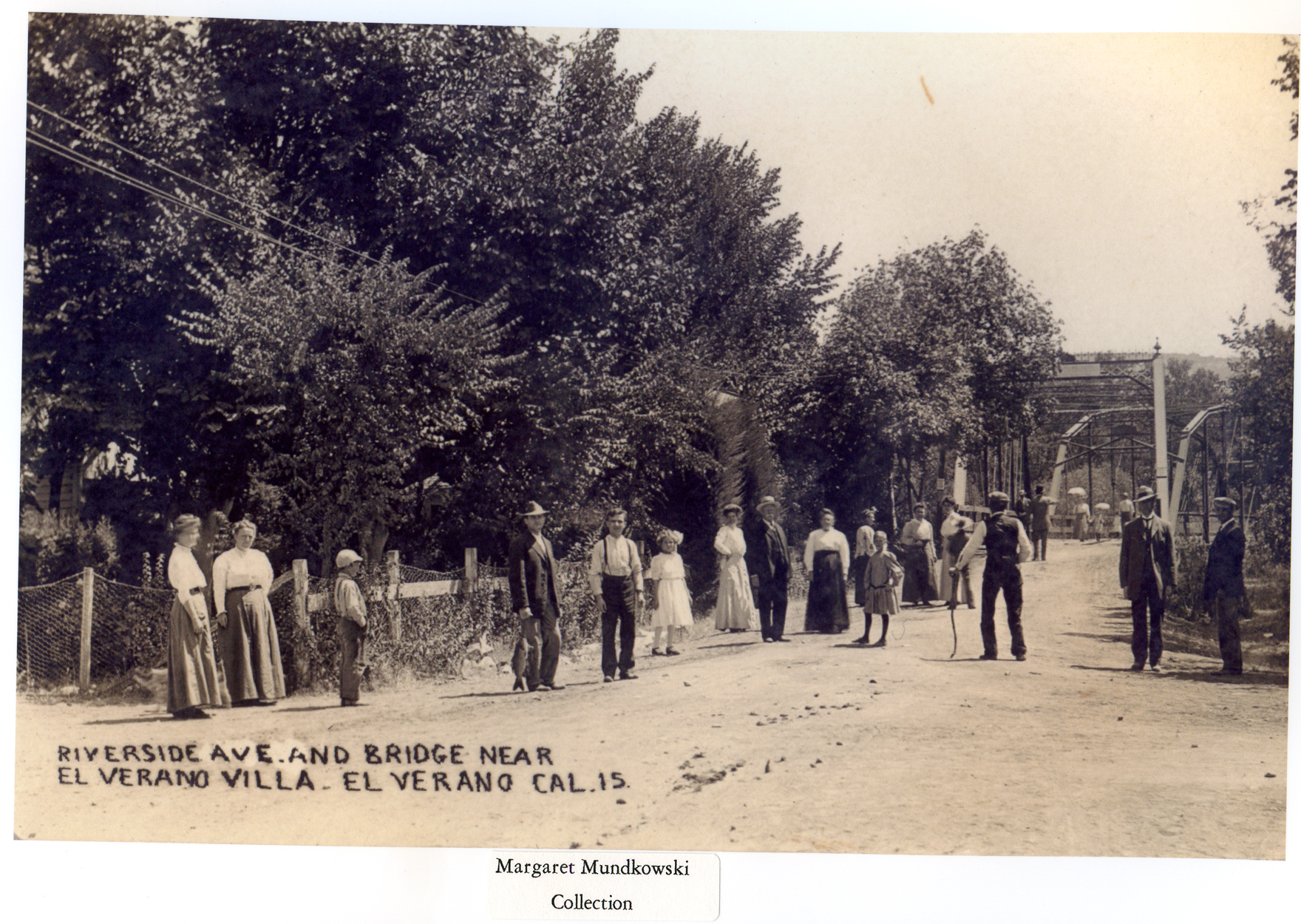
Notice that the ad says “Just West of the New Bridge.” The new bridge on Verano Avenue opened on September 17, 1950. The map shows the location of the old bridge and, at the time, proposed new one. After the new bridge was completed, the county tried to sell the old steel trusses, but there were no takers.oldevbridgemapelveranobridge

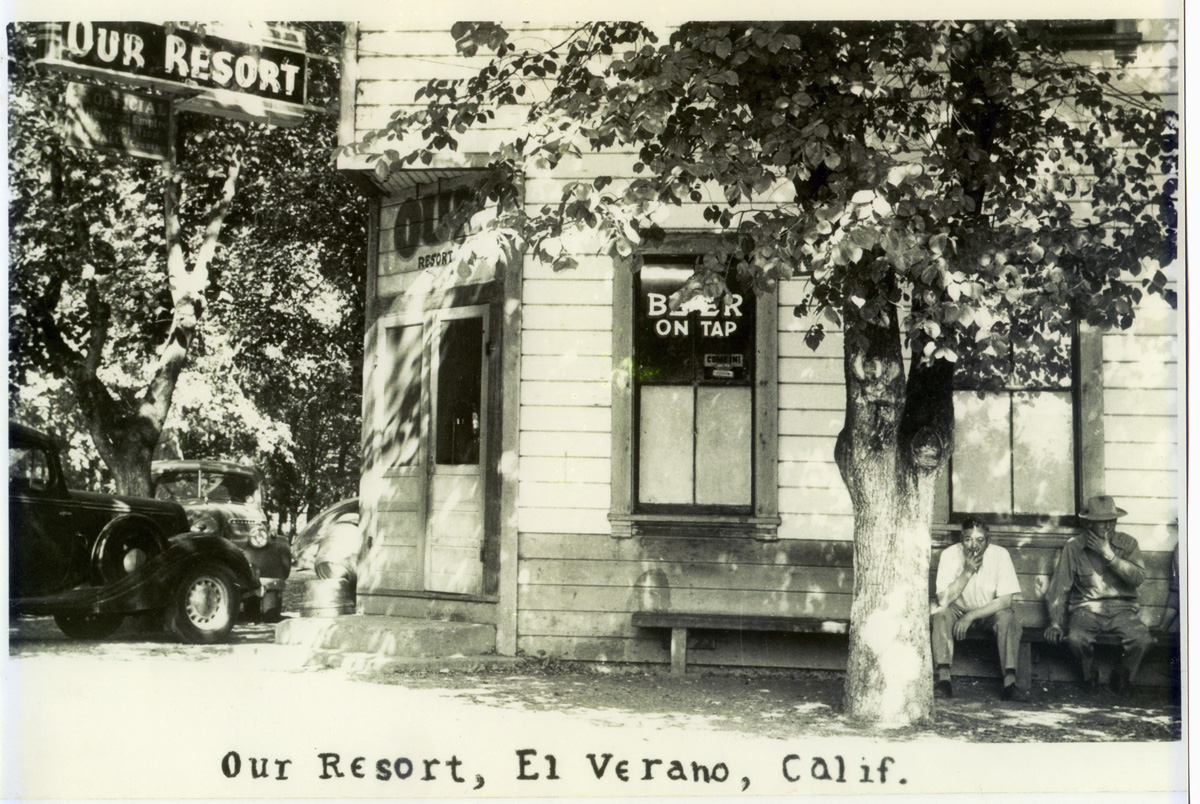
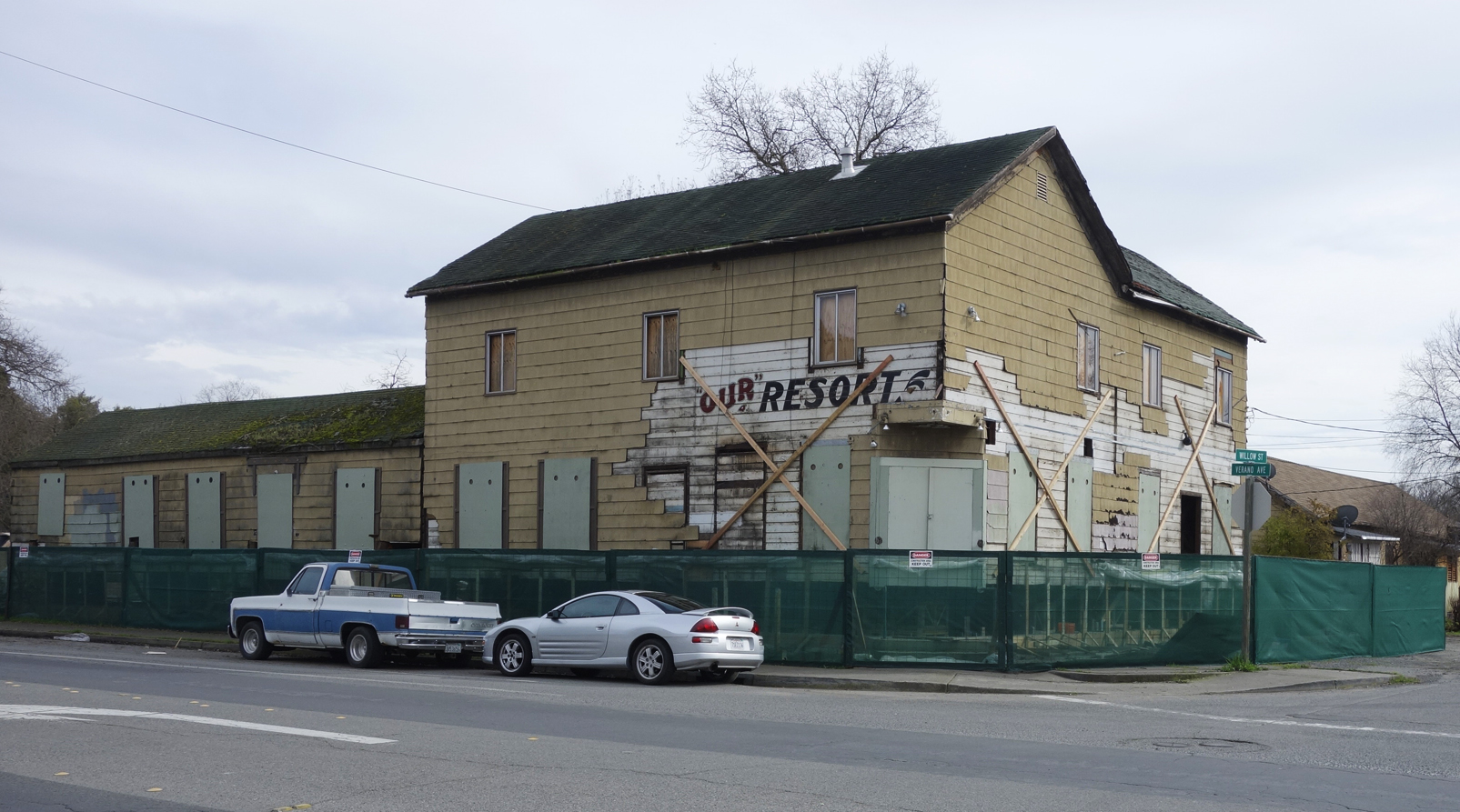
McNeilly’s opened in February, 1981, with a “new 25 inch color TV,” according to the Index Tribune. The pool table was replaced by a Space Invaders game. The Tavern was still in business, and still sponsoring sports teams, into the 2000s.After it closed, the building was vacant and derelict, and seemed headed for demolition. But, early in 2017, new owners had a new foundation installed, and it appears the structure will be saved, if not “restored.” Tearing off the siding revealed the old “Our Resort” sign. Perhaps that can be preserved as a memorial to the history of the building and the days of the resorts.ourresort2017February 2017


2026: the Our Resort sign was not preserved.

Standard
Architecture, History, Jewish History, Now and Then, Resorts

Rosenthal’s Resort, Part Two

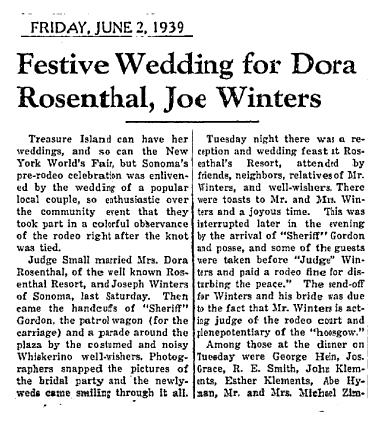
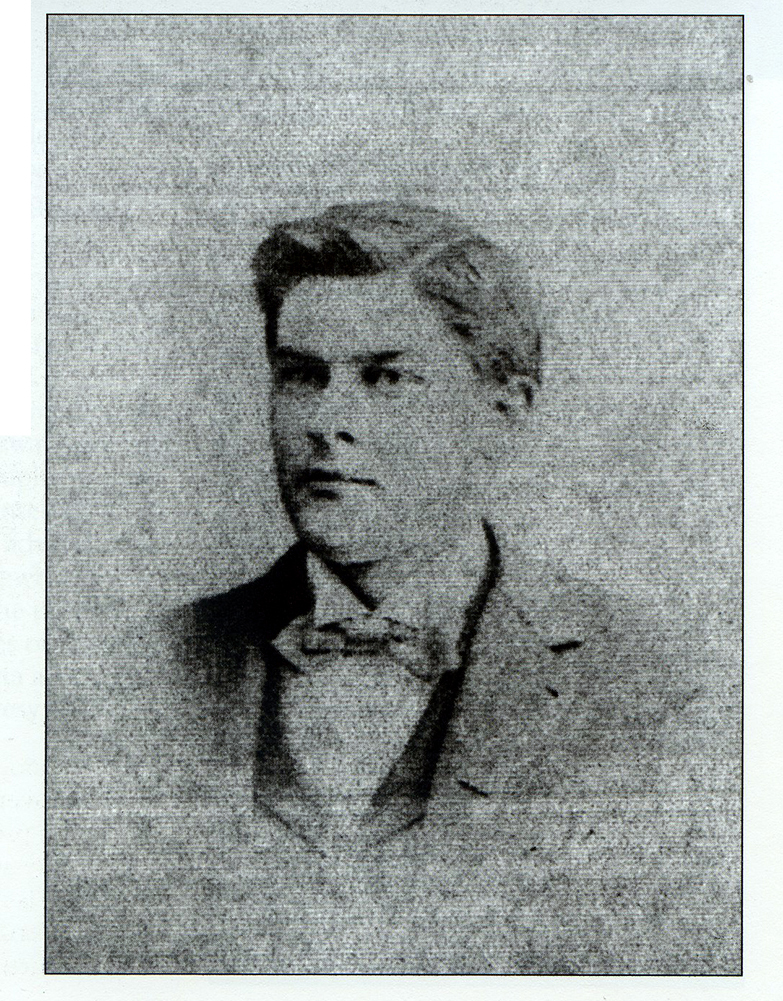
We left off with Selig Rosenthal’s death in 1938. But the story of Rosenthal’s Resort did not end there.doraswedding1939In June of 1939, Dora Rosenthal married Joe Winters, a well-known local tailor.
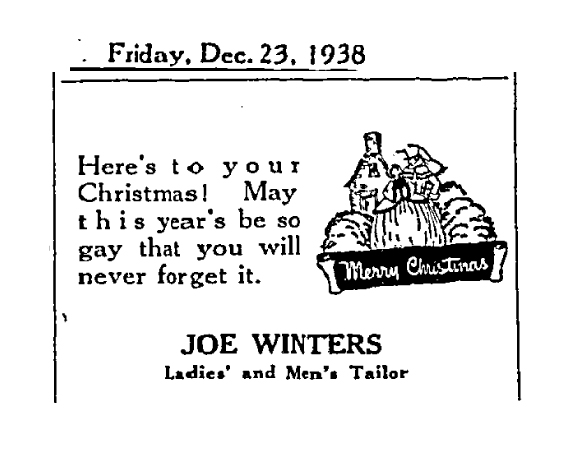
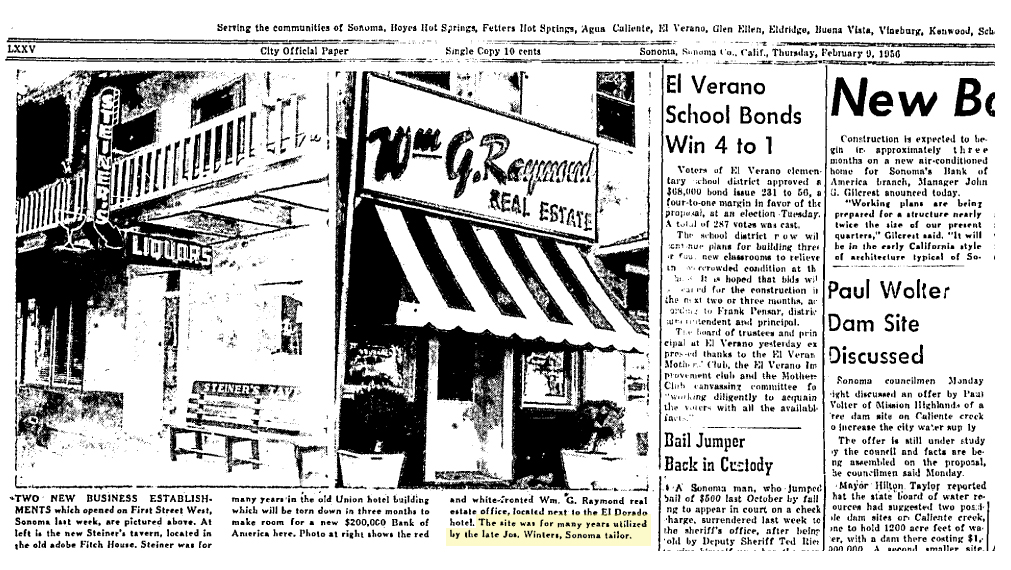
it1938wintersfirstmentionadwintersoldshop1956Joe Winters’ shop was for many years located next to the El Dorado Hotel. The red and white awning of the Raymond Real Estate office would not get past the Sonoma Design Review Commission now!
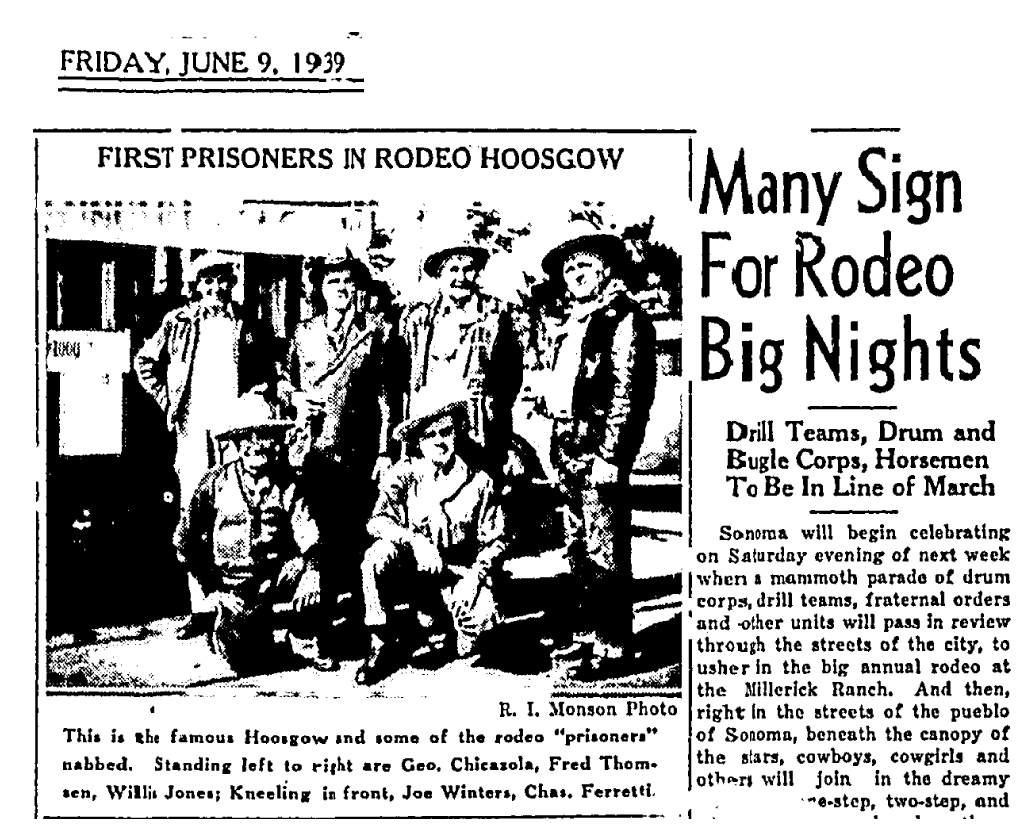
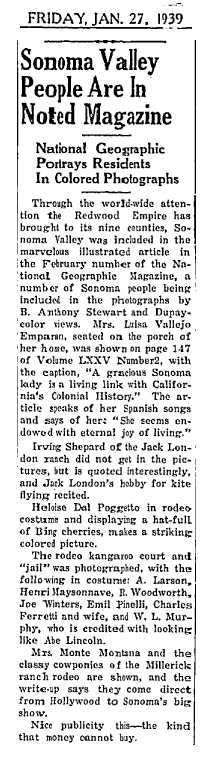
Winters was very involved with the rodeo in 1939. The rodeo was started in 1929 and ran through the 1950s, on the Millerick Ranch near Schellville. it1939wintersrodeophoto

winternationalgeo1939

In 1939, National Geographic amgazine came to Sonoma and photographed the Rodeo “Kangaroo Court,” which included Joe Winters.

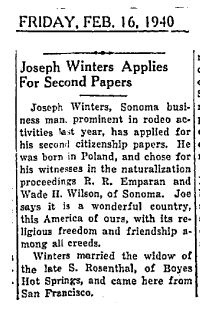
Winters was a Polish citizen. He applied for dual citizenship in 1940. R.R. Emapran was one of his witnesses. Emparan was the grandson of General Mariano G. Vallejo.winterspolish

In that year Harry Lyons was again partnering to run the resort.

In 1941, “the main building of the Winters resort near Boyes Springs, formerly Rosenthal’s hotel, is being remodeled by Mr. and Mrs. Joseph Winters into seven apartments.”

Rental accommodations were in high demand for defense workers at Mare Island. In 1942, the IT reported that many other resorts were being converted for war housing: “Farrell’s, Parente’s, Rosenthal’s, and Maurel Villa used to be popular in the good old summer time, but are now rented to all year round tenants, cottages being especially in demand. Fetters Hot Springs has its share too.”

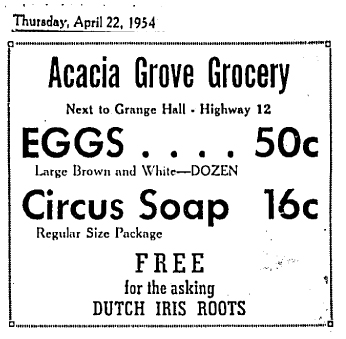
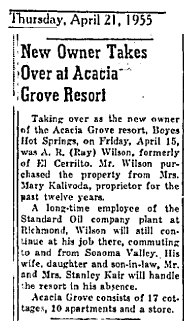
In 1945 the IT said the Winters had sold their resort and retired to San Francisco. They had actually sold the resort in 1943 to Mrs. Mary Kalivoda, who ran it as Acacia Grove Resort until 1955, when it was sold to A. R. Wilson of El Cerrito.

acaciagrovenewownerpeluffoshouse

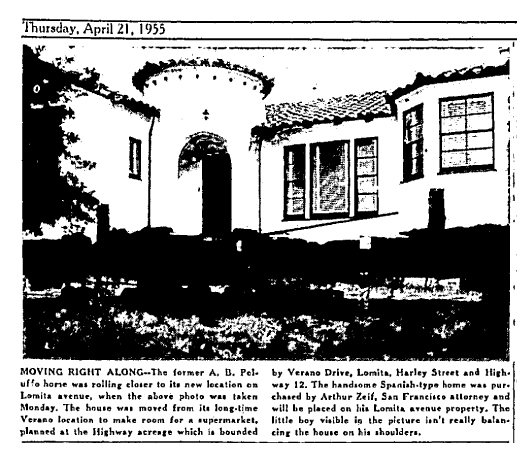
Here is another example of the serendipity that happens when you search newspaper archives. On the same page as the item about the new Acacia Grove owners is this photo of Charlie Peluffo’s house being moved. Peluffo was the developer of the Plaza Center Building at the old Boyes plaza site. The house stood where shopping center at Verano Avenue is, and was move to a lot on Lomita Avenue. Is it still there?

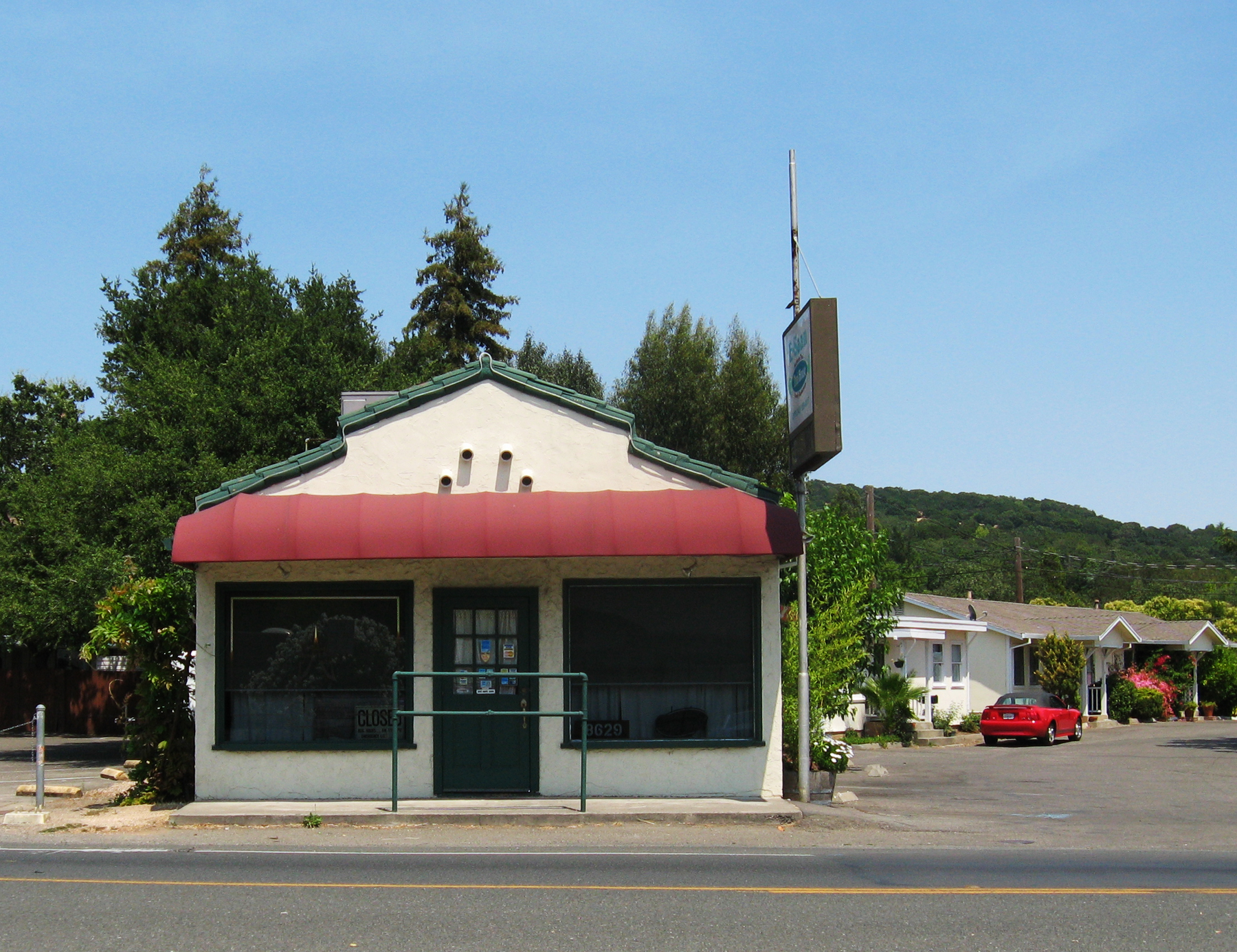
The building that houses the Thai restaurant now (2016) was originally a store.

acaciagrovegroceryad

rosenthalstore-thaiPhoto from 2008 of the Rosenthal Store building, housing E Sann Thai restaurant.
The building was the home of Lee and Lia Chinese restaurant from 1976 to 1987.

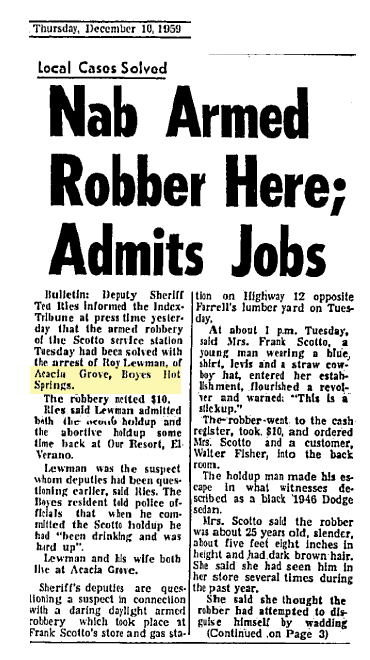
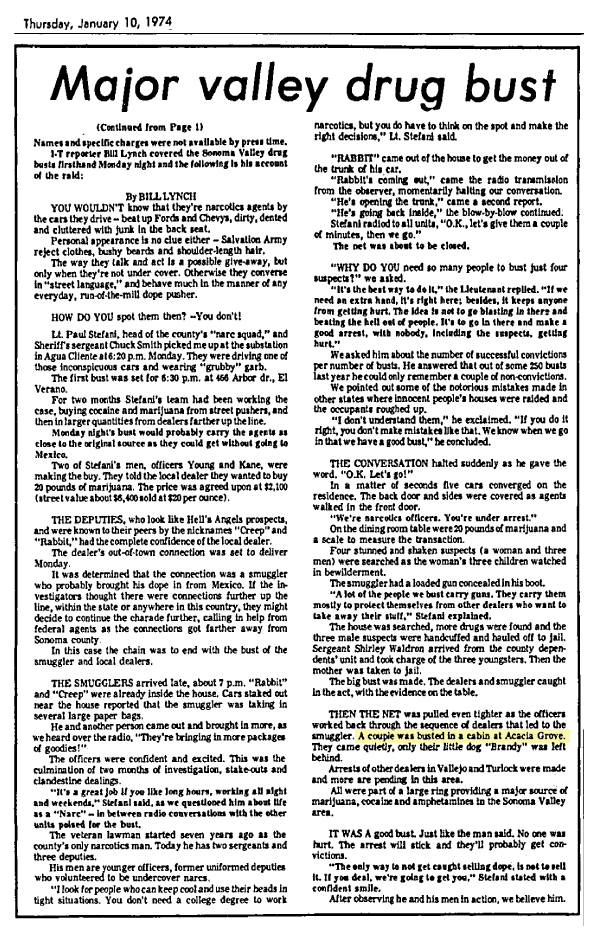
As with the Springs in general, the economic downturn that came with the end of the resort era, brought a certain amount of crime associated with Acacia Grove.

acaciaarmedrobber-copyacaciagrovedrugbust-copy

However, positive things were happening also. In 1966 contractro R.A. Lof added a new laundry room and showers.

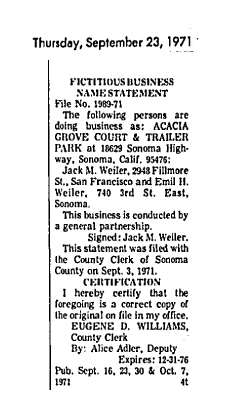
Jack Weiler bought Acacia Grove in 1971 and his family still owns it in 2017.

weilerbusinessname1971

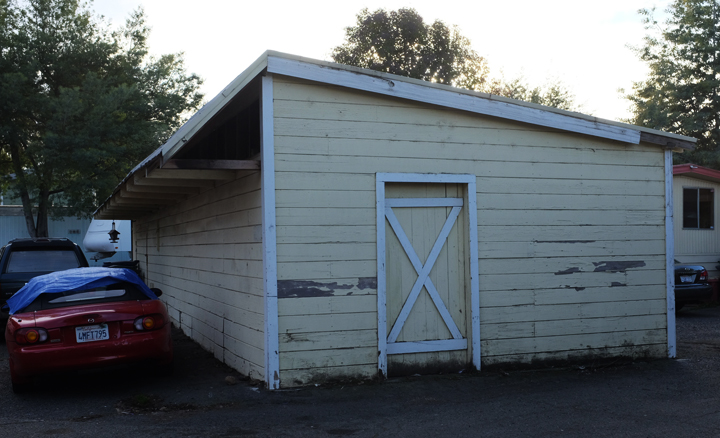
Interesting buildings from the Rosenthal days:rosenthalchickencoopThe chicken coop. Poultry husbandry was common and popular in the Springs in the early 20th Century.rosenthaltankhouse
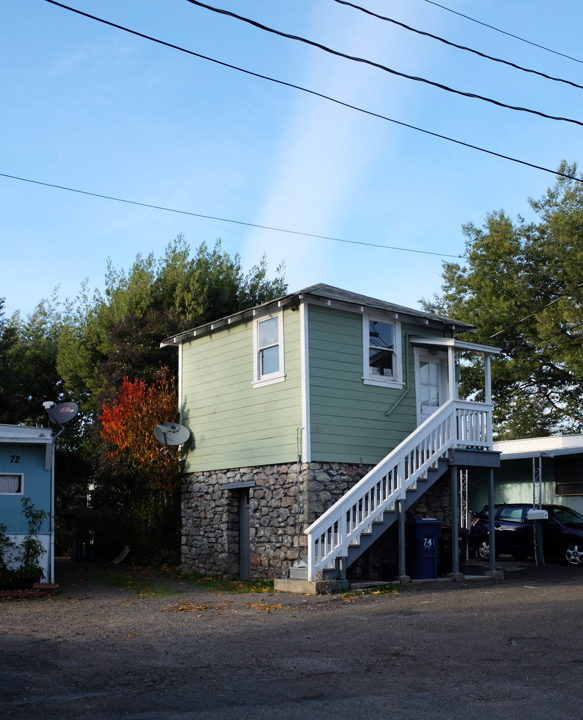
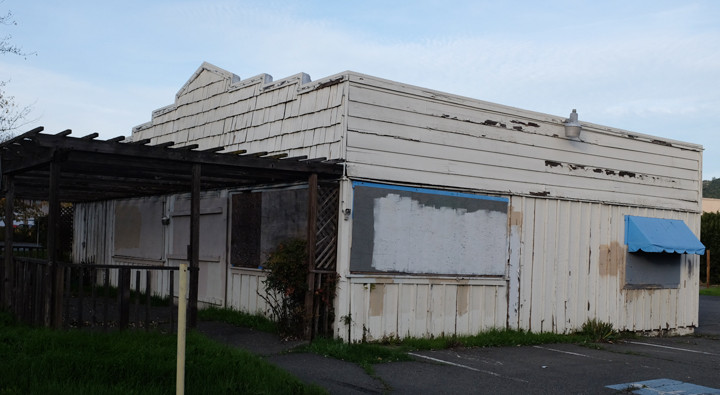
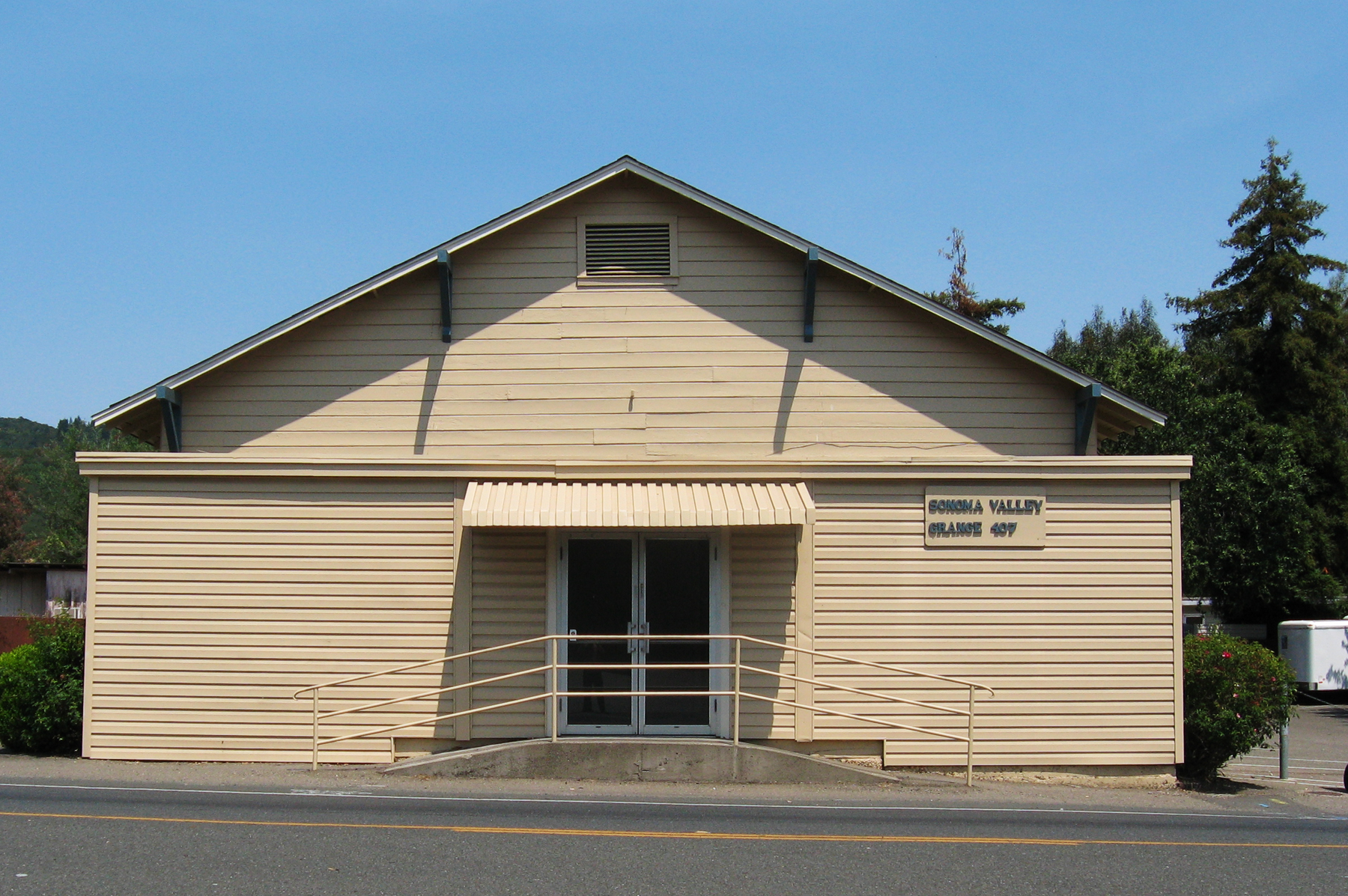
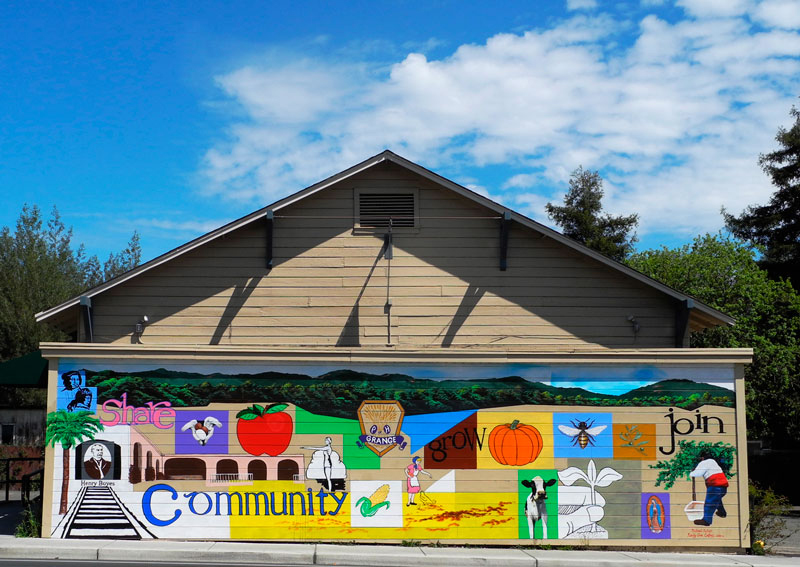
The resort was served by a well. The water was stored in the tank house, which is a residence today.rosenthallasalletteThis building was La Salette Restaurant for a few years, but has been vacant a long time. What function did it serve in the heyday of the resort? grangehall1930swebgrange2008mural2012web
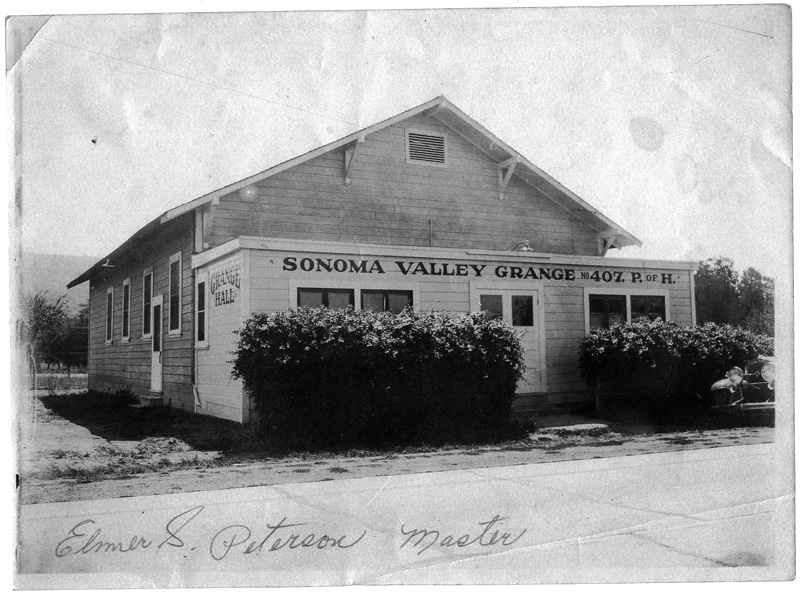
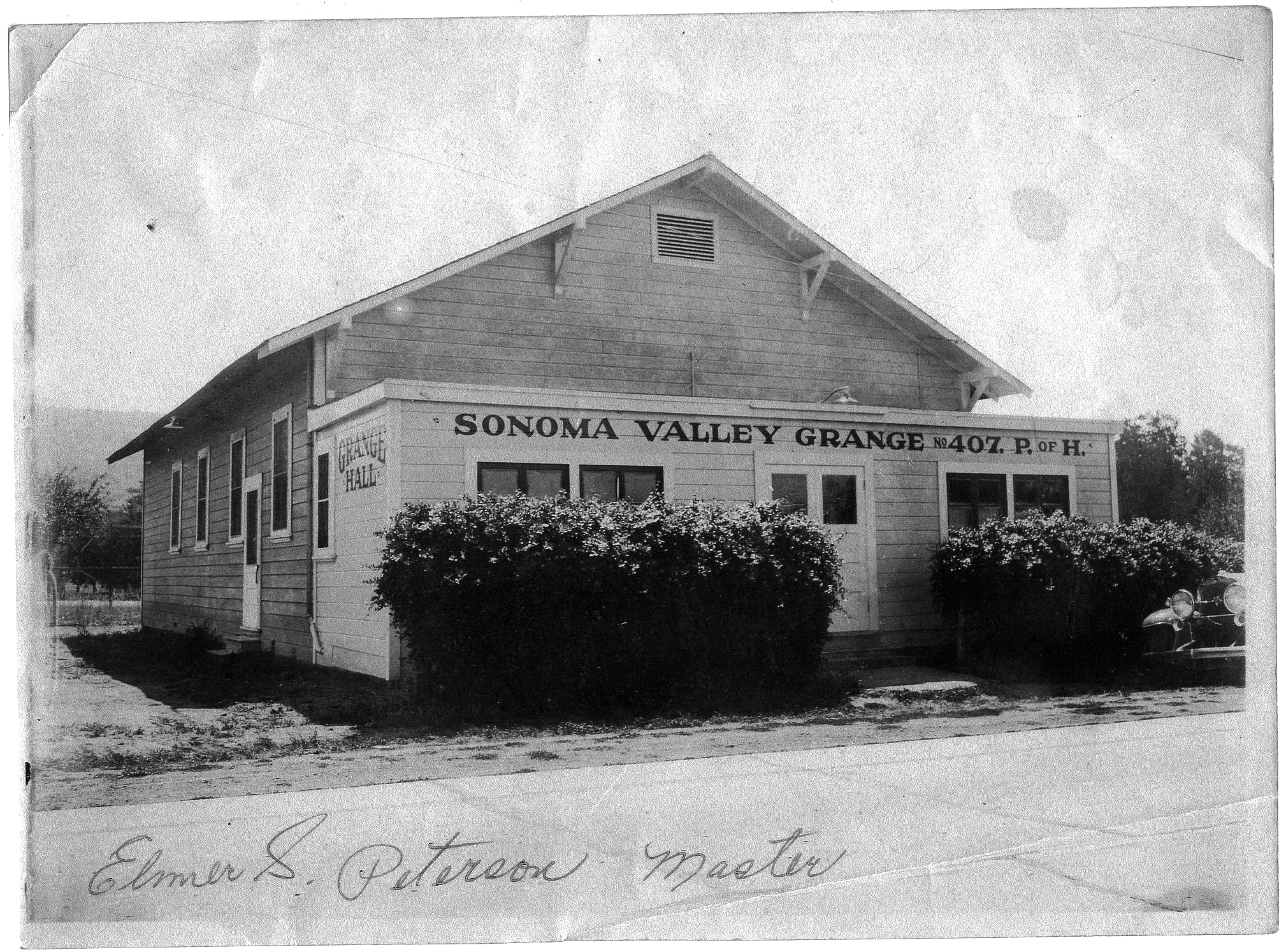
The Grange Hall in the 1930s, 2008, and 2012.

Standard
Boyes Hot Springs, History, Jewish History, Resorts

Rosenthal’s Resort, Cantor’s Resort, and Acacia Grove. Part One

Introduction

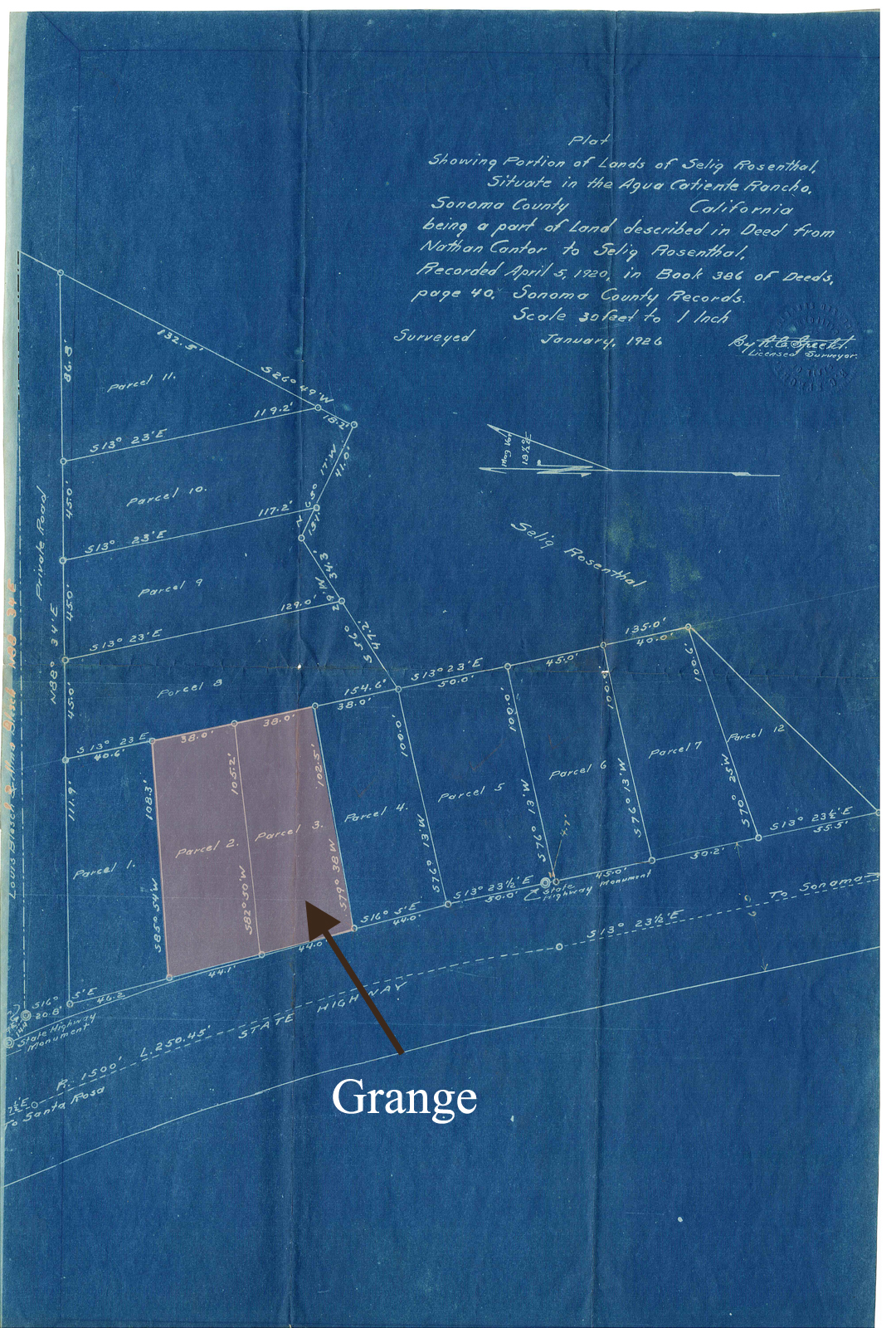
There would be no reason for many people today to know the name Selig Rosenthal. I came across it because, as a Grange member, I got to look at the organization’s archives and saw the property plat. It didn’t take much digging to reveal the outlines of an interesting story, or several stories, one with a tragic ending. What spurred me to write was a conversation and walk around the property with its current owner, George Weiler, with whom I share an interest in the history of the site.

Dear Reader, please indulge me as I refine my style and methods in writing these articles. In the following I purposefully followed several digressions that begged for more information. This is interesting for me, but may make for pieces that are too long or hard to follow. If so, I apologize.


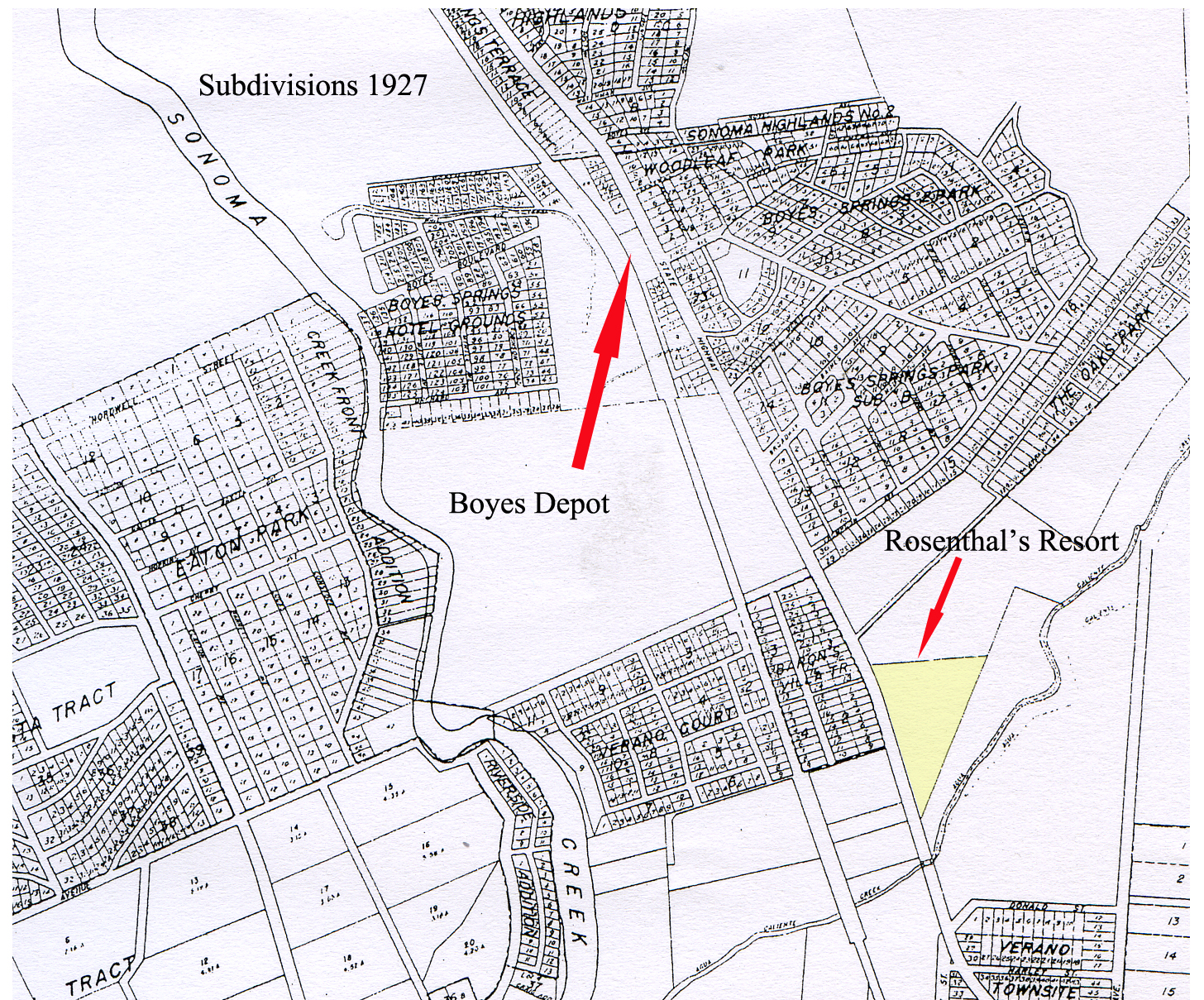
Rosenthal’s Resort was about ¼ mile south of the Boyes Springs depot, on the highway, on land bounded on the south by Agua Calliente Creek. In 2016 the property encompasses Acacia Grove Mobile Home park, E-Saan Thai restaurant, the old La Salette restaurant building, and surrounds the Sonoma Valley Grange property, which was carved out if the land in 1934.rosenthalsmaprosenthalsplot

As the inscription on this plat states, the land was sold to Selig Rosenthal by Nathan Cantor in 1920.

The first mention of Nathan Cantor in the Index Tribune is in 1912 when we learn that “George Grose (sp) is erecting a first class windmill on the Cantor place in Verano.” (Here again notice the flexibility in place names. Cantor was just across Agua Caliente Creek from the Verano depot of the Santa Rosa and Carquinez Railroad, but that locale is frequently called Boyes Hot Springs.)

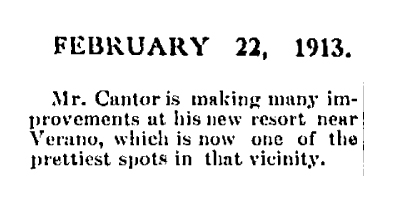
In 1913 we learn from the I-T that…

it1913cantorimprovments

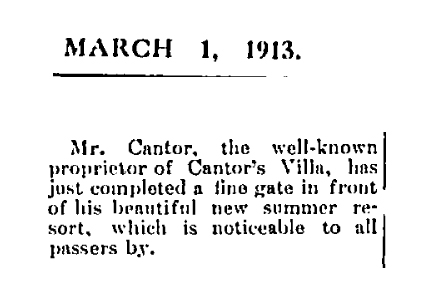
The same year…

it1913cantorsgate

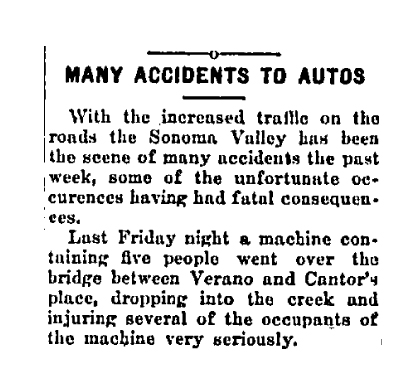
But in 1917, life was getting more dangerous…

it1917cantorsbridge

And the resort business could become contentious.

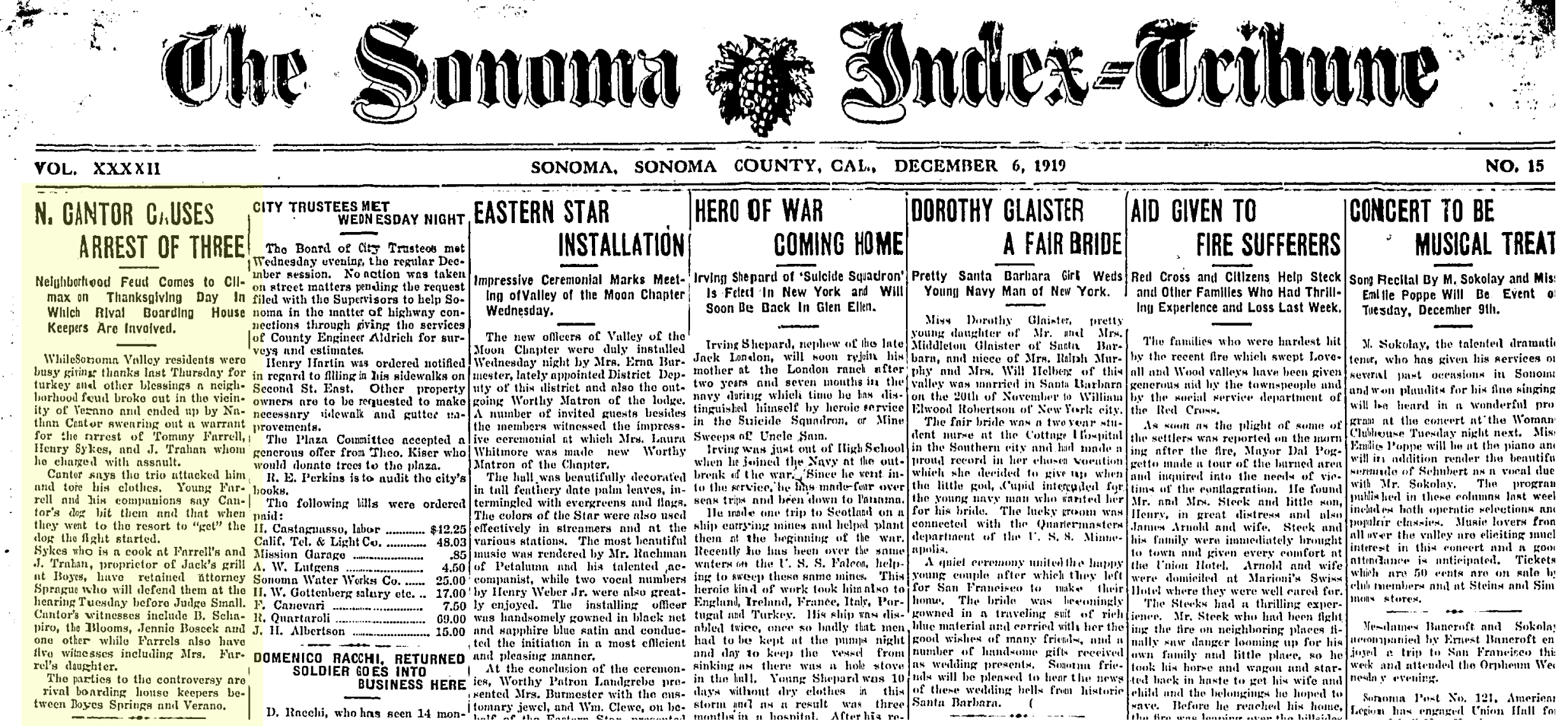
On Thanksgiving Day, 1919, Nathan Cantor got into a “neighborhood feud” with two rival resort keepers, Tommy Farrell and J. Trahan. Cantor said the men attacked him and tore his clothes. His opponents said Cantor’s dog bit them. Cantor swore out a warrant and the assailants went before Judge Small. The results of that hearing were not reported by the Index Tribune.

it1919cantorfight

In February of 1920, Nathan Cantor sold his resort to Dora and Selig Rosenthal.

The Index Tribune noted “the new owners are former popular and prominent residents of the metropolis and will no doubt continue to conduct the well-known resort with great success. Cantor’s Resort is one of the most popular in Sonoma Valley, and is crowded every season. Mr. Cantor and his partner, Jennie Boseck, will go to San Francisco.”

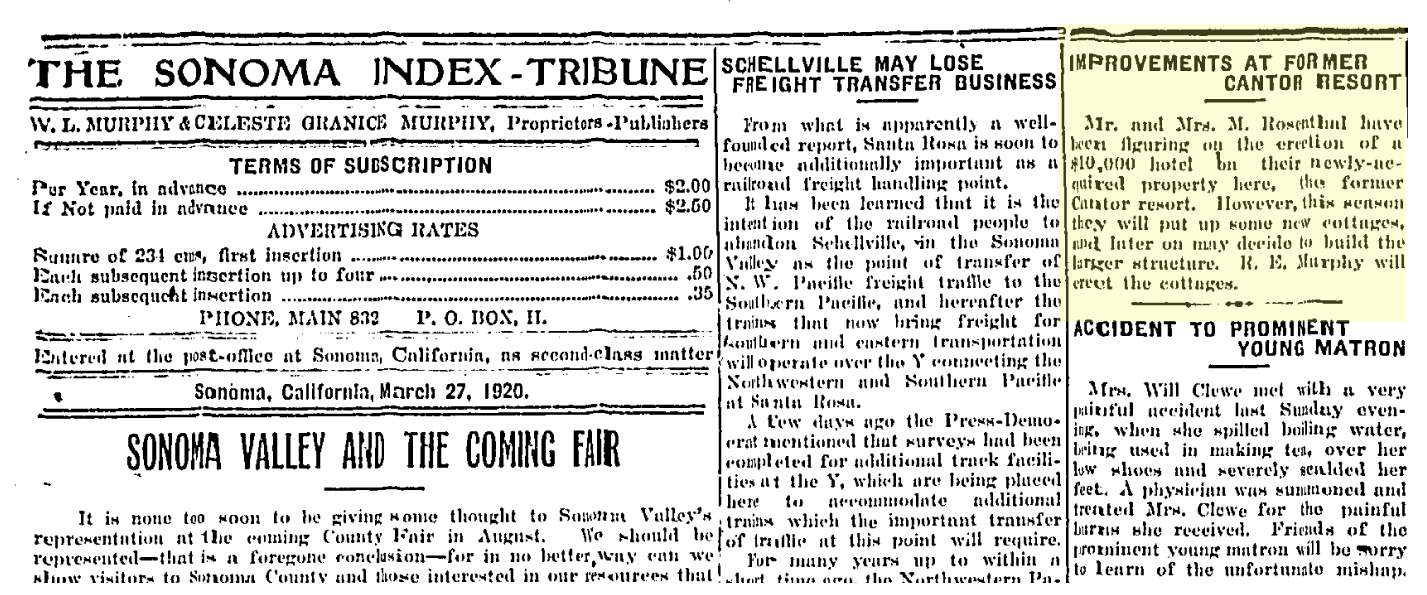
Rosenthal was off to a fast start, improving the resort, building some new cottages, some of which still stand in 2016, and planning a “$10,000 hotel.”

it1920improvmentsatcantors-rosenthals

rosenthalcottage

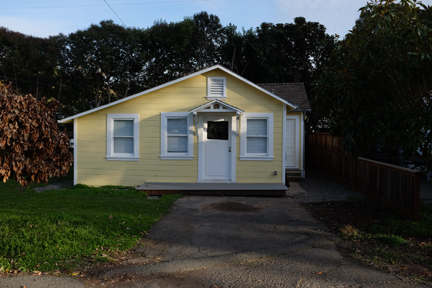
Cottage at the Acacia Grove Mobile home Park, formerly Rosenthal’s Resort, 2016.

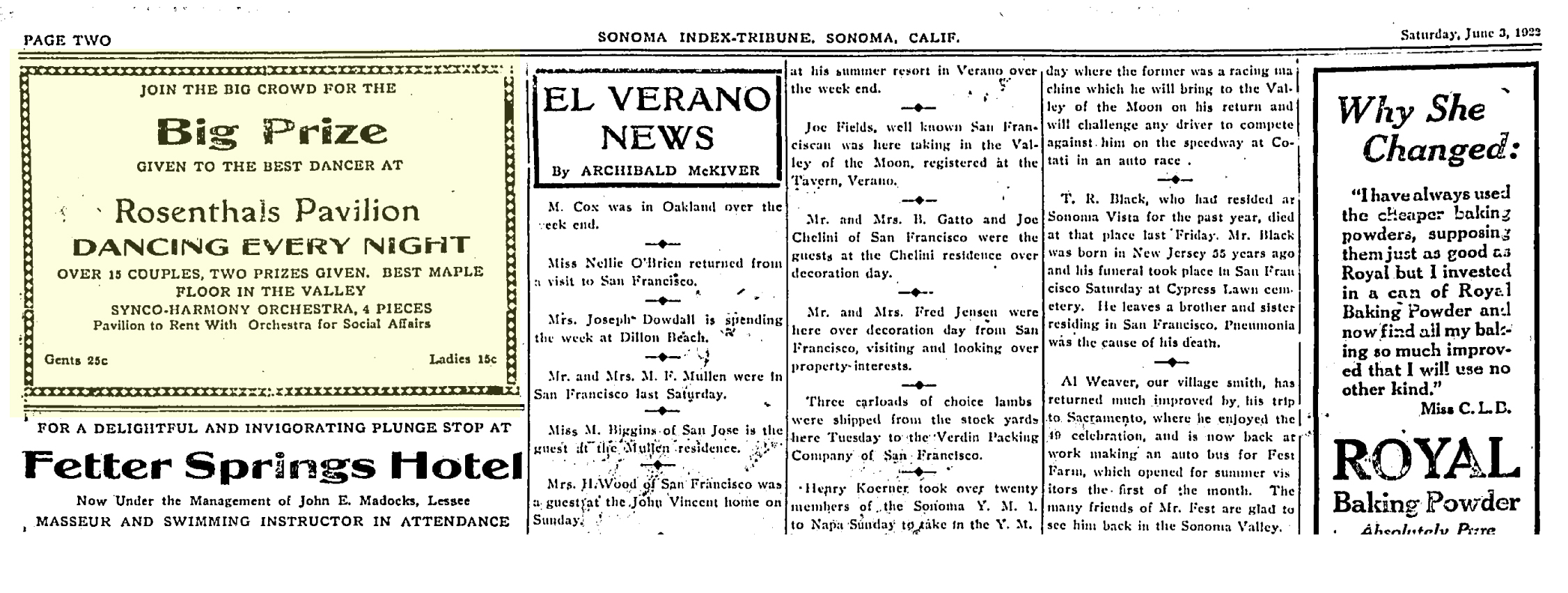
By 1922 the improvements at the resort included the new dance hall which had a maple dance floor 36’x 60’. The dance hall building was sold to the Sonoma Valley Grange in 1934. The building still stands, and still has the maple floor.

it1922rosenthallargeadDancing every night to the “four Piece Syncho-Harmony Orchestra!”
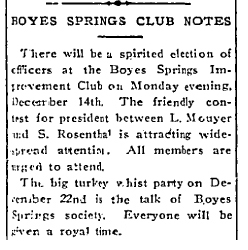
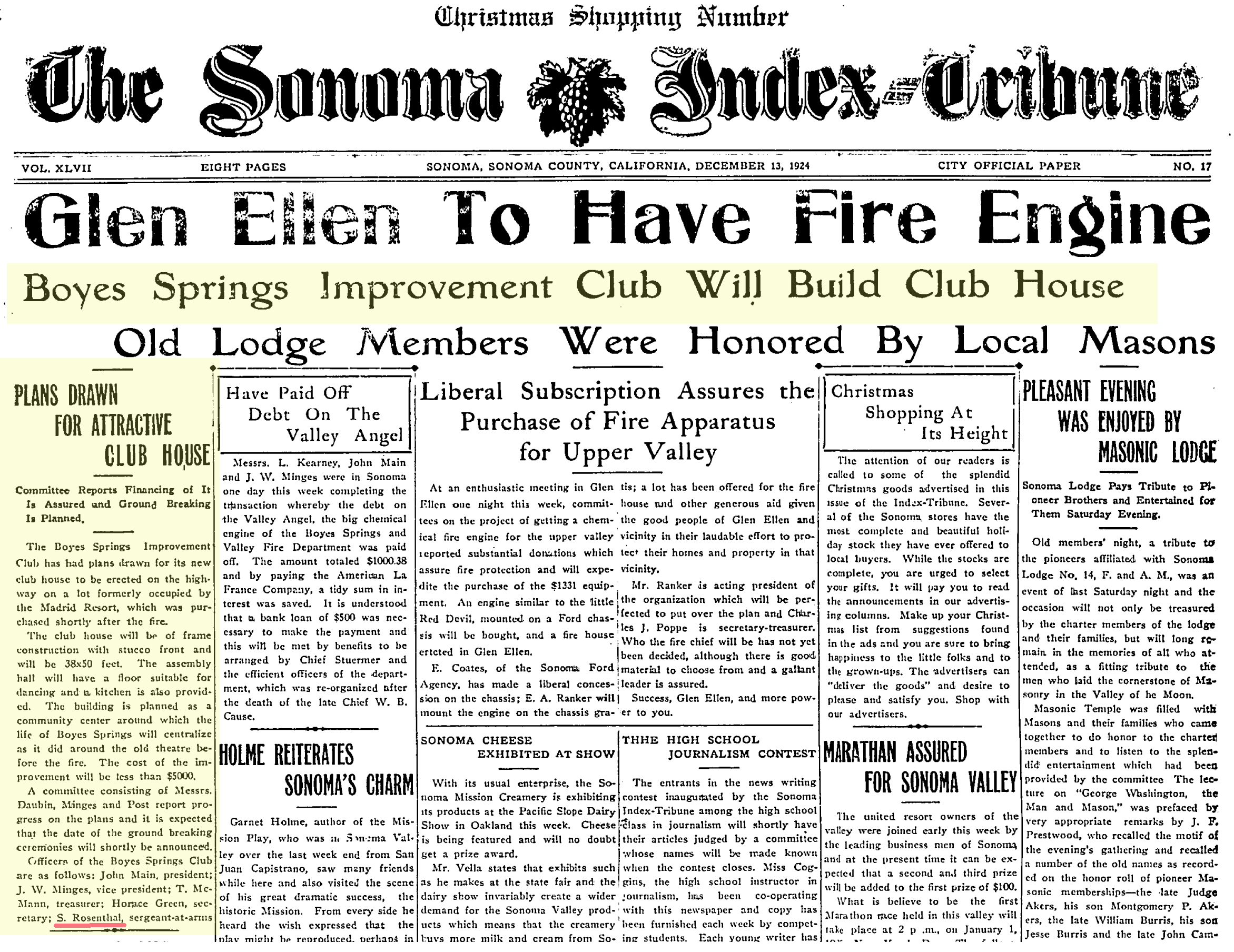
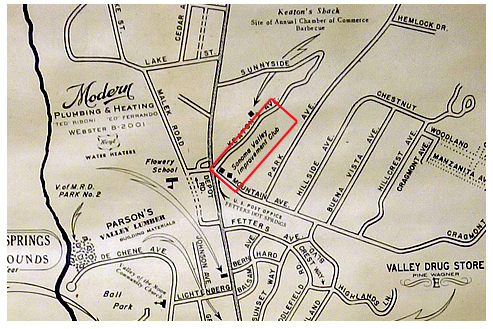
Selig Rosenthal became quite involved in the Chamber of Commerce, which was advocating for a road to Petaluma in 1924. He was also prominent in the Sonoma Valley Improvement Club (office said to be located at the corner of State Highway and Park Ave. The building may still stand, though closer to Mountain Ave. and the Highway. See map below.) In 1925 he ran for president of the Boyes Springs contingent.

rosenthalpresident


it1924bhsimprovmentclubhouse

windwoshademap2partcrop

1956 Chamber of Commerce map (partial) showing Sonoma Valley Improvement Club building near the corner of Mountain Ave. (not Park Ave.) and Hwy 12.

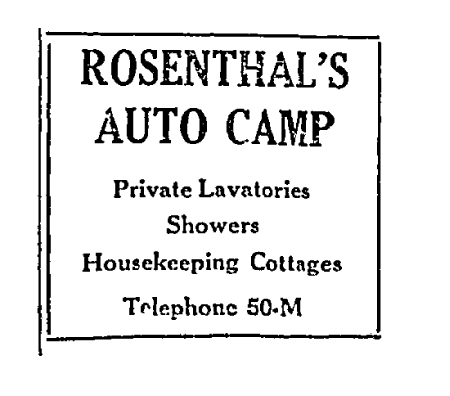
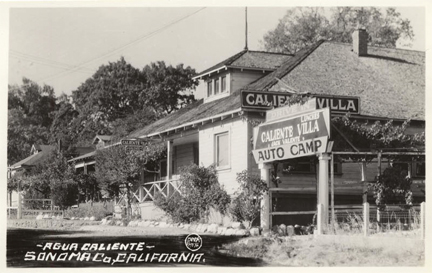
In 1929, Selig Rosenthal was “preparing plans for converting the property into an up to date auto camp,” said the Index Tribune, (calling it the “former resort.”) The ascendancy of the automobile over train travel spurred many resort owners to do the same. In January of 1930, the IT tells us “Rosenthal’s new auto-camp cottages are nearing completion, Stevenson Brothers Sonoma Vista contractors, handling the big job.”

rosenthalautocampad19311931, Index Tribune

autocampstatelibrary

Jack Valente’s resort in Agua Caliente, near Marin St. The building no longer exists.


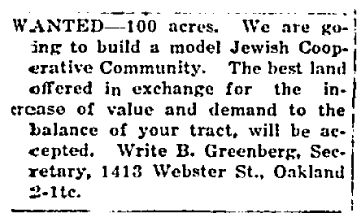
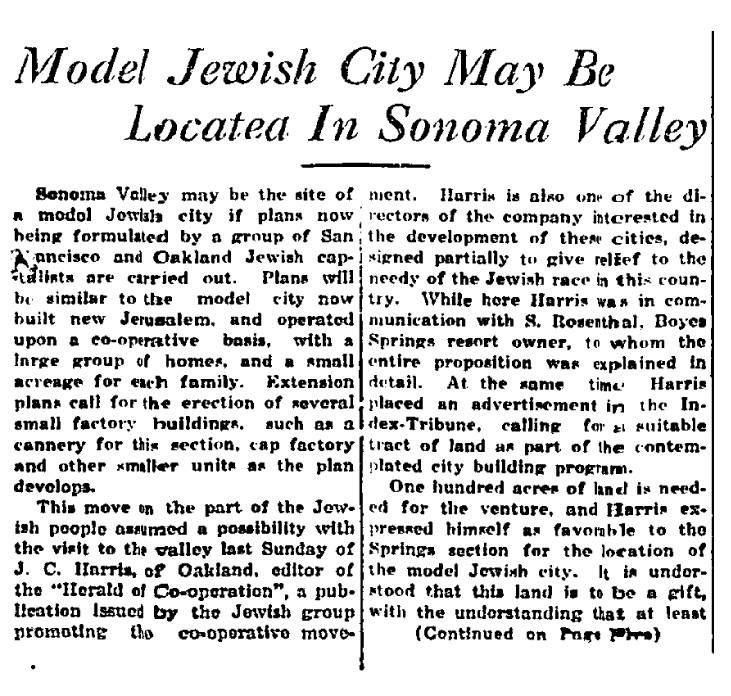
Selig Rosenthal was a prominent member of the Jewish community in Sonoma Valley.In 1932 a group of “Jewish capitalists” from San Francisco And Oakland came to the Valley looking for 100 acres on which to build a “model Jewish city,” to be run as a cooperative. Selig Rosenthal was one of the property owners they talked with. They also placed this ad in the Index Tribune:

jewishcityad1932

jewishcity1More research into the Jewish cooperative movement in the Bay Area is warranted.
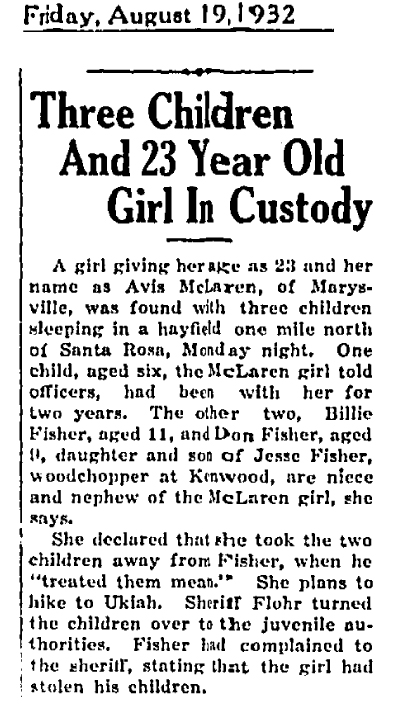
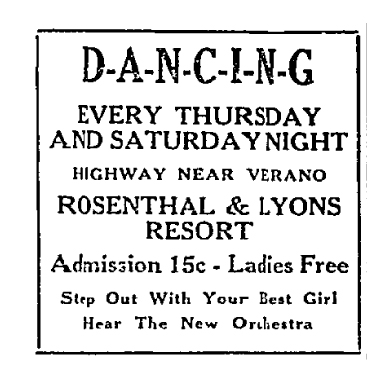

Newspaper archive wanderings sometimes produce interesting unexpected results. A short article under the second page ending to the Jewish City piece, appears this, a heart-rending vignette of hard times in 1932:

hardtimes1932


In March of 1933 Selig and Dora Rosenthal announced their partnership with Harry Lyons, who ran a resort in Sonoma Vista (across the Creek from Boyes Springs), in the opening of “a high-class kosher resort, the only one in California…Mr. Rosenthal states that a benefit will mark the opening of the resort, at which noted Rabbis will speak and to which congresswoman Florence Kahn will be invited.”

Florence Kahn was Congresswoman from the fourth district from 1925 to 1937. She was the first Jewish woman to serve in Congress, and the first woman on the House Military Affairs Committee. A San Francisco resident, she was a frequent visitor to Sonoma Valley. (It is unclear how she could represent the Fourth District, while living in the City, because San Francisco is not in the district.)

rosenthallyonsad

The Rosenthal-Lyons partnership lasted all of five months, dissolving in September of 1933.

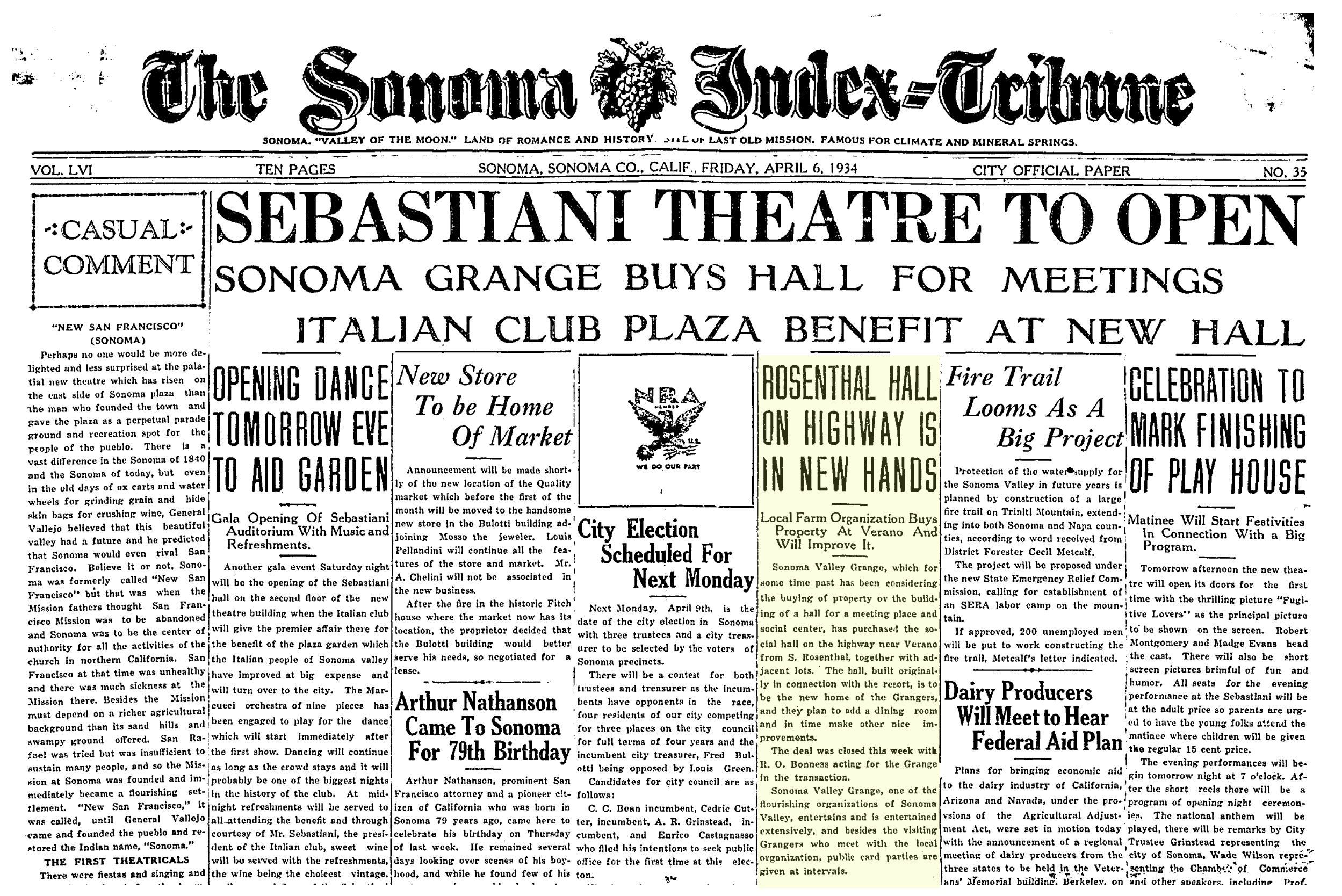
In April of 1934, the Sonoma Valley Grange bought Rosenthal’s dance hall, an event apparently  overshadowed only by the opening of the Sebastiani Theater, according to the I-T.

grangebuyshall

grangehall1930s-copy2

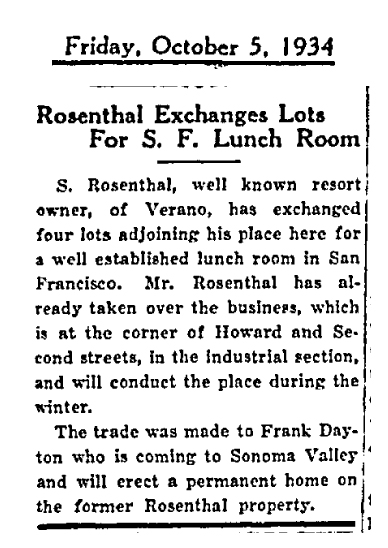
In 1934 the Rosenthal’s opened a cafe in San Francisco.it1934rosenthalexchangeslots

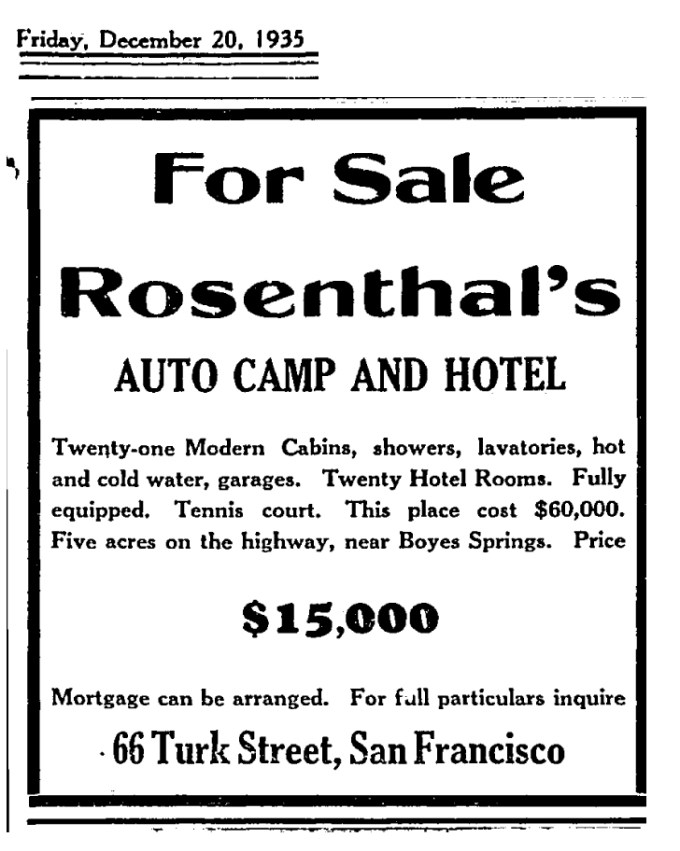
In 1935 the Rosenthal’s tried to sell their resort, but the deal fell through.

it1935rosenthalsforsale

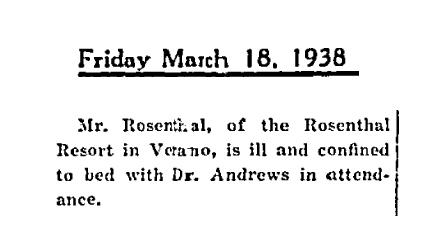
In March of 1938., Rosenthal came under a doctor’s care.it1938rosenthalill

The beloved Dr. Andrews personally saved the Sonoma Grammar School from demolition and made it available as the home of the Sonoma Community Center. Andrews Hall is named for him.

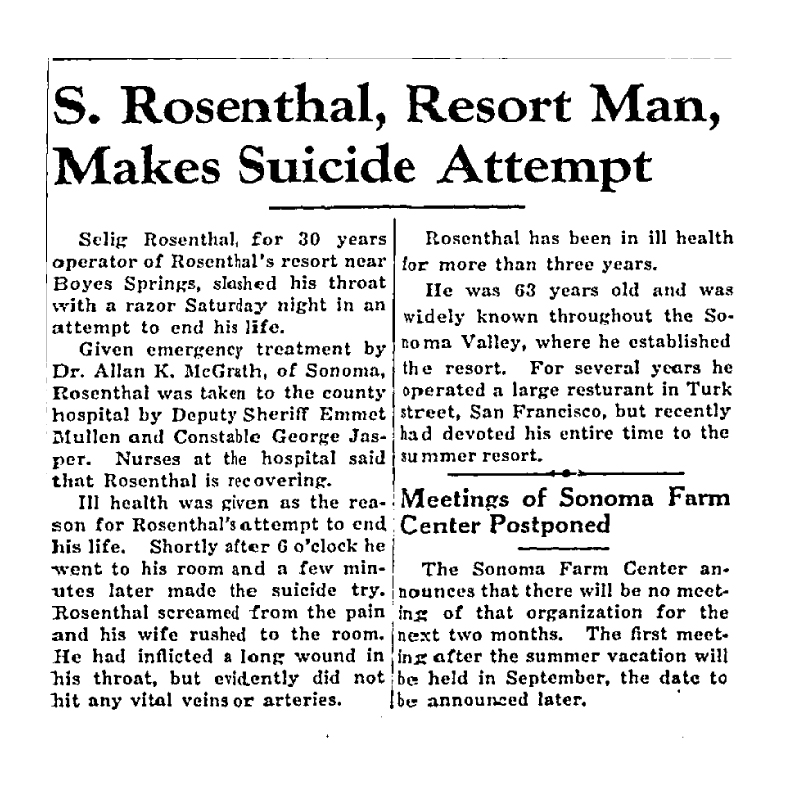
Then, in June 1938…

rosenthalsuicidetry

According to the Index Tribune, Rosenthal had been in ill health since 1935, and this was cited as the reason for his attempt at suicide. The article says “Rosenthal is recovering,” but, curiously, speaks of him in the past tense in the final paragraph.

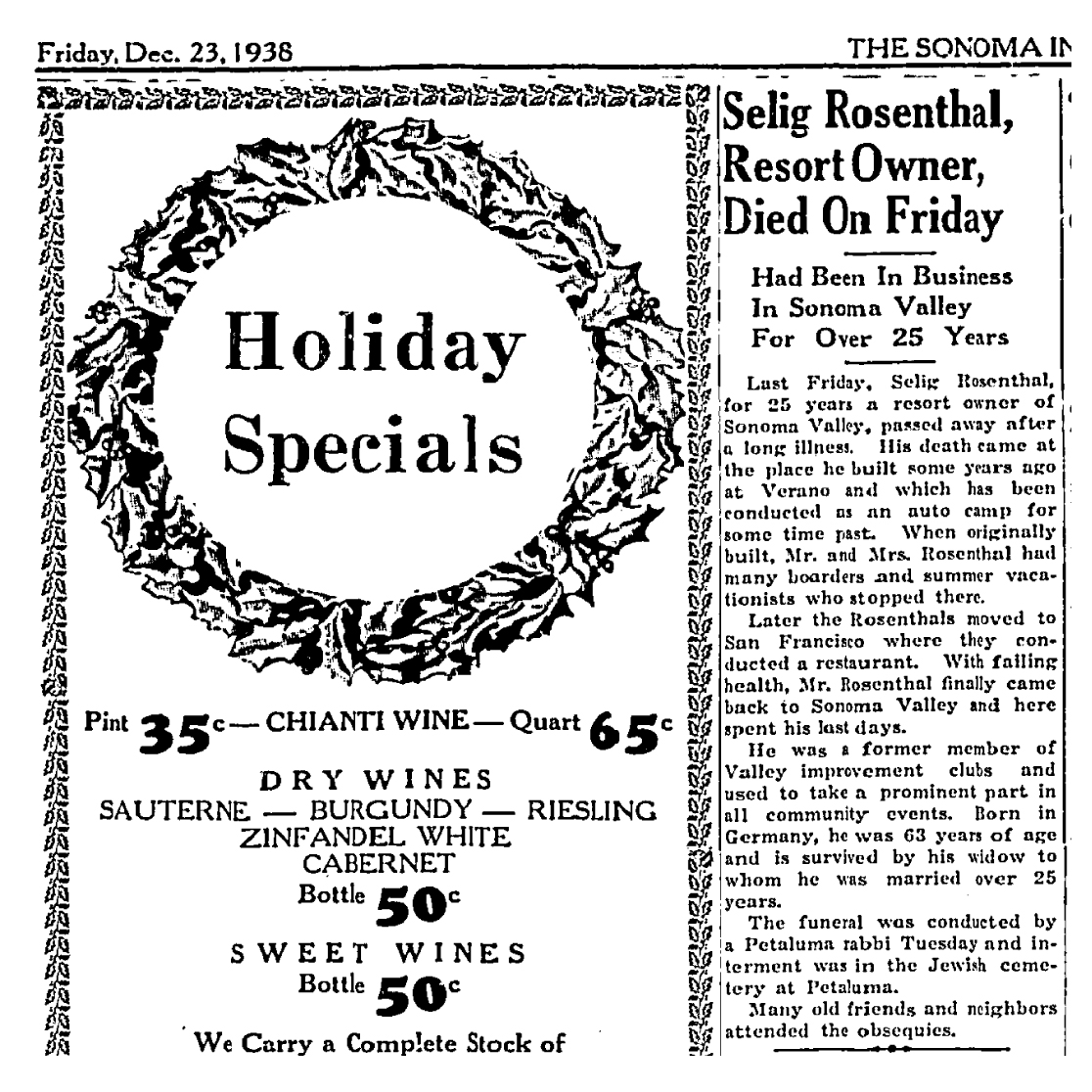
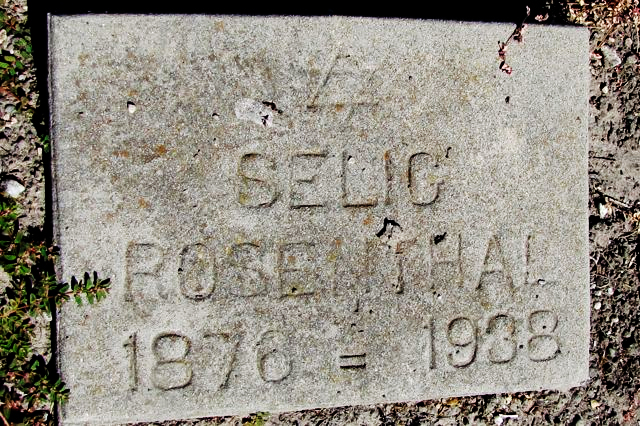
Rosenthal succumbed to his illness in December of 1938. He was buried in the Jewish Cemetery in Petaluma.rosenthalobitrosenthalgravemarker

“The B’nai Israel Cemetery and Home of Eternal Peace Interfaith Cemetery aka Petaluma Jewish Cemetery is located within the fenced boundary of Cypress Hill Memorial Park at 430 Magnolia Avenue, Petaluma. The B’nai Isreal cemetery was established in 1871 for the Congregation Society B’nai Israel of Petaluma.”

Courtesy of findagrave.com

To Be Continued…

Standard
History, mid-century

Mendel Cader

Mendel Cader was Sam Ganos’ step-son. Lillian Cader, Mendel’s mother, married Sam in the 1930s. Mendel married in 1944.

Sam Ganos emigrated from Greece in 1907. Making his way from New York to Sonoma Valley, he opened Sam’s Grill in 1916, in the building that still stands on the Highway, opposite Central Ave. It now houses La Hacienda Taqueria (2016.) This means there has been a restaurant in that building for 100 years. (See the post about Sam).

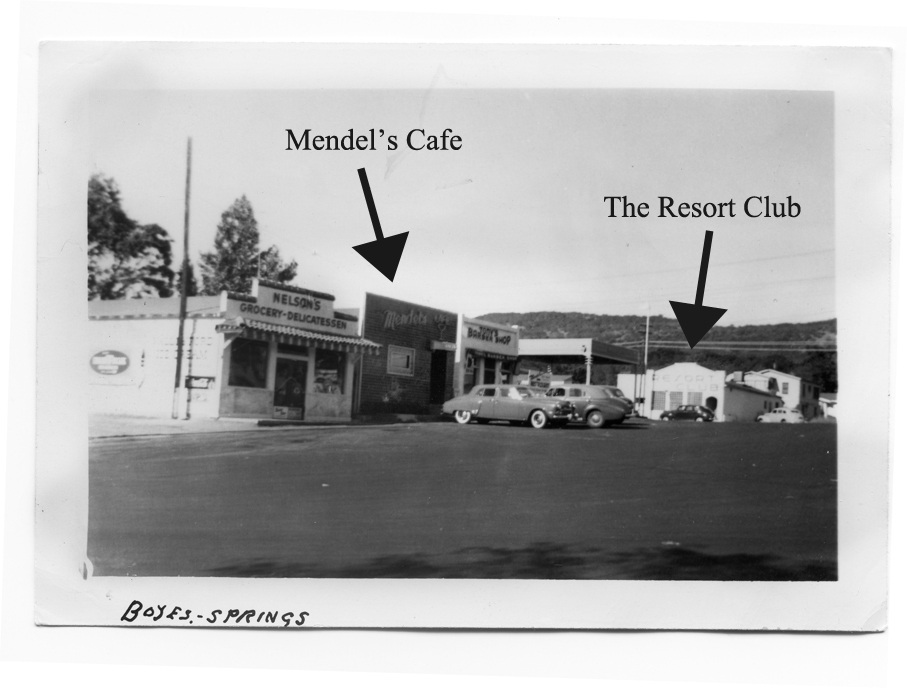
According to Todd Ganos, Sam’s grandson, Sam brought Mendel into the business in the late 40s, eventually turning it over to him, renaming it Mendel’s Café. In the early 1950s, the Café moved around the corner to the building on Boyes Blvd. These buildings later came to known as the “Uncle Patty’s” block.

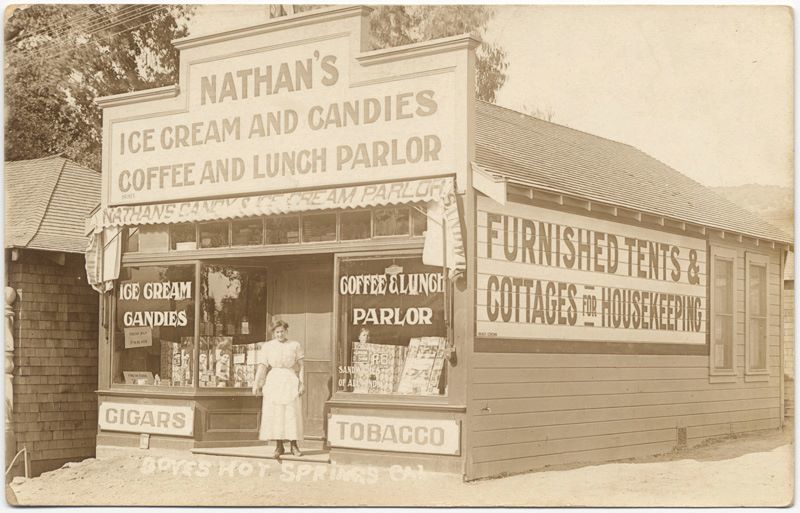
bhs1950ssnapshots1-copyAn article in the Index Tribune of June 1, 1951, tells us the café would be open every day but Tuesday, starting Memorial Day. On the same page we learn that, “14,000 swam at Boyes Over the Weekend.” Also on the same page was an ad for Bob and Edith Lanning’s Resort Club, offering “Fun, Friendship and Fine Drinks…. Blue Pacific Strings are playing Saturday night.”nathansThe building next to Mendel’s, housing Nelson’s Delicatessen in the 50s, is thought to be the former Nathan’s, dating from circa 1910. (Photo courtesy of the California State Library.)mendelsopensnotelyRather than just citing newspaper stories, sometimes it’s interesting to look at the whole page, or part of a page, to give context. The above clipping is from the Index Tribune, November 14, 1952. It’s interesting that the “local boy” witnessing the H bomb test was permitted to write home about it! The Hot Springs Happenings columnist later became Gaye LeBaron who is well known as a journalist and historian of Sonoma County. Visit http://library.sonoma.edu/specialcollections/lebaron to find out about the Gaye Lebaron Collection at the Sonoma State University Library. (Reading newspaper archives is similar to reading the dictionary: all kinds of unexpected information and associations pop up.)
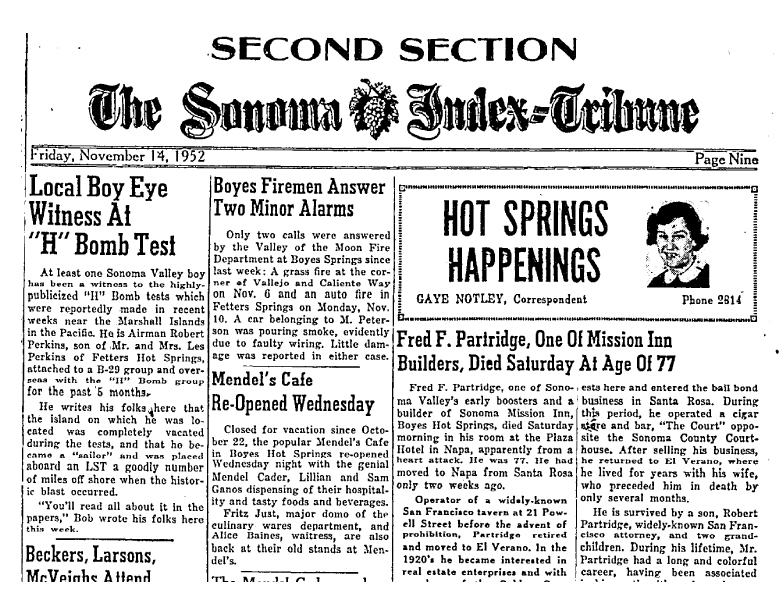
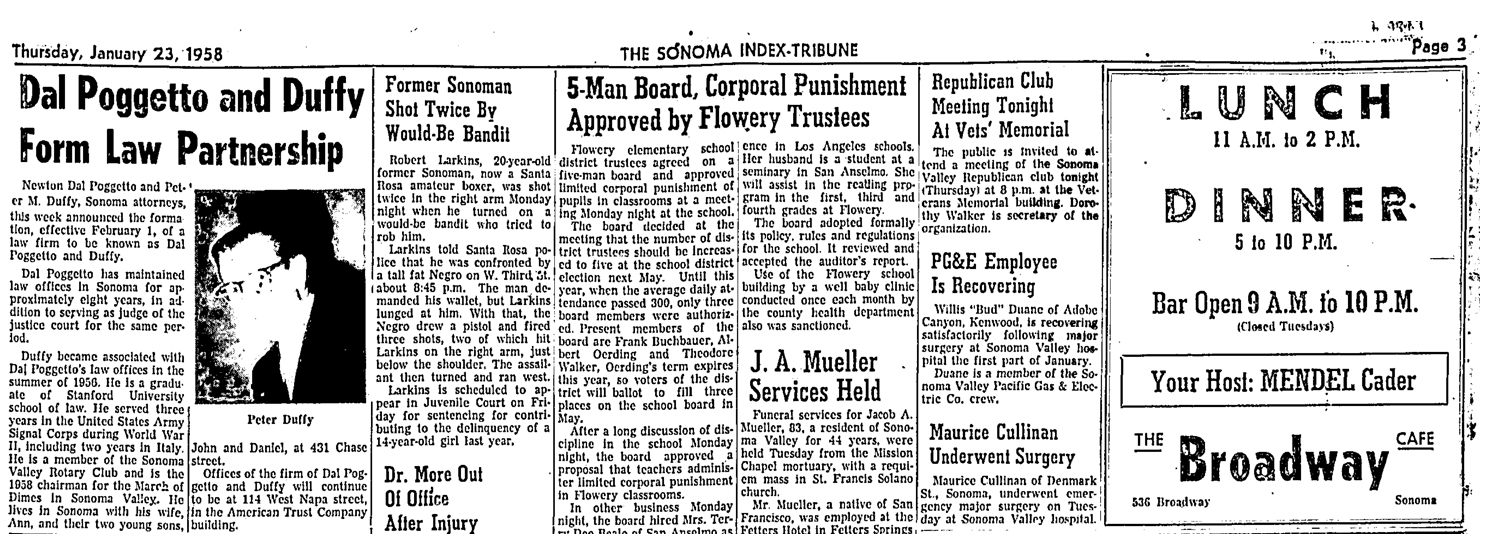
In March, 1955 Mendel sold the café to Mr. and Mrs. Tom Sterling. Cader had been running the café for eight years. The same year, Mendel was apparently managing the restaurant at the Sonoma Golf and Country Club. That New Years Eve he offered “dancing, favors, surprises” and a deluxe steak dinner for $7.50. In 1958, Mendel was hosting at the Broadway Café, located at #536 Broadway. The same year, he closed the Broadway Café and opened a bar in San Francisco, “with an uncle.”it1958mendelbroadwaycafecropSome time after the SF venture he again opened Mendel’s Café in Boyes, which had become “Millie’s.” He then sold it in 1963 and went on to operate Diamond Lil’s Restaurant in Petaluma with his brother Dave.diamondlilfrontandbackLillian Cader Ganos had inherited Sam Gano’s substantial estate, which she lavished on Mendel and his brother, who proceeded to go bankrupt in the 1970s.
 

Standard
Architecture, Boyes Hot Springs, History, mid-century

The Boyes Springs Food Center

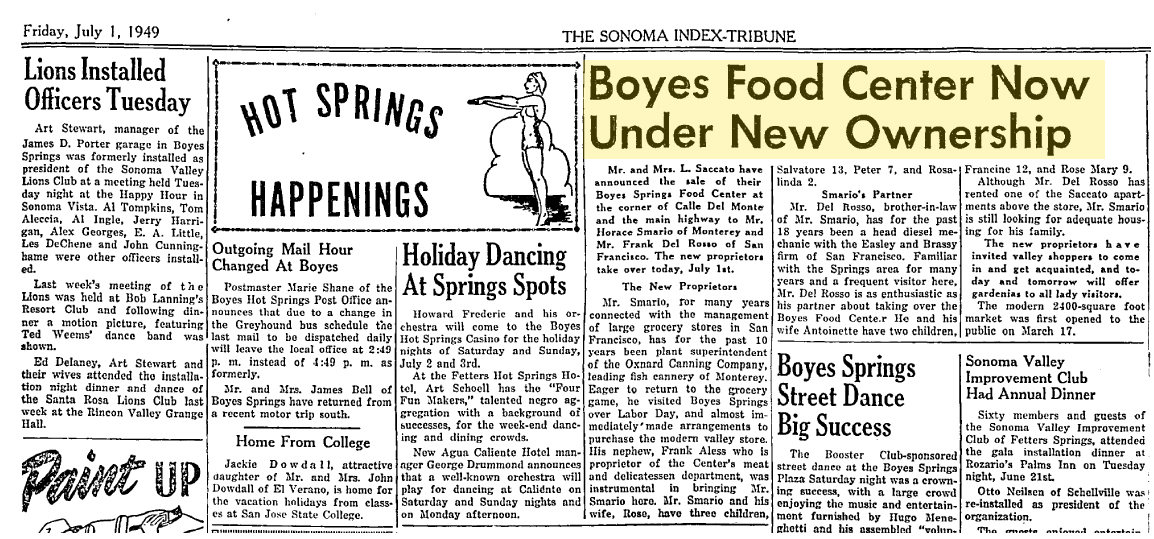
A sampling of the history of the Food Center, as told by the Index Tribune. Included are surrounding articles and advertisements, to give some sense of the life in the Springs in 1949. That year was indeed a special one in this area, and deserves and article of its own.

it1949foodcenteropens

it1949foodcenternewowners-copy

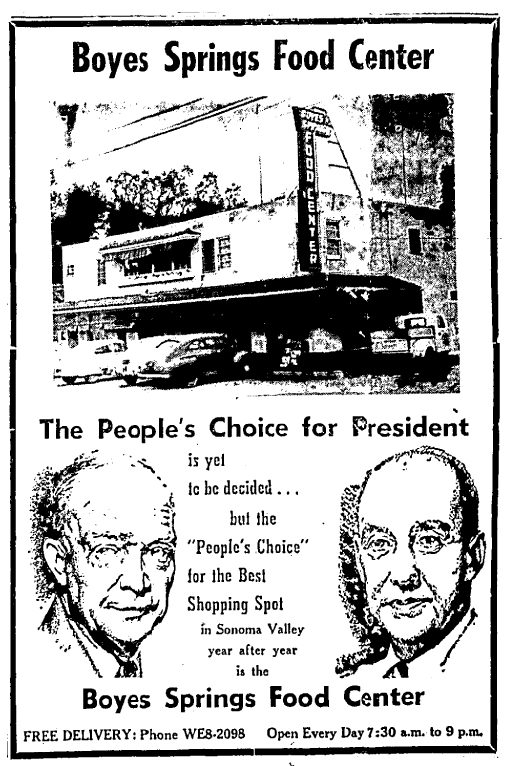
1956. Presidential politics anybody?it1956foodcenterpolitics

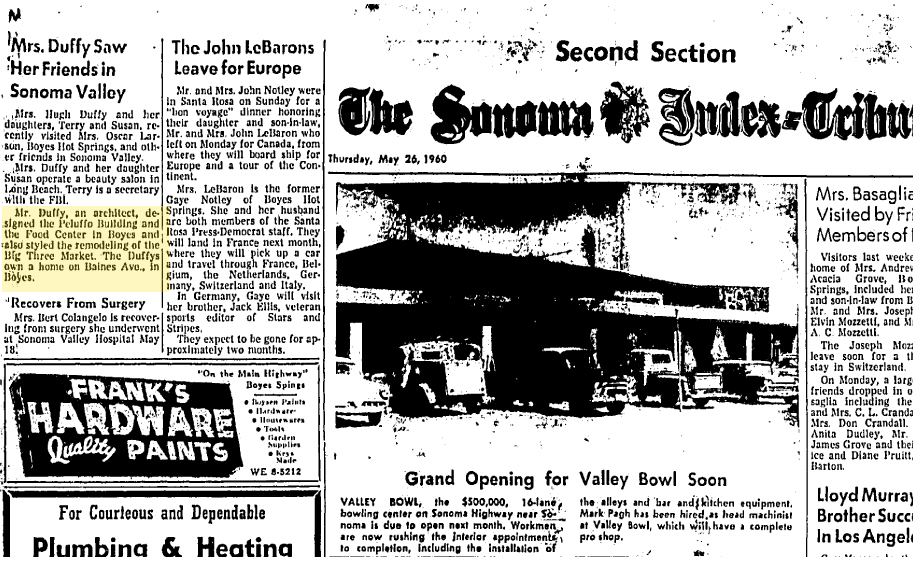
Architect Hugh Duffy designed the Plaza Center building also.it1960bigthreearchitect-copy

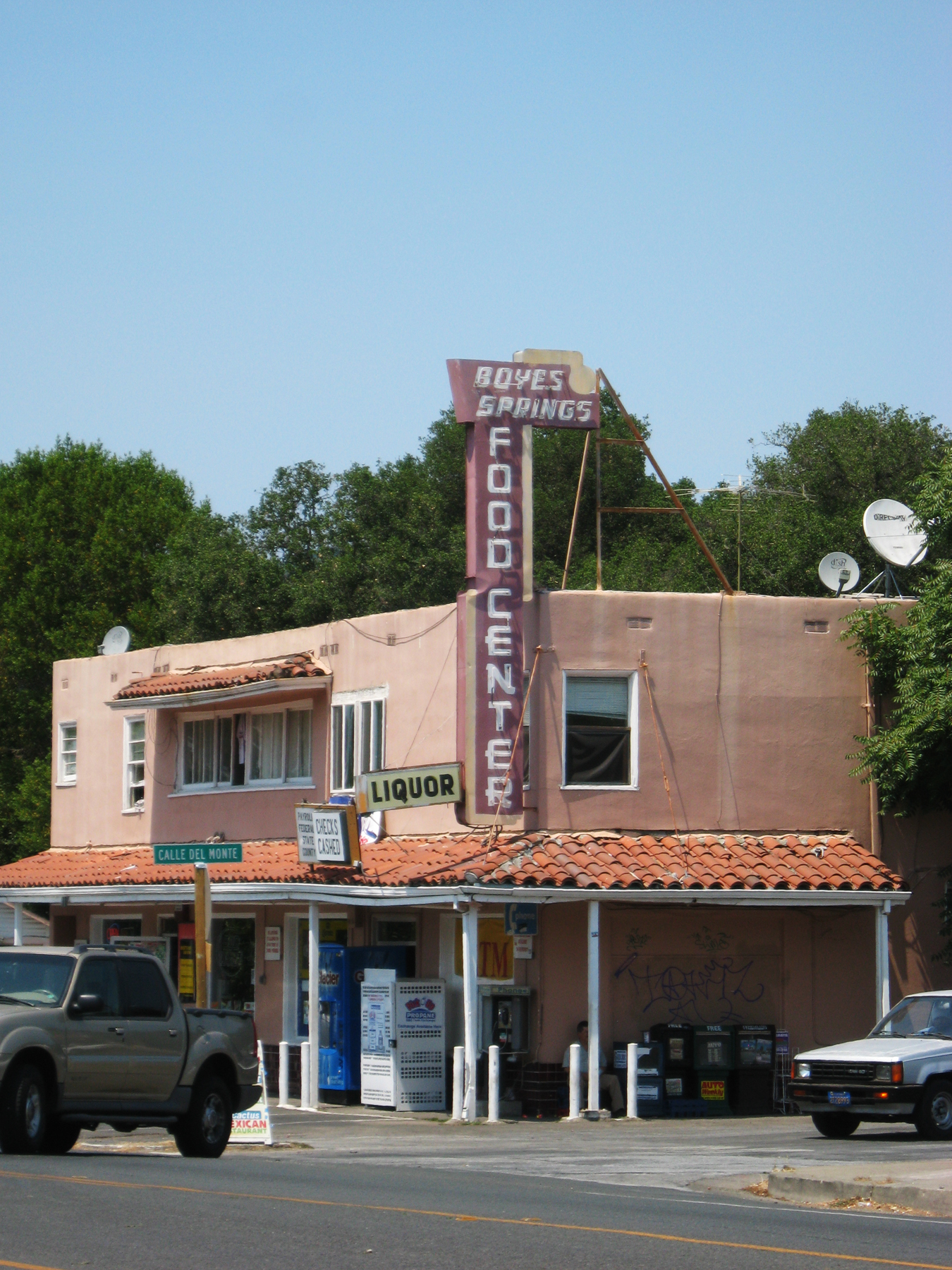
One of Zan Stark’s wonderful photographs of the building, and more. 1950s.zane64lookingnorth2008. The tiled awning was still in place.foodcenter2008
Standard

cofcmap2

History, Place Names/Street Names

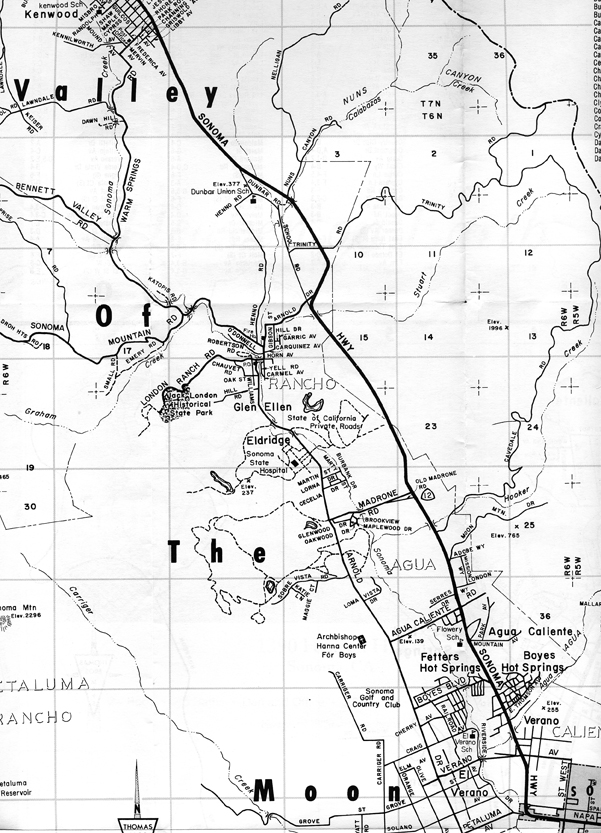
Valley of the Moon Map, 1962

Image